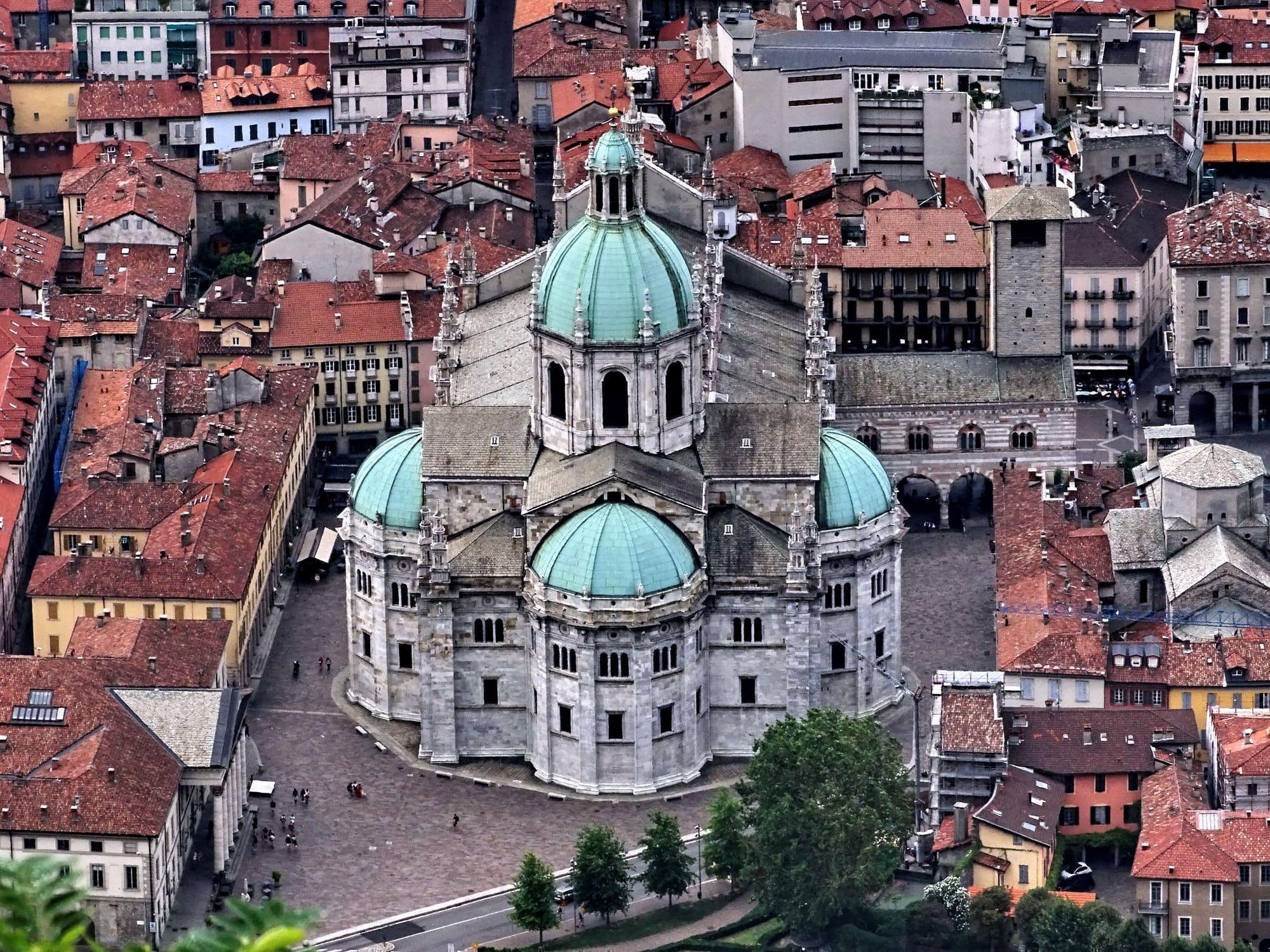
First Basin
Como
The city of silk and rationalist architecture, with the lake reaching right into the centre.
Practical guide
Trail marks, swimming, restricted zones, the restaurant bill: the rules to know before you arrive.
The short answer
A few, and none of them printed on a sign in three languages: how to read the trail marks, where you can swim and where you cannot, what a car park with blue lines means, why the cover charge is legal, and the one number to call if something goes wrong.
In short
On Lake Como many of these rules are usually learnt the hard way: a fine in a restricted zone, a swim where you should not, an afternoon on a ridge caught in a thunderstorm.
It is better to know them beforehand.
Many of the lake's trails use the waymarks of the CAI, the Italian Alpine Club: two red bands with a white one between, painted on rocks and trees, and a trail number. If waymarks are intermittent, check the route on an up-to-date map before continuing. The Sentiero del Viandante adds its own mark, an orange SV; the Greenway has its signboards with the wheel symbol; the Strada Regia its SR logo.
The CAI scale distinguishes walking routes (T), hiking routes (E) and routes for experienced hikers (EE). Via ferratas (EEA) require a harness, helmet and via ferrata set, plus technical skills. Snow and ice may require mountaineering equipment and skills: assess the route and conditions before setting off.
Check the weather and trail conditions before setting off. Allow for the climb, descent and available daylight. Carry water and check any refill points; if you plan a stop or an overnight stay, check whether the hut is open.
You swim at the lidos and beaches, inside the yellow buoys where there are any: they mark the zone reserved for bathers, which boats may not enter. You do not swim near the ferry piers, never off the piers themselves, and you do not swim across a stretch of lake, because a swimmer far from the shore is hard to see from a boat. Water temperature varies with the season and depth. Before swimming, consider wind, waves and currents too, and enter gradually.
Motorboats, hired ones included, go slowly within a hundred and fifty metres of the shore, ten knots at most, and within fifty metres engines do not enter: in that band swimmers and rowing boats have priority. A boating licence is required above 30 kW (40.8 metric horsepower), and also at or below that power if the engine exceeds the displacement limit for its type. To operate a motorboat up to ten metres long without a licence, you must be at least sixteen. A first-timer asks the hire company where the shallows are and where the ferry passes, because the ferry always has right of way. Making a wash below the private villas is frowned upon, and in some stretches forbidden.
Drones: almost every villa and garden that can be visited bans them in its rules, and in built-up areas flying needs authorisation. Over open water, away from people and boats, the national ENAC rules apply; common sense says not to launch from a crowded pier.
ZTL means restricted traffic zone: the old centres of Como, Bellagio, Varenna and other villages are closed to cars without a permit, watched by cameras, with the hours written on the sign at the entrance. The satnav does not know this and takes you straight in; the fine arrives by post months later, abroad too, through the hire company. If your hotel is inside the zone, it is the hotel that registers your plate: ask before you arrive.
The lines on the ground say who may park: white free, blue paid at the meter or by app, yellow reserved for residents, disabled badge holders or loading. In the lake villages it is easier to leave the car in Como or where you sleep, and get around by boat. The shore roads, the Regina on the west and the Lariana on the east, are narrow and without pavements in many stretches: drive slowly and let the bus through.
Tickets: train tickets are bought online or at the station, and a paper one is validated before boarding; on the bus you pay with a ticket, or by card on board where that is offered; boat tickets are bought at the pier or online. In every case you board with a ticket; you do not buy from the inspector.
The coperto is a per-person item on the bill covering bread, table linen and service; it must be stated on the menu. At fountains, check for the drinking-water sign “acqua potabile” before drinking.
Enter churches with your shoulders covered and outside mass times.
Respect the rest hours set by local regulations. Carry some cash for markets and small businesses.
112 is the single emergency number, free from any phone, with operators in English too: it covers mountain rescue on a trail, a sudden illness, an accident on the water. 115 is the fire brigade, 118 still answers for ambulances in some areas, but 112 routes everything. The duty pharmacy, open at night and on Sundays, is named on the sign of every closed pharmacy.
The transport words confuse Italians too: the battello is the ordinary sailing that stops at every village; the aliscafo or servizio rapido makes fewer stops; the traghetto is the one that carries cars, and on the lake it only works the Bellagio–Varenna–Menaggio–Cadenabbia triangle; the pontile is the pier where you board; the lido is a beach with facilities, usually with a charge. On the trails the mulattiera is the old stepped mule track, and the crotto is the cellar dug into the rock that becomes a tavern in summer.
It is the CAI trail mark: you are on a marked path, and the number beside it is its number. A small flag at junctions shows the right way; if you see no marks for several minutes, go back to the last one you saw.
112, from any phone, even without credit and even without your own network: it routes to mountain rescue, the ambulance or the water rescue. Say where you are as precisely as you can: the trail's name, the last village, how long you have been walking and from where.
As far as the car parks at the edge of the village, yes; into the old centre, no, it is a camera-controlled restricted zone. If you sleep inside, the hotel registers your plate.
No: it is a normal per-person line in Italy, which must be stated on the menu. What is not owed is the tip. Be wary, instead, of a bill without a receipt, or with a percentage service charge not declared beforehand.
Respect local restrictions and swim in designated bathing areas where available. Keep clear of piers and manoeuvring boats. Assess your ability in relation to wind, waves, currents and water temperature, enter gradually and do not go far from the shore alone.
A boating licence is required above 30 kW (40.8 metric horsepower), and also at or below that power if the engine exceeds the displacement limit for its type. To operate a motorboat up to ten metres long without a licence, you must be at least sixteen. Jet skis always require a licence.
Almost never: Monday is museum closing day in Italy, and on the lake that goes for Como, Lecco and most house museums. The villas with gardens, however, open every day in season. Today's hours are shown on each place's page where they are known.
Over the villas and in their gardens, no, by the villas' own rules; in built-up areas only with the authorisations the ENAC rules require; over open water and away from people and boats, according to the national rules for your drone's category. If in doubt, do not take off.
The city of silk and rationalist architecture, with the lake reaching right into the centre.
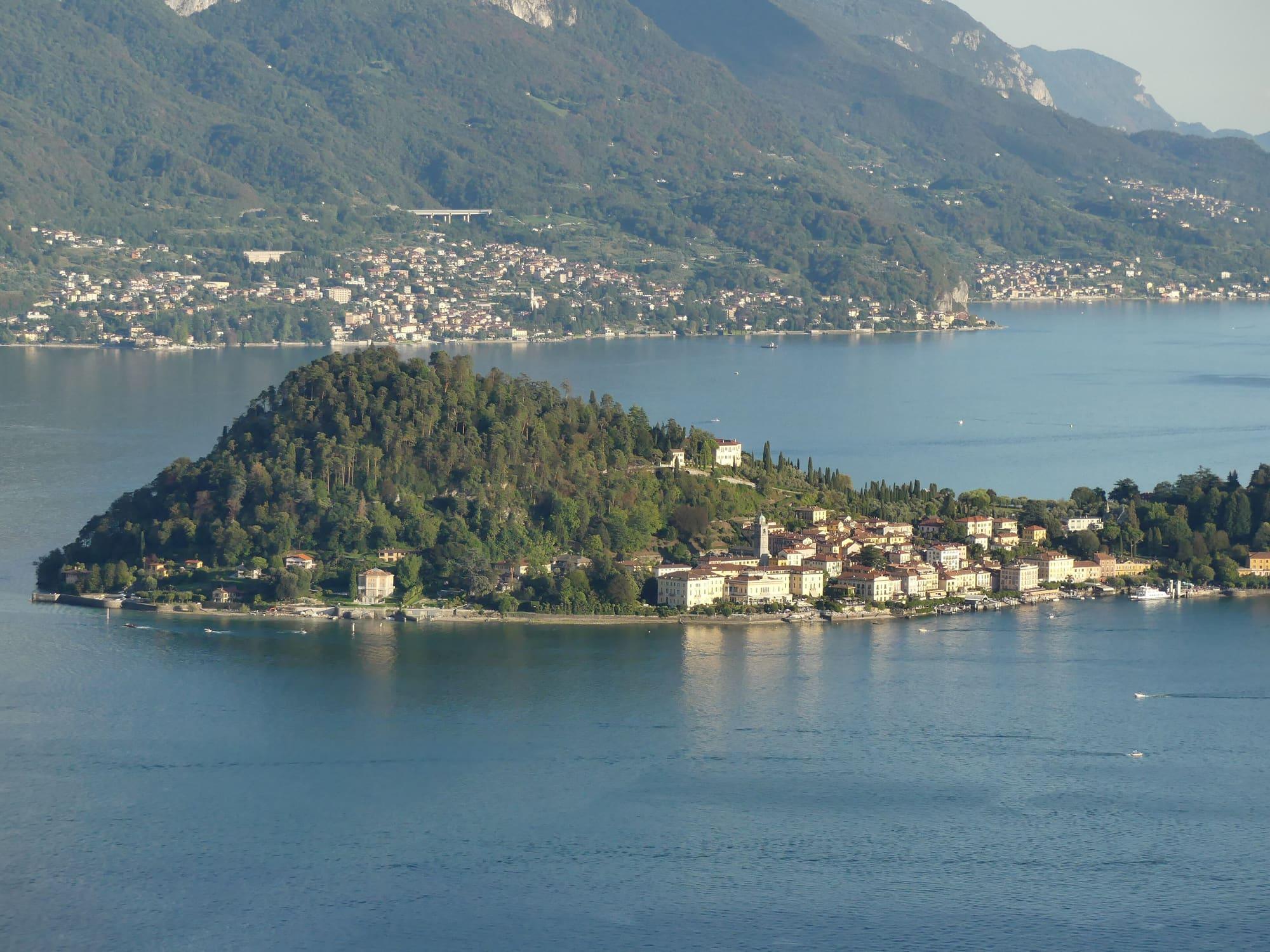
On the point that splits the lake in two, with staircases instead of streets.
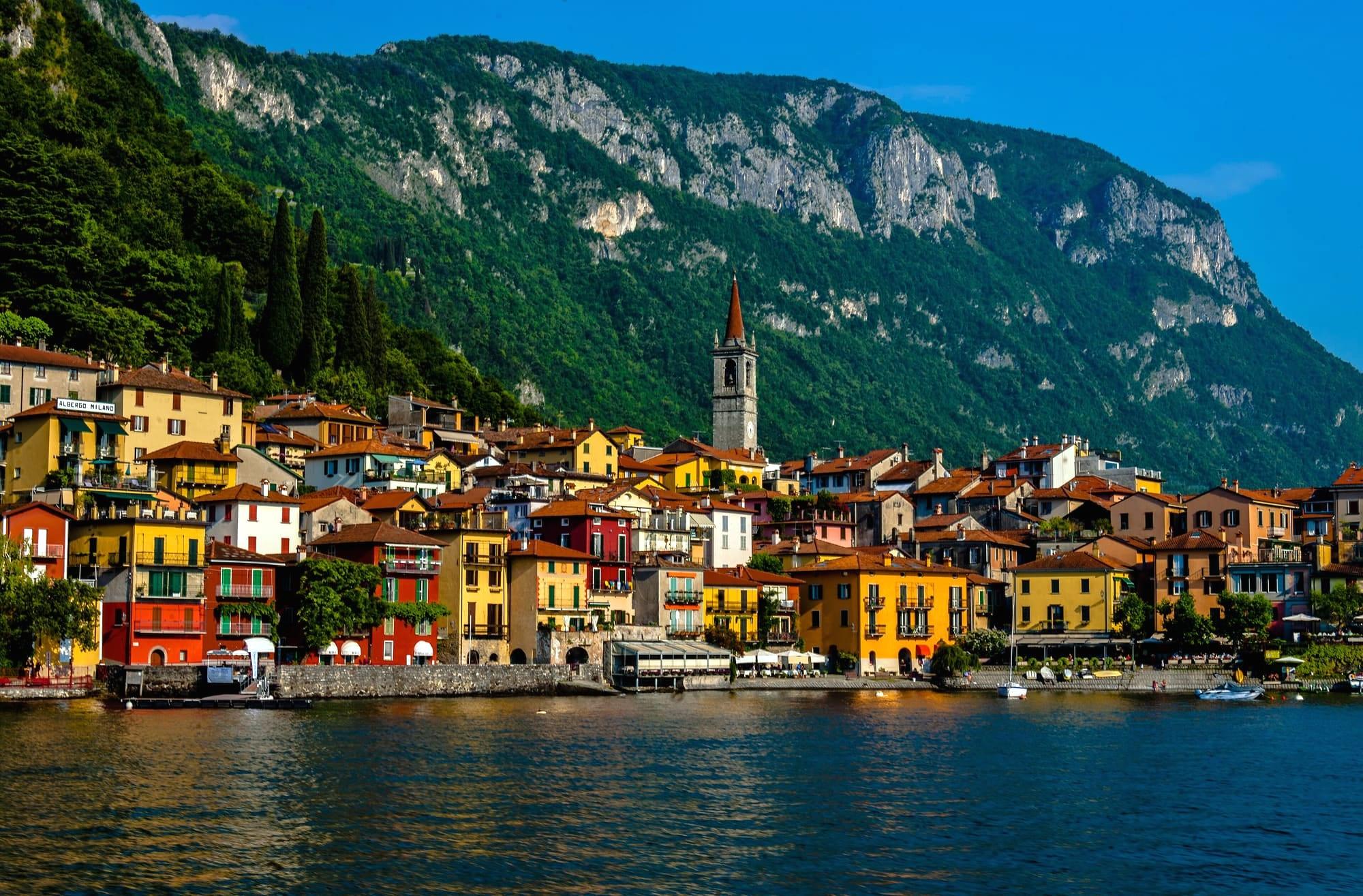
Ochre houses on the water, two botanical gardens on the shore and Vezio castle above the village.
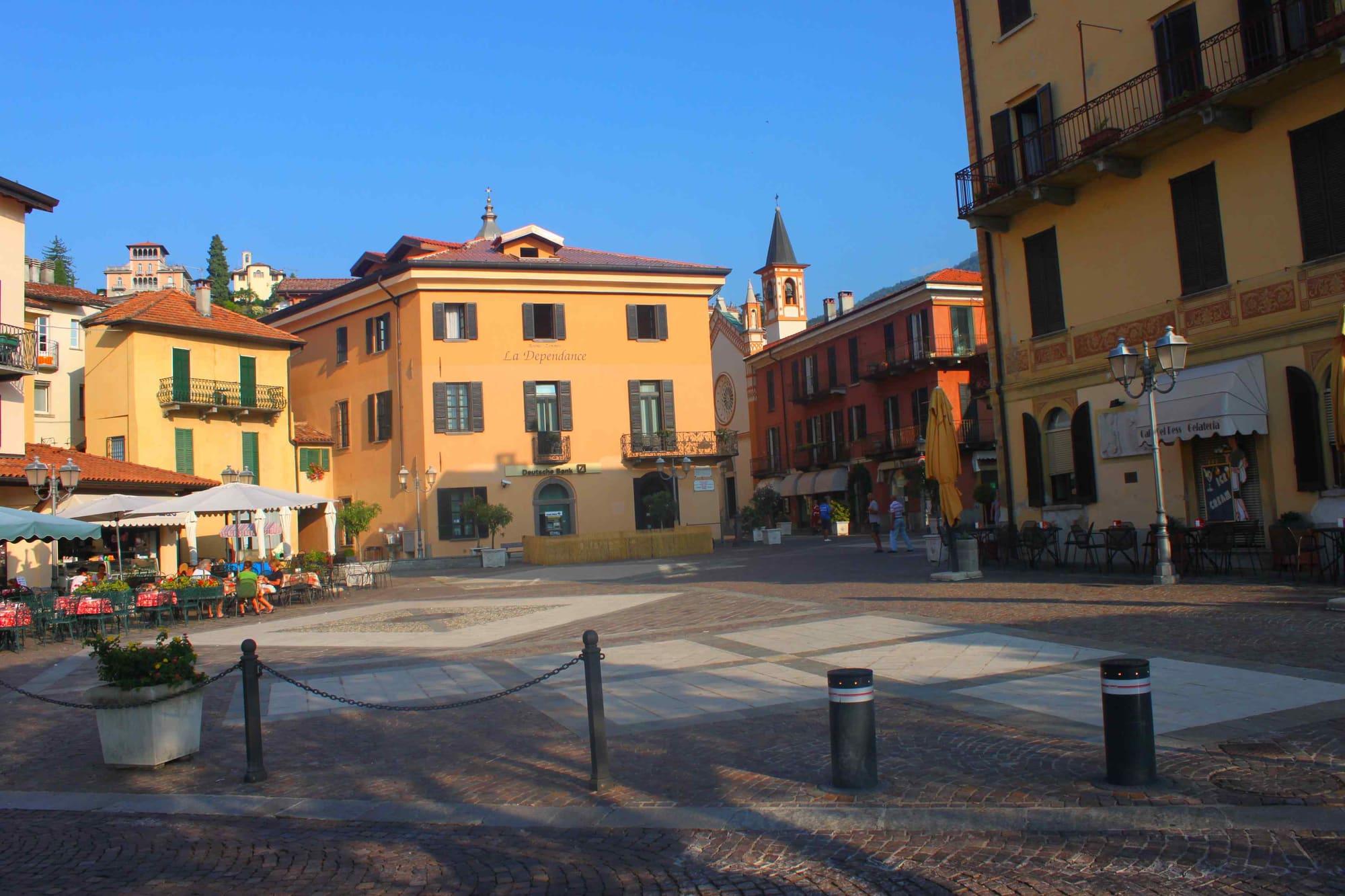
In the middle of the lake, between the ferry, the Regina road and the bus to Lugano.