Stories from the lake
Lake timeline
Two thousand years of the lake in order of date: from the Roman road along the western shore to the first steamboat, from the fall of the Isola Comacina to the Olginate dam. Each date leads to the story that tells it and to the place where it happened.
- Dates
- 82
- Stories
- 27
- Periods
- 6
82dates
Antiquity
To the 5th century · 5 dates
1st century
The Roman road along the western shore
A Roman road links the river port of Cremona with Chiavenna by way of Milan and Como, running up the western shore of the lake towards Raetia, the province beyond the Alps. Its line is that of the Regina road, which remains a paved mule track for fifteen centuries.
AD 61 or 62
Pliny the Younger is born
The nephew of Pliny the Elder, who later adopts him, is born at Novum Comum, ancient Como. In his letters he describes the spring that rises and falls several times a day, the one at the Pliniana, and two villas of his on the shore of the Lario, which he calls Tragedy and Comedy.
2nd or 3rd century
The Romans use Musso marble
The sixteen columns of San Lorenzo in Milan, about seven and a half metres tall and taken from Roman buildings of those centuries, are of white Musso marble. The main quarries were on the spur where the Medeghino's castle later stood.
5th century
A baptistery on the Isola Comacina
A hall for baptism, decorated with mosaics and frescoes, stands on the island. Its remains came to light in the twentieth-century excavations around the small church of San Giovanni.
5th or 6th century
The baptistery of Gravedona
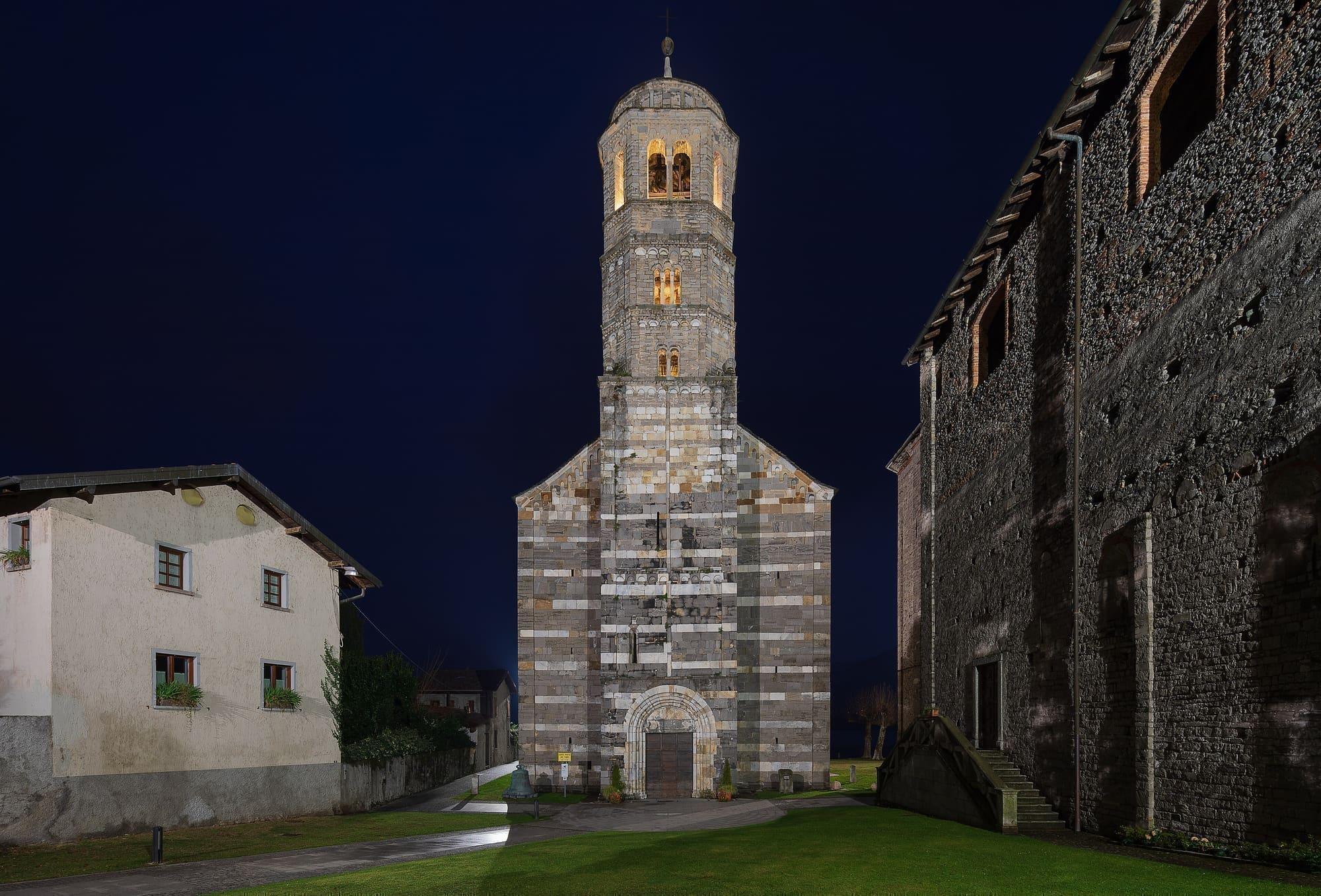
A baptistery with a mosaic floor and an octagonal basin for baptism by immersion is built at Gravedona. The Romanesque church of Santa Maria del Tiglio, in bands of light and dark stone, later rises over its remains; the baptistery came to light in the excavations of 1953.
Middle Ages
6th century to 1449 · 14 dates
607–617
Agrippinus founds an oratory at Piona
Agrippinus, Bishop of Como, builds an oratory dedicated to Saint Justina the martyr on the Olgiasca peninsula and prepares his own tomb there. A stone pillar kept at Piona records it; a small community, probably of hermits, was most likely already living there.
643
Rothari's Edict names the Comacine masters
Two chapters of the law of the Lombard king Rothari deal with the magister commacinus and settle who must pay for the damage if a house built by a master collapses. The name most probably means builders and stonecutters from the Como area, but its meaning is not settled.
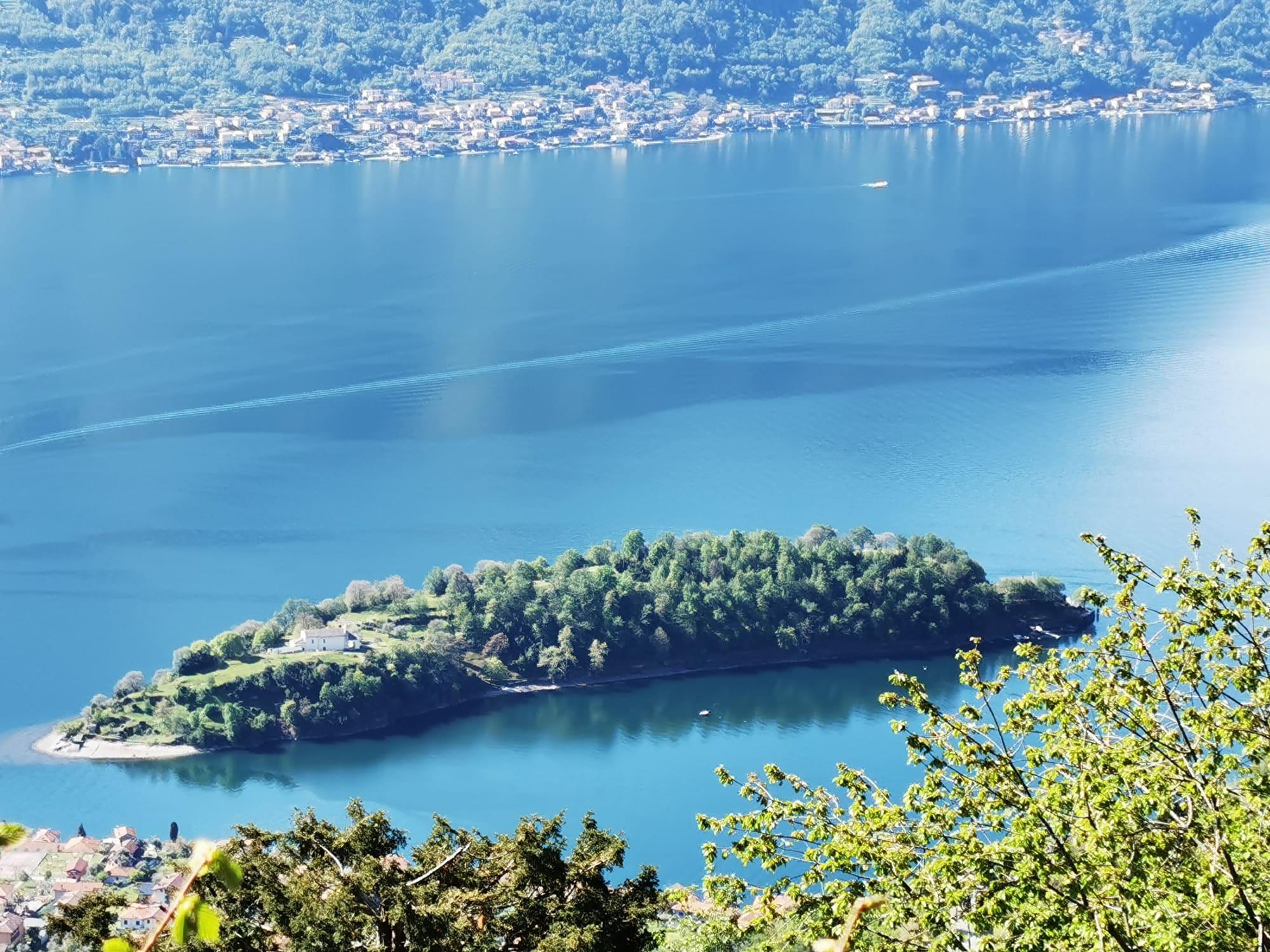
Second half of the 8th century
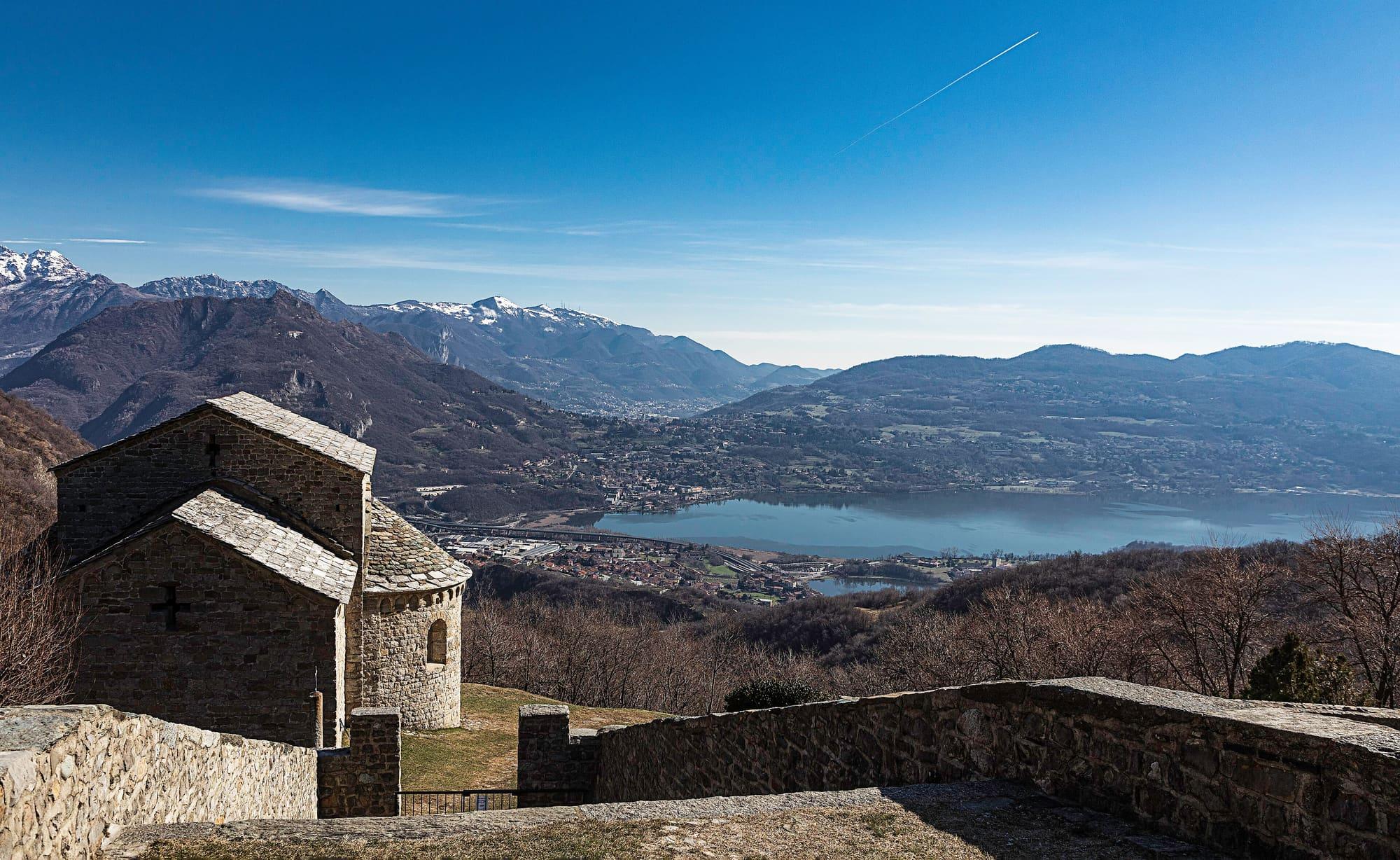
A monastery on the mountain above Civate
At the end of the Lombard kingdom a small monastery dedicated to Saints Peter and Paul is founded above Civate; legend credits King Desiderius with it. Between the 10th and the 11th century it becomes the Romanesque building of San Pietro al Monte, which can be reached only on foot.
Place: Basilica of San Pietro al MonteStory: The monks' lake
24 January 835
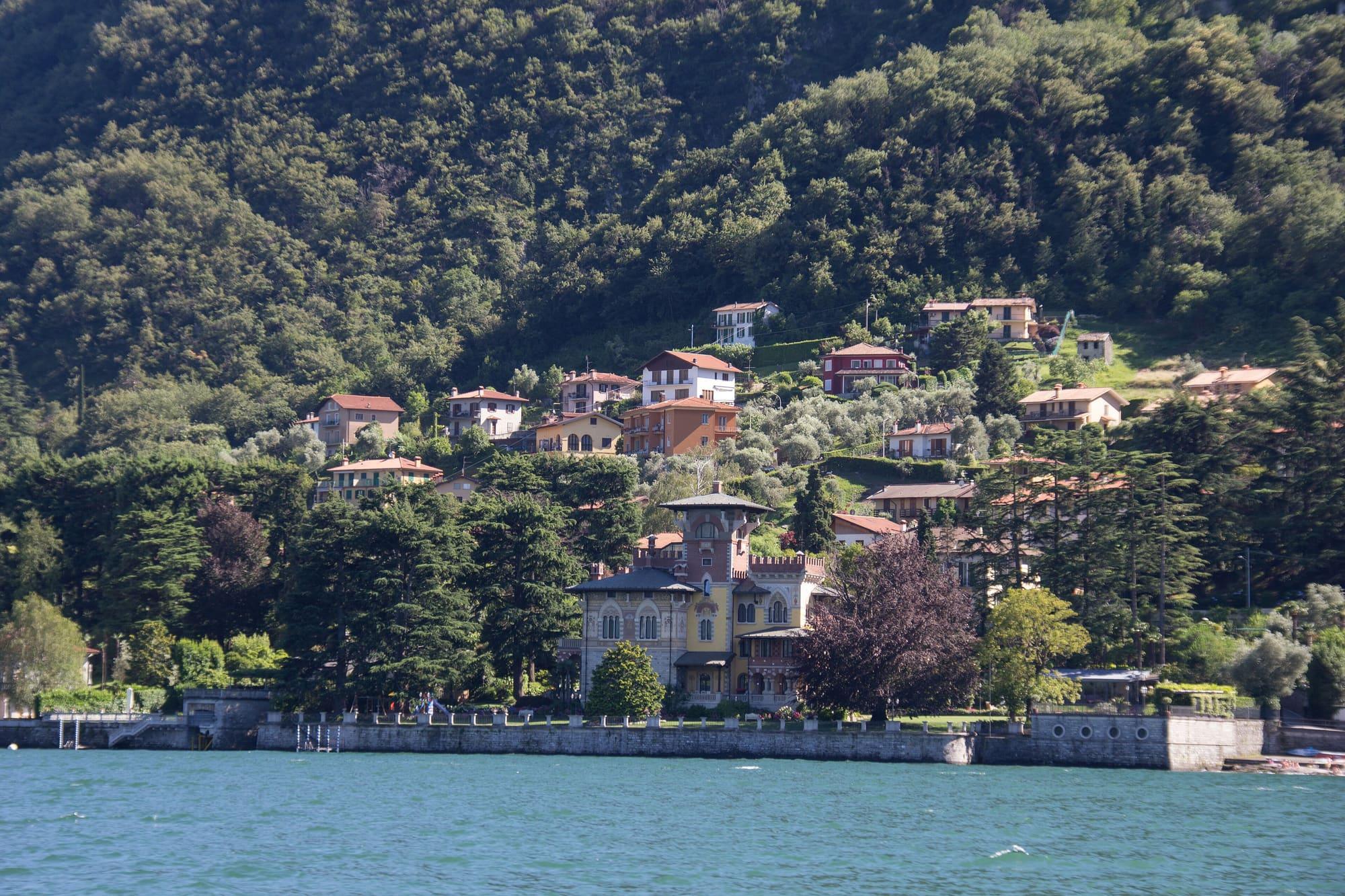
Limonta passes to the monastery of Sant'Ambrogio
By a charter of the Emperor Lothair, Limonta becomes a fief of the Milanese monastery of Sant'Ambrogio, which holds it until 1797. For centuries the oil of this stretch of the Lecco branch burns in the lamps on the tomb of Milan's patron saint.
Sant'Eufemia on the Isola Comacina
Bishop Litigerius founds the canonry of Sant'Eufemia on the island, a basilica with a nave and two aisles, more than forty metres long. The walled island is the centre of the pieve, the parish district that gathers the churches of the western shore between the Camoggia valley and the Perlana stream.
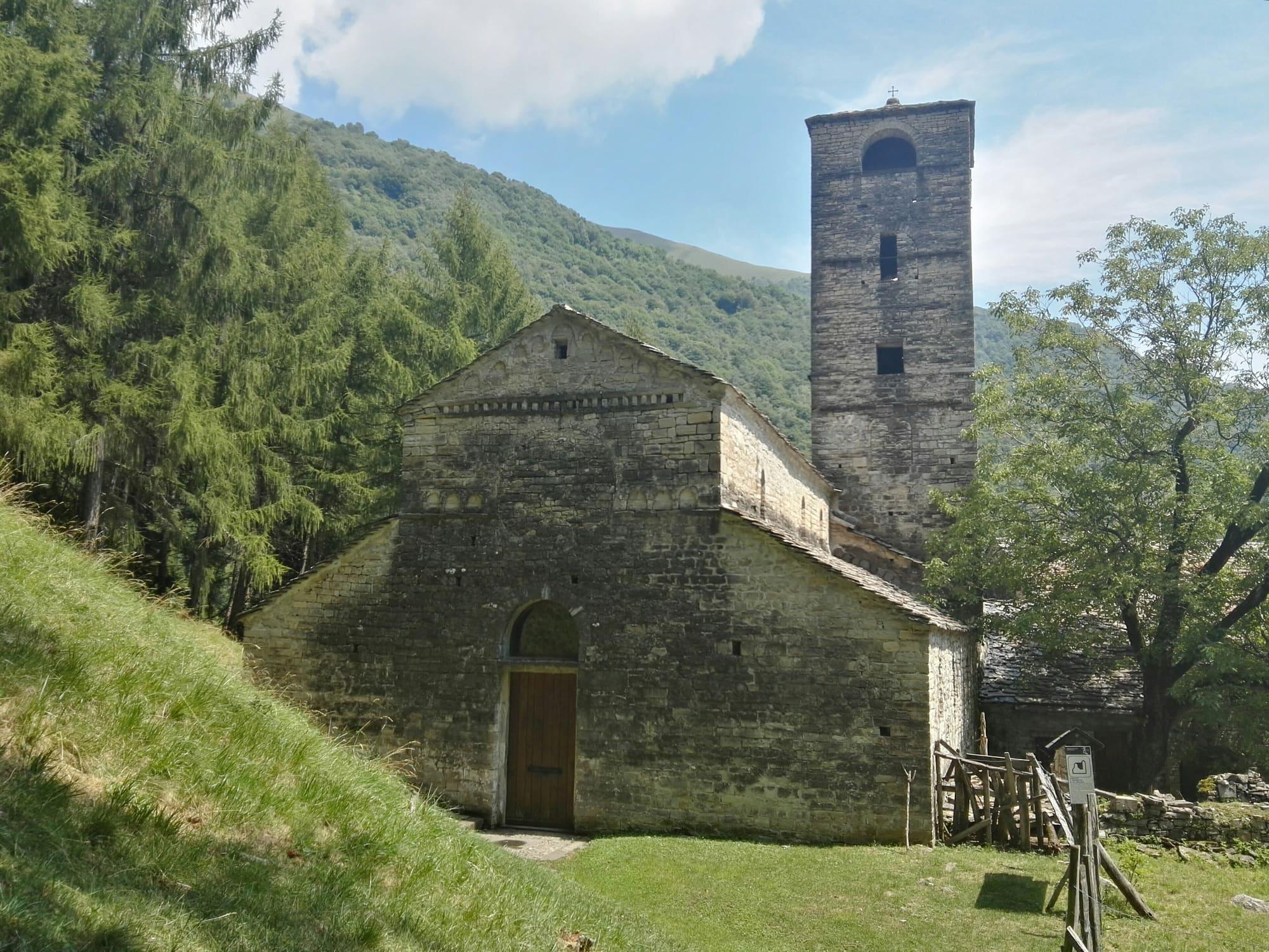
The first lands of the abbey of San Benedetto
Rainaldus, Bishop of Como, climbs into the Val Perlana to settle a quarrel between the men of Isola and those of Lenno over the church of San Benedetto. He obtains a gift of land and grazing rights: it is the oldest document of the abbey.
Urban II consecrates Sant'Abbondio
Outside the walls of Como, along the old Via Regina, the Benedictines have been rebuilding the church of Sant'Abbondio since 1010: a nave and four aisles and twin bell towers beside the apse. Pope Urban II, passing through Como, consecrates it.
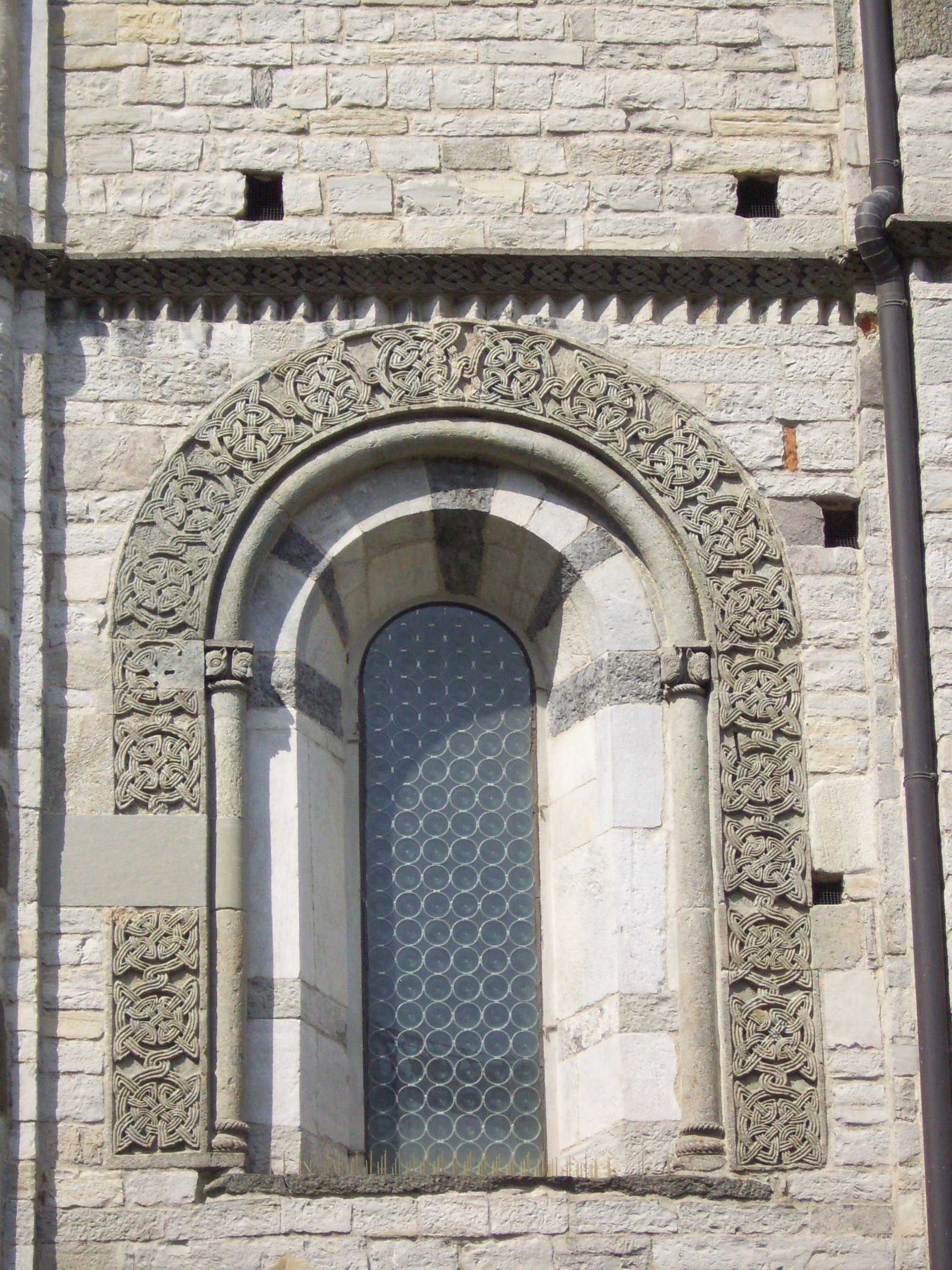
1118–1127
The Ten Years' War between Como and Milan
The Isola Comacina and the lake's parish districts side with Milan against Como, and the lake becomes a battlefield. In 1124 the people of Como occupy and burn the island, but Milan wins the war: in August 1127 Como is taken and has to accept the demolition of the town, its churches excepted.
The Cistercians at Acquafredda
Azzo, known as Pellegrino, gives the Cistercians of Morimondo land above Lenno for a monastery to keep the relics of Saints Agrippinus and Domenica, brought from the Isola Comacina. The name, ‘cold water', comes from a nearby spring; the church of Santa Maria dell'Uliveto is consecrated in 1193.
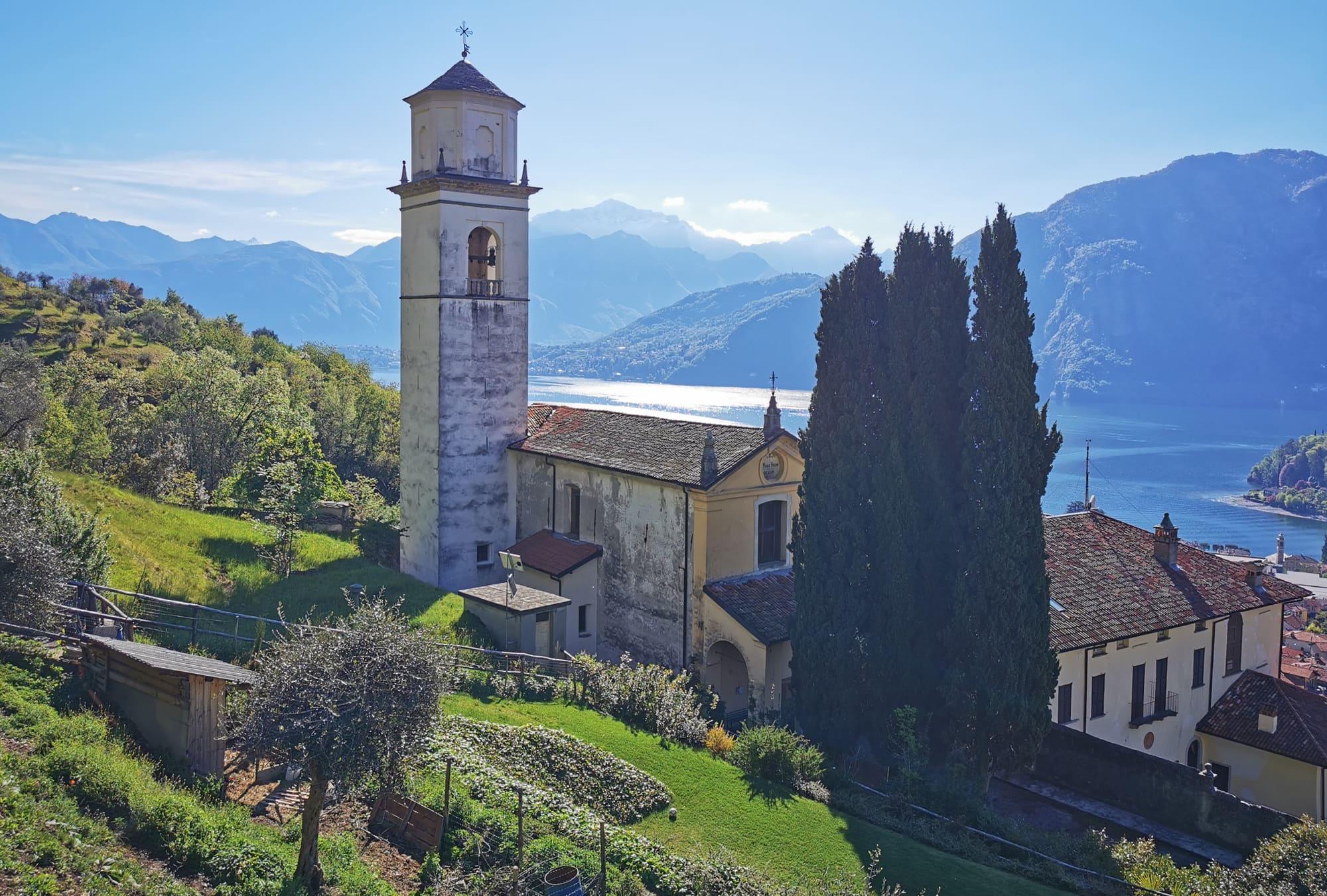
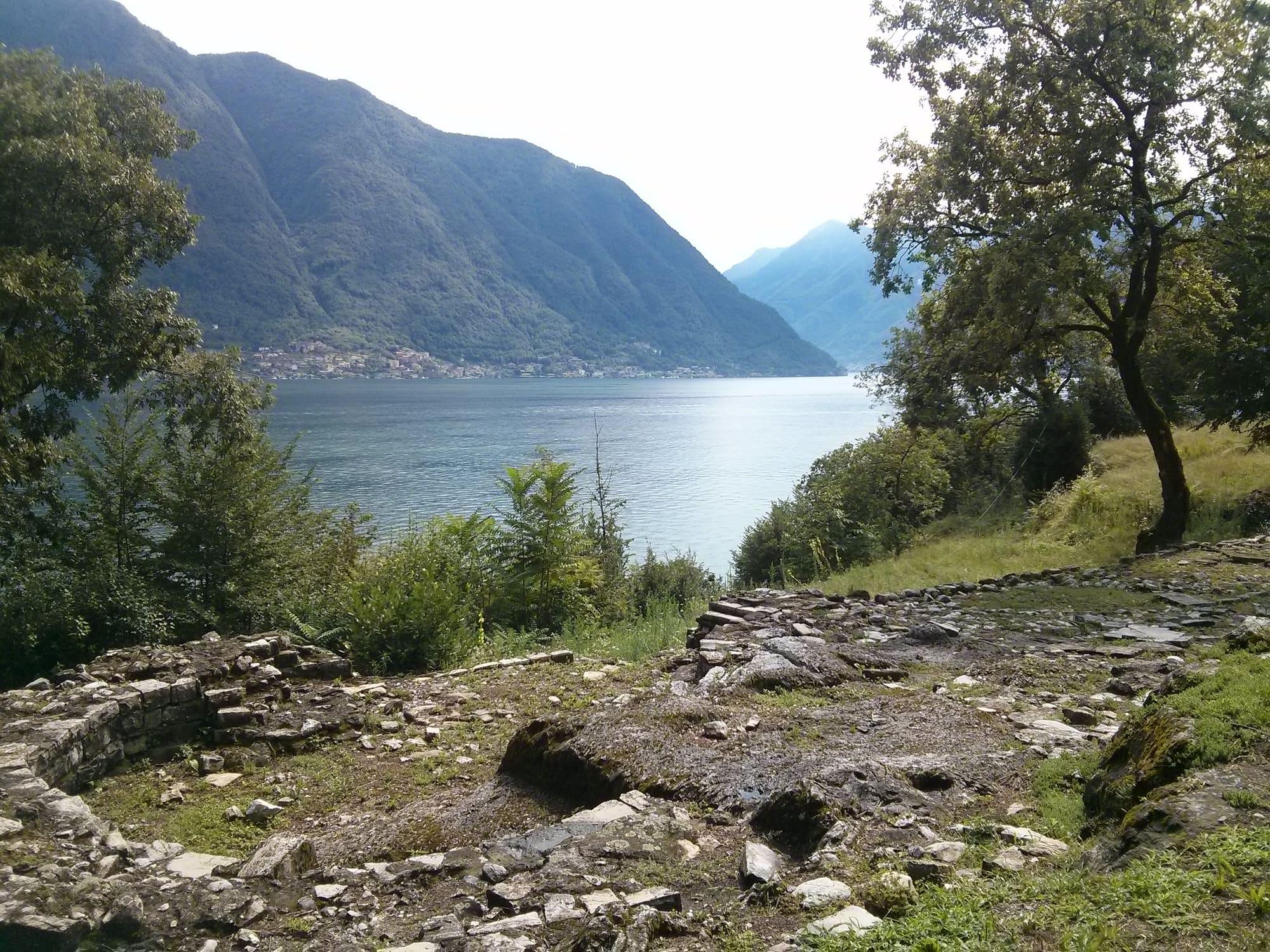
Como razes the Isola Comacina
Strong again with Frederick Barbarossa on its side, Como destroys the island down to its foundations and scatters its stones in the lake so that it cannot be rebuilt. The islanders flee to Varenna, where the quarter that takes them in is called Insula nova, the new island; in 1175 a decree of Barbarossa confirms the ban on rebuilding.
The comballo, the lake's cargo boat
The comballo already appears in a document that forbids the boatmen of Lake Como to go into partnership with one another. Twenty to thirty metres long, flat-bottomed and with a single square sail, it carries Moltrasio stone, sand, lime and wood for the kilns.
1252–1257
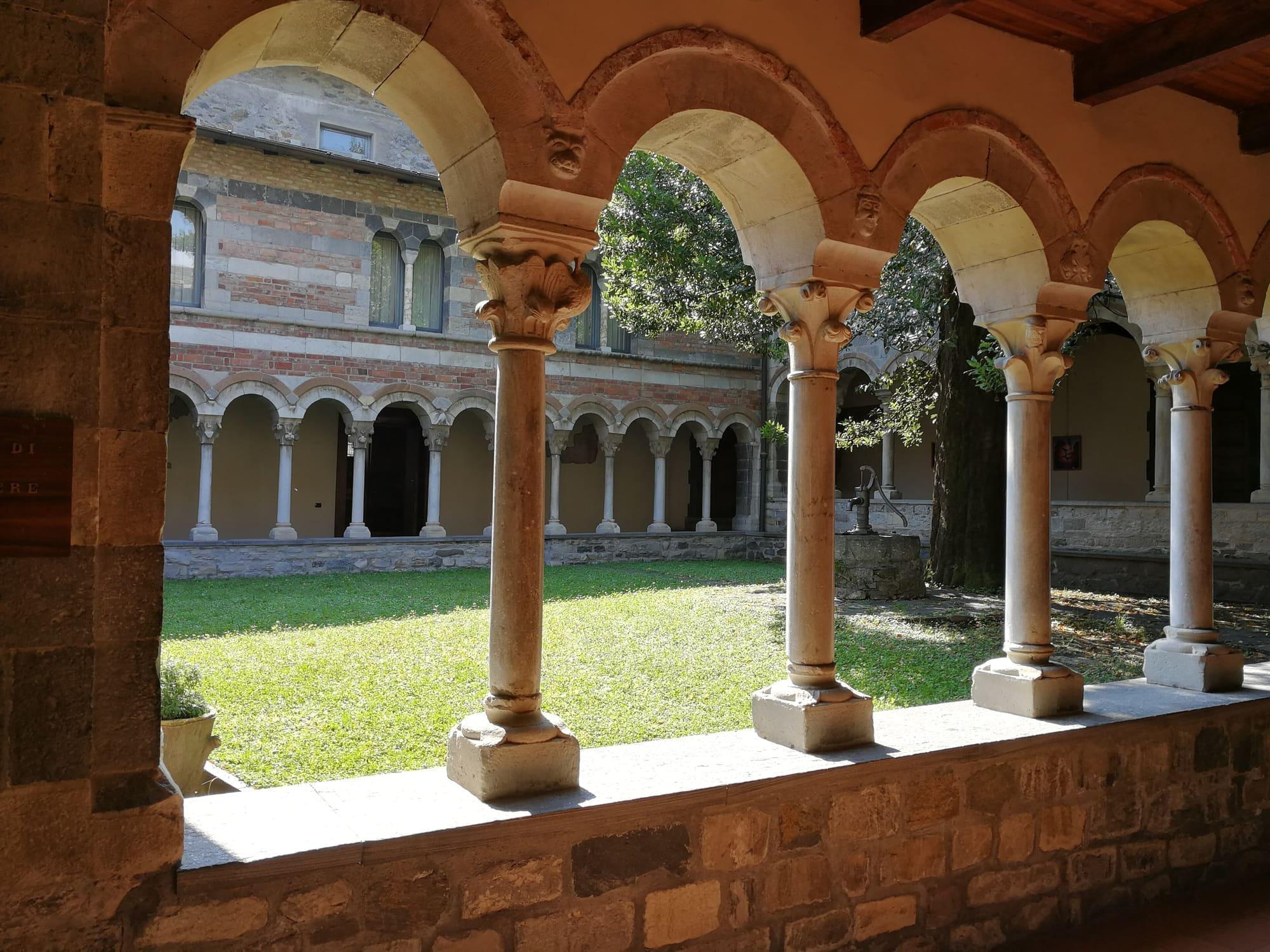
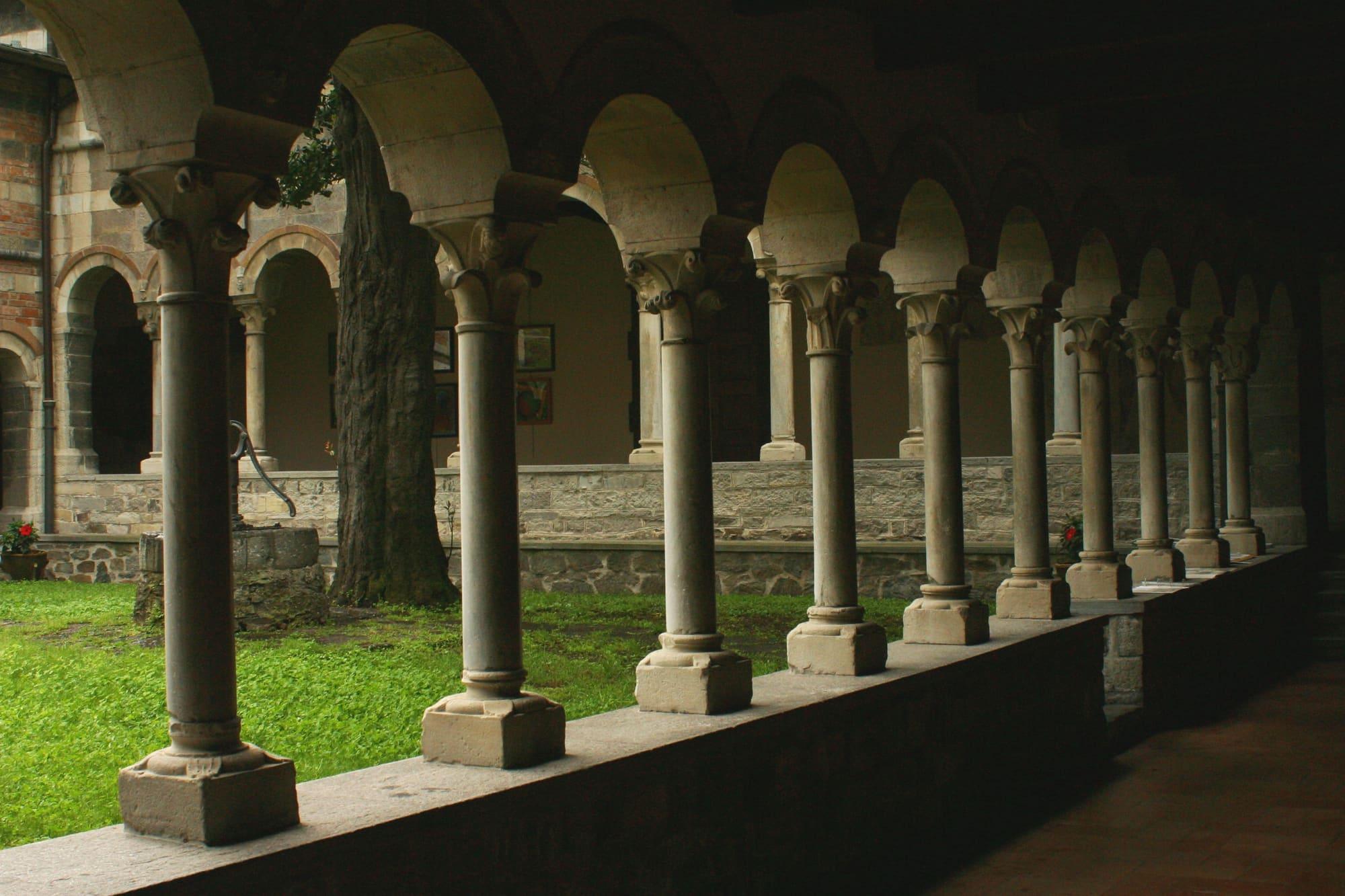
The cloister of Piona
Prior Bonaccorso de Canova, from Gravedona, has the abbey's cloister built at his own expense, as two inscriptions record. The capitals, each one different, carry hooked leaves, eagles with spread wings and small heads; the builders' names are unknown.
1336–1338
Azzone Visconti's bridge at Lecco
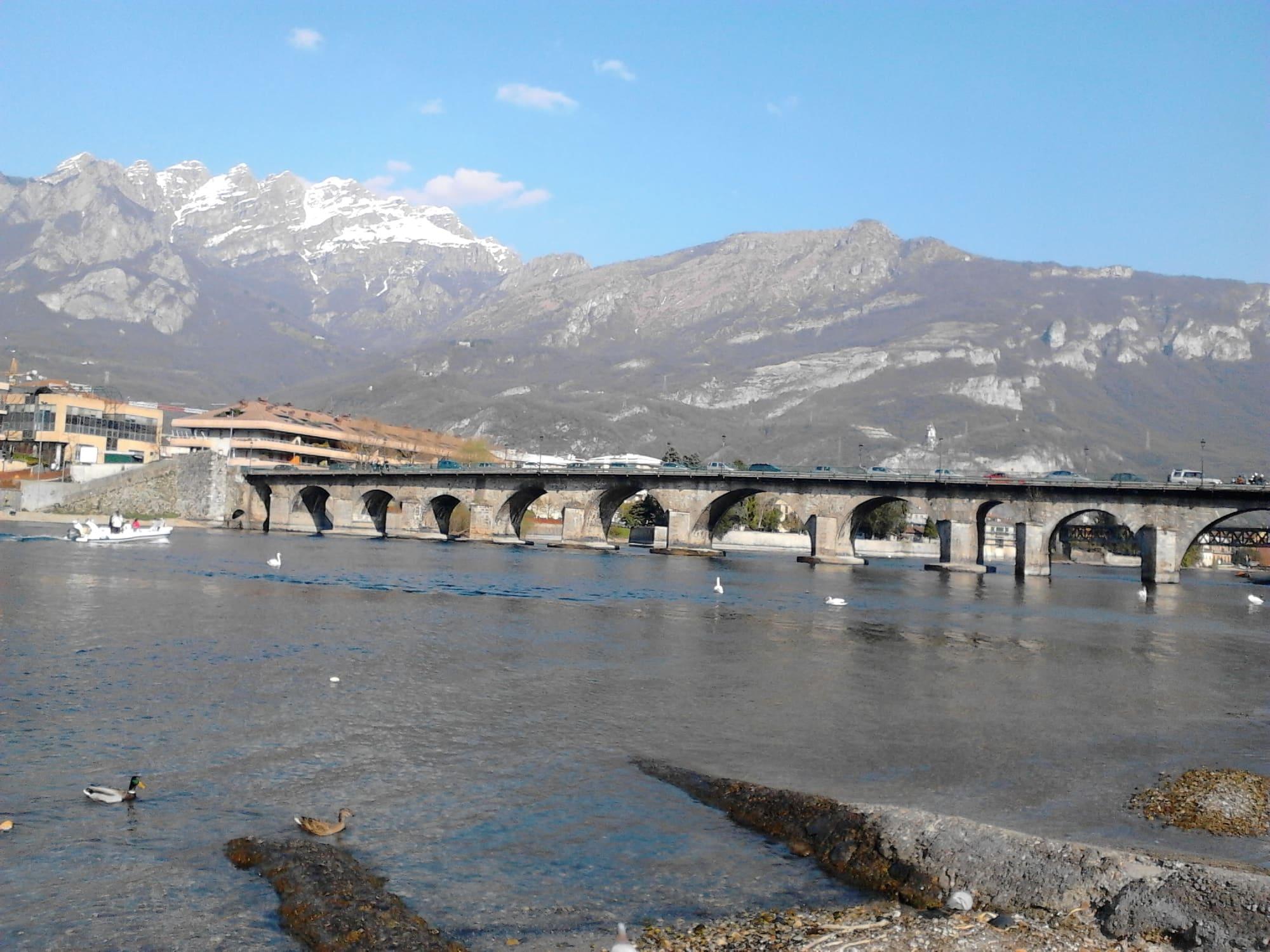
Azzone Visconti, lord of Milan, has the bridge built over the Adda where the river leaves the lake. It has eight arches; the people of Como, convinced that its narrowing floods their town, obtain three more between 1354 and 1440.
Place: Ponte Azzone ViscontiStory: When the lake comes into town
The first recorded flood in Como
The lake comes into the town: it is the first flood on record, in a ducal letter of 20 September. After it the bridge at Lecco is given a tenth arch, in 1434, to let more water out of the lake.
Renaissance and foreign rule
1450–1699 · 12 dates
1457–1486
The façade of Como Cathedral
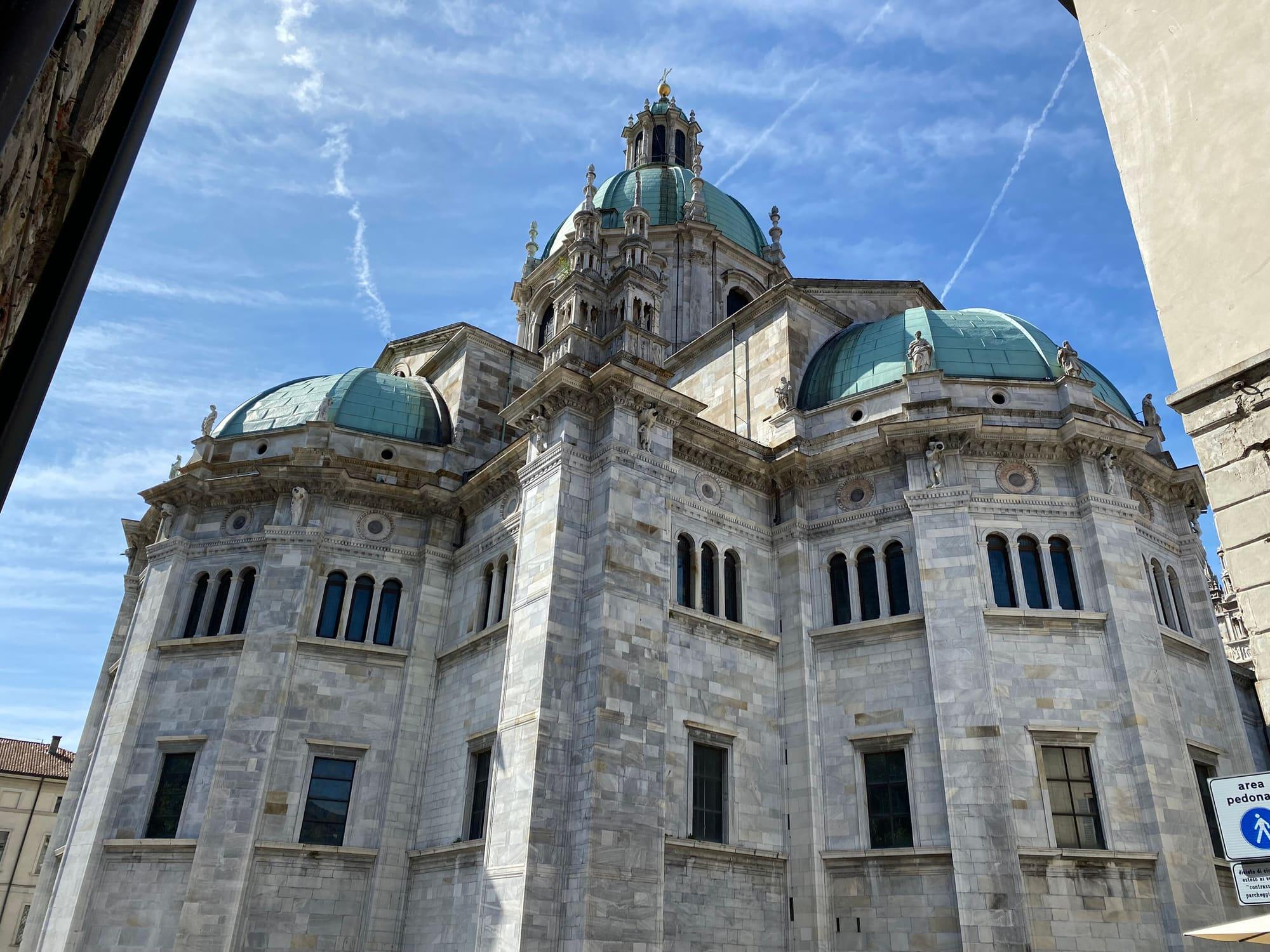
From 1452 the cathedral works use white marble from Musso, which becomes their main material. The façade, begun in 1457, is completed in 1486 with the rose window.
c. 1490
Leonardo takes notes on the lake
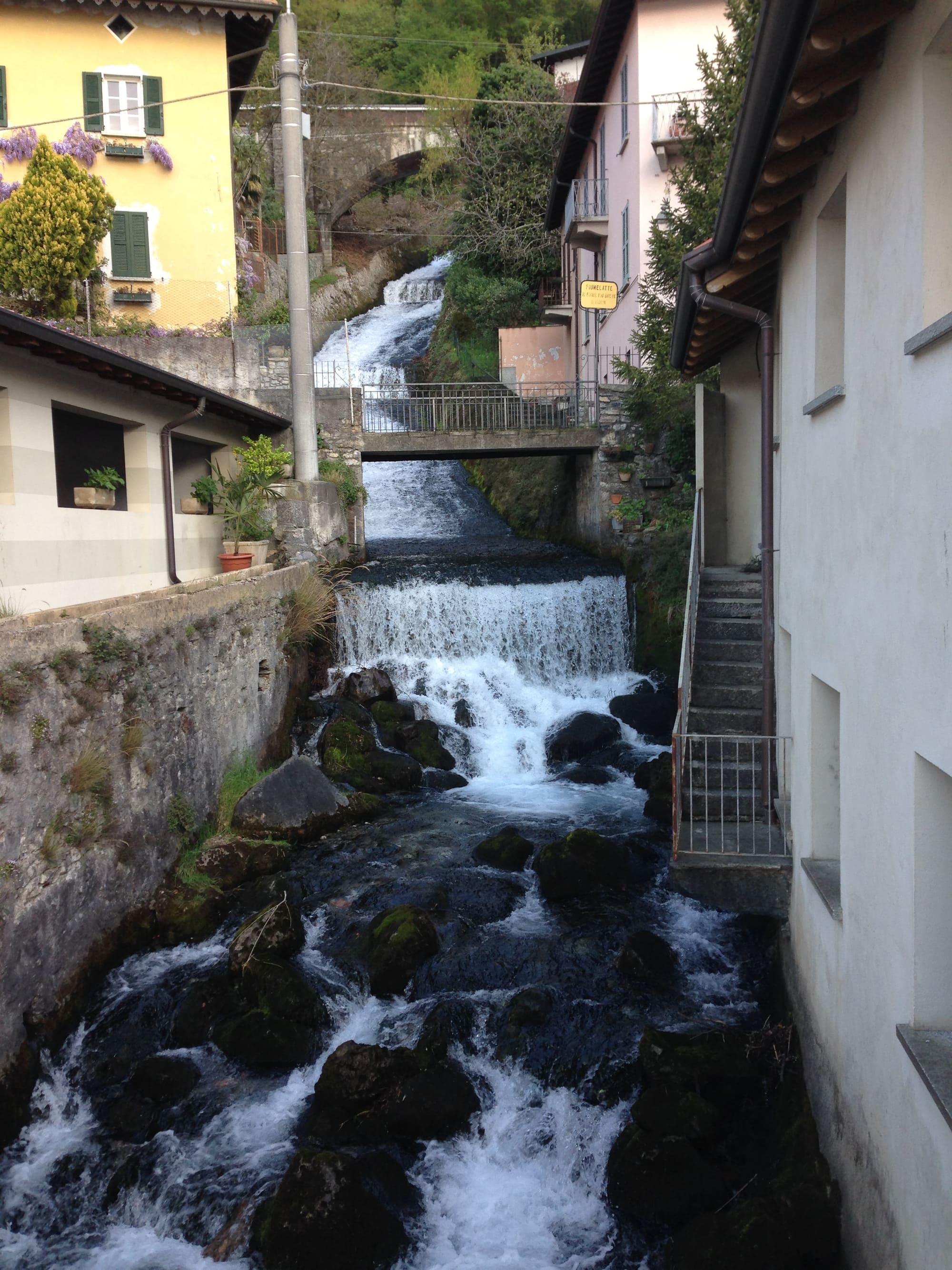
On a sheet of the Codex Atlanticus, Leonardo da Vinci lists the lake's valleys, rivers, waterfalls and mines, and advises making these trips in May. Of the Fiumelatte, which he calls Fiumelaccio, he writes that it falls sheer into the lake with an immense din and roar.
By 1498
The two Plinys on the cathedral façade
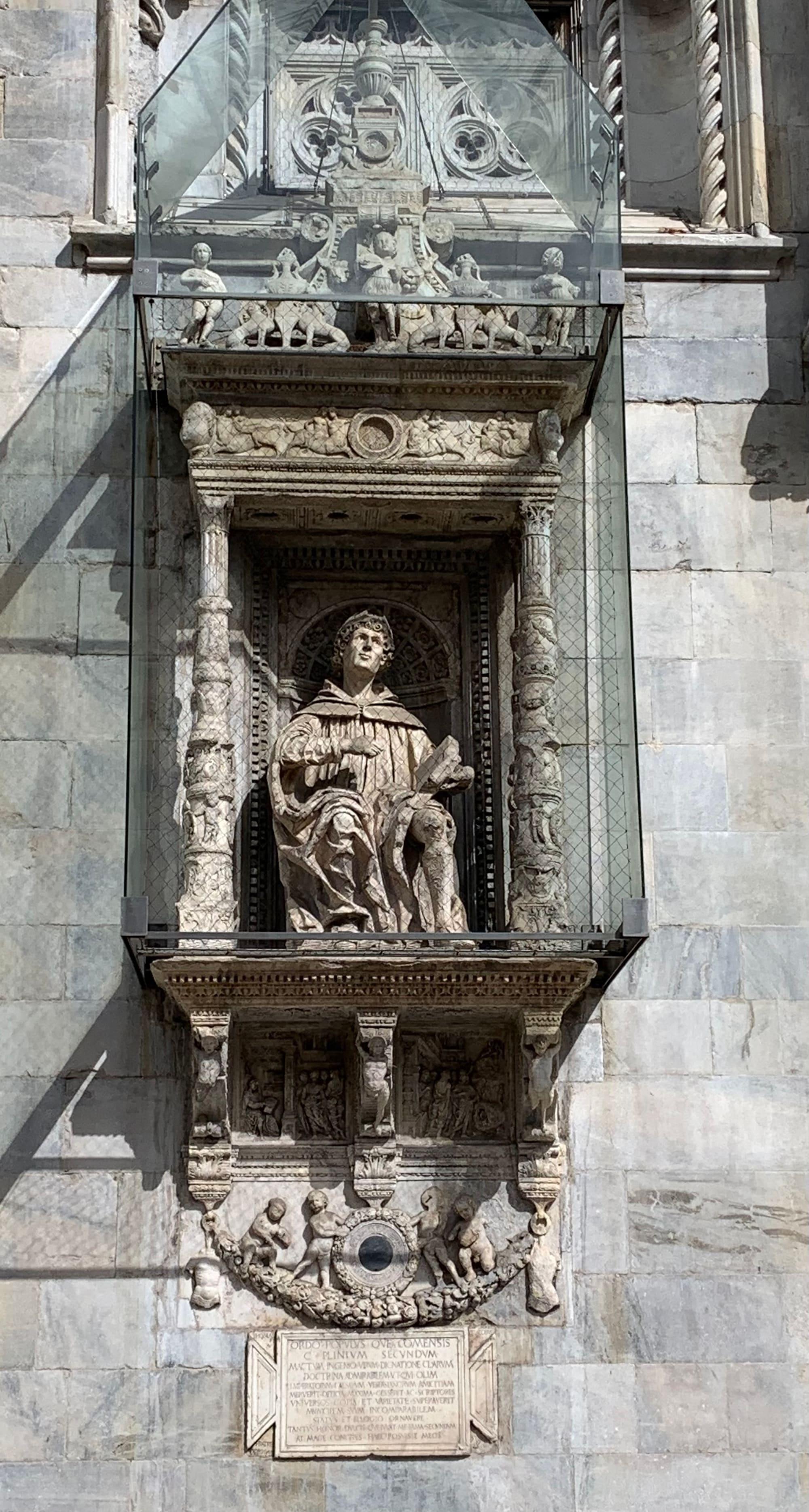
The brothers Giacomo and Tommaso Rodari complete the two aedicules on either side of the main doorway: Pliny the Elder sits on the left, Pliny the Younger on the right. In 1578, at the height of the Counter-Reformation, the statues survive an attempt to remove them.
The Medeghino settles at Musso
Gian Giacomo Medici, known as the Medeghino, installs himself as castellan of the stronghold on the Sasso di Musso and turns it into a fortress and a palace. With an armed flotilla he raids the lake's trade and its shoreline villages and rules the upper lake.
Place: Sant'Eufemia, MussoStory: The Medeghino, lord of the lake
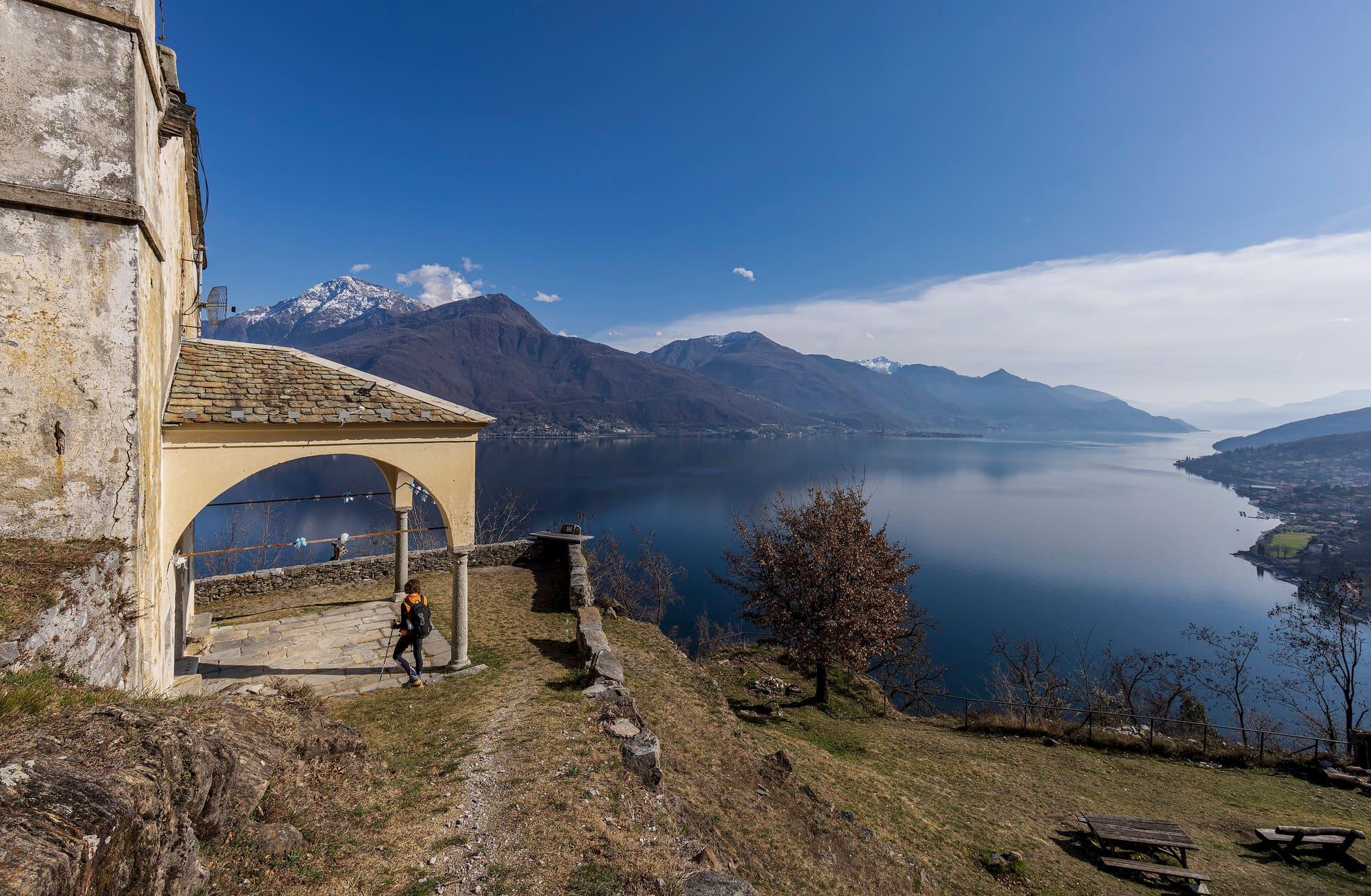
Charles V makes the Medeghino Marquis of Musso
Now in the emperor's service, the Medeghino is granted the marquisate of Musso over many lands around the lake, Como excepted, with full jurisdiction and the right to mint coins. The coat of arms of the municipality of Musso bears the crown of that marquisate.
The castle of Nesso is destroyed
In the war against the Medeghino, the castle that Como had built in 1449 above the gorge of Nesso is destroyed. What remains is a wall up to fifteen metres high.
Place: San Lorenzo Castle, NessoStory: The Medeghino, lord of the lake
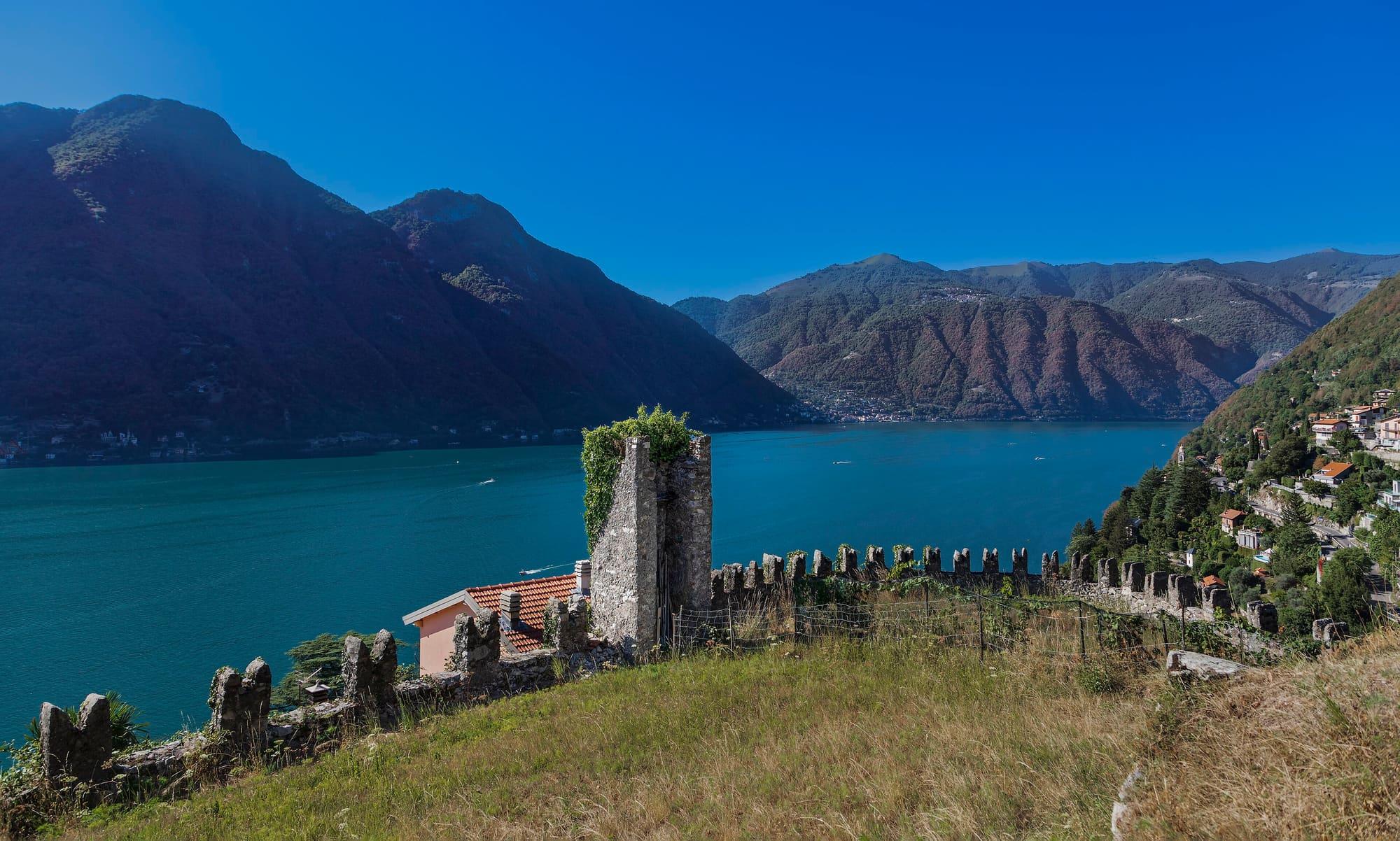
The castle of Musso is dismantled
After the war that began in 1531 against the Grey Leagues, the Swiss cantons and the Duke of Milan, the Medeghino comes to terms with the duke: he gives up Musso, Lecco and the other lands he holds and receives the marquisate of Marignano. The castle on the Sasso is dismantled, and the Swiss obtain a promise that it will not be rebuilt.
Place: Musso Civic History MuseumStory: The Medeghino, lord of the lake
1565–1570
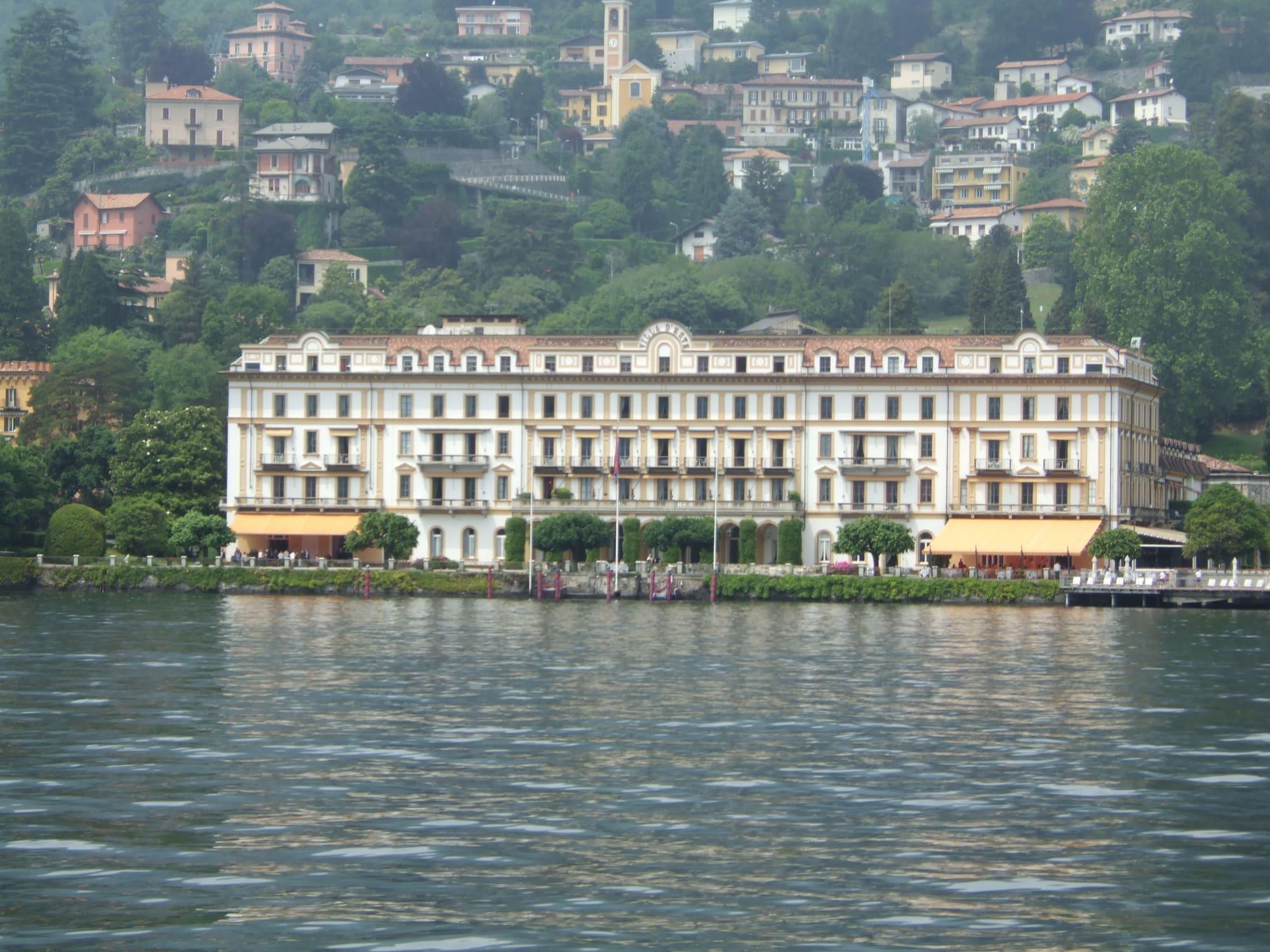
Cardinal Gallio's villa at Cernobbio
Cardinal Tolomeo Gallio, born at Cernobbio, has a summer residence built on the lake to a design by Pellegrino Tibaldi. In 1815 it is bought by Caroline of Brunswick, who names it Villa d'Este.
Place: Villa d'Este, CernobbioStory: The century of the grand hotels
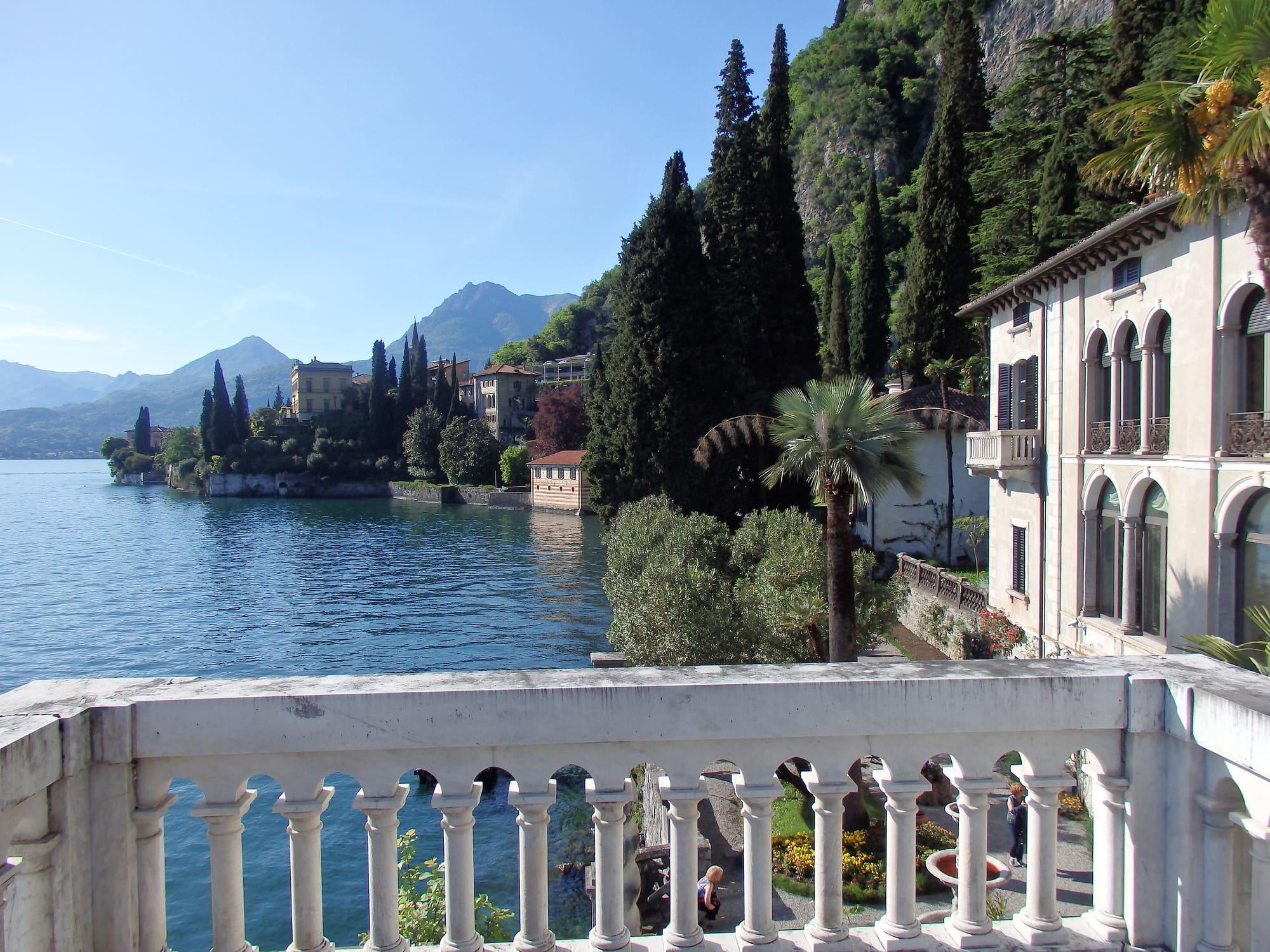
The convent at Varenna becomes a house
Carlo Borromeo, Archbishop of Milan, suppresses the Cistercian convent at Varenna, where too few nuns remain. In 1569 Paolo Mornico buys it and makes it a house: this is the origin of Villa Monastero.
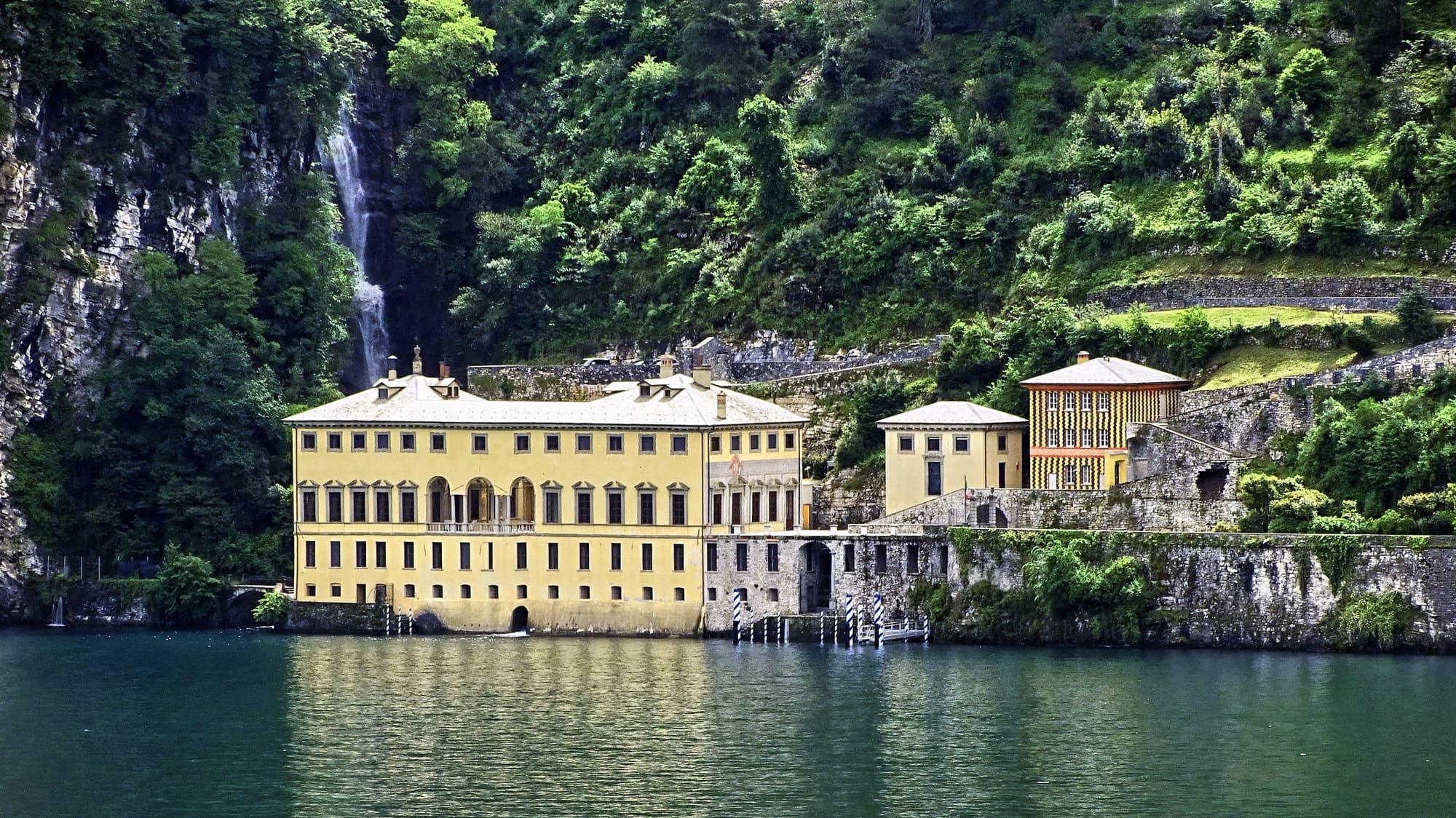
A villa around the Pliniana spring
Count Giovanni Anguissola, governor of Como, buys the land at Torno where the spring described by Pliny the Younger rises, and builds the villa there in three years. In the loggia two inscribed slabs carry Pliny's letter, in Latin and in Italian.
Place: Villa Pliniana, TornoStory: The two Plinys of Lake Como
1606–1624
The sanctuary of the Madonna del Moletto
The Cistercian monk Roberto Rusca, who came to Limonta in 1605, builds the sanctuary of the Madonna del Moletto on the rock that drops sheer into the lake, so that boatmen on the water and farmers on the paths can see it.
Place: Madonna del Moletto Sanctuary, Oliveto LarioStory: The olive coast
The lake enters Como Cathedral
During the flood the water reaches the steps of the high altar inside the cathedral. Two plaques, in Via Volta and Via Diaz, record it; in 1703 the lake reaches the cathedral again, as far as the organ piers.
Eighteenth century
1700–1799 · 5 dates
1711–1753
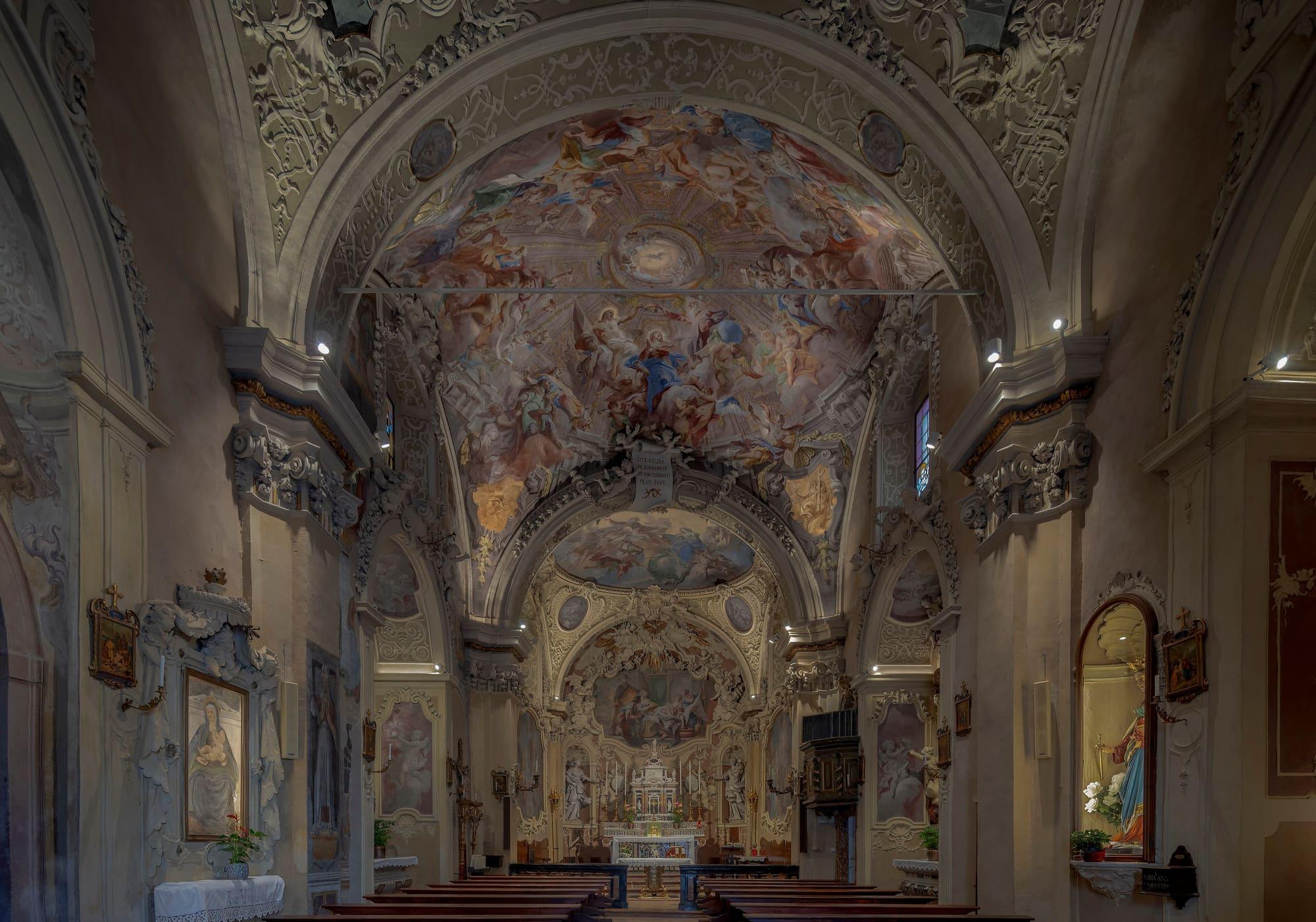
The Carloni brothers remake the church at Scaria
The brothers Diego and Carlo Innocenzo Carloni remake the church of Santa Maria for Scaria, their home village, with stucco and frescoes. They are among the artists of the Val d'Intelvi who work all over Europe: Carlo Innocenzo also paints in Ljubljana Cathedral and in the palaces of Vienna.
Place: Santa Maria and Museum of Sacred Art, ScariaStory: The Comacine masters
Alessandro Volta is born
Volta is born in Como, in the house in Via Volta where he will die in 1827. As a young man he does his first experiments in Canon Gattoni's laboratory, in a tower of the town walls; in 1778 he takes the chair of experimental physics at the University of Pavia.
Joseph II shelters at Blevio
Caught by a storm on the lake, the Emperor Joseph II takes shelter in a house on the shore at Blevio. In the second half of the nineteenth century the ballerina Maria Taglioni retires there, and the villa takes her name.
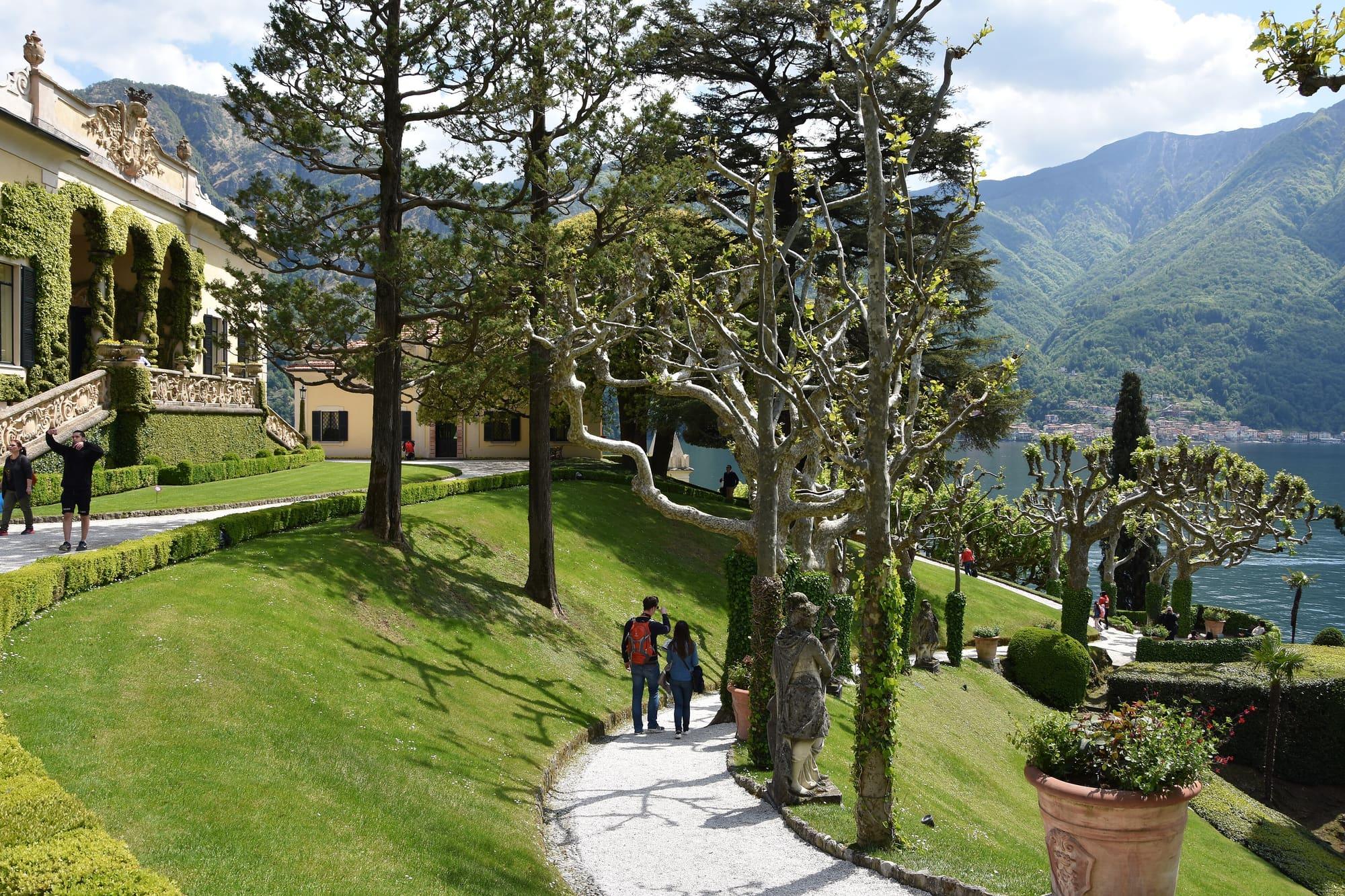
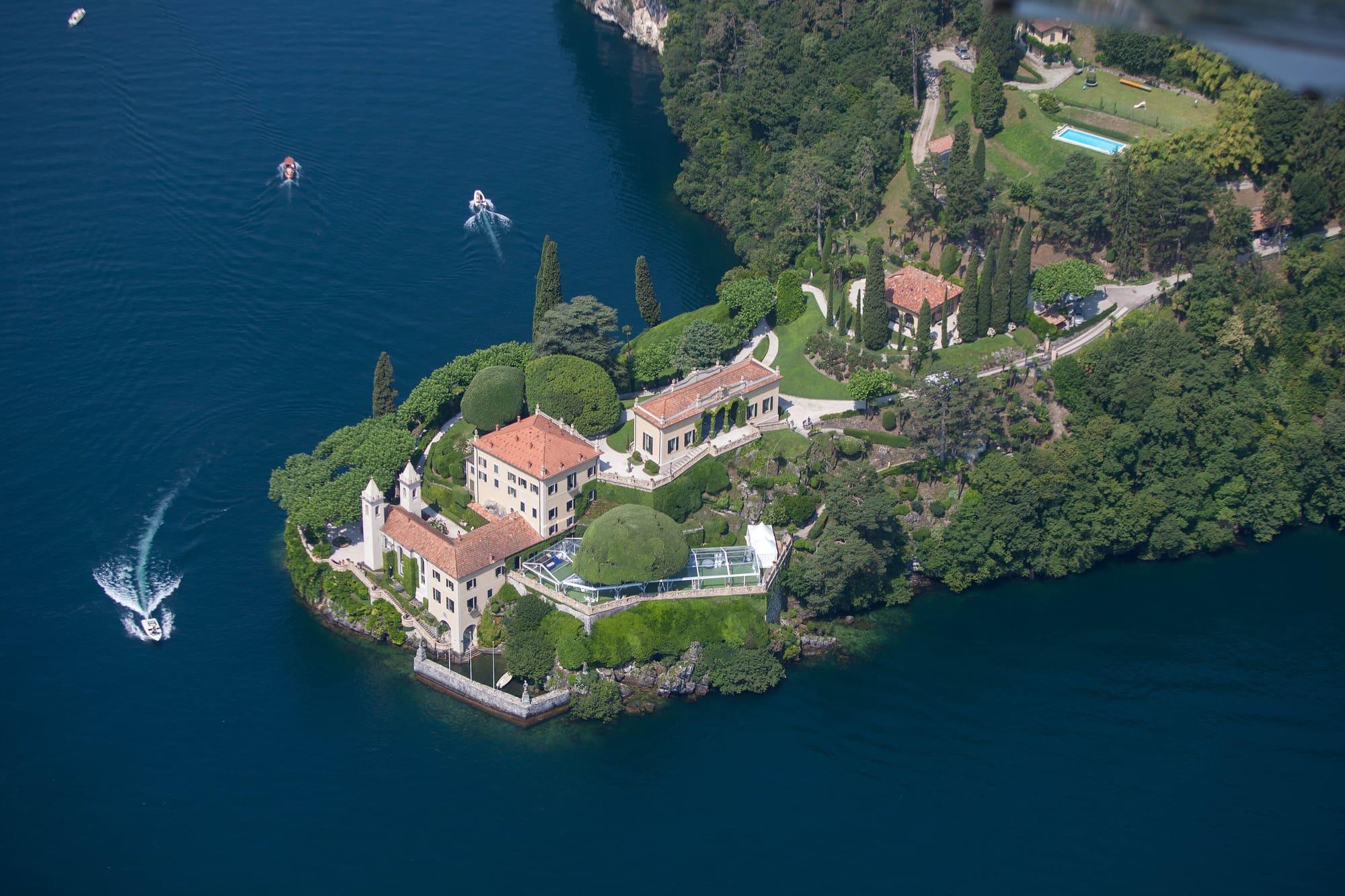
Villa del Balbianello on the Lavedo point
Villa del Balbianello is built on the remains of a Franciscan convent at the tip of the Dosso di Lavedo. As the Milanese aristocracy takes to summering on the lake, the shore fills with residences that face the water, because guests arrive by boat.
Place: Villa del BalbianelloStory: The villas and the microclimate
Late 18th century
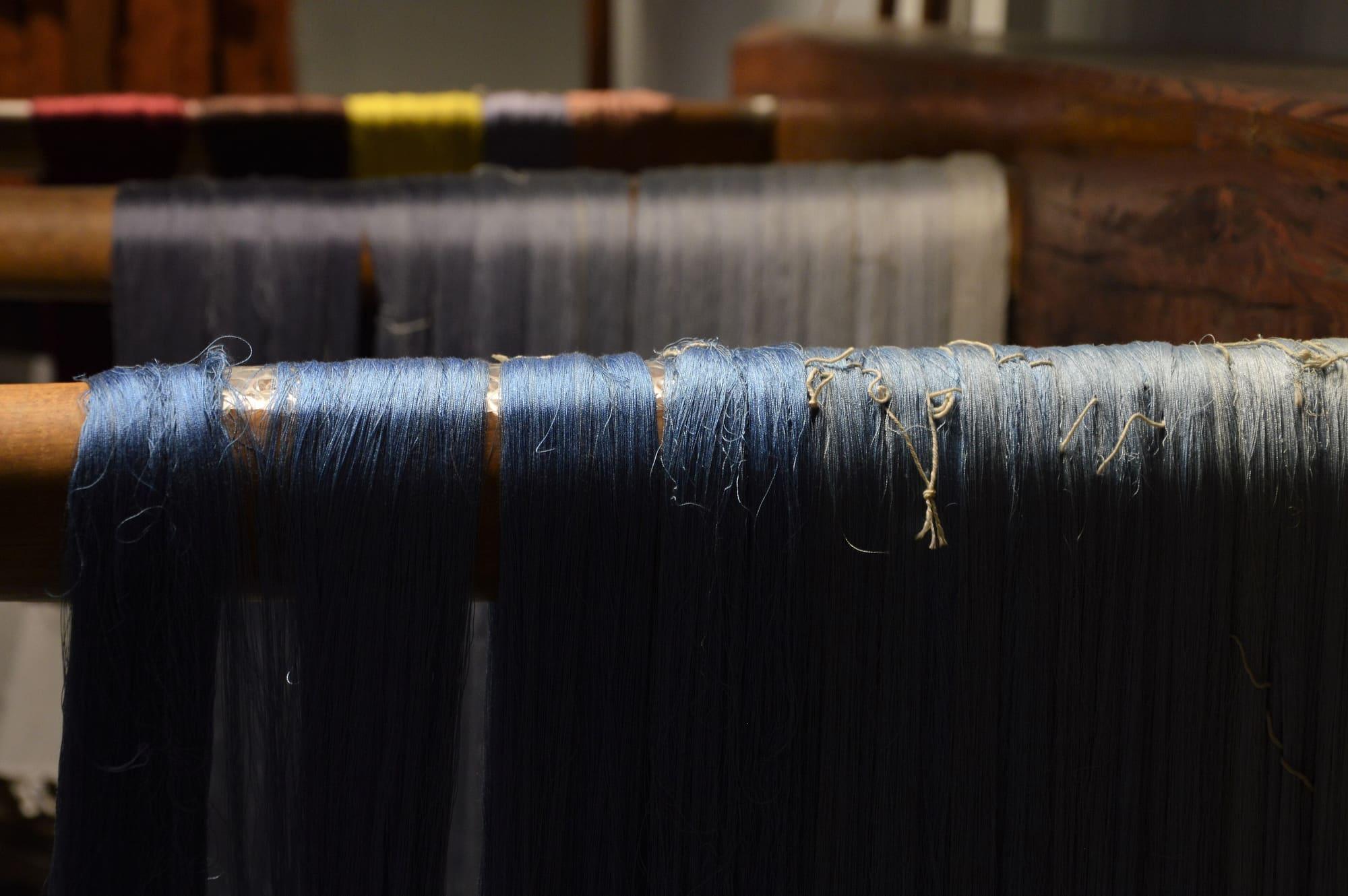
Silk leaves the home
After three centuries as cottage work, with silkworms reared at home and thread spun in winter, silk processing moves into mills along the streams, which provide the power. In the nineteenth century Como becomes one of Europe's leading silk centres.
Nineteenth century
1800–1899 · 22 dates
Volta announces the battery
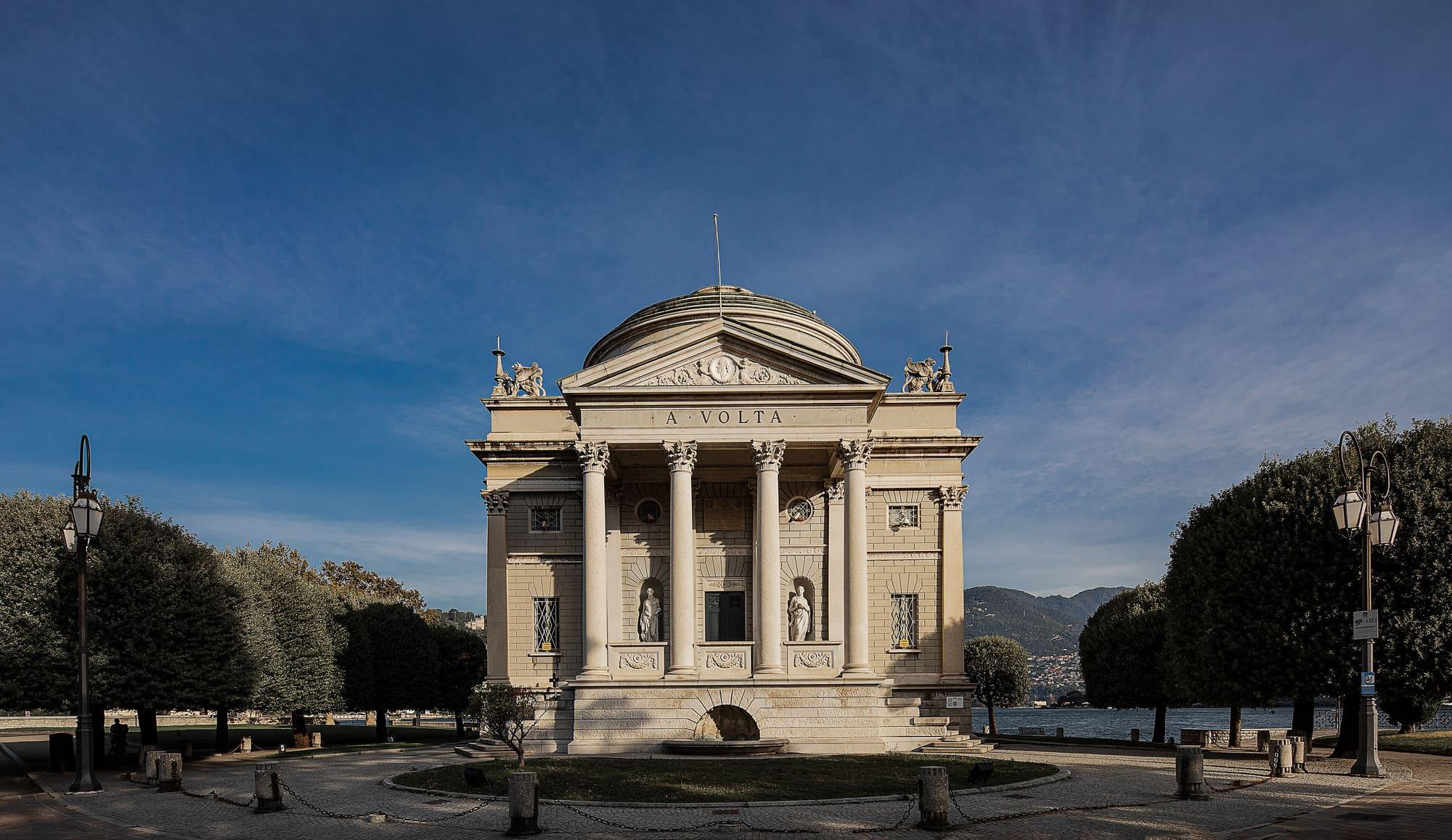
In a letter to Joseph Banks, President of the Royal Society in London, Volta announces a new device: a column of discs of different metals, separated by pieces of card soaked in salt water. He had built it in Como at the end of 1799; from its shape it is called a pila, a pile.
Place: Tempio VoltianoStory: The battery, the fire and the Tempio
1808–1810
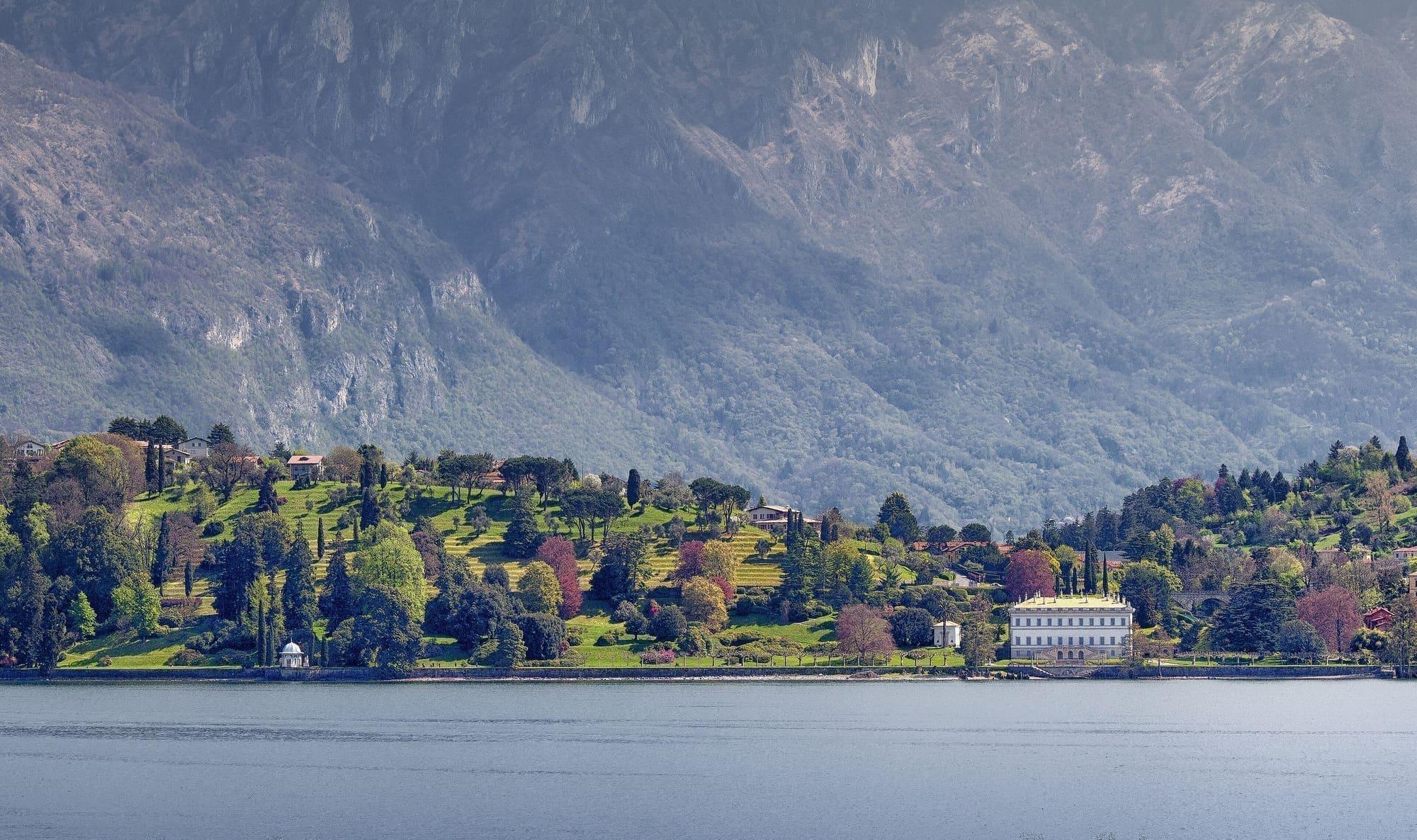
Villa Melzi at Bellagio
Francesco Melzi d'Eril, vice-president of Napoleon's Italian Republic, has a neoclassical villa built at Bellagio, with an English-style park that runs level along the water for hundreds of metres.
Place: Villa Melzi GardensStory: The villas and the microclimate
Shelley looks for a house at the Pliniana
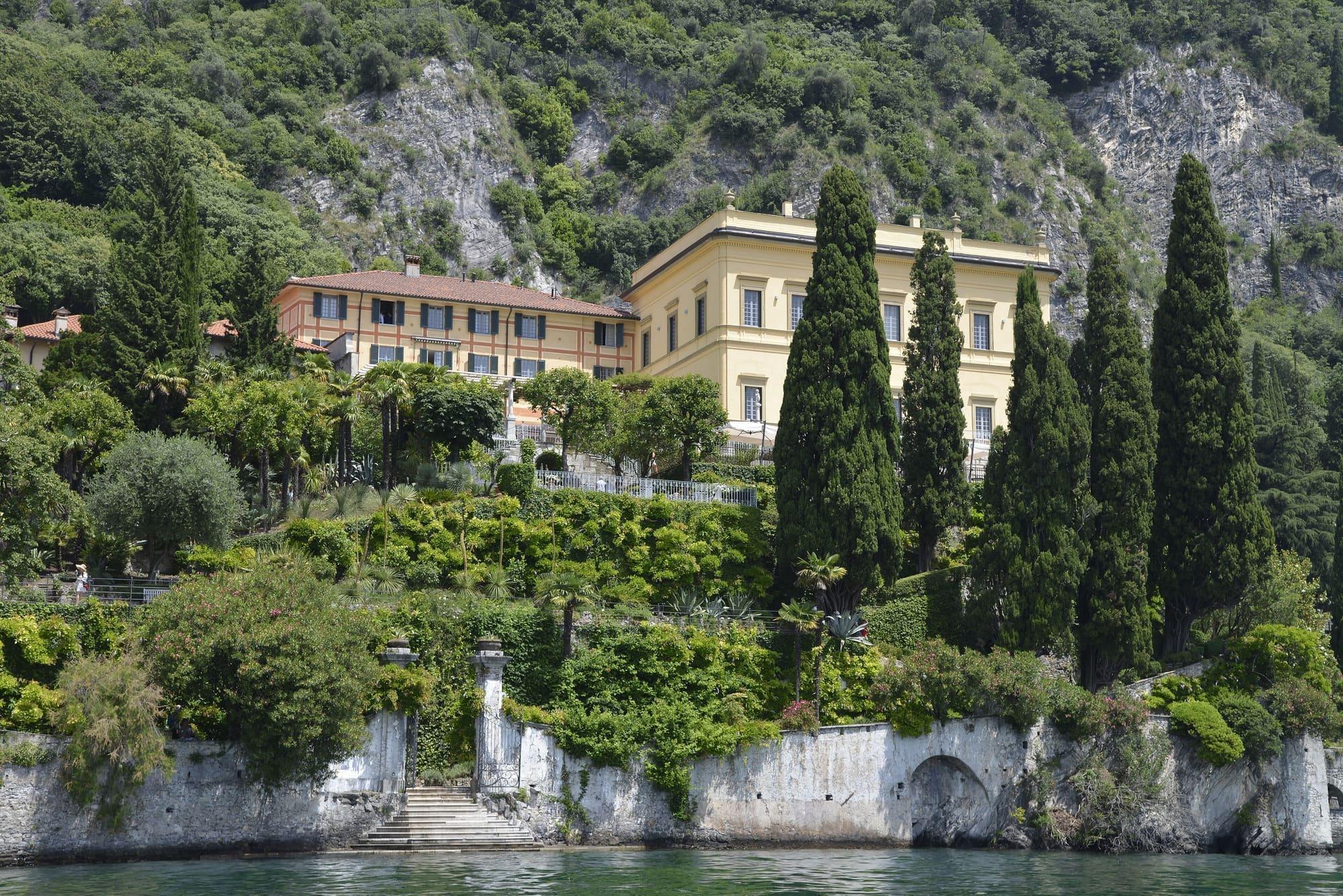
From Milan, Percy Bysshe Shelley writes to his friend Thomas Love Peacock that he has been to Como to look for a house. The landscape he likes best is that of Villa Pliniana, half in ruins, which he and Mary hope to obtain; the negotiations come to nothing.
A hotel at Villa Cipressi
The Venini family opens a hotel at Villa Cipressi, in Varenna, and runs it until 1864. In the same years, around 1825, Abbondio Genazzini's inn on the shore at Bellagio becomes a proper hotel.
Place: Villa Cipressi GardensStory: The century of the grand hotels
The first steamboat
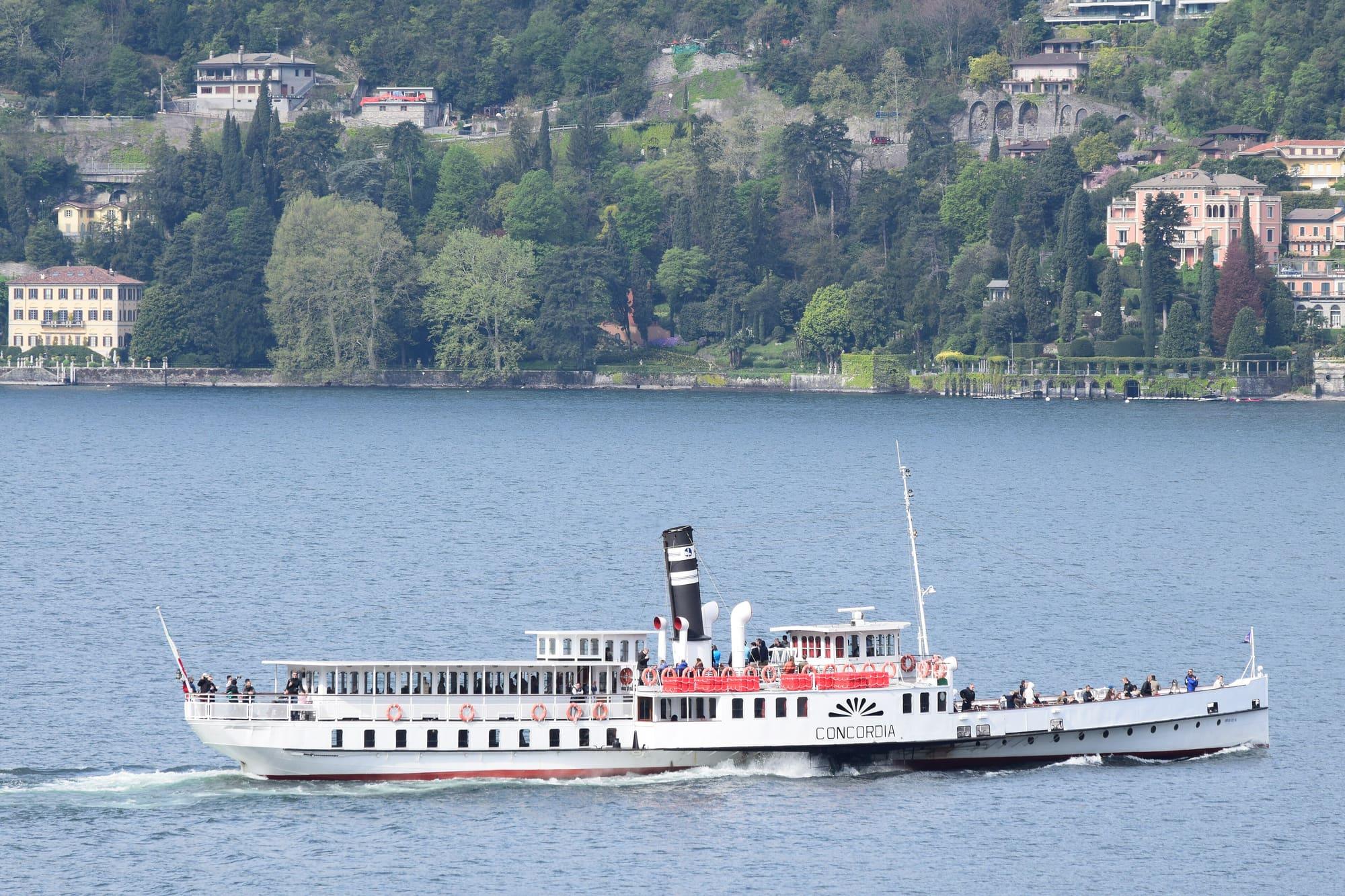
The Lario, a wooden paddle steamer launched on 29 July from the Olmo beach at Borgo Vico, begins daily runs between Como and Domaso. A journey from Como to Colico, which under sail and oar could take a day or two, now takes a few hours and keeps to a timetable.
‘The Betrothed' names the Lucia boats
Alessandro Manzoni's novel is published for the first time. In it Lucia crosses the lake by night in a working boat with hoops for an awning, and from then on that boat is called a Lucia.
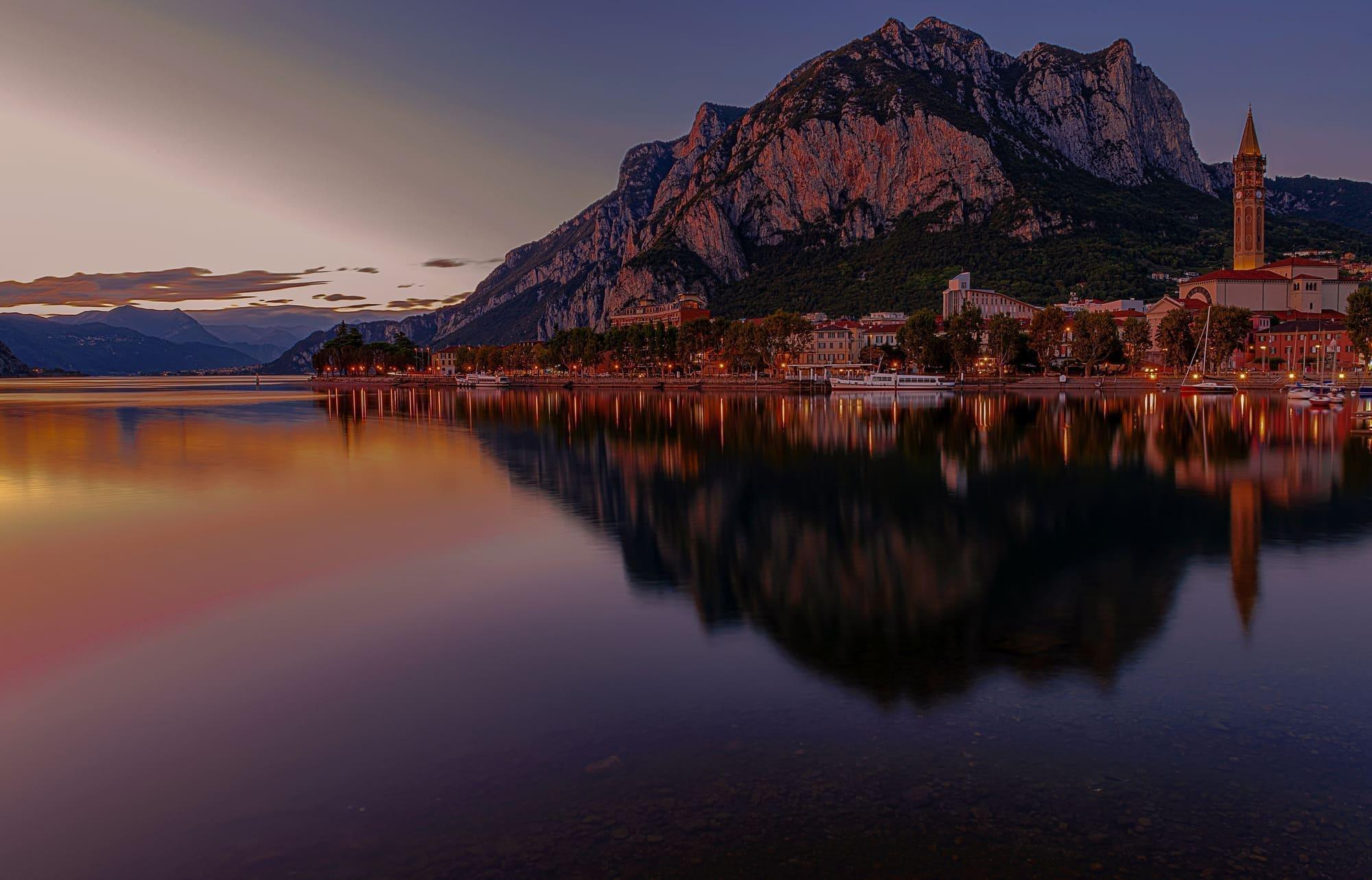
Bellini at Moltrasio
The Cantù and Turina families rent Villa Salterio at Moltrasio, where Giuditta Cantù carries on her affair with Vincenzo Bellini. These are the years in which the composer writes La straniera and La sonnambula; a plaque on the villa's façade records it.
Place: Villa Salterio Erker, MoltrasioStory: The musicians' lake
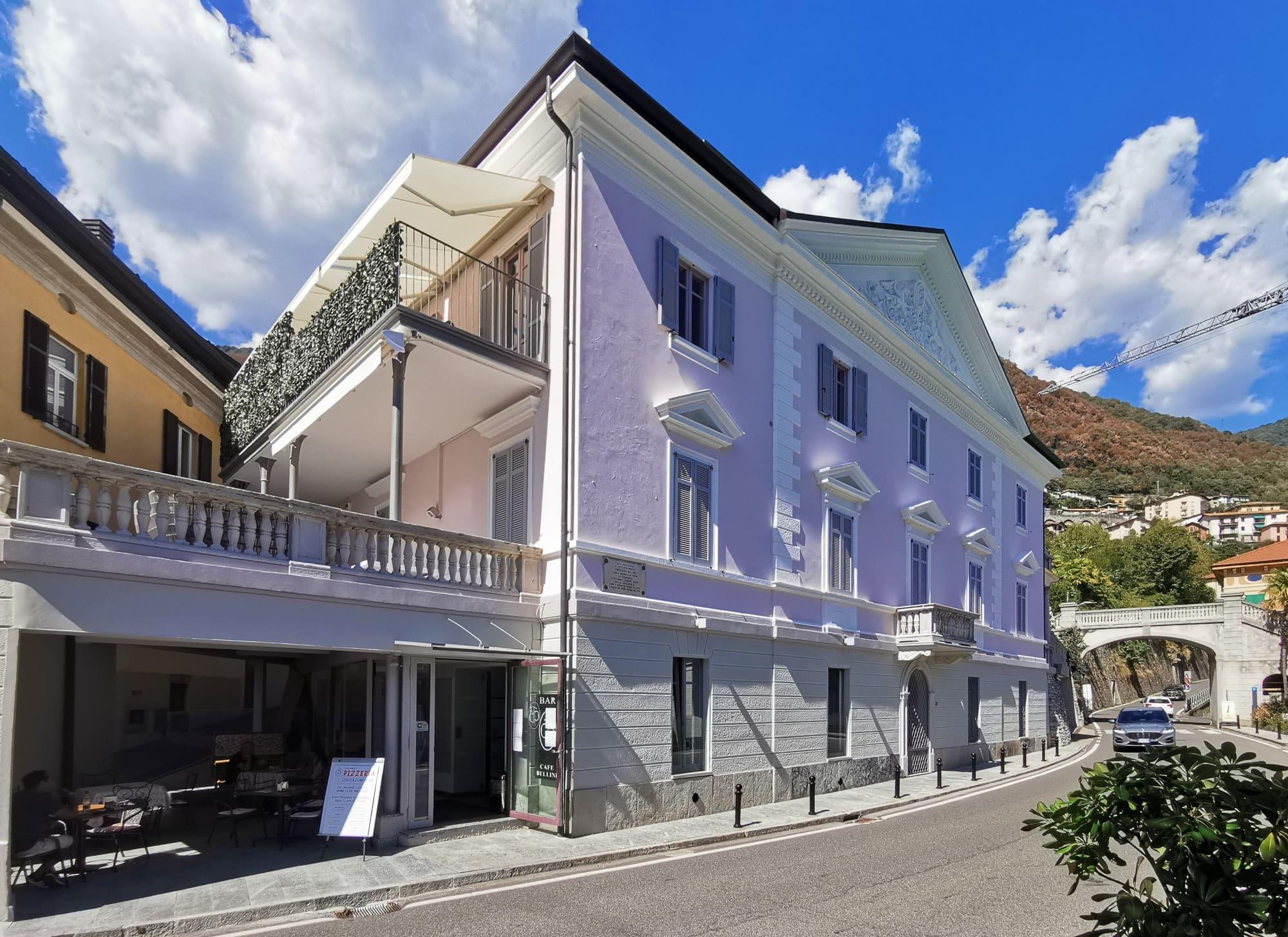
Liszt at Bellagio
Franz Liszt arrives with Marie d'Agoult and stays at the Genazzini hotel. On the lake he writes the twelve Grandes études for piano; on Christmas Eve, at the Albergo dell'Angelo in Como, his daughter Cosima is born, who will marry Wagner.
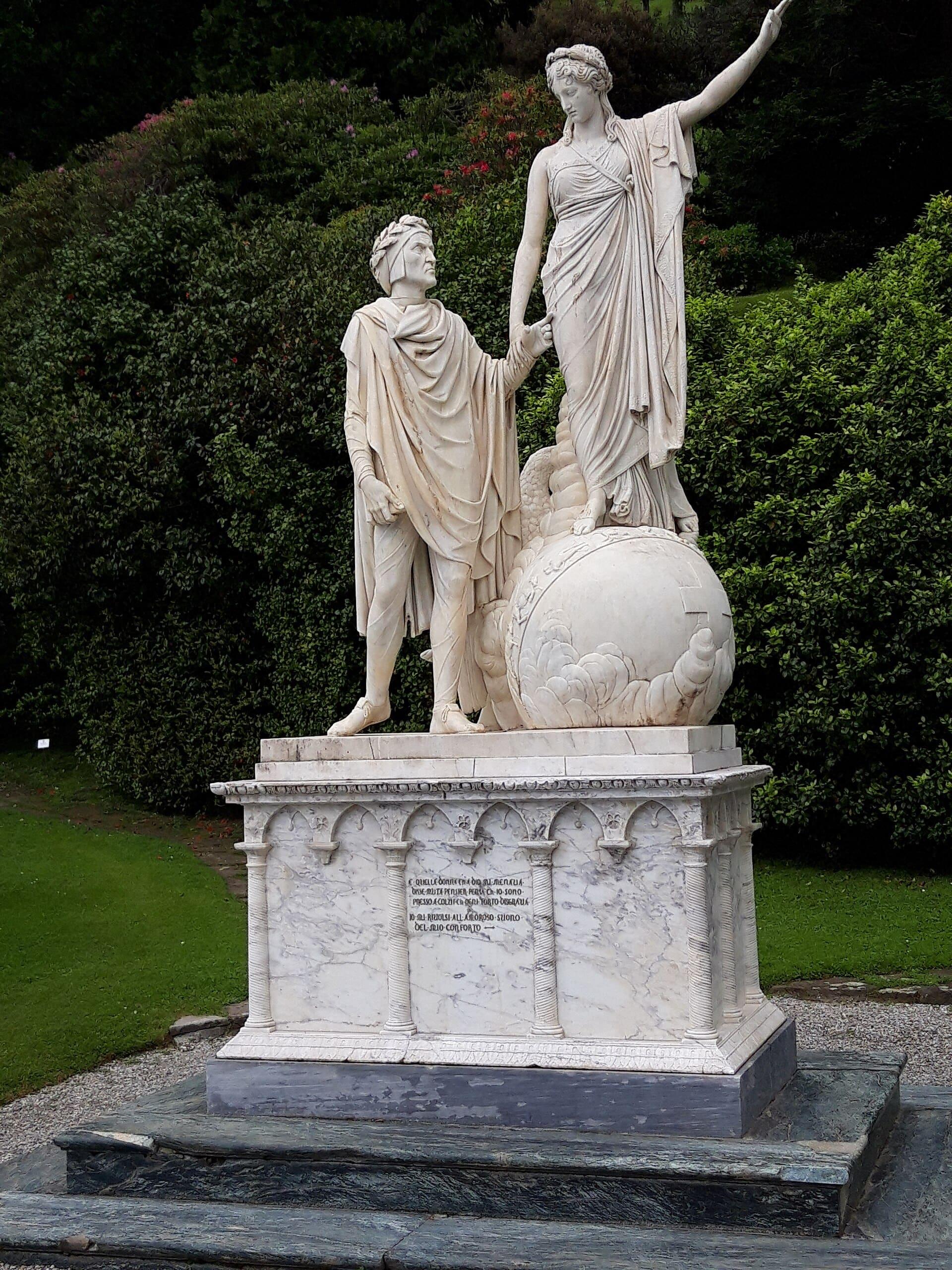
The lake in ‘The Charterhouse of Parma'
Stendhal's novel is published. Fabrice del Dongo grows up in the family castle at Grianta, on the western shore opposite Bellagio; the second chapter shows Villa Melzi and the headland that divides the two branches, the voluptuous branch of Como and the stern branch of Lecco.
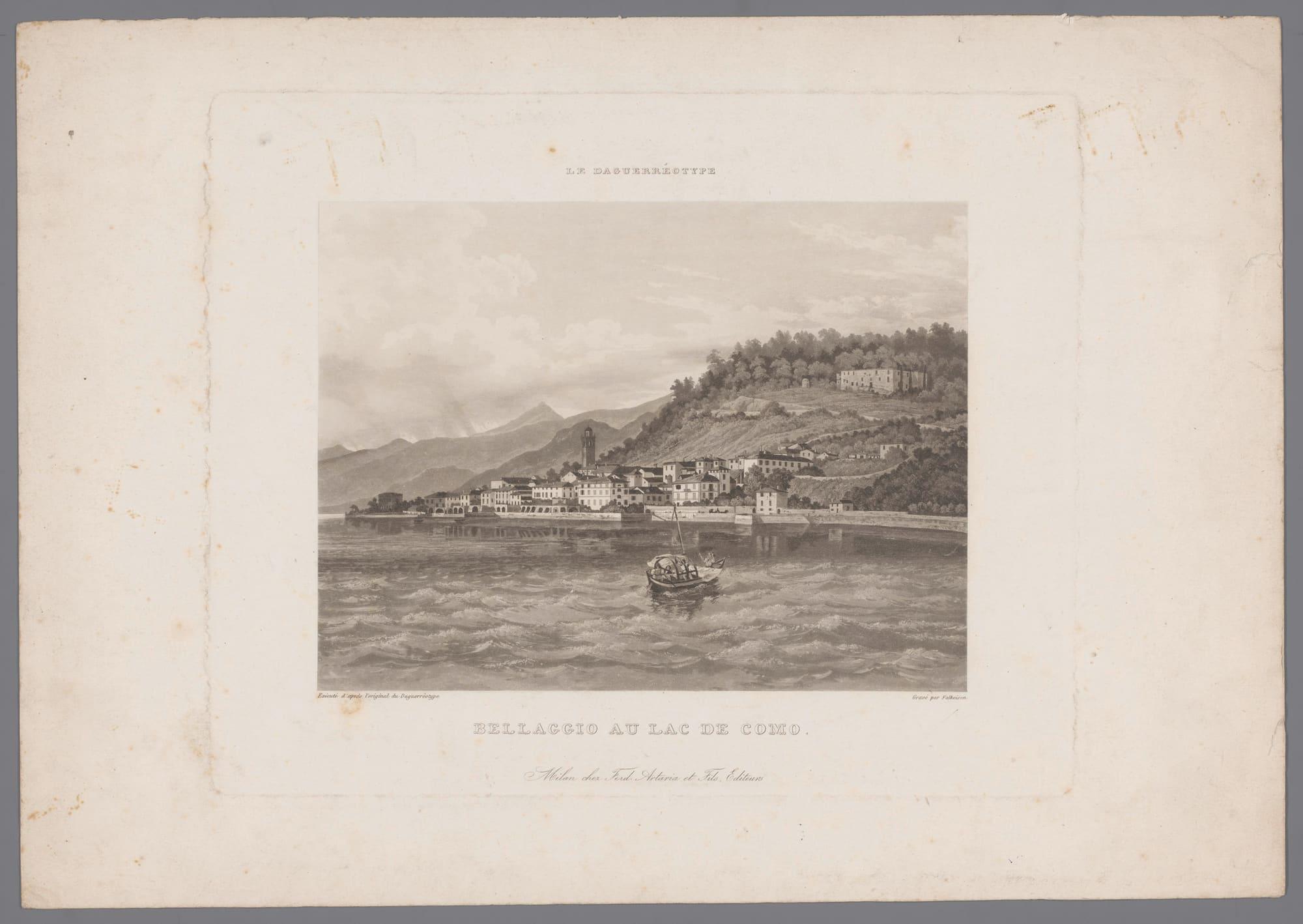
The lake in two lithographs from daguerreotypes
A year after the daguerreotype was presented in Paris, the lake is already among the subjects of the first photographers. Two lithographs copied from daguerreotypes show Bellagio from the lake, signed Falkeisen, and Villa Pliniana, signed Louis Cherbuin.
Flaubert at Villa Sommariva
Gustave Flaubert visits the villa at Tremezzo that will later be called Carlotta. He goes back several times to look at the Cupid and Psyche, which he believes to be by Canova, and on his last visit kisses the statue; the group is attributed to Adamo Tadolini, Canova's pupil.
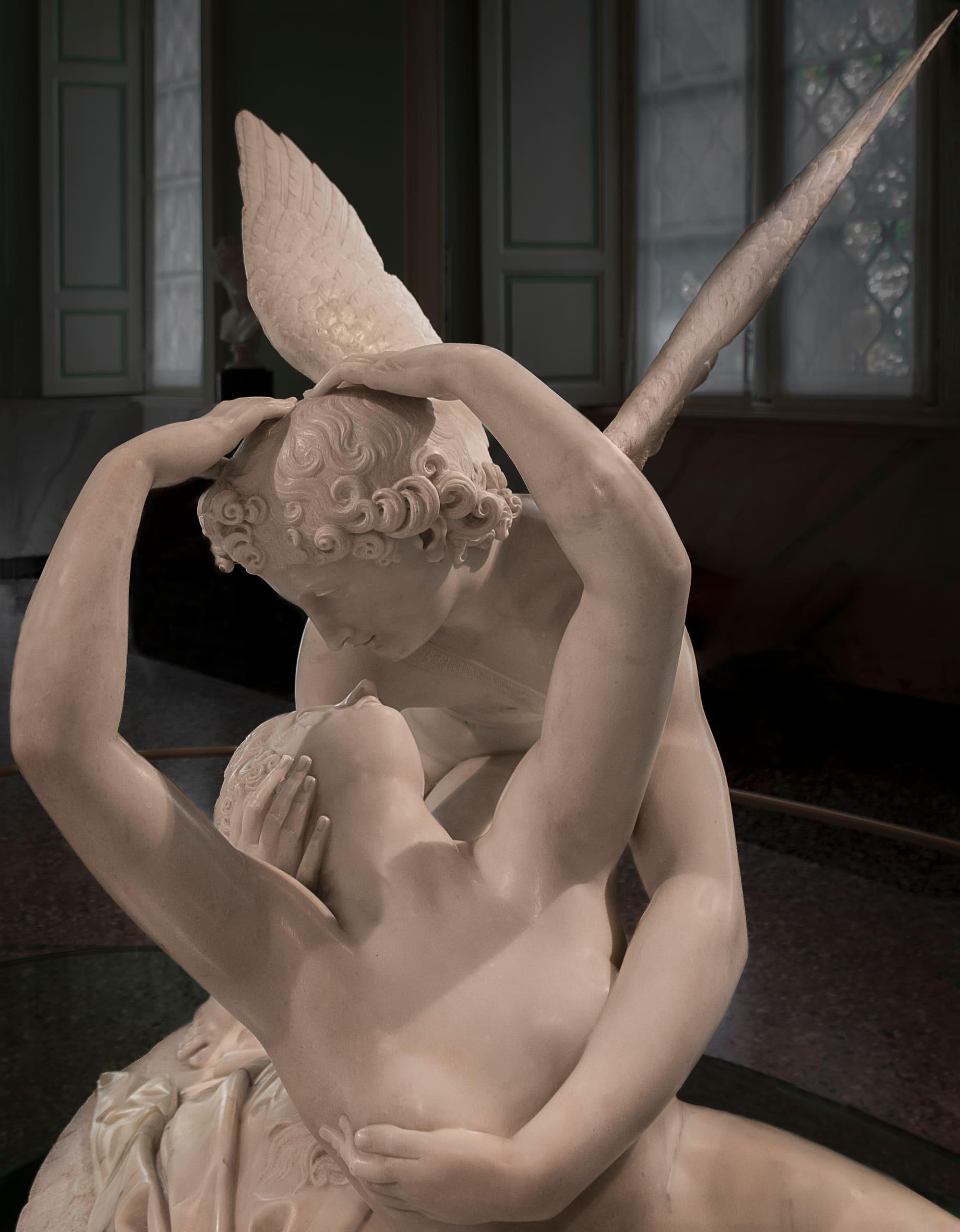
Villa Carlotta gets its name
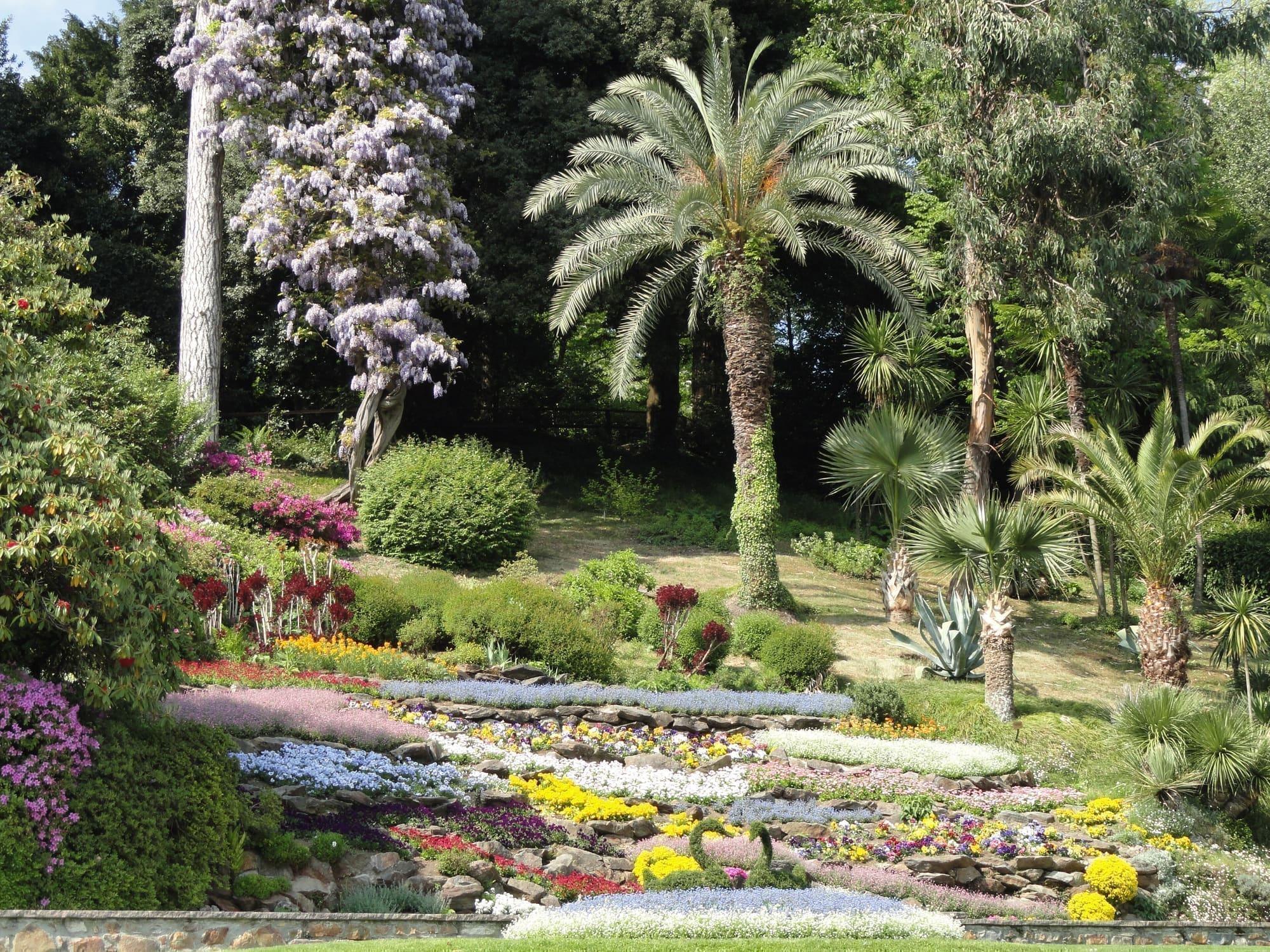
Marianne, who had bought the villa at Tremezzo in 1843, gives it to her daughter Charlotte on her marriage to Georg II of Saxe-Meiningen, and the villa takes its name from her. Its slope has acid soil, which is why the garden can grow azaleas, rhododendrons and camellias.
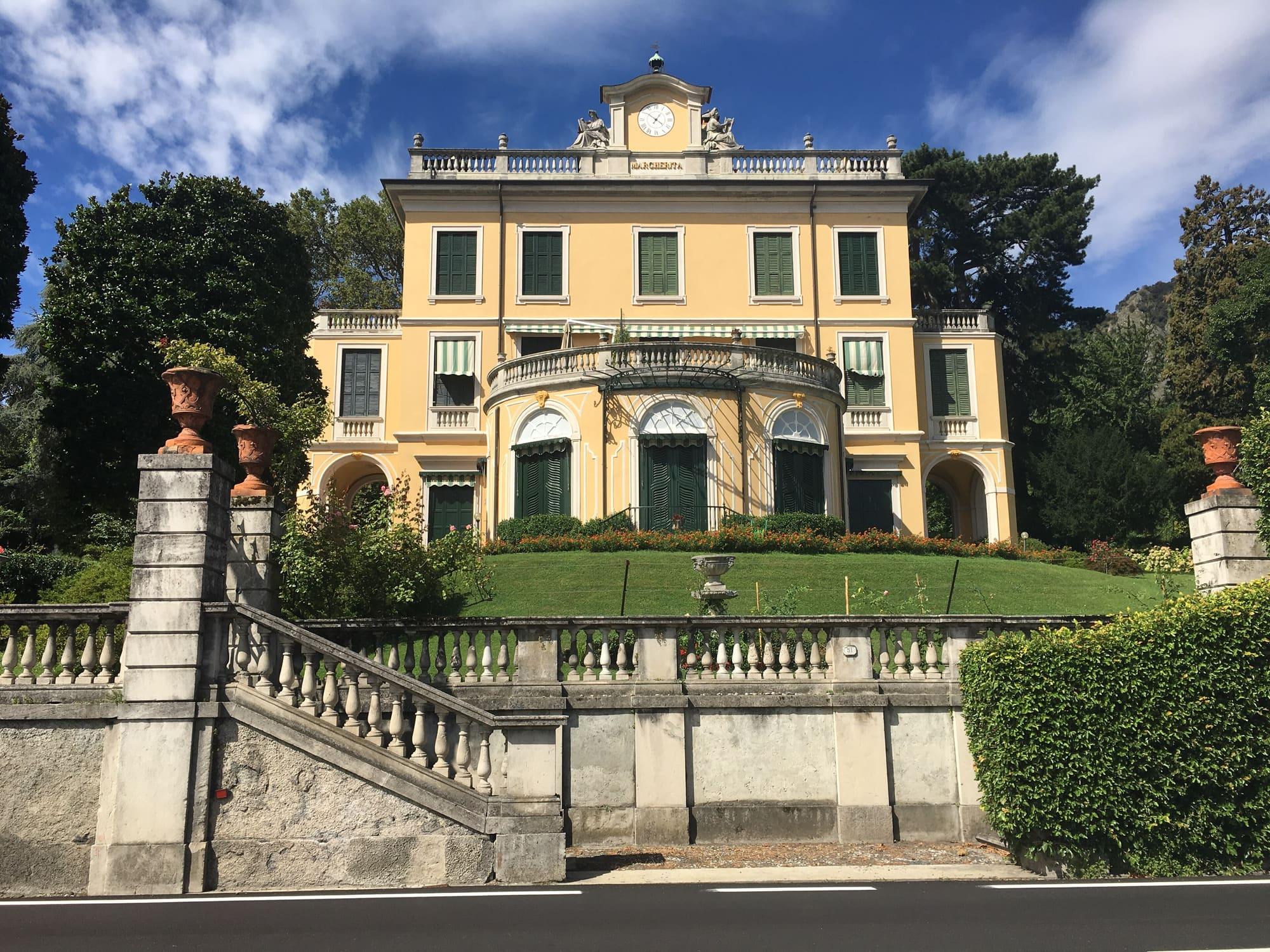
The publisher Ricordi's villa at Cadenabbia
Villa Margherita is built at Cadenabbia for the music publisher Ricordi, reportedly with the proceeds of Il trovatore. Giuseppe Verdi is often a guest, and Amilcare Ponchielli starts work there on I Lituani, staged at La Scala in 1874.
Place: Villa Margherita Ricordi, CadenabbiaStory: The musicians' lake
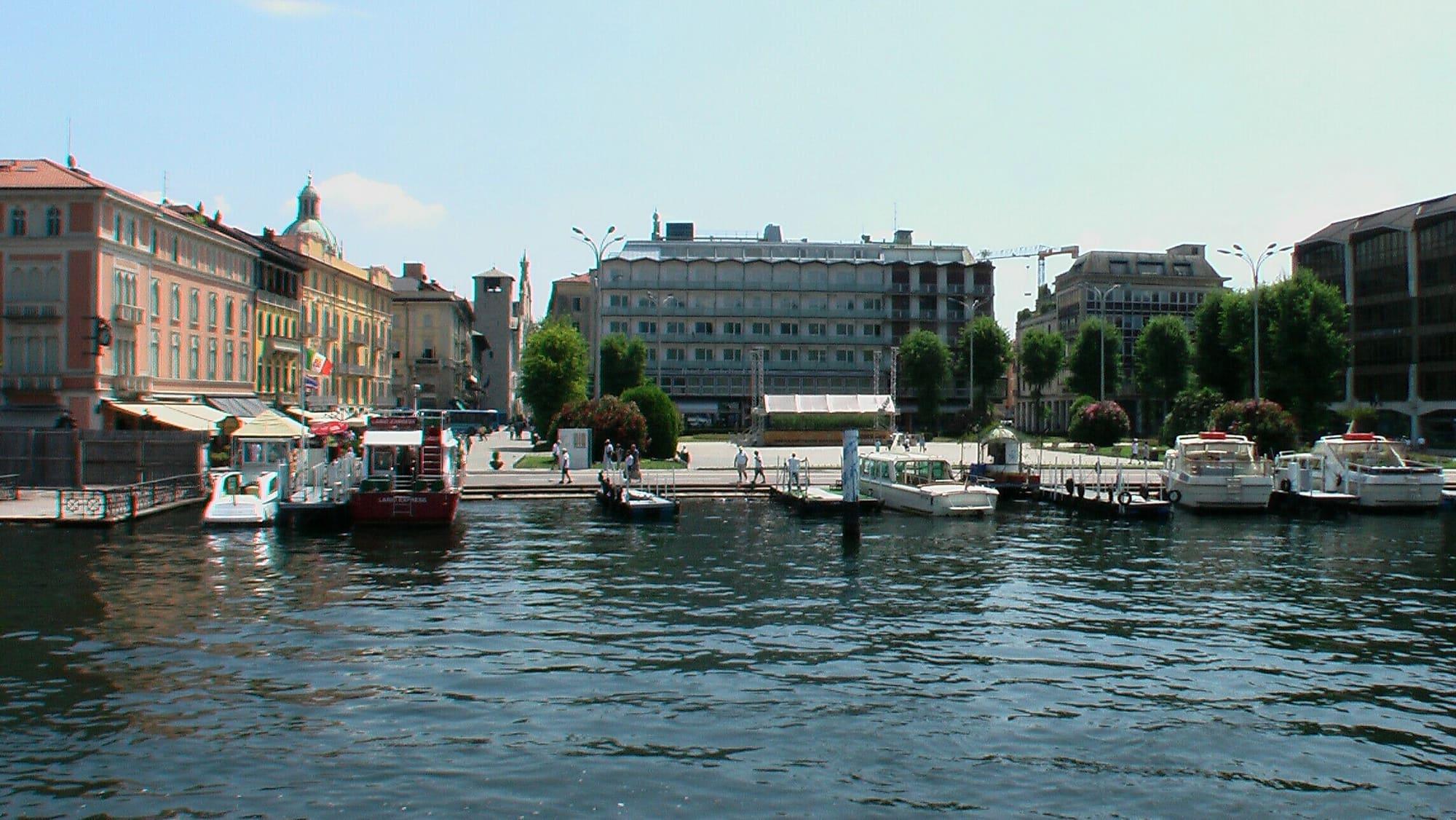
The highest level on record
The lake rises to 3.97 metres above the zero of the Malgrate gauge, the highest level ever recorded, and about a third of Como ends up under water, including the whole area around the walls.
The year of the grand hotels
Villa d'Este, at Cernobbio, becomes a hotel. In the same year the Frizzoni family's neoclassical villa at Bellagio opens as the Grand Hotel Bellagio, and Antonio Mella opens the Hotel Grande Bretagne on the Bellagio lakefront.
Place: Villa d'Este, CernobbioStory: The century of the grand hotels
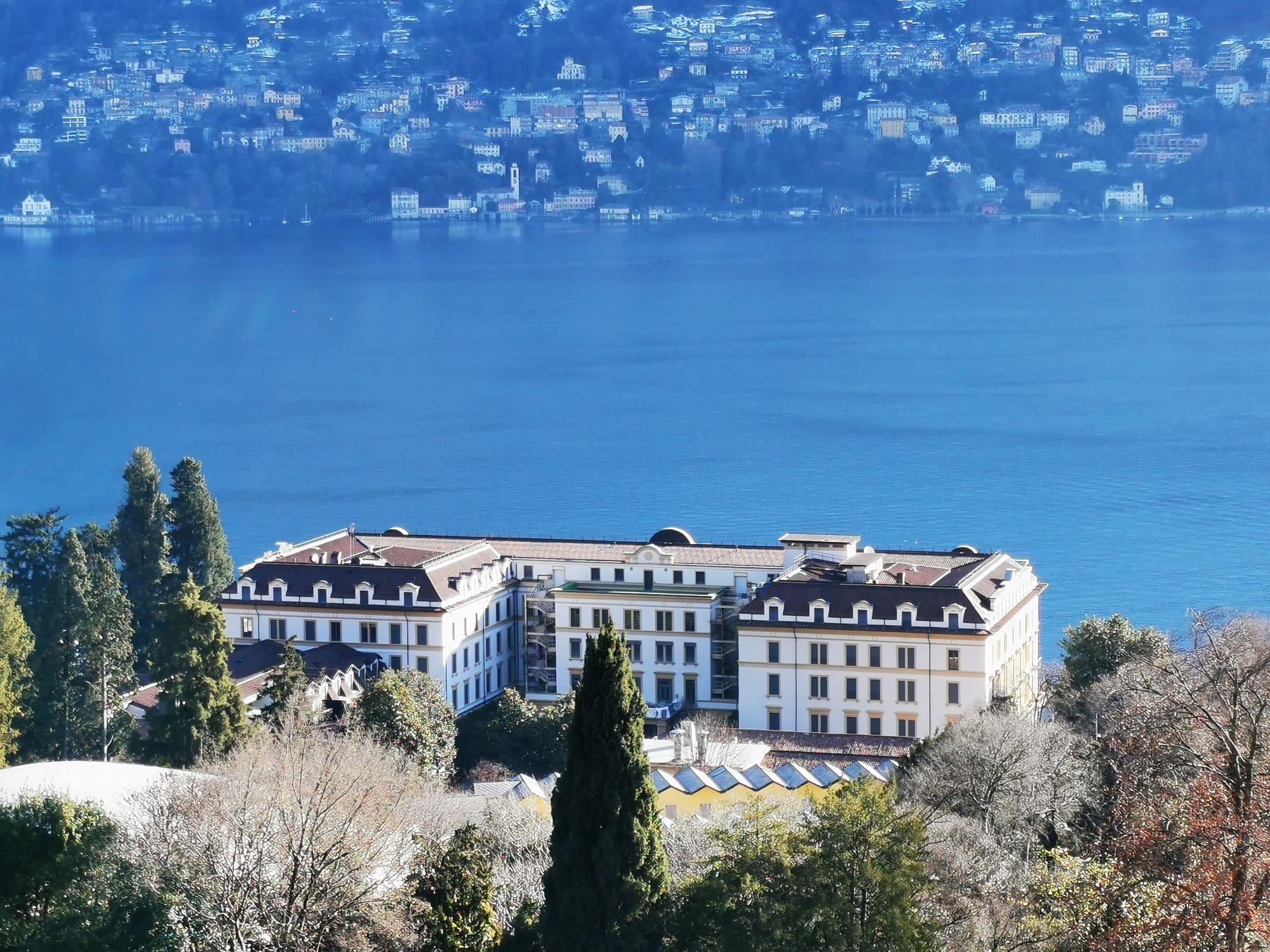
1880s
The fence against smuggling
The Guardia di Finanza builds a long wire fence along the Swiss border, the ramina, with an alarm of bells fixed on springs. Smugglers cross the border in secret with the bricolla, a jute sack holding up to thirty-five or forty kilos of cigarettes, salt or coffee.
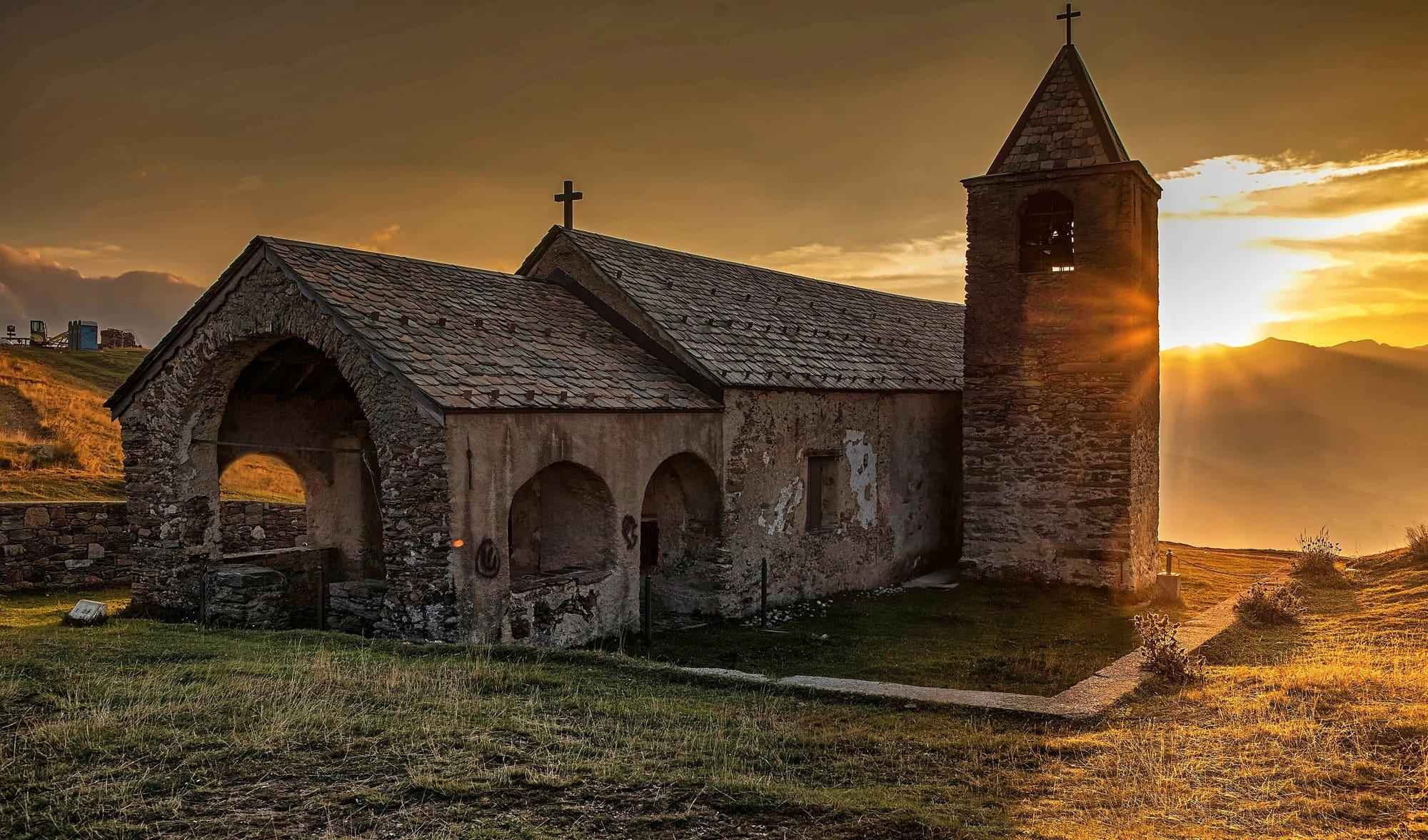
The little railway from Menaggio to Porlezza
The narrow-gauge railway linking Lake Como with Lake Lugano is inaugurated on 8 October and opened to the public on 17 November. To climb above Menaggio the train reverses in a manoeuvre called the regresso; the service ends in 1939.
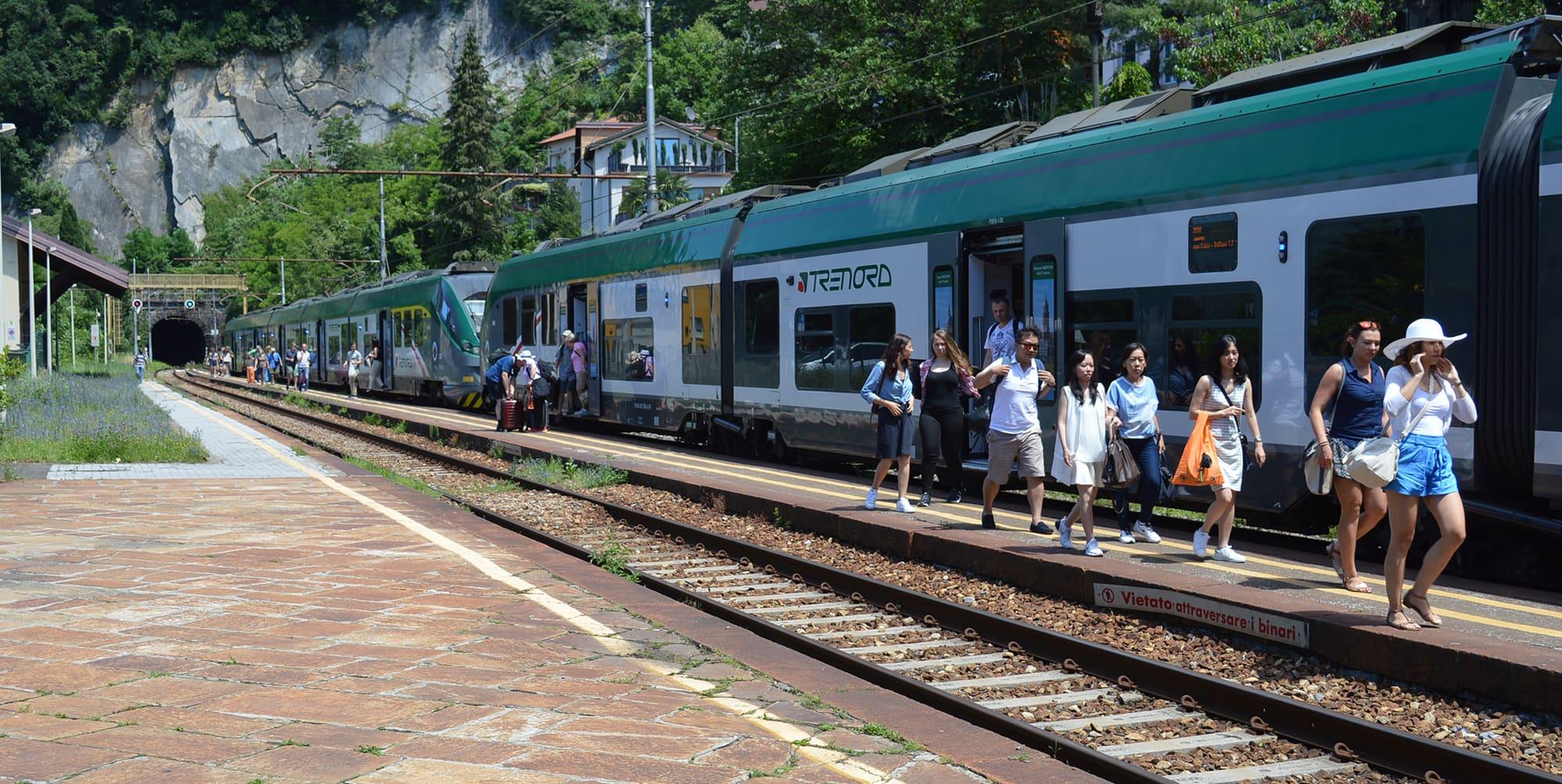
The railway along the eastern shore
With the section from Bellano to Colico, after the one from Lecco to Bellano in 1892, a complete rail service links Lecco with the Valtellina. As far as Colico the line has eighty-nine curves, eighteen viaducts and nineteen tunnels.
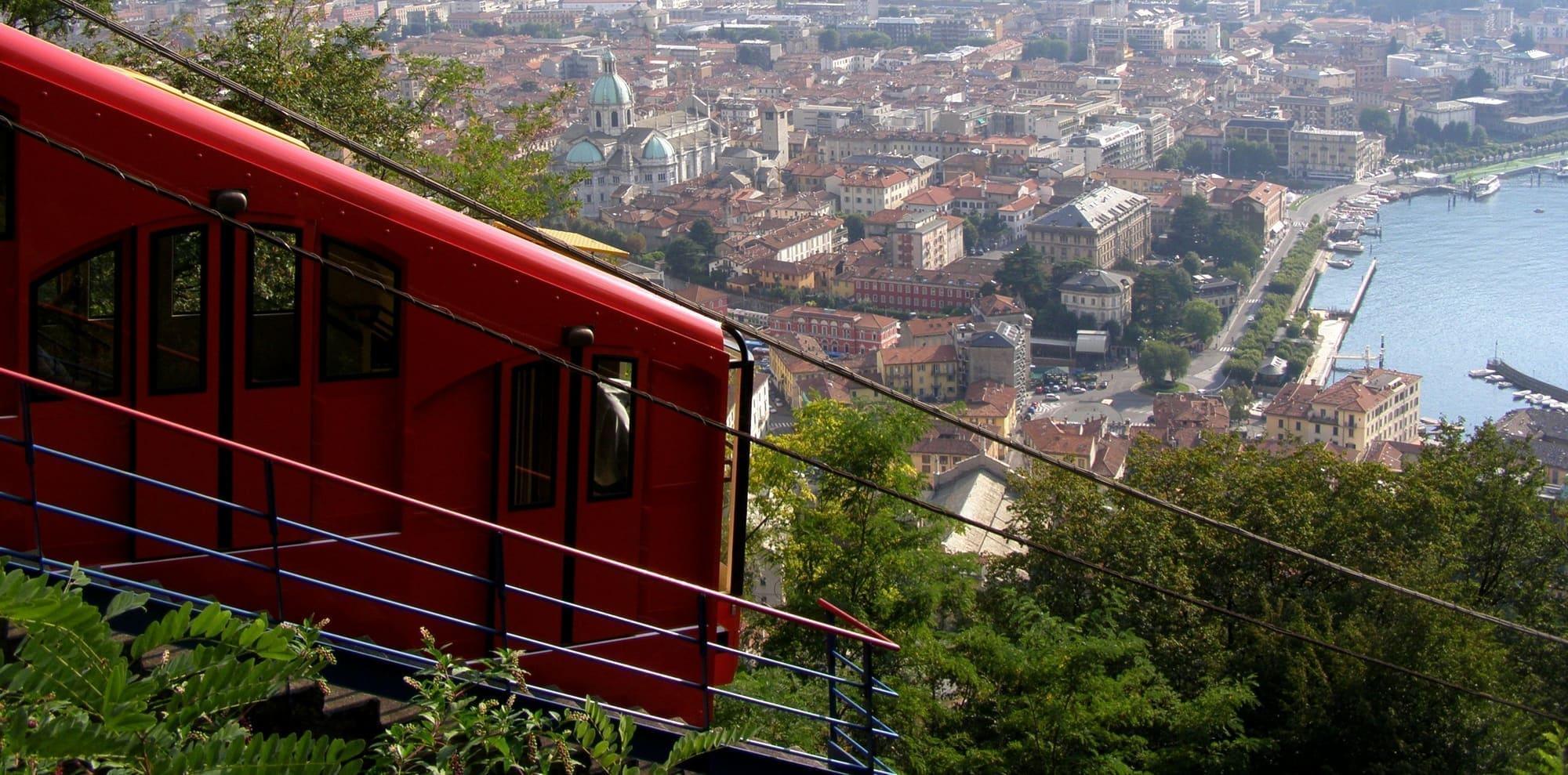
The Brunate funicular
The funicular between Como and Brunate, designed by the engineer brothers Villoresi, opens to the public. Planned to run on water, by gravity, it works instead with a steam winch because there is not enough water; in 1911 it switches to electric motors.
Place: Como–Brunate FunicularStory: When the railway reached the lake
c. 1895
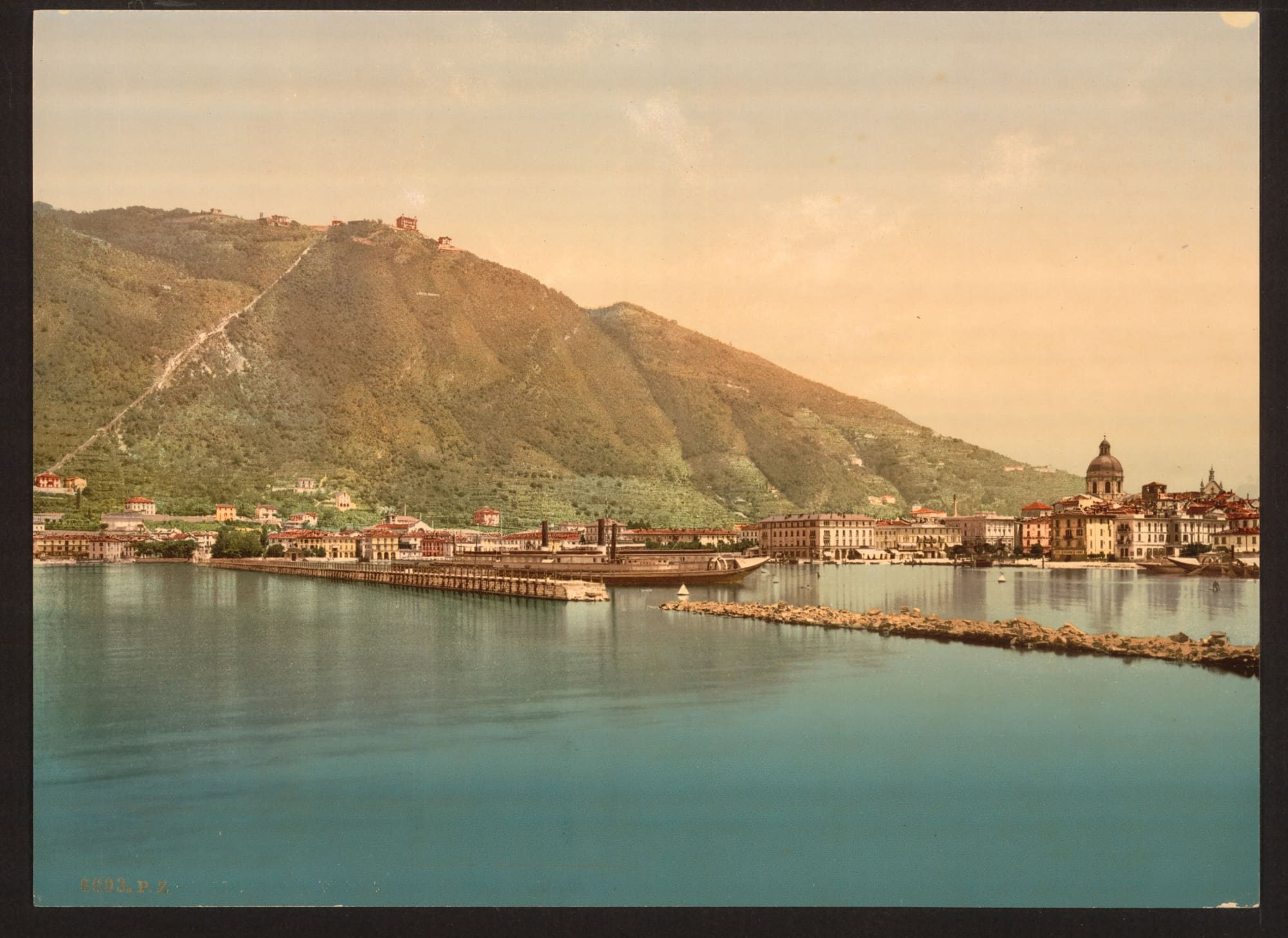
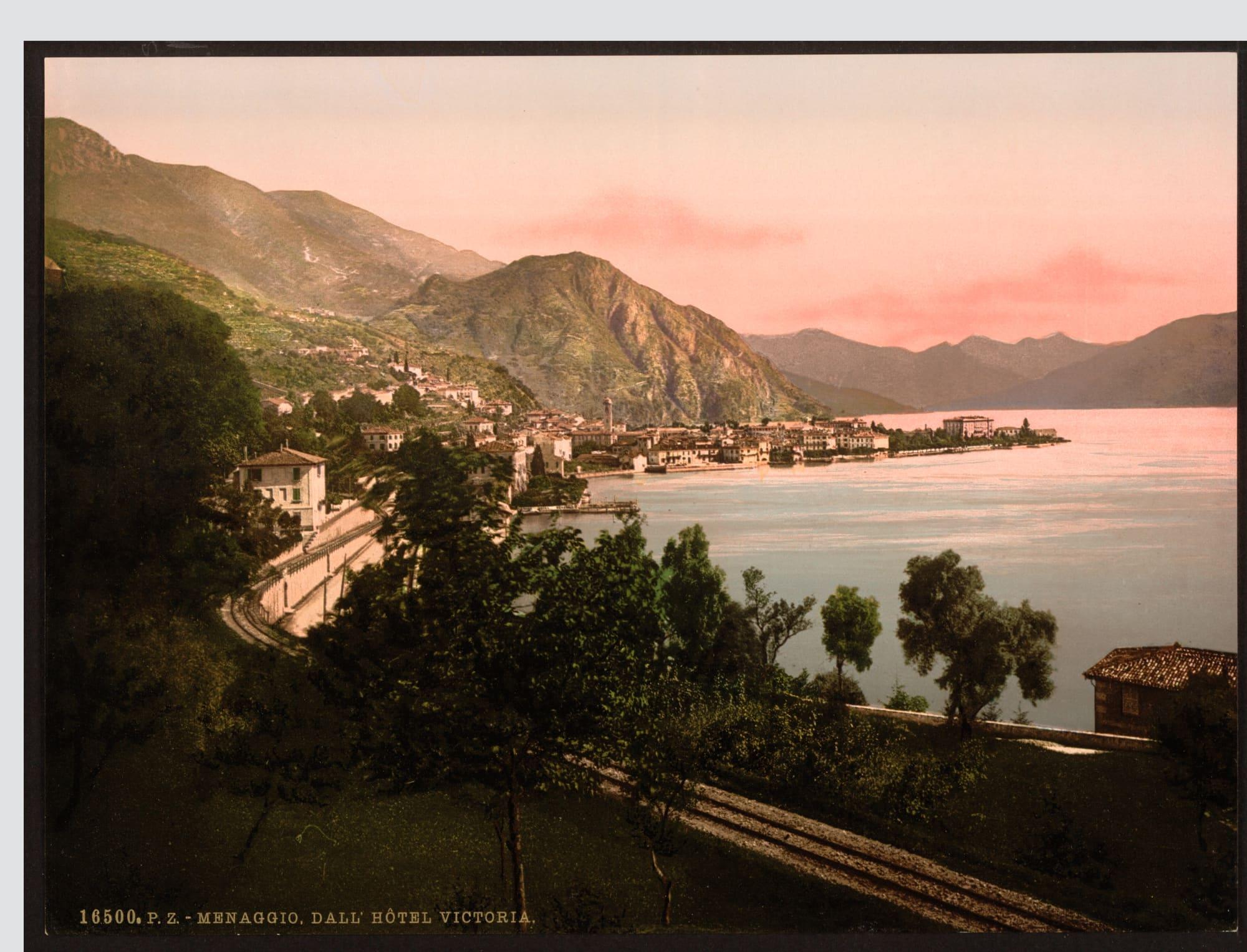
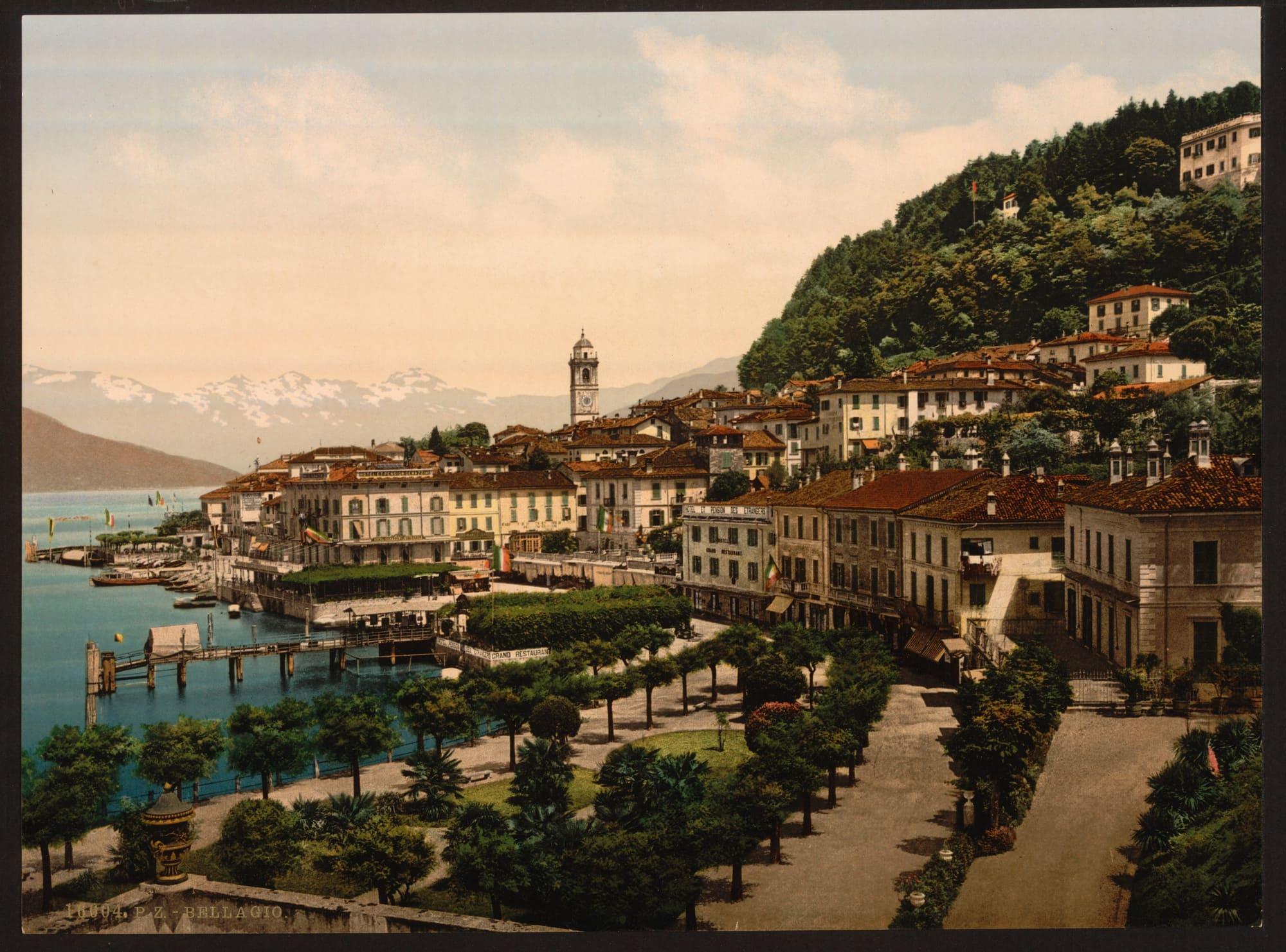
The lake printed in colour
A Zurich firm prints views of the lake by the photochrom process: Bellagio, the Tremezzina, Cadenabbia, Menaggio and Como. Each print starts from a black-and-white negative, and the colours noted by the photographer are transferred to a series of lithographic stones, one for each tint.
1896–1897
Cinema comes to the lake
The Lumière brothers, touring Italy to make the cinematograph known, film scenes of a boat race at Bellagio. The footage is kept at the Cineteca Nazionale in Rome.
The Volta Exhibition burns
A spark from two electric wires sets fire to the wooden pavilions of the exhibition built on the lakeshore for the centenary of the battery: they burn in less than an hour, with many of Volta's relics. Within a month the engineer Eugenio Linati rebuilds them, and the exhibition reopens on 20 August.
Twentieth century
1900–1999 · 24 dates
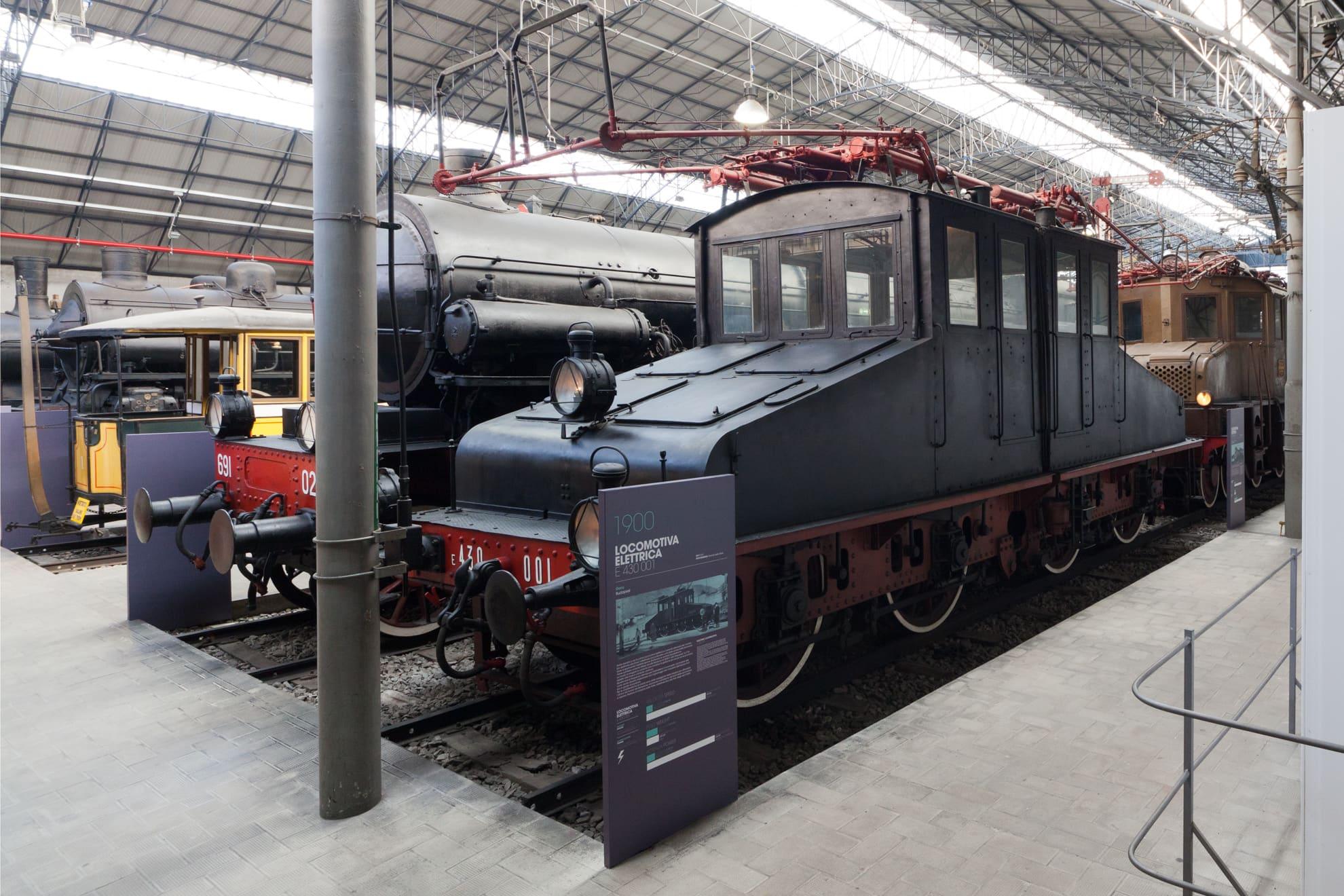
The first high-voltage three-phase railway
The lines from Lecco to Colico and Chiavenna and from Colico to Sondrio switch to electric traction, with three-thousand-volt overhead lines fed by the power station at Morbegno. They are the first in the world to run trains on high-voltage three-phase alternating current.
The Grand Hotel Tremezzo
Enea Gandola opens a long Art Nouveau hotel on the shore at Tremezzo, with lifts and electric signs from the start.
Place: Grand Hotel TremezzoStory: The century of the grand hotels
Excavations uncover Sant'Eufemia
Ugo Monneret de Villard begins digging on the Isola Comacina and finds, under five metres of rubble and earth, the basilica of Sant'Eufemia, until then unknown. Its destruction in 1169 had spared it the alterations of the centuries that followed.
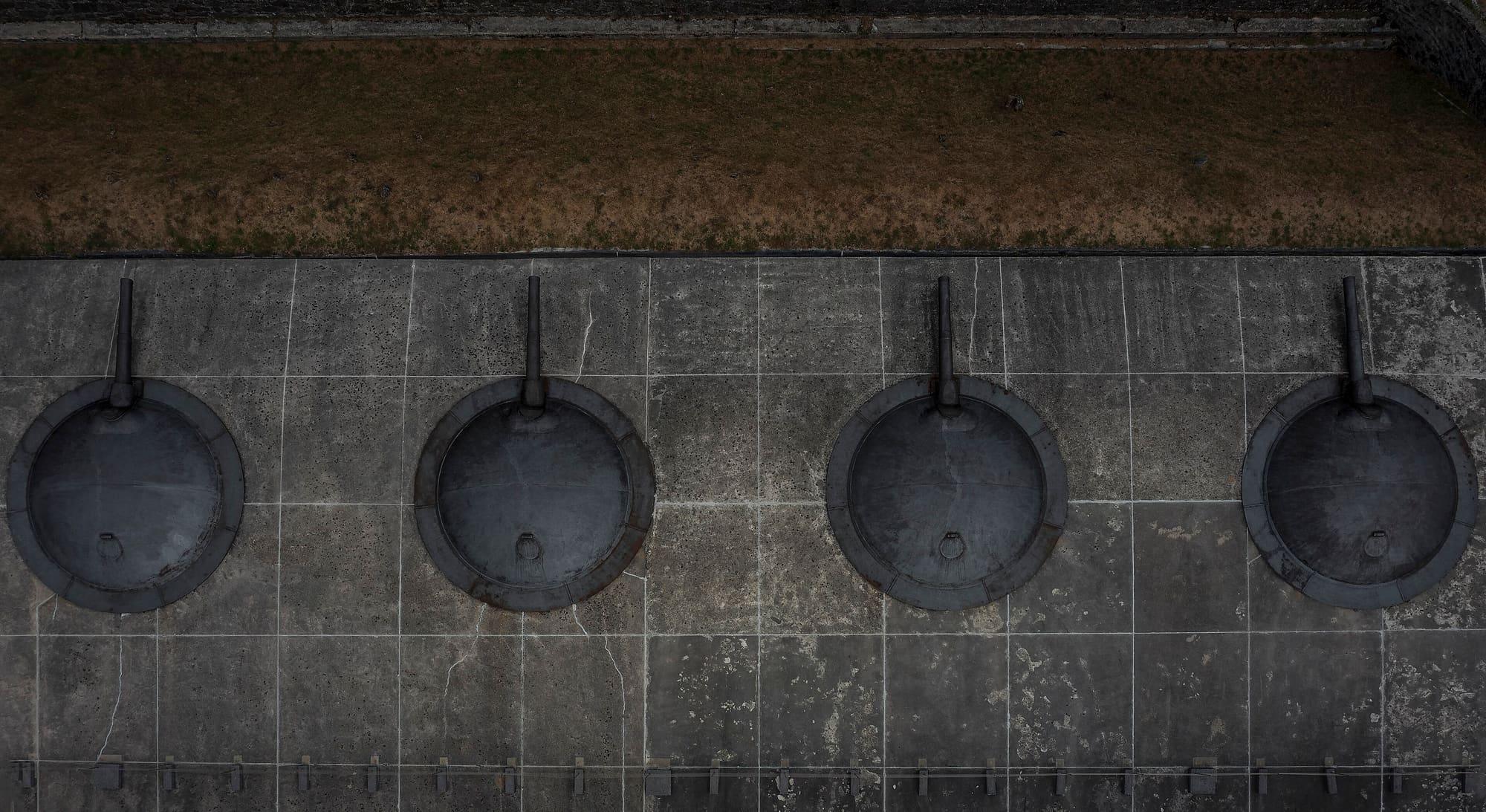
The fort at Colico is armed
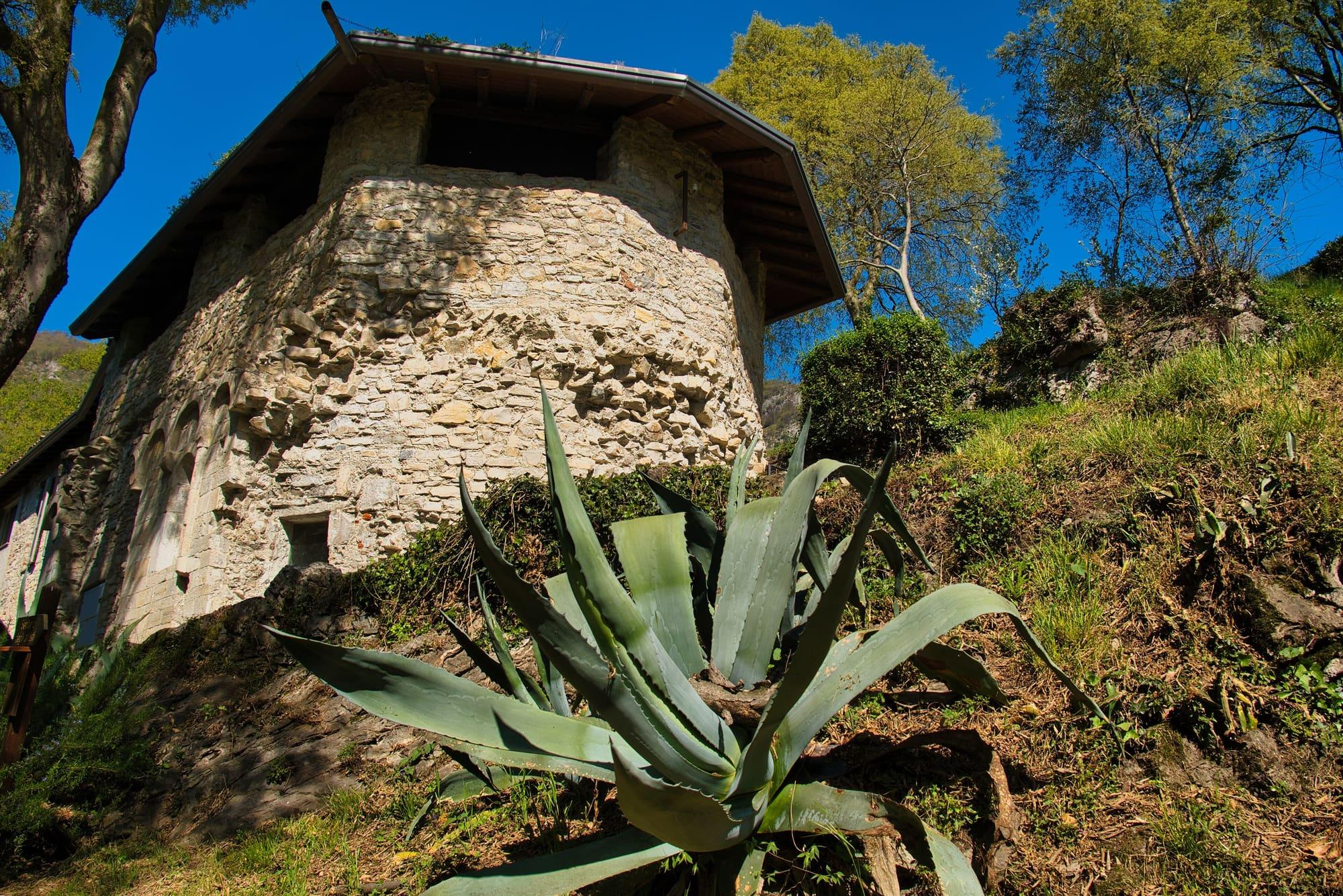
On the Montecchio hill, where the roads coming down from the Splügen, Maloja, Bernina, Stelvio and Tonale passes meet, the fort is ready, with four 149-millimetre guns under revolving steel domes. The guns have stayed where they were.
Place: Forte Montecchio NordStory: The Cadorna Line on the Lario
The fortified line on the northern border
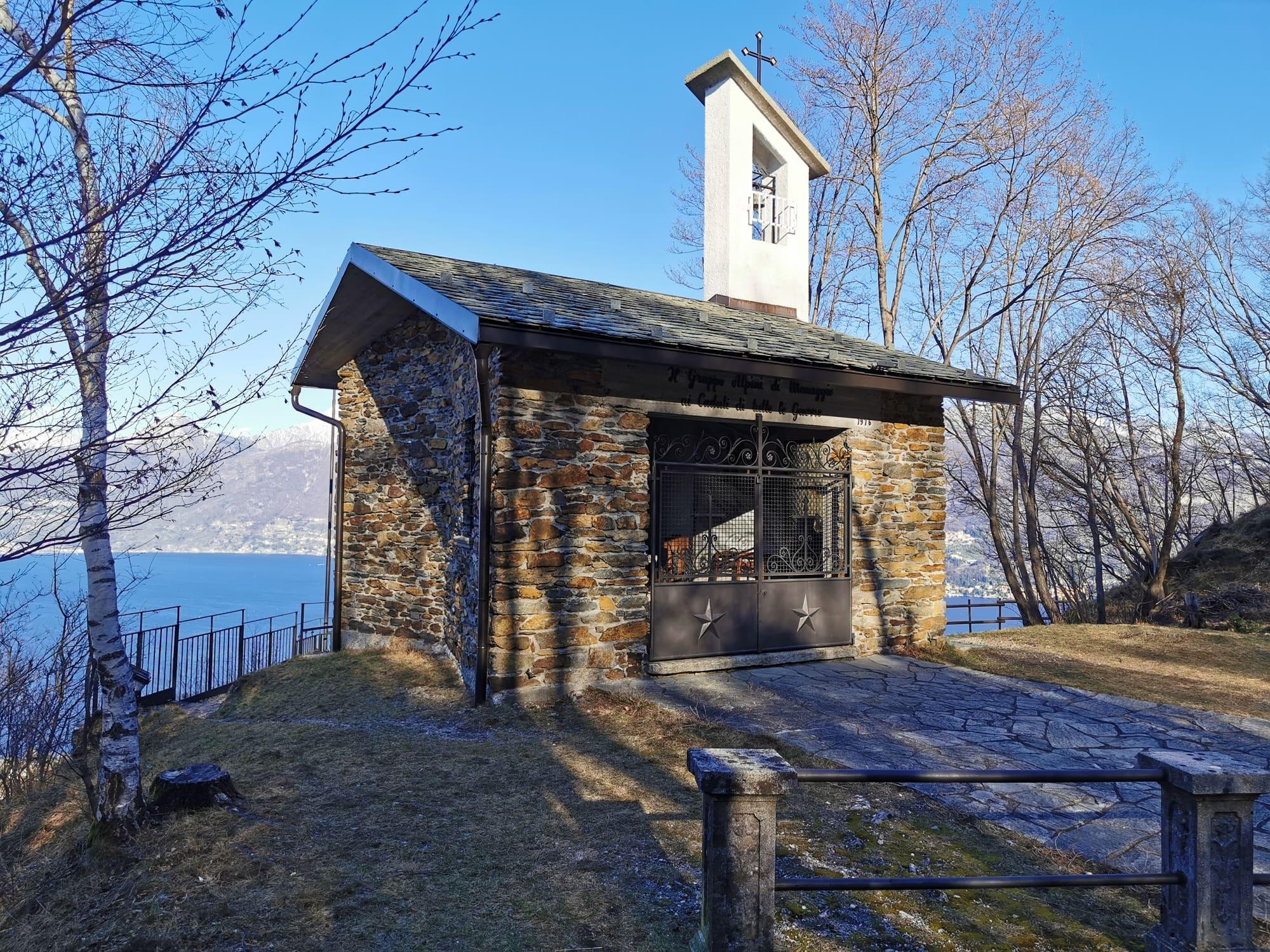
Warned of a possible German invasion of Switzerland, Luigi Cadorna orders a fortified line from the Ossola valleys to the passes of the Orobie. In the province of Como it runs from Monte Bisbino to the Crocetta above Menaggio, with trenches, tunnels and gun positions that will never see a battle.
Hitchcock shoots his first film on the lake
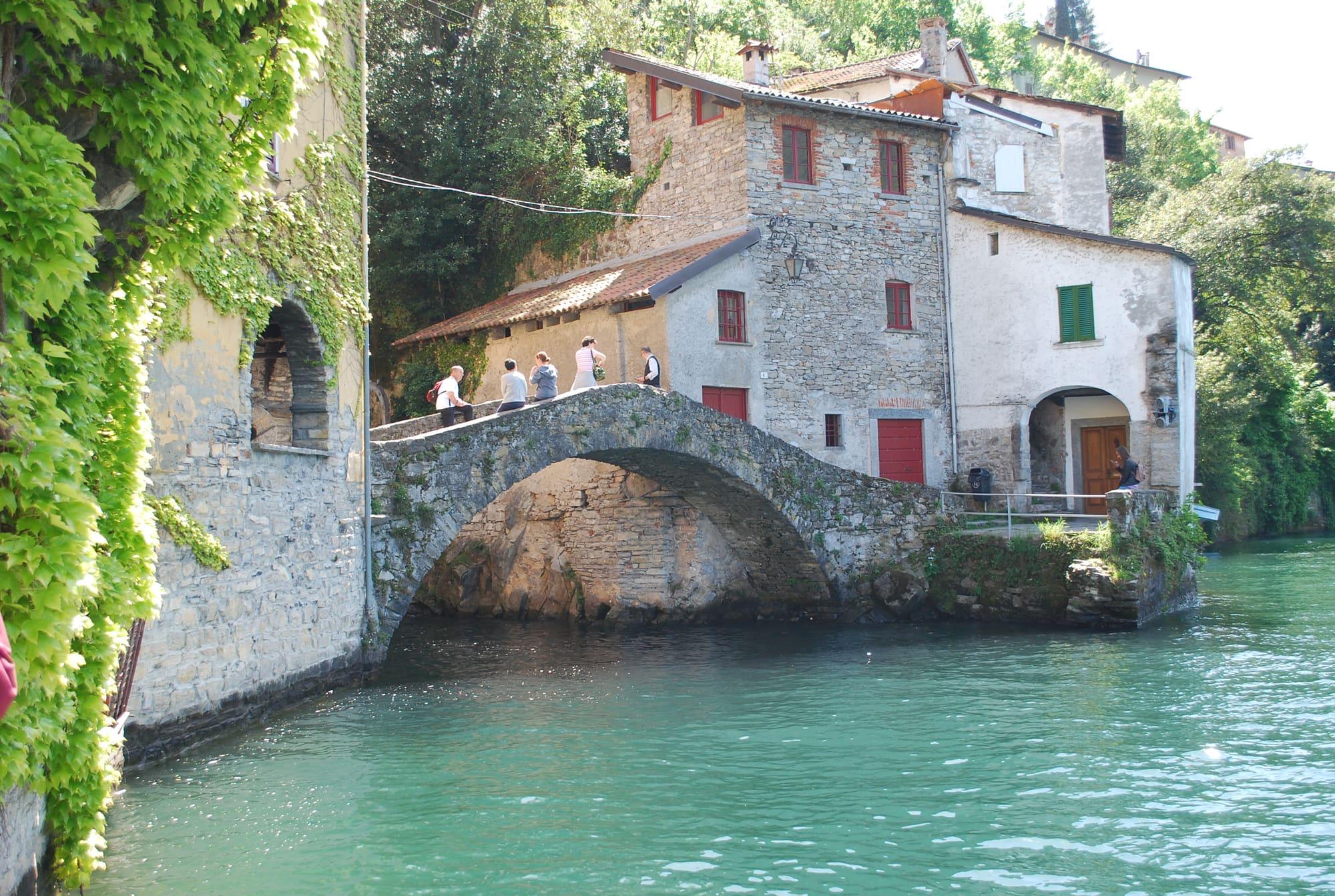
For ‘The Pleasure Garden', his debut as a director, Alfred Hitchcock sets the heroine's honeymoon on the lake. The Villa d'Este hotel, the Isola Comacina and the Civera bridge at Nesso can all be recognised.
The car ferry
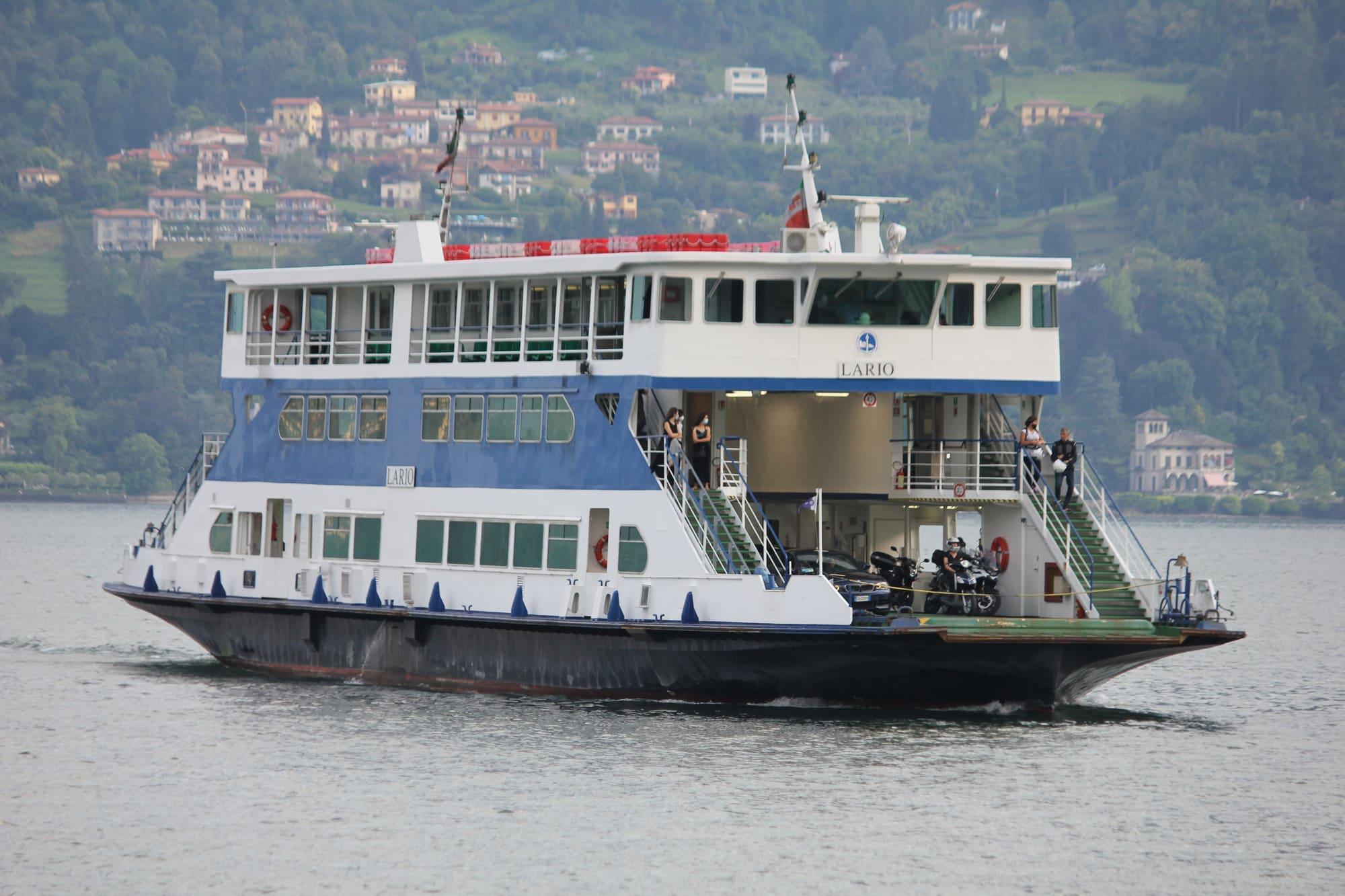
The first autochiatta, the car ferry, goes into service. Since then Bellagio, Varenna, Menaggio and Cadenabbia have been linked by the centre-lake crossings, the only way to take a car to the other shore without driving round the branch.
The physicists' congress for the Volta centenary
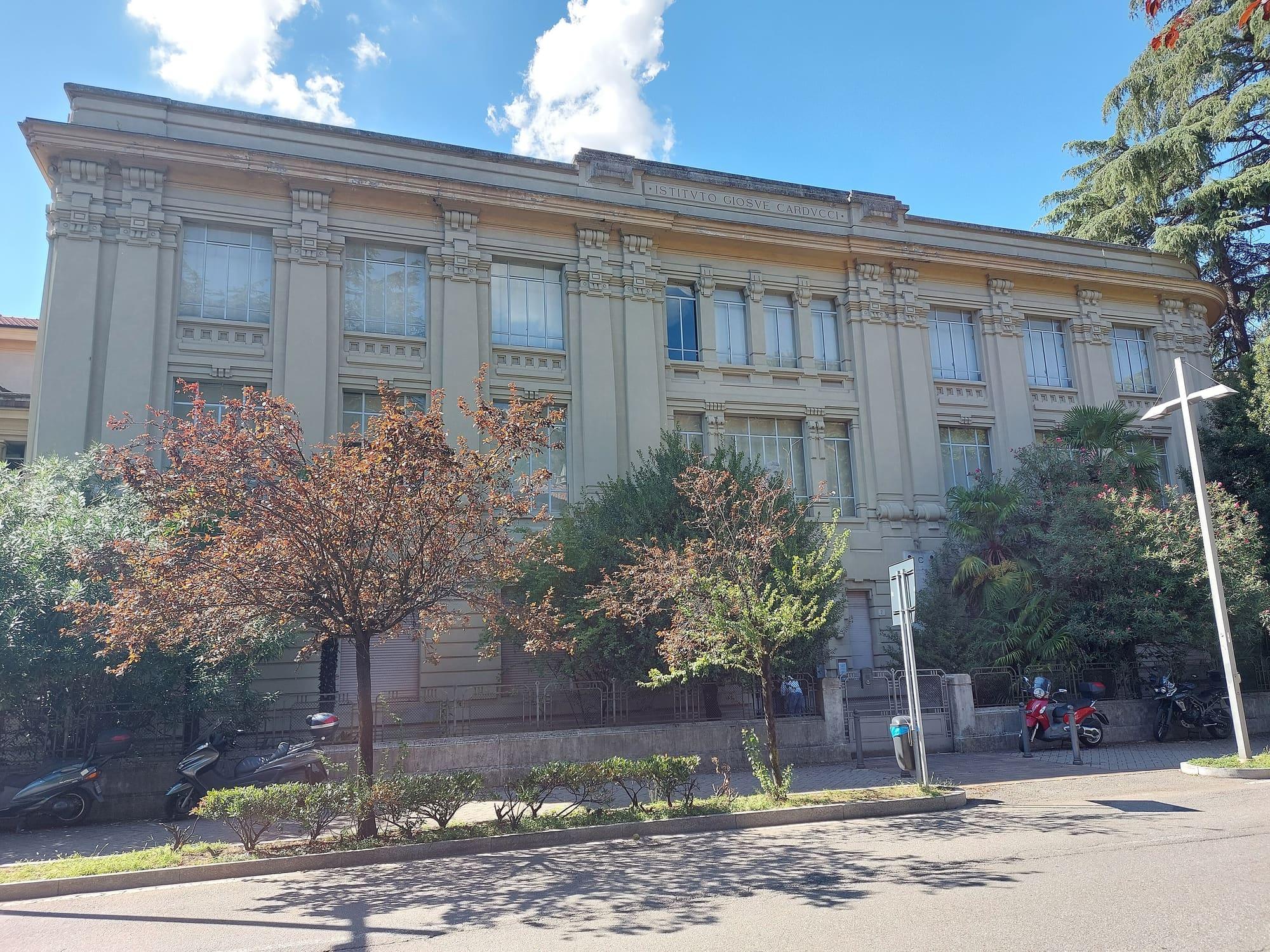
Sixty-one physicists meet in Como, Pavia and Rome, among them the young quantum physicists: Pauli, Heisenberg, Fermi, Dirac. At the congress Niels Bohr first sets out the principle of complementarity; the Como sessions are held in the science room of the Istituto Carducci, later called the Nobel room.
Place: Istituto Carducci and the Nobel RoomStory: The battery, the fire and the Tempio
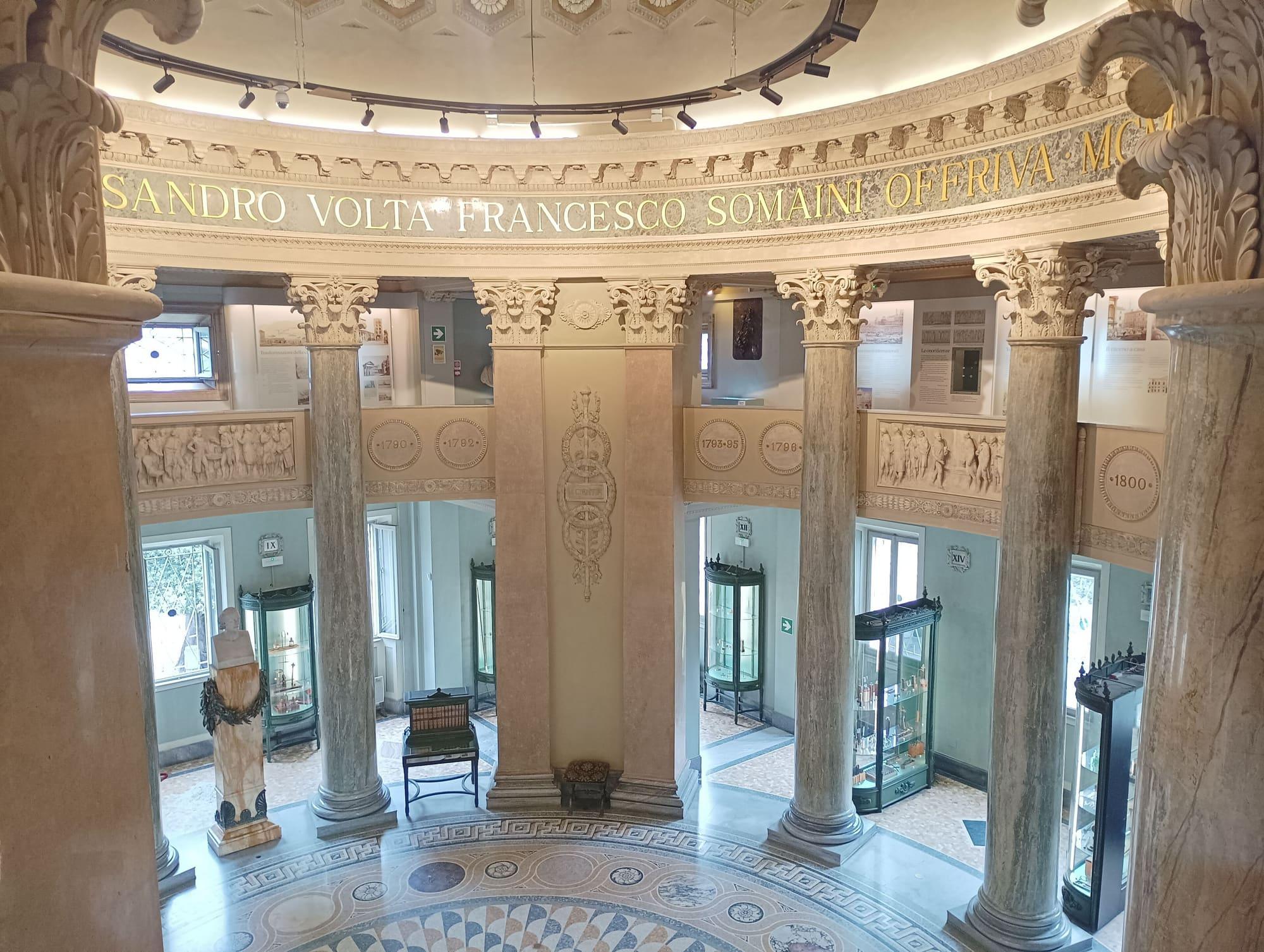
The Tempio Voltiano opens
The industrialist Francesco Somaini gives the city the Volta museum on the lakefront, designed by Federico Frigerio with an explicit nod to the Pantheon. A plinth more than two metres high protects it from floods; inside are original instruments of Volta's.
Place: Tempio VoltianoStory: The battery, the fire and the Tempio
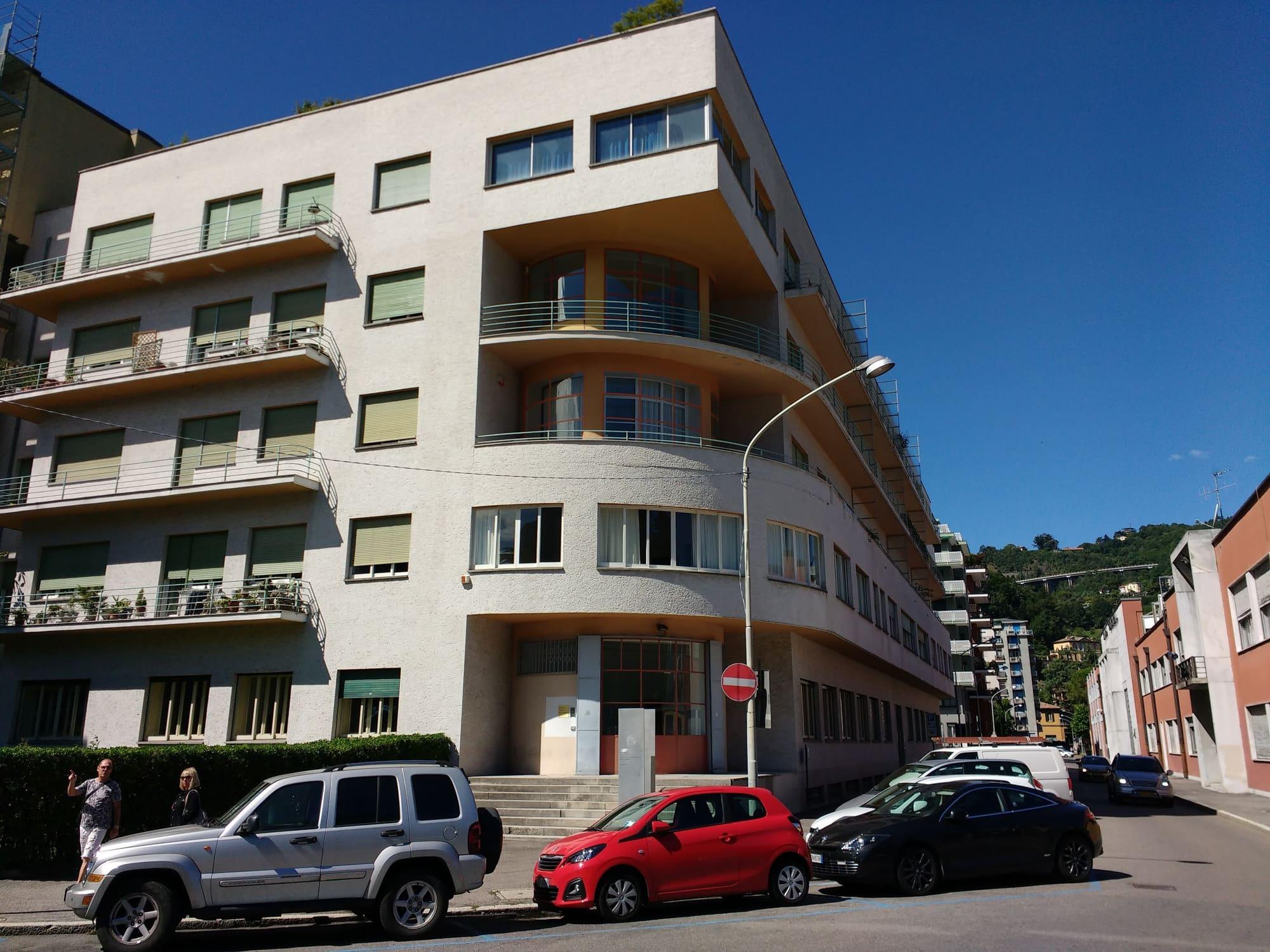
The Novocomum, Como's first rationalist building
Giuseppe Terragni completes the Novocomum, an apartment building with a curved volume on the corner that the people of Como nickname ‘the Ocean Liner'. Between the wars Como becomes one of the centres of Italian rationalism.
Place: NovocomumStory: Palazzo Terragni, rationalism beside the cathedral
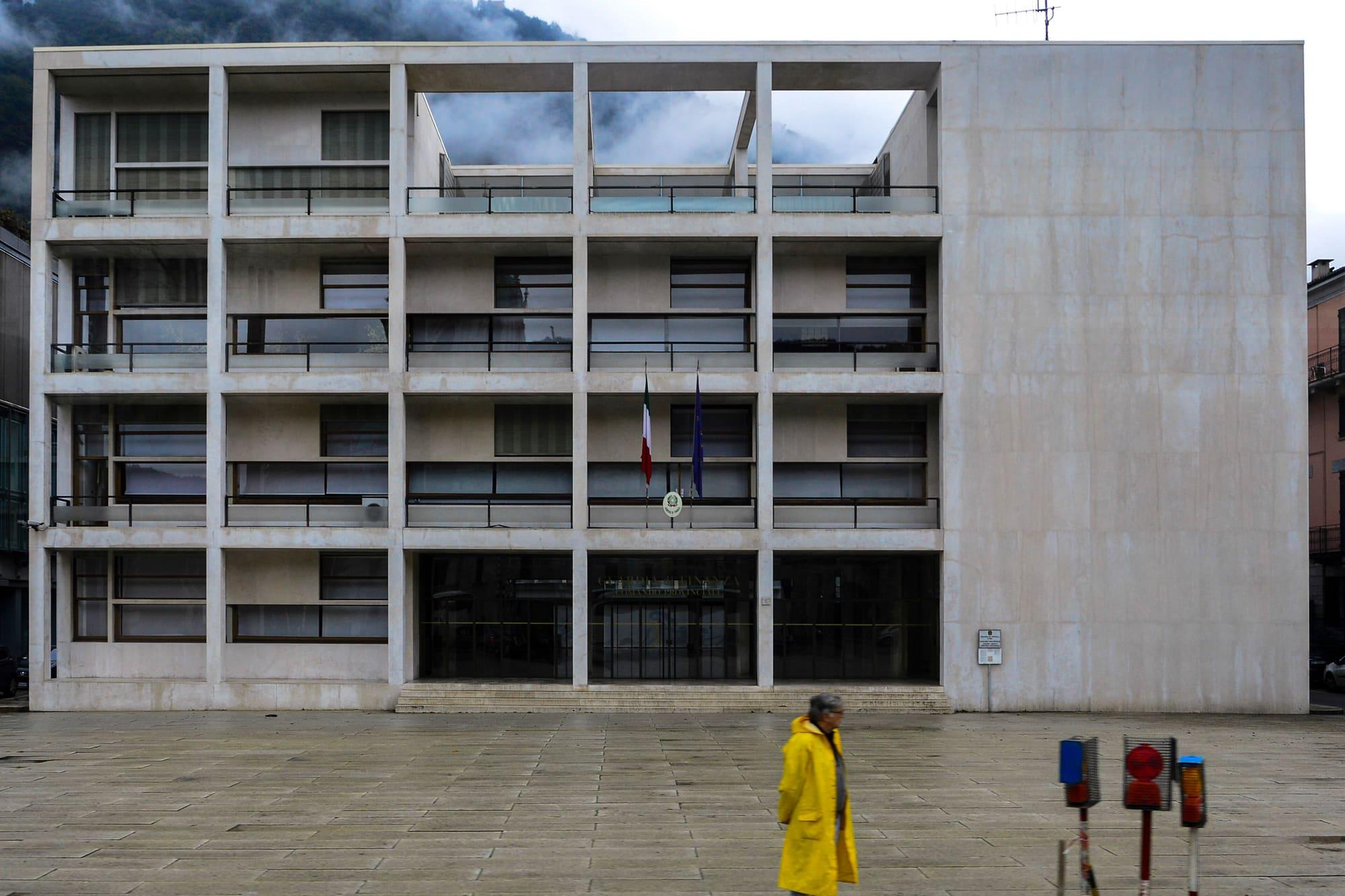
Terragni completes the Casa del Fascio
Fifty metres from the apse of the cathedral, Giuseppe Terragni completes the Como headquarters of the National Fascist Party, designed in 1932: a square of about thirty-three metres a side, faced in white marble, with no cornices or decoration. The building has since taken the name Palazzo Terragni.
Place: Palazzo Terragni (former Casa del Fascio)Story: Palazzo Terragni, rationalism beside the cathedral
The road reaches the Piani Resinelli
A carriage road reaches the plateau below the Grignetta, the starting point of Lecco's climbers; until then the way up was a mule track. On the spires above the Resinelli, Riccardo Cassin and Mary Varale had opened the Via Mary on the Guglia Angelina in 1931.
Place: Parco Valentino BelvedereStory: The red sweaters of the Grignetta
Monks return to Piona
After centuries of absentee abbots and private owners, a group of Cistercian monks arrives from Casamari and takes possession of the priory, which the businessman Pietro Rocca has given to their congregation. A community of monks has lived at Piona ever since.
To Switzerland along the smugglers' paths
After the armistice many disbanded soldiers cross the San Jorio pass above Gravedona to seek refuge in Switzerland. Refugees use the smugglers' paths too: during the war Ticino and the Mesolcina take in about twenty-six thousand soldiers and twelve thousand civilians, but many are turned back.
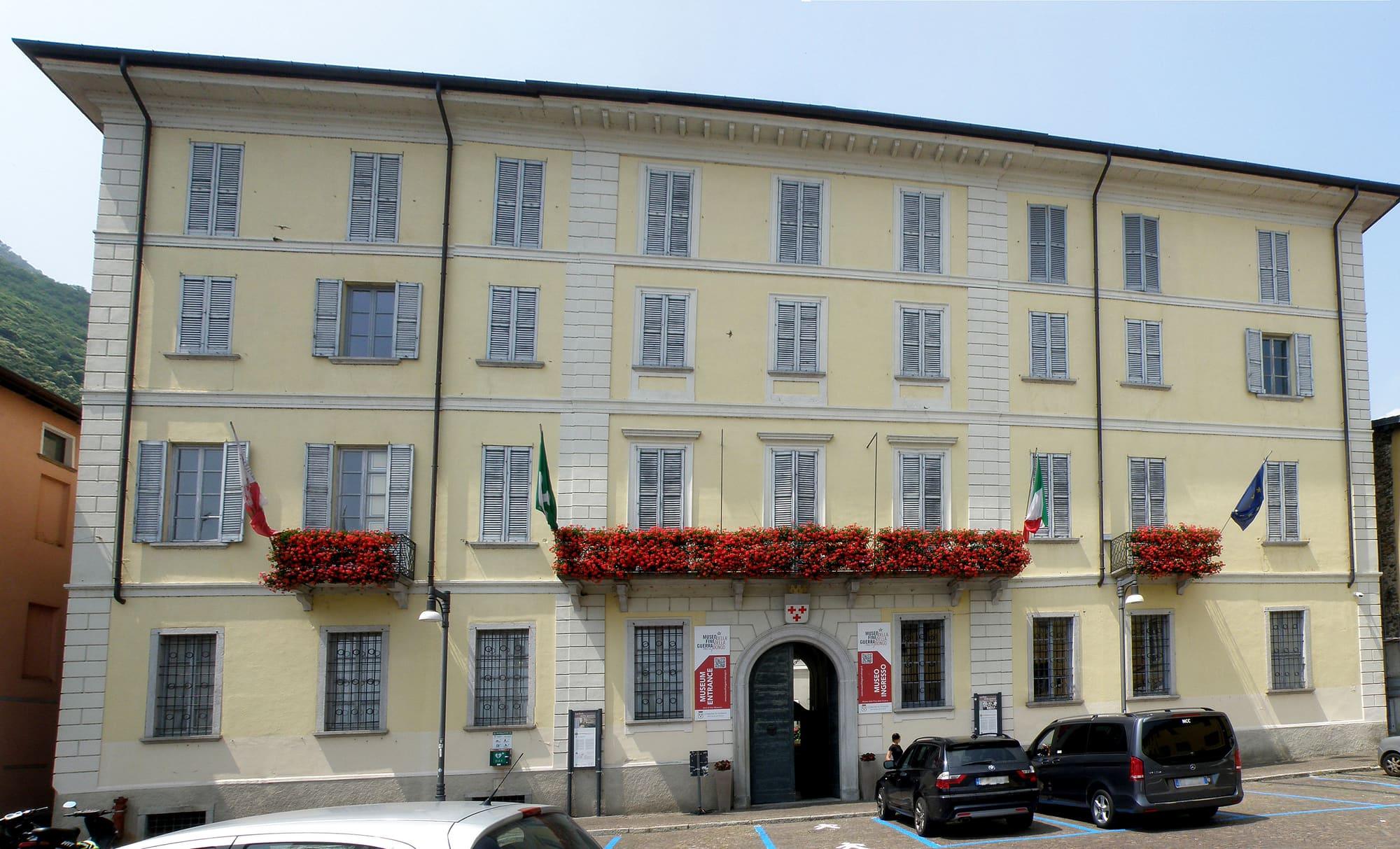
Partisans stop Mussolini at Dongo
On the upper lake, partisans of the 52nd Garibaldi Brigade stop a German column heading for Switzerland and recognise Benito Mussolini among its passengers. After his capture they take him to Palazzo Manzi in Dongo, which houses the Museum of the End of the War.
Place: Museum of the End of the WarStory: The Cadorna Line on the Lario
The fort at Colico fires its only shots in war
The German column that had handed Mussolini over to the partisans at Dongo is stopped at Colico under the threat of the Montecchio guns, which fire five rounds, none on target. The next day, at the Isolabella hotel, the Germans sign their surrender.
Place: Forte Montecchio NordStory: The Cadorna Line on the Lario
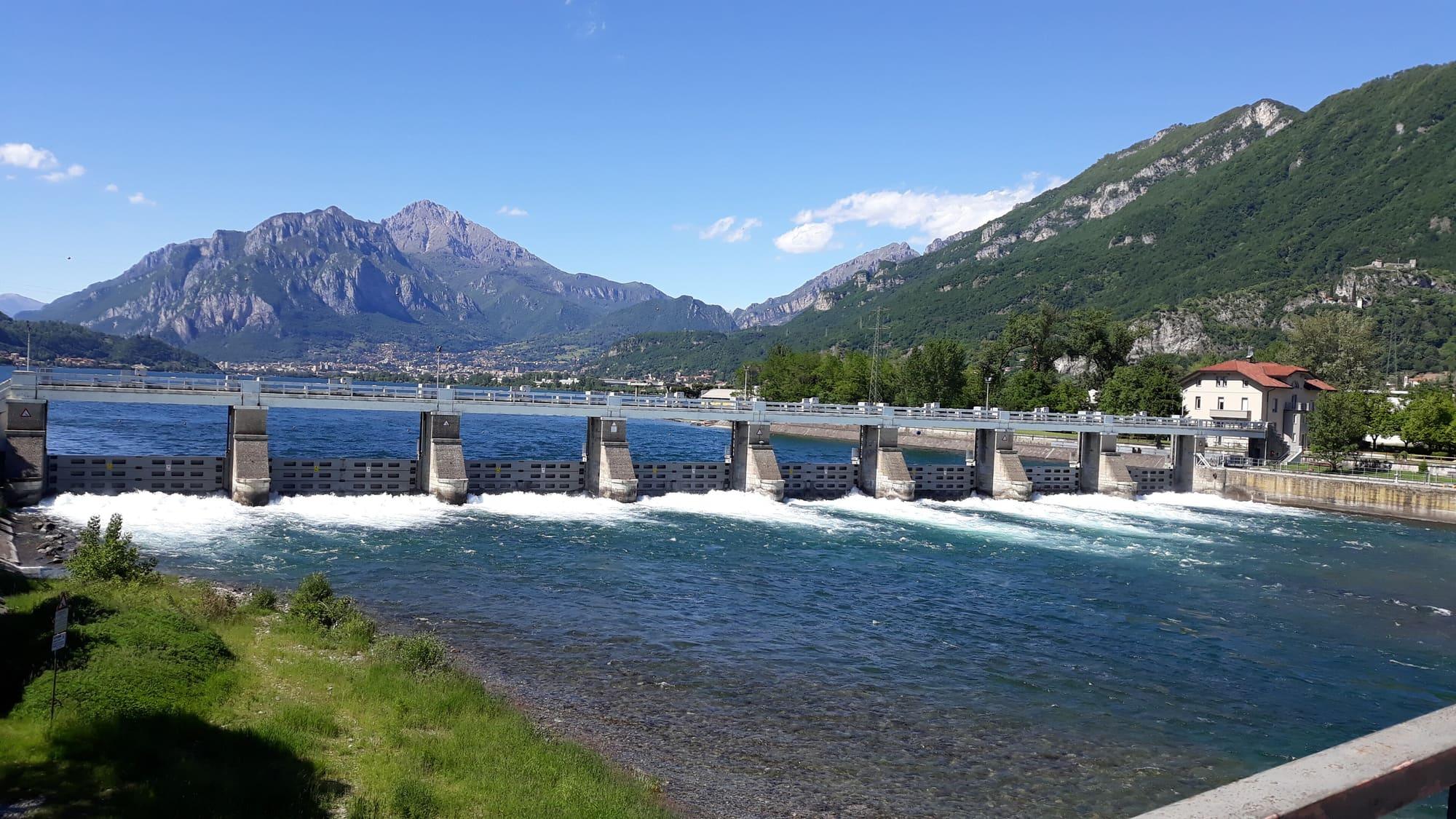
The Olginate dam regulates the lake
Downstream of Lecco, between the lakes of Garlate and Olginate, the Consorzio dell'Adda's dam goes into operation, with eight fourteen-metre openings. It holds back water during floods and releases it in dry spells, and it reduces the number of times Piazza Cavour in Como ends up under water.
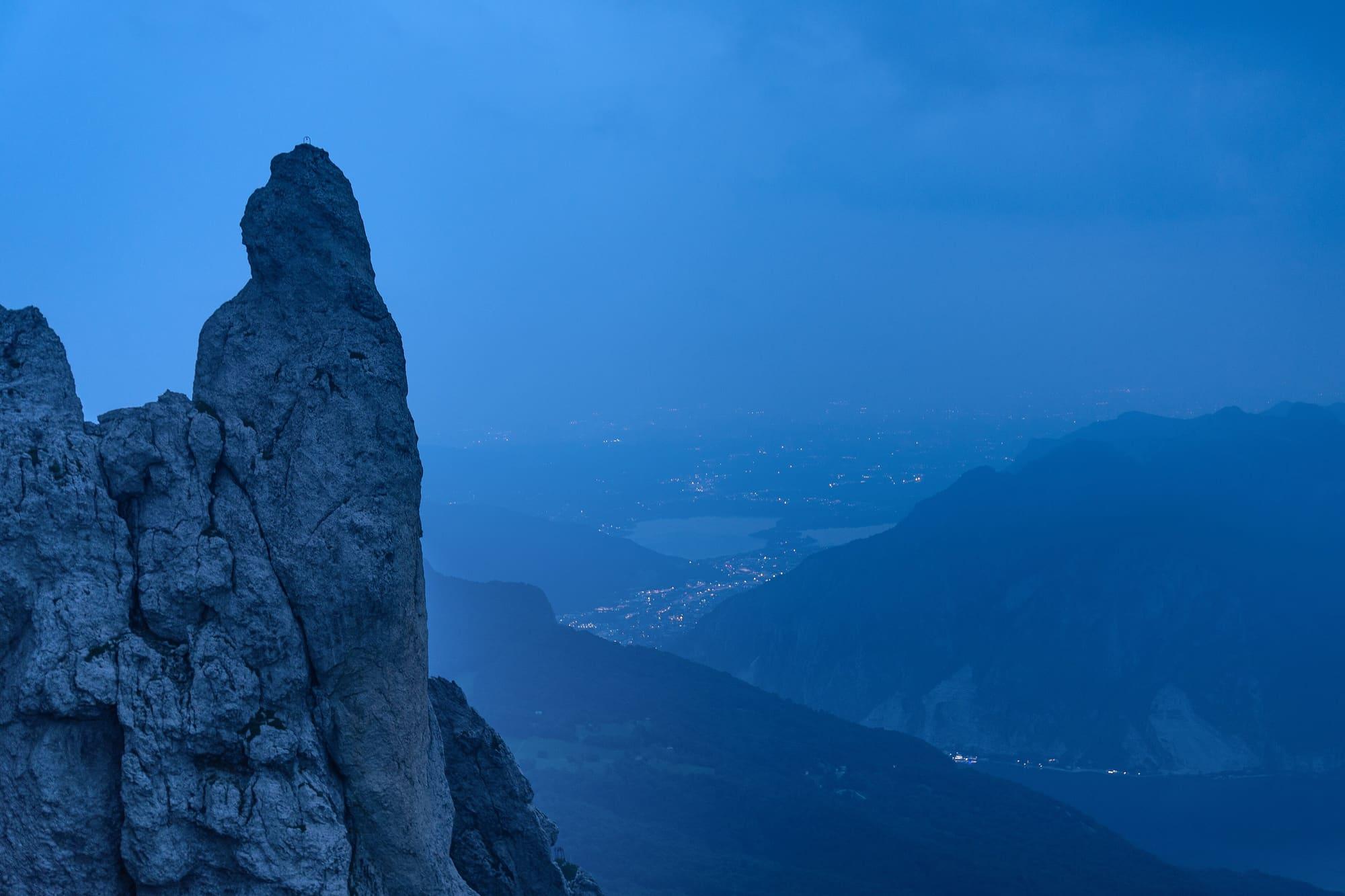
The Ragni della Grignetta are founded
A group of young Lecco climbers founds the Ragni, the Spiders, recognisable by their red jumper with a seven-legged spider on the left sleeve. From the spires of the Grignetta they will reach Patagonia: in 1974 an expedition led by Casimiro Ferrari climbs Cerro Torre.
Place: Palazzo delle PaureStory: The red sweaters of the Grignetta
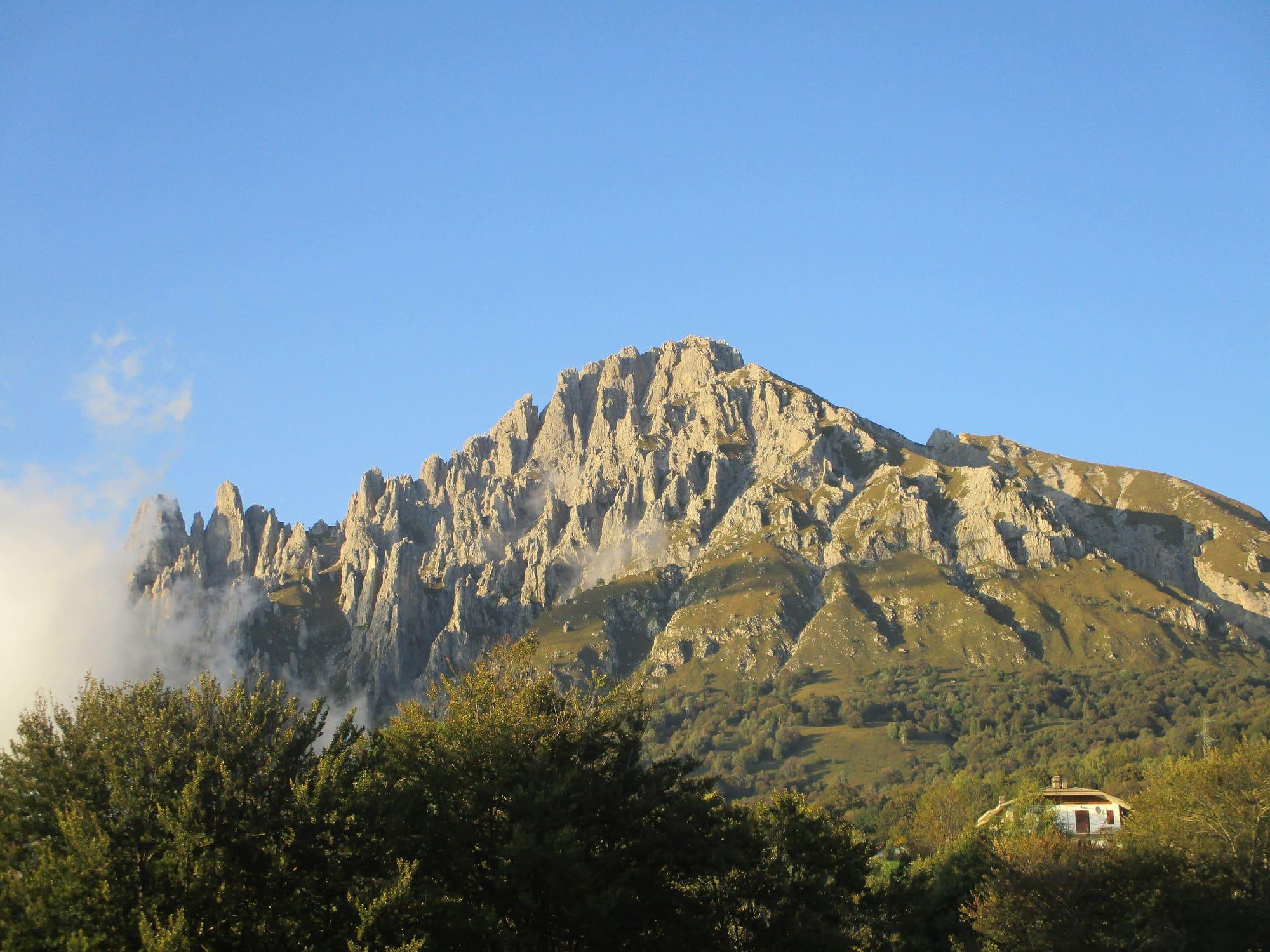
Enrico Fermi at Villa Monastero
At Villa Monastero in Varenna, Enrico Fermi gives his last course. The villa, which grew out of a Cistercian convent, hosts physics schools, and its conference hall bears his name.
Place: Villa MonasteroStory: The villas and the microclimate
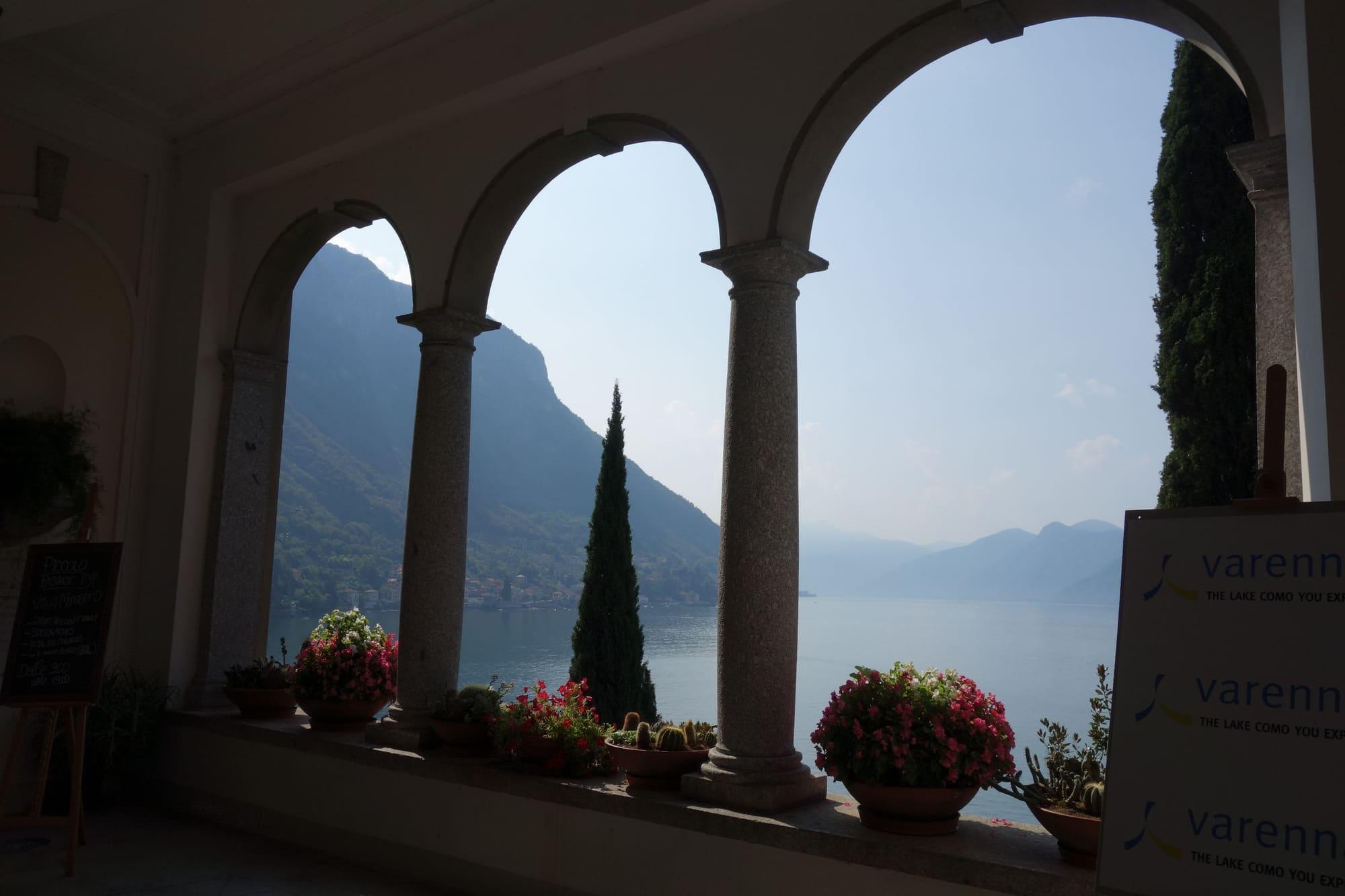
Adenauer comes to Cadenabbia
On the advice of his foreign minister, Heinrich von Brentano di Tremezzo, the German chancellor Konrad Adenauer spends a holiday at Cadenabbia, and Griante makes him an honorary citizen. He will spend eighteen holidays there until 1966, from 1959 at Villa La Collina.
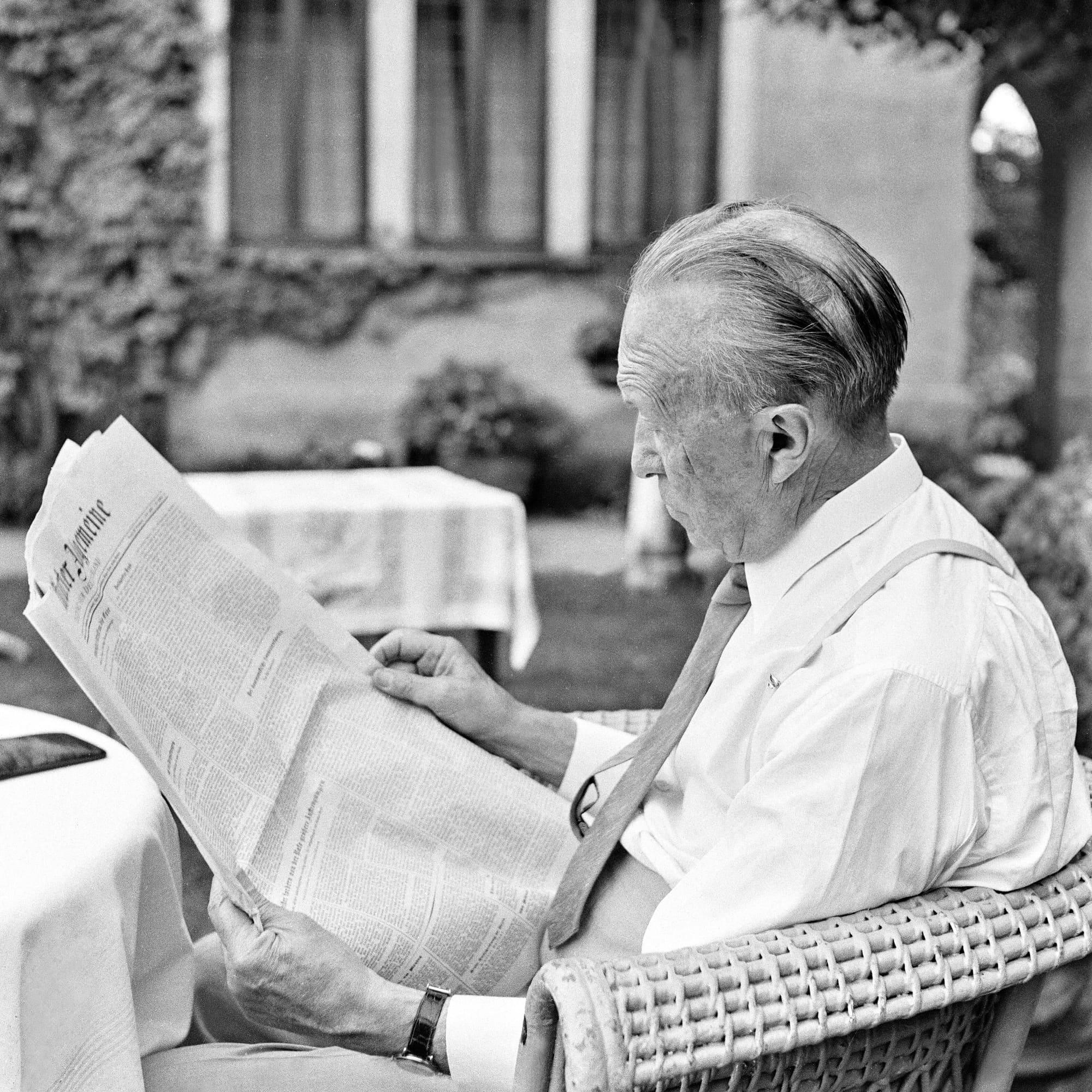
The Élysée Treaty is saved at Cadenabbia
At Cadenabbia, where Adenauer spends his holidays at Villa La Collina, the leaders of the German governing coalition meet, because ratification of the treaty with France is in danger of failing in the Bundestag. The chancellor agrees to add a preamble on the Atlantic alliance, and the treaty is saved.
Place: Villa La Collina, CadenabbiaStory: The chancellor on the lake
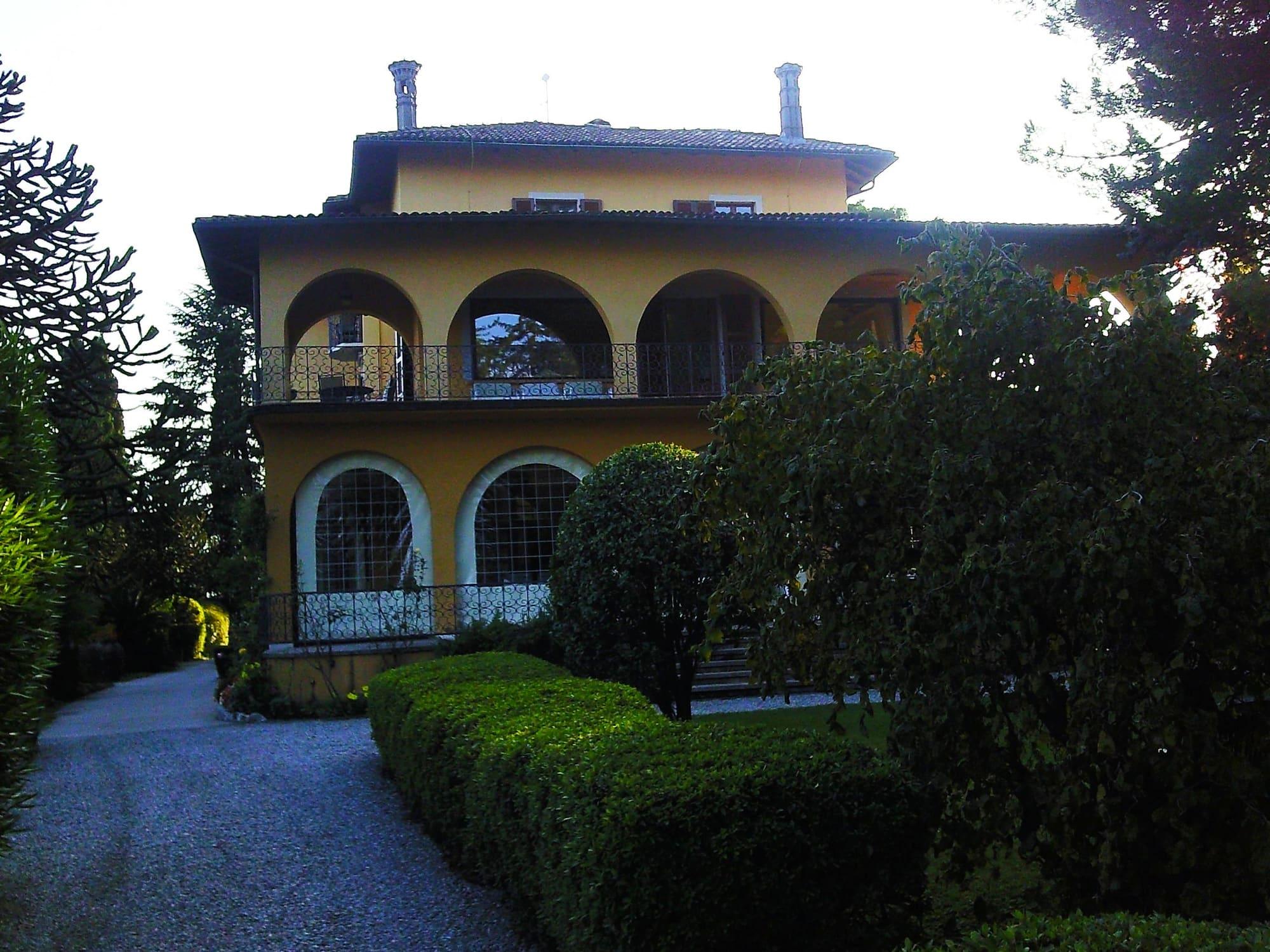
The flood of the year of the Valtellina disaster
The lake reaches 2.64 metres above the Malgrate zero, the highest level since it has been regulated, reached again on 15 October 1993. With the dam Piazza Cavour stays flooded for 30 days; without it, it would have been 85.
Villa del Balbianello passes to the FAI
The explorer Guido Monzino leaves the villa on the Lavedo point to the FAI, Italy's national trust, with his collections and the relics of his Everest and North Pole expeditions. The Balbianello is also a film location: ‘A Month by the Lake', ‘Star Wars: Episode II' and ‘Casino Royale' were among the films shot there.
Where the Fiumelatte comes from
A dye poured into the caves of the Moncodeno, on the north side of the Grignone, shows that the Fiumelatte is the outlet of a karst system inside the mountain. It usually flows from March to October; Leonardo had written that it ran only in August and September.