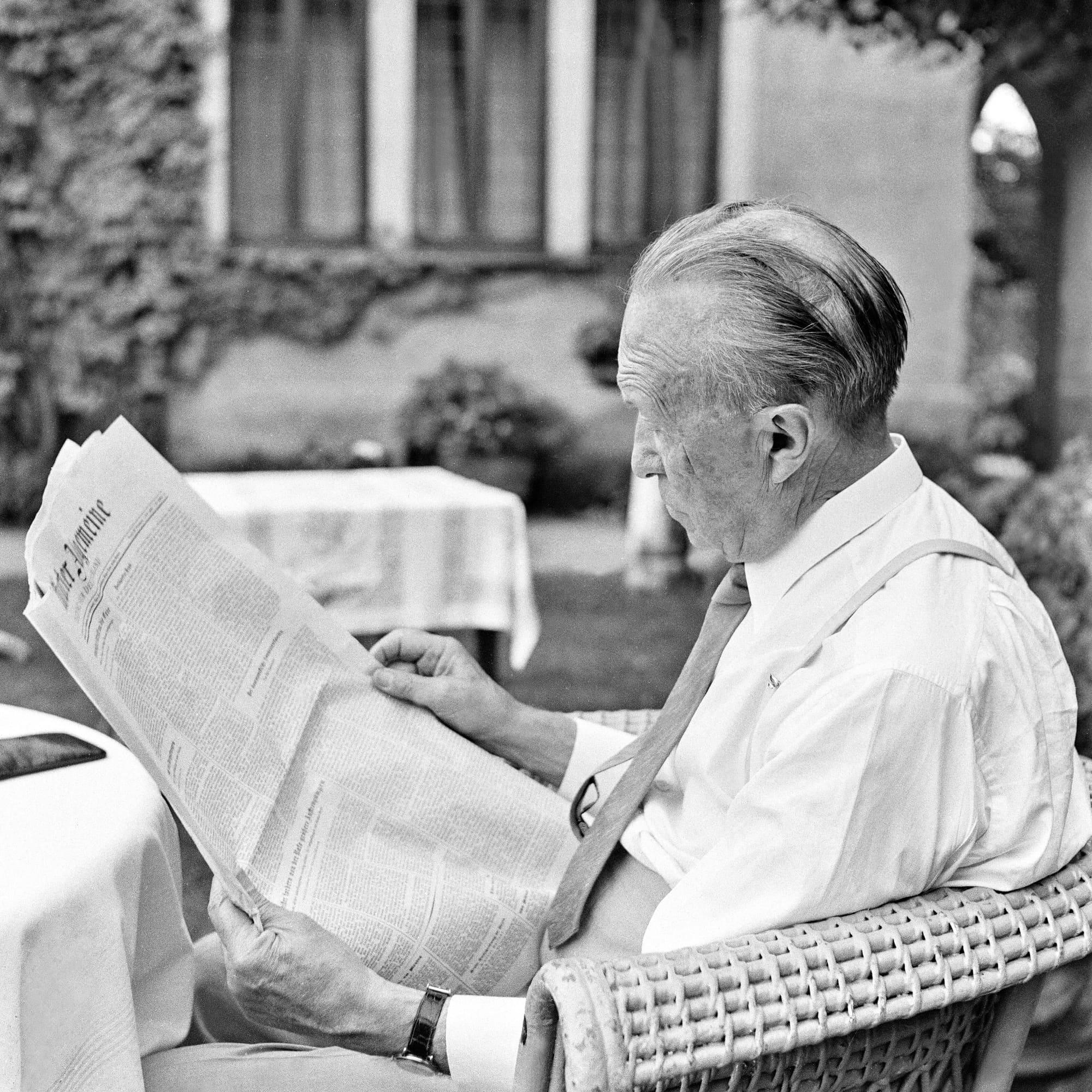
Between 1957 and 1966 Konrad Adenauer stayed in Cadenabbia eighteen times.
From 1959 he rented Villa La Collina, combining political work with walks and games of bocce.
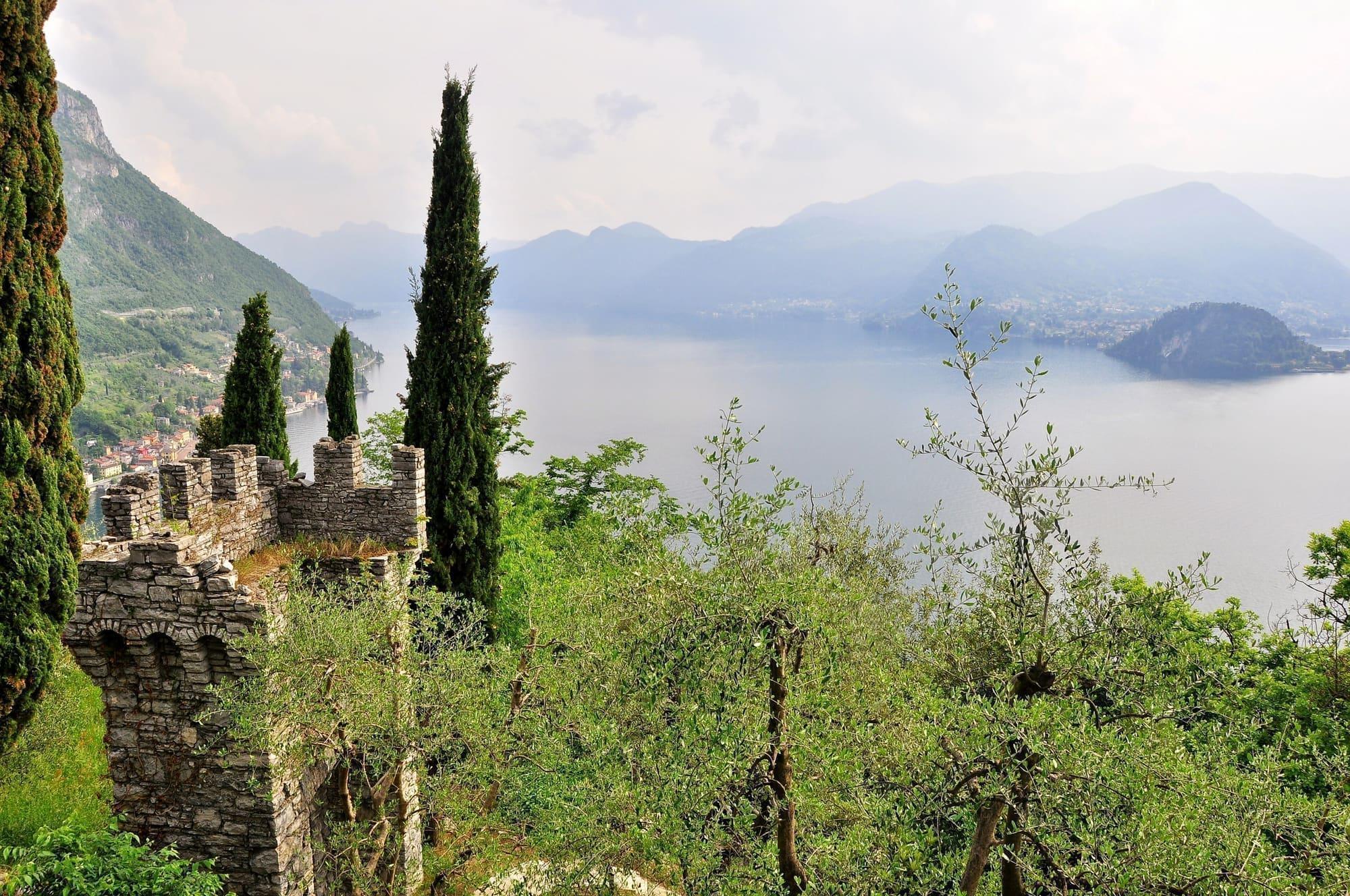
In the 1950s, with the economic miracle, Italy became the Germans' favourite holiday country. The chancellor went south too, but not to the sea: he was after not la dolce vita but a contemplative life, and he found it on the lakes. The advice to try Lake Como came from Heinrich von Brentano di Tremezzo, his foreign minister from 1955 to 1961, whose ancestors came from these shores, some of them leaving in the seventeenth century to trade in Frankfurt. Adenauer first came to Cadenabbia in February and March 1957, and on that very first stay Griante made him an honorary citizen. In all he spent eighteen holidays here, the last in 1966.
An empty villa on the hill
In 1957 and 1958 he stayed in two villas nearby, Villa Rosa and Villa Arminio. He found Villa La Collina through bocce: a carabiniere had taught him the game, and the village court lay just behind the villa. One of his partners was the mayor of the day, Paolo Roda, who knew the owner; through him the Federal Chancellery rented the villa from 1959, fifteen times in a row. It had been built in 1899 by Suardi, a hotelier from Milan, and was a private summer home until the 1930s; it then passed to the Gallifet, a French noble family, who spent their summers there until the early 1950s and then left it empty for years. A few weeks before the chancellor first arrived, the house was in poor condition. The park around it covered twenty-seven thousand square metres.
Inside there was little or nothing, so the house was furnished on loan: furniture and crockery came over from the Hotel Britannia nearby. When Adenauer left for Rhöndorf, after eight weeks at most, everything went back to the hotels, and six months later, when he returned, the hotels' empty rooms were cleared once more for the villa. From Germany came a sizeable staff, a safe of secret papers, table linen and cutlery; the kitchen was run by cooks from the German railways' dining-car company. It was not a comfortable house: bats and dormice lived in the attic, there was no hot water for the shower, and the living room, dark behind heavy curtains and overhanging terraces, was so cold that the chancellor's companions called it the crypt.
A chancellery with a view
Officially these were holidays. In practice the villa became the Bonn Chancellery's Italian outpost, a stand-in chancellery working almost eight hundred kilometres from the capital. Officials came ahead of the chancellor to inspect the house; telephones and telex were connected with the help of the Italian authorities, the Federal Criminal Police Office inspected the grounds, and when anything strictly confidential had to be exchanged, couriers shuttled between Bonn and Cadenabbia. The day ran to a timetable: Adenauer rose shortly before seven, saw visitors or went walking in the morning, played bocce in the late afternoon, and in the evening the household read aloud, played board games or talked in the living room, retiring at about ten.
Foreign policy meetings and decisions were prepared in Cadenabbia. In the summer of 1958 Adenauer prepared on the lake for his first meeting with Charles de Gaulle: he left Cadenabbia on 13 September and on the 14th was at Colombey-les-Deux-Églises, at the meeting that opened the way to the Franco-German rapprochement. On 4 April 1963 the coalition leaders met at Cadenabbia, because the ratification of the Élysée Treaty was in danger of failing in the Bundestag: there the chancellor agreed to put a preamble on the Atlantic partnership in front of it, and the treaty was saved. Among the guests were the Italian prime ministers Amintore Fanfani and Antonio Segni, NATO's secretary general Dirk Stikker, who had a holiday home at Menaggio, and on 21 September 1962 the mayor of Berlin, Willy Brandt, the opponent against whom he had fought a bitter election campaign the year before.
Here in the province of Como I would be elected by a large majority.
Konrad Adenauer, quoted at the second station of the Villa La Collina historical walk
Mass, bocce, San Martino
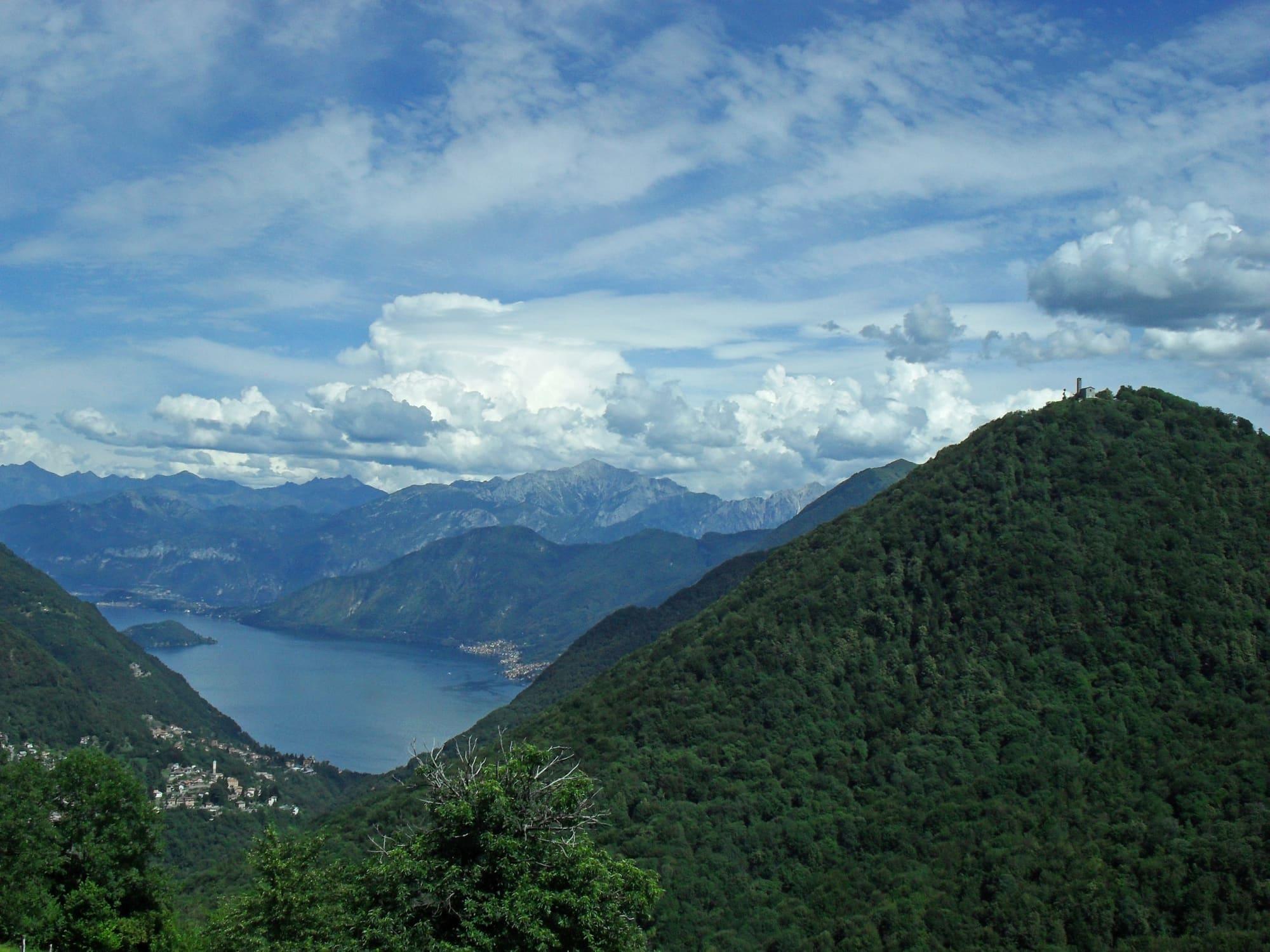
On Sundays he walked to Mass, usually with one or more of his daughters, from the villa to the parish church of Santi Nabore e Felice, and along the way villagers greeted him and sometimes fell in behind: those very public walks to church did a great deal for his popularity. The village hairdresser, who as a young man had studied singing at the Milan conservatory, would sometimes sing a solo during the service in the guest's honour, and he also cut his hair; Adenauer hardly spoke Italian and the hairdresser knew no German, so they got by in French. Since the early 1960s signs for the Passeggiata Adenauer have marked the route, along Via Gianelli, Via Bellini and Via Tommaso Grossi, past the church and on up towards San Martino: the name was never official, and it has stuck. To San Martino, the little church at 475 metres that he could see on the mountainside from his park, Adenauer climbed with his daughters at least twice, while his legs still allowed it.
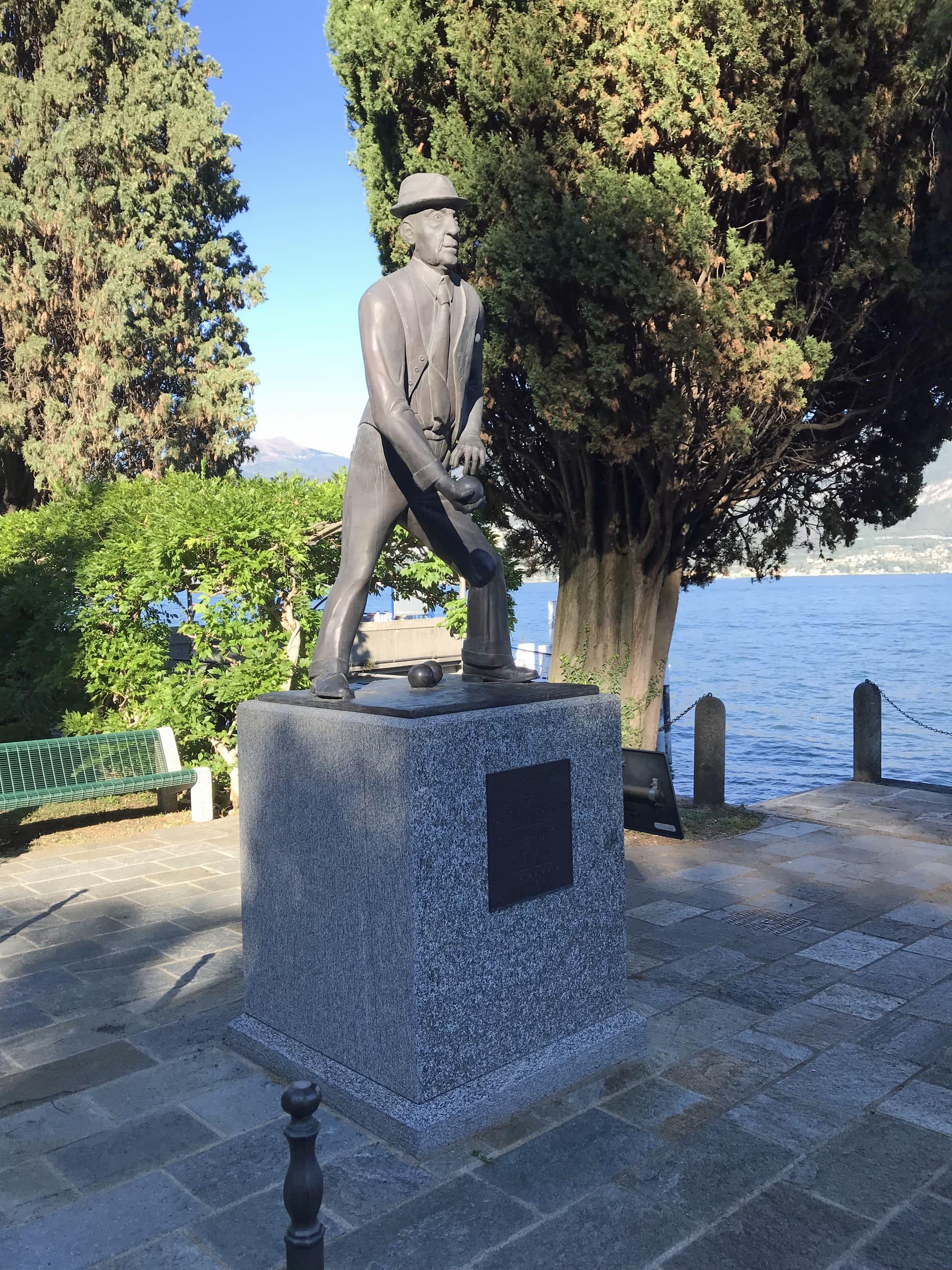
Adenauer played bocce on the public court outside the property. The two courts in the villa's park are not the ones he used during his stays. In the late afternoon, German visitors gathered to watch the games and greet him. He played in a light suit and a checked hat. He also had a court built at his home in Rhöndorf.
After him
His last stay as chancellor was at the end of the summer of 1963, a few weeks before he stepped down, among reporters and photographers; on 12 September he invited the dignitaries of the village and the province to a reception at the Hotel Bellevue. In the following years he worked on his memoirs at Cadenabbia, helped by his aide Anneliese Poppinga, and he came for the last time in September and October 1966, six months before his death in April 1967. After he died, the villa was bought by a German road-building contractor and admirer of his, who used it as a private house and put it up for sale ten years later; in 1977 the Konrad Adenauer Foundation bought it, with its 2.7-hectare park. In the early 1990s a second building for conferences, the Accademia Konrad Adenauer, was built below the villa, and the Federal Republic recognises the place as a memorial of national importance. Since 1992 Griante has been twinned with Bad Honnef, the town on the Rhine that Rhöndorf belongs to.
Historical events linked to this story are collected in the Lake timeline.