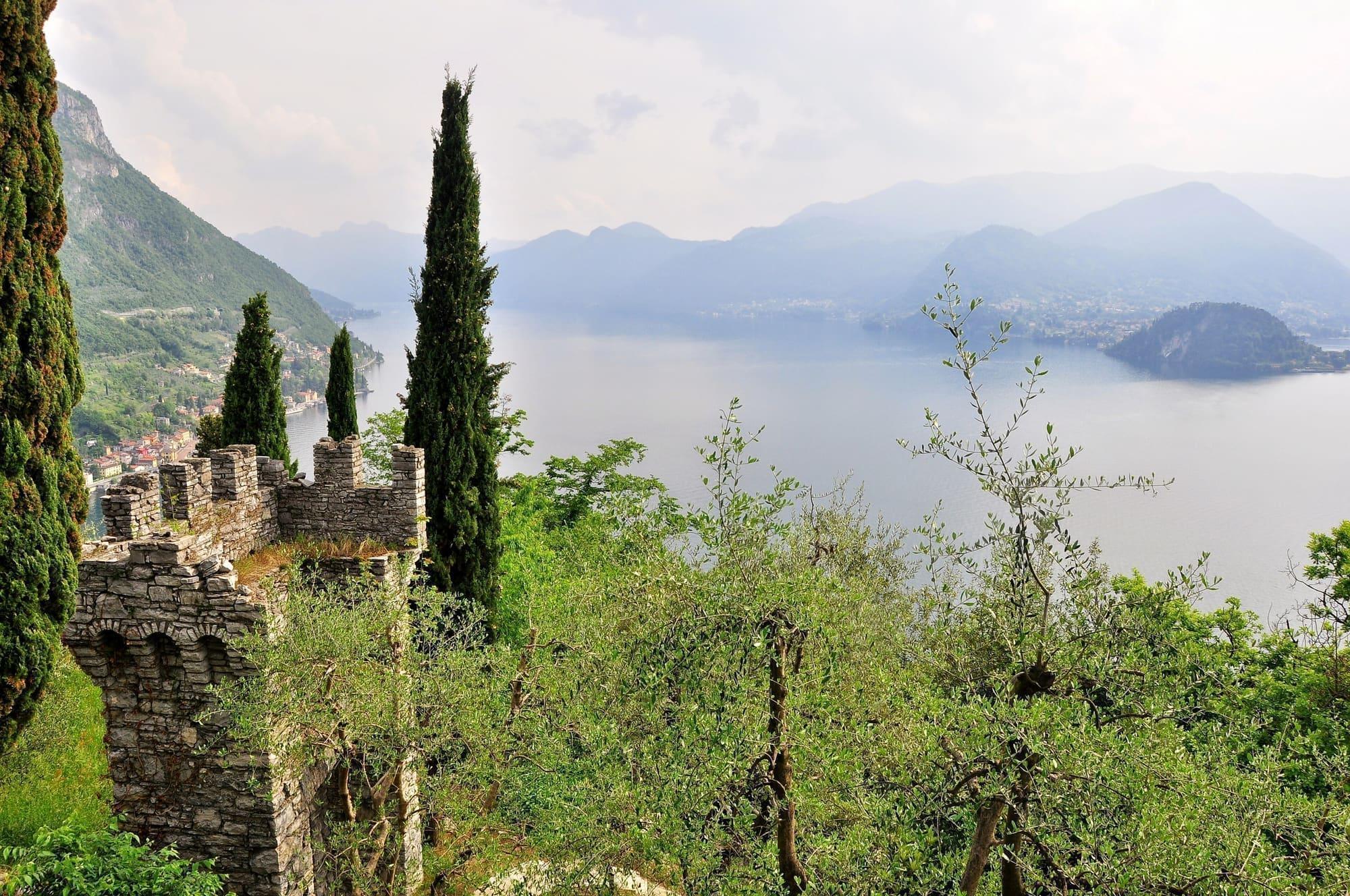
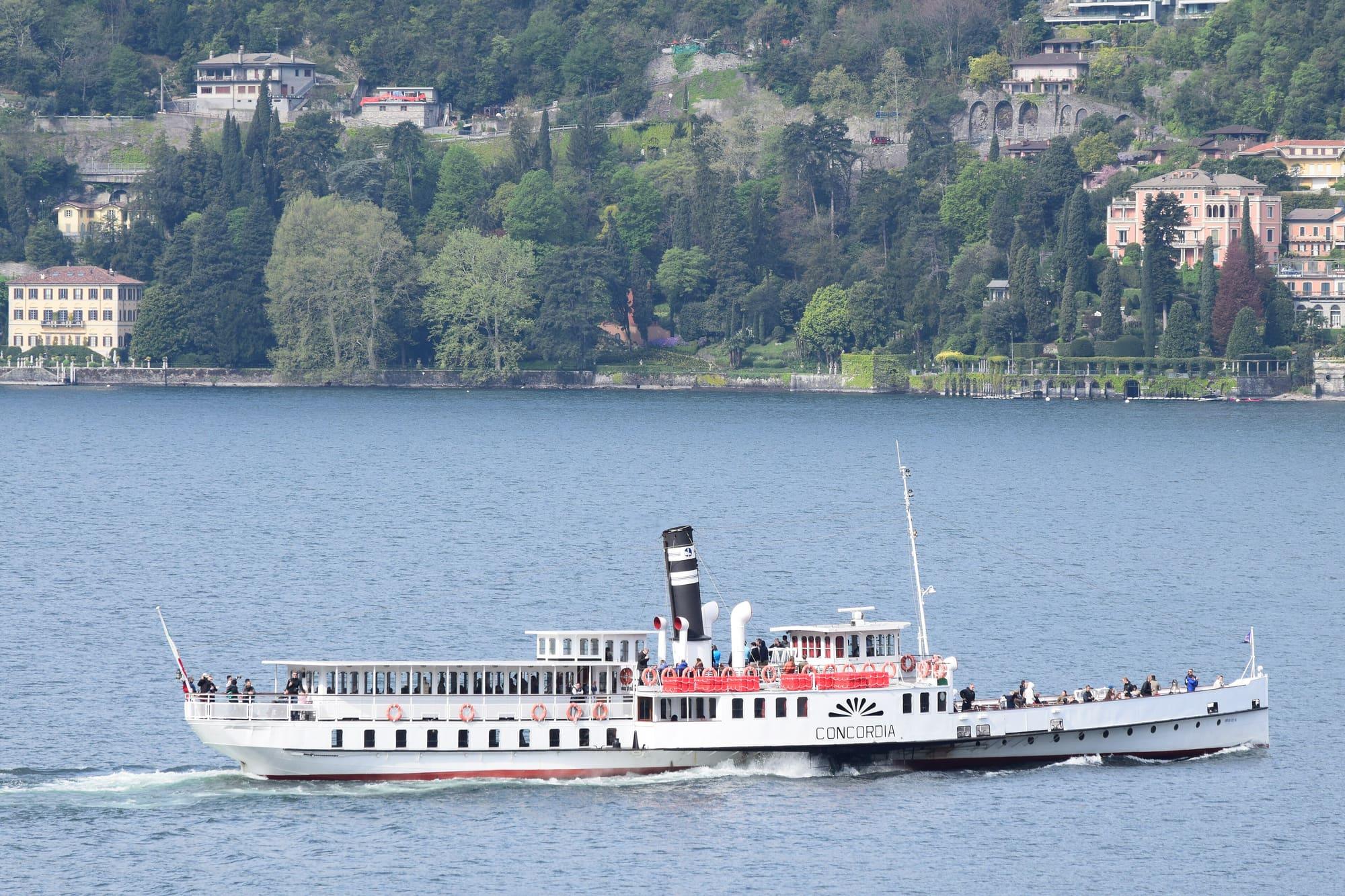
The lake has no bridges, and since 1826 the boat has served as its road: from the first steamer, the Lario, to the two paddle steamers of 1926 that still exist.
On 29 July 1826, at six in the evening, on the Olmo beach at Borgo Vico just outside Como, a wooden boat with two paddle wheels and a twelve-horsepower double-acting Fulton-Watt engine was launched. It was called Lario. After three trial runs, on 16 August it began daily sailings between Como and Domaso at the far end of the lake: the first steam vessel on Lake Como, put into service by the Società privilegiata per l'impresa de' battelli a vapore of the Kingdom of Lombardy-Venetia. On 9 September the second was launched, the Plinio, which from 1 November worked the Lecco–Domaso line and met the Lario beyond Bellagio to exchange passengers.
The two routes, Como–Domaso and Lecco–Domaso, meeting halfway, already traced today's network: the two branches, the central lake as the interchange, the upper lake as the terminus. Navigazione Laghi's timetables still follow the same pattern, with more stops and faster boats.
Why the lake needed steam
Before 1826 people travelled by sail and oar, with cargo boats carrying wine, wood, stone and silk along a lake whose shore road was a mule track. The wind on the lake keeps its own hours: the Tivano from night to early morning, blowing south, the Breva in the afternoon, blowing north, and hours of calm in between. A journey from Como to Colico could take a day or two. Steam cut it to a few hours and made it predictable: boats left and arrived at a set time. Hotels, villa lettings and tourism grew on the back of the regular services.
The company changed its name several times. In 1835 the Otello arrived from the Po; on 21 April 1846 the Società Lariana di navigazione a vapore was founded, chaired by Giovanni Pietro Porro; in 1865 the Italia entered service with a three-hundred-horsepower engine built in Zurich, and in 1872 the Lariano and the Volta had four hundred. In 1890 the Lariana had fourteen steamers and a tug. Since 1957 the service has been public: it is run by the Gestione governativa dei laghi Maggiore, di Garda e di Como, which answers to the Ministry of Infrastructure, and so the boats on Lake Como share their tickets and website with those on Garda and Maggiore.
The two survivors of 1926
Two paddle steamers survive from the age of steam, both from 1926, the Lario's centenary: the Concordia and the Patria. The Concordia still sails, with its black funnel and the wheel beating the water beneath the wooden saloon: you board it like any other boat, on the services it runs, and halfway along you can look down into the engine room and watch the steam engine at work. The Patria, laid up for decades, was restored between 2012 and 2014; in 2023 the Province of Como granted it in concession to the Navigazione to complete the work. The two steamers' centenary falls in 2026, together with the Lario's bicentenary.
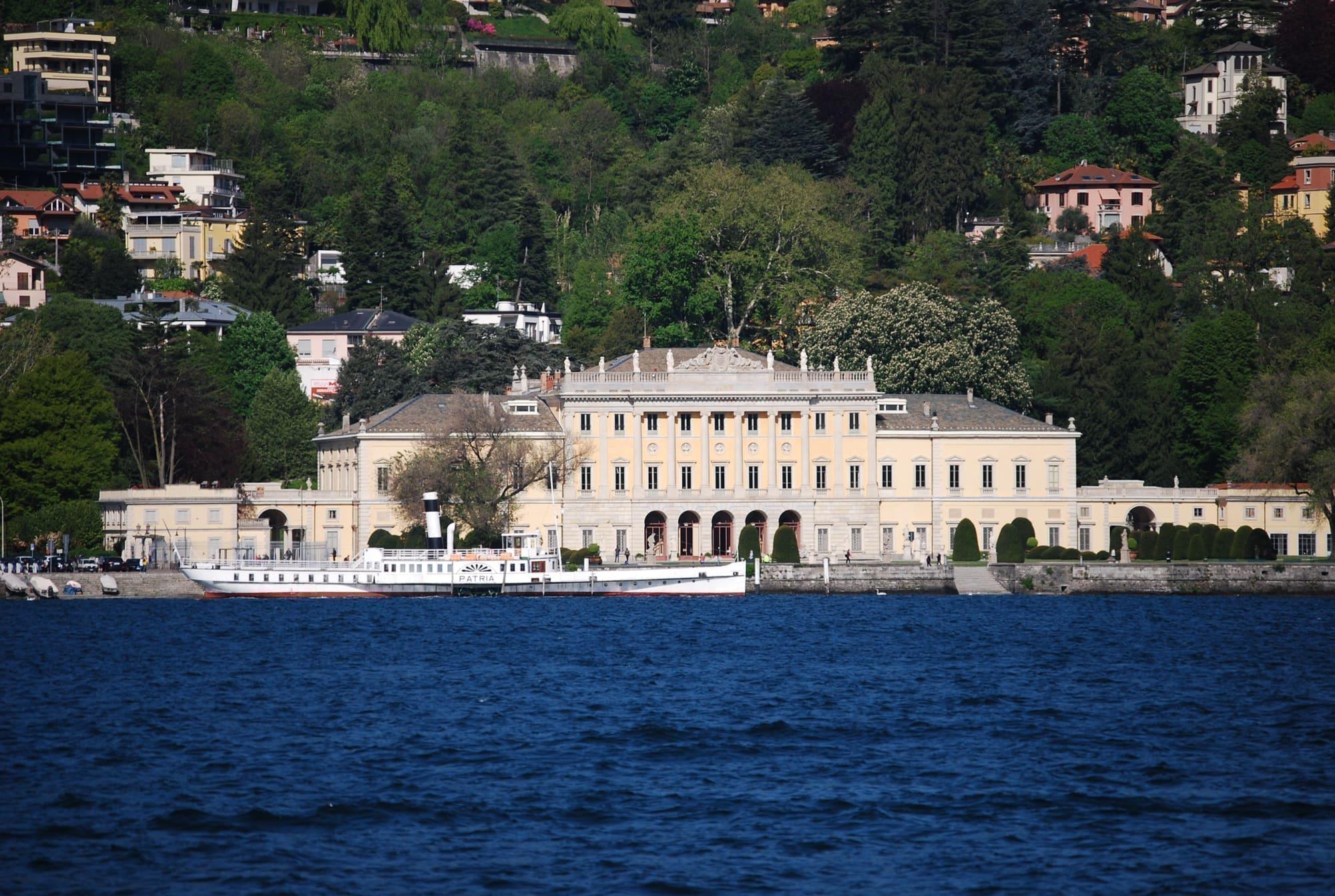
In 1826 the network was already drawn as it is today: the two branches, the centre as the exchange, the upper lake as the terminus.
Cars and wings
The twentieth century added two things. In 1925 the first car ferry entered service; in 1939 a second joined it, the Tremezzina. Since then Bellagio, Varenna, Menaggio and Cadenabbia have been linked by the central-lake crossings, the only way to take a car to the other shore without driving round the branch. In 1964 the first hydrofoil, the Freccia del Lario, was launched: the fast services that link Como and Colico in about an hour and a half descend from it.
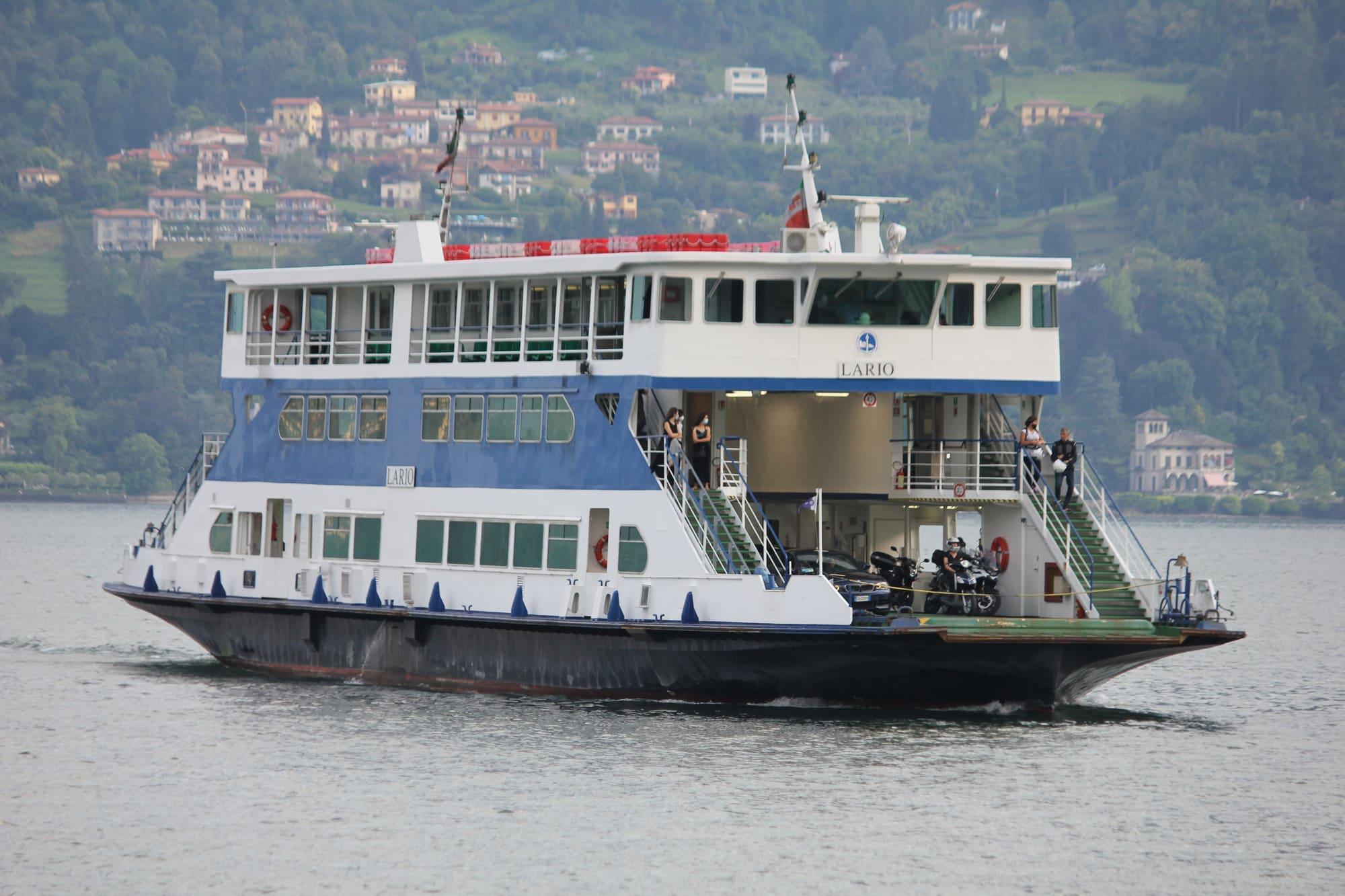
In 2019, the last full year before the pandemic, the boats on Lake Como carried over four million passengers and four hundred thousand cars.
Historical events linked to this story are collected in the Lake timeline.