Last day1Nov
First Basin
Como
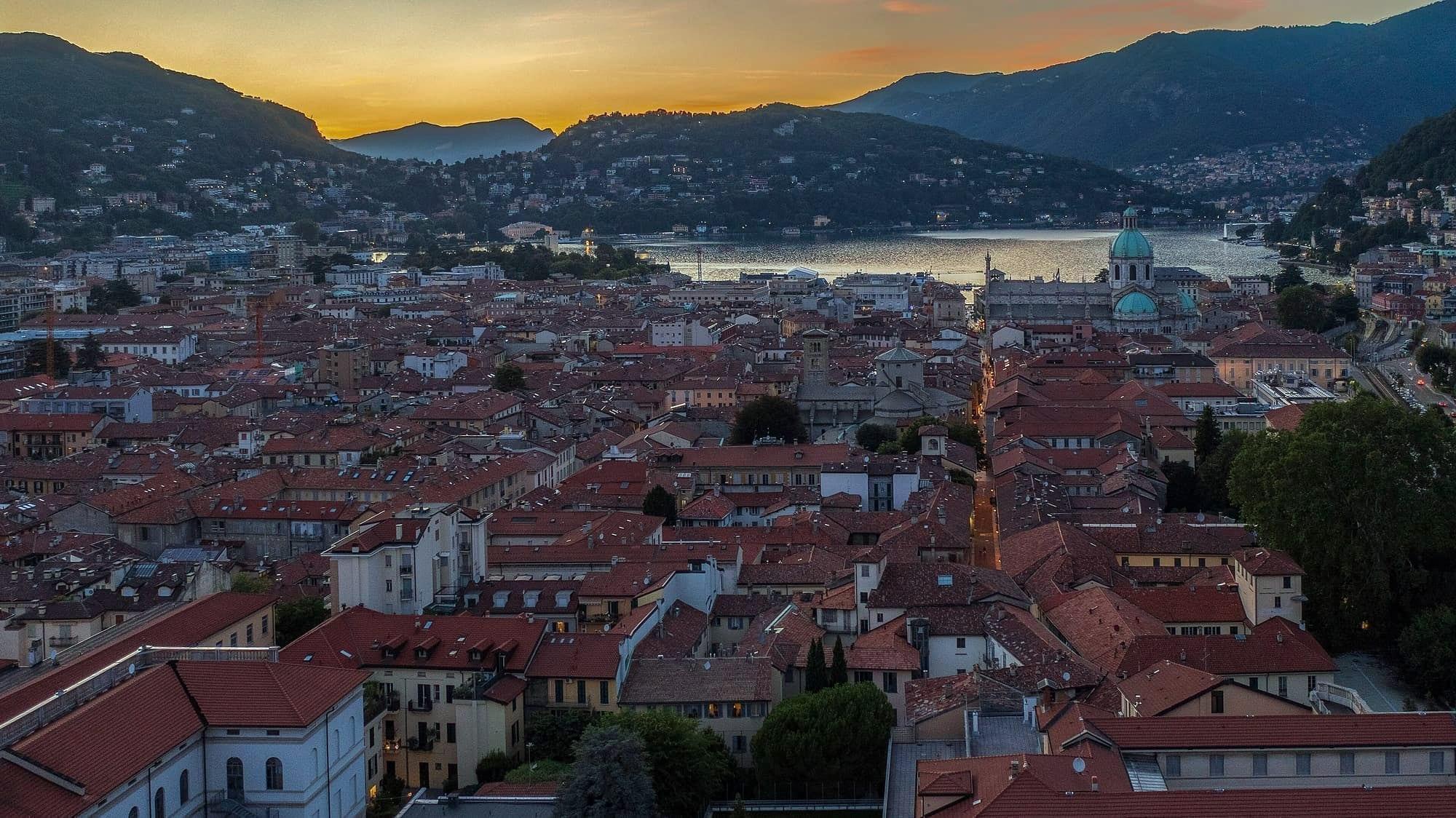
The city of silk and rationalist architecture, with the lake reaching right into the centre.
- Ideal for
- Arrivals, architecture, rainy days
- Time needed
- Half a day for the centre, a full day with Brunate
- Best season
- All year, winter included
- What to see
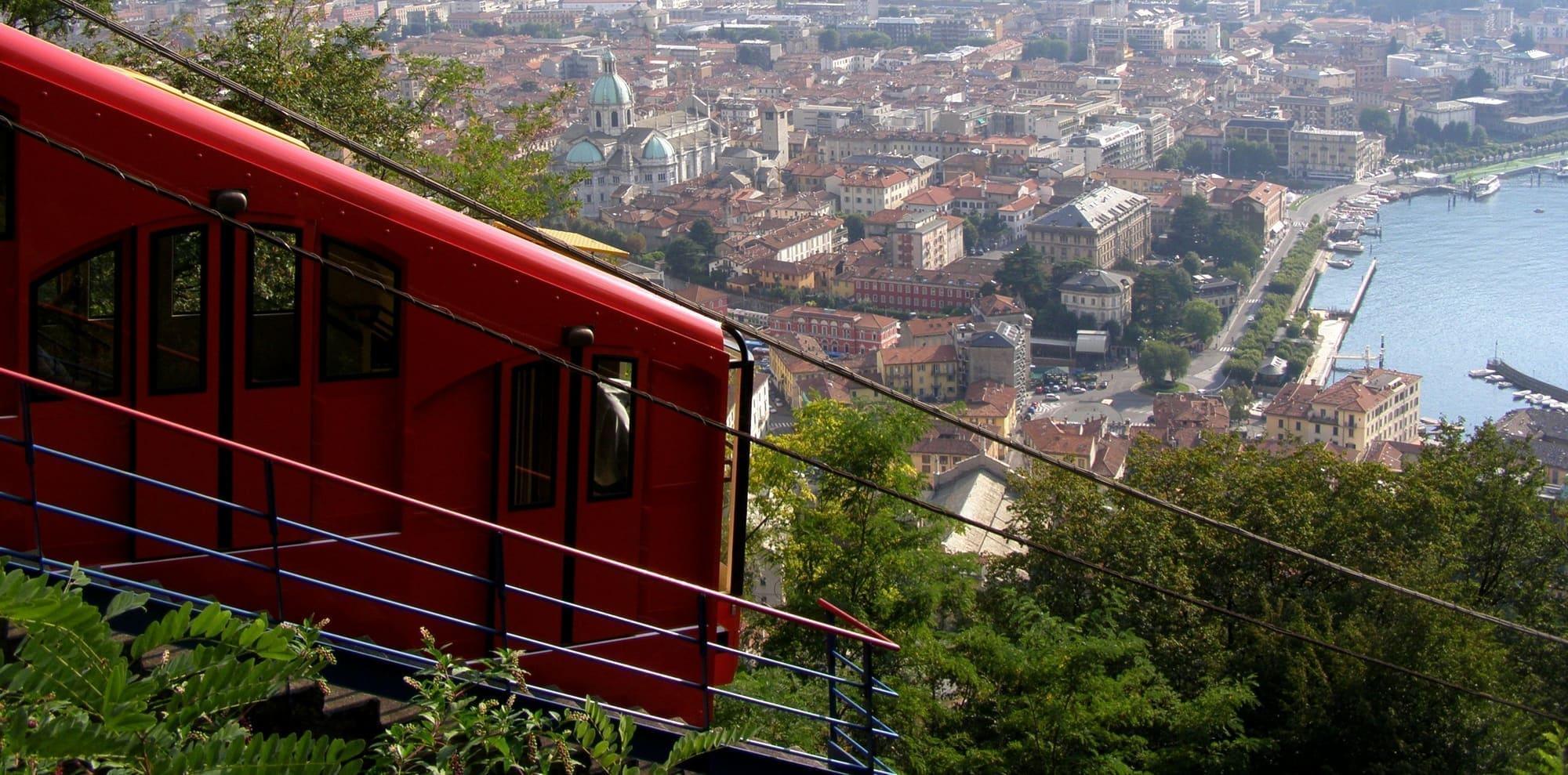
- The funicular up to Brunate at sunset
- Best reached by
- Train from Milan (40 min), the A9 motorway, boat
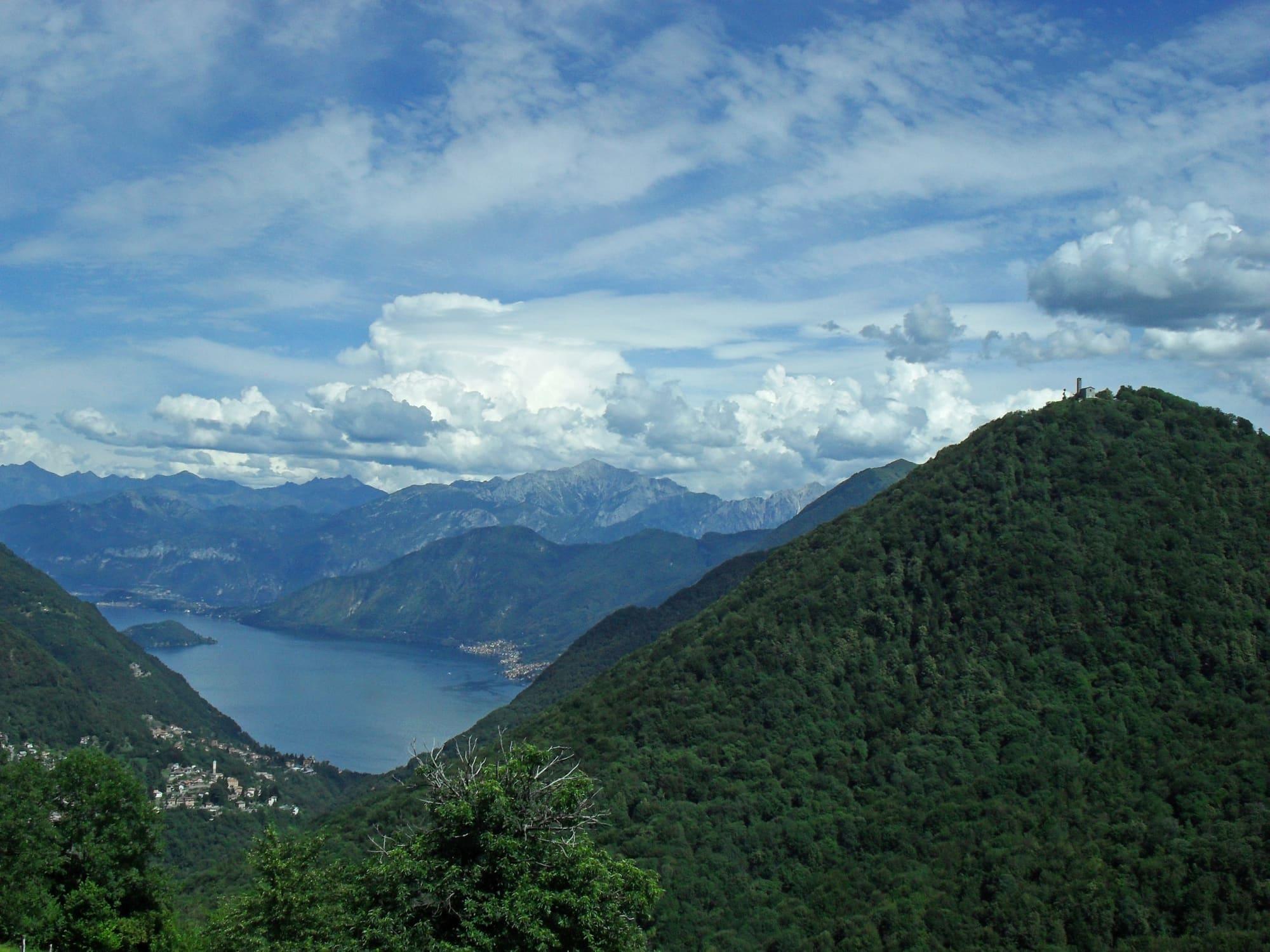
- Andrzej Otrębski · CC BY-SA 4.0
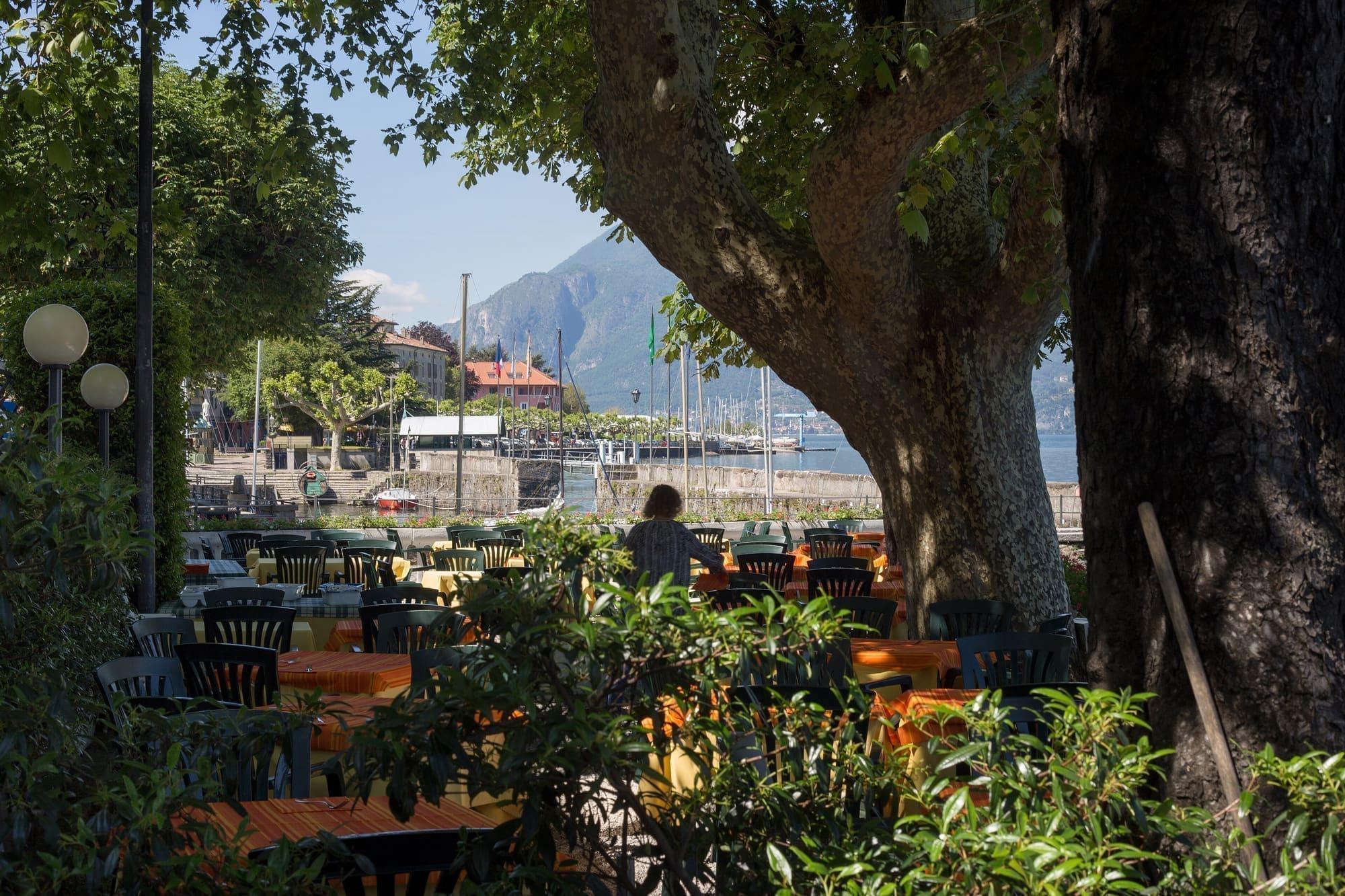
- Andrzej Otrębski · CC BY-SA 4.0
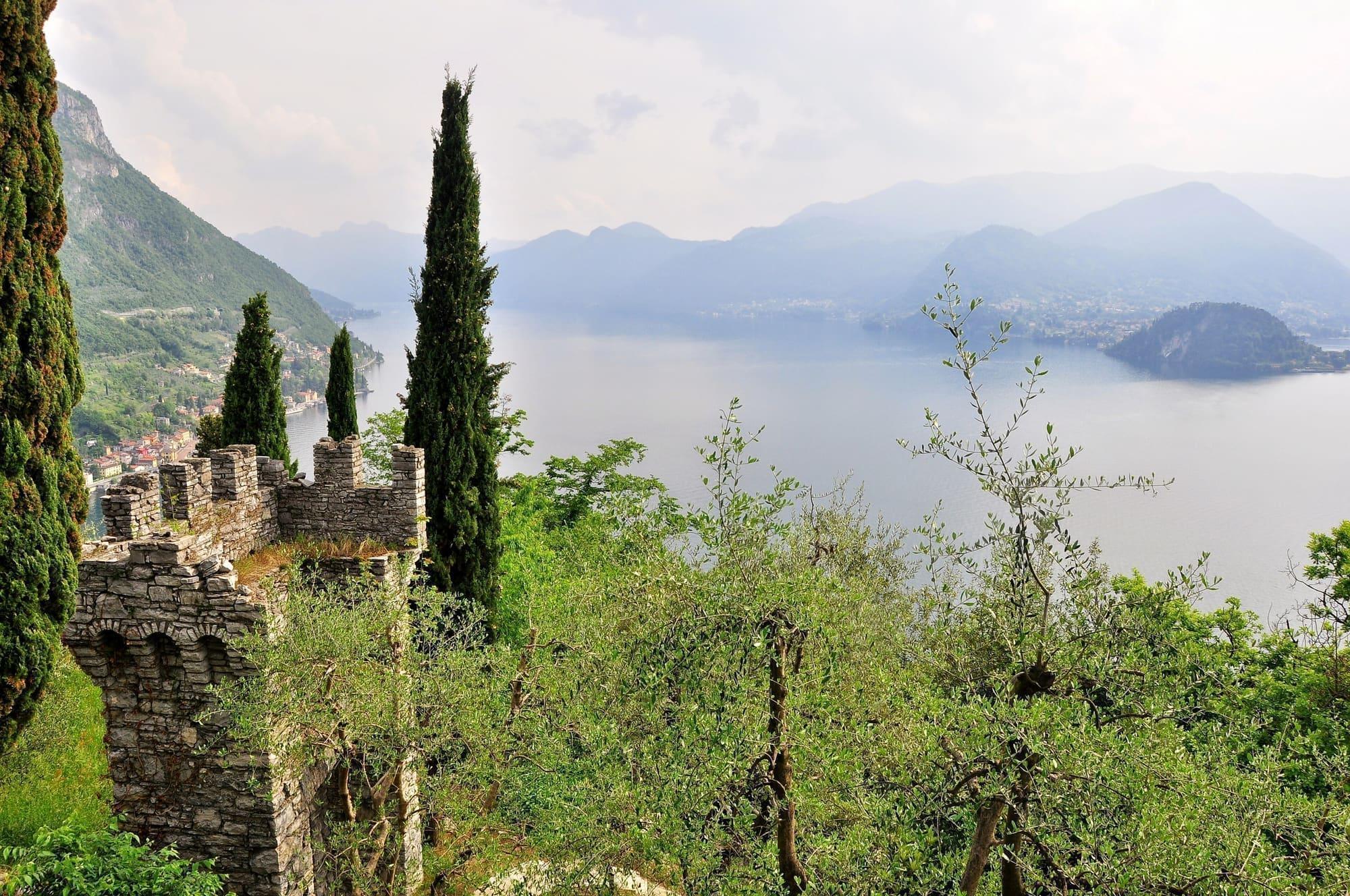
- Marimari52 · CC BY-SA 4.0
The place
Como is a walled city of Roman origin, where silk has been woven and printed since the late eighteenth century.
Its historic centre preserves the grid plan of the Roman town. From Milan the train takes about forty minutes, and boats for the rest of the lake leave from the piers in front of the town.
Como is a walled city of Roman origin, where silk has been woven and printed since the late eighteenth century.
Read on
Its historic centre preserves the grid plan of the Roman town. From Milan the train takes about forty minutes, and boats for the rest of the lake leave from the piers in front of the town.
The walled town
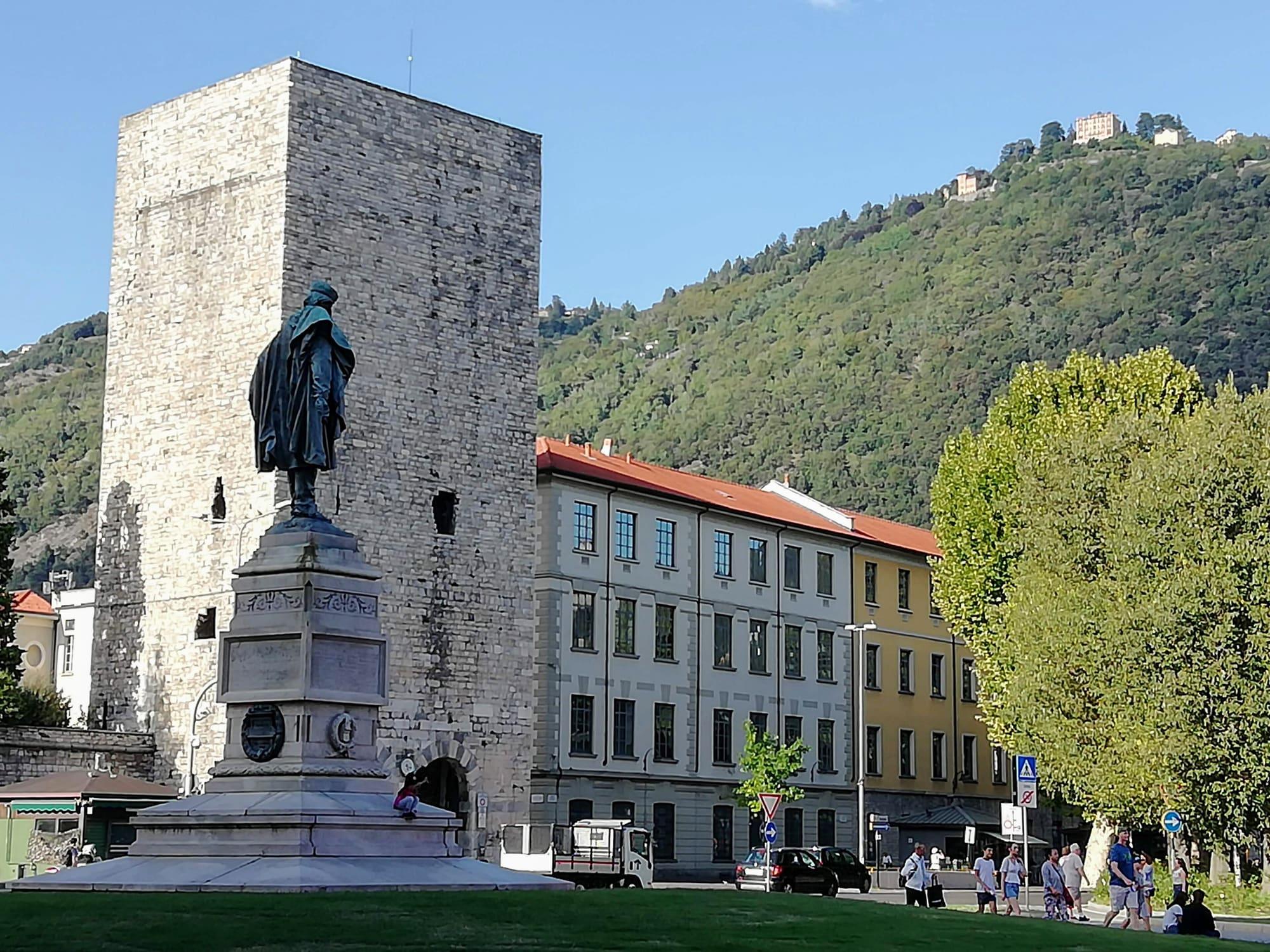
Como's old town is enclosed on three sides by its medieval walls, still largely intact, and opens onto the lake on the fourth. Inside the walls the streets run straight and cross at right angles, following the plan of the Roman town. From the south you enter through Porta Torre, the forty-metre gate built in 1192 on the road to Milan.
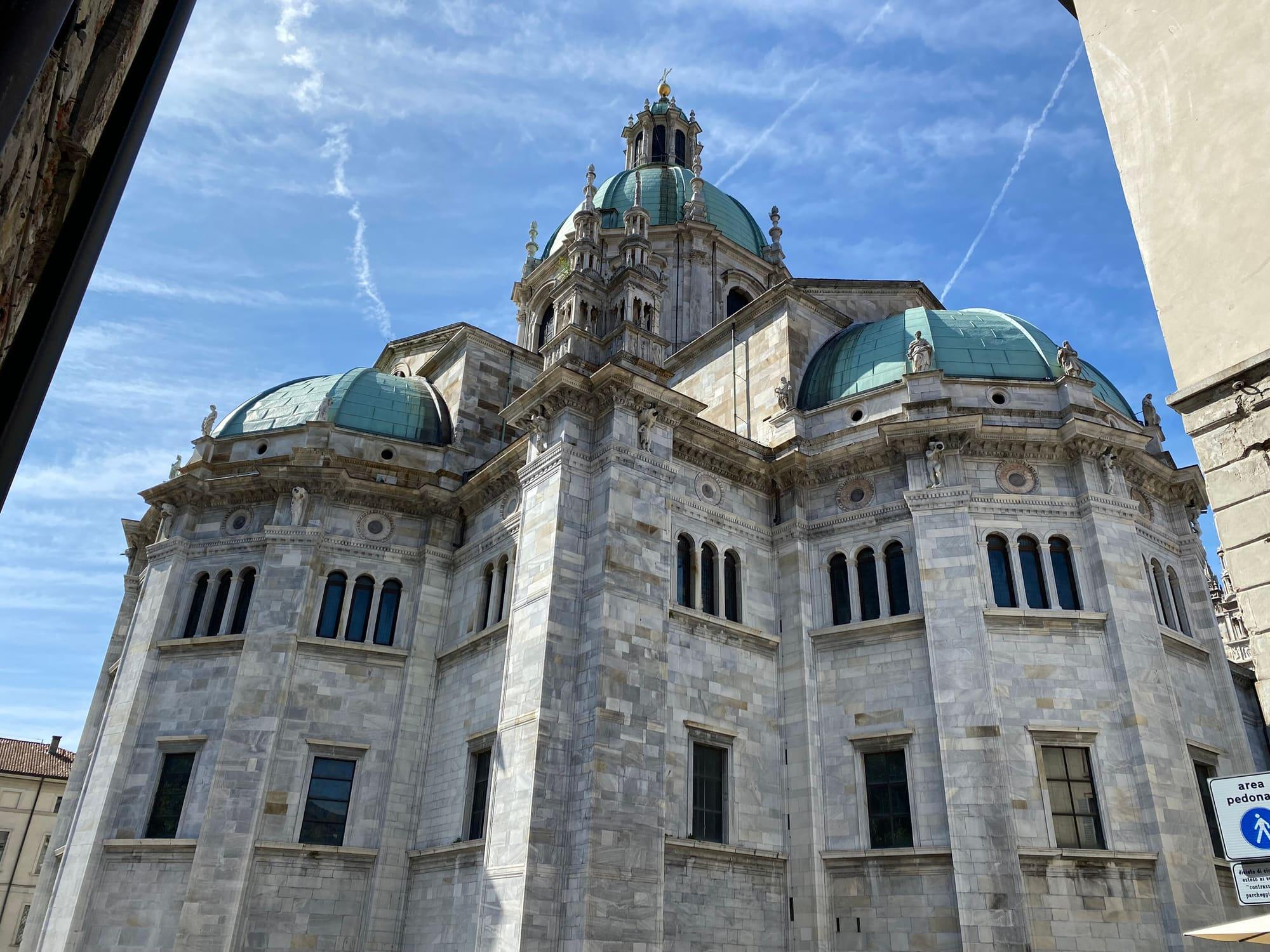
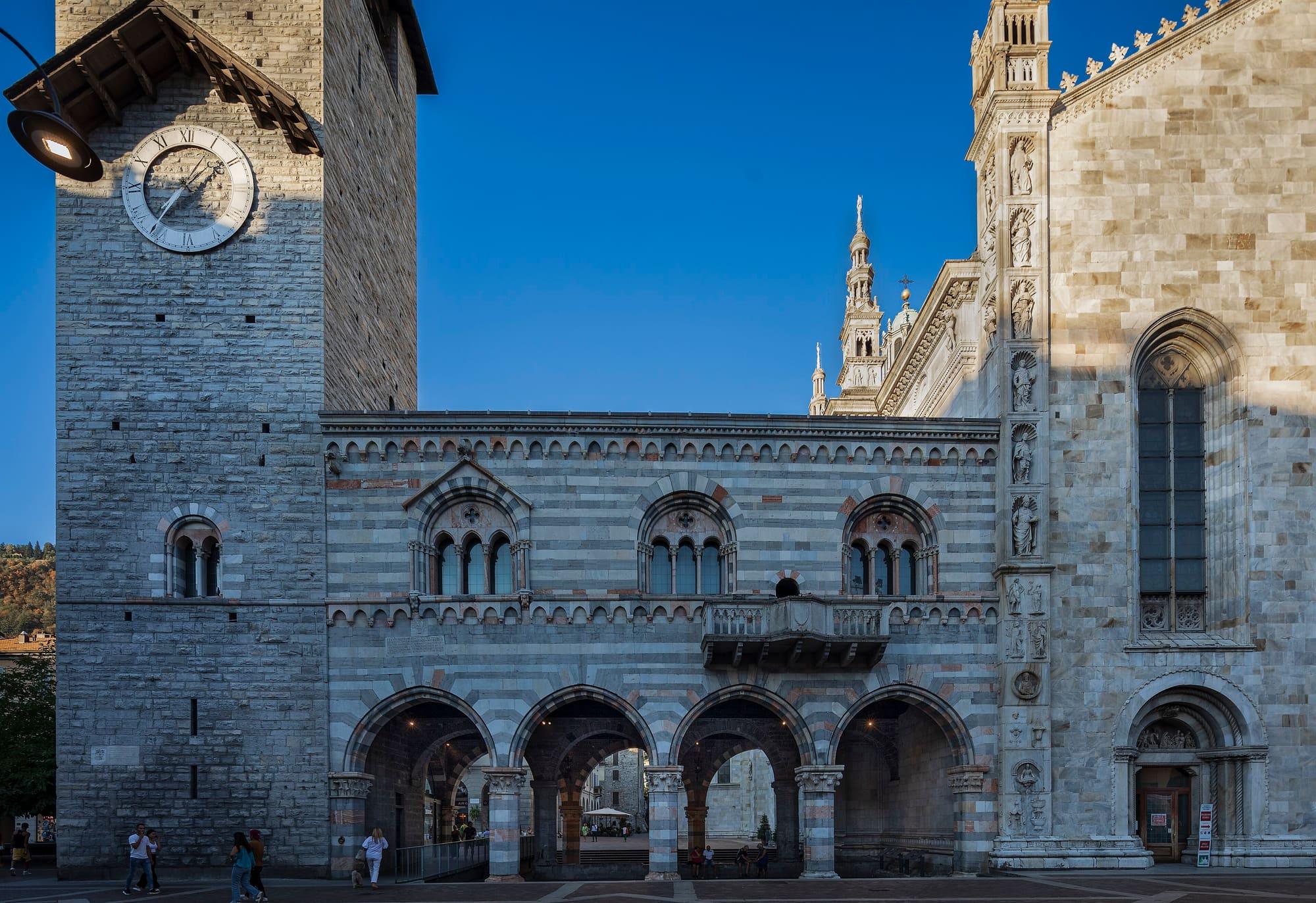
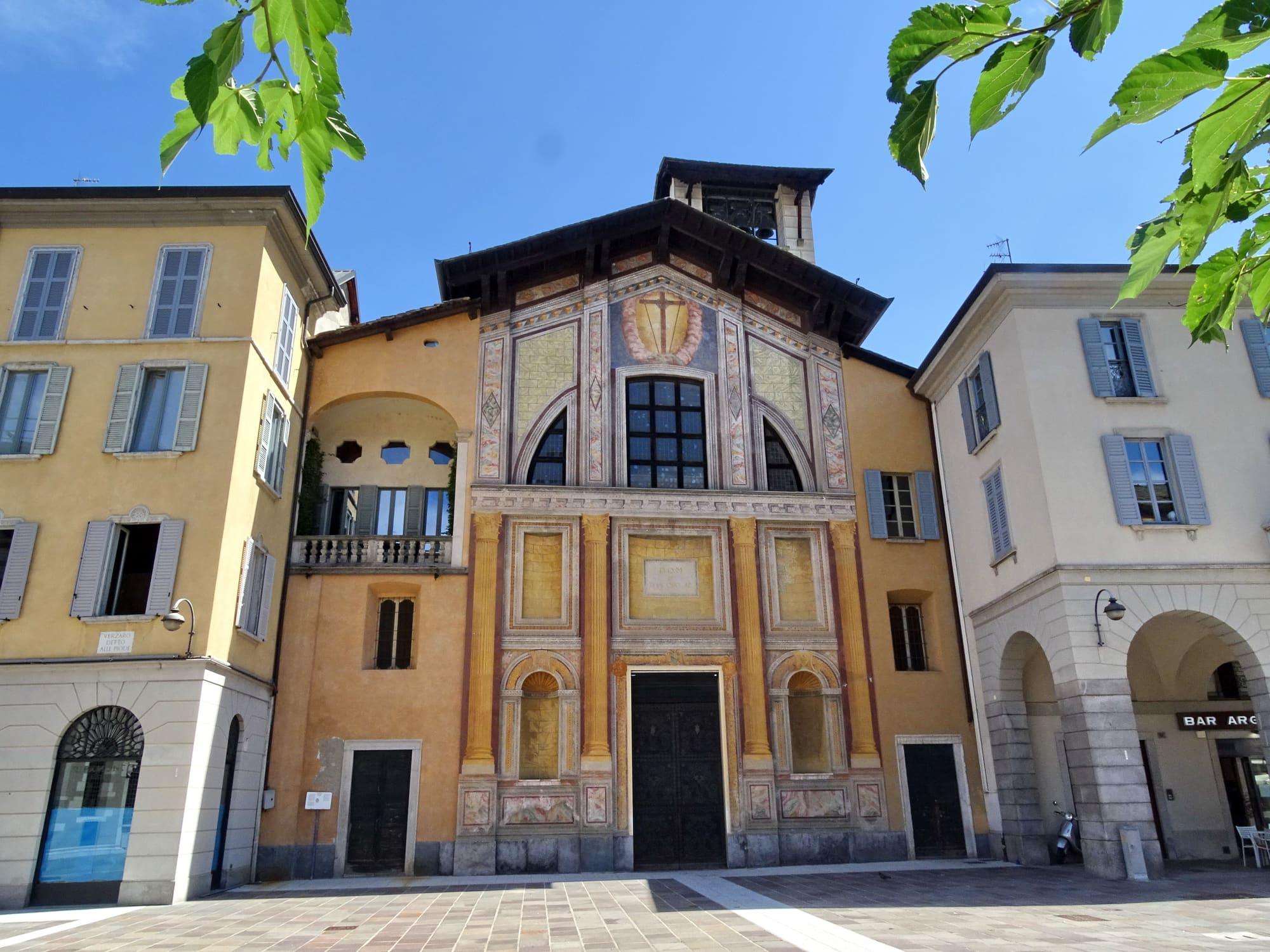
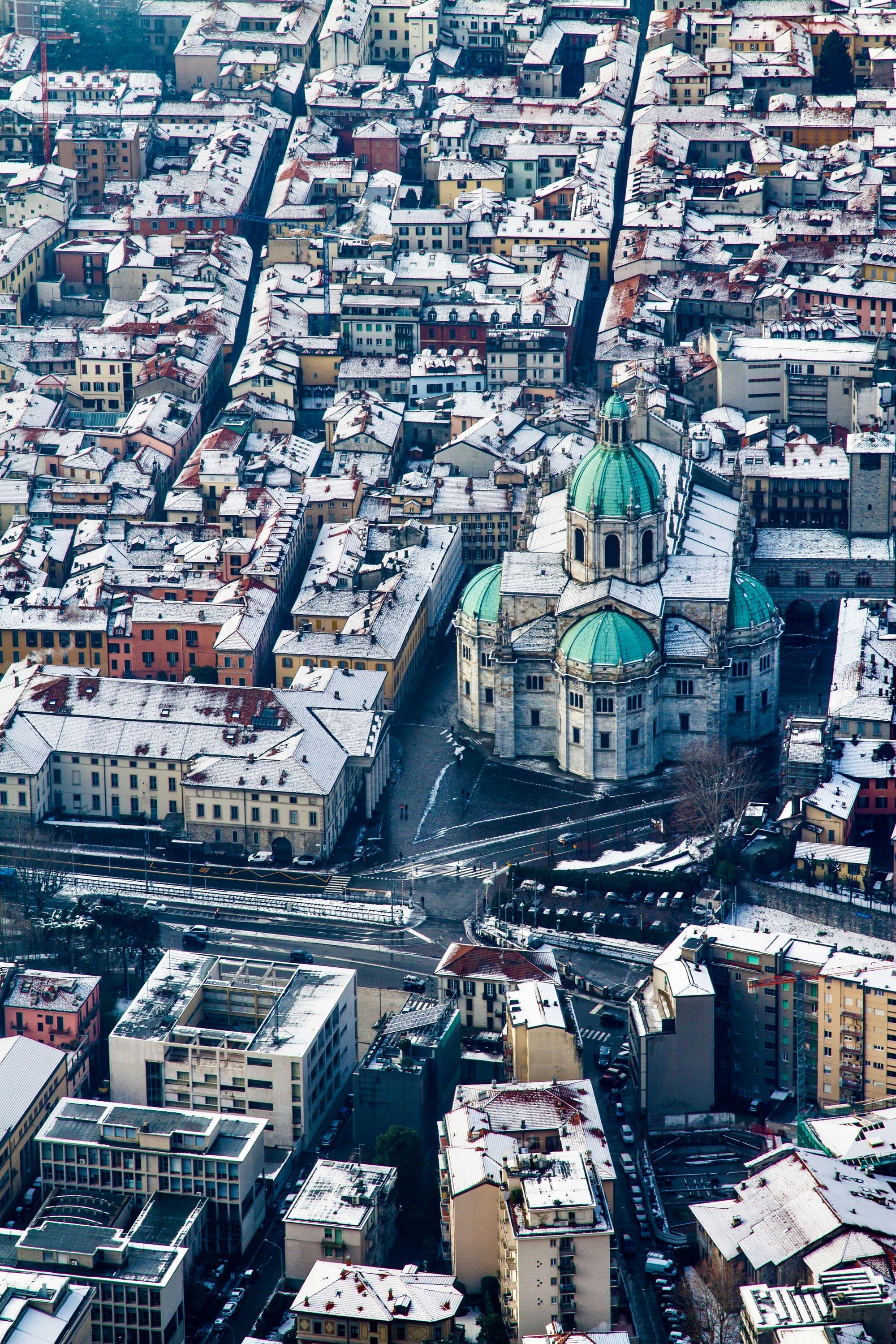
On Piazza Duomo the cathedral and the Broletto, the palace of the medieval commune, stand side by side. The cathedral was begun in Gothic style in 1396 and completed in 1740 with Filippo Juvarra's dome. On either side of its main doorway sit statues of Pliny the Elder and Pliny the Younger, two pagan writers born in Como. The Broletto, from 1215, is banded in white, grey and red marble; behind it stands the Romanesque church of San Giacomo. A few steps away, San Fedele has three apses set out like a clover leaf and the Dragon doorway.
From the beginnings to the Middle Ages
In the Iron Age a large settlement of the Golasecca culture stood on the hills south-west of the present town. Rome conquered the area in 196 BC. In 59 BC Julius Caesar refounded the town on the lakeshore as Novum Comum and settled five thousand colonists there. Pliny the Elder and his nephew Pliny the Younger were born here in the first century AD. In 386 Saint Ambrose consecrated Felix as the first bishop of Como.
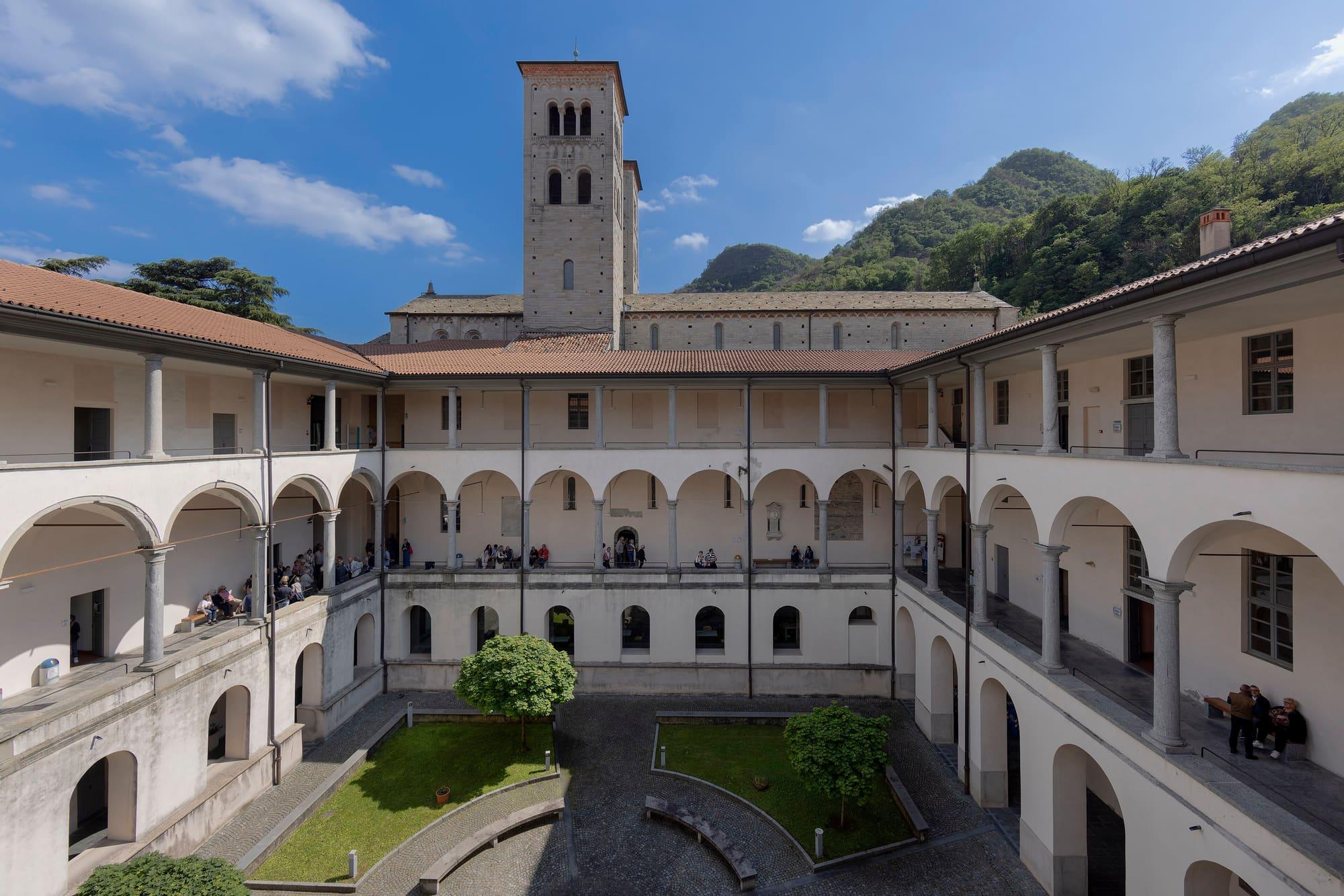
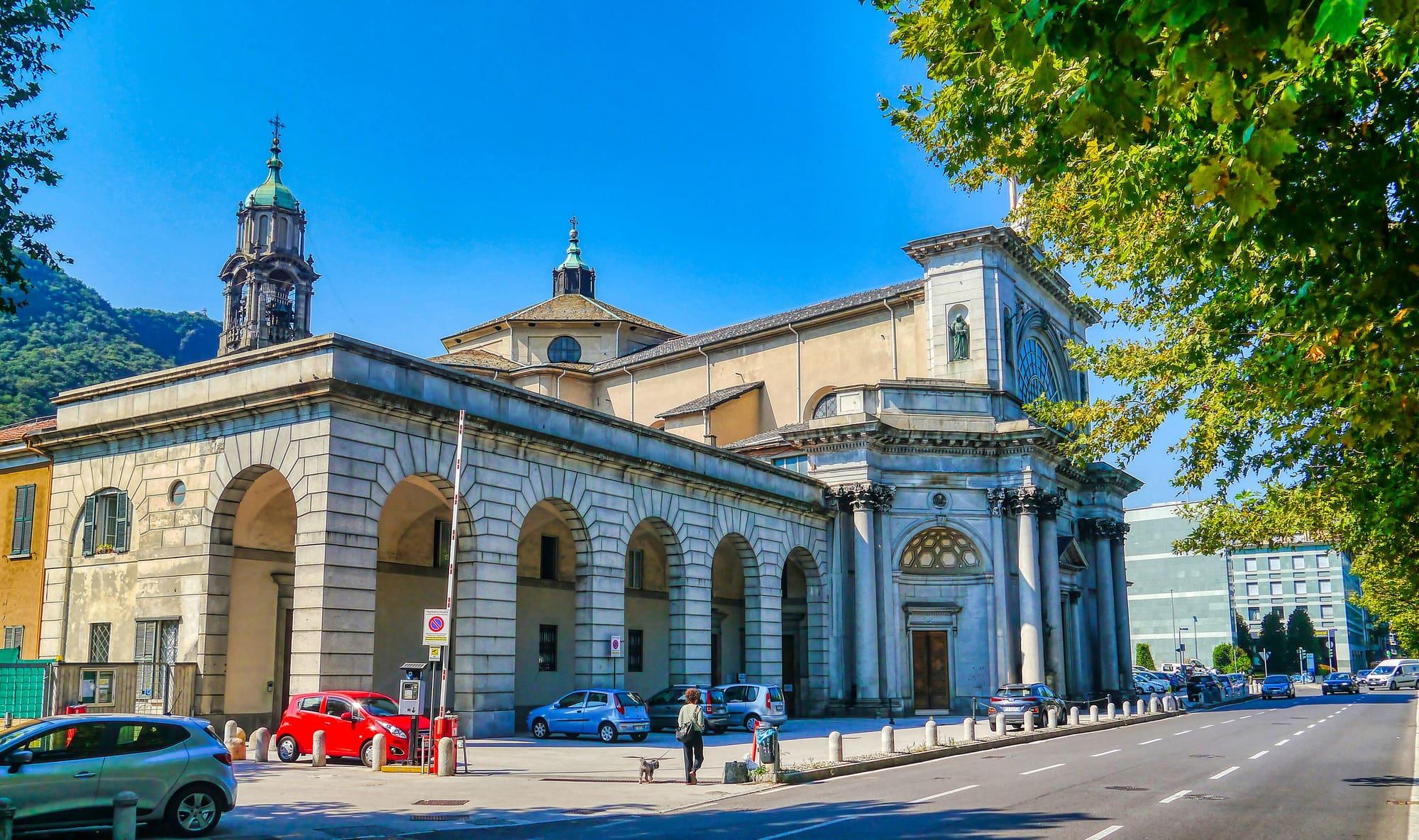
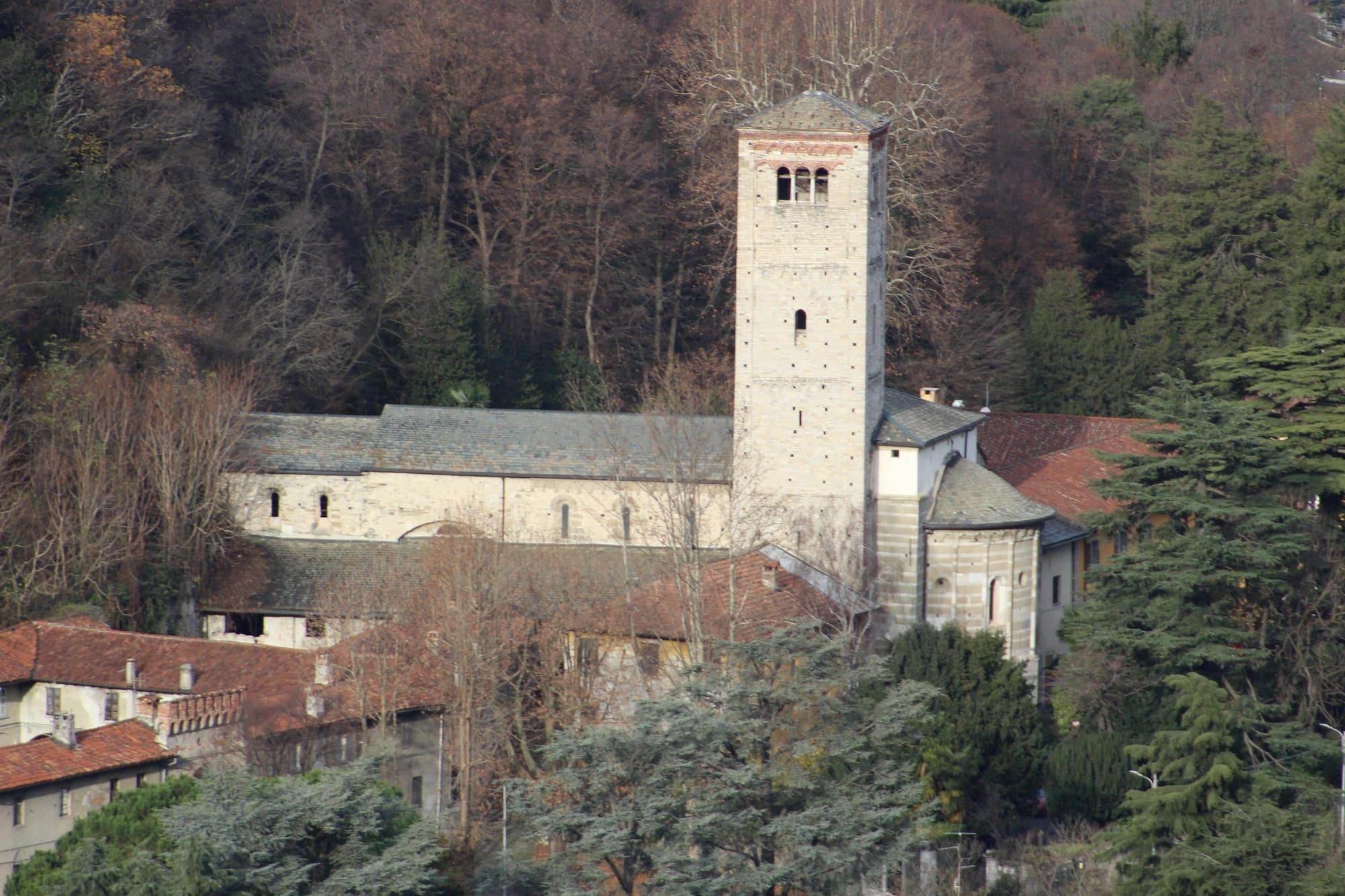
Outside the walls the Benedictines rebuilt the basilica of Sant'Abbondio in Romanesque style, and Pope Urban II consecrated it in 1095. It has five naves, twin bell towers and an apse frescoed in the fourteenth century. The commune, formed towards the end of the eleventh century, fought Milan for ten years, and in 1127 the Milanese destroyed the town. Como then sided with the Emperor Frederick Barbarossa and, with his help, rebuilt the town and its walls. In 1335 it passed to the Visconti, the lords of Milan.
From the Visconti to the Risorgimento
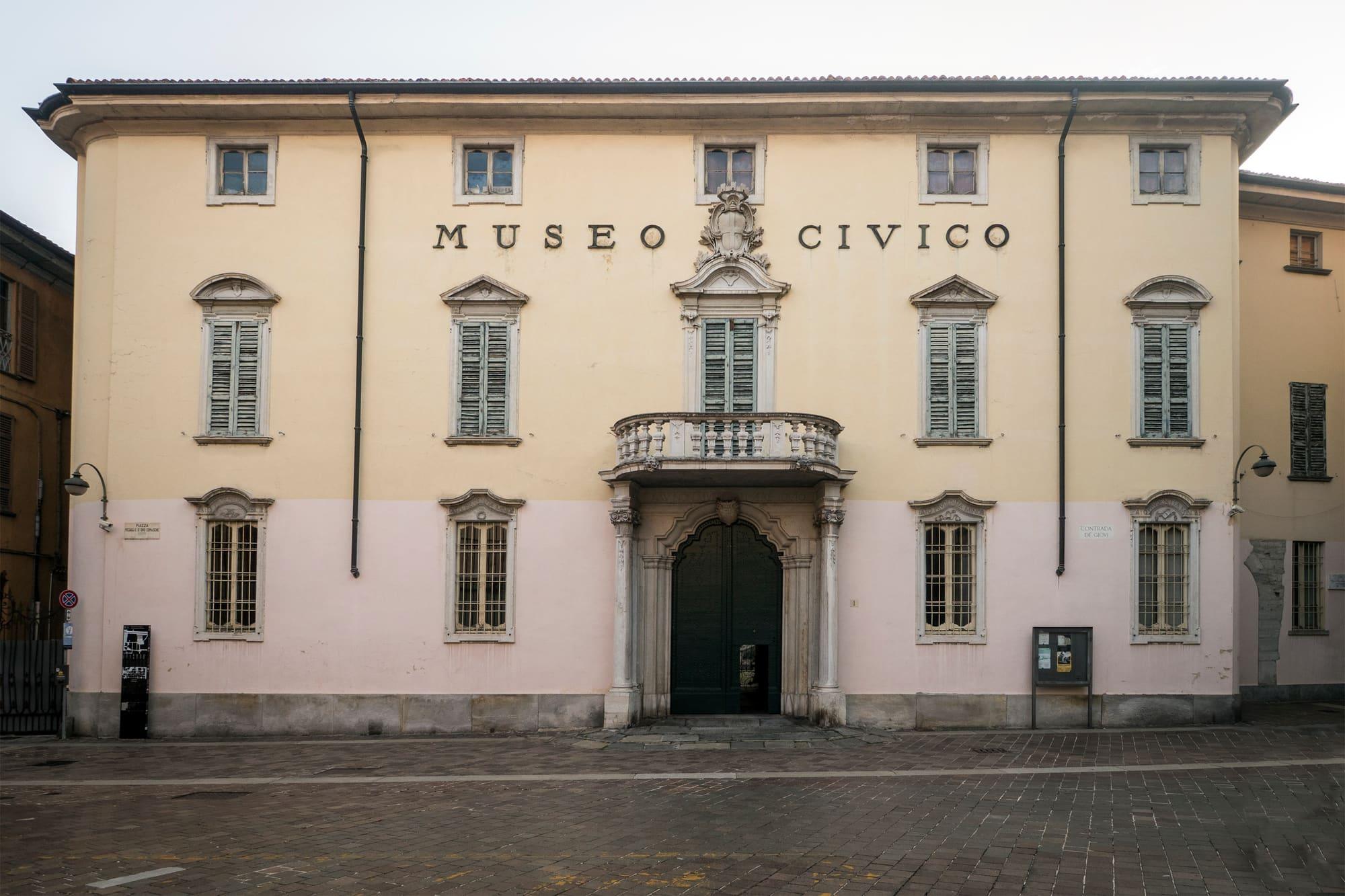
In the early fifteenth century the Rusca, a Como family, ruled the town for some years; in 1416 it returned to the Visconti, and in 1450 it passed to the Sforza. In the sixteenth century the historian Paolo Giovio built a museum at Borgo Vico, on the lake, for his collection of portraits of famous men. Together with the Duchy of Milan, Como was Spanish from the sixteenth century and Austrian from the early eighteenth. In 1676 Benedetto Odescalchi, born in Como, was elected pope as Innocent XI.
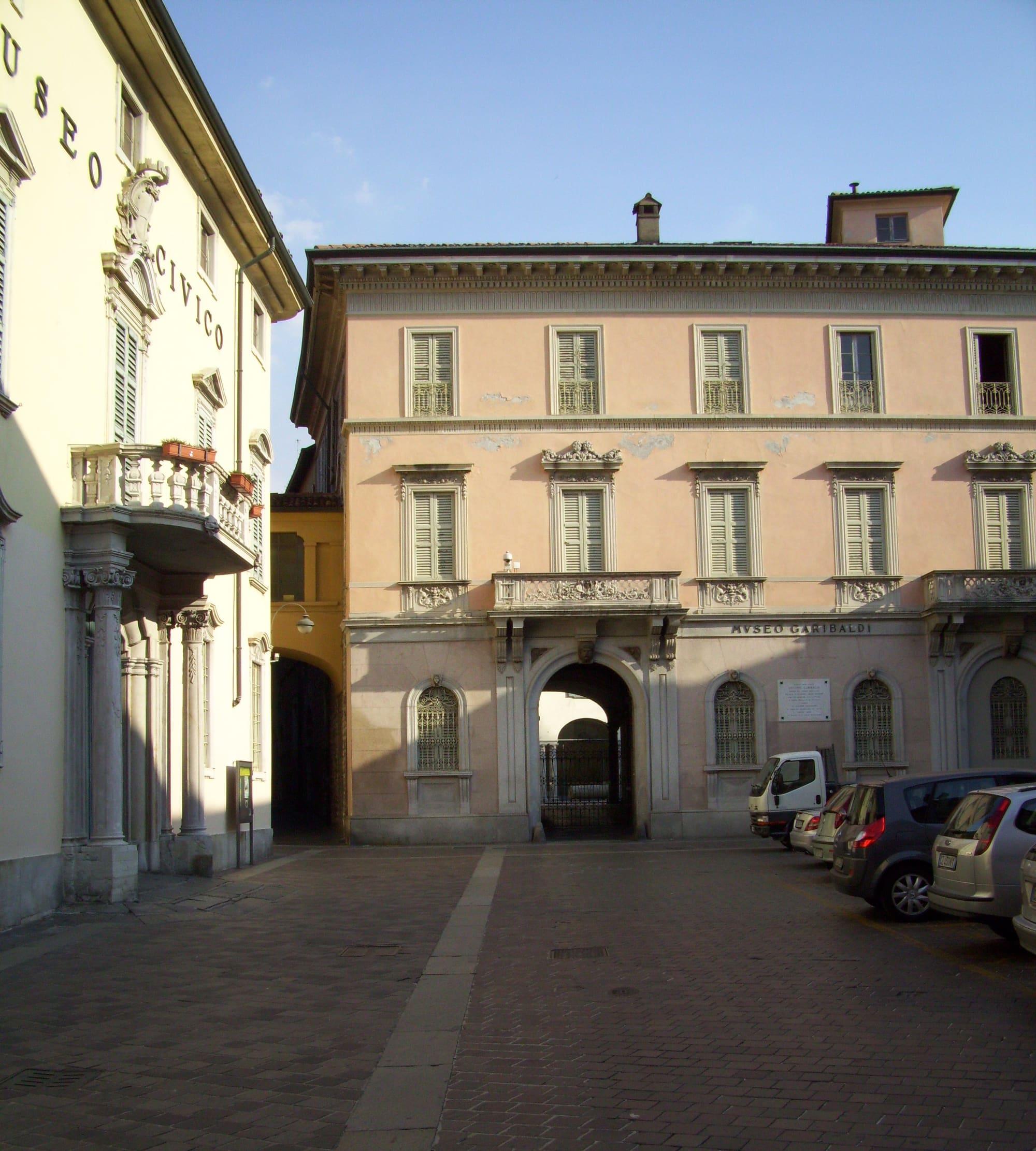
In 1797 Napoleon stayed at Villa Saporiti, and the town became the capital of the Department of the Lario. Two years later Alessandro Volta, born in Como in 1745, invented the voltaic pile, the first electric battery; he died in Como in 1827. In March 1848, during the Five Days, the people of Como forced the Austrian garrison to surrender. On 27 May 1859, after the battle of San Fermo, the Austrians left the town to Garibaldi's Cacciatori delle Alpi.
The lakefront and the villas
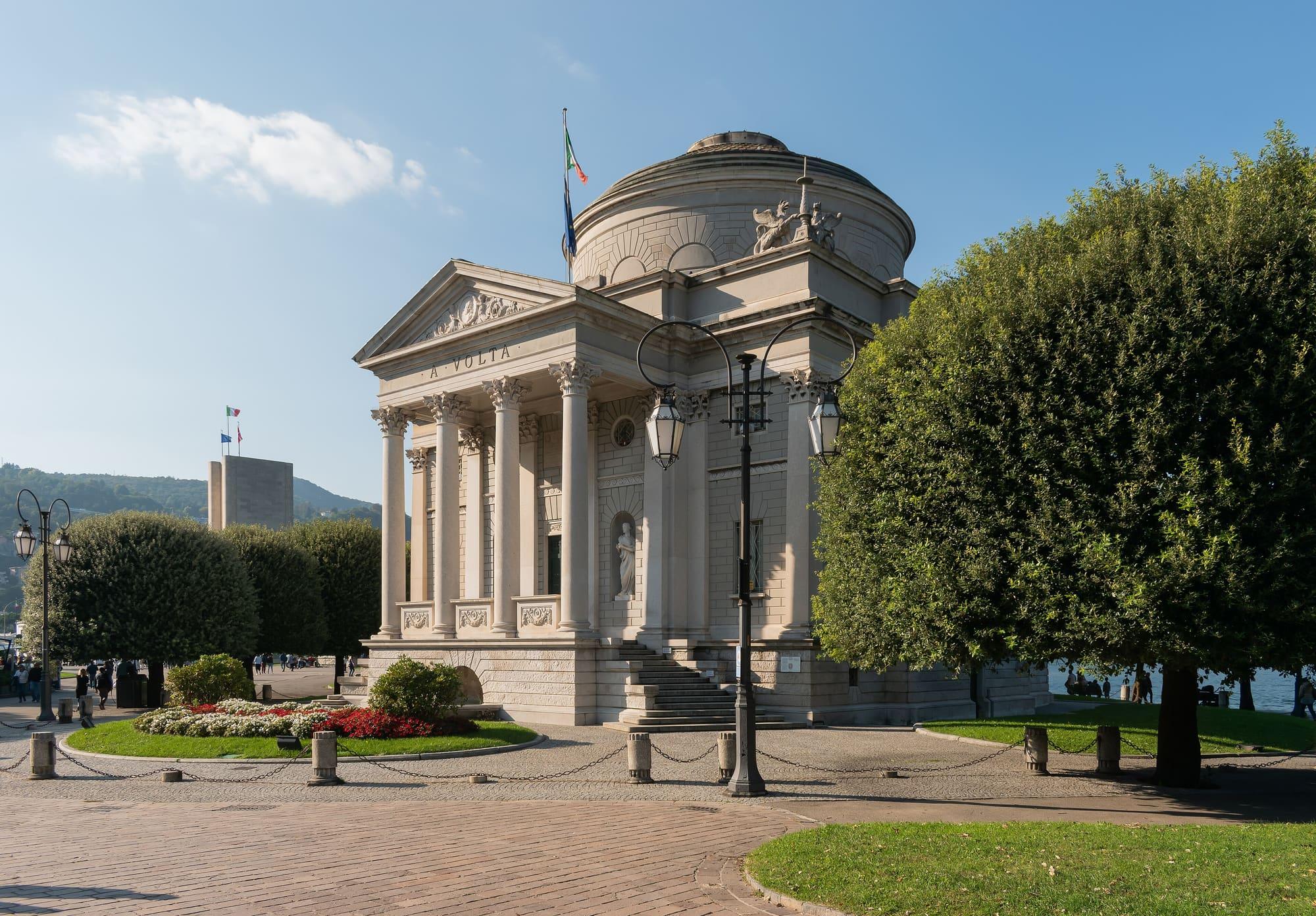
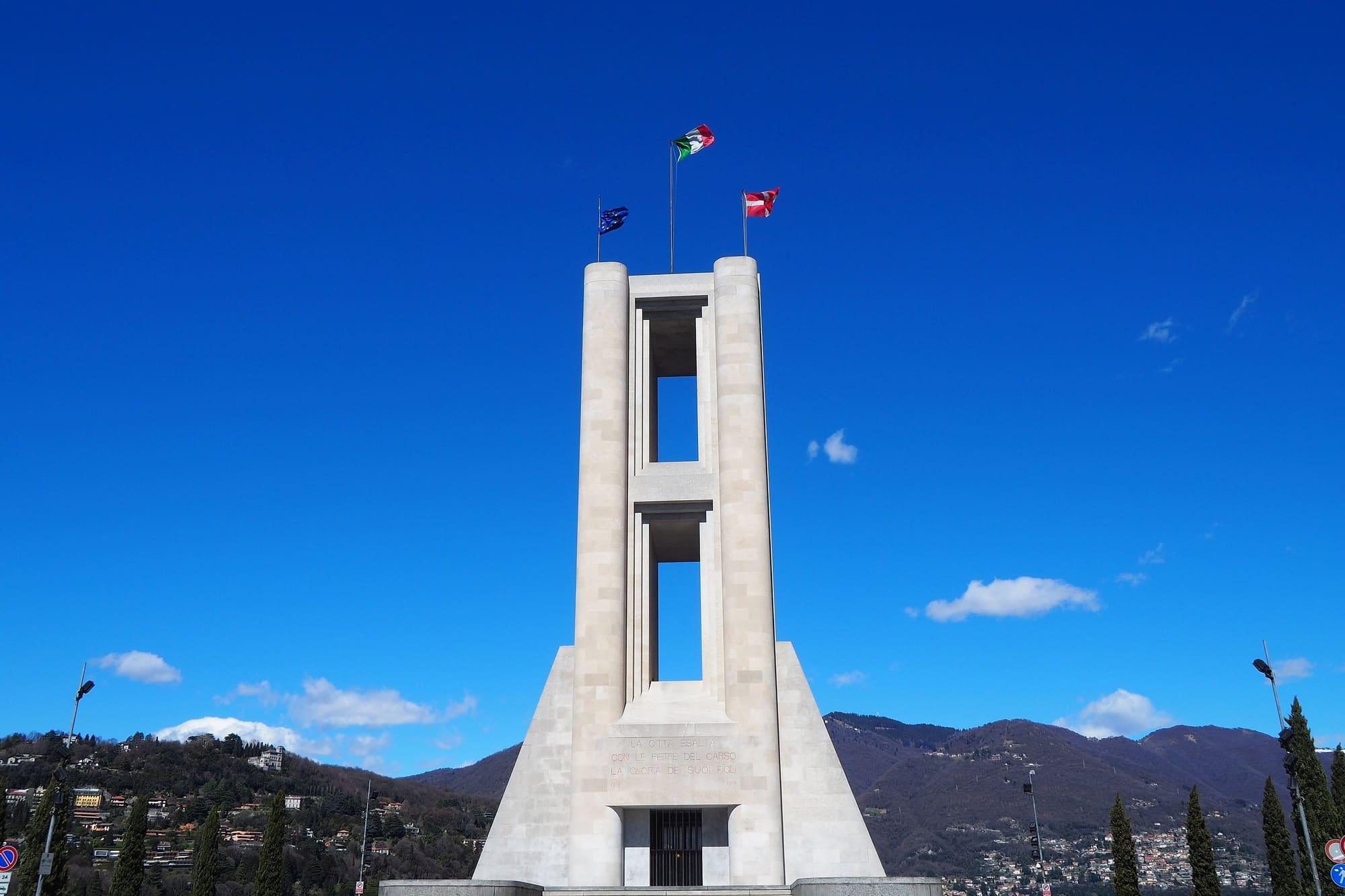
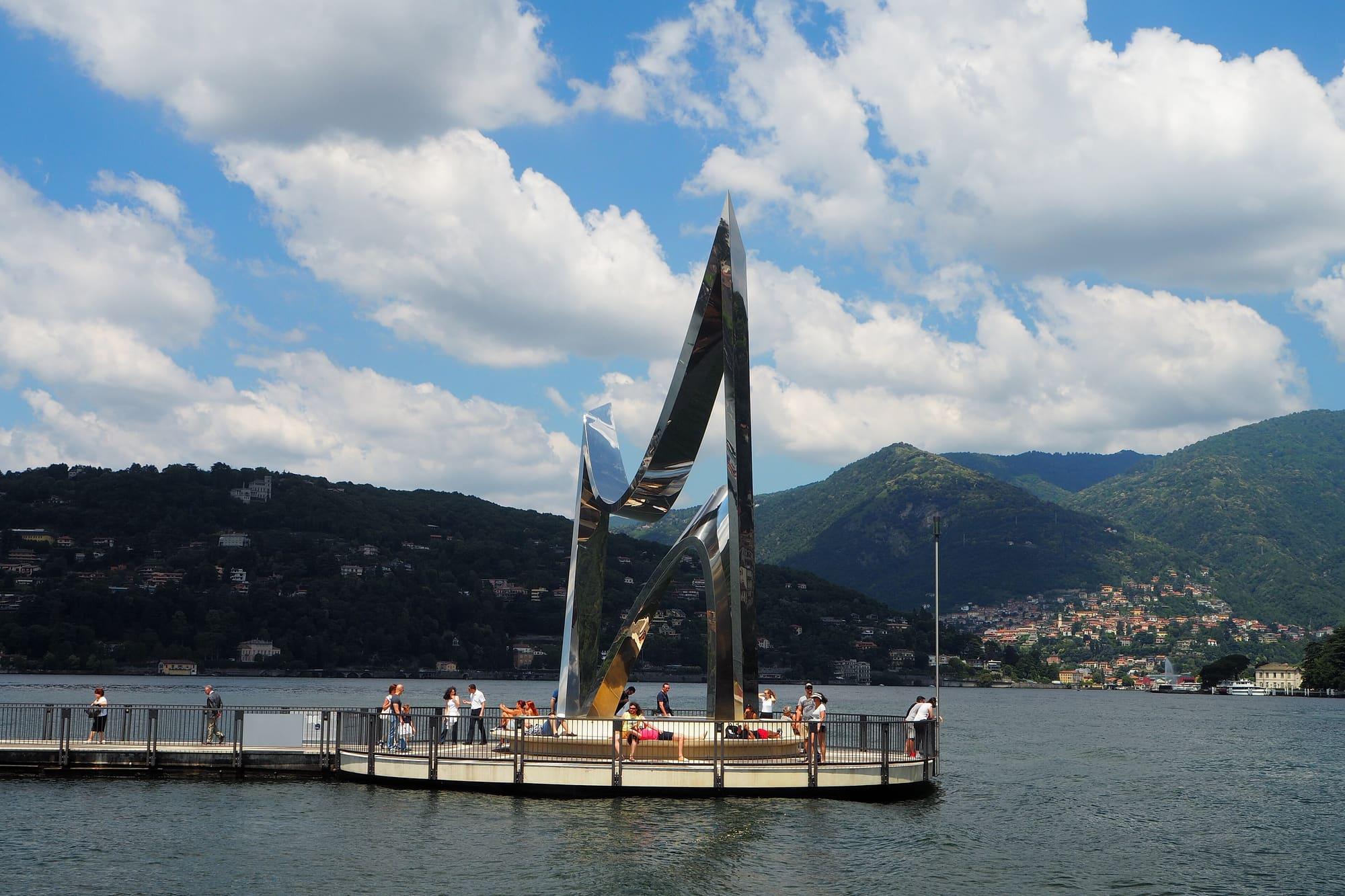
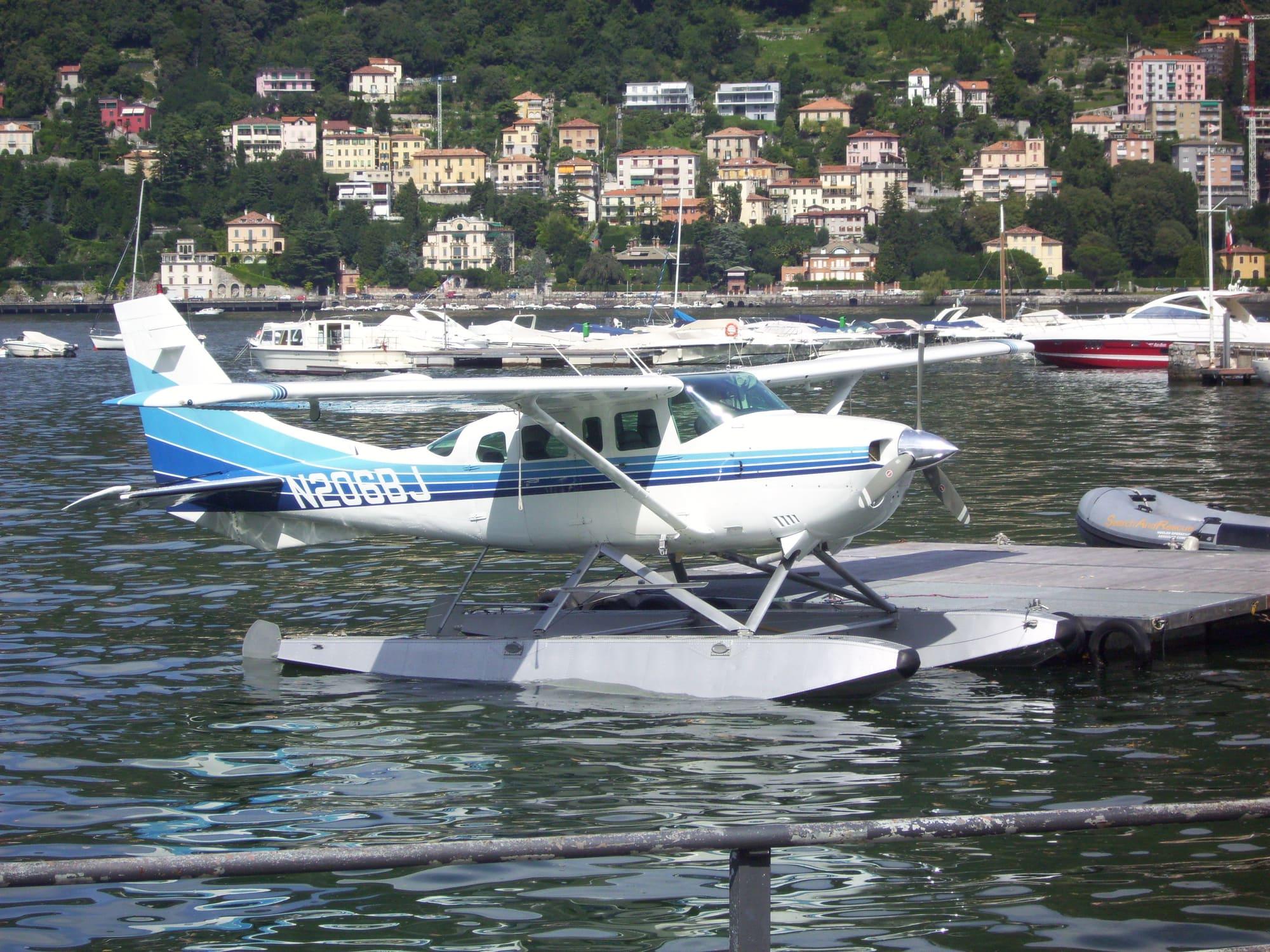
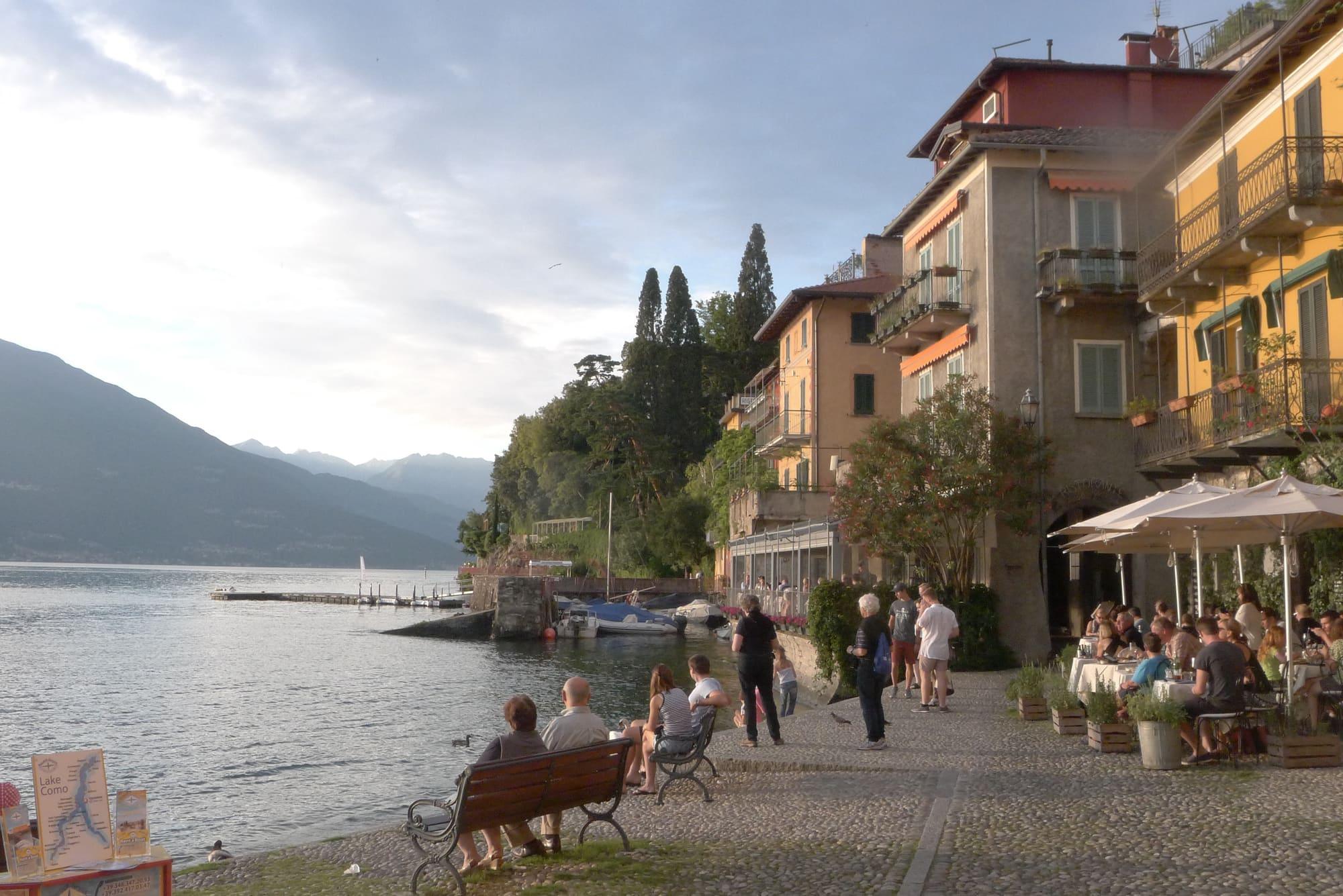
Piazza Cavour, open to the lake, takes the place of the old harbour, filled in during the nineteenth century; the boat piers lie in front of it. To the west, the lakeside gardens lead to the Tempio Voltiano, the museum devoted to Volta built in 1927, and to the war memorial. From the shore a breakwater runs out to Life Electric, Daniel Libeskind's steel sculpture unveiled in 2015. A little further on, in front of the hangar of the Aero Club, founded in 1930, seaplanes take off from the water.
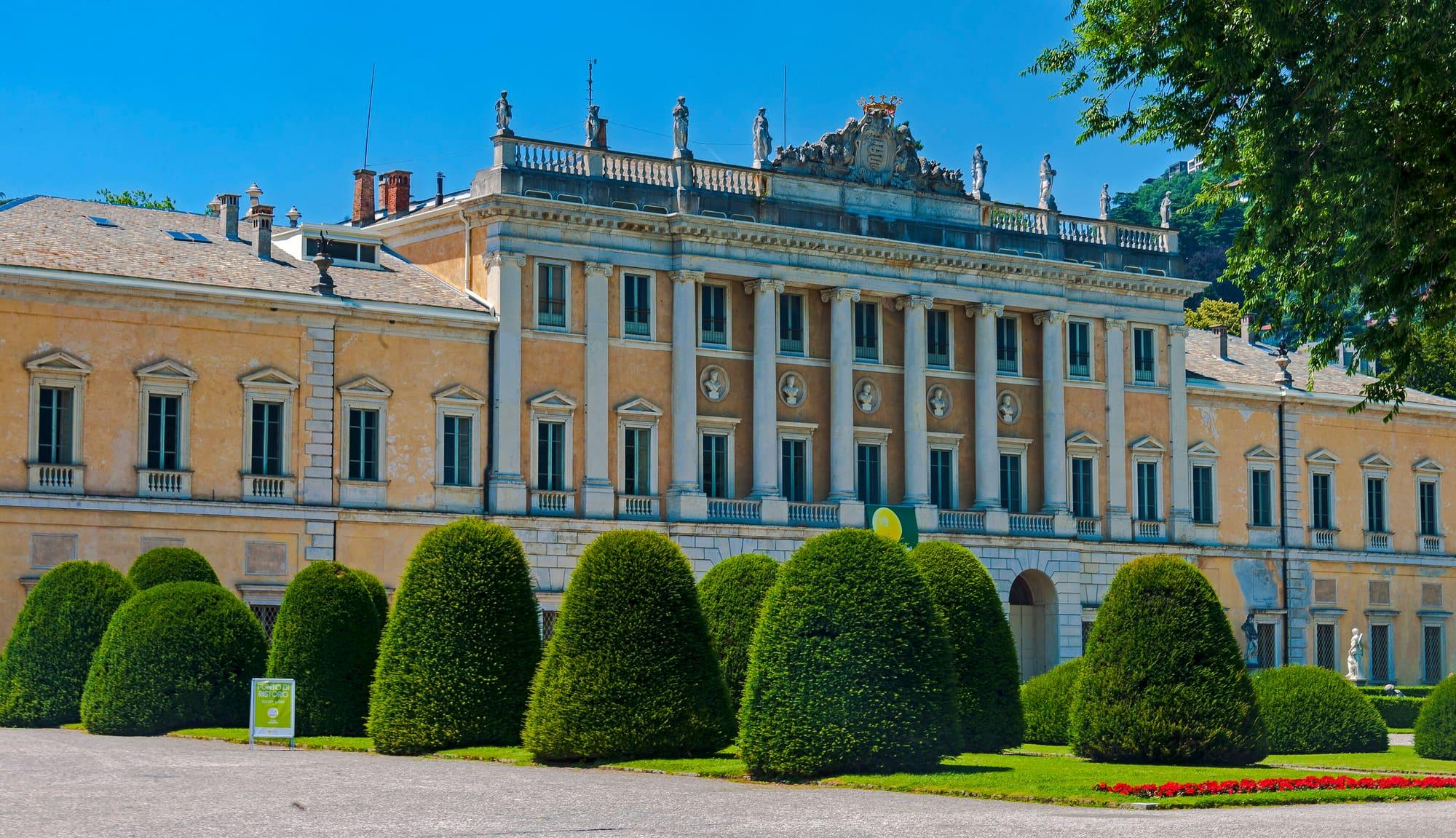
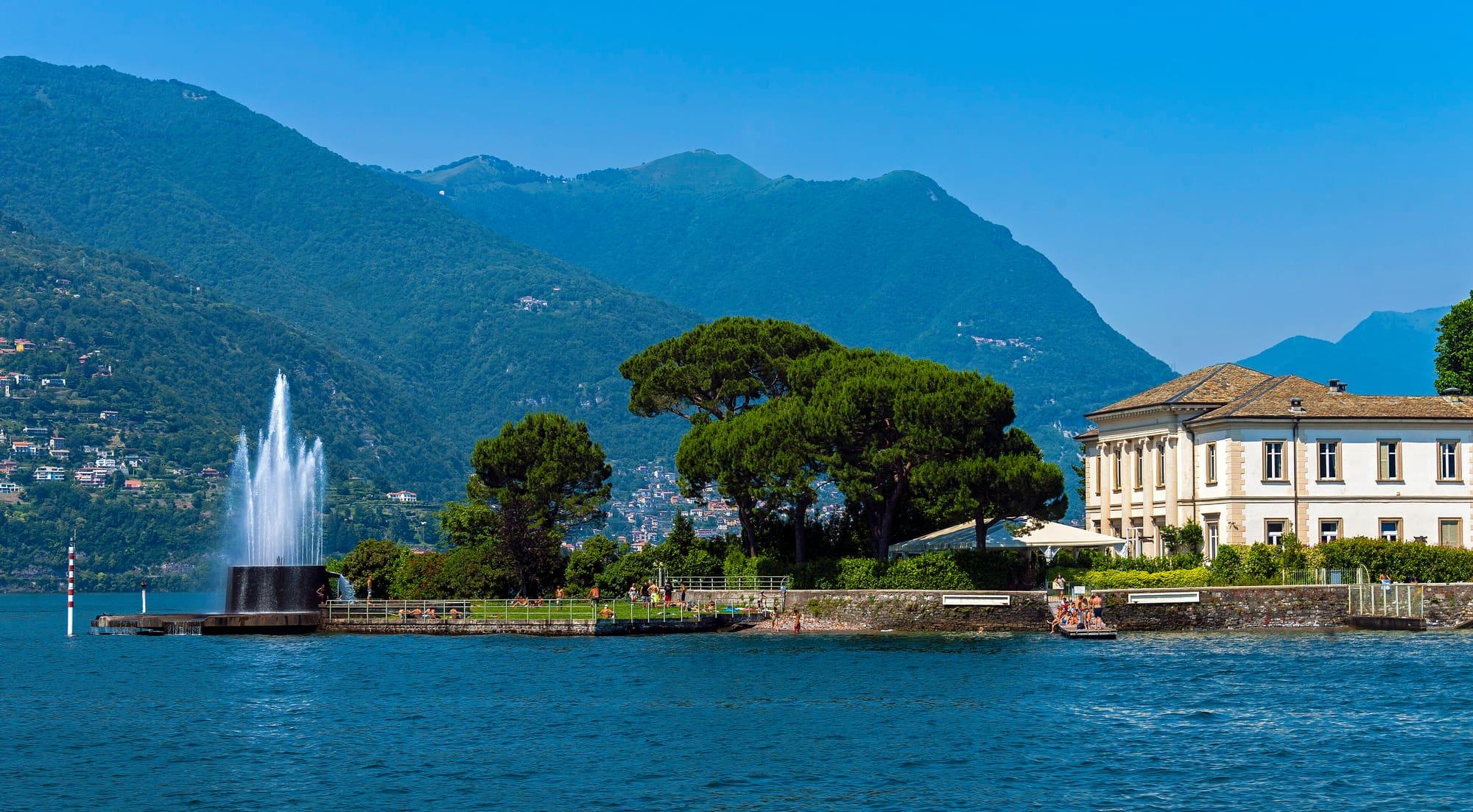
The promenade follows the shore past Villa Saporiti to Villa Olmo, the neoclassical villa of the Odescalchi family, begun in 1782 and owned by the city since 1925. From there the Chilometro della Conoscenza continues through the parks of Villa del Grumello and Villa Sucota. On the opposite shore, the funicular to Brunate leaves from Piazza De Gasperi, and Viale Geno ends at the point of Villa Geno, with its fountain in the lake.
Rationalist architecture
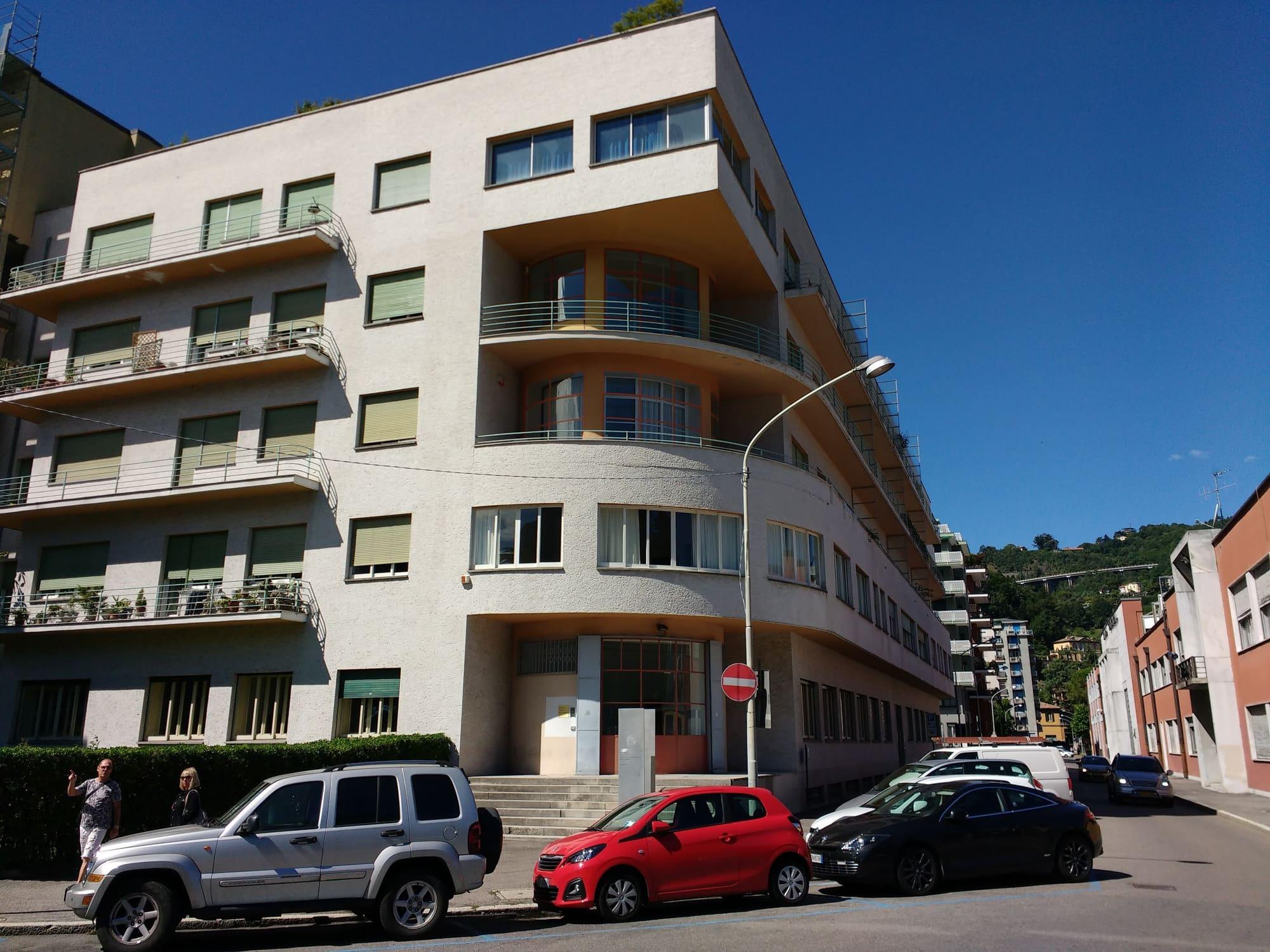
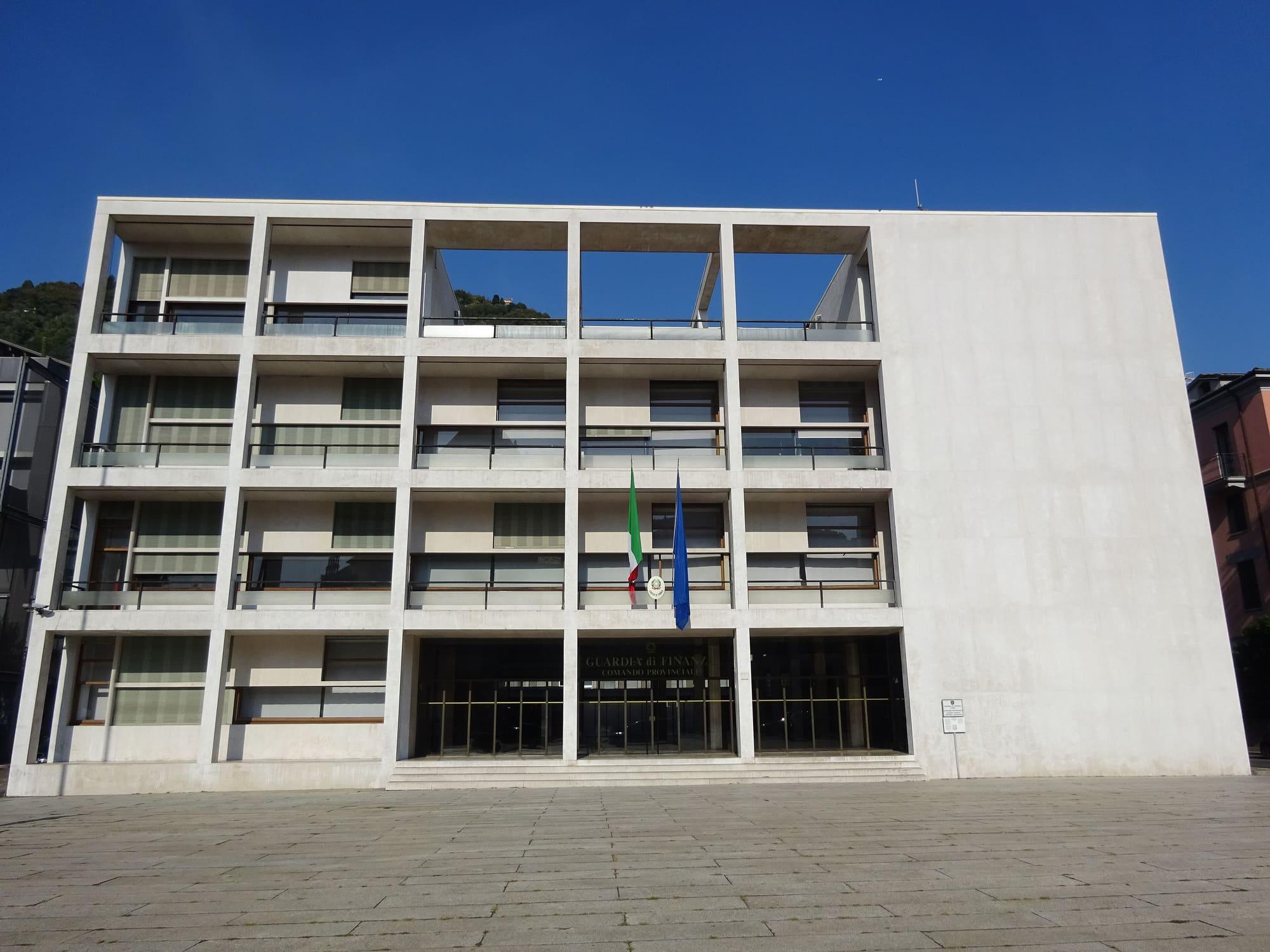
Between 1927 and 1940 Como was one of the centres of Italian Rationalist architecture, and its leading figure was Giuseppe Terragni. The Novocomum, the block of flats Terragni finished in 1929, stirred controversy in the town because of its shape, and locals called it the Transatlantico, the ocean liner. Between 1933 and 1936 Terragni built the Casa del Fascio, later renamed Palazzo Terragni: half a cube of white marble and glass facing the apse of the cathedral.
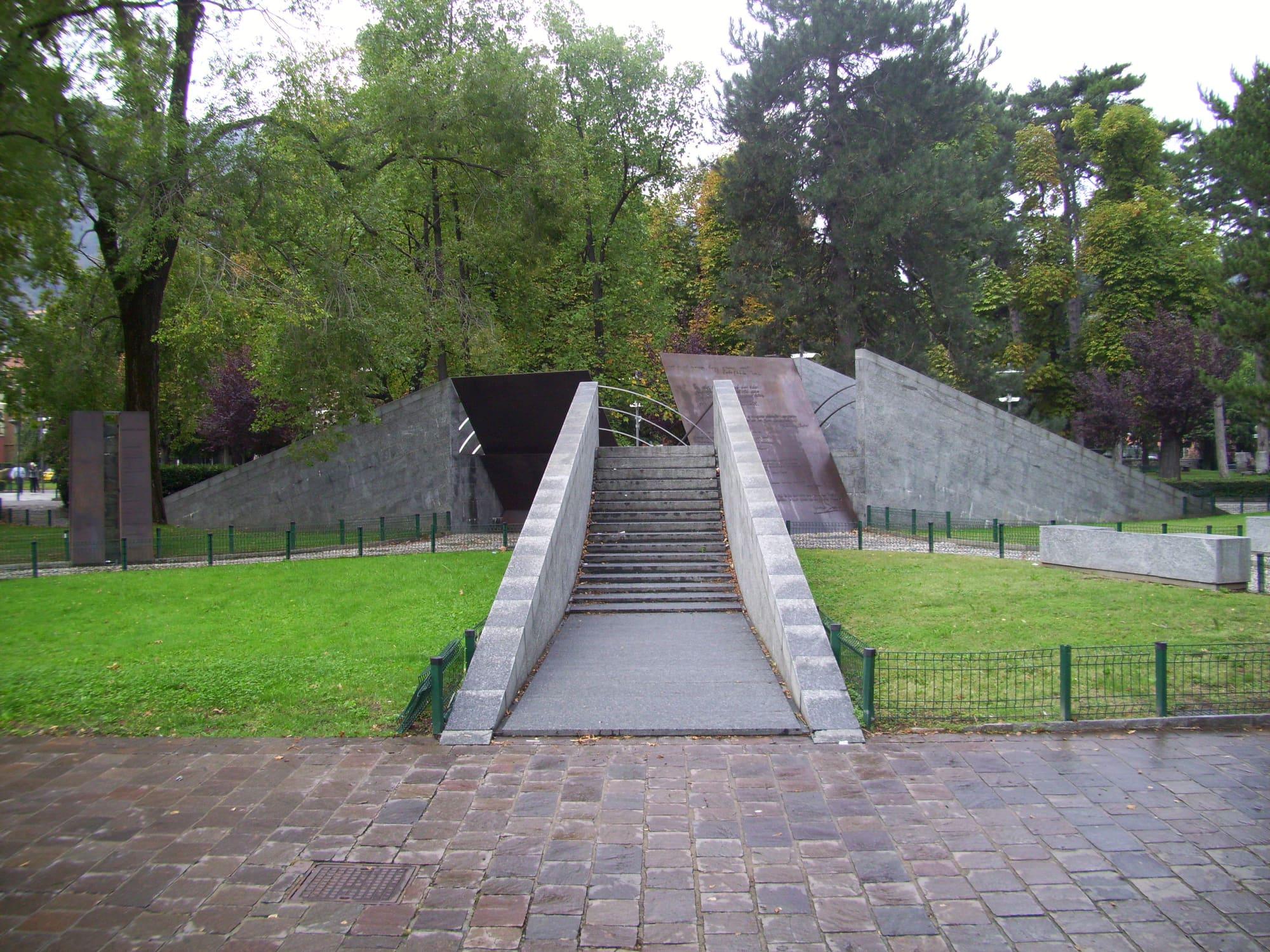
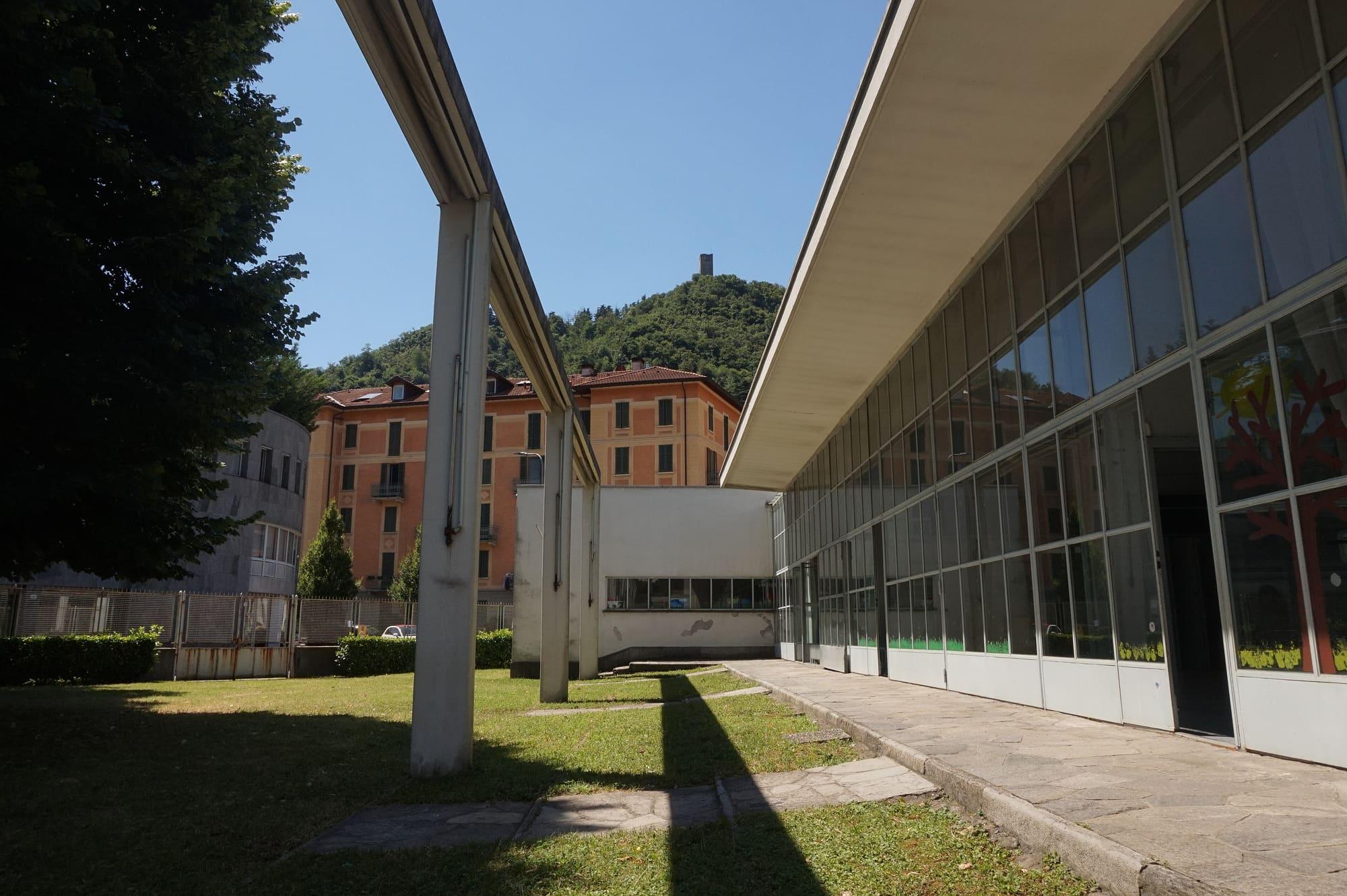
The war memorial, unveiled on the lakefront in 1933, grew from a drawing by Antonio Sant'Elia, the Futurist architect from Como who was killed at the front in 1916; Terragni simplified the design. A little further on stands the Canottieri Lario rowing club, built by Gianni Mantero in 1931. In the San Rocco district Terragni built the Asilo Sant'Elia nursery school between 1935 and 1937, with large windows onto the garden. The Novocomum and the Casa del Fascio are working buildings: they are seen from the outside.
Silk
In the Middle Ages Como worked mainly in wool. Silk arrived in the sixteenth century: in 1510 Pietro Boldoni, from Bellano, opened the town's first silk-throwing mill. Como has been weaving and printing silk since the late eighteenth century. In the surrounding countryside people grew mulberry trees and reared silkworms, the reeling mills drew the thread from the cocoons, and in the town weaving was done by hand, often at home.
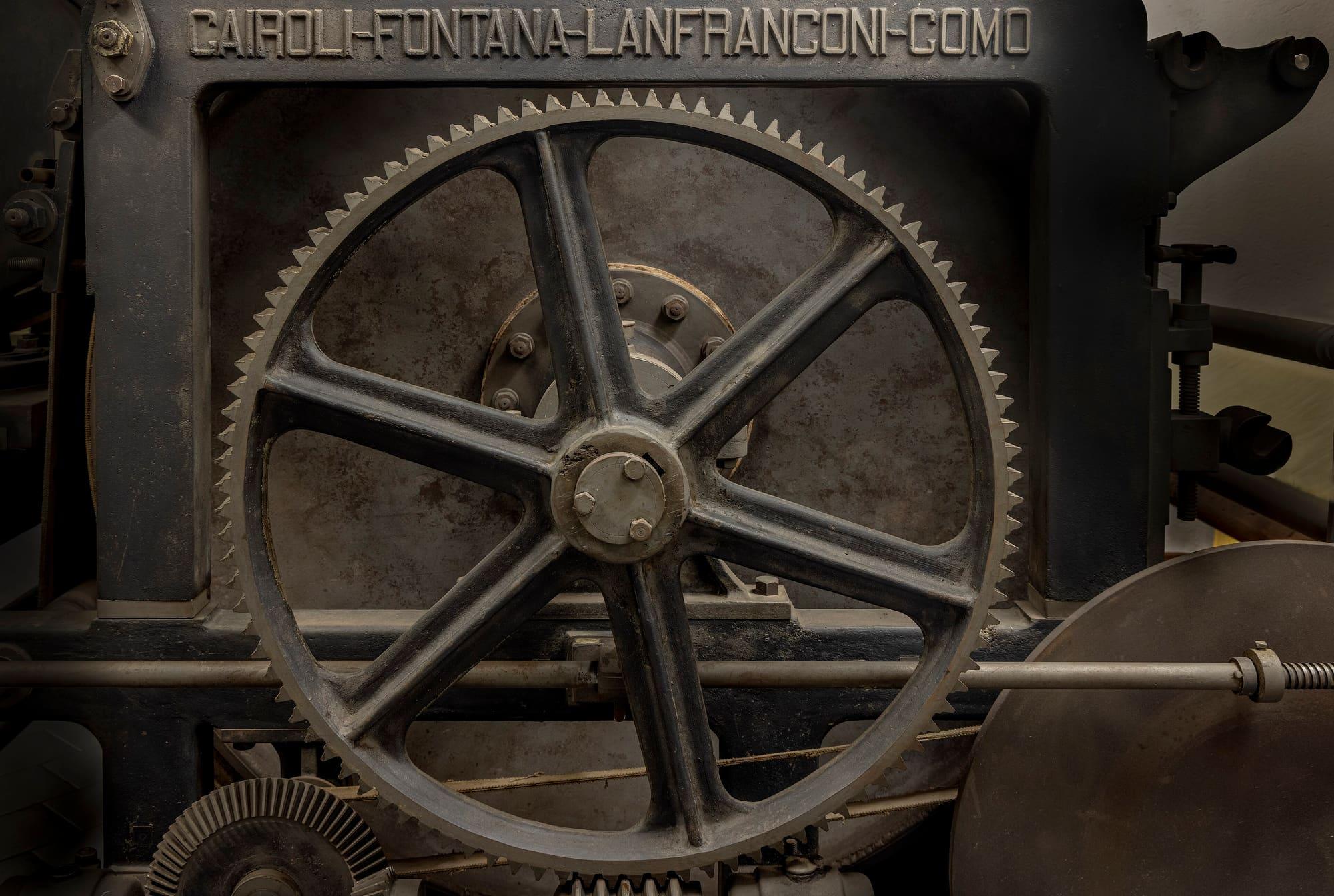
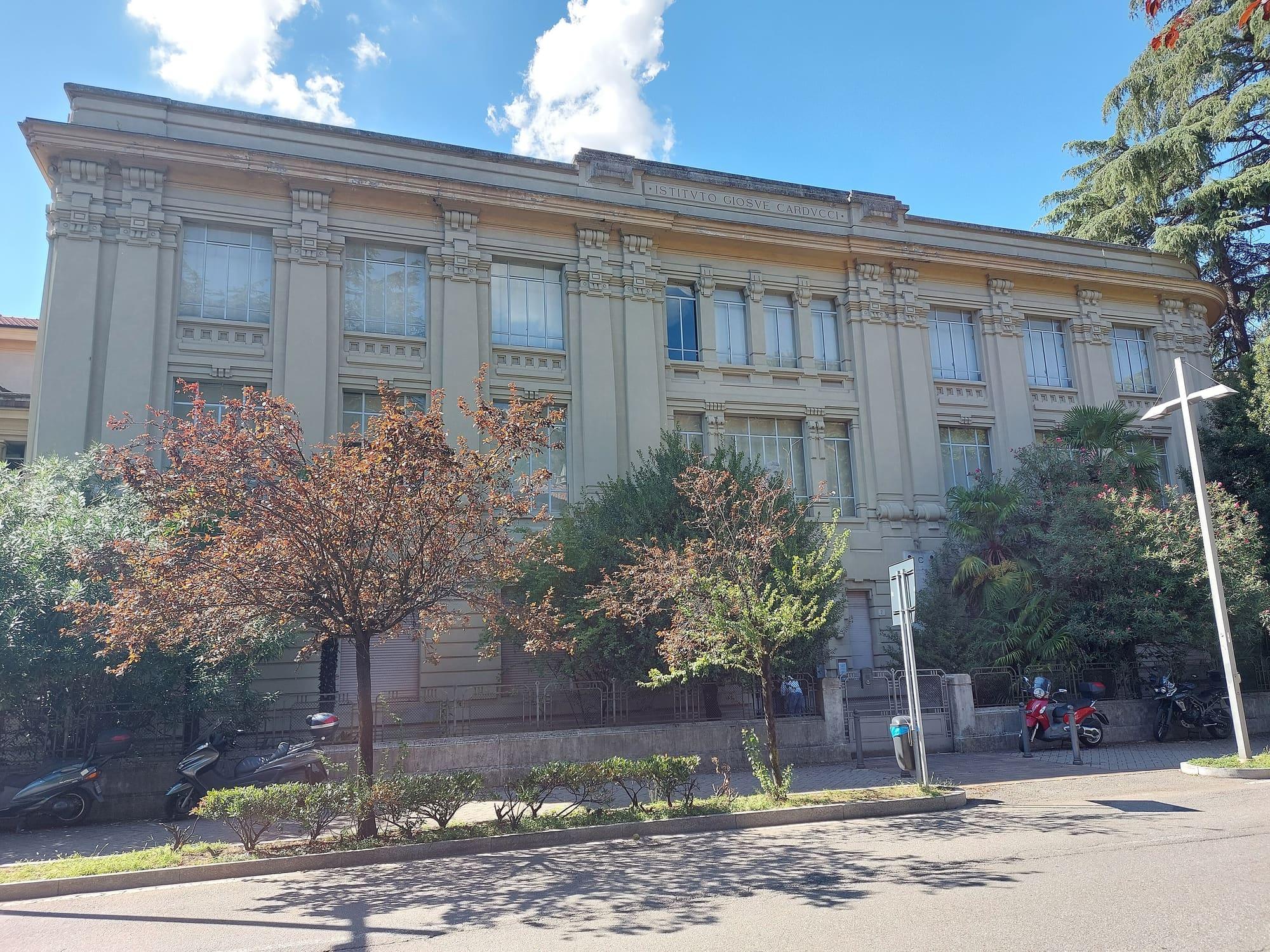
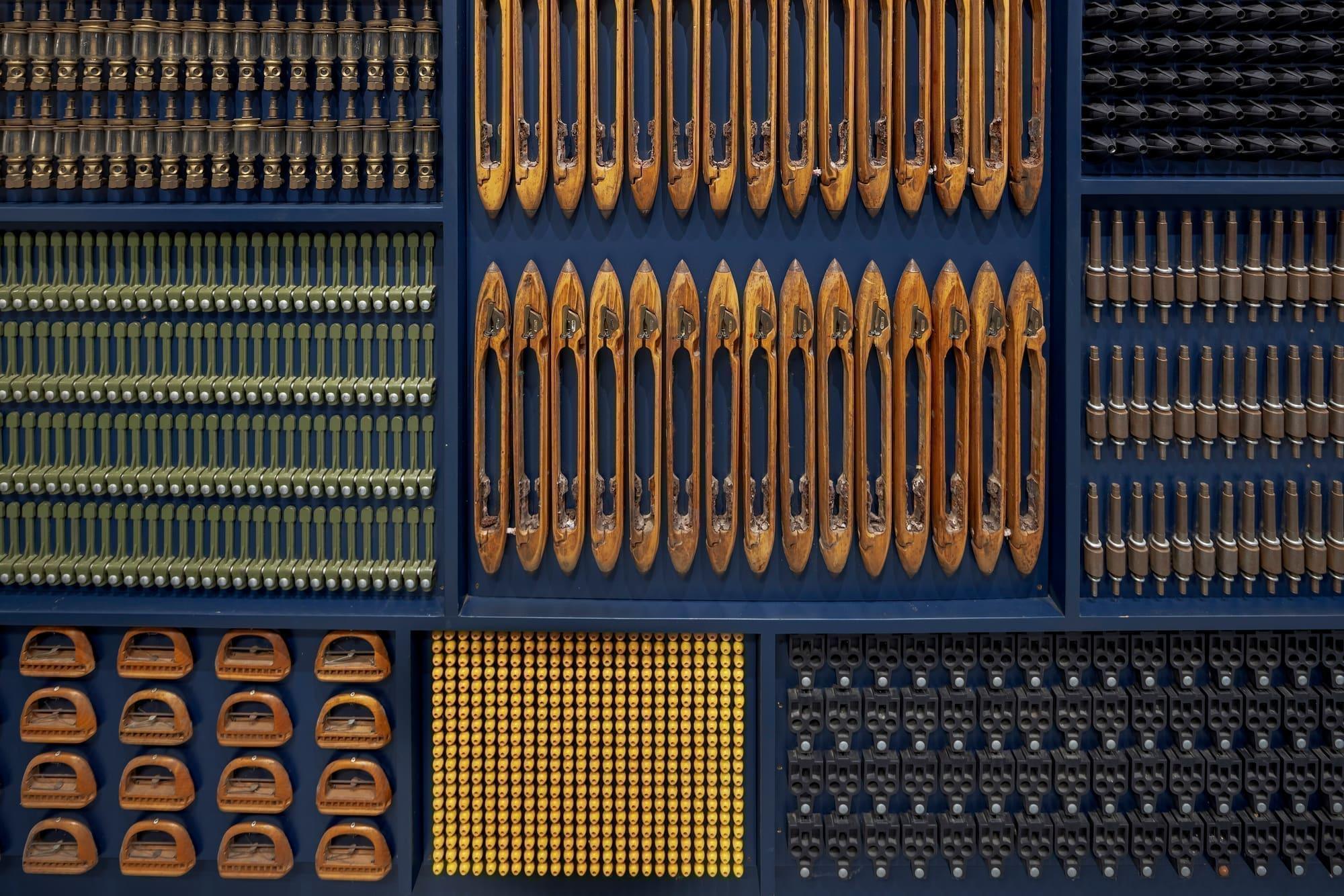
Between the nineteenth and twentieth centuries power looms arrived and the work moved into factories. In 1868 the Comune opened a school of silk making, which became the Istituto Paolo Carcano; in its basement the Museo Didattico della Seta keeps looms, dyeing machinery and original prints. In 2021 UNESCO named Como a Creative City for crafts and folk art.
Things to see
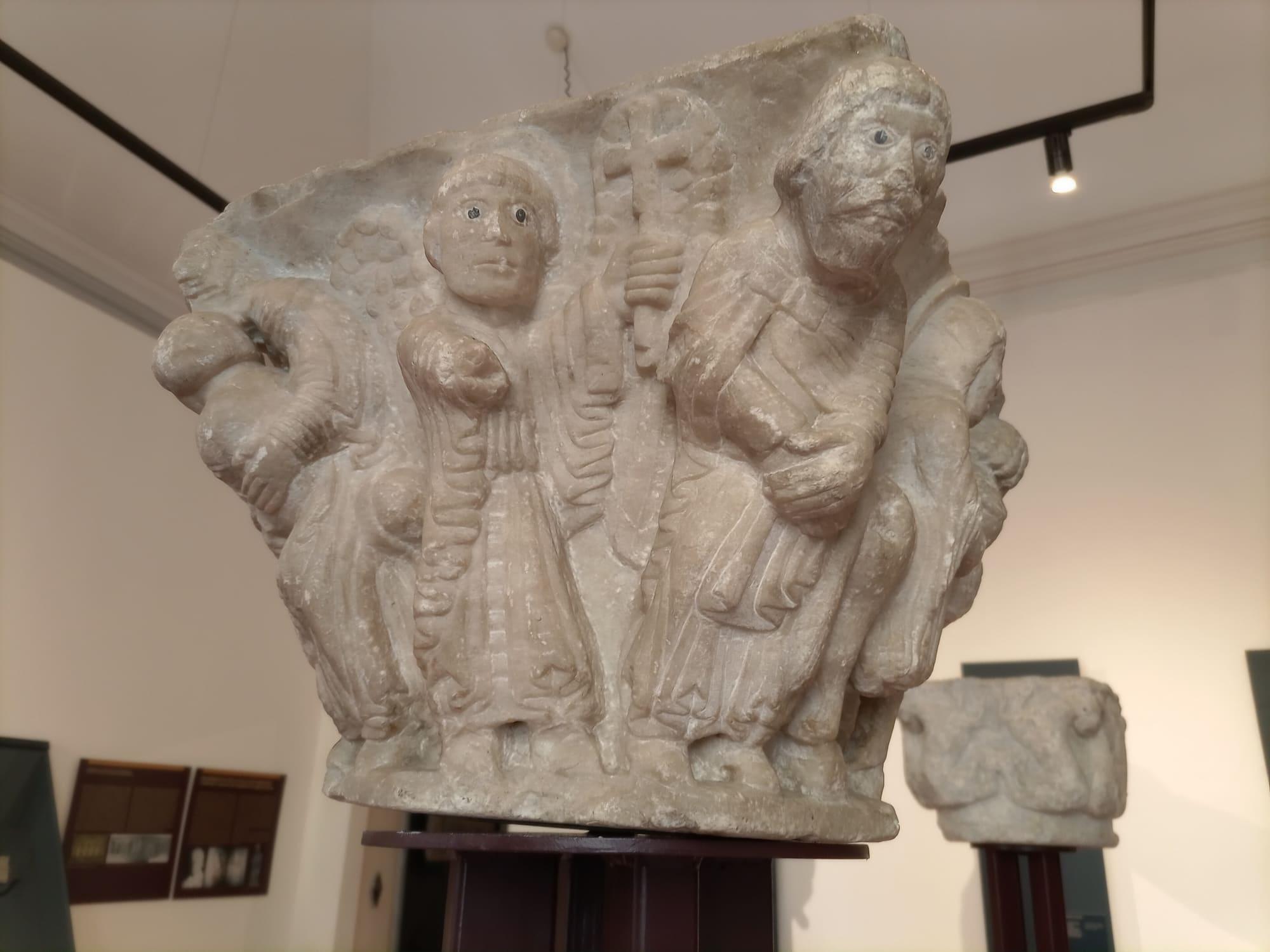
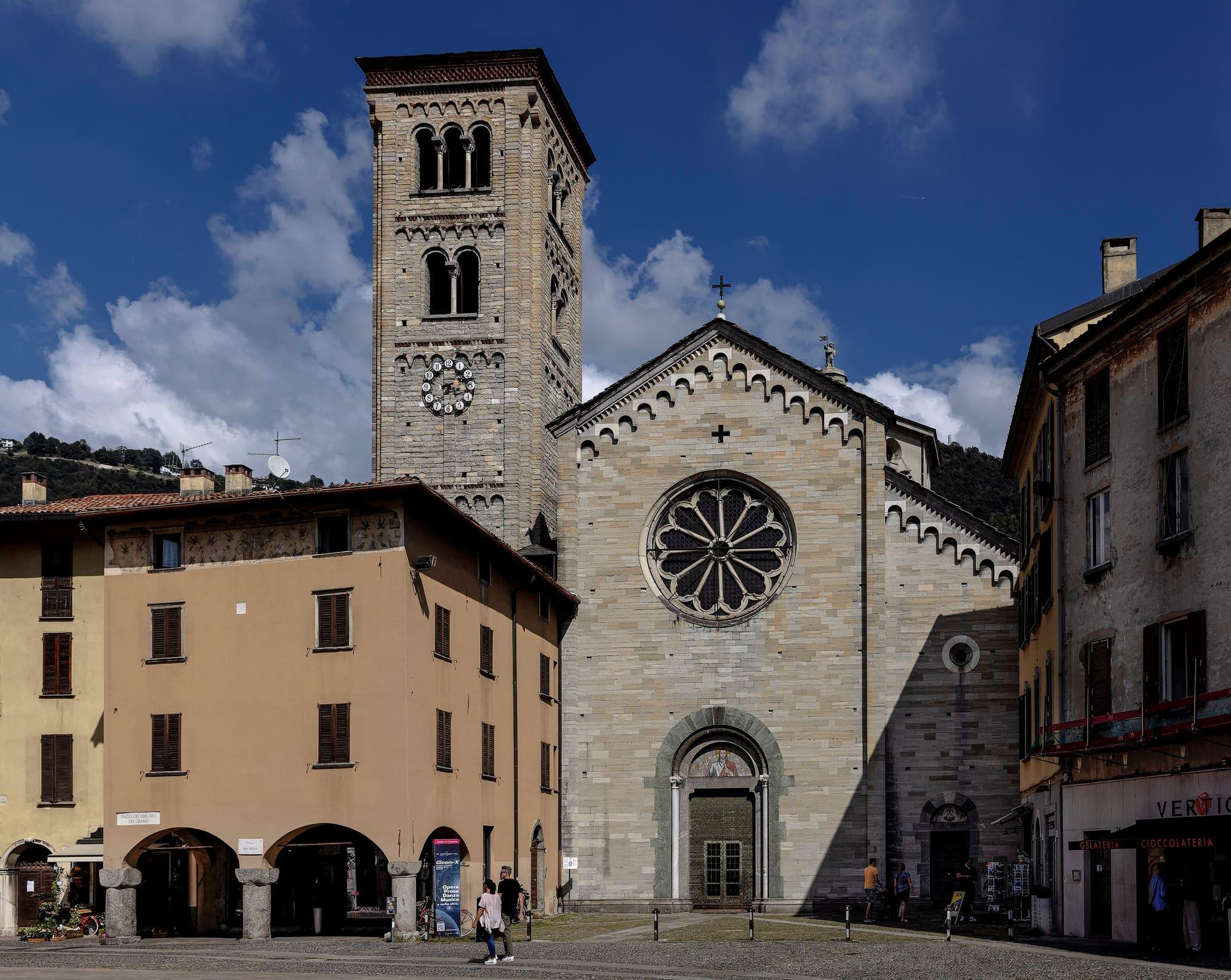
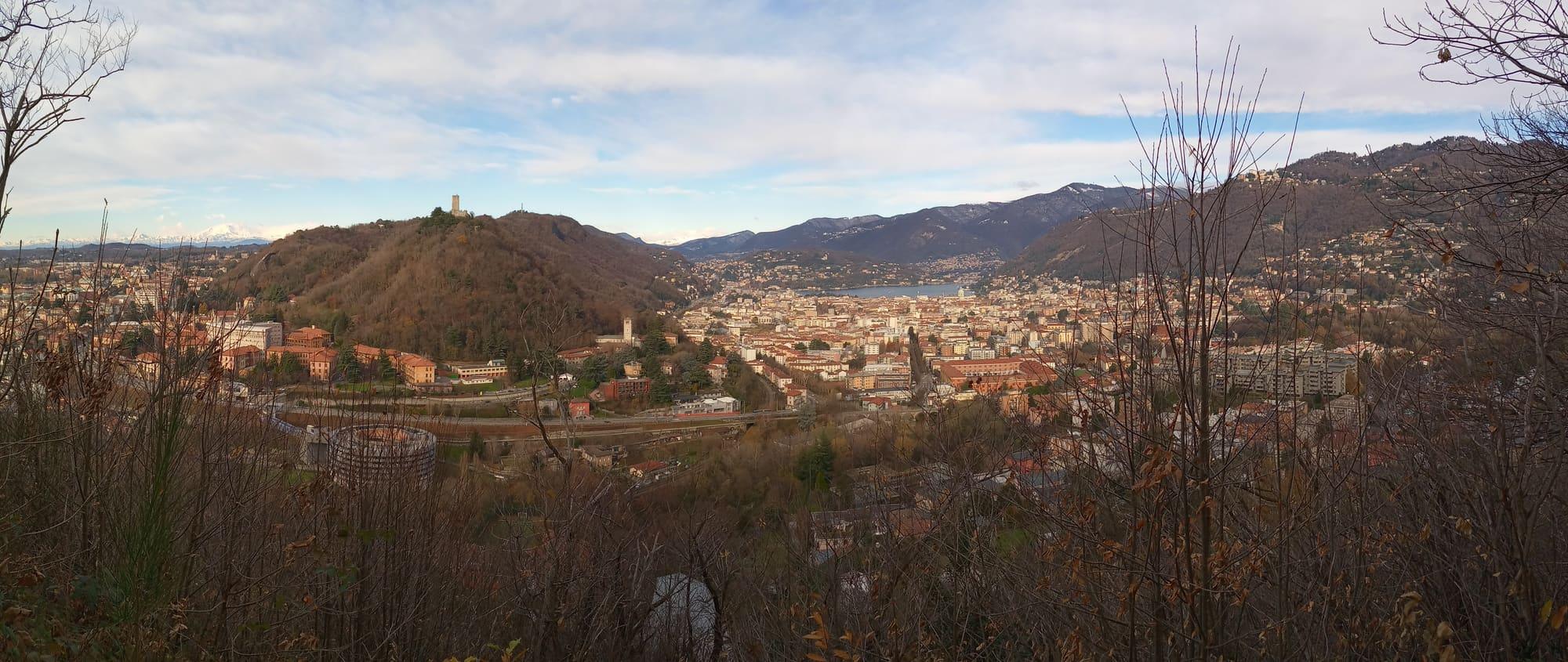
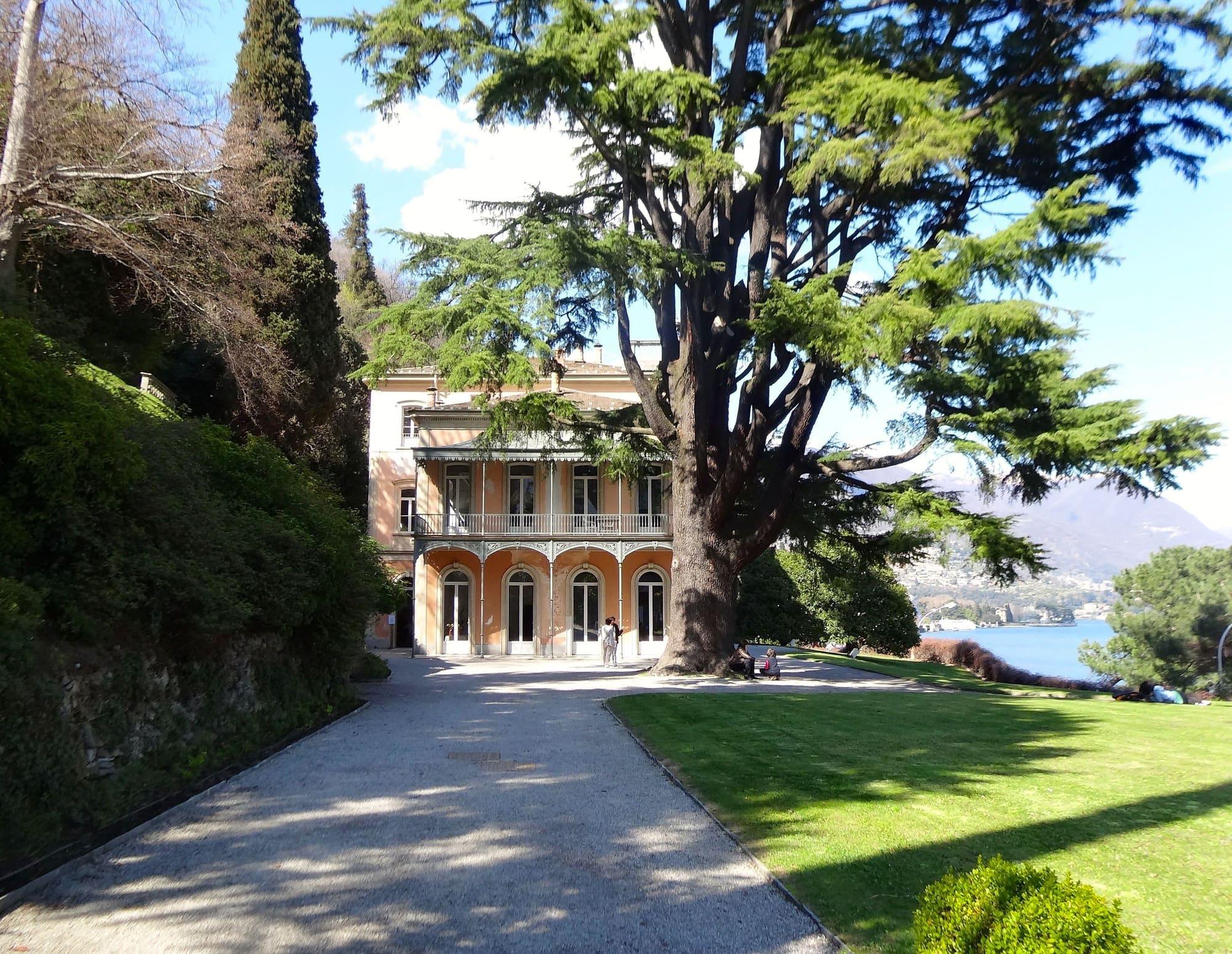
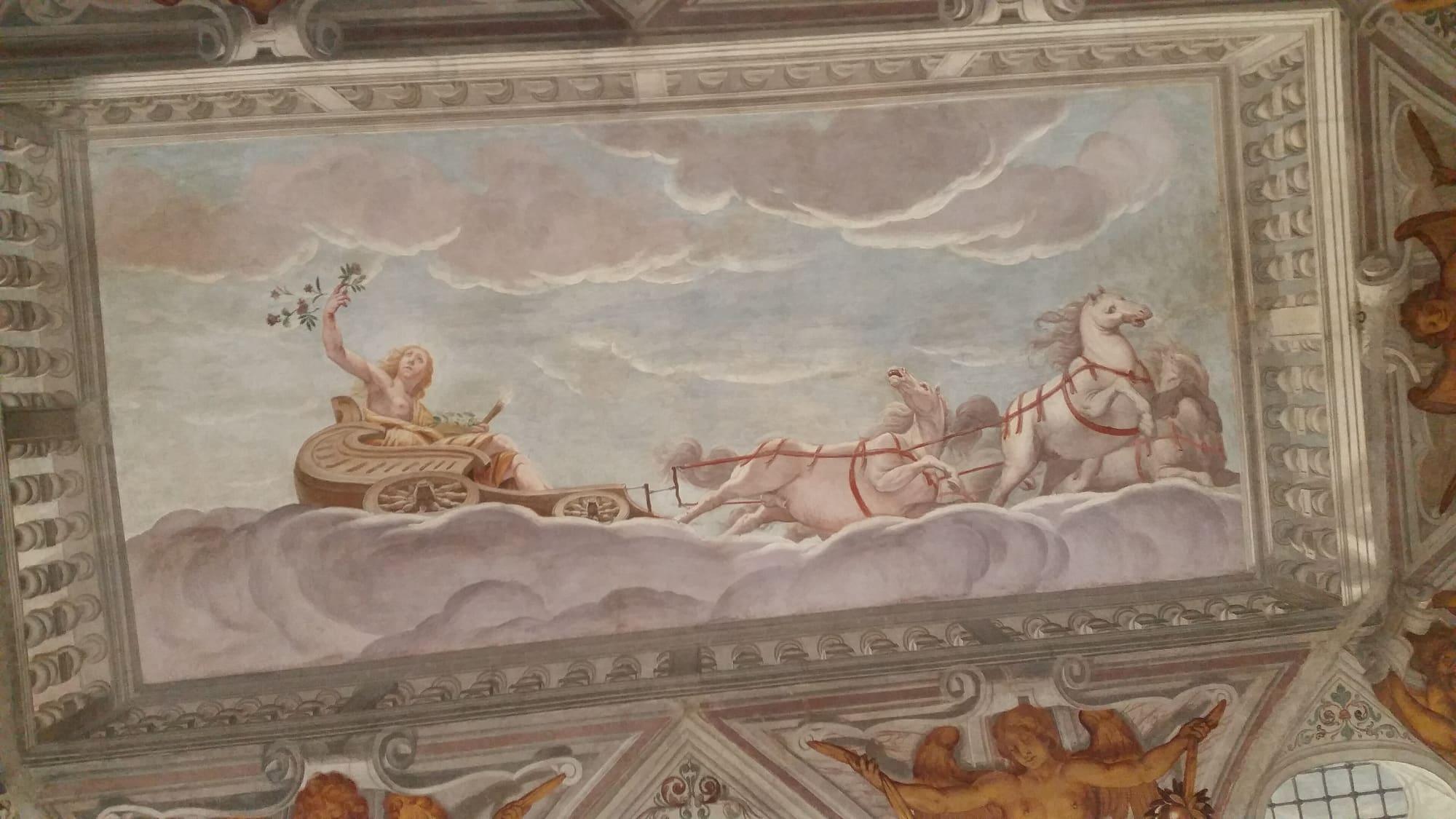
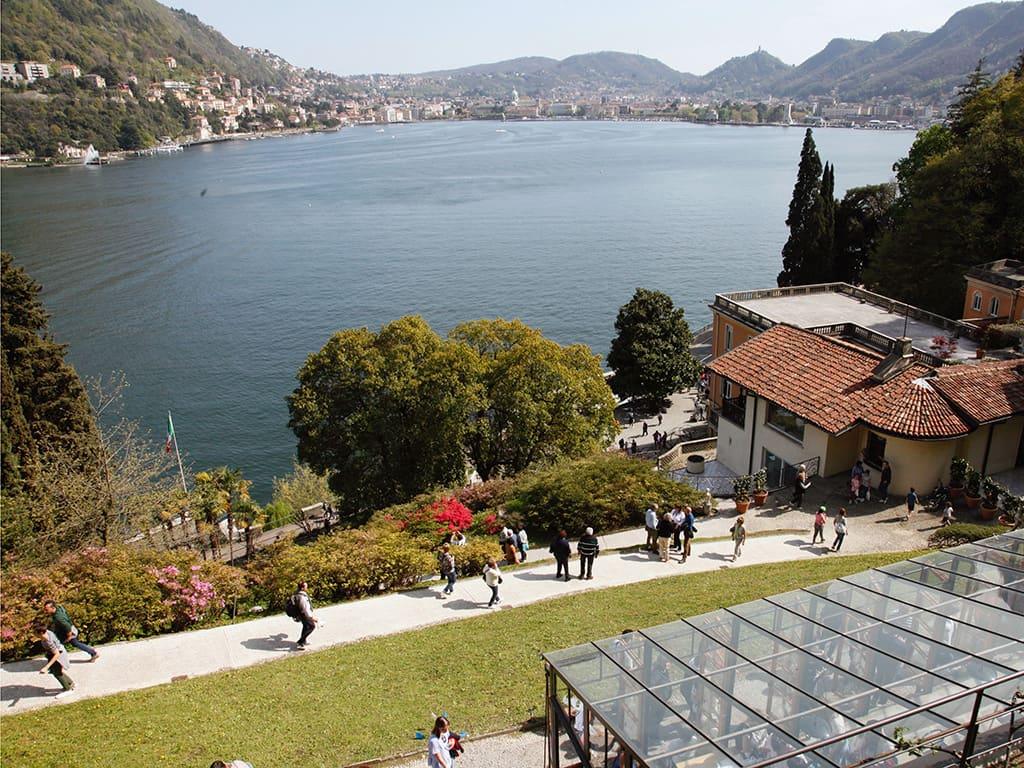
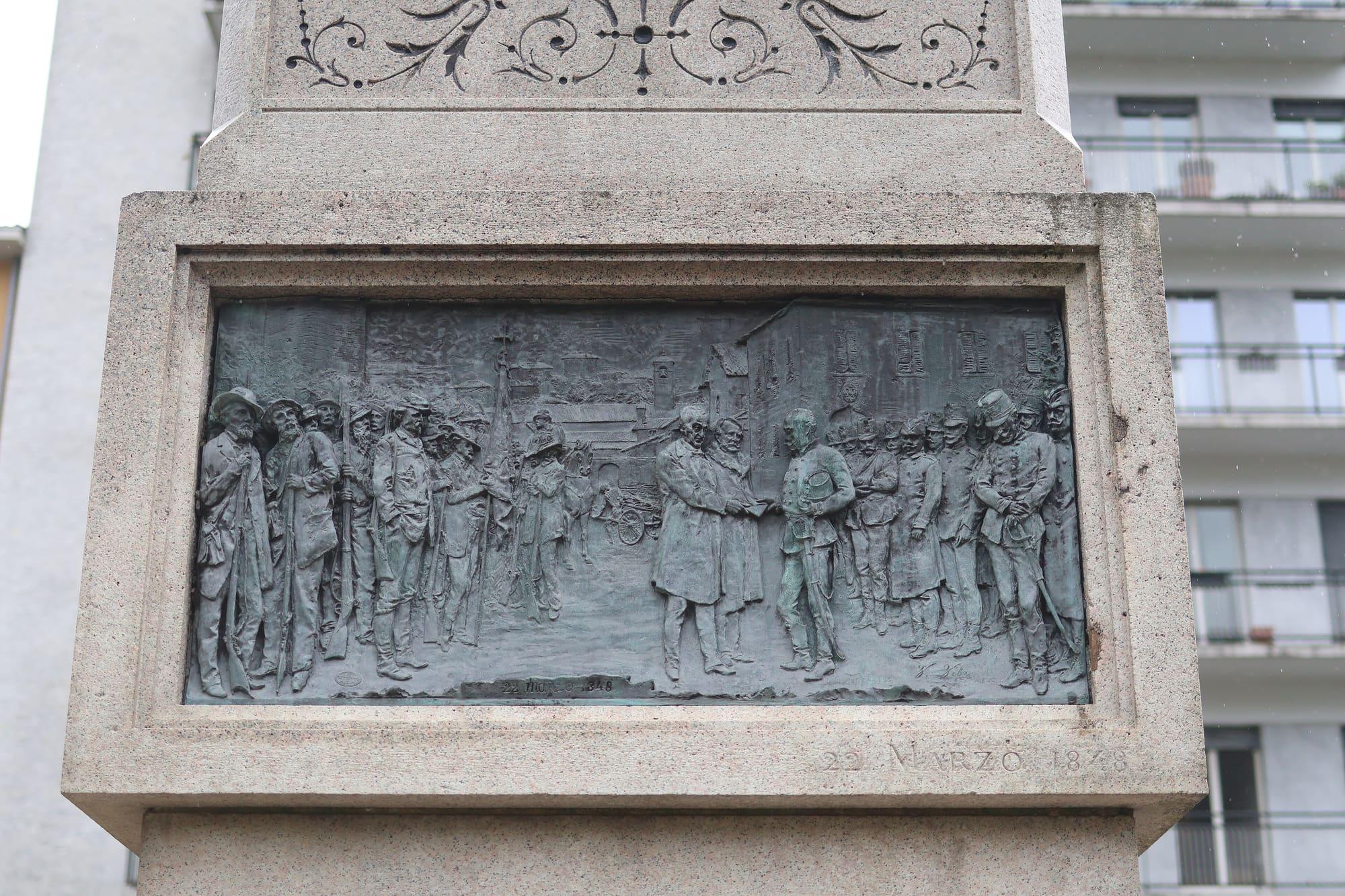
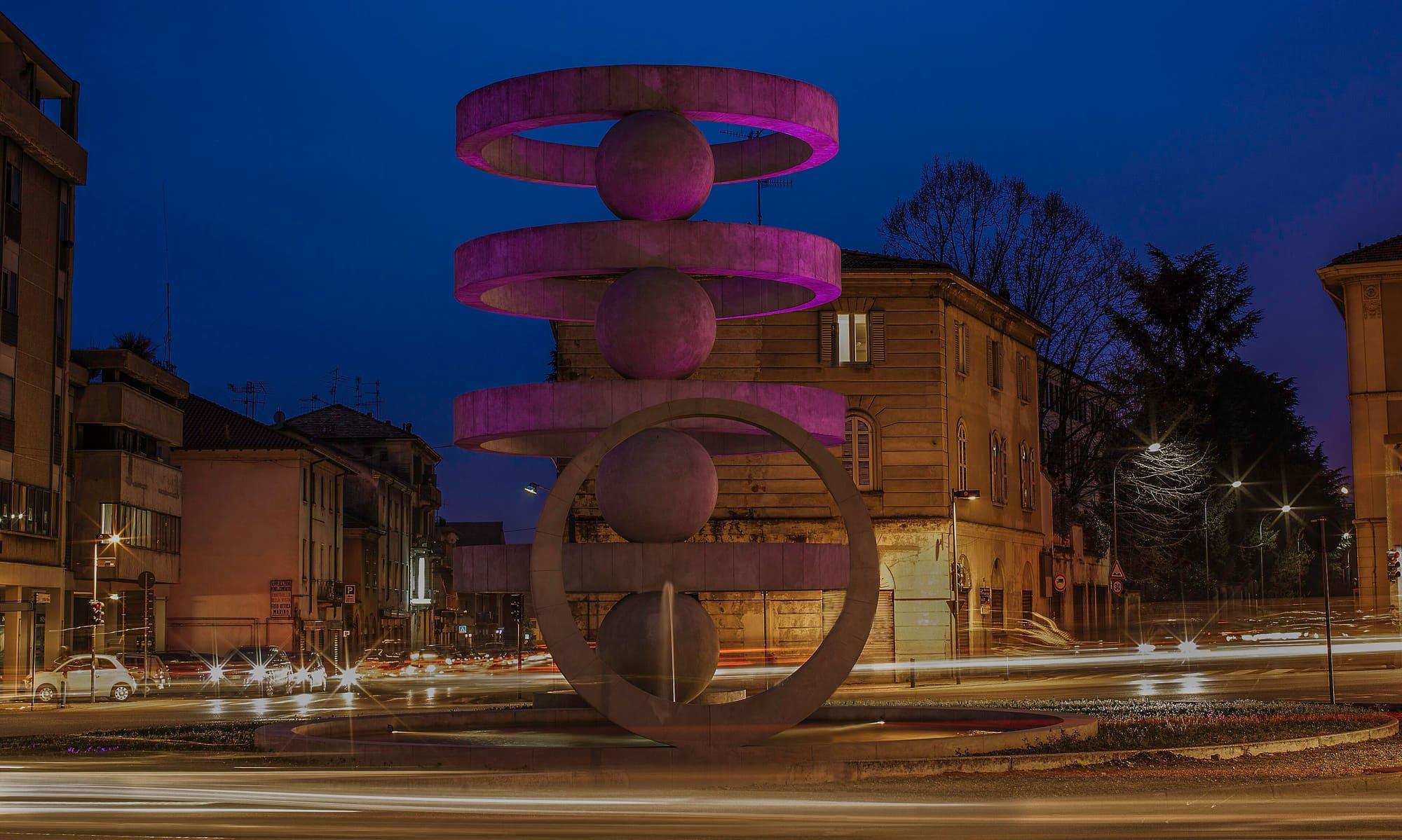
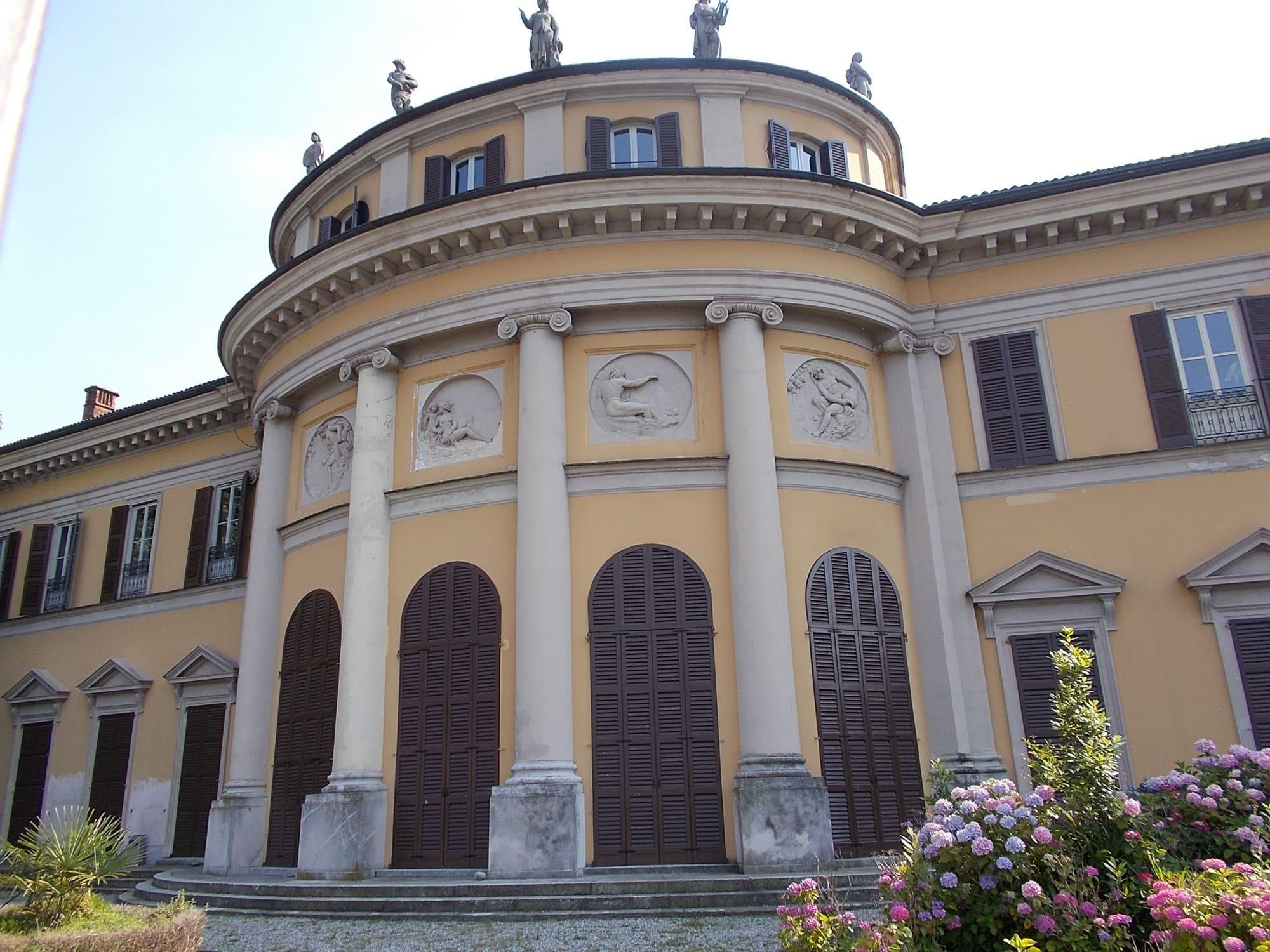
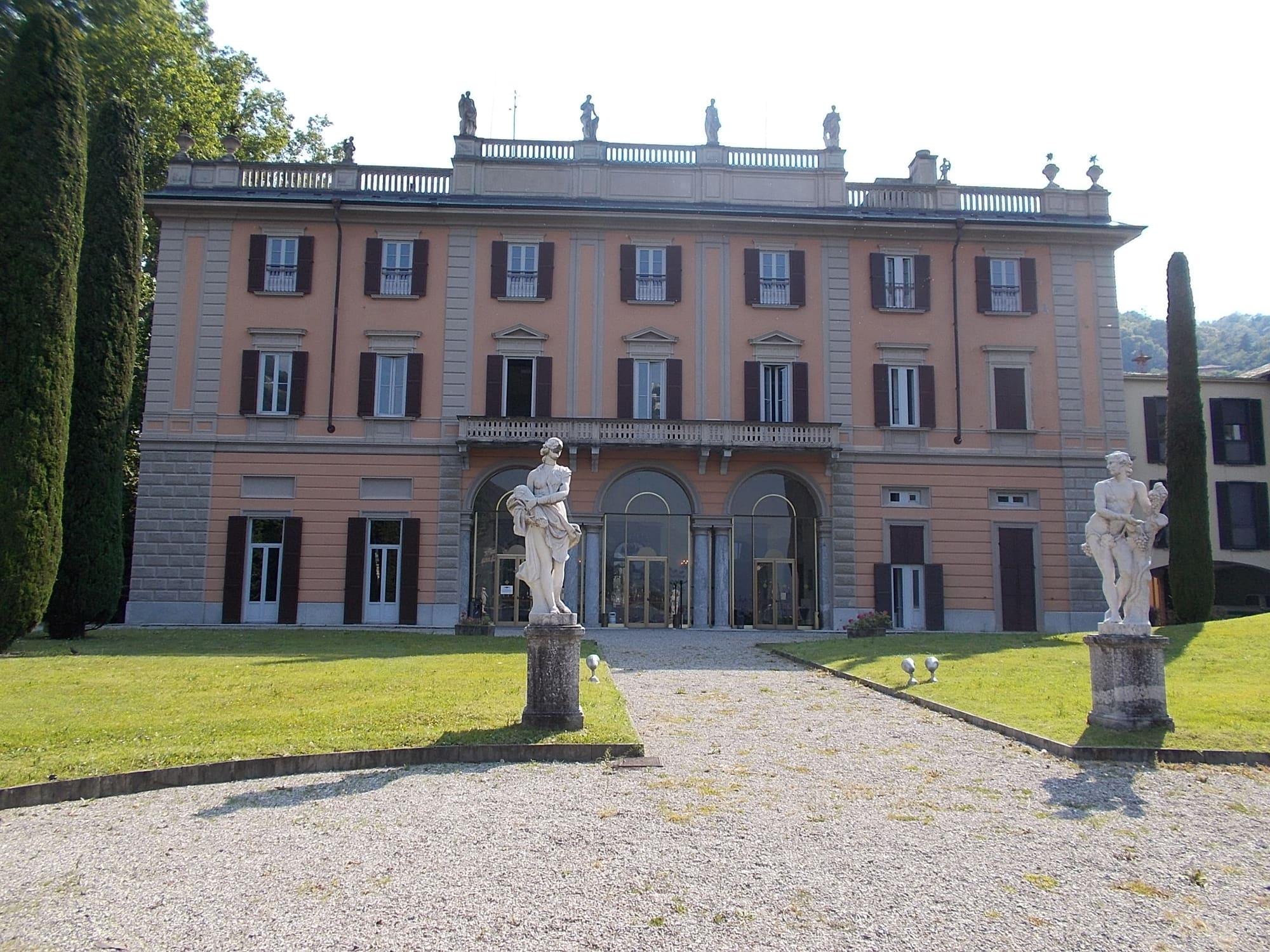
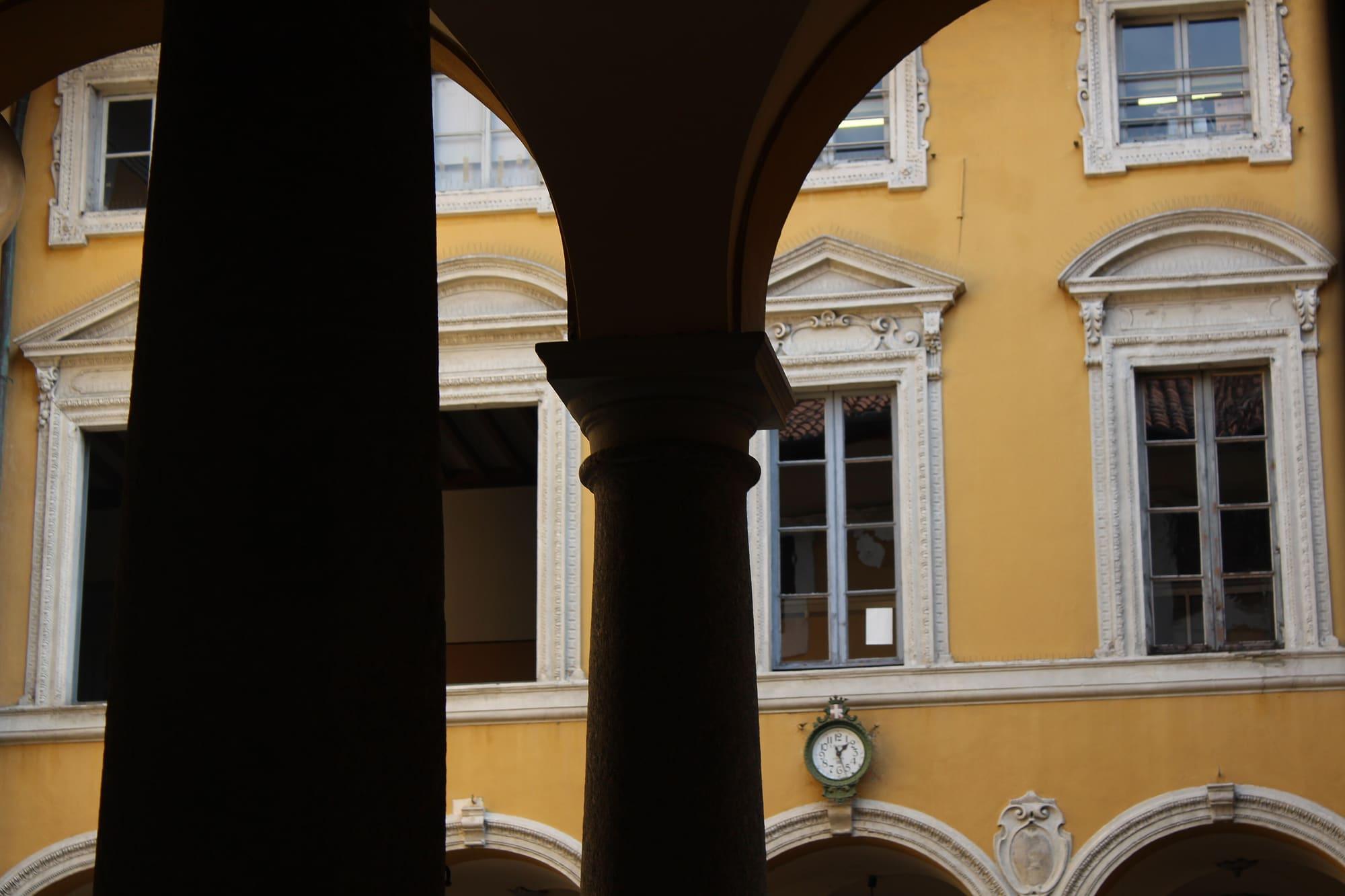
Experiences
First Basin
Rationalist Como
A morning on foot among the buildings of Como's Rationalism.
2 h 30 – 4 hOpen access
First Basin
Como silk
The Silk Museum, the Fondazione Ratti and the weavers' showrooms.
2 h – 4 h
First Basin
Aperitivo on the waterfront
Aperitivo hour on the shores of Como, Cernobbio and Lecco.
1 h – 2 h 30
First Basin
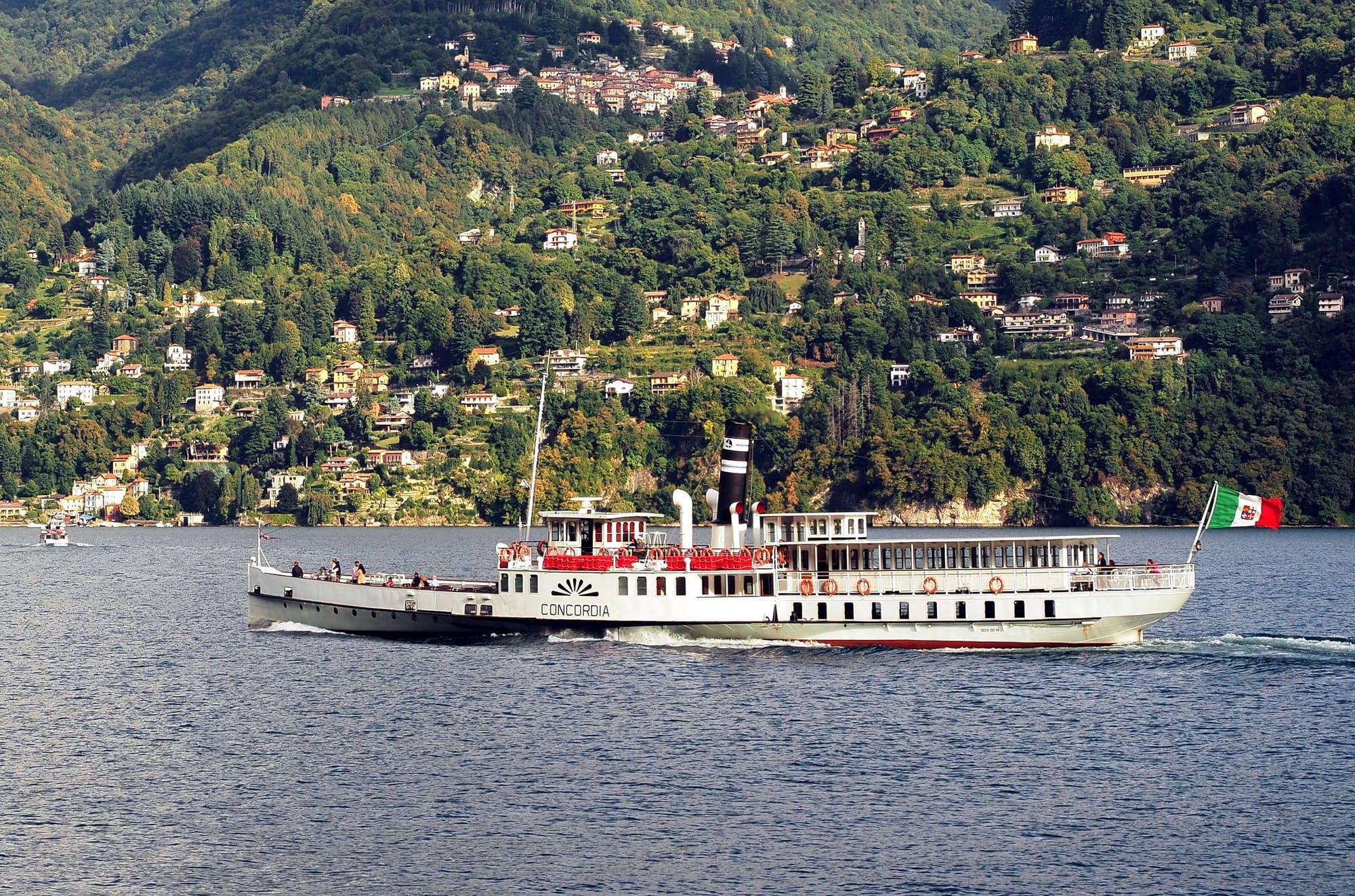
The lake by boat, Como to Colico
From Como to Colico by boat, from one end of the lake to the other: a little over four hours, with about twenty stops in the villages on both shores.
3 h – 5 h
Events
Last day1Nov
Miniartextil
An international exhibition of contemporary textile art, every autumn in Como.
Palazzo del Borgo and other venues in Como
Until31Dec
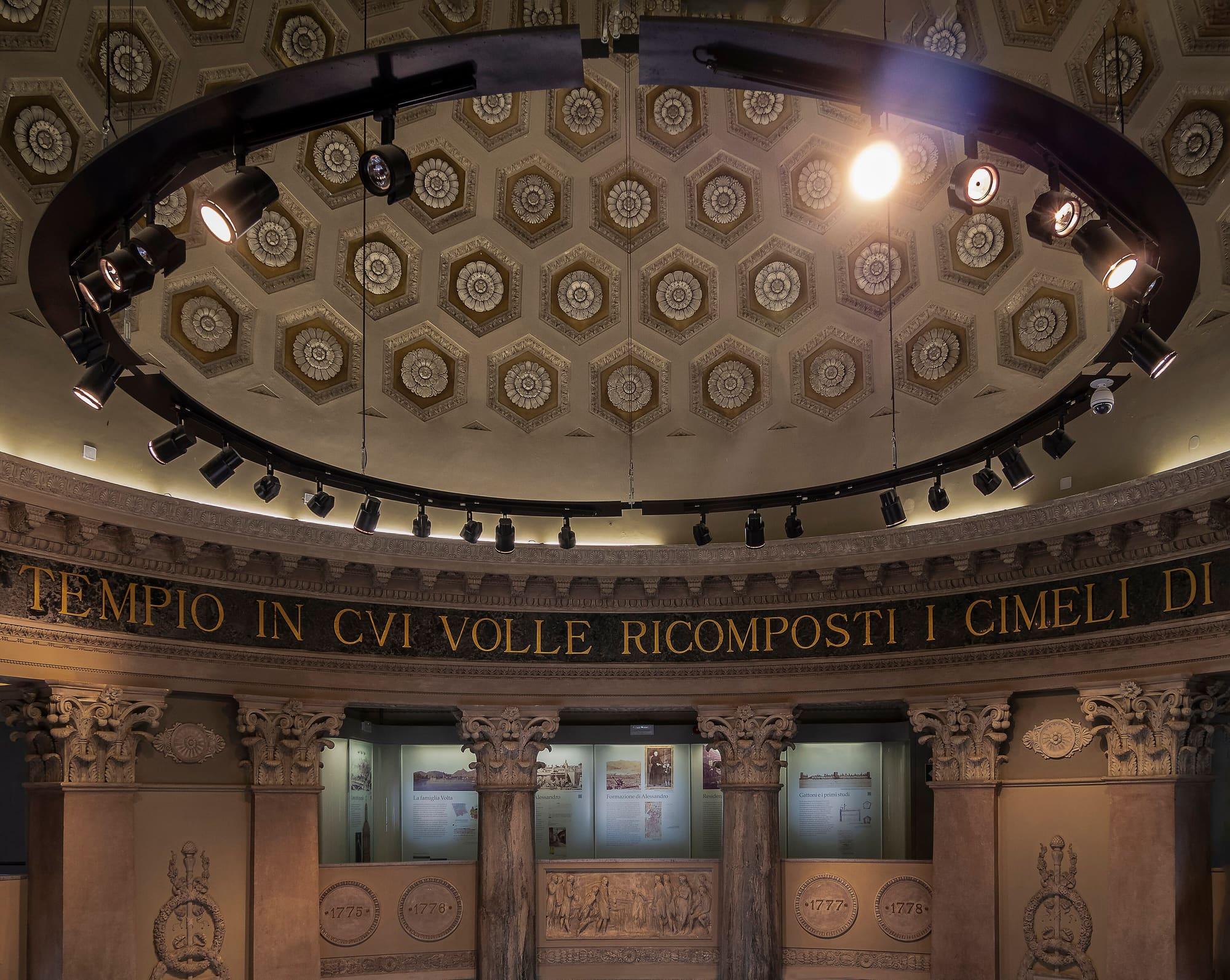
200VOLTeVOLTA — the Alessandro Volta bicentenary
Two hundred years since Volta's death: talks, visits and exhibitions, in Como and beyond.
Tempio Voltiano, Villa del Grumello and other venues
Before you go
How long it takes
- from Milan40 minTrain
- from Lecco1 h 05Train · by car 45 min
Typical door-to-door times by public transport, changes included. From Milan, counted from Centrale station.
Tourist office
Infopoint Broletto
Palazzo del Broletto, 22100 Como
Every day 9:00 to 13:00 and 14:00 to 18:00
Updated: 8 Oct 2026 · Comune di Como.
Infopoint Stazione San Giovanni
Stazione di Como San Giovanni, 22100 Como
Every day 9:00 to 16:00, in English, French, German and Spanish too
Updated: 8 Oct 2026 · Comune di Como.
Parking and services
- Autosilo Via Auguadrimulti-storey · 800 spaces · paid · CSU
- Parcheggio Via Castelnuovounderground · 170 spaces · paid · CSU
- Parcheggio Ippocastanosurface · 54 spaces · paid
- Piazza Croggisurface · 22 spaces · paid
12 public toilets35 drinking fountains21 pharmacies19 cash machines4 charging points5 defibrillators
Car parks and services on the map
Within two and a half kilometres of the centre; check car park spaces and fees on arrival.
Which station do I use for Como?
The two main stations for the centre are Como San Giovanni and Como Nord Lago. Como San Giovanni has trains to Milano Centrale, a journey of about forty minutes, and is about a kilometre from the lake. Como Nord Lago has trains to Milano Cadorna, a journey of about an hour, and is two hundred metres from the waterfront and the piers.
How far is Bellagio from Como?
The fast boat takes around fifty minutes in season, the ordinary one over two hours, the C130 bus a little over an hour, the car just under an hour on the Lariana, the eastern shore road.
Webcams
- Como, the city and the first basinLive video · Skyline Webcams
- Como, from the Tavernola shoreLive video · Skyline Webcams
The mountains around the village hide the sun before astronomical sunset: sunrise and sunset are worked out on the village's own horizon.
Today, 1 November, estimated sunlight at the reference point: first at 07:28 and last at 15:37, giving 8 h 10 of direct sun, out of 10 h 06 of daylight.
Today the sun arrives between 07:25 and 07:44 and leaves between 15:20 and 15:51, depending on the street.
JuneDecembertoday
Watch the shadow reach Como today
See from Como where the sun goes, in 3D
The sun at an exact spot in Como: your hotel, a beach, a street
A table in the sun in Como
Places near the shore with outdoor seating, with today's estimated first and last sun at the marked point. Those with the latest sun come first. Clouds and shade from buildings, trees or awnings can change the light on the tables; check opening hours with the venue.
- Piazza Alcide de Gasperirestaurant07:56–16:31
- Viale Genobar08:33–16:22
- Via Dionigi da Parravicinobar07:54–16:20
- Piazza Domenico Croggirestaurant07:51–15:55
- Lungo Lario Triesterestaurant07:51–15:55
- Piazza Giacomo Matteottirestaurant07:52–15:52
- Lungo Lario Trentorestaurant07:26–15:30
- Piazza Alessandro Voltarestaurant07:24–15:21
The highest summit in view from here is Monte Bisbino, 1325 m, 7 kilometres away.
- Cima del Monte Orfano, 554 m, 6 km
- Cima del Monte Goj, 477 m, 3 km
- Monte Croce, 550 m, 2 km
- Sasso di Cavallasca, 614 m, 3 km
- Monte Orsa, 998 m, 16 km
- Cardina, 450 m, 3 km
- Pizzo Meda, 890 m, 5 km
- Monte Bisbino, 1325 m, 7 km
The ochre line follows today's sun path and marks the estimated times of its first and last appearance above the mountains. Drag the panorama to see all of it.
How it is drawn
Paler ridges are farther away; heights are stretched two and a half times. Houses are not drawn, nor are trees within half a kilometre. Terrain © Regione Lombardia (CC BY 4.0); summits © OpenStreetMap contributors.
Official bathing sites nearby, with their water quality classifications.
- Lido Villa Geno1.3 kmExcellent · for 4 seasons · in July, sun estimated until 19:59 at the marked point3D — see from the beach at Lido Villa Geno where the sun goes
- Villla Olmo1.6 kmExcellent · for 5 seasons · in July, sun estimated until 19:55 at the marked point3D — see from the beach at Villla Olmo where the sun goes
What to see in Como in a day?
The Duomo and the Broletto, Palazzo Terragni fifty metres from the apse, the Silk Museum, the Tempio Voltiano on the waterfront and, a little further on, the Aero Club's seaplanes taking off from the water in front of the town, and the funicular to Brunate at sunset. All on foot.
Where are Alessandro Volta's places in Como?
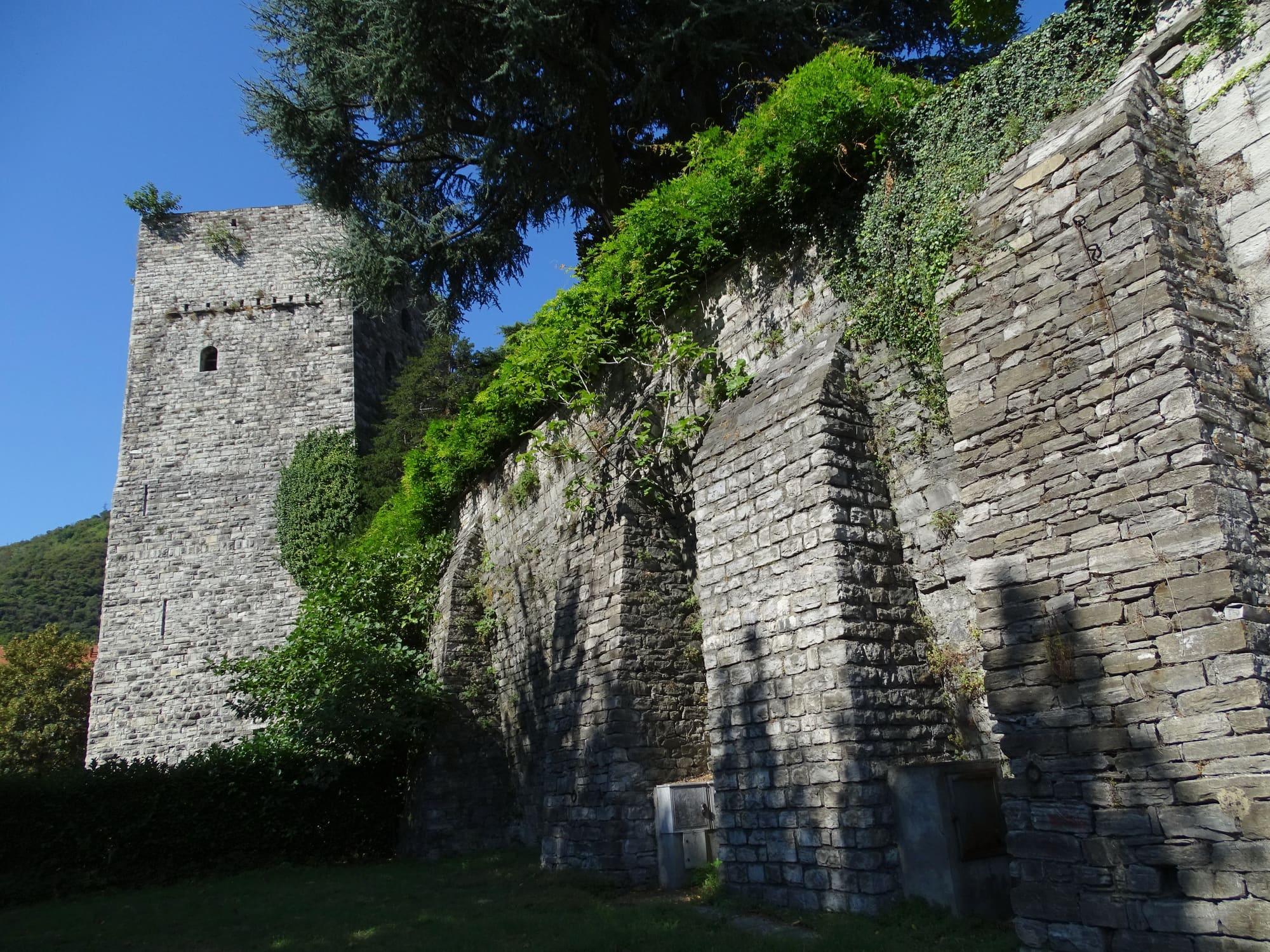
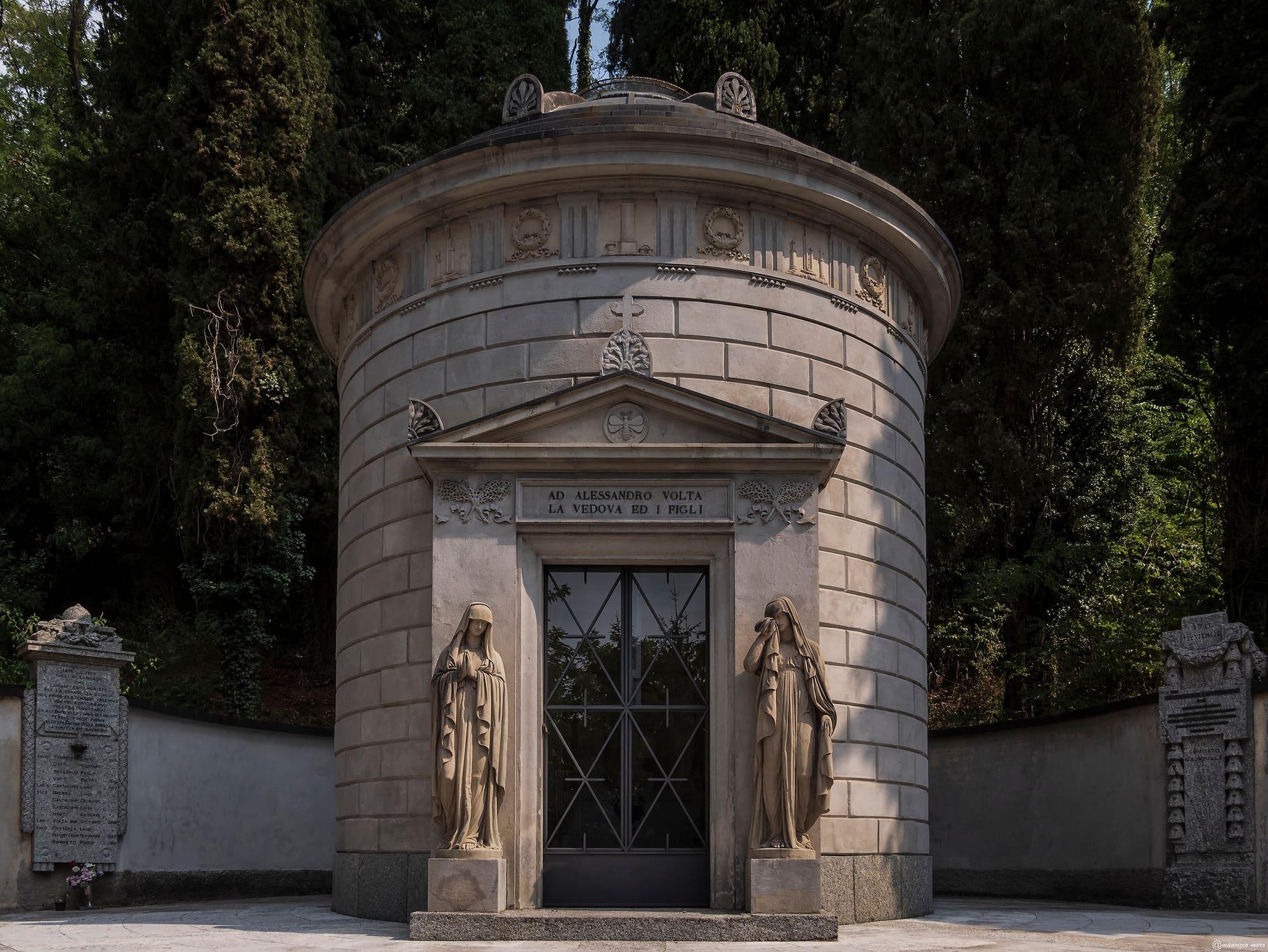
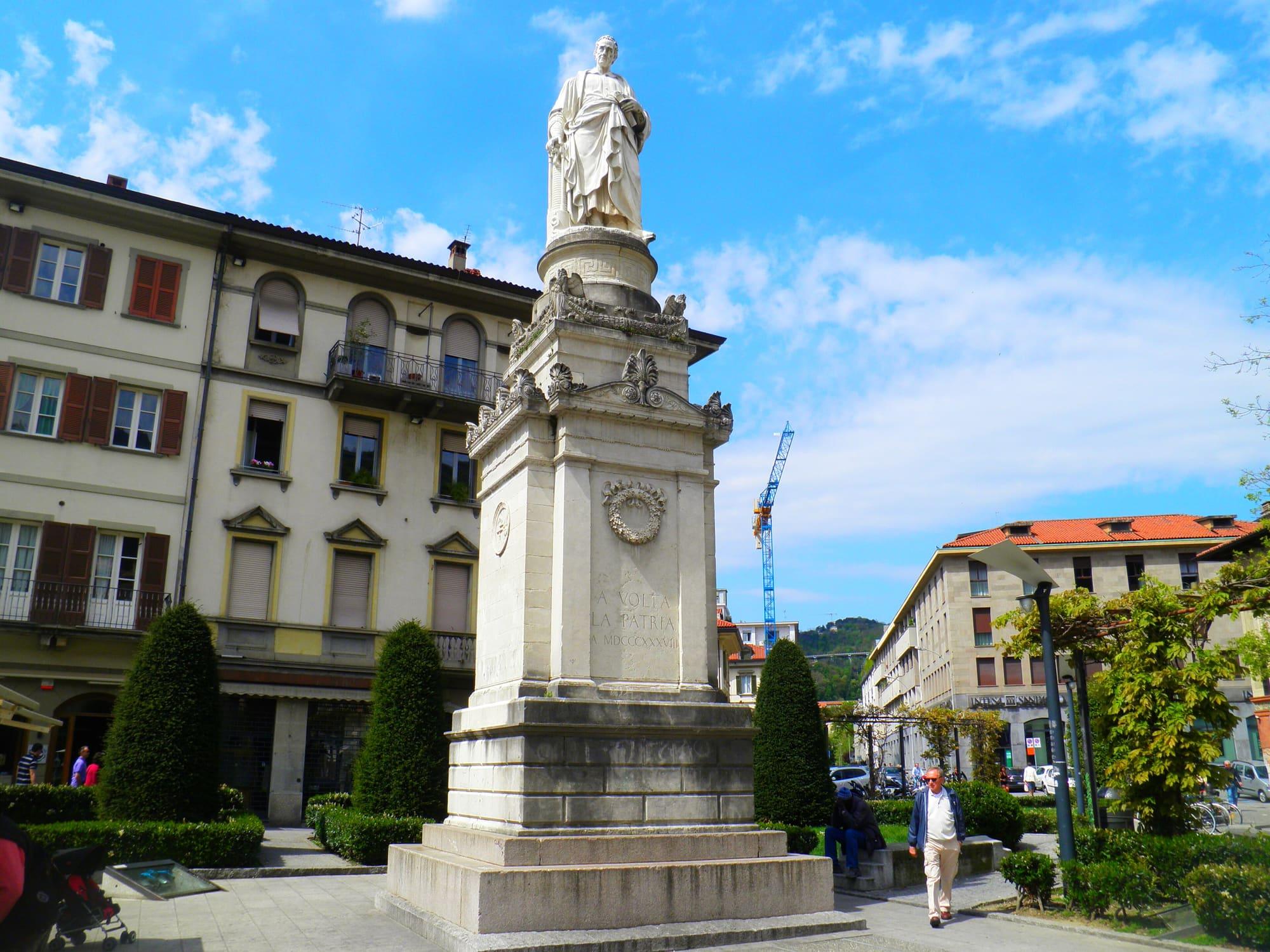
In town: Pompeo Marchesi's 1838 statue in Piazza Volta, the house where he was born in Via Volta, the Torre Gattoni in the walls, where he ran his experiments, and on the waterfront the Tempio Voltiano, with original instruments and reconstructions. At the tip of the breakwater stands Life Electric, Daniel Libeskind's 2015 sculpture dedicated to him. Outside the centre, on the hill of Camnago Volta, the tomb his wife and sons had built for him, unveiled in 1831; above Brunate, the 1927 Faro Voltiano.
Does Como work in winter?
Como can also be visited in winter: the old town, the Duomo, the Tempio Voltiano and the Silk Museum offer walks and indoor visits. The funicular links the waterfront with Brunate.
What small curiosities are there in town?
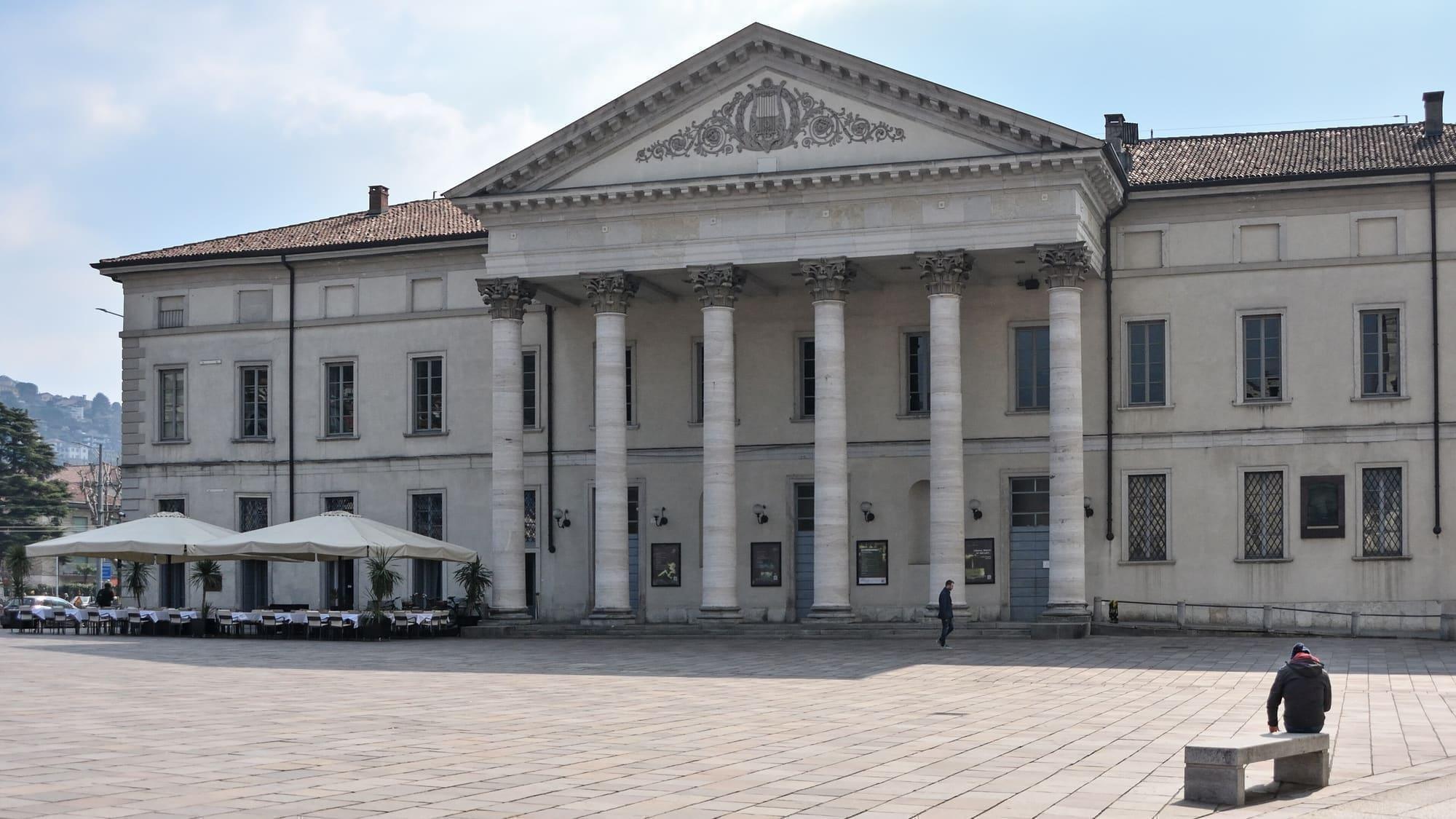
On the Duomo's north portal, known as the frog door and dated 1507, a carved frog climbs the foliage towards a butterfly: by tradition, stroking it brings luck. On Piazza Cavour the “green dragon” is a drinking fountain whose water pours from a dragon's jaws, and a plaque recalls that there, at the Albergo dell'Angelo, on Christmas Eve 1837, Cosima was born, daughter of Franz Liszt and later Wagner's wife. On the apse of San Fedele, facing Via Vittorio Emanuele II, the dragon doorway shows a chimera biting a dragon, itself bitten by another. On Via Vitani, in the Cortesella, the Lady looks out of a painted window. The Teatro Sociale stands on the remains of the Torre Rotonda castle, whose thirteenth-century walls can still be seen along Via Bertinelli, Via Indipendenza and Via Bellini. Since 1912, at noon, a blank cannon shot, fired halfway up the funicular, marks the hour.
What is left of Roman Como?
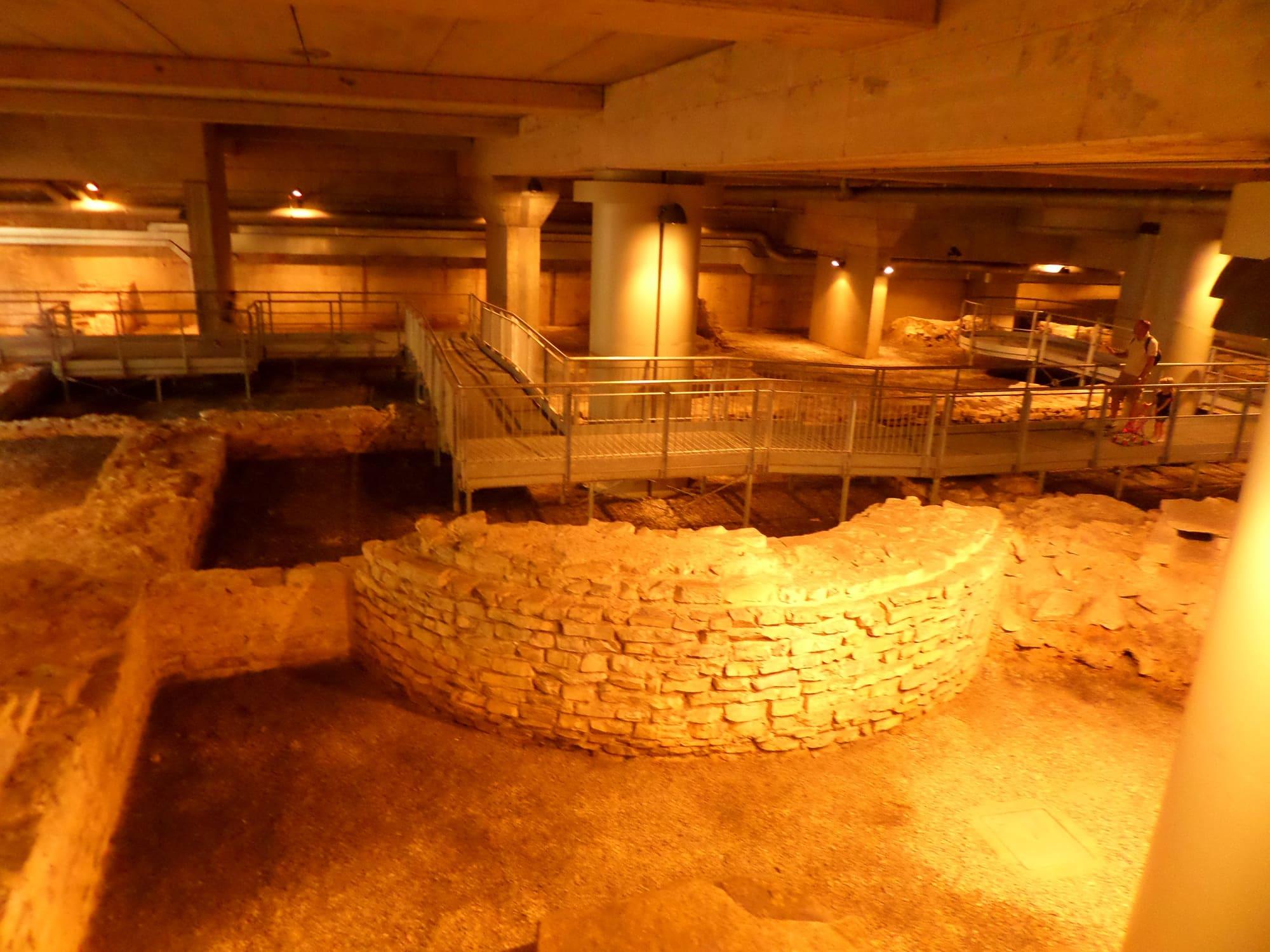
The walled town preserves the grid plan of Novum Comum: Via Indipendenza follows the decumanus, the east–west axis, and Via Cesare Cantù the cardo, the north–south axis. On Largo Miglio stands the Roman gate, discovered in 1914, with two openings and cart ruts on its threshold. On the facade of the Liceo Volta on Via Cantù are eight marble columns from the baptistery of San Giovanni in Atrio, where they had already been reused from a Roman building. Other remains include the first-century baths on Viale Lecco, inside a multi-storey car park. Piazza San Fedele was probably the forum.
Where are exhibitions held in Como?
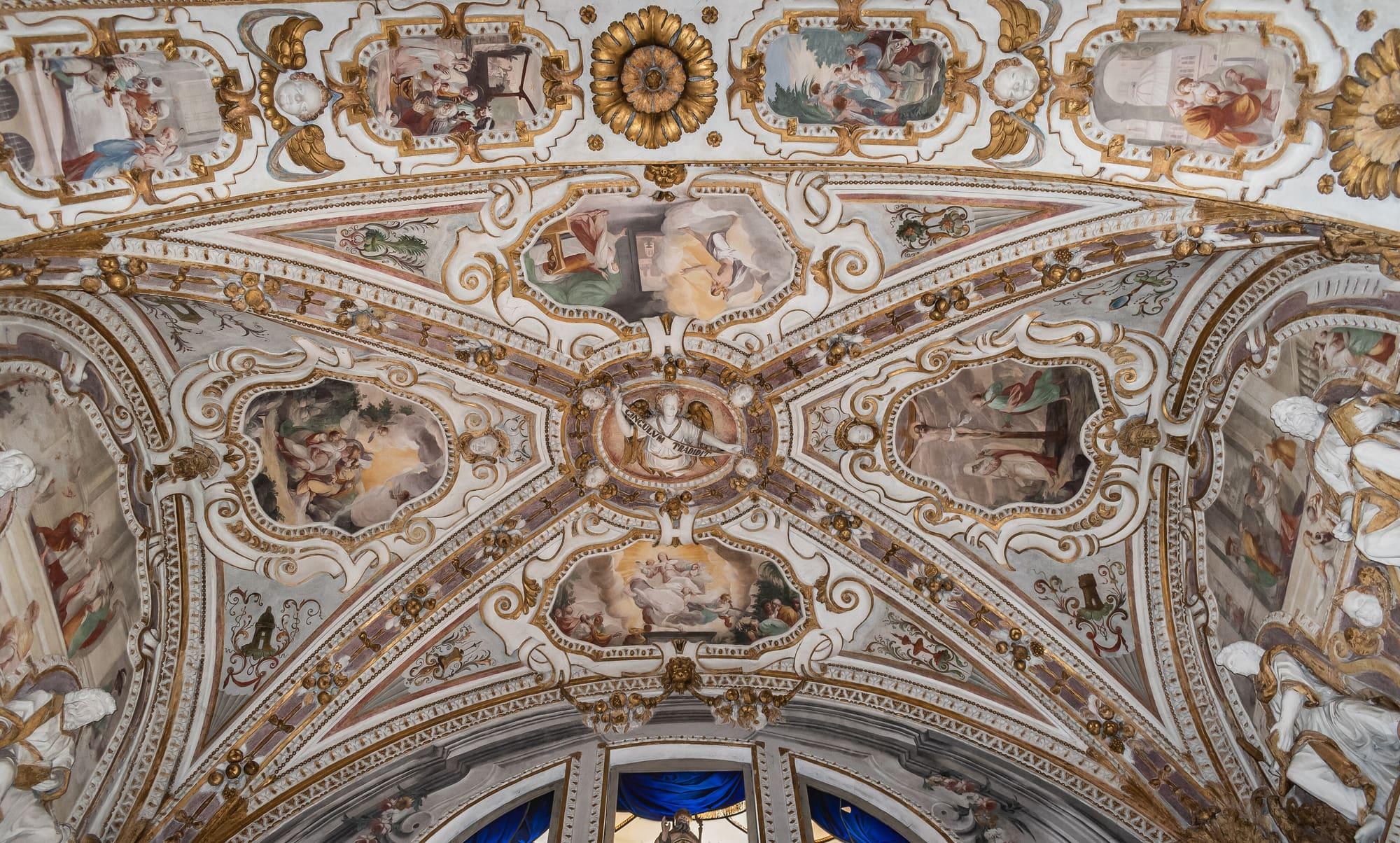
The Comune uses four historic buildings in the walled town as exhibition spaces, open whenever a show is on: the Broletto on Piazza Duomo, seat of the medieval commune from the thirteenth century, where the hall can be visited but not the tower; San Pietro in Atrio on Via Odescalchi, a church recorded as early as 1181 and restored in the 1980s; the Spazio Ratti on Largo Spallino, founded as the church of San Francesco in 1203, with frescoes by Carlo Innocenzo Carloni; and the Spazio Natta on Via Natta, attached to the Natta family's palace. The calendar is on the Comune's portal, Oggi a Como.
Where can you walk straight from town?
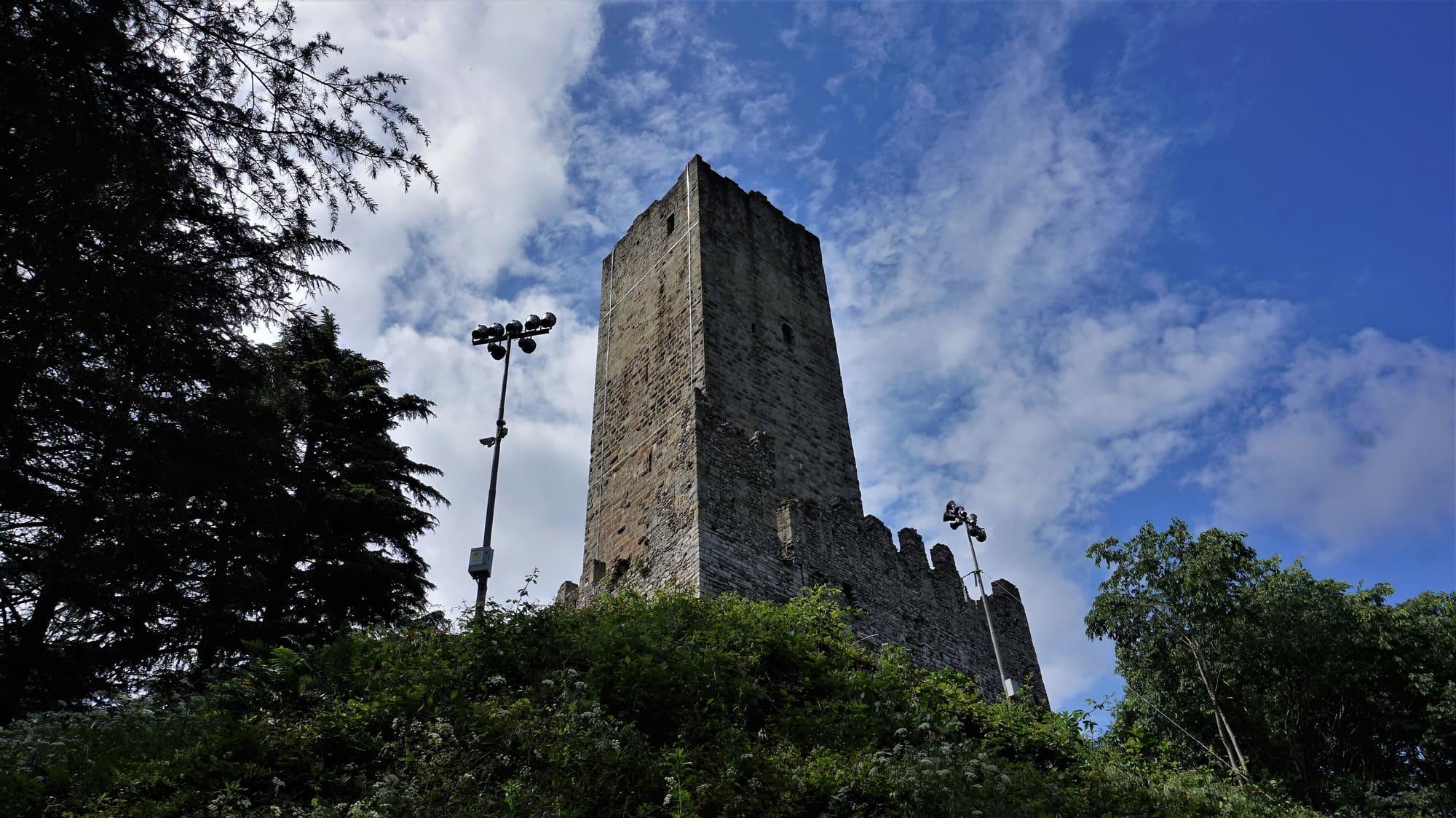
On the hill to the west lies the Spina Verde regional park, with thirteen paths waymarked by the park authority, through woods, churches, remains of prehistoric Como and First World War trenches. Two are easy: number 4, Monte Caprino, about three quarters of an hour from the basilica of Sant'Abbondio, and number 2, the Sentiero Confinale, about three hours from the Monte Olimpino cemetery. Or, from Piazza San Rocco or Camerlata, walk up to Castel Baradello, go on through Respaù to the Pianvalle excavations, where the Celtic settlement of Comum Oppidum stood in the Iron Age, and finish on the hill of Sant'Eutichio, with its iron cross and the view over the town and the first basin.
Where do you park in Como?
There are two park and ride car parks: Tavernola, on the road to Cernobbio, next to the bus stop and the pier, and Lazzago, at the motorway exit, the larger of the two; a season ticket combines parking and the urban bus, and a free municipal app shows free spaces. The walled town is a restricted traffic zone. If you are staying within it, arrange access permission and parking with your accommodation before entering.
Where are the markets in Como?
The Mercato delle Mercerie takes place along the avenues around the walls, from Viale Battisti to Viale Varese via Piazza Vittoria. The covered market is at Via Mentana 5. In Rebbio, the park of the Comboni Missionaries at Via Salvadonica 3 hosts a market of local and organic producers.
On the map
What is around, and how far.
© OpenStreetMap contributors · ODbL
Nearby
Typical door-to-door times.
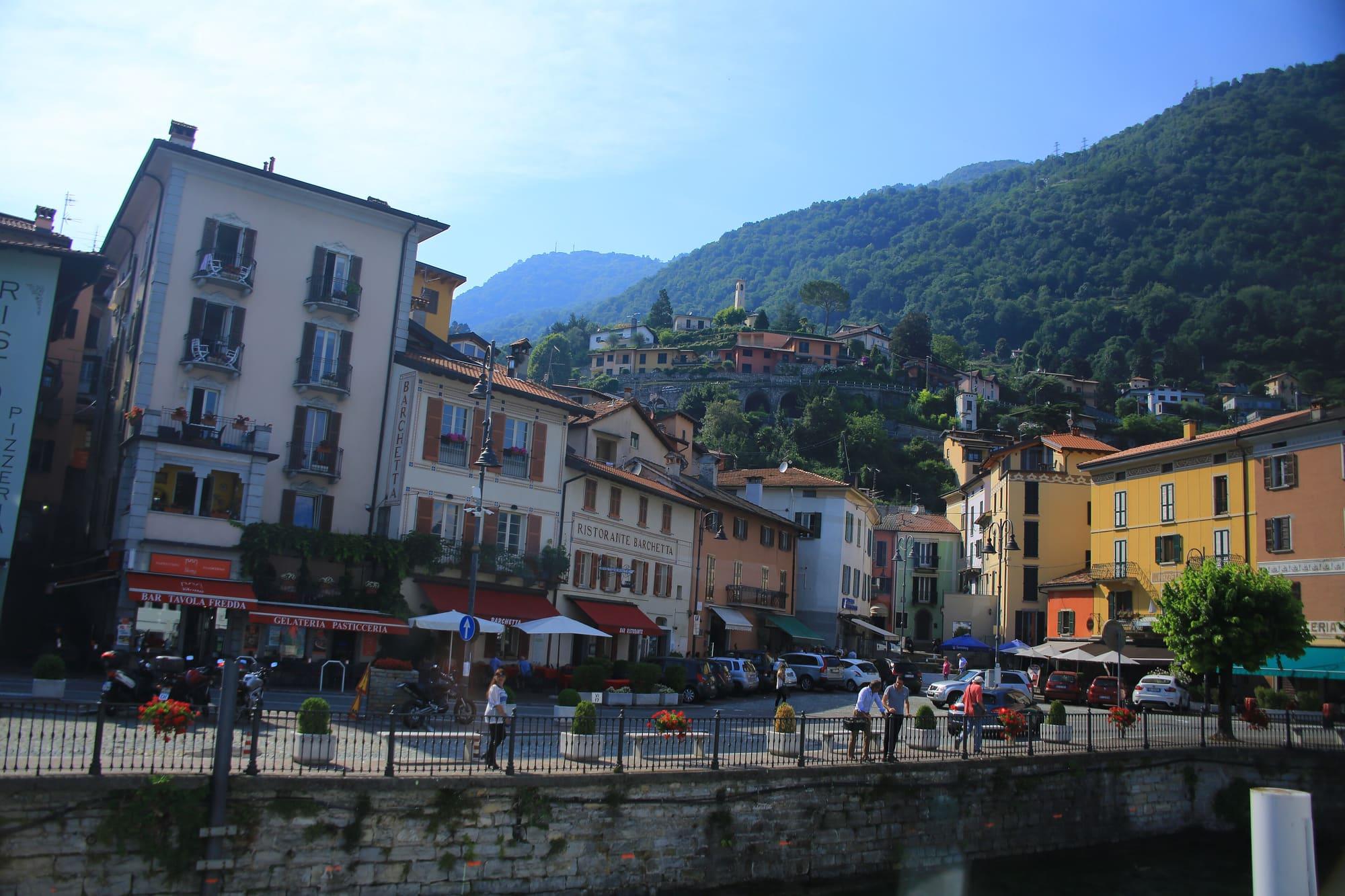
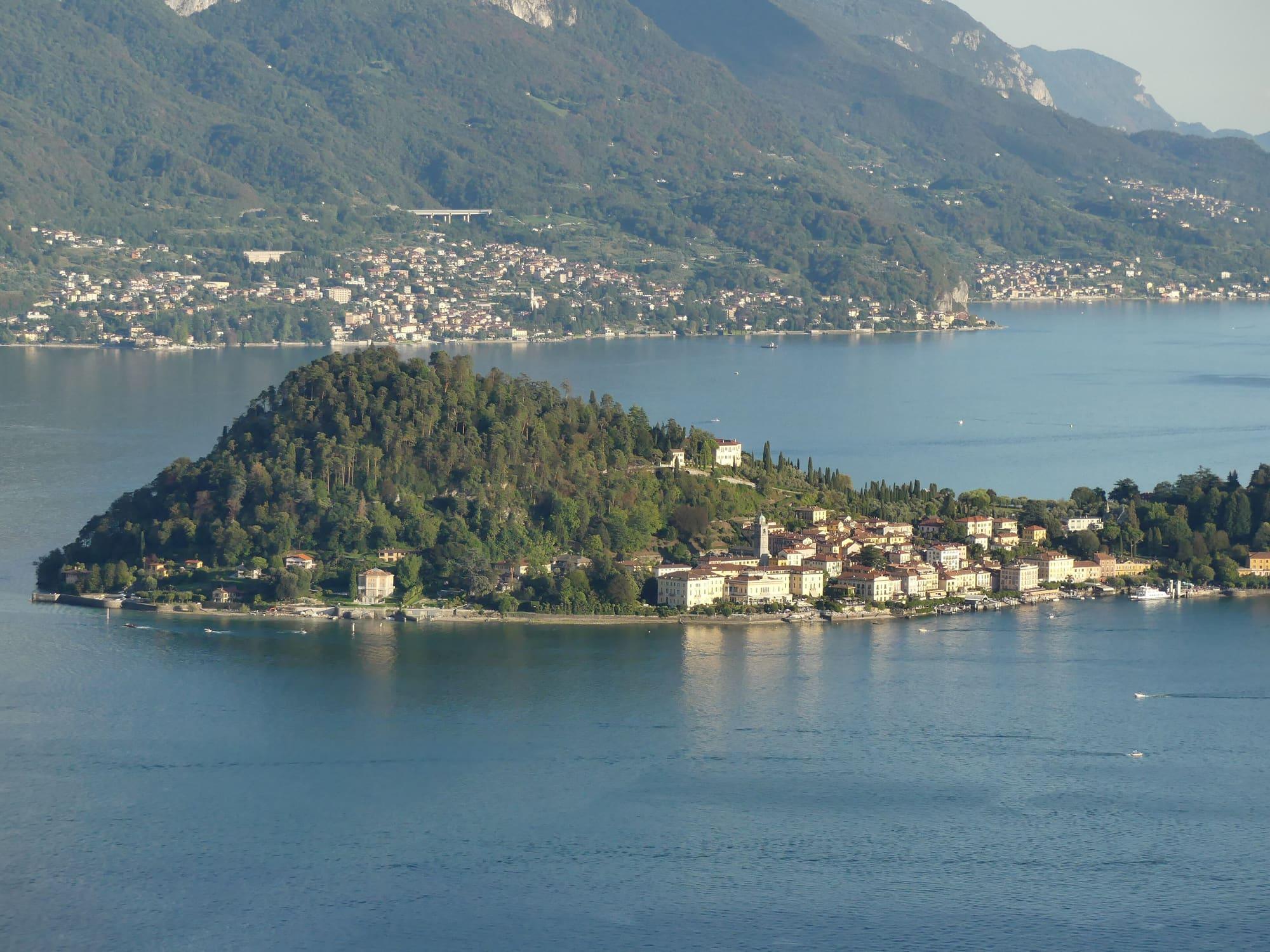
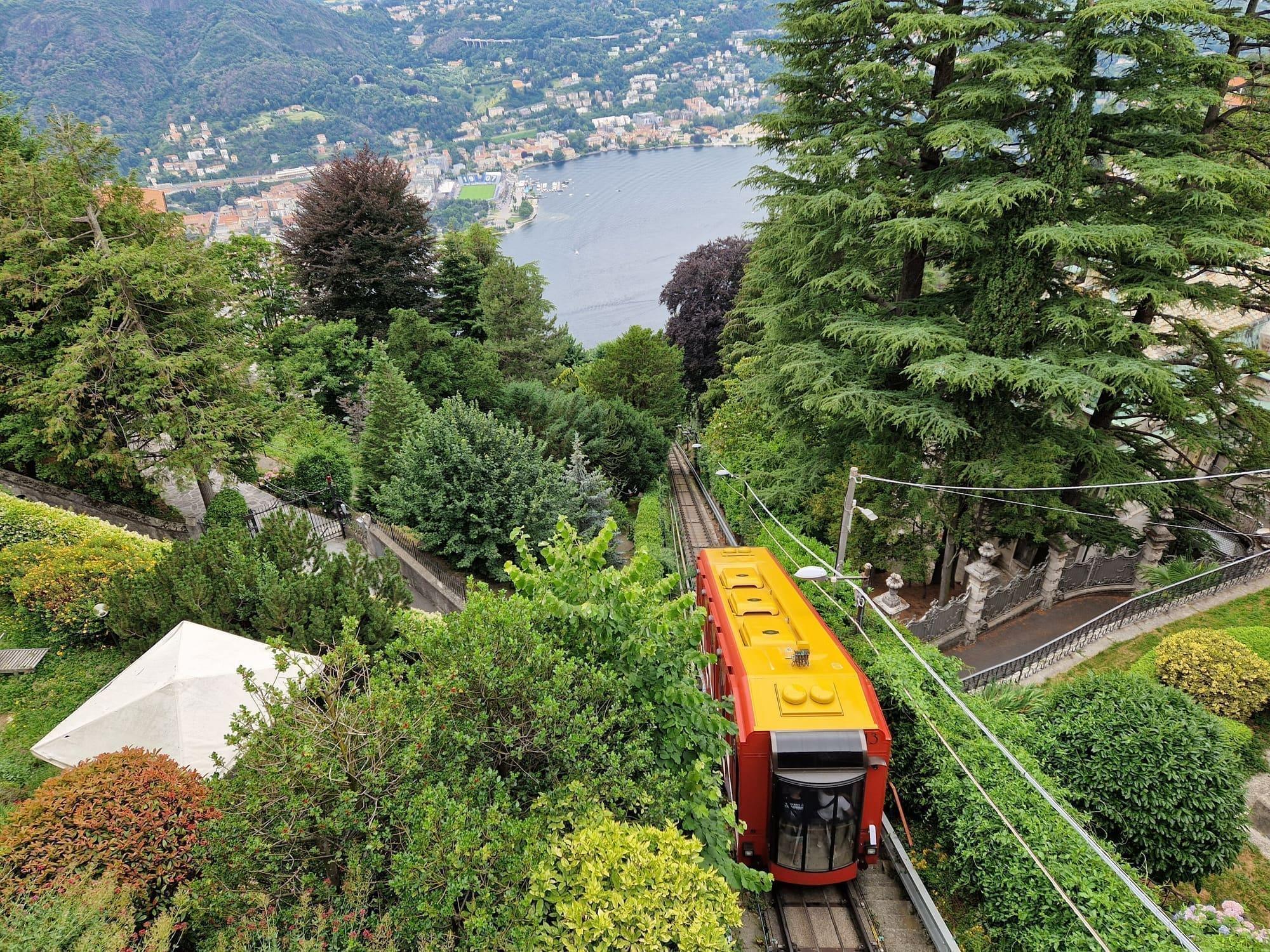
Brunate
The village above Como, seven minutes by funicular and five hundred metres higher.
7 min
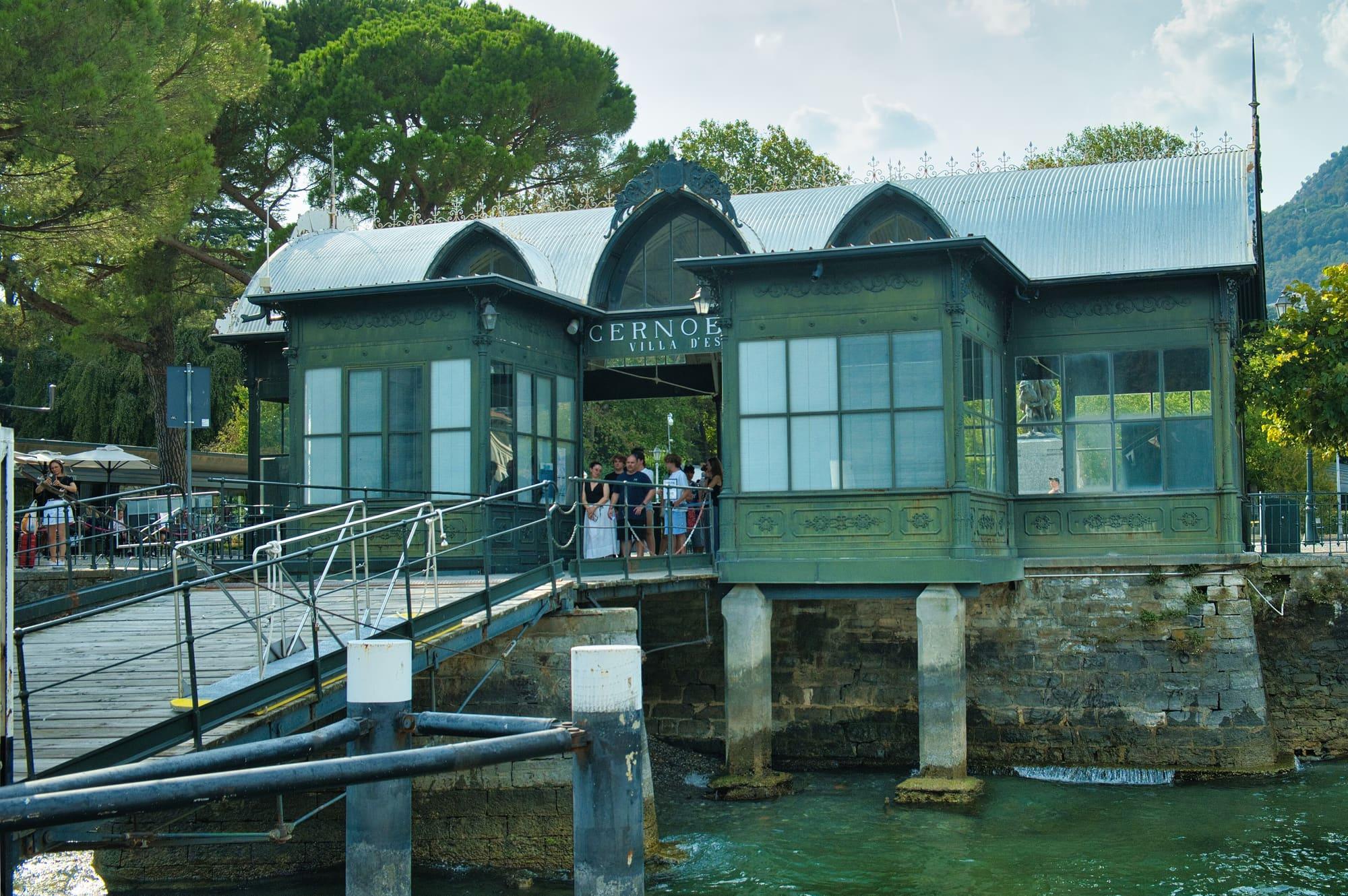
Cernobbio
A square on the water ten minutes from Como, and the grand hotel behind the plane trees.
12 min
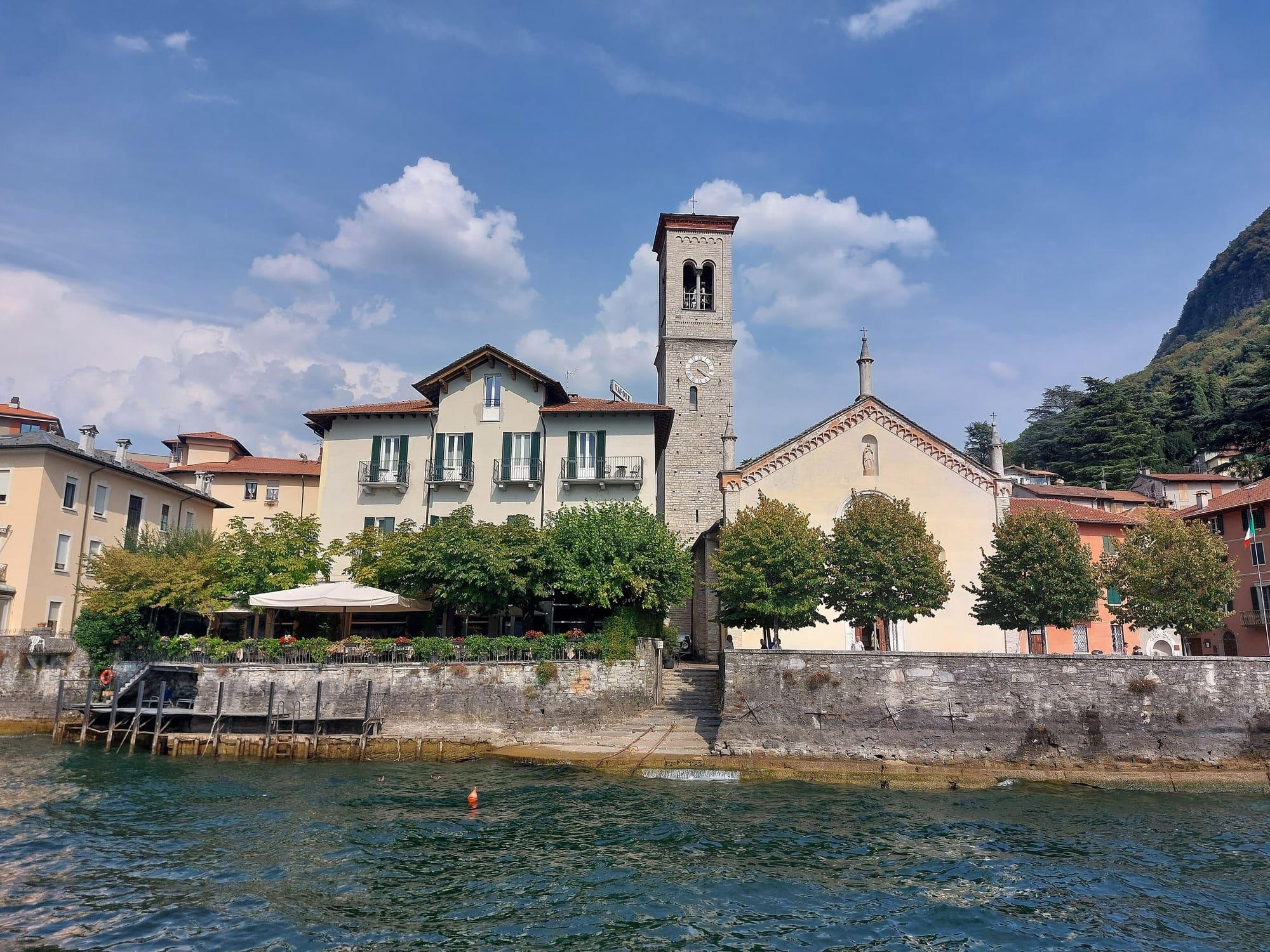
Torno
Two small harbours, the church of San Giovanni with its Romanesque bell tower, and Villa Pliniana just outside the village.
30 min
Sources and credits
- Maps, parking, services and distances: © OpenStreetMap contributors (ODbL).
- Train times: open data of the Lombardy Region, as of 1 October 2026.
- Freely licensed photographs: authors and licences under Photograph credits.
Sources and credits
- Maps, parking, services and distances: © OpenStreetMap contributors (ODbL).
- Train times: open data of the Lombardy Region, as of 1 October 2026.
- Freely licensed photographs: authors and licences under Photograph credits.