The Triangle
Nesso
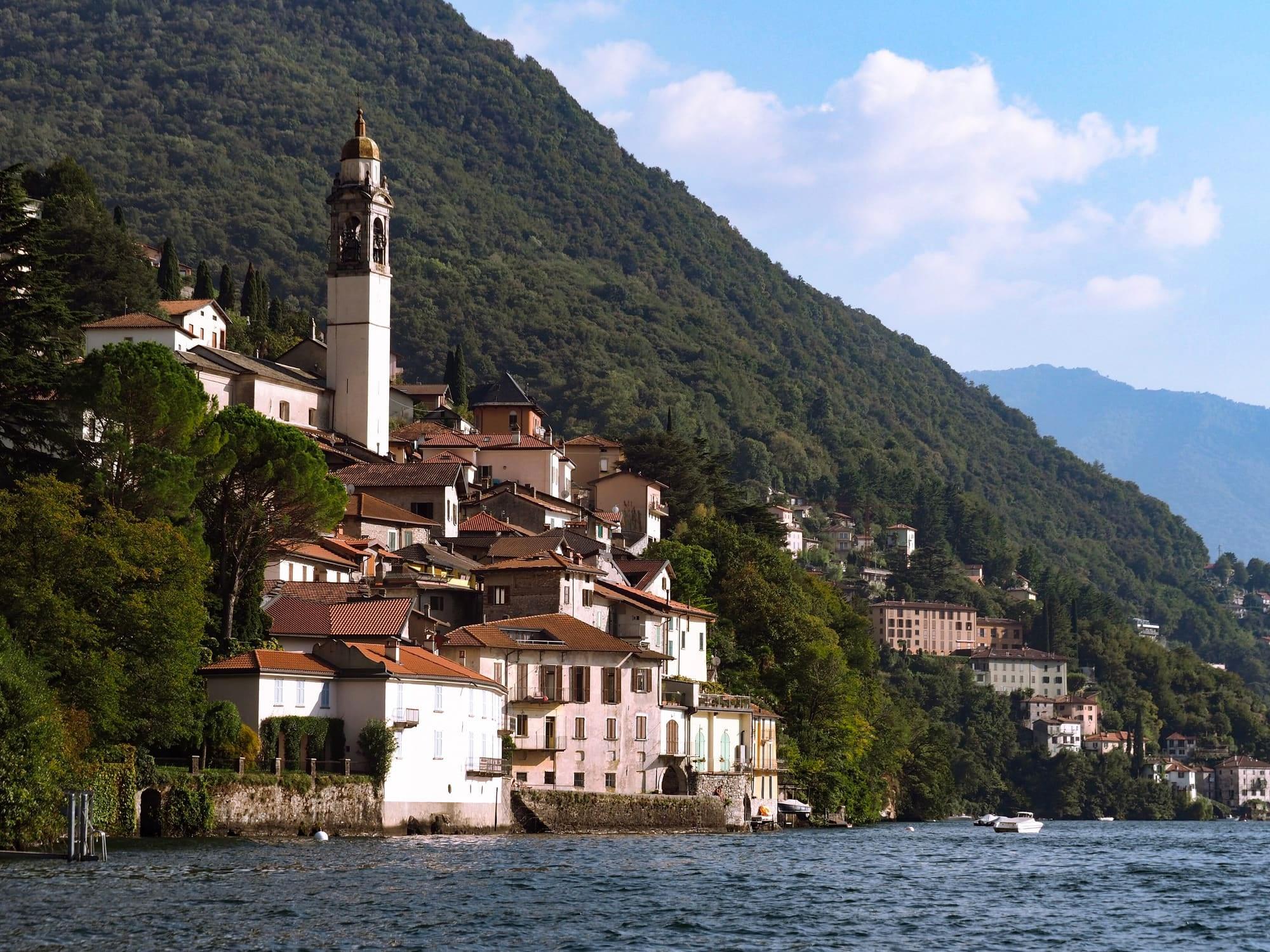
A village split in two by a waterfall, with a stone bridge where the water meets the lake.
The mountains between the lake's two branches: trails, the Ghisallo and the gorges.
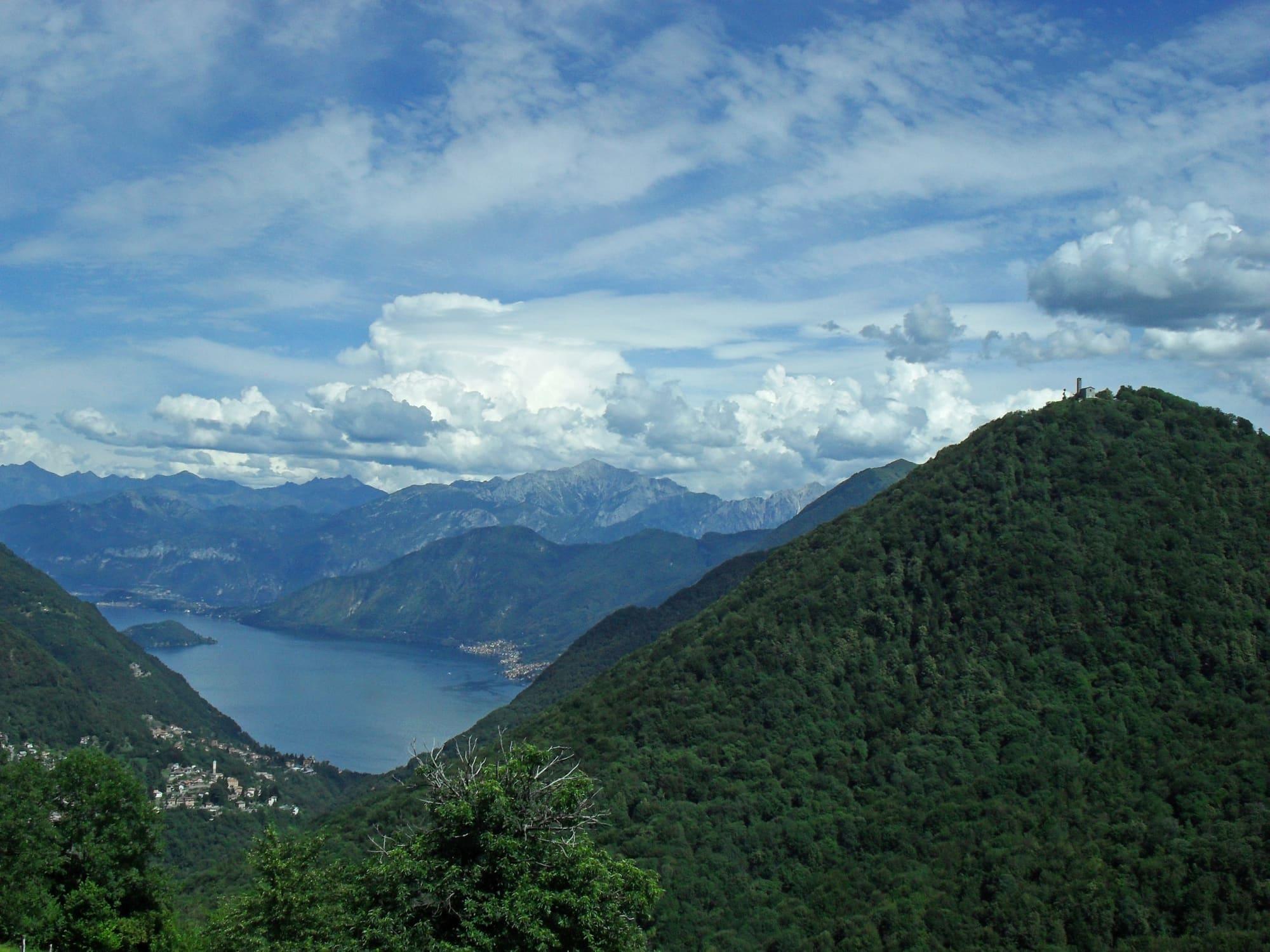
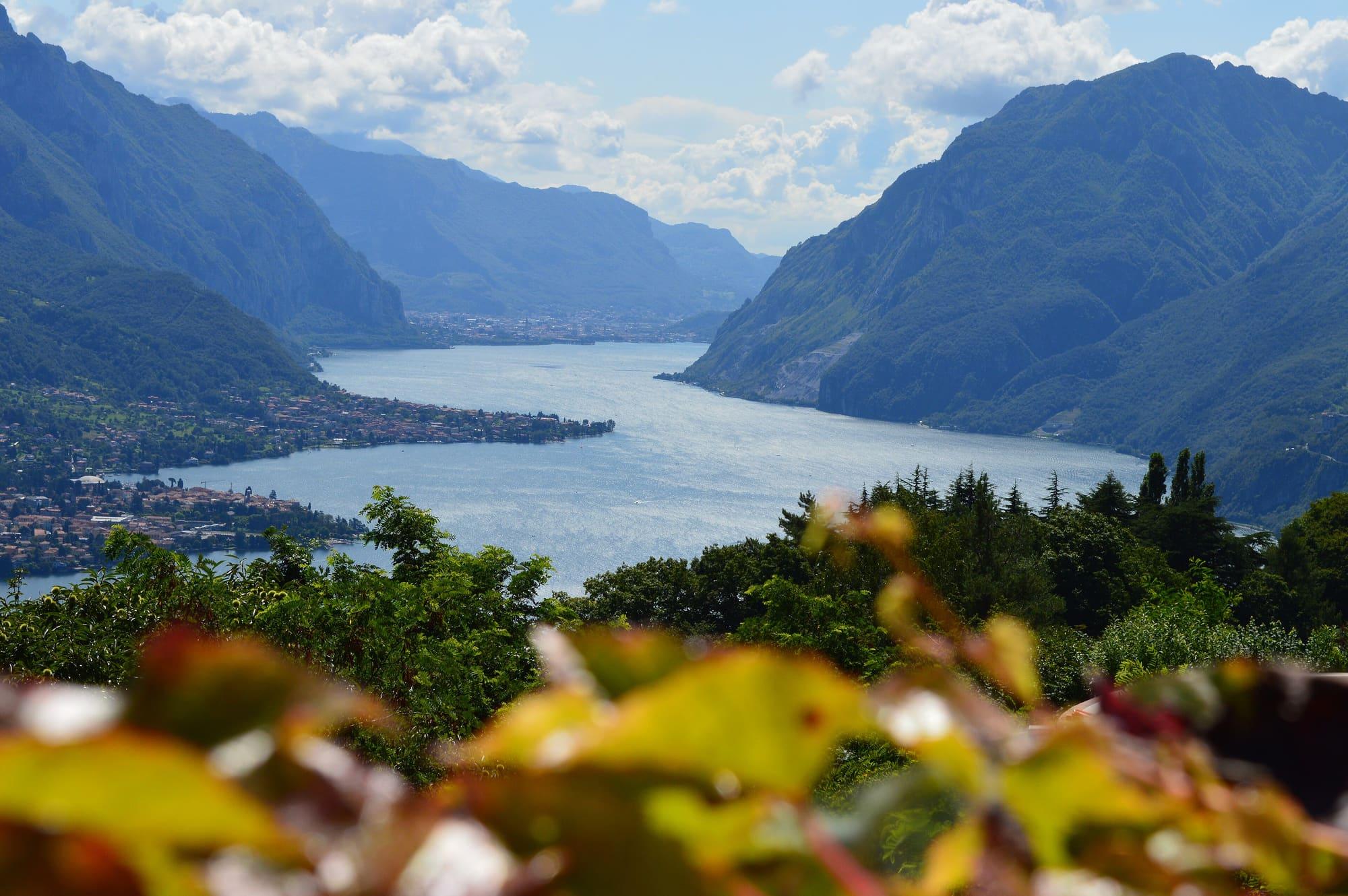
The Triangolo Lariano is the mountain country between the Como and Lecco branches, with Bellagio at its tip: a wooded upland rising to the 1,682 metres of Monte San Primo.
It draws cyclists, whose chapel is the Madonna del Ghisallo, and walkers who want the mountains while staying half an hour from the lake.
Woods, pastures and mountain roads link Bellagio to the inland villages and the trails of Monte San Primo.
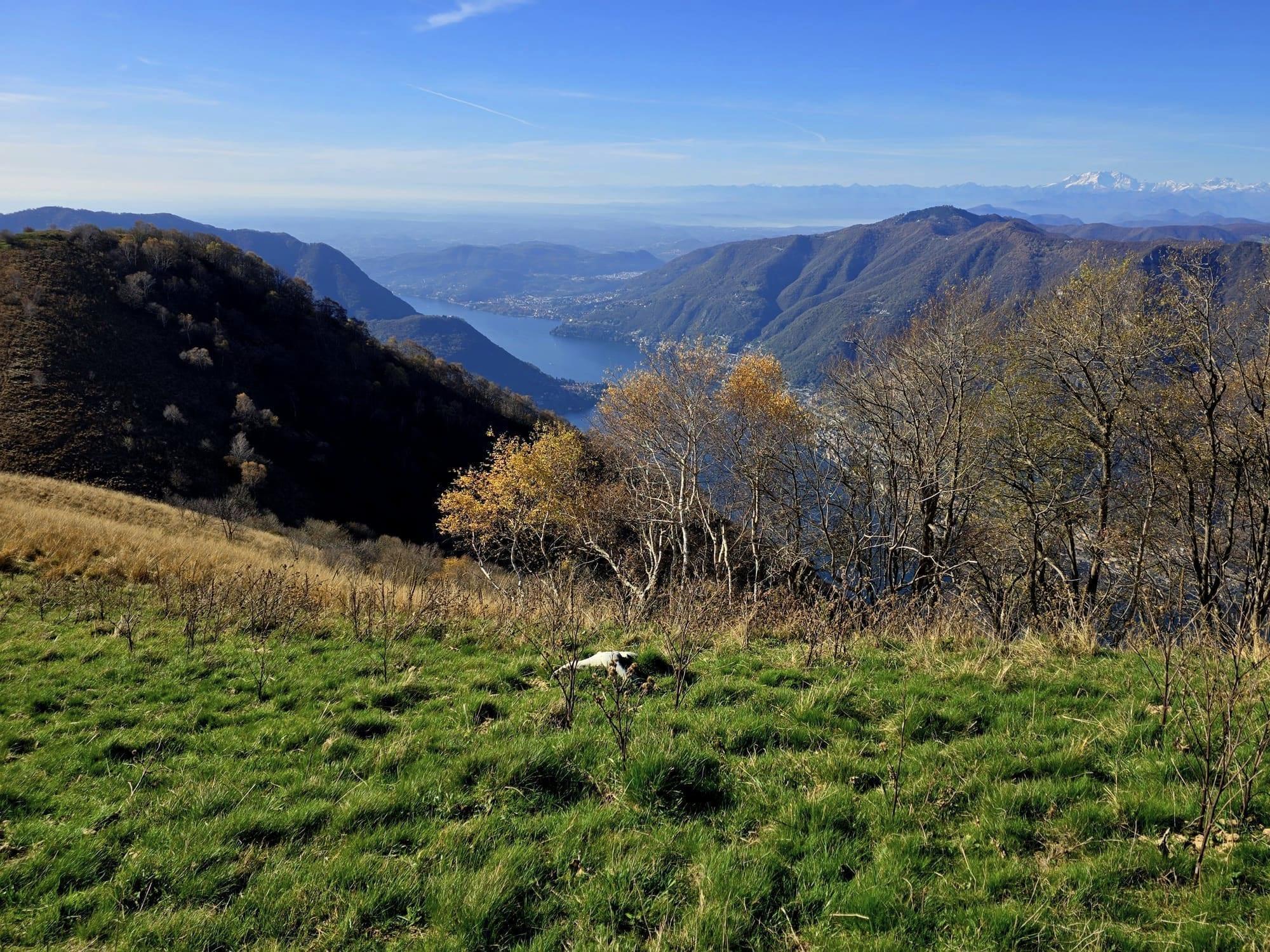
Chestnut woods, high meadows, the gorge that splits Nesso in two and, from San Primo, a view over both branches and the upper lake.
© OpenStreetMap contributors · ODbL
A village split in two by a waterfall, with a stone bridge where the water meets the lake.
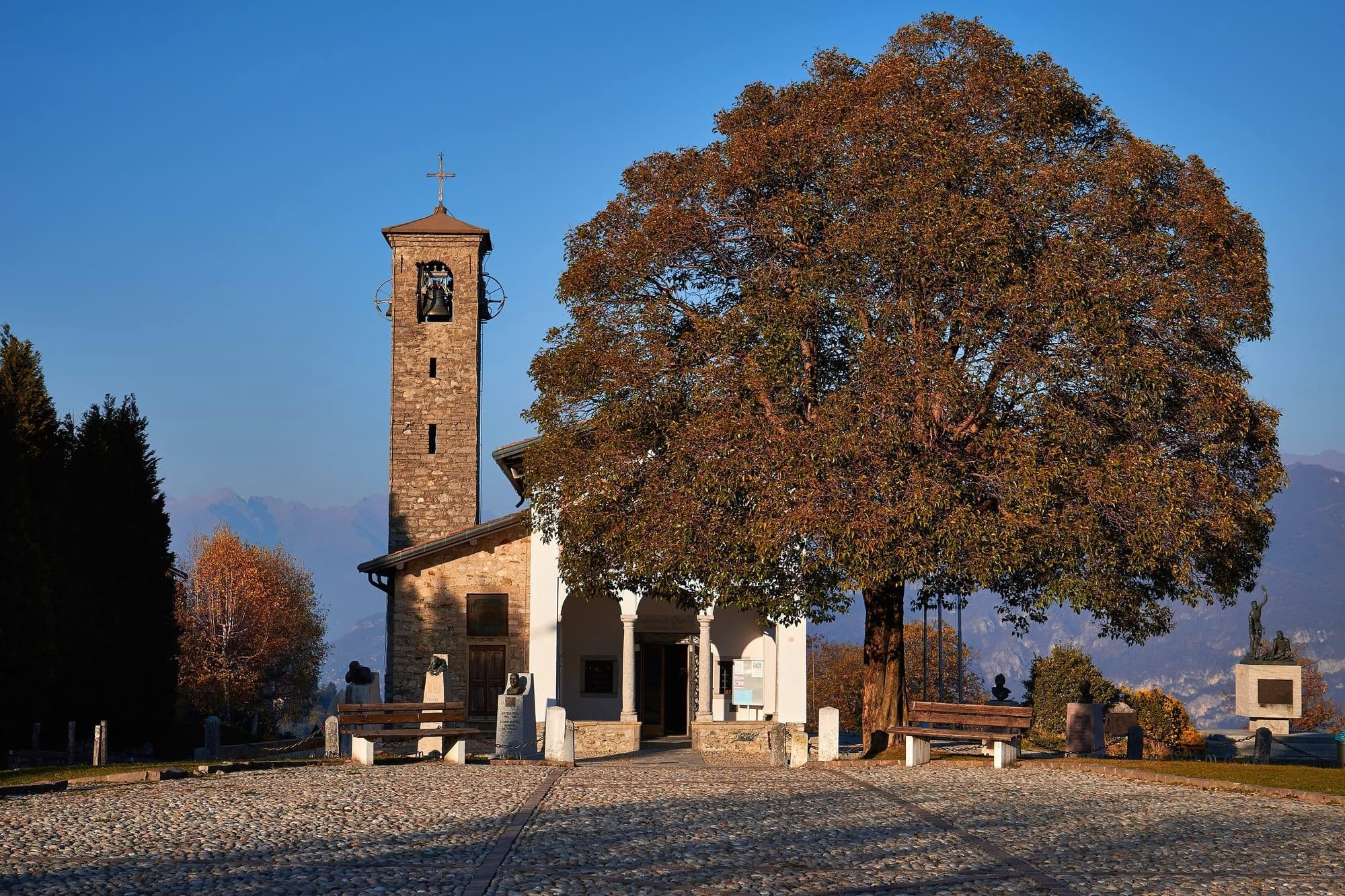
The Ghisallo village: the chapel and the bicycle museum are here.
The Muro: 1,700 metres averaging 17%, with the altitudes painted on the road.
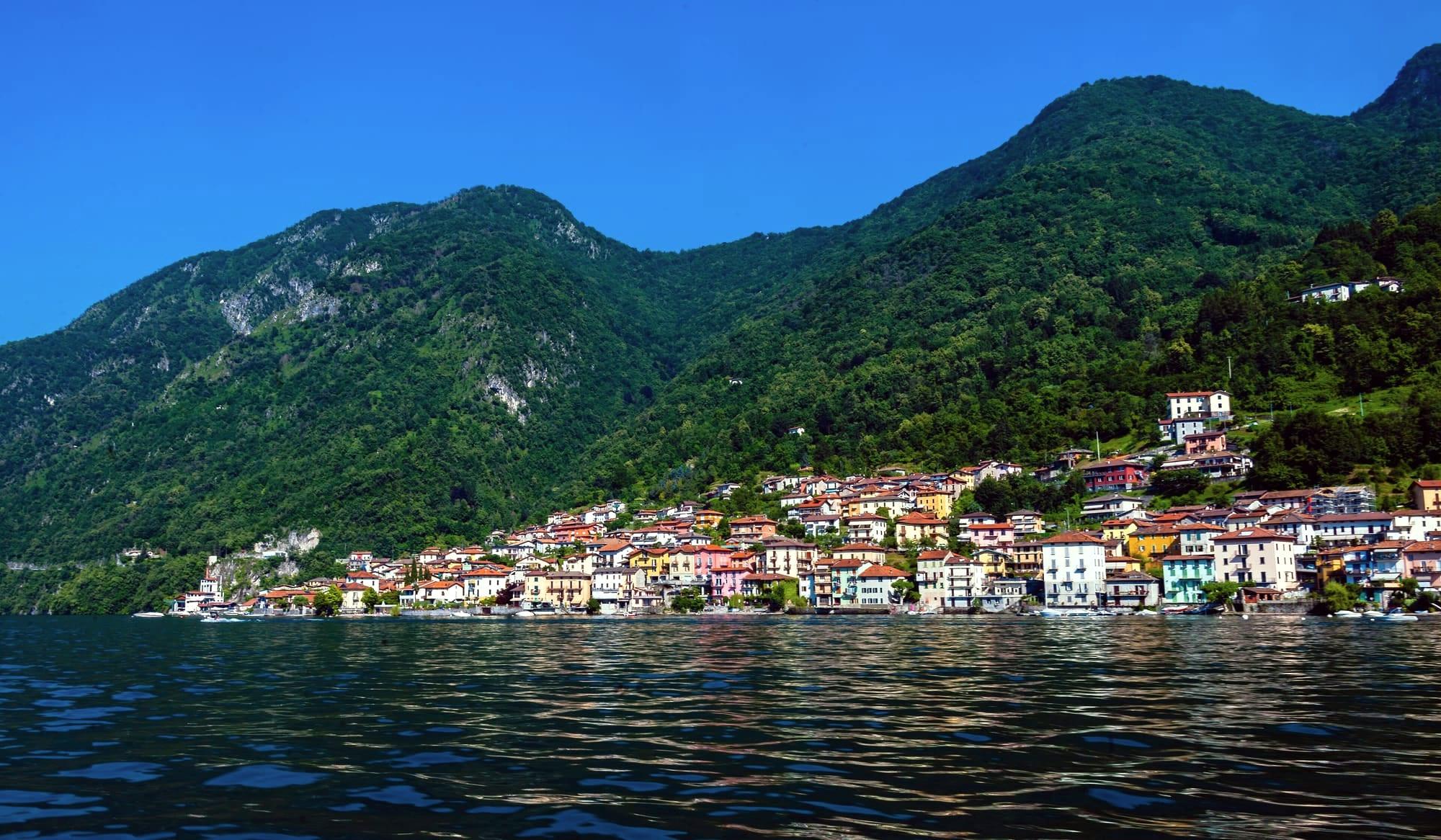
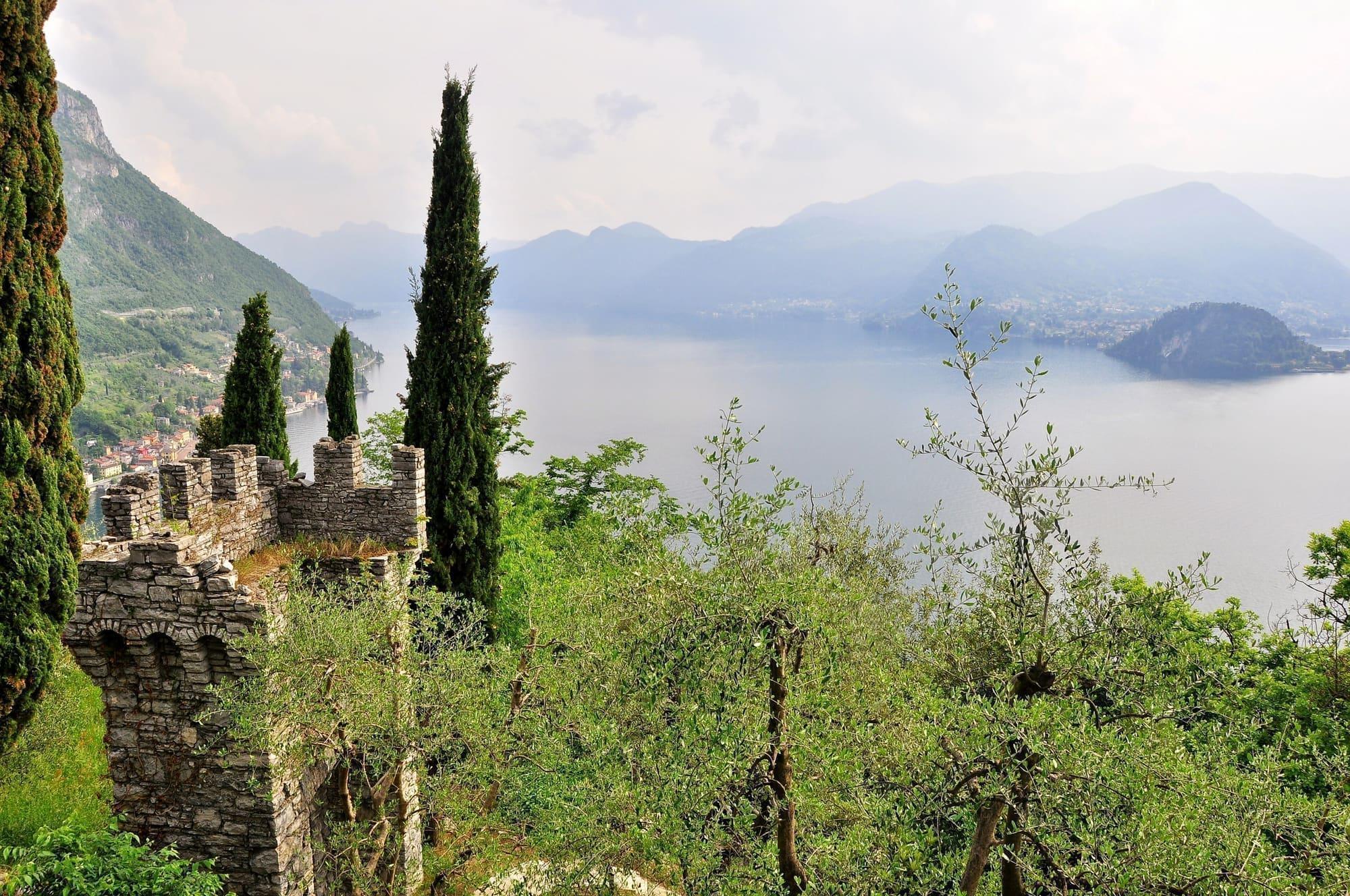
Seventeen hamlets strung out for more than seven kilometres along the eastern shore, from the Cavagnola point towards Bellagio, facing the Isola Comacina: a parish church with a Roman inscription in its bell tower, the tower of Rozzo and, towards Bellagio, the sheer walls of the Sassi Grosgalli, with a cave you can only visit by boat.

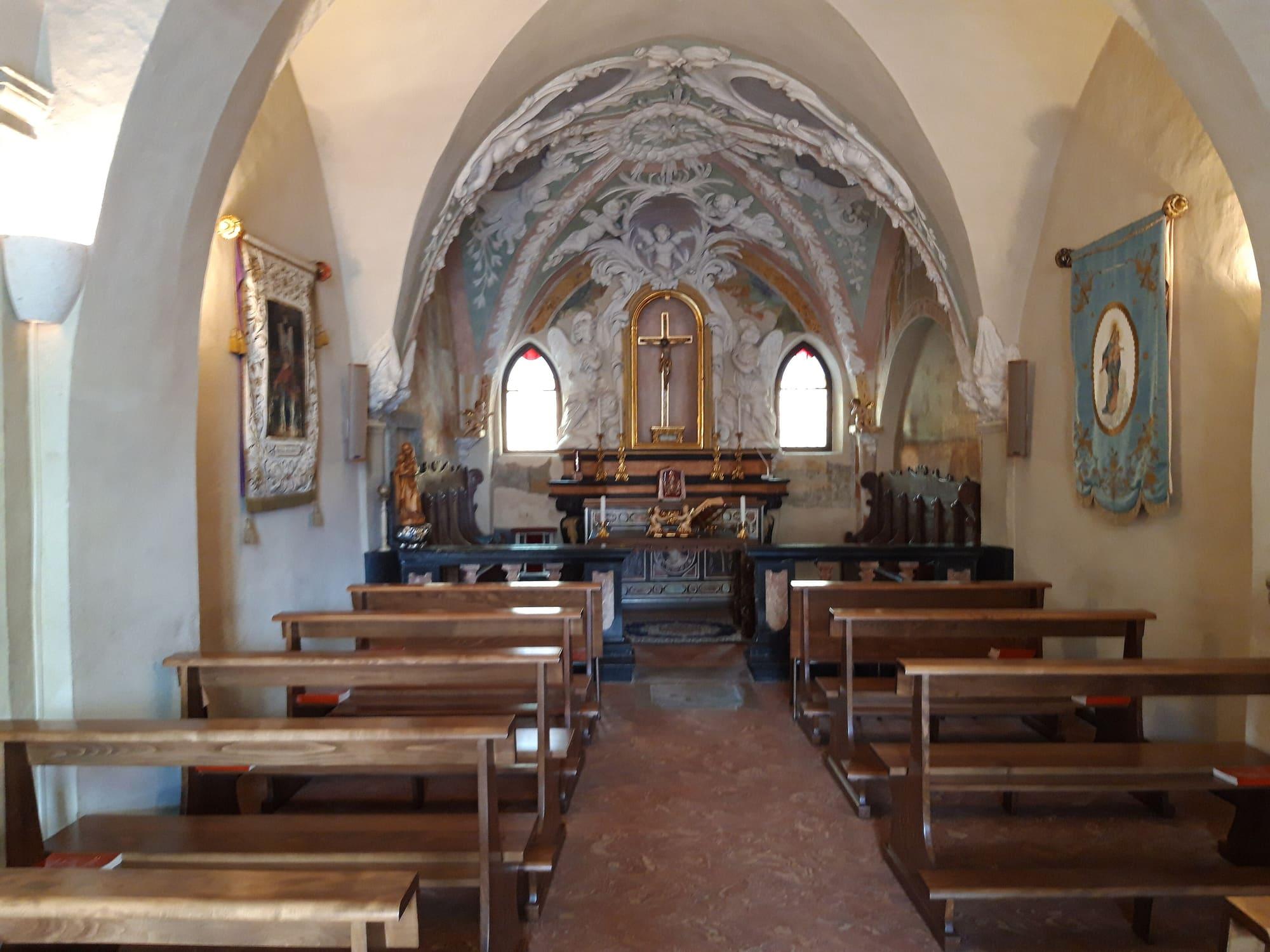
The two-storey seventeenth-century sanctuary on a rock above the lake, at the border with Bellagio: the monk Roberto Rusca founded it in 1606, and two painters from Como frescoed its upper room with the life of the Virgin.
15–40 min
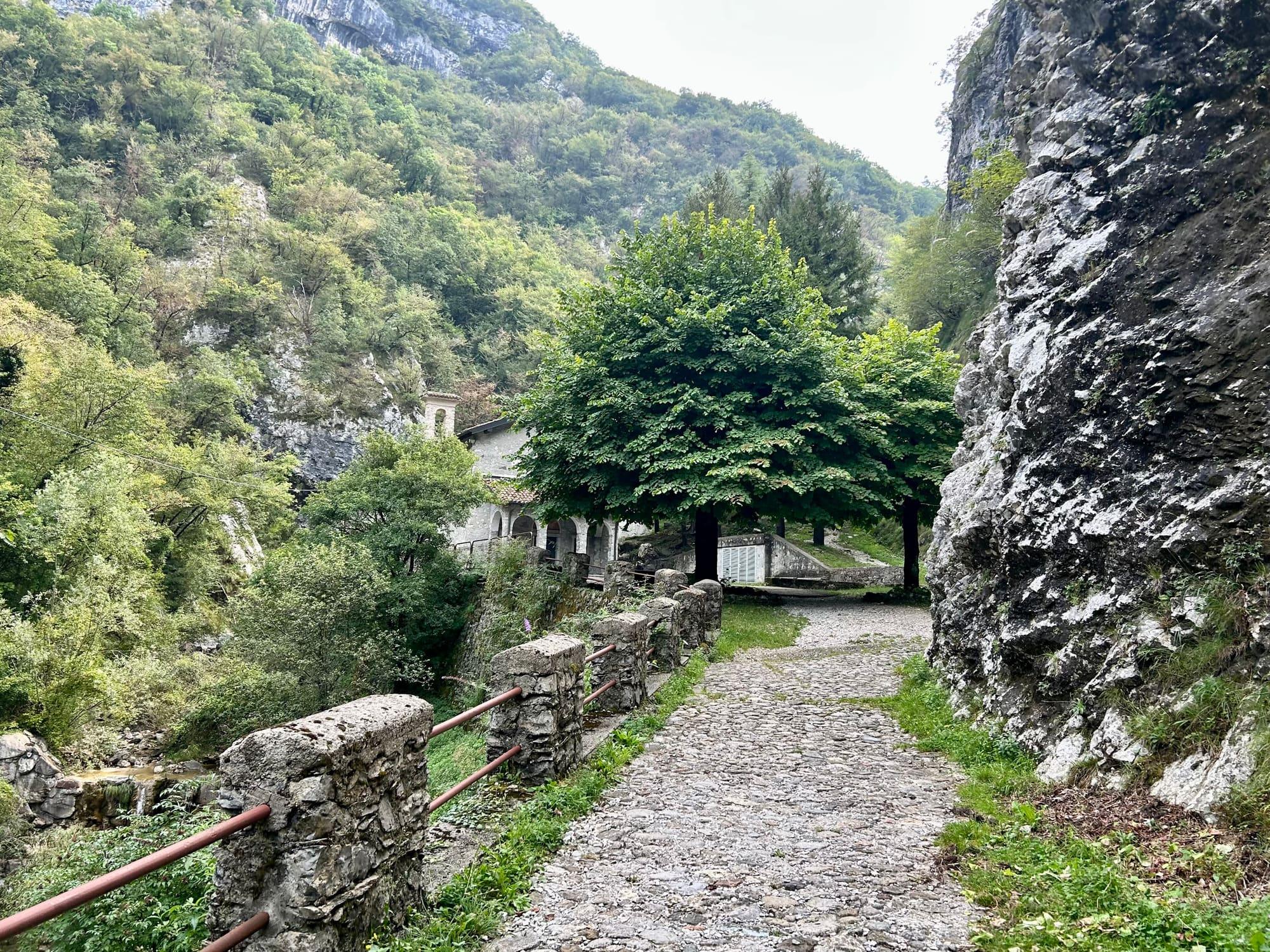
A small seventeenth-century church with its little hermits' convent in the gorge of the Val Ravella above Canzo, where by tradition Saint Miro lived: reached on foot from the Fonti di Gajum.
1 h – 2 h
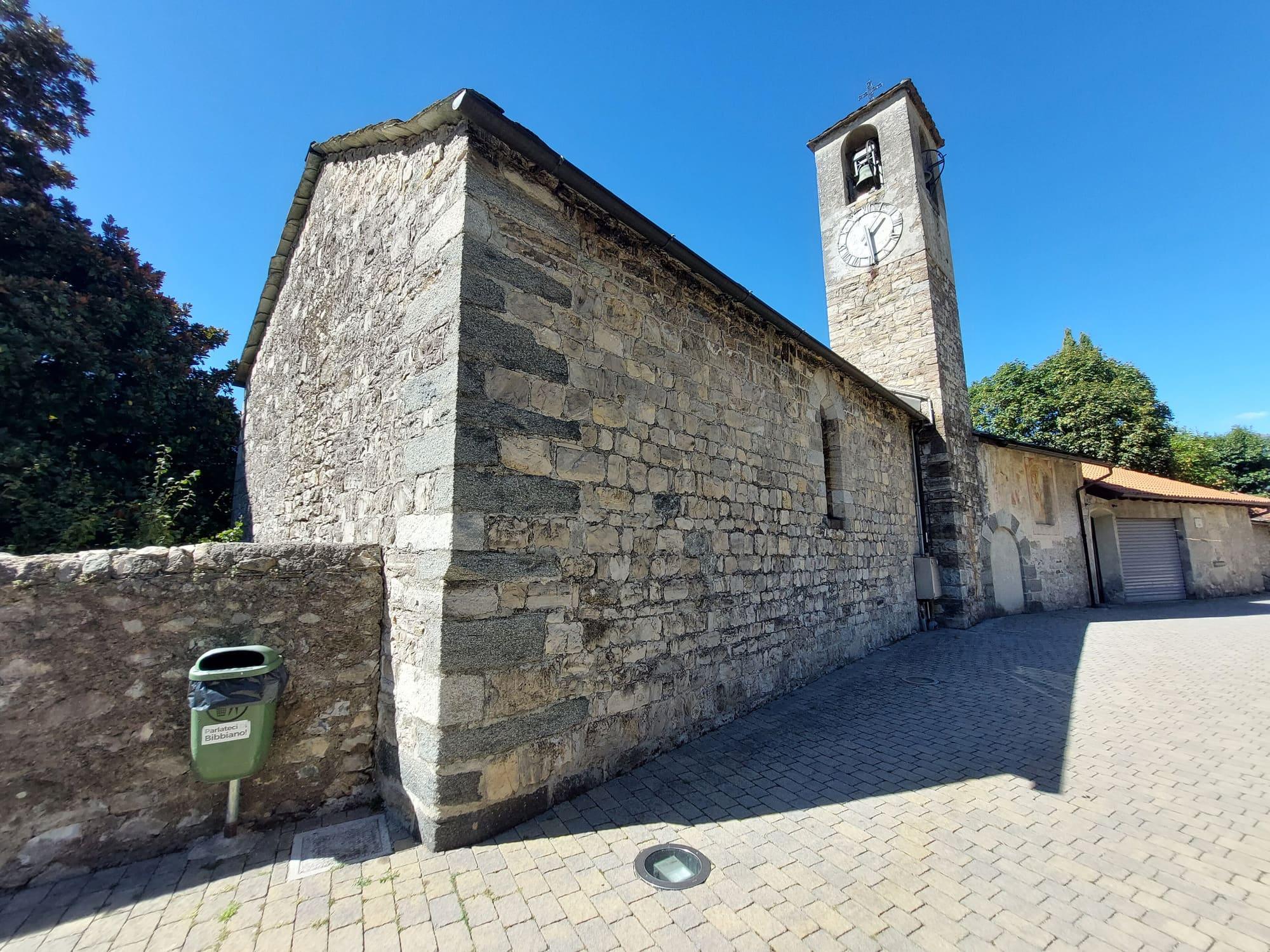
The Romanesque church of the Vico hamlet, above Nesso, already named in 1184: inside, saints painted around 1300 and Bartolomeo de Benzi's polyptych of the Assumption, from 1500.
15–30 min
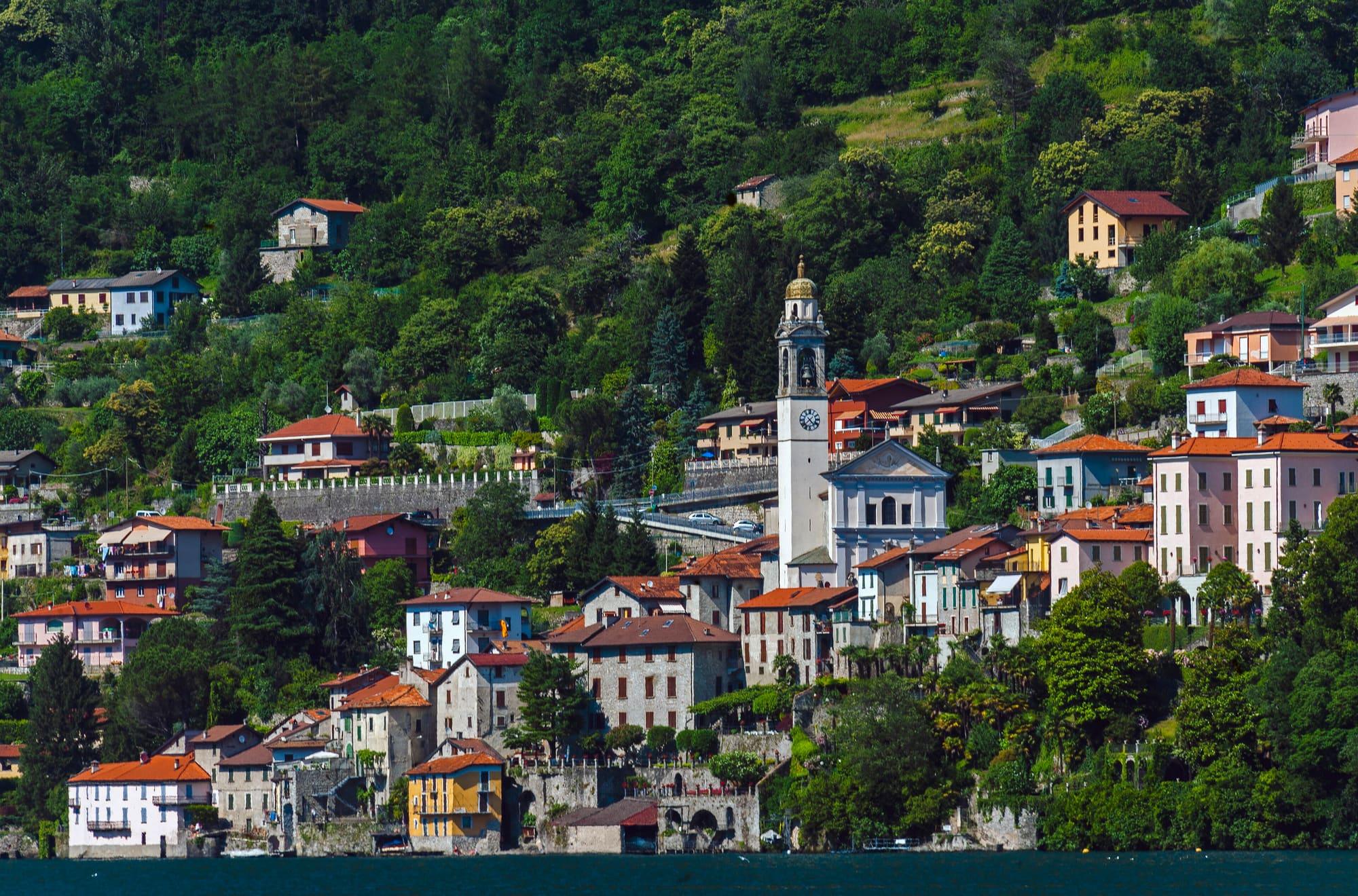
The mother church of the old pieve of Nesso, a few metres from the lake, which the village calls the duomo: rebuilt in Baroque style from 1632, with its bell tower of 1538, frescoed chapels and the supposed remains of Bishop Rainaldo.
15–30 min
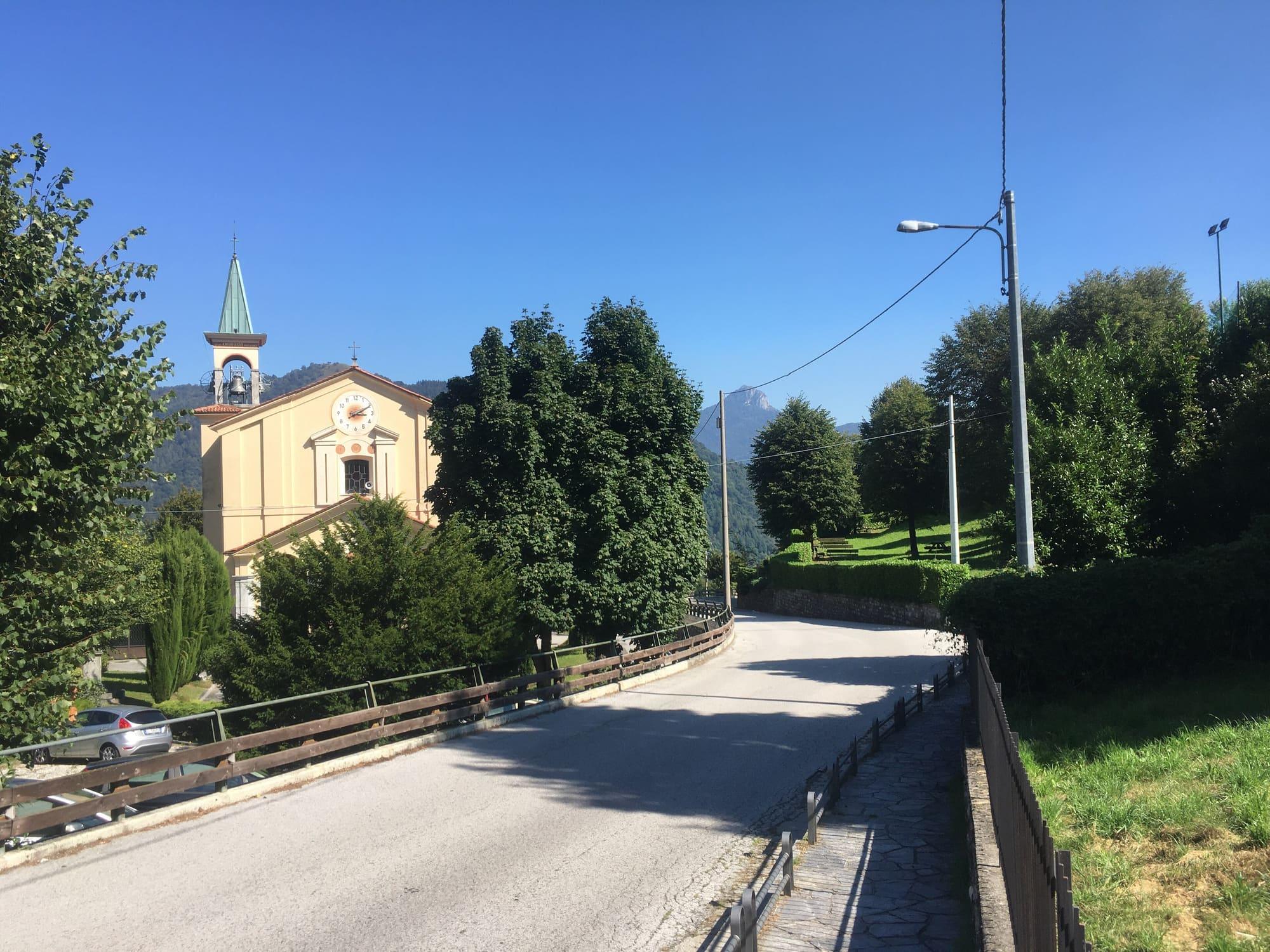
Sormano's parish church, rebuilt from 1677, with an elliptical nave, two porticoes on the façade and decoration by Carlo Inganni and Nino Nespoli.
15–30 min
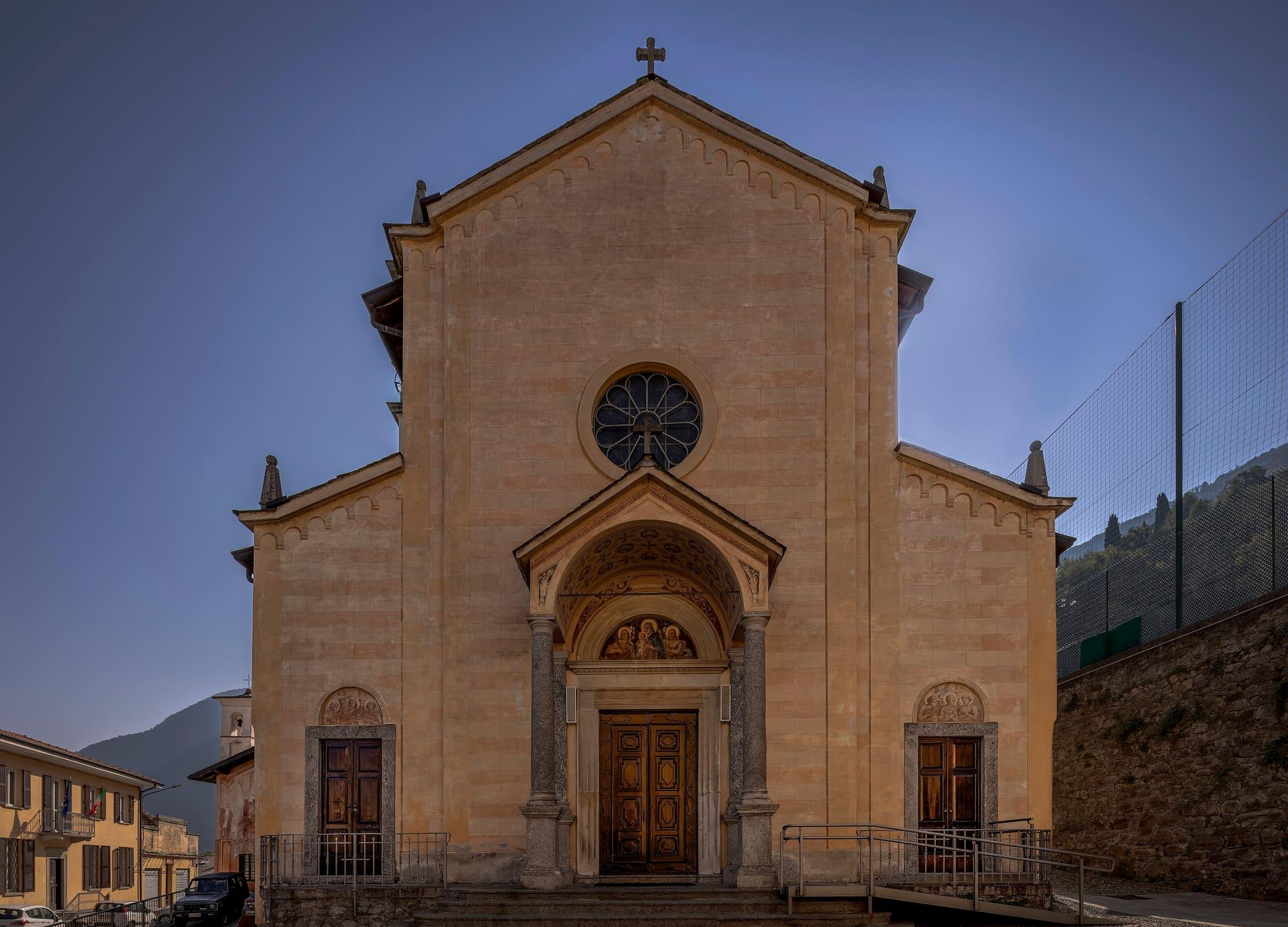
Lezzeno's parish church, between Nesso and Bellagio, with its portal dated 1520 under the porch, Giulio Quaglio's paintings in the presbytery and a Roman inscription at the foot of the bell tower.
15–30 min
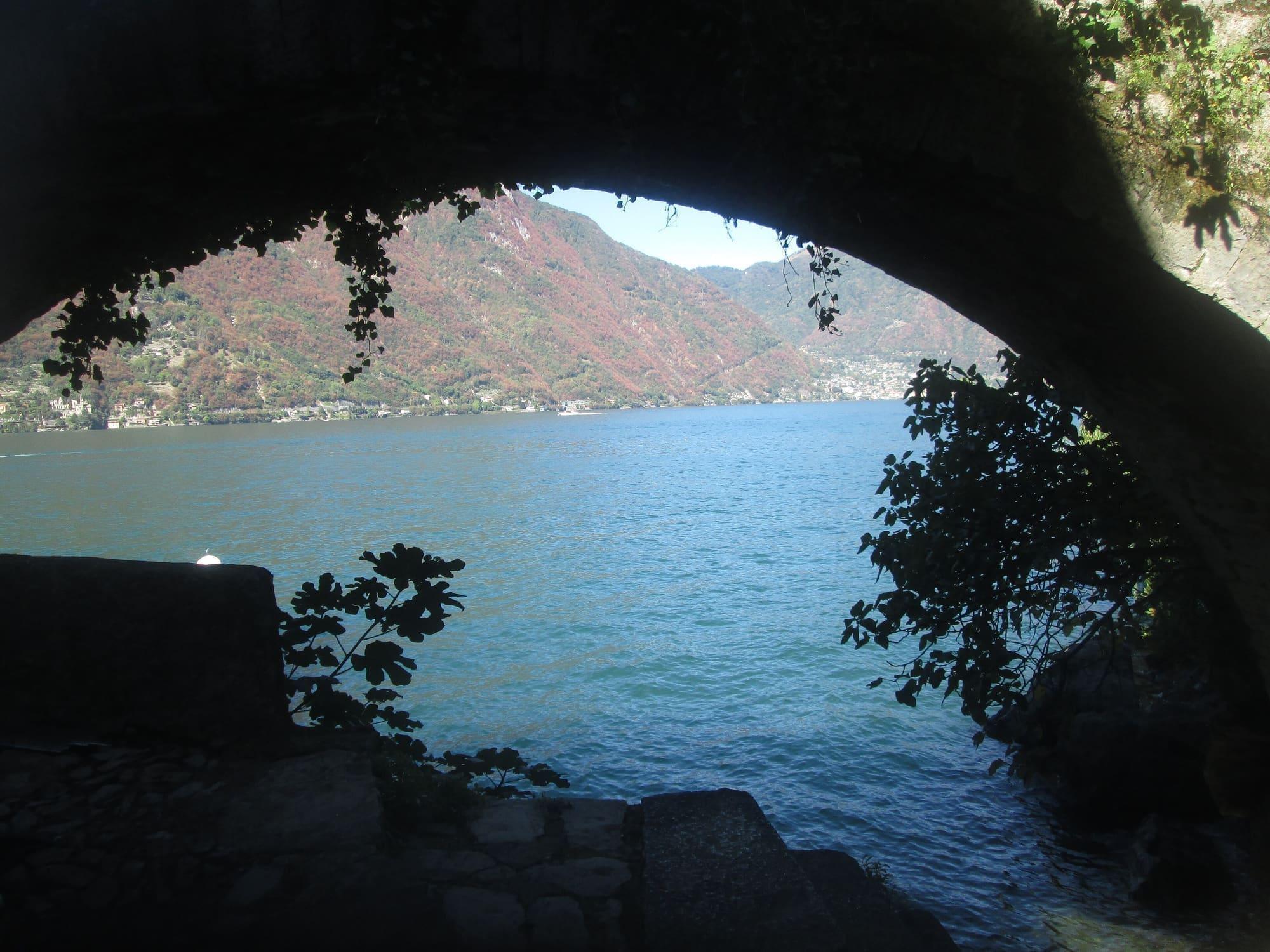
A waterfall entering the lake under a stone bridge, at the bottom of three hundred steps.
45 min – 1 h 30
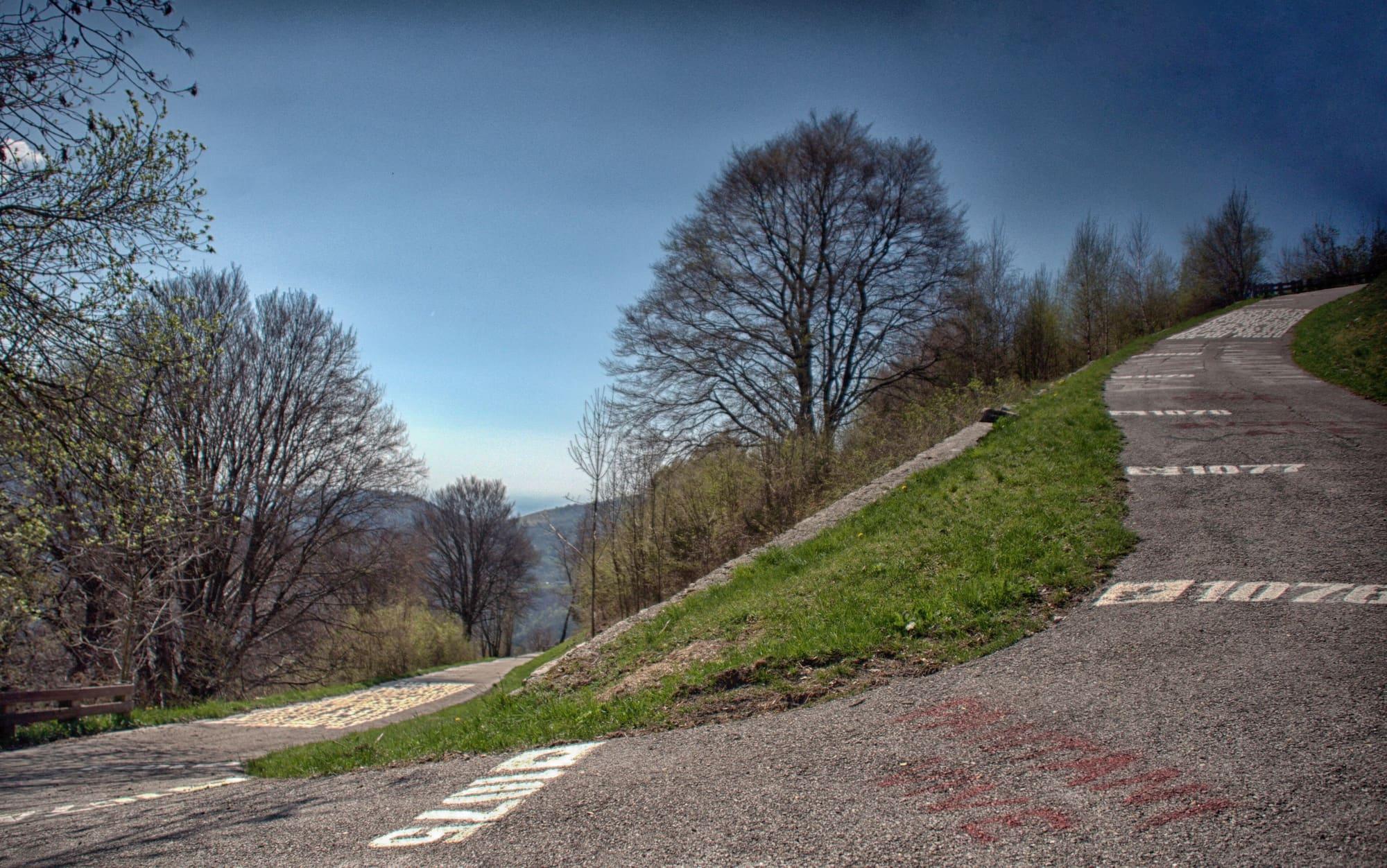
The Sormano Wall, the cycling climb from Sormano to the Colma, closed to cars: the Giro di Lombardia dropped it after 1962, amid the riders' protests, and later took it back.
30 min – 1 h 30
The Triangle
Ten kilometres from Bellagio up to the cyclists' chapel.
2 h – 5 h12.7 km · +664 m
The Triangle
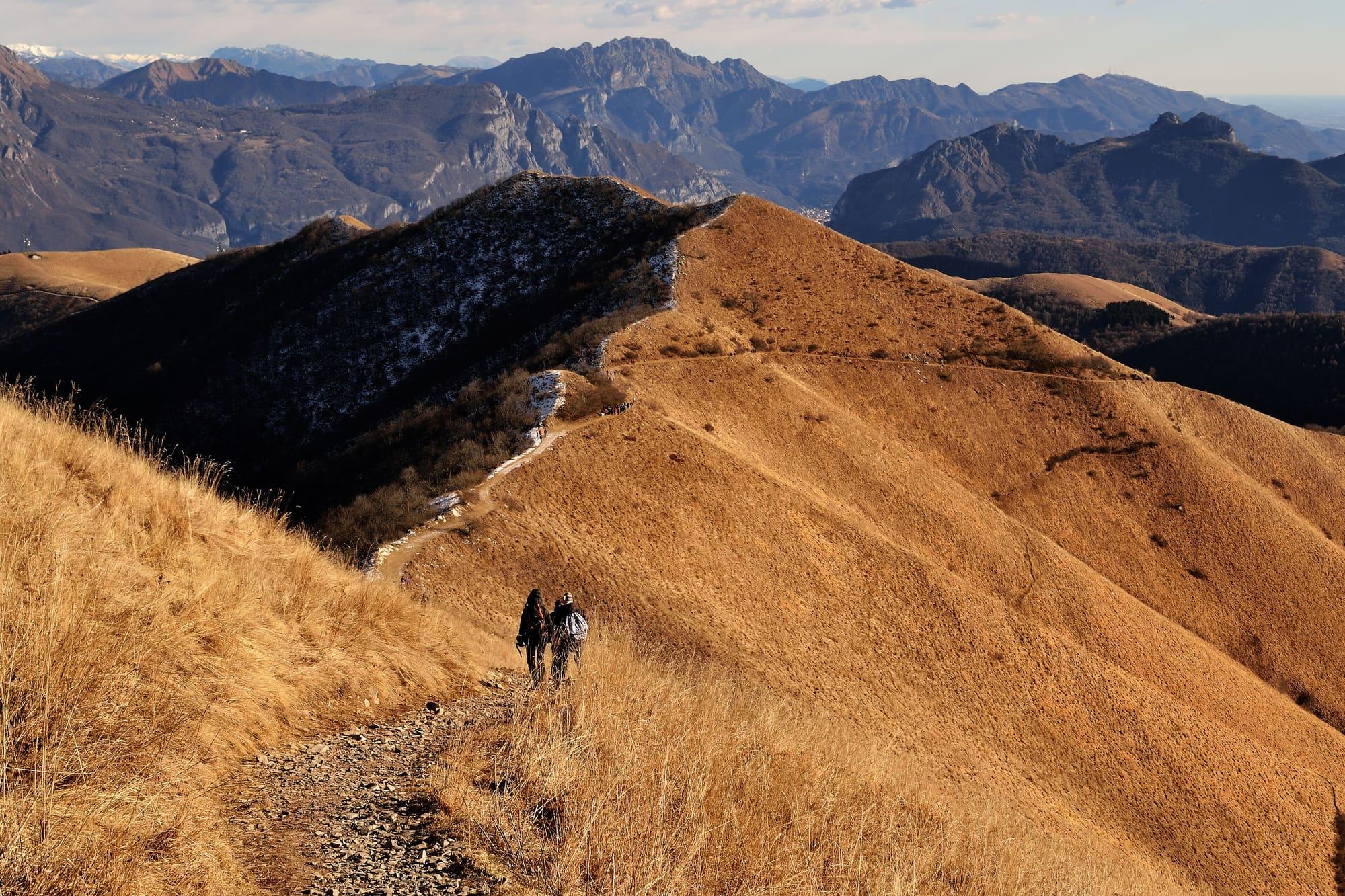
The seventeen-and-a-half-kilometre loop from Civenna to the highest summit of the Triangolo Lariano, 1,682 metres, with the view over both branches of the lake: the seventh Bellagio Trekking route, March to November.
5 h – 6 hCar neededOpen access
The Triangle
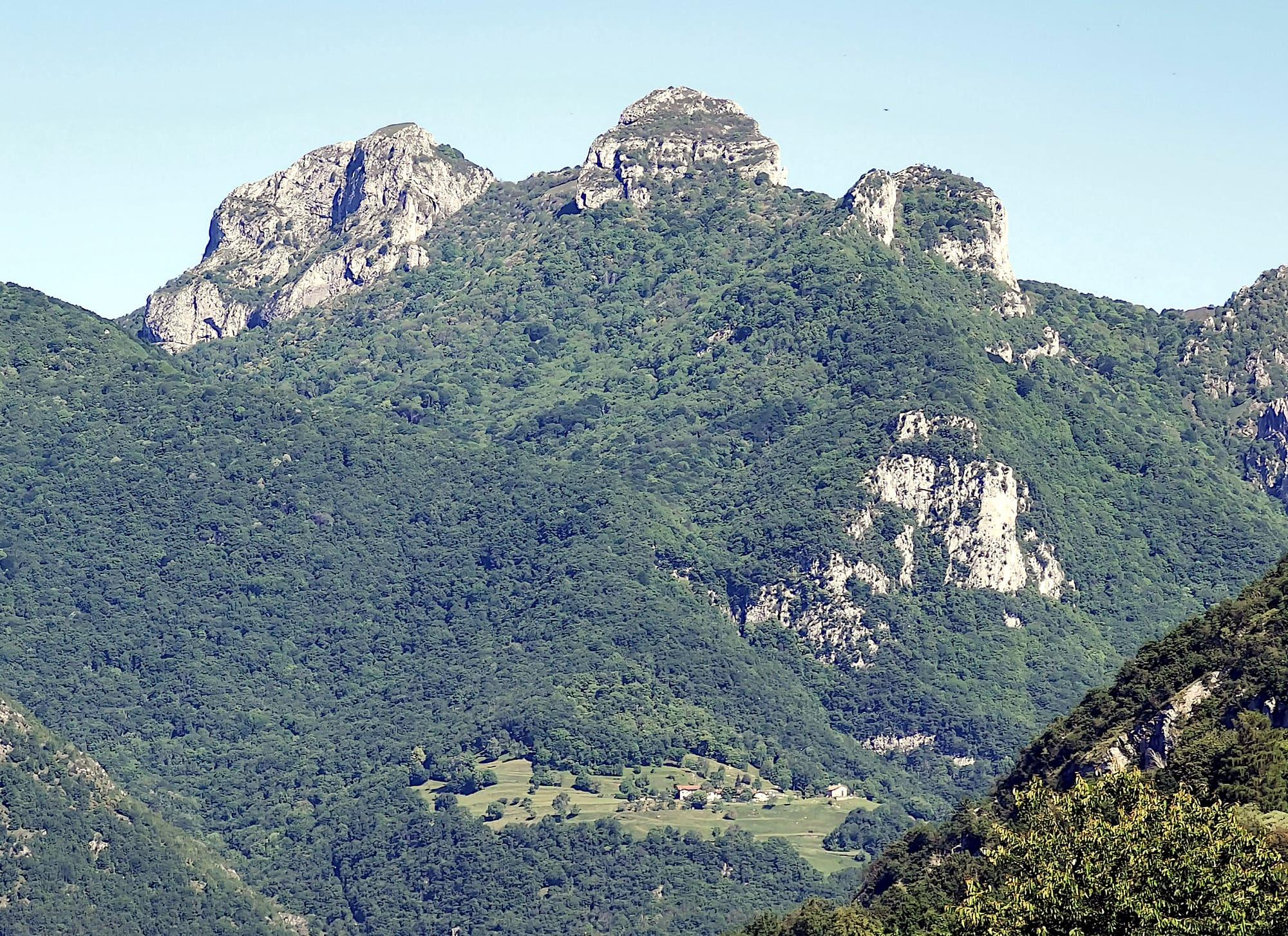
The three limestone summits of the Triangolo Lariano: from Valmadrera by the Sambrosera spring to the Rifugio SEV at Pianezzo and on to the horns, or from Canzo by the Fonti di Gajum and ERSAF's regional forest.
5 h – 7 hOpen access
The Triangle
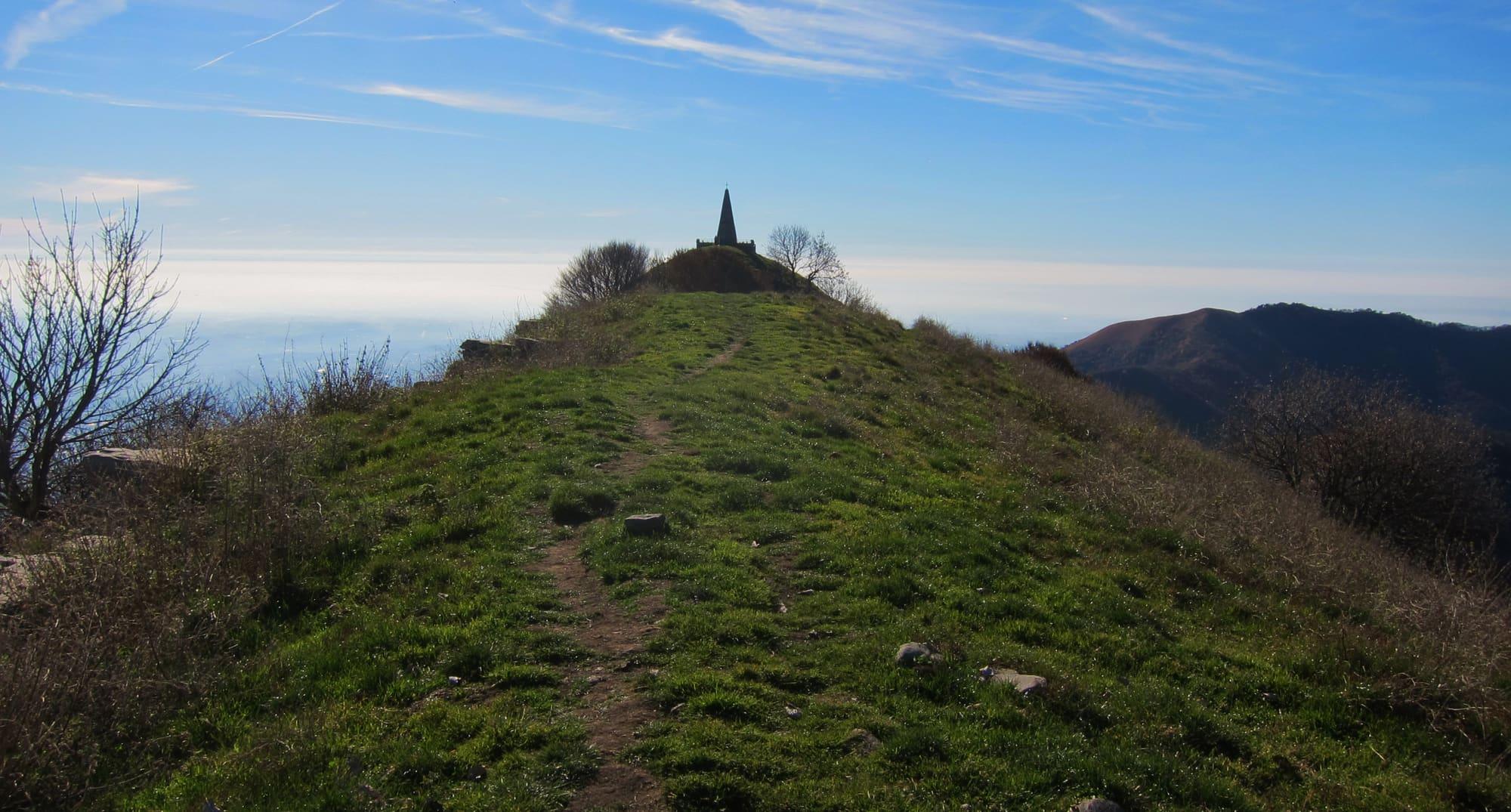
The second summit of the Triangolo Lariano, 1436 metres above Faggeto Lario, with its pyramid chapel on top: from Brunate along the Dorsale to the Bocchetta di Palanzo and the Rifugio Riella, and down to Palanzo.
5 h 30 – 7 hOpen access
21Nov
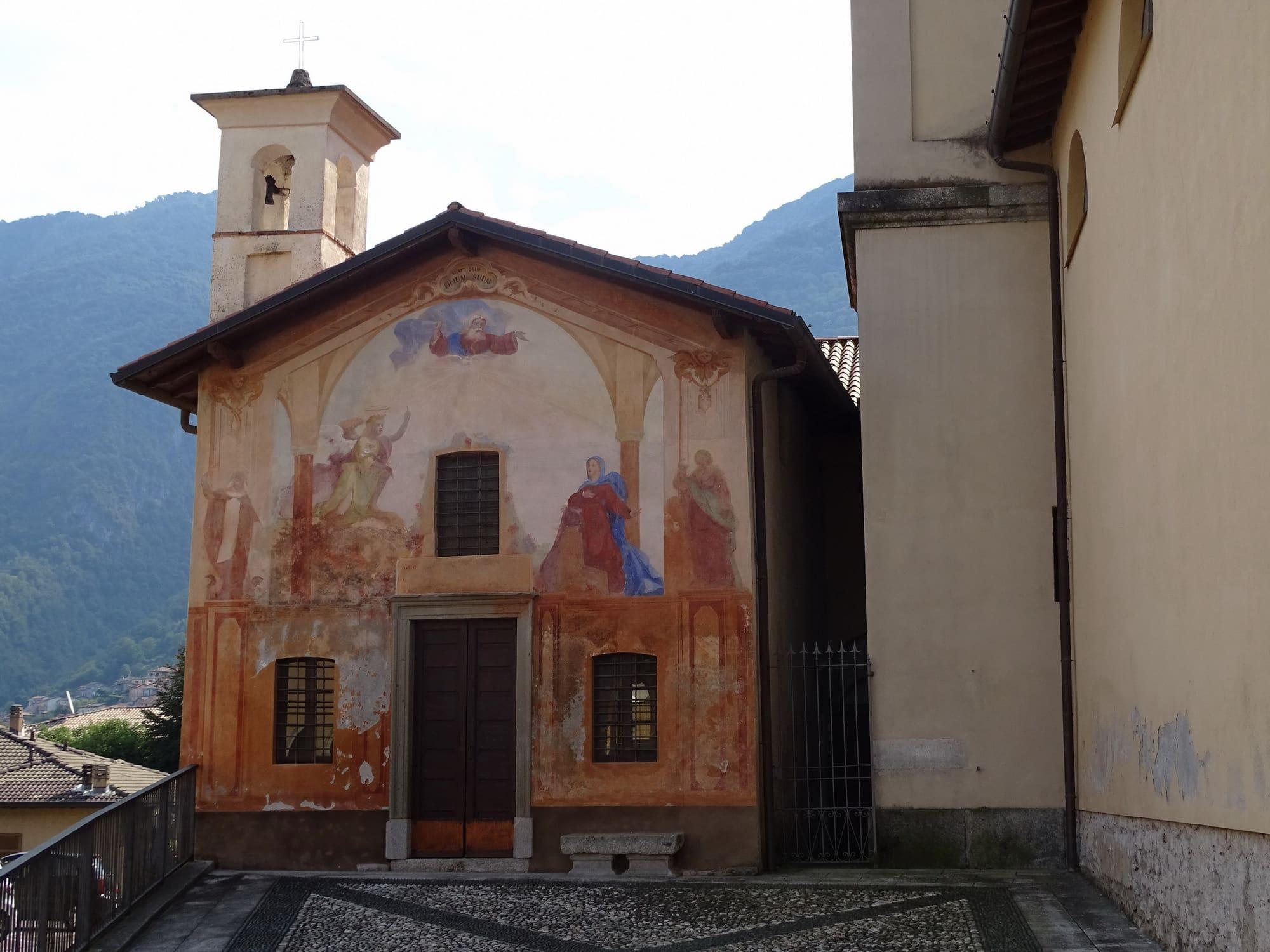
The village's Corpo musicale celebrates the patron saint of music.
13Dec
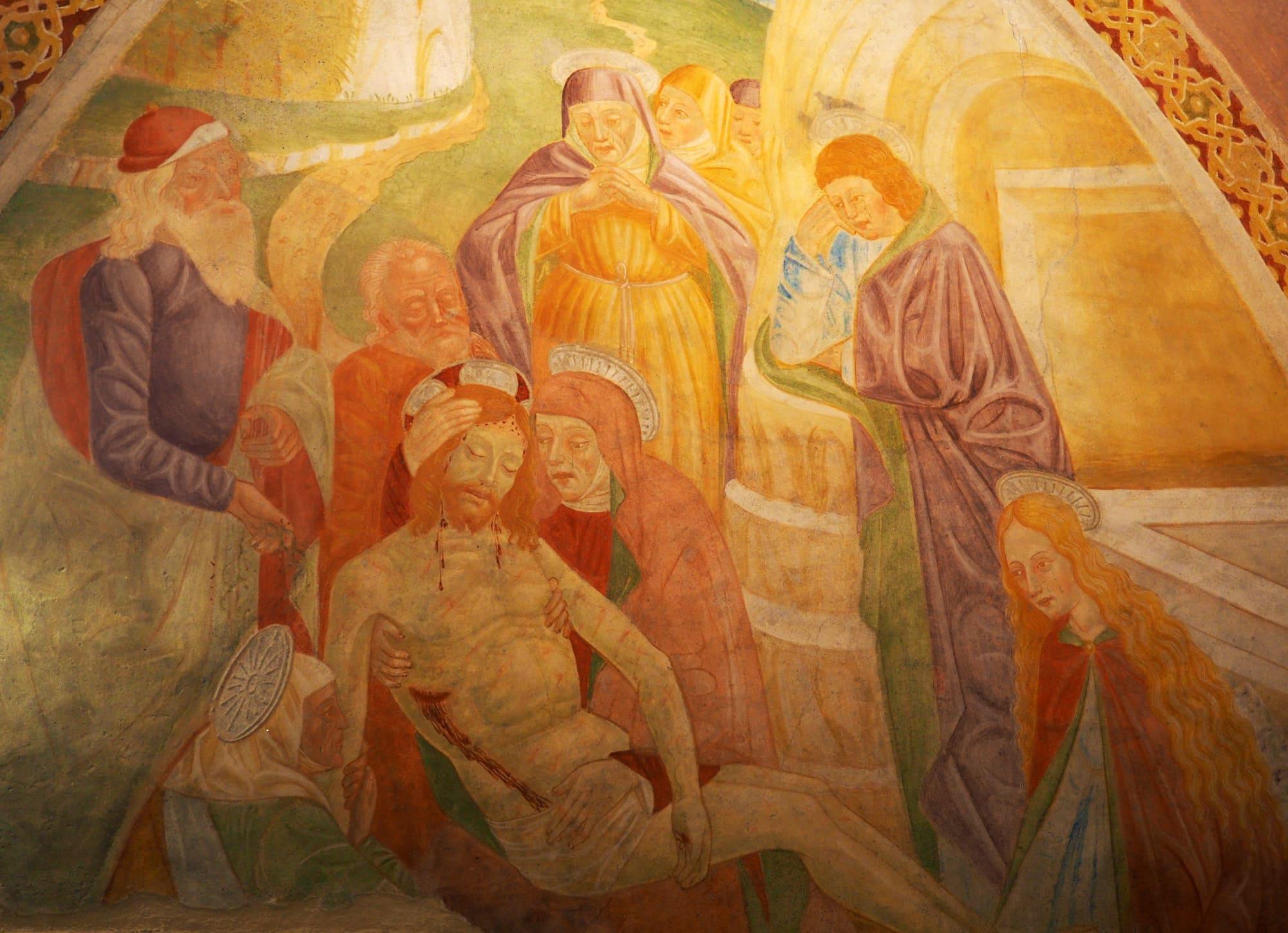
The hobbyists' Christmas market, in the village in December.
19Dec
The village's Corpo musicale plays for Christmas.
25Jul 2027
On the last Sunday in July Magreglio, the village of the Ghisallo, celebrates its patron saint with a fair on the church square and lunch in front of the church.
Indicative dates follow the annual recurrence and should be confirmed with the organiser.