Muro di Sormano
The Sormano Wall, the cycling climb from Sormano to the Colma, closed to cars: the Giro di Lombardia dropped it after 1962, amid the riders' protests, and later took it back.
30 min – 1 h 30
The Triangle
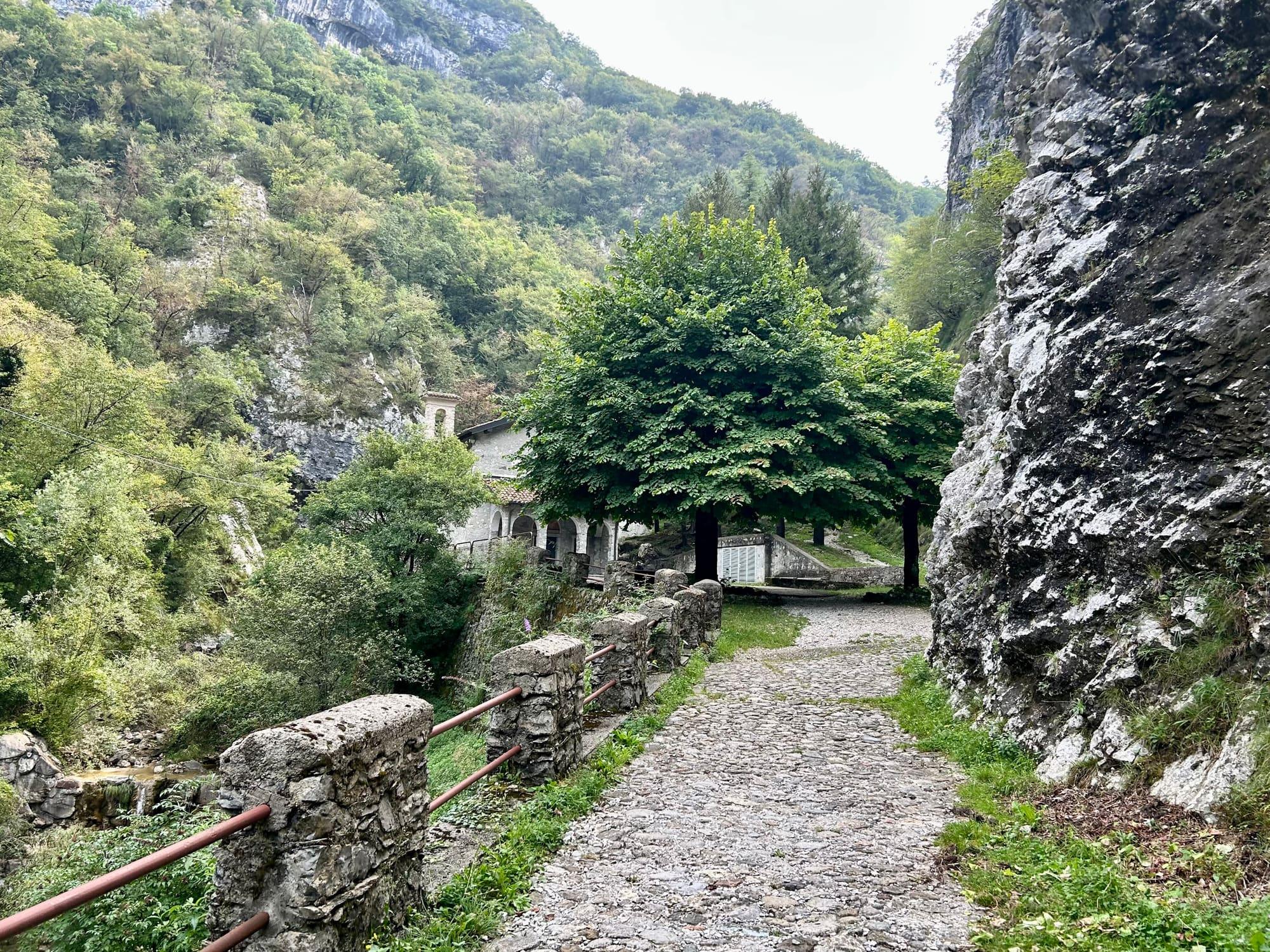
The Muro di Sormano is a very narrow service road climbing from the village to the Colma at 1,124 metres: some seventeen hundred metres long, three hundred of ascent, averaging around 17% with ramps beyond 25%.
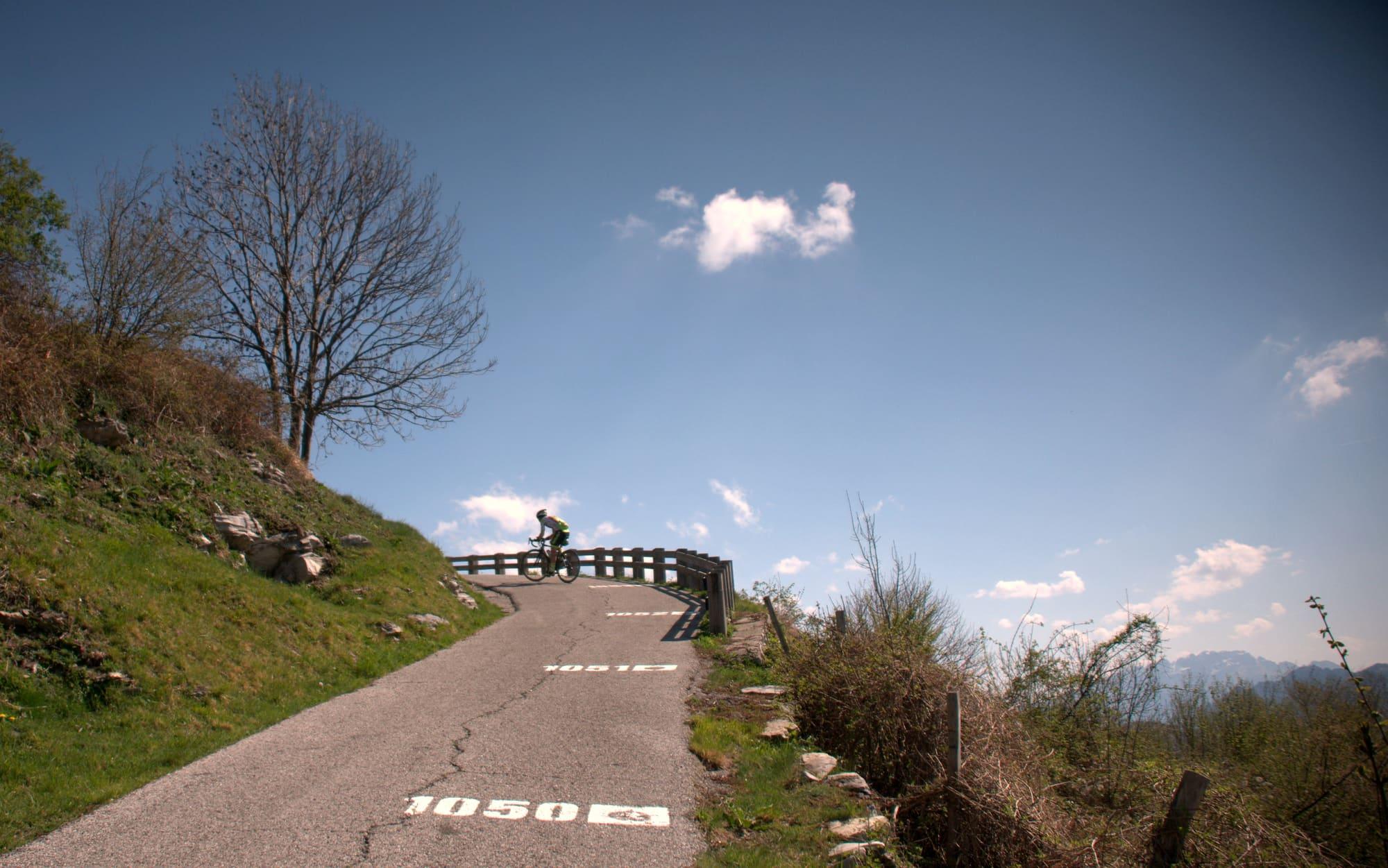
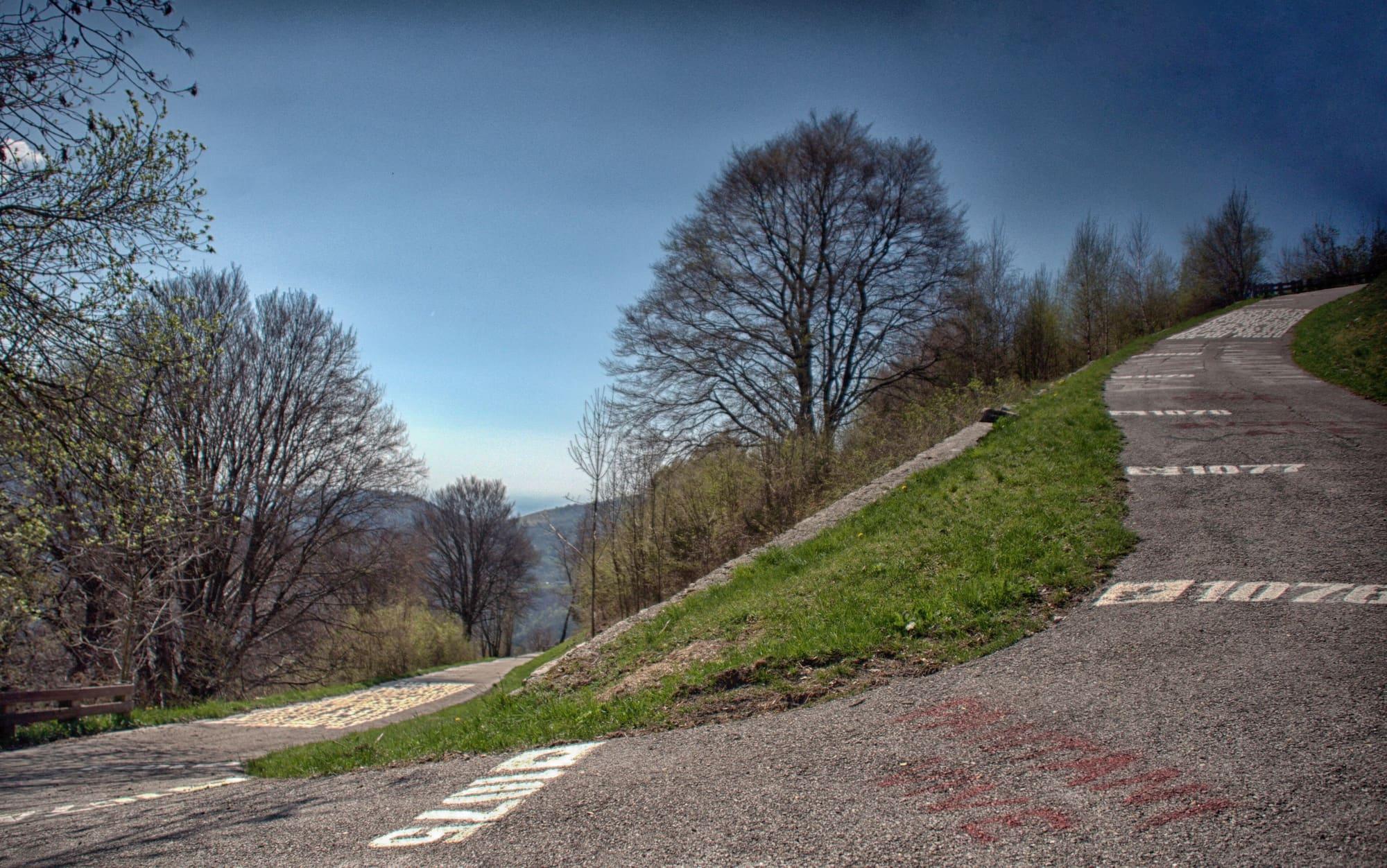
Opened in 1960 and used immediately in the Giro di Lombardia, it was dropped after 1962, resurfaced in 2006 and put back into the race from 2012. The altitudes are painted on the tarmac, metre by metre.
The Muro di Sormano starts just above the village and climbs to the Colma at 1,124 metres: about 1,700 metres of road with nearly three hundred metres of ascent. At an average of 17% there is no stretch in which to recover, and the ramps beyond 25% are not ridden seated. Riders without low enough gears get off and push, as many do. The road is narrow and closed to motor traffic.
The organiser Vincenzo Torriani brought the climb into the Giro di Lombardia in 1960, but dropped it after 1962: many riders had to dismount, and spectators pushing them up skewed the race. When the new provincial road opened, the old one was abandoned; it was resurfaced in 2006, and since 2012 it has returned in some editions of the race. The altitudes are painted on the tarmac metre by metre: the closer together they are, the steeper the road. Alongside are sayings of cycling's greats and the times of those who raced it between 1960 and 1962.
Sormano is the place the Sormani family came from: it was their first fief, and they had a castle here. The lords of Sormano were perhaps vassals of the Archbishop of Milan, and three branches of the family descended from them, among them the Milanese one. At the end of the twelfth century, after the Peace of Constance, the villages of the Vallassina were united in a single comune divided into quarters. Sormano formed the quarter known as Monte di Sera with Caglio and Rezzago.
In 1555, under Spanish rule, Charles V had the castle dismantled. Its stones went into the parish church and many of the village's houses. In 1752 the parish, part of the pieve of Asso, counted 715 faithful. From 1928 to 1947 Sormano, Caglio and Rezzago formed a single comune called Santa Valeria.
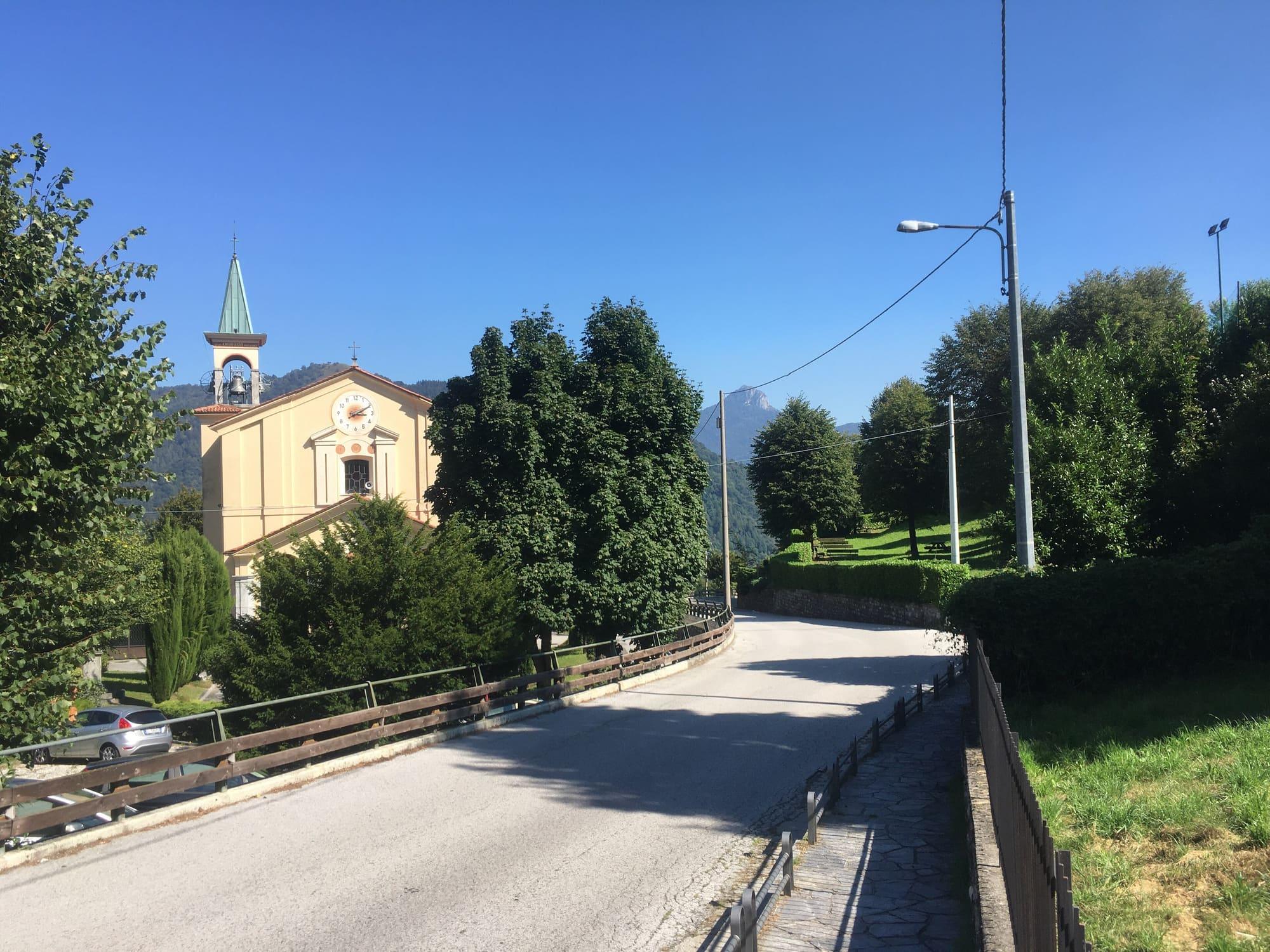
The parish church of Sant'Ambrogio was rebuilt from 1677 on an oval plan, with a single nave and side chapels. The front has two small porticoes beside the door, and the belfry, of 1966, ends in a pyramid spire. The feast of Saint Ambrose, the village's patron, is on 7 December.
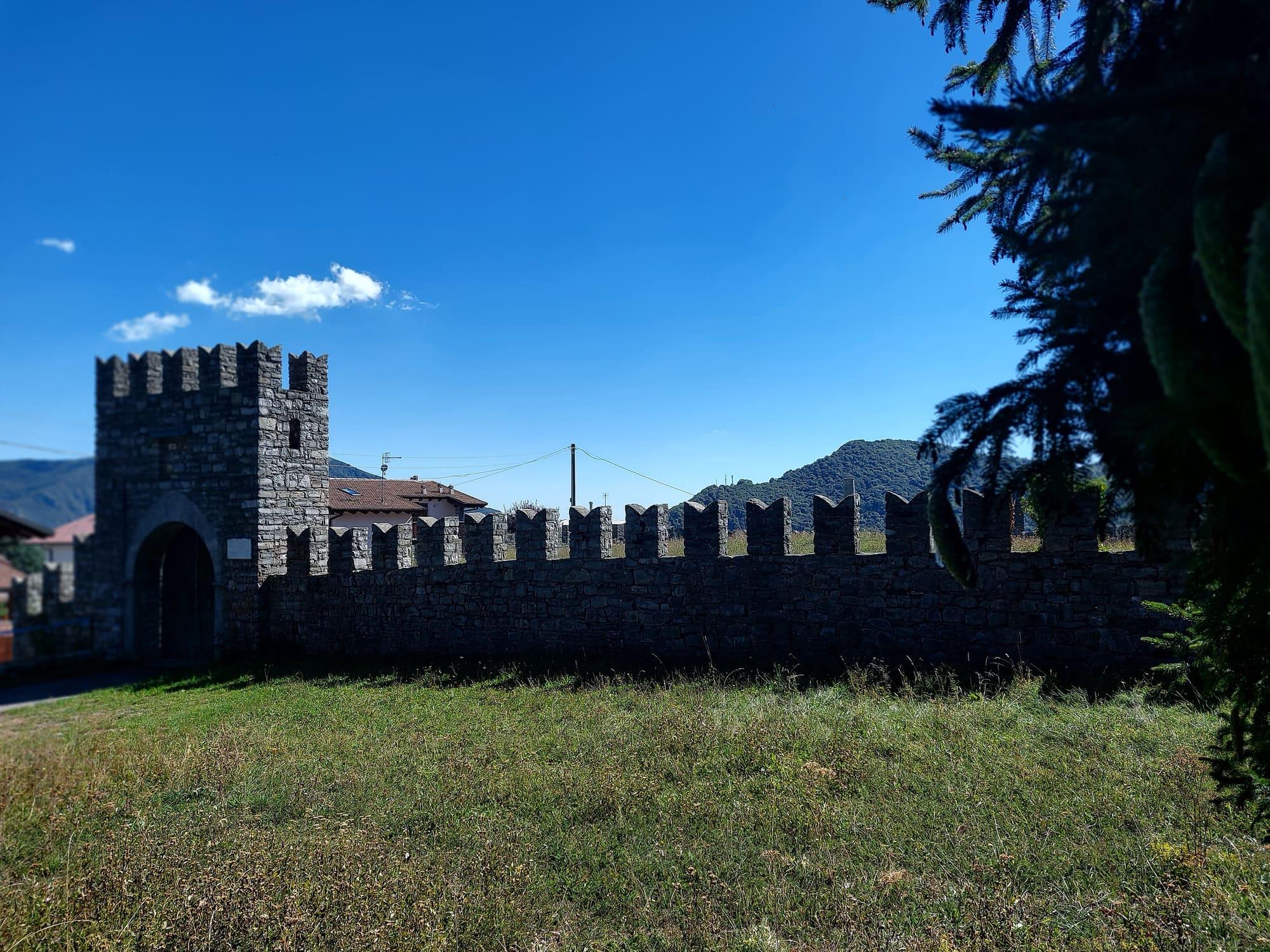
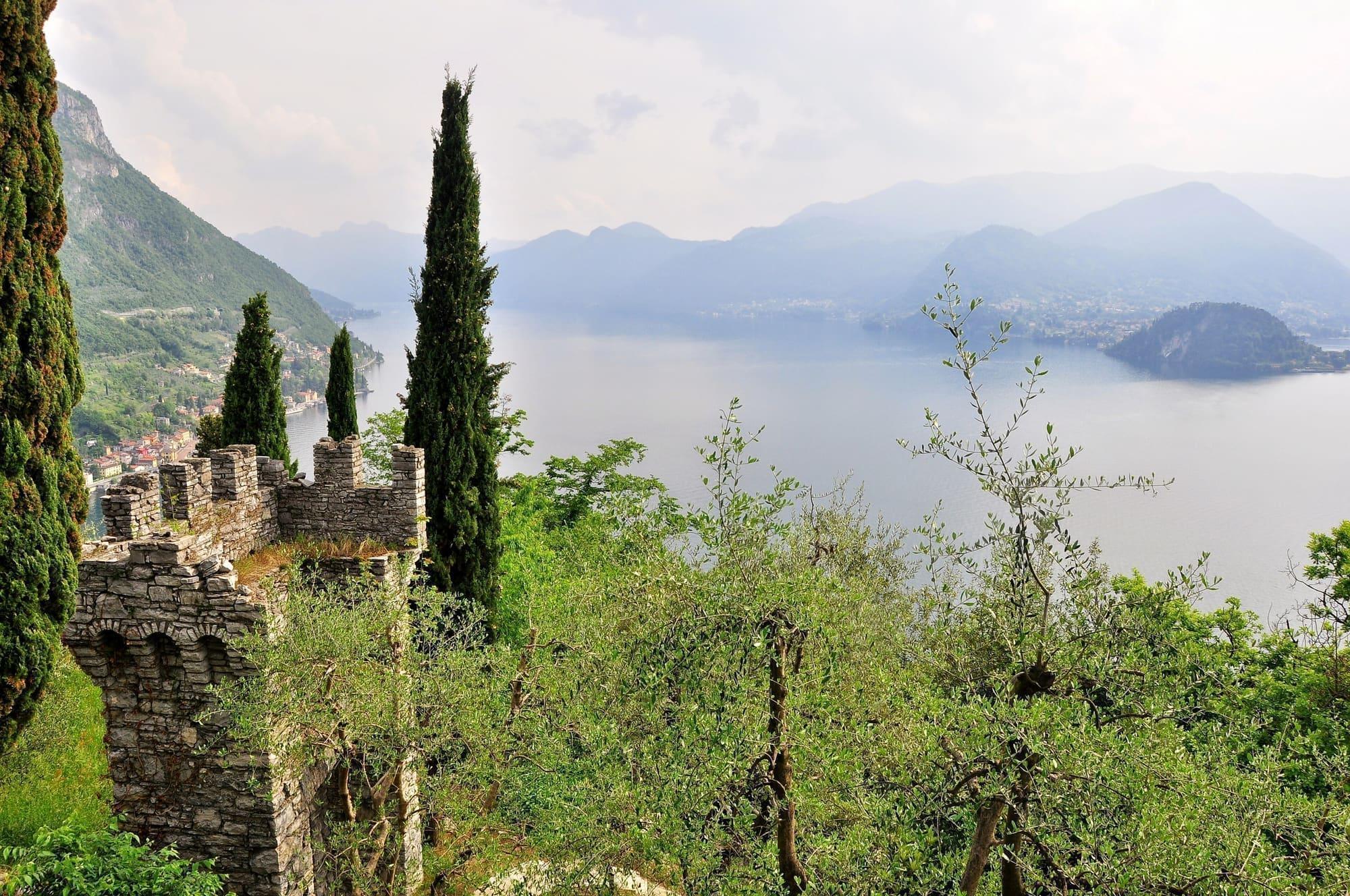
South of the centre, at Castello, a ring of crenellated walls encloses a meadow. It stands on the ruins of the castle of the lords of Sormano. In the twentieth century a restoration in medieval style raised the walls, crowned them with merlons and set the Sormani arms and a plaque with the castle's history over the gate.
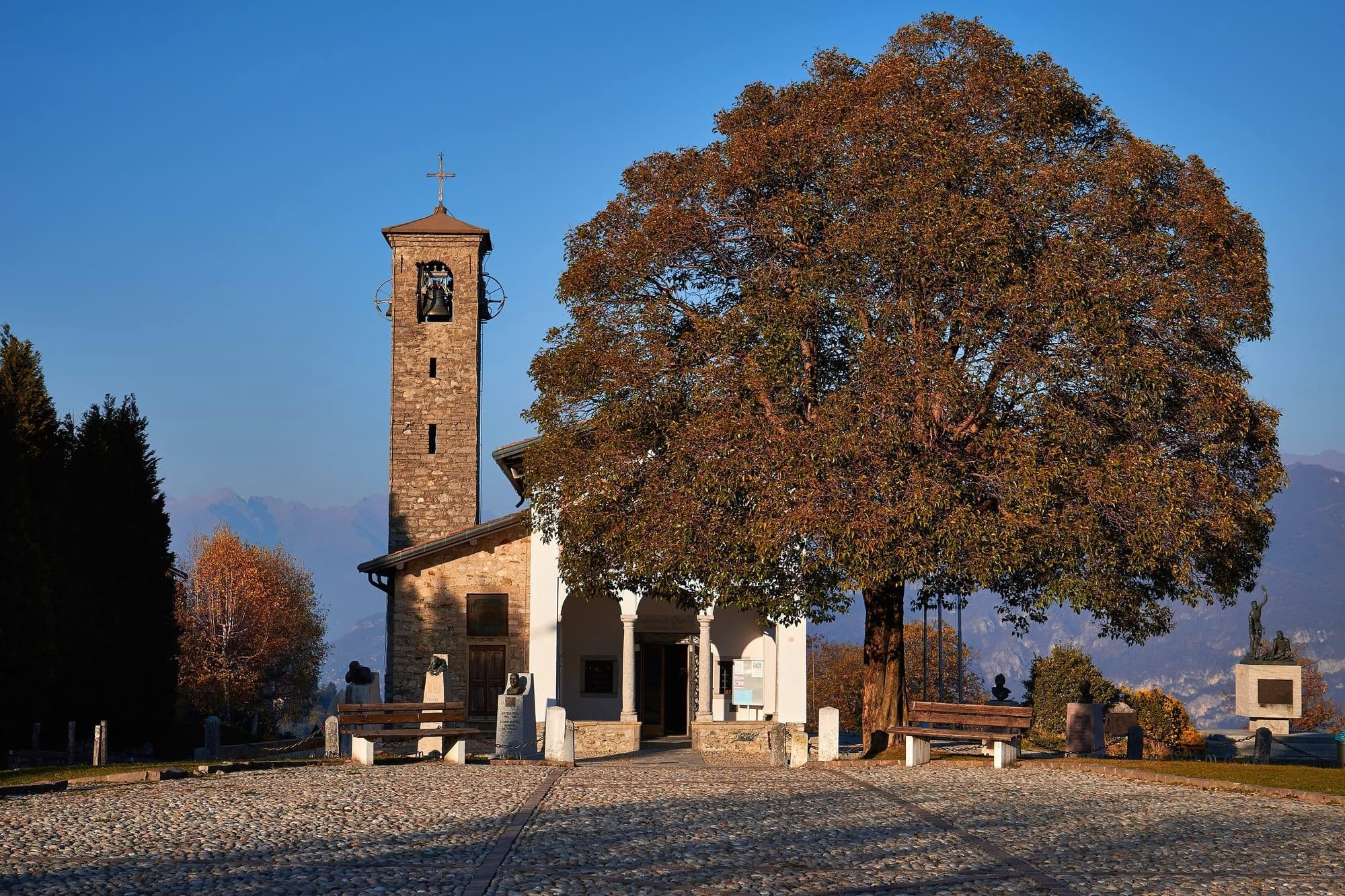
At Prati di Santa Valeria, the church of Santa Valeria probably goes back to the eleventh century. It was enlarged on a Greek-cross plan in the late Middle Ages, keeps fragments of a fourteenth-century fresco and has a bell tower from the second half of the sixteenth century.
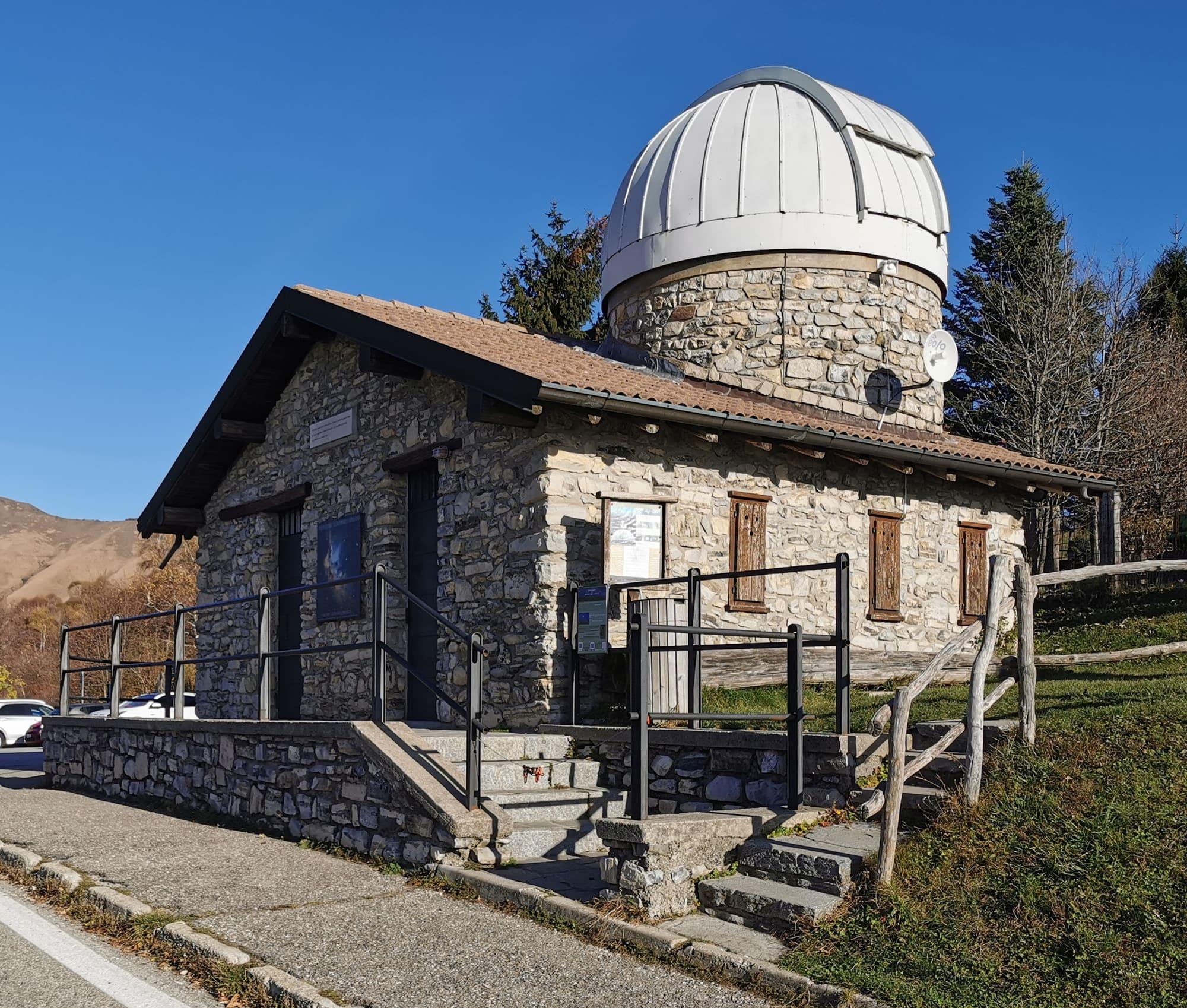
The Colma, at 1,124 metres, is the pass where the Muro ends; by car you reach it on the provincial road. Here stands the astronomical observatory, paid for by some fifteen members of the Gruppo Astrofili Brianza and opened in 1988. It is a research station working on asteroids and comets: in 1995 the asteroid 6882 Sormano, named after the village, was discovered here. In 2025 a new observatory with a planetarium opened next to it. The observatory opens to the public on announced days.
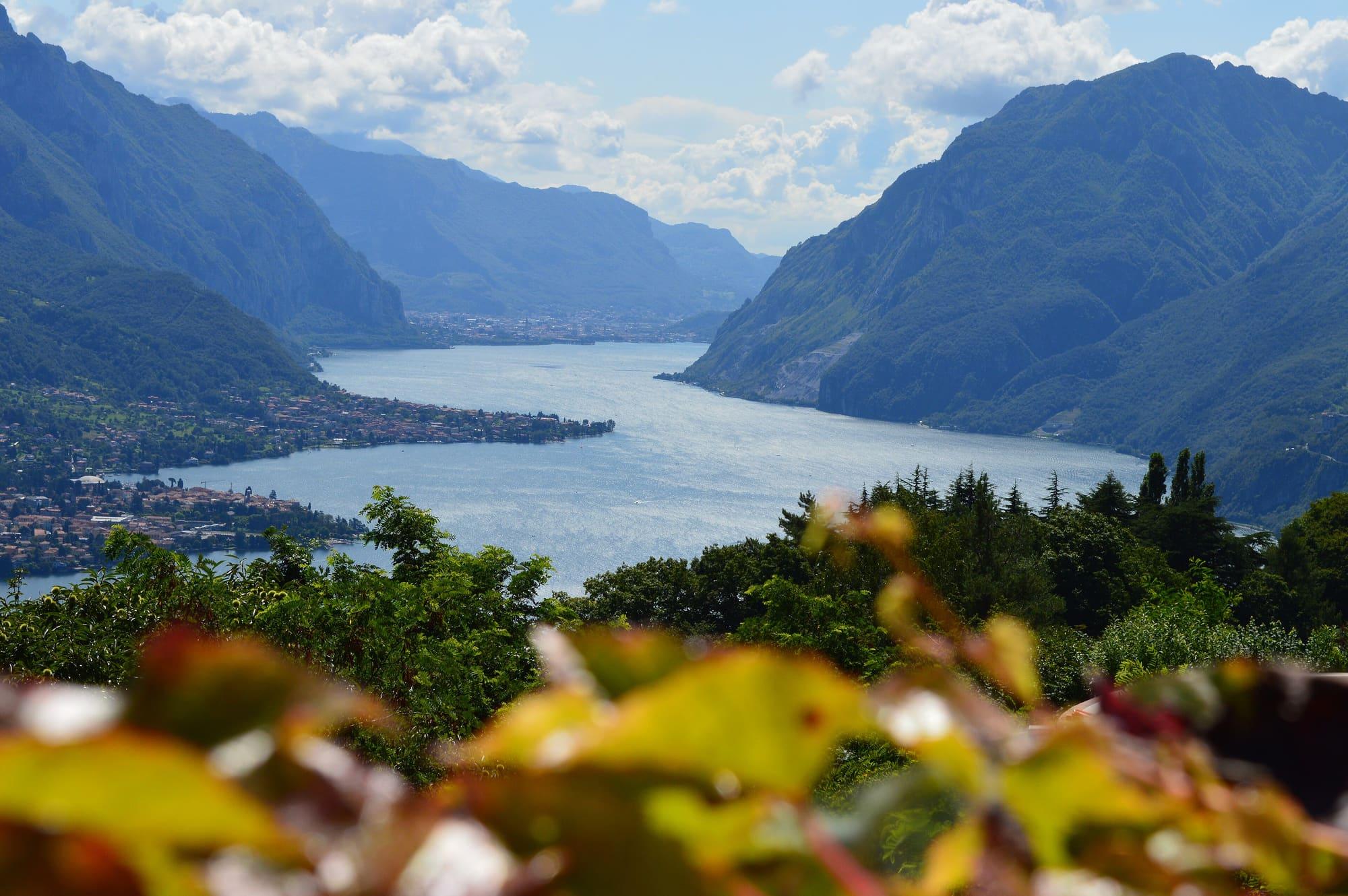
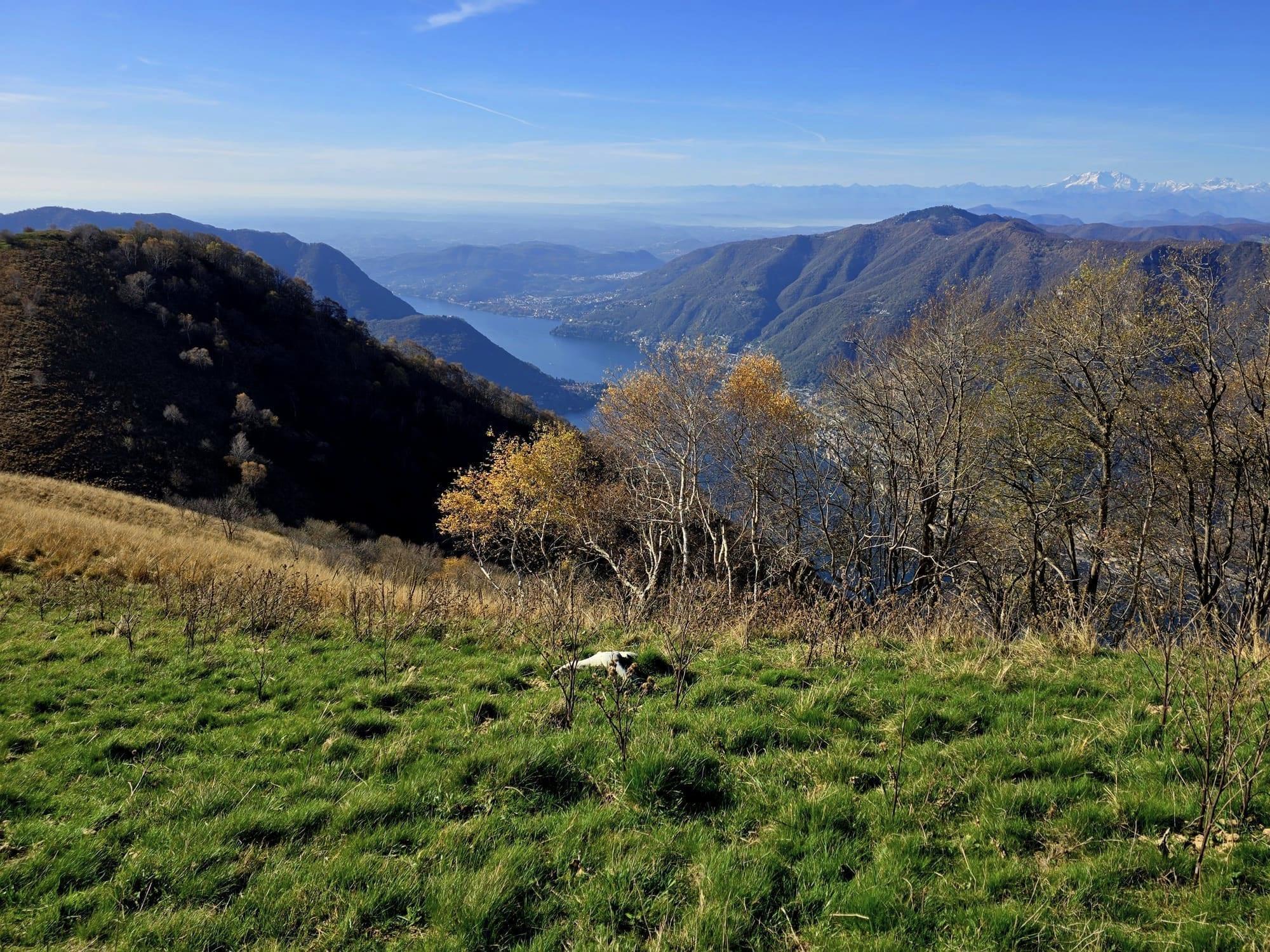
From the Colma a path of about eight kilometres, with 550 metres of ascent, leads to Monte San Primo; at 1,682 metres it is the highest summit of the Triangolo Lariano. On the other side the road drops to the Pian del Tivano, a karst plateau at around a thousand metres with many sinkholes. Beneath the plateau cavers have explored caves tens of kilometres long.
Parking and services
34 drinking fountains2 pharmacies2 cash machines3 defibrillators
Car parks and services on the map
Within two and a half kilometres of the centre; check car park spaces and fees on arrival.
Webcams
Updated 22 October 2026
Only with very low gears and trained legs: 17% average and peaks over 25% for a kilometre and a half. Many riders walk up pushing their bikes. On an e-bike it is another story, as long as the battery is charged. The road is closed to cars and very narrow.
By car or bike from the Vallassina, from Asso, which the train from Milano Cadorna also reaches: from Asso to Sormano the bus is rare and the climb by bike is six kilometres. From Bellagio you go over the Ghisallo and down to Magreglio, then to Sormano. The Colma, at the top of the Muro, can also be reached by the normal road.
The mountains around the village hide the sun before astronomical sunset: sunrise and sunset are worked out on the village's own horizon.
Today, 1 November, estimated sunlight at the reference point: first at 07:28 and last at 16:16, giving 8 h 49 of direct sun, out of 10 h 06 of daylight.
Today the sun arrives between 07:23 and 08:16 and leaves between 15:36 and 16:19, depending on the street.
Watch the shadow reach Sormano today
See from Sormano where the sun goes, in 3D
The sun at an exact spot in Sormano: your hotel, a beach, a street
The highest summit in view from here is Monte Palanzone, 1436 m, 4 kilometres away.
The ochre line follows today's sun path and marks the estimated times of its first and last appearance above the mountains. Drag the panorama to see all of it.
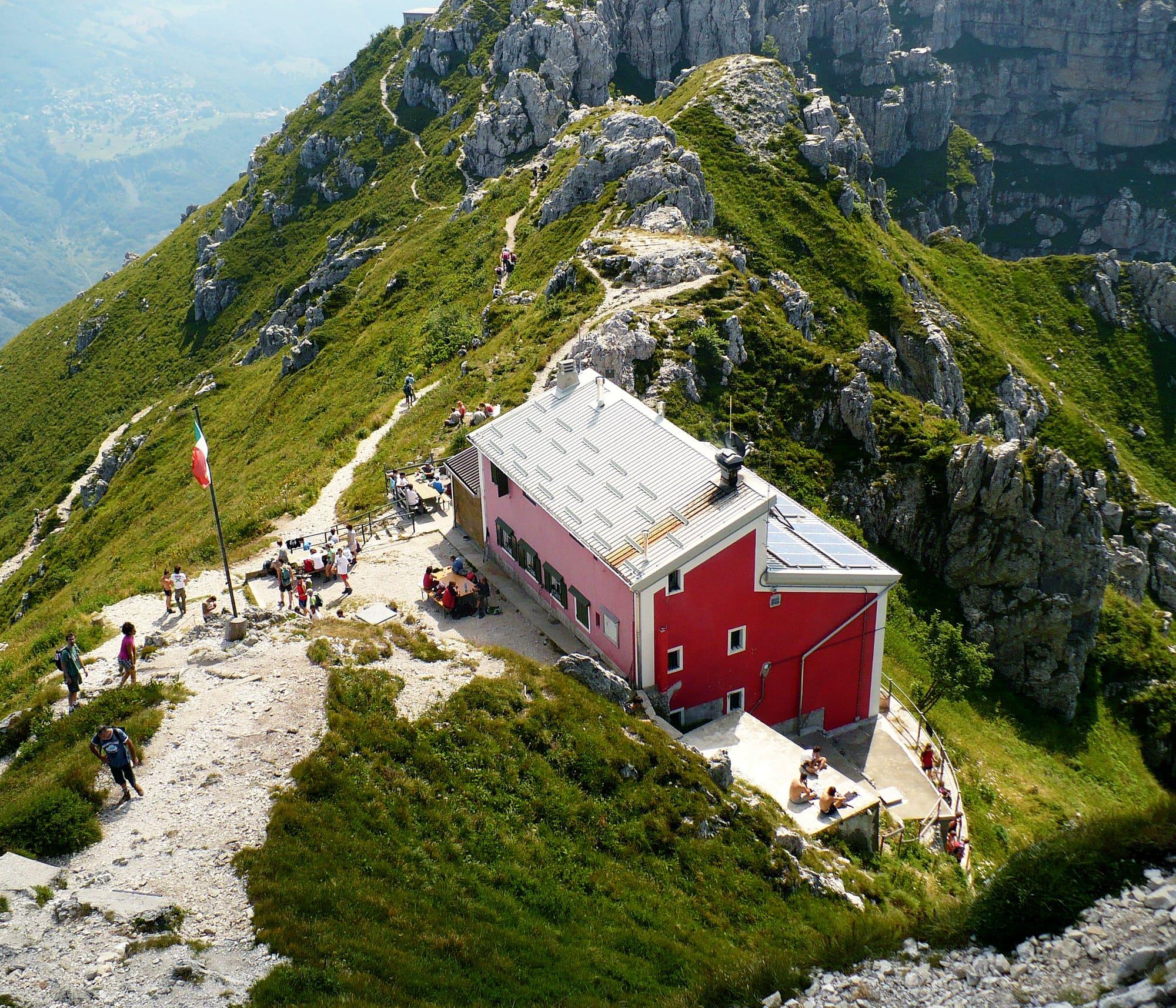
A pass at 1,124 metres with a refuge-café, the view over the Triangolo Lariano and towards the Prealps, and the Sormano astronomical observatory a little further on, which opens to the public on announced evenings. From here the paths of the Dorsale del Triangolo Lariano head towards Monte San Primo.
What is around, and how far.
© OpenStreetMap contributors · ODbL
Typical door-to-door times.