22Nov
Centro Lago
Menaggio
In the middle of the lake, between the ferry, the Regina road and the bus to Lugano.
- Ideal for
- Families, a car-free base, walking in the mountains above
- Time needed
- Half a day; 3–4 nights as a base
- Best season
- June–September for the lido, May and October for walking
- What to see
- The climb to Rifugio Menaggio under Monte Grona
- Best reached by
- Ferry from Bellagio and Varenna, C110 bus from Como
- Benreis · CC BY-SA 3.0
- Deror_avi · CC BY-SA 3.0
The place
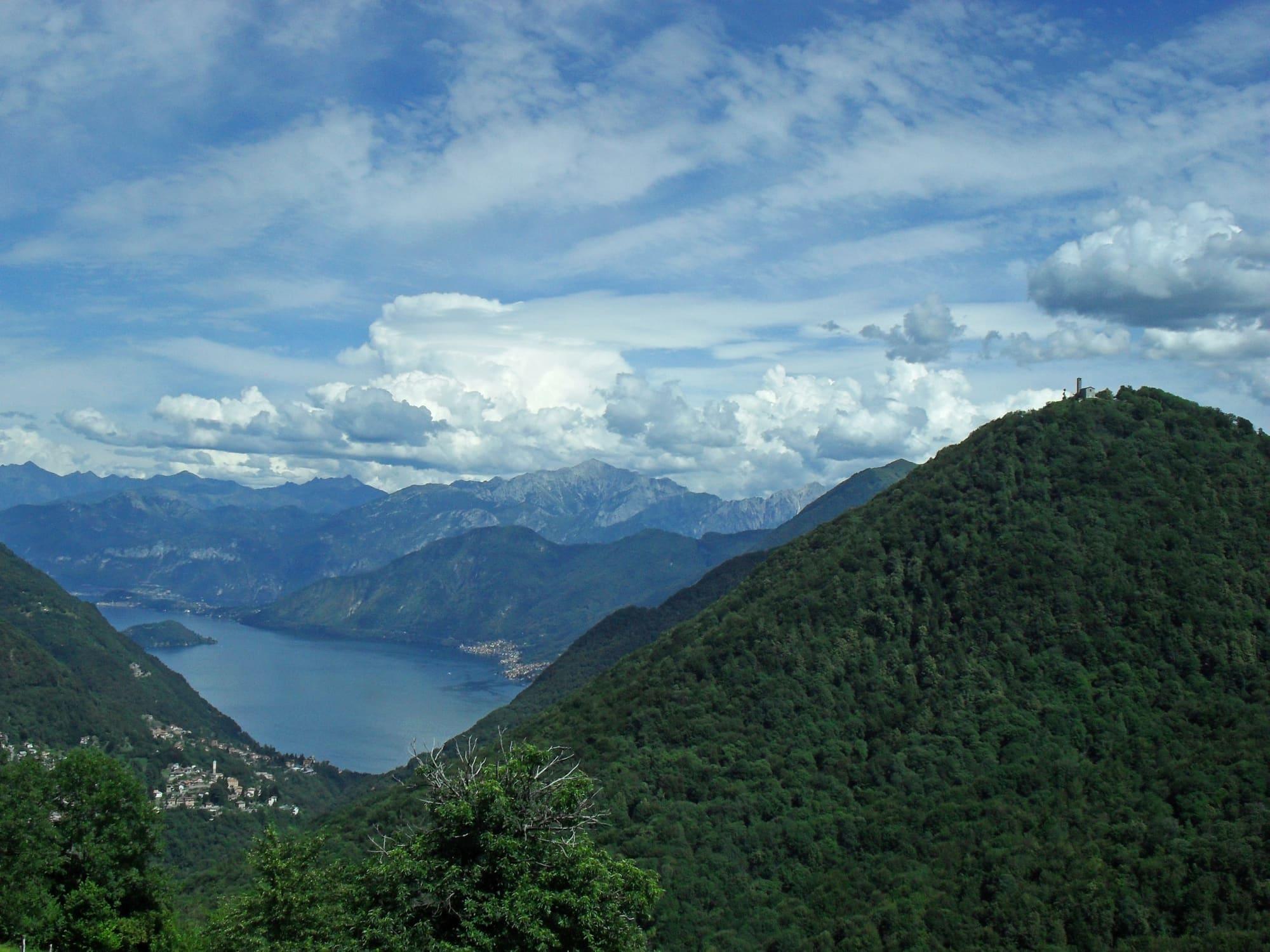
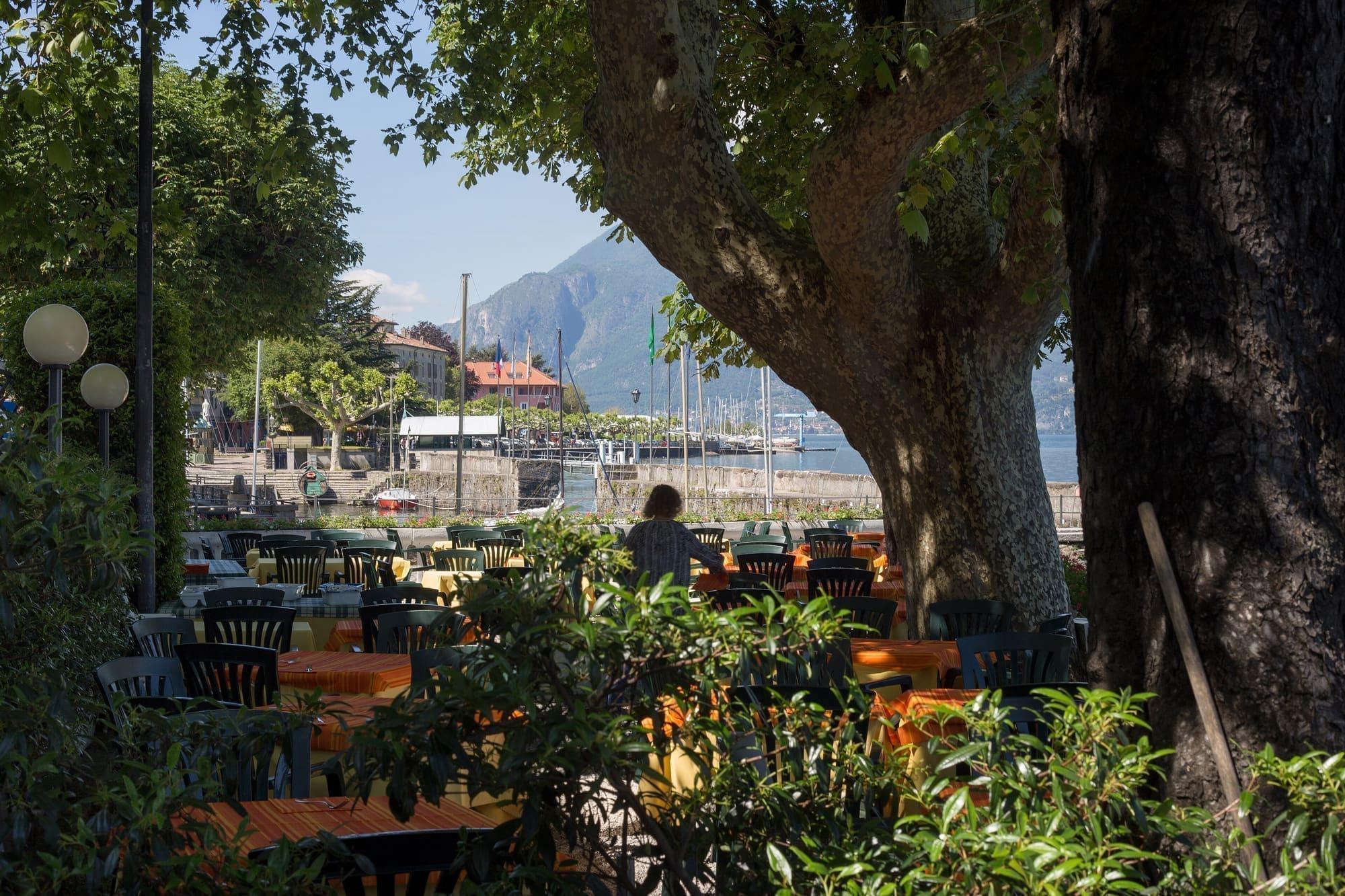
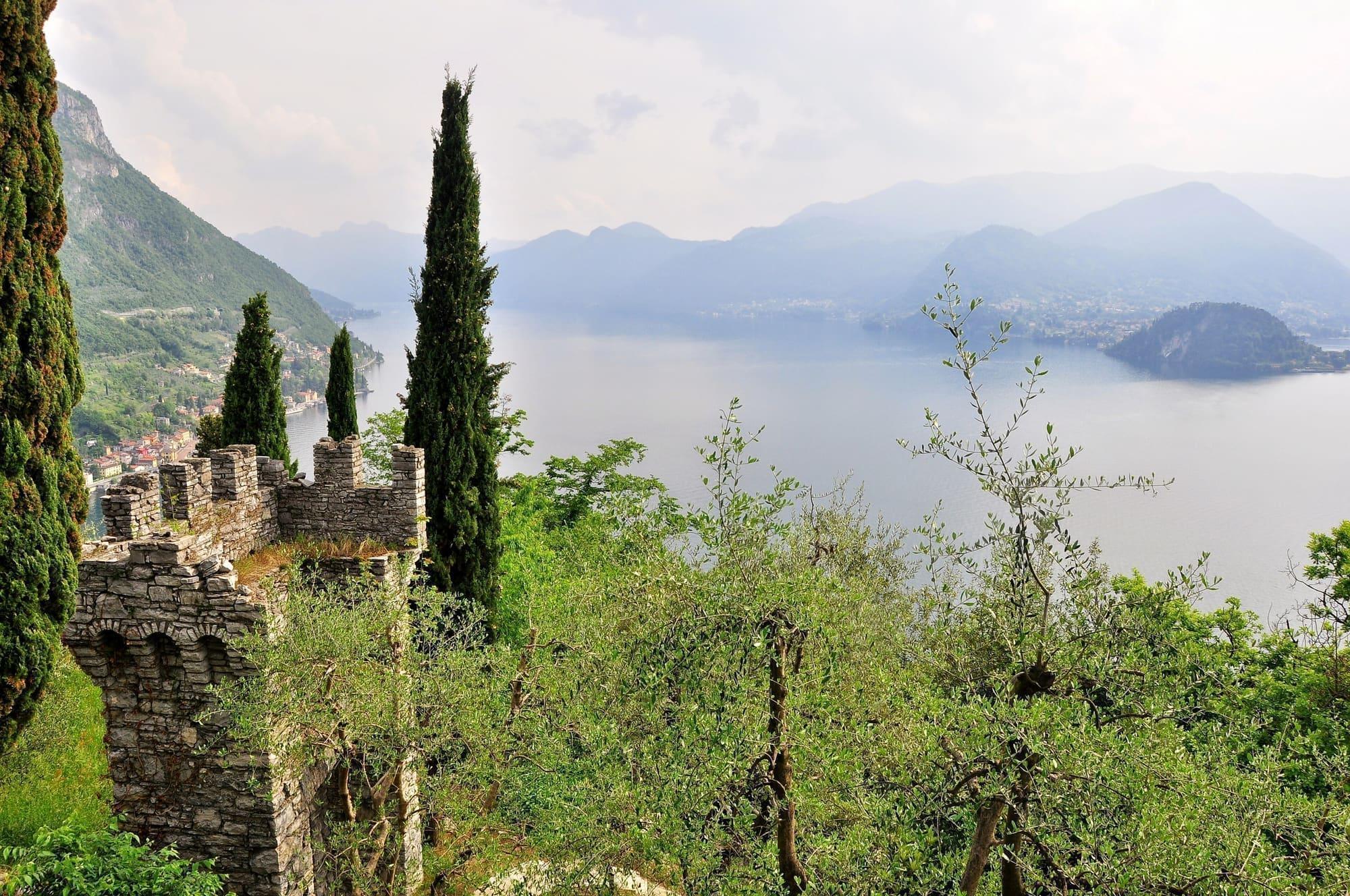
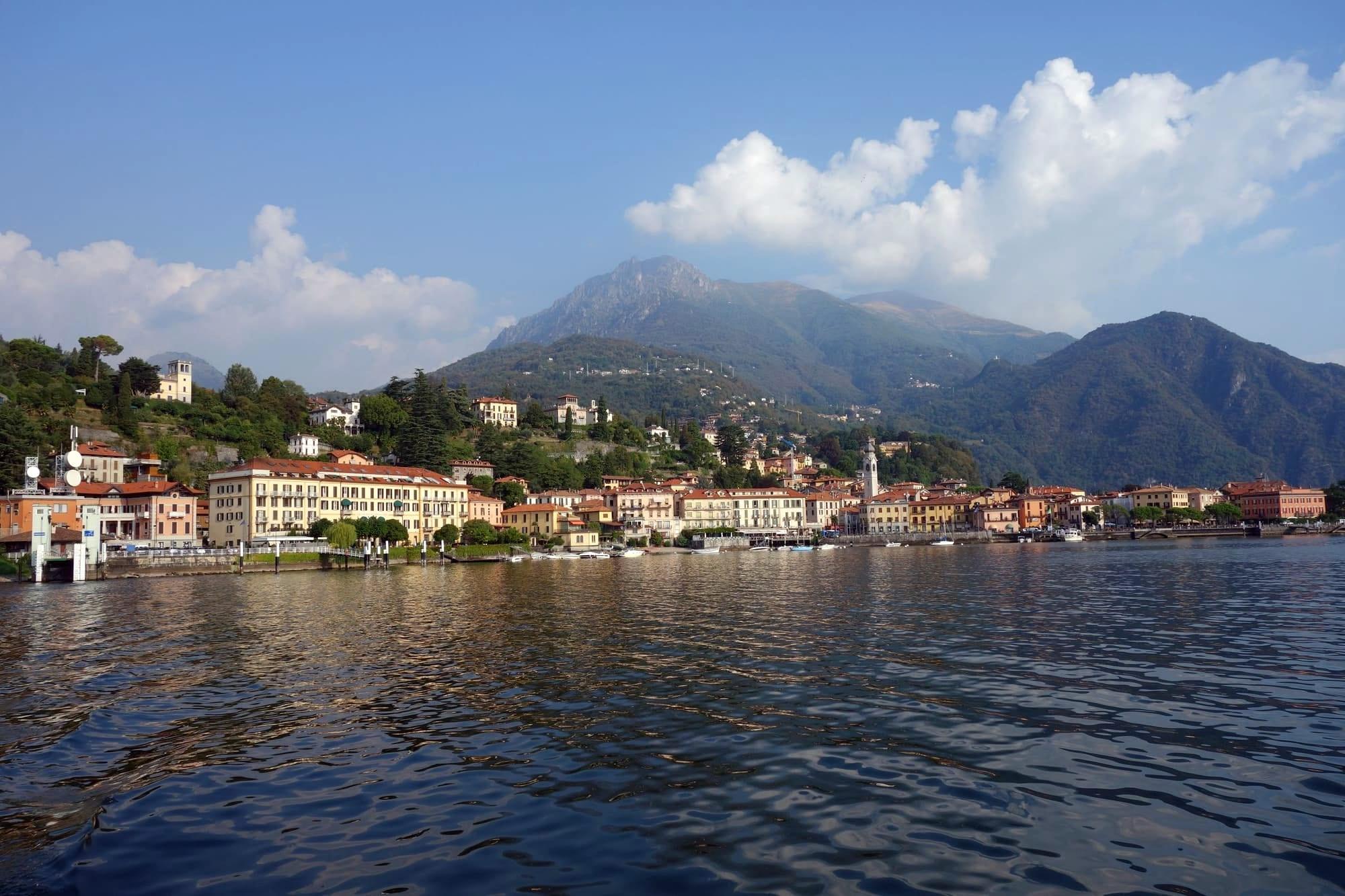
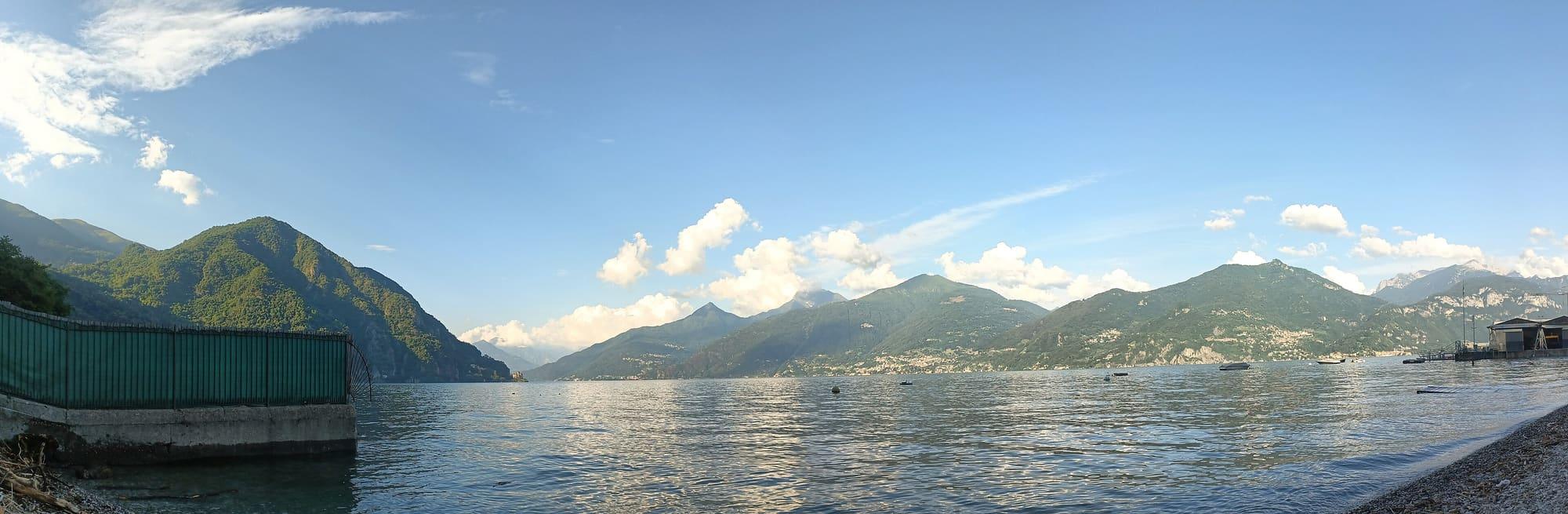
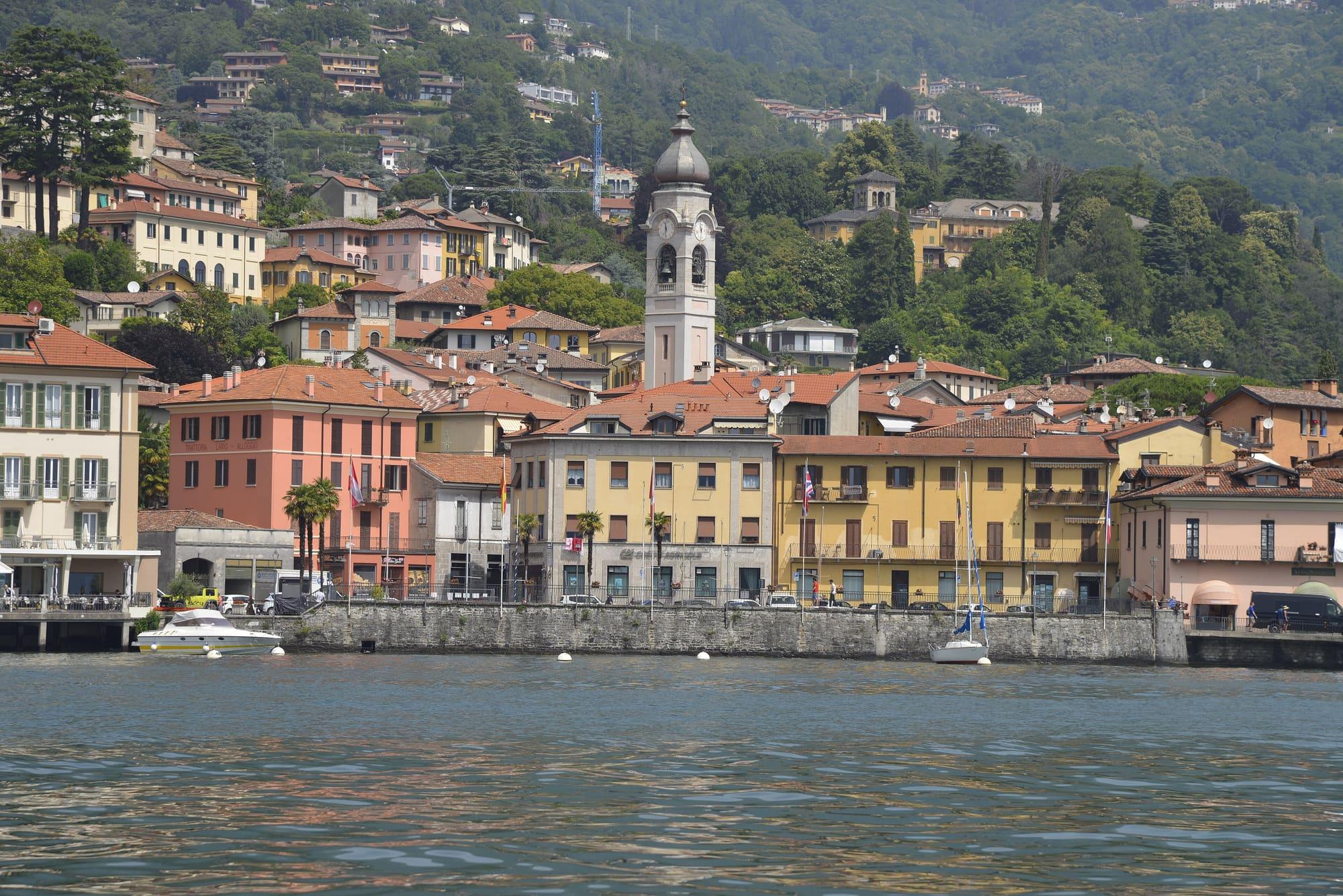
Menaggio lies on the western shore of the central lake. It has a square overlooking the water, a tree-lined promenade and a lido.
Ferries connect it to Bellagio and Varenna, and buses run to Como and Lugano.
Menaggio lies on the western shore of the central lake. It has a square overlooking the water, a tree-lined promenade and a lido.
Read on
Ferries connect it to Bellagio and Varenna, and buses run to Como and Lugano.
A town in the middle of the lake
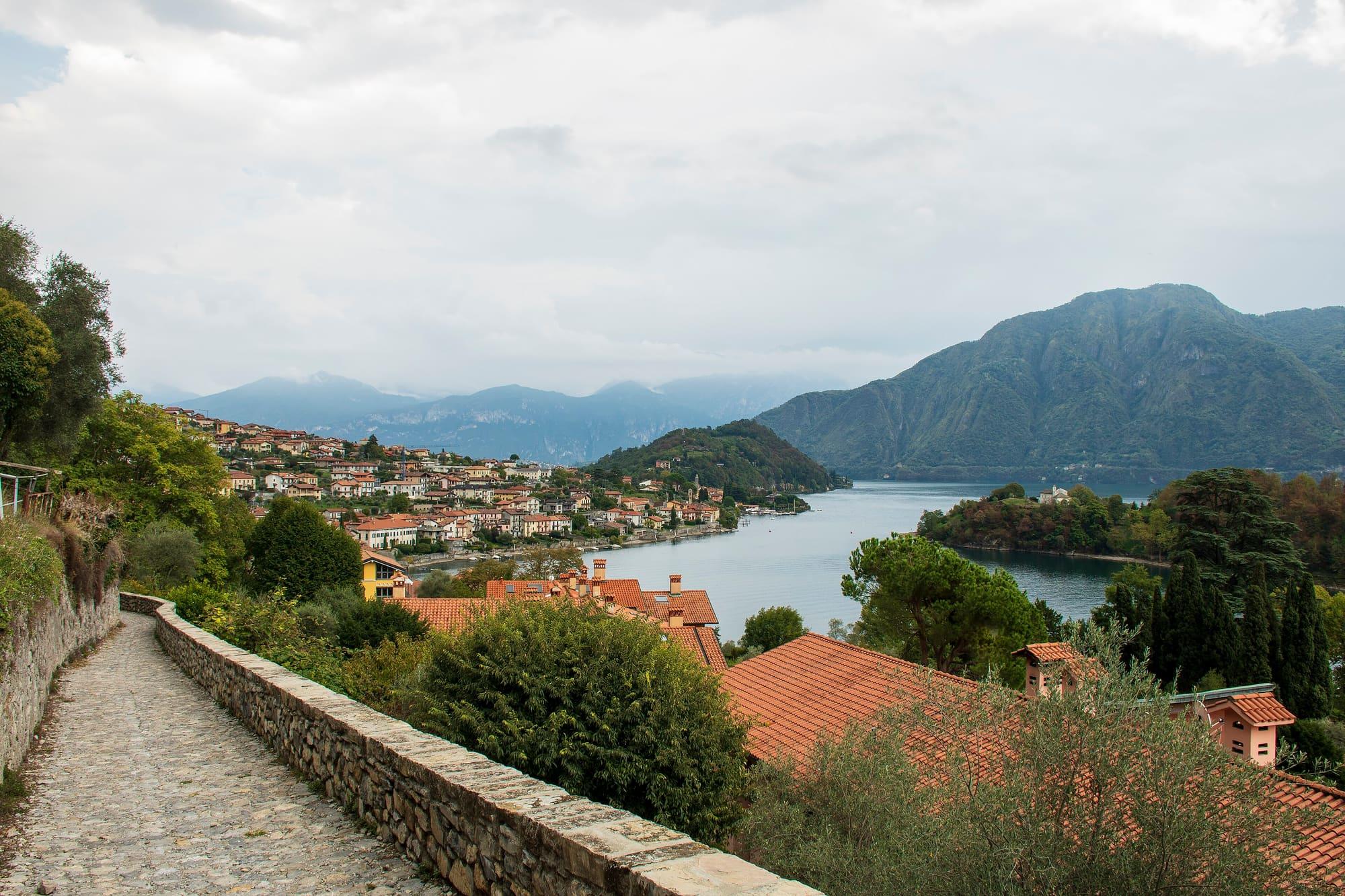
Menaggio lies on the western shore, in the middle of the lake, where the Sanagra stream flows into the Lario. Here the road up the Val Menaggio towards Porlezza and Lake Lugano leaves the lakeside road. The centre opens onto Piazza Garibaldi, right on the water, and the tree-lined promenade runs north to the lido, a Rationalist building of 1934.
The ferry reaches Bellagio and Varenna in a quarter of an hour; the bus gets to Como in an hour and to Lugano in a little more. The lido is a five-minute walk from the centre. The town has a weekly market and everyday shops, and in the hills above Menaggio is a golf club founded in 1907.
History
Menaggio stands on the Via Regina, the road of Roman origin that ran up the western shore towards the Alpine passes. In the Middle Ages it was the head of a pieve, a rural parish district, and had a castle controlling the fork towards Lake Lugano. In 1523 troops from the Grisons, who had already conquered the Valtellina, set the town on fire and destroyed the castle.
In 1805 Menaggio became the seat of a sub-prefecture, and in 1859 it was the centre of the uprising against the Austrians in the Como area. The nineteenth century brought hotels on the lakefront and villas at Loveno, and from 1884 to 1939 a railway linked Menaggio with Porlezza, on Lake Lugano. In the twentieth century the Mantero family had a silk factory at Burgatto, on the Sanagra; on the promenade, Francesco Somaini's monument to the weaver recalls the work in silk. In April 1945 Mussolini, on the run, stopped in Menaggio before partisans captured him at Dongo.
The old centre and the Castello
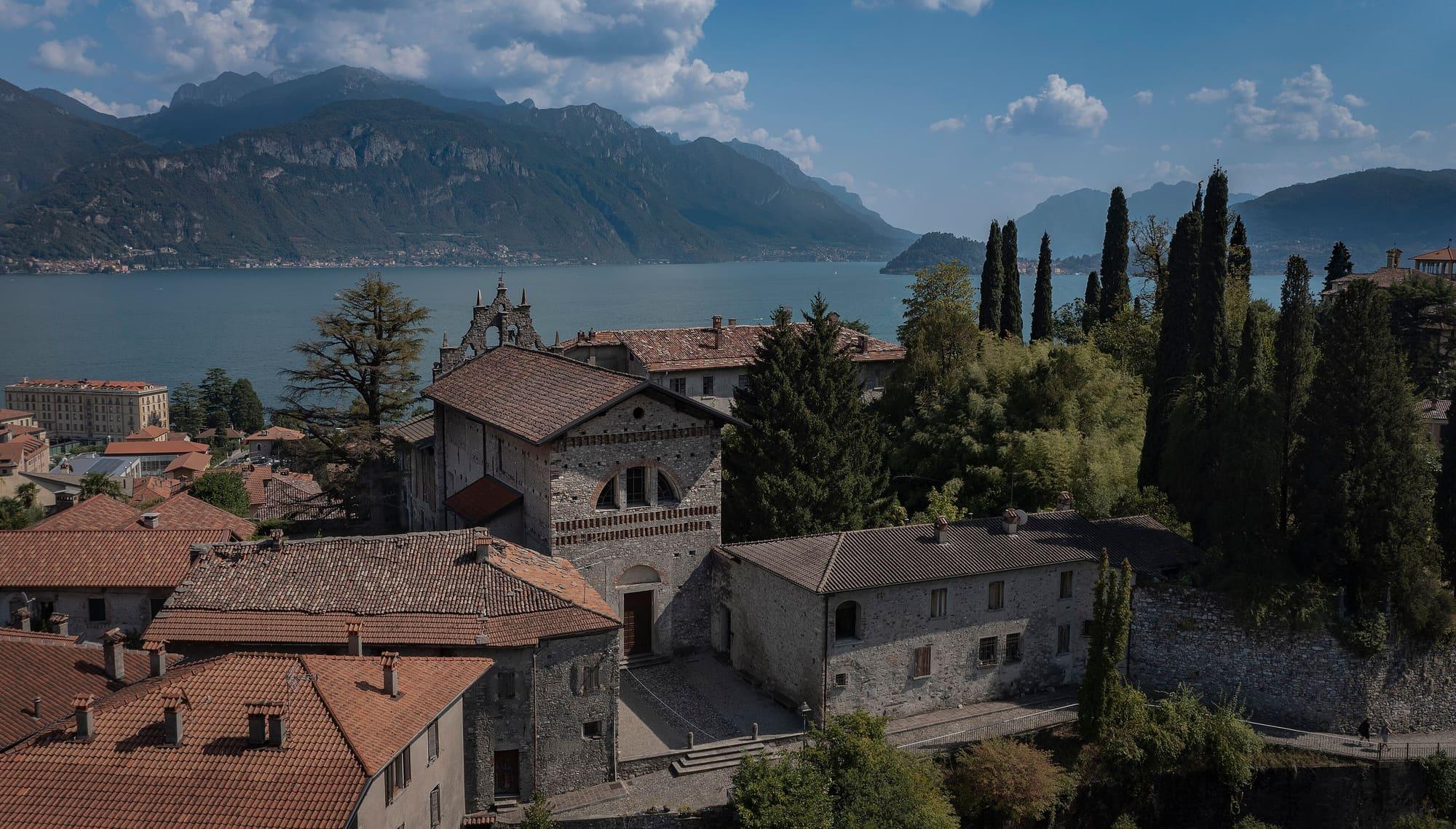
Set into the outer walls of the oratory of Santa Marta, on Via Calvi, are a Roman plaque found in the lake and a fifteenth-century keystone carved with the castle, the image the town uses as its coat of arms. Close by, the nave and aisles of the parish church of Santo Stefano were frescoed in 1899 by the painter Tagliaferri. At the head of the left aisle is the copy of Bernardino Luini's Madonna of Menaggio, whose original is in the Louvre. Santo Stefano is the town's patron saint, and his feast is on 26 December.
Behind the church you climb to the Castello, the medieval quarter that still keeps stretches of the fortress walls. On the way up, on Via Castellino da Castello, stands the birthplace of the Jesuit Gabriele Malagrida, put to death in Lisbon in 1761. On the ruins of the fortress rises the church of San Carlo, built in 1614 by Cinzio Calvi as a tomb for himself and his wife.
Loveno and Nobiallo
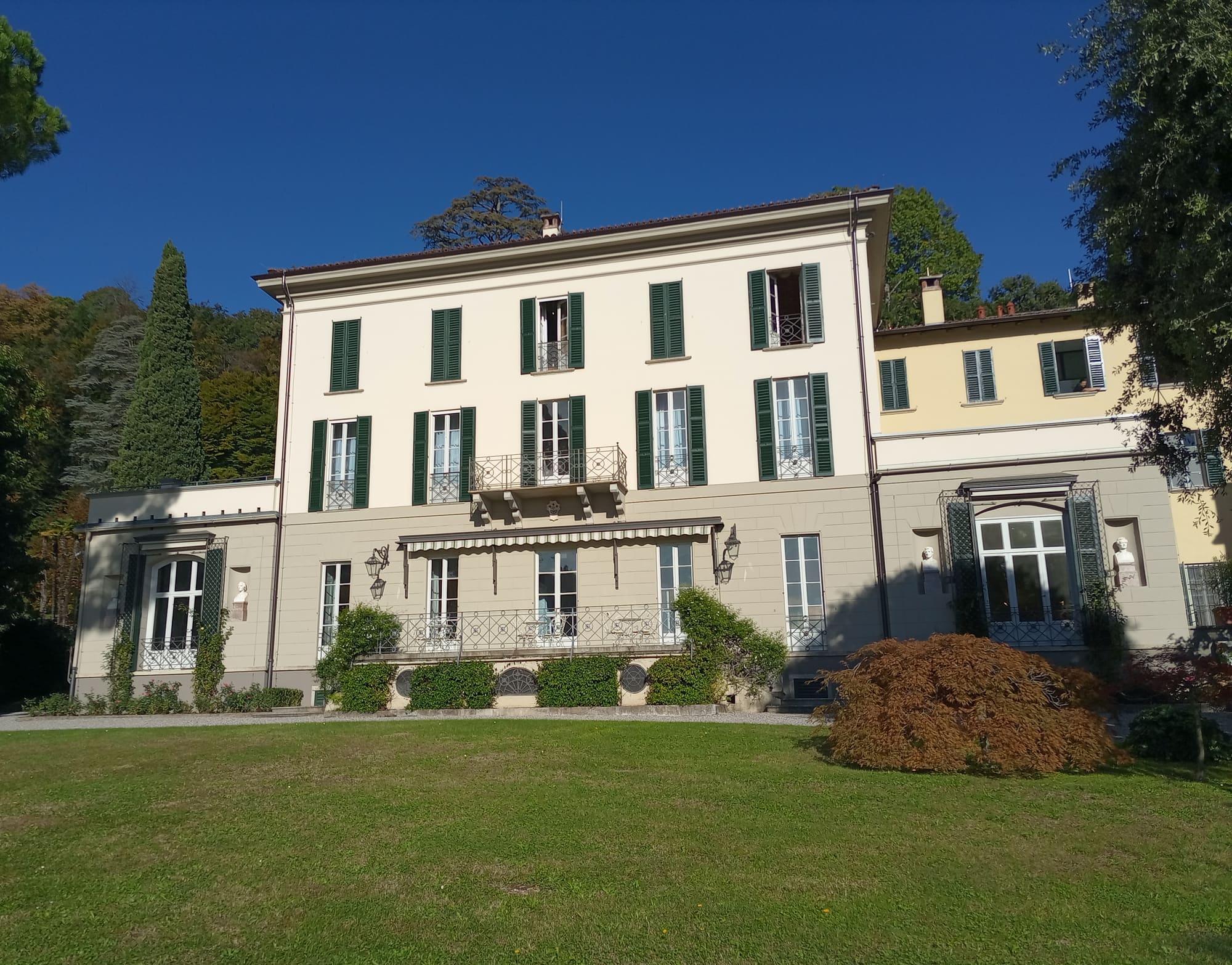
Loveno, on the hill above the centre, is the hamlet where many villas were built in the nineteenth century. In 1829 Heinrich Mylius, a merchant born in Frankfurt, bought an estate here for the wedding of his son Julius. The last heir, Ignazio Vigoni, left it to the Federal Republic of Germany. Since 1986 Villa Vigoni has been the German-Italian Centre for European Dialogue, and it is visited with a guide. The centre also includes Villa Garovaglio Ricci, converted from an eighteenth-century silk mill.
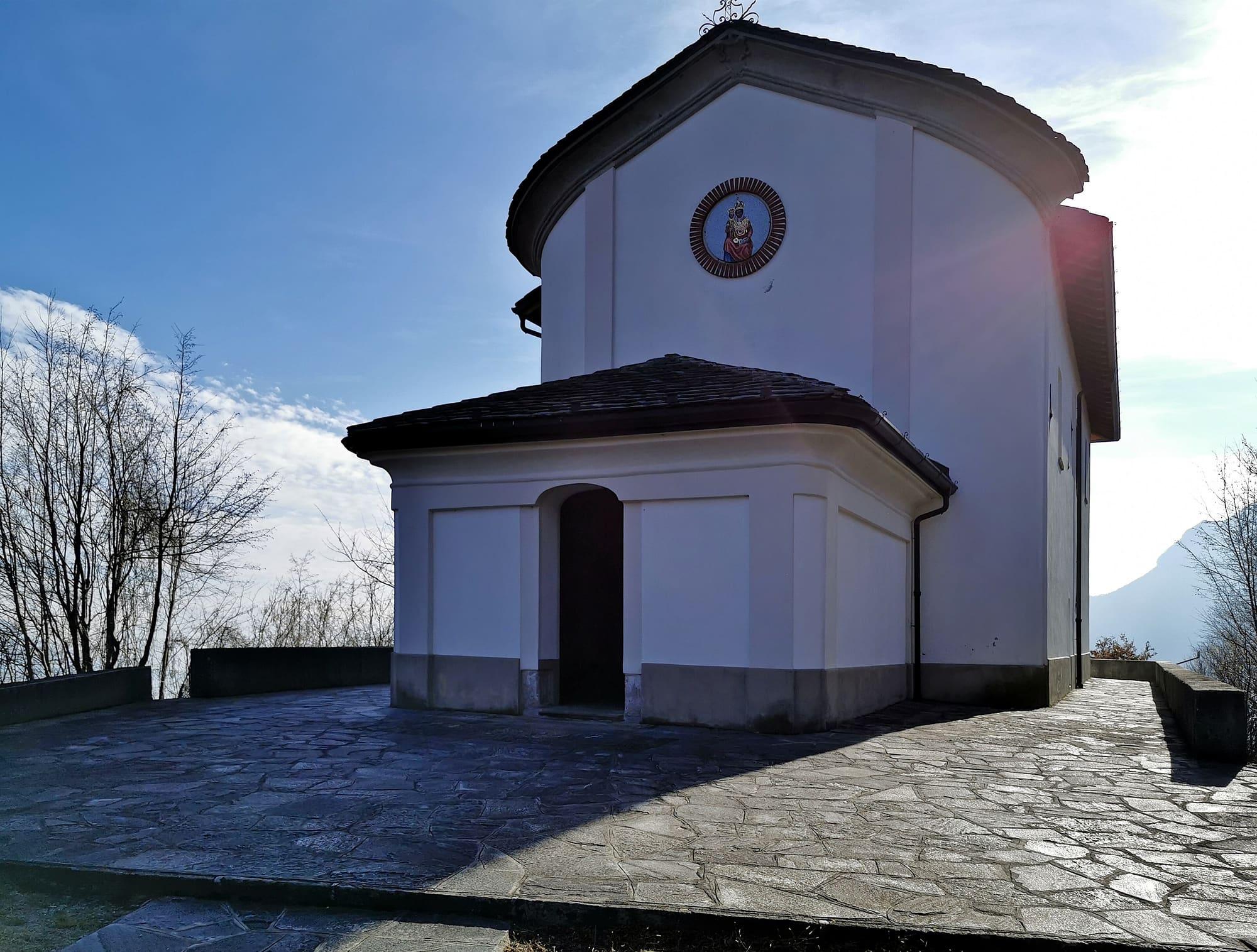
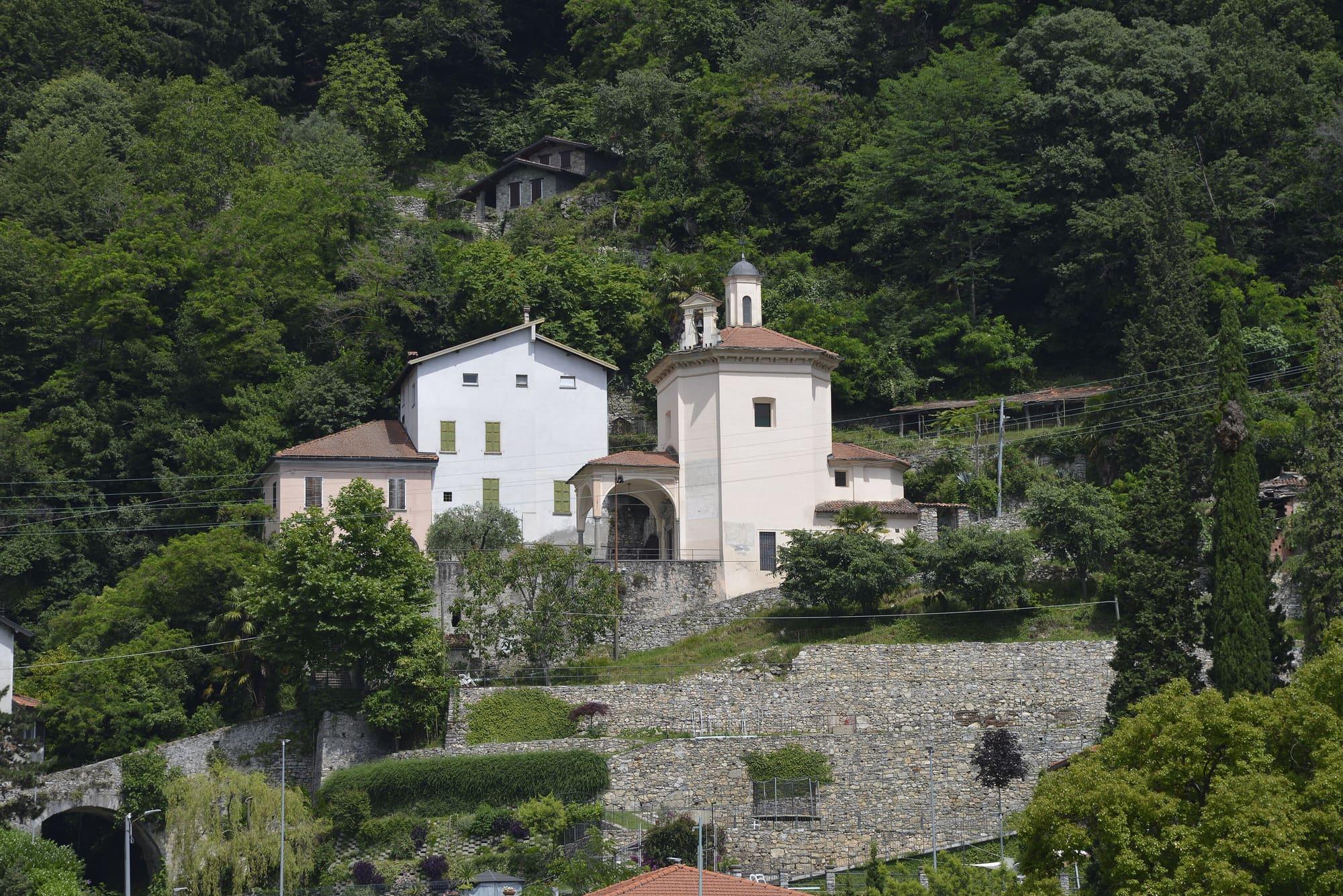
Just north of the centre, along the Regina, Nobiallo is an old fishing village whose streets and steps run down to the lake, with a leaning medieval bell tower. Higher up, among the woods, the sanctuary of the Madonna della Pace, consecrated in 1660, keeps above its altar the relief of the Miracle, carved by Matteo Destopanis in 1484.
The mountain and the trails
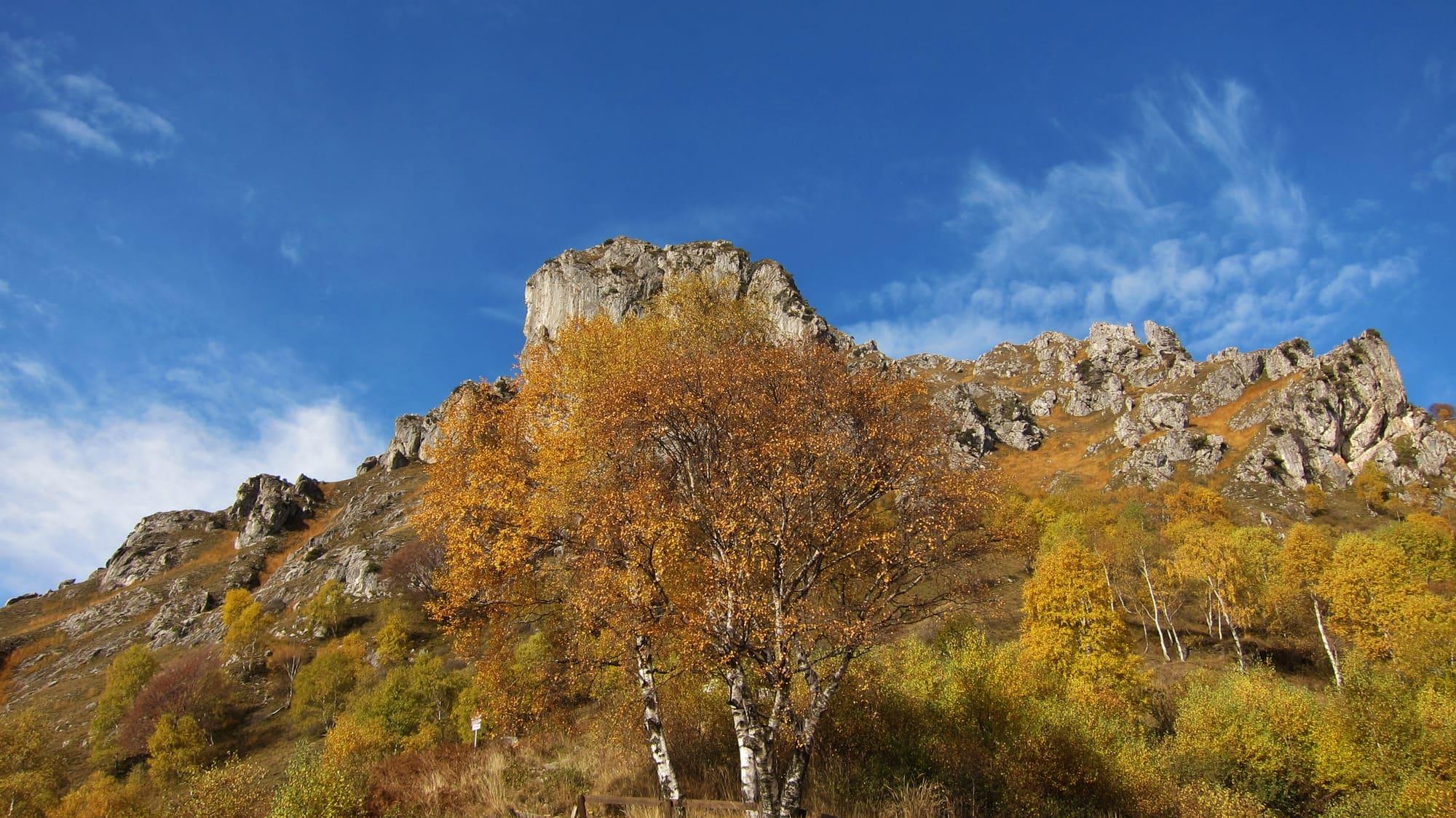
Monte Grona, 1,736 metres high, rises above Menaggio. From Breglia, at 749 metres, a waymarked path climbs in about an hour and three quarters to the Rifugio Menaggio, at about 1,400 metres. From the hut the summit is another hour and twenty minutes, with a few protected sections. From the top you see the lakes of Como, Lugano and Piano and, on clear days, the Alps.
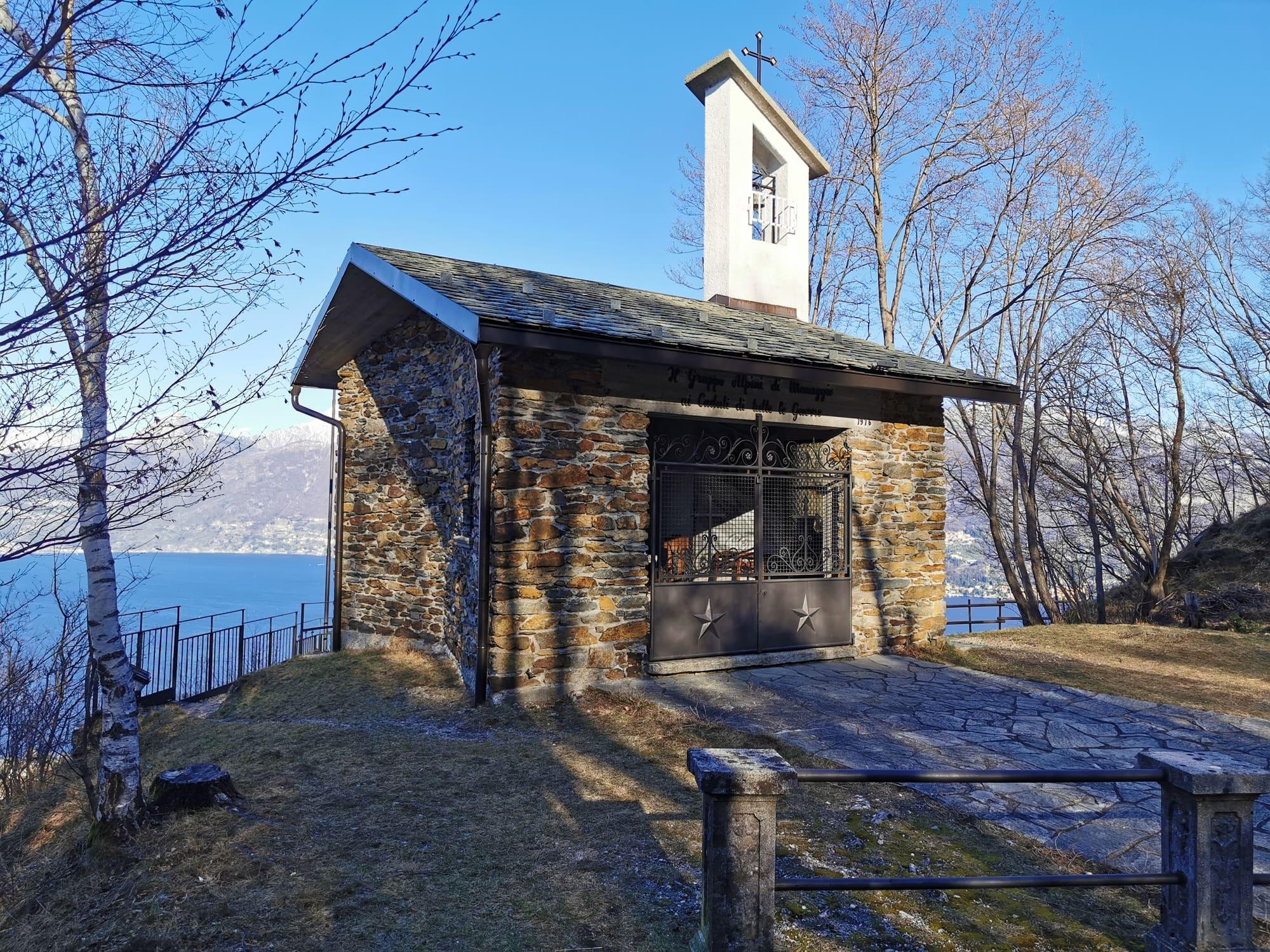
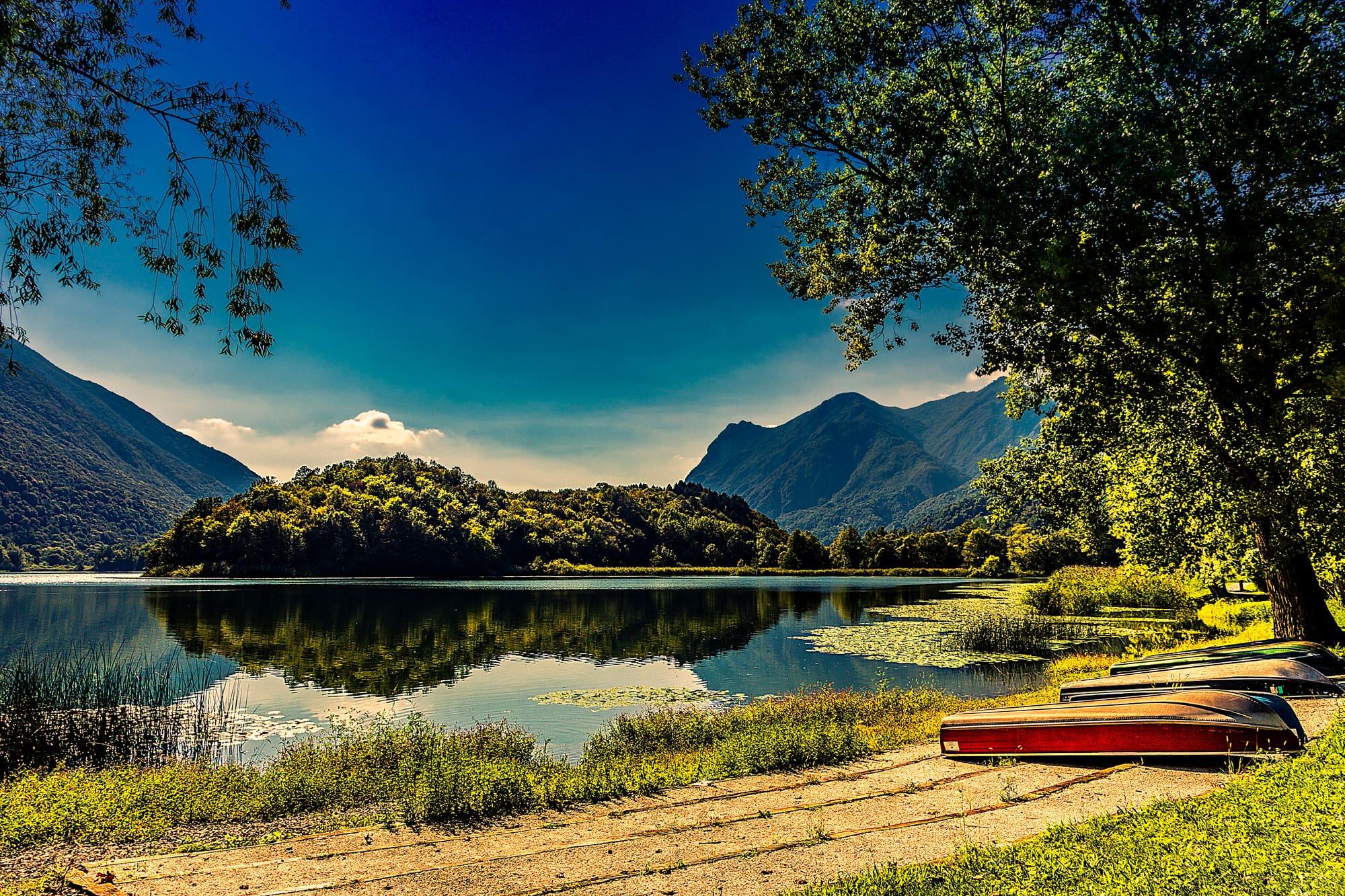
From the hamlet of Croce, about forty minutes' walk takes you up to the Crocetta, at an elevation of about 500 metres, through the 1915 trenches of the Cadorna Line, with the centre of the lake before you. Northwards the Antica Strada Regina leads to Rezzonico in about three hours, by way of Nobiallo and the Sasso Rancio. Westwards, in the Val Menaggio, the cycle and foot path on the old railway crosses the Lago di Piano nature reserve; southwards, at Griante, the Greenway begins.
Things to see
Experiences
Centro Lago
The ferry triangle
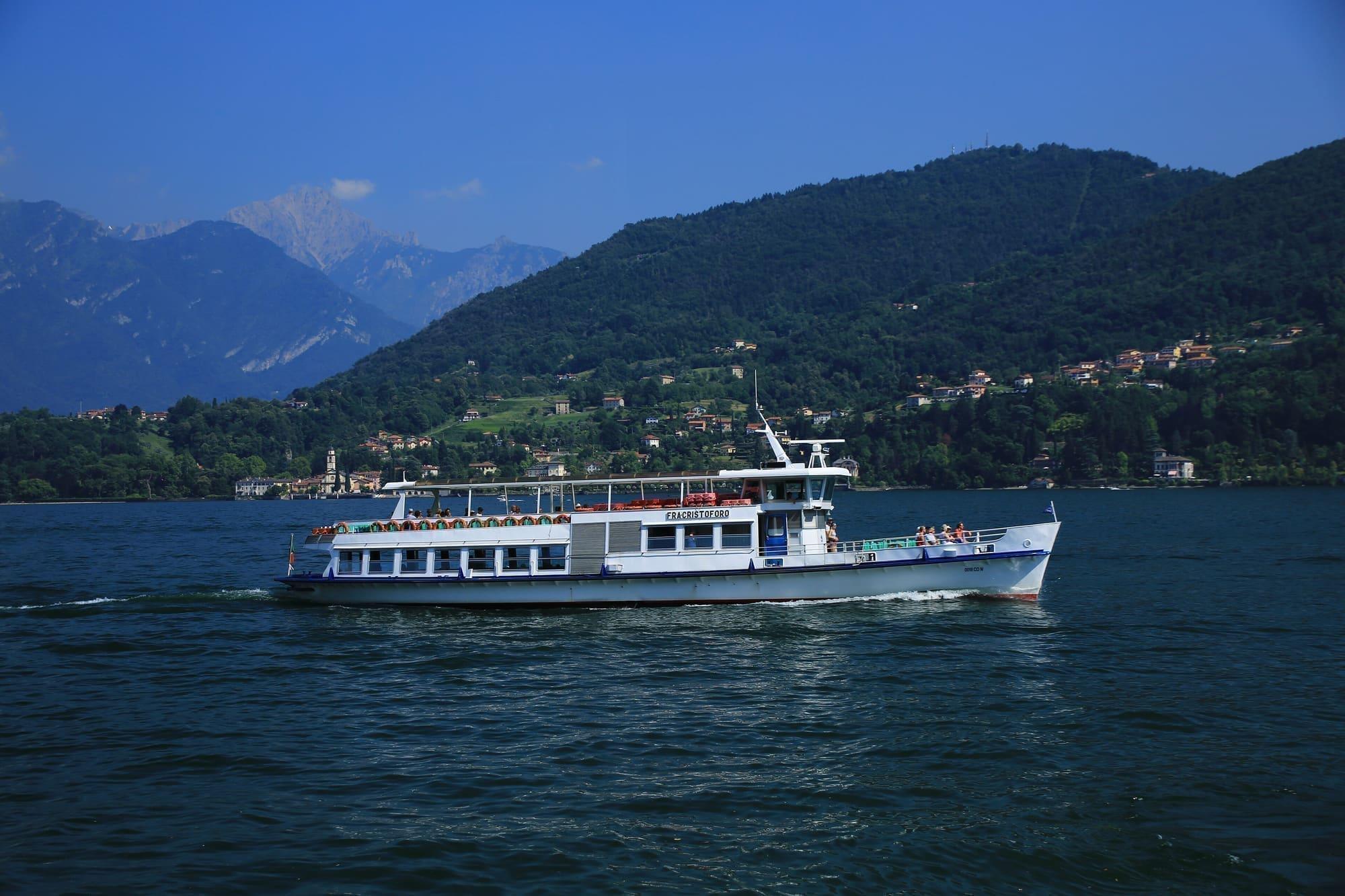
Bellagio, Varenna, Menaggio: three shores of the central lake, ten minutes to half an hour apart by ferry.
4 h – 8 h
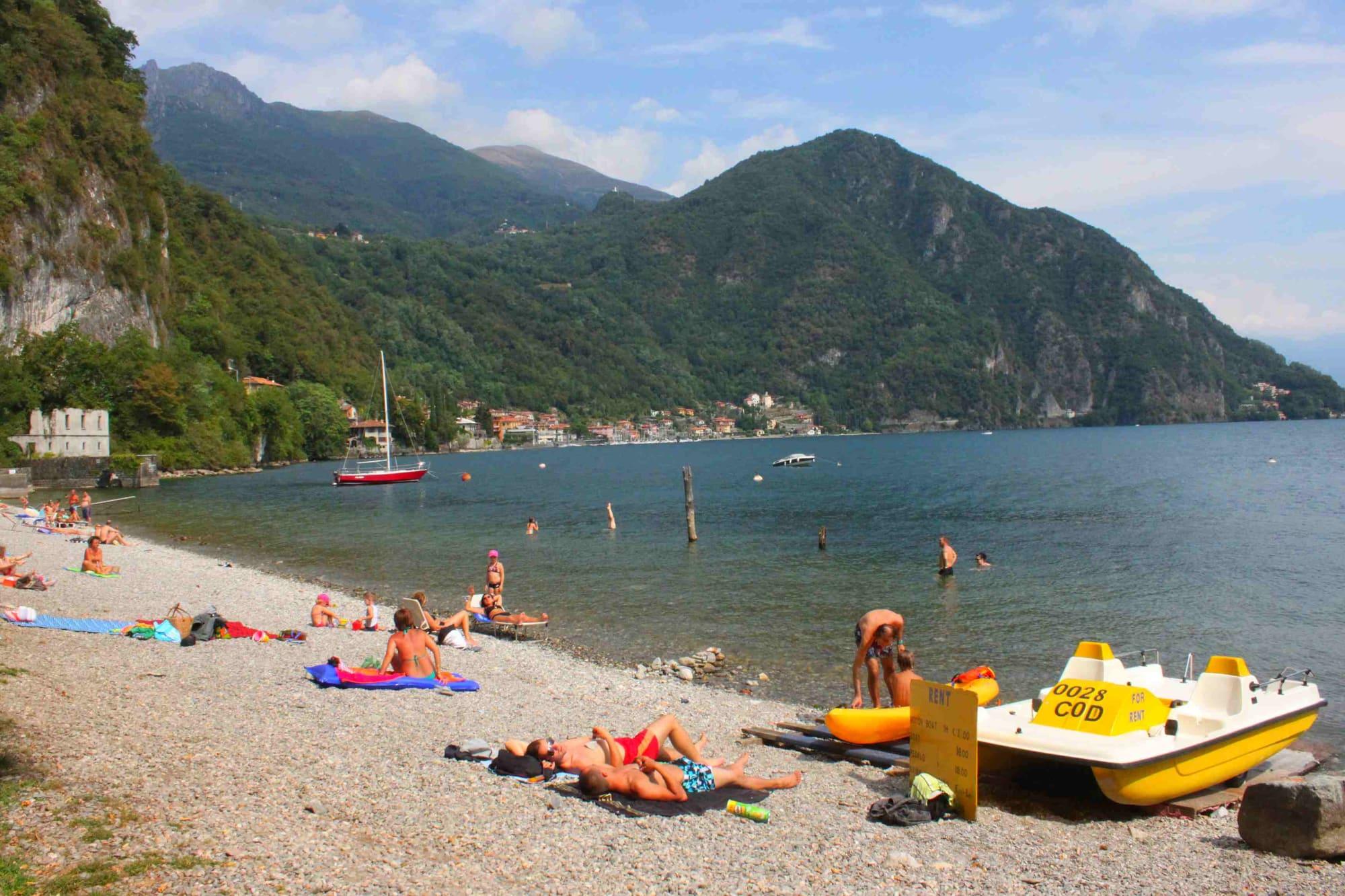
Lecco Branch
Swimming in the lake
The monitored bathing spots, the class of their water and where you can get into the water from the shore.
3 h – 8 hOpen access
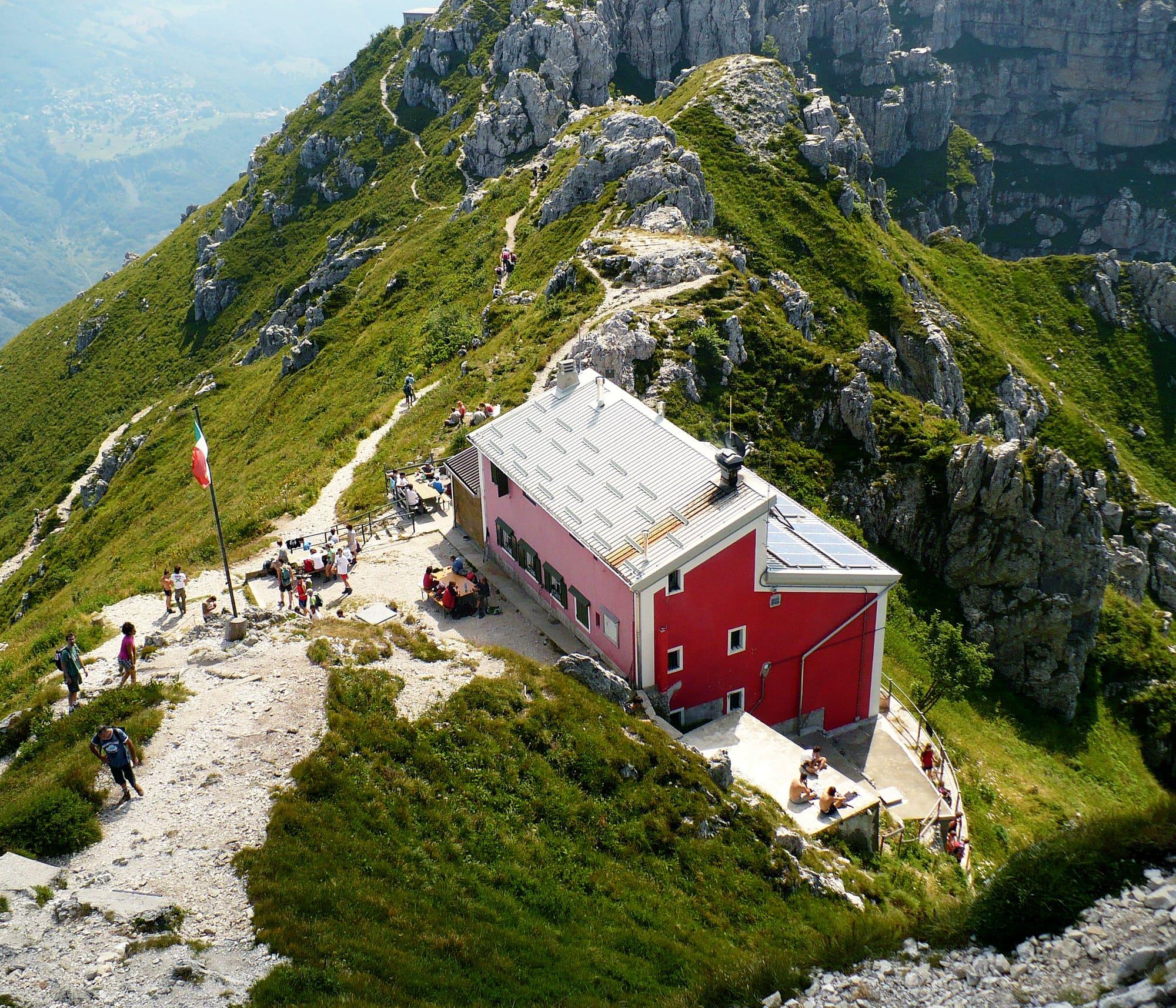
Centro Lago
Refuges and ridges
Refuges that cook, above the lake: the Rifugio Menaggio, at 1,383 metres, is an hour and three quarters' walk from Breglia.
4 h – 7 hCar needed
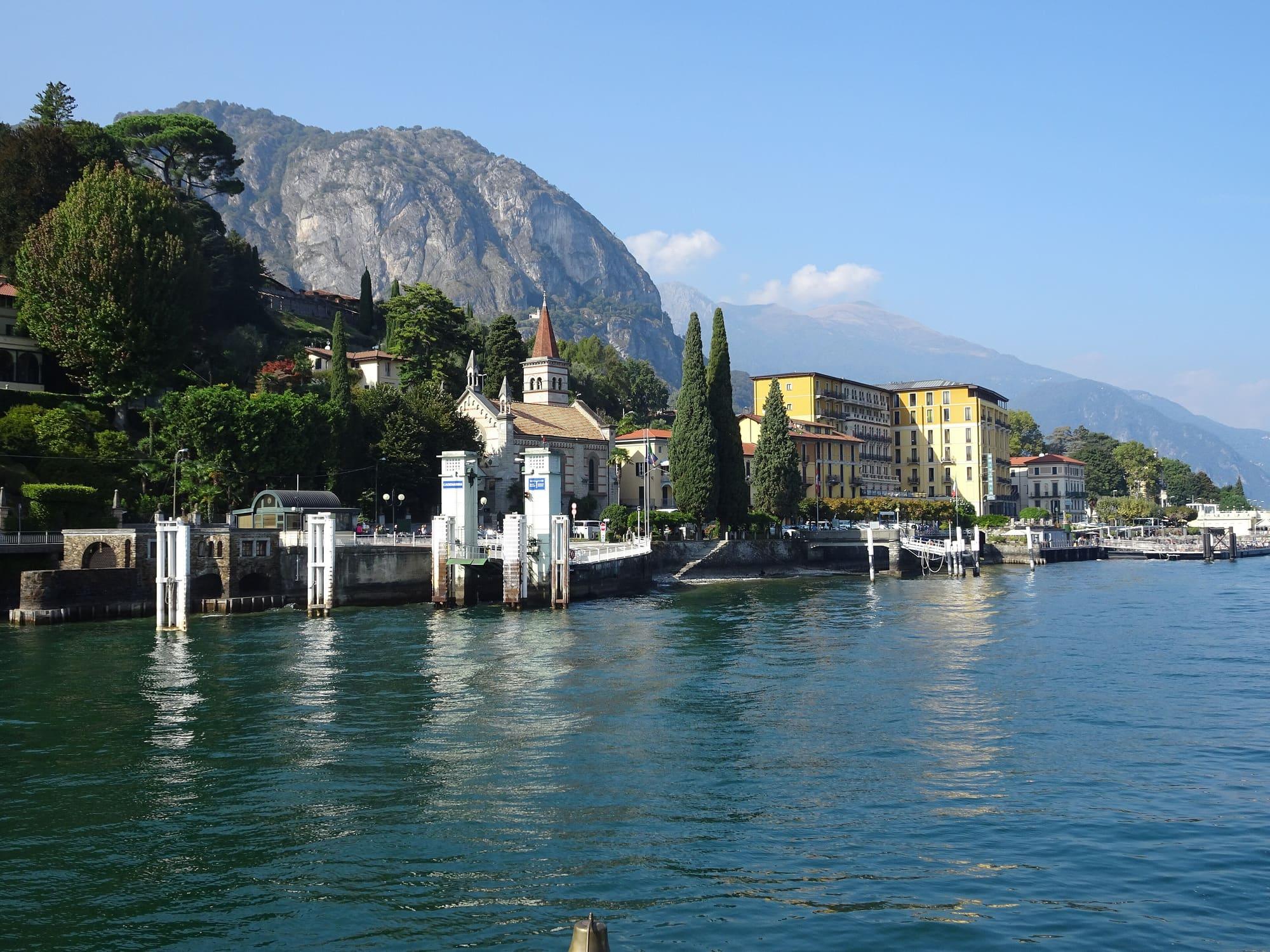
Centro Lago
Walking the Greenway
About eleven kilometres from Colonno to Griante, through villages, along mule tracks and beside the lake.
3 h – 5 h11.3 km · +214 mOpen access
Events
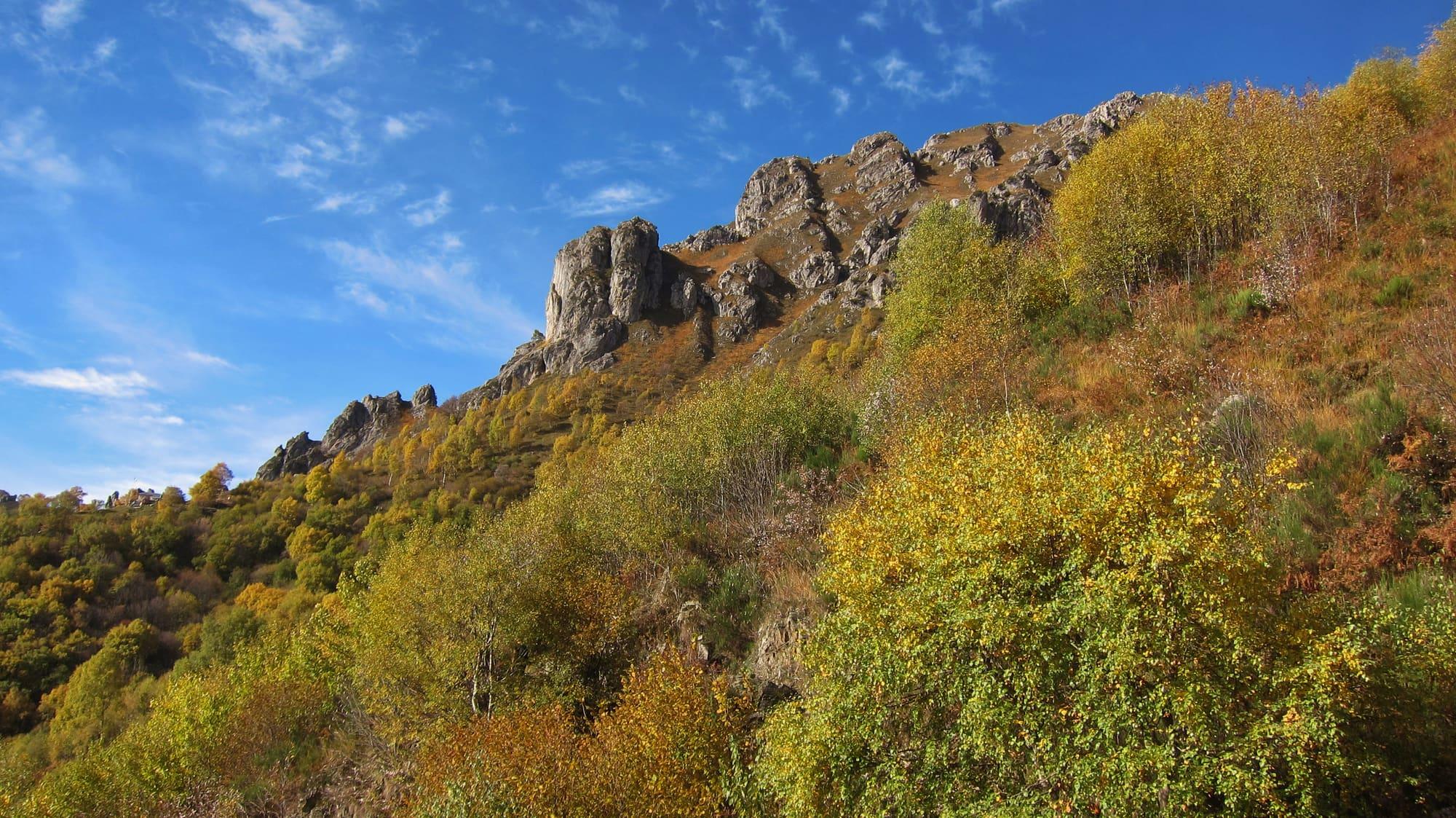
Before you go
How long it takes
- from Milan1 h 20Train, then boat
- from Como1 hBus · by car 50 min
- from Lecco49 minTrain, then boat · by car 1 h
Typical door-to-door times by public transport, changes included. From Milan, counted from Centrale station.
Tourist office
Infopoint Menaggio
Piazza Garibaldi 3, 22017 Menaggio
From 1 March, every day 9:00 to 13:00 and 14:00 to 18:00
Updated: 8 Oct 2026 · Promo Menaggio.
Parking and services
- Parcheggio Mazzini [€]surface · paid
- Parcheggio Mylius [€]multi-storey · paid
- Parcheggio Stoppani [€]surface · paid
- Piazza Vittorio Emanuele
2 public toilets15 drinking fountains1 pharmacy3 cash machines1 charging point3 defibrillators
Car parks and services on the map
Within two and a half kilometres of the centre; check car park spaces and fees on arrival.
Why choose Menaggio as a base?
It has the same ferries as Bellagio, a lido and buses to Como and to Lugano, and the everyday services are in town.
How do I reach Menaggio without a car?
Ferry from Varenna, which has the station, or from Bellagio, in a quarter of an hour; the C110 bus from Como in about an hour; the C112 bus from Lugano station.
Webcams
- Menaggio, Piazza GaribaldiLive video · Skyline Webcams
- Croce di Menaggio, the Alpini chapelLive video · Skyline Webcams
The light
The western shore has the evening sun, but the photograph is the morning: sunrise — behind the Grigne in the cold months, further north in summer — puts the mountains in silhouette and Varenna in raking light.
- Faces
- east
- Best light
- morning
- Full moon
- Tue 24 Nov · 17:07 · north-east
JuneDecember
The mountains around the village hide the sun before astronomical sunset: sunrise and sunset are worked out on the village's own horizon.
Today, 1 November, estimated sunlight at the reference point: first at 08:04 and last at 14:48, giving 6 h 45 of direct sun, out of 10 h 06 of daylight.
Today the sun leaves between 14:21 and 15:23, depending on the street.
JuneDecembertoday
Watch the shadow reach Menaggio today
See from Menaggio where the sun goes, in 3D
The sun at an exact spot in Menaggio: your hotel, a beach, a street
A table in the sun in Menaggio
Places near the shore with outdoor seating, with today's estimated first and last sun at the marked point. Those with the latest sun come first. Clouds and shade from buildings, trees or awnings can change the light on the tables; check opening hours with the venue.
- Via Benedetto Castellirestaurant08:01–15:11
- Piazza Giuseppe Garibaldicafé08:03–14:51
- Via Comorestaurant08:03–14:42
- Via Armando Diazbar07:46–14:16
- Via IV Novembrecafé08:04–14:01
The highest summit in view from here is Monte Galleggione, 3107 m, 43 kilometres away.
- Il Motto, 865 m, 3 km
- Sasso Canale, 2411 m, 24 km
- Monte Galleggione, 3107 m, 43 km
- Monte Gruf, 2938 m, 36 km
- Monte Legnoncino, 1711 m, 12 km
- Monte Legnone, 2609 m, 16 km
- Monte Croce di Muggio, 1799 m, 10 km
- Monte Albiga, 917 m, 5 km
- Sasso Sant'Ambrogio, 669 m, 4 km
- Monte San Defendente, 1326 m, 6 km
- Pizzo dei Cich, 1454 m, 10 km
- Pizzo della Pieve, 2257 m, 14 km
- Grigna Settentrionale, 2410 m, 14 km
- Sasso Cavallo, 1923 m, 13 km
- Bastionata, 2126 m, 16 km
- Zucco Pertusio, 1671 m, 15 km
- Punta Forcellino, 1280 m, 18 km
- Corno di Canzo Occidentale, 1373 m, 19 km
- Monte Corbera / Monte Dalco, 997 m, 11 km
- Monte Ponciv, 1452 m, 12 km
- Monte Nuvolone, 1092 m, 8 km
- Monte San Primo, 1682 m, 12 km
- Costa San Primo - Cima di Mezzo, 1541 m, 11 km
- Sasso San Martino, 862 m, 2 km
- Monte Crocione, 1641 m, 4 km
- Monte Galbiga, 1691 m, 6 km
- Ciapp del castell, 835 m, 3 km
- Monte Grona, 1736 m, 5 km
- Monte Bregagnino, 1905 m, 7 km
The ochre line follows today's sun path and marks the estimated times of its first and last appearance above the mountains. Drag the panorama to see all of it.
How it is drawn
Paler ridges are farther away; heights are stretched two and a half times. Houses are not drawn, nor are trees within half a kilometre. Terrain © Regione Lombardia (CC BY 4.0); summits © OpenStreetMap contributors.
Official bathing sites nearby, with their water quality classifications.
- Fronte Lido0.6 kmExcellent · for 11 seasons · in July, sun estimated until 19:38 at the marked point3D — see from the beach at Fronte Lido where the sun goes
- Spiaggia Lerai0.7 kmExcellent · for 7 seasons · in July, sun estimated until 17:04 at the marked point3D — see from the beach at Spiaggia Lerai where the sun goes
- Spiaggia Cantone (Nobiallo)2 kmExcellent · for 7 seasons · in July, sun estimated until 18:34 at the marked point3D — see from the beach at Spiaggia Cantone (Nobiallo) where the sun goes
What to see in Menaggio?
In town, a few steps from the landing stage, the parish church of Santo Stefano with its copy of Luini's Madonna of Menaggio and, on Via Calvi, Santa Marta with the Roman plaque and the castle coat of arms set in its outer walls. Above the town, at Loveno, Villa Vigoni, visited with a guide. To the north along the Regina, Nobiallo with its leaning bell tower and the sanctuary of the Madonna della Pace. For walking, the Crocetta trenches with the centre of the lake before you, and higher up the Val Sanagra with its museum and Lago di Piano.
Can you swim at Menaggio?
The lido north of the centre has swimming pools and areas along the shore, with controlled access. Before swimming in the lake, check local bathing notices and water conditions.
Which walks start from Menaggio?
The Rifugio Menaggio below Monte Grona, an hour and three quarters from Breglia with some 650 metres of ascent, and the view over the upper lake and Lake Lugano. On the same shore, southwards, the Greenway from Griante to Colonno. Westwards, in the Val Menaggio, the cycle and foot path on the old Menaggio–Porlezza railway crosses the Lago di Piano reserve, where the walk round the lake is a waymarked path of about five and a half kilometres, an hour and a half at an average pace. And above the town the Val Sanagra: the valley museum in Villa Camozzi at Grandola, the old brickworks and the Rogolone, a huge oak.
Is Menaggio connected to Lugano?
Yes: the C112 bus leaves Lugano station and reaches Menaggio in about an hour, with a few runs a day.
Where are the markets in Menaggio?
The market takes place in the Via Stoppani car park. Craft markets occupy Piazza Garibaldi, Piazza Grossi, Largo Cavour and the Lungolago Castelli.
On the map
What is around, and how far.
© OpenStreetMap contributors · ODbL
Nearby
Typical door-to-door times.
Bellagio
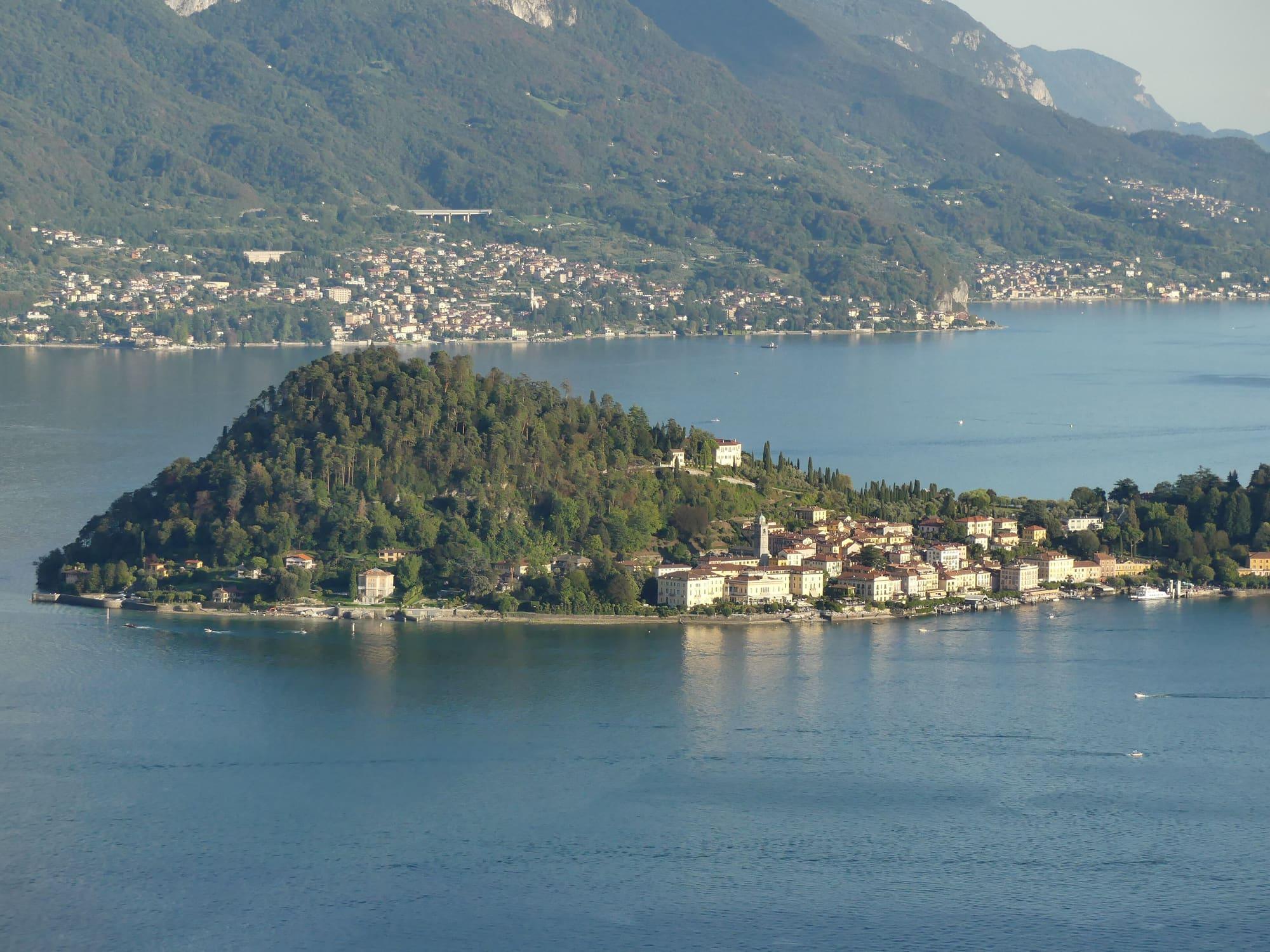
On the point that splits the lake in two, with staircases instead of streets. In winter the timetable thins out: fewer runs and a much earlier last departure.
15 min
Varenna
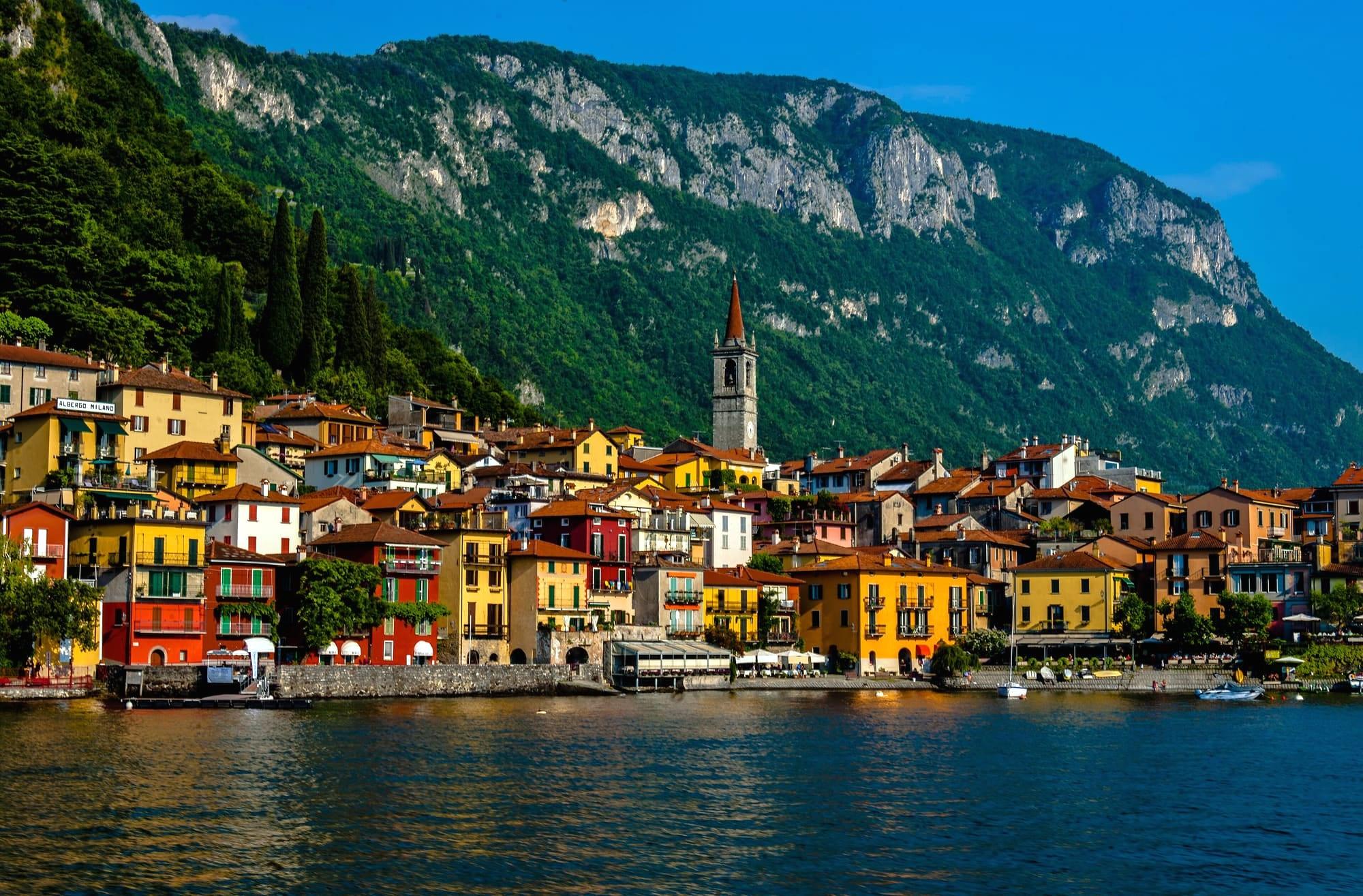
Ochre houses on the water, two botanical gardens on the shore and Vezio castle above the village. In winter the timetable thins out: fewer runs and a much earlier last departure.
15 min
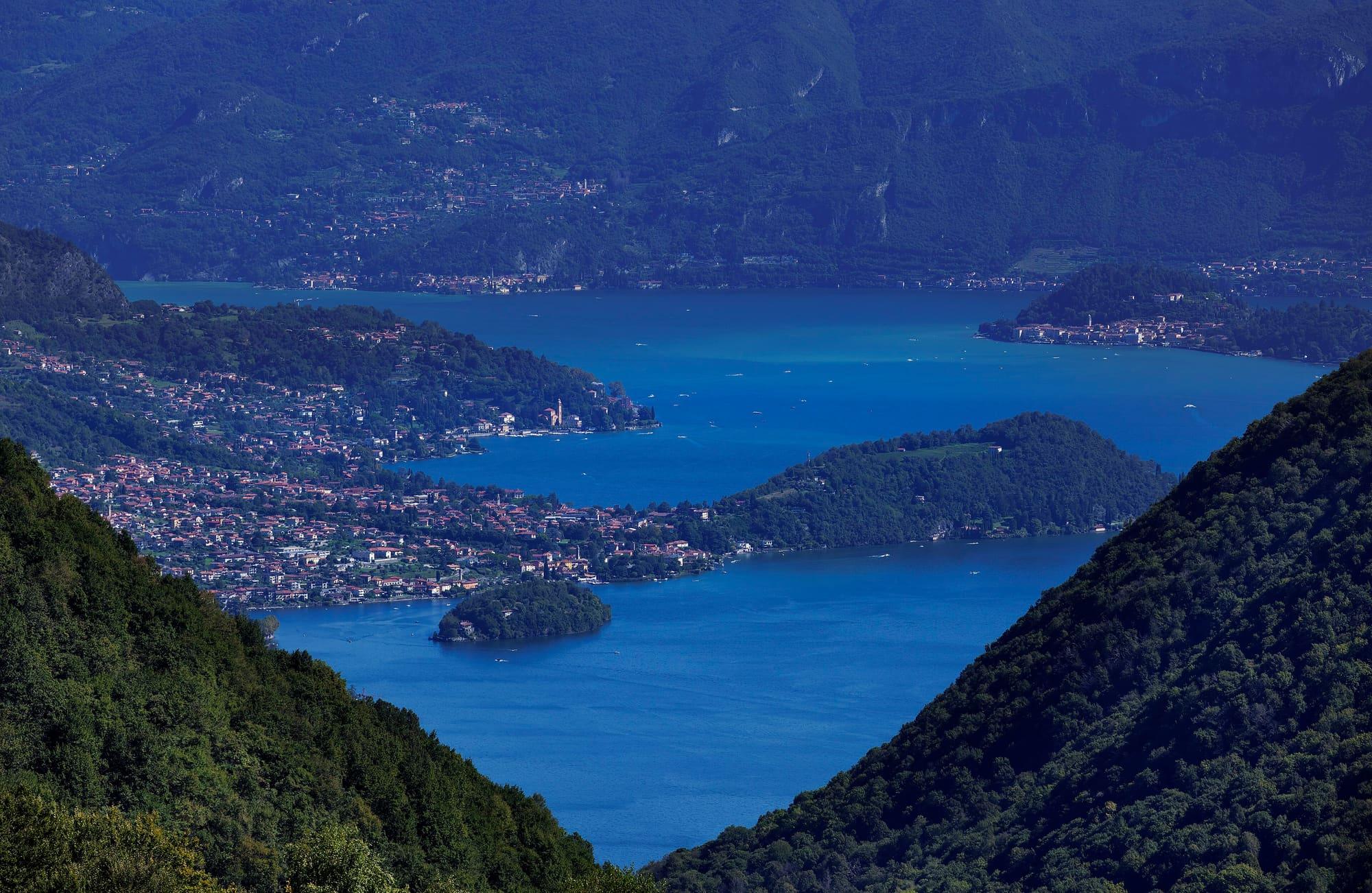
Tremezzina
Four villages in a row on the lake's western shore, facing Bellagio.
15 min
Sources and credits
- Maps, parking, services and distances: © OpenStreetMap contributors (ODbL).
- Freely licensed photographs: authors and licences under Photograph credits.
Sources and credits
- Maps, parking, services and distances: © OpenStreetMap contributors (ODbL).
- Freely licensed photographs: authors and licences under Photograph credits.