7Dec
Upper Lake
Gravedona ed Uniti
- Ideal for
- Romanesque art, watersports
- Time needed
- Half a day
- Best season
- May–September
- What to see
- Santa Maria del Tiglio in black and white bands
- Best reached by
- C110 bus from Como and Menaggio, boat
- René810 · CC BY-SA 4.0
- Kaitu · CC0
The place
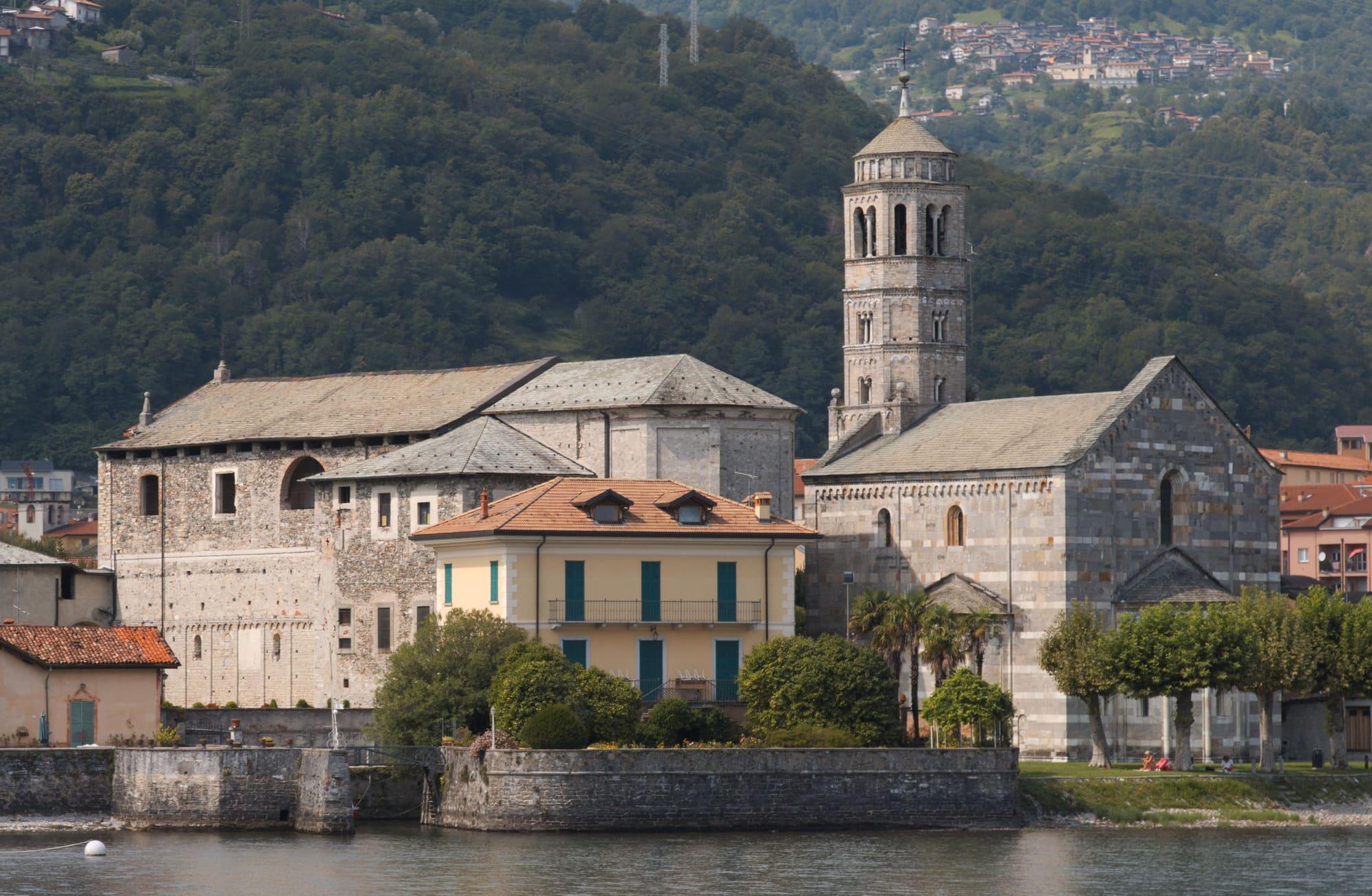
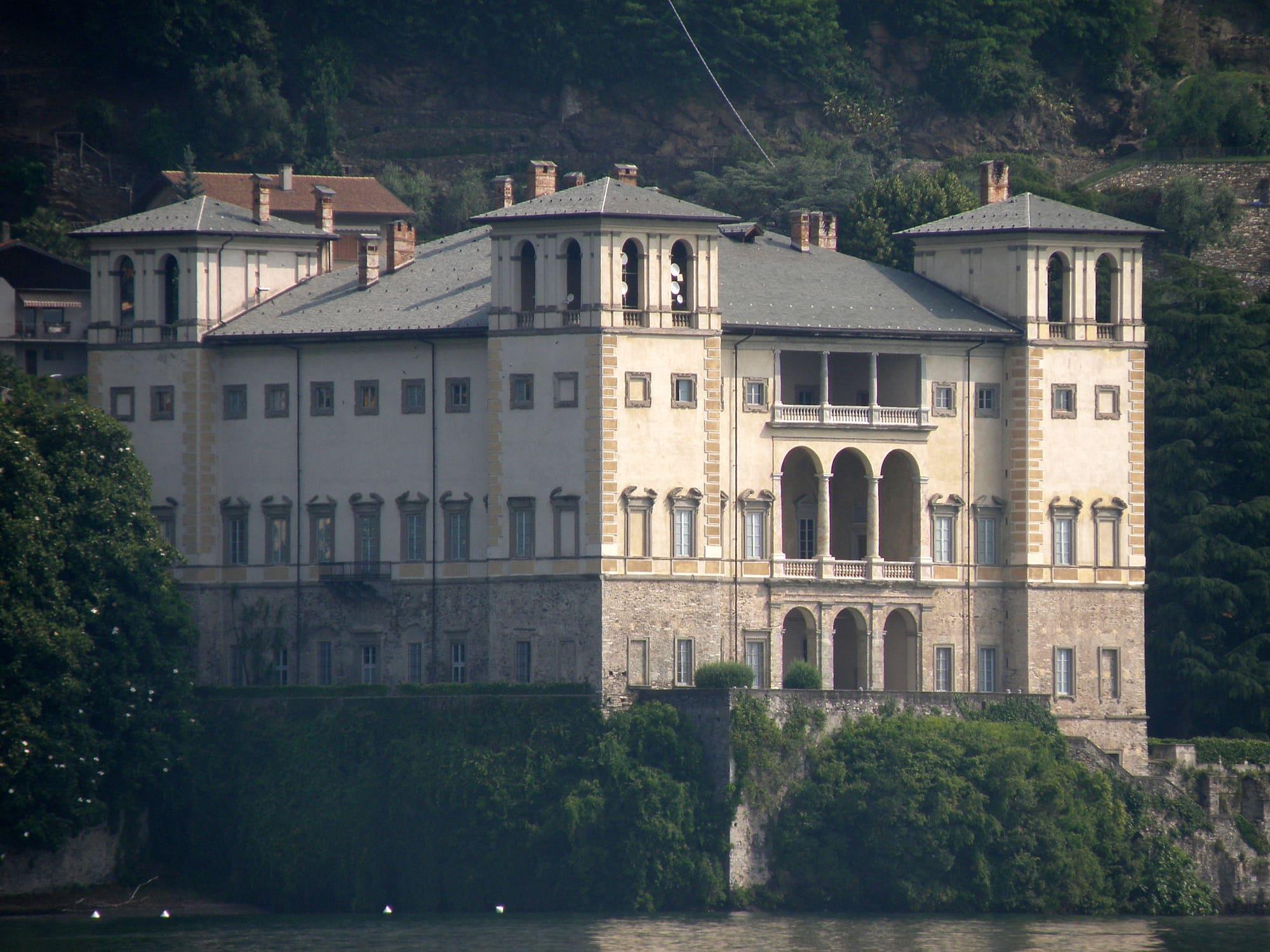
Gravedona was for centuries the centre of the Tre Pievi, the upper lake's de facto small republic, and it keeps two monuments: Santa Maria del Tiglio, the Romanesque church with its tower built into the facade, and Palazzo Gallio, which Cardinal Tolomeo Gallio had built on the shore in 1586.
Gravedona was for centuries the centre of the Tre Pievi, the upper lake's de facto small republic, and it keeps two monuments: Santa Maria del Tiglio, the Romanesque church with its tower built into the facade, and Palazzo Gallio, which Cardinal Tolomeo Gallio had built on the shore in 1586.
Read on
The town on the bay
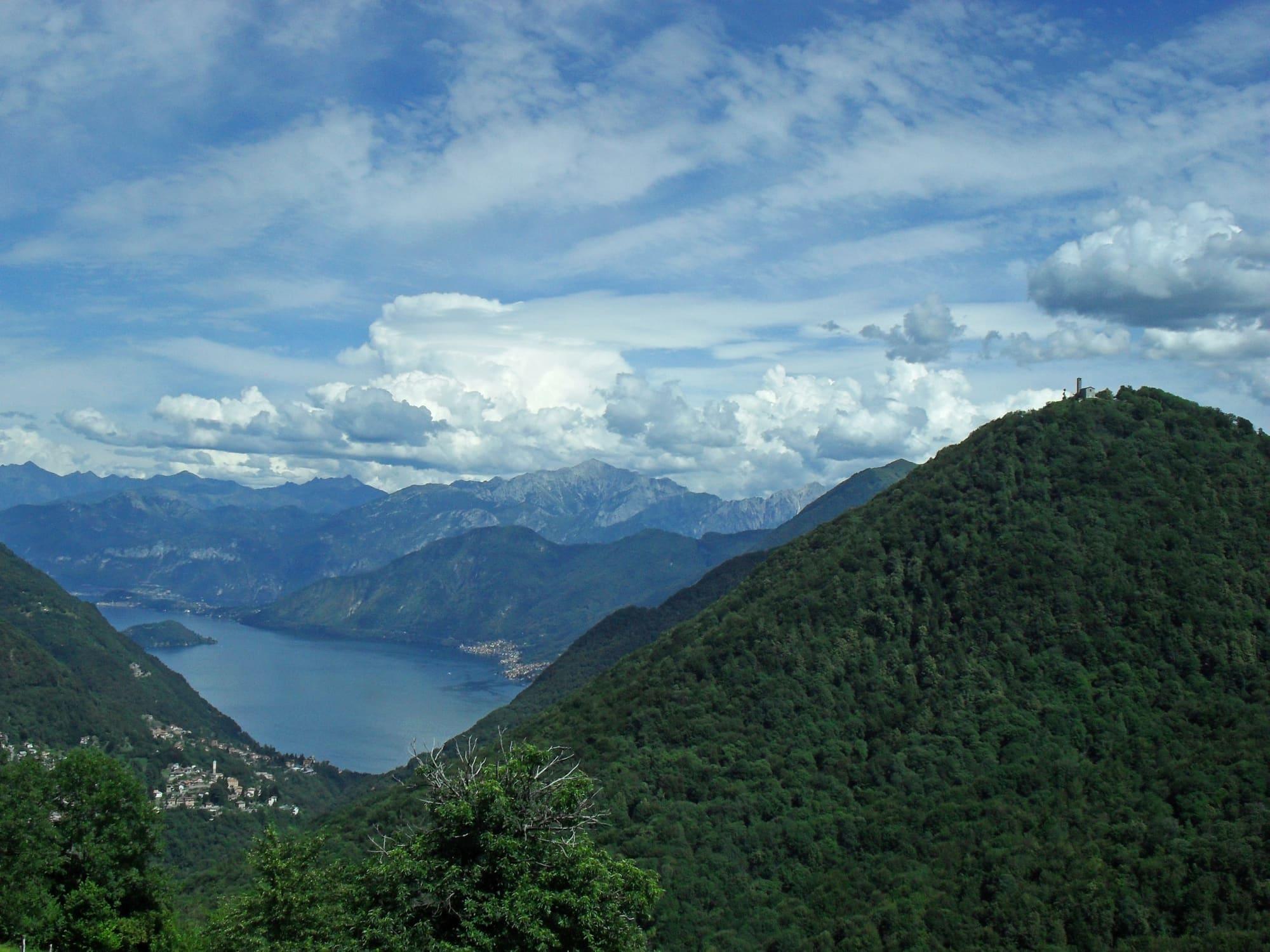
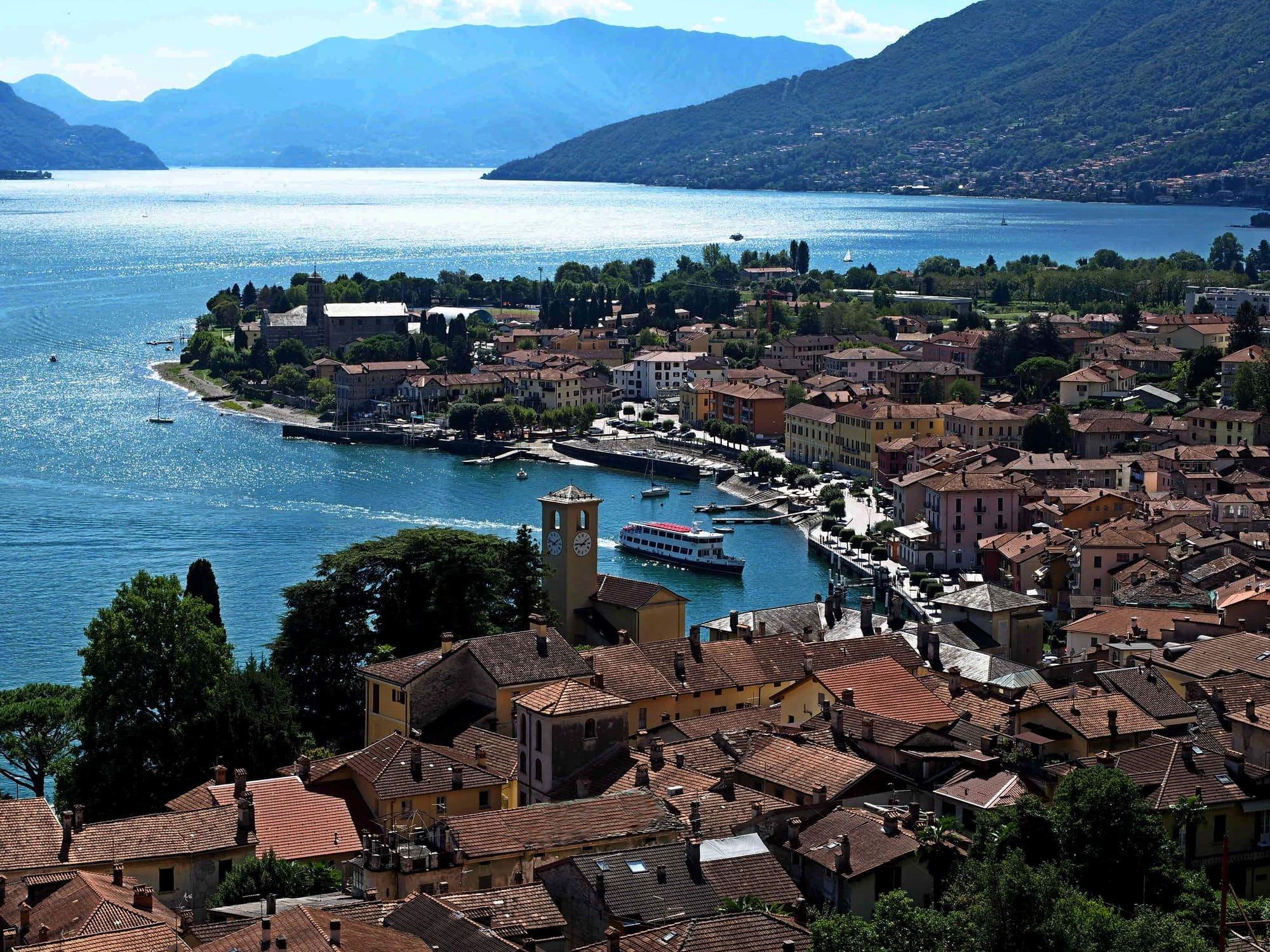
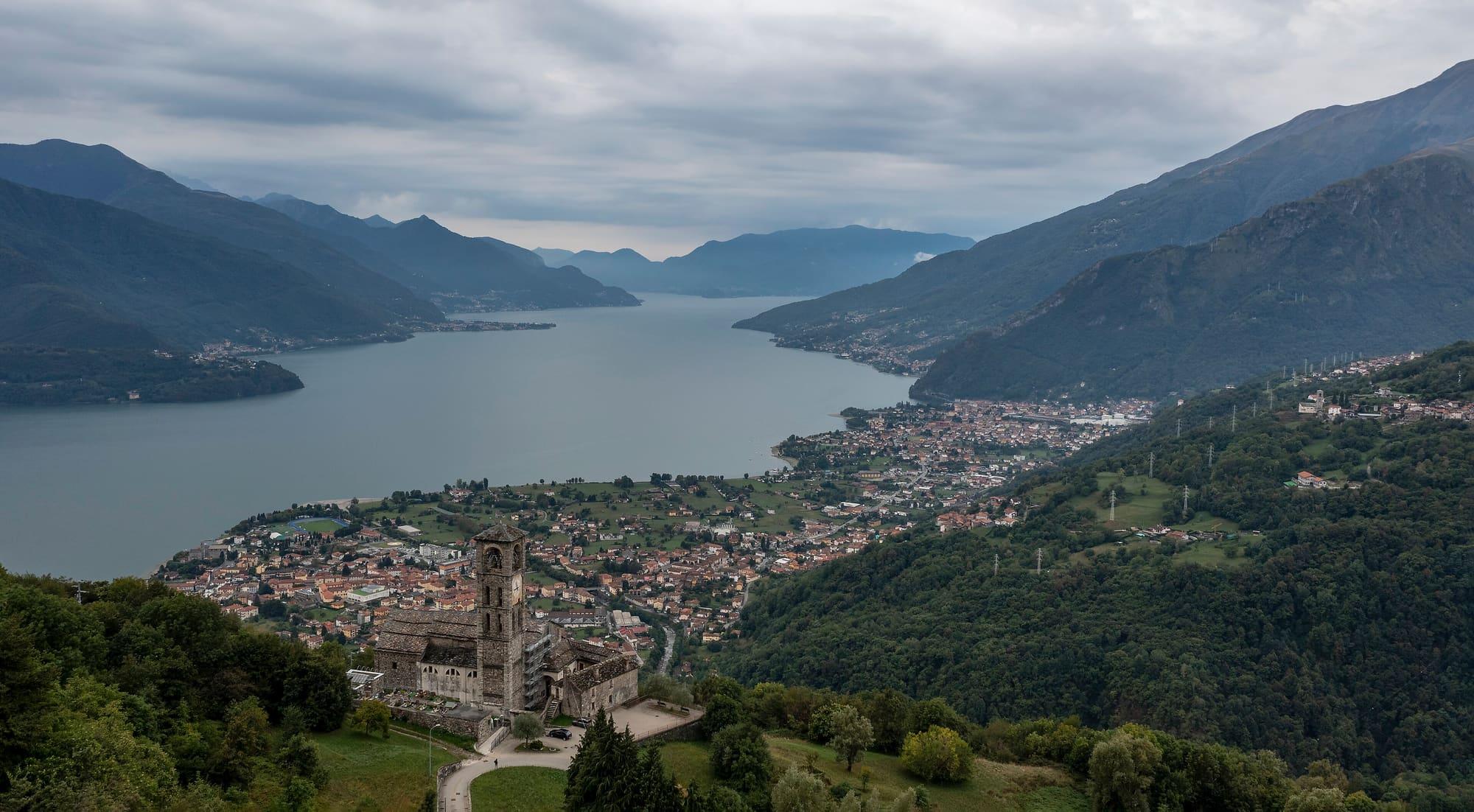
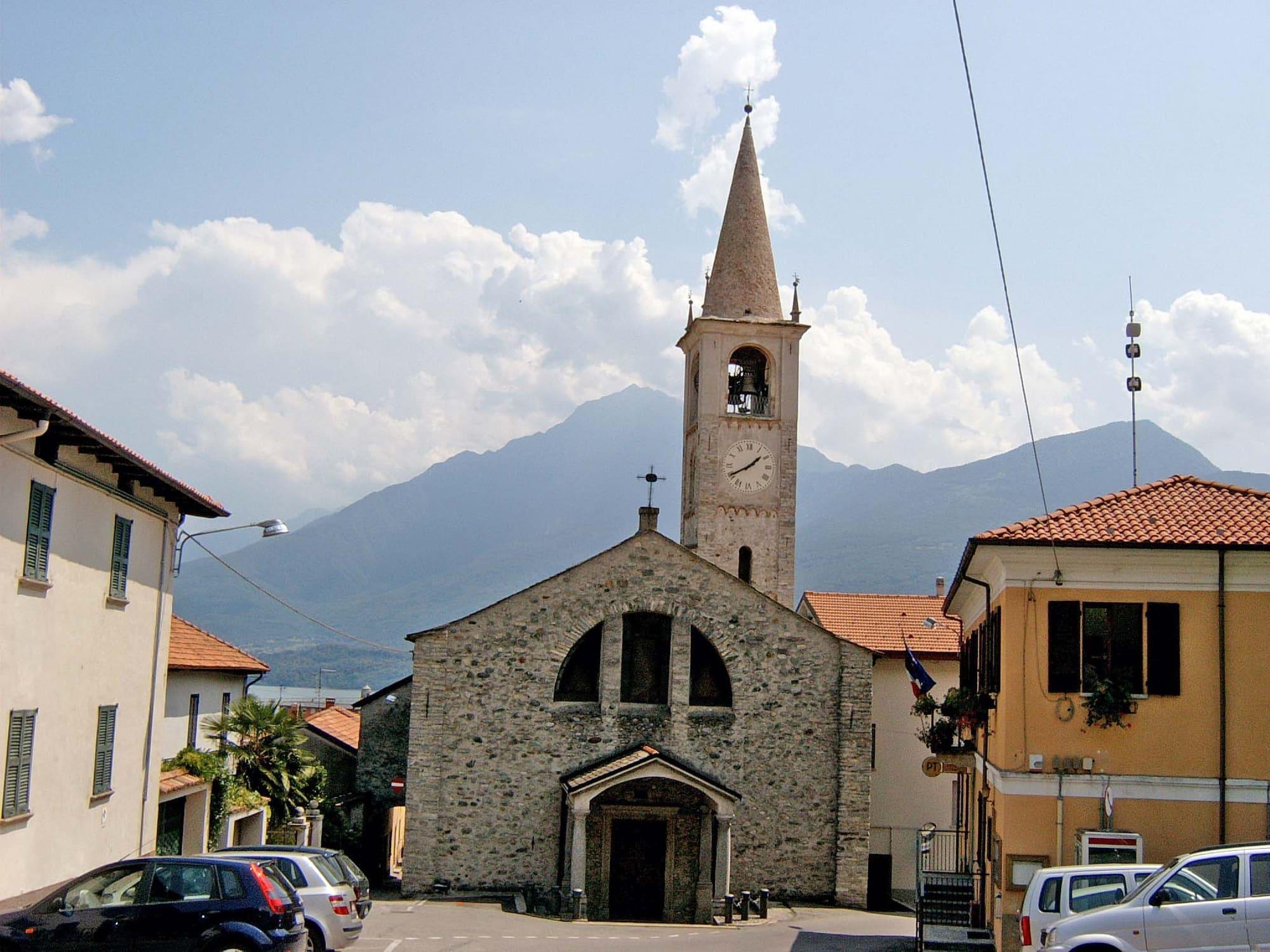
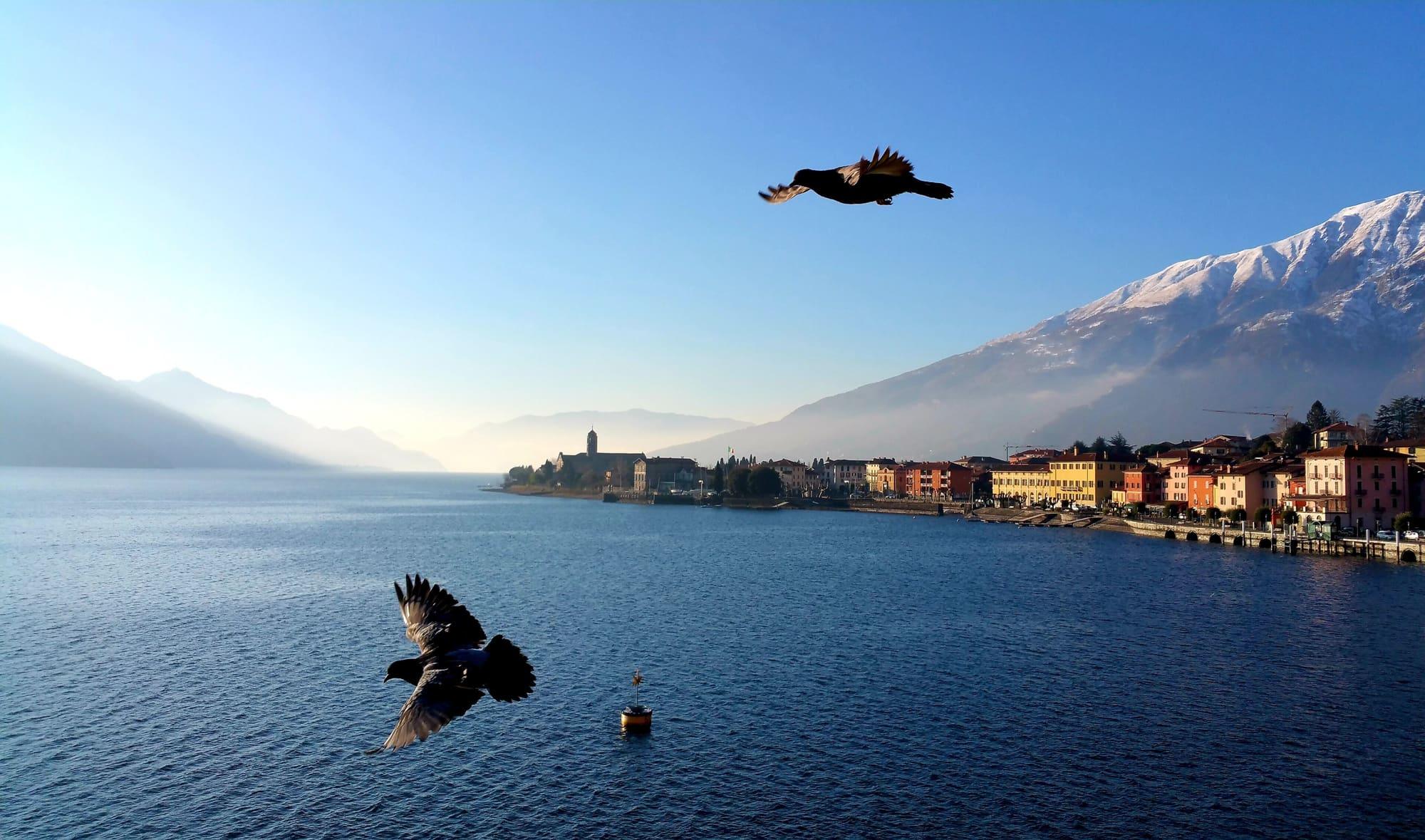
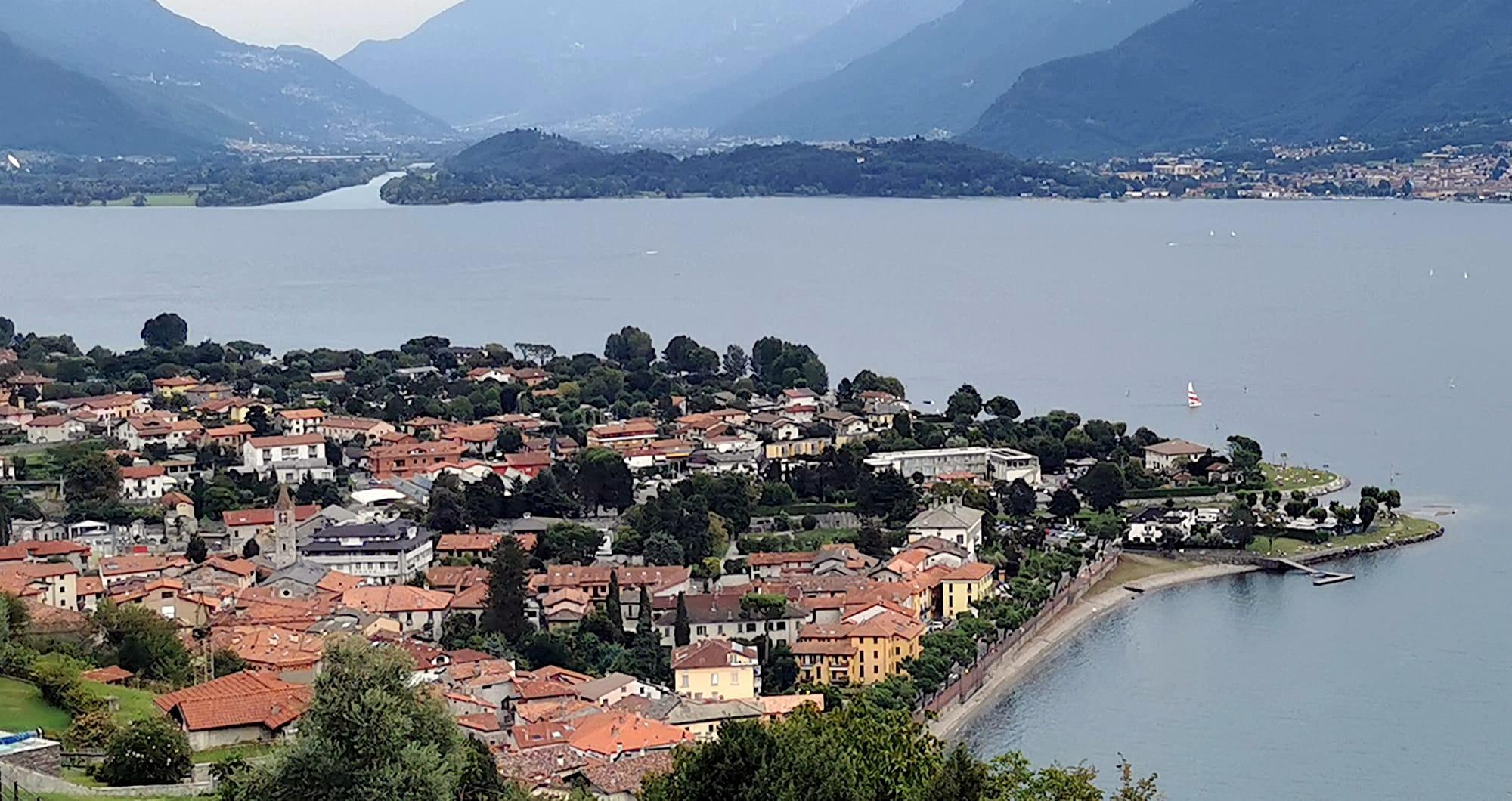
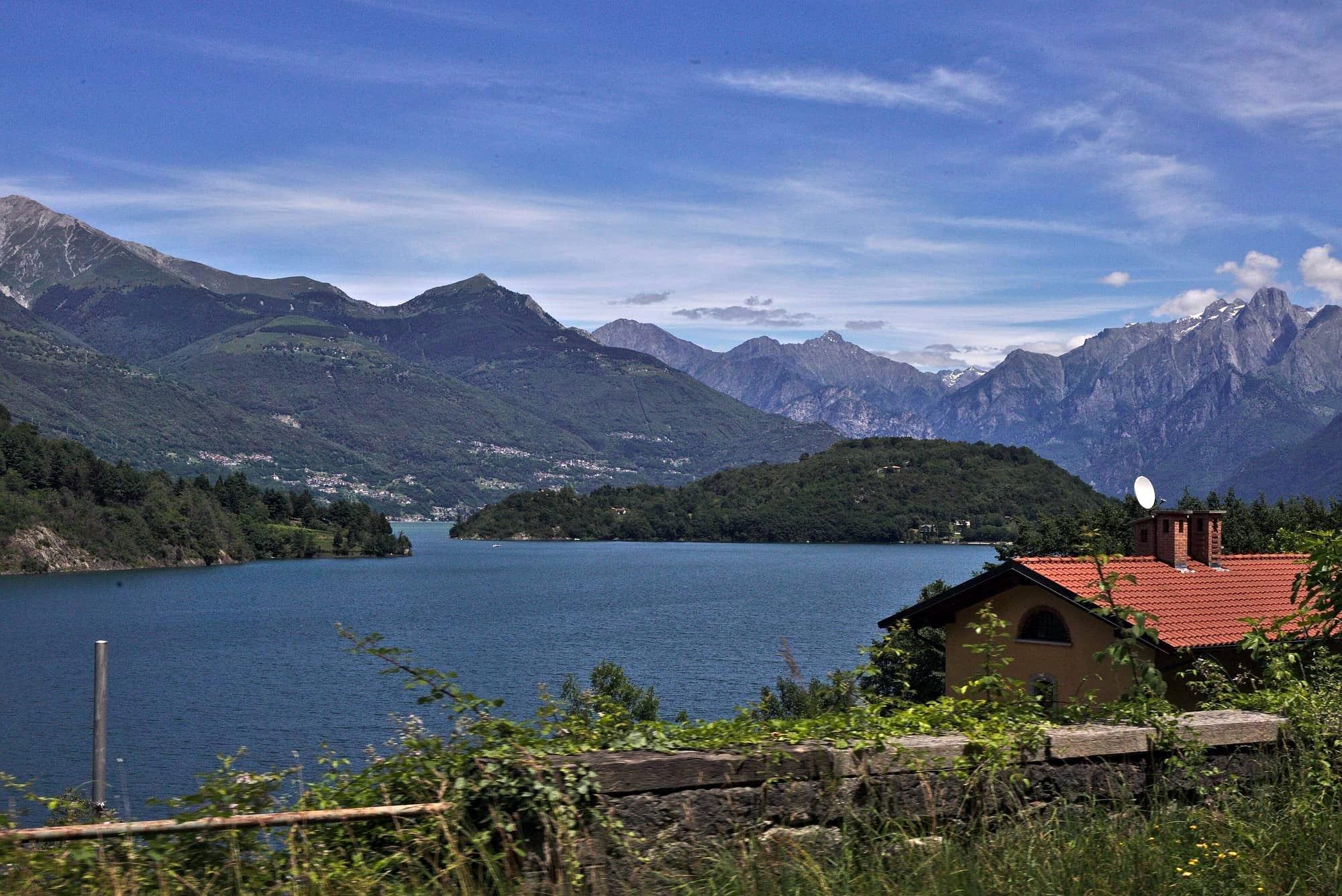
Gravedona lies in a wide bay on the western shore of the upper lake, between the slopes of the Sasso Pelo to the north and the plain of the Liro stream to the south. Since 2011 it has been the main town of the municipality of Gravedona ed Uniti, formed by its merger with Consiglio di Rumo and Germasino. Its two main monuments stand at either end of the lakefront. To the south is Santa Maria del Tiglio, the Romanesque church in white and black bands, with the old parish church of San Vincenzo beside it. To the north is Palazzo Gallio, the palace of the four towers on a spur of rock.
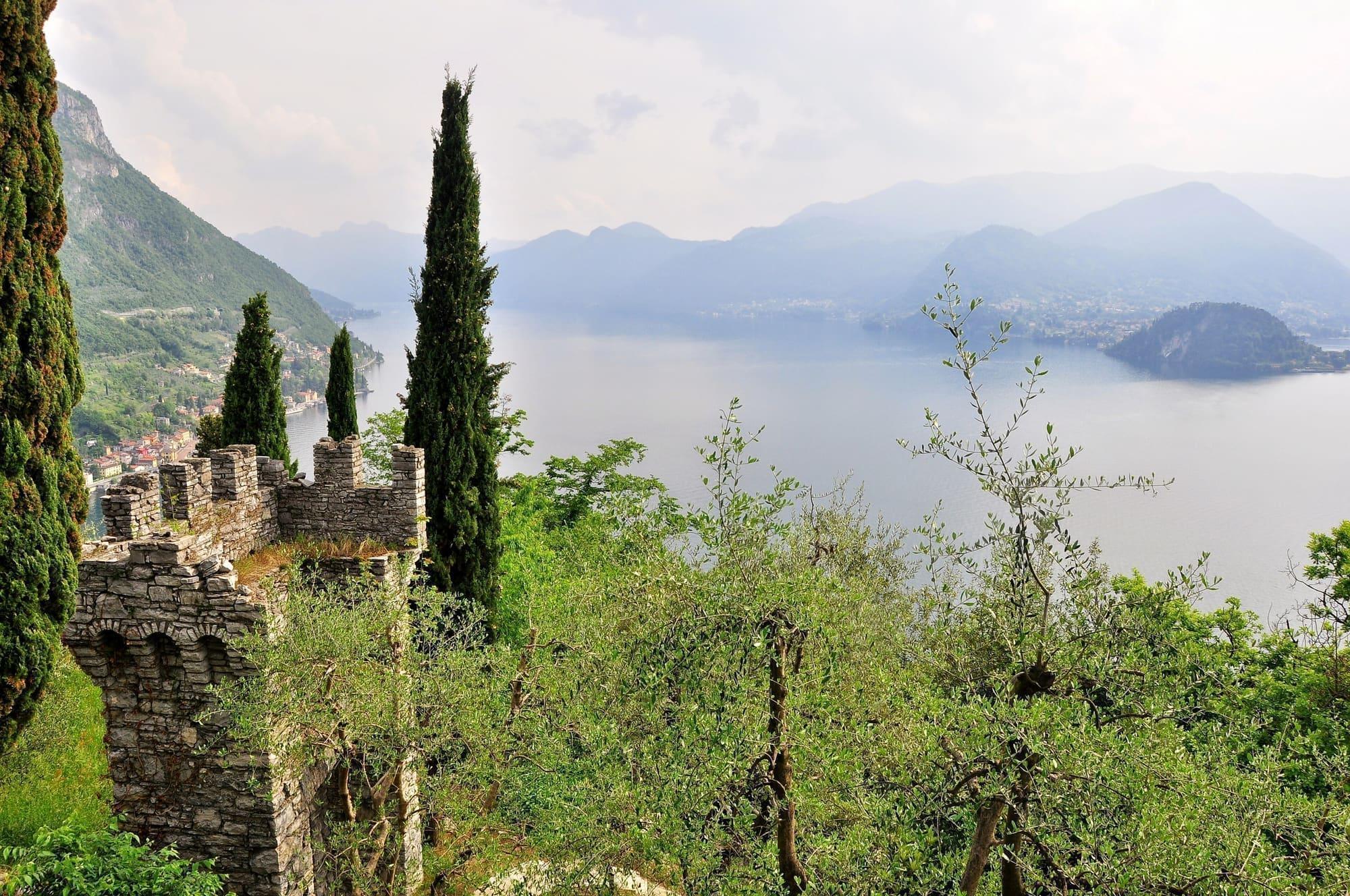
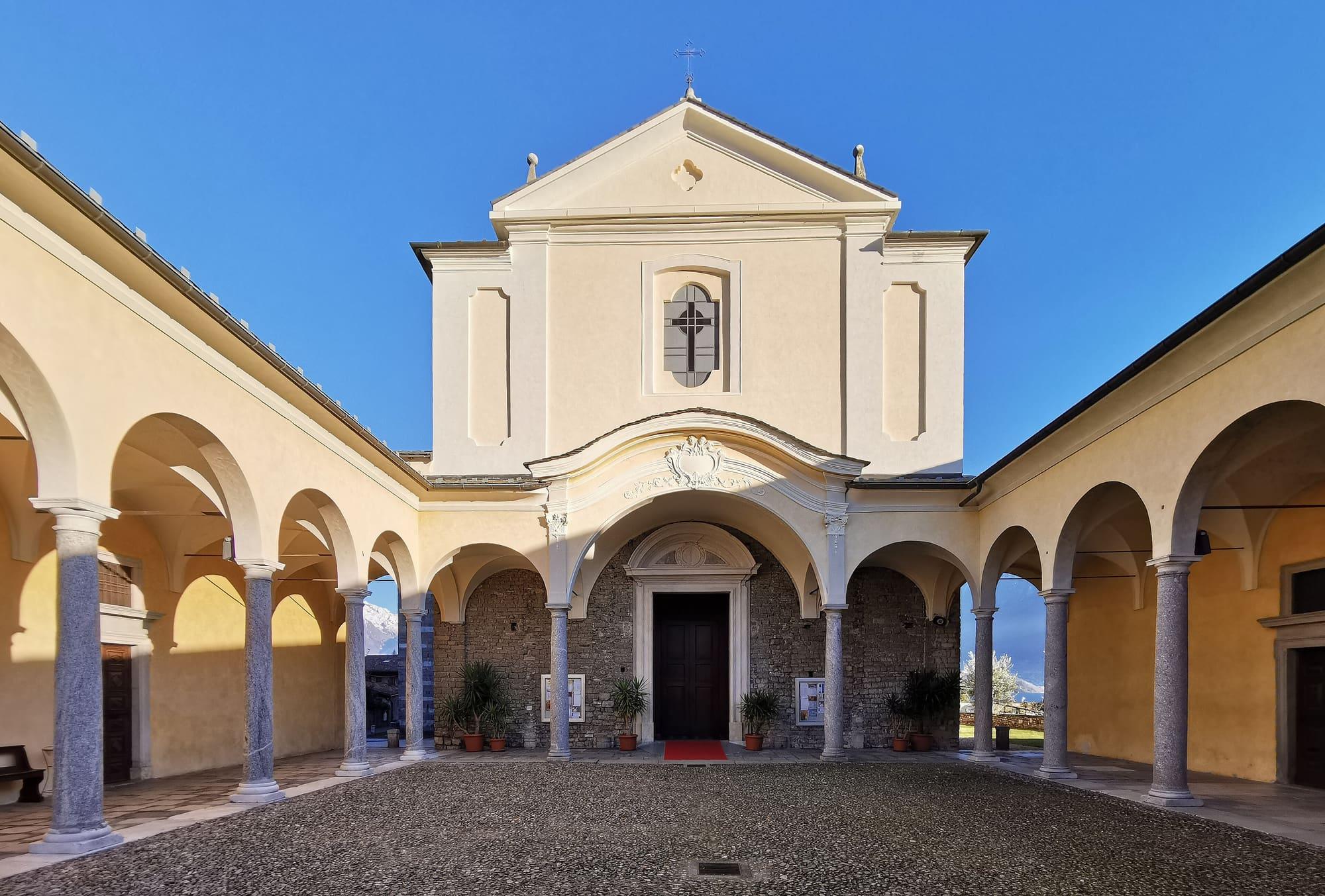
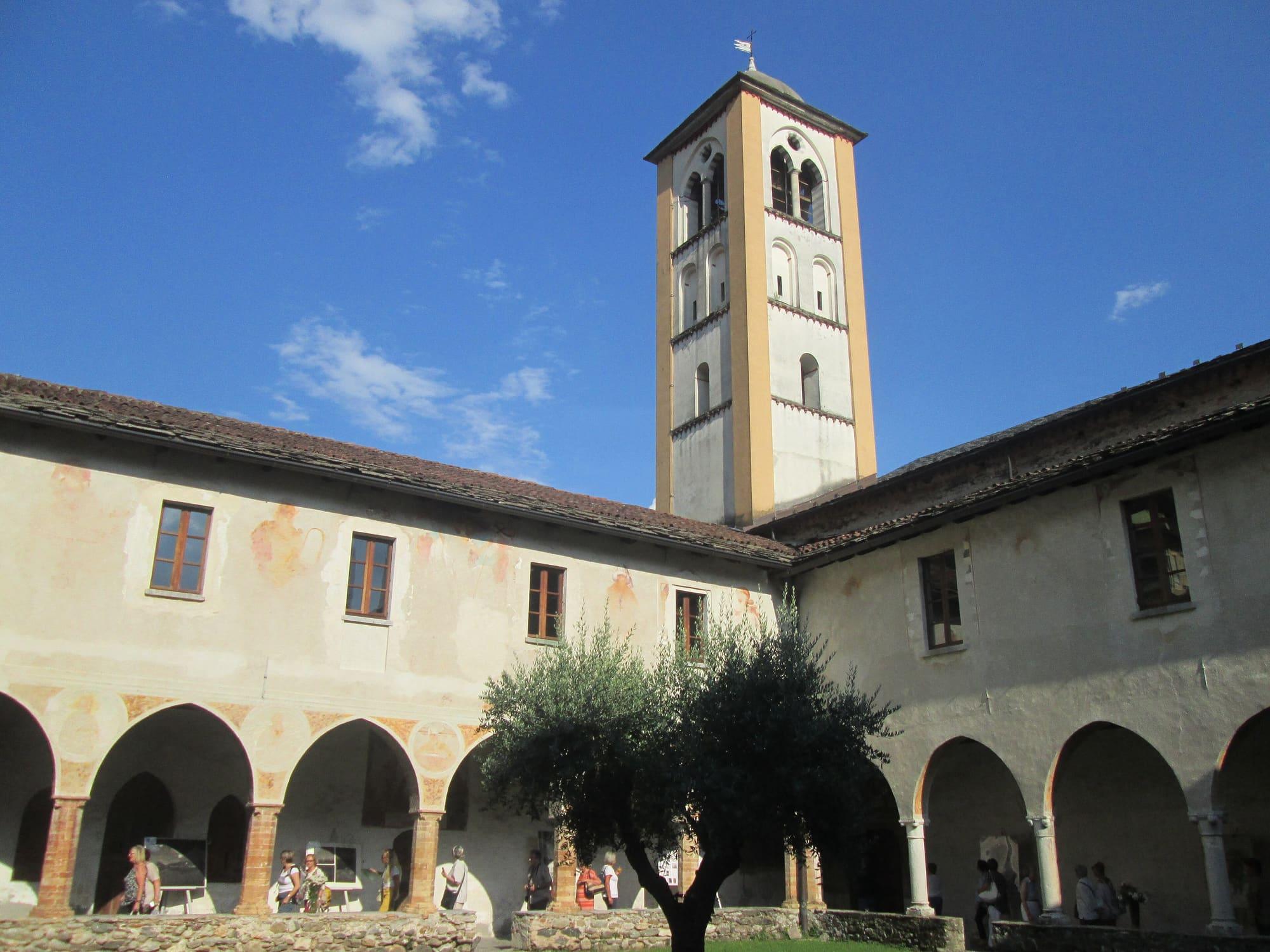
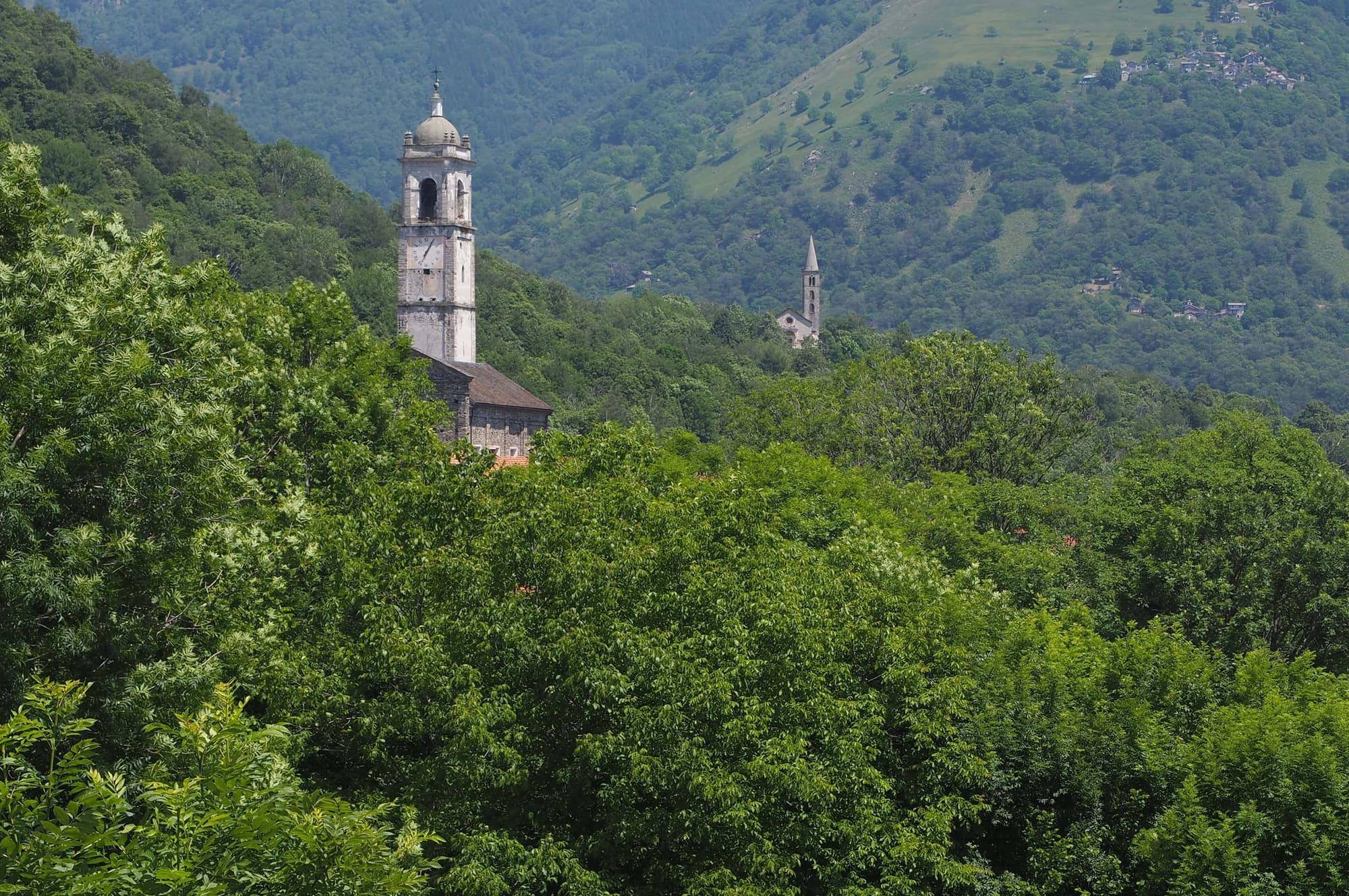
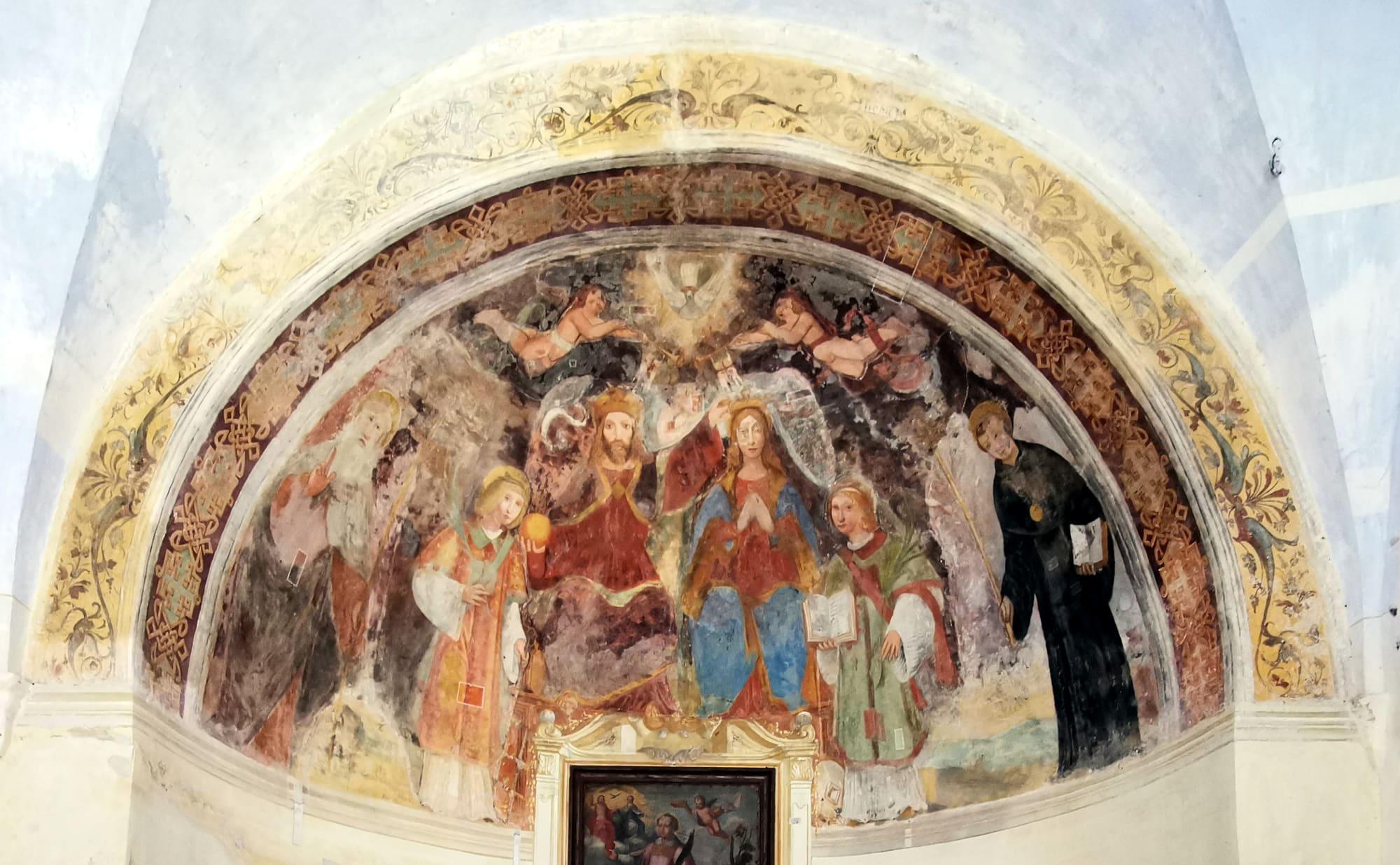
The old centre has two parts: the Riva, along the lake, and higher up the Castello, the oldest quarter. Above the houses stand two churches. Santa Maria delle Grazie, the church of the Augustinian convent, was begun in 1467 and frescoed throughout between the late fifteenth and the early sixteenth century. Santi Gusmeo e Matteo dates from 1248.
History
Gravedona was inhabited before the Romans, and a Roman altar is kept in the church of San Vincenzo. In the Middle Ages it was the centre of the Tre Pievi, the territory that united the communities of Gravedona, Dongo and Sorico: it depended on Como but governed itself with wide autonomy. In 1335 it passed with Como to the Visconti, lords of Milan. From 1512 it was ruled for some years by the Grisons.
In 1580 Cardinal Tolomeo Gallio bought the county of the Tre Pievi from Philip II, King of Spain and Duke of Milan. His heirs, the Dukes of Alvito, held it until the end of the eighteenth century. In those centuries many people from the upper lake emigrated, above all to Palermo. On 27 April 1945 Benito Mussolini, captured by partisans at Dongo, was taken to the Guardia di Finanza barracks at Germasino, where he was held until late that night.
Santa Maria del Tiglio and San Vincenzo
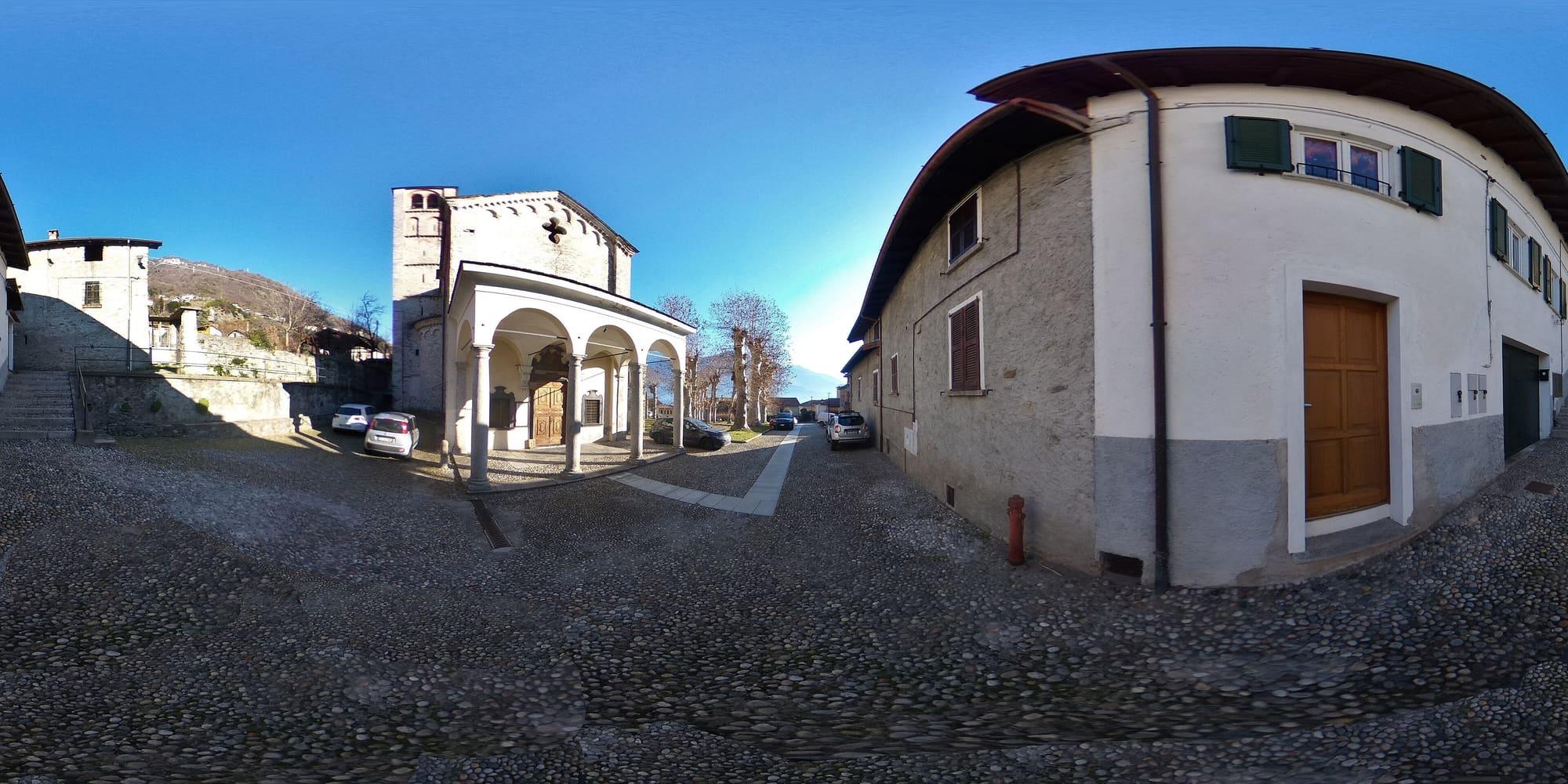
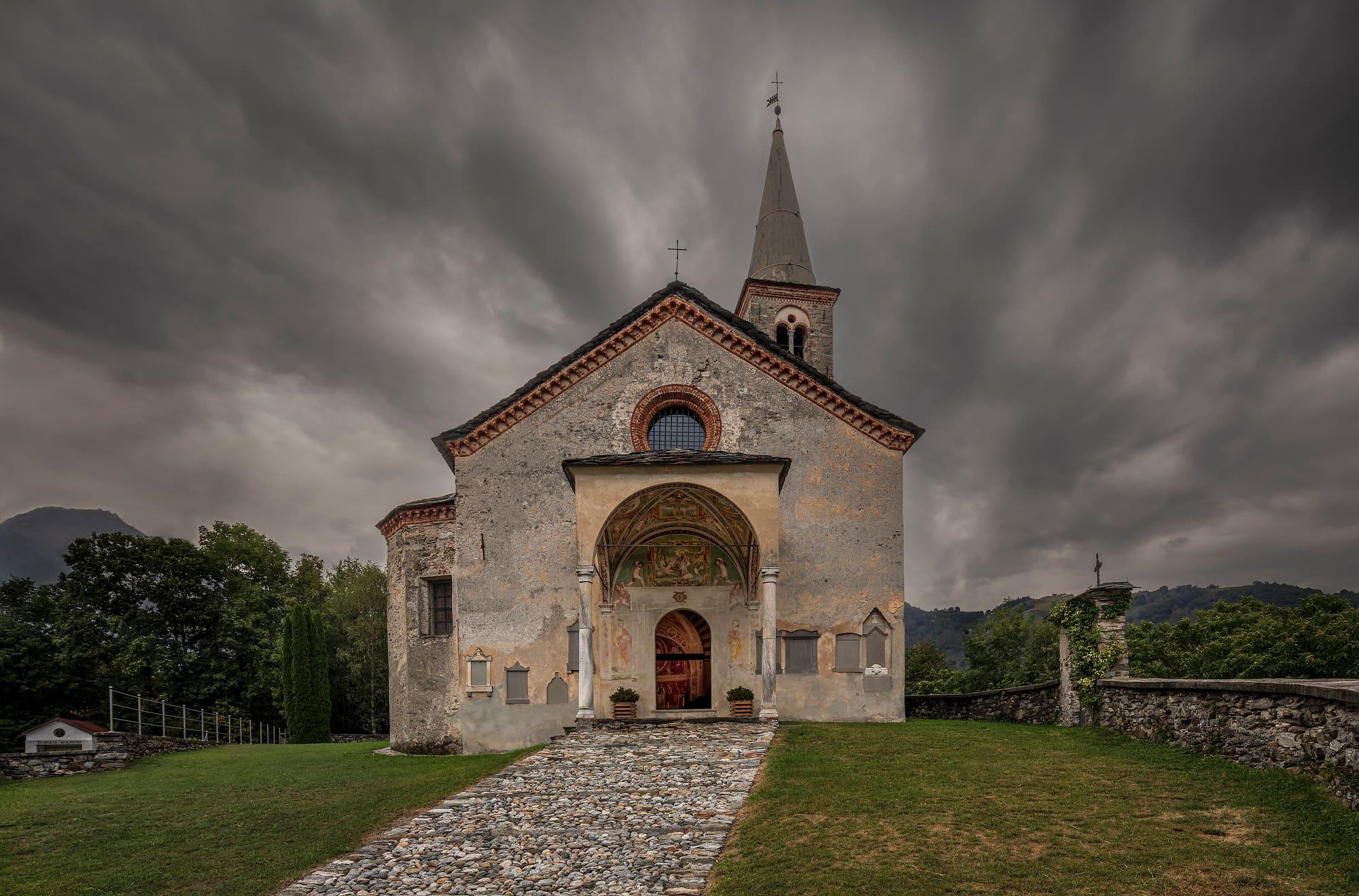
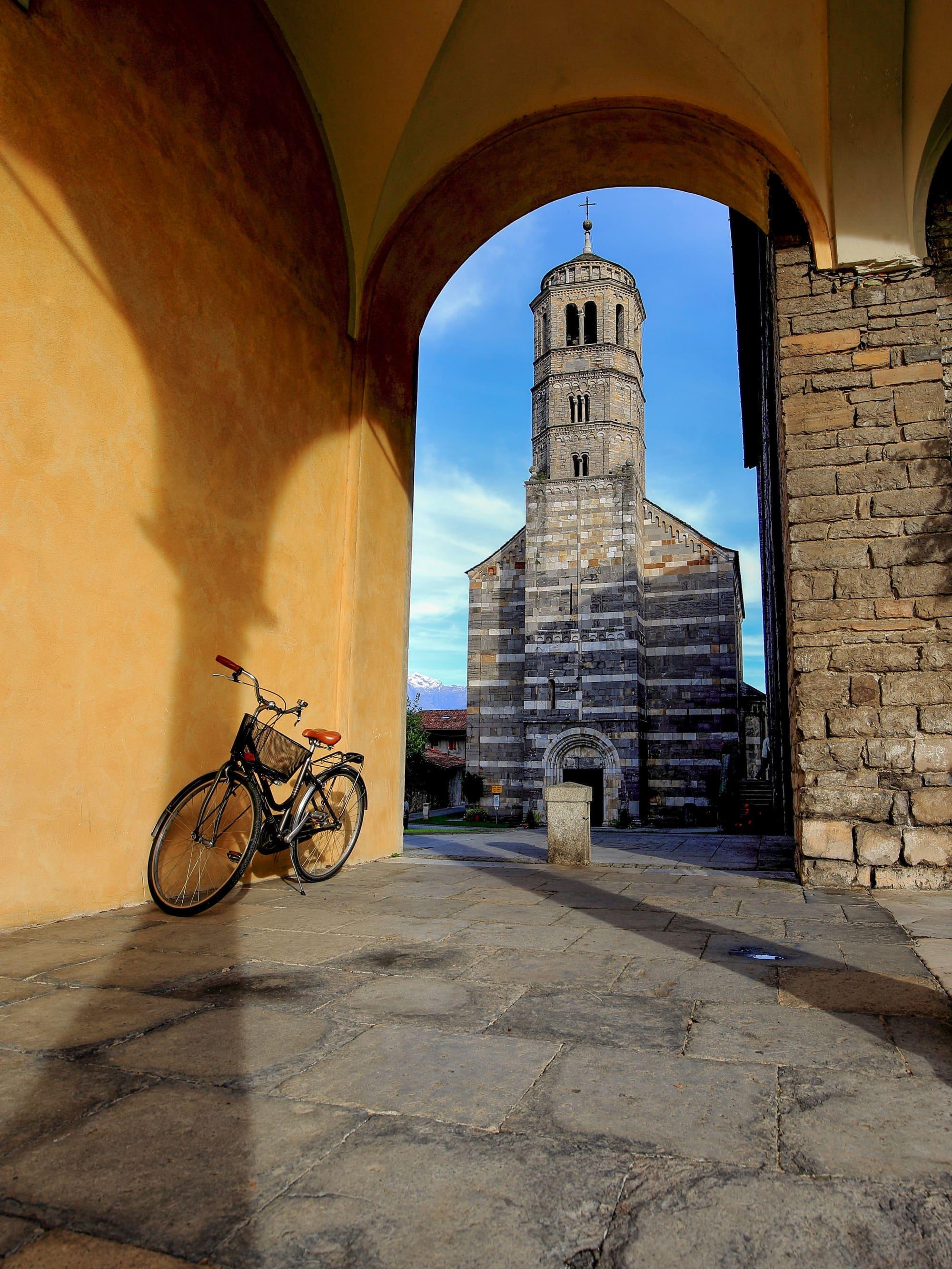
Santa Maria del Tiglio was built in the first half of the twelfth century as a baptistery, in place of an early Christian baptistery of the fifth or sixth century, whose remains came to light in the excavations of 1953. The walls alternate bands of white Musso marble and dark stone. The bell tower is set directly into the facade: its base dates from the fourteenth century, and its octagonal upper part was completed in the sixteenth. Inside are medieval frescoes and a large twelfth-century wooden crucifix. The church stands a few steps from the shore.
Beside it is San Vincenzo, the old parish church, consecrated in 1072 and remodelled in Baroque style from the seventeenth century. Its sacristy holds a gold cross and chalice by the Gravedona goldsmith Ser Gregori. The upper lake has other Romanesque churches, such as Santa Maria in Martinico at Dongo and Piona Abbey: the round takes half a day by car.
Palazzo Gallio
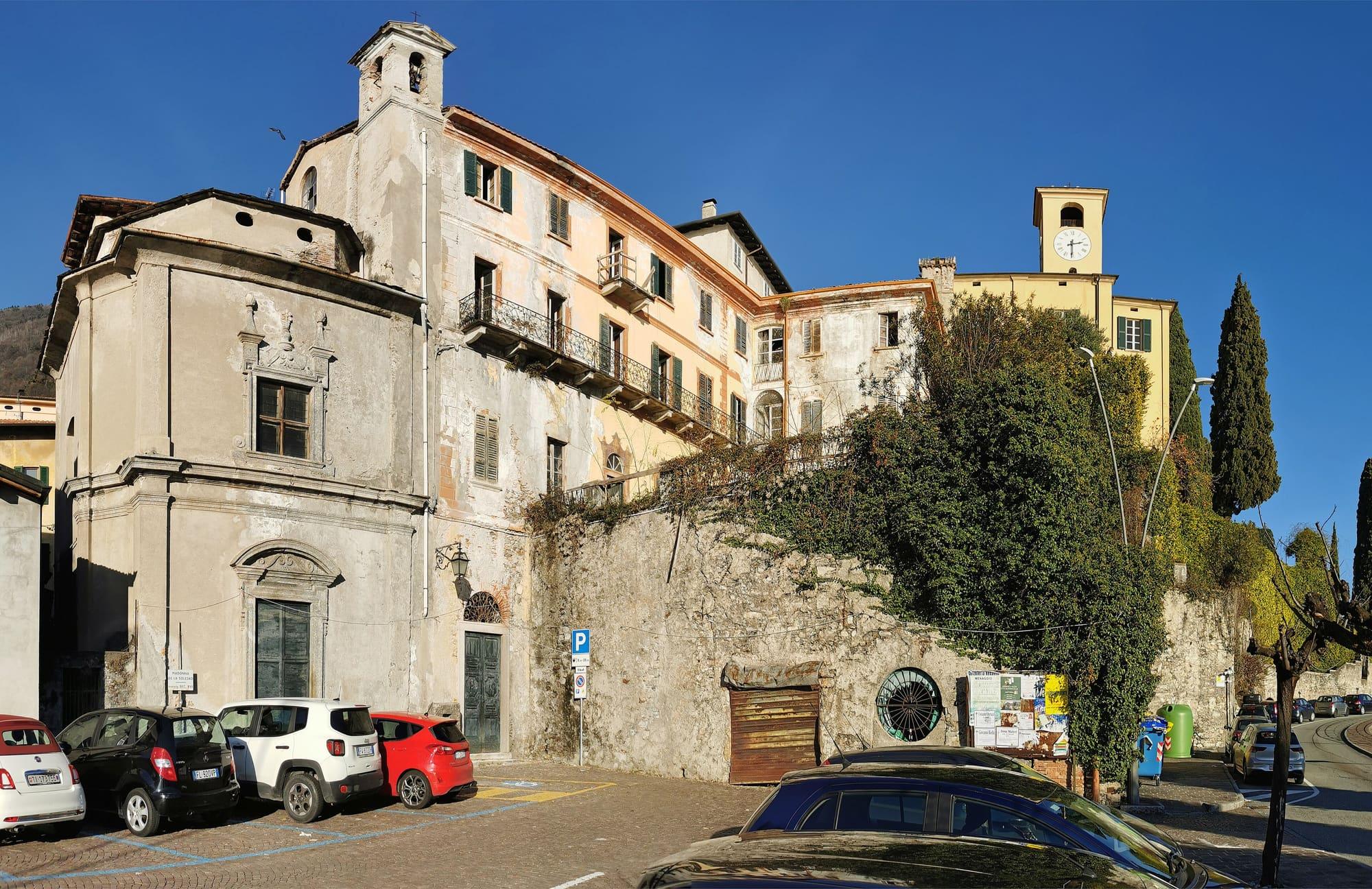
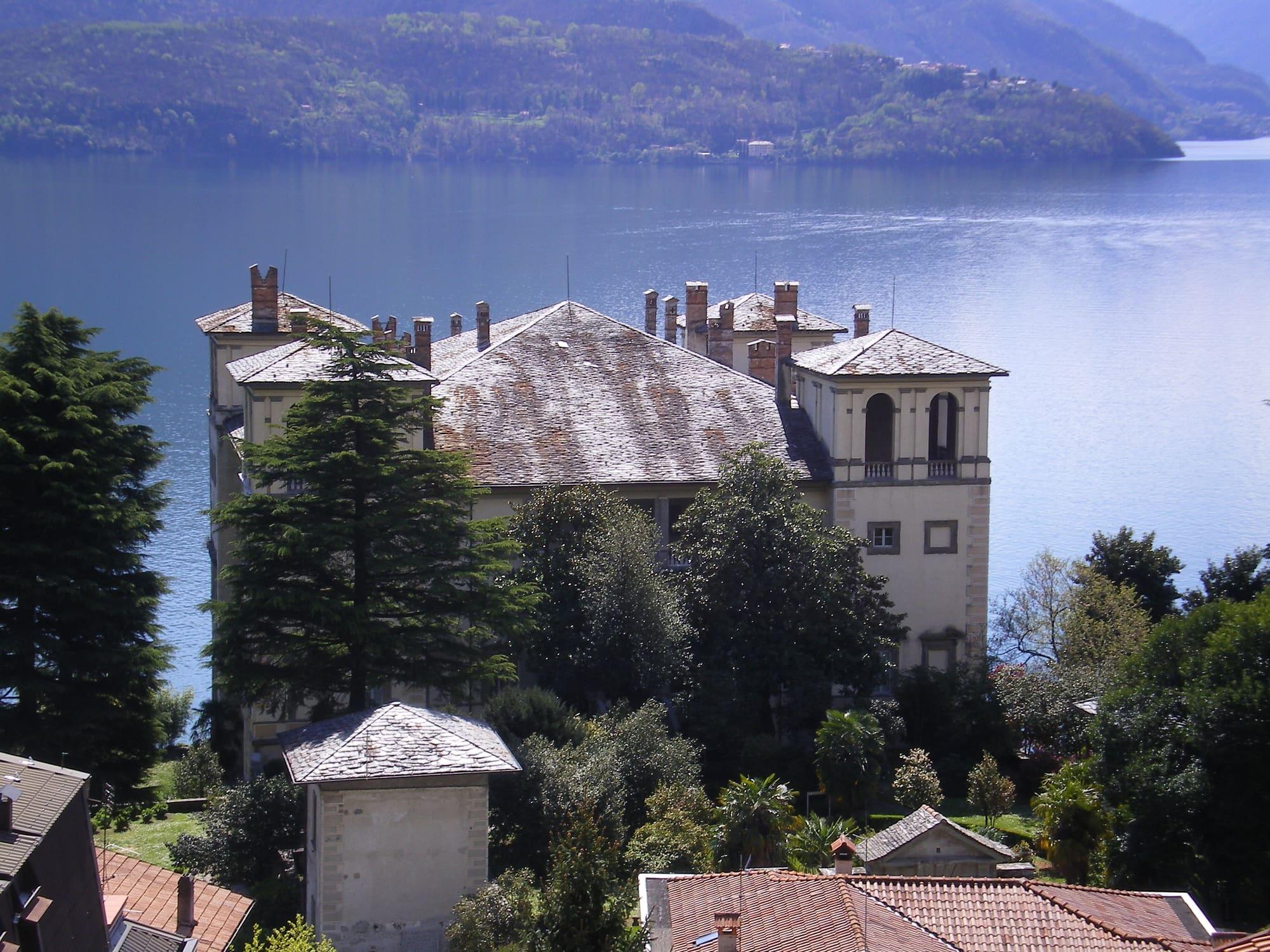
Tolomeo Gallio, born at Cernobbio in 1527, was a cardinal and Secretary of State to Pope Gregory XIII. Having become lord of the Tre Pievi, he had the palace built from 1586 on a promontory of rock above the lake. The design is attributed to Pellegrino Tibaldi and Giovanni Antonio Piotti. The palace has four towers at its corners and a loggia in the middle of the lake front. In 1636 the troops of Henri, Duke of Rohan, set fire to its roof, which Francesco Gallio had rebuilt.
In the nineteenth century part of the palace was used as a silk mill. Since 1983 it has belonged to the Comunità Montana, which has its offices here. Every year at Easter its rooms host a show of camellias from around the lake. In summer the palace holds concerts, and in September its terrace hosts the Pianomaster piano series.
The mountain villages and the feasts
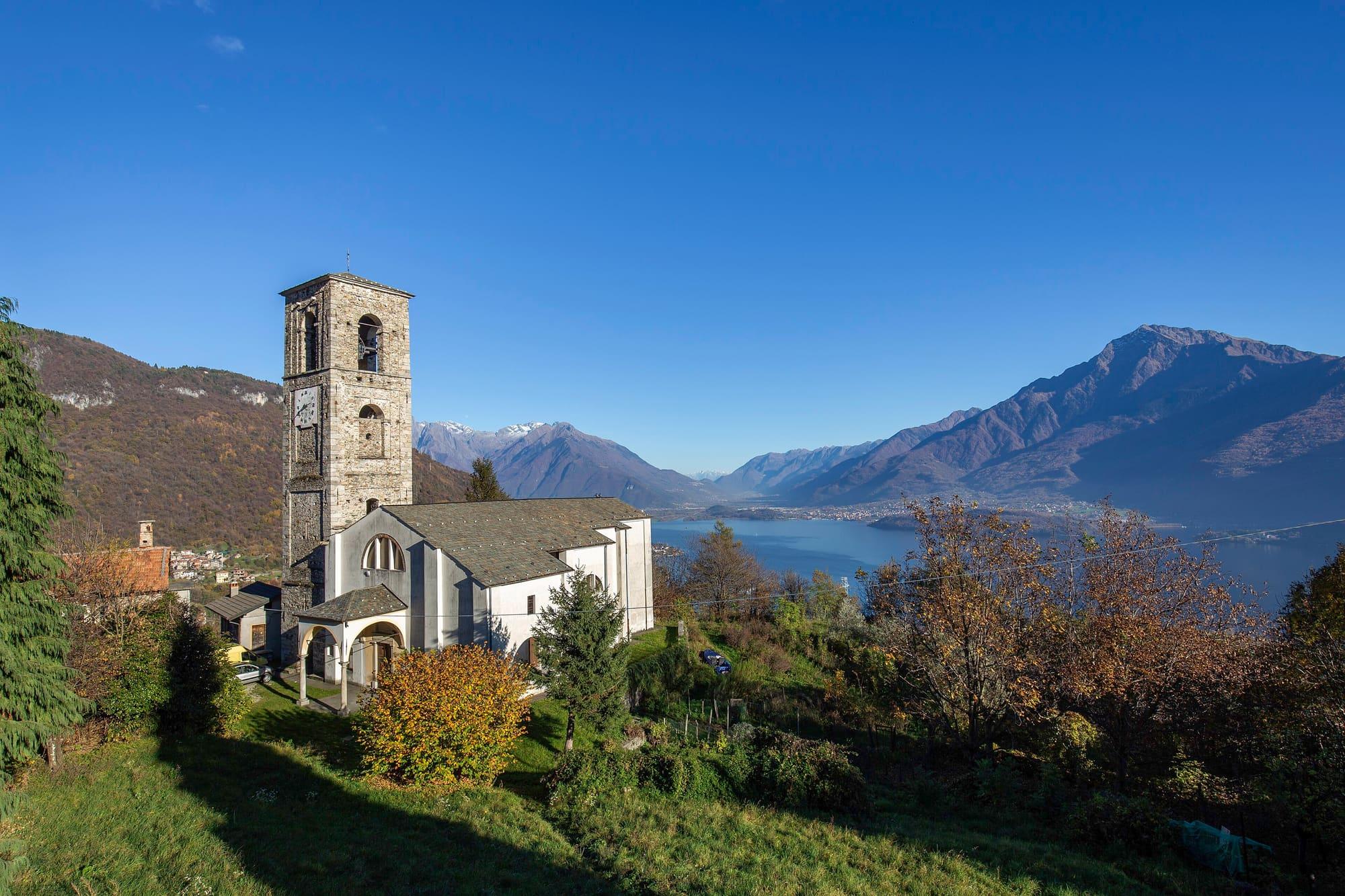
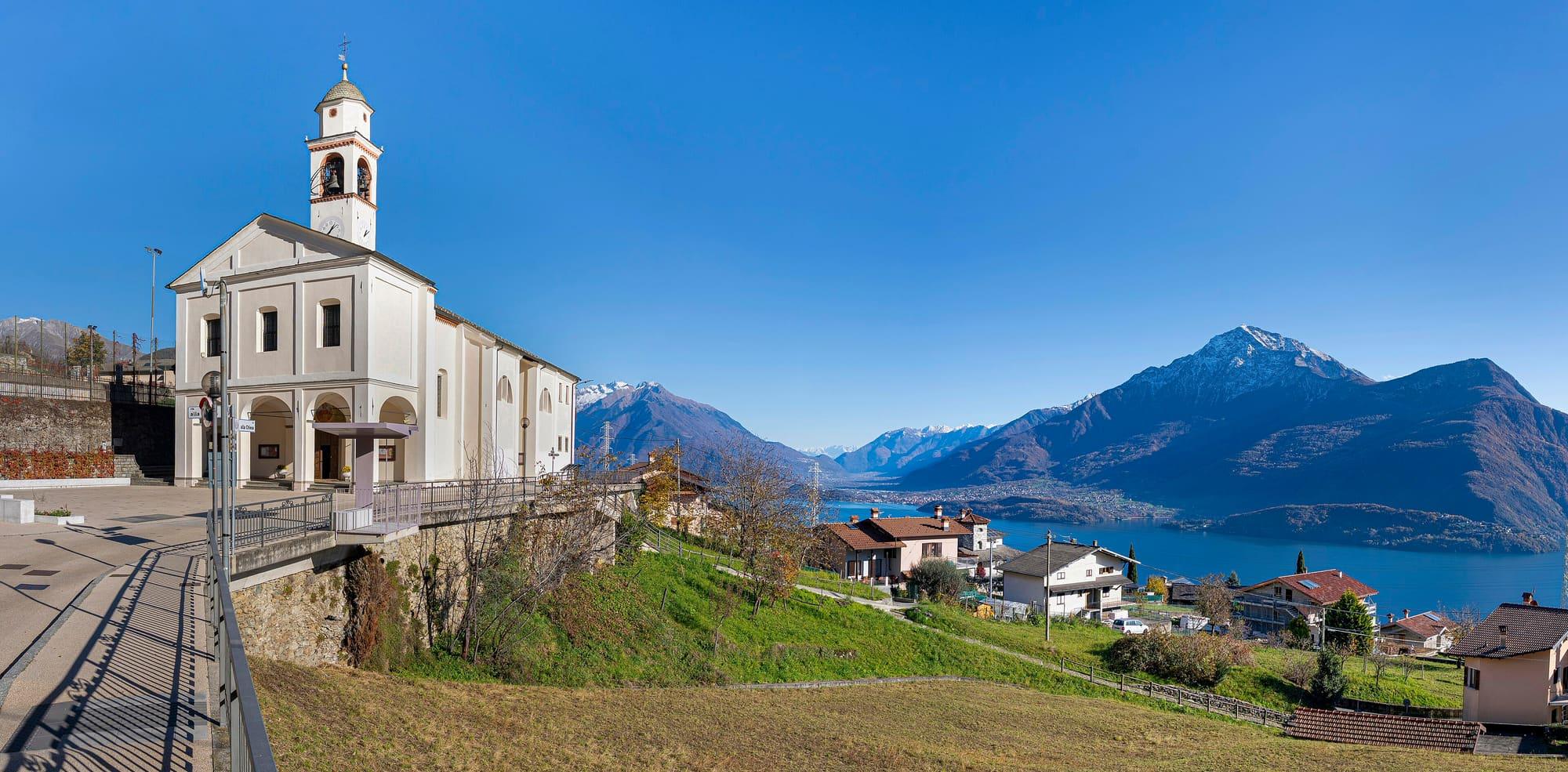
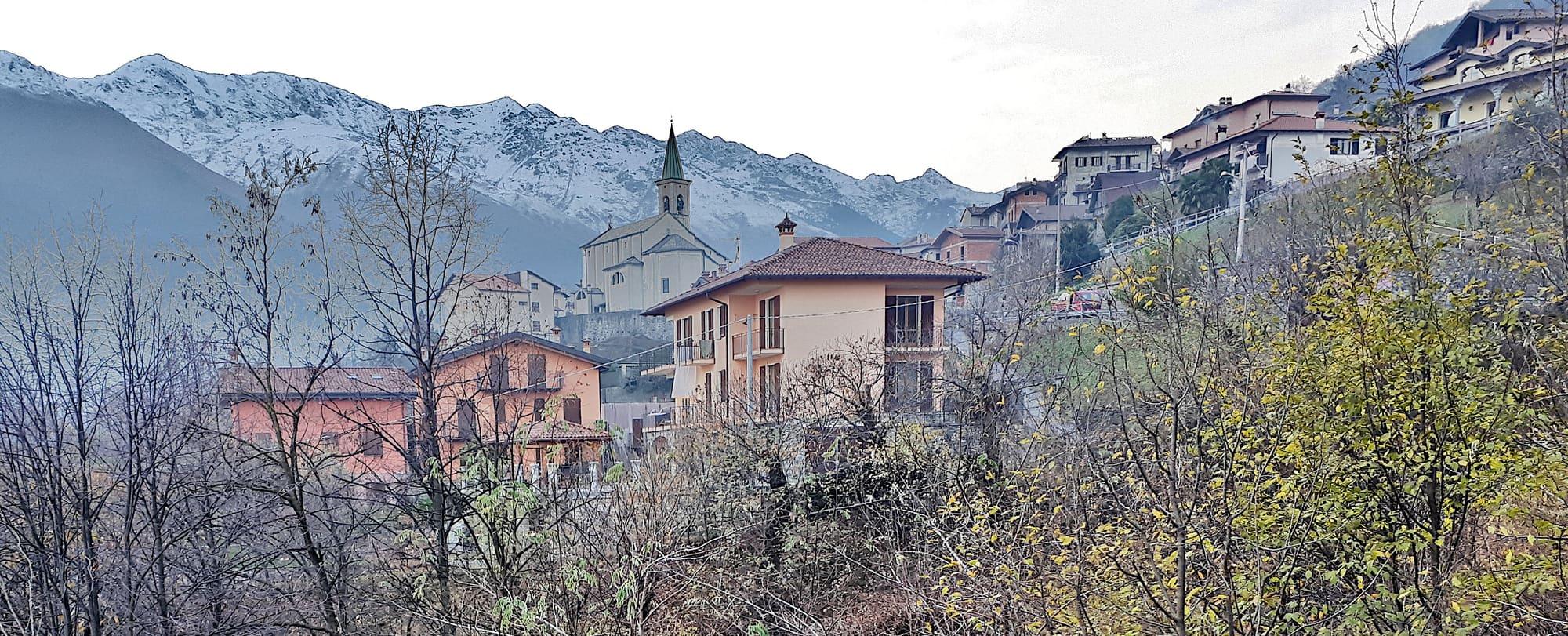
The municipality climbs from the lake into the mountains. At Consiglio di Rumo the parish church of San Gregorio, recorded since 1242, keeps fifteenth-century frescoes and a Serassi organ of 1760–61. At Brenzio the church of San Giovanni Battista has two chapels frescoed in 1628 by the Fiammenghino. At Germasino the parish church of Santi Donato e Clemente keeps objects given by villagers who had emigrated to Palermo.
Two feasts come round every year. On the evening of 14 August decorated, illuminated boats parade in a contest past the lakefront, and the evening ends with fireworks. On 11 September Saints Gusmeo and Matteo are remembered in the church built where tradition places their martyrdom.
Things to see
Experiences
Upper Lake
The Romanesque of the upper lake
Four eleventh- and twelfth-century churches in twenty kilometres of shore.
3 h – 5 hCar neededOpen access
Lecco Branch
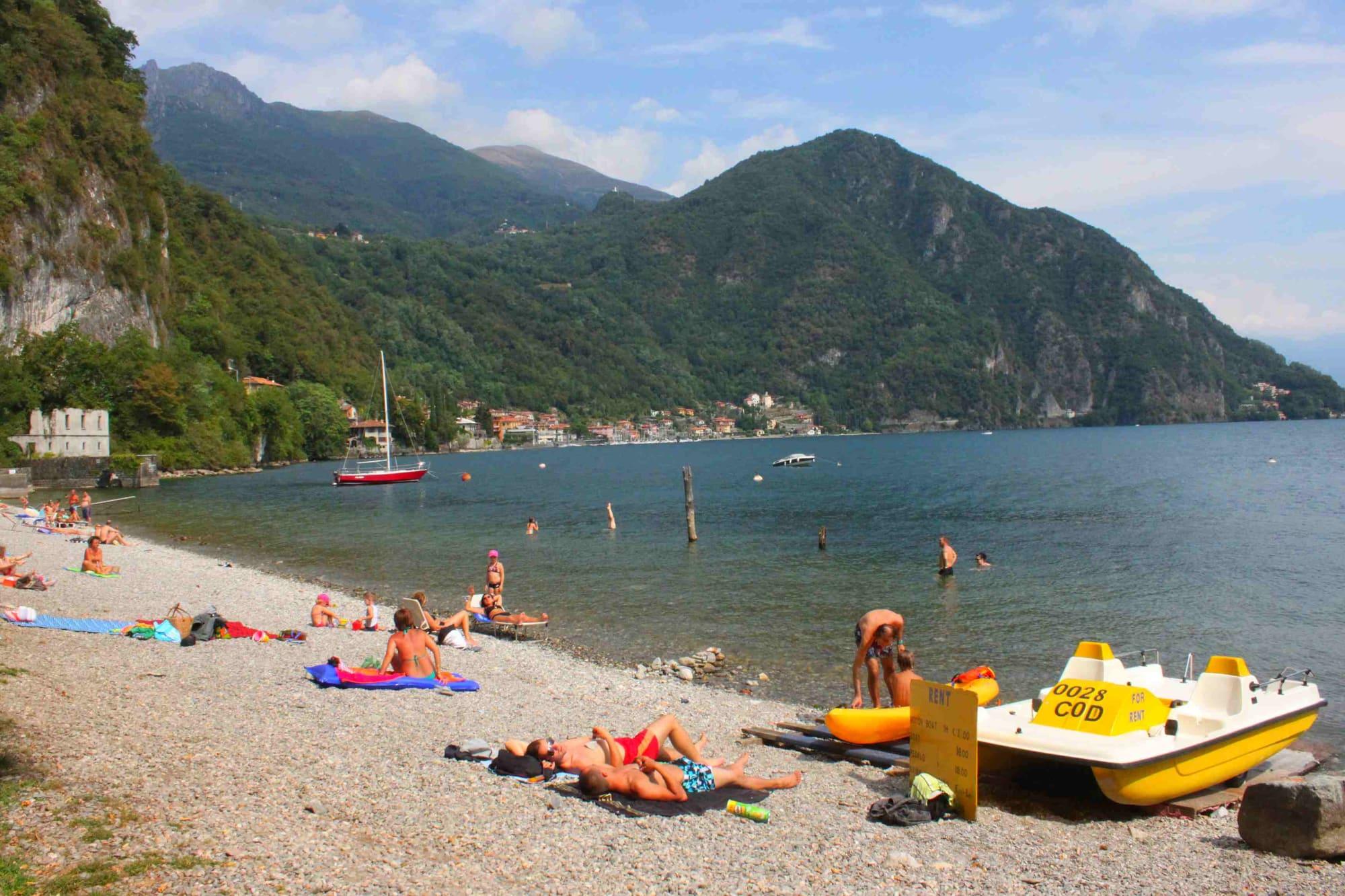
Swimming in the lake
The monitored bathing spots, the class of their water and where you can get into the water from the shore.
3 h – 8 hOpen access
Centro Lago
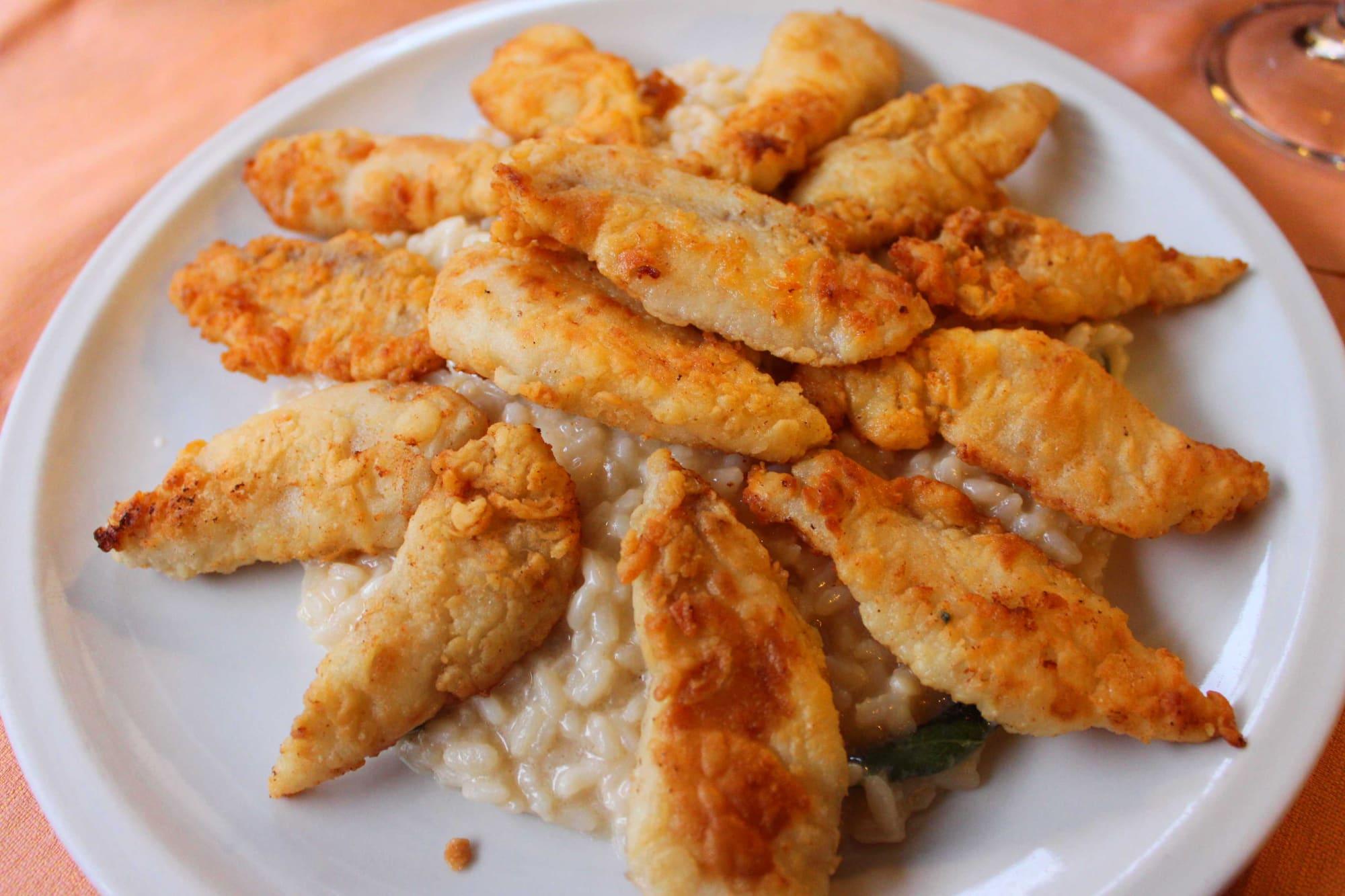
Eating the lake's fish
Missoltini with polenta, whitefish and perch: how the lake cooks its fish.
1 h 30 – 2 h 30
Centro Lago
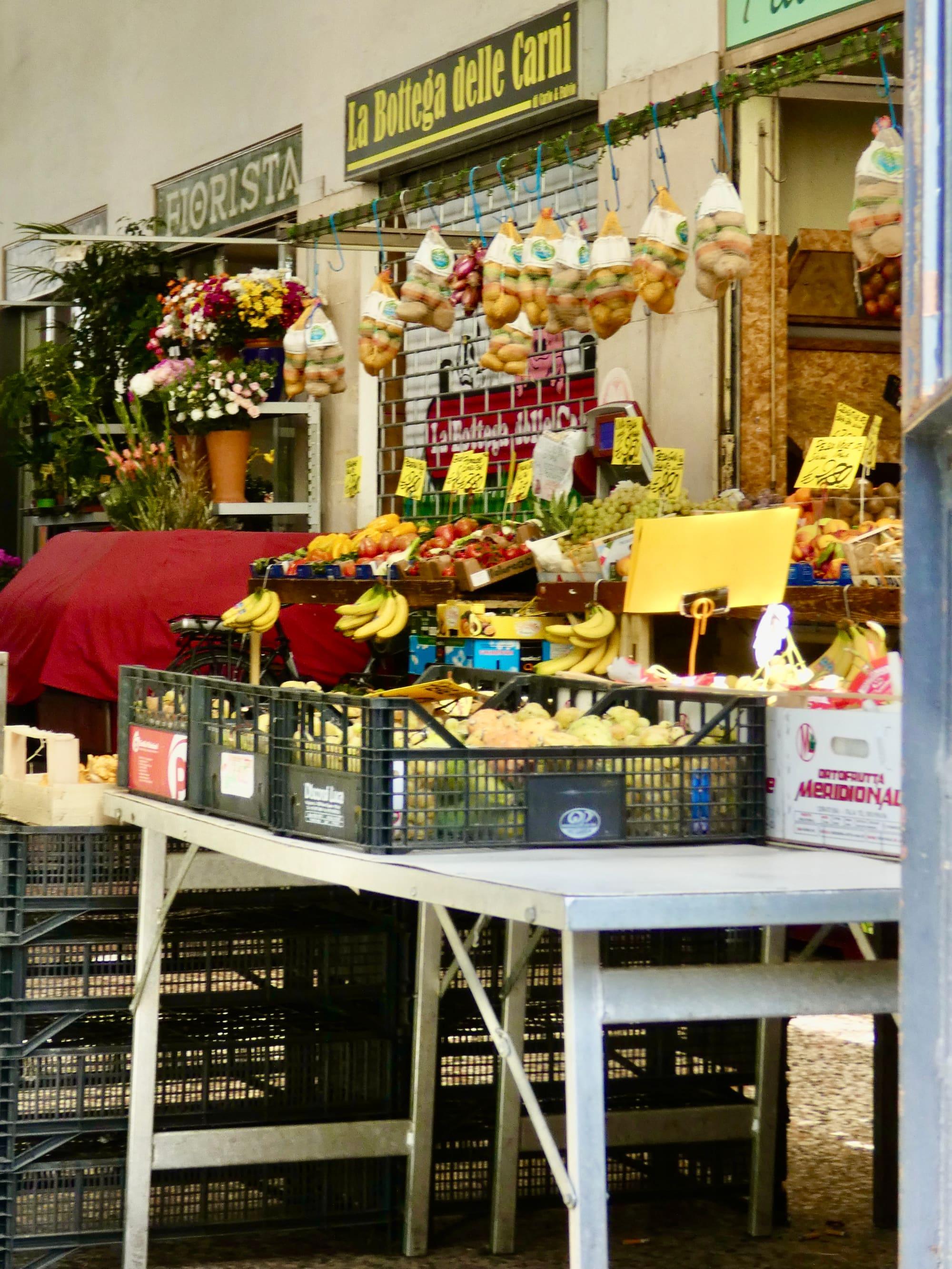
The lake markets
The weekly markets of Como, Lecco and the lake villages: days and squares.
1 h – 2 h 30Open access
Events
7Dec
Christmas in the heart of Gravedona ed Uniti
The nativity trail through the whole village, the lakefront lit up and the “1000 luci sul lago” on Christmas Eve, from early December to Epiphany.
The nativity trail through the village and the lakefront, Gravedona ed Unitiuntil 6 January 2027Indicative dates
30Dec
Year-end concert
On 30 December, in the hall of Palazzo Gallio in Gravedona, a symphony orchestra and a toast to the new year.
Palazzo Gallio, Via Regina Levante 2, Gravedona ed UnitiIndicative dates
Before you go
How long it takes
- from Milan1 h 40Train, then boat
- from Como1 h 30Bus · by car 1 h 20
- from Lecco1 h 20Train, then bus · by car 1 h 15
Typical door-to-door times by public transport, changes included. From Milan, counted from Centrale station.
Tourist office
Infopoint Gravedona ed Uniti
Piazza Trieste, 22015 Gravedona ed Uniti
Closed; reopens in March 2027
Updated: 26 Oct 2026 · North Lake Como — Associazione Turismo e Commercio Alto Lago.
Parking and services
- Piazza Beato Padre Enrico Rebuschinisurface · free
- Car parksurface · 11 spaces · free
- Car parksurface · 6 spaces · free
- Car parksurface · 6 spaces · free
1 public toilet15 drinking fountains2 pharmacies2 cash machines3 charging points1 defibrillator
Car parks and services on the map
Within two and a half kilometres of the centre; check car park spaces and fees on arrival.
Which churches stand by the lake?
Santa Maria del Tiglio and San Vincenzo stand next to each other. San Vincenzo is the old parish church and preserves the crypt of Sant'Antonio.
How do I get to Gravedona without a car?
The quickest way is the train to Colico and then the C110 bus, about twenty-five minutes along the northern shore. From Como the same C110 runs the whole western shore in about an hour and three quarters. The boat comes from Menaggio and Bellagio, with few sailings and long times: it needs planning.
Webcams
- Gravedona, from the Piumona hillsideUpdated image · Casarina, residenza vacanze
- Area
- The Upper Lake
- Population
- 4,200
- Elevation
- 202 m
Updated 27 October 2026
The mountains around the village hide the sun before astronomical sunset: sunrise and sunset are worked out on the village's own horizon.
Today, 2 November, estimated sunlight at the reference point: first at 08:28 and last at 15:48, giving 7 h 21 of direct sun, out of 10 h 02 of daylight.
JuneDecembertoday
Watch the shadow reach Gravedona ed Uniti today
See from Gravedona ed Uniti where the sun goes, in 3D
The sun at an exact spot in Gravedona ed Uniti: your hotel, a beach, a street
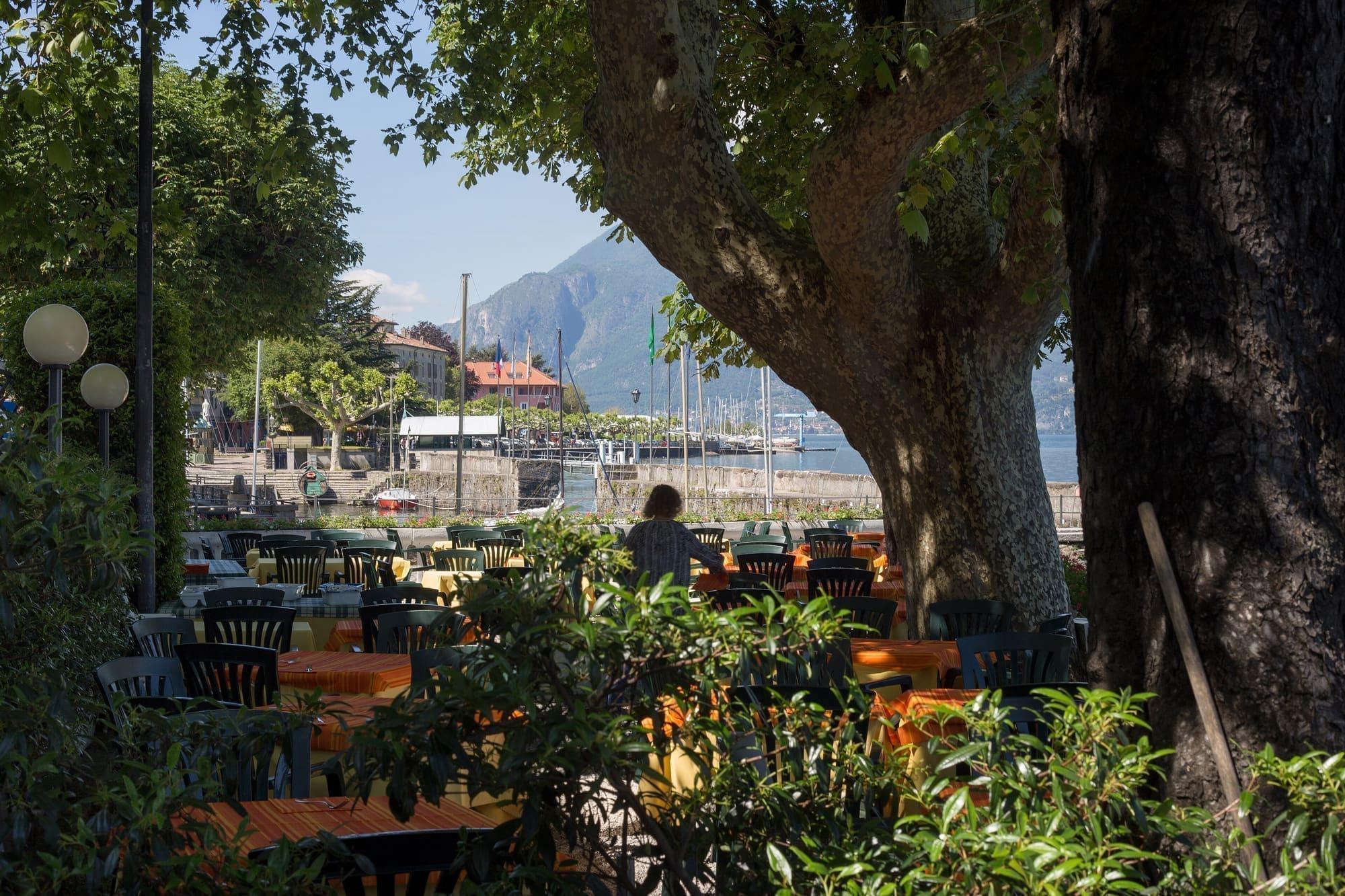
A table in the sun in Gravedona ed Uniti
Places near the shore with outdoor seating, with today's estimated first and last sun at the marked point. Those with the latest sun come first. Clouds and shade from buildings, trees or awnings can change the light on the tables; check opening hours with the venue.
- Via Sabbatirestaurant08:27–15:44
The highest summit in view from here is Adamello, 3539 m, 92 kilometres away.
- Cima Nord Ovest del Calvo, 2943 m, 21 km
- Cima del Desénigo, 2845 m, 21 km
- Adamello, 3539 m, 92 km
- Cima della Zocca, 2170 m, 31 km
- Monte Seleron, 2519 m, 33 km
- Monte Pecoraro, 1751 m, 15 km
- Pizzo Olano, 2267 m, 16 km
- Monte Colombano, 2008 m, 10 km
- Monte Legnone, 2609 m, 10 km
- Monte Legnoncino, 1711 m, 7 km
- Monte Croce di Muggio, 1799 m, 12 km
- Monte San Defendente, 1326 m, 15 km
- Monte Oriolo, 1108 m, 28 km
- Monte Ponciv, 1452 m, 26 km
- Monte San Primo, 1682 m, 27 km
- Piz del Luser, 1405 m, 26 km
- Monte Bregagnino, 1905 m, 10 km
- Monte Bregagno, 2107 m, 9 km
- Sasso di Bellarona, 2087 m, 9 km
- Motto d'Ailgua, 2063 m, 9 km
- Cima Simmetral, 2018 m, 10 km
- Mot Rasia, 2123 m, 11 km
- Monte Torresella, 2246 m, 9 km
- Monte Ganda Rossa, 2213 m, 10 km
- Motto di Piaghedo, 1360 m, 5 km
- Motto Rotondo, 2208 m, 7 km
The ochre line follows today's sun path and marks the estimated times of its first and last appearance above the mountains. Drag the panorama to see all of it.
How it is drawn
Paler ridges are farther away; heights are stretched two and a half times. Houses are not drawn, nor are trees within half a kilometre. Terrain © Regione Lombardia (CC BY 4.0); summits © OpenStreetMap contributors.
Official bathing sites nearby, with their water quality classifications.
- Serenella0.4 kmExcellent · for 3 seasons · in July, sun estimated until 19:32 at the marked point3D — see from the beach at Serenella where the sun goes
- Poncia Bersaglio1.8 kmExcellent · for 4 seasons · in July, sun estimated until 19:36 at the marked point3D — see from the beach at Poncia Bersaglio where the sun goes
Can I windsurf or kitesurf at Gravedona?
Yes: Gravedona, Domaso and Gera Lario are upper-lake destinations for sailing, windsurfing and kitesurfing. In anticyclonic conditions the Breva blows regularly and can raise waves. Before going out on the water, check the wind, forecast and rules for launching areas. Gravedona also has a lido and gravel beaches.
Can you walk along the lake?
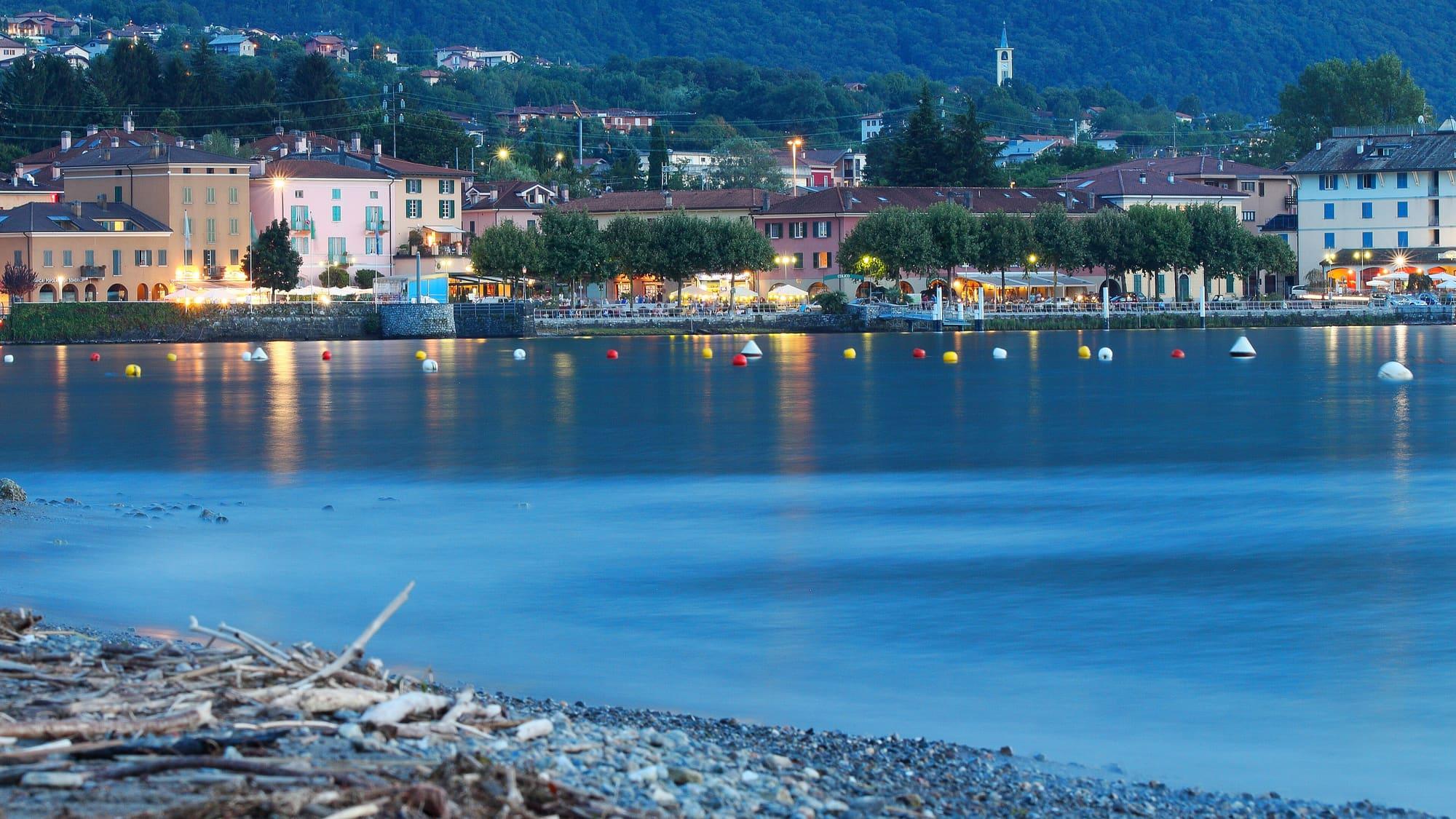
Yes. Northwards the lakeside walk reaches Domaso in about half an hour, after a stretch on the main road's pavement from Palazzo Gallio and the steep Via Sorriso. Southwards, past Santa Maria del Tiglio and the bridge over the Liro, the lakeside walk to Dongo starts at the stream's mouth, with benches, picnic areas and a few beaches, as far as the Gere beach. It suits families with children too; the C110 bus brings you back.
What is there to see in the centre of Gravedona?
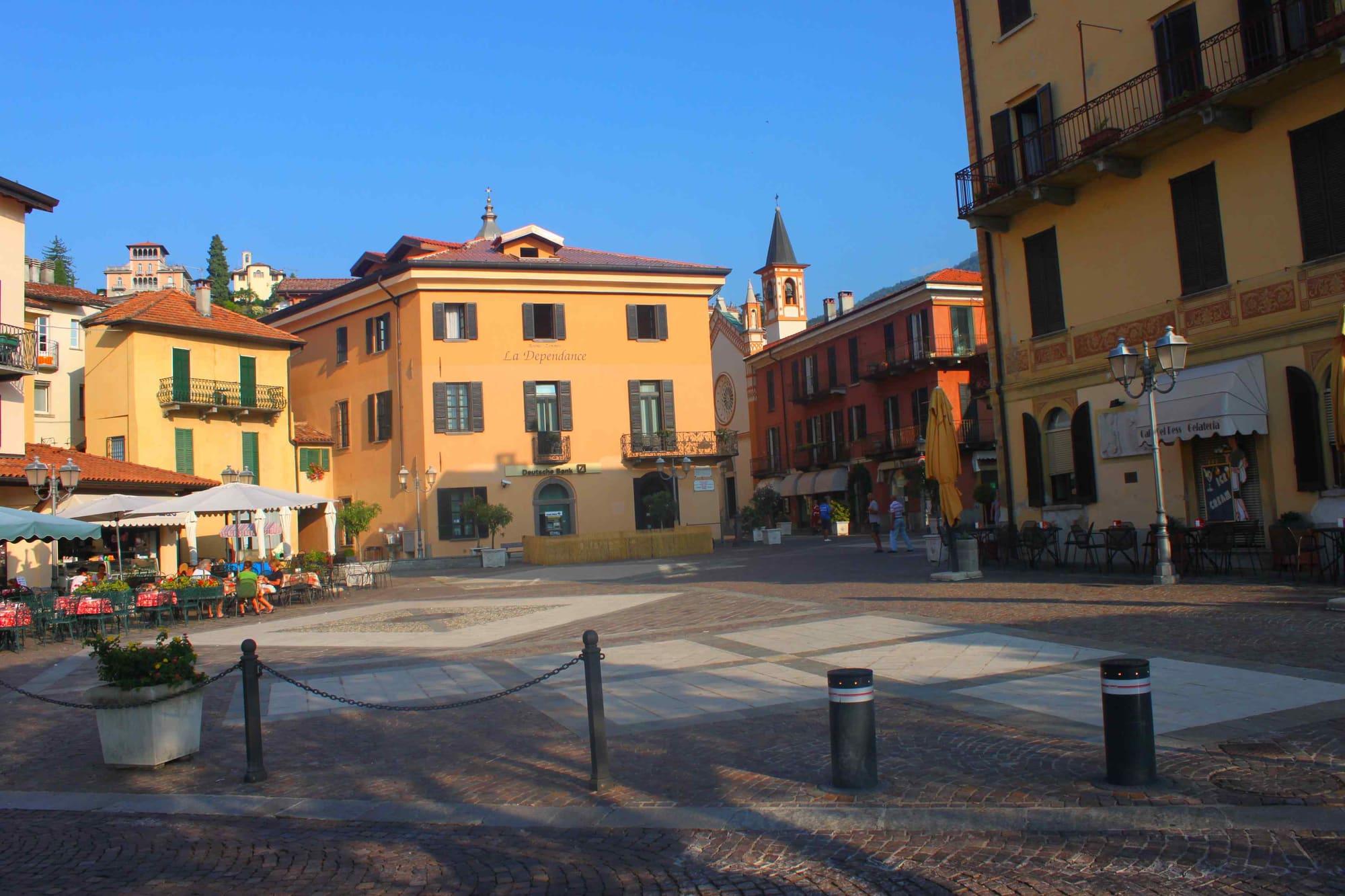
A walk of four kilometres, an hour on foot without stops, is easy and suitable for families and people with reduced mobility too. You start from the infopoint on Piazza Trieste, facing the little harbour, and along Via Roma reach the sacred area of Santa Maria del Tiglio and the parish church of San Vincenzo; behind the church you take Viale Scuri, past the little tower that belonged to the artist Alessandro Scuri, down to the public beach of the Serenella. Then Via Maglio with the wheel of an old mill, the lakefront and Via Sabbati, the street of the old shops, Piazza Cavour, the eighteenth-century chapel of the Gesiòò on Via Sale, Palazzo Gallio and Via Ser Gregori, the goldsmiths' quarter, up to the Castello, the oldest core, with the remains of its walls, the house where Alessandro Volta stayed on Via Volta and the viewpoint of Pra' Castello. Another twenty minutes up stepped lanes takes you to Santi Gusmeo e Matteo and Santa Maria delle Grazie, a stretch that is not suitable for anyone who finds walking hard.
When is the market?
In Gravedona the market is on the first and third Wednesday of the month, 8:00 to 13:00, across Piazza Trieste and Piazza Marinai d'Italia. Consiglio di Rumo has a small market on Fridays, in Largo IV Novembre. In summer, on Saturday evenings, the stalls of the evening market line the lakefront along Viale Umberto I.
On the map
What is around, and how far.
© OpenStreetMap contributors · ODbL
Nearby
Typical door-to-door times.
Sources and credits
- Maps, parking, services and distances: © OpenStreetMap contributors (ODbL).
- Freely licensed photographs: authors and licences under Photograph credits.
Sources and credits
- Maps, parking, services and distances: © OpenStreetMap contributors (ODbL).
- Freely licensed photographs: authors and licences under Photograph credits.