Until31Jan 2027
Centro Lago
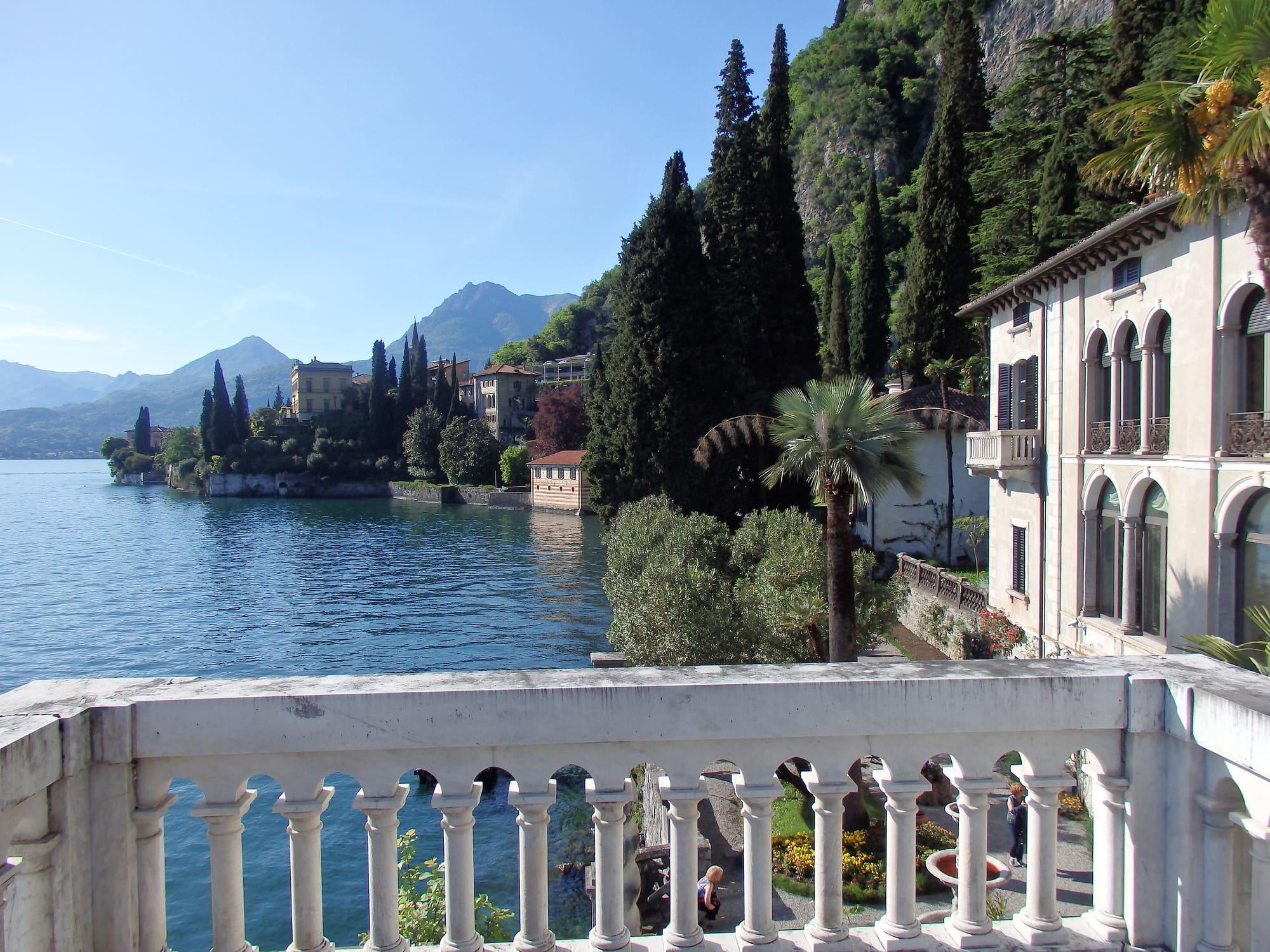
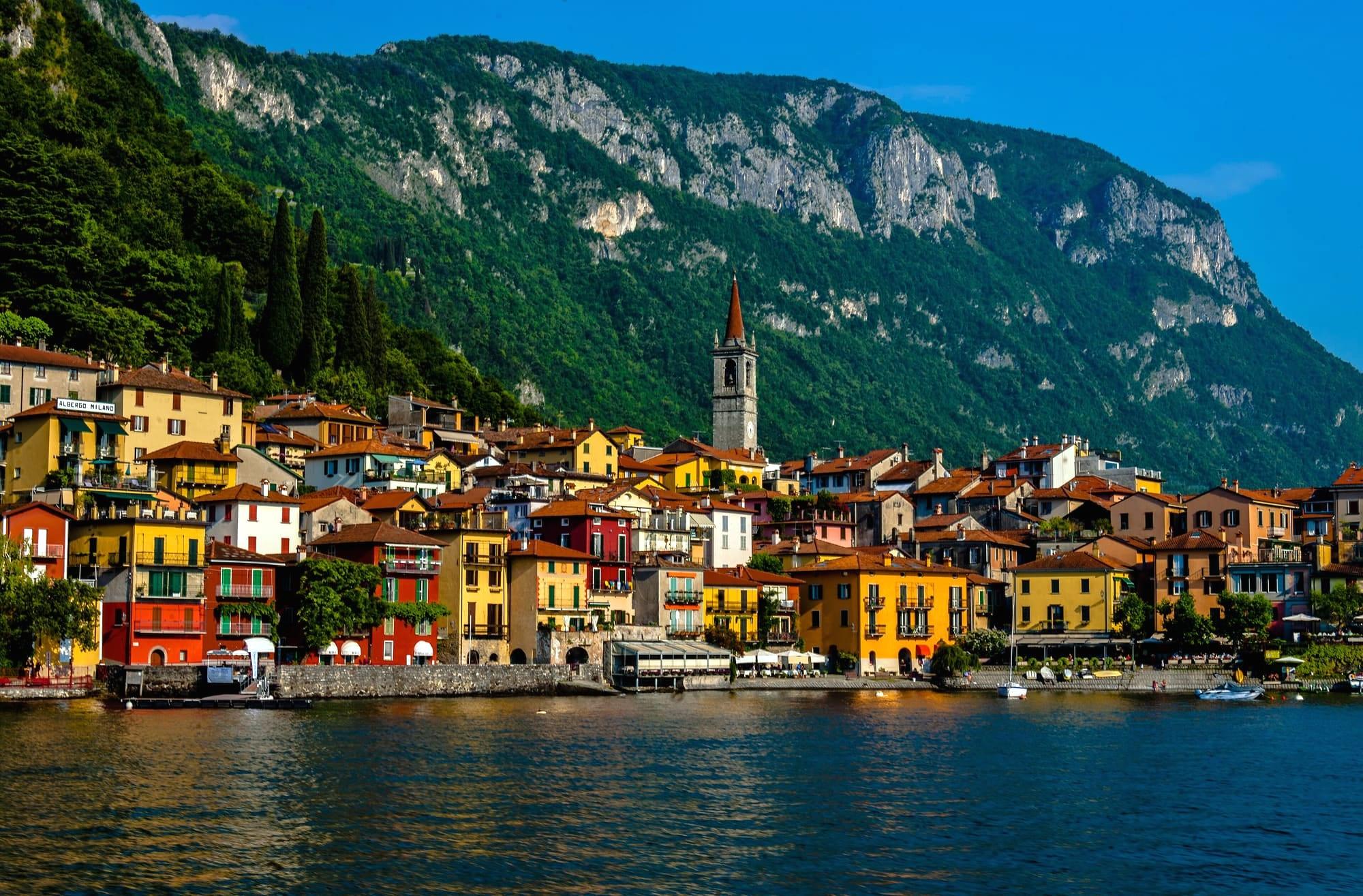
Ochre houses on the water, two botanical gardens on the shore and Vezio castle above the village.
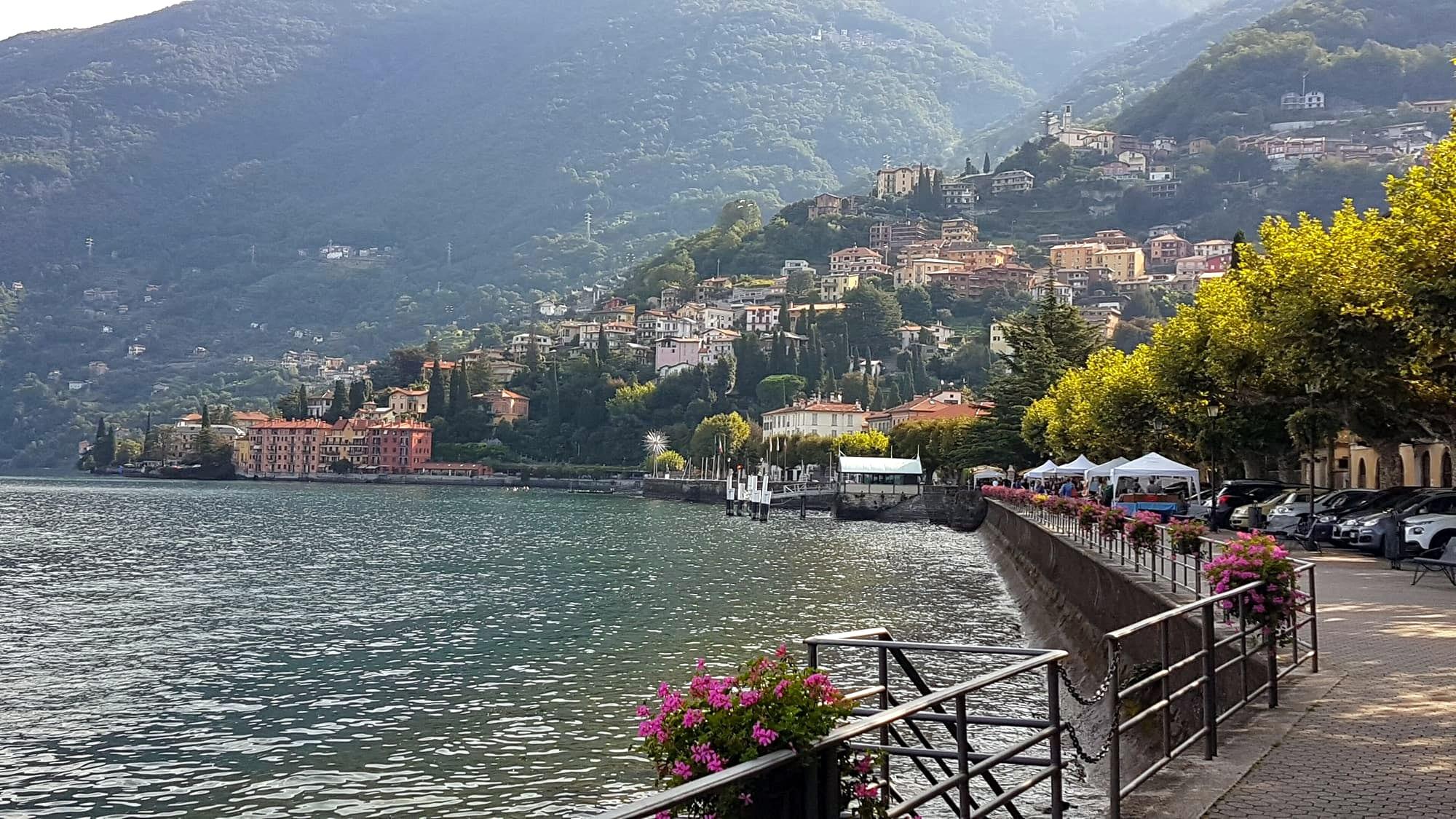
Varenna is a village on the eastern shore of the lake, opposite Bellagio, with ochre houses built right down to the water's edge.
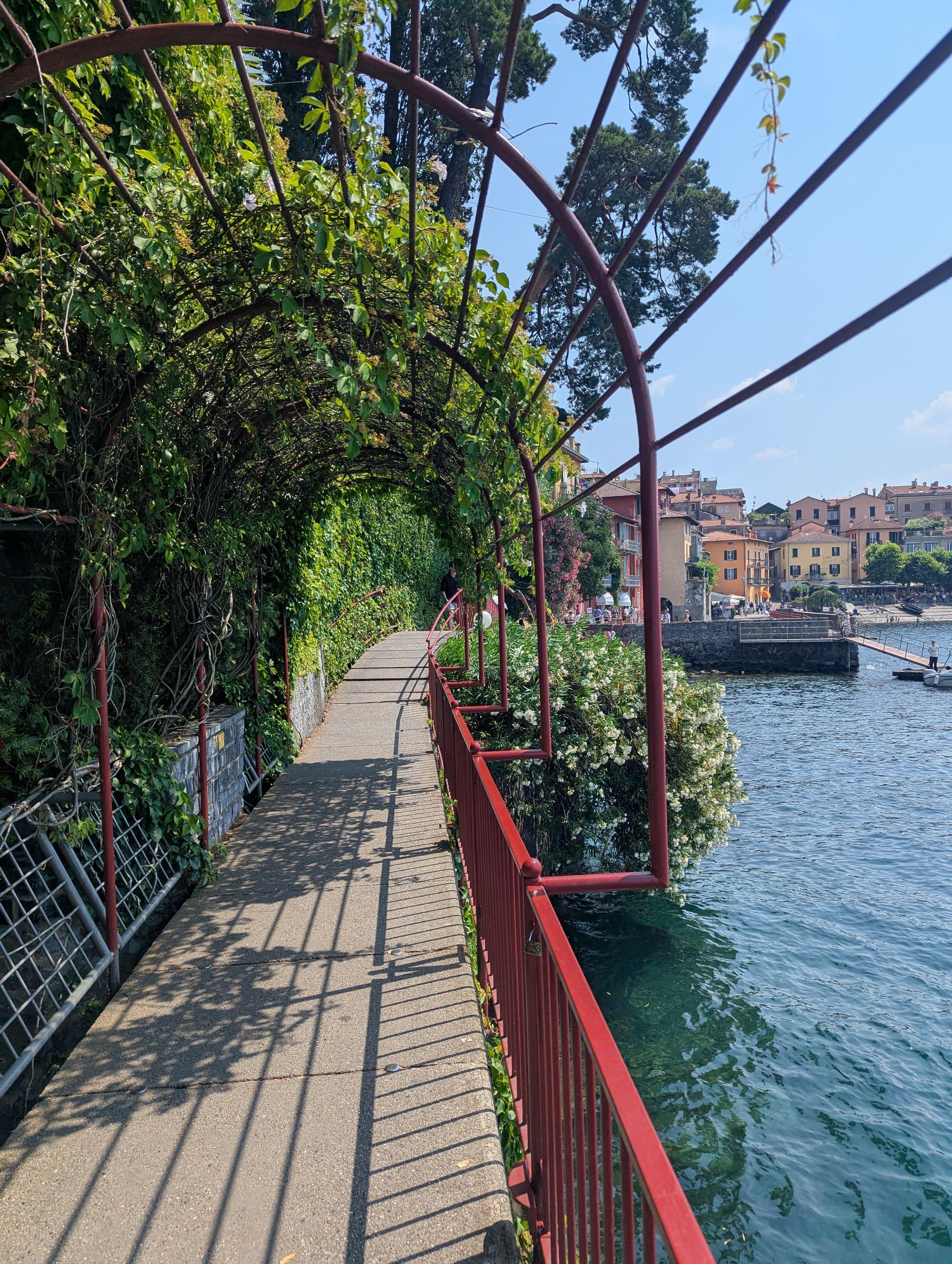
A walkway over the lake links the ferry landing to the centre of the village. Villa Monastero and Villa Cipressi have two botanical gardens side by side on the same shore. Above the village, Castello di Vezio overlooks the whole centre of the lake. You arrive by train from Milan or by boat from Bellagio and Menaggio.
Varenna lies on the eastern shore of the lake, opposite Bellagio. The boat docks north of the centre, in the Olivedo area, and from there the Passeggiata degli Innamorati leads into the village along the water. The station is higher up, above the houses.
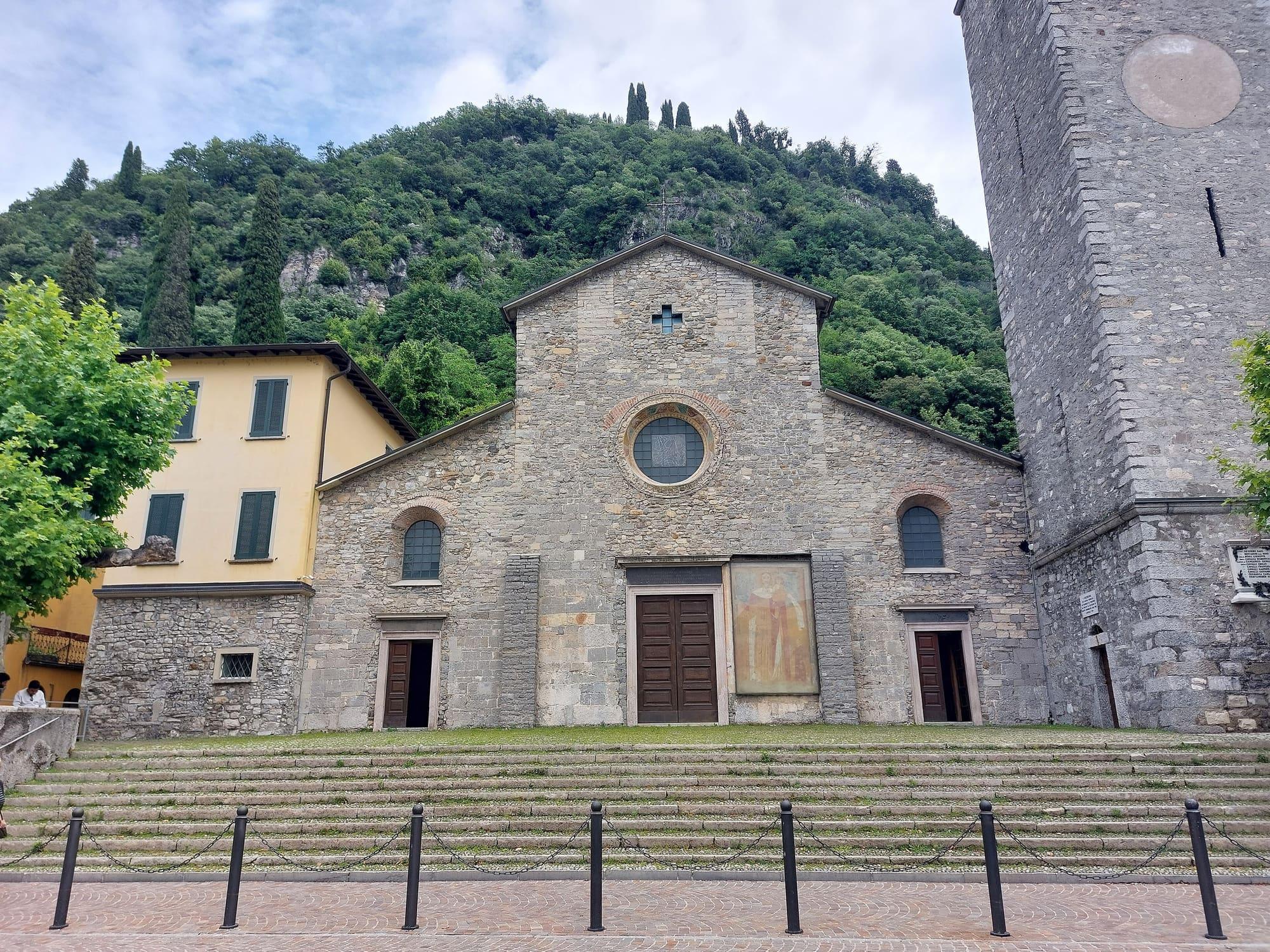
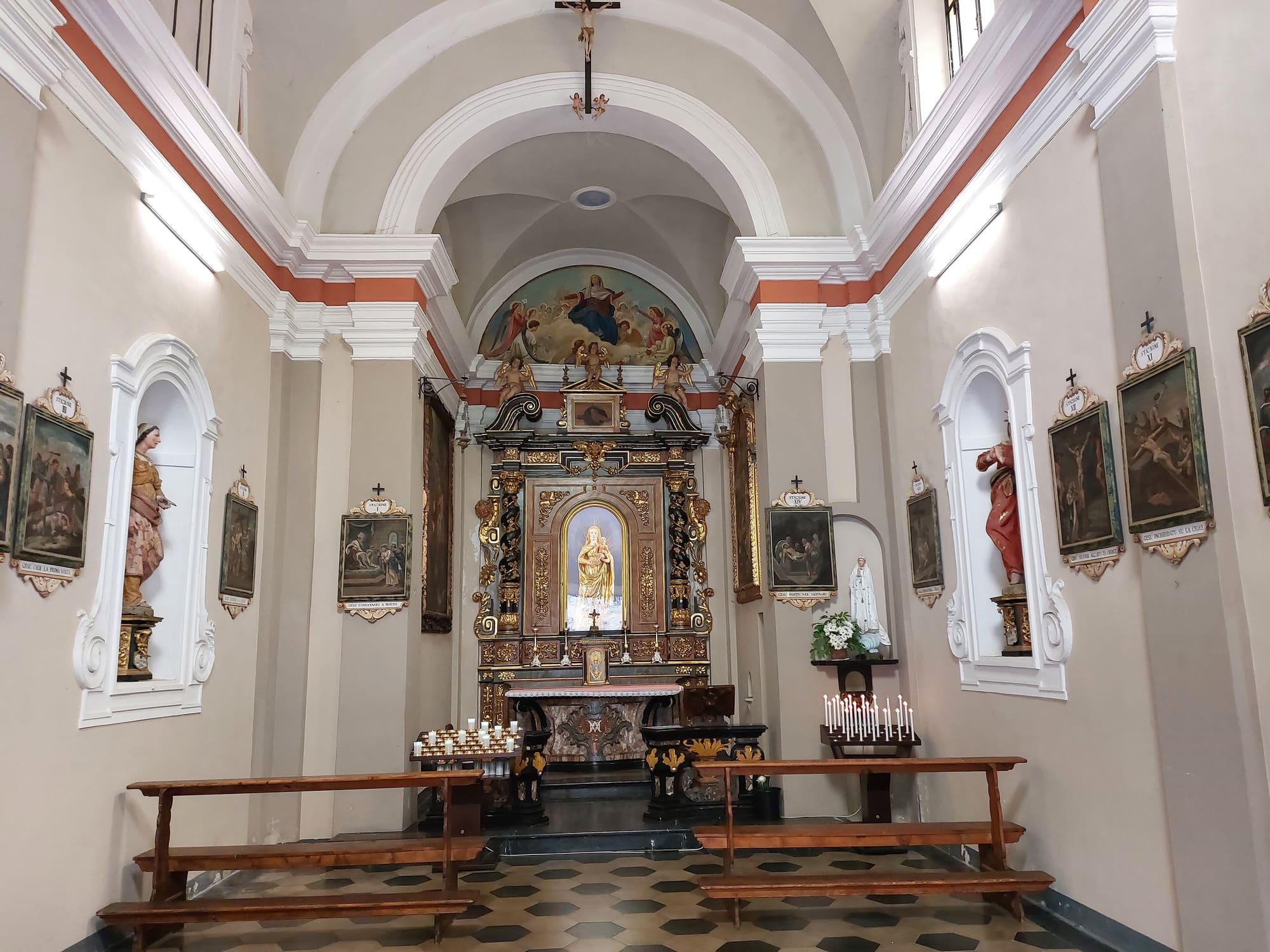
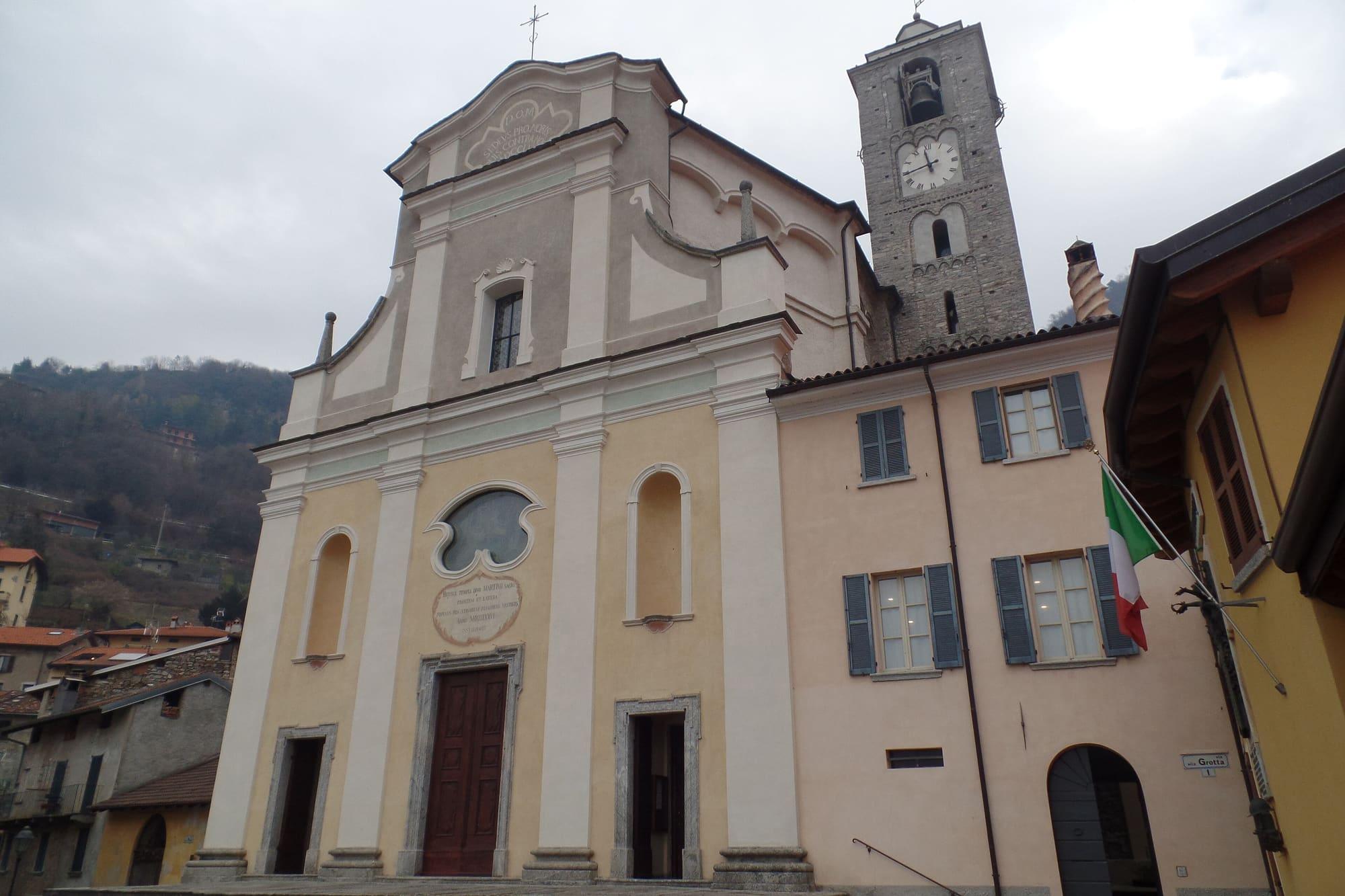
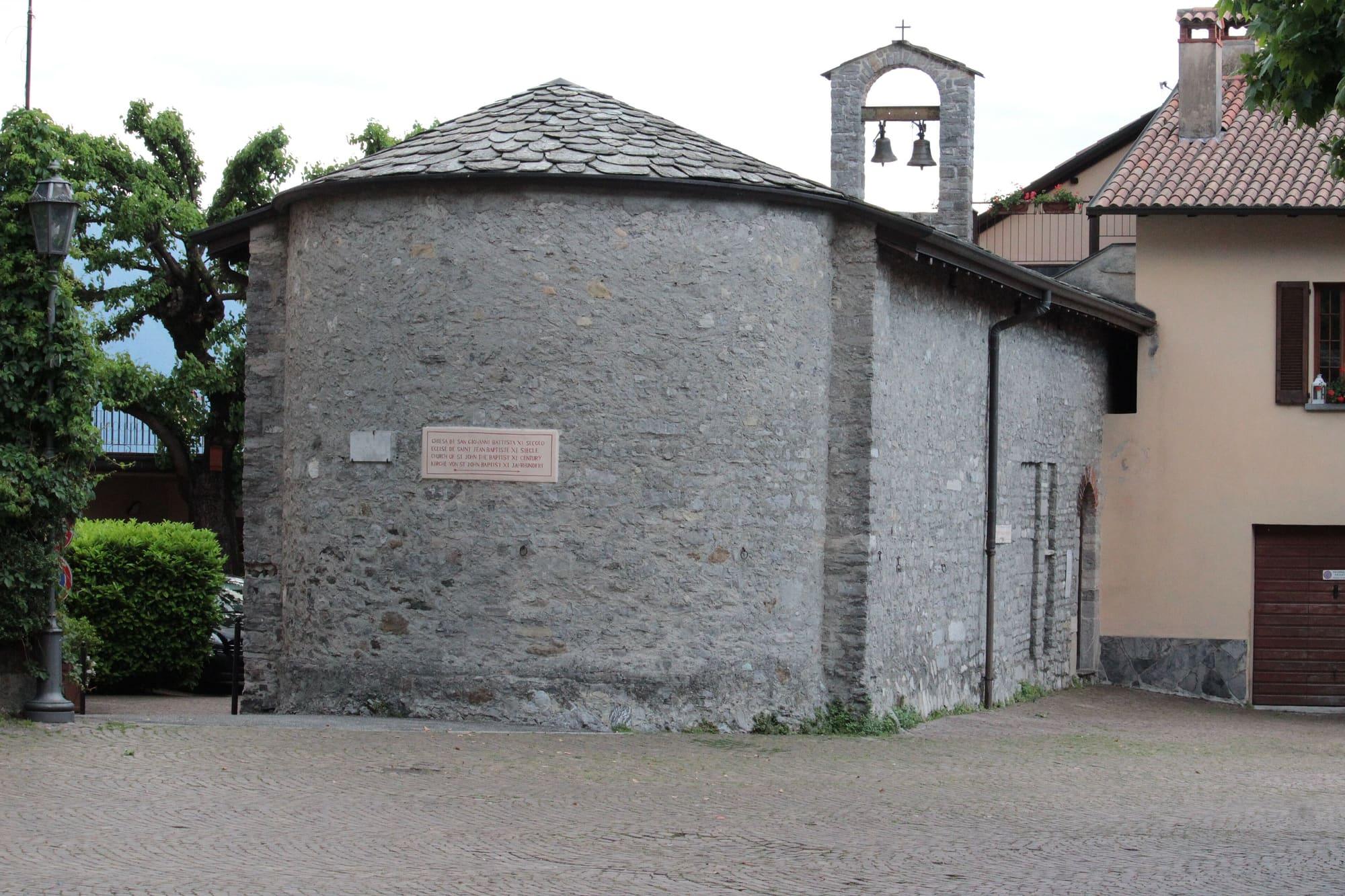
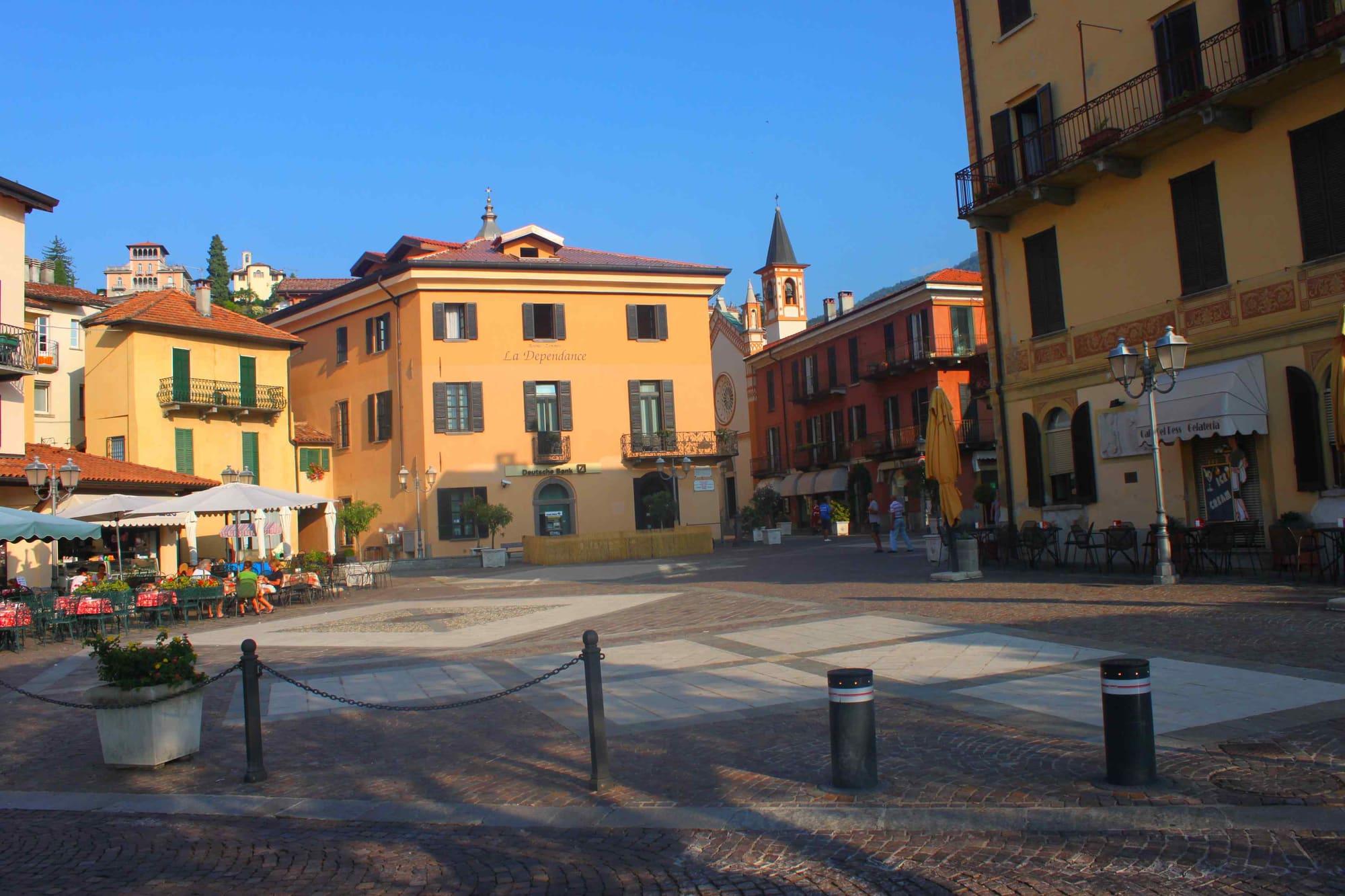
The centre of the village is Piazza San Giorgio. The parish church of San Giorgio was consecrated in 1313. On the facade is a large Saint Christopher painted in the fourteenth century; inside, columns of black Varenna stone divide three naves, and a triptych of 1467 stands on the high altar. On the same square are San Giovanni Battista, the village's eleventh-century mother church, and Santa Maria delle Grazie, opened in 1685. From the square, narrow lanes and flights of steps run down to the lake between the coloured houses; to the south the villa gardens begin.
In the early twelfth century, in the Ten Years' War between Como and Milan, Varenna sided with Milan, as did the Isola Comacina. In 1169 Como destroyed the island, and most of its people took refuge in Varenna. This is why medieval documents also call the village “Insula nova”, the new island. The exiles brought with them the Patriarchine rite of Aquileia, which gave the people of Varenna their nickname, “Patriarchitt”. The Festa del Lago commemorates their landing.
From the late thirteenth century Varenna was ruled by the Visconti. In 1480 it joined Bellano and Mandello in the Contado della Riviera, a fief granted to Pietro Dal Verme; from 1533 to 1788 the fief belonged to the Sfondrati. The railway from Lecco arrived in 1892. In the twentieth century the village's economy, tied for centuries to the lake and to fishing, turned to tourism.
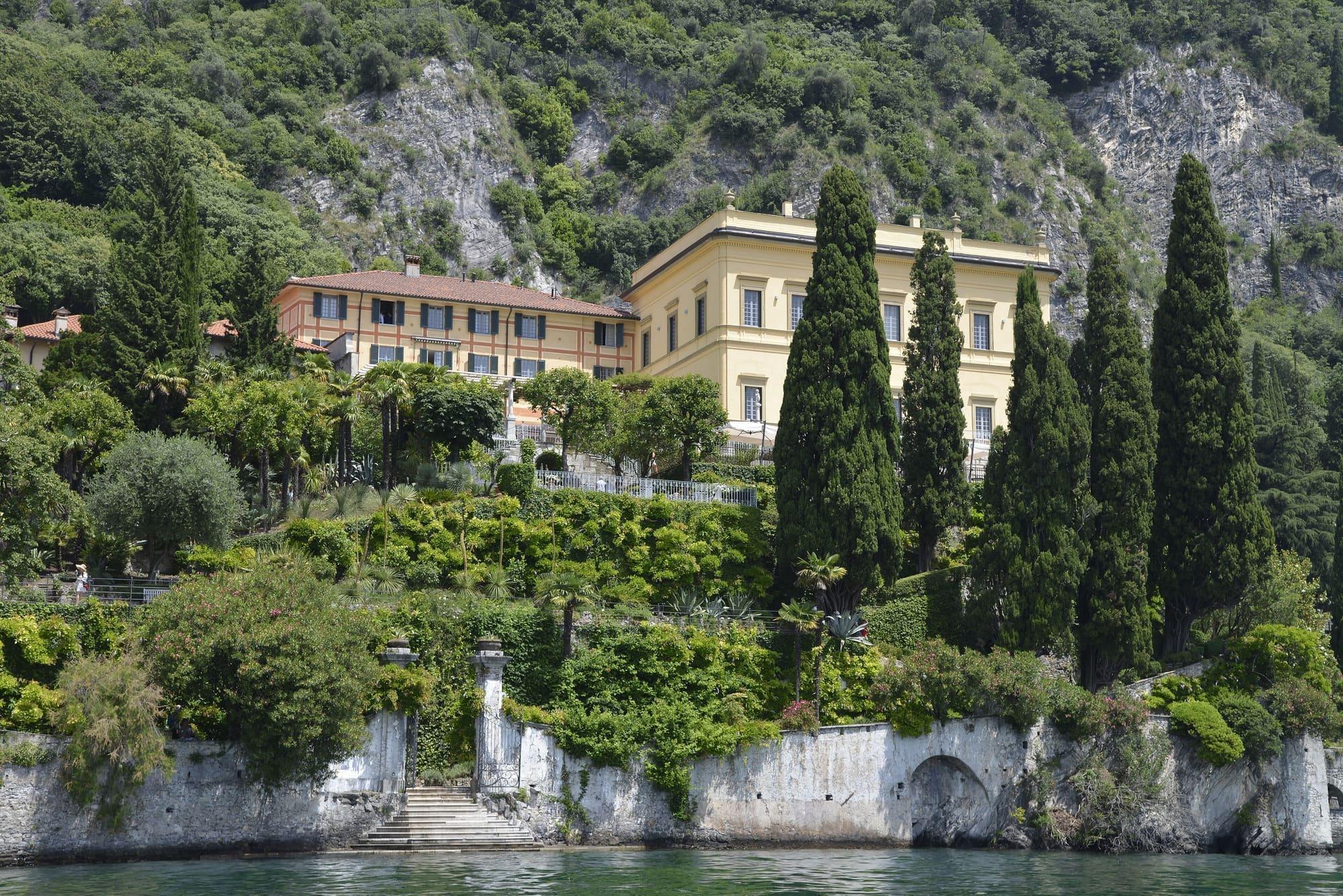
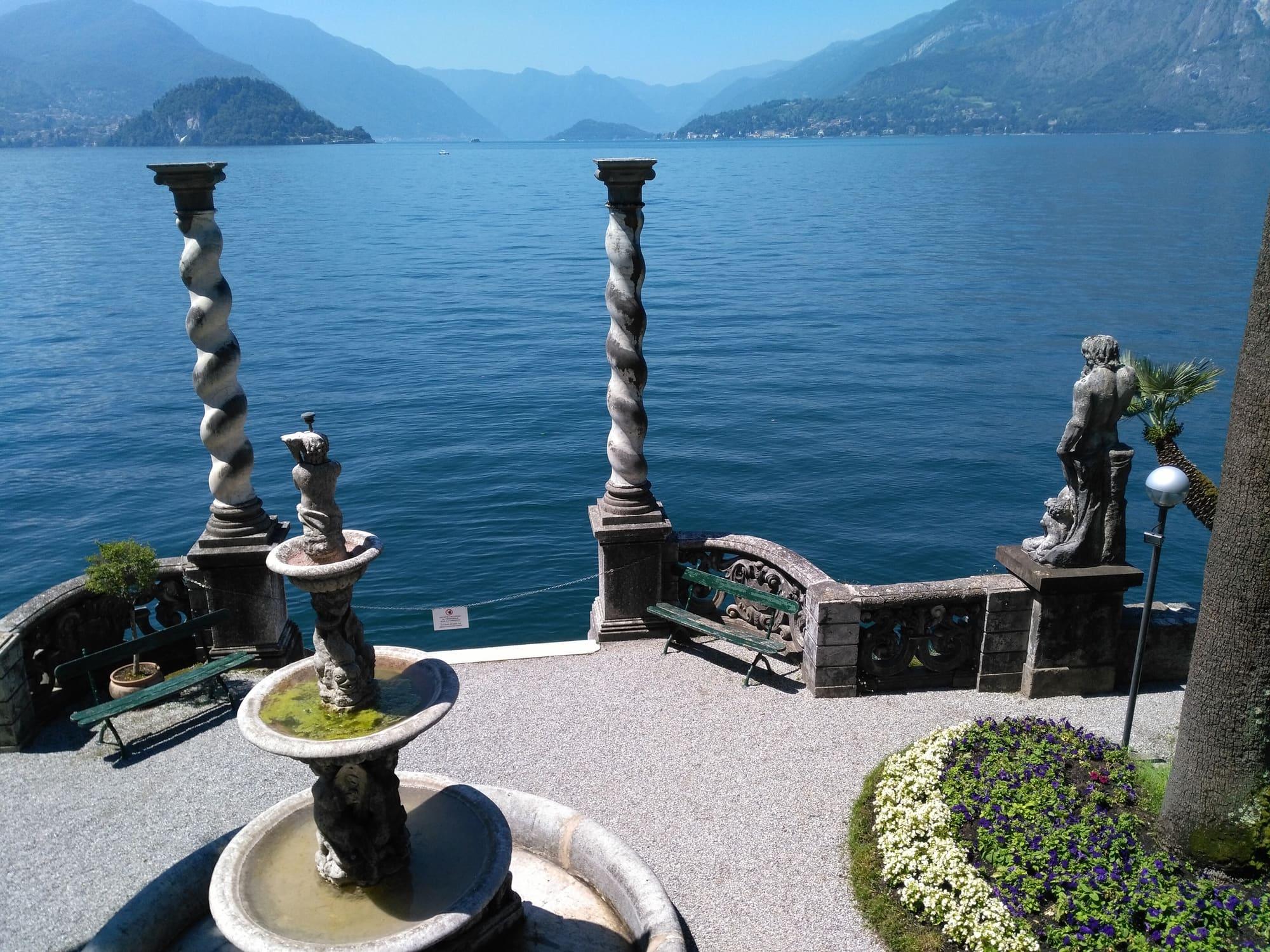
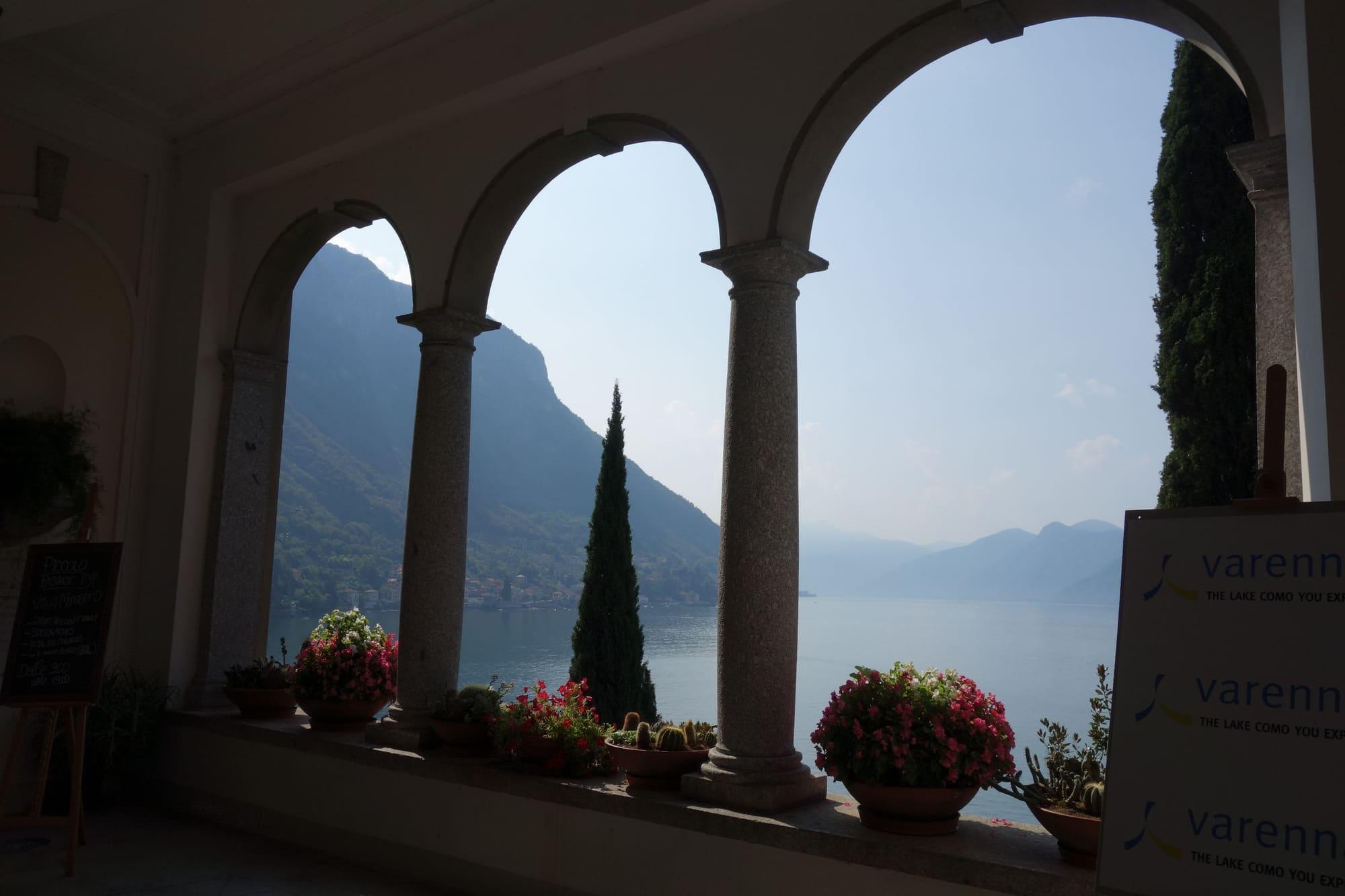
Villa Monastero grew out of a convent of Cistercian nuns, founded in the late twelfth century and suppressed in 1567. In 1569 Paolo Mornico, from the Valsassina, bought it. Between 1897 and 1909 the German Walter Kees turned it into an eclectic residence; the house museum has fourteen furnished rooms. Marco and Rosa De Marchi left it to the State as a cultural centre: since 1953 it has hosted scientific conferences, and in 1954 Enrico Fermi gave his last lectures here. The botanical garden follows the shore for almost two kilometres, as far as Fiumelatte, among agaves, palms and cedars of Lebanon.
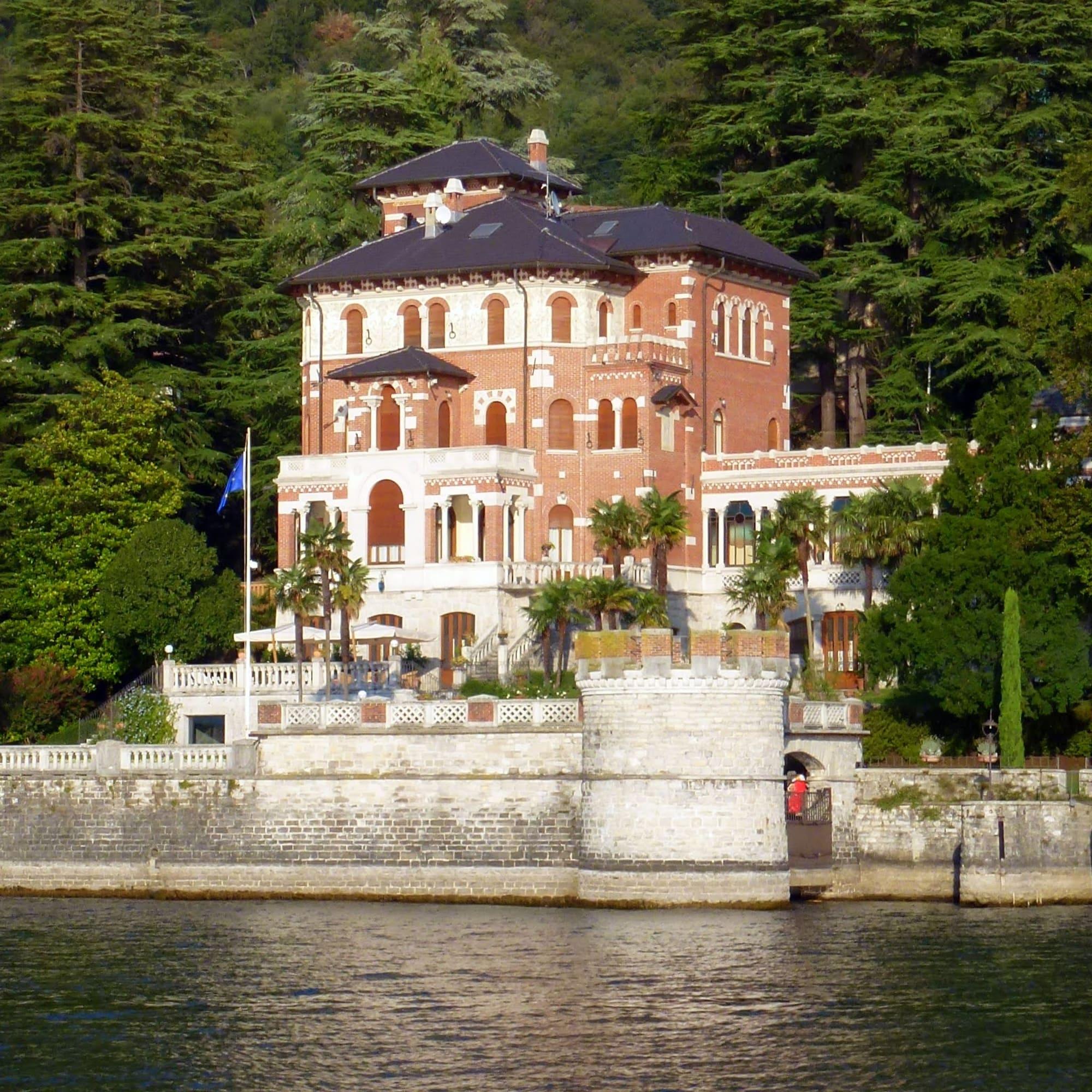
Villa Cipressi, next door, has a terraced garden that steps down to the lake between rows of cypresses. It was built for the Serponti family between the sixteenth and seventeenth centuries, and from 1824 to 1864 it was a hotel. In 1980 the people of Varenna bought it through a public subscription. It is a hotel and the venue for the municipality's civil weddings.
In the territory of Perledo, between Varenna and Bellano, quarries produced Varenna black marble. It is a dark grey limestone with white veins that turns black when polished. It was already used in Roman times, and in the Renaissance it served for frames and mouldings set against white marble. It is also in the floor of Milan Cathedral designed by Pellegrino Tibaldi. The same rock holds fossils of Triassic fish and marine reptiles, among them the Lariosaurus, the subject of an exhibition in the tower of Vezio castle.
On the last Thursday of January comes the Giubiera: a procession goes round the old lanes to chase winter away. In autumn Villa Cipressi hosts the festival of the “Patriarchi”, the elders born in Varenna, including those who live elsewhere. The patron saint is Saint George, whose feast falls on 24 April.
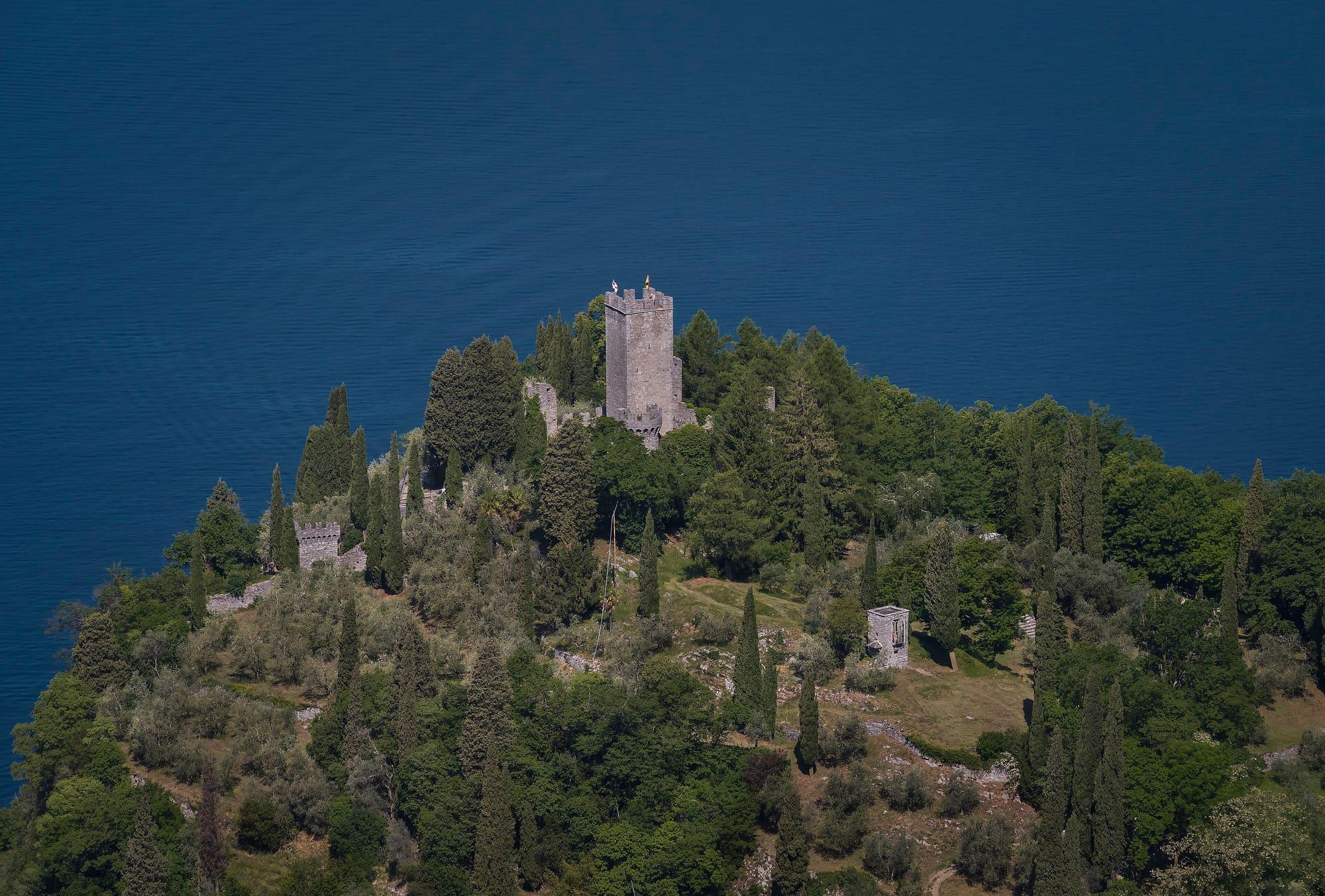
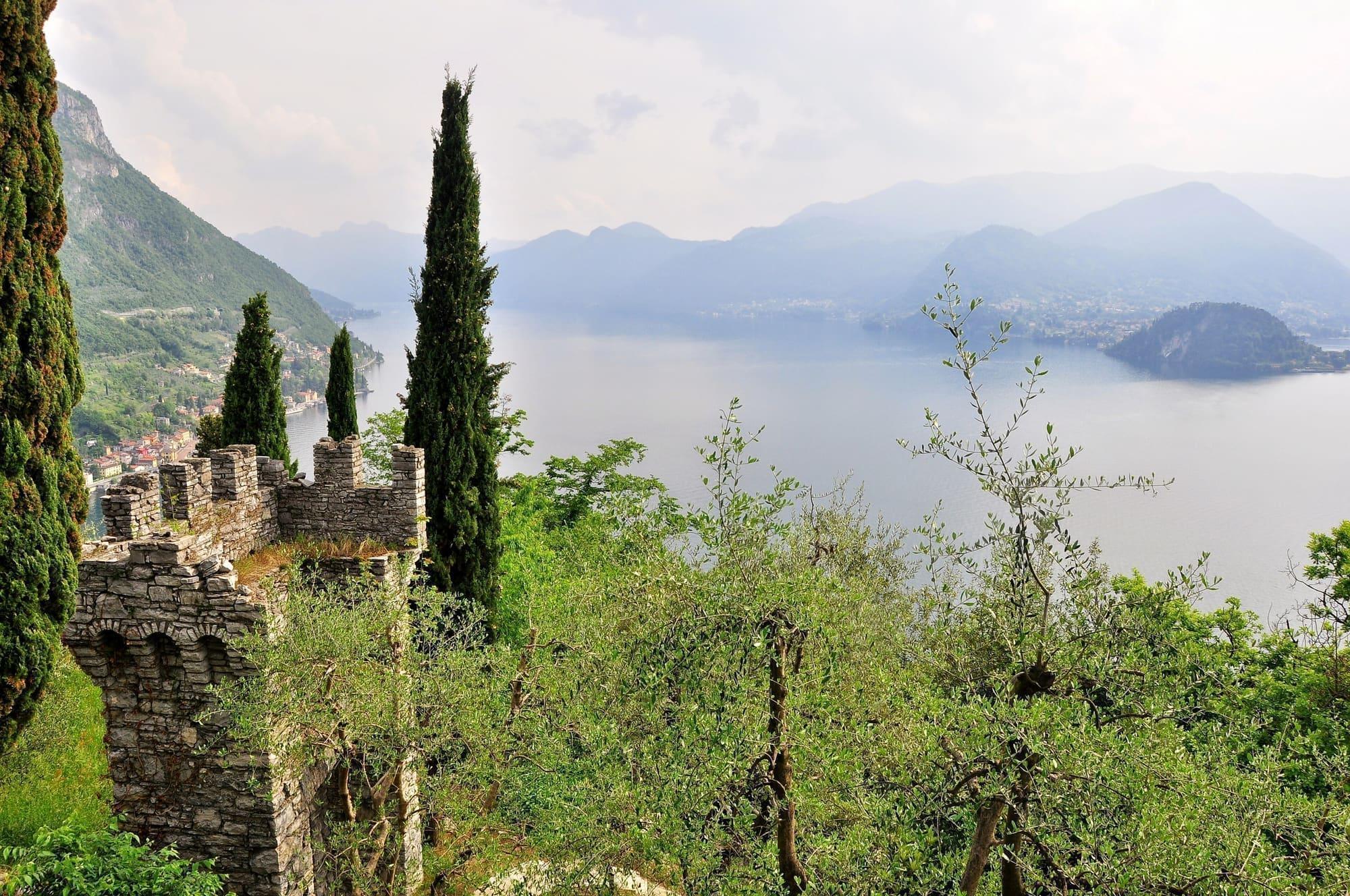
Vezio castle stands above the village, at about 350 metres. From the centre it takes about twenty-five minutes on foot, on a route that is part of the Sentiero del Viandante. From the tower you see the point where the lake splits into its two branches. In summer white plaster figures, moulded on volunteer visitors, appear in the castle.
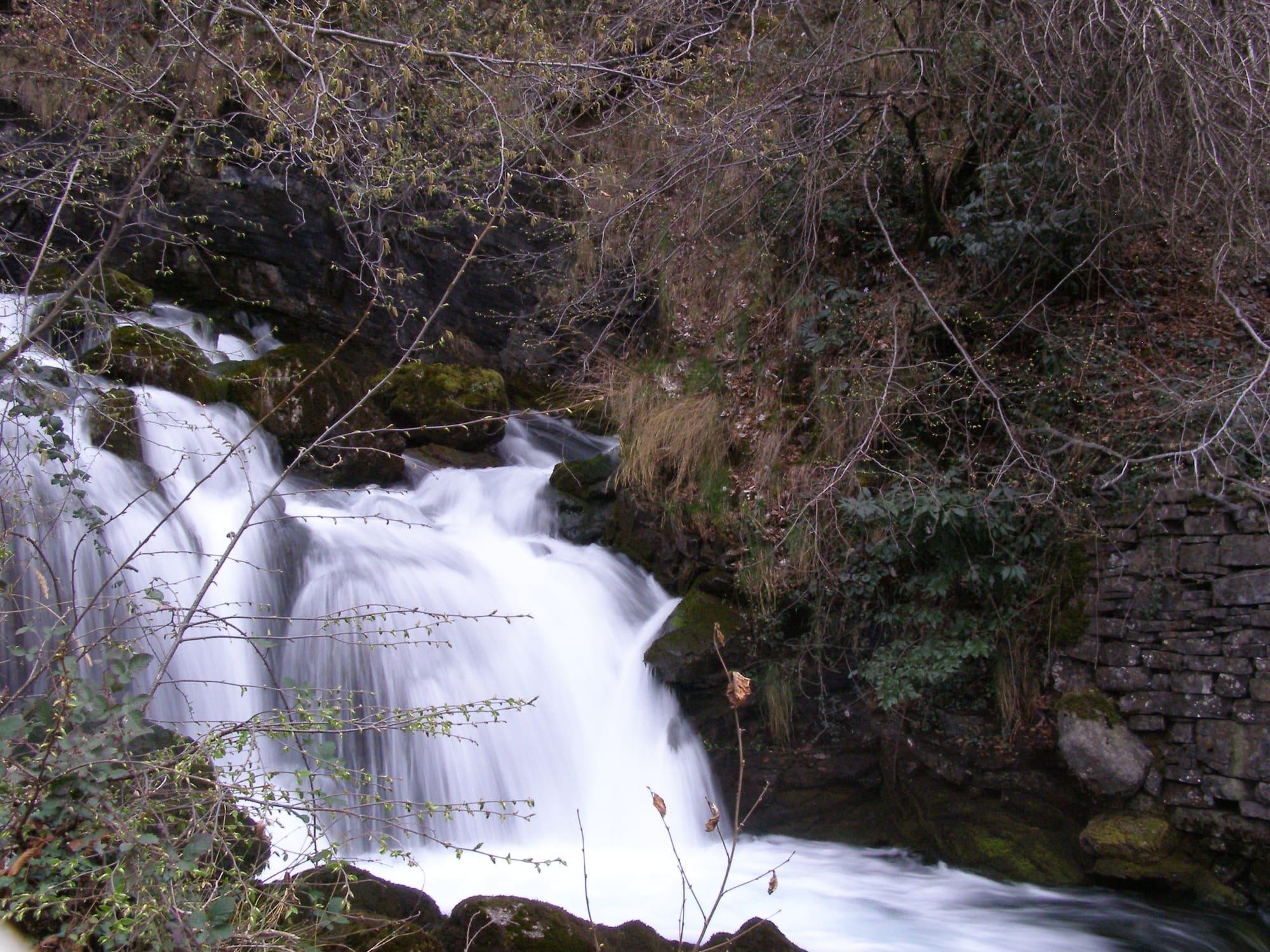
To the south, a path along the hillside reaches the source of the Fiumelatte in a quarter of an hour; the stream comes out of a cave and runs for about 250 metres to the lake. It usually flows from March to October and is dry in winter; Leonardo described it in the Codex Atlanticus. To the north, the Viandante reaches Bellano in two to three hours, passing the old black marble quarries. The Greenway dei Patriarchi crosses the village and some of its hamlets: six kilometres, about two hours on foot.
Centro Lago
Bellagio, Varenna, Menaggio: three shores of the central lake, ten minutes to half an hour apart by ferry.
4 h – 8 h
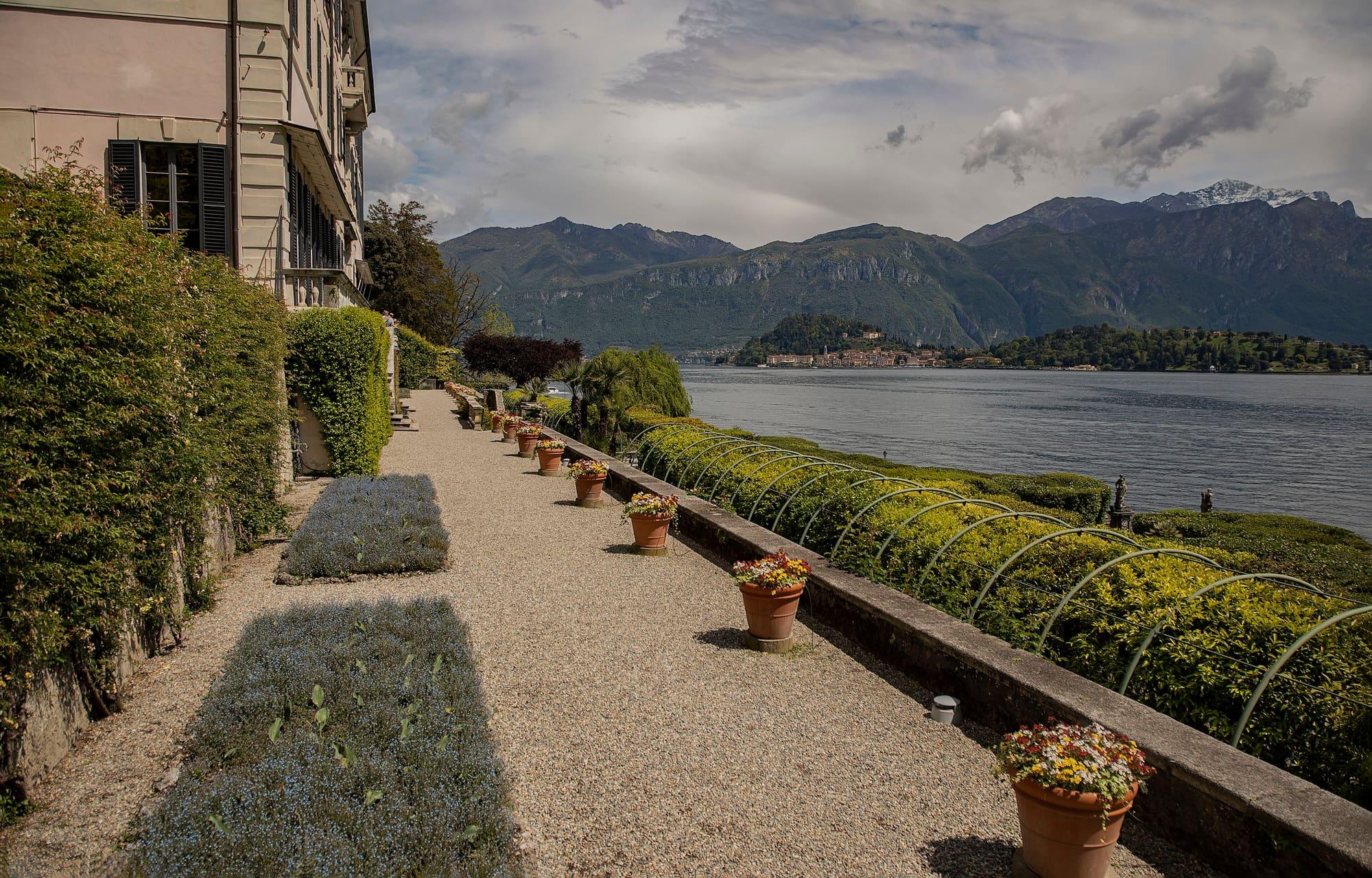
Centro Lago
Five great gardens within twenty minutes' sailing of one another.
5 h – 12 h
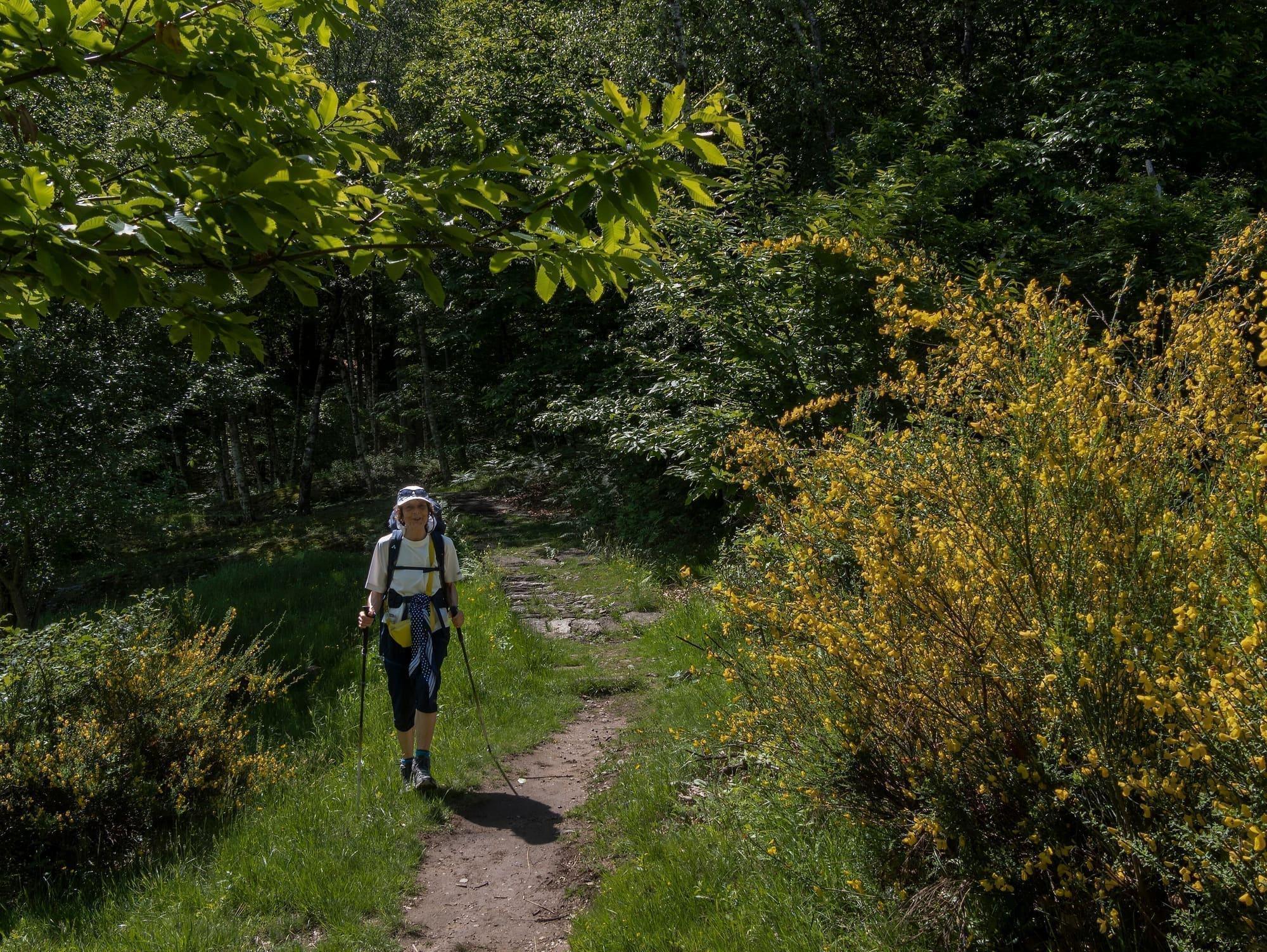
Lecco Branch
Start at one station, walk above the lake, come back from another.
3 h – 5 hOpen access
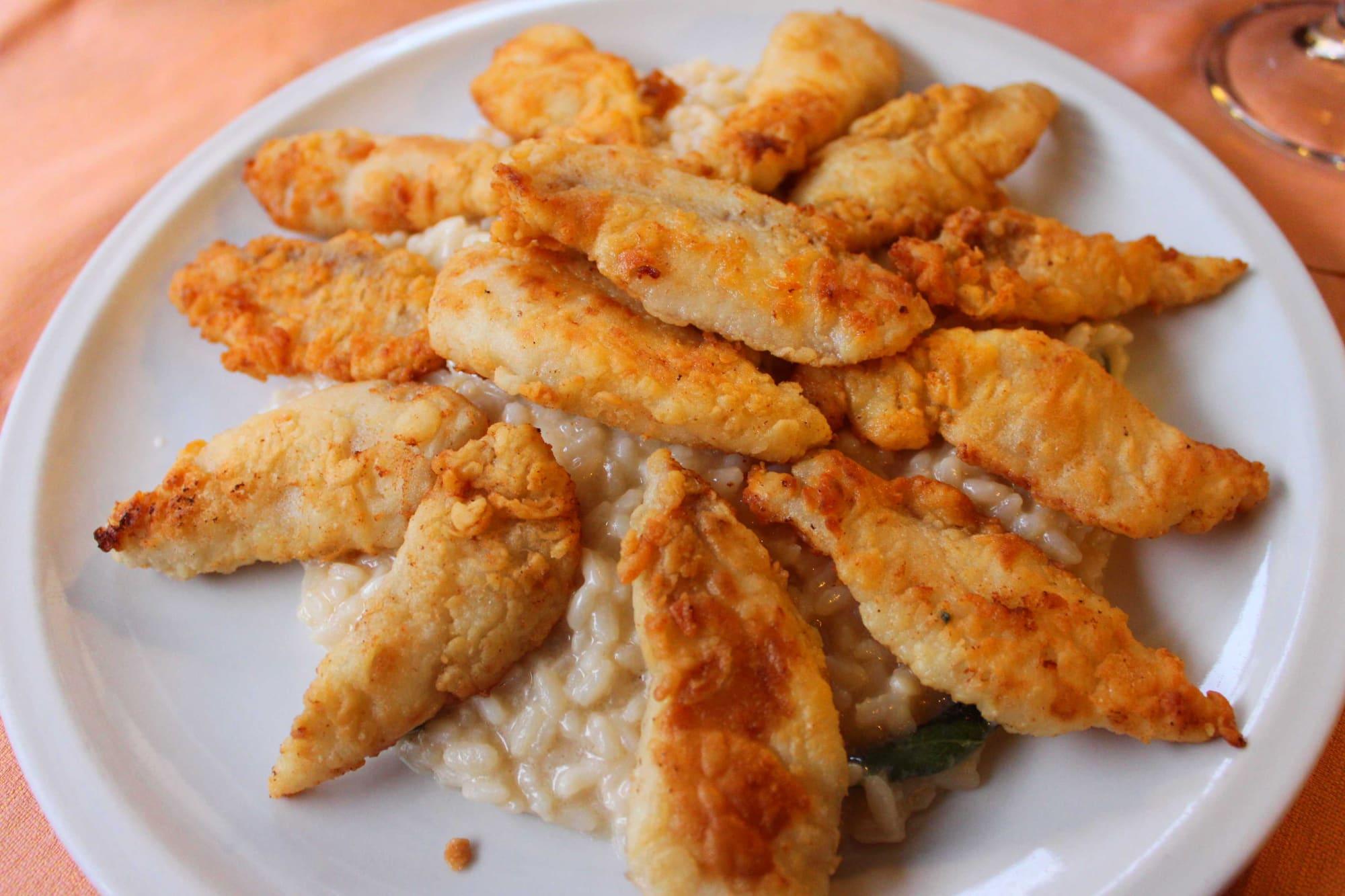
Centro Lago
Missoltini with polenta, whitefish and perch: how the lake cooks its fish.
1 h 30 – 2 h 30
Until31Jan 2027
Villa Monastero remembers Marco and Rosa De Marchi, who bequeathed it for public use, ninety years after Marco's death.
24Dec
On Christmas Eve afternoon, Father Christmas in Piazza San Giorgio with presents for the children and a snack.
How long it takes
Typical door-to-door times by public transport, changes included. From Milan, counted from Centrale station.
Tourist office
Infopoint Varenna Turismo
Via IV Novembre 7, 23829 Varenna
In October Monday, Wednesday, Thursday and Friday 9:30 to 13:30 and 14:00 to 16:30, Saturday and Sunday 10:00 to 17:00, closed on Tuesdays; in November at weekends and on the 2nd, 10:00 to 16:00; in December from the 5th to the 8th, on the 12th and 13th and from the 19th to the 31st except Christmas Day, 10:00 to 16:00; then from 2 to 6 January 2027, 10:00 to 16:00
Updated: 8 Oct 2026 · Varenna Turismo.
Parking and services
3 public toilets30 drinking fountains2 pharmacies3 cash machines2 defibrillators
Car parks and services on the map
Within two and a half kilometres of the centre; check car park spaces and fees on arrival.
Varenna-Esino-Perledo station sits above the village: it is ten to fifteen minutes downhill on foot to the centre and the lake.
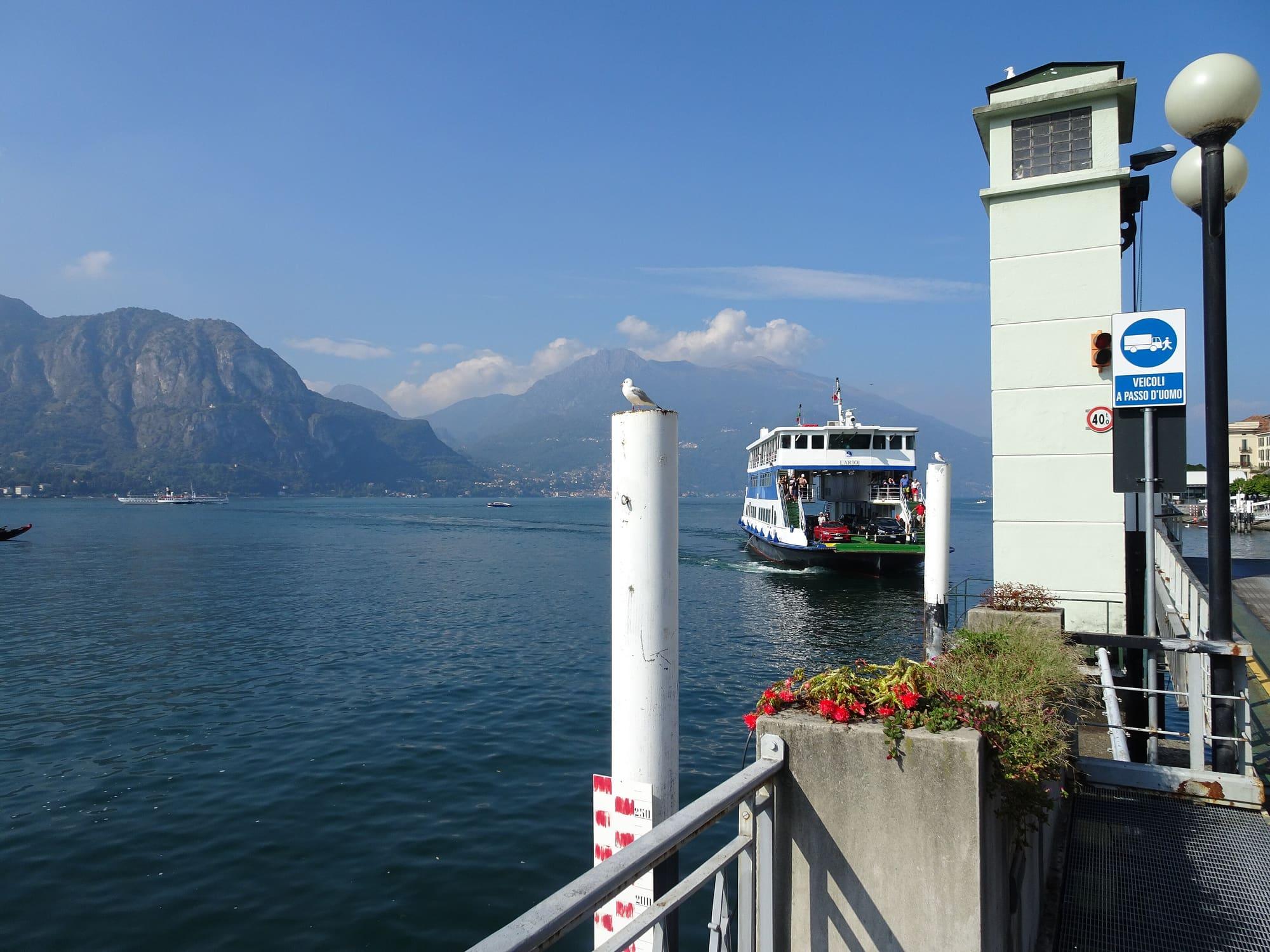
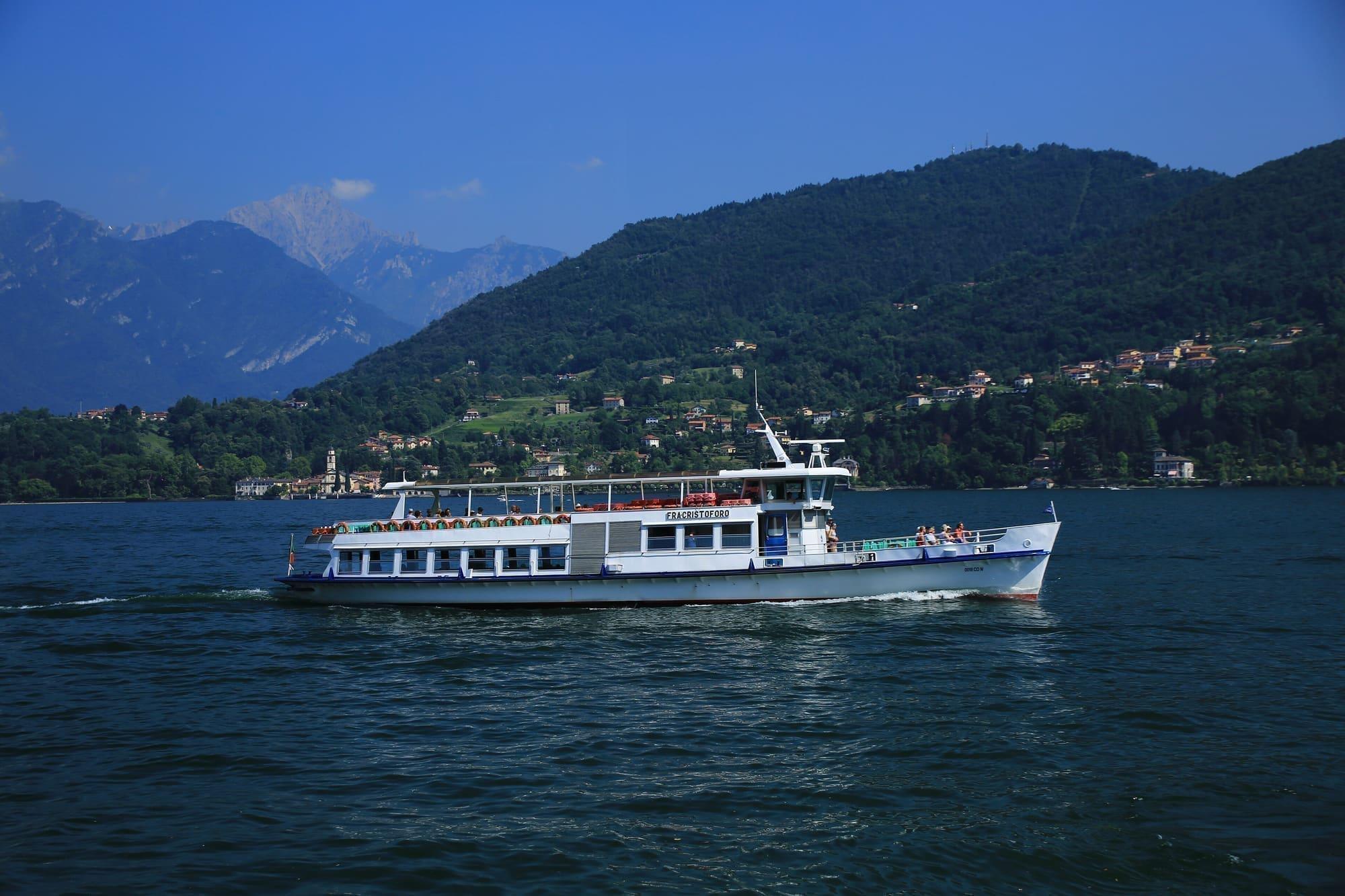
Fifteen minutes to Bellagio, and the same to Menaggio. The car ferry runs Varenna–Bellagio–Cadenabbia–Menaggio and is the lake's only vehicle crossing; for several legs in a day, Navigazione Laghi sells an unlimited-travel ticket for the central lake.
Updated 26 October 2026
The mountains around the village hide the sun before astronomical sunset: sunrise and sunset are worked out on the village's own horizon.
Today, 1 November, estimated sunlight at the reference point: first at 09:04 and last at 16:43, giving 7 h 40 of direct sun, out of 10 h 06 of daylight.
Today the sun arrives between 09:02 and 09:22, depending on the street.
Watch the shadow reach Varenna today
See from Varenna where the sun goes, in 3D
The sun at an exact spot in Varenna: your hotel, a beach, a street
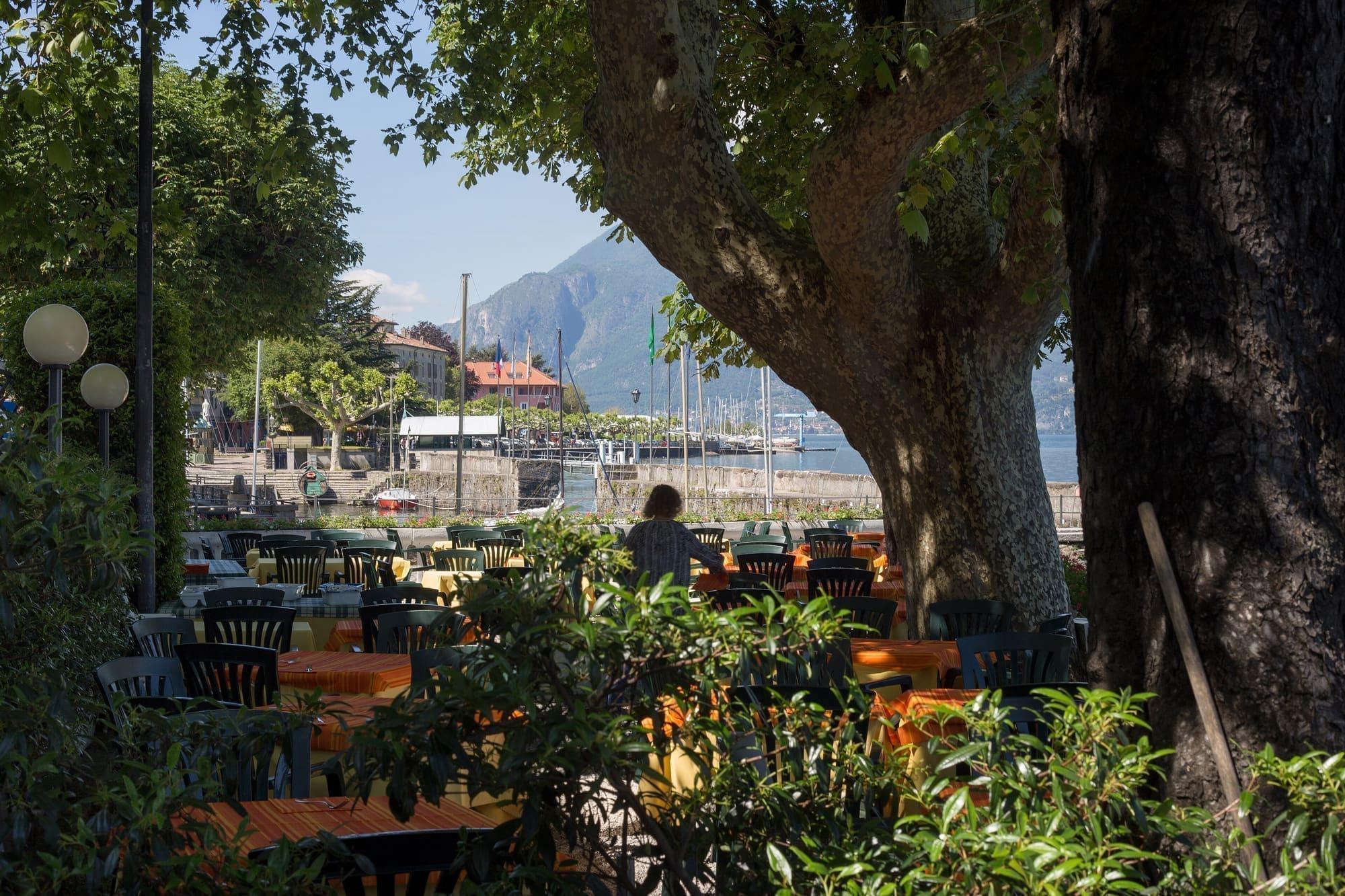
Places near the shore with outdoor seating, with today's estimated first and last sun at the marked point. Those with the latest sun come first. Clouds and shade from buildings, trees or awnings can change the light on the tables; check opening hours with the venue.
The highest summit in view from here is Pizzo Paglia, 2593 m, 25 kilometres away.
The ochre line follows today's sun path and marks the estimated times of its first and last appearance above the mountains. Drag the panorama to see all of it.
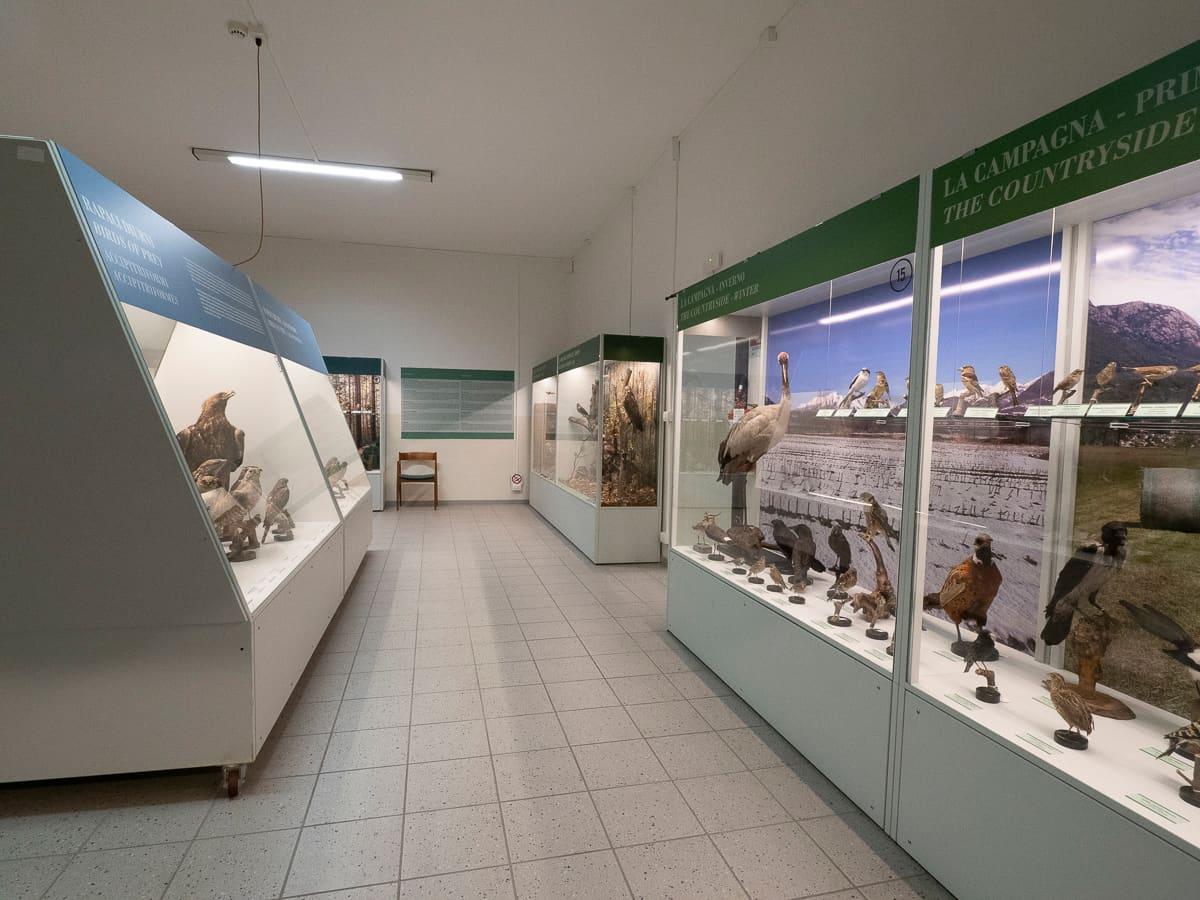
The walkway over the water from the pier to the centre, Villa Monastero and Villa Cipressi, which sit side by side, the Castello di Vezio after a twenty-five-minute climb, and Fiumelatte a quarter of an hour along the shore. Next to San Giorgio stands San Giovanni Battista, the eleventh-century mother church with its sixteenth-century frescoes. If it rains, the Museo Ornitologico Scanagatta, more than eight hundred birds and mammals of the area, is visited through the infopoint on Via IV Novembre. The whole round from the station is in the itinerary “Varenna in a day, on foot”.
Without a car, yes: it has a station on the line from Milan and the ferry to Bellagio and Menaggio.
Varenna has a limited-traffic zone. If you sleep in the village, the property enters your plate for the whole stay; if it has no space of its own, the permit only covers unloading the luggage, half an hour. The car ferry links Varenna with Bellagio, Menaggio and Cadenabbia.
What is around, and how far.
© OpenStreetMap contributors · ODbL
Typical door-to-door times.
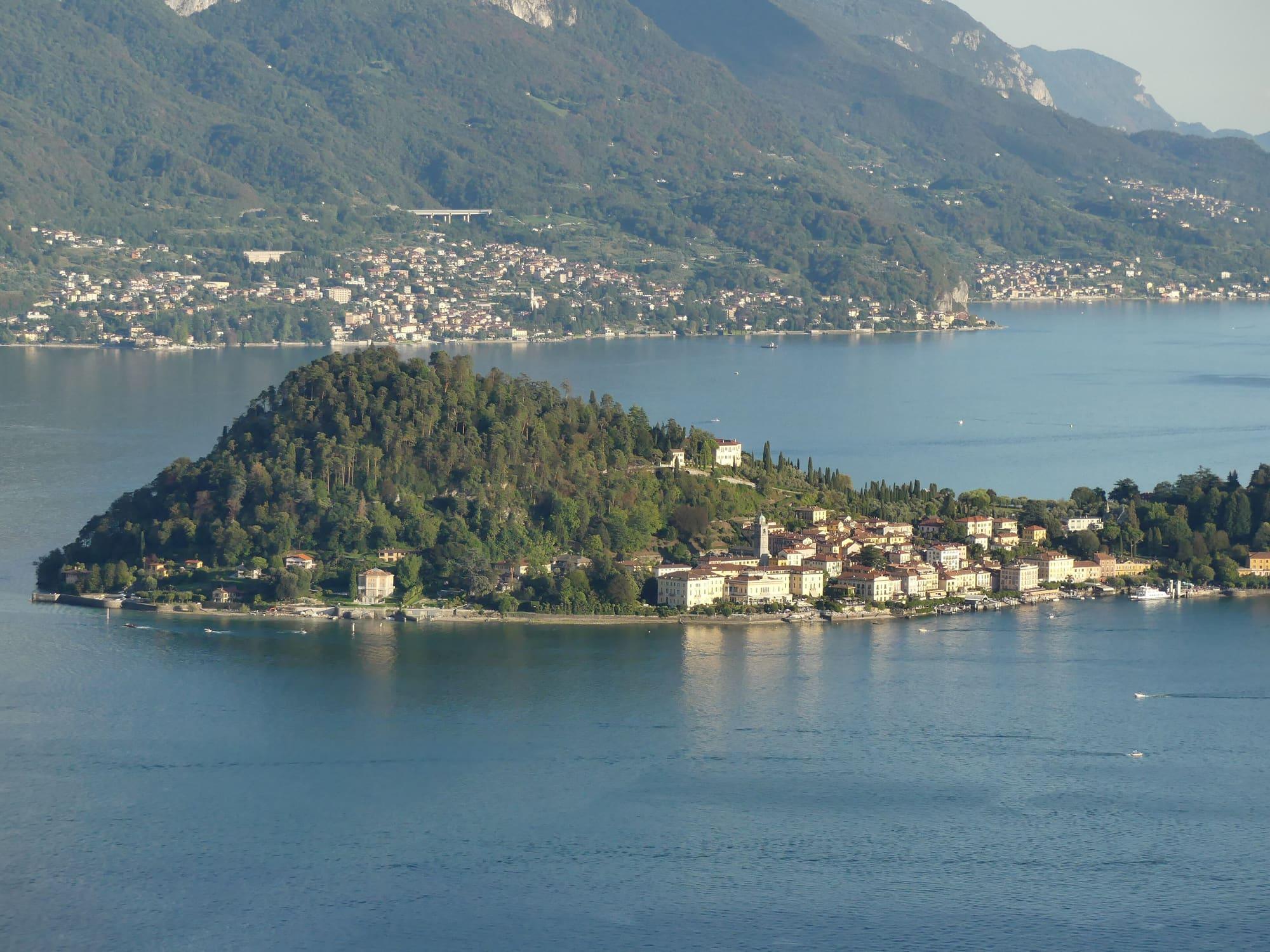
On the point that splits the lake in two, with staircases instead of streets. In winter the timetable thins out: fewer runs and a much earlier last departure.
15 min
In the middle of the lake, between the ferry, the Regina road and the bus to Lugano. In winter the timetable thins out: fewer runs and a much earlier last departure.
15 min
A walkway suspended inside a gorge carved out by the Pioverna.
5 min