19Sept 2027
First Basin
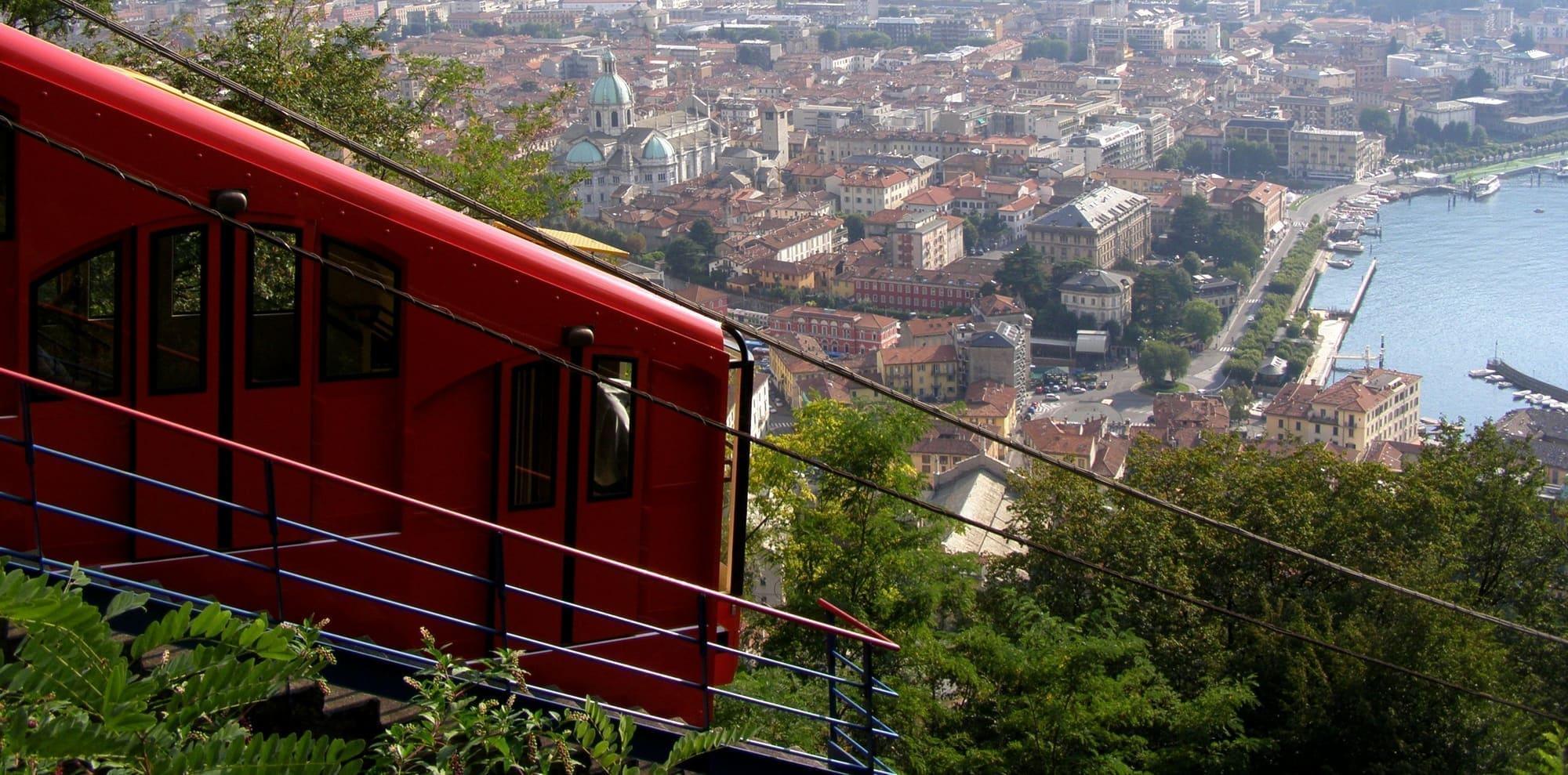
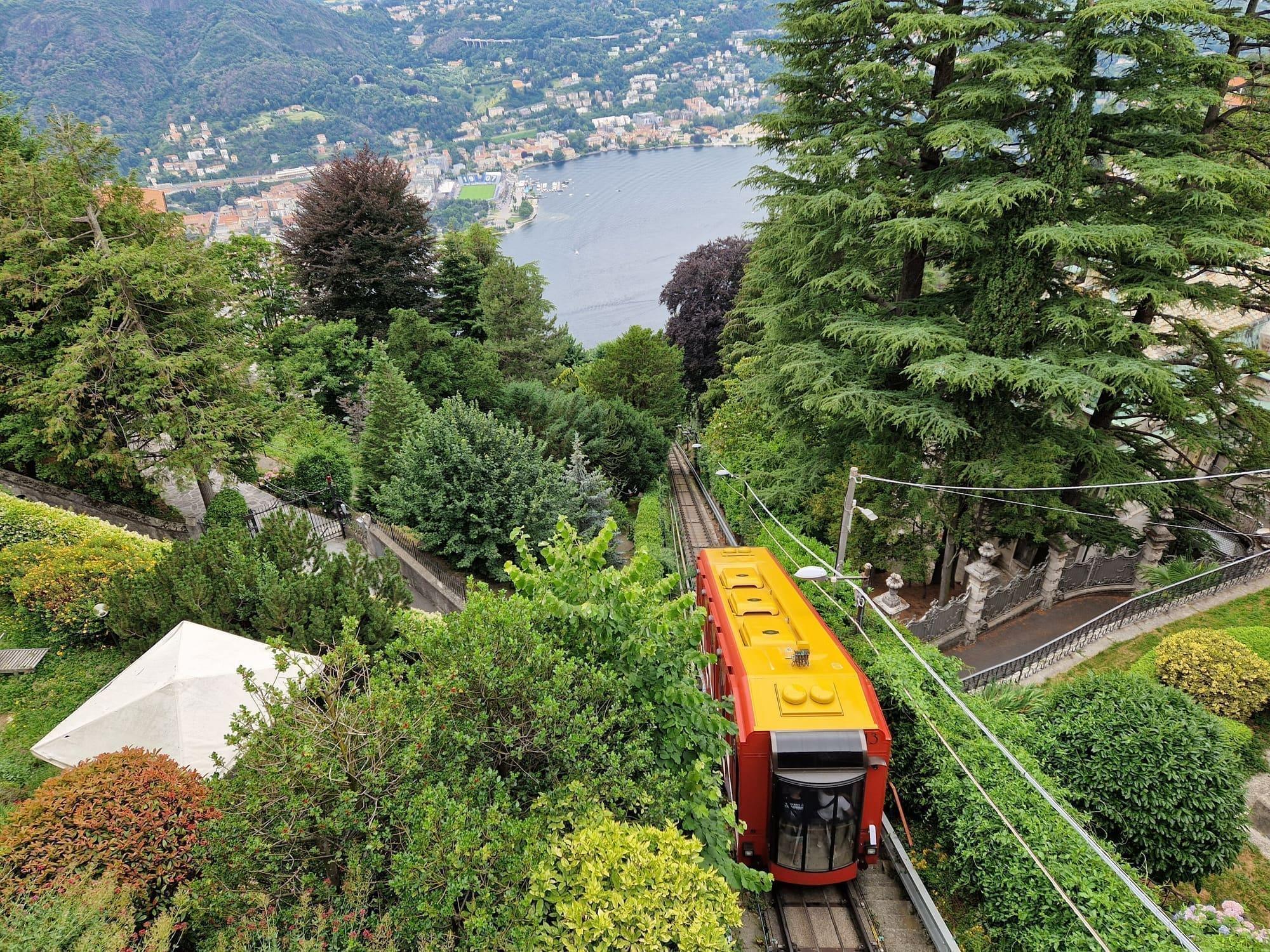
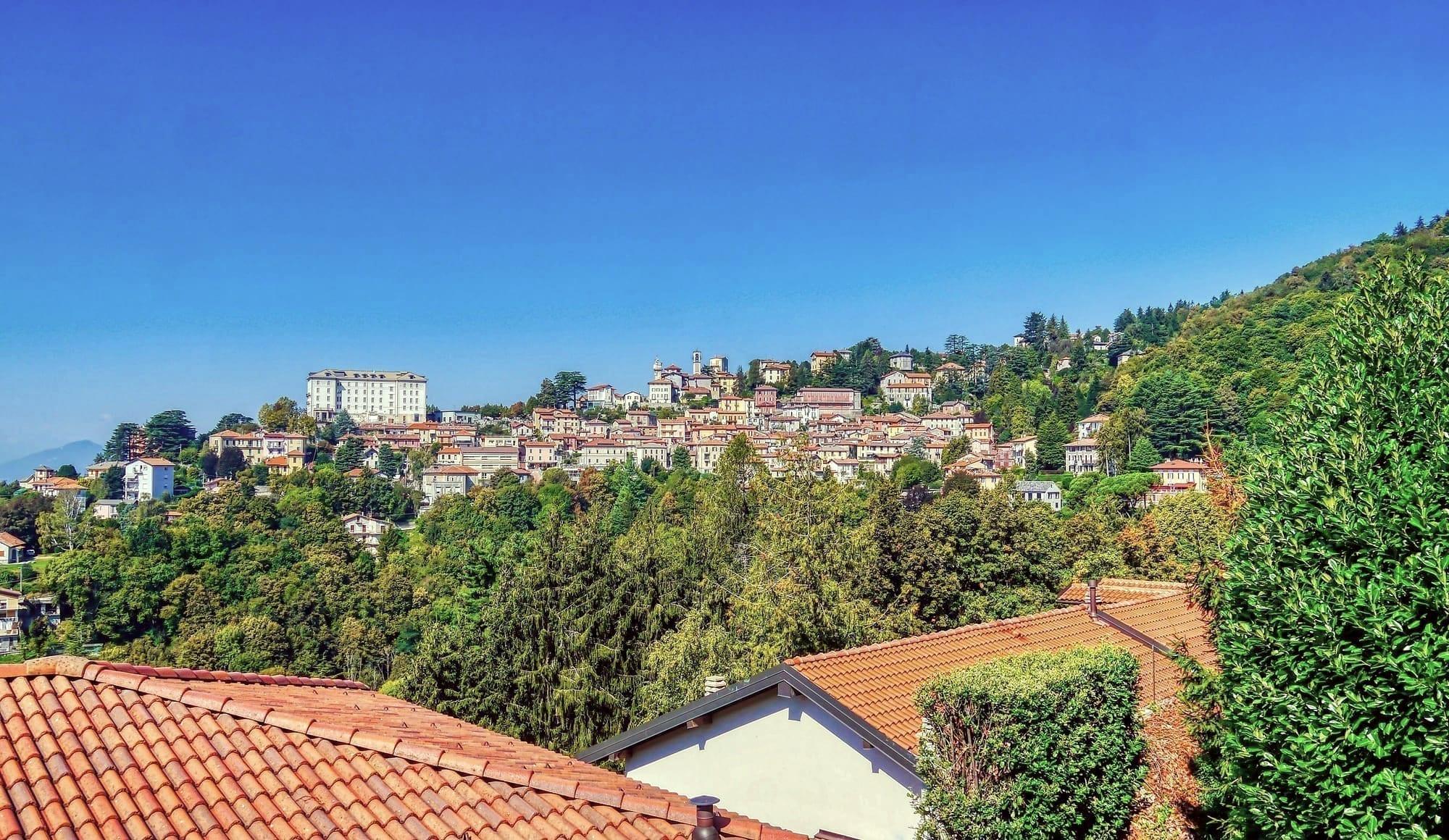
Brunate is the village above Como, at 715 metres: you get there on an 1894 funicular that climbs gradients of up to 55 per cent, and in seven minutes you go from the waterfront to a village of Liberty-style villas.
On clear days the view reaches Monte Rosa and across the plain to the Apennines.
Brunate is the village above Como, at 715 metres: you get there on an 1894 funicular that climbs gradients of up to 55 per cent, and in seven minutes you go from the waterfront to a village of Liberty-style villas.
On clear days the view reaches Monte Rosa and across the plain to the Apennines.
Brunate lies at 715 metres on the flank of Monte Tre Croci, five hundred metres above Como's waterfront. You go up by the funicular from Piazza De Gasperi: the line is just over a kilometre long and the ride takes seven minutes. The funicular opened in 1894 and ran on steam until 1911, when it was electrified.
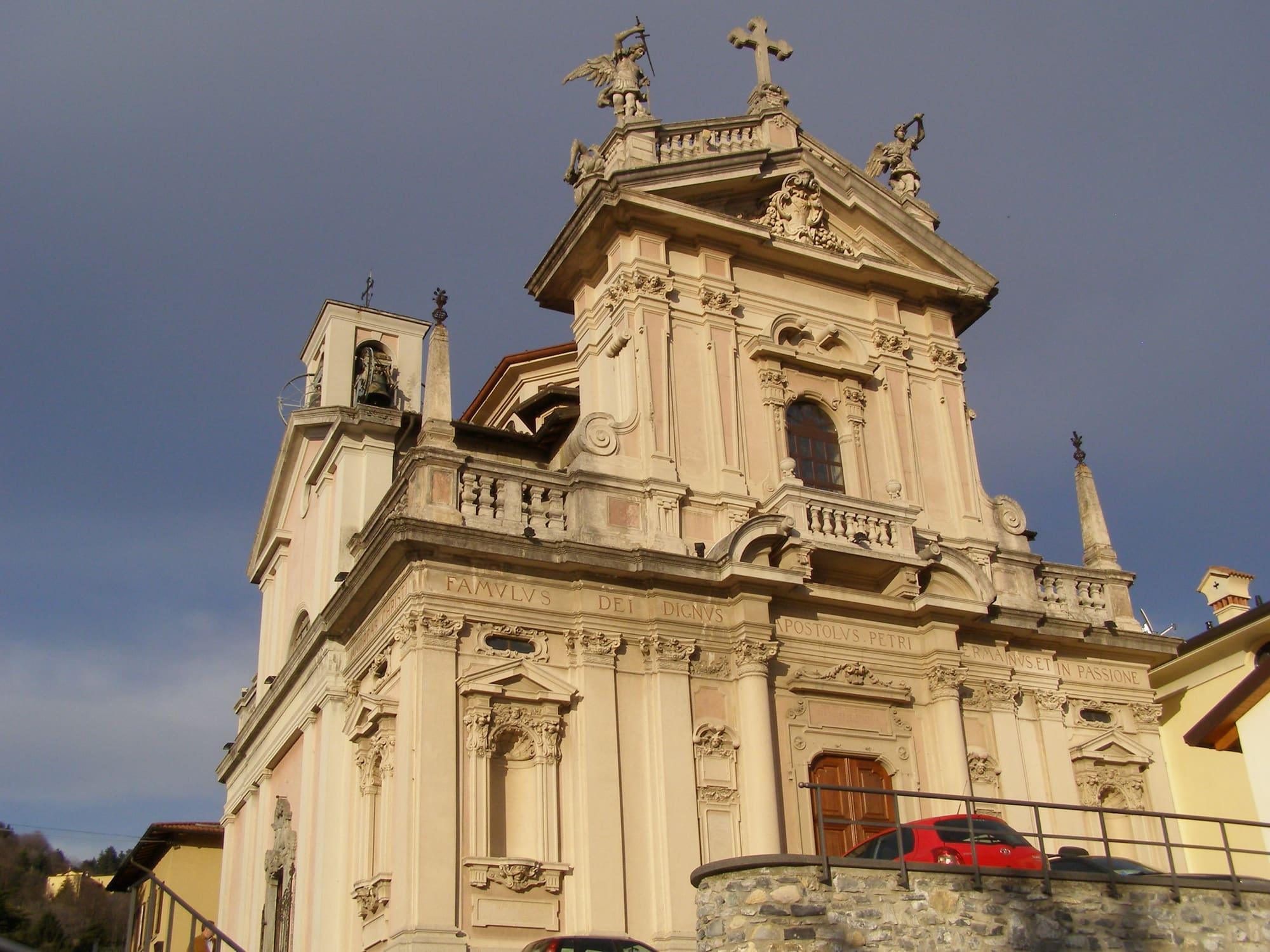
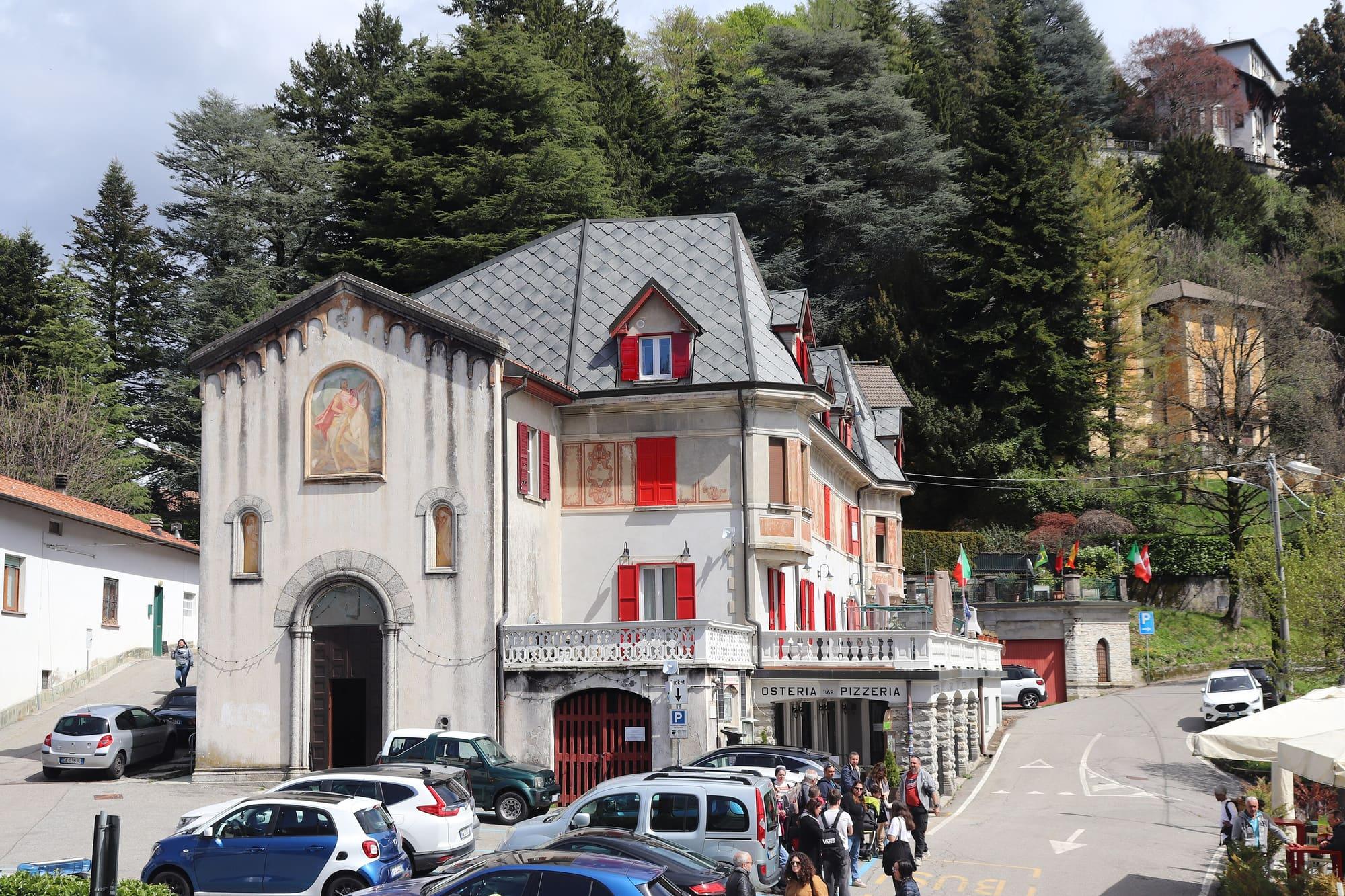
Three minutes from the station stands Sant'Andrea, the parish church, its vaults frescoed in the late seventeenth century by the Recchi, a family of painters from Como. On 30 November the village celebrates its patron saint, Sant'Andrea: on the evening before, a torchlight procession makes its way to the parish church past candles lit on the windowsills, and there is a small market during the feast. The village is a few streets and Liberty villas. Higher up, half an hour's walk away, are the hamlet of San Maurizio and the Faro Voltiano.
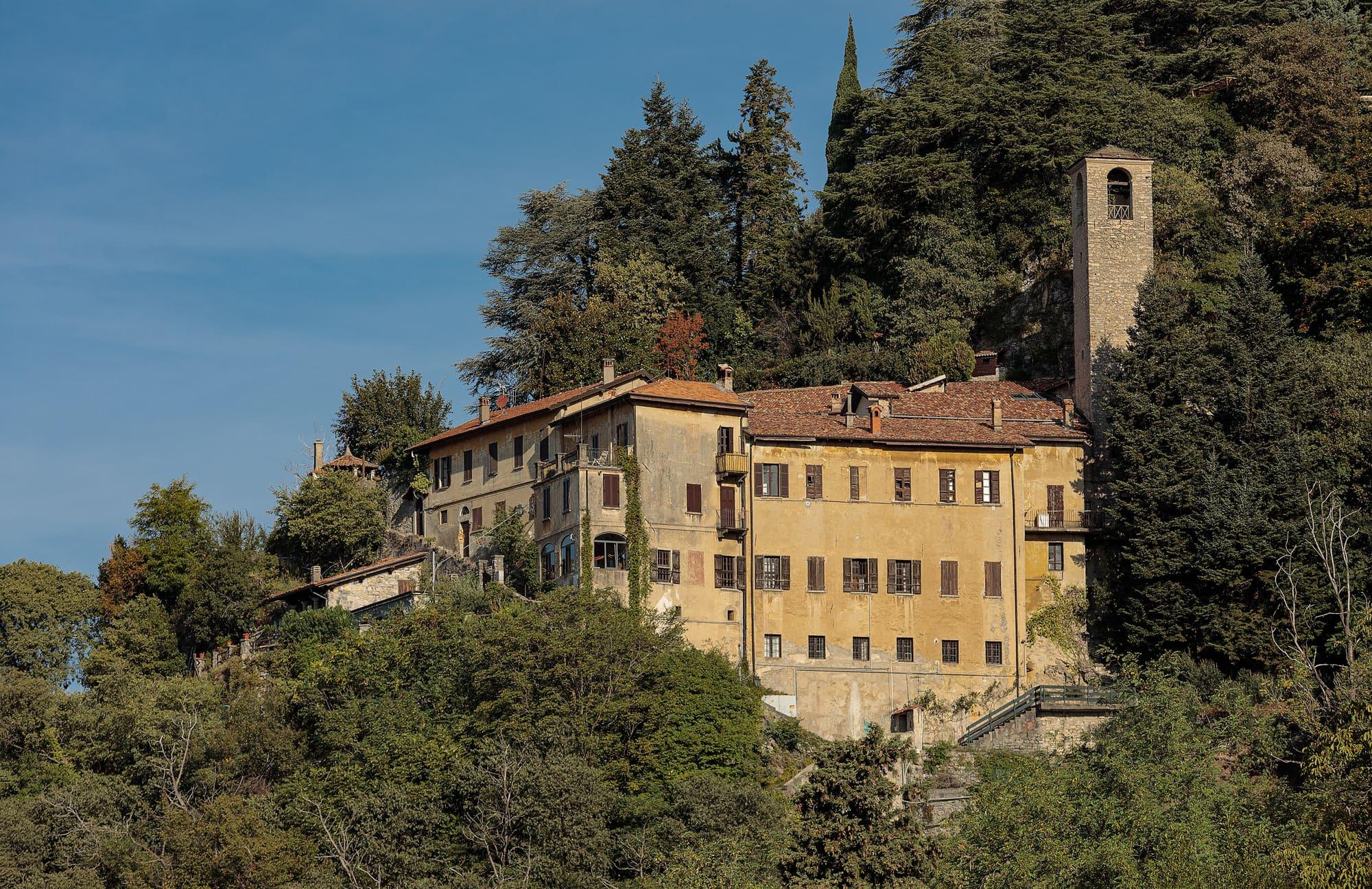
In the Middle Ages Brunate was a small village on the mountain above Como. In the fourteenth century a convent of nuns following the Rule of Saint Augustine grew up beside the church of Sant'Andrea. Its best-known abbess was the Blessed Maddalena Albrici, who died in 1465; in 1593 the nuns moved down to Como. The main way between Como and Brunate was once the path past the Eremo di San Donato.
At the end of the nineteenth century the village became a summer resort. The Grand Hotel Brunate was completed in 1893, and the funicular arrived the following year. Well-off families from Milan and Como built their summer villas here. In 1912 the Bulgarian poet Pencho Slaveykov died in one of the village's hotels. In 1943 Brunate was merged into the municipality of Como, and in 1947 it became a municipality in its own right again.
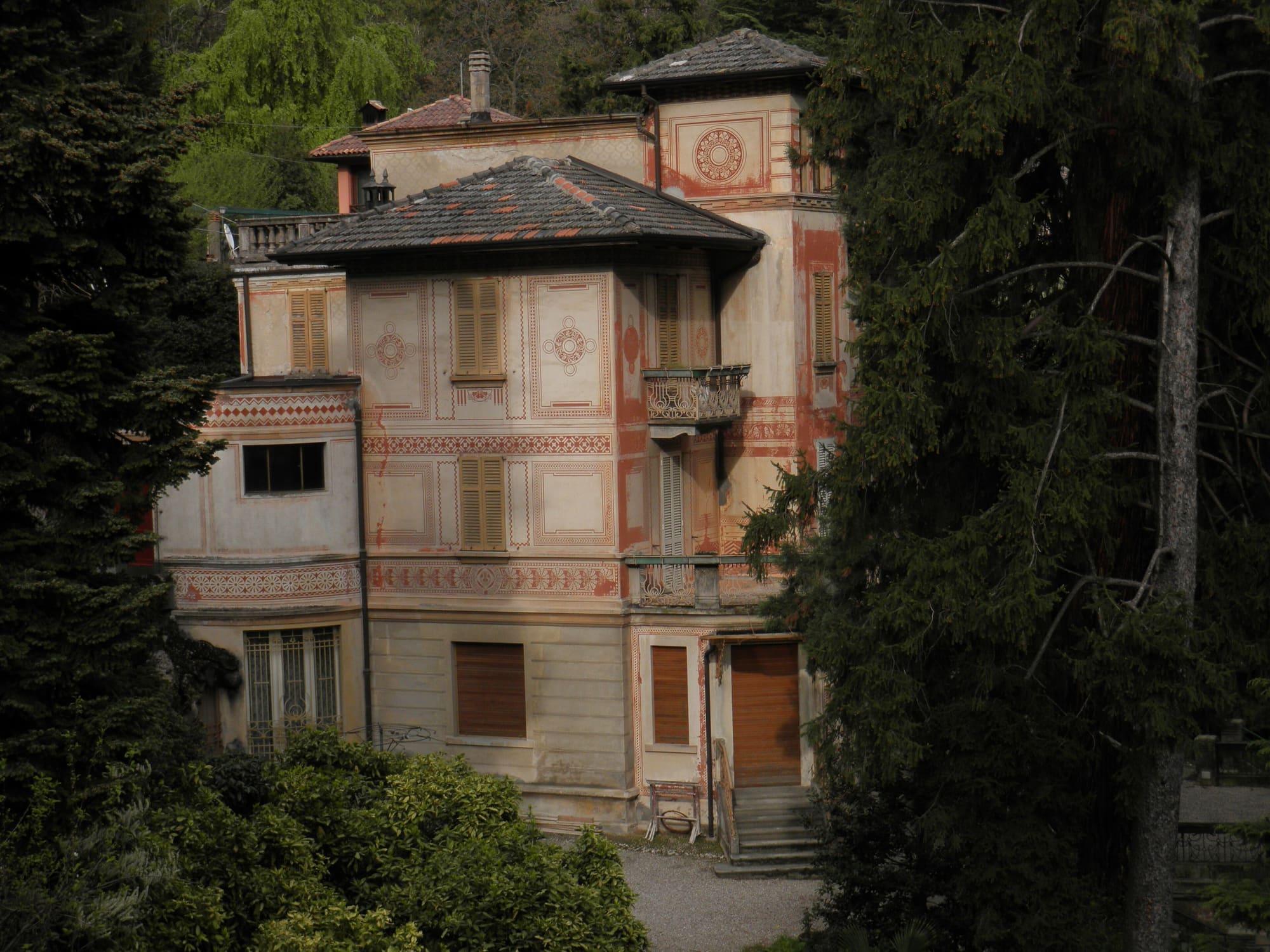
Between the late nineteenth and early twentieth centuries, villas in the Liberty style, the Italian Art Nouveau, and in eclectic styles went up on the hillside, mostly along Via Pissarottino, Via Roma, Via Pirotta and Via Scalini. Villa Pirotta Bonacossa, just below the funicular station, was designed in 1902 by Federico Frigerio for the cotton industrialist Attilio Pirotta; the sculptures are by Lodovico Pogliaghi. Villa Cantaluppi Giuliani, from around 1910, has facades decorated in concrete, wrought iron, glass and ceramic.
The town hall occupies Villa Monti Ferrario: in 1913 Rodolfo Ferrario had it rebuilt and decorated in sgraffito with designs taken from his stamp collection. The Chalet Sonzogno, a prefabricated Canadian wooden house, was shown in Turin in 1902; two years later the newspaper Il Secolo offered it as a prize to its subscribers. Many of the villas are private homes and are seen from the street.
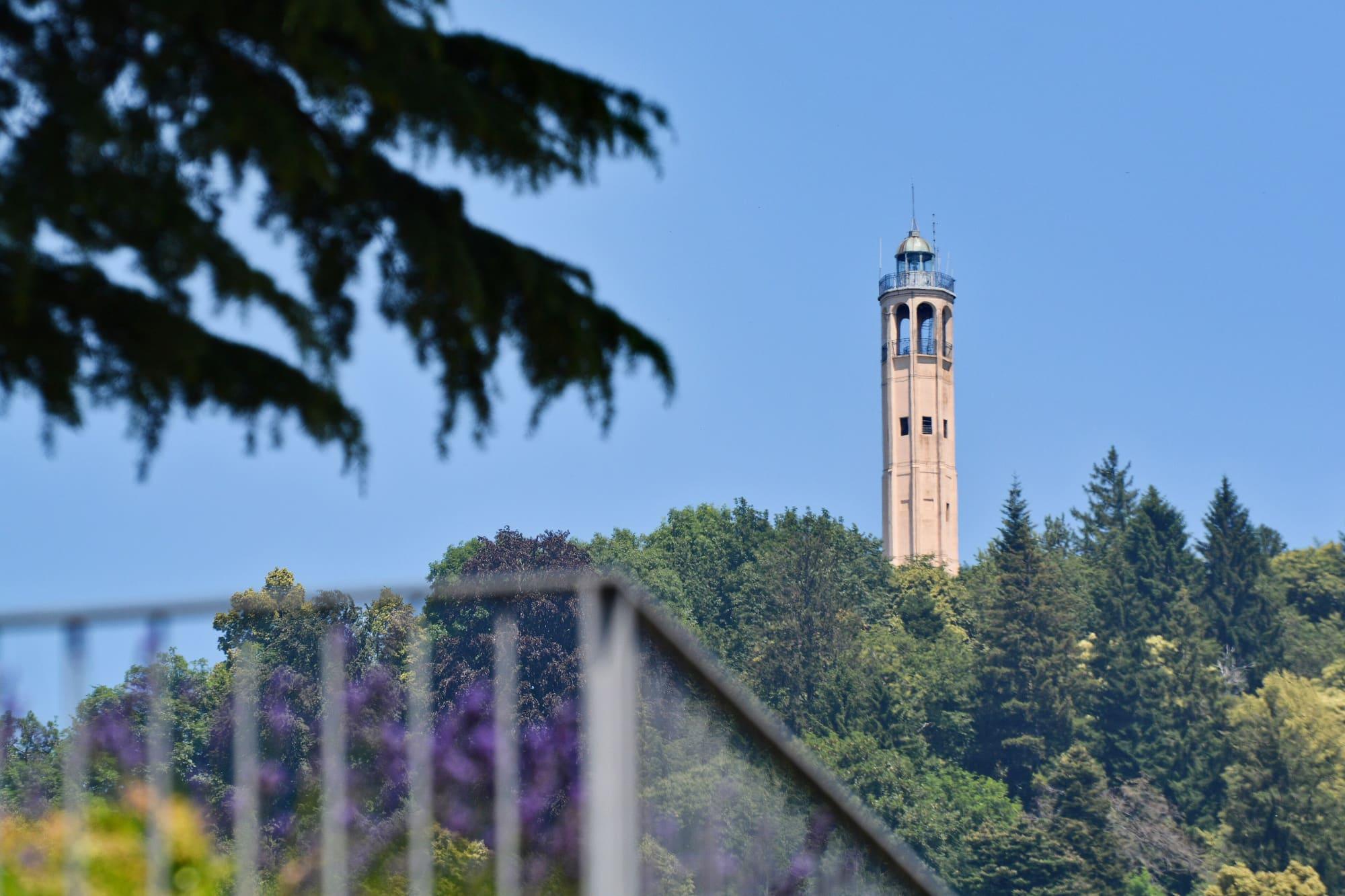
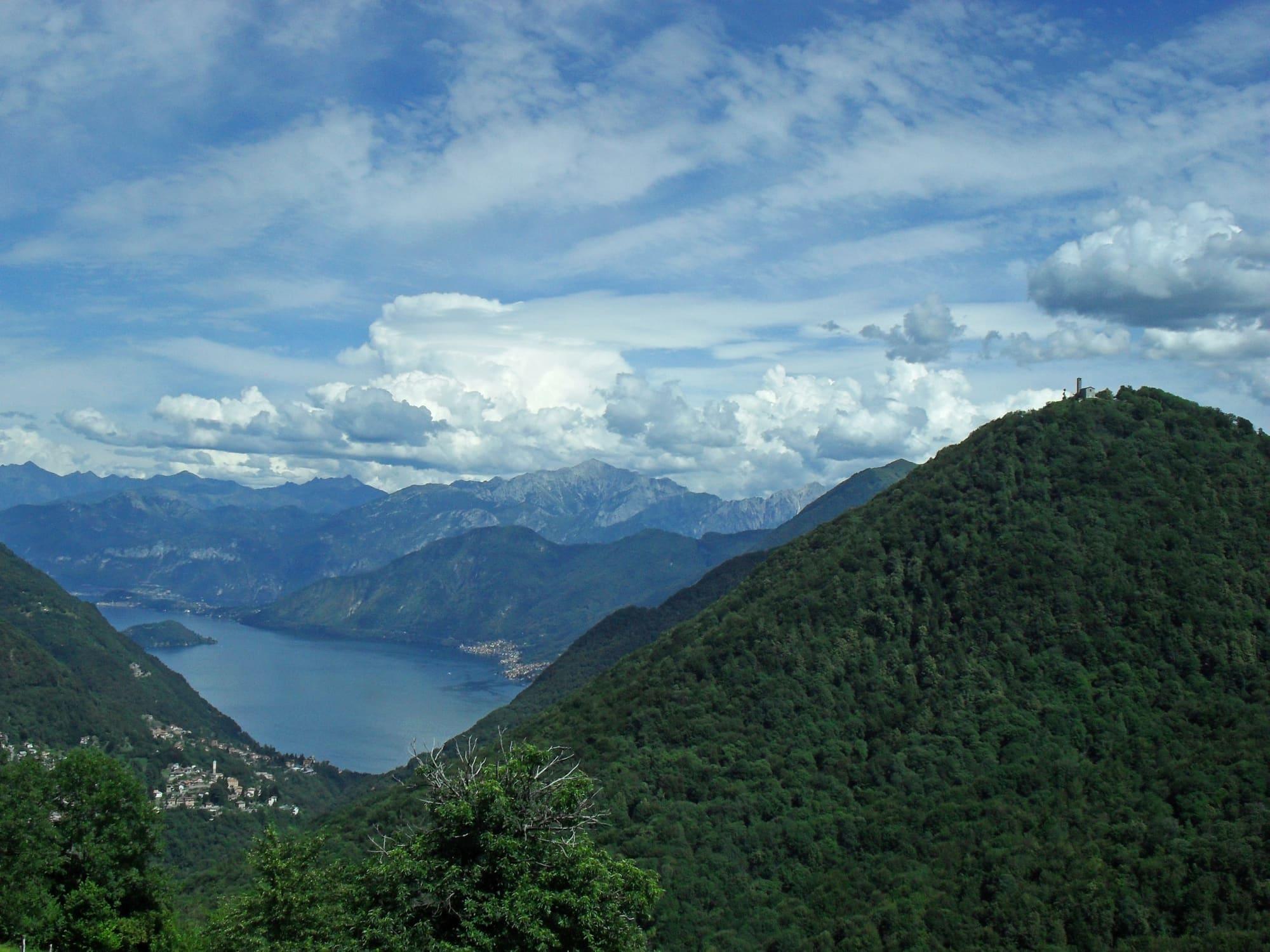
The Faro Voltiano was built in 1927 at San Maurizio, above Brunate, for the centenary of Alessandro Volta's death, to a design by the engineer Gabriele Giussani. It is not a navigation light: it is a monument. The octagonal tower is 29 metres high, with 143 steps inside and a lantern at the top showing green, white and red lights. From the terrace you see the whole first basin, the Brianza and the Alps.
From Brunate it is half an hour's walk, on tarmac and then on a mule track. The hamlet has the little church of San Maurizio, from the early twentieth century, with the saint on horseback frescoed on its facade. In September the hamlet keeps its saint's day with mass and a procession towards Monte Tre Croci.
You go up by funicular and can come back on foot: the path drops to Como in a little over an hour by way of the viewpoints. It is steep and cobbled in places, so wear shoes with good soles. A second path passes the Eremo di San Donato, the hermitage the Benedictines handed over to the Franciscans in the fifteenth century.
From San Maurizio you climb to the Piazzale del CAO, where a mule track sets off through the woods towards Monte Boletto, the Bolettone and the Palanzone. Brunate is also the start of the Dorsale del Triangolo Lariano, path number 1, which crosses the Lariano Triangle to Bellagio: more than thirty kilometres, usually walked over two days. The main route bypasses some summits, which are reached by the ridge variant. Another, lower path leads in about two hours to Montepiatto and the Pietra Pendula, then drops down to Torno.
First Basin
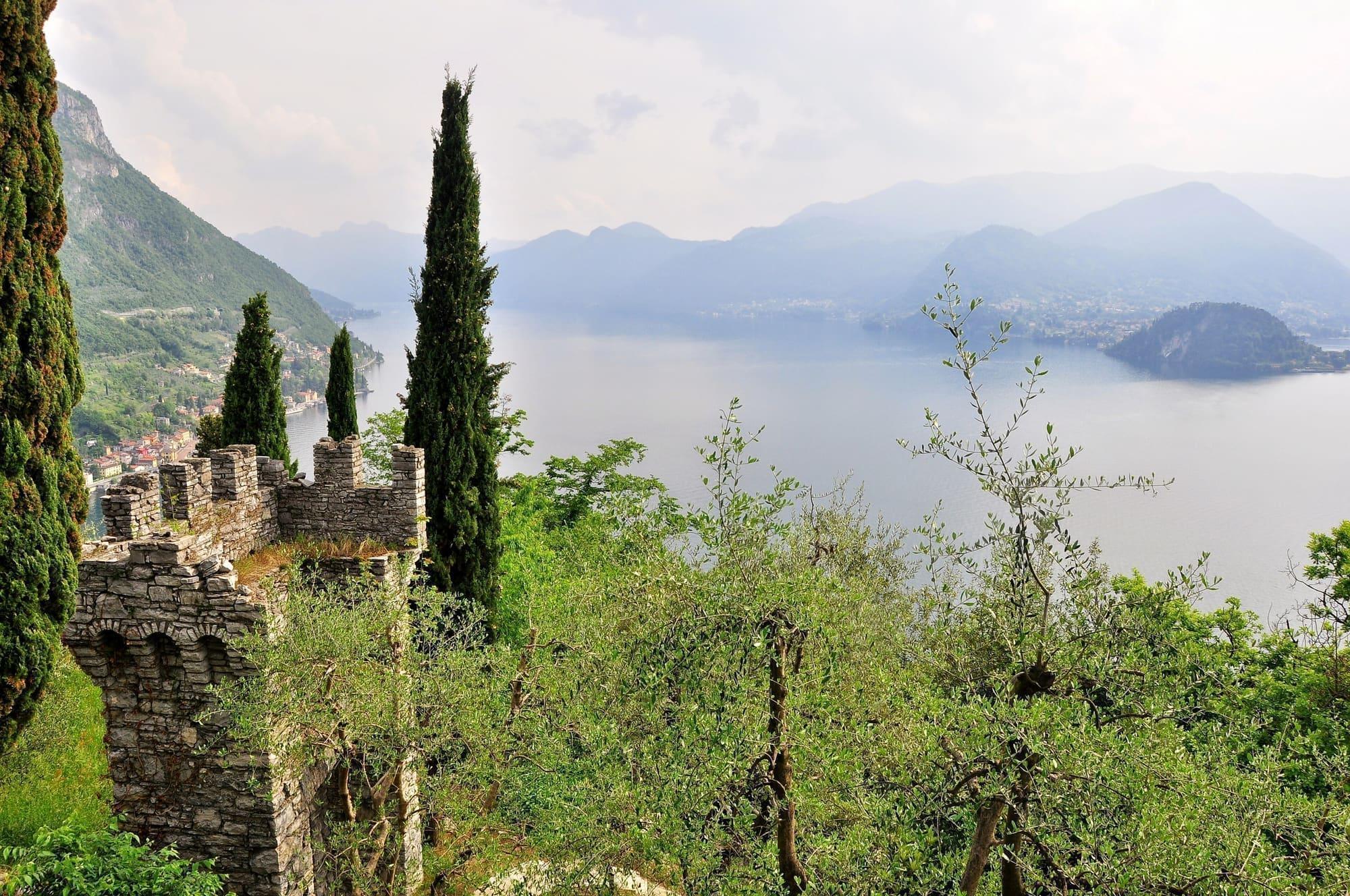
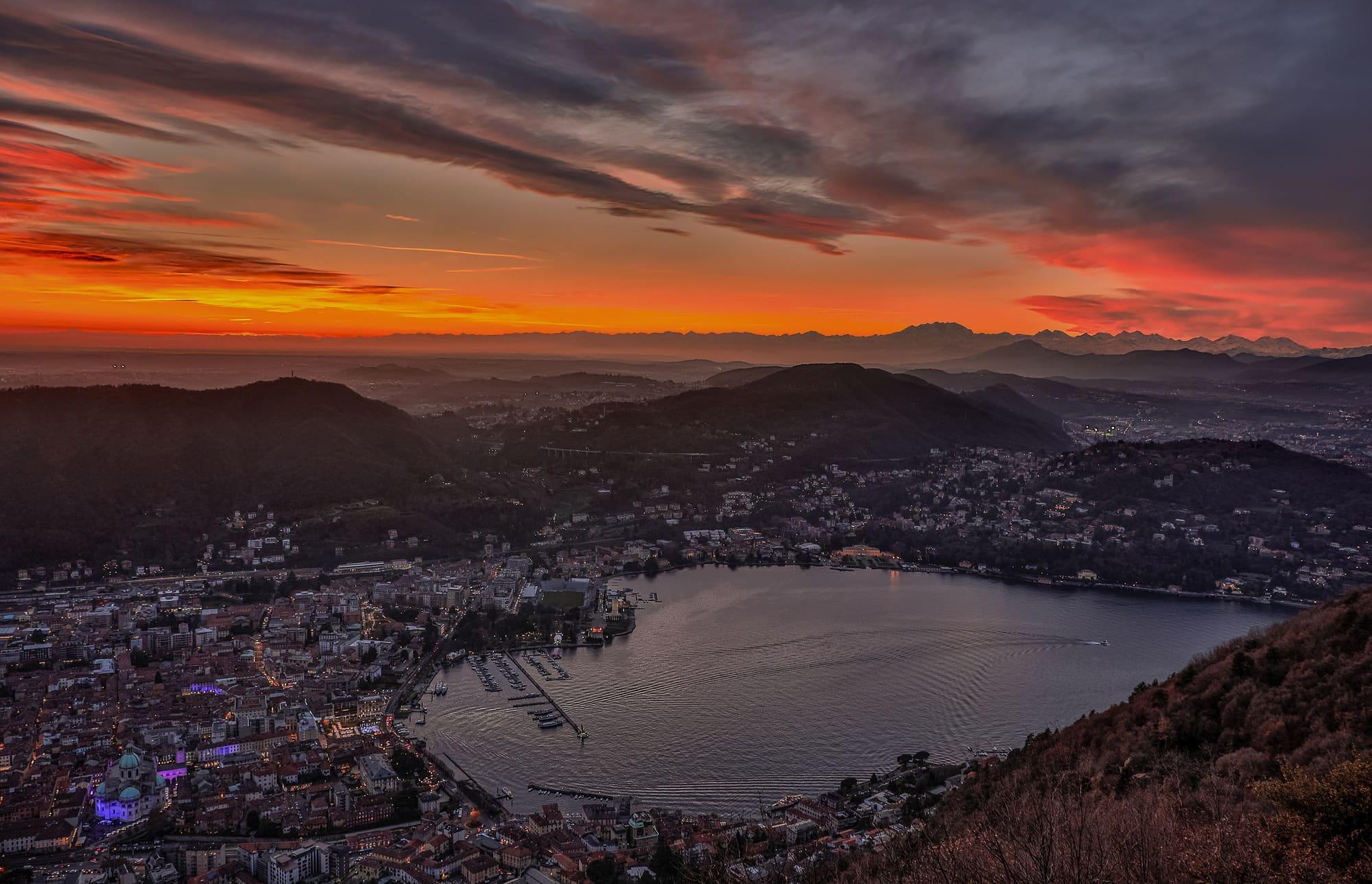
Four places to watch the sunset over the lake: Brunate and Pigra high above the Como branch, the Castello di Vezio above Varenna and Punta Spartivento at Bellagio.
1 h 30 – 2 h 30
First Basin
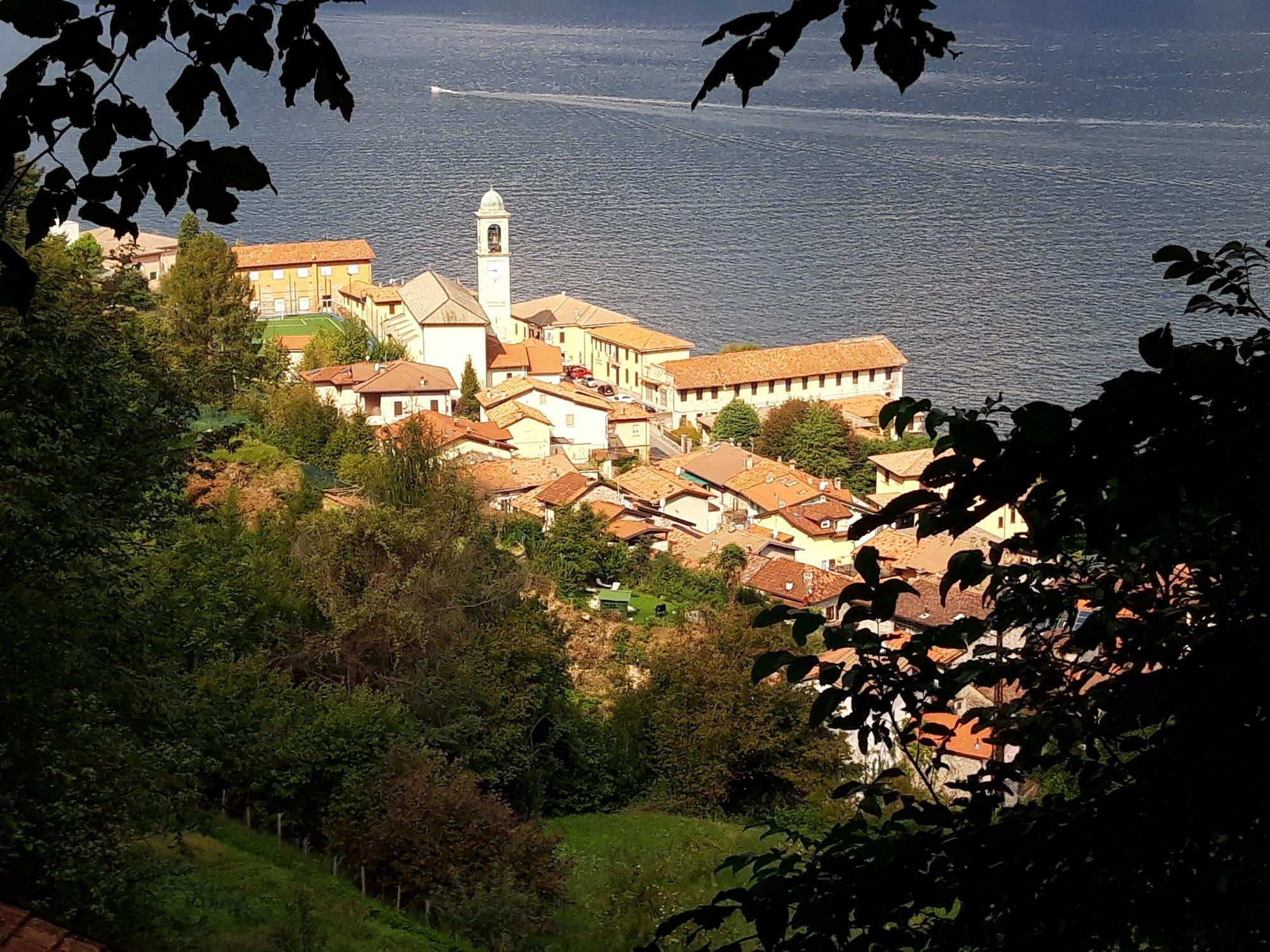
The old mule track between Como and Bellagio, used before there was a road.
3 h – 5 h 30Open access
First Basin
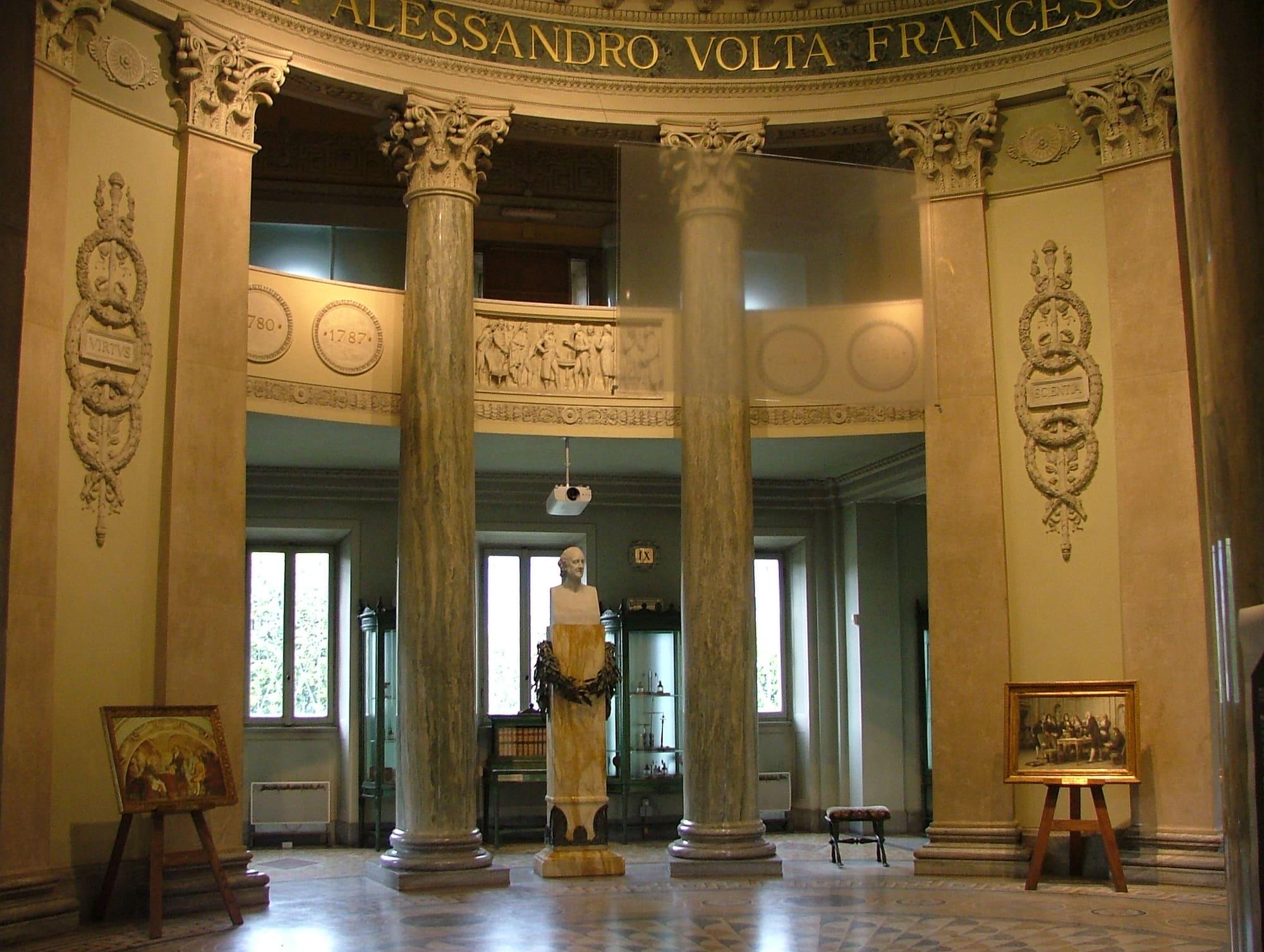
On foot through Como to the places of Alessandro Volta, inventor of the battery: from the statue in the square to the Tempio Voltiano on the lake.
2 h 30 – 6 h
First Basin
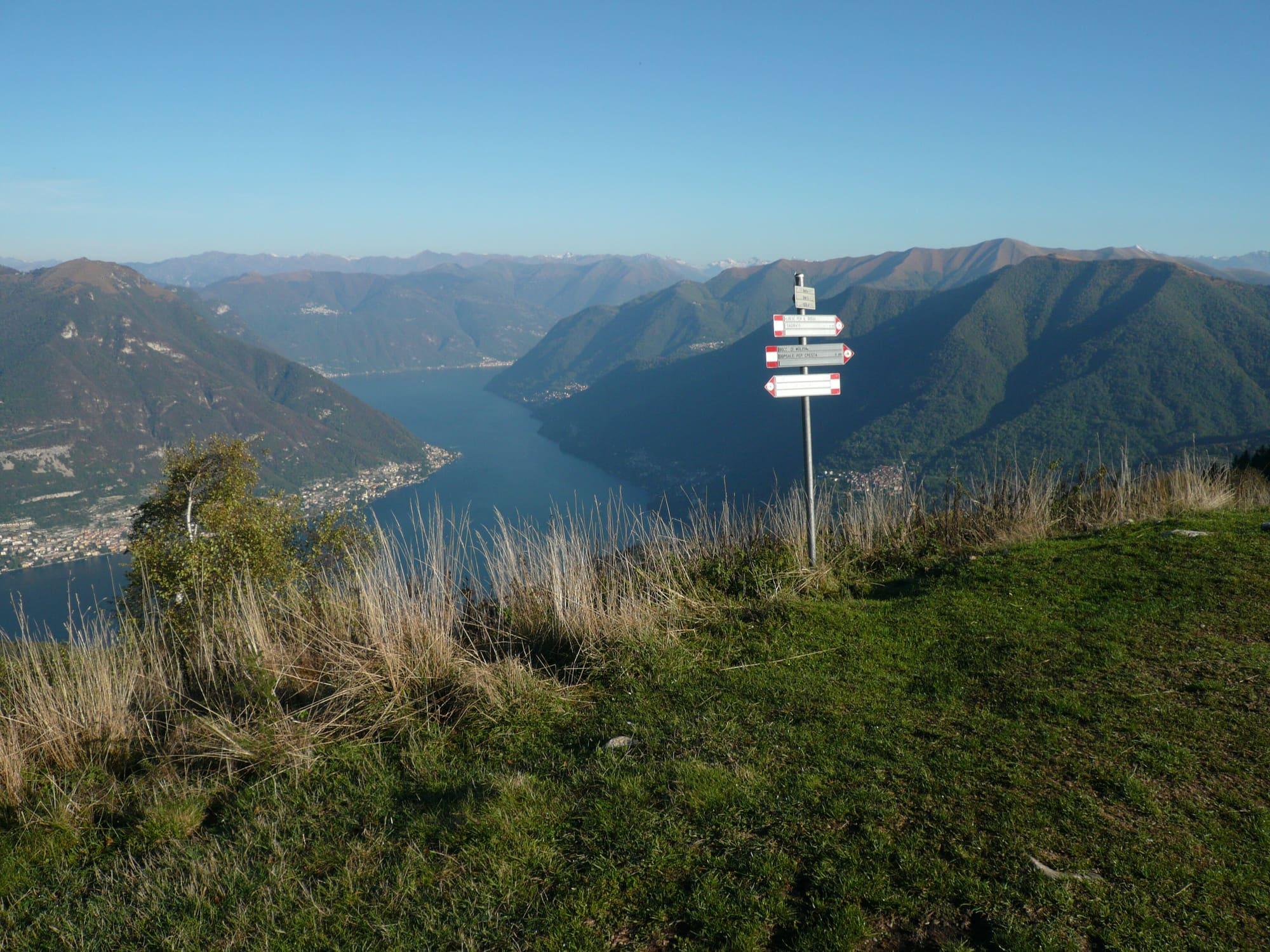
The first summits of the Dorsale del Triangolo Lariano above Como: from the Brunate funicular by San Maurizio and the mountain houses to the Boletto and the Bolettone, along the crest route, and down to Molina or Lemna.
3 h 30 – 5 hOpen access
How long it takes
Typical door-to-door times by public transport, changes included. From Milan, counted from Centrale station.
Parking and services
1 public toilet26 drinking fountains1 pharmacy2 cash machines4 defibrillators
Car parks and services on the map
Within two and a half kilometres of the centre; check car park spaces and fees on arrival.
Webcams
The funicular leaves from Piazza De Gasperi, at the end of Como's eastern waterfront. The ride takes seven minutes, with request stops at Como Alta and Carescione. Io Viaggio tickets are also valid. Check the timetable before travelling.
Half an hour uphill on foot from the upper station, along a road and then a path to San Maurizio.
The light
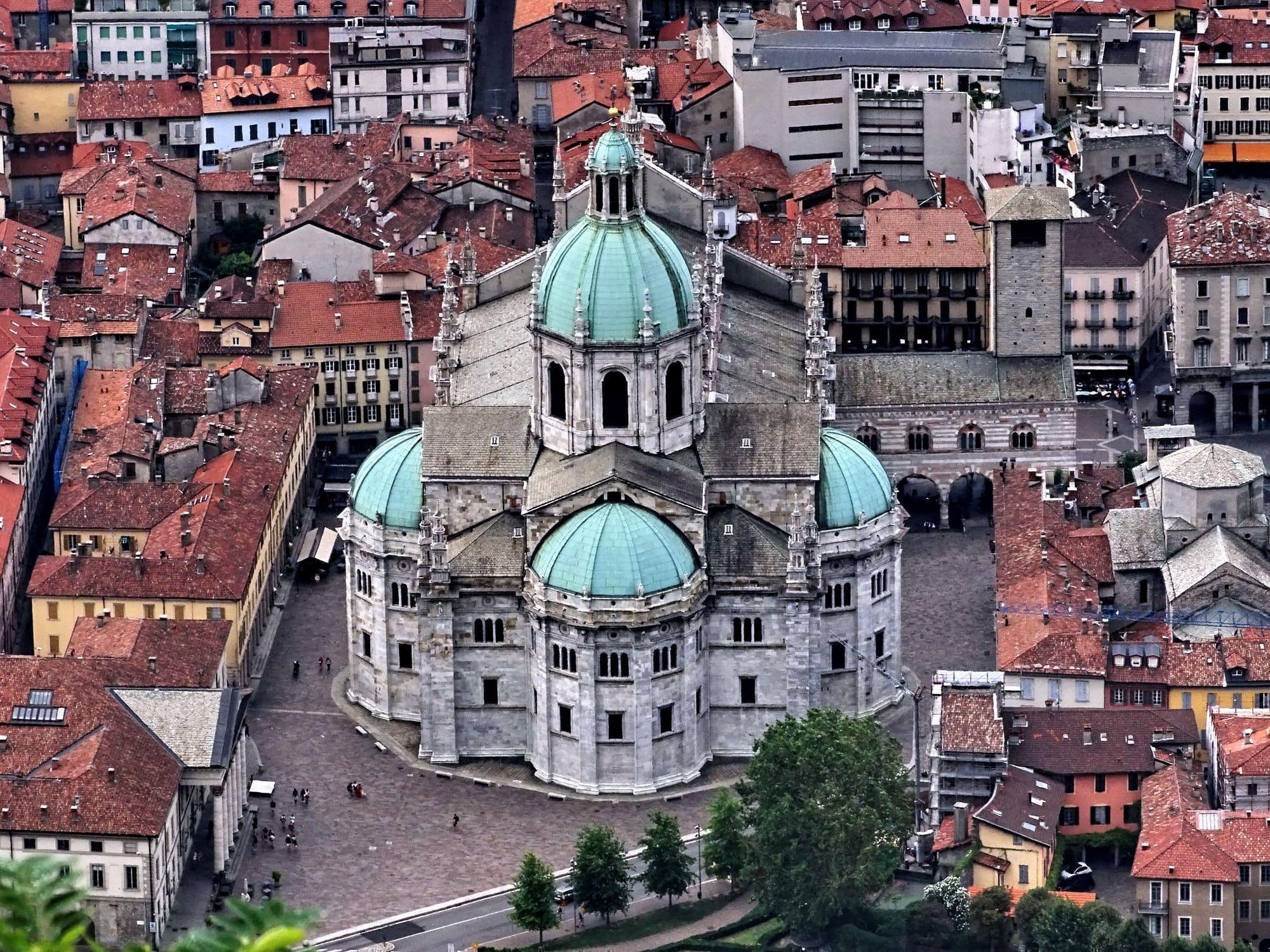
Seven minutes of funicular and you are in the right place for sunset over the city: the light comes from the west over the first basin and Como's lights come on before the blue hour. Late runs in summer.
Updated 23 October 2026
The mountains around the village hide the sun before astronomical sunset: sunrise and sunset are worked out on the village's own horizon.
Today, 1 November, estimated sunlight at the reference point: first at 07:31 and last at 17:06, giving 9 h 36 of direct sun, out of 10 h 06 of daylight.
Today the sun arrives between 07:33 and 08:54 and leaves between 16:15 and 17:06, depending on the street.
Watch the shadow reach Brunate today
See from Brunate where the sun goes, in 3D
The sun at an exact spot in Brunate: your hotel, a beach, a street
The highest summit in view from here is Monte Rosa, Dufourspitze, 4634 m, 96 kilometres away.
The ochre line follows today's sun path and marks the estimated times of its first and last appearance above the mountains. Drag the panorama to see all of it.
Yes: two paths lead back to Como on foot, one alongside the funicular and one past the Eremo di San Donato, the hermitage the Benedictines handed over to the Franciscans in the fifteenth century. You can also do the reverse: walk up and take the funicular down. The paths are steep: wear shoes with good soles.
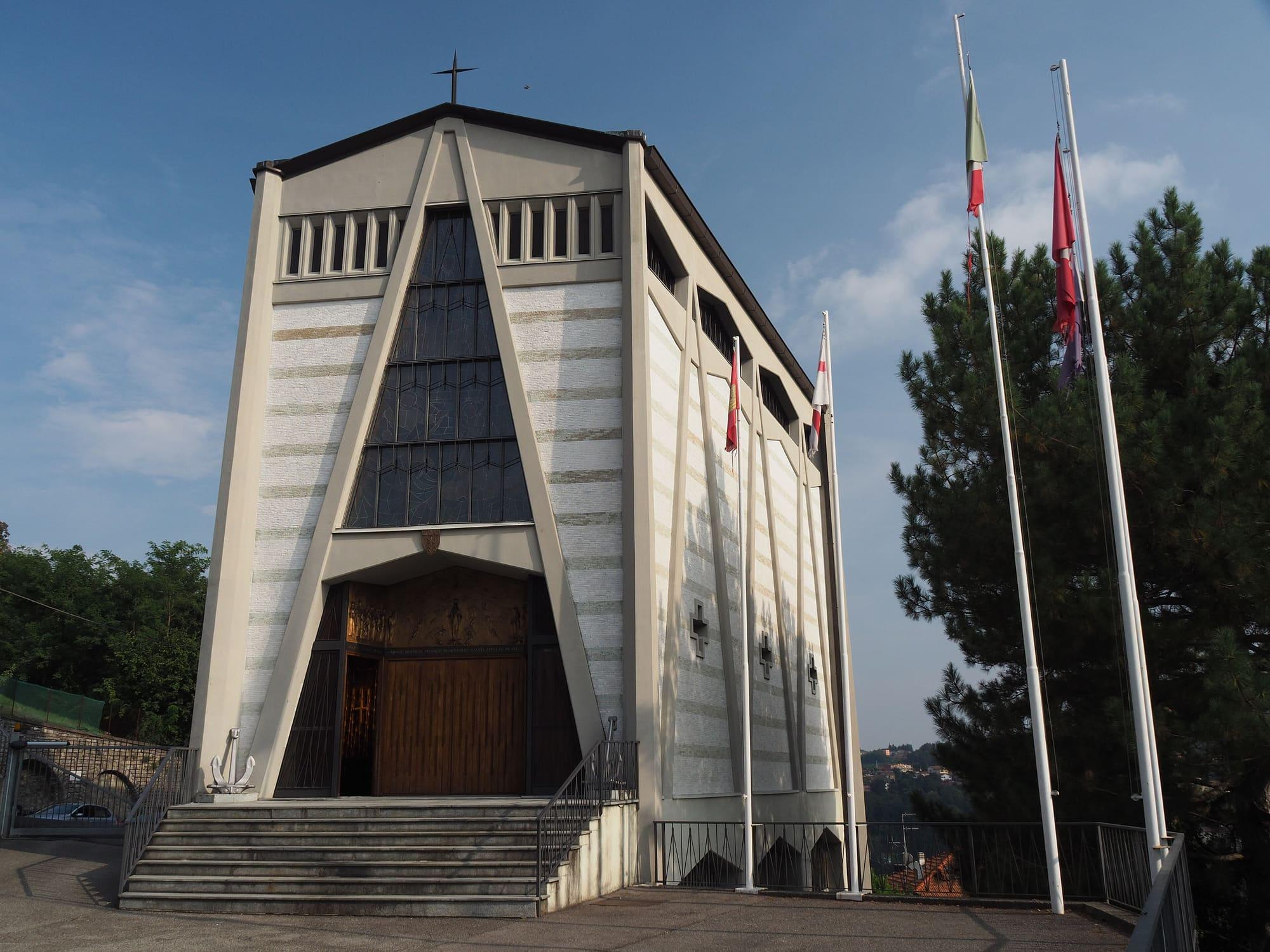
It is the sanctuary of Nostra Signora del Prodigio, also called the Shrine of Water Sports, at Via per Brunate 39, in the Garzola district. Its shape is very like a ship's, and it stands in a panoramic position; inside are mementoes of water sports and those who practise them, works in marine materials and specimens of marine biology. It was consecrated in 1968, to a design by the architect Fulvio Cappelletti, with the church upstairs and the shrine below.
What is around, and how far.
© OpenStreetMap contributors · ODbL
Typical door-to-door times.