Gian Giacomo Medici, known as the Medeghino, was born and died in Milan, but he made his fortune on Lake Como.
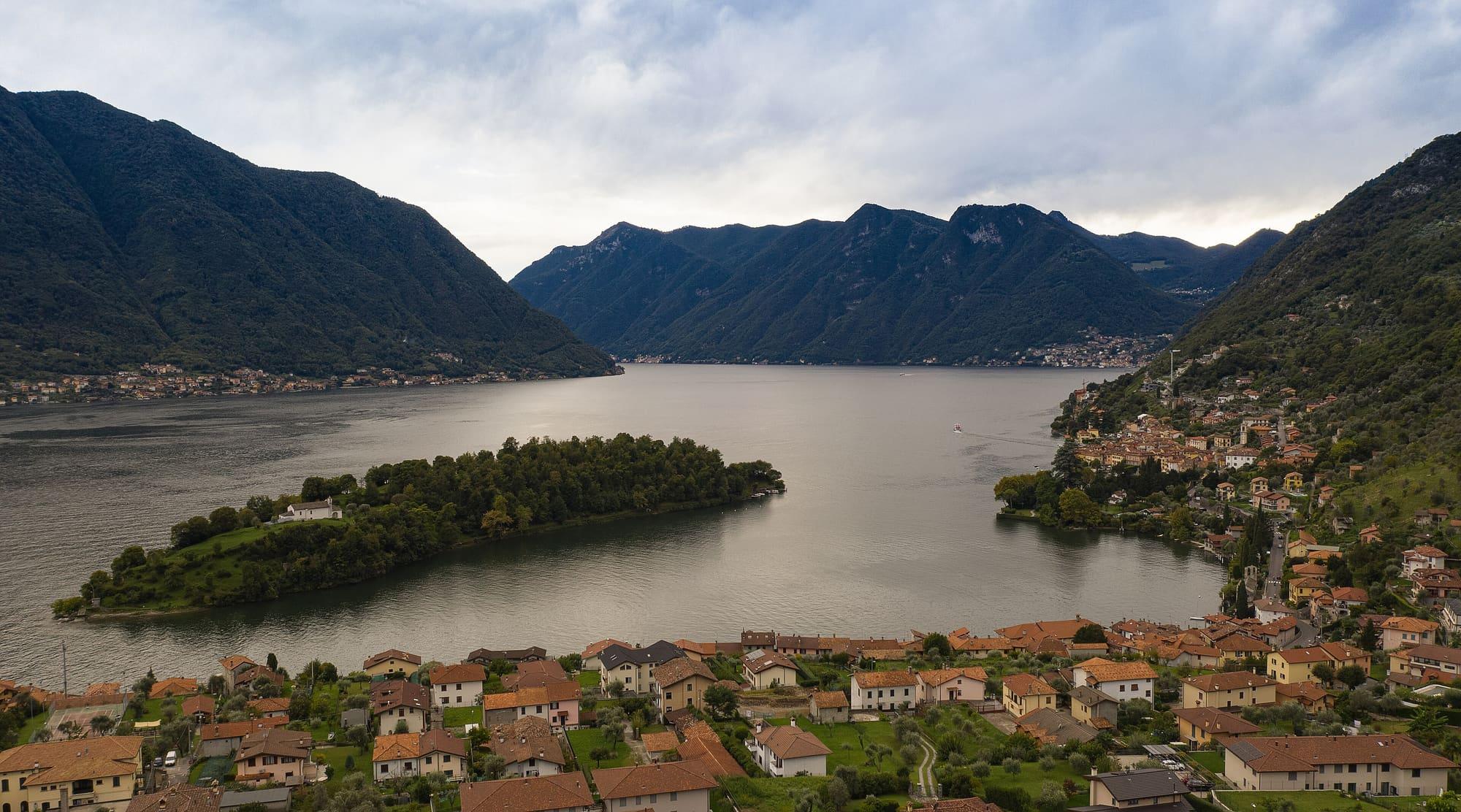
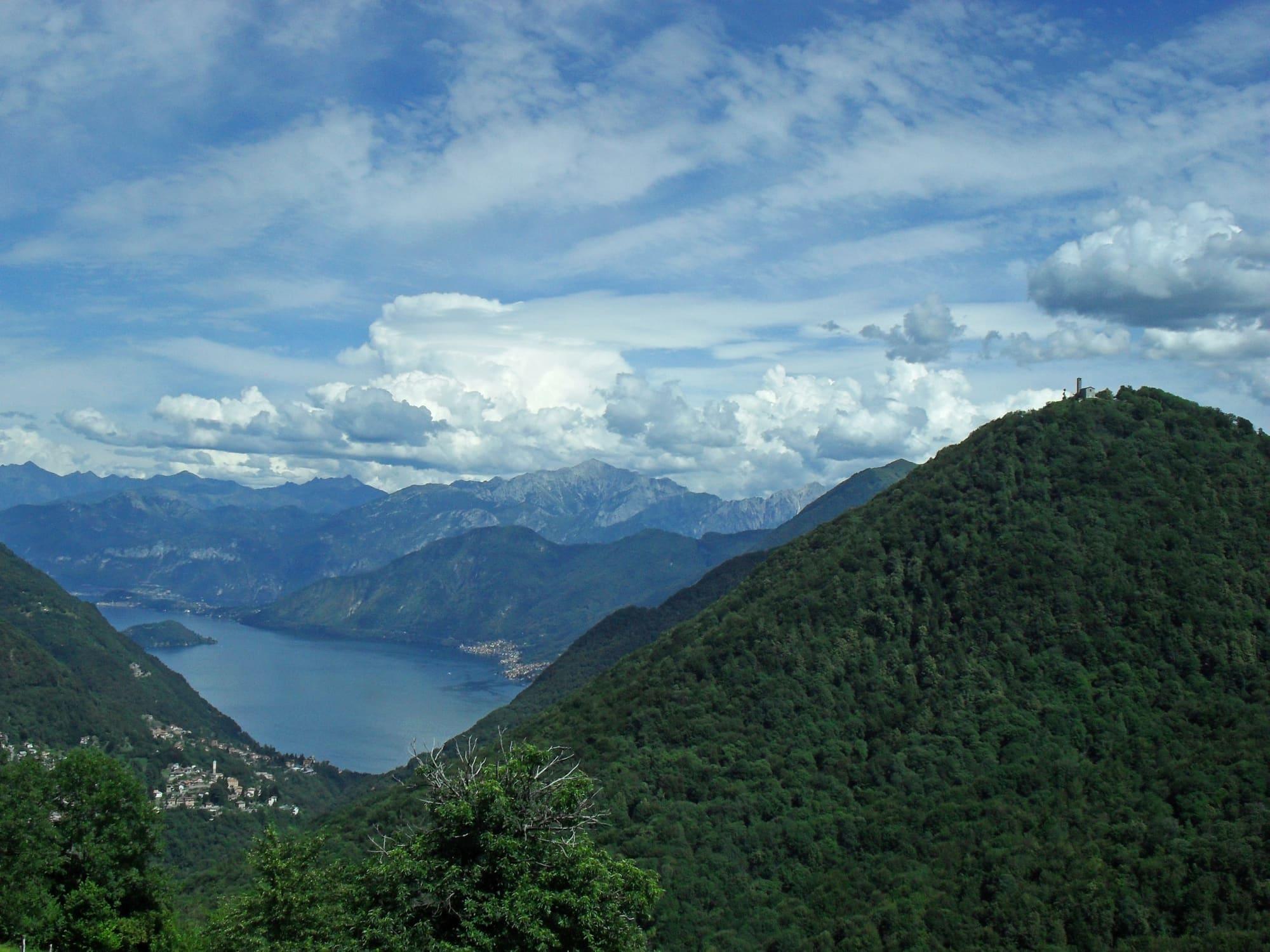
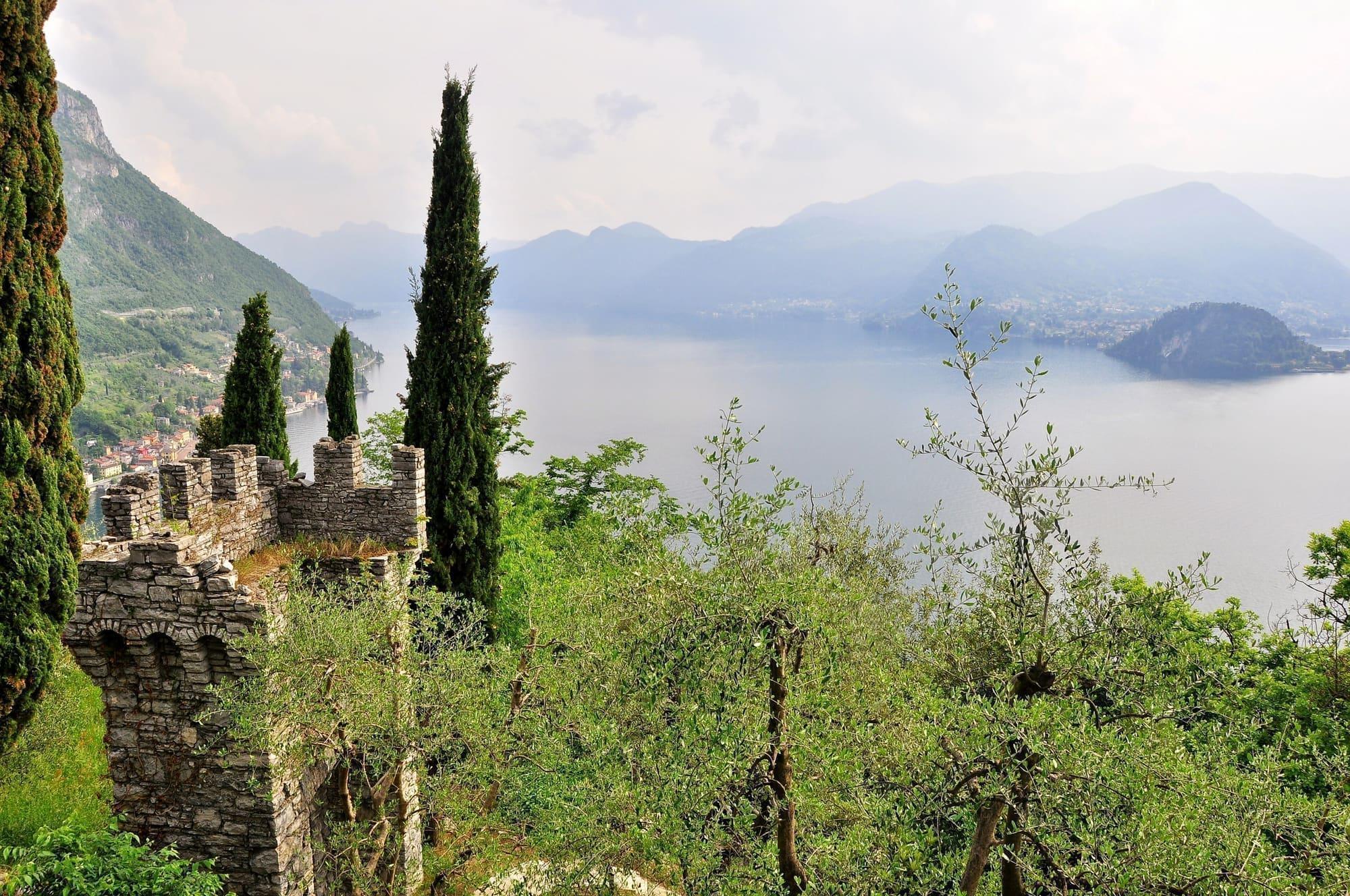
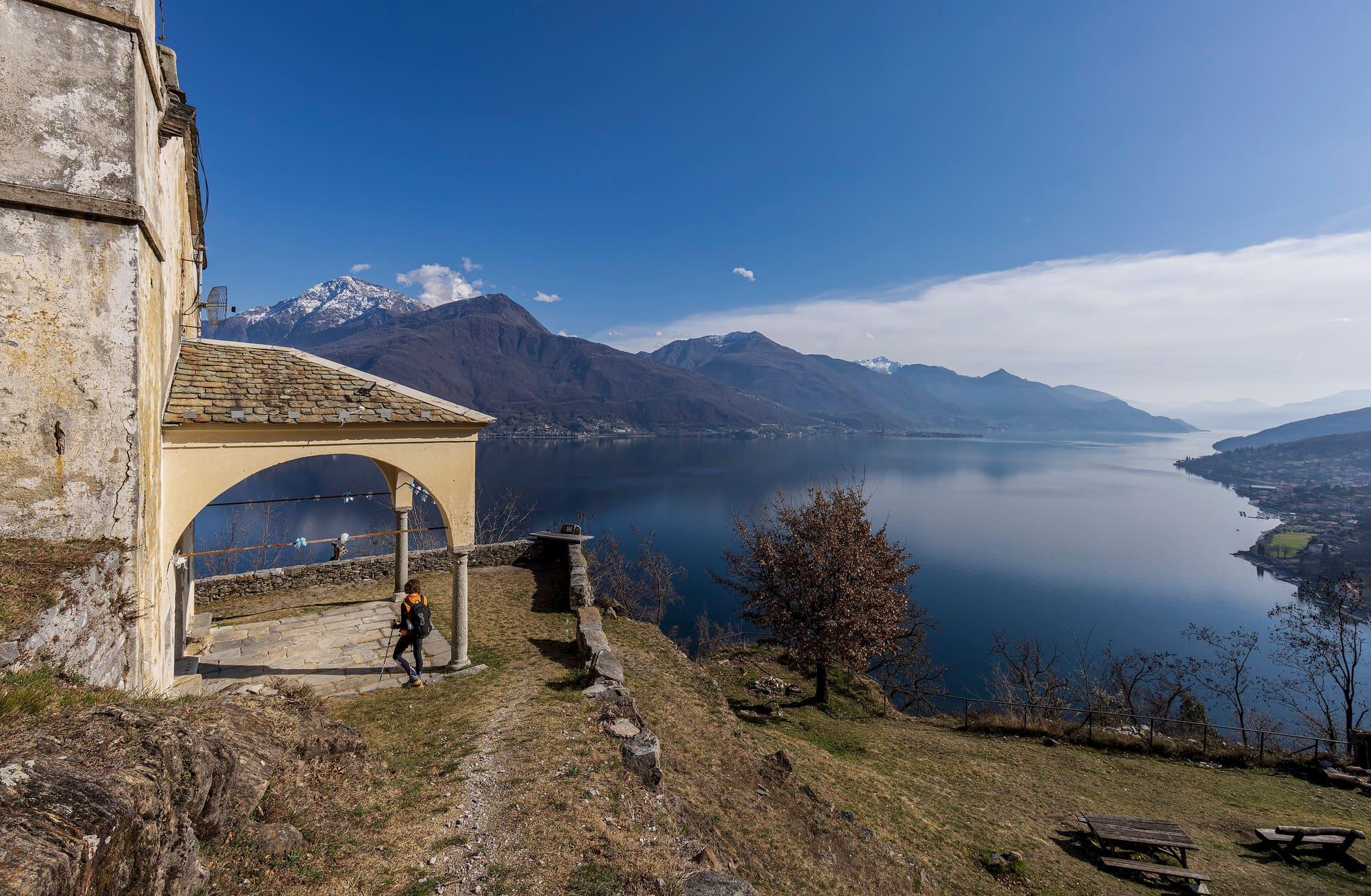
Between 1523 and 1532, from the castle of Musso, he ruled the upper lake with an armed flotilla, fought two wars against the Grisons, the second also against the duke of Milan, and was made a marquis by Charles V. A few ruins of the castle remain on the Sasso di Musso, beside the little church of Sant'Eufemia.
Medeghino means little Medici: the nickname came from his short stature, and he used it himself in some of his signatures. Despite the name, the family had no connection with the lords of Florence: it was Milanese, of the parish of San Martino in Nosiggia. Gian Giacomo was born in Milan, most probably in 1497 or 1498, the first of ten children; his father was a contractor of the ducal taxes, his mother the daughter of the notary Gabriele Serbelloni. In 1515 the French confiscated his father's property and threw him into prison. By the time his father died ruined, in 1519, the son had already been banished: accused, it seems, of murder, he was fighting round Lake Como with bands of Sforza partisans. In July 1522, with the Sforza back in Milan, he was implicated in the murder of Astorre Visconti. Tradition has it that the order came from the grand chancellor, Gerolamo Morone; all that is certain is that by October he was wanted for the killing. He went back to the lake.
The castle on the Sasso
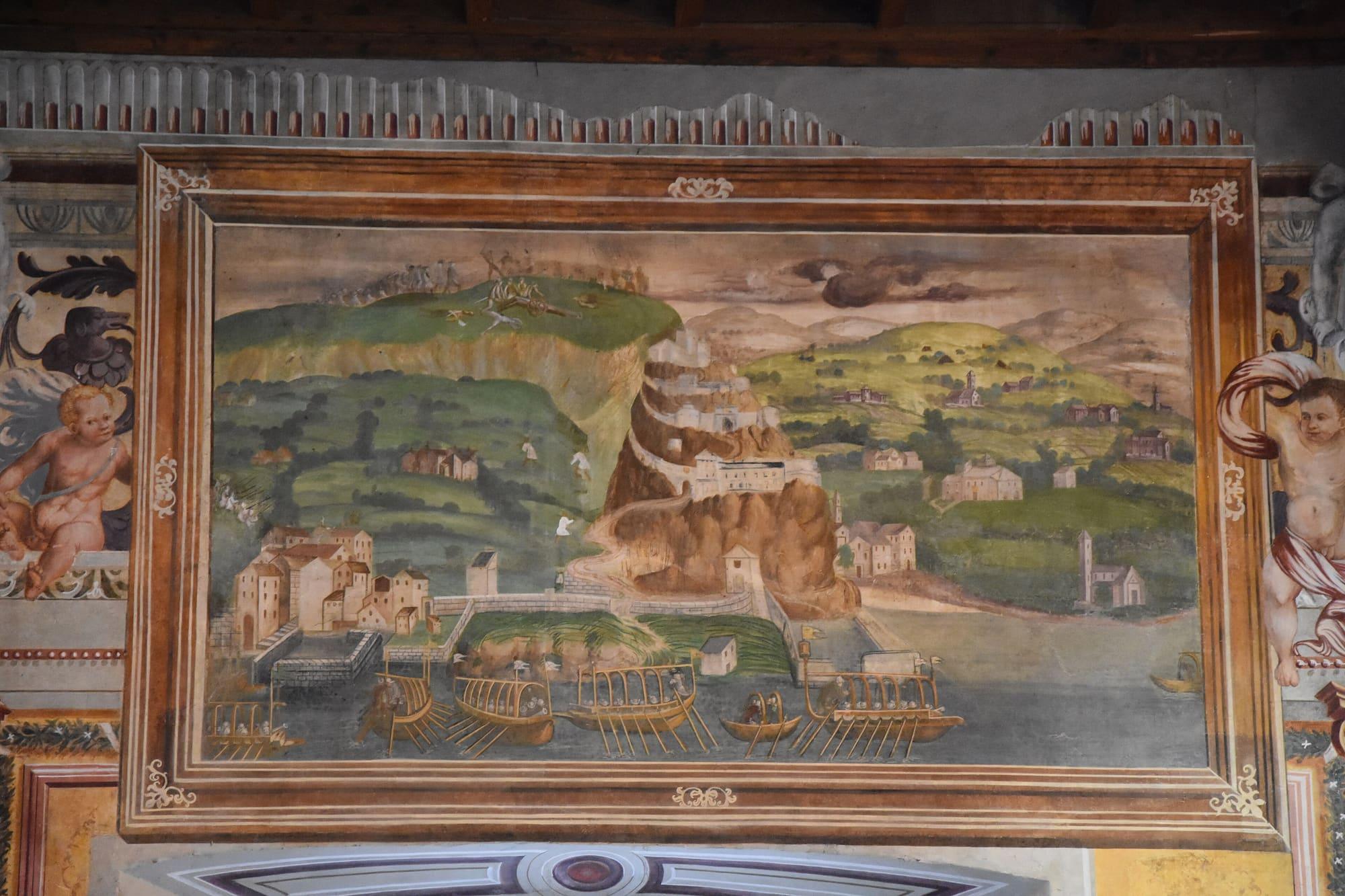
He reappeared at Musso in January 1523, shortly after imperial troops had taken the castle, a strategic point for controlling the northern part of the lake. How he managed to seize it and install himself as castellan in the duke's name is not known, and that very uncertainty has invited more or less romantic reconstructions. One, which goes back to the sixteenth century, tells of a sealed letter ordering him to be killed, which he is said to have swapped for an order to hand the fortress over to him. What is certain is that by July 1524 Duke Francesco II Sforza recognised his authority. The fortress was old: the Malacrida had built it in the fourteenth century for the Visconti, and early in the sixteenth century Marshal Gian Giacomo Trivulzio had enlarged it and opened a mint there. The Medeghino brought in his brothers and sisters and set about turning it into an elaborate fortress and a palace. He strengthened three points: the tip of rock dropping sheer to the lake, the spot where the church of Sant'Eufemia now stands, and the top of the Sasso, where he dug a ditch, the Tagliata, to protect the castle from behind.
A flotilla on the lake
To rule the lake, the Medeghino needed boats. He had a flotilla built with which he preyed on the lake's trade and held the lakeside villages to ransom or plundered them; his contemporaries called it piracy, and the raids set out from the fortress, his safe harbour. Some of the prey was political. On 13 September 1525 the Medeghino's armed boats captured the ambassadors of the Three Leagues on the lake as they returned from Milan, and shut them up in the castle to demand a ransom. The following summer it was the turn of two Venetian ambassadors on their way to the French court, seized to make the Serenissima pay its debts for the soldiers he had raised for it. In wartime the fleet became floating artillery: the Grisons came under fire from guns mounted on the boats, and later vessels armed with forty- and fifty-pounders beat the duke's fleet more than once.
The wars of Musso
Since 1512 the Three Grey Leagues had held the upper lake, the Valtellina and the counties of Chiavenna and Bormio, and the castle of Musso stood right on the border. The first war of Musso lasted from 1524 to 1526. In a surprise stroke the Medeghino took Chiavenna, which he could not hold, but he secured the Tre Pievi, Gravedona, Dongo and Sorico, and the duke rewarded him by making him castellan for life. His diversion into the Valtellina persuaded the Grisons to withdraw their troops from the French army shortly before the battle of Pavia, and under the peace signed at Ala in 1526 the castellan gained control of the whole upper lake. In 1528, by the agreements of Pioltello, he went over to the service of Charles V: he received an amnesty for himself and his men and was invested as marquis of Musso, over many lands round the lake, Como excepted, with full jurisdiction and the right to mint coins. In effect it was a small sovereign state north of Milan, even though the Milanese Senate refused to register such sweeping privileges, and at the end of 1529 the emperor, having come to terms with the duke, withheld his confirmation. The Medeghino held Musso from 1528 to 1532.
The last war
In March 1531 the marquis occupied Morbegno with his mercenaries, trying to present the venture as a crusade against the Protestants. The answer was an alliance of the Grey Leagues, the Swiss cantons and the duke of Milan, which provided for the return of the lake's lands to the duke and the destruction of the fortifications of Musso. The allies retook Morbegno and in July took Monguzzo, in the Brianza; the sieges of Lecco and Musso, on the other hand, failed, partly because the duke had to arm boats to counter the marquis's flotilla. The Medeghino lost his brother Gabriele in battle, but with night sorties, and with fewer and fewer men, he drove the besiegers from their camps: on 8 February 1532, with a hundred men, he captured Alessandro Gonzaga, one of the commanders of the siege of Lecco. Elsewhere the war left marks that can still be seen. In 1532 the Renaissance castle at Nesso, above the gorge, was destroyed; in Lecco, the Medeghino's wars left the Ponte Azzone Visconti so badly damaged that it was not restored until the early seventeenth century.
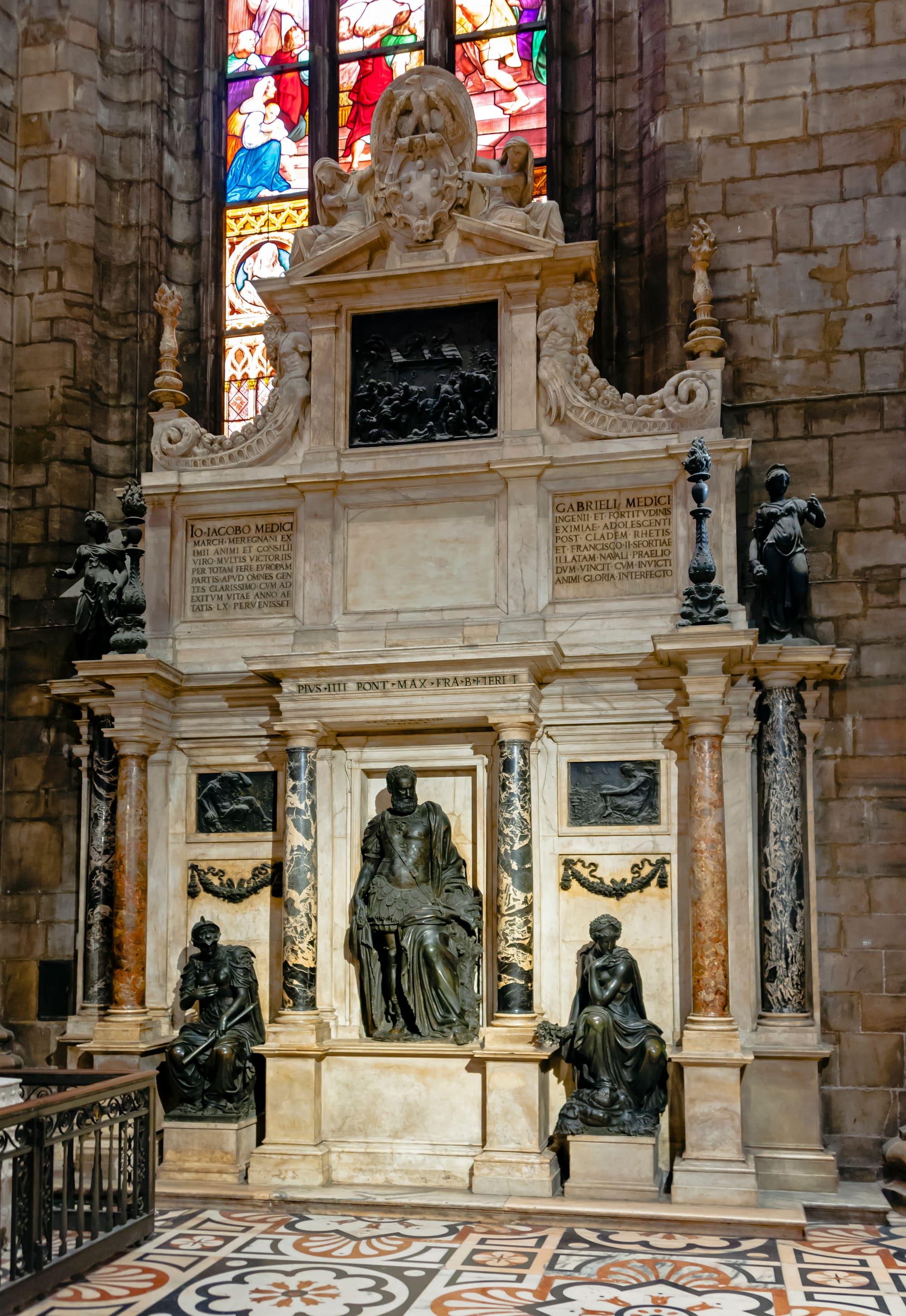
To Gabriele Medici, a youth of outstanding talent and courage, killed with the glory of an unconquered spirit in a naval battle, while he was winning, after the defeat inflicted on the Rhaetians and on Francesco II Sforza.
From the Latin inscription for his brother Gabriele on the Medeghino's tomb in Milan Cathedral
From Musso to Marignano
In February 1532 his brothers Giovan Angelo and Giovan Battista negotiated the peace, one in Milan and the other in Switzerland, and early in March the Medeghino and Francesco II came to terms. He gave up Musso, Lecco and all the other lands he had occupied, artillery included; in return he received money, a yearly income and the fief of Marignano, today's Melegnano, with the title of marquis. On 22 March he rode into Vercelli with a guard of twenty-five halberdiers. The castle of Musso was dismantled that same year, and the Swiss obtained the duke's promise never to rebuild it; Musso went back to the Malacrida, its old feudal lords. The Medeghino became one of the Habsburgs' generals and fought in Flanders, Hungary and Germany and finally in the war of Siena: on 2 August 1554 he defeated Piero Strozzi's army at Marciano, with a ferocity that stirred both horror and admiration among his contemporaries. He died in Milan on 8 November 1555. His brother Giovan Angelo, who had become pope as Pius IV, had the sculptor Leone Leoni build him a mausoleum in Milan Cathedral and set aside a sum to compensate everyone the Medeghino's bandit raids had harmed.
What remains on the Sasso
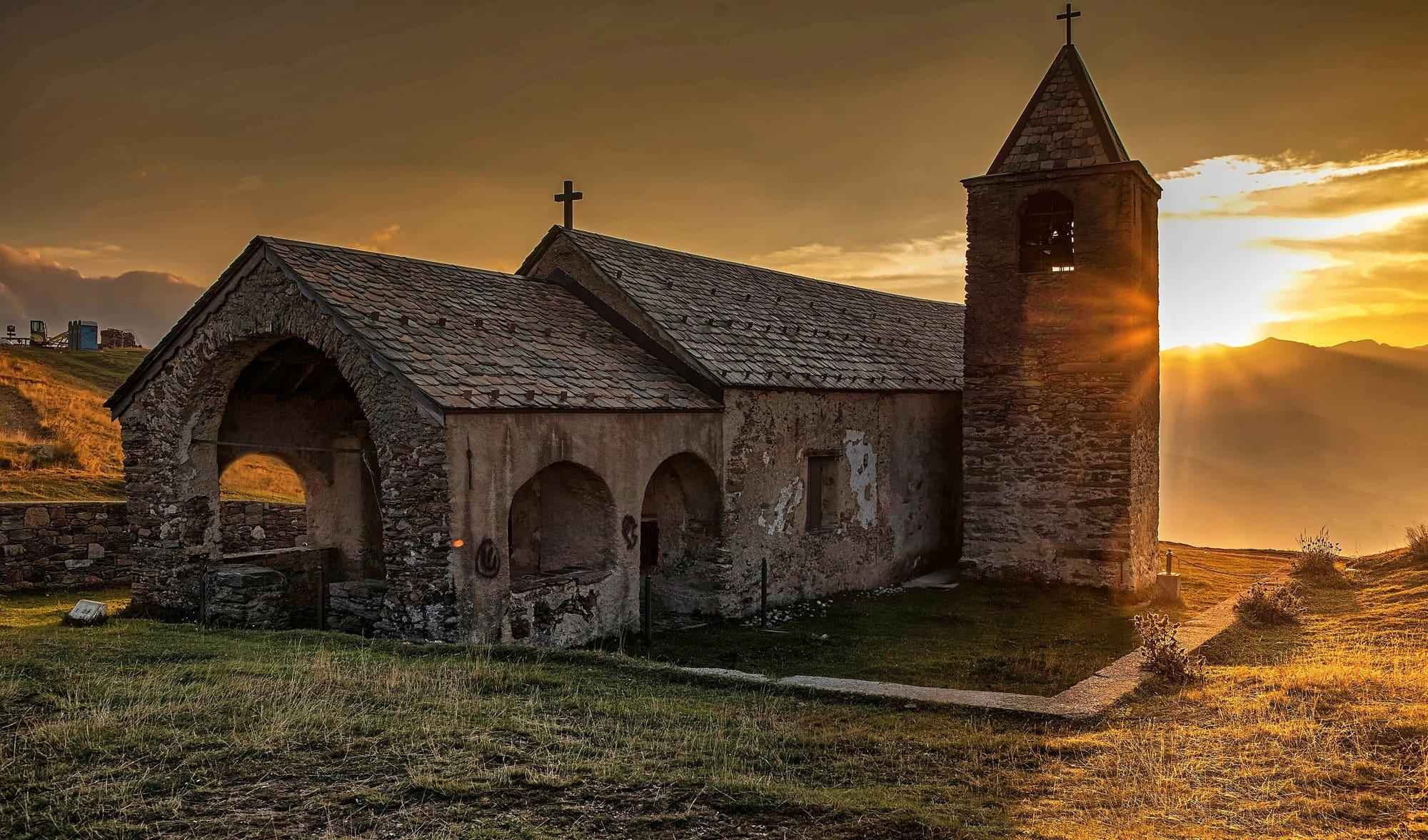
On the Sasso di Musso only a few ruins of the castle remain, on private land and in poor condition. Besides the demolitions, they were eaten away by the marble quarries, cut into the same rock since Roman times. Inside the old fortified enclosure stands the little seventeenth-century church of Sant'Eufemia, built over an early medieval chapel; at its foot, in the nineteenth century, the engineer Giovanni Manzi created the Giardino del Merlo. The Museo Civico Storico in Musso, devoted to the village's history, holds a block of white marble from the local quarries on which Antonio Semprebon carved the castle in 1945. And the village's coat of arms still bears three castles, for the fortress on the Sasso, and the crown of the marquisate that Charles V recognised on 25 May 1528.
Historical events linked to this story are collected in the Lake timeline.