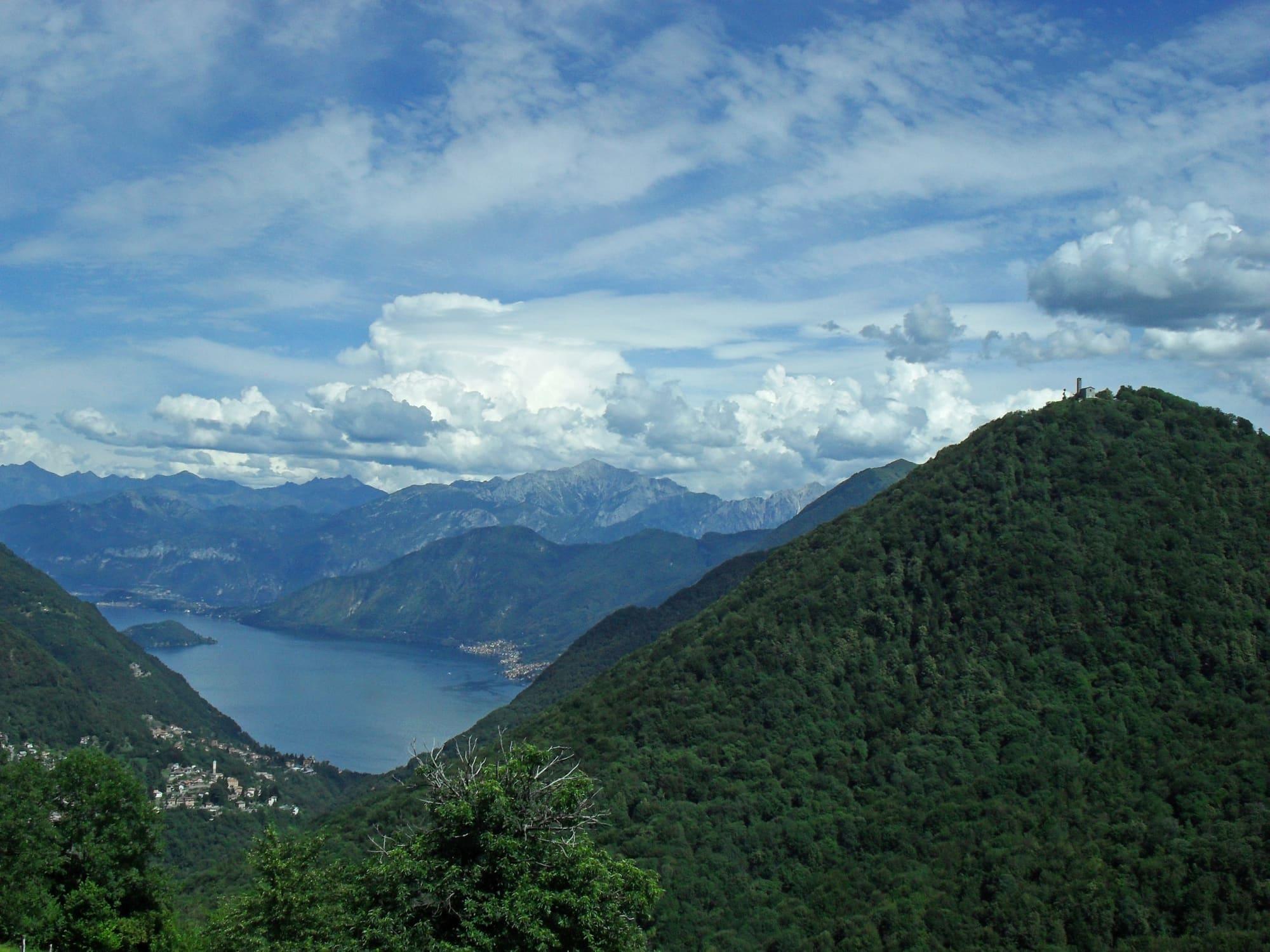
For centuries the border with Switzerland above the lake's valleys was crossed on foot, with goods on people's backs.
For many families smuggling was a source of income, for the finance guards a watch kept day and night; during the war, refugees used the same paths.
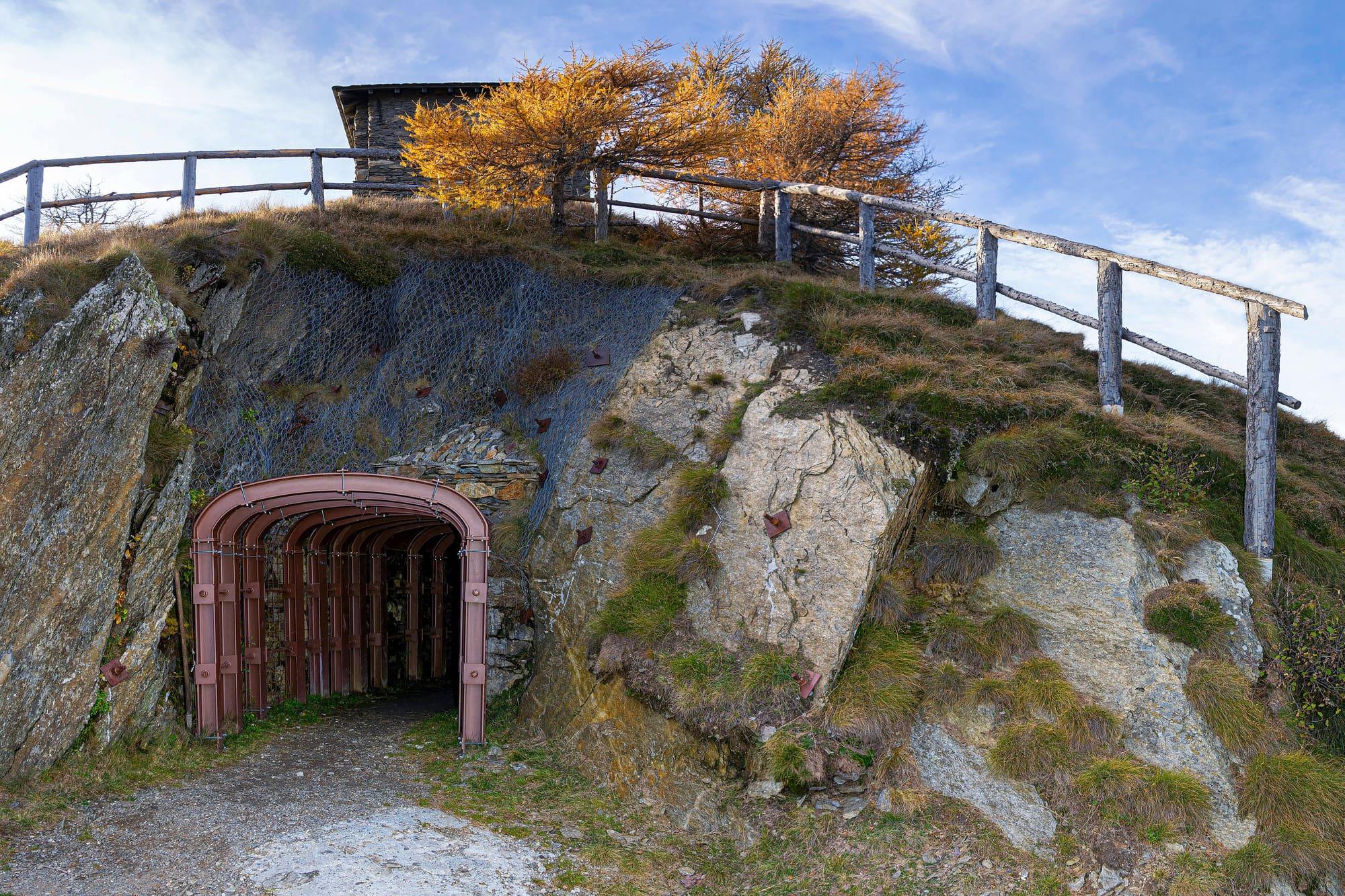
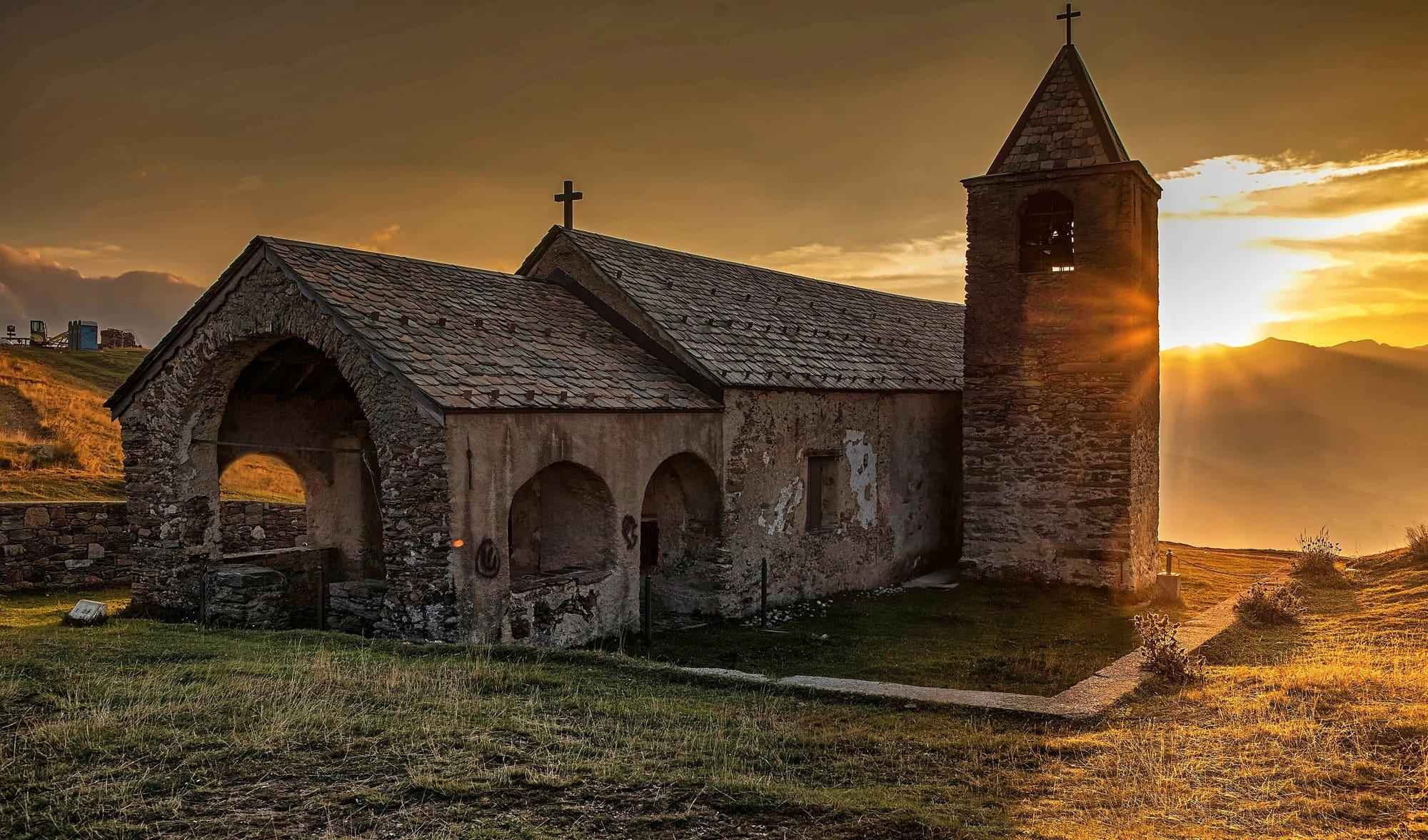
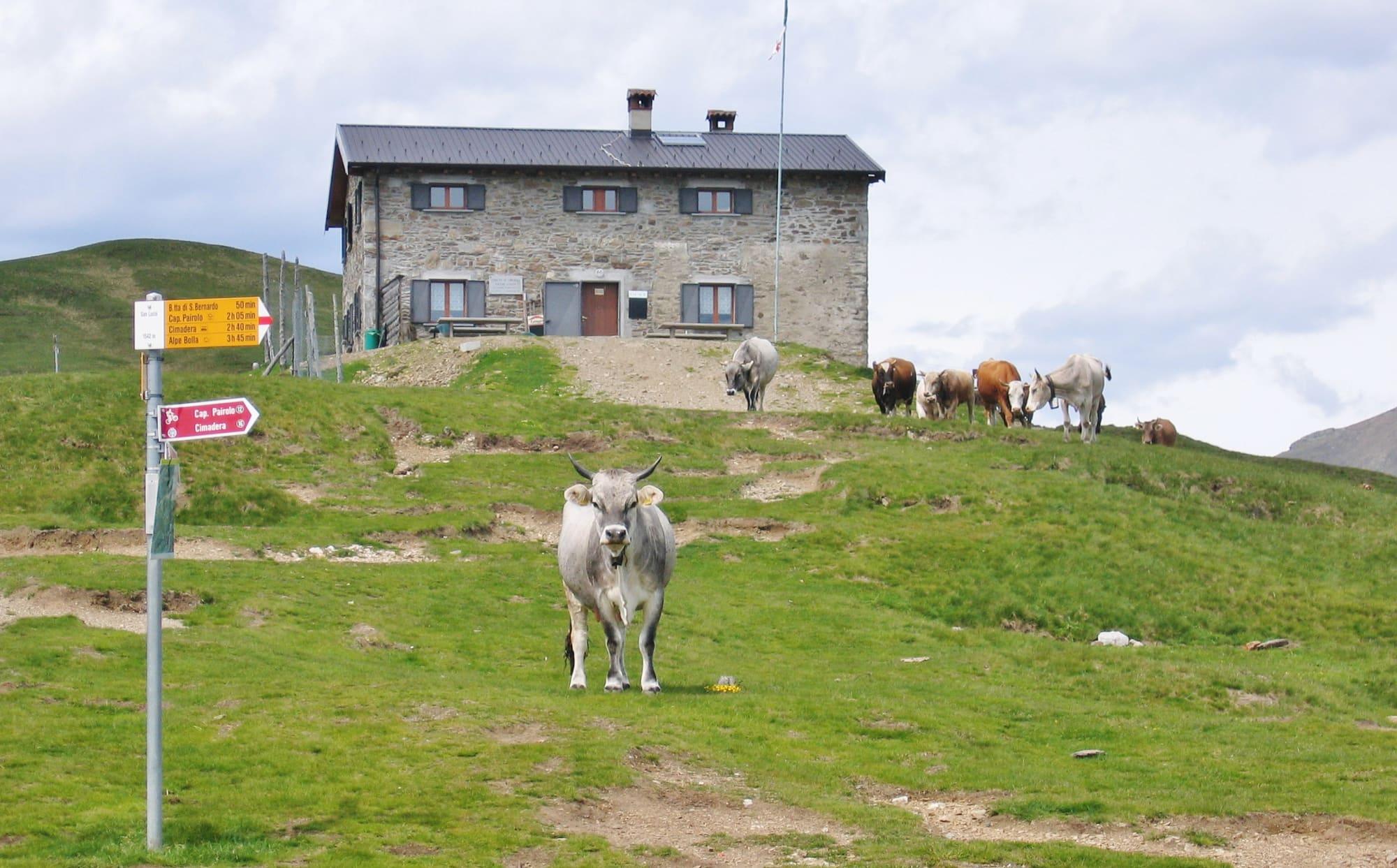
On the San Lucio pass, at 1,542 metres, between the Val Cavargna and the Swiss Val Colla, stands a fifteenth-century church, a point of reference for the people of both sides; next to it, the mountain hut is a former barracks of the Guardia di Finanza, Italy's finance and customs police, in service from 1903. From there the guards watched a border closed by a long wire fence, the ramina, to catch anyone slipping across with cigarettes, salt or coffee without paying duty. The goods travelled in the bricolla, the sack that the valley's spalloni carried on their shoulders along narrow, steep paths they knew by heart, steadying themselves with a long stick, their boots wrapped in jute rags so as not to make a sound. In the Val Cavargna, because of where it lies and the hardship its people lived in, smuggling was at the centre of local life. The San Lucio post was closed in the 1960s, the little barracks fell into ruin, and in 1999 work began to turn it into a hut.
Why people crossed
Smuggling was a form of trade between countries: whoever avoided the customs post exploited the price difference between two economies, to the advantage of seller and buyer alike. It met, first of all, the needs of the local population. Until the middle of the twentieth century the goods smuggled were mostly everyday ones, oil, salt, sugar, besides tobacco and spirits; into Italy, before the Second World War, tobacco and coffee, often with the agreement of the local authorities; in 1943 and 1944, the other way, hams, rice, bicycles and shoes went into Switzerland. For many families on both sides it was an income they could not do without, and in Ticino and the Grisons, in part until around the turn of the millennium, it went on with the consent of the border guard commands. Breaches of customs law can also lead to criminal proceedings in Switzerland. The bricolla was a jute sack, stiffened with cardboard and fitted with two straps, that held up to thirty-five or forty kilos of goods. Until about 1980 it mostly carried cigarettes, because in Italy tobacco was a state monopoly and in Switzerland it was not.
The fence, the dogs, the barracks
To stop it, from the 1880s the Italian Guardia di Finanza built a great fence along the border, the ramina, as it is called in Ticino, with an alarm made of bells mounted on springs. In the late nineteenth century smuggling dogs appeared, trained to cover a route with a small pack of five to ten kilos: the Italian guards were under orders to shoot them, and killed hundreds. From the 1930s many dogs worked on the other side, alongside the border guards. On the Italian side the passes filled with barracks. Besides San Lucio there was one on the Garzirola, from the early twentieth century, and another at the Passo della Cava, between the Val Cavargna and the Val Rezzo, of which ruins remain. The Prabello, below the Sasso Gordona, built as a luxury hotel in the late nineteenth century, became a checkpoint on the border and against smuggling, then a Guardia di Finanza barracks, closed at the end of the 1970s; on the road to the San Jorio pass the Il Giovo hut was a barracks from 1870 to 1976. Almost all of them have become mountain huts.
Erbonne, the museum behind glass
In the Valle Intelvi the border runs past Erbonne, a small village that since 2005 has been joined by a footbridge to Scudellate, in Switzerland. Here, on 23 June 2002, the National Association of Italian Finance Guards opened the Little Museum of the Guardia di Finanza and of Smuggling, in the small barracks where from 1947 the guards kept watch against smugglers round the clock, closed in November 1977 and left empty until 2001. The objects were gathered together by the guards who had served there, by private people, by the Swiss border guards and by the smugglers of the time. The museum is called Burlanda e Sfrusaduu, the valley dialect names for the finance guard and the smuggler; it measures four metres by four and is looked at from outside, through a glass pane in front of the door and the small side windows. It stands at the start of the path that leads in twenty minutes to Scudellate, in the Valle di Muggio; and the Trench Trail comes down from the Generoso to Valmara in the smugglers' footsteps.
Two uniforms in the same museum
At Cavargna, the highest comune in the province of Como, the Museo della Valle, opened in 1982, has a section on smuggling, beside the work of the magnani, the tinkers, the mines and the devotion to San Lucio; the figures it shows include the tinker, the blacksmith, the alpine farmer, the woodcutter, the carpenter and the smuggler. Among the hundreds of objects in the collection are the two uniforms: the smuggler's, of wool, from the first half of the twentieth century, and the finance guard's grey-green one, with cap, windproof jacket, tie, woollen socks and mountain boots with Vibram soles. There are also cloth shoes made from old trousers or jackets, with felt soles.
On the water and across the border
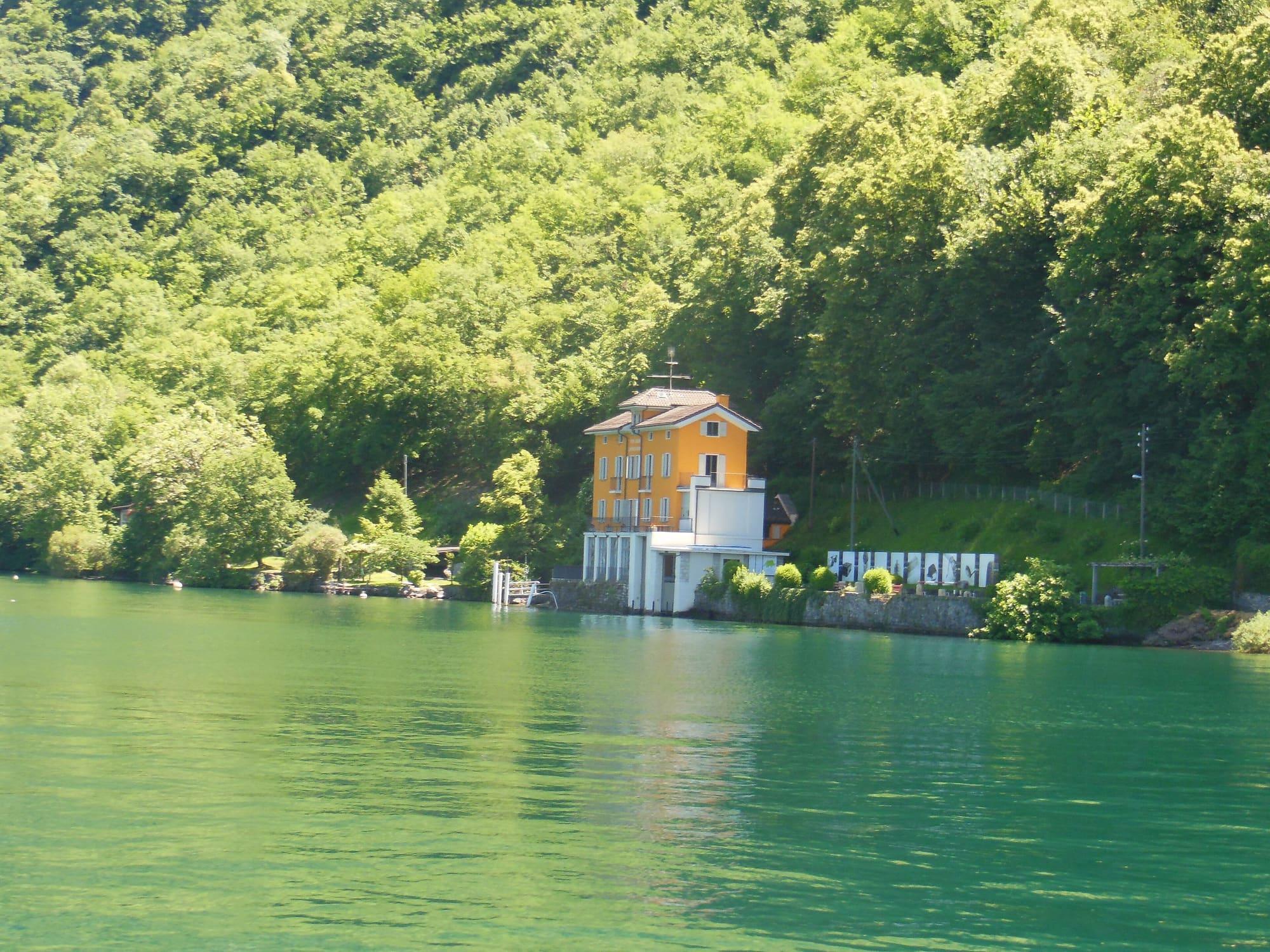
Smuggling went by water too. Among the more than four hundred boats of the Museo Barca Lariana at Pianello are fishing boats, hunting boats and smuggling boats. On Lake Lugano, at Cantine di Gandria, the Swiss border guard post built in 1904 and in service until 1993 has become the Customs Museum. In 1935 the Ticino officer Angelo Gianola asked his colleagues to collect objects from the guards' daily life; the museum opened in 1949, and for decades seized goods, hiding places and the most ingenious means of transport were its main attraction, so that people still call it the smugglers' museum. One of those means, seized in 1948, was a home-made submarine of wood covered in metal, three metres long, which carried four hundred and fifty kilos and was driven by pedals.
During the Second World War, men, women and children from Italian border villages took part in smuggling. Carrying goods clandestinely into Switzerland provided an income during a period of economic hardship. Refugees used the same paths. In Ticino and the Mesolcina some twenty-six thousand soldiers and twelve thousand civilians were taken in, among them about four thousand five hundred Jews; but many were turned back, and some of the Jews turned away were later deported to Auschwitz. After the armistice of 1943 many stragglers from the army crossed the San Jorio pass to seek refuge in Switzerland, and after them the smugglers.
How it ended
Traditional smuggling on foot declined partly for economic reasons: the Swiss franc grew stronger against the lira, and carrying sacks across the border stopped paying for the effort and the risk. The San Lucio barracks closed in the 1960s, as economic conditions improved; the small barracks at Erbonne in 1977, when the trade had disappeared. Around Moltrasio, after the war, dozens of men from the valleys near Switzerland carried the sacks to eke out thin wages and give their children a future; they stopped when the traffic fell into the hands of armed men. International smuggling involves drugs, cigarettes, weapons, money and works of art. In the border country the memory of the bricolla lives on.
Historical events linked to this story are collected in the Lake timeline.