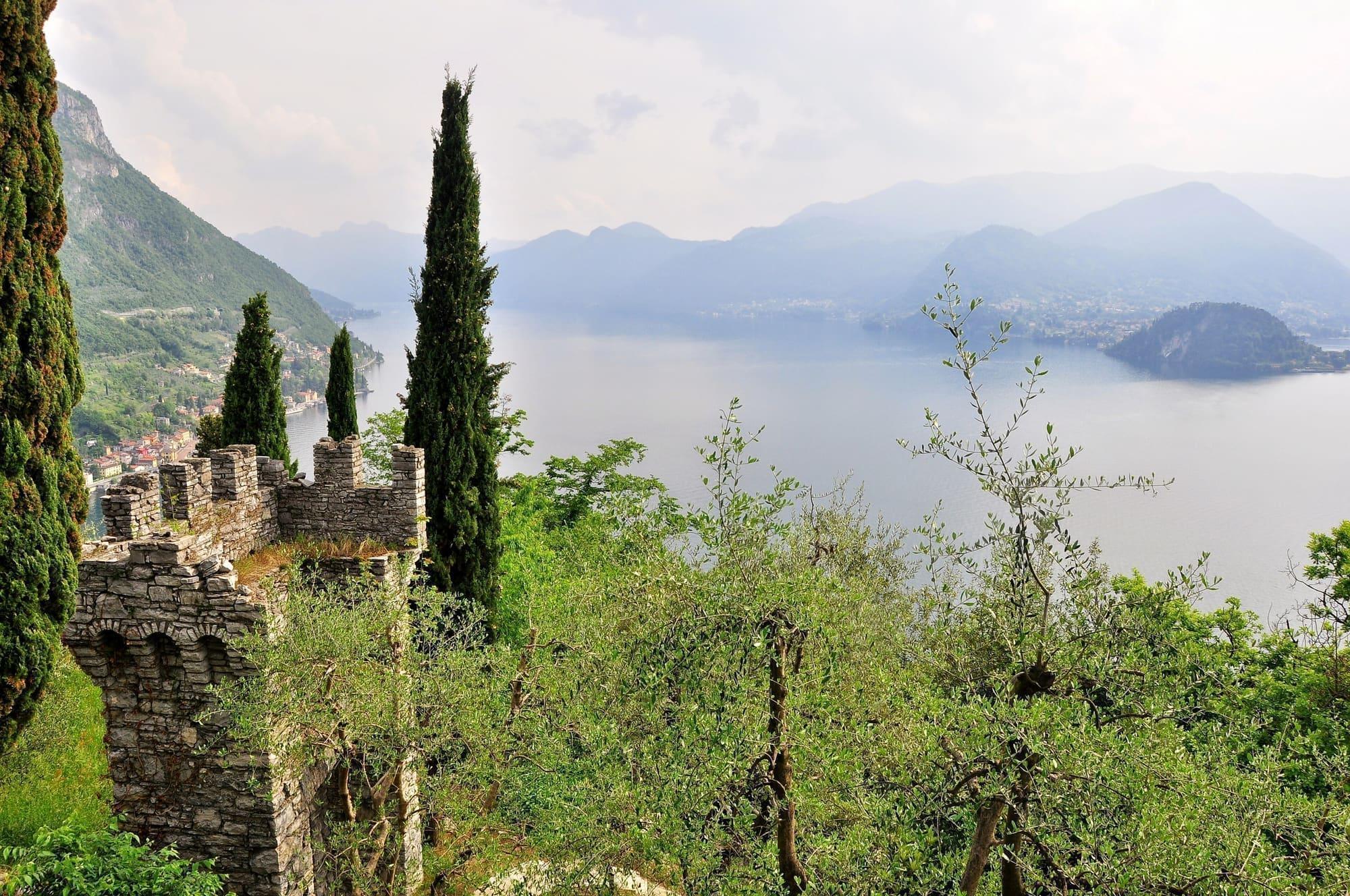
On the lake the monasteries can still be recognised, even where they have become something else: a home for the elderly at Civate, a villa at Varenna, a university faculty in Como.
At Piona monks have been back since 1938.
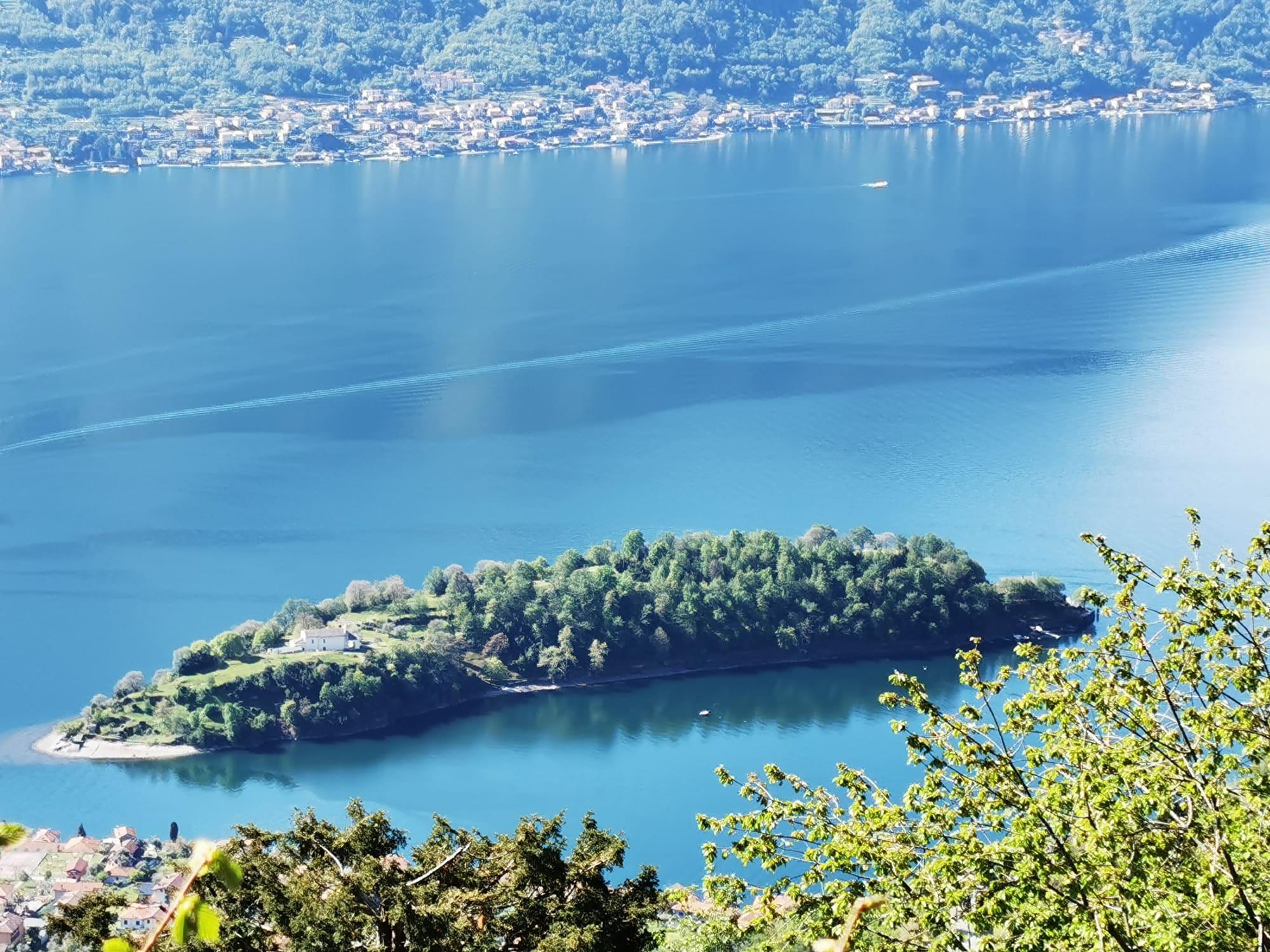
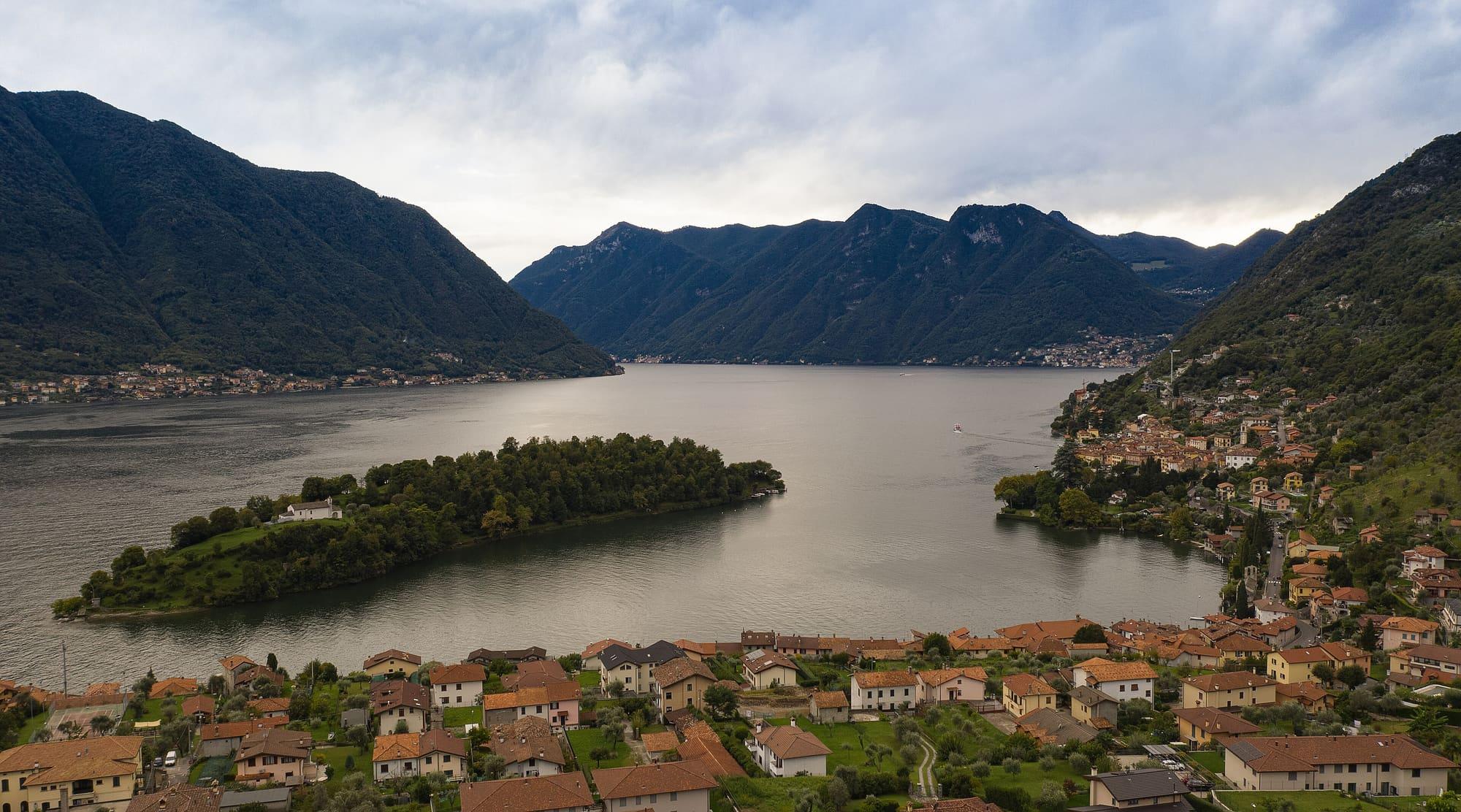
The oldest stone is at Piona. It is a cippus on which Agrippinus, bishop of Como between 607 and 617, records that he built from its foundations an oratory dedicated to Saint Justina the martyr, prepared his own tomb in it and celebrated its dedication. The oratory and its burials suggest that a small community, probably of hermits, was already living on the Olgiasca peninsula at the time. A short way from the church a small apse can still be seen, the remains of a church of Santa Maria contemporary with the Romanesque church. From then on, for more than a thousand years, the lake had its monasteries: Benedictines on the mountain above Civate, in the Val Perlana and in Como, where in 1010 Bishop Alberic entrusted Sant'Abbondio to a community of monks; Cluniacs at Piona, Cistercians at Acquafredda, above Lenno, and Cistercian nuns at Varenna.
The mountain above Civate
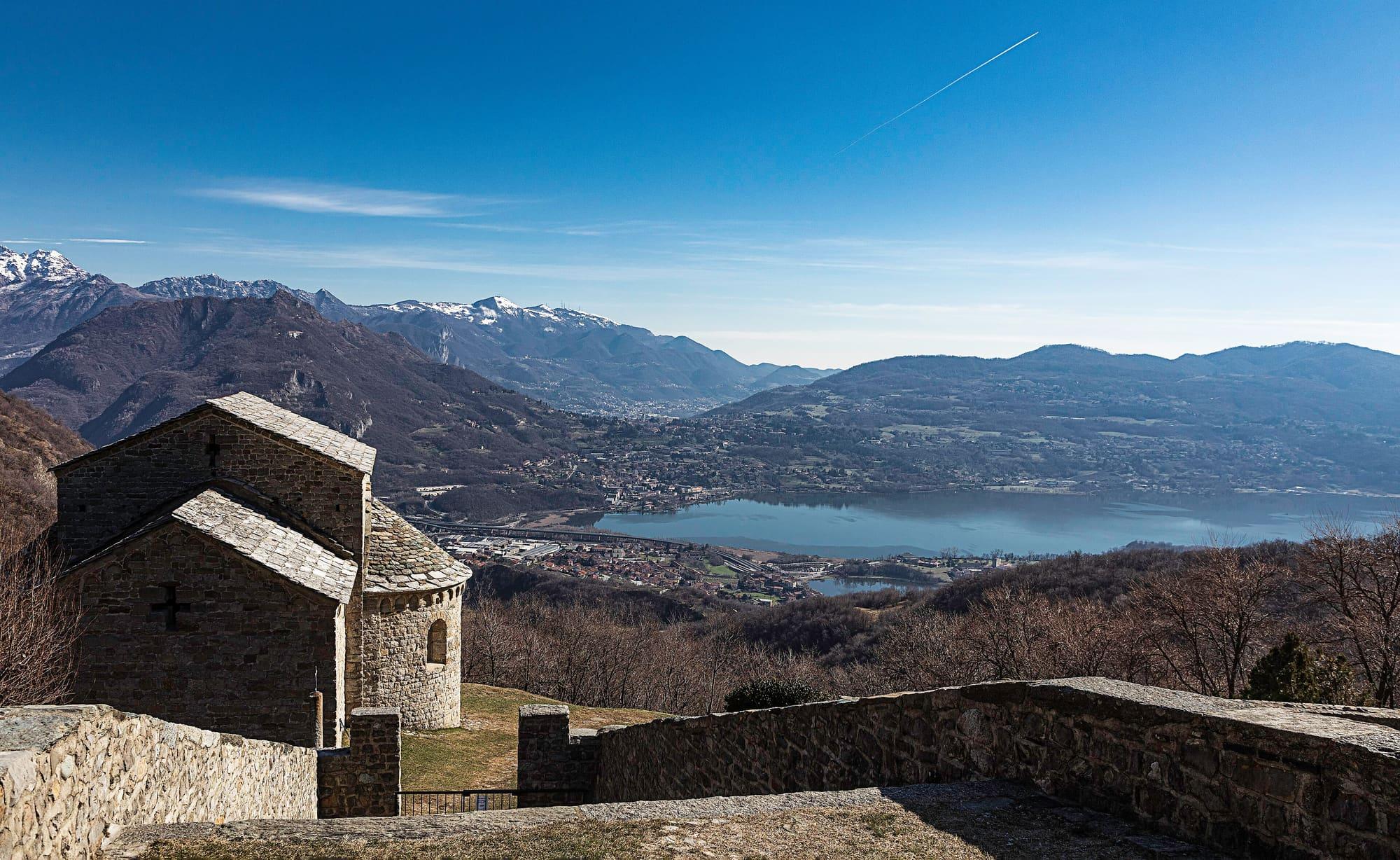
A Roman road ran below the monastery of San Pietro al Monte, above Civate, and the village takes its name from Clavis, the obligatory crossing on the little river that flows out of Lake Annone, where there was a guard post. The first small monastery, dedicated to Saints Peter and Paul, arose in the second half of the eighth century, at the end of the Lombard kingdom; legend has it built by King Desiderius, fulfilling a vow made by his son Adelchis, blinded while hunting boar and then healed. Between the tenth and eleventh centuries it became the Romanesque building still standing, and in the eleventh century the entrance, the great stair and the semicircular porch were opened and the oratory of San Benedetto was built. Then, perhaps after the defeat at Legnano of Barbarossa, to whom the abbot was a loyal vassal, the communes led by the archbishop of Milan destroyed all the monastery's living quarters, and only the church was left. But the monks had long had a monastery down in the village.
That is San Calocero, in the centre of Civate. Its origins go back to the ninth century, when the bishop of Milan, Angilbert II, had the relics of the martyr Calocerus brought there from Albenga. In the nave, above the Baroque vault, a cycle of eleventh- and twelfth-century frescoes ends with Samson carrying the gates of Gaza up the mountain: a scene that can be read as a promise to the pilgrims bound for San Pietro, where the heavenly Jerusalem painted at the entrance awaited them. In 1556, when the Olivetans had taken over from the Benedictines, the cloister with its arcades and loggias was built. Suppressed in 1798, the monastery was sold to private owners: the Nava family turned it into a silk-reeling mill, until in 1931 Don Edoardo Gilardi bought it back to make a home for the blind. Today it is a home for the elderly.
From the Val Perlana to Acquafredda
On the other shore the first date is 30 April 1083. That day the bishop of Como, Rainaldo, climbed into the Val Perlana to settle a quarrel between the men of Isola and those of Lenno, who were disputing the church of San Benedetto, and obtained from both sides a gift of land and grazing rights on the mountains of Ossuccio and Lenno; it was received by three lay brothers. In 1090 a monasterium appears for the first time, and in 1161 Pope Alexander III took the abbey under his protection with its properties, scattered as far as the Valtellina. But the abbey was isolated: in 1427 the chapter usually met down at Isola, in the collegiate church of Sant'Eufemia, and consisted of the abbot and two monks. In 1430 Pope Martin V united the monastery with the Cistercian abbey of Acquafredda.
Acquafredda is documented from 1142, when Azzo known as Pellegrino da Isola gave the Cistercians of Morimondo land above Lenno for a monastery to keep the relics of Saints Agrippinus and Domenica, brought from the Isola Comacina; the name, cold water, comes from a nearby spring. The church of Santa Maria dell'Uliveto, begun in 1153, was consecrated in 1193. The monastery probably had the typical Cistercian plan, with rooms round a cloister, and a scriptorium where manuscripts were copied; the commune's assemblies also met there. Then came the decline. In 1460 the abbey, badly run, was given in commendam to Francesco Piccolomini, nephew of Pope Pius II; later, abandoned, it became a bandits' lair, and in 1527 the governor of Como, Federico Bossi, ordered Count Ascanio Pergamini to burn and destroy it. From 1540 the Cistercian Congregation of San Bernardo rebuilt it; the Fiammenghino's frescoes in the chapels date from 1621, the stuccoes of the nave from 1680. In 1934 the complex was bought by the Capuchin friars, and it was later entrusted to a women's community of Franciscan spirituality.
The nuns of Varenna
From Acquafredda, at the end of the twelfth century, came a Cistercian convent of nuns dedicated to the Virgin, just outside Varenna. It stayed open until 1567, when the archbishop of Milan, Carlo Borromeo, suppressed it because the nuns had become too few. In 1569 Paolo Mornico bought it, made it into a house and left the little church to the faithful, and between 1609 and 1645 his son Lelio turned it into a stately residence, named Villa Leliana after him. A long line of owners followed, down to the German industrialist Walter Kees, who between 1897 and 1909 gave the villa and garden the look they have today. Of the convent the chapel remains, now a room for study and conferences; the name, Villa Monastero, has stayed.
Piona, from Cluny to Casamari
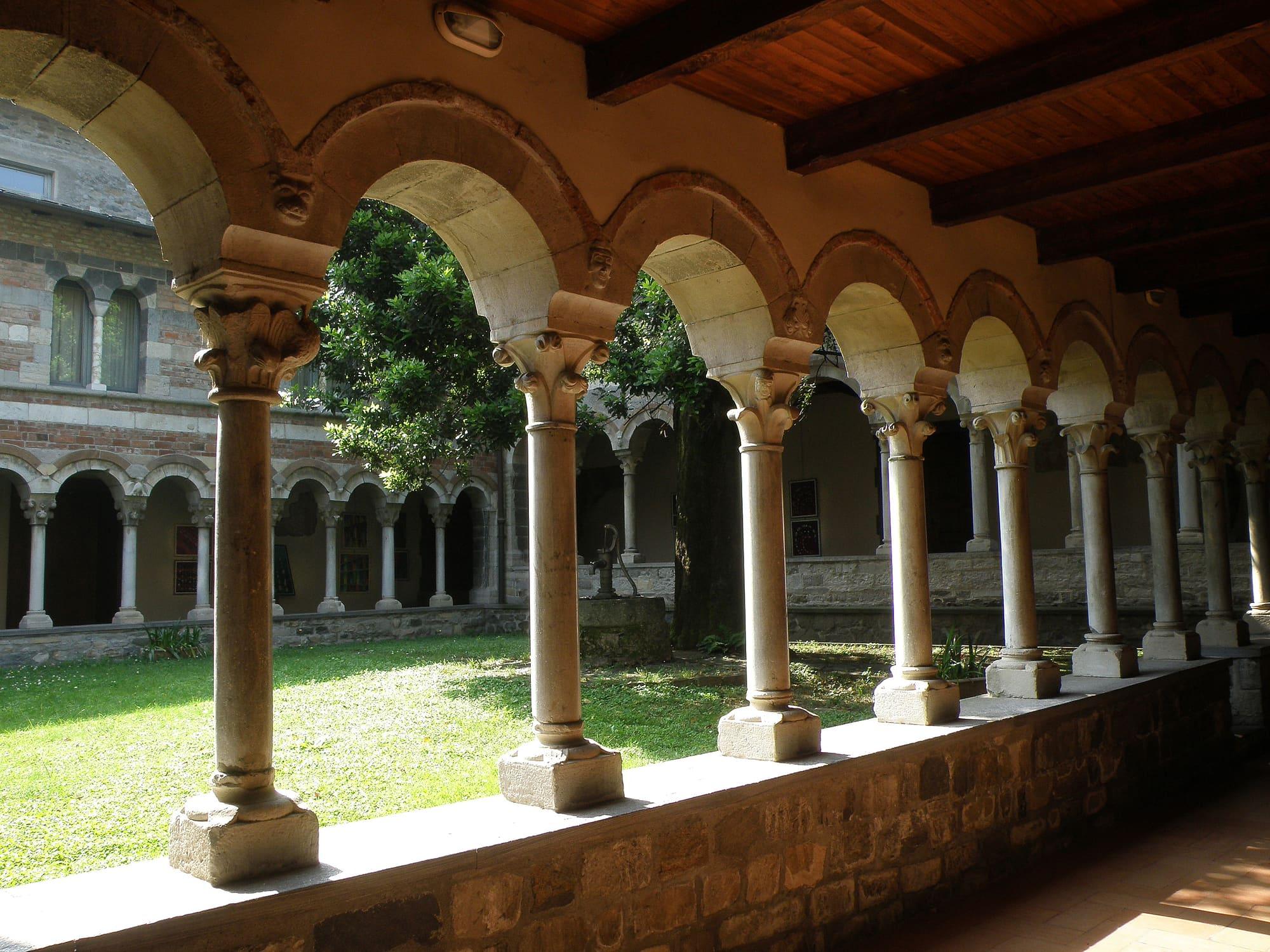
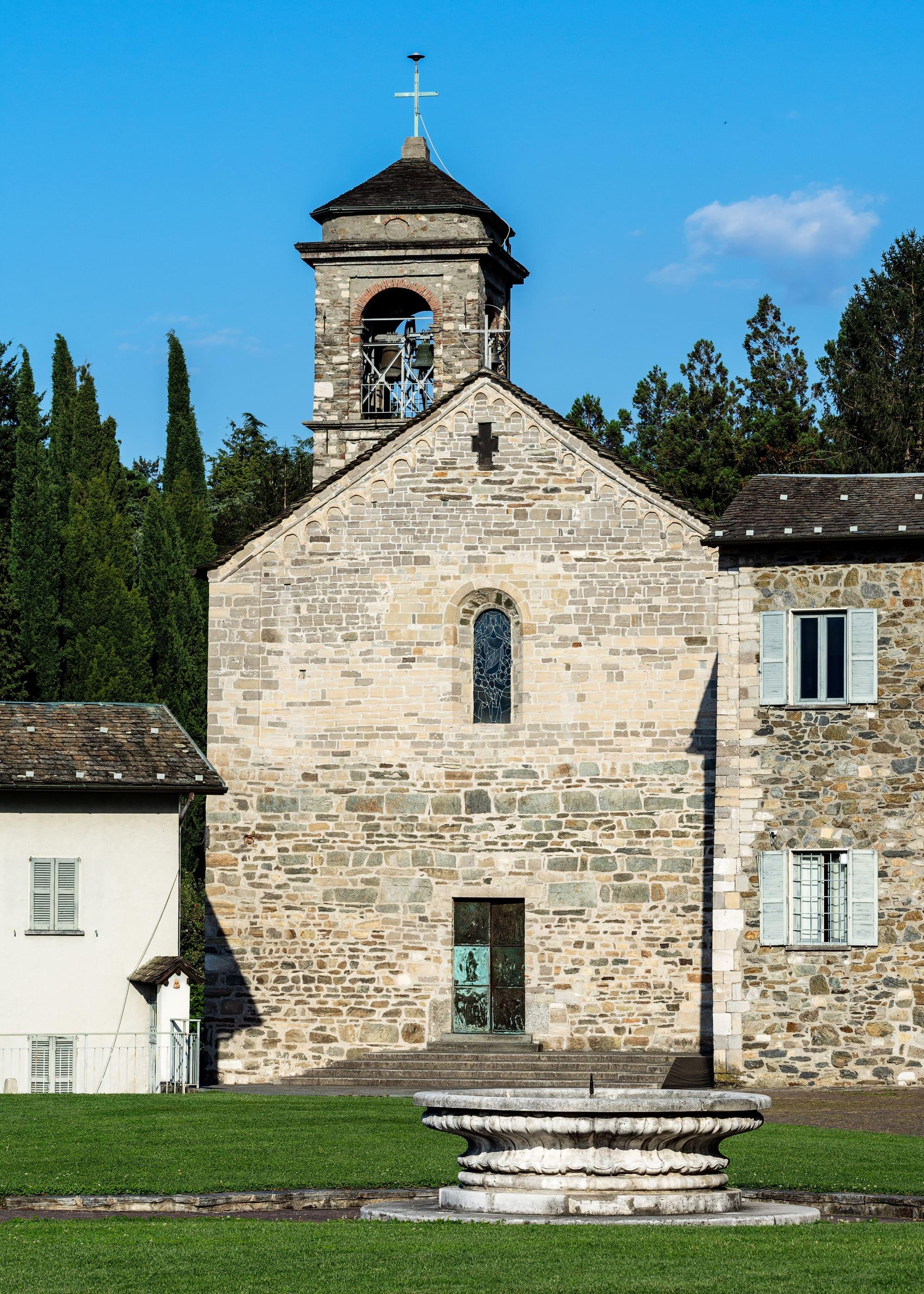
Towards the end of the eleventh century the community of Piona joined the reform of Cluny, the great Burgundian abbey, and took its place among the more than fifty houses of Cluny's province of Lombardy. The church was consecrated in 1138 by the bishop of Como, Ardizzone, and dedicated to the Virgin; sixteen years later a document calls it the church of Saint Nicholas, protector of boatmen, a cult widespread in the area. Between 1252 and 1257 the cloister was built, its capitals carved with fantastic, geometric, human and plant figures, Romanesque but already showing signs of the transition to Gothic. In 1277 eight monks lived at Piona, with enough provisions and the accounts balanced; as late as 1397 Cluny's general chapter recalled that eight monks and the prior were to live there, celebrate a sung Mass every day and give alms to whoever asked. But in the fifteenth century the priory emptied: when Prior Imblavado de' Caimi died, the last monk left, on 20 February 1432 the duke of Milan, Filippo Maria Visconti, put the property in the hands of his own administrator. From 1488 at the latest, with Daniele Birago, the commenda began: nineteen commendatory abbots over more than three centuries, who collected the revenues without caring for either the monks or the buildings.
The monastery and its houses are all in ruins, the roofs broken.
Record of the visit of Feliciano Ninguarda, bishop of Como, to Piona, 7 November 1593
The Cisalpine Republic abolished the commenda in 1798, and in 1801 the priory's property was sold. It passed from family to family, and the church was restored at the beginning of the twentieth century at the initiative of the engineer Antonio Giussani, of the Società storica comense. In 1935 the estate was bought by the businessman Pietro Rocca. A few months later, in the Ethiopian war, his brother Cesare and Cesare's wife, Lidia Maffioli, were killed at Mai-Lalà, beyond the old Eritrean border, when Ethiopian troops attacked the road-building camp where they worked. The family wanted to remember them with a religious work, and Professor Luigi Pirelli, from Varenna, suggested entrusting Piona to the Cistercians of Casamari, who for some years had been preparing, at the Holy See's request, to take monastic life to Ethiopia. It was meant as a gesture of forgiveness and reconciliation. On 25 September 1937 Rocca gave the estate to the congregation, and on 13 February 1938, exactly two years after the attack, a group of white monks arrived from Casamari and took possession of the priory. The Cistercians have lived at Piona ever since.
Historical events linked to this story are collected in the Lake timeline.