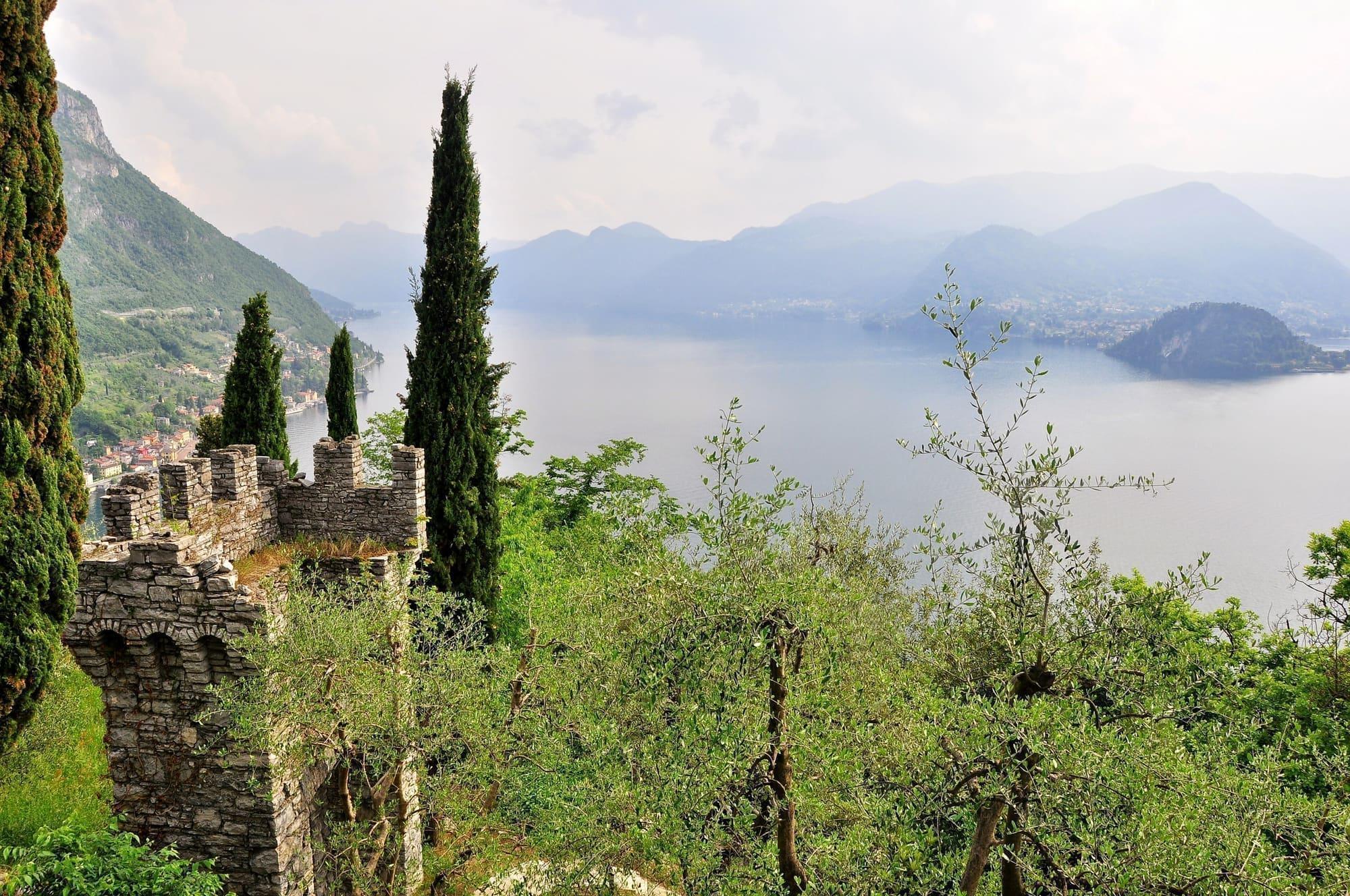
Of the Comacine masters there remain a famous name and few documents: two chapters of a Lombard law and a scale of fees.
The rest is tradition, which grew up above all in the nineteenth century and has to be measured against the lake's Romanesque churches, their dates and their restorations.
The first document is the edict of the Lombard king Rothari, of 643. Two chapters, 144 and 145, deal with the magister commacinus and are mainly about who must pay for the damage if a house a master has built for a client collapses. Later, perhaps under Liutprand, perhaps under Grimoald, the Memoratorium de mercedibus commacinorum was drawn up, a scale setting the pay for the work. From these laws comes the idea that the Lombard kings organised the builders of upper Lombardy into guilds, in the region between the Lario and Lake Maggiore that roughly matches the old diocese of Como. Tradition credits them with the Romanesque churches of Lake Como and the Val d'Intelvi, the cloisters of Piona and Voltorre, and San Carpoforo and Sant'Abbondio in Como.
What “comacini” means
The commonest answer is also the simplest: the Comacine masters were builders and stonecutters skilled in cutting stone and laying brick, organised in associations and from the Como area, from which the name very probably comes. Some, however, have seen in it no more than a general word for masons. At the start of the twentieth century the scholar Ugo Monneret de Villard objected that the adjective for Como is comasco, or comense, and suggested reading cum machinis, “with machines”, thinking of these builders' scaffolding and hoists. Others think of a Germanic root, mak-, “to build”, the same as in the French maçon, linked with Como only later because it sounded alike. The Romantic historians of the nineteenth century tied the name instead to the Isola Comacina, where they imagined the masters' headquarters, a safe haven during the Lombard invasion. The question is still open. Freemasonry, for its part, has claimed descent from their guilds.
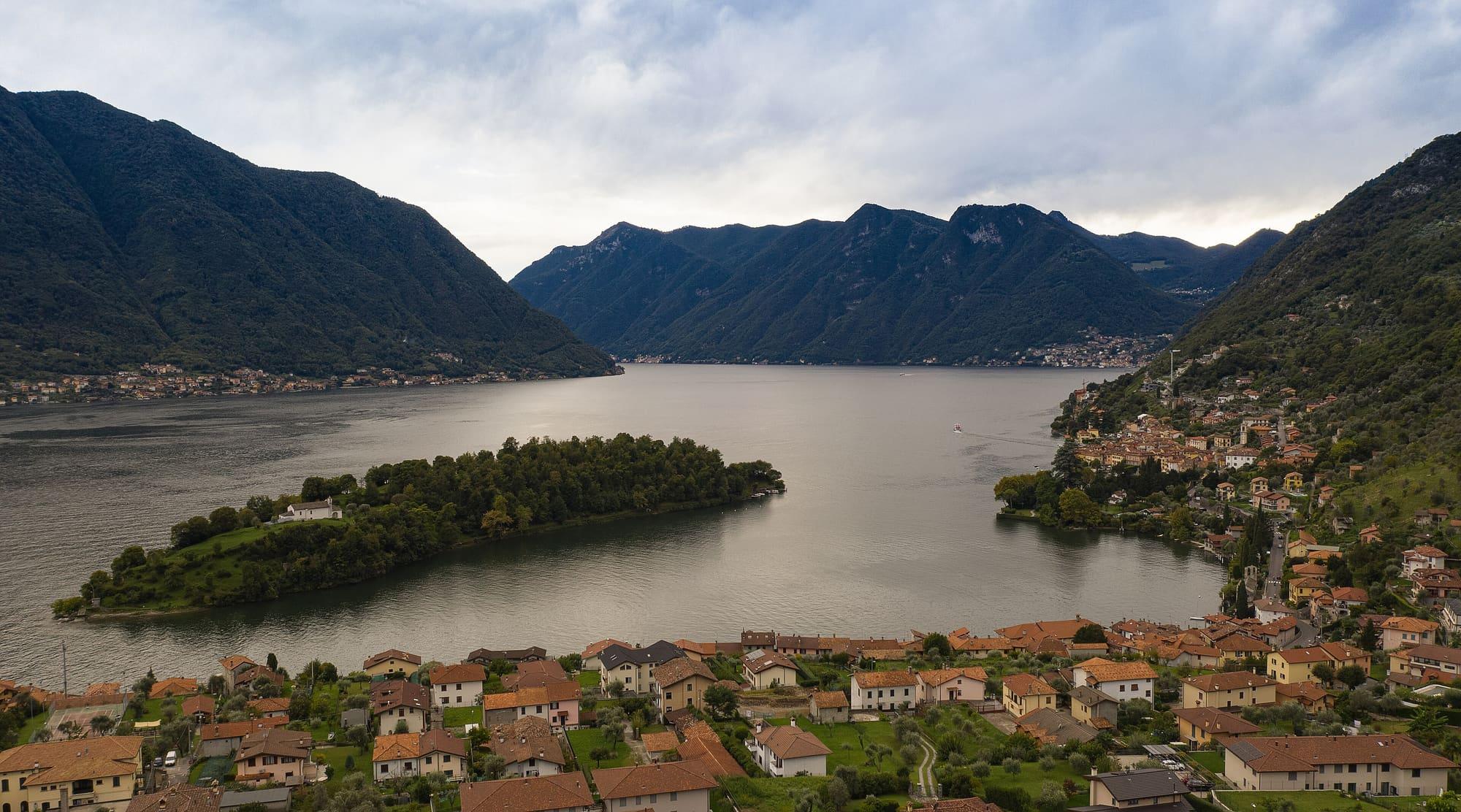
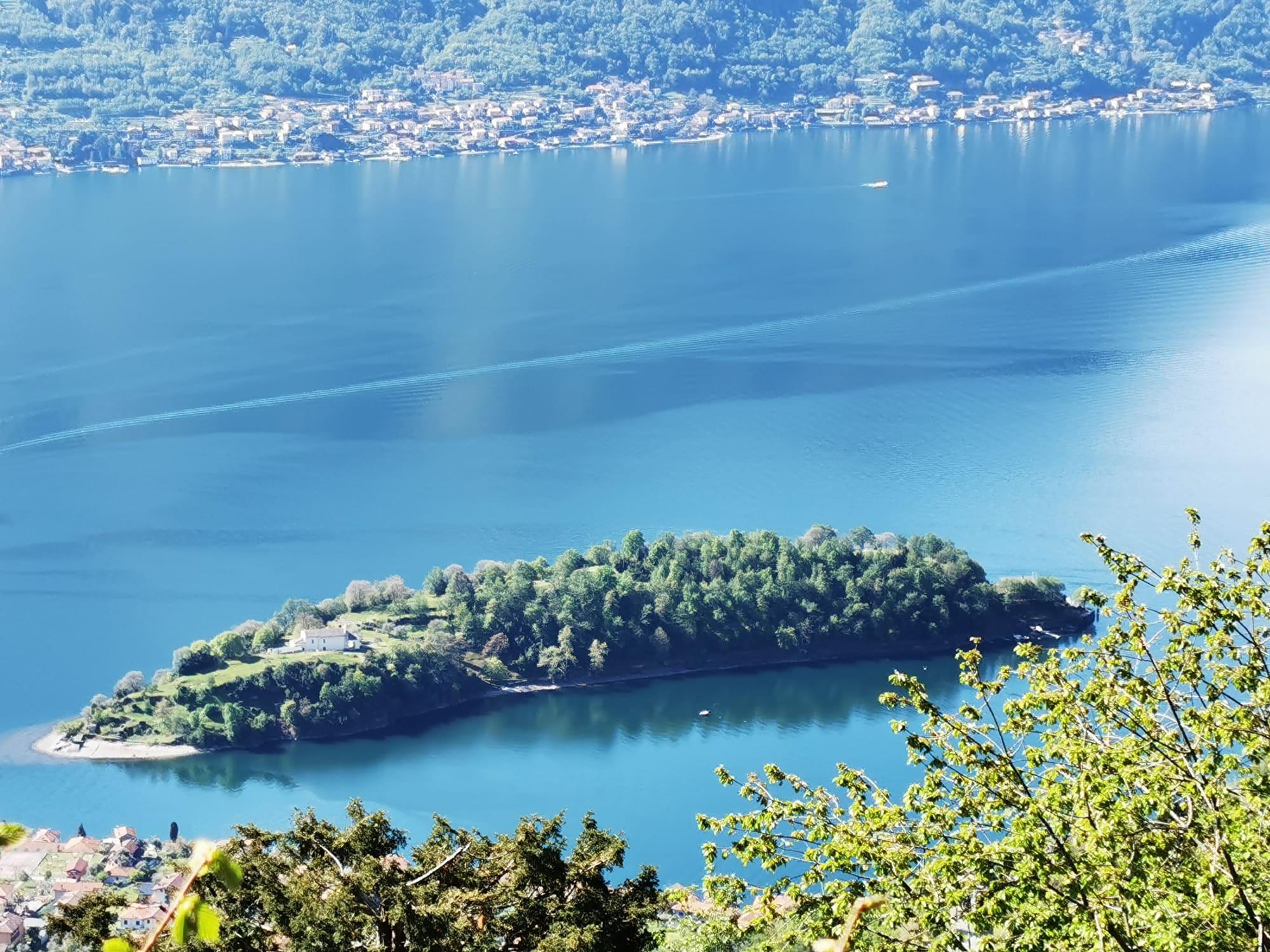
The island where the nineteenth century imagined their homeland really did matter in the lake's early Middle Ages. It held a fifth-century baptismal hall with mosaics and frescoes, the basilica of Sant'Eufemia, founded in 1031 by Bishop Litigerio, and three more churches of the twelfth century, until in 1169 the people of Como, allied with Barbarossa, razed it to the ground. The man who excavated it, in 1914, was Ugo Monneret de Villard himself, the scholar who doubted that comacino meant “from Como”; after him, between 1958 and 1978, came Luigi Mario Belloni. The finds are shown in the Antiquarium at Ossuccio. Some dates remain uncertain too. The crypt of San Carpoforo, in Como, resembles those of Lenno and of Sant'Eufemia on the island, and is therefore dated to no later than the eleventh century; the documents of 1040 about its monastery, on the other hand, have been judged not to be authentic.
Sant'Abbondio, the basilica on the Regina
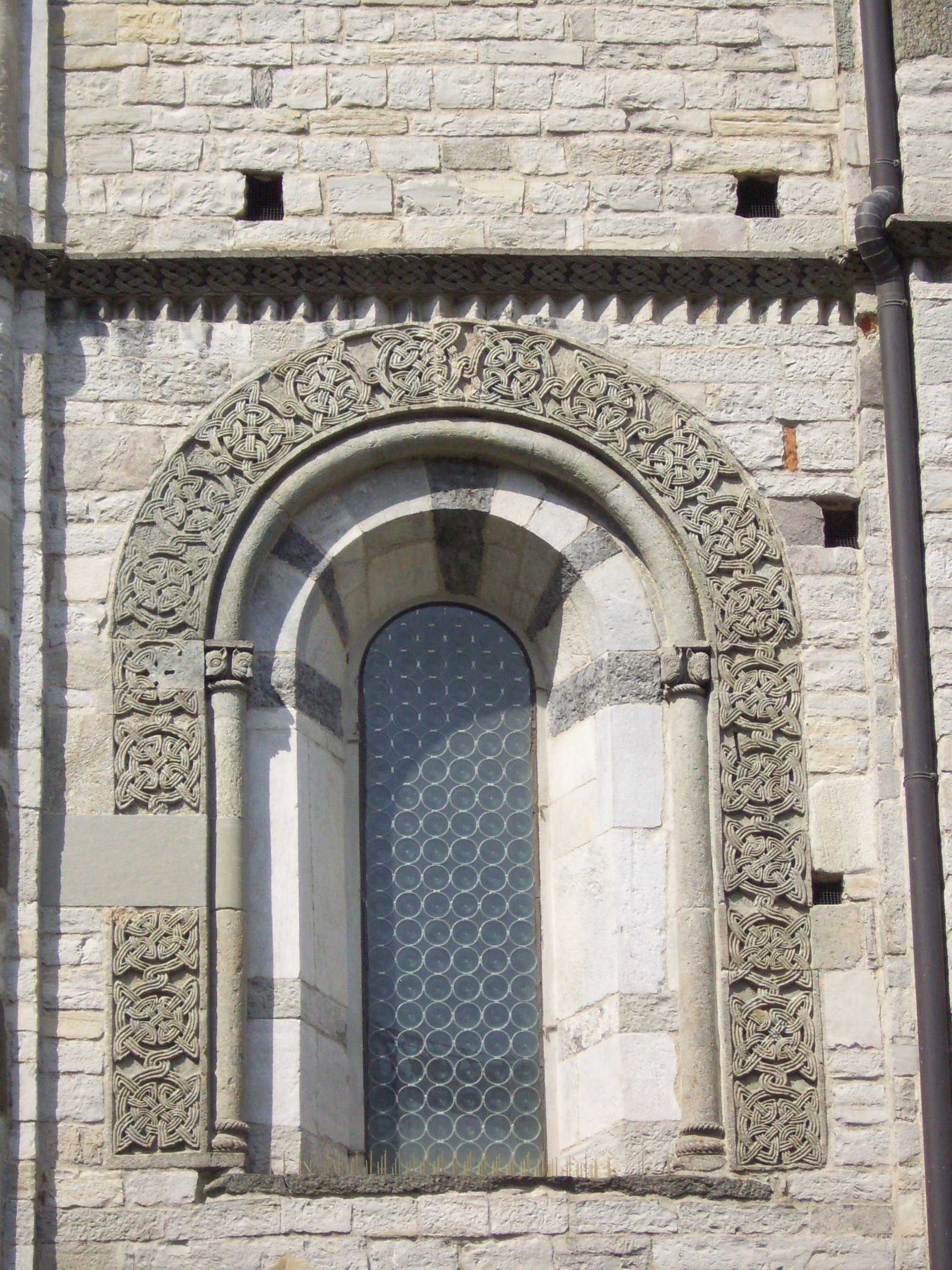
Sant'Abbondio, outside the walls of Como on the old Via Regina, is the church most readily linked with their name. The dates of its building are known; the builder is not. In 1010 Bishop Alberico entrusted the old church to the Benedictines, who pulled it down and built a new one, consecrated in 1095 by Pope Urban II as he passed through Como. The difference in the quality of the work between the apse and the naves, however, leaves the phases of the building uncertain. The five naves and the twin bell towers beside the apse are a solution common in the Rhineland but exceptional in Italy, inspired by French and German models. The capitals of the portal have eaglets at the corners, doves and a feline head; the long choir has a sawtooth band, interlaced ornament above it and richly decorated windows. This very decoration, together with the choir of San Fedele and its griffins and monsters, is among the works attributed to the Comacine masters.
What you see, though, has passed through many hands. In 1586 Cardinal Tolomeo Gallio had the basilica remodelled in classical style and the choir windows widened; in 1784 the right-hand bell tower collapsed; between 1863 and 1874 the Como priest Serafino Balestra took it back to a hypothetical original style, following the ideas of Viollet-le-Duc, and rebuilt what had been lost. From 1867 the same Balestra also promoted the restoration of San Fedele, with a building more ideal than real in mind; and when its front was redone from 1914, the portal was rebuilt in green serpentine, a stone wholly foreign to the church. The Romanesque churches as they look today and the story of the Comacine masters were thus, in large part, born in the same century: in 1893 Giuseppe Merzario published in Milan I maestri comacini. Storia artistica di mille duecento anni, an artistic history of twelve hundred years.
At the top of the lake
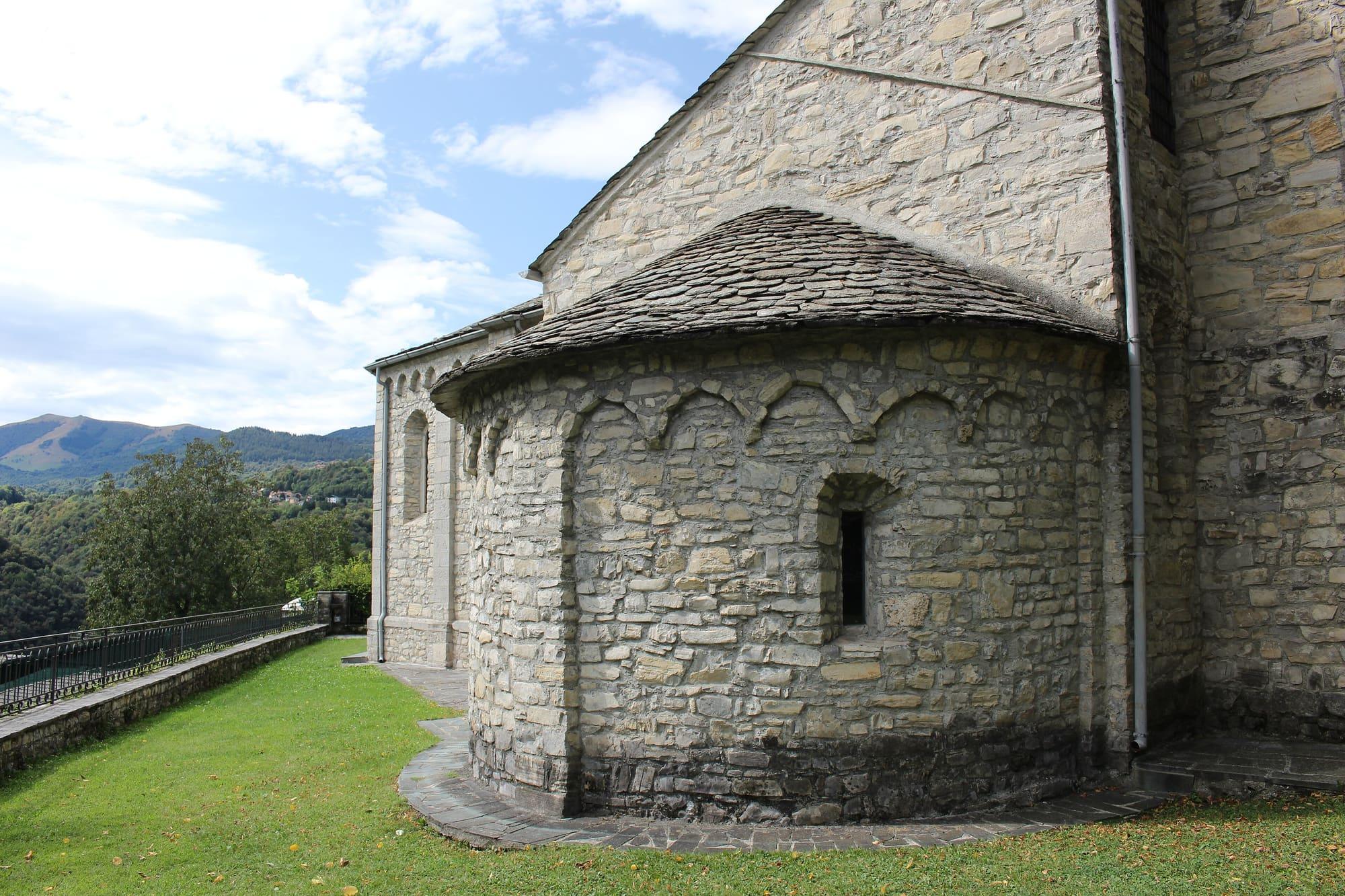
At Gravedona, Santa Maria del Tiglio stands over a baptistery of the fifth or sixth century: the excavations of 1953 uncovered a mosaic floor and an octagonal font for baptism by immersion. The Romanesque church, of the twelfth century, has a central plan with three apses, the bell tower built into the front and walls in bands of pale and dark stone. Inside, a gallery runs within the thickness of the walls; what it was for is not entirely clear. At Piona, on the Olgiasca peninsula, the cloister on the other hand has a date and a name: two inscriptions record that Bonaccorso de Canova of Gravedona, prior in 1252, had it built at his own expense, and that it was finished in 1257. The capitals have hooked leaves, eagles with spread wings and small heads with clear-cut features. Of the builders, by contrast, nothing is known: they were plausibly local craftsmen, with echoes of Burgundian models.
Burgundy and the Rhine keep coming back. The lake's masters soon emigrated, in groups or on their own, towards Burgundy, Switzerland and the Rhine valley, and ideas travelled in both directions: Piona shows Burgundian echoes, Sant'Abbondio a Rhineland solution. In guidebooks, “Comacine” has become almost a synonym for the lake's Romanesque. Yet for almost none of these churches is the builder known: what is known are the bishops, monks and priors who wanted them, the dates of consecration and the stones used, from Moltrasio stone to Musso marble.
After them, the valley of artists
From the fourteenth century the name Comacine gives way to that of the Campionese masters, from Campione on Lake Lugano, who took up the inheritance. The lakes went on sending artists all over Europe: Leone Leoni from Menaggio, Pellegrino Tibaldi, born in the Valsolda in 1527, Carlo Maderno and Francesco Borromini, born at Bissone. The Val d'Intelvi has a story of its own. In the early Middle Ages the valley was called Antelamus, and the magistri antelami, recorded in the deeds of Genoese notaries from 1157, took their name from it. Then came the valley's artists, whole families of sculptors, painters and stuccoists: from Ercole Ferrata, who worked alongside Gian Lorenzo Bernini, to Giulio Quaglio of Laino and his pupil Carlo Innocenzo Carloni of Scaria, who painted together in Ljubljana cathedral; Carloni also worked in the palaces of Vienna. At Cerano, the museum of Intelvi stucco and scagliola, founded in 1989, keeps among other things a modern canvas by A. Nastasio that depicts the legend: I Maestri comacini costruiscono una Cattedrale in Europa, the Comacine masters building a cathedral in Europe.
At Scaria, the Carlonis' village, the Museo d'arte sacra was founded by a bishop's decree of 3 May 1966, on the initiative of the parish priest Fernando Cavadini, who also started the Magistri Intelvesi cultural association. Renewed in 2015, it has sections on Ercole Ferrata and Carlo Innocenzo Carloni and, among its pieces, a twelfth-century Antelamic processional cross. Next door is the church of Santa Maria, which the brothers Diego and Carlo Innocenzo Carloni remade for their village between 1711 and 1753. Not far away, at Ramponio, the church of San Pancrazio brings both ages together: it keeps the apse and bell tower of an oratory that tradition dates between 1025 and 1050 and, in the chapel that was the old apse, a vault with eighteenth-century stucco attributed to Diego Carloni.
Historical events linked to this story are collected in the Lake timeline.