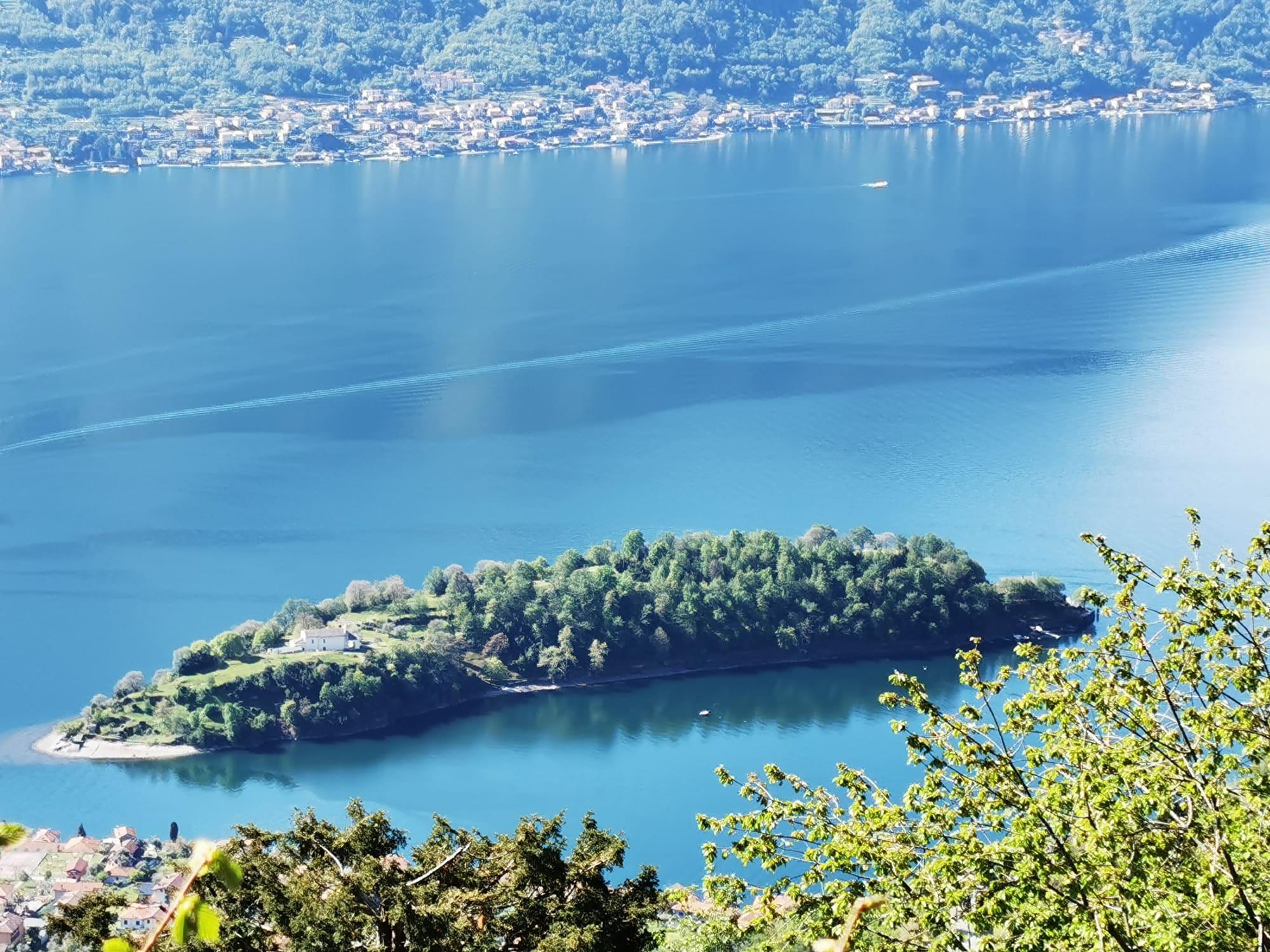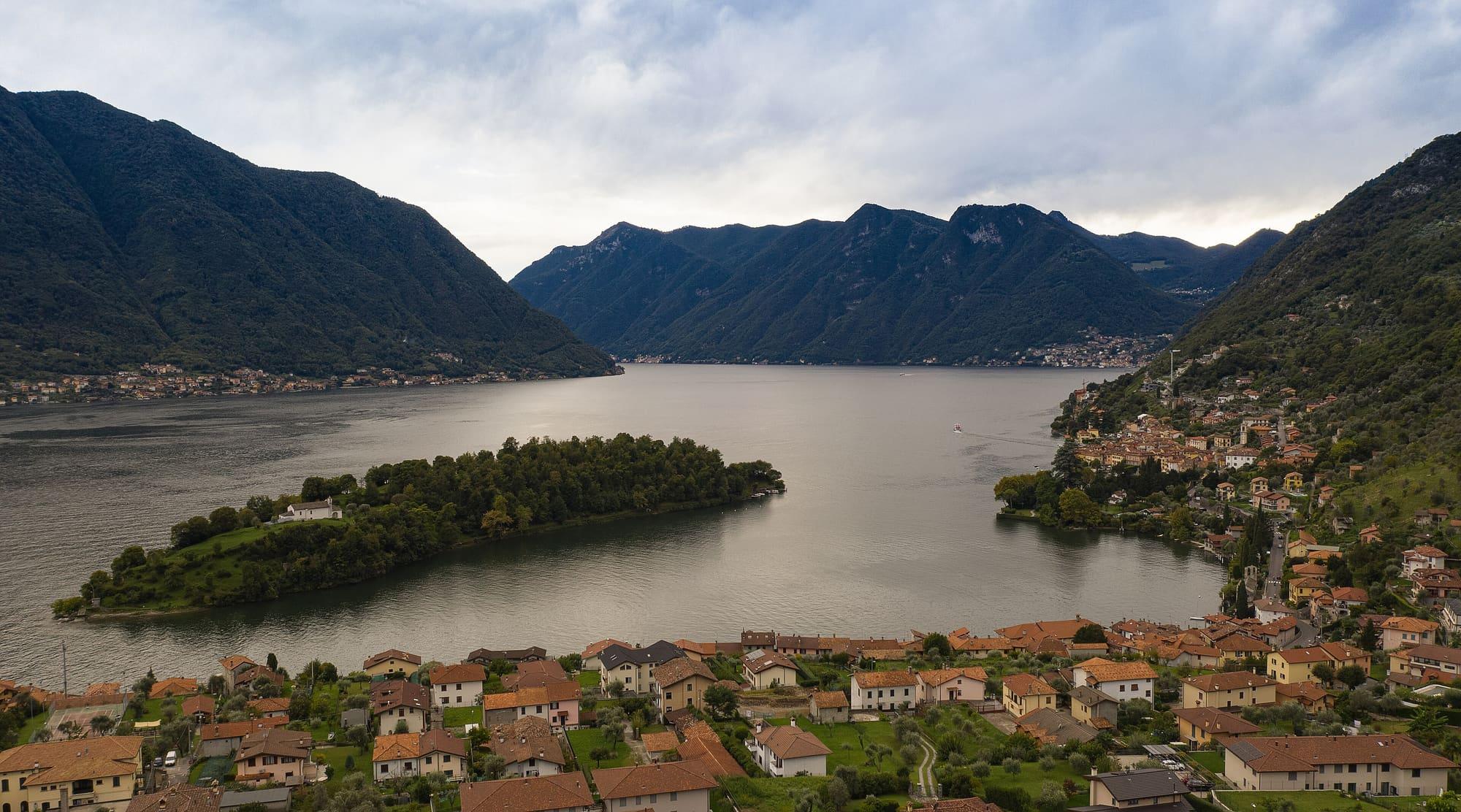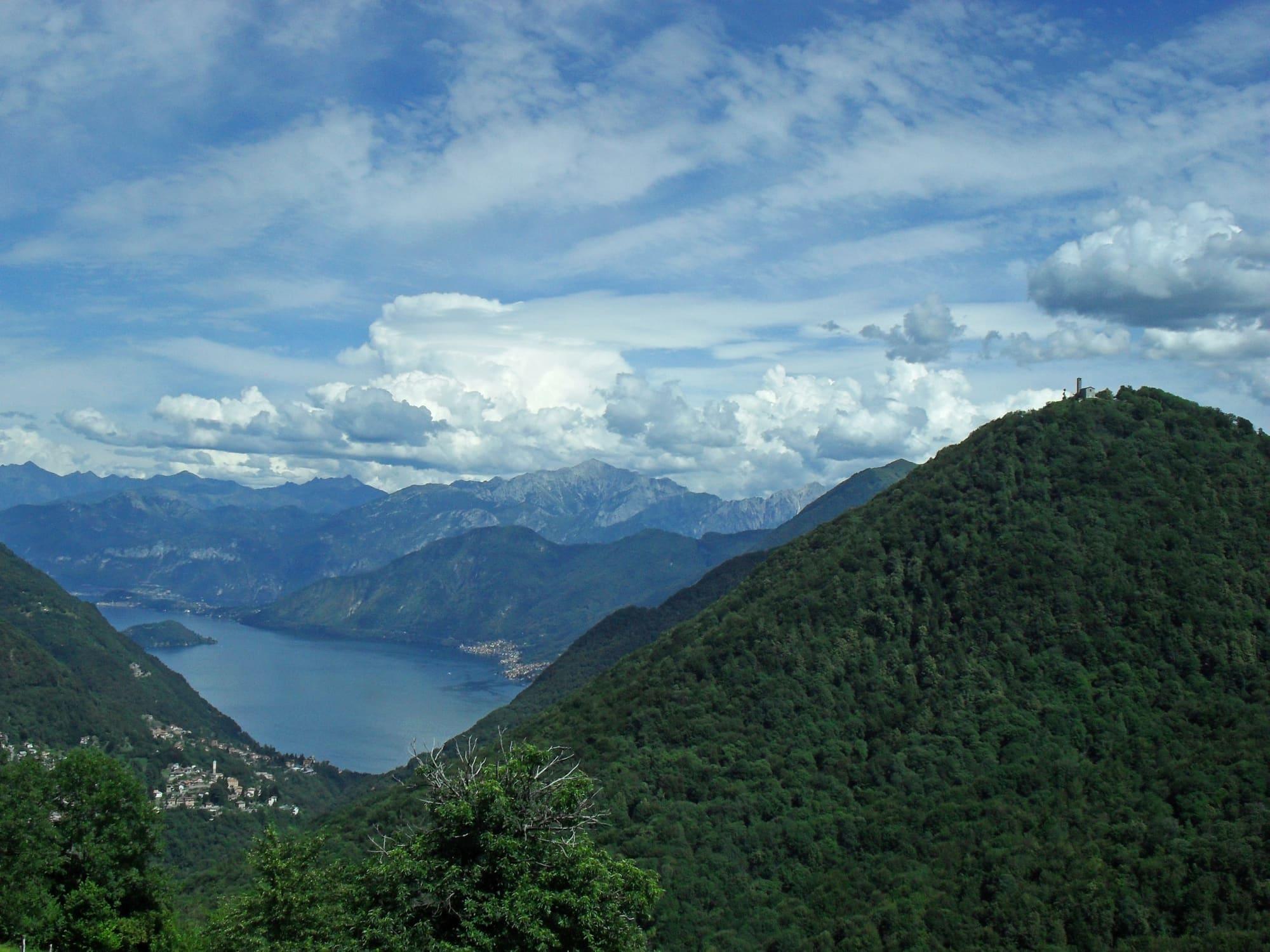
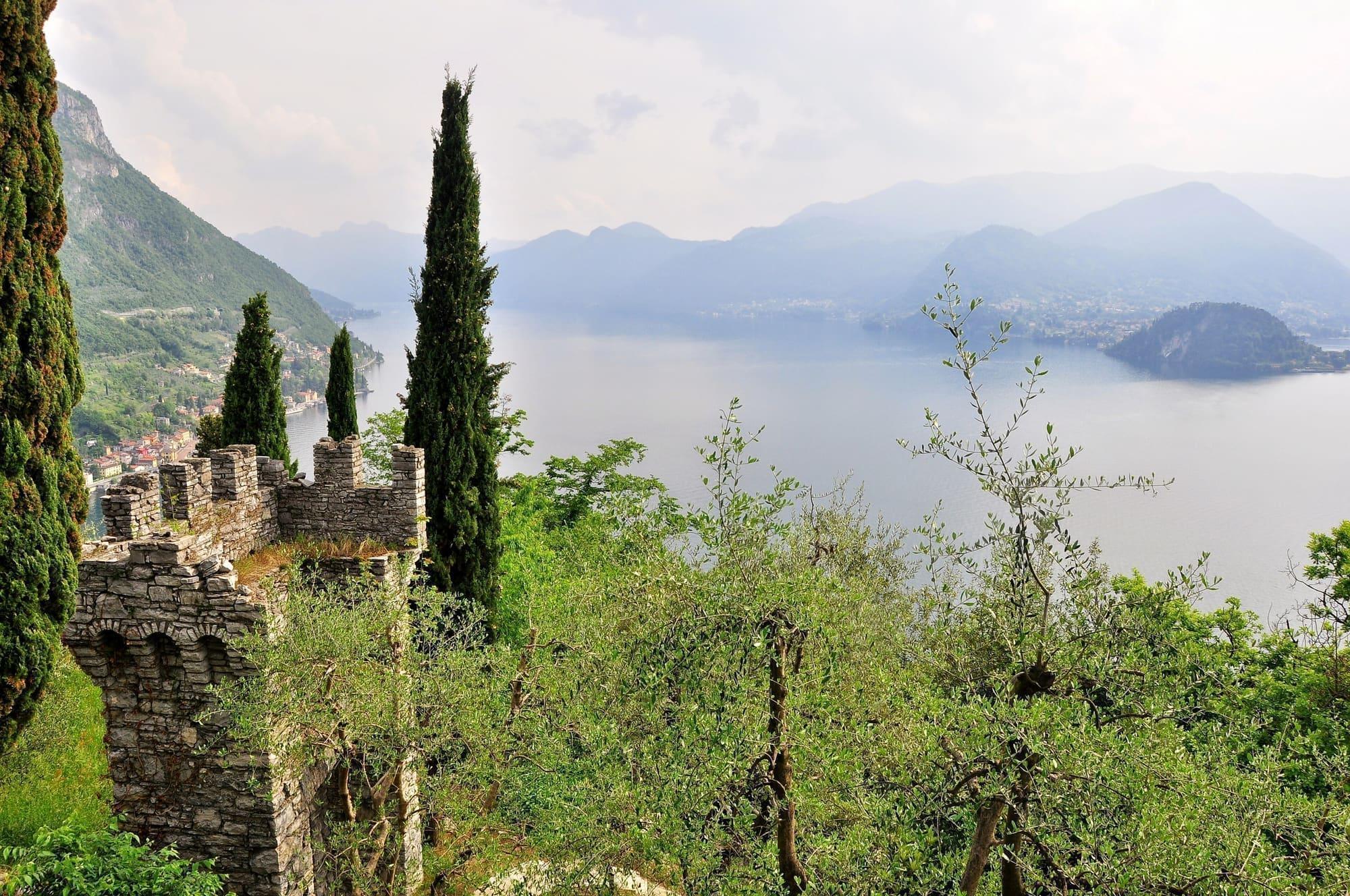
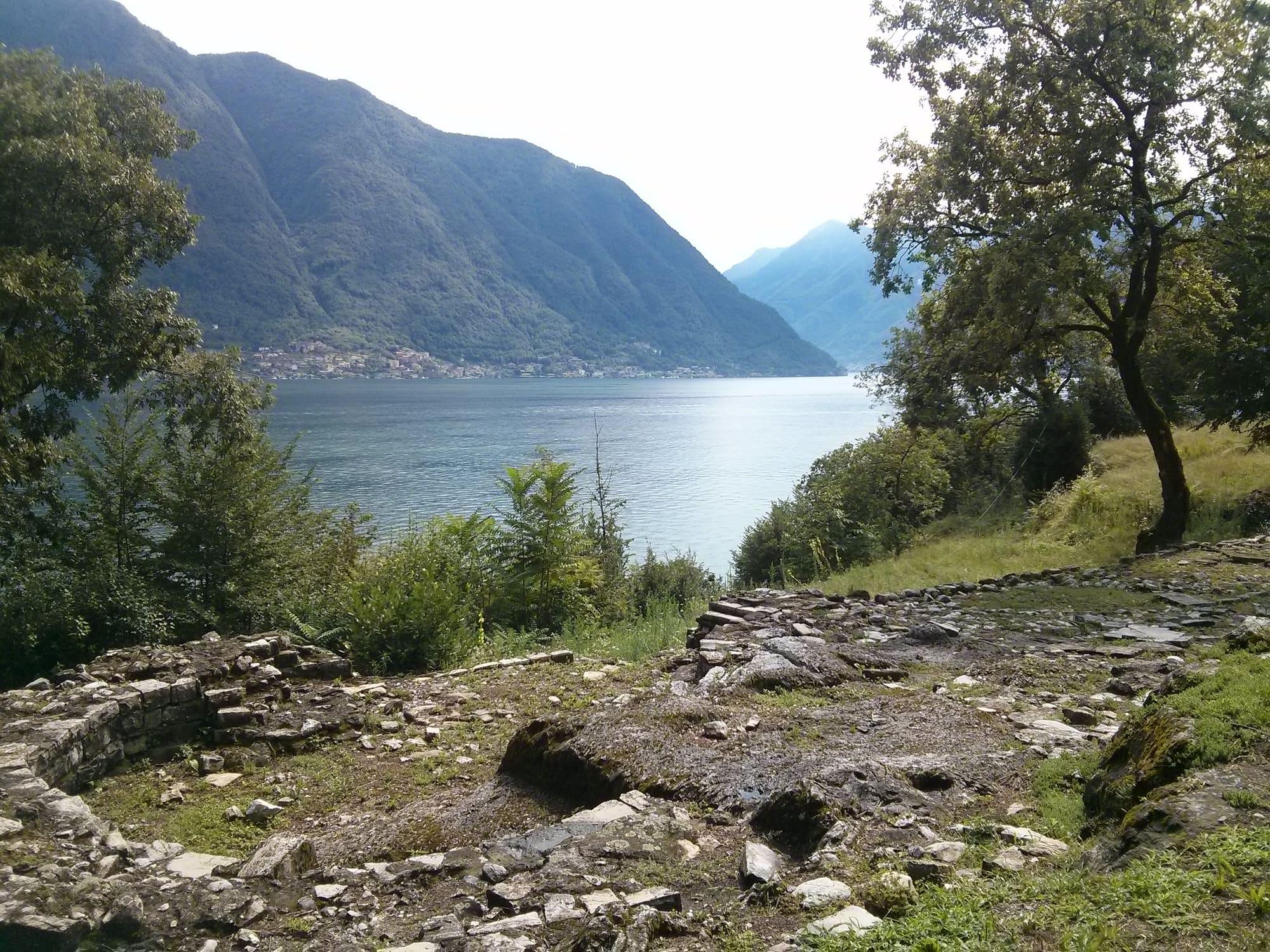
The Isola Comacina, off Ossuccio, is the only island in Lake Como and is about six hundred metres long.
For centuries it was a fortress and the seat of a pieve, the mother church of a whole district. In the twelfth century it sided with Milan in the war against Como, and in 1169 the people of Como razed it. The settlement was never rebuilt, and its churches came to light again only with the excavations of the twentieth century.
Even before the war the island was a seat of power. It was once ringed entirely by walls enclosing a settlement rich in civil and religious buildings, and it was the heart of the pieve of Isola, which took in the churches of the western shore from the Camoggia valley to the Perlana stream. Paul the Deacon tells how the Byzantines made their last stand against the Lombards here: their general, Francio, held the island for twenty years and withstood a six-month siege. In the middle of the tenth century the bishop of Como took over its fortress, and in 1031 Bishop Litigerio founded the canonry of Sant'Eufemia there. Later the island community drew ever closer to Milan and clashed with Como again and again. The two cities were competing for control of the great trade routes and the Alpine passes, and the fortified island had always stood in the way of anyone in Como who wanted to rule the lake.
Ten years of war
The war began in 1118. Almost everything known about it comes from a poem by a cleric of Como whose name is lost, the Anonimo Cumano, who says he saw it with his own eyes and tells it from his city's side. Milan secured the support of the pievi of Bellagio, Menaggio, Gravedona and Nesso, and above all of Isola, and the lake became a battlefield. In April 1119 the islanders set out with seven ships from the Zoca de l'oli, the stretch of water between the island and Spurano where they sheltered their boats, and landed at Laglio to attack Cernobbio. Forewarned, the men of Como laid an ambush: many islanders fled towards their ships, which had moved away from the shore, and drowned under the weight of their armour. That year the island lost its fleet. In 1120 the men of Como, with ships some thirty metres long fitted with wooden towers and rams, sacked Tremezzo, won a battle between the point of Balbiano and Casate, sacked Lezzeno and destroyed the ships moored beneath the island's walls. Then they burned Campo, Sala and Colonno, whose defenders escaped by swimming to the island.
The siege of the castle
In 1124 it was the island's turn, and it was occupied. The men of Como landed, fought at the gates in the walls, sacked the island and set it on fire; some of the defenders shut themselves in the castle, the rest took to the water, heading for Sala and Spurano. The islanders refused to surrender, and the men of Como came back to take the castle and dismantle the island once and for all. They cut down many of the olive and fruit trees to make faggots, stacked them against the walls and set them alight, then battered the castle with catapults mounted on wooden platforms aboard the ships that surrounded the island. The castle held, and when Pagano Beccaria was killed by an arrow in the eye the besiegers withdrew; the campaign ended with the capture of Nesso and its castle. But Milan won the war. In August 1127 Como, taken and sacked by the islanders and the Milanese together, had to accept the demolition of the town and of the suburbs of Vico and Coloniola; only the churches were spared.
1169
Como rose again with Frederick Barbarossa. The town was rebuilt from 1158 and regained its independence by joining the emperor's campaign, which culminated in 1162 in the siege and destruction of Milan. In 1169, with the help of the Tre Pievi of the upper lake, Dongo, Gravedona and Sorico, the men of Como turned on the rebel lands and on the island. This time they destroyed it to its foundations: they pulled down garrisons, houses, churches and walls, and scattered the stones in the lake so that it could never be rebuilt. The settlement vanished. Only an abbey of Benedictine nuns was spared, with a small church dedicated to St John the Baptist; by tradition, nine churches were razed. A legend of a curse on the island is associated with its destruction. In 1175 a decree of Frederick Barbarossa confirmed the ban on rebuilding it.
No bells shall ring any more, no stone shall be laid upon stone, no one shall ever keep an inn there again, on pain of violent death.
The legend of the Isola Comacina, in the form handed down by popular tradition
The new island
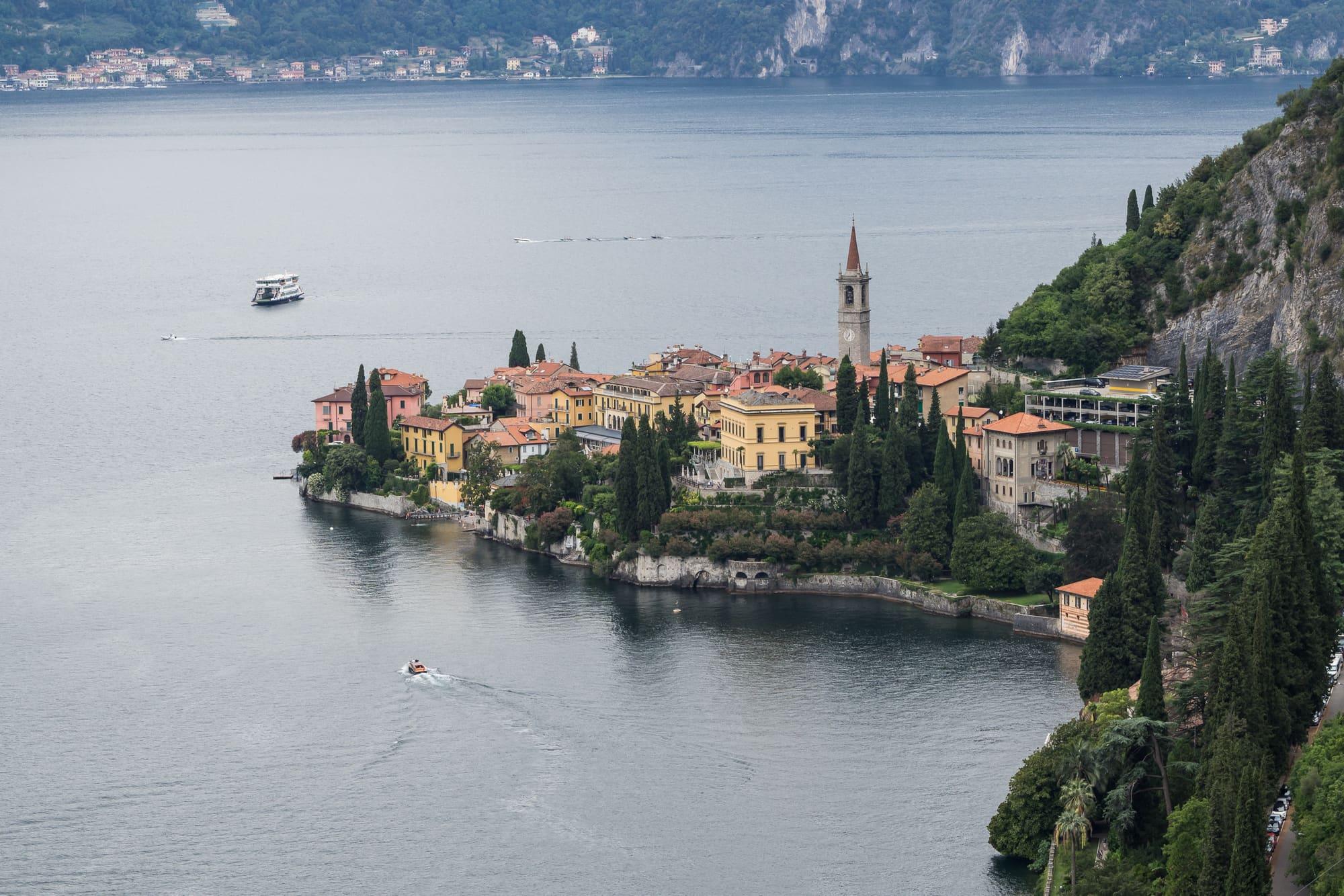
The survivors crossed the lake and fled to Varenna, on the opposite shore. Varenna, too, as an ally of Milan, had been destroyed by the men of Como, in 1126. The quarter built to take in the refugees was called Insula nova, the new island, a name later extended to the whole village. The exiles from the island are also credited with bringing the patriarchine rite, which was celebrated in Varenna's churches until the bishop of Como asked for the change to the Roman rite. Other islanders scattered among the villages along the shore. The chapter of Sant'Eufemia moved to Balbiano, which took the name of Isola, and built its new parish church there with the same dedication. Many remains of the destroyed basilica were reused in it, among them the funerary inscription of Bishop Agrippino, which is still in the church of Sant'Eufemia at Isola. The flight has not been forgotten. Every year since the seventeenth century the feast of San Giovanni has recalled the burning of the island with a fireworks display, and small lights are left floating on the water in memory of those who fled from one shore to the other.
Under five metres of earth
The first archaeological excavations were the work of Ugo Monneret de Villard. Early in the 1910s he began digging south of the seventeenth-century oratory of San Giovanni and found, under five metres of rubble and earth, the basilica of Sant'Eufemia, until then entirely unknown. After about a year of digging its whole plan had come to light: in places the walls still stood up to three metres high, the crypt was missing only part of its vaults, and many liturgical furnishings survived in their original state. Research resumed after the Second World War with the archaeologist Mirabella Roberti and with Luigi Mario Belloni, who worked on the island from 1958 to 1978. Around San Giovanni the remains of many periods have emerged, one on top of another: a Roman building, a hall with two apses, mosaics and painted plaster datable between the fifth and the ninth century, a baptismal font, a late Roman fortification tower later built into the walls, and a Romanesque church. Elsewhere the churches of Santa Maria con il Portico and San Pietro in Castello have been found and the remains of the early medieval settlement explored. A Roman marble colonnade can still be seen beneath the floor of San Giovanni, and underwater surveys around the island have brought many finds to light.
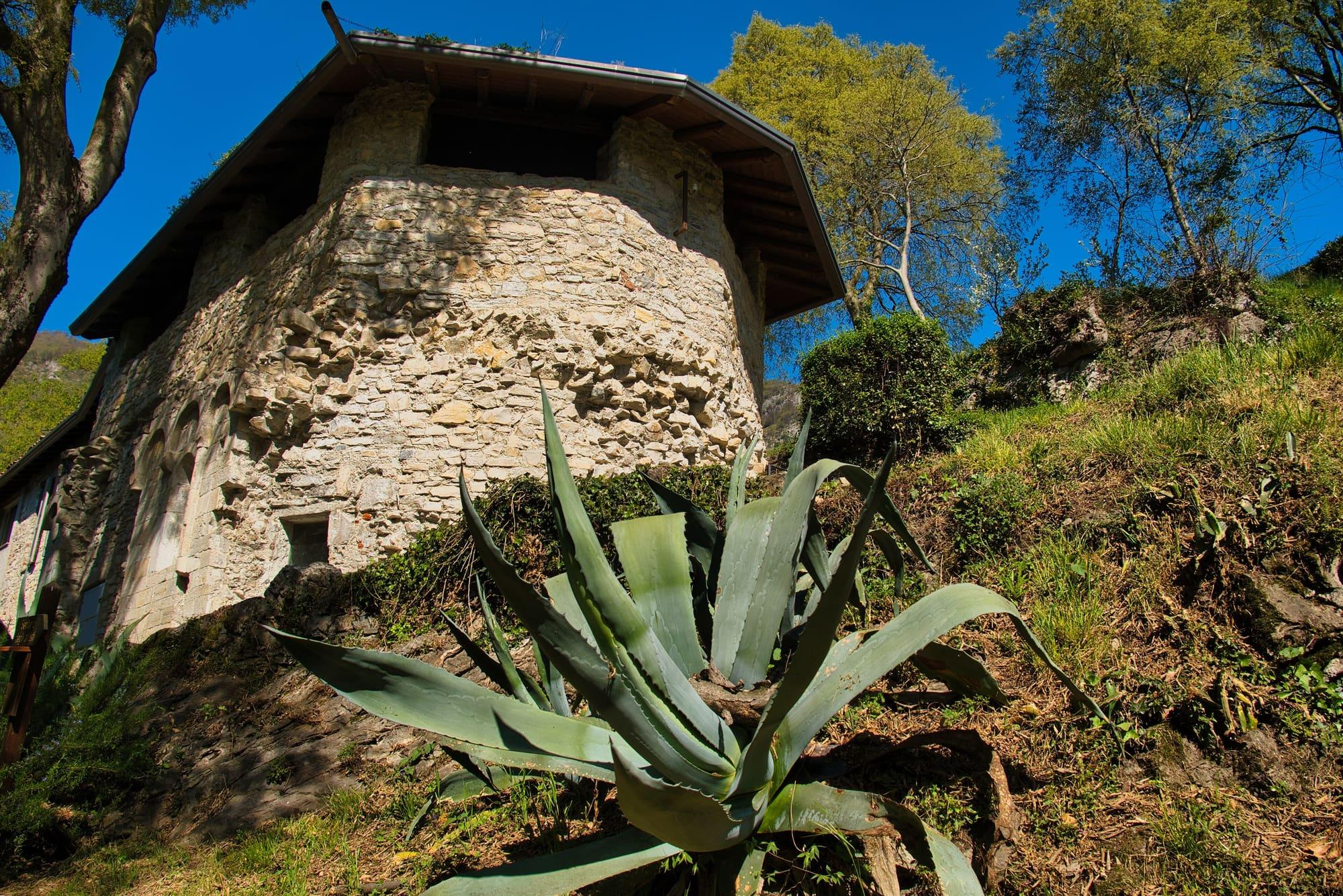
It was the destruction almost to the foundations, crypt excepted, that preserved Sant'Eufemia from the alterations of later centuries, and above all from the restorations of the nineteenth and twentieth centuries, which changed the look of many Romanesque churches. The basilica was more than forty metres long and had a nave and two aisles, separated by two rows of five octagonal piers; the central nave was very wide. It ended in three apses, the presbytery was raised above a large crypt with groin vaults and niches along its walls, and the bell tower stood against the front. Local people still call the ruins il Duomo, the cathedral. The little church of San Giovanni, by contrast, was rebuilt between 1670 and 1675 and restored in 2008. In 1917 the island was left by bequest to King Albert I of Belgium, who gave it to the Italian State in 1920; the State entrusted it to the academies of fine arts of Brera and Brussels, and in 1940 the architect Pietro Lingeri built three artists' houses there.
Historical events linked to this story are collected in the Lake timeline.