
The photochrom is a colour printing process invented in Zurich by Hans Jakob Schmid in the 1880s.
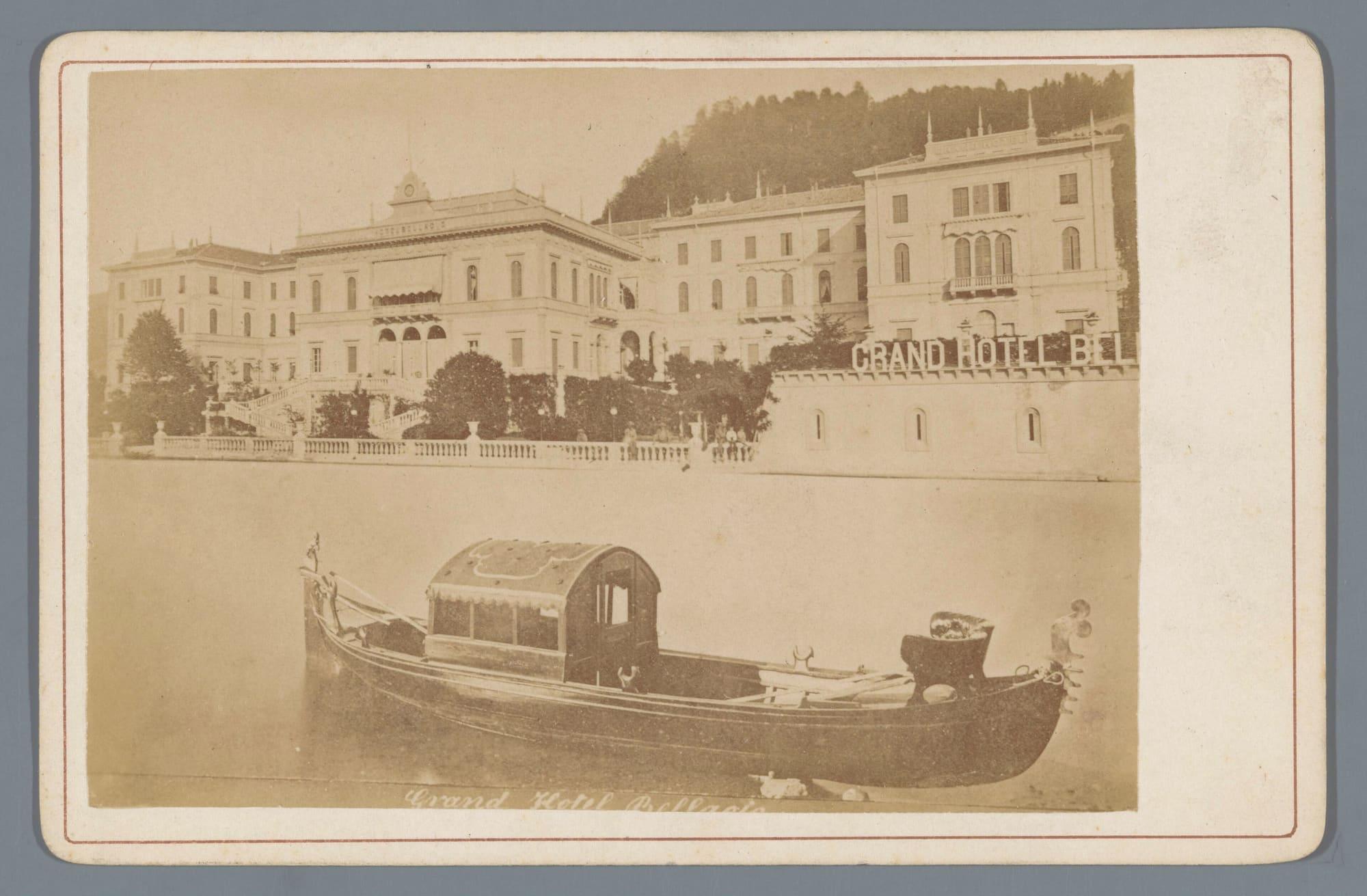
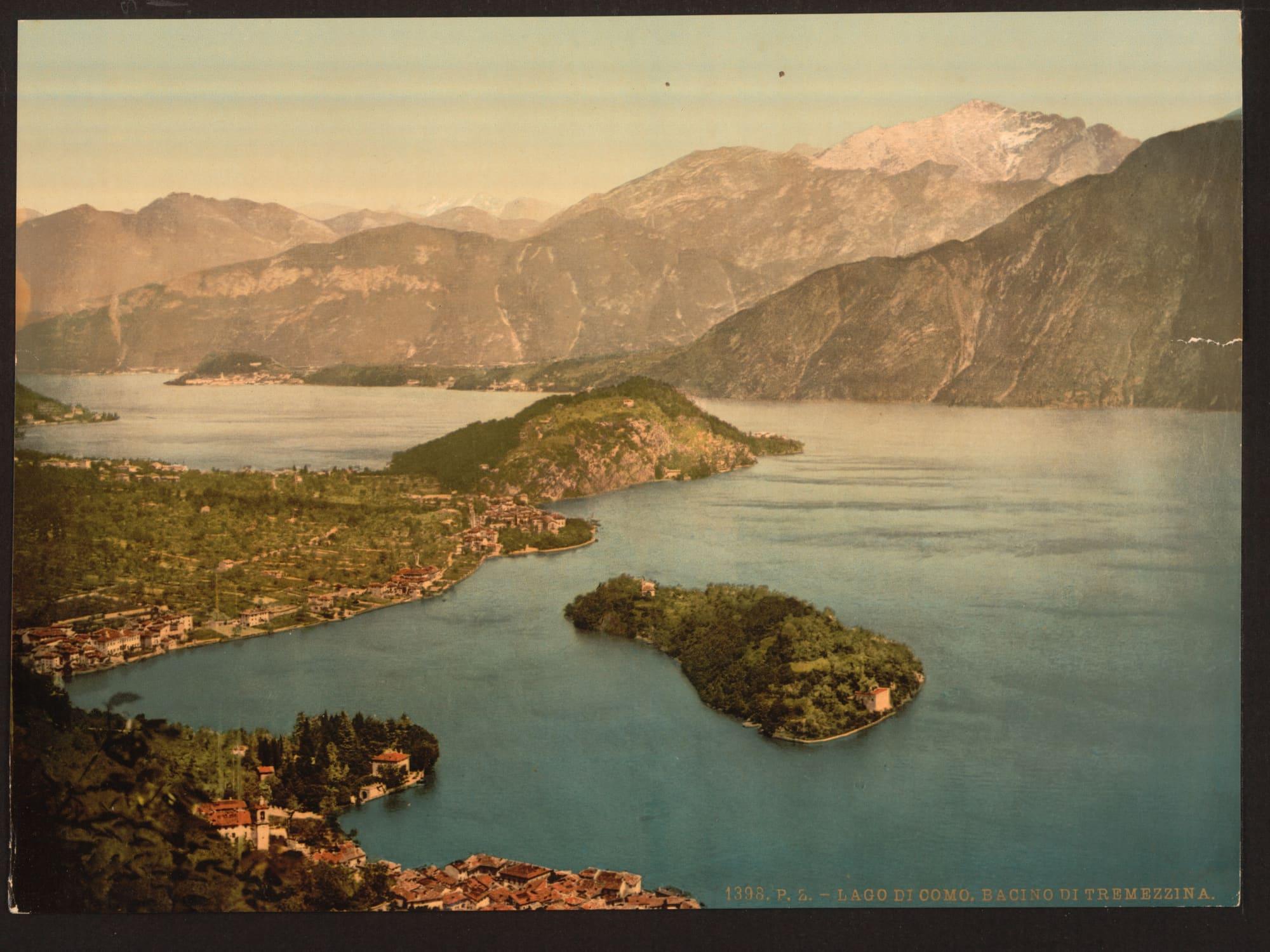
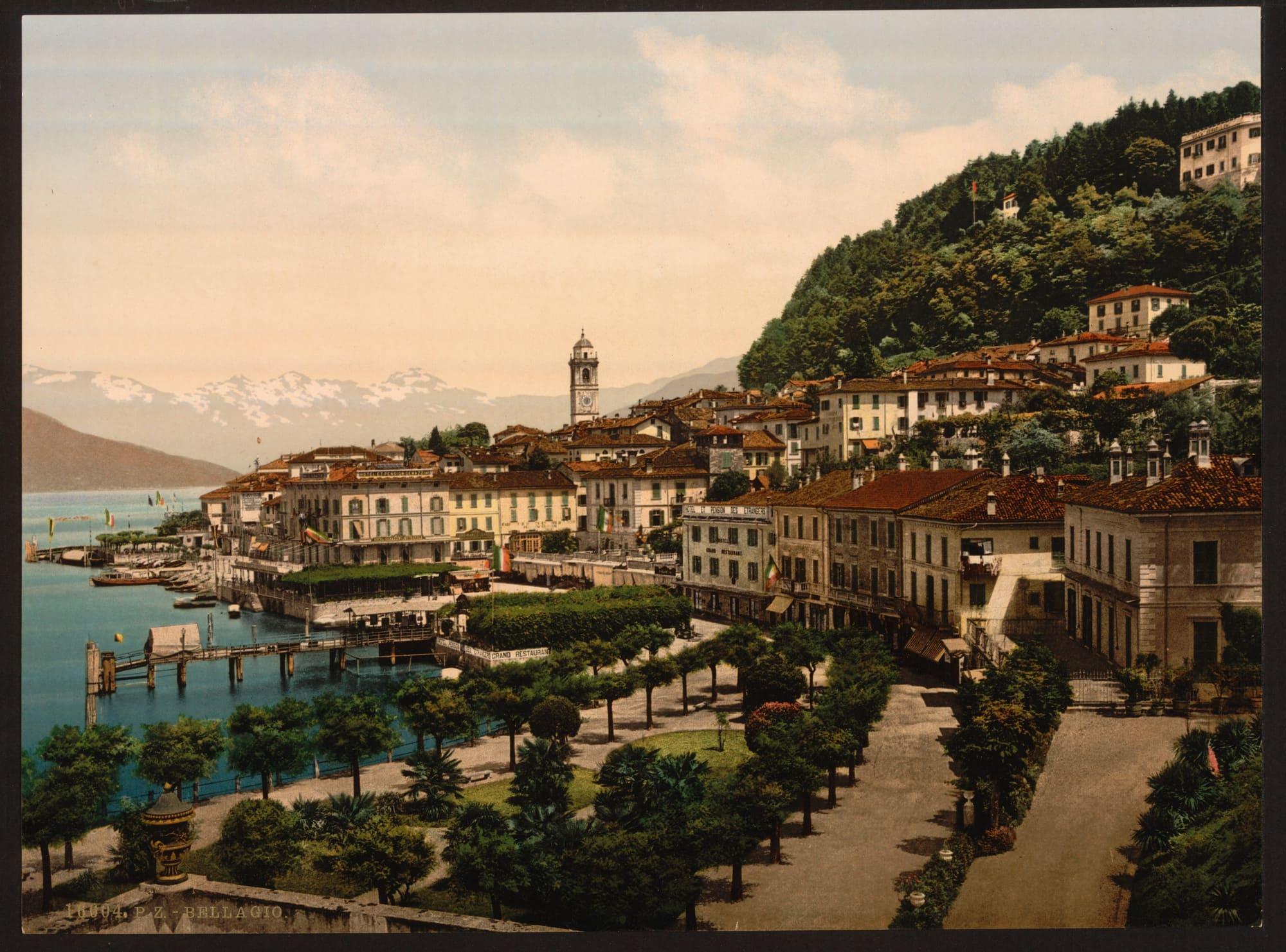
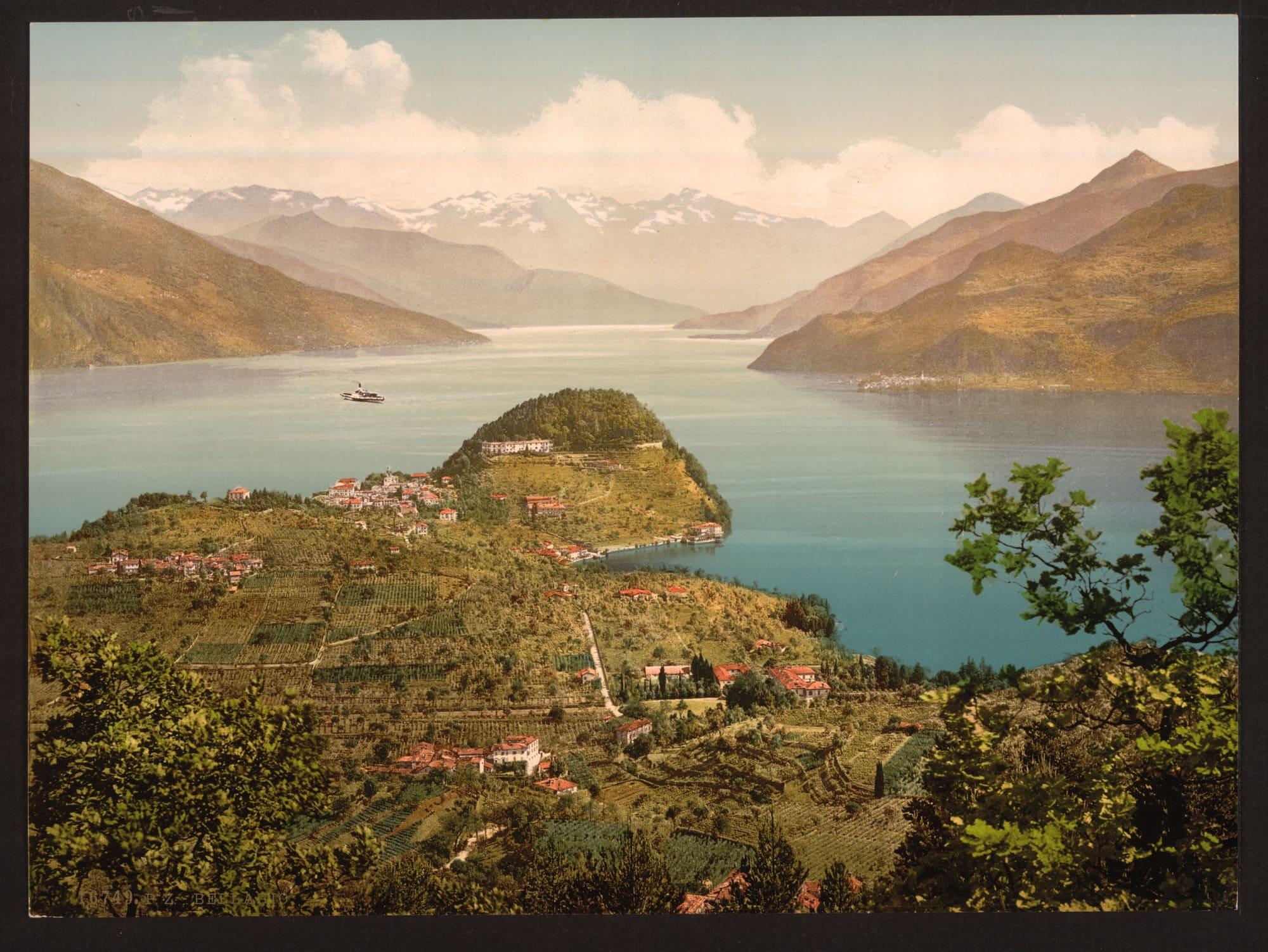
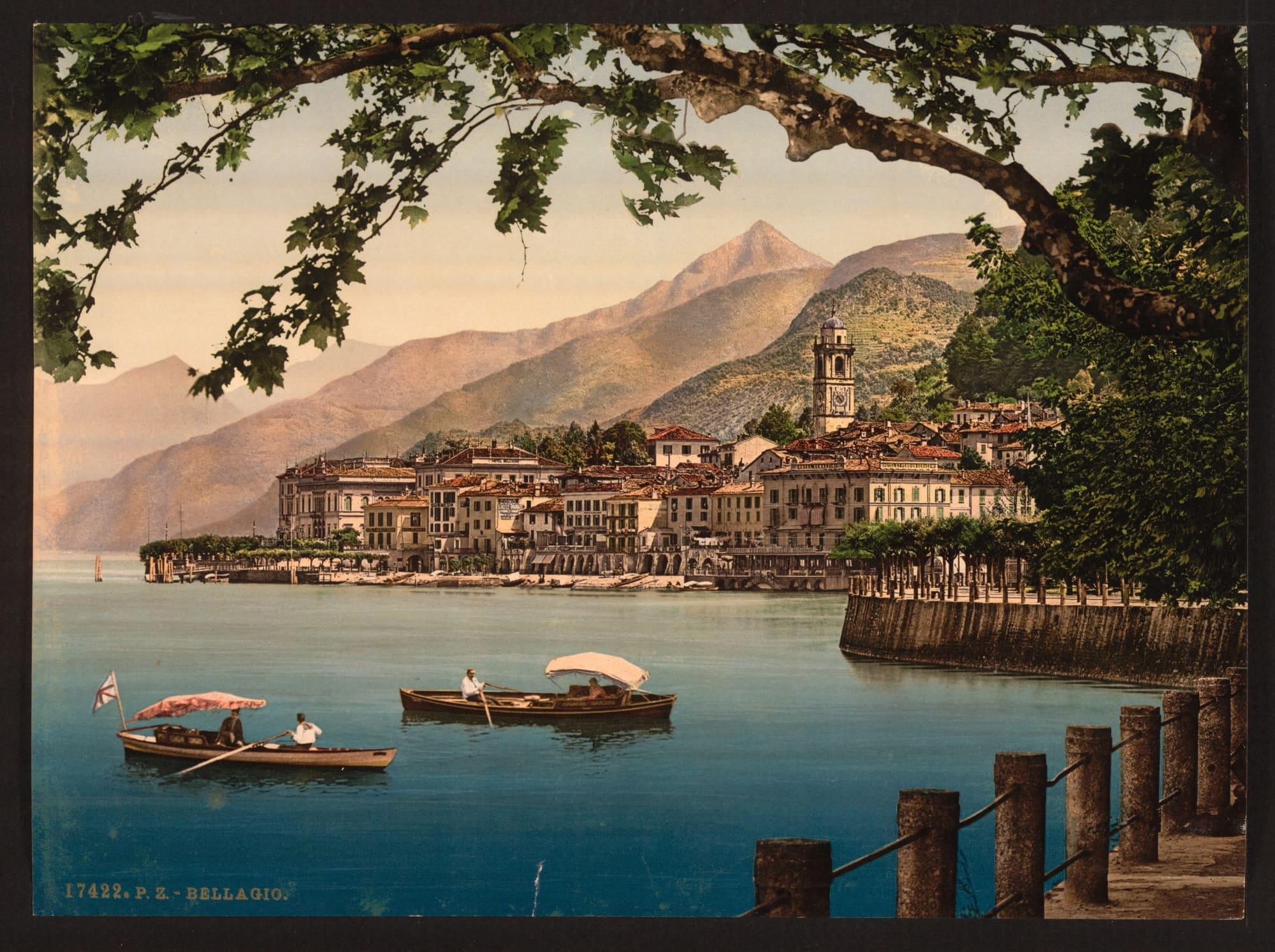
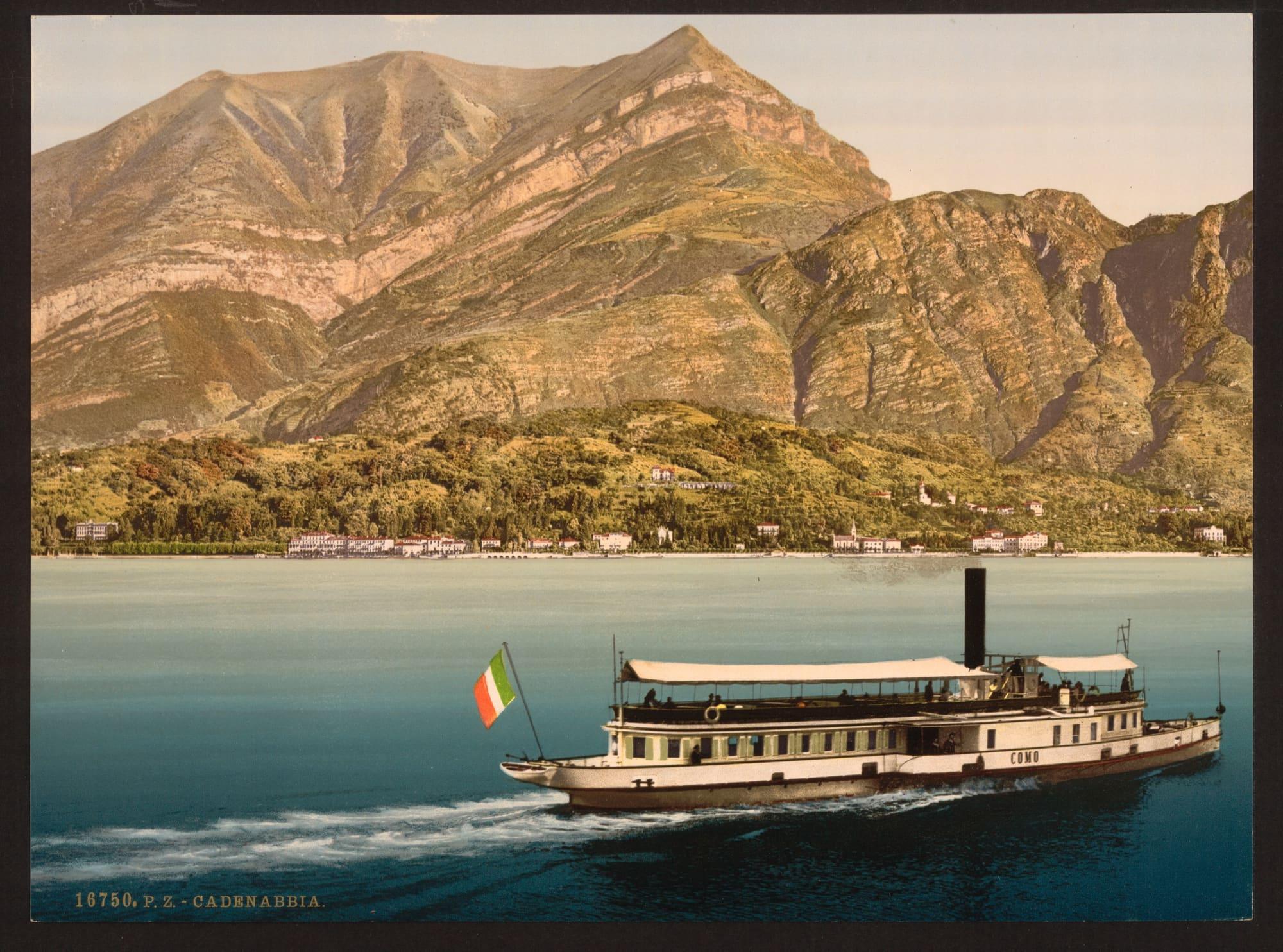
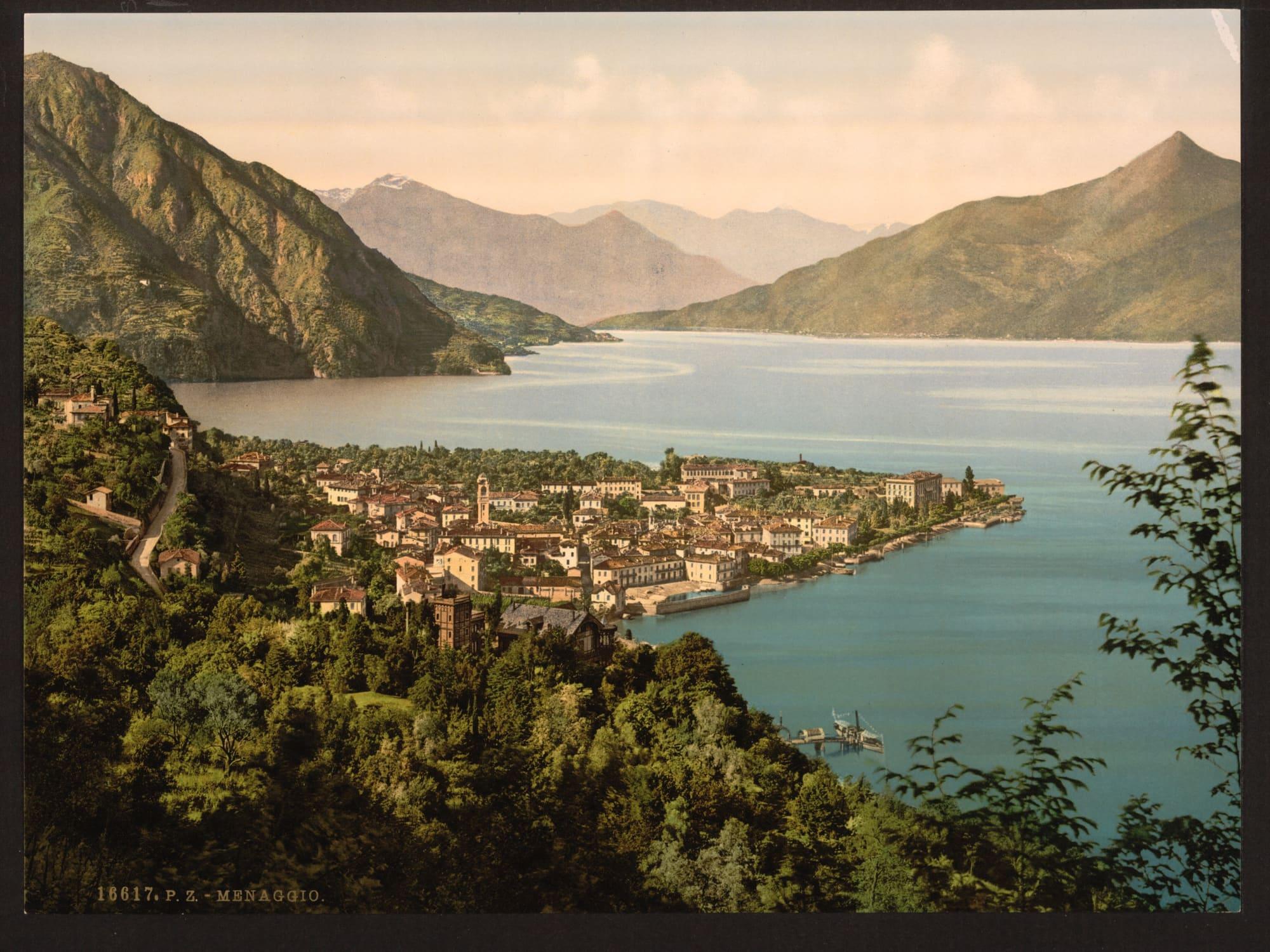
The views of the lake printed with it, kept at the Library of Congress in Washington, show Bellagio, the Tremezzina and Cadenabbia, Menaggio and Como.
The photochrom was invented in the 1880s in Zurich by Hans Jakob Schmid, an employee of the printers Orell Füssli. Each print began from a single black-and-white negative: the photographer noted the colours of the scene, and the printer transferred them onto a series of lithographic stones, from four to fourteen, one for each tint.
The process had its moment in the 1890s, when colour photography already existed but could not yet be used commercially. These views of the lake carry their printed catalogue number with the initials P.Z. of the Zurich firm that produced them, and belong to the photochrom collection of the Library of Congress in Washington.
Bellagio has three views: two taken from the hill above the village, one of the lakefront and one of the tip of the headland where the lake divides, and one taken from the water, with rowing boats under awnings.
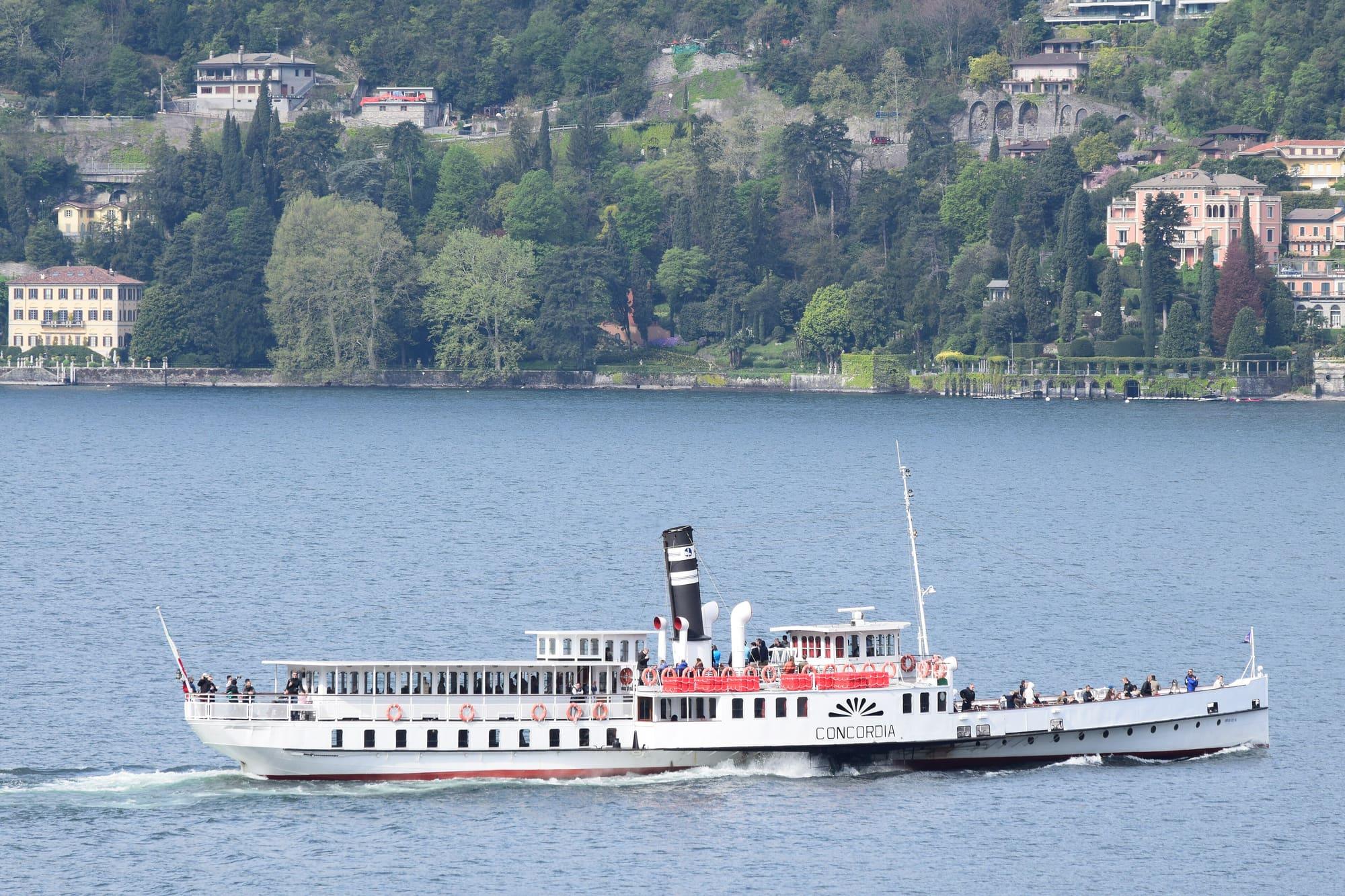
The view of the Tremezzina bay, taken from above, shows the Isola Comacina and the Lavedo peninsula. Off Cadenabbia a steamboat passes with the Italian flag at the stern.
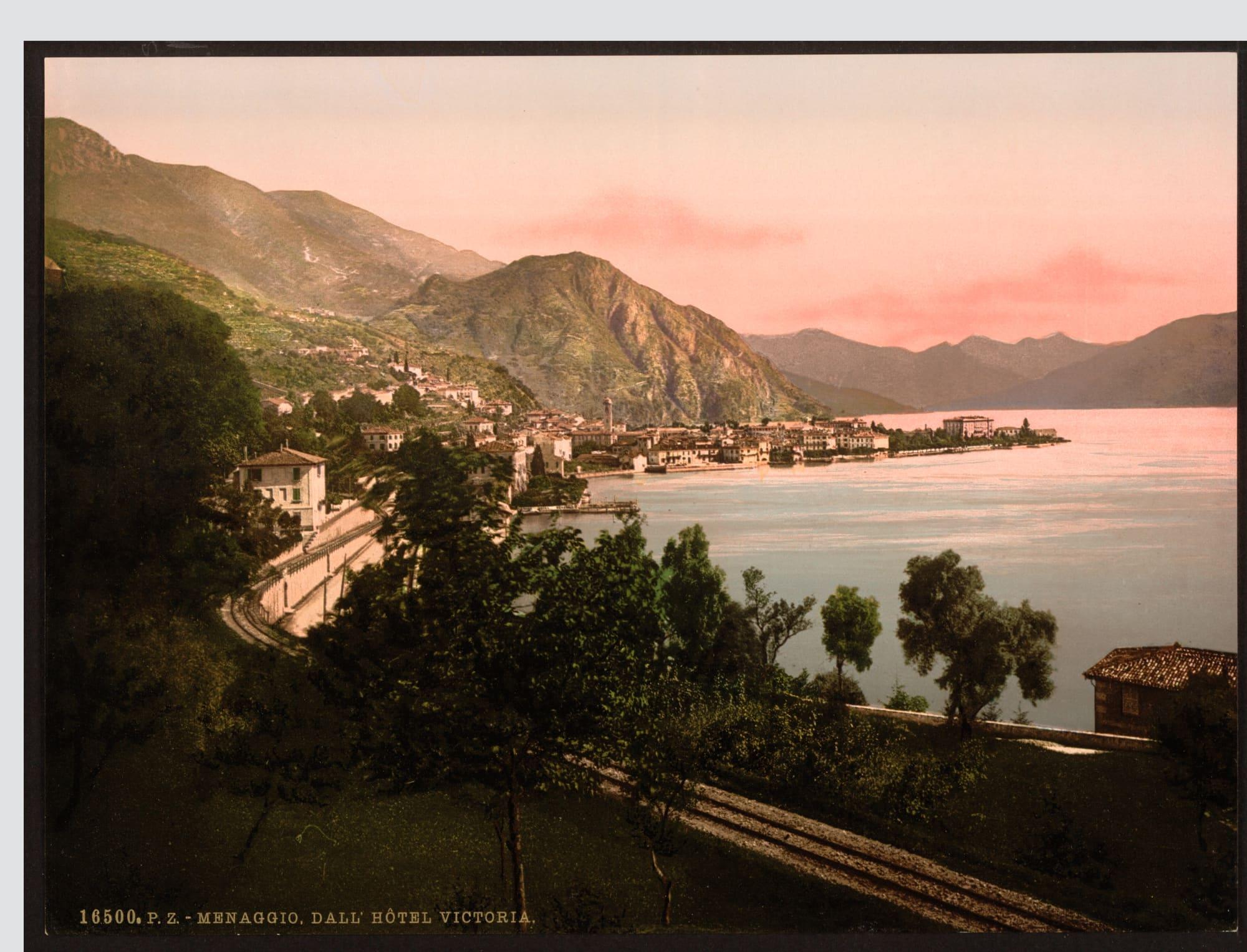
One of the views of Menaggio was taken from the Hôtel Victoria, as the printed caption says: in the foreground are the tracks of the railway to Porlezza, one of the lines that reached the lake between 1884 and 1902.
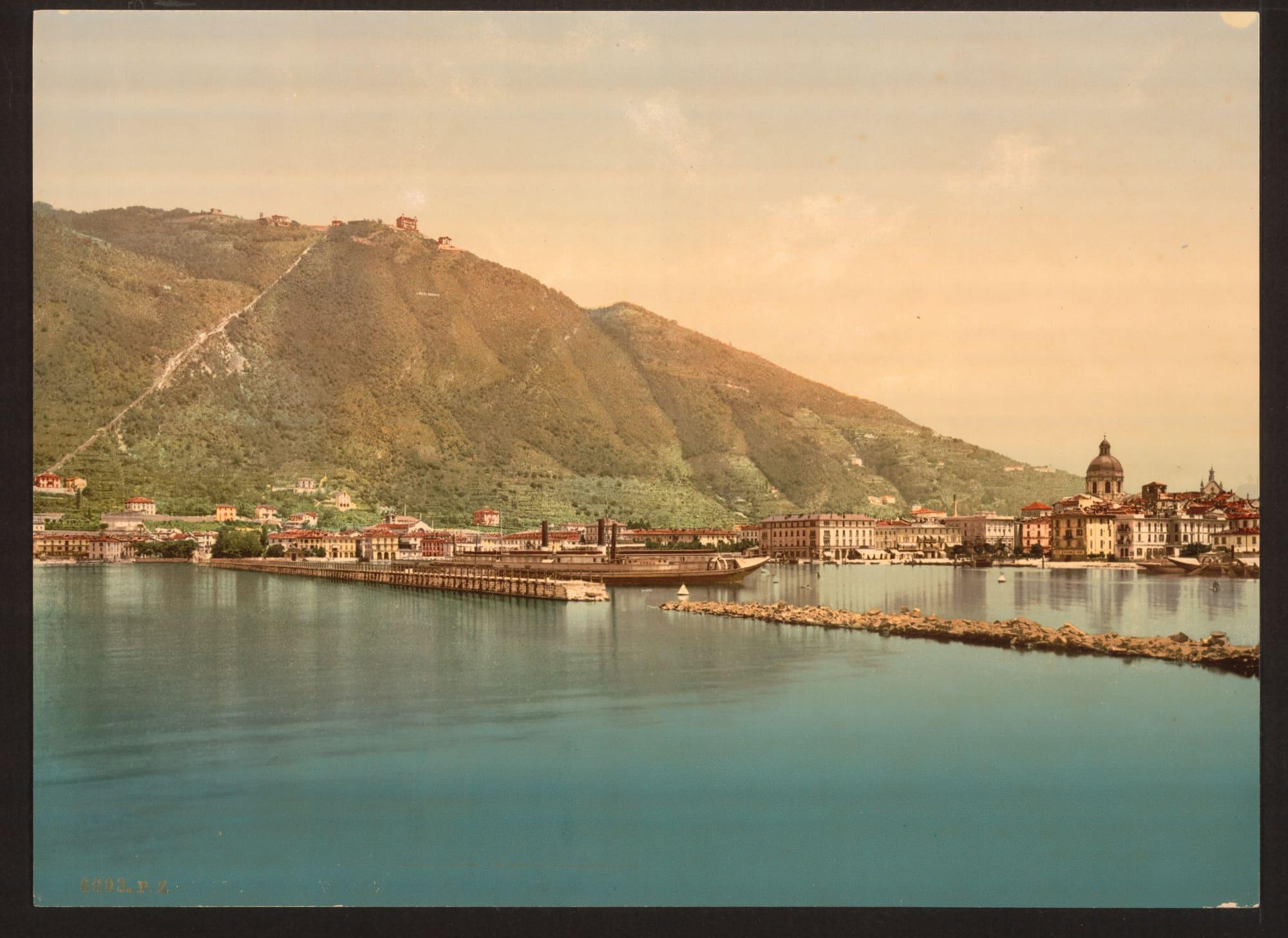
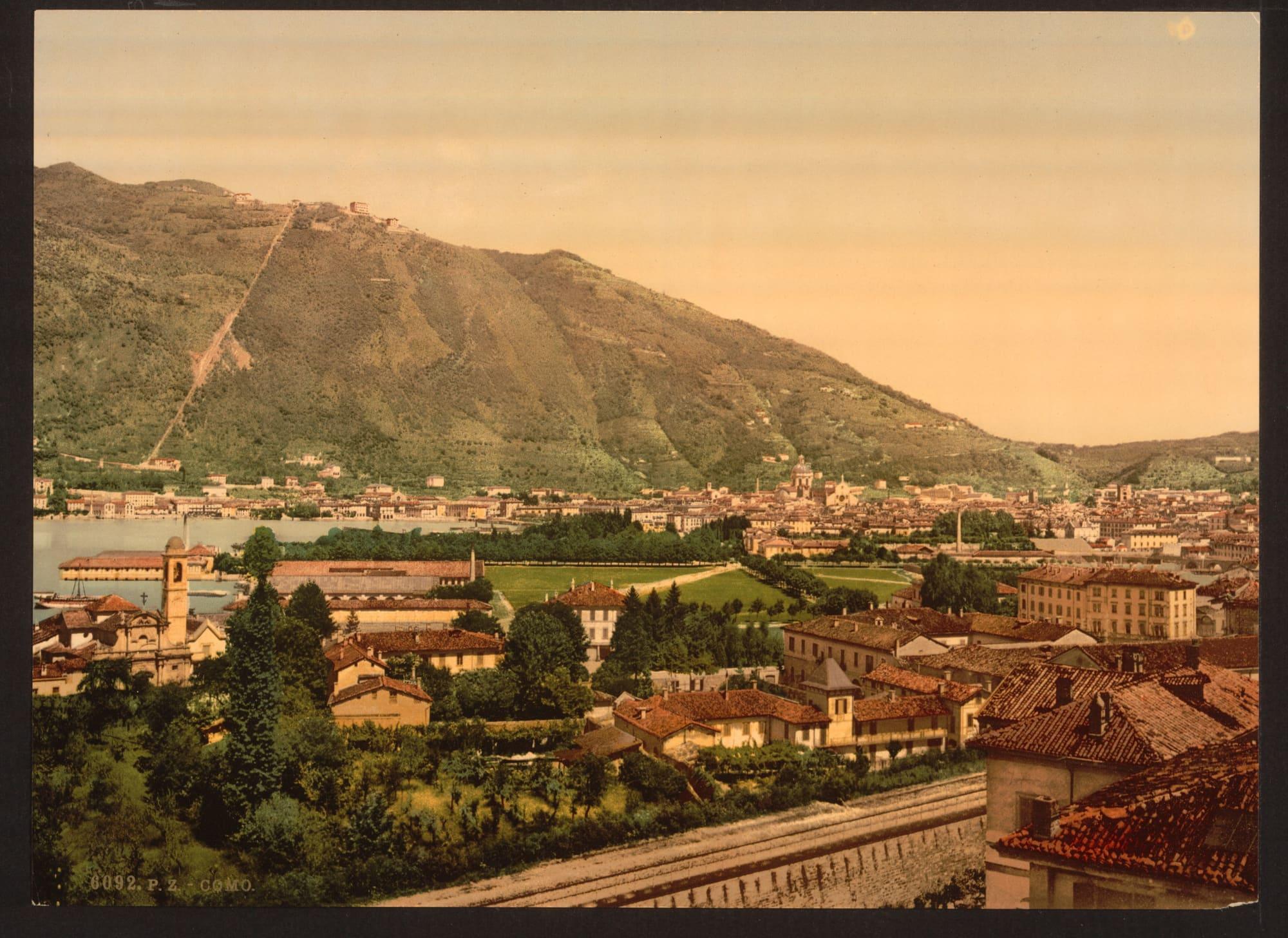
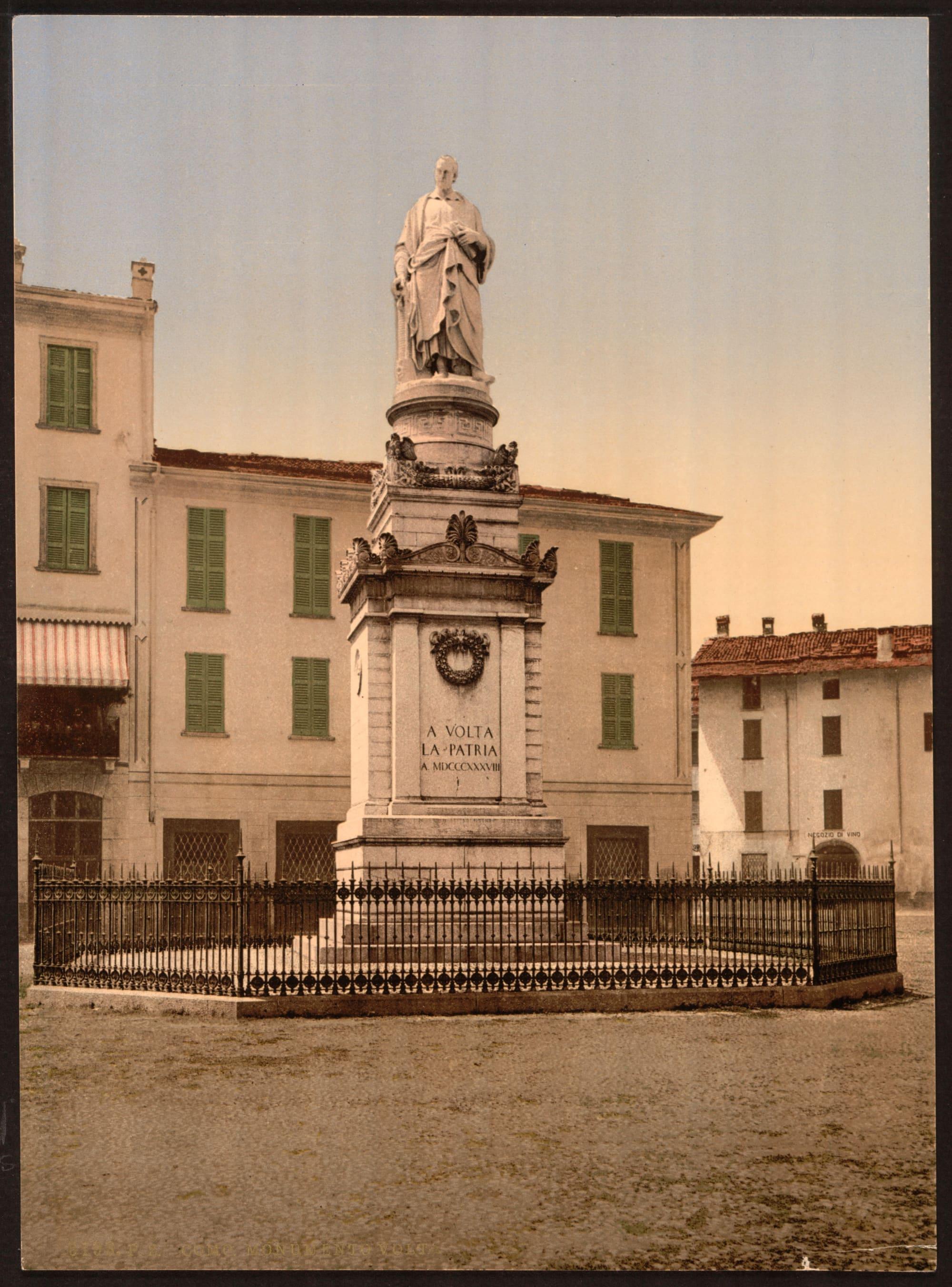
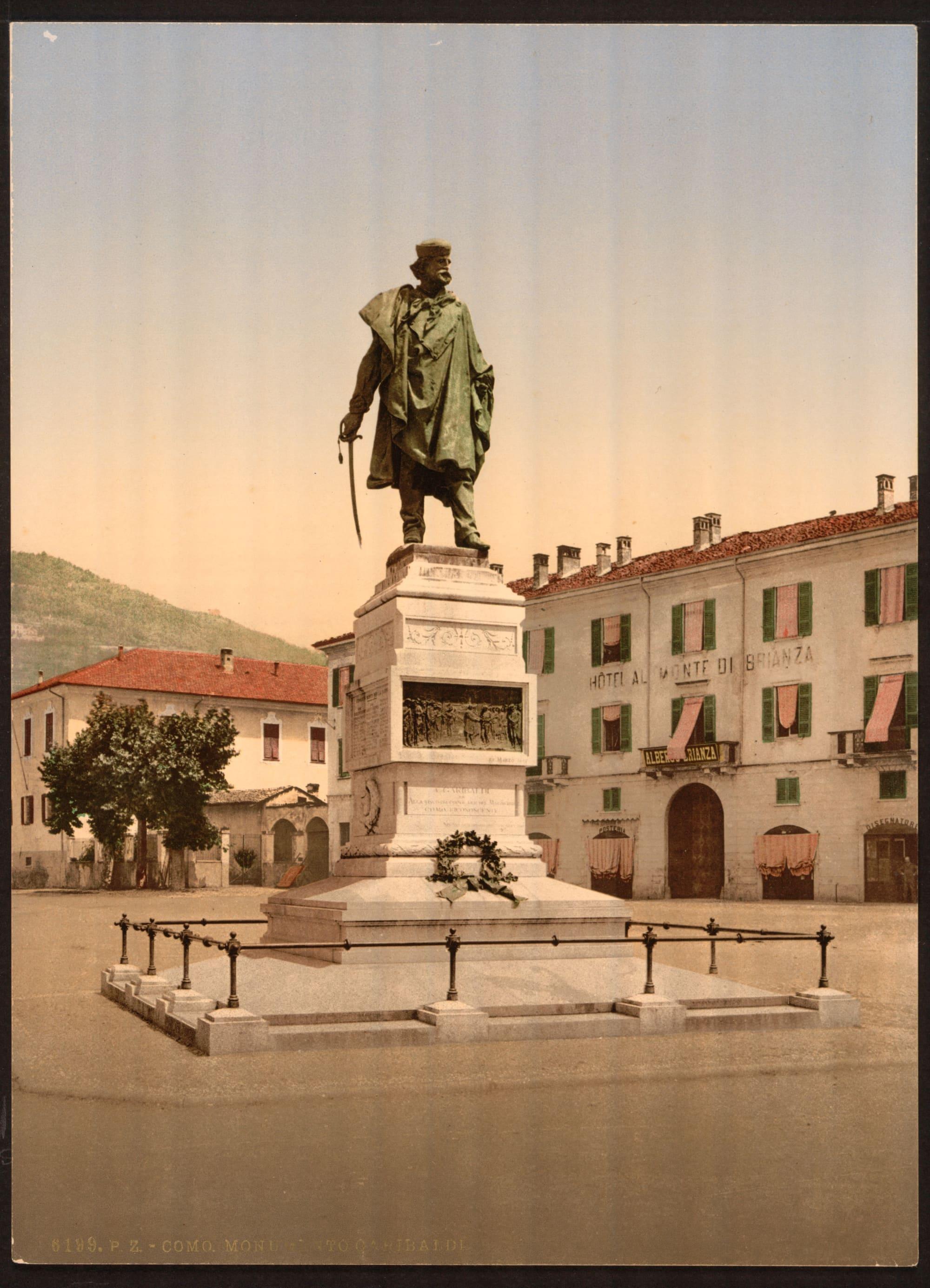
In Como the views show the harbour with the cathedral dome, the town seen from the railway and the two statues in its squares: Alessandro Volta, of 1838, and Giuseppe Garibaldi, unveiled in 1889. On the Brunate hill the straight line of the funicular can be seen, opened on 11 November 1894: those prints are therefore a few years later.
Compare historical views with recent photographs in Then and now.
Historical events linked to this story are collected in the Lake timeline.