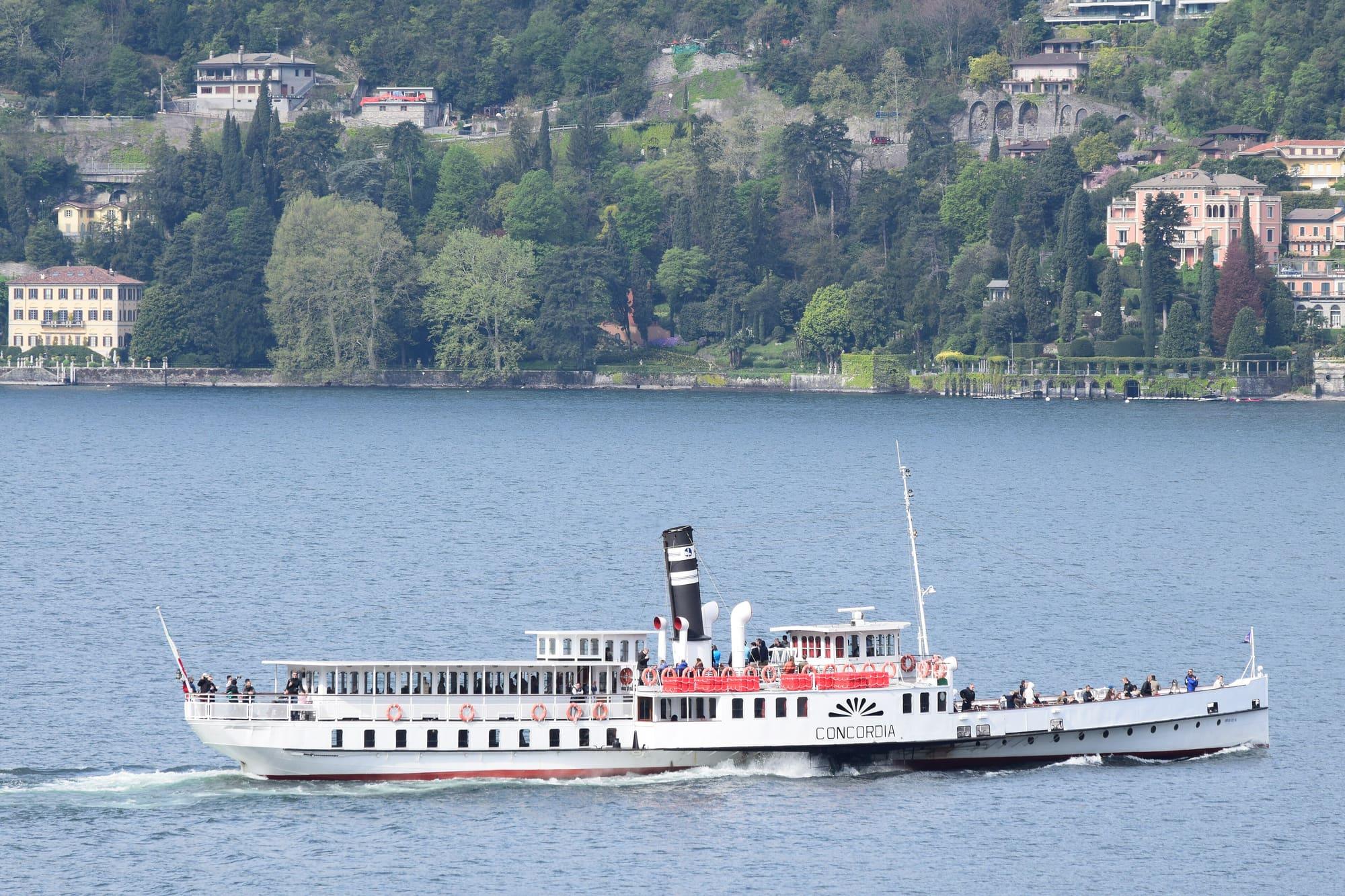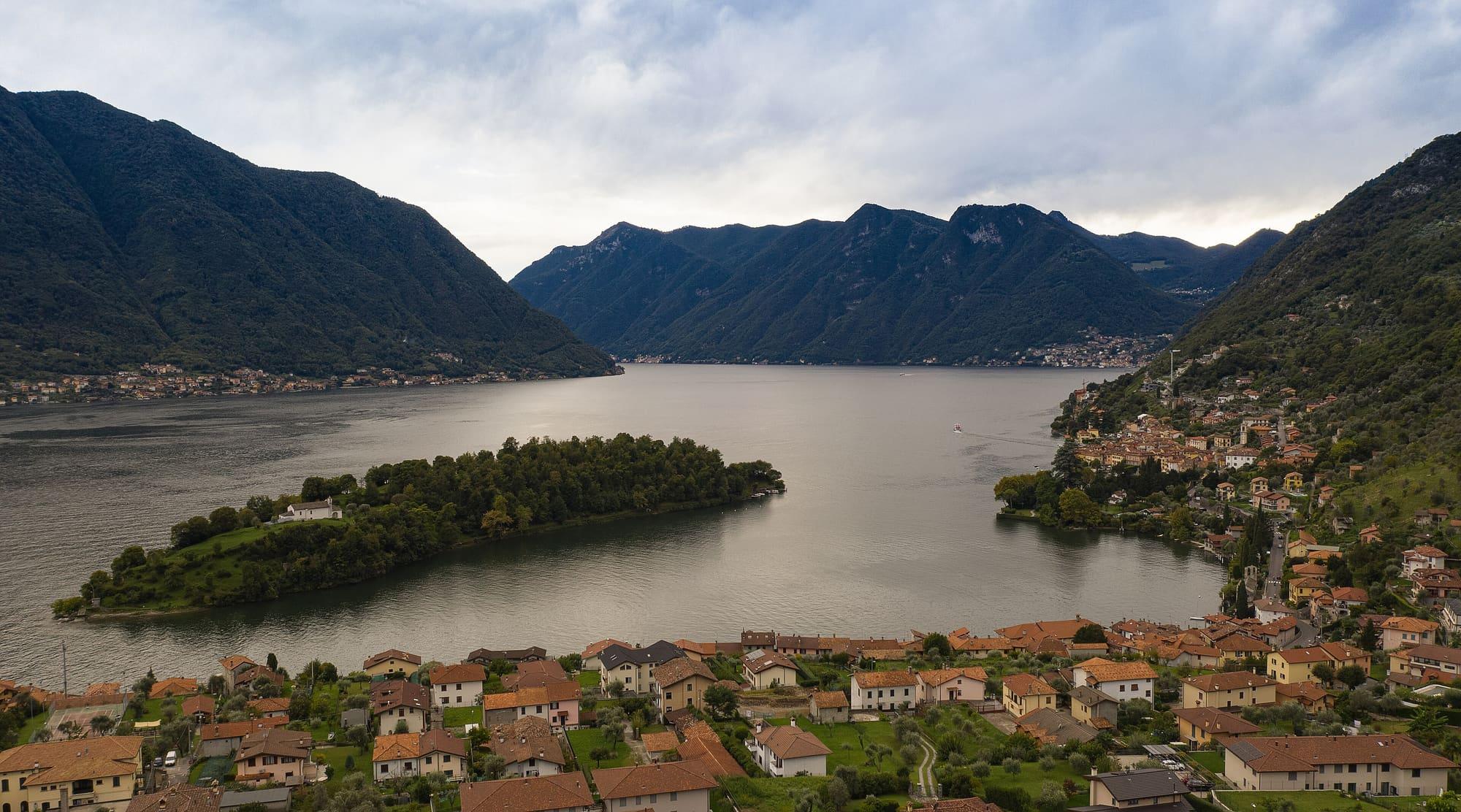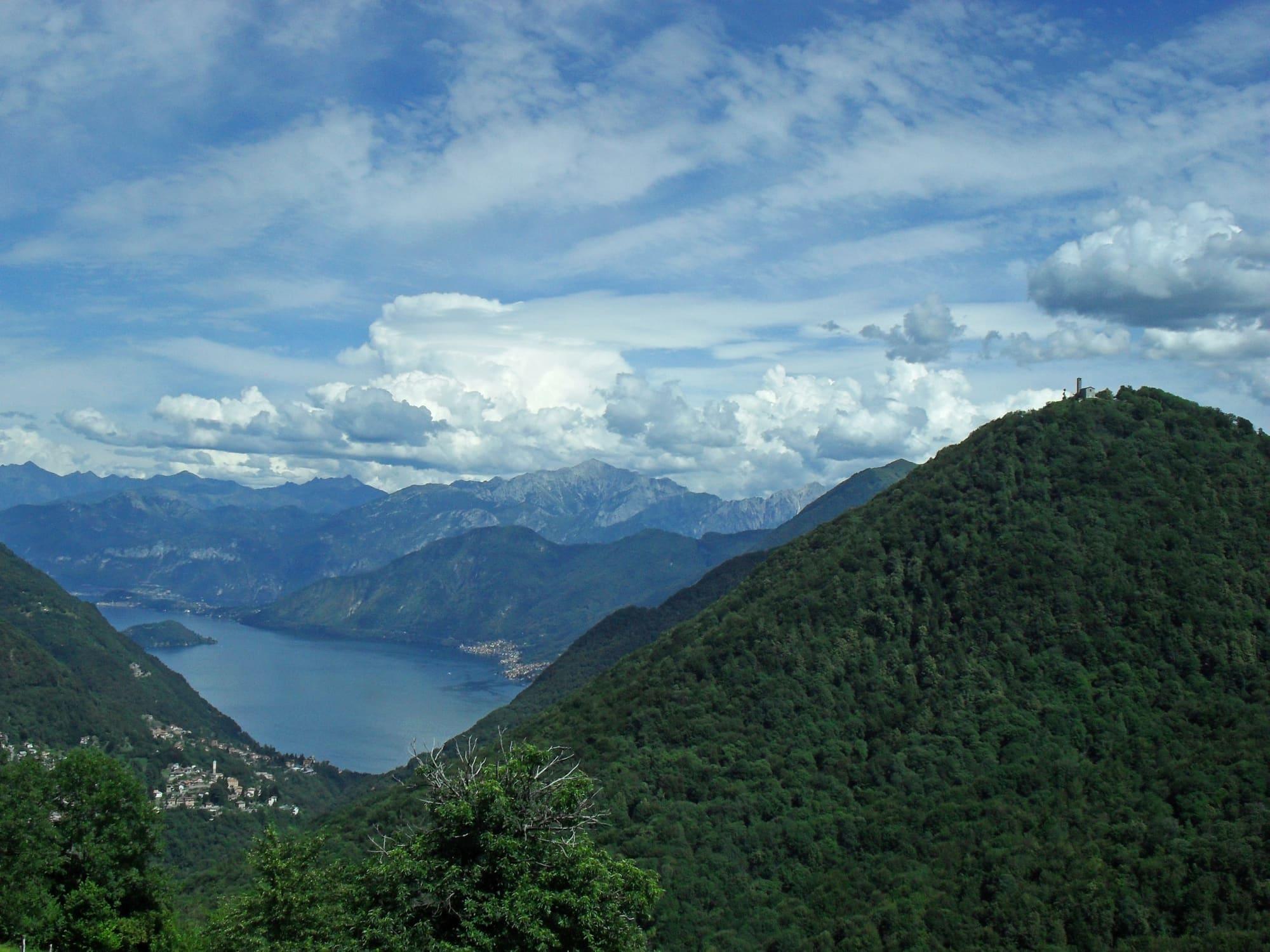
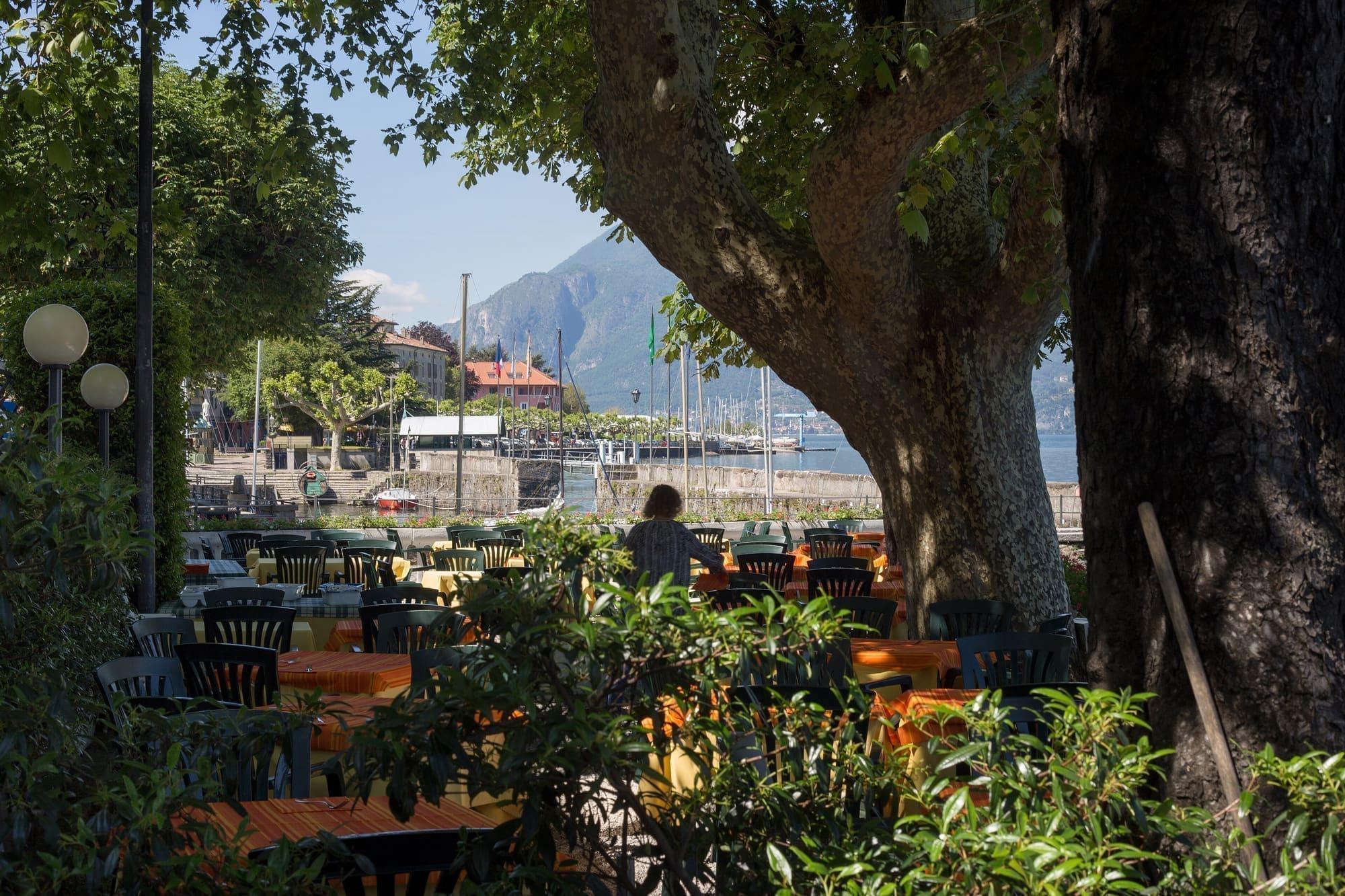
For half a century people on the lake had travelled mainly by steamer.
Between 1884 and 1902, in less than twenty years, the railways arrived: a little train between Menaggio and Porlezza, the line along the eastern shore, the Brunate funicular and the world's first high-voltage three-phase railway. Most of those lines still run, and the little train's route can be followed on foot or by bicycle.
Between 1884 and 1902 the rails arrived almost all at once. In 1884 the railway between Menaggio and Porlezza opened, linking Lake Como to Lake Lugano; on 20 November 1888 the line between Como and Lecco; on 1 July 1892 the section from Lecco to Bellano, and on 1 August 1894 the one from Bellano to Colico, which completed the railway along the eastern shore; on 11 November 1894 the funicular between Como and Brunate. Finally, on 15 October 1902, the Valtellina lines went over to three-phase electric traction, the first at high voltage in the world.
The little train between two lakes
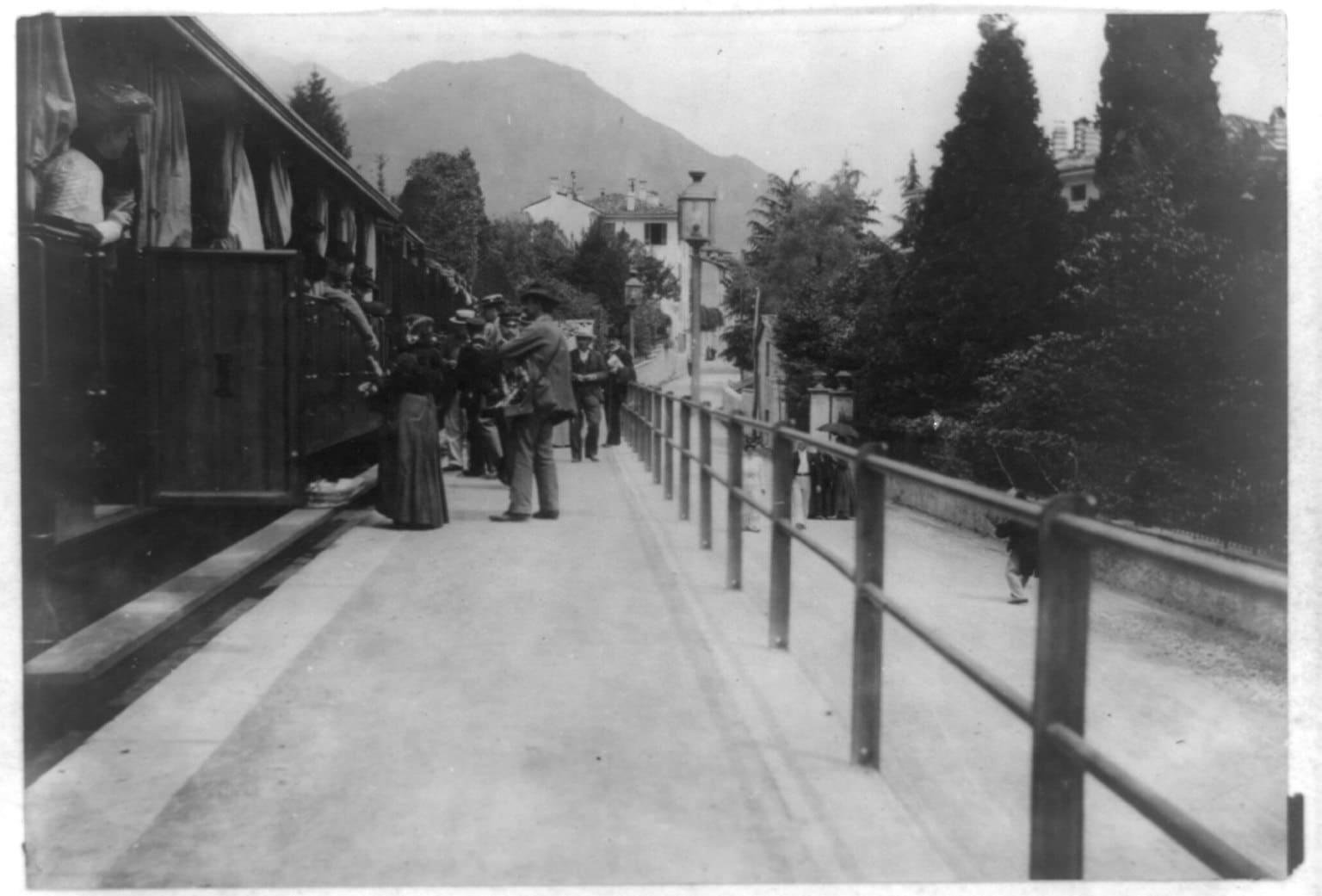
The railway between Menaggio and Porlezza was built to bring tourists from northern Europe to the lakes: arriving by train in Lugano, travellers went on by steamer to Porlezza and from there by train to Menaggio, where the Lake Como steamers awaited them. It was promoted by the Banca della Svizzera Italiana and a Lugano company for navigation and railways on Lake Lugano; work lasted from 1882 to the summer of 1884, and the line was inaugurated on 8 October and opened to the public on 17 November that year. It was just over twelve kilometres long, narrow gauge, with gradients of up to fifty in a thousand; its six steam locomotives, built at Esslingen in Germany, reached Porlezza from Lugano on a flat-bottomed boat. To climb the hundred and seventy metres between Menaggio and Cardano, the train set off southwards, towards Griante; at a shunting yard the locomotive uncoupled, turned on a turntable and coupled onto the tail of the train, which then set off northwards. The manoeuvre was called the regresso, the reversal.
The decline began with the First World War, when the tourists and the goods traffic dried up; in the 1920s came competition from the first buses, and in the 1930s autarky forced the locomotives to burn peat instead of coal. Services ended on 31 October 1939. After the war there were plans to reopen the line with electric traction, and in 1948 the Croce tunnel was even enlarged for the overhead wires, but in 1960 the Ministry of Transport judged reopening inadvisable; between 1964 and 1966 the stations and crossing-keepers' houses were sold. Today a route laid out by the Province of Como follows part of the old line for thirteen and a half kilometres, from the Menaggio landing stage to the Porlezza lakefront, through a ninety-metre tunnel and along the shore of the Lago di Piano, inside the nature reserve.
The shore of tunnels
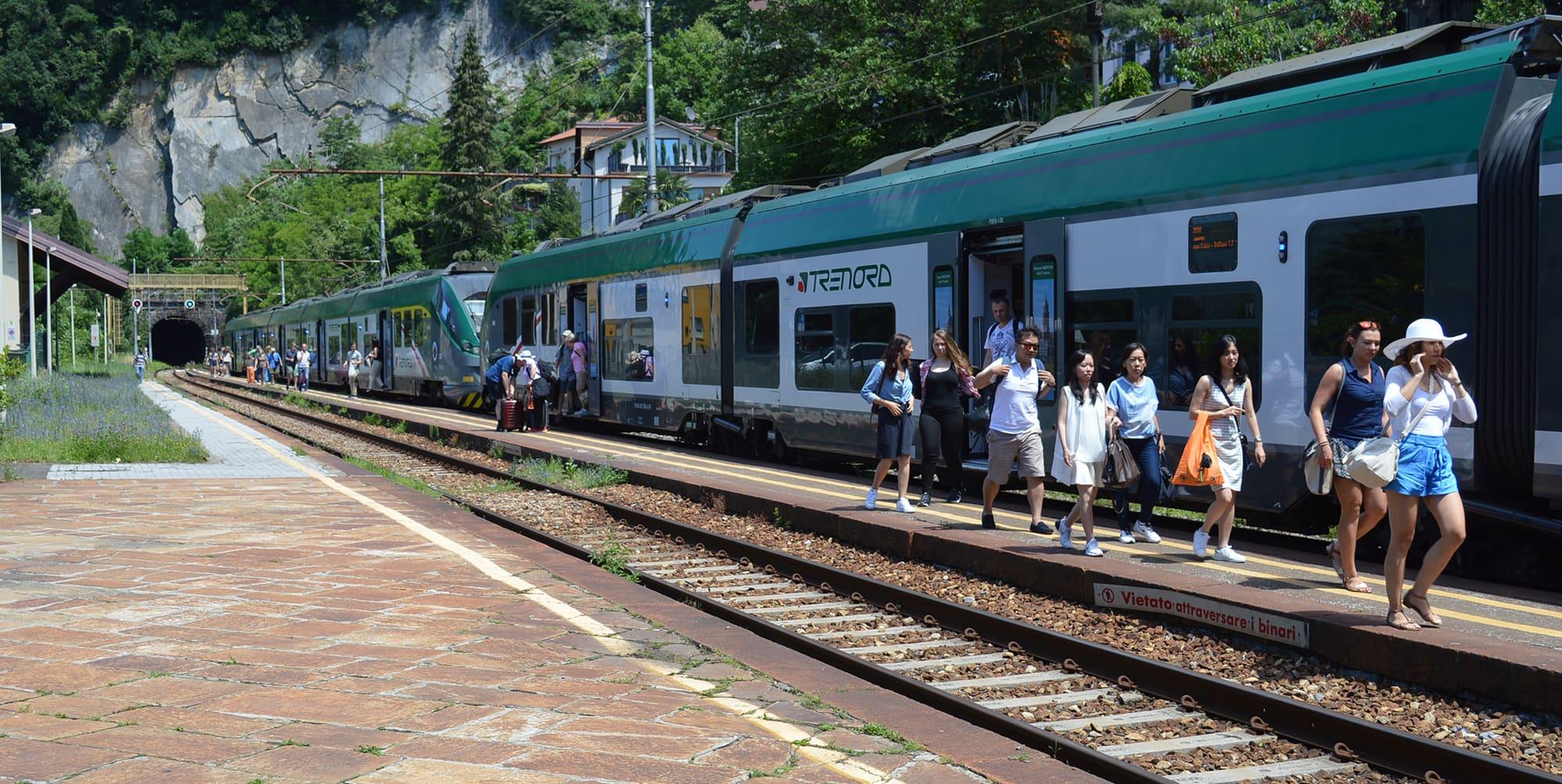
On the eastern shore the railway came one stretch at a time. The line was built between 1885 and 1894: first, on the Valtellina side, Colico–Sondrio in 1885 and Colico–Chiavenna in 1886; then, along the lake, the section from Lecco to Bellano in 1892 and the one from Bellano to Colico in 1894. From that first of August a complete rail service linked Lecco with the Valtellina. The line was built like a mountain railway: over the forty kilometres to Colico there are eighty-nine curves, eighteen viaducts and nineteen tunnels, and between one tunnel and the next the window shows inlets, villas and little harbours. It is still the line of Abbadia, Mandello, Lierna, Varenna, Bellano and Dervio, single track throughout, and today it is served by Trenord trains.
1902, a world first
These lines were also the testing ground for electric traction in Italy. The reasons were mainly economic: the country depended entirely on imported coal to run its steam locomotives, and in 1897 the government set up a commission to study electric traction. Accumulators were tried, direct current from a third rail and three-phase alternating current; it was the success of the last, applied in 1902 to the Valtellina lines and fed by the hydroelectric plant at Morbegno, that started the electrification of the Italian network, above all in the mountains. From 15 October 1902 the Lecco–Colico–Chiavenna and Colico–Sondrio lines ran on overhead wires at three thousand volts, the first in the world to use high-voltage three-phase alternating current for trains. The Rete Adriatica, which ran the lines at the time, had entrusted the whole installation to the Ganz works in Budapest, under the Hungarian engineer Kálmán Kandó.
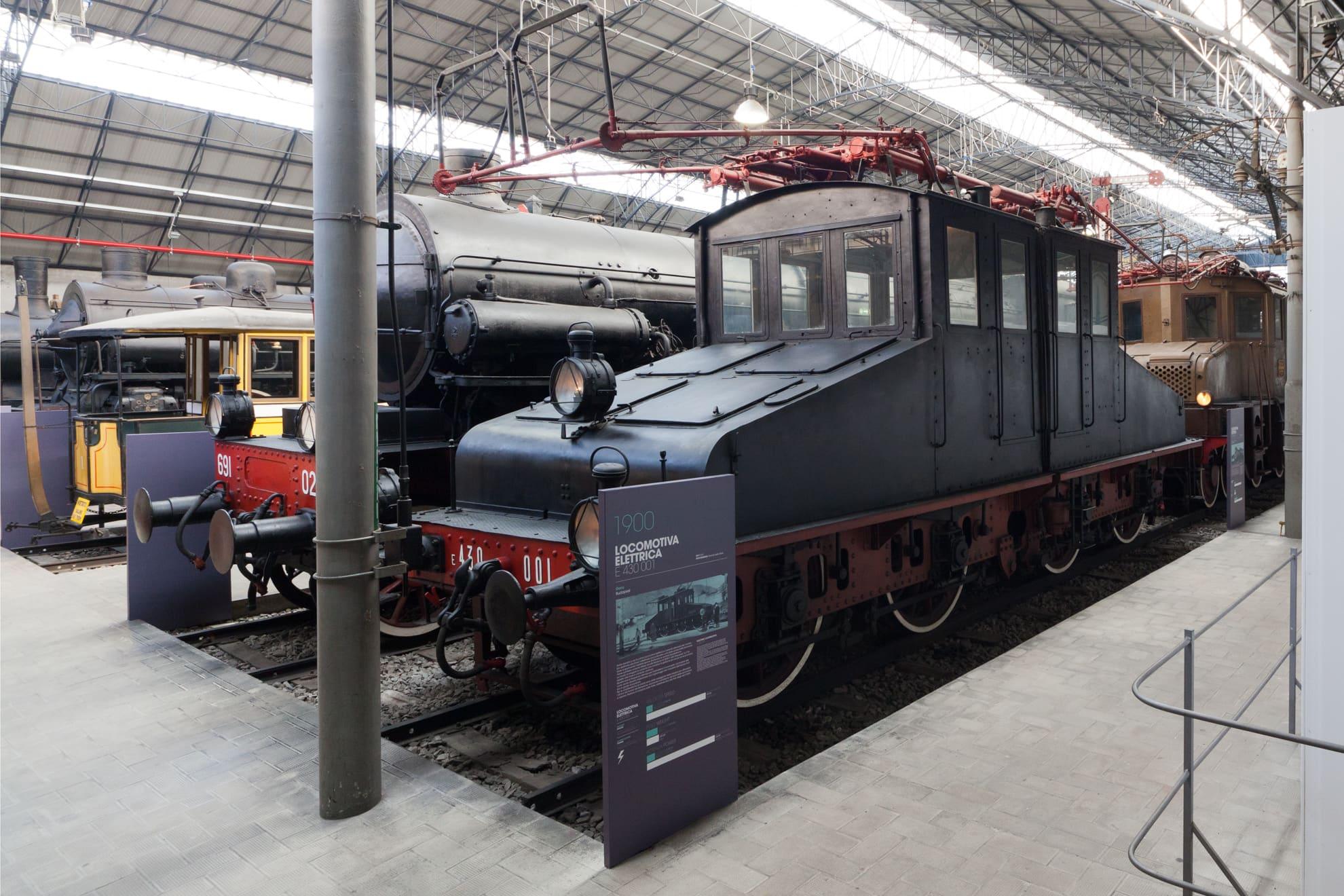
For goods trains came two locomotives built in 1901 by Ganz to Kandó's design, the first alternating-current engines put into service in Italy: two bogies joined by an articulation and a bellows, a motor on each axle fed directly from the line, two current-collecting poles above the cab, the body in glossy black and the sides of the bogies in red. The survivor, E.430.001, was based at the Lecco depot for the Valtellina lines until the mid-1920s; in 1929 it moved to Fortezza, on the Brenner line. It is the only one of the two to have come down to us, and it is on display at the Museo nazionale della Scienza e della Tecnologia Leonardo da Vinci in Milan. The lake lines were converted to three thousand volts direct current in 1952 and 1953.
The Brunate funicular
In that same year, 1894, Como got its funicular. In 1890 some summer residents and people of Brunate, the mayor among them, had formed a committee for a “Como–Brunate tramway”; the design was by the engineer brothers Villoresi, work began in January 1893 and the funicular opened to the public on 11 November 1894. It was meant to work by water, by gravity, but there was not enough water in the area, so a steam winch was installed, replaced in 1911 by electric motors. During the Second World War, with the evacuees, passenger numbers rose to more than a million and a half in 1945. When the concession ran out the line was taken over by the Region of Lombardy, and since 2005 it has been managed by a consortium that includes Milan's ATM, which operates it. The two cars in service since 2011 are called BRUco and bruCO: one is mauve, the other red.
What is left
At Menaggio the old station building has been kept and restored, and up the valley the building of the Tavordo halt still stands; other halts have become houses. The eastern-shore railway still runs through its tunnels, the funicular still climbs to Brunate, the locomotive of 1901 is in Milan. And the route of the little train that reversed to climb can be followed on foot or by bicycle, starting from the Menaggio landing stage.
Historical events linked to this story are collected in the Lake timeline.