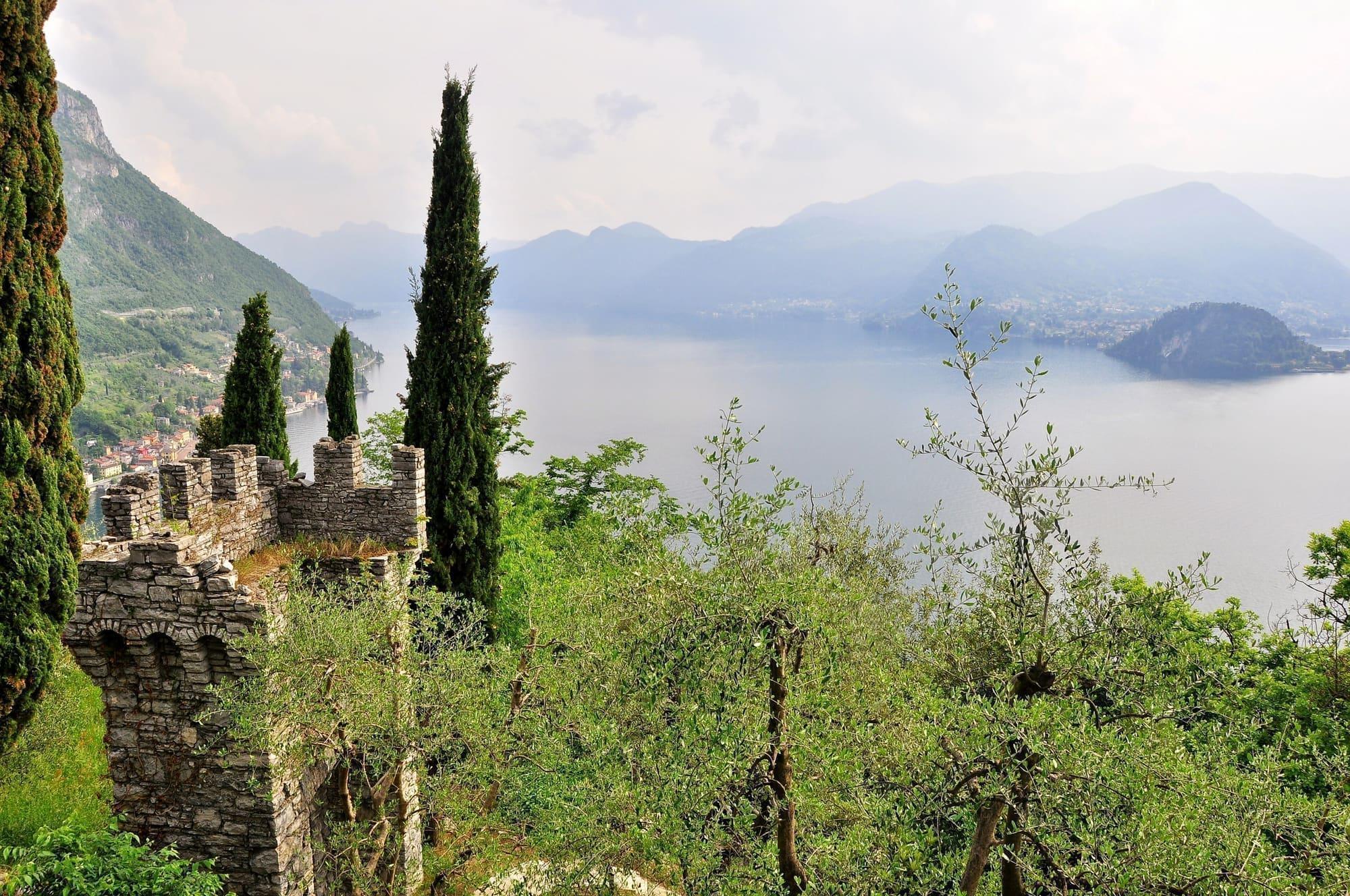
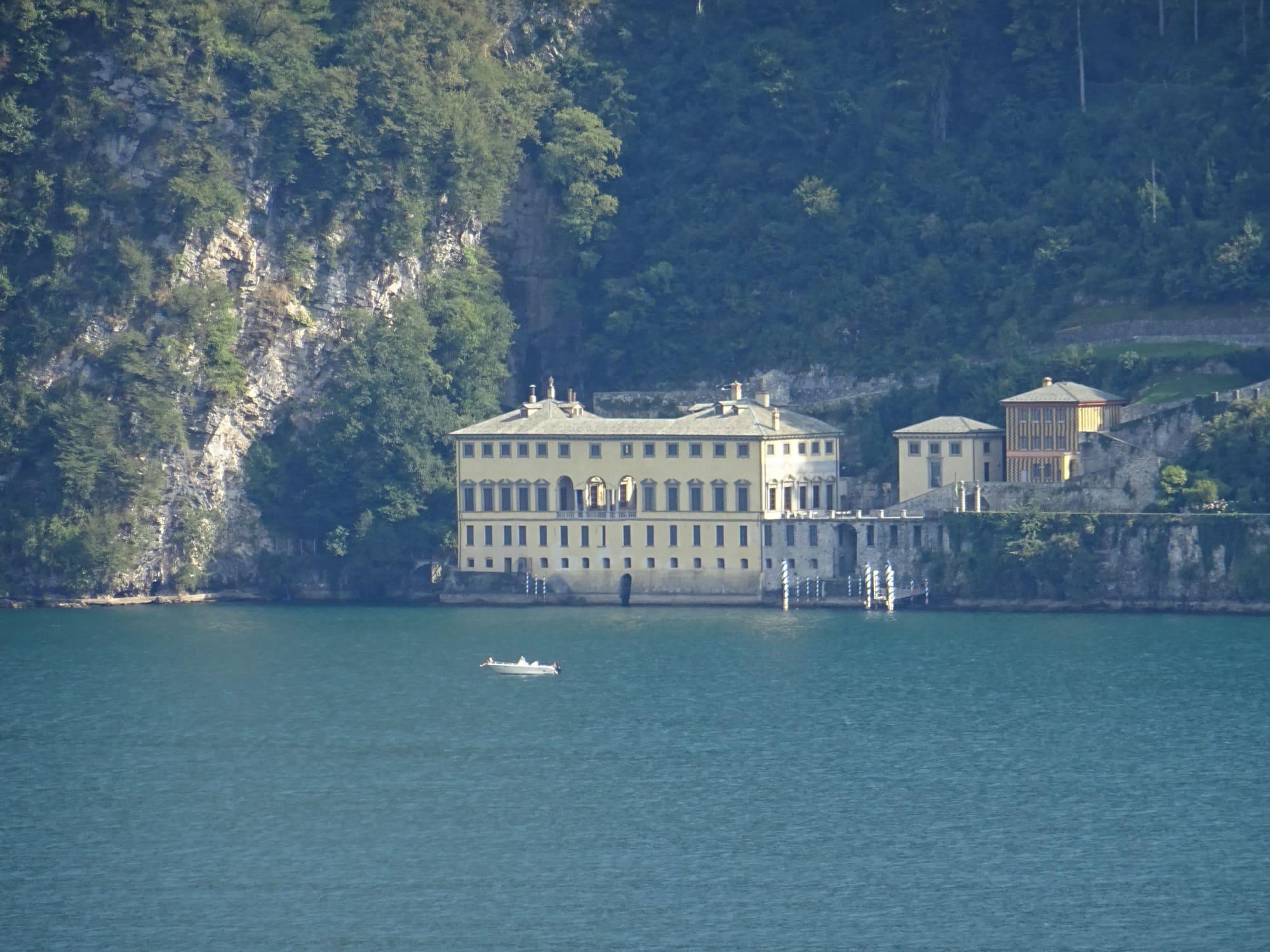
Gaius Plinius Secundus and his nephew Gaius Plinius Caecilius Secundus came from Como, and the lake appears in their writings.
The nephew's letters describe the spring at the Pliniana, two villas on the shore and life in Como; where those villas stood, on the other hand, only tradition says.
“I have brought you from my home town, as a small gift, a question worthy of your learning”: so Pliny the Younger begins a letter to his friend Licinius Sura (Letters, IV, 30). A spring rises on the mountain, runs down over the rocks, is gathered into a small dining room built for the purpose, lingers there a little and then falls into the Larius. Its nature is remarkable: three times a day, with regular rises and falls, it swells and sinks. You can watch it with your own eyes, and with great pleasure: you lie beside it and eat, you drink from the spring itself, which is very cold, and meanwhile, at fixed intervals, the water draws back or rises. Put a ring down on the dry part and the water wets it little by little, finally covers it, then uncovers it again and leaves it; stay and watch, and you see it happen a second and a third time. Pliny runs through the possible explanations, a hidden breath of air that opens and closes the mouth of the spring as happens with flasks, a kind of tide, a vein that empties and refills, a concealed balance, and leaves Sura to find the right one: for himself, it is enough to have described it well.
His uncle had already mentioned it in the Natural History (II, 232), in a single line: in the territory of Como, near Lake Larius, a copious spring swells and subsides every hour. The two disagree on the rhythm, and they will not be the last: Shelley spoke of an ebb and flow every three hours. Until the end of the fifteenth century the spring was called pluviana; the name pliniana first appears in 1494, in Tristano Calco's account of the wedding of Bianca Maria Sforza and Maximilian of Habsburg. Leonardo described it in the Codex Leicester, where he says he saw it, and in the Codex Atlanticus, and the first explanation of how it works, a siphon that empties when it is full, is owed to Camillo Ghillini, around 1500. In 1573 Count Giovanni Anguissola, governor of Como, bought the land and in three years built the villa around the spring, to a design now attributed to Giovanni Antonio Piotti of Vacallo. In the three-arched loggia two stone tablets carry the letter to Licinius Sura, the Latin text on one side and the Italian translation on the other; behind, across the courtyard, the water comes out of a niche of tufa, and beneath the villa an arched opening lets it down into the lake.
Tragedy and Comedy
The villas are in another letter, to his friend Voconius Romanus, who was building himself a house by the sea (IX, 7). On the shore of the Larius, Pliny writes, I have several, but two of them give me as much pleasure as they give me work. One, set on the rocks in the manner of Baiae, looks down on the lake; the other, in the same manner, touches it. The first he calls Tragedy and the second Comedy: the one because it stands as if on buskins, the high boots of tragic actors, the other as if on socks, the low slippers of the comic ones. Comedy embraces a single bay in a gentle curve, Tragedy stands on a high ridge that divides two; at Tragedy a straight drive runs a long way above the shore, at Comedy a broad terrace bends gently; Tragedy does not feel the waves, Comedy breaks them. To each, Pliny ends, I add what it lacks, for the sake of what it already has. Where they were, he does not say.
From the one you can look down on the fishermen; from the other you can fish yourself, and cast your hook from your bedroom, almost from your bed, as if from a little boat.
Pliny the Younger, Letters, IX, 7, to Voconius Romanus
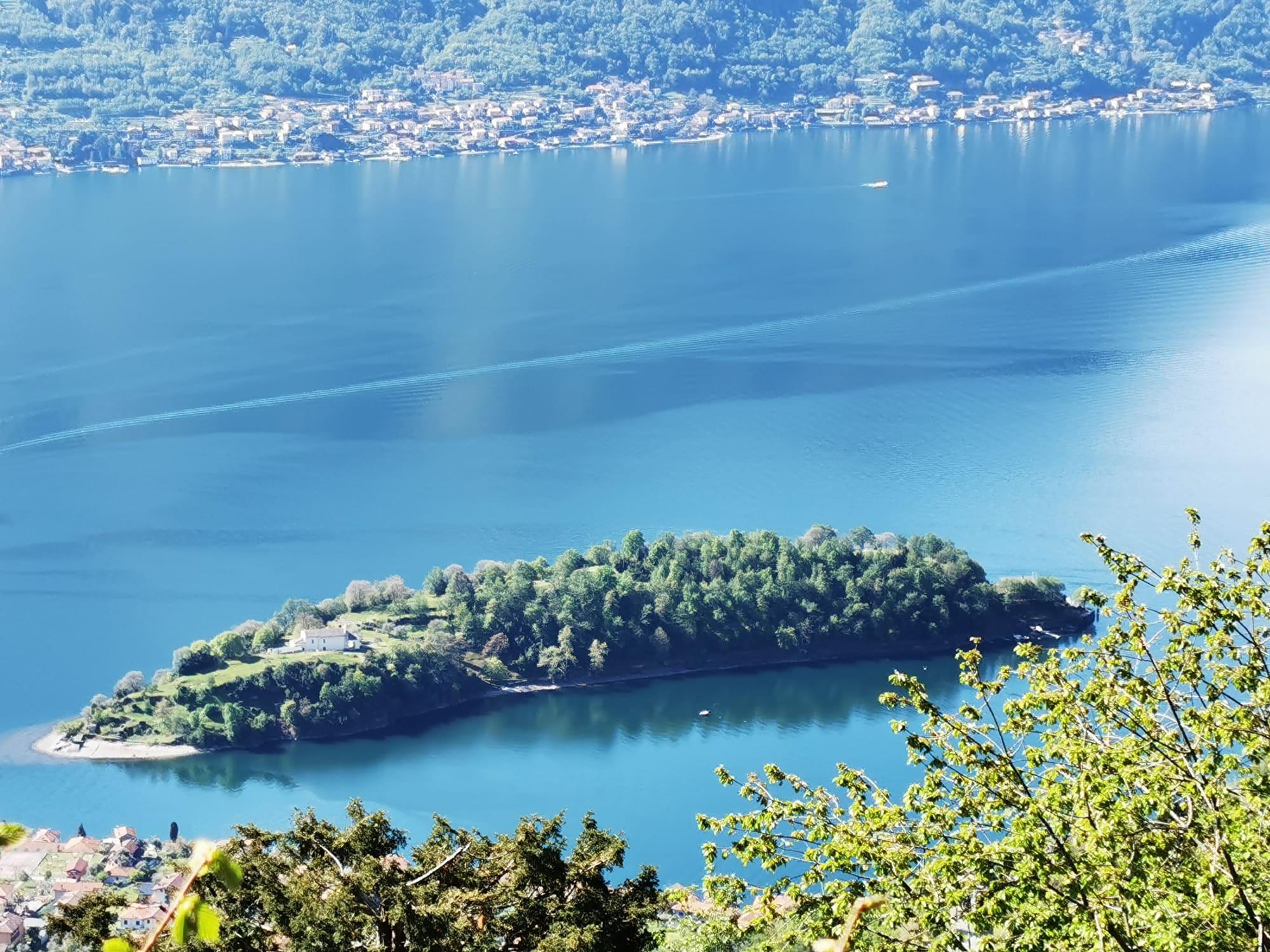
People have looked for them ever since. The most widespread tradition puts Tragedy at Bellagio, on the headland where Villa Serbelloni now stands, but it is a supposition: no architectural remains have ever been found up there. For Comedy there are more candidates. In the sixteenth century Paolo Giovio placed it at Lenno, facing Tragedy, its ruins by then under water, and after him so did the Flemish geographer Abraham Ortelius; others put it on the isthmus of the Dosso di Lavedo, where the Balbianello is today. Lierna claims a Roman mosaic floor found in the village and a few column shafts now in the Museo civico in Lecco, and the geographer Élisée Reclus placed a villa of Pliny there, without saying which. Corenno, on the same shore, added Pliny's name to its own in 1864, because he was believed to have had a villa there. None of these identifications is proven: they are traditions, some of them five centuries old.
The uncle and the nephew
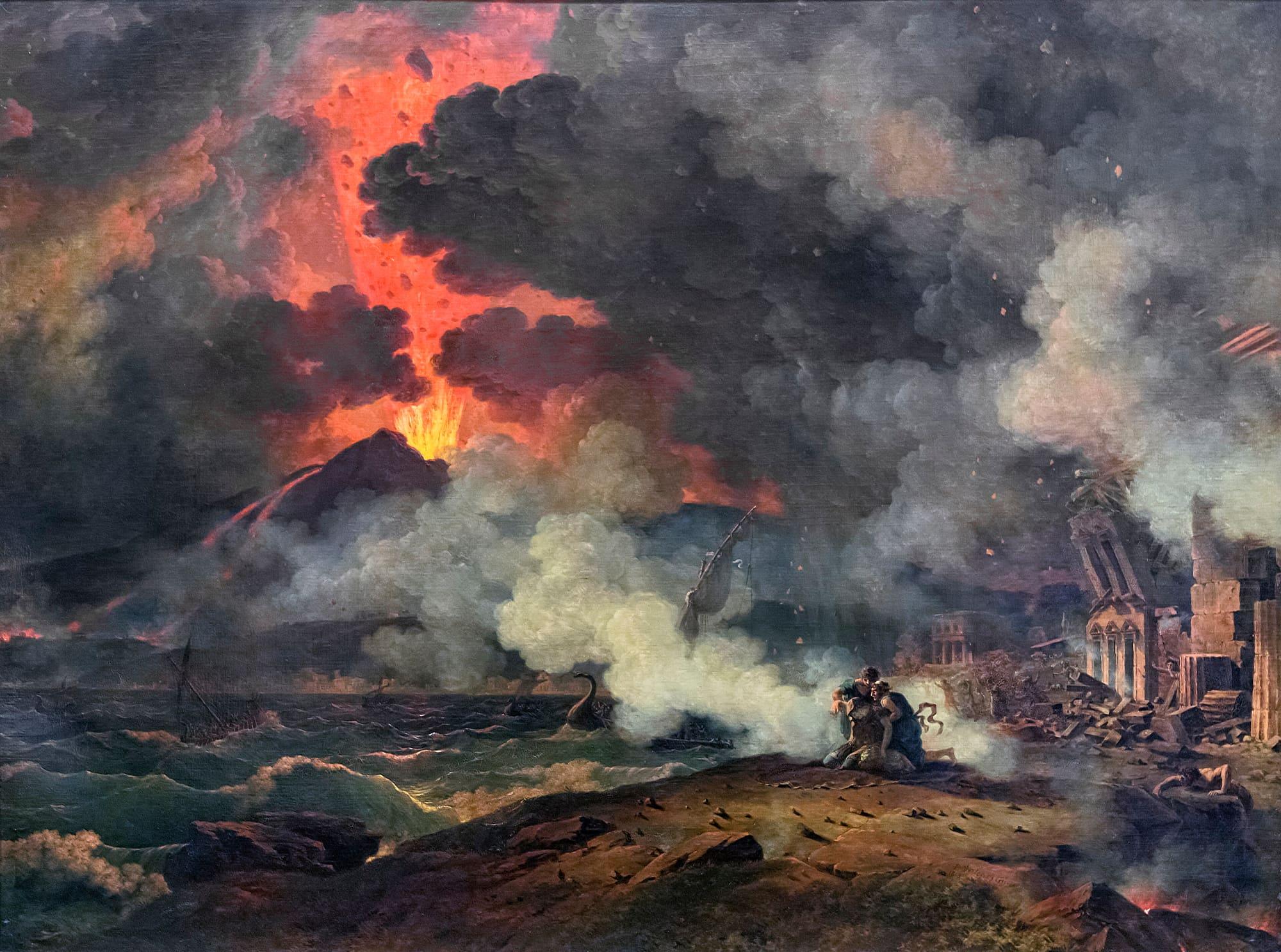
Pliny the Elder was born in 23. For centuries his birthplace was disputed between Como and Verona: some manuscripts call him Veronese, and in the preface to the Natural History he calls Catullus, who was from Verona, his fellow countryman; but Saint Jerome, in his Chronicle, calls him Novocomensis, and today he is held to be from Como. The nephew, son of his sister Plinia, was born at Novum Comum in 61 or 62; after his father died he grew up as his uncle's ward, and the uncle adopted him by will and gave him his name. In 79 the uncle commanded the fleet at Misenum when Vesuvius erupted: he set out for the coast and died at Stabiae. The nephew, who was seventeen and at Misenum, told the story many years later in two letters to the historian Tacitus (VI, 16 and VI, 20).
The Younger made his career in Rome and died, probably in Bithynia, while governing it, but Como comes back again and again in the letters. He asks his friend Caninius Rufus for news of the town, “your delight and mine”, and of Caninius's villa on its outskirts: the portico where it is always spring, the deeply shaded grove of plane trees, the green and sparkling channel, the lake lying below and serving it (I, 3). He asks the same Caninius whether he is studying, fishing or hunting, or all three at once, since on our Larius you can: the lake supplies the fish, the woods around it the game, the seclusion the study (II, 8). For his fellow citizens he founded a library, whose opening speech he mentions (I, 8), and when he learned that the boys of Como went to school in Milan because there were no teachers in the town, he offered to pay part of the cost himself, provided the parents chose the teachers (IV, 13). His career is listed in the inscription for the baths he left to Como in his will. In the Roman section of the Museo archeologico Paolo Giovio, some architectural pieces bear witness to how refined the town was in the first centuries AD, above all in the time of Pliny the Younger.
Two pagans on the cathedral front
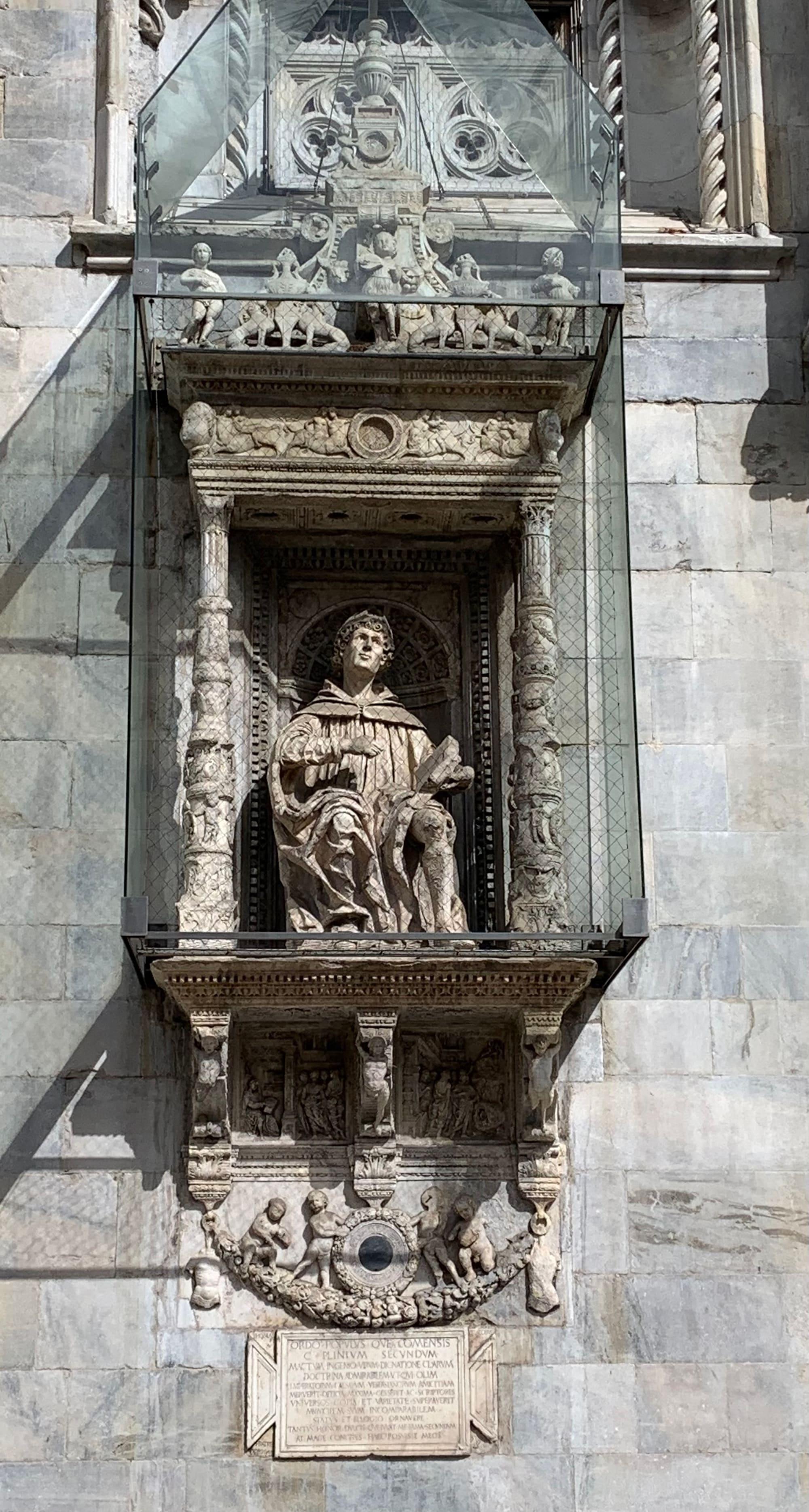
Como put them where you would least expect them: on either side of the cathedral's main door. The two aedicules, known as podii, are the work of the brothers Giacomo and Tommaso Rodari, who finished them by 1498, and recall the city's classical inheritance. The uncle sits on the left and the nephew on the right; below the statues, the reliefs show the Elder in his study and watching the eruption of Vesuvius, the Younger in his study and delivering his panegyric before Trajan. In 1578, at the height of the Counter-Reformation, the statues survived an attempt to remove them led by the apostolic visitor Giovanni Francesco Bonomi.
Historical events linked to this story are collected in the Lake timeline.