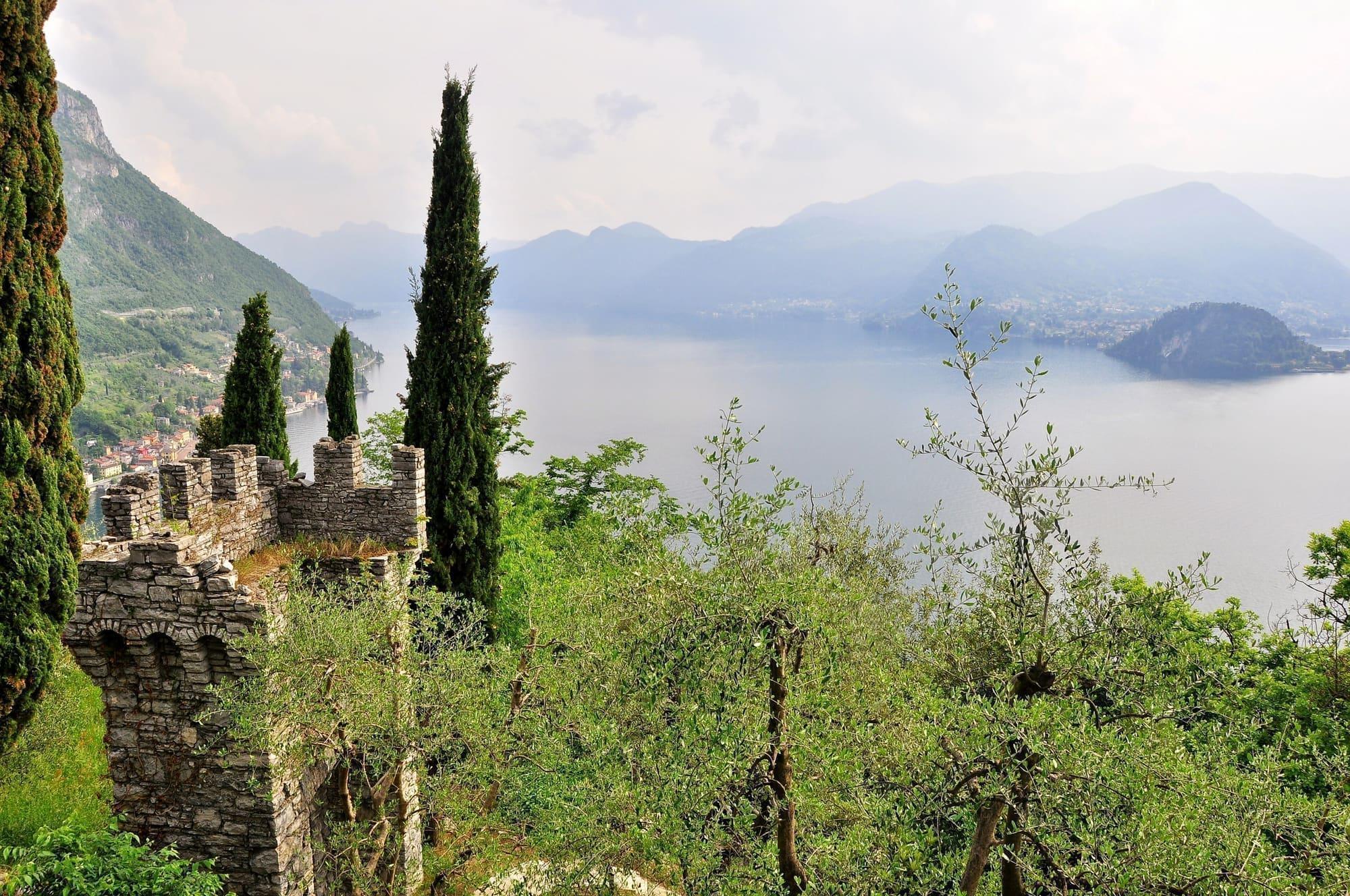
In the nineteenth century Lake Como was a place of rest and work for many leading figures in opera and music: singers and dancers, and composers such as Bellini, Rossini, Liszt and Verdi.
Their stories are bound up with a series of villas, almost all of them private, from Blevio to Loveno above Menaggio.
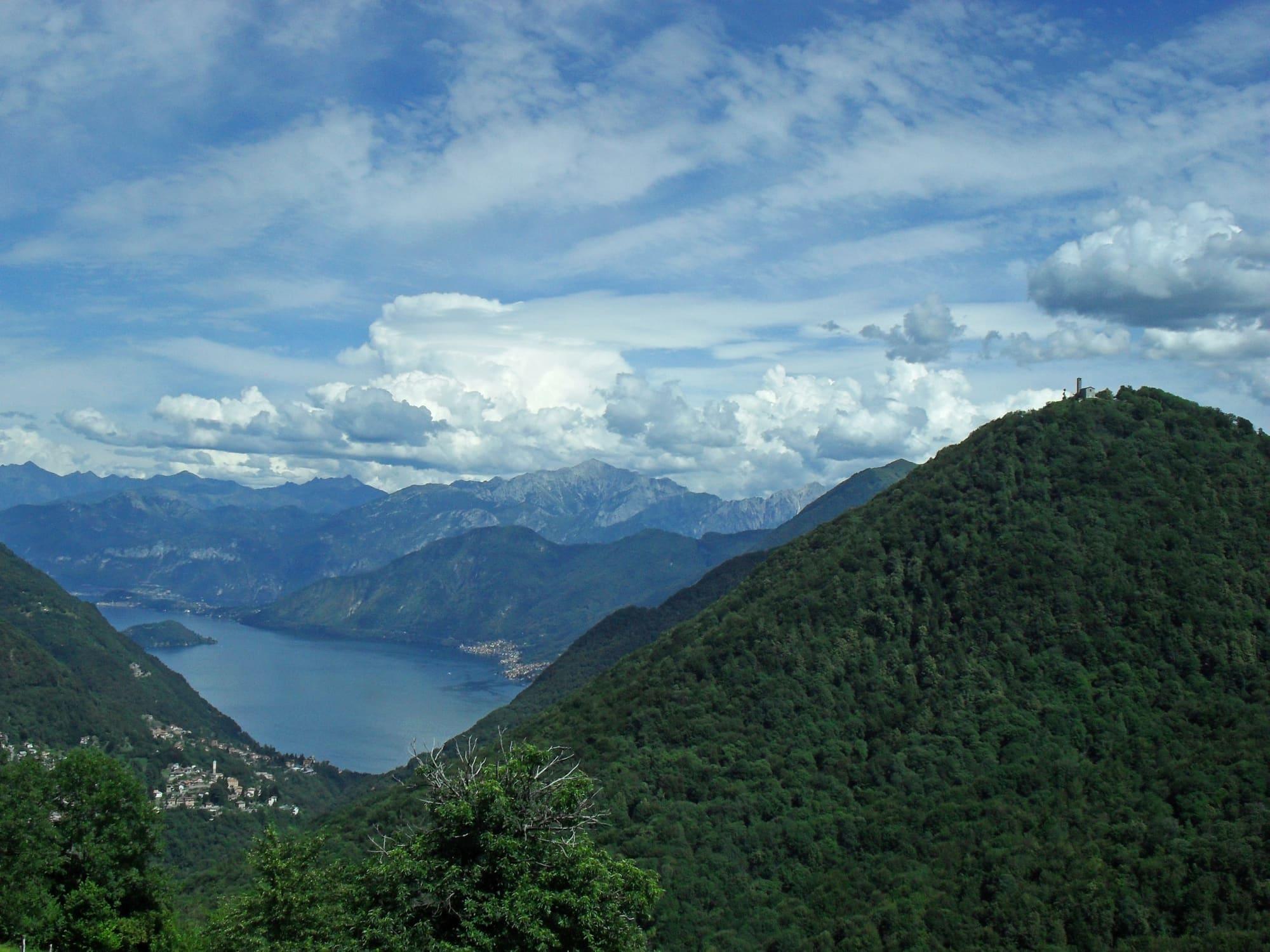
Above all in the nineteenth century many artists, and where music is concerned composers, singers and dancers, found new energy on the lake and patrons who opened their villas to them, and quite a few ended up living here. The reasons were practical: Milan was close, and its great theatres set the rhythm of work and rest; the lake had its salons, worldly and learned; and it had what the city lacked, privacy. There are seven stops, from Blevio to Loveno above Menaggio, and almost all are seen only from the water or the road.
Blevio, the villa that looked like La Scala
The first stop is Blevio, on the eastern shore of the first basin. Here Giuditta Pasta, who grew up in Como and left for Milan in 1811 to study singing, bought Villa Roda as soon as she could afford it, and between 1827 and 1829 had it rebuilt by her uncle, the architect Filippo Ferranti. It was a group of three houses, the villa and two guest houses, joined by avenues through a park; the villa had a portico with a loggia, and the chronicles of the time said it looked like La Scala, because she wanted the places where she rested to resemble those where she had found glory. In the park she had a little grotto of the muses built, with busts of other singers, her rival Maria Malibran among them. It was for Giuditta Pasta that Bellini wrote the title role of La sonnambula.
Bellini was a frequent guest at the villa. Gaetano Donizetti worked on Anna Bolena here in 1830. Little of the place survives: in 1904 the main villa was pulled down and Villa Roccabruna, built for the Wild family of Turin industrialists to a design by Carlo Formenti, took its place. Arriving from the lake, though, you can still make out the site, part of the park and one of the two guest houses, which survives intact. Giuditta Pasta died at Blevio in 1865 and is buried in the village's small cemetery.
Also on the shore at Blevio is the villa of the ballerina Maria Taglioni. Born into a dynasty of dancers, she studied in Paris and then under her father Filippo, a dancer and choreographer, whose gruelling training carried her to the most famous stages, from Paris to Saint Petersburg. In the second half of the nineteenth century she retired here, where the salons promised her a lively social life, to a house already famous since 1769, when it had sheltered Emperor Joseph II, caught by a storm on the lake. The story has a sequel: the ballerina's daughter married Prince Aleksander Vasily Troubetzkoy, who after six years of forced labour in Siberia settled on the Lario and in the mid-nineteenth century had a chalet with very steep roofs built at Blevio.
Moltrasio, the other shore
On the opposite shore, at Moltrasio, stands Villa Passalacqua, visible from the lake with its terraced park. Vincenzo Bellini, who had come to Milan in 1827 looking for commissions, moved in the city's salons, and there he met the Passalacqua family and found Giuditta Cantù again, the wife of Ferdinando Turina: it was the start of an affair that carried on by the lake. In 1829 the Cantù and Turina families rented the neighbouring Villa Salterio, a house facing the water and screened by a large garden, and here Giuditta spent long stays away from prying eyes. These were the years in which Bellini wrote the best-known arias of La straniera and La sonnambula, and his favourite interpreter, Giuditta Pasta, lived across the water at Blevio. A plaque on the villa's front still recalls it.
Here he wrote La straniera, and from here he drew the rapturous melodies of La sonnambula.
The plaque on the front of Villa Salterio, Moltrasio
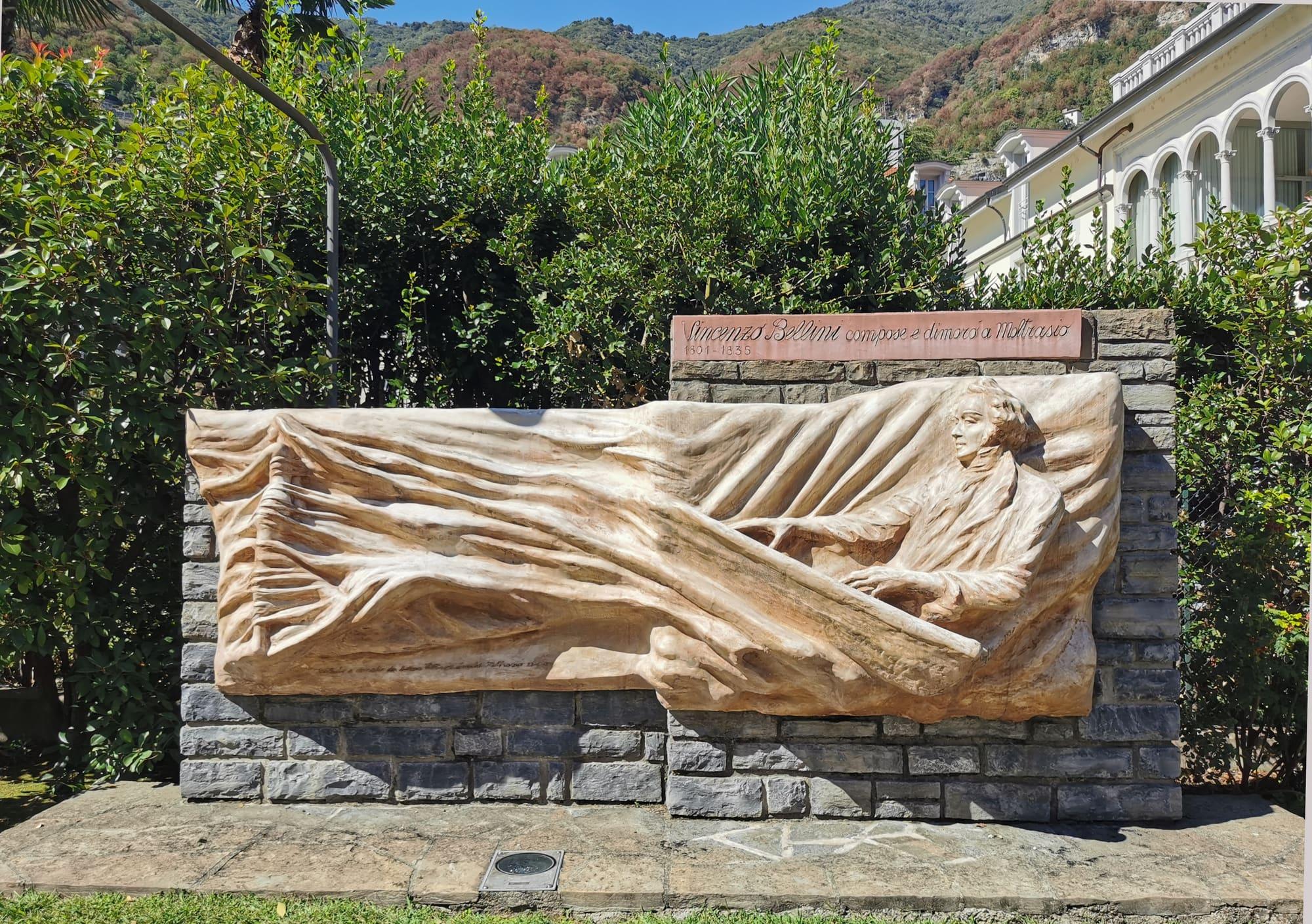
It ended badly. Around 1833 the affair faded with the composer's long absences, forever travelling between Europe's great cities with Pasta; the husband found out, Giuditta was cast off, and Bellini left the lake and settled in Paris from 1834. He died the following year. Moltrasio remembers him with a monument by the village sculptor Massimo Clerici, unveiled in 1997 a little beyond the villa: in a long relief of pale stone the composer sits with his hands on the keyboard, a drape billowing behind him. According to a local tradition, the Pizzallo waterfall, in the Valle dei Molini, inspired La sonnambula.
A legend dismantled, a real stay
At Torno, at the Pliniana, there is instead a legend that the dates contradict. Gioachino Rossini came to the lake several times, the guest of Pasta at Blevio and of the Belgioioso family at Villa Pliniana, and tradition has it that at the Pliniana he wrote Tancredi in three days. But Tancredi dates from 1813, and the dates do not fit. It is far more likely that on the lake Rossini went back to the opera at the request of Pasta, who sang it but was unhappy with the finale.
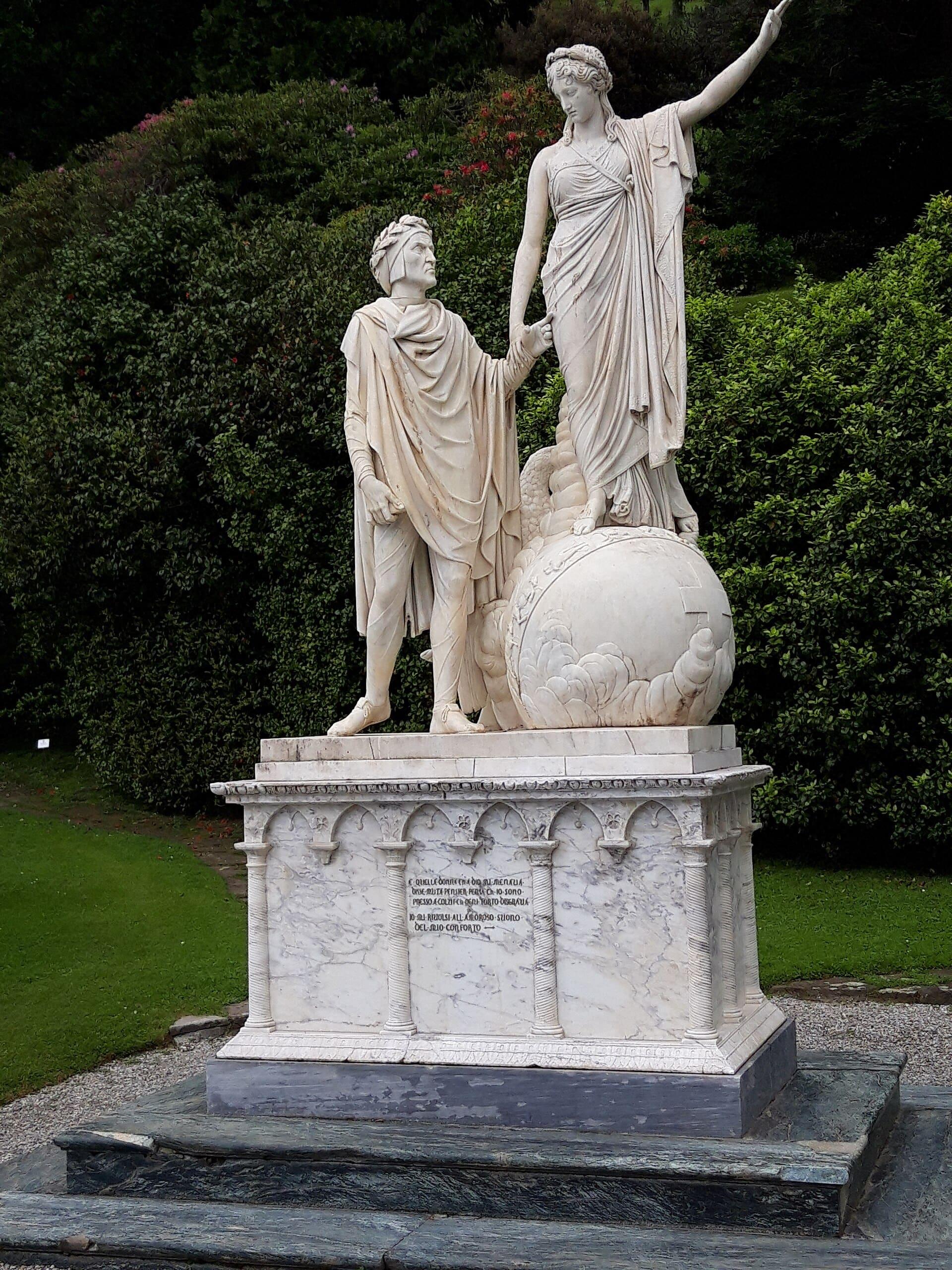
At Bellagio, on the other hand, the stay really happened. In 1837 Franz Liszt arrived with Marie d'Agoult and took rooms at the Genazzini inn, incognito until the publisher Ricordi, looking for publicity, let it be known he was there. They were calm days: he wrote the twelve Grandes Études for piano and Impressions et poésies, the first part of the Album d'un voyageur, and in his letter on Lake Como, published by the Revue et Gazette musicale de Paris on 22 July 1838, he advised anyone writing the story of two happy lovers to set it on these shores. He often went to Villa Melzi, to walk the avenue of plane trees and read the Divine Comedy beside Gian Battista Comolli's group of Dante and Beatrice. On Christmas Eve 1837, in Como, at the Albergo dell'Angelo, his daughter Cosima was born, the future wife of Wagner.
Cadenabbia, the publisher's villa
On the other shore, at the edge of Cadenabbia, stands Villa Margherita, built in 1853 for the publisher Ricordi. Verdi was often his publisher friend's guest there, and tradition has it that he composed part of the arias of La traviata in the villa. Memoirs of the time recall evenings when anyone passing the villa by moonlight could hear Verdi playing the spinet facing the lake. Amilcare Ponchielli came too, and began here his long and troubled work on I Lituani, commissioned by Ricordi and a success at La Scala in 1874; among the guests was Anton Rubinstein, composer, conductor and founder of the Saint Petersburg Conservatory.
The villa is private, but it is easy to recognise from the lake and the road: the name Margherita on the pediment, the clock, the two statues on the cornice, perhaps Music and Poetry, the last of a lost series, and the large semicircular hall facing the garden, once used for small concerts.
Loveno, Braga's cello
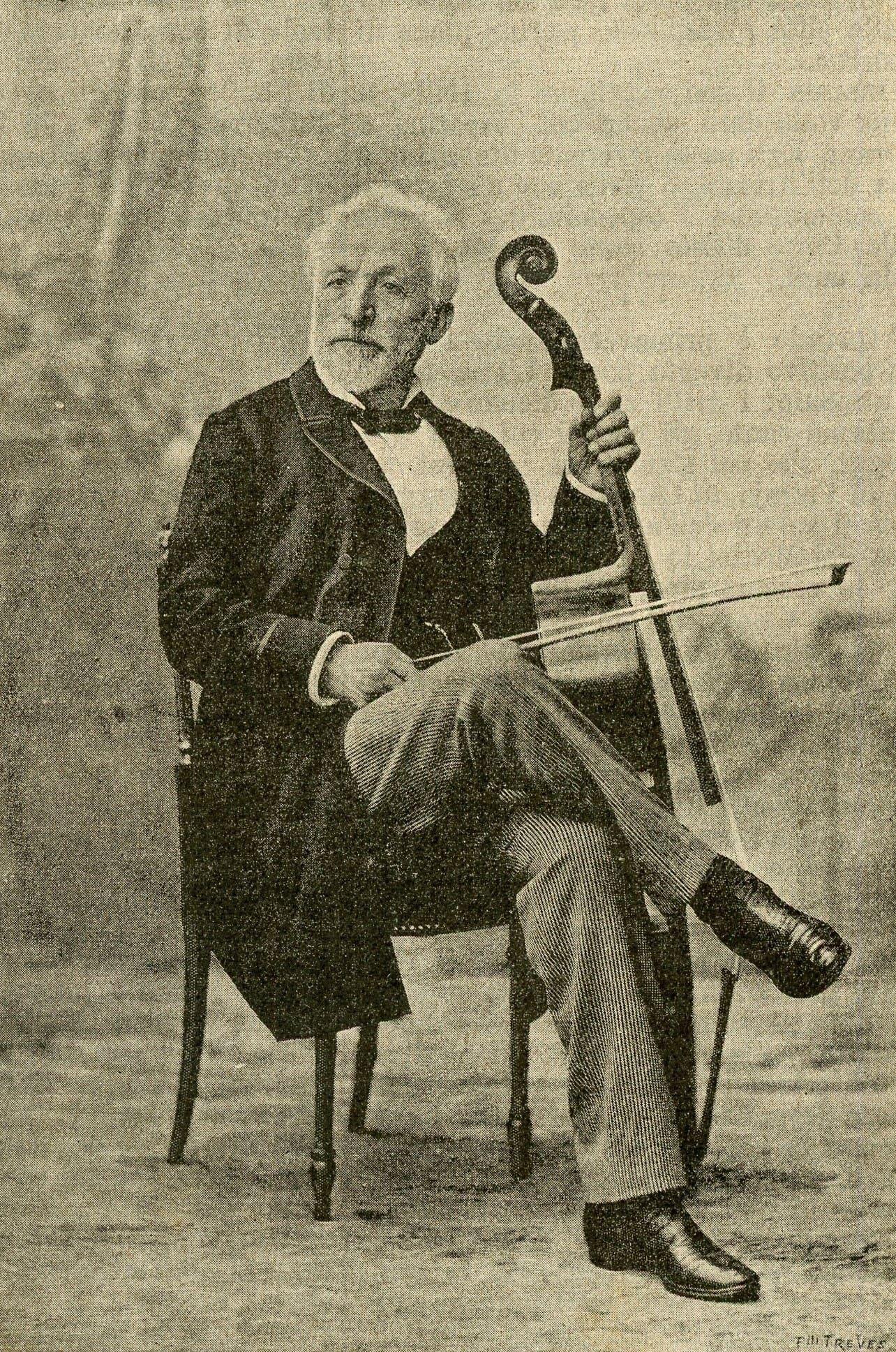
The last stop leaves the shore and climbs towards the valley that leads to Lake Lugano, up to Villa Mylius Vigoni at Loveno above Menaggio. Among its many nineteenth-century guests were the pianist Clara Schumann and the cellist and composer Gaetano Braga, from the Abruzzo, whom the critics of 1874 called “the king of cellists”, the author of a Wallachian Legend that Chekhov mentions in one of his stories. Braga liked to spend long spells on the lake, with the Venini at Varenna and the Vigoni at Menaggio, and the stone bench in the park where he used to compose is still there, with an inscription recalling him. Antonio Fogazzaro dedicated a story to him, Il fiasco del maestro Chieco, and Giovanni Boldini painted him in Paris in 1889: the portrait hangs in the rooms of the villa that are open to visitors.
Historical events linked to this story are collected in the Lake timeline.