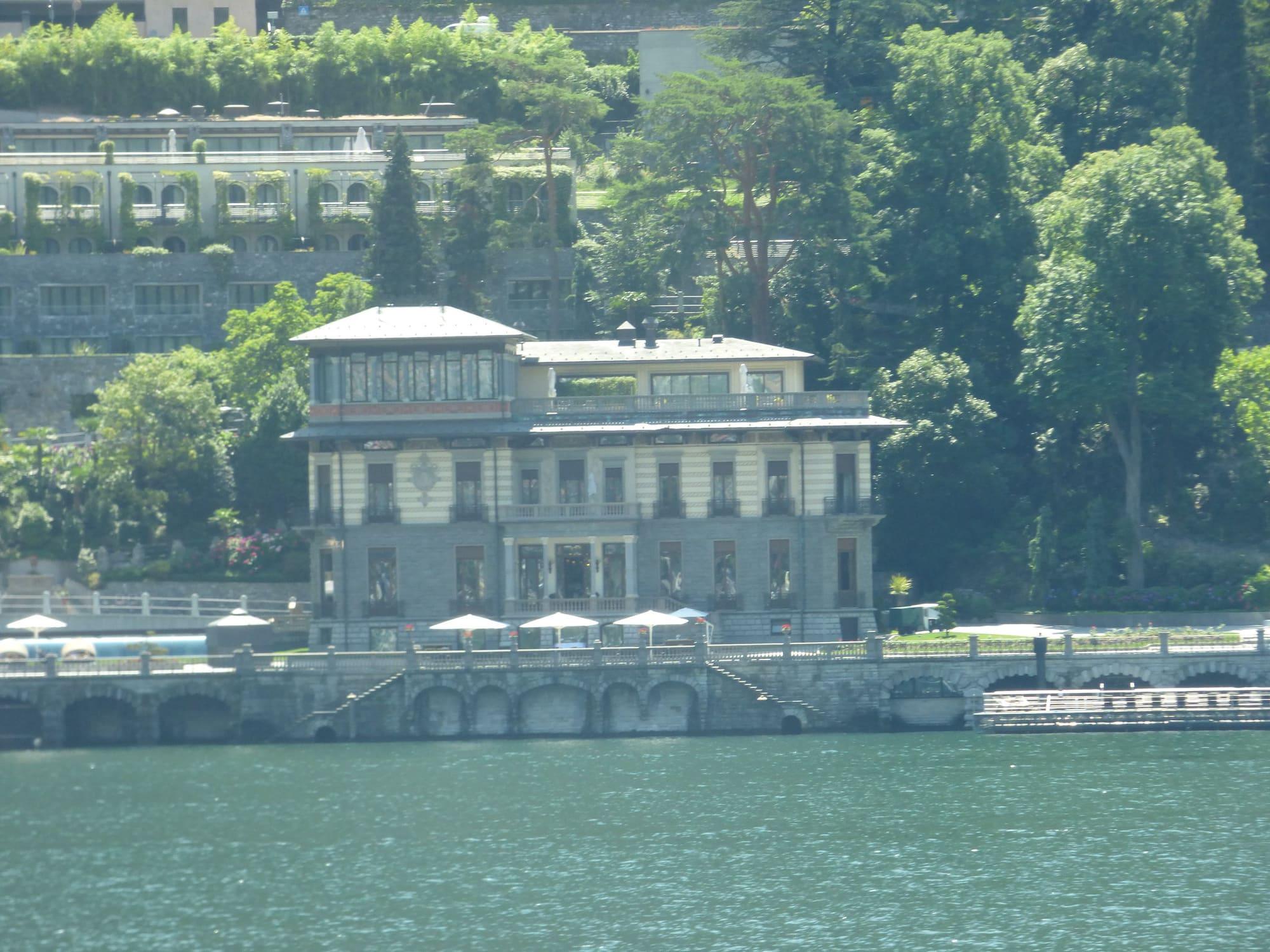
Villa Pasta and Villa Roccabruna, Blevio
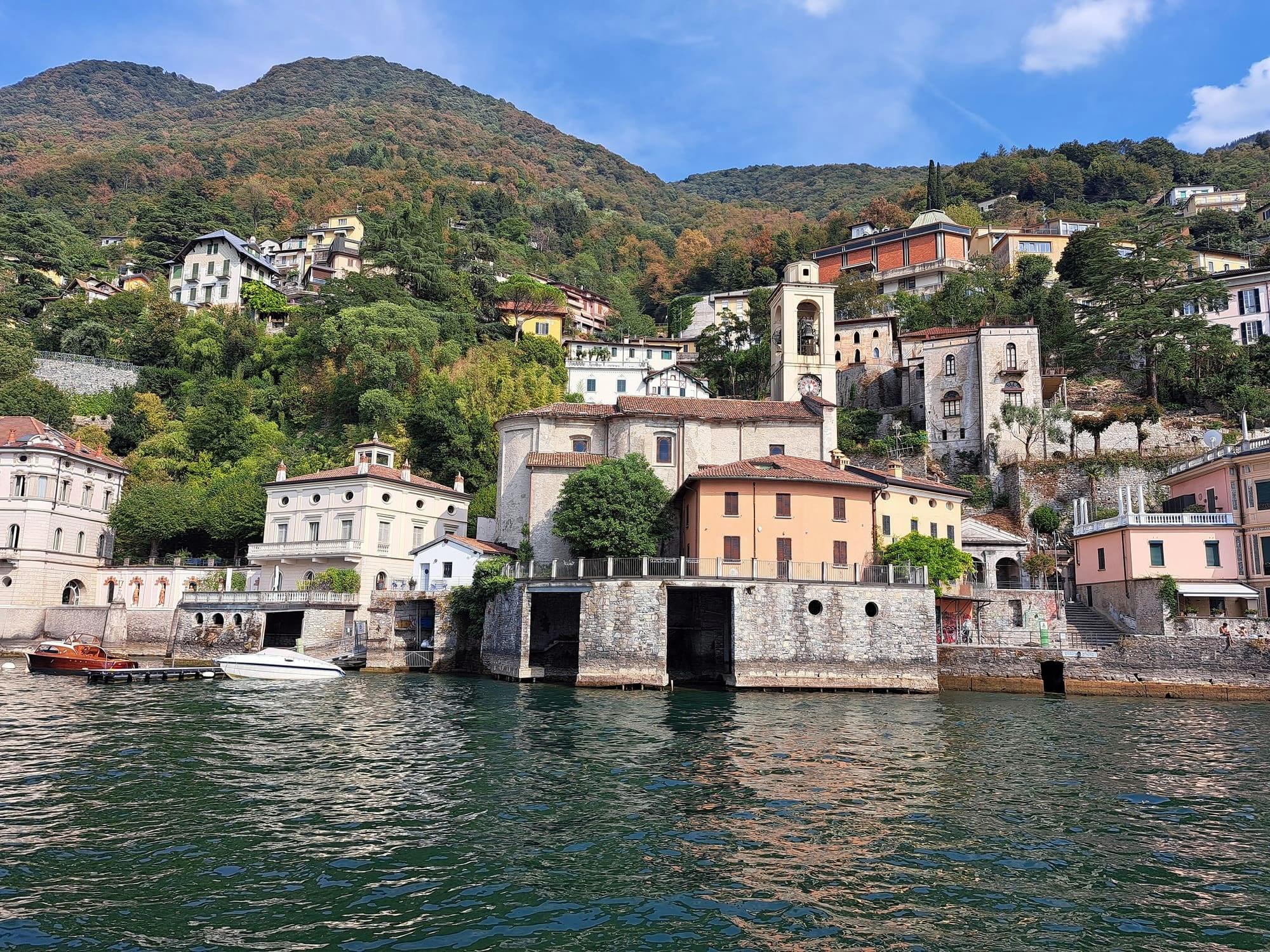
The site of the villa of the soprano Giuditta Pasta, Bellini's first Sonnambula, on the Blevio shore: from the lake you can still see the park and one of the guest houses.
10–20 min
First Basin
The first village on the eastern shore after Como: seven hamlets on the slope linked by the Strada Regia, and the villas where Giuditta Pasta and Maria Taglioni lived.
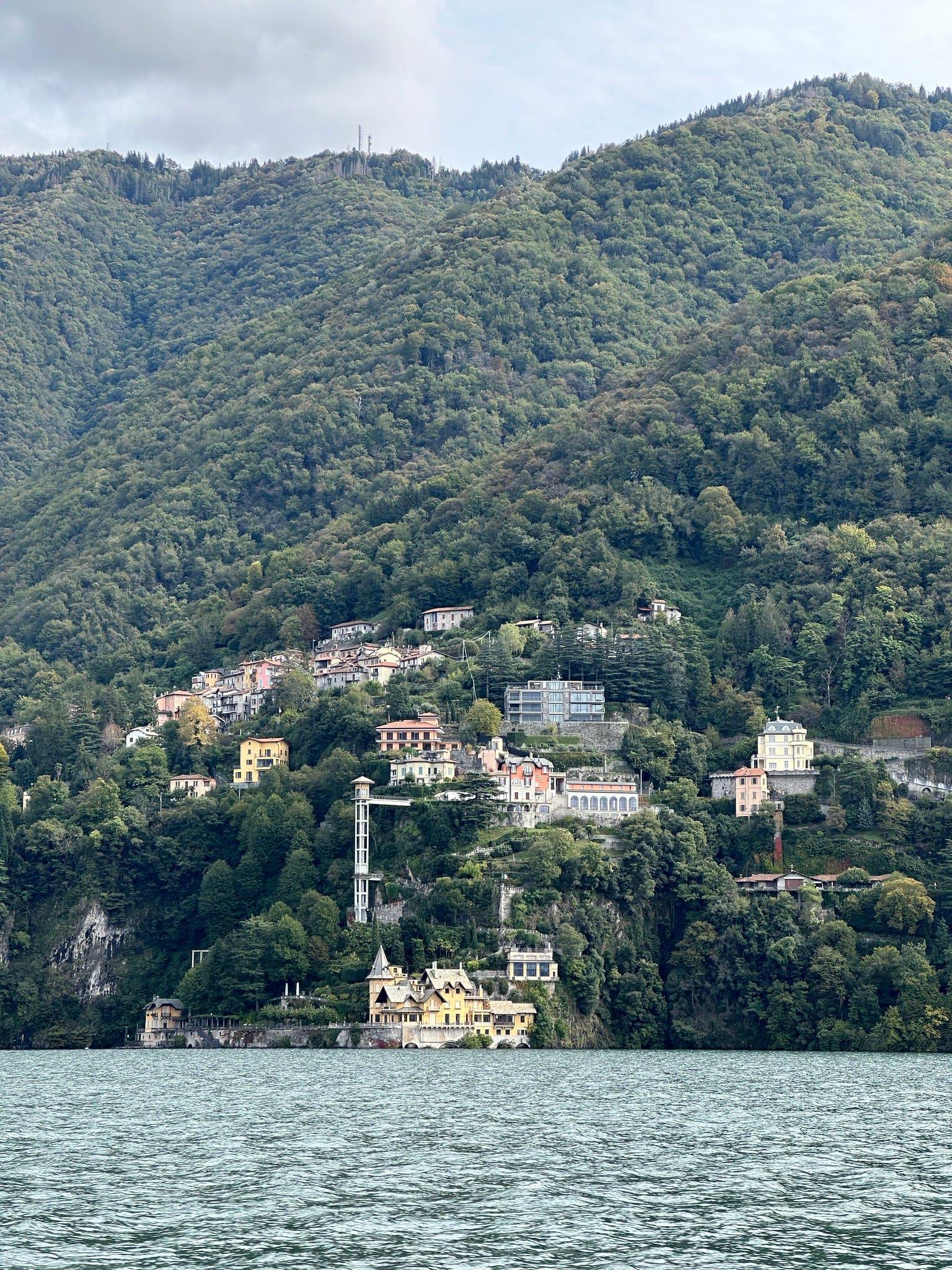
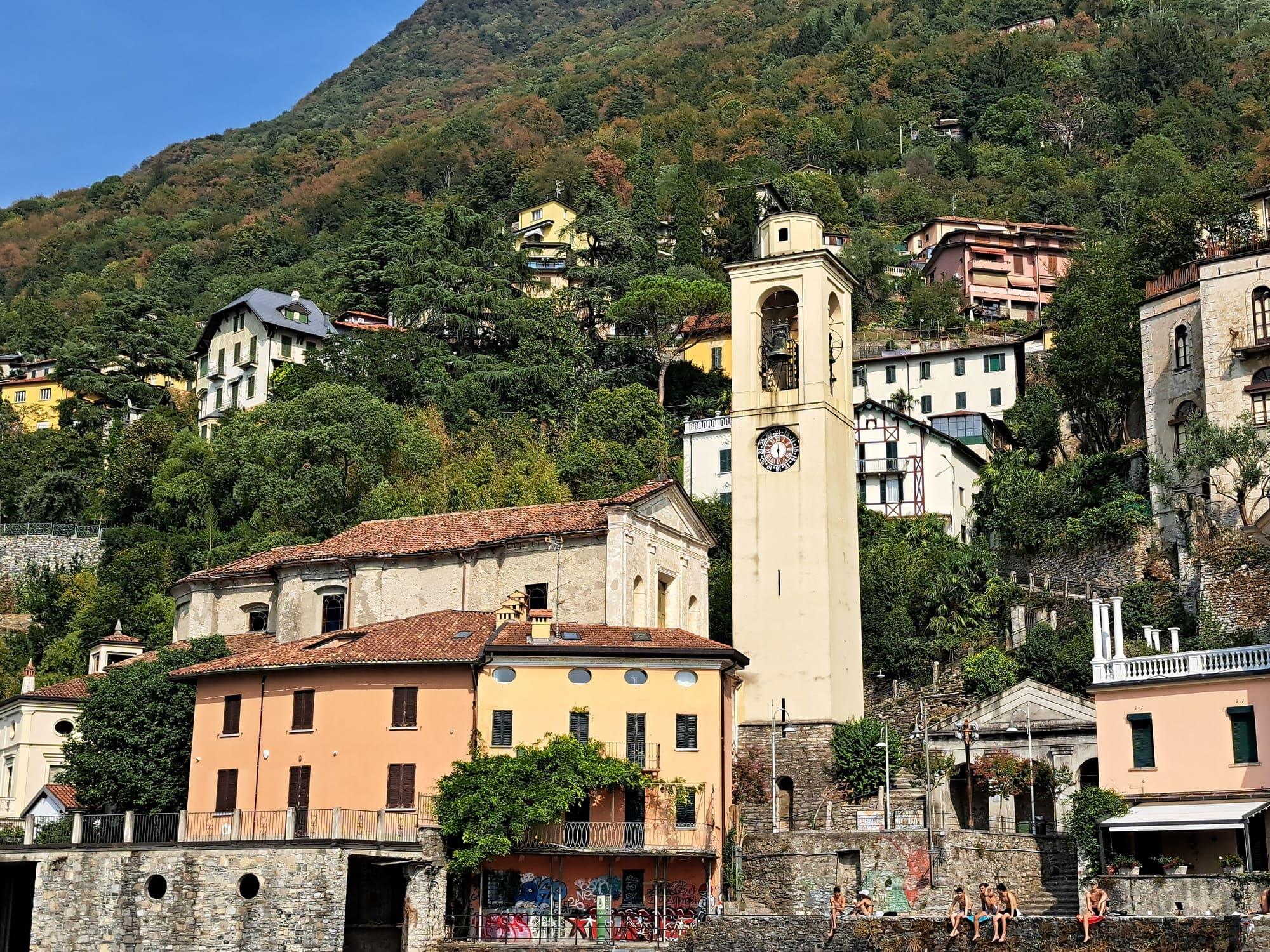
Blevio rises from the shore, at two hundred metres, to 1140 metres on the slopes of Monte Boletto, and is made up of seven old hamlets the village calls “the seven towns”: Capovico, Cazzanore, Girola, Meggianico, Mezzovico, Sopravilla and Sorto. The earliest written record is from 1084; between the eighteenth and nineteenth centuries its position made it a place for summer stays, and its villas were home to Giuditta Pasta, Alessandro Manzoni, Adelaide Ristori and the dancer Maria Taglioni. This is where Giuditta Pasta, for whom Bellini wrote the title role of La sonnambula, had her villa with its park on the lake, and where she is buried. The hamlets on the slope are linked by the Strada Regia, the mule track that before the Lariana road was the only way between Como and Bellagio.
Blevio rises from the shore, at two hundred metres, to 1140 metres on the slopes of Monte Boletto, and is made up of seven old hamlets the village calls “the seven towns”: Capovico, Cazzanore, Girola, Meggianico, Mezzovico, Sopravilla and Sorto. The earliest written record is from 1084; between the eighteenth and nineteenth centuries its position made it a place for summer stays, and its villas were home to Giuditta Pasta, Alessandro Manzoni, Adelaide Ristori and the dancer Maria Taglioni. This is where Giuditta Pasta, for whom Bellini wrote the title role of La sonnambula, had her villa with its park on the lake, and where she is buried. The hamlets on the slope are linked by the Strada Regia, the mule track that before the Lariana road was the only way between Como and Bellagio.
Giuditta Pasta, who grew up in Como, bought Villa Roda and had it rebuilt between 1827 and 1829 by her uncle, the architect Filippo Ferranti. The estate had three houses, the main villa and two for guests, joined by the avenues of the park. The villa had a porch with a loggia that people at the time likened to La Scala; in the park stood an artificial cave, the little grotto of the muses, with busts of other singers, her rival Maria Malibran among them. Bellini was a frequent guest at the villa. Donizetti worked on Anna Bolena here in 1830. In 1904 the main villa was pulled down and Villa Roccabruna, the Wild family's, was built in its place; one of the two guest houses remains, and from the lake the site can still be made out with part of the park. The singer died in Blevio in 1865 and is buried in the village's small cemetery.
Other villas line the shore. At Villa Belvedere, once nicknamed the Malpensata, Alessandro Manzoni spent periods of his youth between 1807 and 1818, and here in 1807 he first met Enrichetta Blondel. Villa Taglioni bears the name of the dancer Maria Taglioni, who chose it when she retired to the lake; it is also called Ca' dell'Imperatore, because Emperor Joseph II sheltered there from a storm in 1769. The Russian prince Troubetzkoy, Taglioni's son-in-law, had his villa built in the mid-nineteenth century by blasting away a rocky bank. Facing the landing stage stands Villa Ricordi, owned by the music publishers since the mid-nineteenth century. All of them are private and seen from the lake.
In 1084 Bishop Rainaldo of Como left his property in Blevio to the cathedral in his will, so that a Mass would be said there every year on the anniversary of his death. Blevio appears as a comune in 1279, in the inventory of the property of the canons of Como cathedral.
Blevio belonged to the pieve of Nesso, which Ludovico il Moro gave in fief to Lucrezia Crivelli in 1497. In 1647 the village passed, with part of the fief, to the family of Senator Francesco Maria Casnedi, and in 1790 it was granted in fief to Count Antonio Tanzi. In 1807 a decree of Napoleon joined Blevio to Torno; when the Austrians returned, the village became a comune of its own again.
Villa Cademartori stands on the shore in the hollow of Girola, whose name comes from the dialect word “gerun”, scree. In 1842 the banker Giorgio Mylius, of German origin, bought the summer house of the Artaria family, the music publishers, and had the architect Giuseppe Balzaretti remodel it. After Mylius's death his widow handed the villa to her son-in-law Corrado Cramer. Between 1864 and 1866 Cramer had it rebuilt in neo-Renaissance style by the German architect Gottfried Semper, who designed the Dresden opera house. The villa later passed to the Cademartori family and is private. From the lake you can make out its three storeys, the turret on the right and the terrace with statues above a Doric portico.
In the summer of 1935 the sculptor Arturo Martini worked in Blevio. In a few weeks he modelled in plaster a group of sculptures on classical and biblical subjects, among them The Rape of the Sabines and The Judgement of Solomon.
Enrico Caronti, a dyer at a firm in Como, was born in Blevio in 1901. In the Resistance, under the battle name “Romolo”, he was political commissar of the 52nd Garibaldi Brigade and also took its command. In December 1944 the Black Brigades captured and tortured him; on 23 December they shot him outside Menaggio cemetery. In 1946 the village dedicated a monument to him in Piazza Lucini, the work of the Blevio sculptor Raimondo Galdini. His tomb is in the village cemetery.
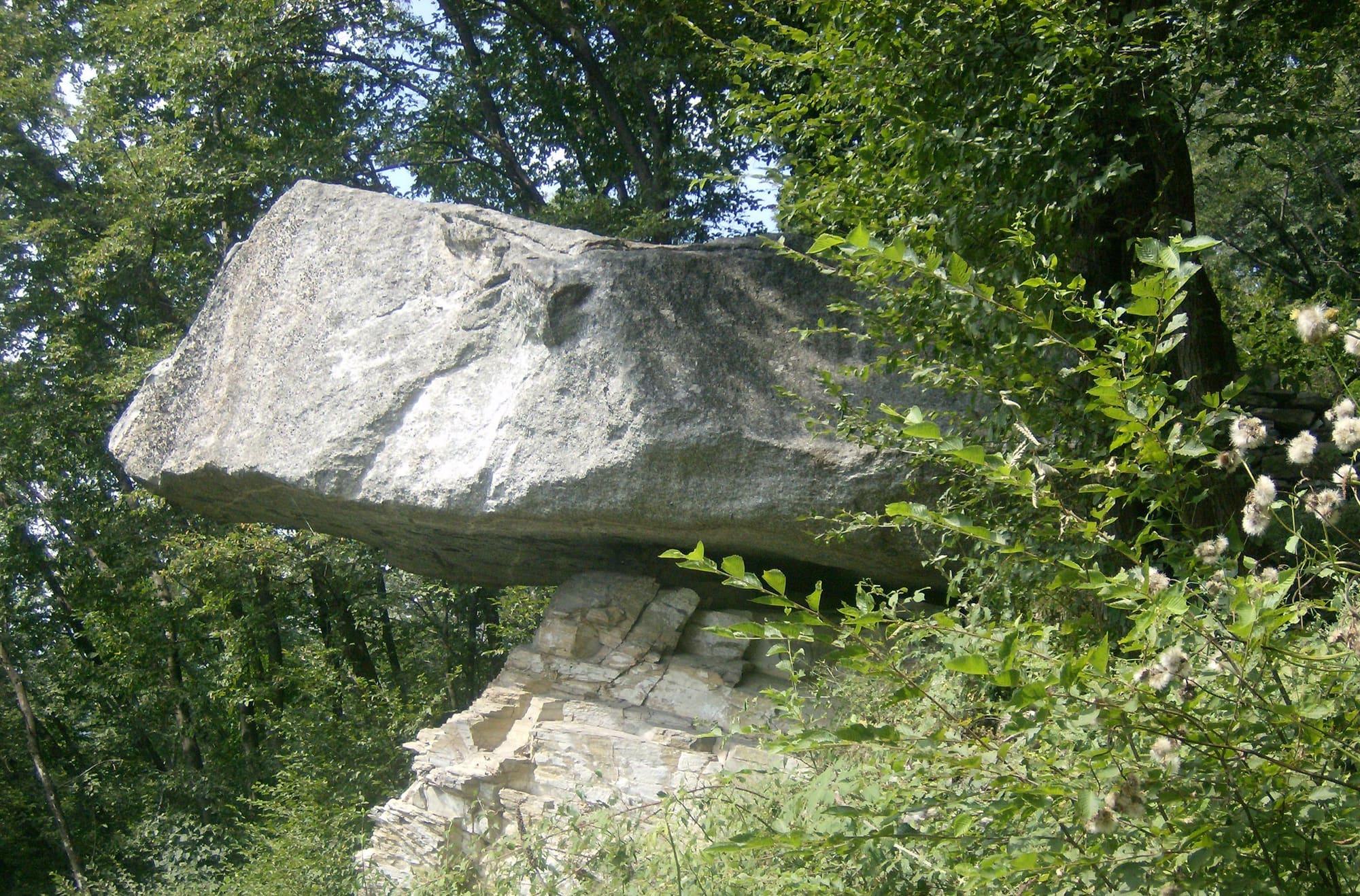
The hamlets of Capovico, Sopravilla, Sorto, Mezzovico, Meggianico and Cazzanore are crossed by the Strada Regia, a route of Roman origin. Before the Lariana road was built, between 1911 and 1917, it was the only road between Como and Bellagio; between 2002 and 2006 the Società Archeologica Comense restored it for walkers with the Comunità Montana del Triangolo Lariano. Between Sorto and Mezzovico it passes the church of the Immacolata, built in the seventeenth century and remodelled in the second half of the eighteenth; in the woods above Mezzovico, at about 750 metres, lies the Pietra Nairola, a great erratic boulder of granite carried from Val Masino by the glaciers, with prehistoric carvings and two legends.
On the shore stand the church of Santi Gordiano ed Epimaco, built between the sixteenth century and the mid-eighteenth, with a Prestinari organ of 1821, and the Da Riva public park, a strip of lawn on the lake looking across to the western part of Como, Cernobbio and Moltrasio. Today's parish church is San Francesco, from 1967, where a Deposition of the school of Morazzone was moved. Since 2015 the hamlet of Girola has hosted the Parco Mosaici, which the Comune conceived as art walks along the paths and in the public parks.
How long it takes
Typical door-to-door times by public transport, changes included. From Milan, counted from Centrale station.
Webcams
Updated 22 October 2026
From Como on ASF Autolinee's C130 bus, the line for Nesso and Bellagio: five minutes from the Lungolario Trieste to Blevio Piazza Roma. Navigazione Laghi's Como–Colico line boats call at the village pier. By car, the Lariana provincial road leads here from Como, running up the eastern shore towards Torno and Bellagio.
In Blevio, on the shore: it was Villa Roda, which the singer had rebuilt between 1827 and 1829. In 1904 the main villa was pulled down and Villa Roccabruna was built in its place, designed by the architect Carlo Formenti; one of the two guest houses survives intact, and arriving by boat you can still make out the site and part of the old park. Giuditta Pasta died in Blevio in 1865, and her tomb is in the village's small cemetery.
The mountains around the village hide the sun before astronomical sunset: sunrise and sunset are worked out on the village's own horizon.
Today, 1 November, estimated sunlight at the reference point: first at 10:51 and last at 16:37, giving 5 h 47 of direct sun, out of 10 h 06 of daylight.
Today the sun arrives between 10:18 and 11:13, depending on the street.
Watch the shadow reach Blevio today
See from Blevio where the sun goes, in 3D
The sun at an exact spot in Blevio: your hotel, a beach, a street
The highest summit in view from here is Monte Colmegnone, 1378 m, 6 kilometres away.
The ochre line follows today's sun path and marks the estimated times of its first and last appearance above the mountains. Drag the panorama to see all of it.
Yes: the mule track runs through the village's upper hamlets, from Capovico to Sopravilla, Sorto, Mezzovico, Meggianico and Cazzanore, and carries on towards Torno, Faggeto, Pognana and Nesso as far as Bellagio, between dry-stone walls and chestnut woods. From the lakeside core you climb to the hamlets on foot, and buses and boats bring you back.
What is around, and how far.
© OpenStreetMap contributors · ODbL
Typical door-to-door times.
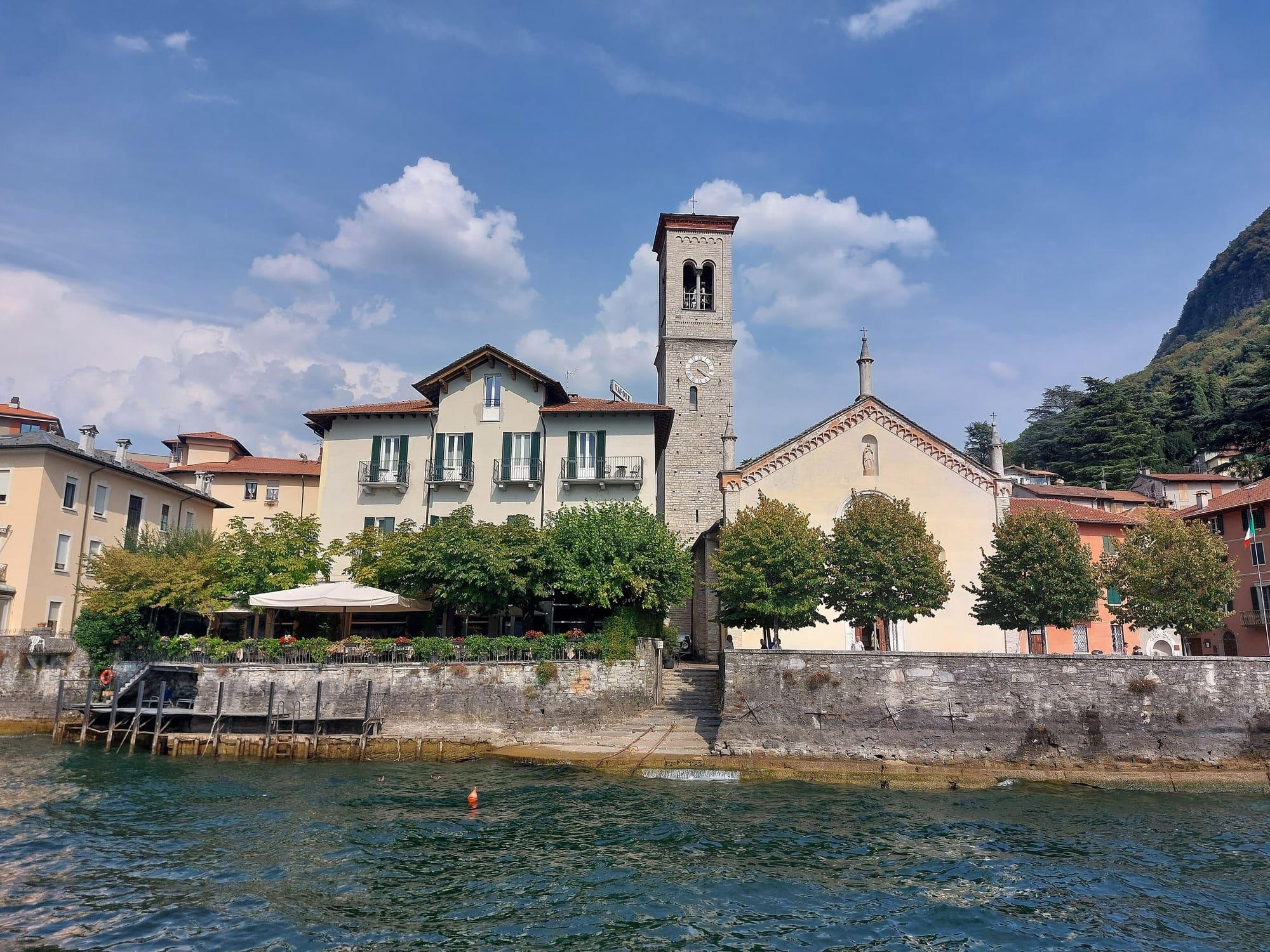
Two small harbours, the church of San Giovanni with its Romanesque bell tower, and Villa Pliniana just outside the village.
5 min
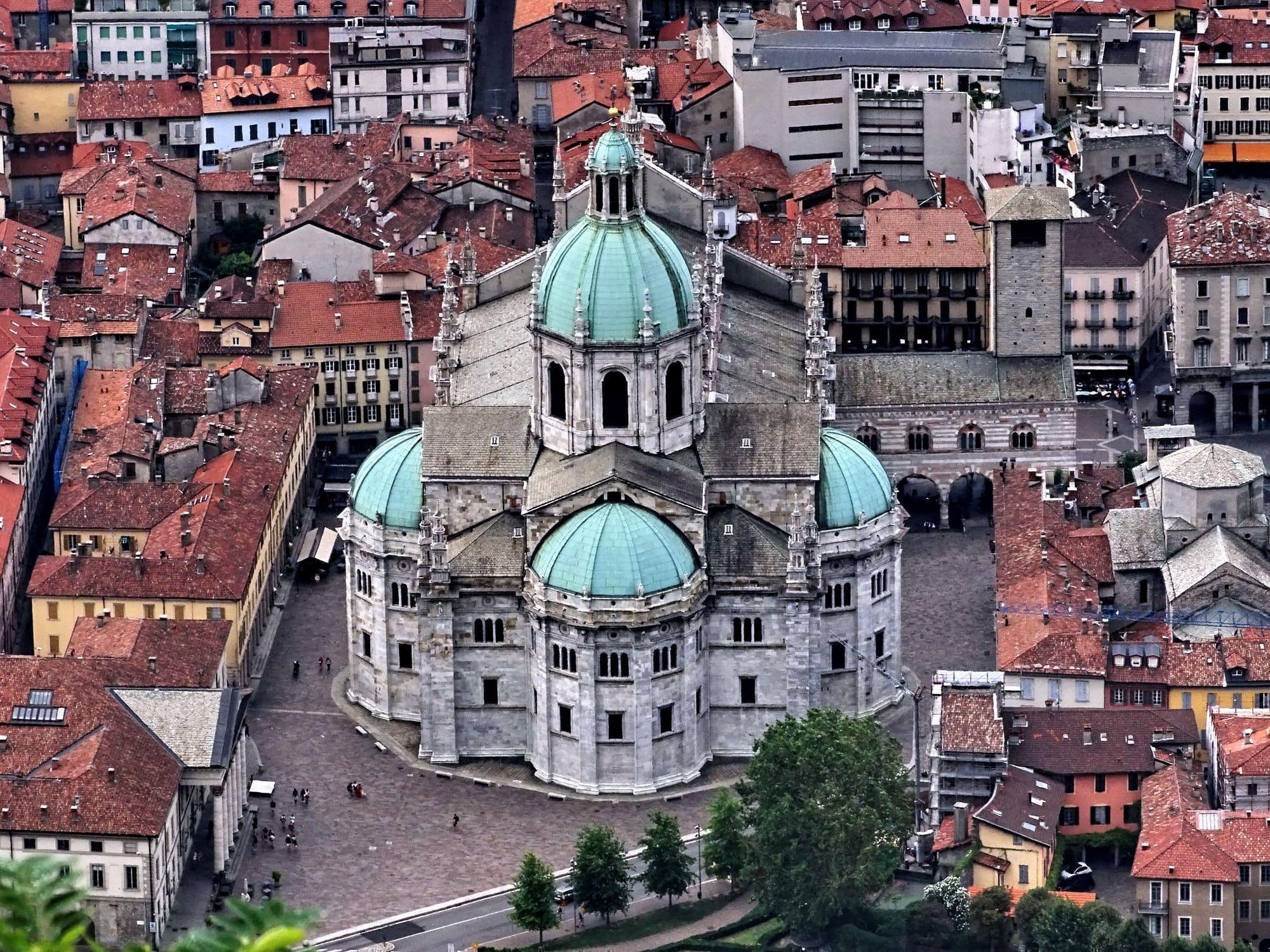
The city of silk and rationalist architecture, with the lake reaching right into the centre.
10 min
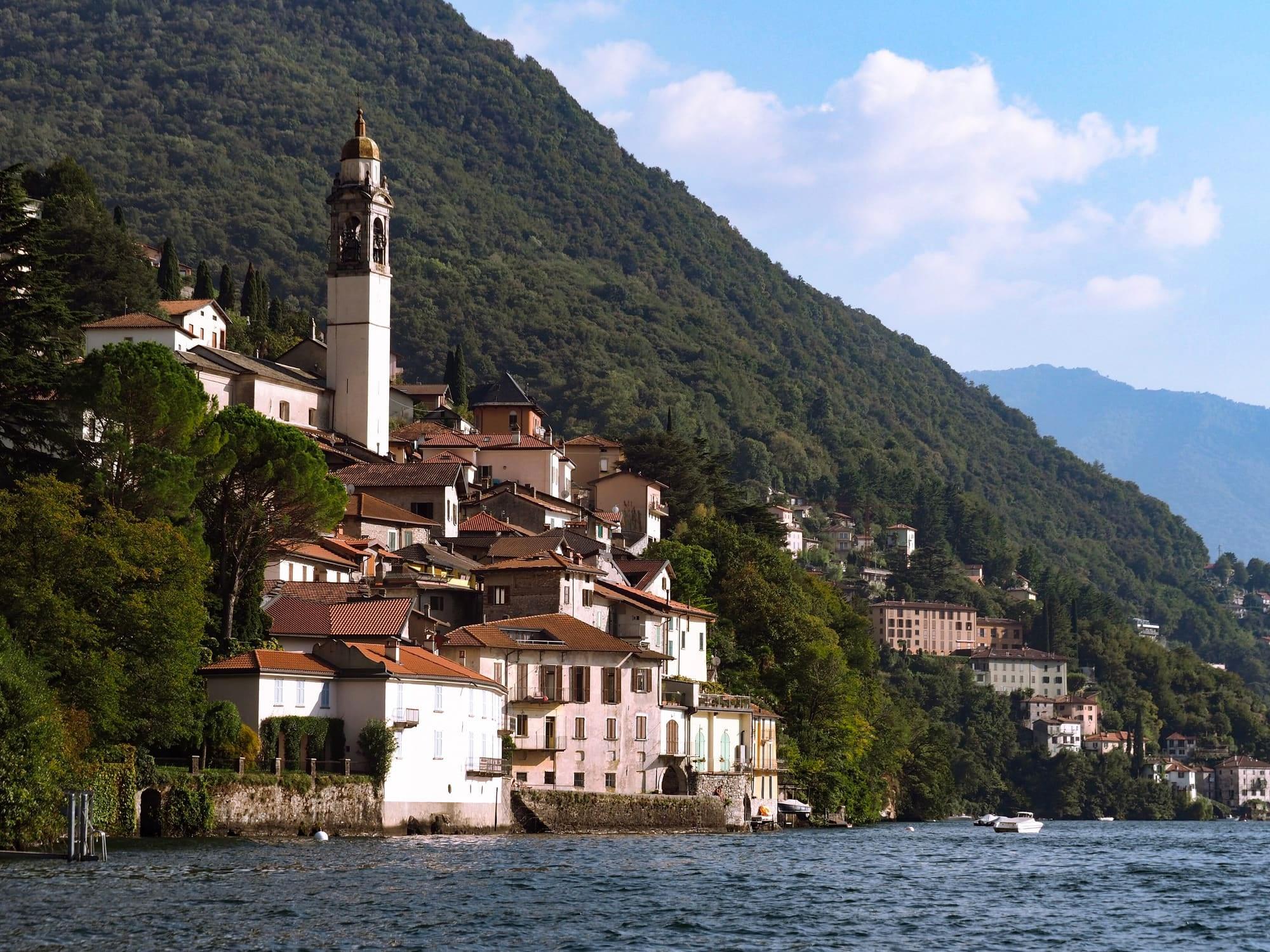
A village split in two by a waterfall, with a stone bridge where the water meets the lake.
32 min