Why camellias, azaleas and olive trees get through the winter at forty-six degrees of latitude.
Bellagio lies just under 46 degrees north, the same band as Lyon and Geneva. At this latitude, in April, the azaleas and rhododendrons flower in the garden of Villa Carlotta, and at Villa Monastero citrus trees stand outdoors along the water. The causes are physical, and they also explain why the gardens are found at particular points of the lake.
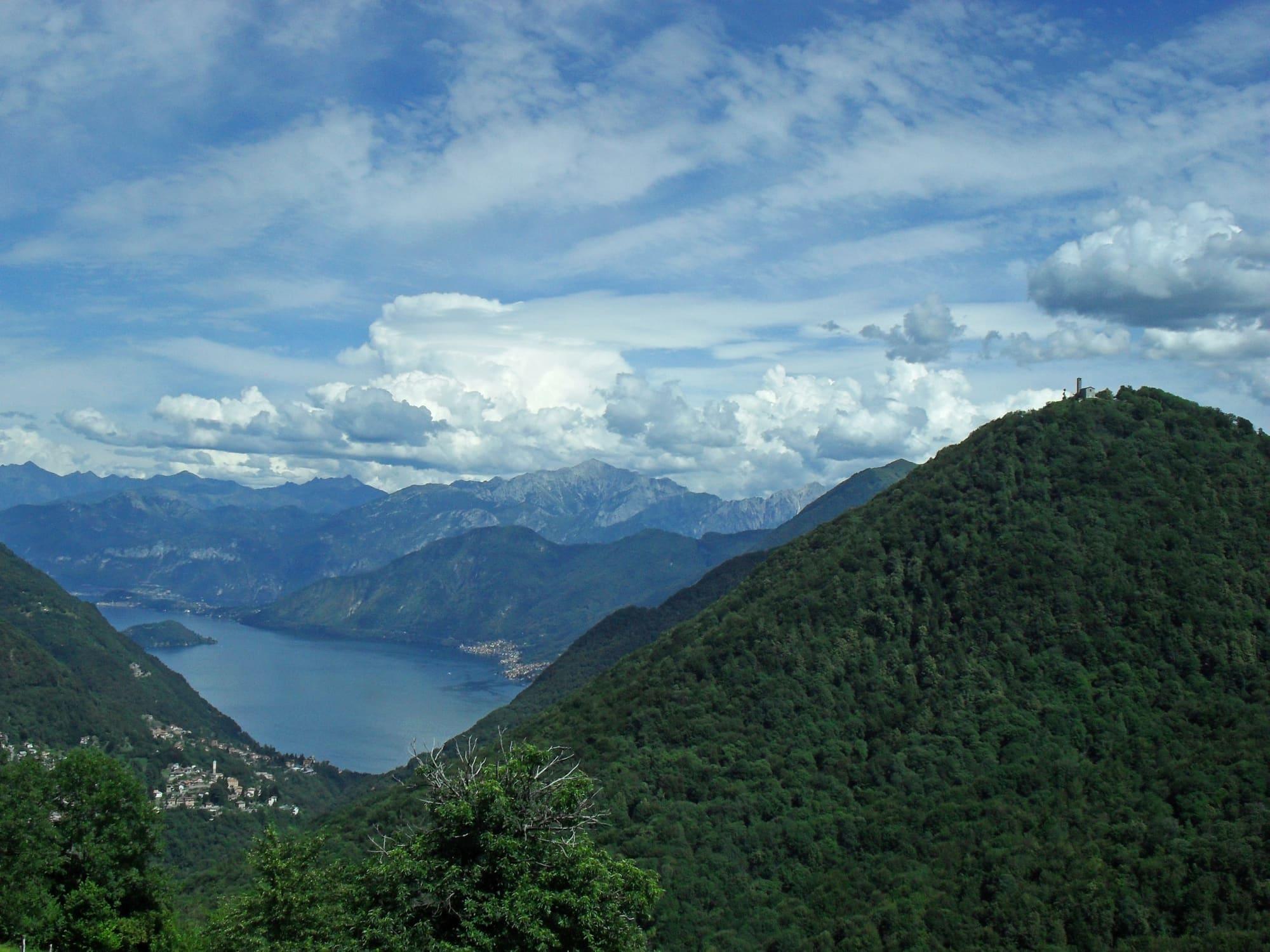
The mass of water
The first factor is the mass of water. The lake holds about 22.5 cubic kilometres of water and is over four hundred metres deep. Water has a very high heat capacity: warming it by one degree takes far more energy than the same volume of rock or air. So the lake warms slowly in spring and cools slowly in autumn, and in December it still holds part of the summer's heat.
This is why the lake does not freeze, except in a few very shallow inlets at the far north, and on cold nights it gives heat back to the air above it. Along the shores the winter minimum temperatures are higher than on the plain twenty kilometres away.
The relief and the thermal belt
The second factor is the relief. Behind the shores the mountains stop or deflect cold air arriving from the north. At night, too, cold air, being denser, slides down the steep slopes to the water, where it is warmed. The result is a thermal belt: a strip of hillside, above the water and below the heights where cold collects, where frost is rarer than lower down or higher up.
The lake holds about 22.5 cubic kilometres of water, which give heat back to the shores in winter.
The villas and their gardens lie mostly in this belt, between the shore and the first slopes.
The third factor is exposure. The Tremezzina shore, where Villa Carlotta and Griante stand, faces south-east and in winter gets the low sun, reflected by the surface of the lake as well. The opposite shore, in shade in the morning, has less mild winters.
The fourth factor is the soil. Azaleas, rhododendrons and camellias are acid-loving plants: on chalky ground they yellow and die. The collection at Villa Carlotta exists partly because that slope has acid soil. Gardens with different soil grow other plants: cypresses, citrus in pots, palms, agaves.
The limits of the climate
The lake's climate is not subtropical. Snow sometimes falls even on the shore, there are frosts, and the hardest winters kill mature plants too, including species that had grown there for decades.
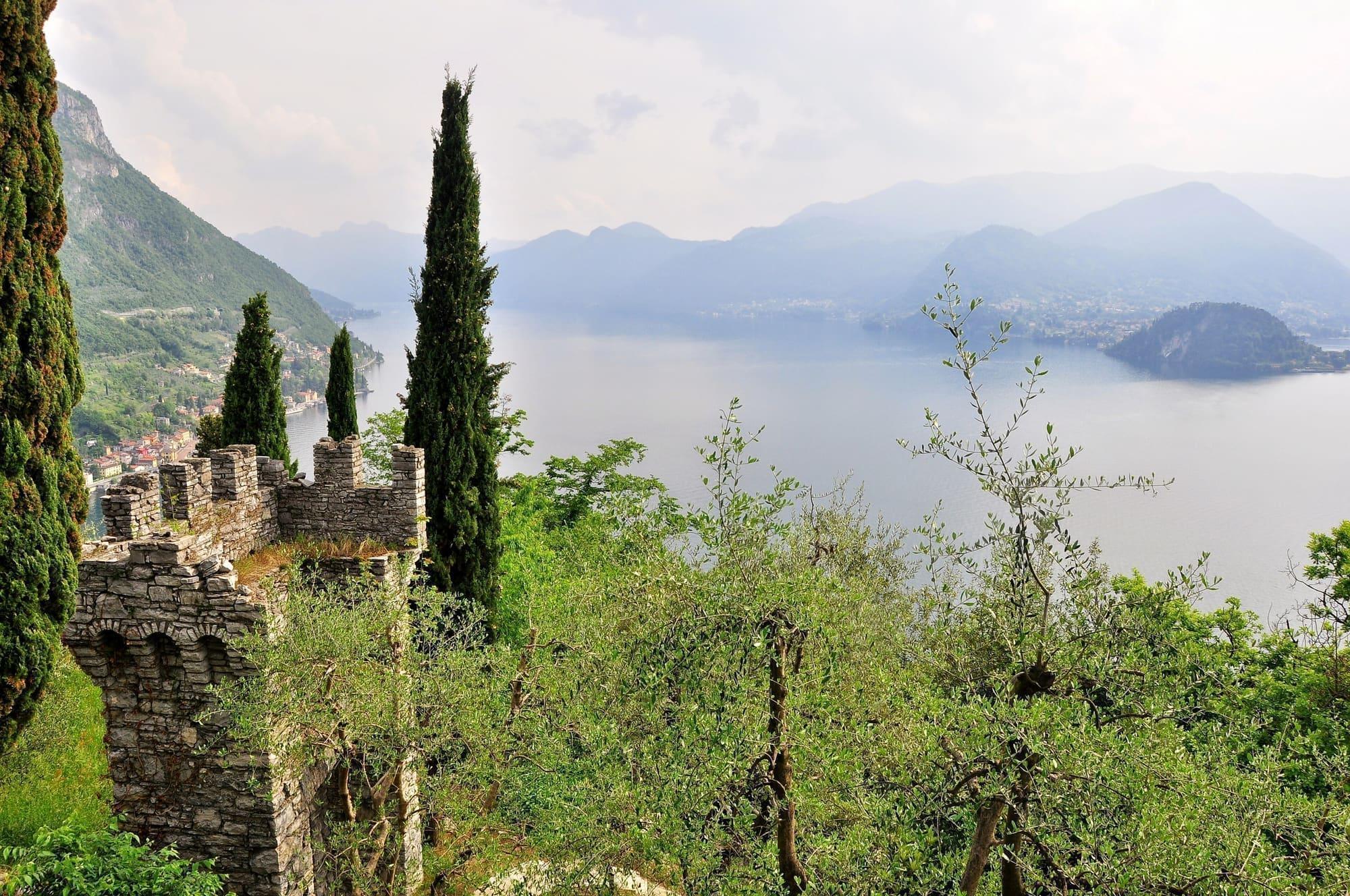
Many citrus trees, in particular, are in pots and are moved or protected in winter. Olive trees, by contrast, grow in open ground and come through the winter: on the slopes above Varenna and Perledo, on the Olgiasca peninsula around the Abbey of Piona and in the Tremezzina.
Two centuries of gardens
The mild climate was there in the Middle Ages too, when these shores had vegetable gardens, vineyards and convents. In the eighteenth century what changed was who could afford to make use of it.
With the Milanese aristocracy's summer holidays the shore filled with grand residences. Villa del Balbianello was built in 1787 on the remains of a Franciscan convent, on the Lavedo headland, and is reached on foot or by boat. Villa Olmo, in Como, had been begun in 1782. Napoleon's time brought neoclassicism: Villa Melzi was built between 1808 and 1810 for Francesco Melzi d'Eril, vice-president of the Italian Republic, with an English-style park that runs level along the water for hundreds of metres.
In the nineteenth century two things changed. The first was botany: European expeditions to East Asia and the Himalaya brought new species of camellia, azalea and rhododendron to Western gardens, and collecting plants became a habit of educated society. The second was foreign money. Villa Carlotta passed in 1843 to Princess Marianne of Orange-Nassau, who gave it to her daughter Charlotte on her marriage to George II of Saxe-Meiningen, celebrated in 1850: hence the villa's name. Villa Monastero, in Varenna, was a Cistercian convent suppressed in 1567 and turned into a private house two years later; between 1897 and 1909 the German industrialist Walter Kees renovated the villa and extended its garden along the shore. In 1954 Enrico Fermi gave one of his last lectures there, and the villa hosts physics schools.
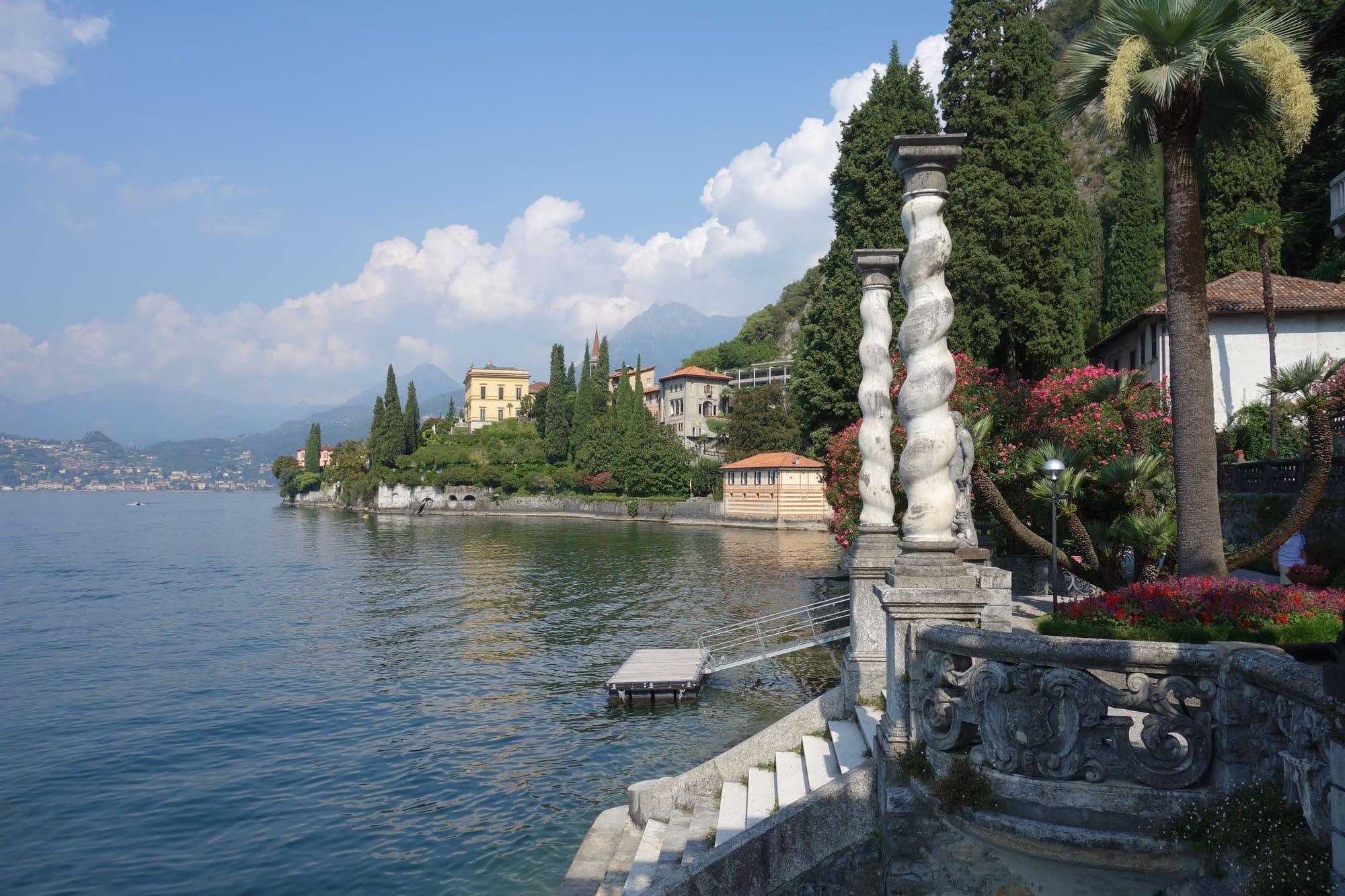
A trade grew up around the gardens: gardeners, nurseries, glasshouses, the craft of propagating camellias, pruners able to keep a plane tree flattened like a roof over a loggia, like the one at the Balbianello. The villa garden became a branch of the local economy, with skilled labour.
When to go
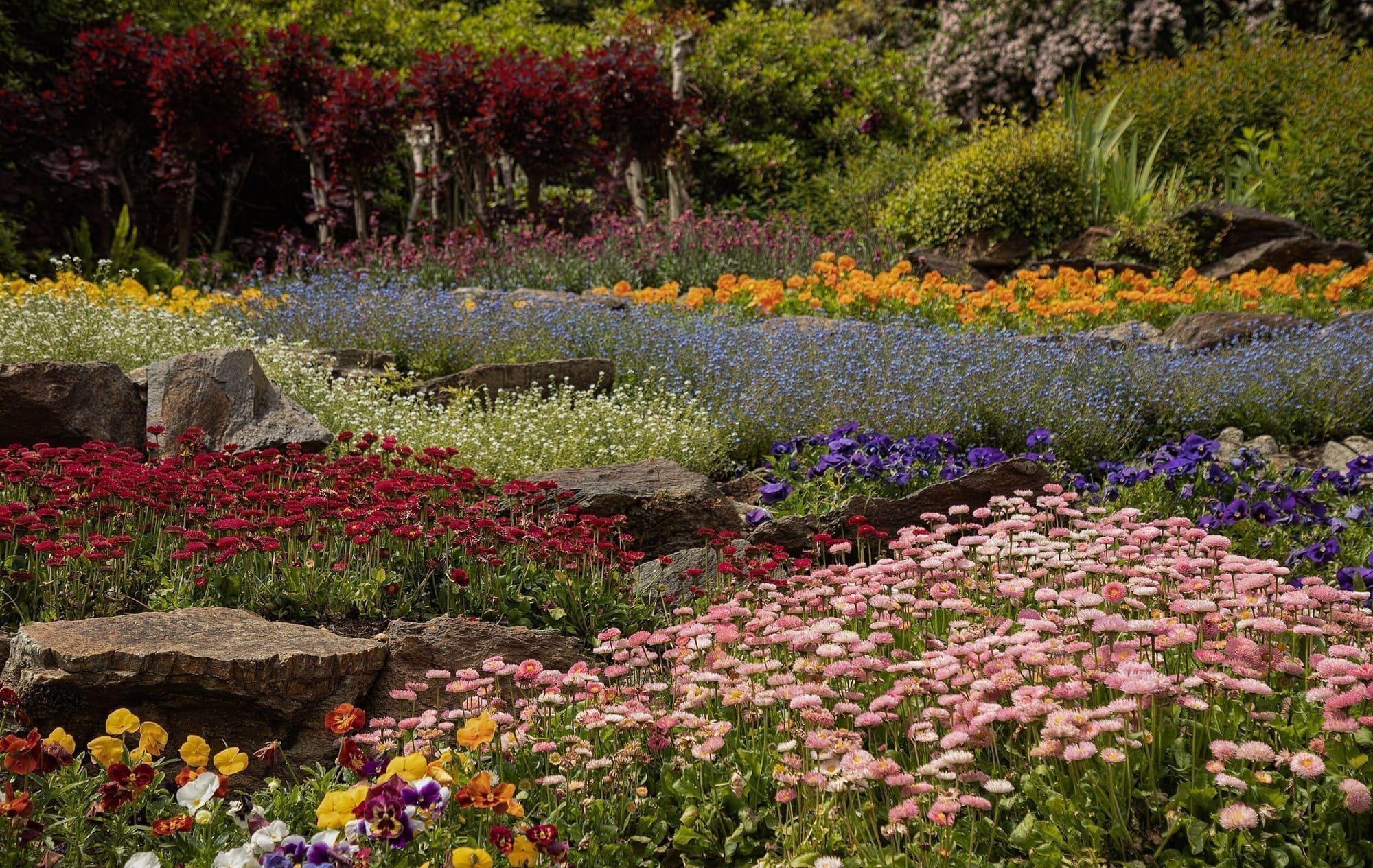
Camellias flower from late February into March; azaleas and rhododendrons from mid-April to mid-May, when the flowering at Villa Carlotta is at its height. Wisteria flowers in April, roses in May and June. In summer the gardens offer green and shade; in autumn the park of Villa Melzi changes colour.
In winter most gardens close: Villa Carlotta, the Balbianello and Villa Melzi have an opening season, with dates that change from year to year and are given on their pages. The park of Villa Olmo, in Como, is public and stays open.
The villas are best reached by boat: they were built facing the water, because that is how people arrived.
Historical events linked to this story are collected in the Lake timeline.