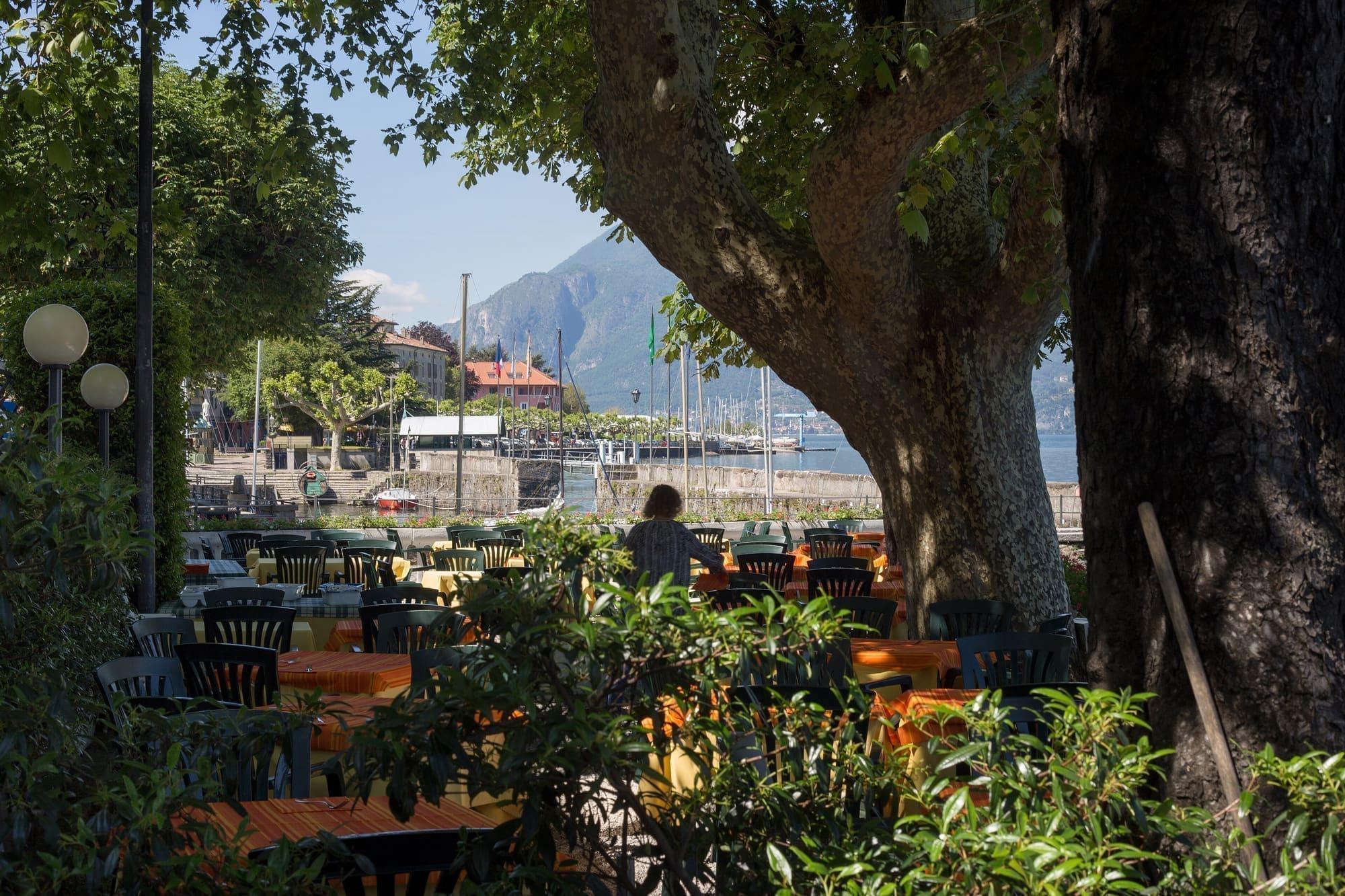
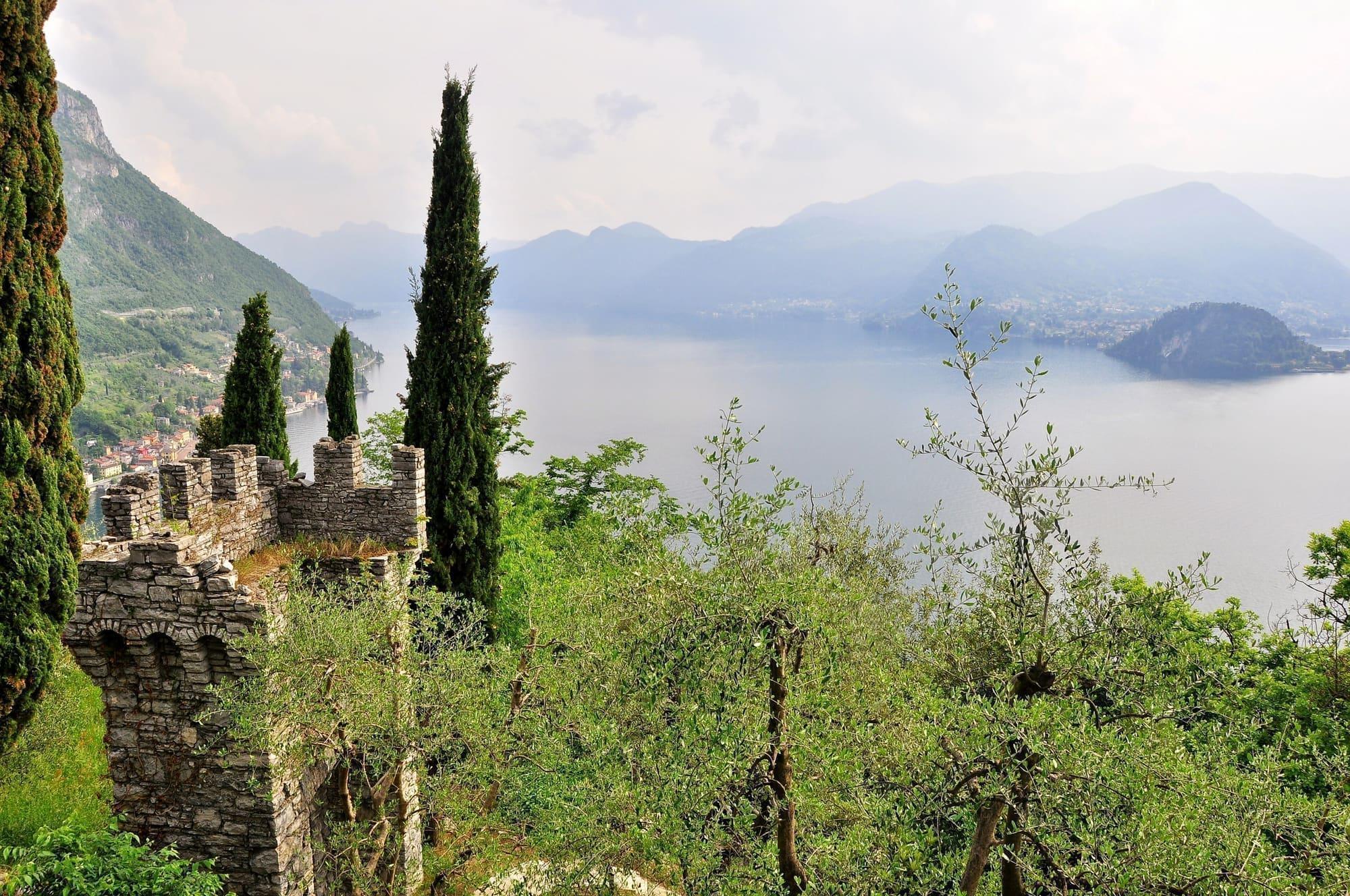
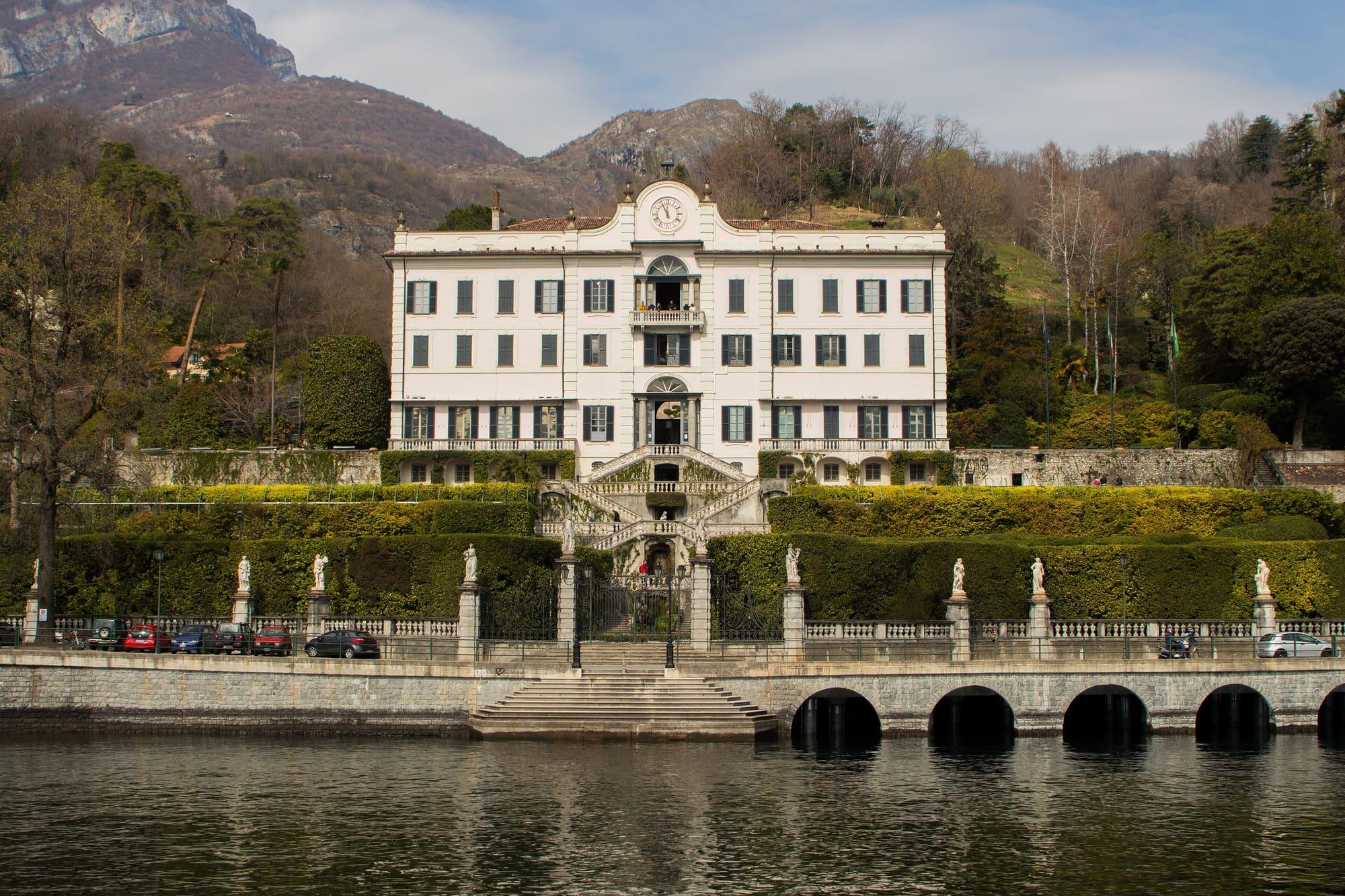
Lake Como has had many famous guests, and some of them wrote about it: Wordsworth in The Prelude, Percy Bysshe Shelley in a letter from Milan of 20 April 1818, Stendhal in The Charterhouse of Parma, Flaubert in his travel notes of 1845, Mary Shelley in her letters from Cadenabbia of 1840, Longfellow in a poem and Mark Twain in The Innocents Abroad.
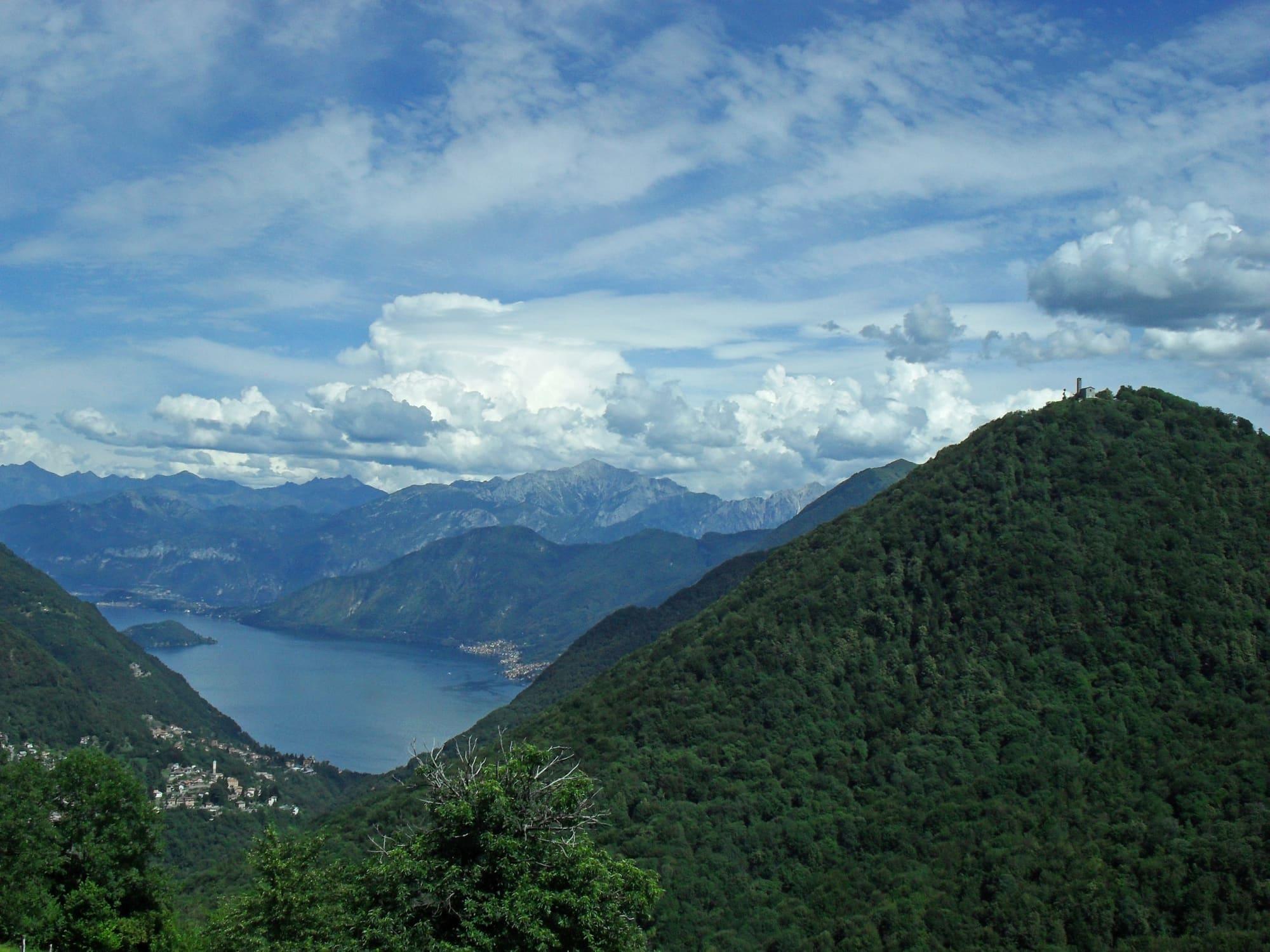
In 1790 William Wordsworth went on a walking tour of Europe, crossing the Alps at length through France, Switzerland and Italy. He told of it many years later in the sixth book of The Prelude, the poem of his own growth that was published in 1850. After Locarno's lake comes Como, which he calls “a treasure whom the earth / Keeps to herself, confined as in a depth / Of Abyssinian privacy”: its chestnut woods, its plots of Indian corn tended by dark-eyed maids, its lofty steeps and its pathways roofed with vines, winding from house to house and from town to town, the sole link that binds them to each other. Further on he remembers a pair of golden days and the summer's night that followed, which shed on Como's lake, and all that round it lay, their fairest, softest, happiest influence.
A letter from Milan
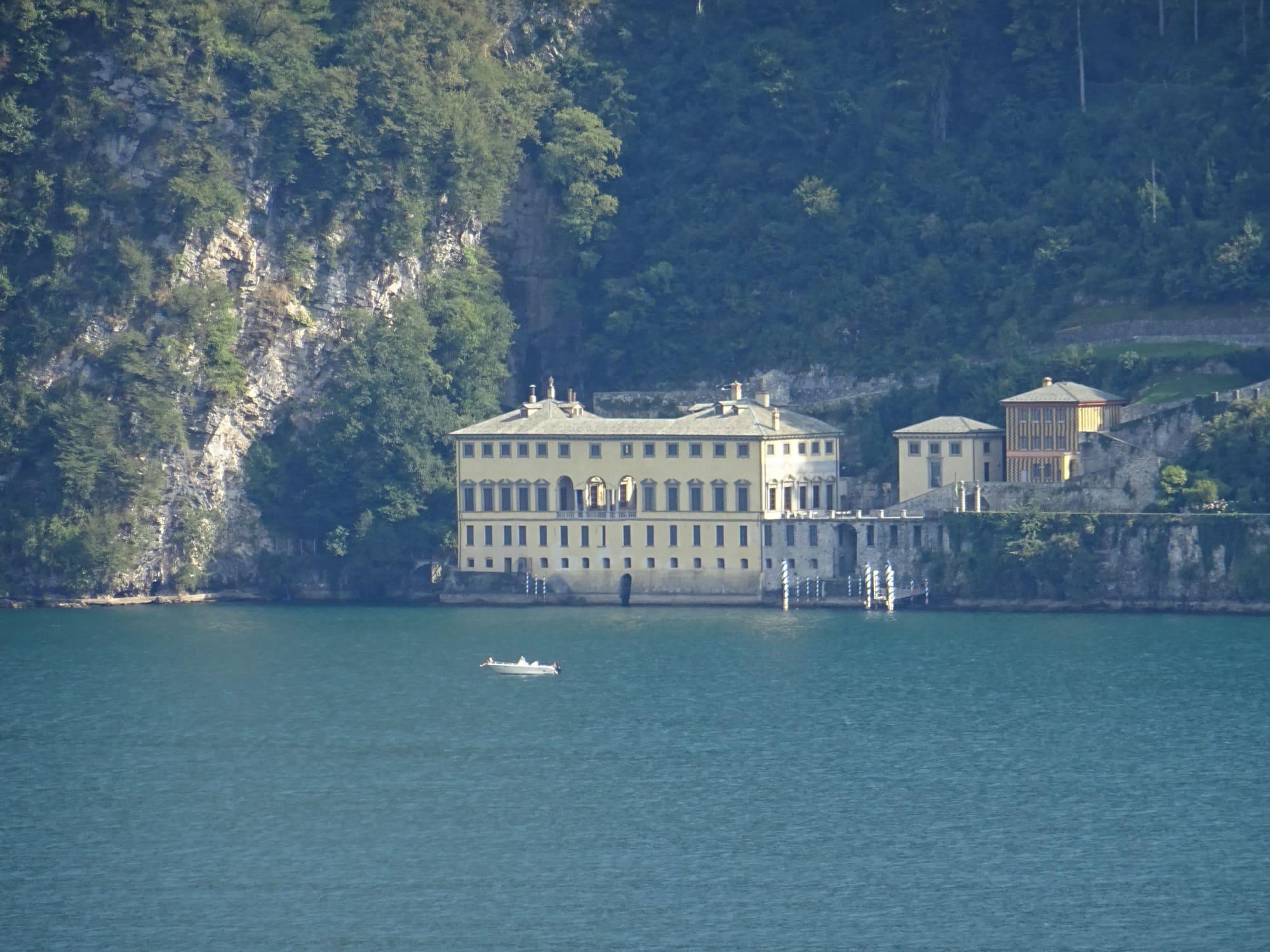
In the spring of 1818 Percy Bysshe Shelley and Mary had been in Italy only a few weeks. On 20 April, from Milan, he wrote to his friend Thomas Love Peacock that they had been to Como, looking for a house: the lake, he writes, “exceeds any thing I ever beheld in beauty, with the exception of the arbutus islands of Killarney. It is long and narrow, and has the appearance of a mighty river winding among the mountains and the forests.” They sailed from Como to the Tremezzina, and the letter lists what he saw: chestnut forests that sometimes come down to the very verge of the lake, laurel, bay, myrtle, wild figs and olives growing in the crevices of the rocks, the white towers of village churches among the dark woods and, on the shore that faces the south, olive, orange and lemon trees so loaded that there was more fruit than leaves. But the finest scenery, for him, was that of the Villa Pliniana, with the fountain described by the younger Pliny that ebbs and flows every three hours, once a magnificent palace and now half in ruins, which they were endeavouring to procure. They stayed at Como two days; the negotiation came to nothing.
The novel of Grianta
Stendhal knew the lake: he was a guest at the Pliniana, and sailing on the Lario he wrote that at this point the lake becomes dark and wild and the mountains drop almost sheer into the water. But the lake he left behind is the one in The Charterhouse of Parma, the novel of 1839: Fabrizio del Dongo grows up in the family castle at Grianta, on the western shore, opposite Bellagio. In the second chapter his aunt, Countess Gina, goes back with him to the places “so celebrated by travellers”: the Villa Melzi across the lake, the sacred wood of the Sfondrata and the bold promontory dividing the two branches, the one towards Como, “so voluptuous”, and the one running towards Lecco, “full of severity”. Lake Como, the countess reflects, is not surrounded, like the lake of Geneva, by well-enclosed fields farmed by the best methods, things that call to mind money and speculation, but by hills covered with trees planted by chance; the villages half-way up are hidden by the trees, the bell towers rise above the treetops, and across the water comes the distant sound of a bell.
Everything is noble and tender, everything speaks of love, nothing recalls the ugliness of civilisation.
Stendhal, The Charterhouse of Parma (1839), chapter II
A kiss at Villa Sommariva
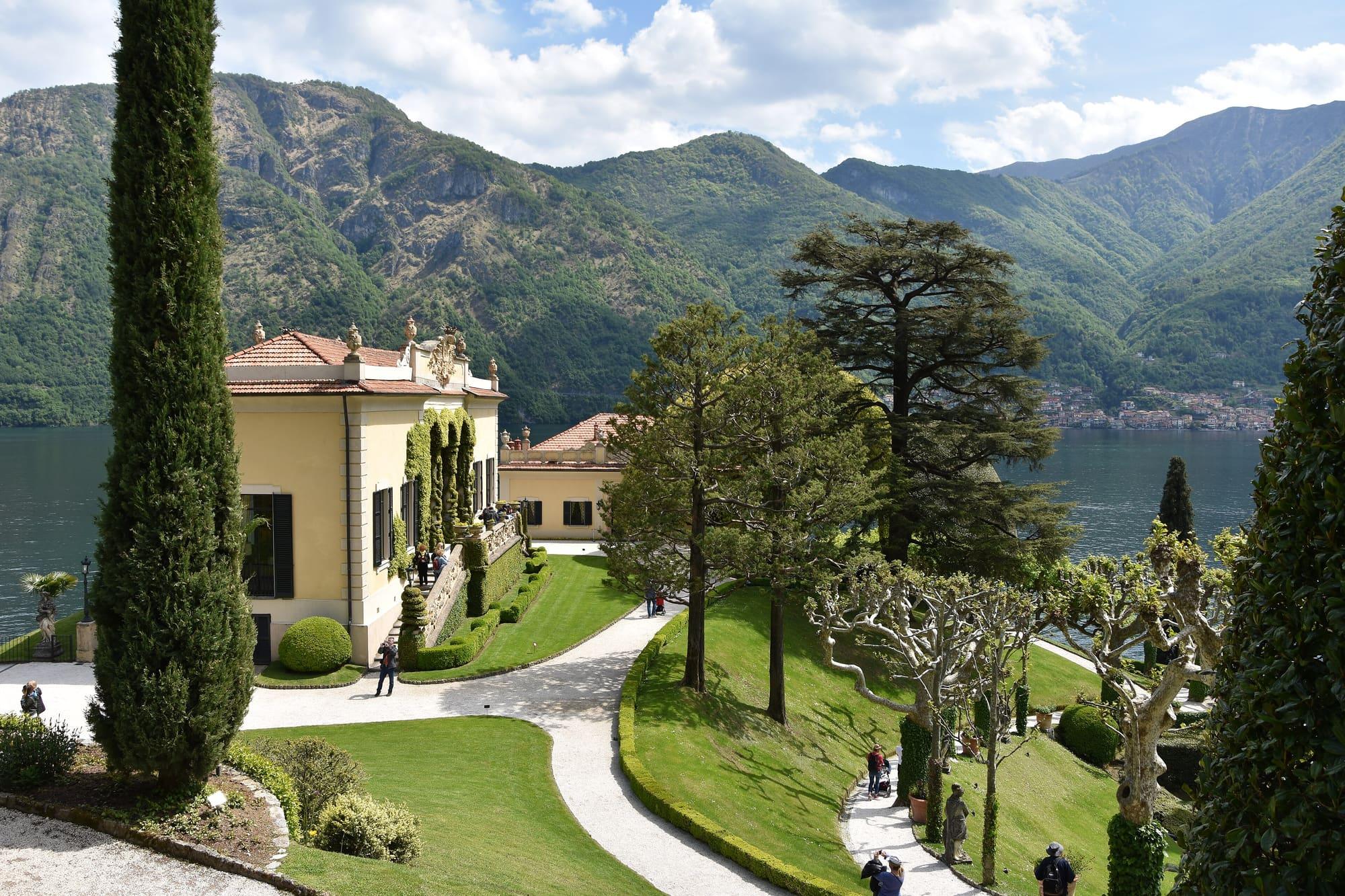
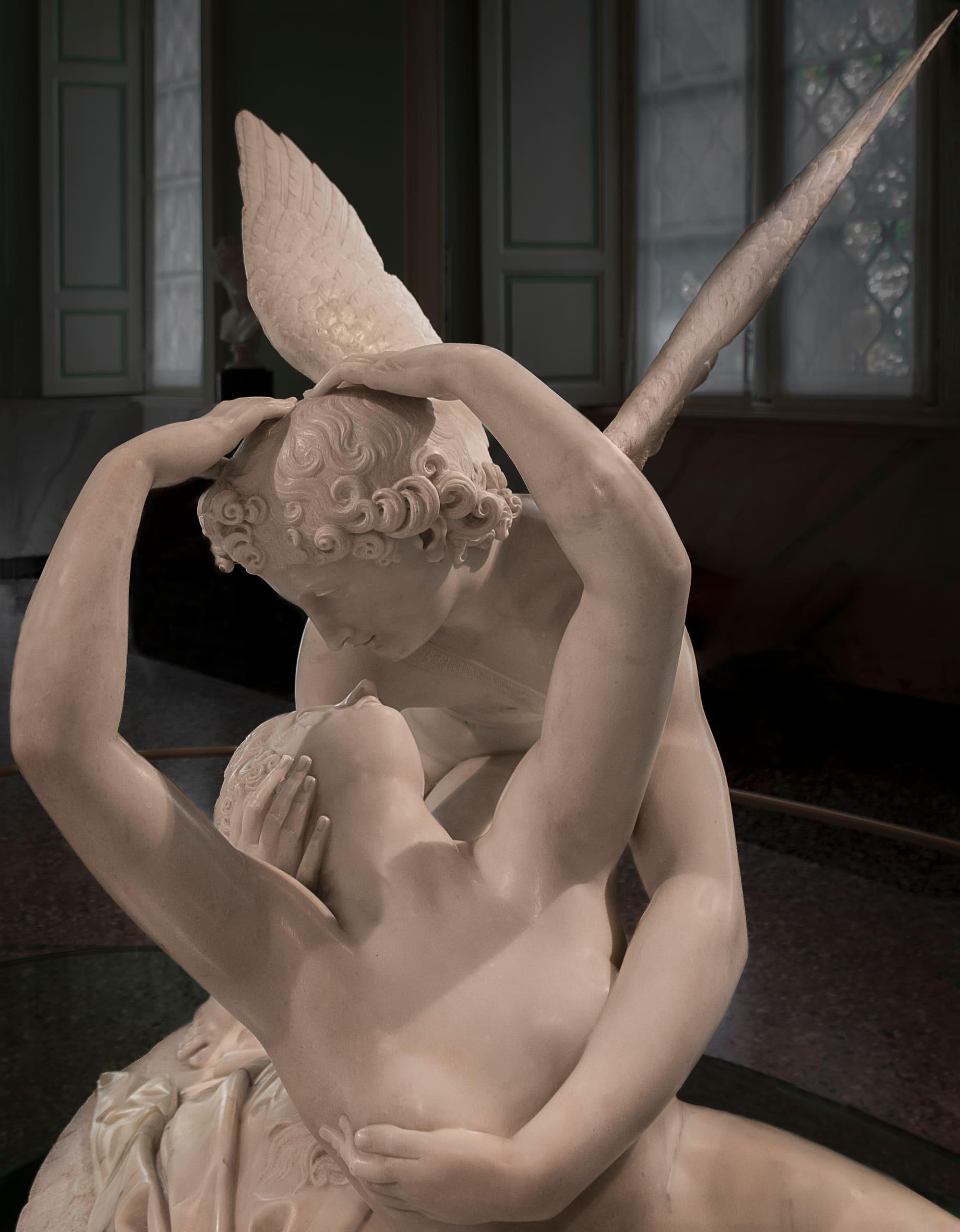
In the spring of 1845 Gustave Flaubert was travelling with his family, and in his notes of that journey, published in 1910, the lake takes up a few dense lines. He likes the harbour of Como because it is not a harbour, with its little boats carrying wooden hoops to hold up their awnings; the lake as a whole is “gentle, amorous, Italian”. At Villa Sommariva, the villa now called Carlotta, he notes the stone stair running down to the water for boarding the gondola, the tall trees, the roses growing over a fountain. Then the Cupid and Psyche, which he takes for Canova's: he looked at nothing else in the gallery, went back to it several times and, the last time, he confesses, kissed under the armpit the swooning woman who stretches her two long marble arms towards Love. The group is now attributed to Adamo Tadolini, a pupil of Canova, who had been given the master's plaster model with leave to reproduce it. Across the lake, having climbed to Villa Serbelloni, Flaubert noted the view of the three lakes and a single line: one would like to live here, and to die here.
Twenty-two years later
Mary Shelley came back to the lake in July 1840, a widow, with her son Percy Florence and some of his university friends, who had their degree to study for; they stayed two months, and the letters of the journey came out in 1844 in Rambles in Germany and Italy. Down from the Splügen, they boarded the steamer at Colico. They had planned to stay at Bellagio, but the steamer did not stop there and landed them at Cadenabbia, where they decided to remain precisely because the steamer called every day: its arrival at noon was the great event of the day. In the evenings they went out in boats and heard from afar “the soft tinkling bells, put by the fishermen to mark the spot where the nets are set”; the girls from the nearby silk mill went by singing. From the grounds of Villa Serbelloni she heard, on the far shore, the roar of a mysterious fountain called from its milky colour fiume latte, full and noisy in summer, empty and still in winter; one evening, on the water, she heard Manzoni's ode on Napoleon, the Cinque maggio, for the first time. And in a letter of 15 August she tells of going once by steamer to Como, making again the voyage she had made years before in a skiff as far as Tremezzo: “I longed inexpressibly to land at the Pliniana, which remained in my recollection as a place adorned by magical beauty.”
Bells on the nets
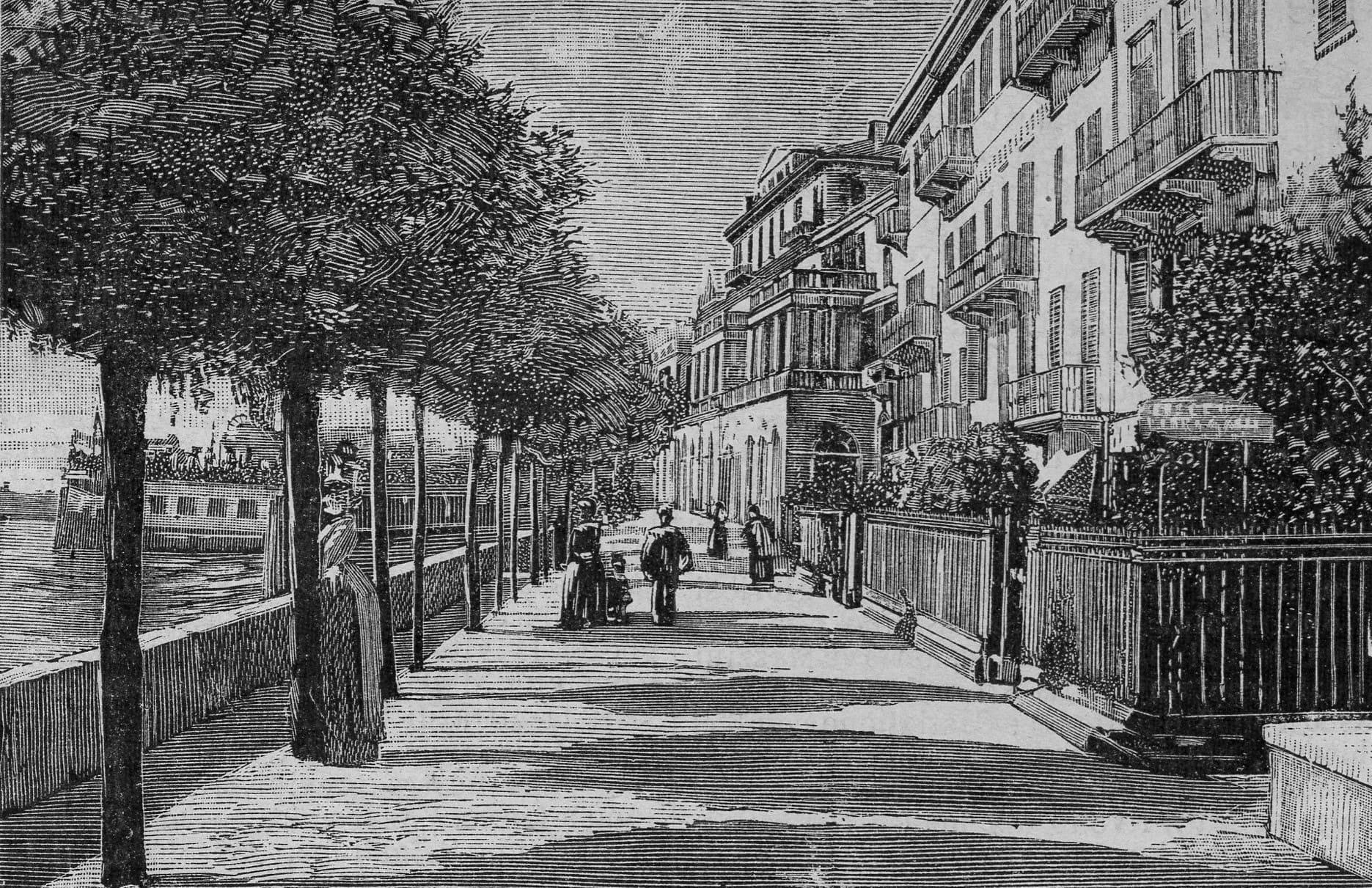
The same bells come back in a poem by Henry Wadsworth Longfellow, who in 1868–1869 visited Europe and was everywhere received with the greatest honour. The poem is called Cadenabbia, carries the heading Lake of Como and belongs to the fourth flight of his Birds of Passage: the poet paces a leafy colonnade of plane trees, makes the marble stairs by Somariva's garden gate his seat and hears the water lapping the steps beneath his feet, while “far away the floating bells / Tinkle upon the fisher's nets”. He watches the freighted barges come and go, the villas scattered on the wooded spurs, Bellaggio, as he spells it, blazing in the sun and, across the water, Varenna with its white cascade. And he asks himself whether there is a land of such supreme and perfect beauty anywhere.
Lake Tahoe was finer
Mark Twain came in 1867, during the Mediterranean cruise on the Quaker City that he described two years later in The Innocents Abroad: by train from Milan, lunch at Como and a small steamer to Bellagio, where as soon as they landed the police shut him and the whole passenger list into a windowless little stone cell for five minutes and fumigated them against cholera. “I did not like it yesterday,” he writes the next day. “I thought Lake Tahoe was much finer.” He admits that his judgment erred somewhat, “though not extravagantly”: the lake is not a vast basin but as crooked as any brook, between chains of mountains that spring abruptly from the water's edge, with white houses perched on pinnacles and villas with broad stone staircases down to the water. From his window he describes the far shore and calls it the most voluptuous scene they had yet looked upon; but thinking back to the lake in the Sierra Nevada, where he claims to have counted the scales on a trout at a depth of a hundred and eighty feet, he concludes that “Como would only seem a bedizened little courtier in that august presence.”
Historical events linked to this story are collected in the Lake timeline.