

How the silk industry began in Como, what is made there, where to see it and how to choose a scarf.
Silk manufacturing has a centuries-long history around Como. Textile firms supply fashion houses, and some also sell directly to the public.
How it started
Mulberry cultivation and silkworm rearing reached the Como district in the fifteenth century, carried by the same expansion that was filling the Po plain with mulberry trees. For three centuries it stayed domestic work: families kept the worms indoors, often in the warmest room, and spun through the winter.
The industry began at the end of the eighteenth century, when the work left the houses for mills along the streams, which supplied the power. In the nineteenth century Como became one of the main silk centres in Europe, and its industry came through two wars, competition from Asia and the arrival of synthetic fibres.
What is made in Como
Silkworm rearing around Como ended decades ago, and the raw thread comes from Asia.
The other stages remain: twisting, which gives the thread its twist; weaving; dyeing; printing; finishing, the treatments that make a fabric washable or crease-resistant; and design, which in Como has its own schools and archives.
The stages are shared among many specialised firms close to one another: a fabric may pass through several of them before it is shipped.
Where the firms are
Como's textile firms supply fabrics to fashion houses. Some also sell to individuals through their own brands and shops.
Around Como silk is twisted, woven, dyed and printed; the raw thread comes from Asia.
The works are not in the centre but in the towns around the city: at Fino Mornasco, at Grandate, along the Seveso valley and towards Olgiate Comasco.
The Silk Museum
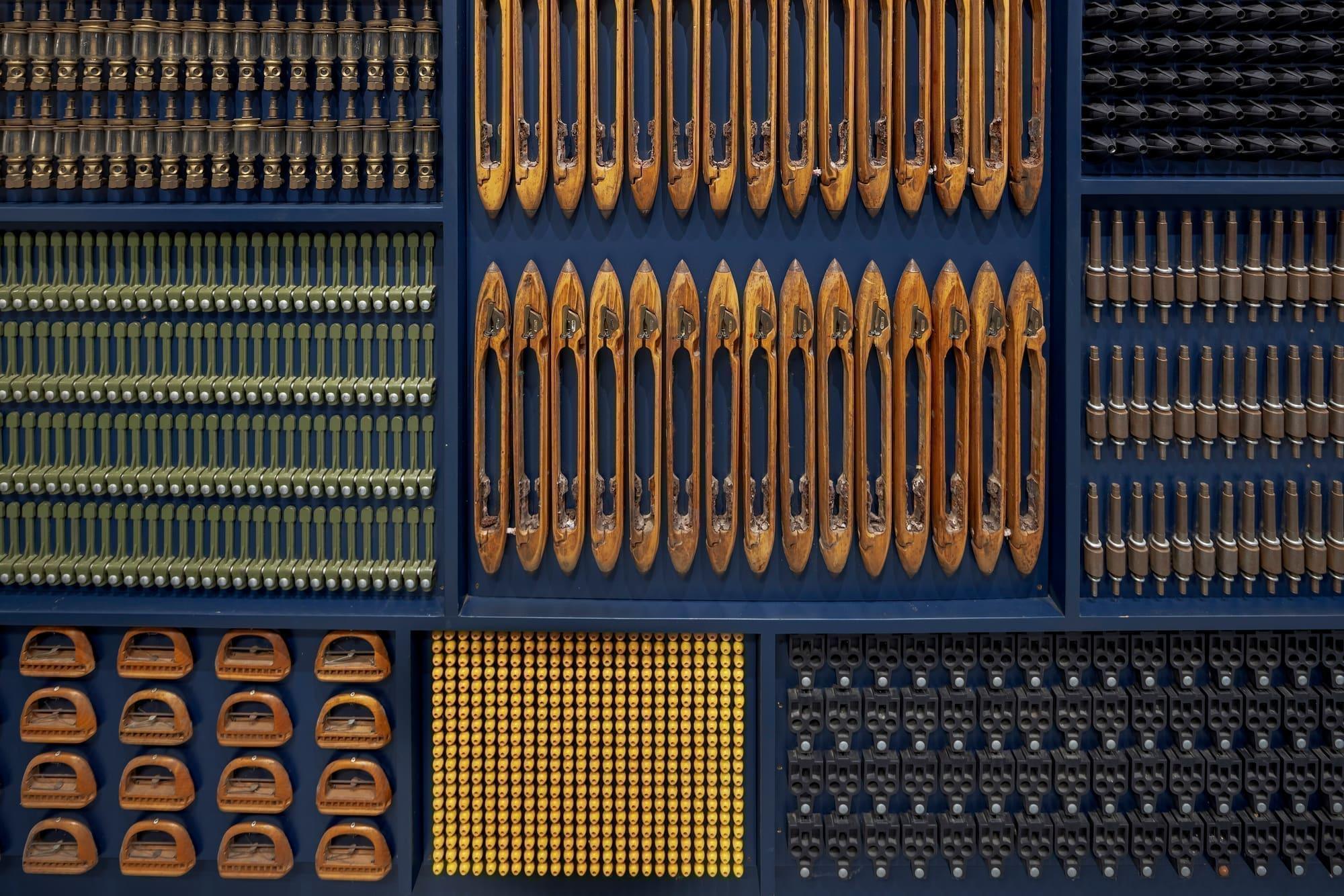
The Museo Didattico della Seta keeps the original machines for every stage and shows them in sequence, from reeling to printing: you walk through the production cycle in the order it happens.
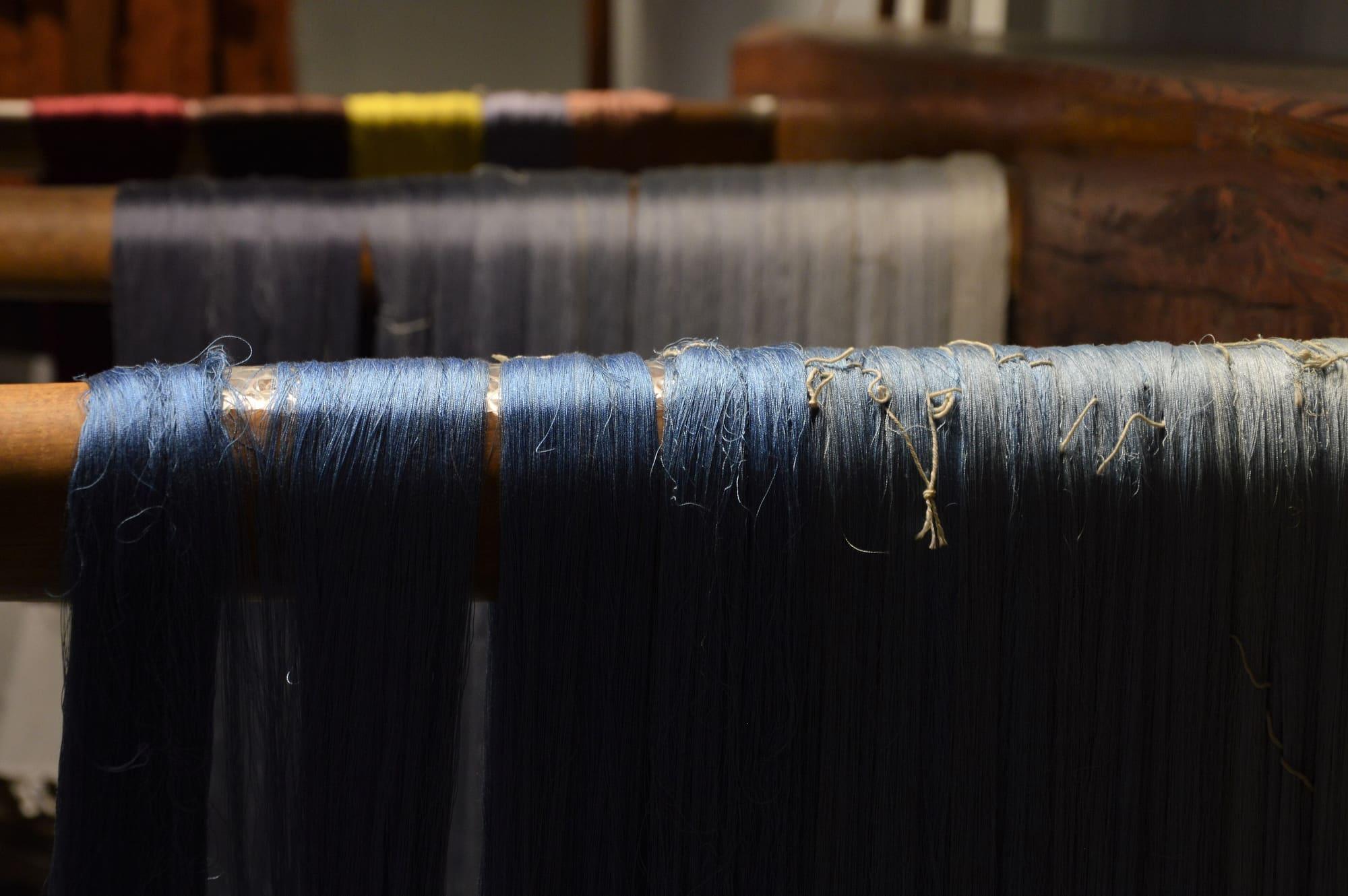
The visit takes about an hour and a half.
Buying silk in Como
In the city and around it some firms have outlets that sell directly. In the centre there are also scarves printed elsewhere.
When buying, you can ask where the fabric was printed: someone who knows names a precise place. The weight of silk is measured in momme: the higher the number, the heavier the fabric. Hand-rolled, hand-stitched hems can be told by touch, soft and slightly irregular; machine hems are flat and even.
The district has lost its raw material, which comes from Asia, but keeps every stage that follows.
Historical events linked to this story are collected in the Lake timeline.