What Palazzo Terragni is, why it was built, how it is made and which other rationalist buildings can be seen in Como.
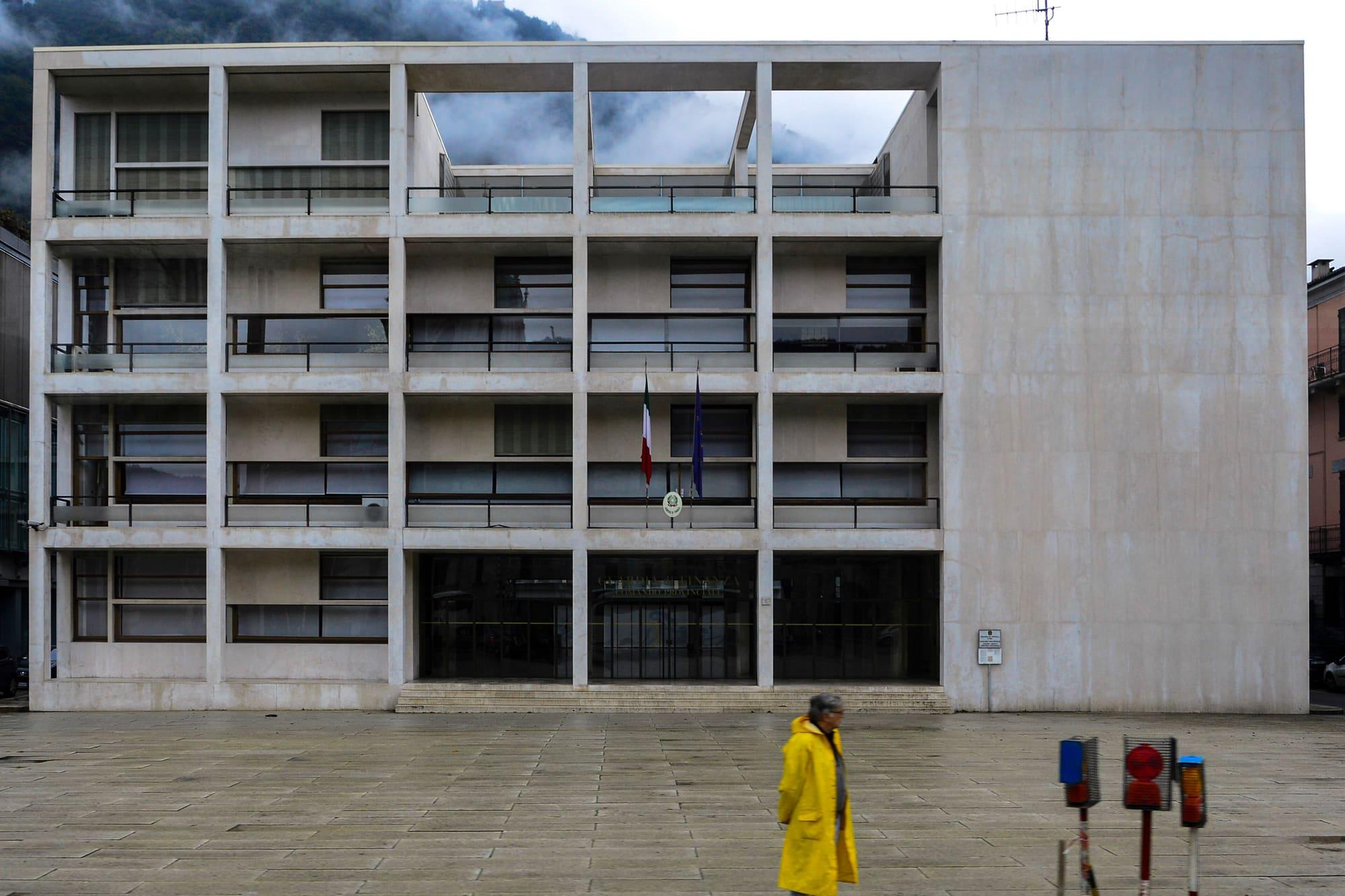
Fifty metres from the Renaissance apse of Como cathedral stands a white, square building made of solids and voids: Palazzo Terragni, which Giuseppe Terragni designed in 1932 and built between 1933 and 1936.
Terragni, born in Meda in 1904, worked in Como, and between the wars the city was one of the centres of Italian rationalism.
How it is made
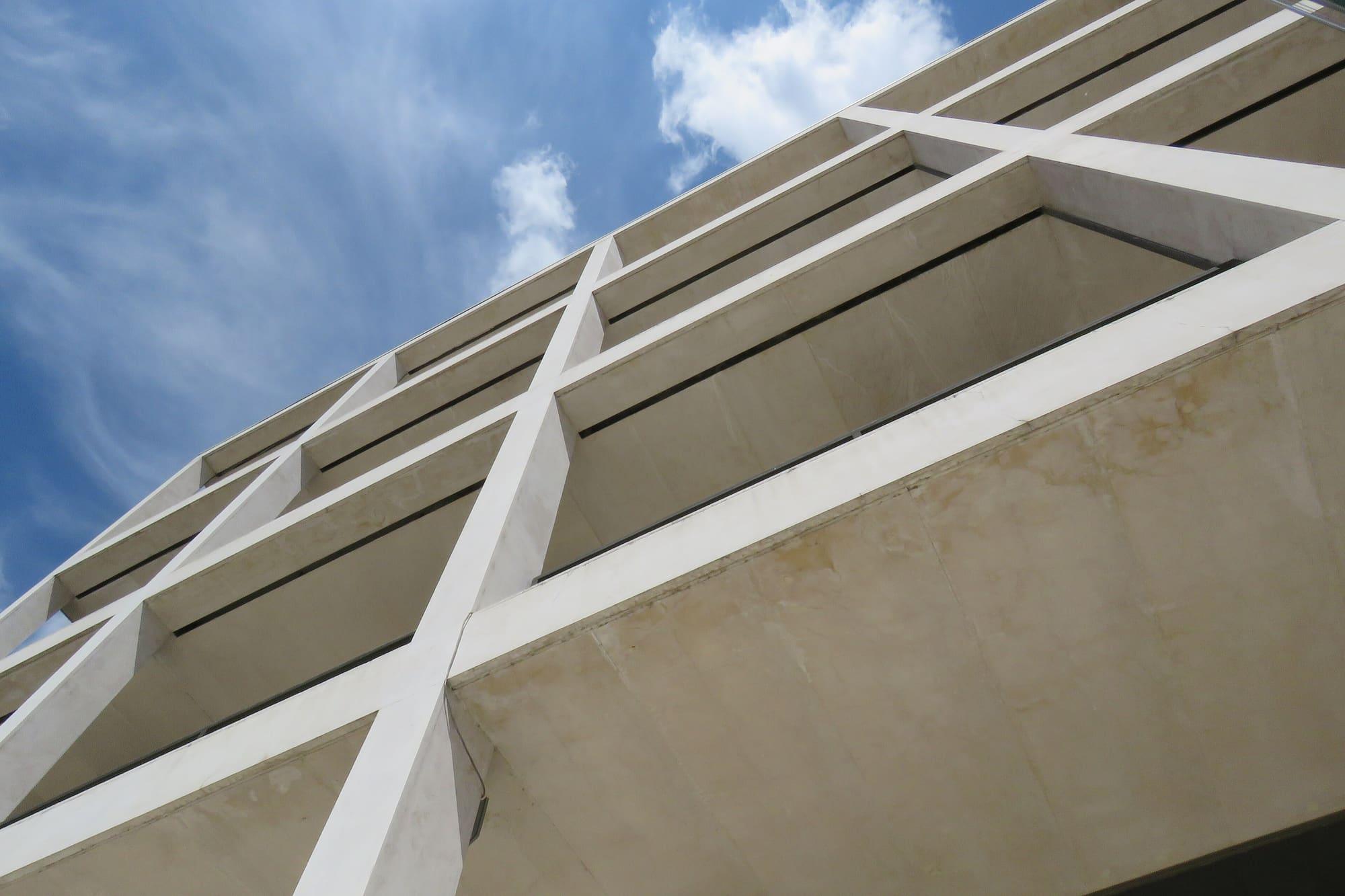
The plan is a square of about thirty-three metres a side and the height is half that. Inside, a courtyard covered by a skylight organises the whole building. The four façades follow the same grid, cut away differently on each side, so that the building changes as you walk round it.
The cladding is white Botticino marble. There are no cornices, no classical orders and no decoration: the composition rests only on the proportion between solids and voids. That is why the building is studied in schools of architecture as an example of monumentality achieved without the traditional means.
The Casa del Fascio
It was built as the Casa del Fascio, the seat of the National Fascist Party in Como. Terragni joined the regime and served it; the building was designed to represent it, and its transparency, with the courtyard visible from the street and the glass doors that opened all together, was meant as an image of the relationship between party and people.
It has taken the name Palazzo Terragni, houses the Guardia di Finanza, and the interior can be visited only on special occasions.
The other rationalist buildings
Como's rationalism includes several buildings in the city centre. The Novocomum, of 1929, is the first: a block of flats with a curved volume on the corner, which caused controversy in the city and was nicknamed “the Ocean Liner”. The Sant'Elia nursery school dates from 1937: classrooms opening onto the garden, light from two sides, heights made for children.
The plan of Palazzo Terragni is a square of about thirty-three metres a side.
Then the Casa Giuliani-Frigerio, the War Memorial on the lakefront and the Canottieri Lario rowing club, all within twenty minutes' walk of one another.
The walk takes about three hours, stays entirely in the centre and suits a rainy morning too.
Historical events linked to this story are collected in the Lake timeline.