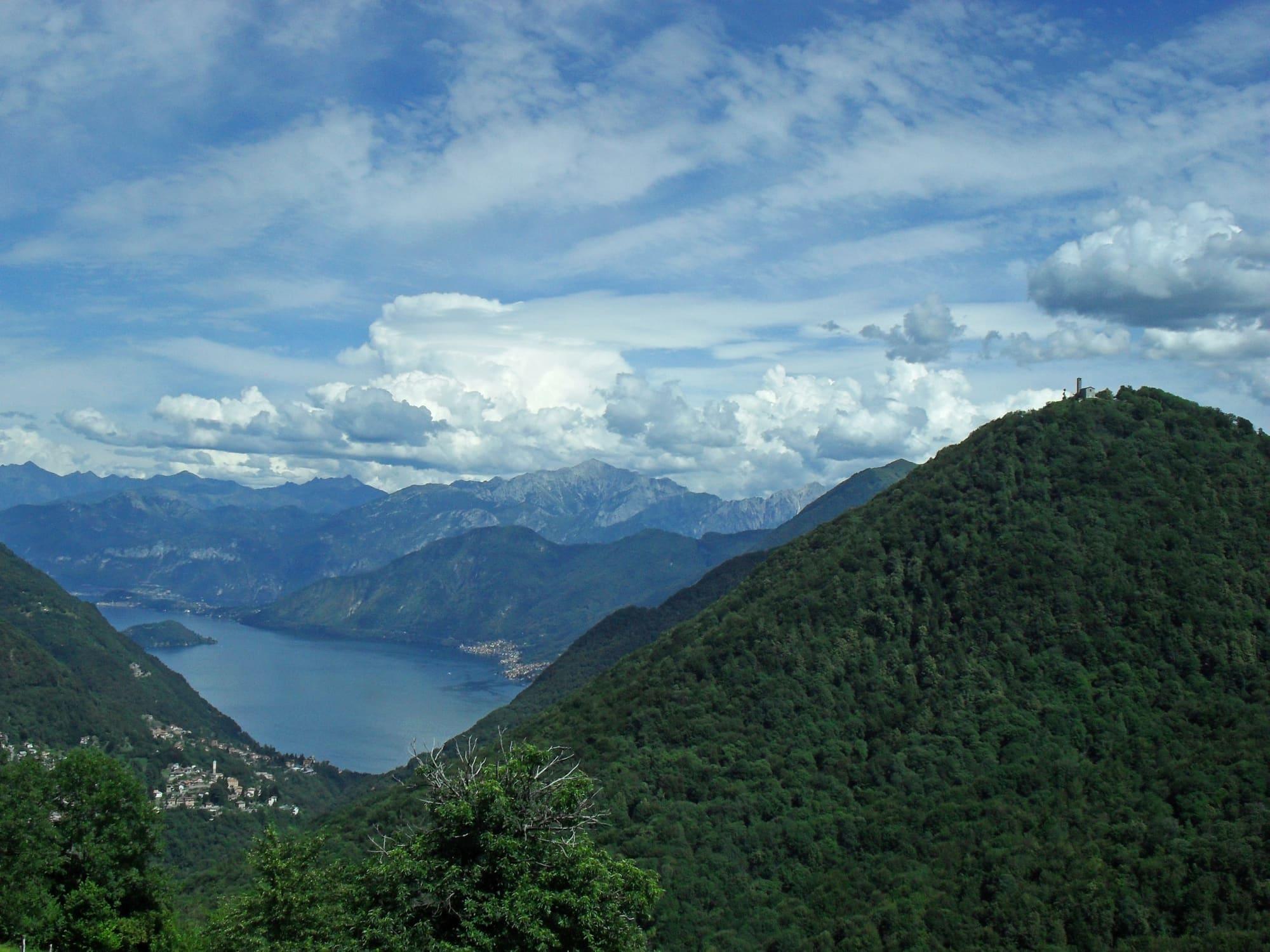
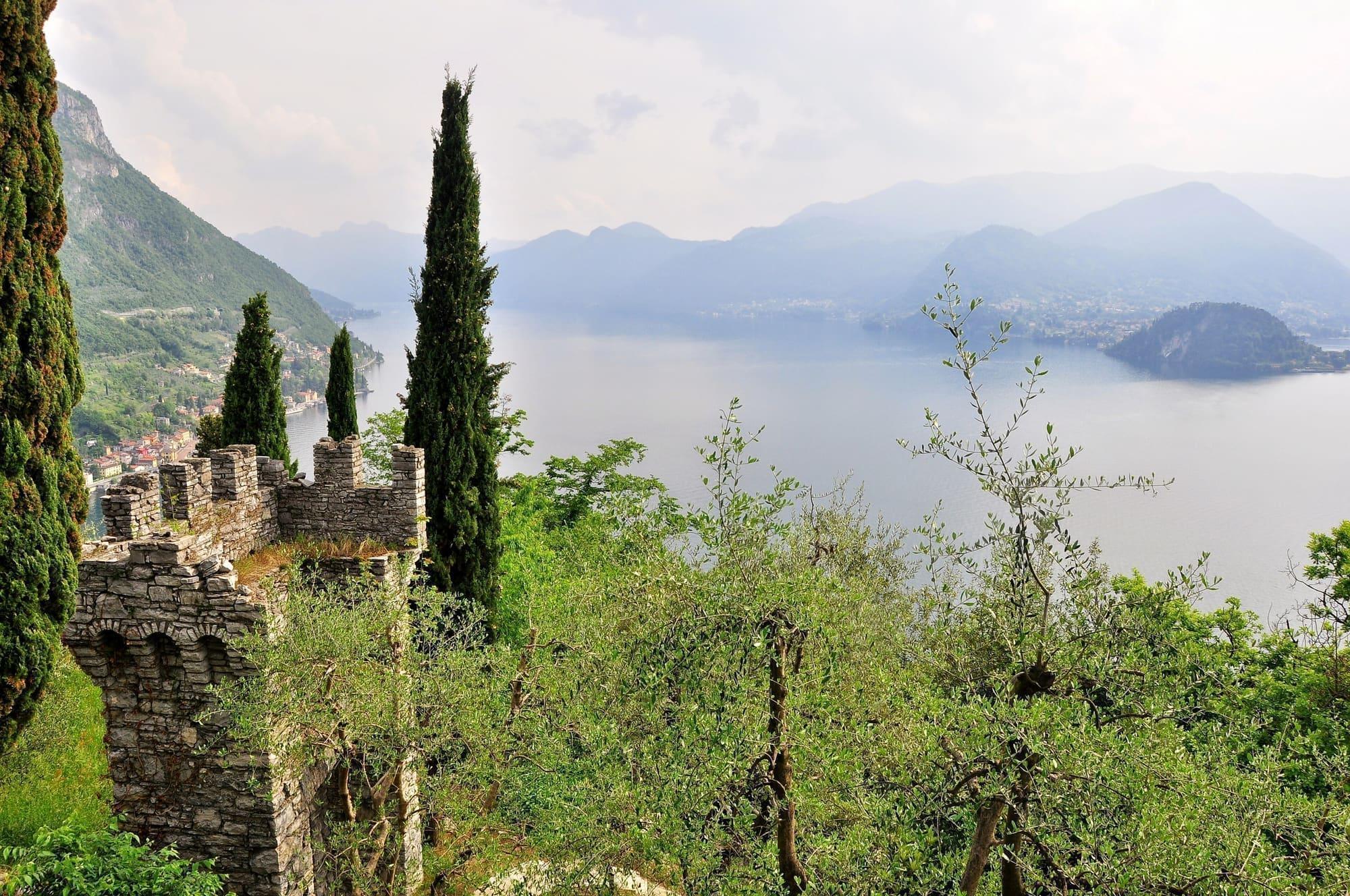
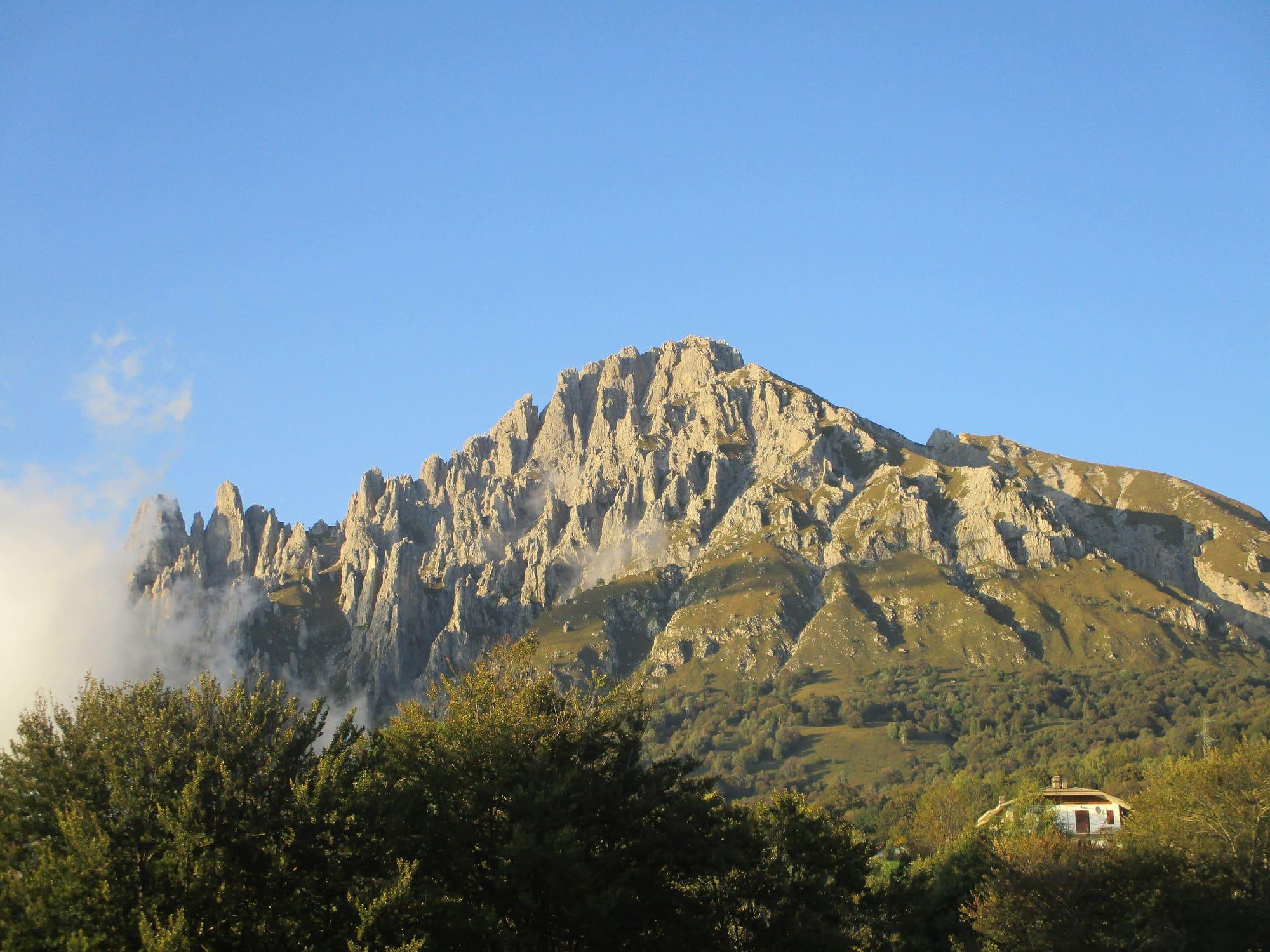
The Grignetta, or southern Grigna, rises above Lecco and Mandello with its limestone towers, monoliths and spires.
Generations of Lecco climbers learned their craft on this rock: Riccardo Cassin, who set off from here for the great walls of the Alps and later for expeditions around the world, and the Ragni della Grignetta, the group founded in 1946 and known by its red sweater. In Lecco their story is told in the Museo dell'alpinismo lecchese, in the Palazzo delle Paure.
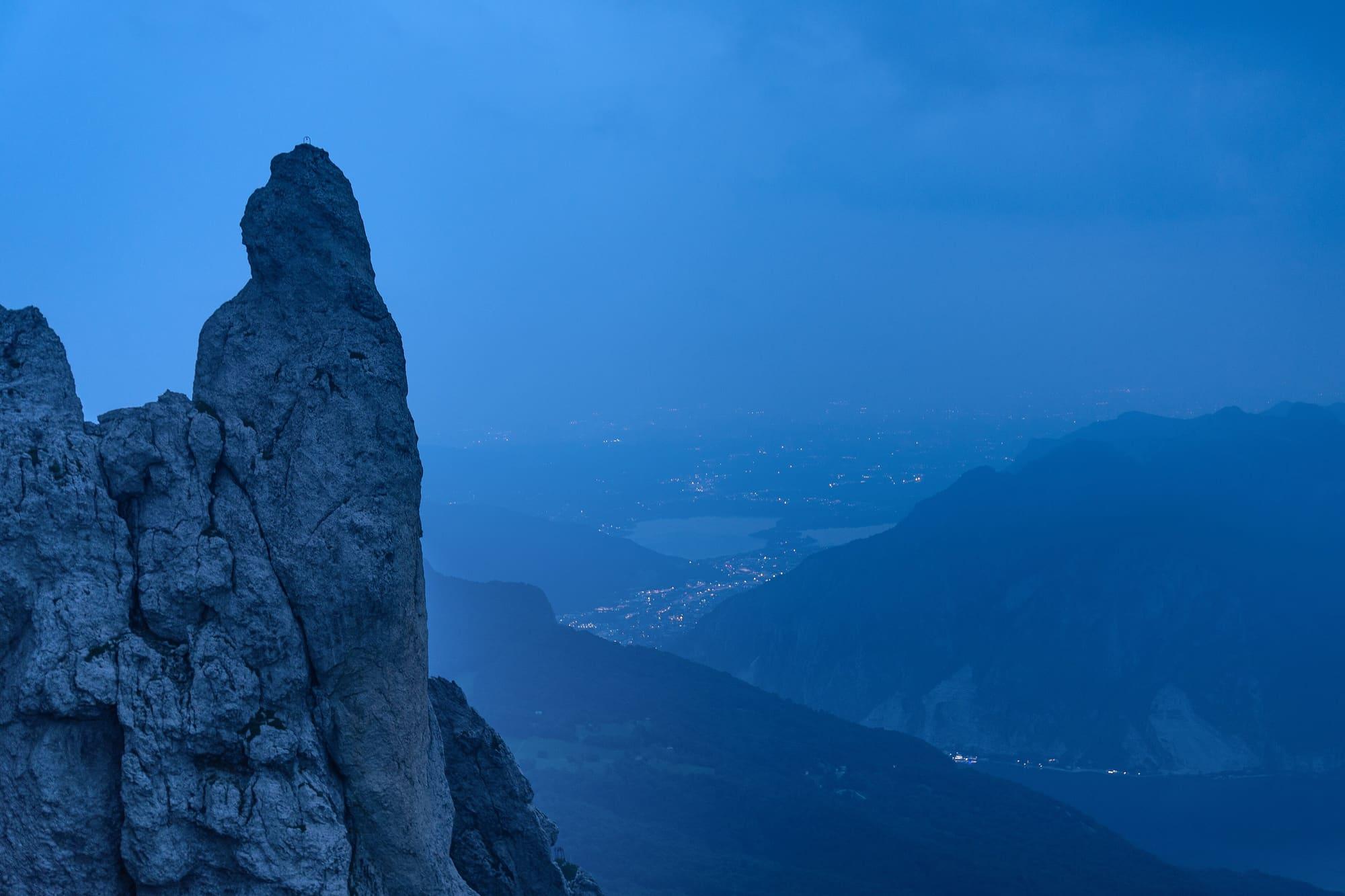
The Grignetta has more than twenty named rock formations, nearly all above fifteen hundred metres: the Sigaro Dones, the three Torrioni Magnaghi, the Fungo, the Lancia, the Guglia Angelina, the Ago Teresita, the Torre Cecilia, the Torrione del Cinquantenario. The mountain draws climbers in every season, and it was the training ground of Emilio Comici, Riccardo Cassin and Walter Bonatti, who opened routes on it that have become classics. The rock is limestone, and the fossils in it reveal its marine origin. Leonardo da Vinci had studied these spires long before the climbers: the Torre Cecilia and the Torrione del Cinquantenario appear on one of his sheets in the Windsor codex, drawn between 1505 and 1510. The starting point is the plateau of the Piani Resinelli, where the first huts came in 1899 and 1911 and the motor road only on 7 October 1936: before that, the way up was a mule track.
The age of the sixth grade
Riccardo Cassin was born in 1909 at San Vito al Tagliamento, in Friuli; his father, who had emigrated to Canada, had died in 1913 in an accident in a quarry. In 1926 he moved to Lecco for work. In winter he skied, and he boxed until 1929, when he began climbing on the spires of the Grigne. The list of his first ascents begins here: in 1931 the via Mary on the east face of the Guglia Angelina, with Mary Varale; the north arête of the Sigaro Dones, a route he dedicated to his father Valentino; the south-east face of the Corna di Medale, above the town, with Mario Dell'Oro; in 1933 the west face of the Zuccone dei Campelli with Emilio Comici. From this school Cassin moved on to the Dolomites and the Western Alps, in the years of the sixth grade, then the top of the scale of difficulty: in 1935 the north face of the Cima Ovest di Lavaredo with Vittorio Ratti; in 1937 the north-east face of the Piz Badile, over three days of bad weather, together with Mario Molteni and Giuseppe Valsecchi from Como, who died of exhaustion on the descent; between 4 and 6 August 1938, with Ugo Tizzoni and Gino Esposito, the Walker Spur of the Grandes Jorasses, in the Mont Blanc massif. Cassin had never been there before and had seen the face only on a postcard.
On the first of those routes there was also a woman. Mary Varale, born in Marseille in 1895, began climbing in 1924 and between the 1920s and 1930s climbed two hundred and seventeen summits, leading, seconding and alone. She regarded Comici as her teacher, and she is remembered as a pioneer of women's mountaineering in Italy. On the Grigna, besides the route with Cassin, she made the first ascent of the west face of the Guglia Angelina in 1932 and of the south-east face of the Torre in 1933. In 1935 she resigned in protest from the Club alpino italiano, which had refused the medal for athletic valour to Alvise Andrich, her rope-mate on a hard climb on the Cimon della Pala. Cassin called her “an exceptional climber”.
The seven-legged spider
The group was born in 1946. It was founded by Giulio and Nino Bartesaghi, Franco Spreafico, Emilio Ratti and Gigino Amati, and soon afterwards they were joined by Gigi Vitali, whom Tita Piaz had nicknamed the Ragno, the Spider, for the elegance of his climbing. They wanted to catch up with and surpass the “old men”, the great Lecco climbers of the day, Cassin and Mario Dell'Oro, known as Boga, who in time joined the group too. The Ragni della Grignetta, or Ragni di Lecco, belong to the Lecco section of the Club alpino italiano, and you know them by the red sweater with the seven-legged spider on the left sleeve.
The Ragni's is a sweater that can sometimes be heavy to wear.
Ragni della Grignetta, “Il gruppo”
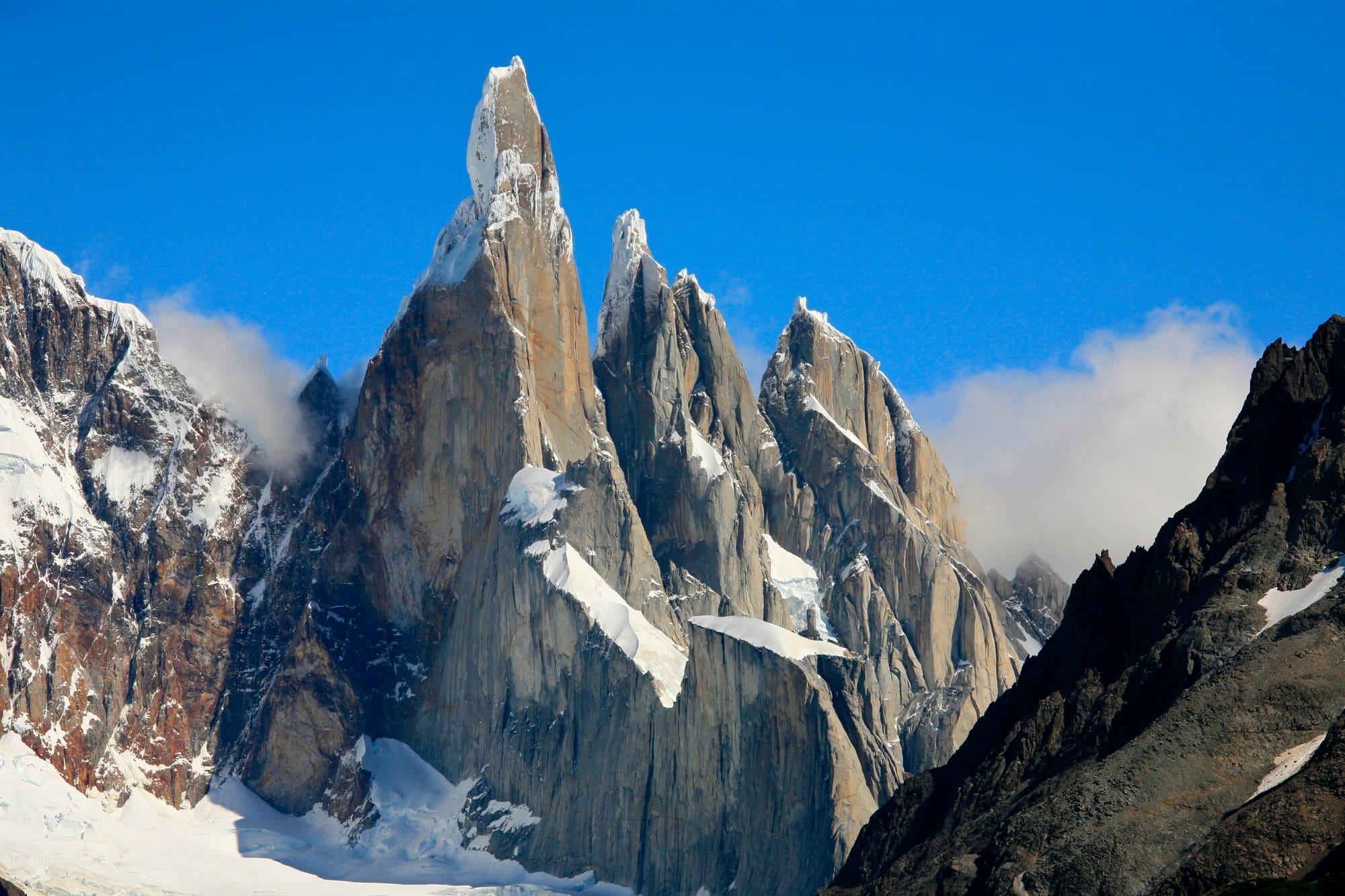
After their first new routes on the Grignetta the Ragni began repeating the old men's great climbs: in 1949 Carlo Mauri and Luigi Castagna climbed the Cassin route on the Badile, the first Italian repeat and the third ascent of all. Then came the expeditions. In 1958 Cassin led the Club alpino's expedition to Gasherbrum IV, in the Karakoram, and Walter Bonatti and Mauri reached the summit; in 1961 he took five young men, Luigino Airoldi, Gigi Alippi, Jack Canali, Romano Perego and Annibale Zucchi, up the south face of McKinley, in Alaska, then still unclimbed: they all reached the top, and the expedition received a telegram of congratulations from President Kennedy. Cerro Torre, in Patagonia, turned the Ragni back in 1970; in 1974 an expedition led by Casimiro Ferrari climbed it by the west face, and on 14 January Ferrari and Mario Conti reached the summit, followed by Pino Negri and Daniele Chiappa. The international climbing community recognises it as the first ascent of the mountain. Ferrari was born in Lecco in 1940, had started work very young as a wire-drawer and joined the Ragni at eighteen.
The town below the mountain
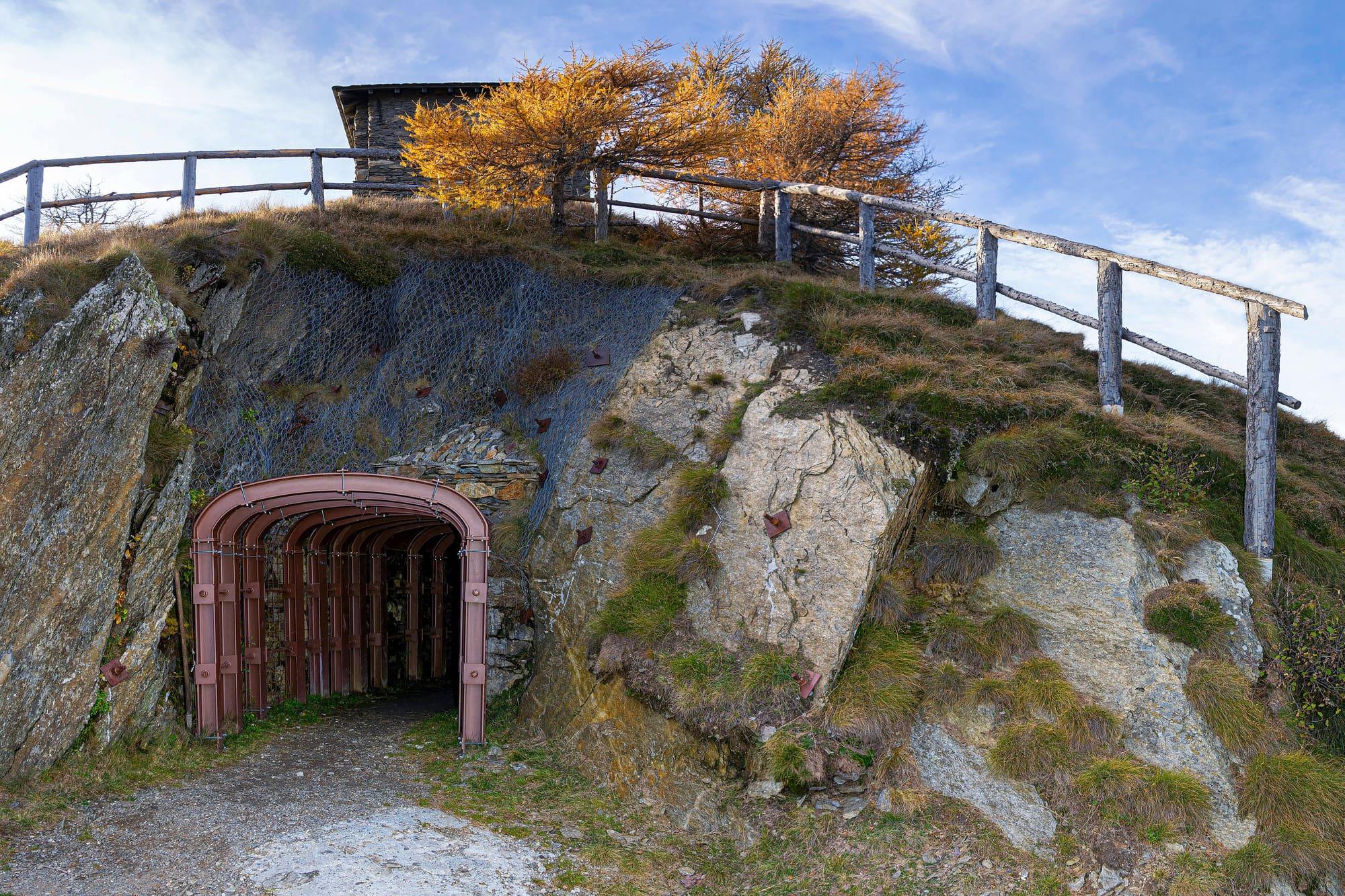
In Lecco this story has a museum. On the third floor of the Palazzo delle Paure, on the lakefront, the Museo dell'alpinismo lecchese, one of the town's civic museums, explains why this tradition was born and grew up precisely here, in its ties with the area's society, economy and landscape. It has a multimedia section and a display of objects given to the CAI in Lecco by climbers or their families, with particular attention to how equipment evolved. Equipment too has a Lecco chapter: from 1947 Cassin began making rock pitons, then hammers, ice axes, karabiners and down jackets for expeditions. At the Piani Resinelli, below the Grignetta, lead, zinc and calamine were mined between the seventeenth and nineteenth centuries for the town's young metalworking industry; at Villa Gerosa Crotta, in the Parco Valentino, a visitor centre tells in six rooms, among other things, the climbing history of the Grigne.
Cassin died on 6 August 2009, a hundred years old, in his house at the Piani Resinelli, at the foot of the Grigne; in 1987, at seventy-eight, he had climbed the Badile again by the route of half a century earlier. For his centenary the city of Lecco gave him a gold medal and unveiled in front of the town hall, in Piazza Diaz, the monument known as the hundred threads; since 2022 a square has borne his name. The Ragni, meanwhile, have kept opening routes, from Patagonia to the Karakoram, from Greenland to Baffin Island, including free climbs on the big walls. The group runs a national mountaineering school and a climbing gym in town, and keeps the descriptions of the routes its members have opened. And above the town the spires remain: the Sigaro, the Fungo, the Lancia, the Angelina.
Historical events linked to this story are collected in the Lake timeline.