Stories from the lake
Lake timeline
Two thousand years of the lake in order of date: from the Roman road along the western shore to the first steamboat, from the fall of the Isola Comacina to the Olginate dam. Each date leads to the story that tells it and to the place where it happened.
- Dates
- 82
- Stories
- 27
- Periods
- 6
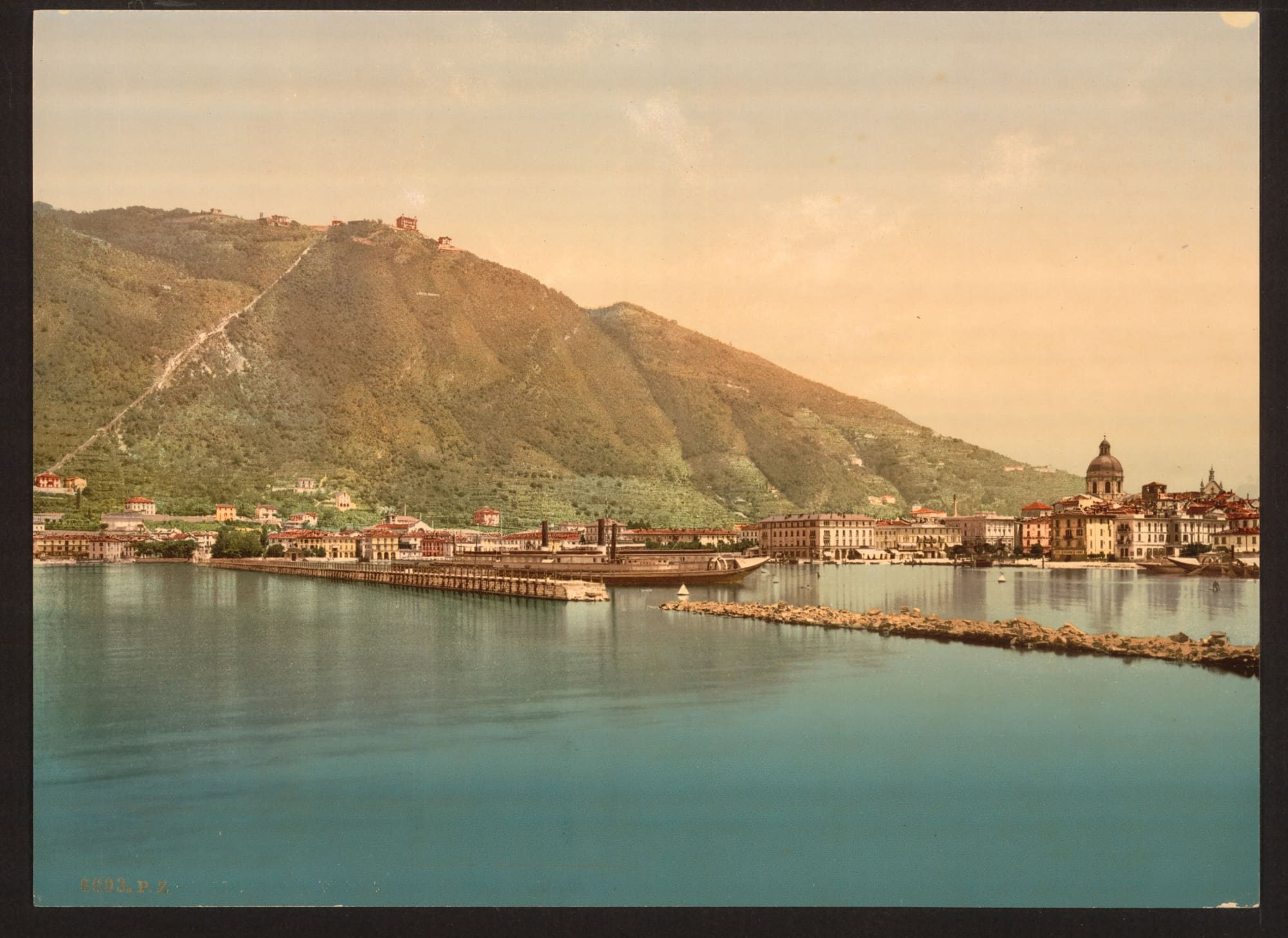
32dates
Antiquity
To the 5th century · 3 dates
AD 61 or 62
Pliny the Younger is born
The nephew of Pliny the Elder, who later adopts him, is born at Novum Comum, ancient Como. In his letters he describes the spring that rises and falls several times a day, the one at the Pliniana, and two villas of his on the shore of the Lario, which he calls Tragedy and Comedy.
5th century
A baptistery on the Isola Comacina
A hall for baptism, decorated with mosaics and frescoes, stands on the island. Its remains came to light in the twentieth-century excavations around the small church of San Giovanni.
5th or 6th century
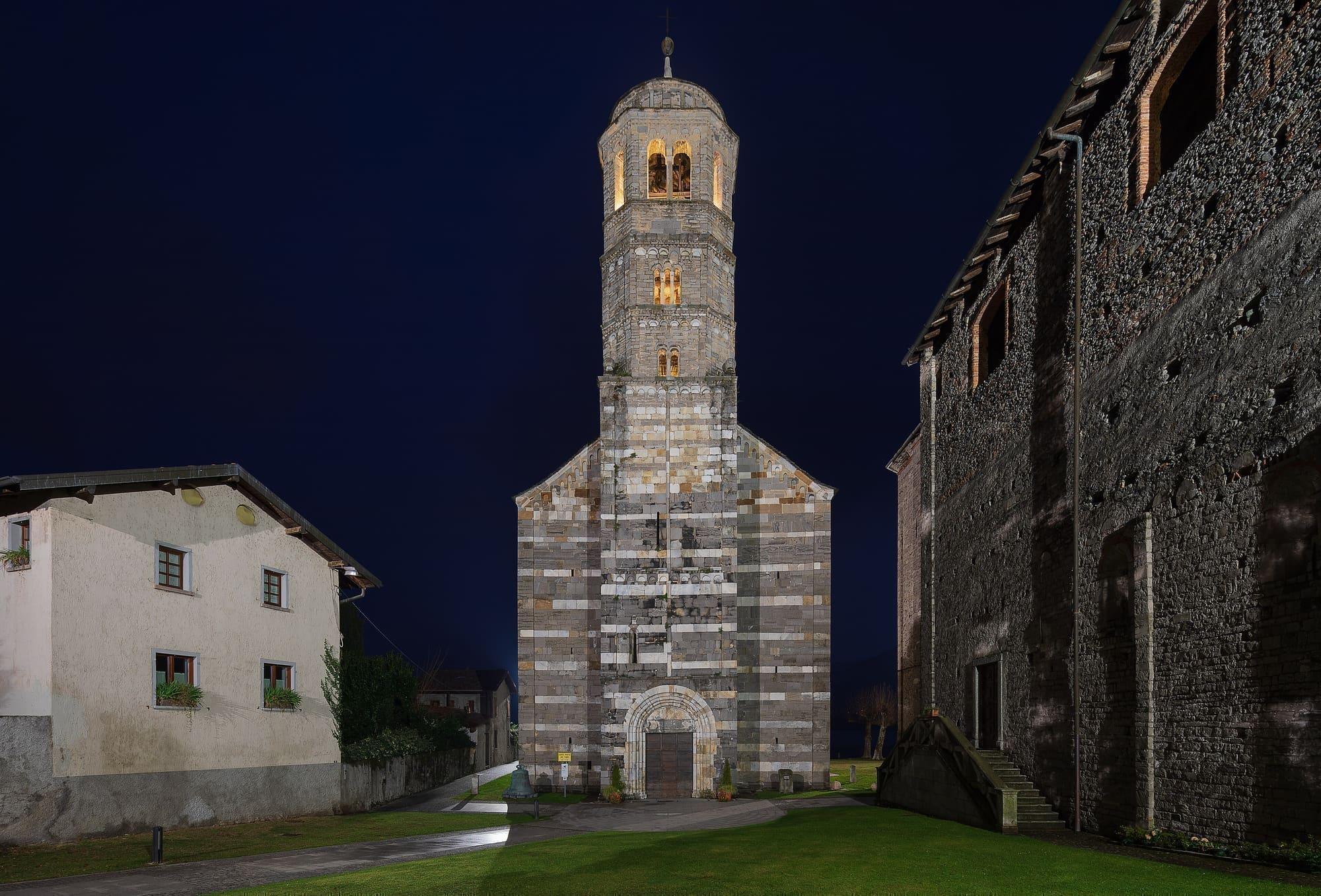
The baptistery of Gravedona
A baptistery with a mosaic floor and an octagonal basin for baptism by immersion is built at Gravedona. The Romanesque church of Santa Maria del Tiglio, in bands of light and dark stone, later rises over its remains; the baptistery came to light in the excavations of 1953.
Middle Ages
6th century to 1449 · 9 dates
607–617
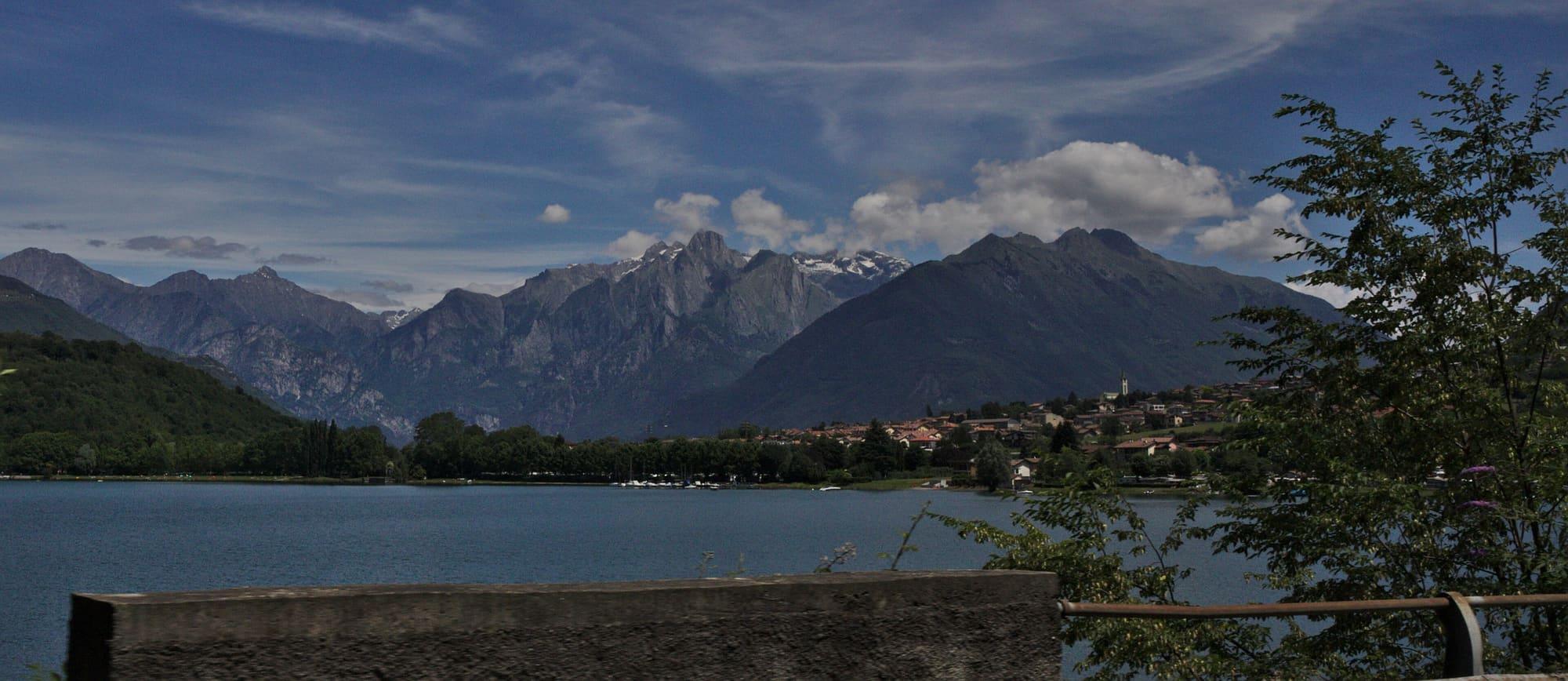
Agrippinus founds an oratory at Piona
Agrippinus, Bishop of Como, builds an oratory dedicated to Saint Justina the martyr on the Olgiasca peninsula and prepares his own tomb there. A stone pillar kept at Piona records it; a small community, probably of hermits, was most likely already living there.
643
Rothari's Edict names the Comacine masters
Two chapters of the law of the Lombard king Rothari deal with the magister commacinus and settle who must pay for the damage if a house built by a master collapses. The name most probably means builders and stonecutters from the Como area, but its meaning is not settled.
Second half of the 8th century
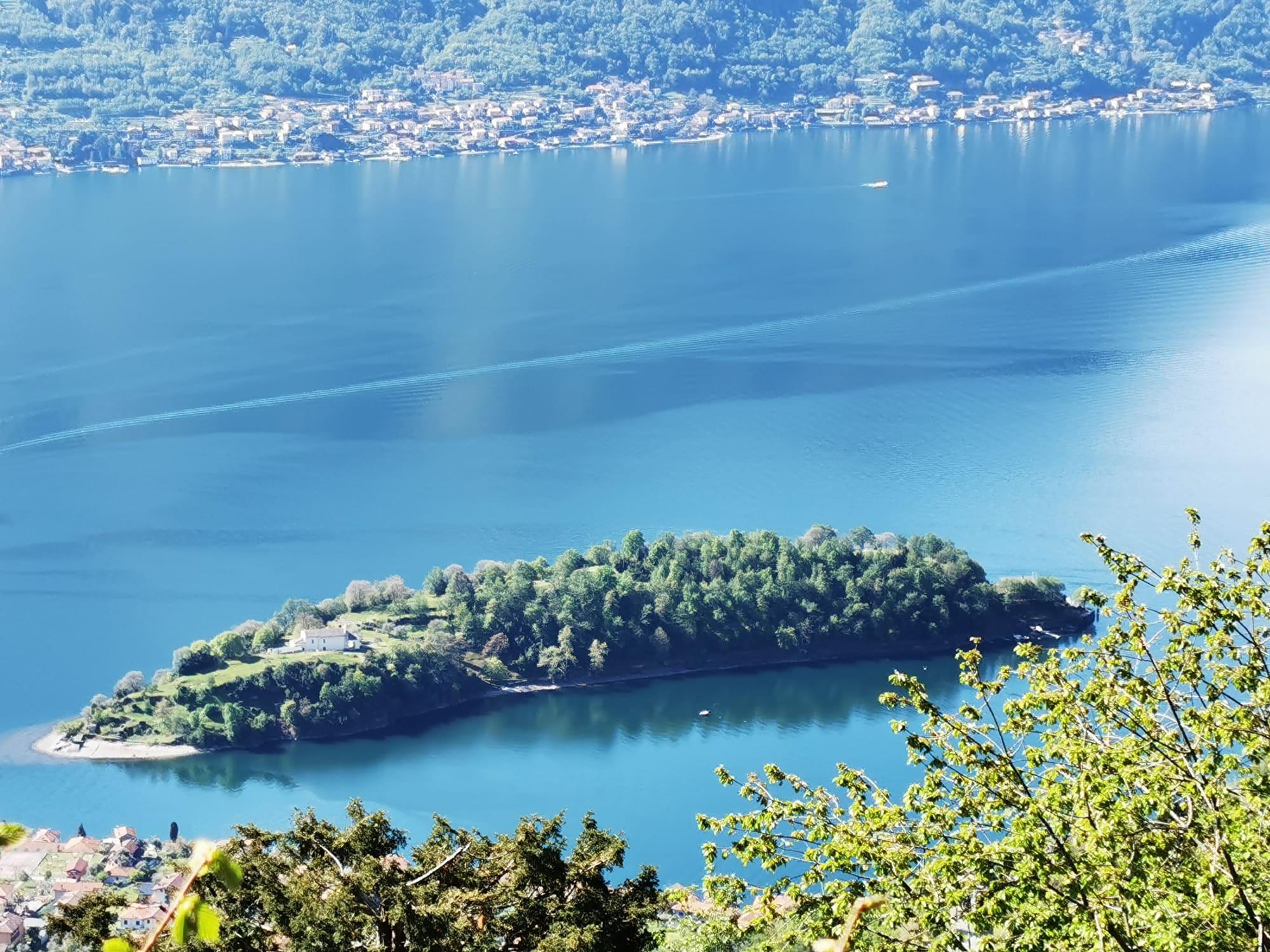
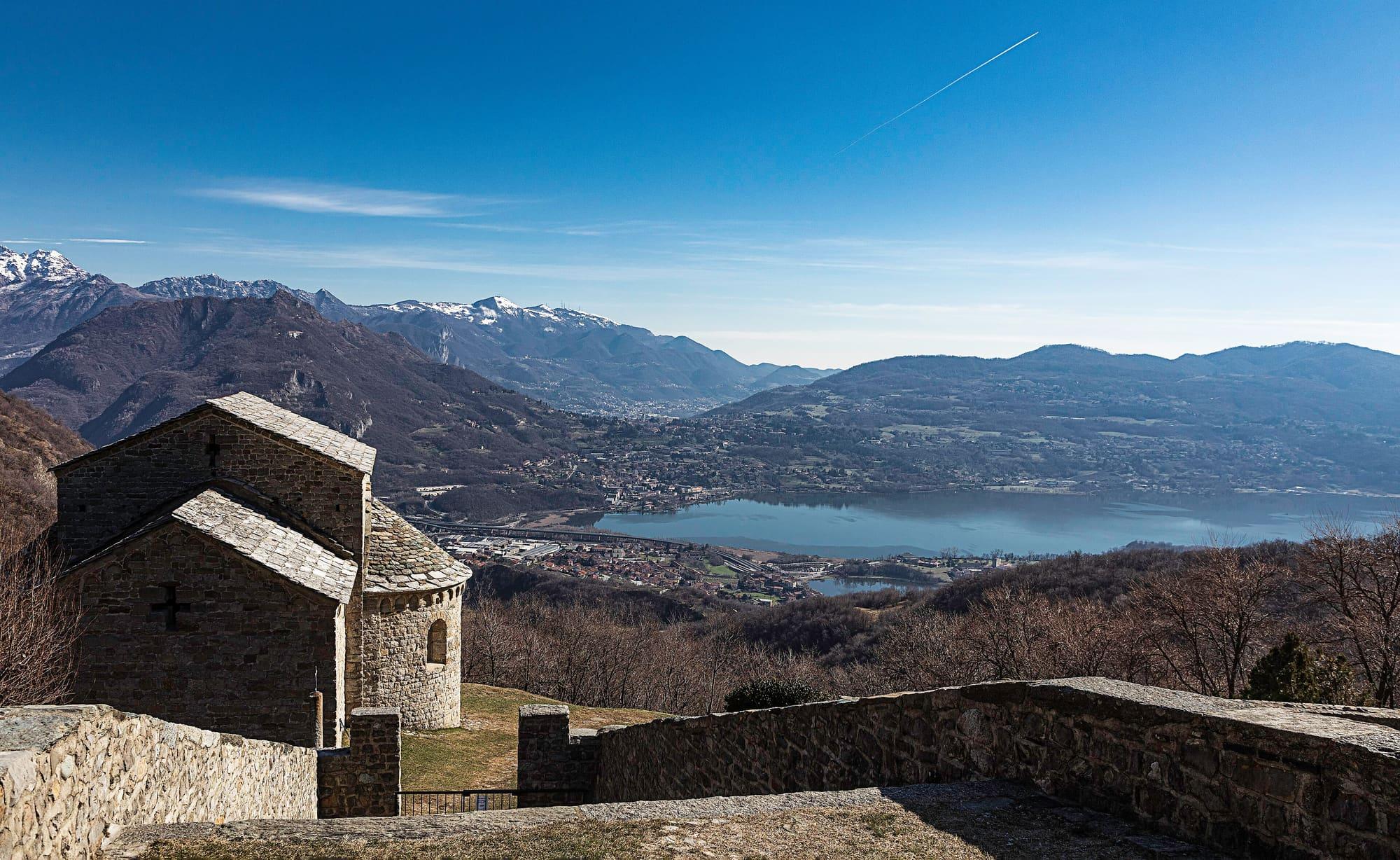
A monastery on the mountain above Civate
At the end of the Lombard kingdom a small monastery dedicated to Saints Peter and Paul is founded above Civate; legend credits King Desiderius with it. Between the 10th and the 11th century it becomes the Romanesque building of San Pietro al Monte, which can be reached only on foot.
Place: Basilica of San Pietro al MonteStory: The monks' lake
24 January 835
Limonta passes to the monastery of Sant'Ambrogio
By a charter of the Emperor Lothair, Limonta becomes a fief of the Milanese monastery of Sant'Ambrogio, which holds it until 1797. For centuries the oil of this stretch of the Lecco branch burns in the lamps on the tomb of Milan's patron saint.
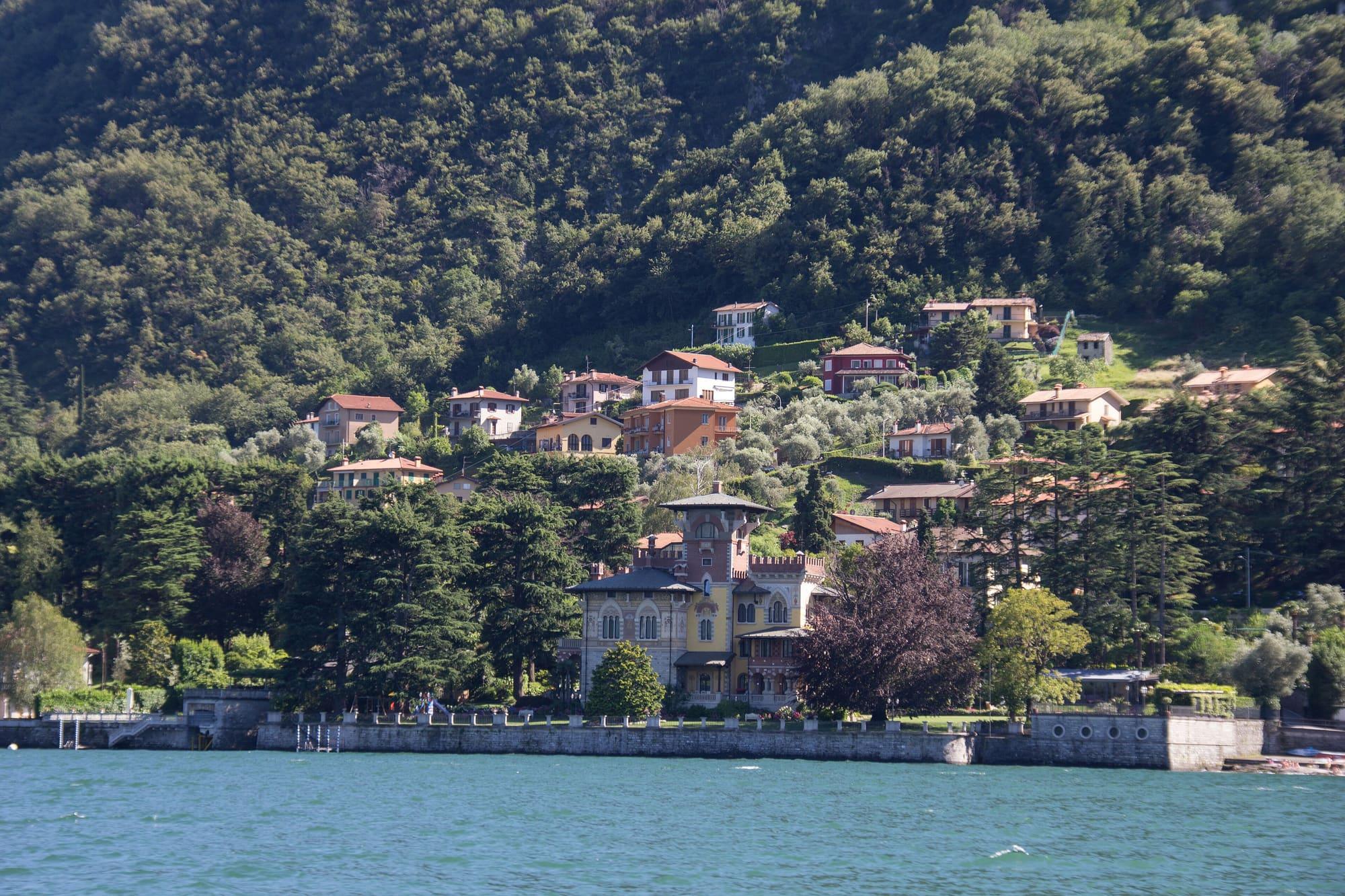
Sant'Eufemia on the Isola Comacina
Bishop Litigerius founds the canonry of Sant'Eufemia on the island, a basilica with a nave and two aisles, more than forty metres long. The walled island is the centre of the pieve, the parish district that gathers the churches of the western shore between the Camoggia valley and the Perlana stream.
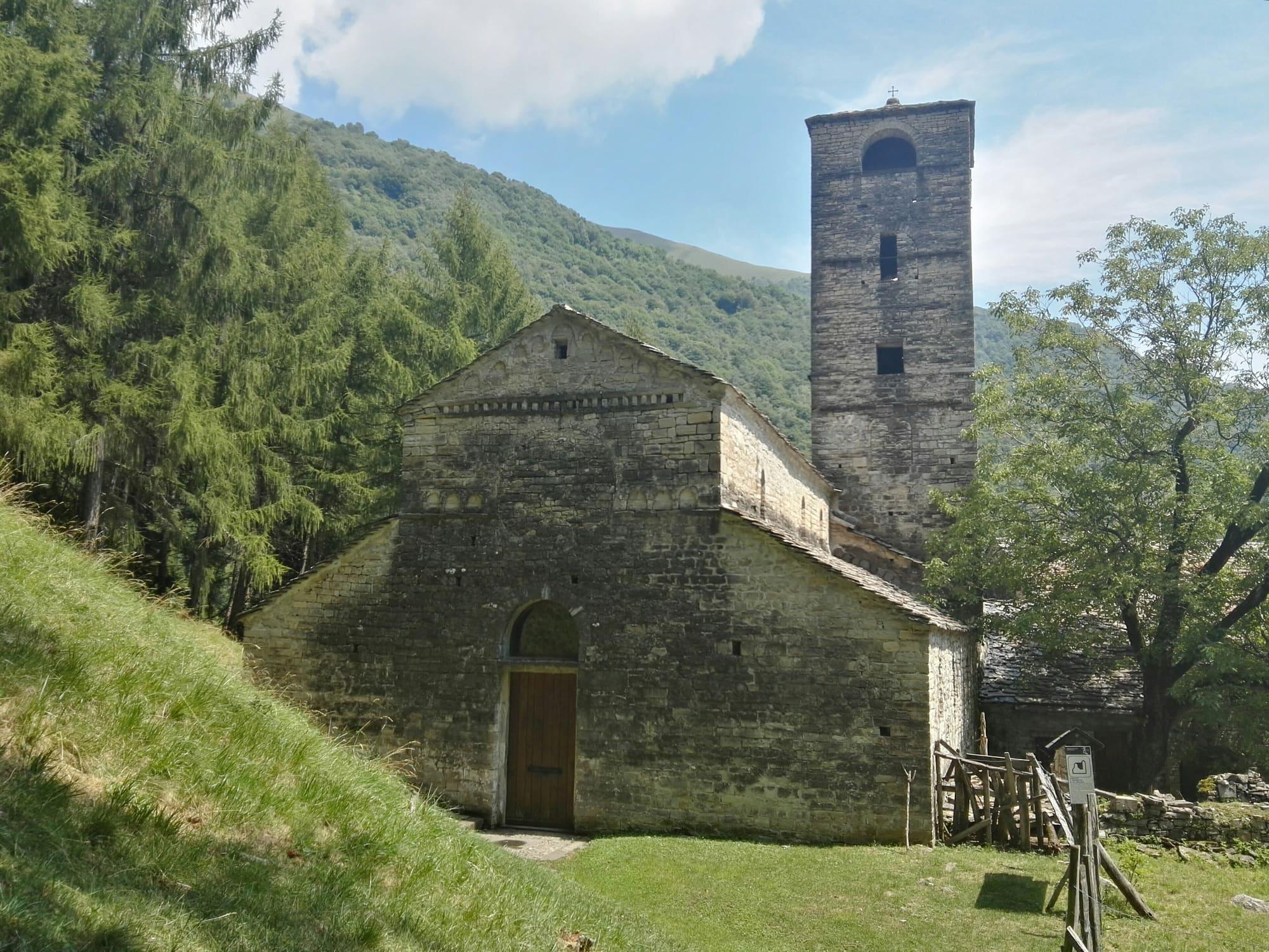
The first lands of the abbey of San Benedetto
Rainaldus, Bishop of Como, climbs into the Val Perlana to settle a quarrel between the men of Isola and those of Lenno over the church of San Benedetto. He obtains a gift of land and grazing rights: it is the oldest document of the abbey.
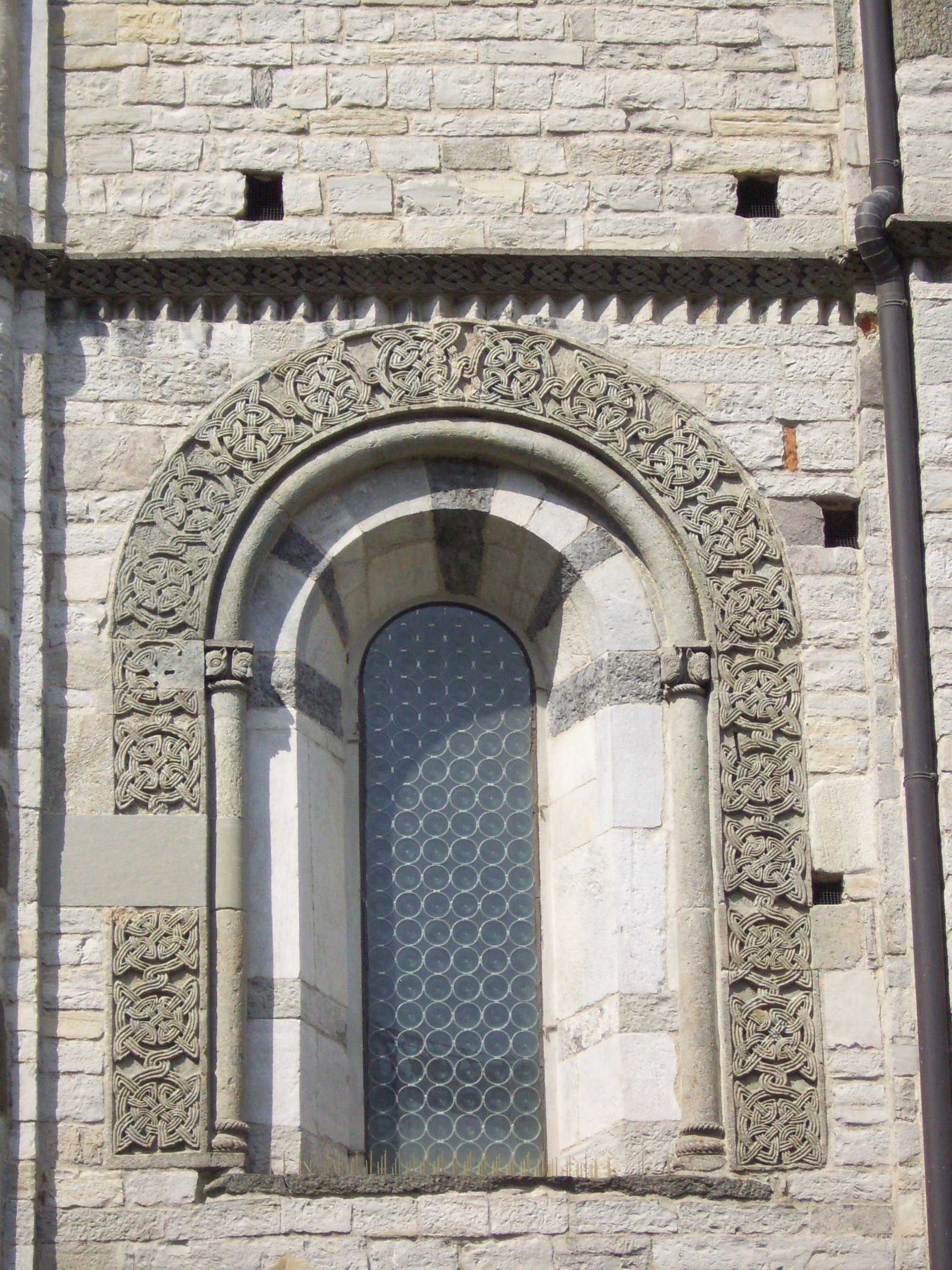
Urban II consecrates Sant'Abbondio
Outside the walls of Como, along the old Via Regina, the Benedictines have been rebuilding the church of Sant'Abbondio since 1010: a nave and four aisles and twin bell towers beside the apse. Pope Urban II, passing through Como, consecrates it.
The Cistercians at Acquafredda
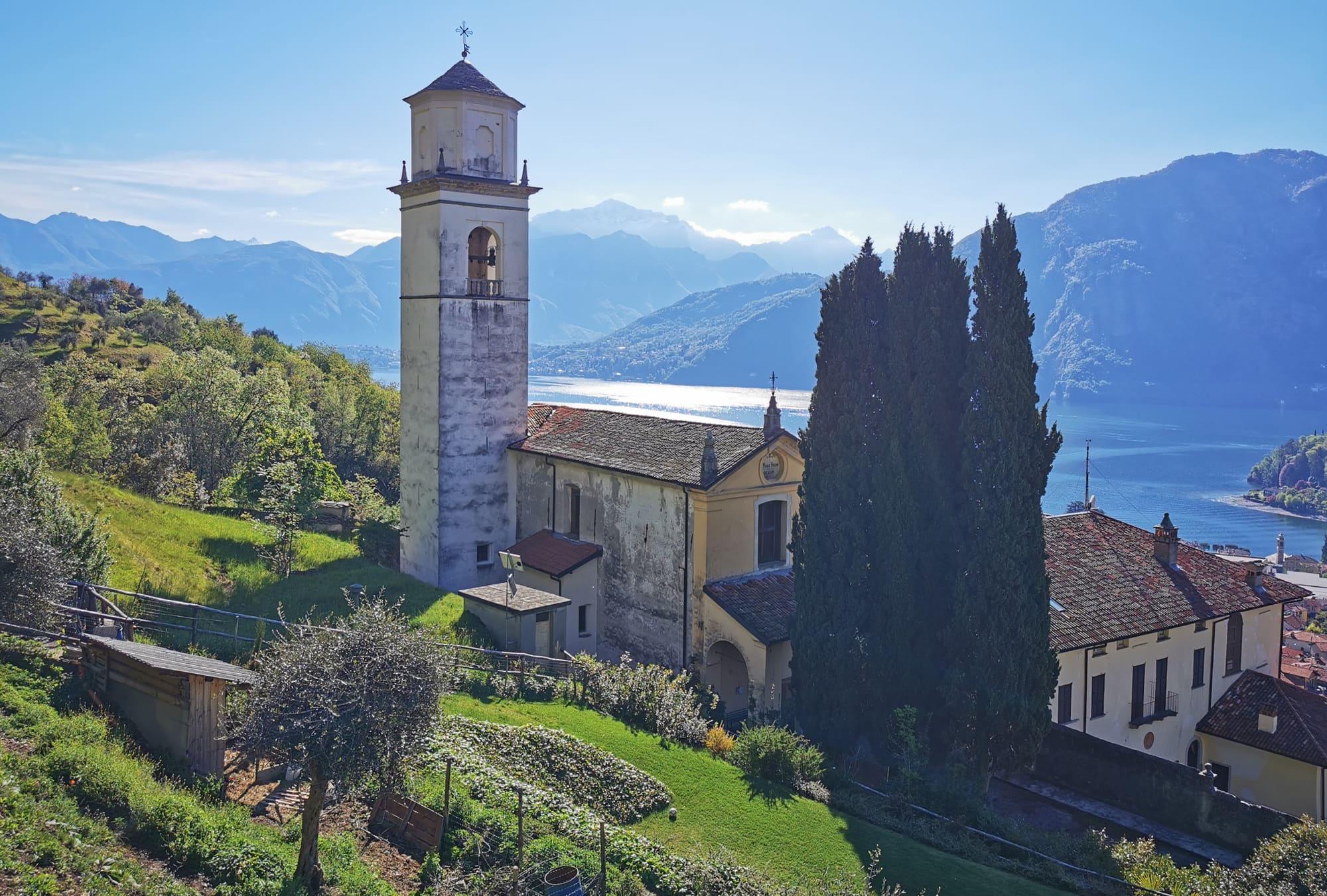
Azzo, known as Pellegrino, gives the Cistercians of Morimondo land above Lenno for a monastery to keep the relics of Saints Agrippinus and Domenica, brought from the Isola Comacina. The name, ‘cold water', comes from a nearby spring; the church of Santa Maria dell'Uliveto is consecrated in 1193.
1252–1257
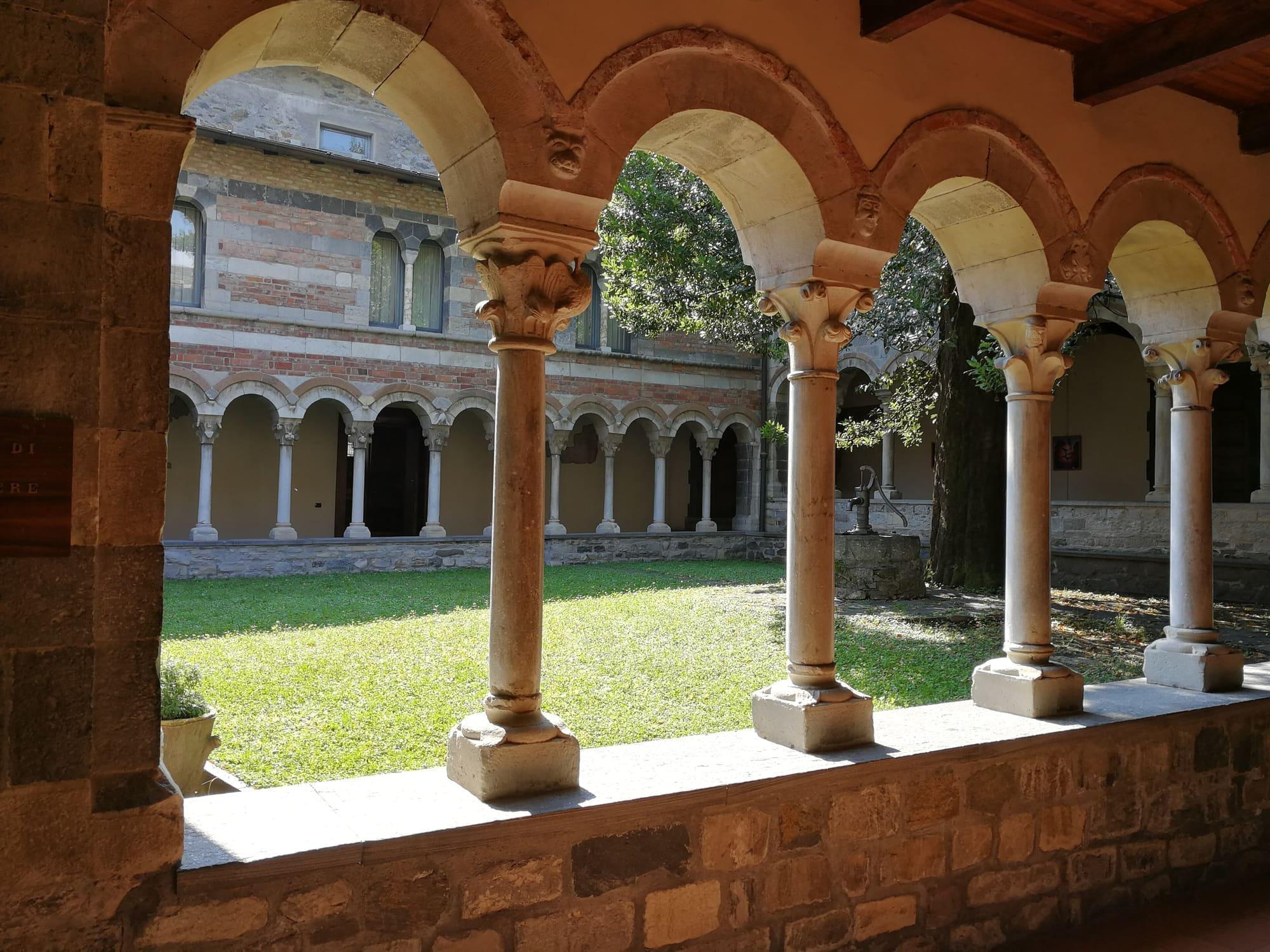
The cloister of Piona
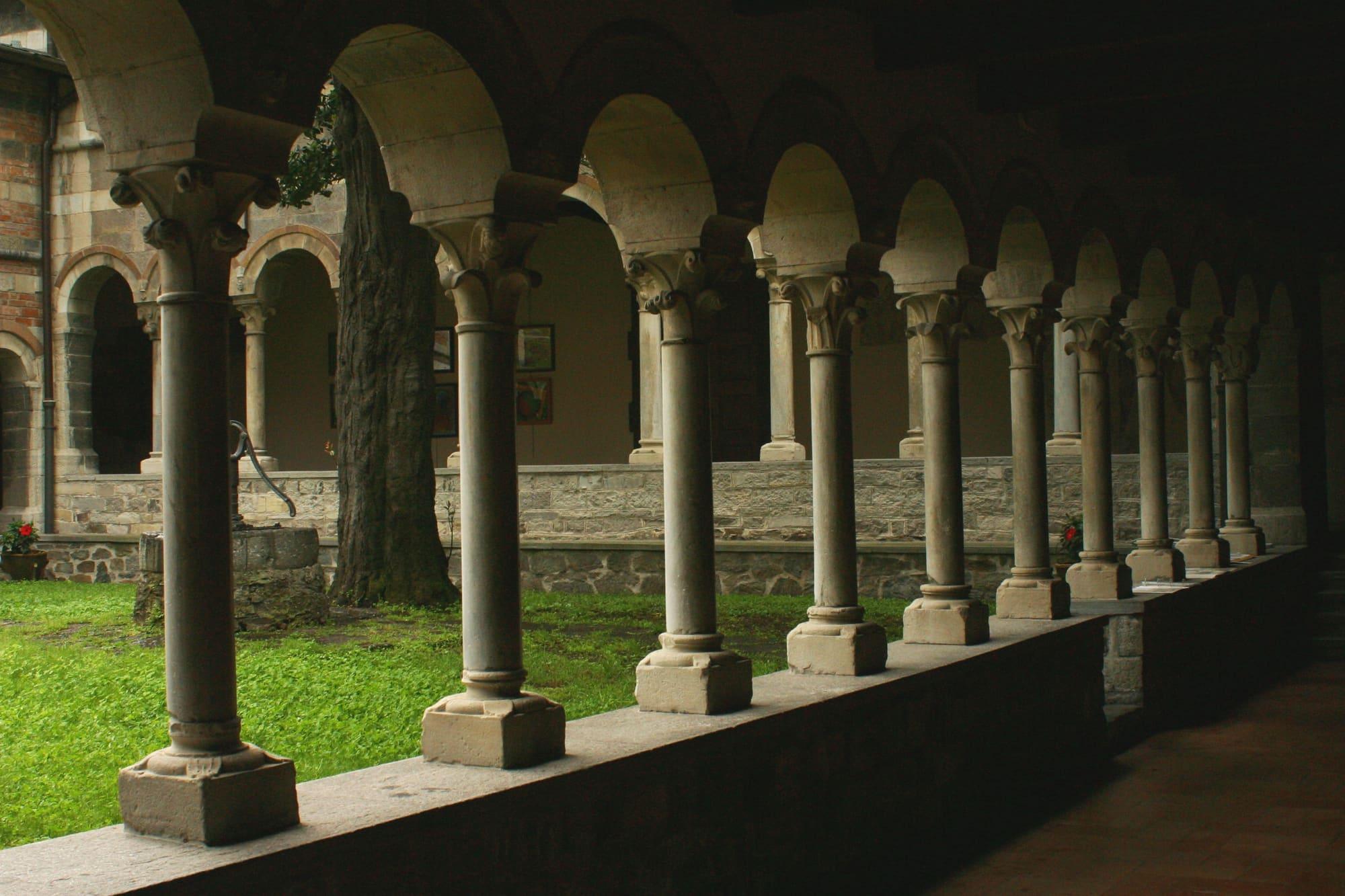
Prior Bonaccorso de Canova, from Gravedona, has the abbey's cloister built at his own expense, as two inscriptions record. The capitals, each one different, carry hooked leaves, eagles with spread wings and small heads; the builders' names are unknown.
Renaissance and foreign rule
1450–1699 · 4 dates
1457–1486
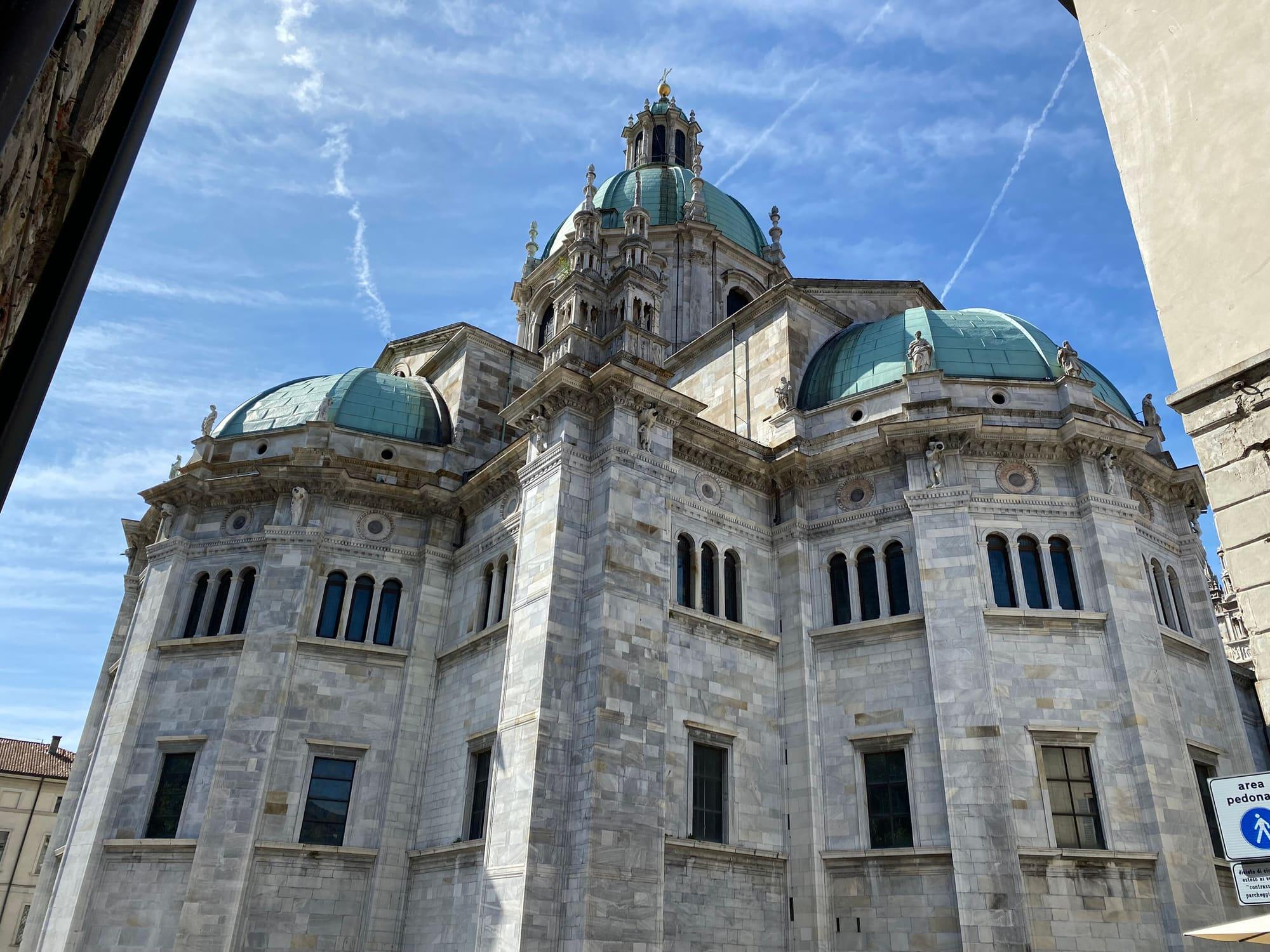
The façade of Como Cathedral
From 1452 the cathedral works use white marble from Musso, which becomes their main material. The façade, begun in 1457, is completed in 1486 with the rose window.
By 1498
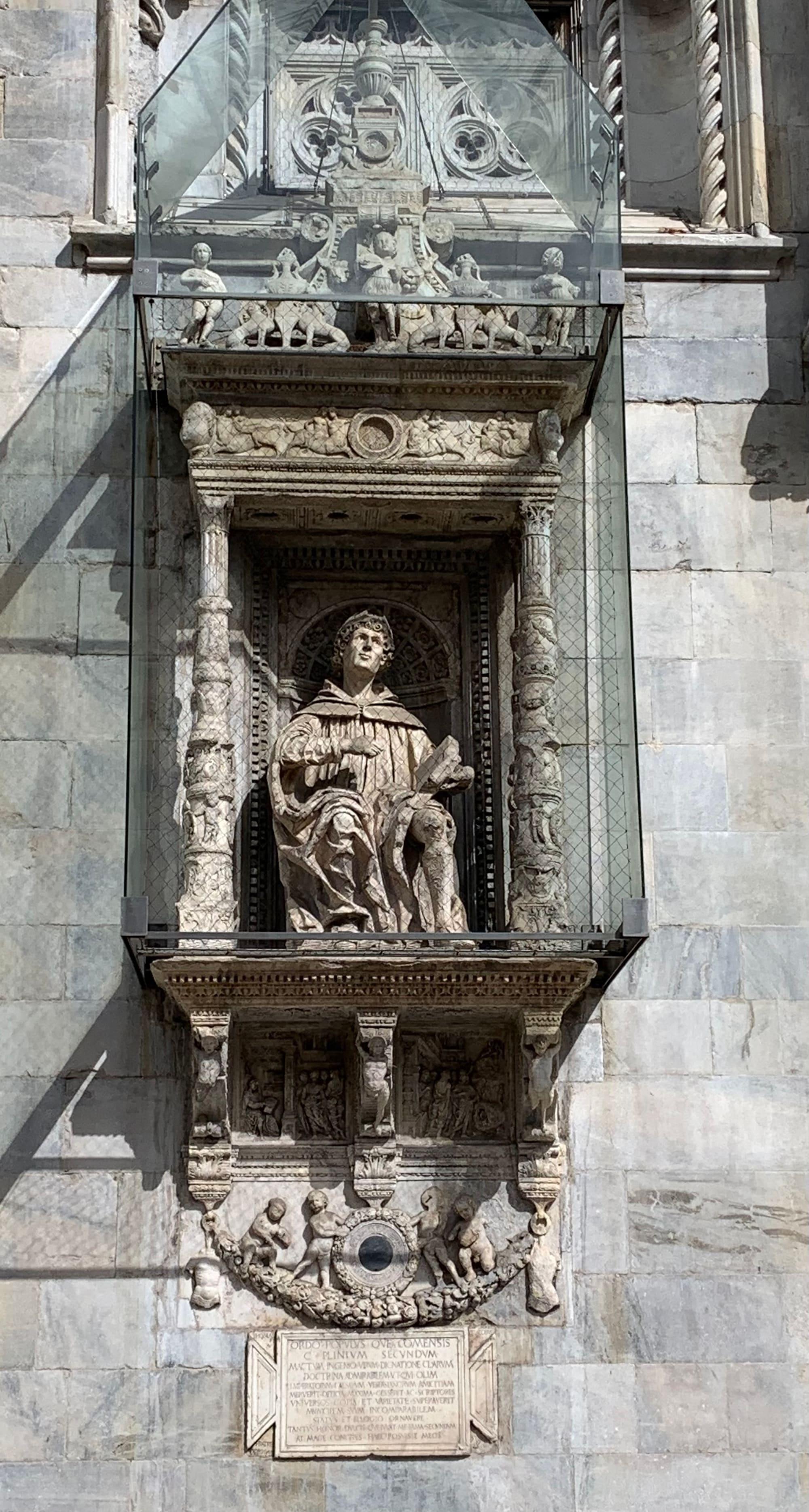
The two Plinys on the cathedral façade
The brothers Giacomo and Tommaso Rodari complete the two aedicules on either side of the main doorway: Pliny the Elder sits on the left, Pliny the Younger on the right. In 1578, at the height of the Counter-Reformation, the statues survive an attempt to remove them.
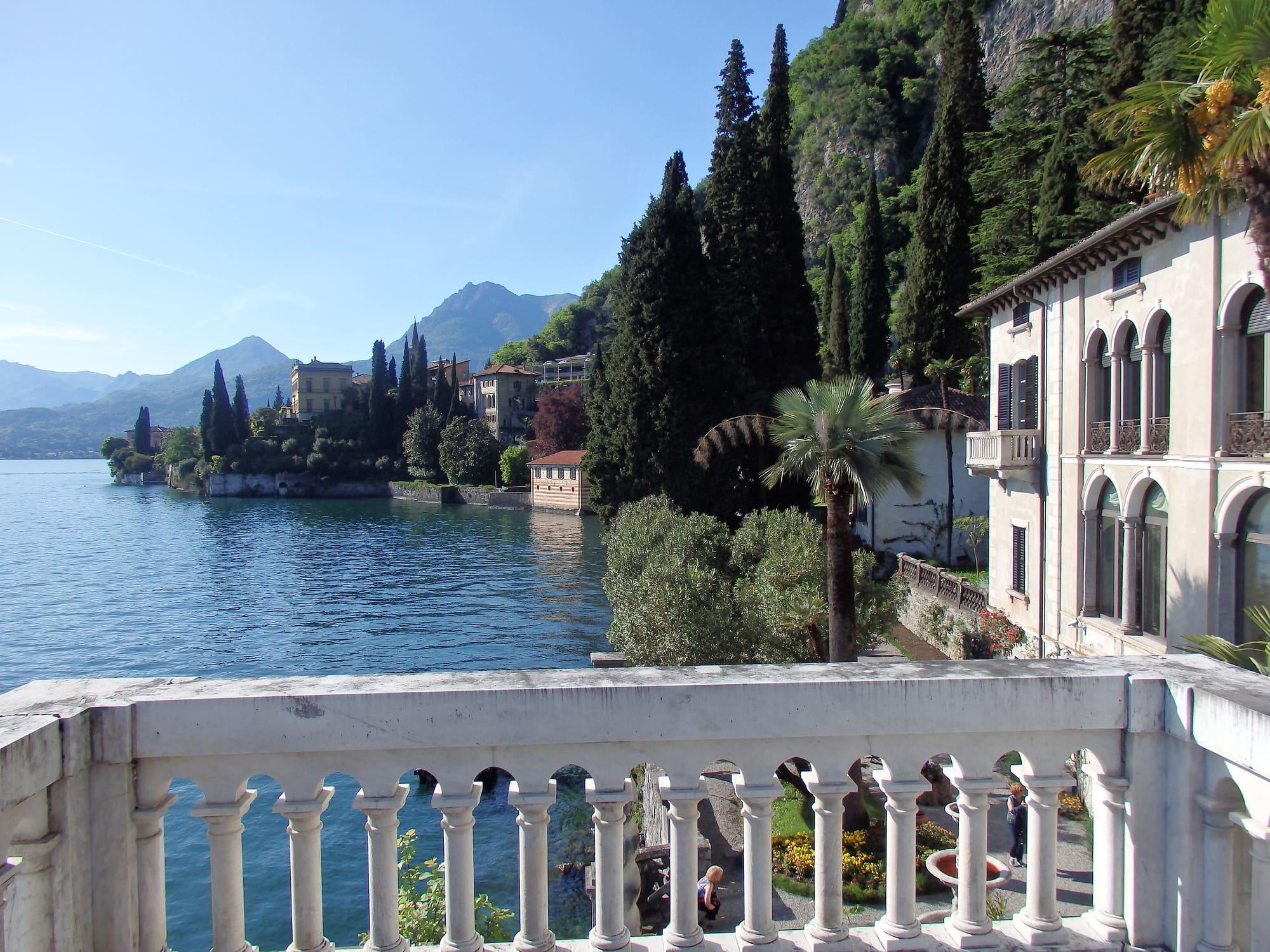
The convent at Varenna becomes a house
Carlo Borromeo, Archbishop of Milan, suppresses the Cistercian convent at Varenna, where too few nuns remain. In 1569 Paolo Mornico buys it and makes it a house: this is the origin of Villa Monastero.
1606–1624
The sanctuary of the Madonna del Moletto
The Cistercian monk Roberto Rusca, who came to Limonta in 1605, builds the sanctuary of the Madonna del Moletto on the rock that drops sheer into the lake, so that boatmen on the water and farmers on the paths can see it.
Place: Madonna del Moletto Sanctuary, Oliveto LarioStory: The olive coast
Eighteenth century
1700–1799 · 1 date
1711–1753
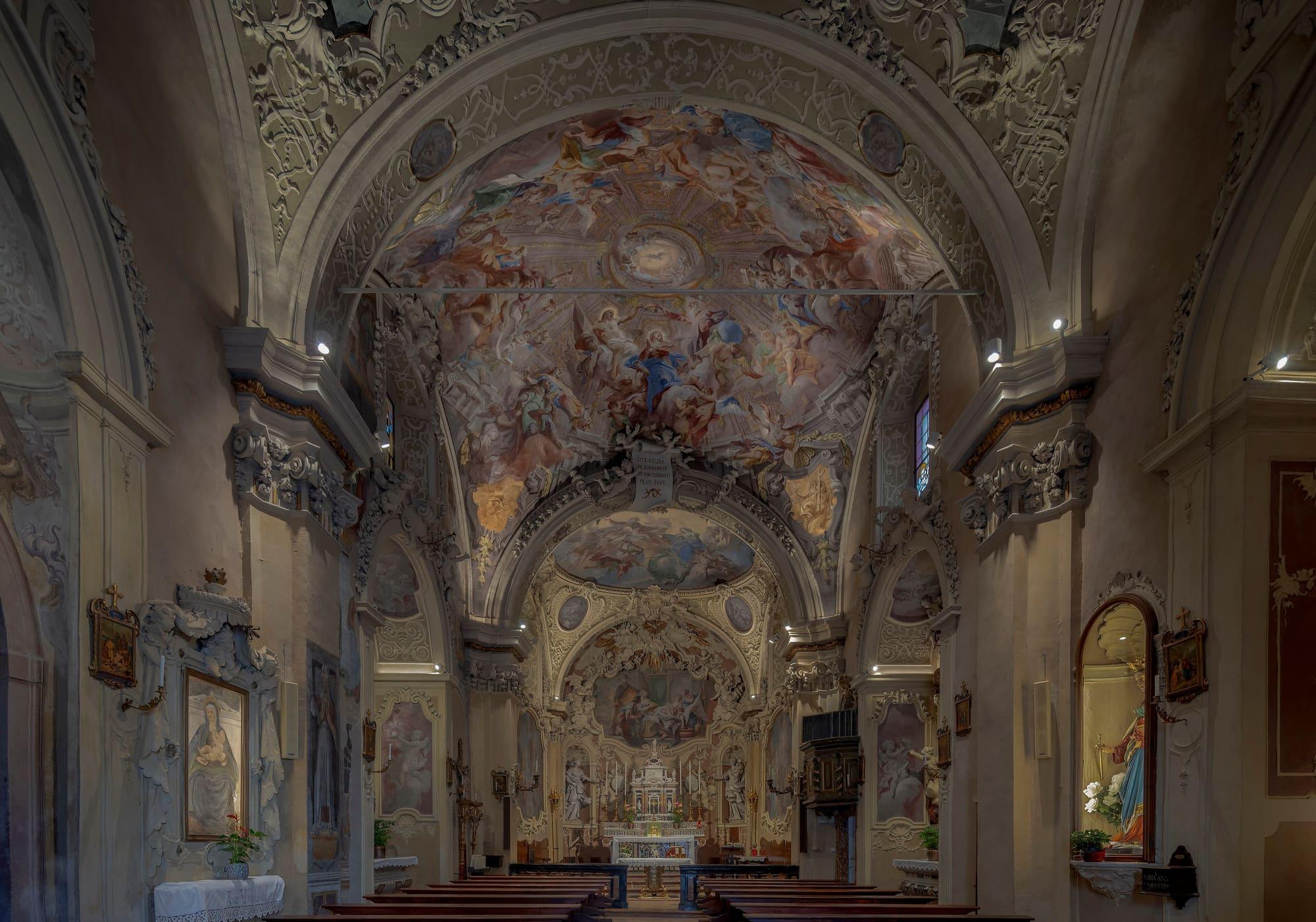
The Carloni brothers remake the church at Scaria
The brothers Diego and Carlo Innocenzo Carloni remake the church of Santa Maria for Scaria, their home village, with stucco and frescoes. They are among the artists of the Val d'Intelvi who work all over Europe: Carlo Innocenzo also paints in Ljubljana Cathedral and in the palaces of Vienna.
Place: Santa Maria and Museum of Sacred Art, ScariaStory: The Comacine masters
Nineteenth century
1800–1899 · 10 dates
Shelley looks for a house at the Pliniana
From Milan, Percy Bysshe Shelley writes to his friend Thomas Love Peacock that he has been to Como to look for a house. The landscape he likes best is that of Villa Pliniana, half in ruins, which he and Mary hope to obtain; the negotiations come to nothing.
‘The Betrothed' names the Lucia boats
Alessandro Manzoni's novel is published for the first time. In it Lucia crosses the lake by night in a working boat with hoops for an awning, and from then on that boat is called a Lucia.
Bellini at Moltrasio
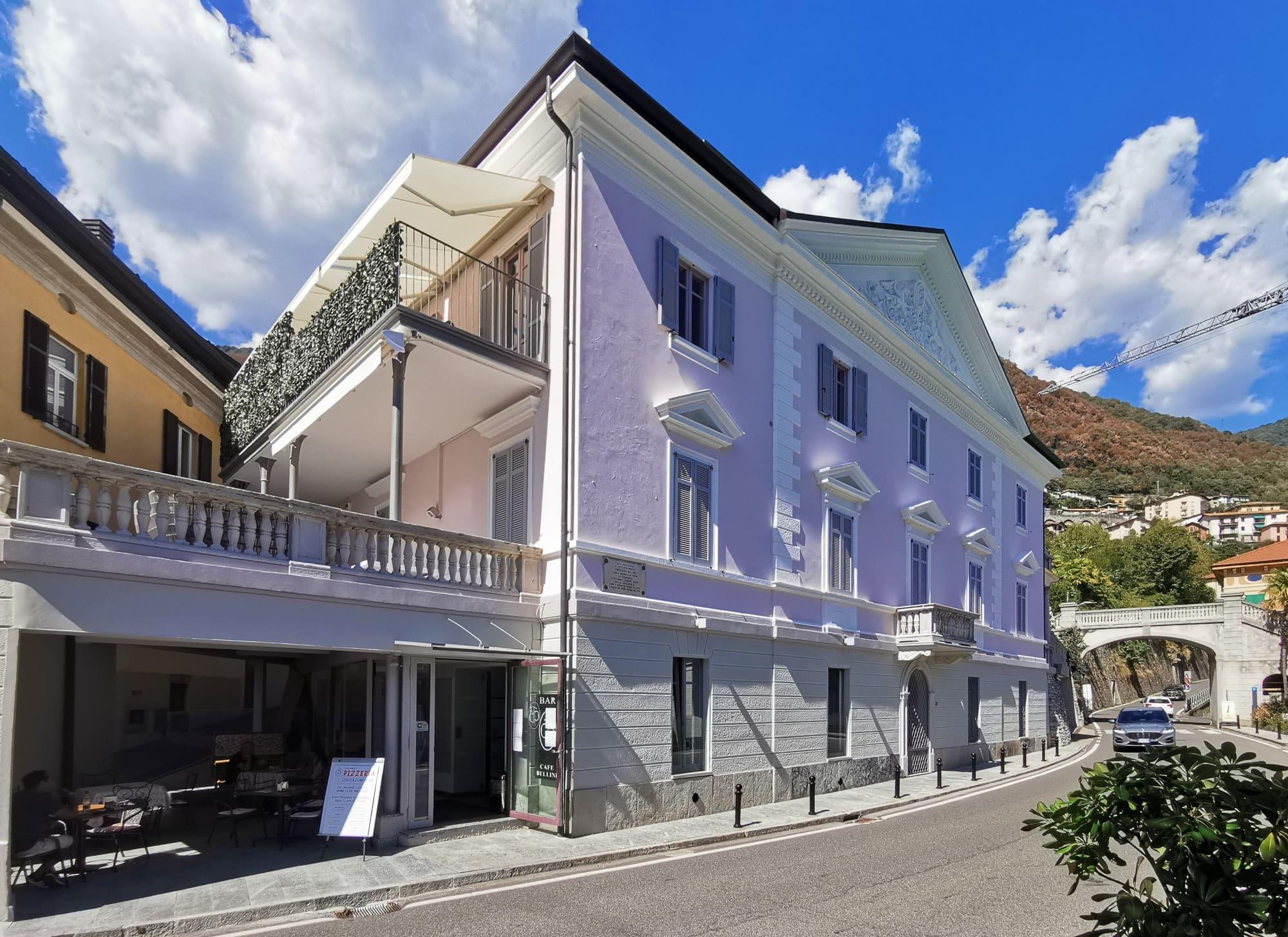
The Cantù and Turina families rent Villa Salterio at Moltrasio, where Giuditta Cantù carries on her affair with Vincenzo Bellini. These are the years in which the composer writes La straniera and La sonnambula; a plaque on the villa's façade records it.
Place: Villa Salterio Erker, MoltrasioStory: The musicians' lake
Liszt at Bellagio
Franz Liszt arrives with Marie d'Agoult and stays at the Genazzini hotel. On the lake he writes the twelve Grandes études for piano; on Christmas Eve, at the Albergo dell'Angelo in Como, his daughter Cosima is born, who will marry Wagner.
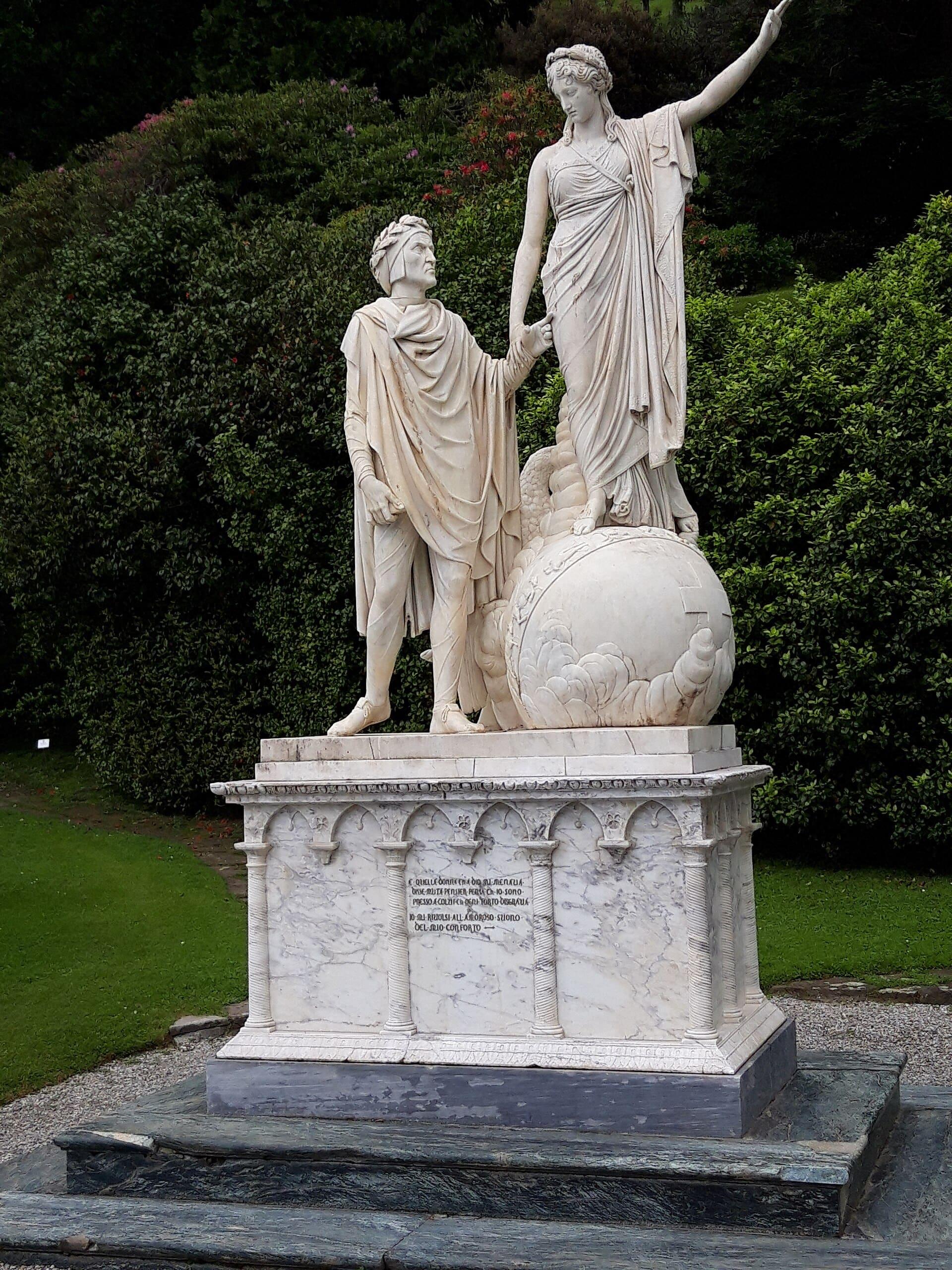
The lake in ‘The Charterhouse of Parma'
Stendhal's novel is published. Fabrice del Dongo grows up in the family castle at Grianta, on the western shore opposite Bellagio; the second chapter shows Villa Melzi and the headland that divides the two branches, the voluptuous branch of Como and the stern branch of Lecco.
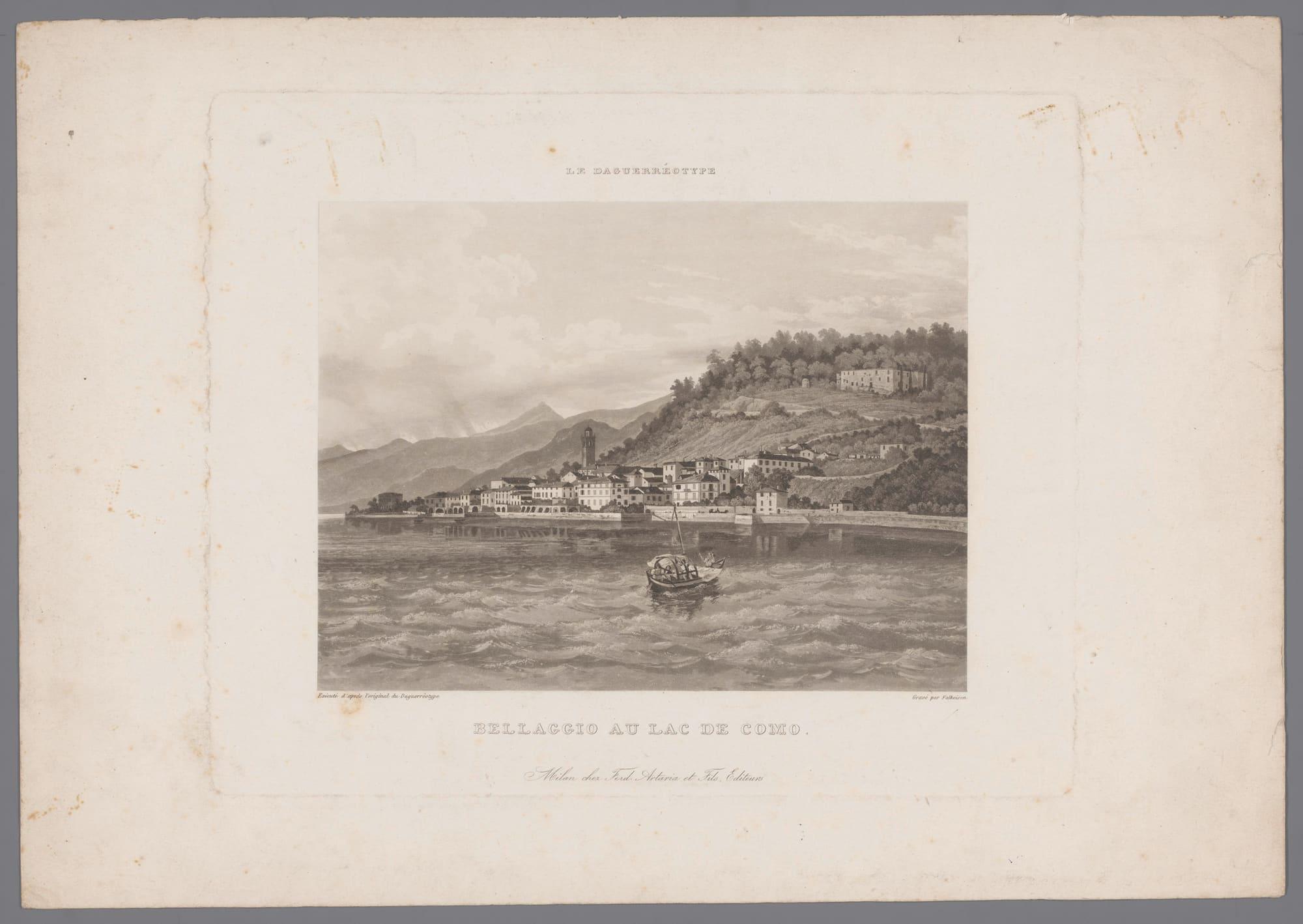
The lake in two lithographs from daguerreotypes
A year after the daguerreotype was presented in Paris, the lake is already among the subjects of the first photographers. Two lithographs copied from daguerreotypes show Bellagio from the lake, signed Falkeisen, and Villa Pliniana, signed Louis Cherbuin.
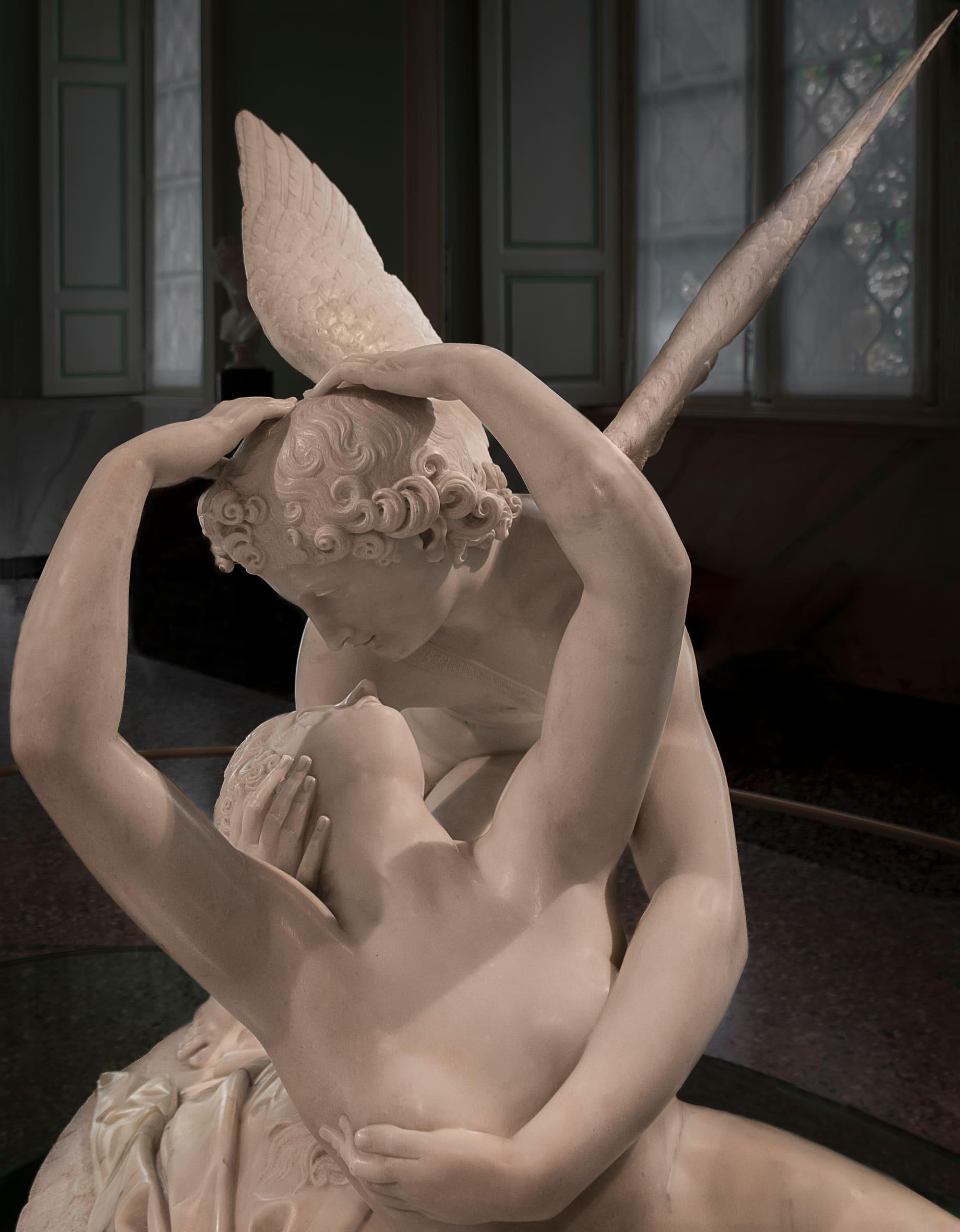
Flaubert at Villa Sommariva
Gustave Flaubert visits the villa at Tremezzo that will later be called Carlotta. He goes back several times to look at the Cupid and Psyche, which he believes to be by Canova, and on his last visit kisses the statue; the group is attributed to Adamo Tadolini, Canova's pupil.
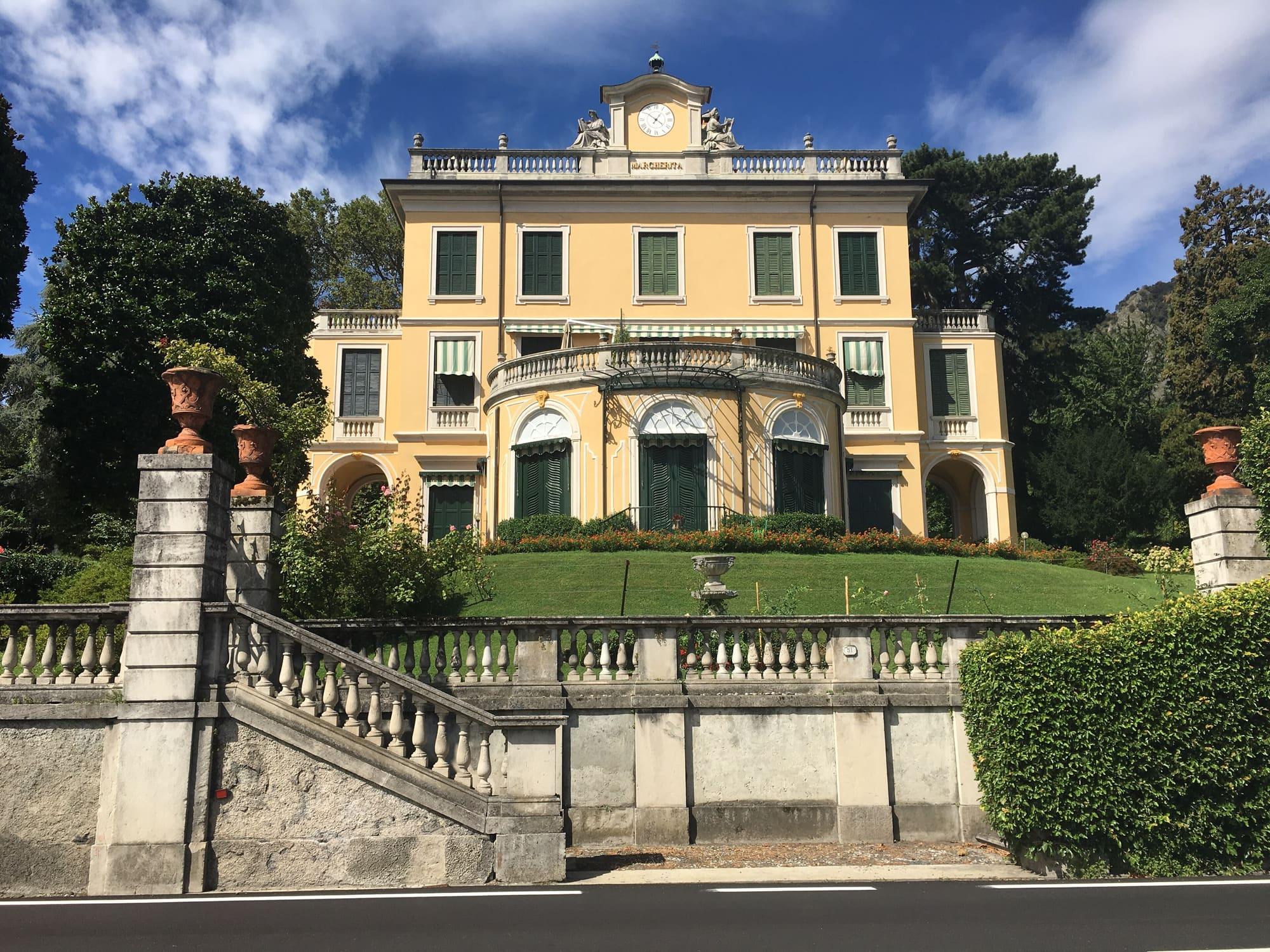
The publisher Ricordi's villa at Cadenabbia
Villa Margherita is built at Cadenabbia for the music publisher Ricordi, reportedly with the proceeds of Il trovatore. Giuseppe Verdi is often a guest, and Amilcare Ponchielli starts work there on I Lituani, staged at La Scala in 1874.
Place: Villa Margherita Ricordi, CadenabbiaStory: The musicians' lake
c. 1895
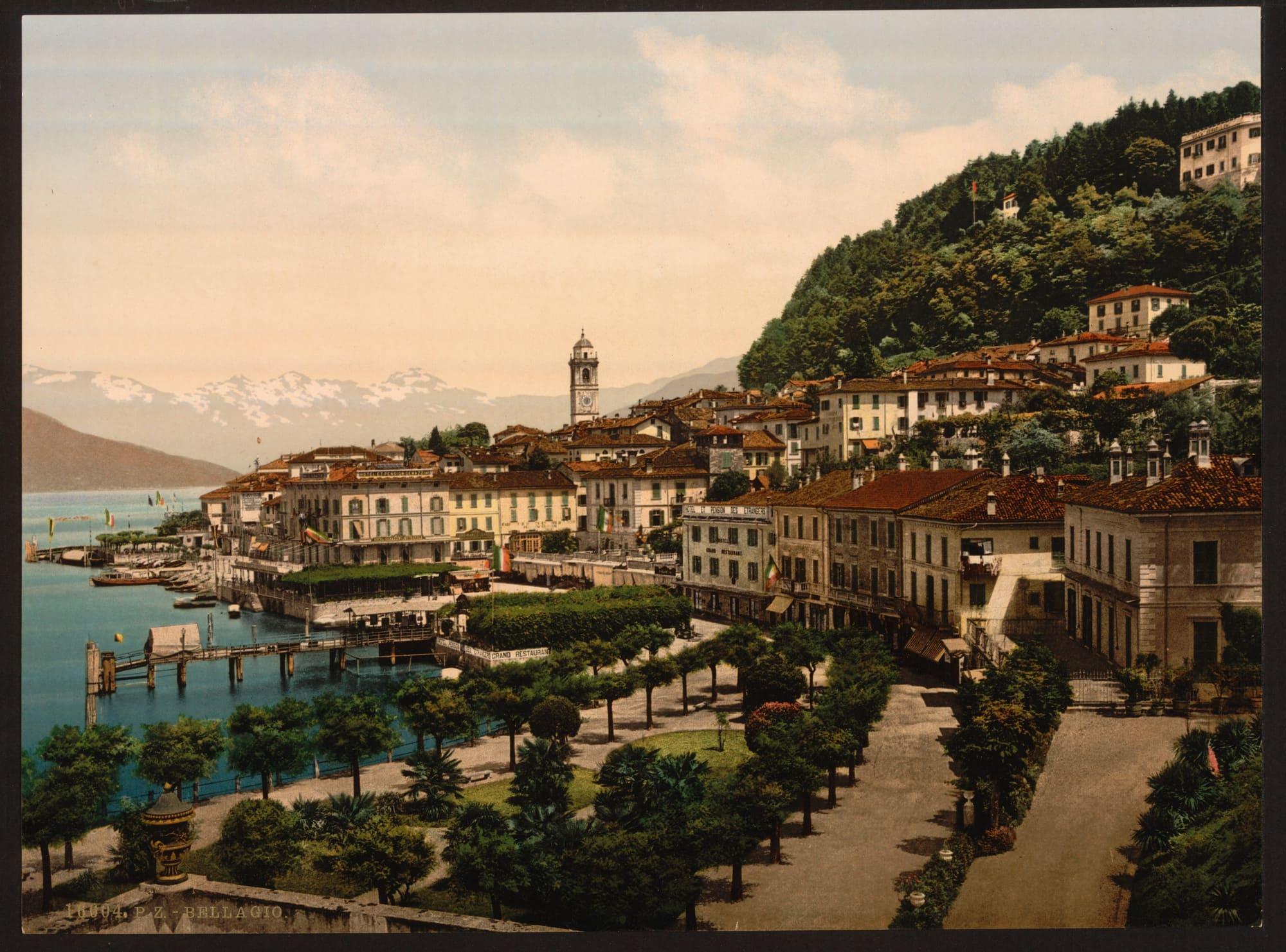
The lake printed in colour
A Zurich firm prints views of the lake by the photochrom process: Bellagio, the Tremezzina, Cadenabbia, Menaggio and Como. Each print starts from a black-and-white negative, and the colours noted by the photographer are transferred to a series of lithographic stones, one for each tint.
1896–1897
Cinema comes to the lake
The Lumière brothers, touring Italy to make the cinematograph known, film scenes of a boat race at Bellagio. The footage is kept at the Cineteca Nazionale in Rome.
Twentieth century
1900–1999 · 5 dates
Excavations uncover Sant'Eufemia
Ugo Monneret de Villard begins digging on the Isola Comacina and finds, under five metres of rubble and earth, the basilica of Sant'Eufemia, until then unknown. Its destruction in 1169 had spared it the alterations of the centuries that followed.
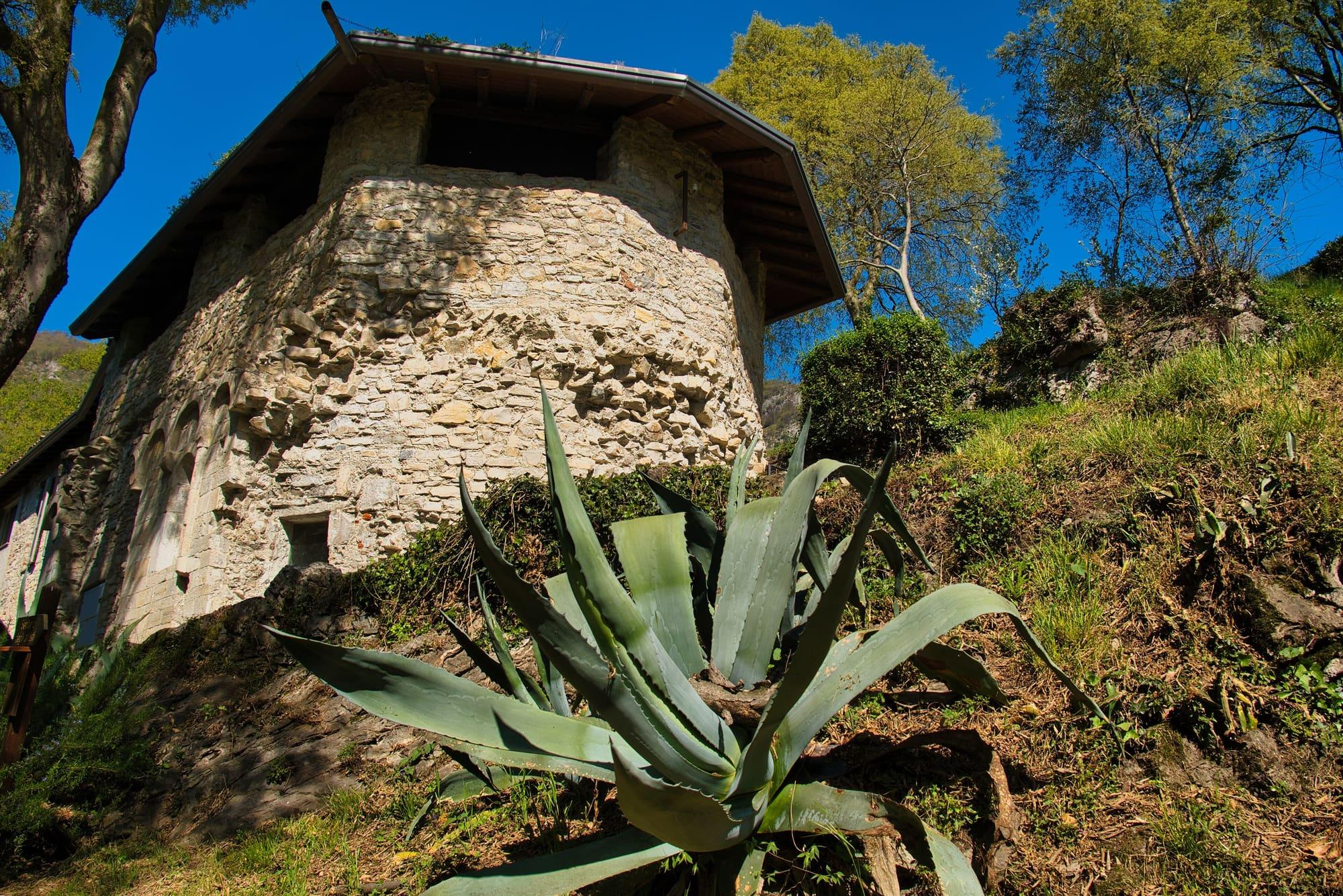
Hitchcock shoots his first film on the lake
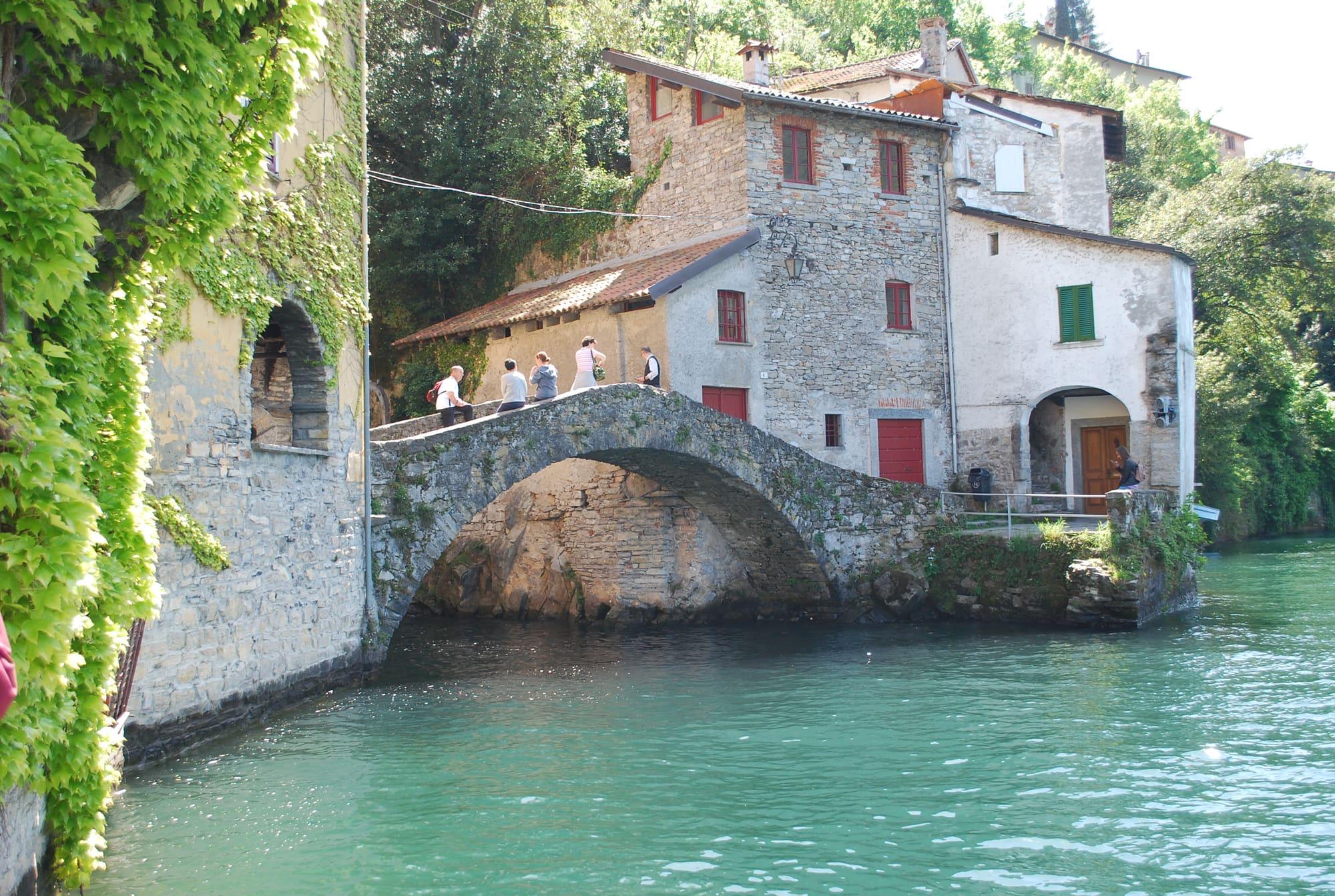
For ‘The Pleasure Garden', his debut as a director, Alfred Hitchcock sets the heroine's honeymoon on the lake. The Villa d'Este hotel, the Isola Comacina and the Civera bridge at Nesso can all be recognised.
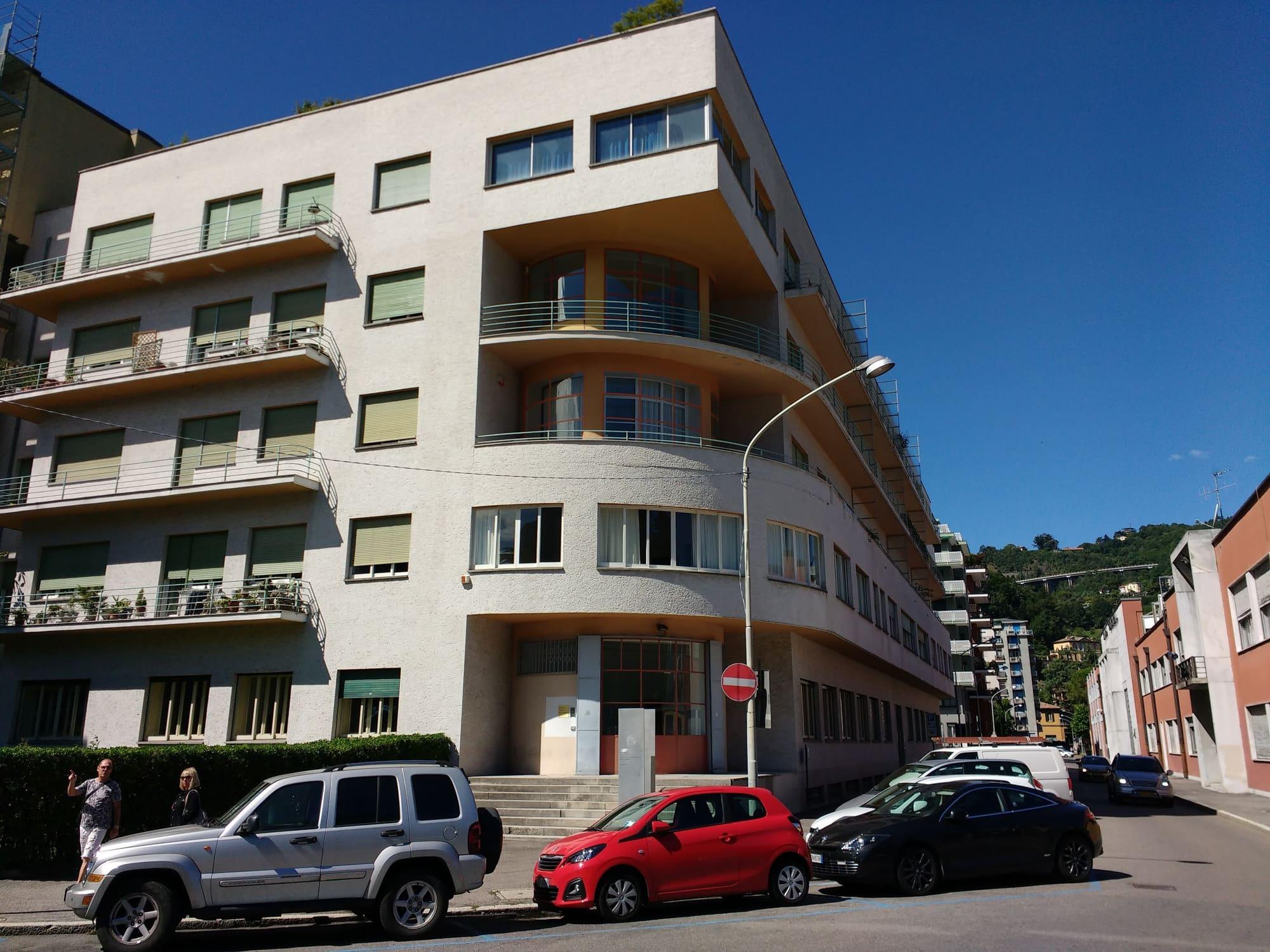
The Novocomum, Como's first rationalist building
Giuseppe Terragni completes the Novocomum, an apartment building with a curved volume on the corner that the people of Como nickname ‘the Ocean Liner'. Between the wars Como becomes one of the centres of Italian rationalism.
Place: NovocomumStory: Palazzo Terragni, rationalism beside the cathedral
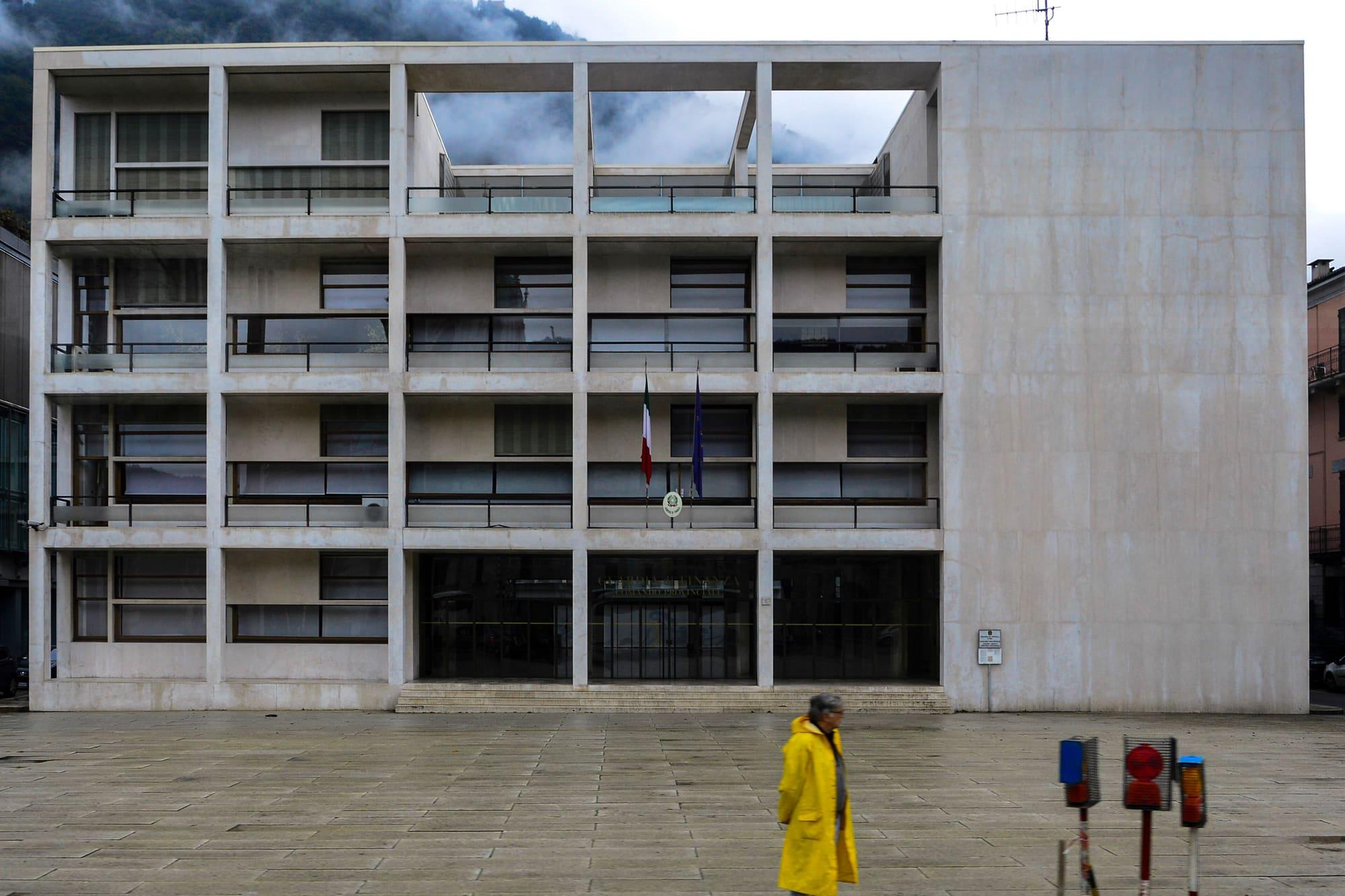
Terragni completes the Casa del Fascio
Fifty metres from the apse of the cathedral, Giuseppe Terragni completes the Como headquarters of the National Fascist Party, designed in 1932: a square of about thirty-three metres a side, faced in white marble, with no cornices or decoration. The building has since taken the name Palazzo Terragni.
Place: Palazzo Terragni (former Casa del Fascio)Story: Palazzo Terragni, rationalism beside the cathedral
Monks return to Piona
After centuries of absentee abbots and private owners, a group of Cistercian monks arrives from Casamari and takes possession of the priory, which the businessman Pietro Rocca has given to their congregation. A community of monks has lived at Piona ever since.