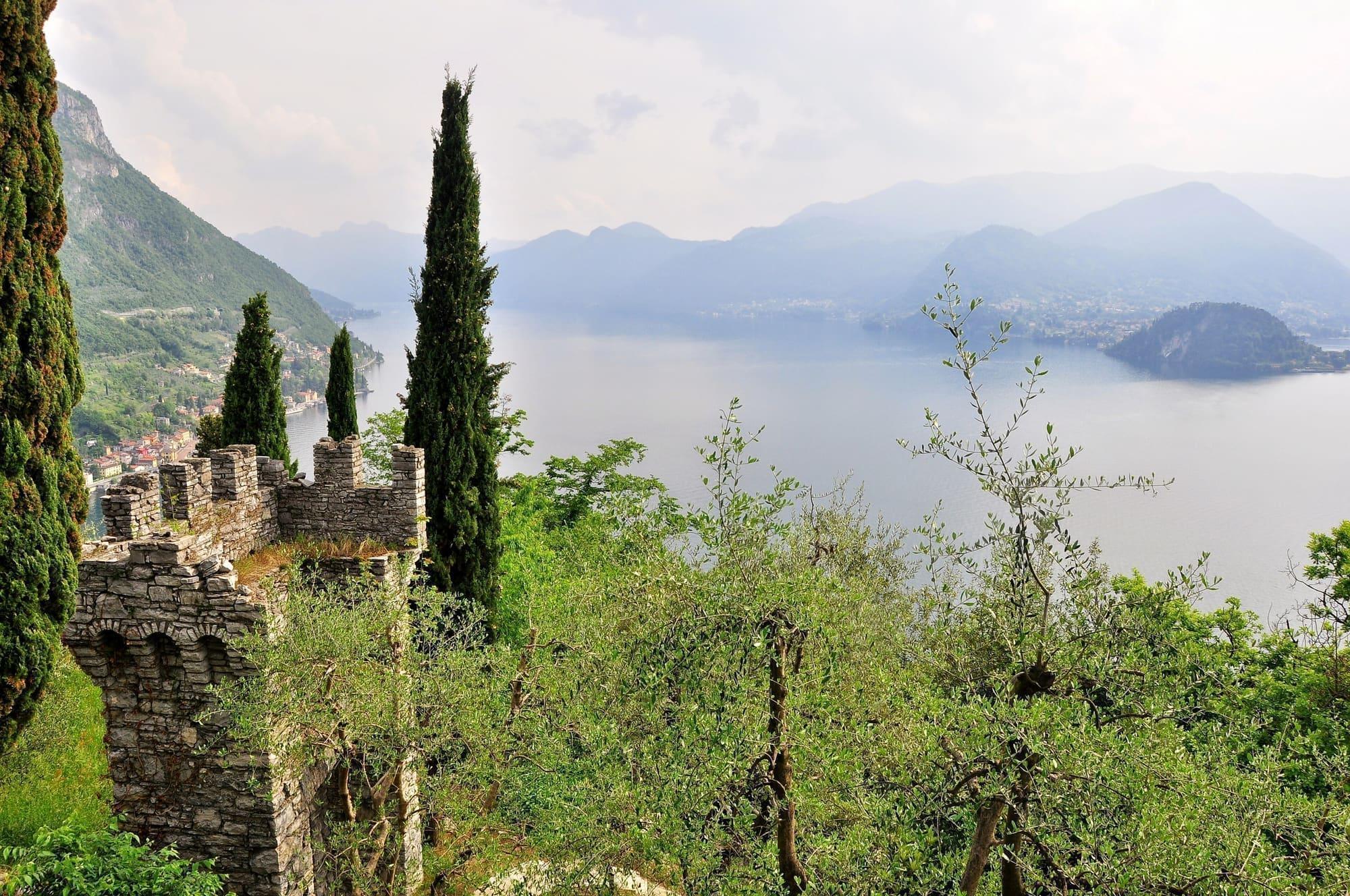
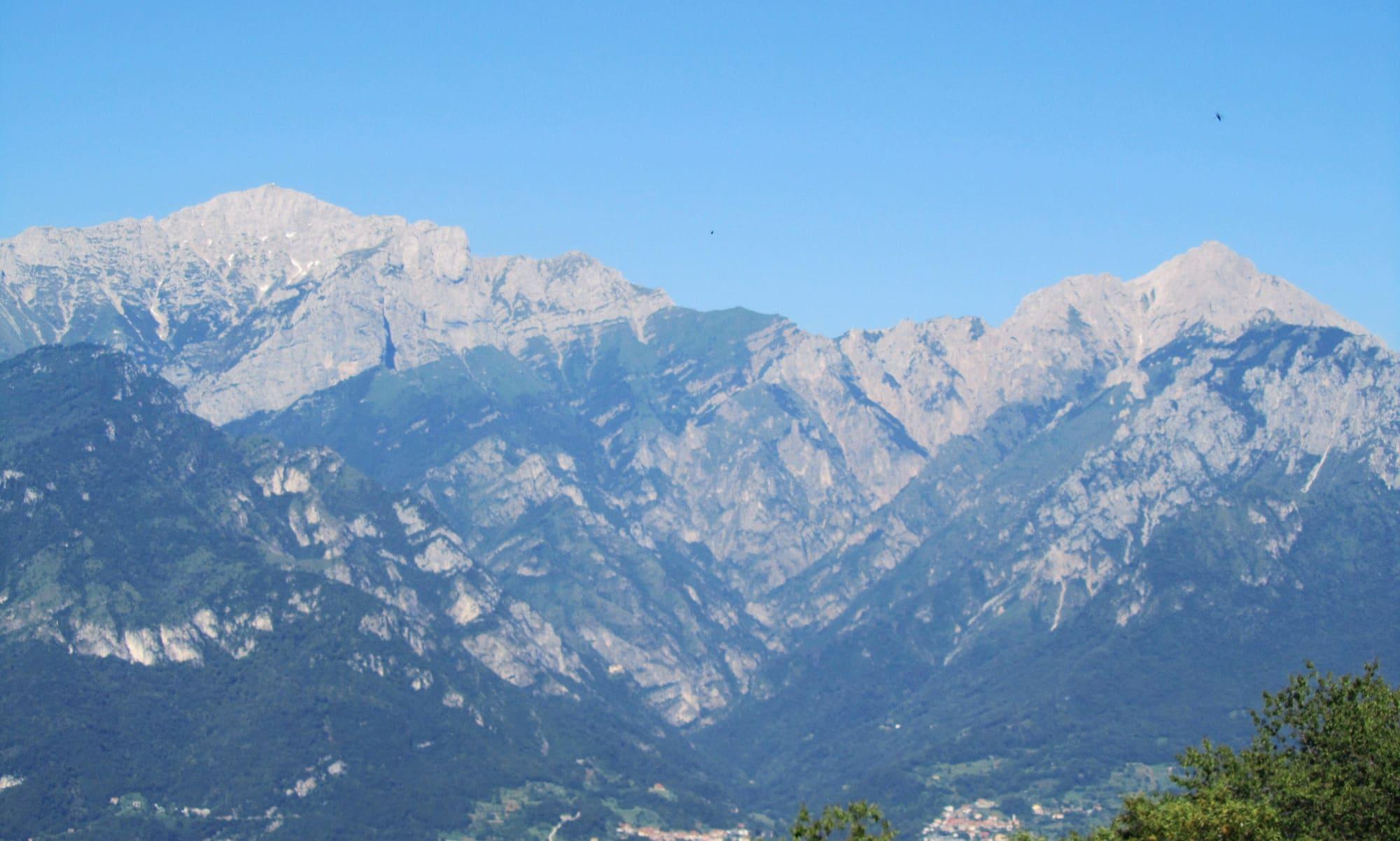
Leonardo da Vinci worked in Milan for many years, and the lake appears in his notebooks in short notes, closer to a travel guide than to a treatise.
They list valleys, rivers, waterfalls and mines, record how much higher one lake lies than another and name the best month to set out. Leonardo rarely says he saw these places with his own eyes, and much of what is attributed to him on the lake is not in the codices at all.
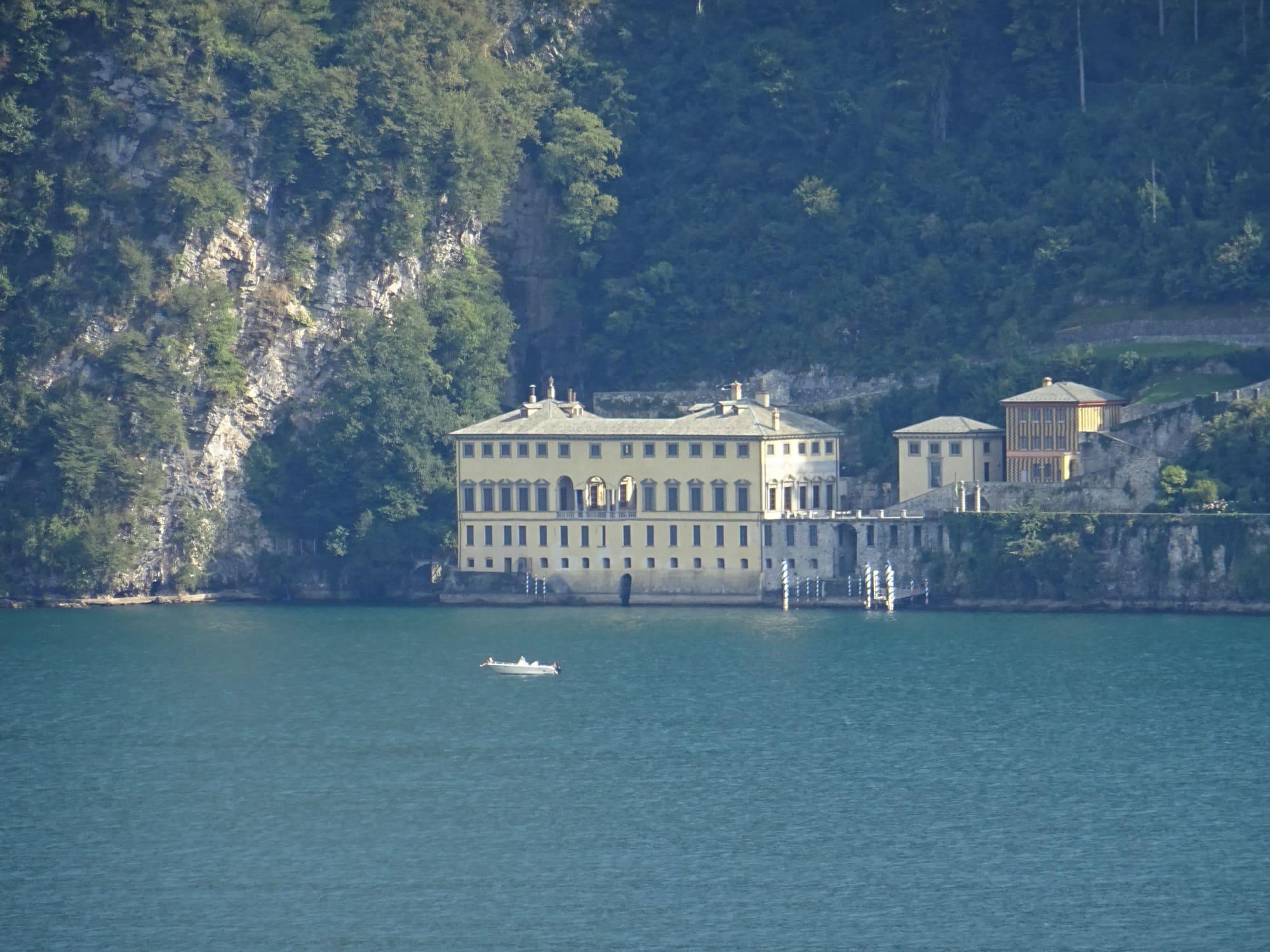
“And I for my part have seen one”: it is one of the rare times Leonardo says he was on the lake in person. The sentence is in the Codex Leicester, on folio 11 verso. In many places, he writes, there are veins of water that rise for six hours and fall for six hours; he saw one on Lake Como, called the Priniana spring, which turns several mills when it flows and, when it fails, drops so low that it is like looking at water at the bottom of a deep well. It is the spring at Torno that Pliny the Younger had described in a letter. In 1573 it passed to Count Giovanni Anguissola, governor of Como, who built his villa around it. The Codex Leicester is a notebook of thirty-six sheets written between 1506 and 1510, and the only one of Leonardo's codices in private hands. The Pliniana also appears in the Codex Atlanticus, in a list of places, but there Leonardo does not speak in the first person.
A list of places
The Codex Atlanticus is the great collection of Leonardo's drawings and writings kept at the Biblioteca Ambrosiana in Milan. The notes on the lake are nearly all on a single sheet, dated to 1490, numbered 214 in the old numbering and 573 in the present one. The recto names Como, the lake of Como, Bellagio, the Mera, the Valsassina, the Adda, the “Voltolina”, that is the Valtellina, Bormio and the “Lamagna”, Germany, together with one man's name, Ambrogio Fereri. The verso names Chiavenna, Bellinzona, the Priniana, Mandello, the Grigna, Introbbio, Introzzo, Vimogno and Pra' Santo Petro. They are notes in the form of an itinerary, perhaps information gathered from someone else ahead of a journey. There is even a piece of practical advice: these excursions, Leonardo writes, should be made in the month of May.
From the Chiavenna valley to the Valsassina
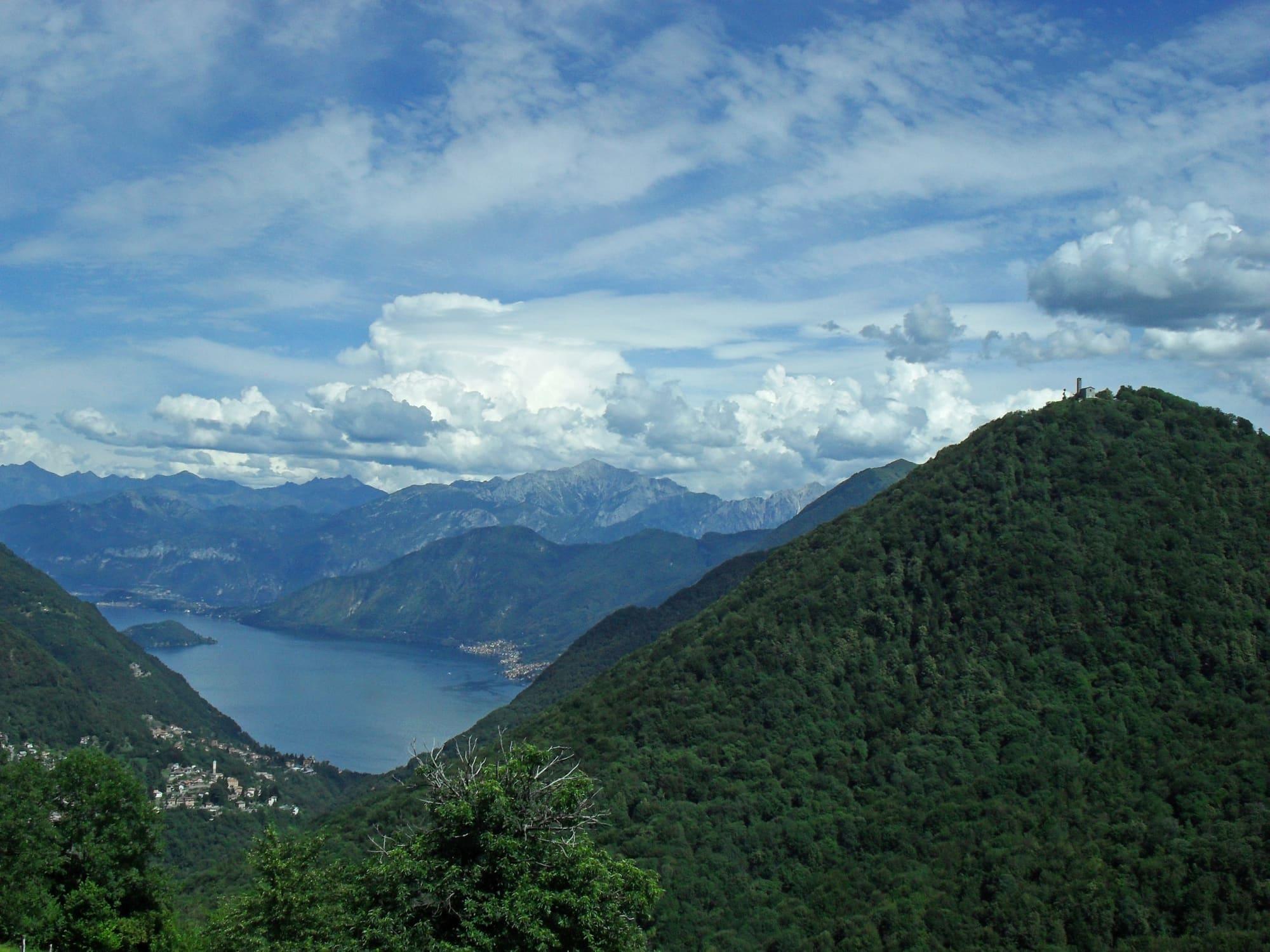
The list begins at the top. Above the lake, towards Germany, lies the valley of Chiavenna, where the Mera flows into the lake: barren, very high mountains with huge rocks, water birds, firs, larches and pines, deer, wild goats, chamois and “terrible bears”. These mountains cannot be climbed without using hands and feet, and in winter the peasants go out on the snow with great snares to make the bears fall from the rocks. Along the river there are good inns every mile or so, waterfalls four hundred braccia high that are fine to see, and plenty of timber coming down the valley. The Valsassina is almost the same in shape and nature, with much “mappello”, a word of uncertain meaning, and great landslides and falls of water. From the valley of Introzzo, full of firs, pines and larches, Ambrogio Fereri has his timber brought down. At the head of the Valtellina stand the mountains of Bormio, terrible and always covered with snow. The Valtellina itself is a valley enclosed by high and terrible mountains, with strong wines and so many cattle that, the inhabitants say, more milk than wine grows there.
The Fiumelatte, the Pliniana and Nesso
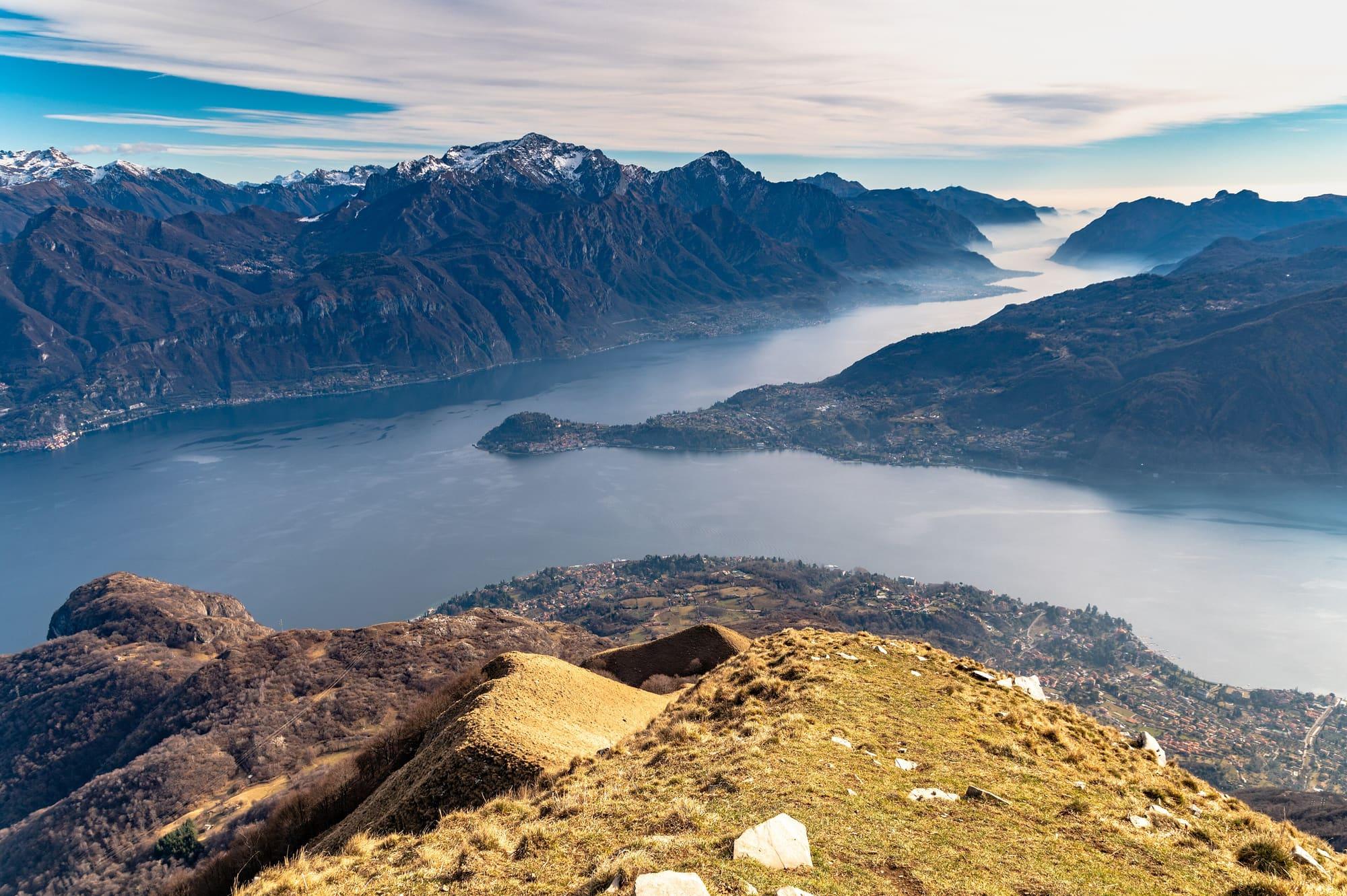
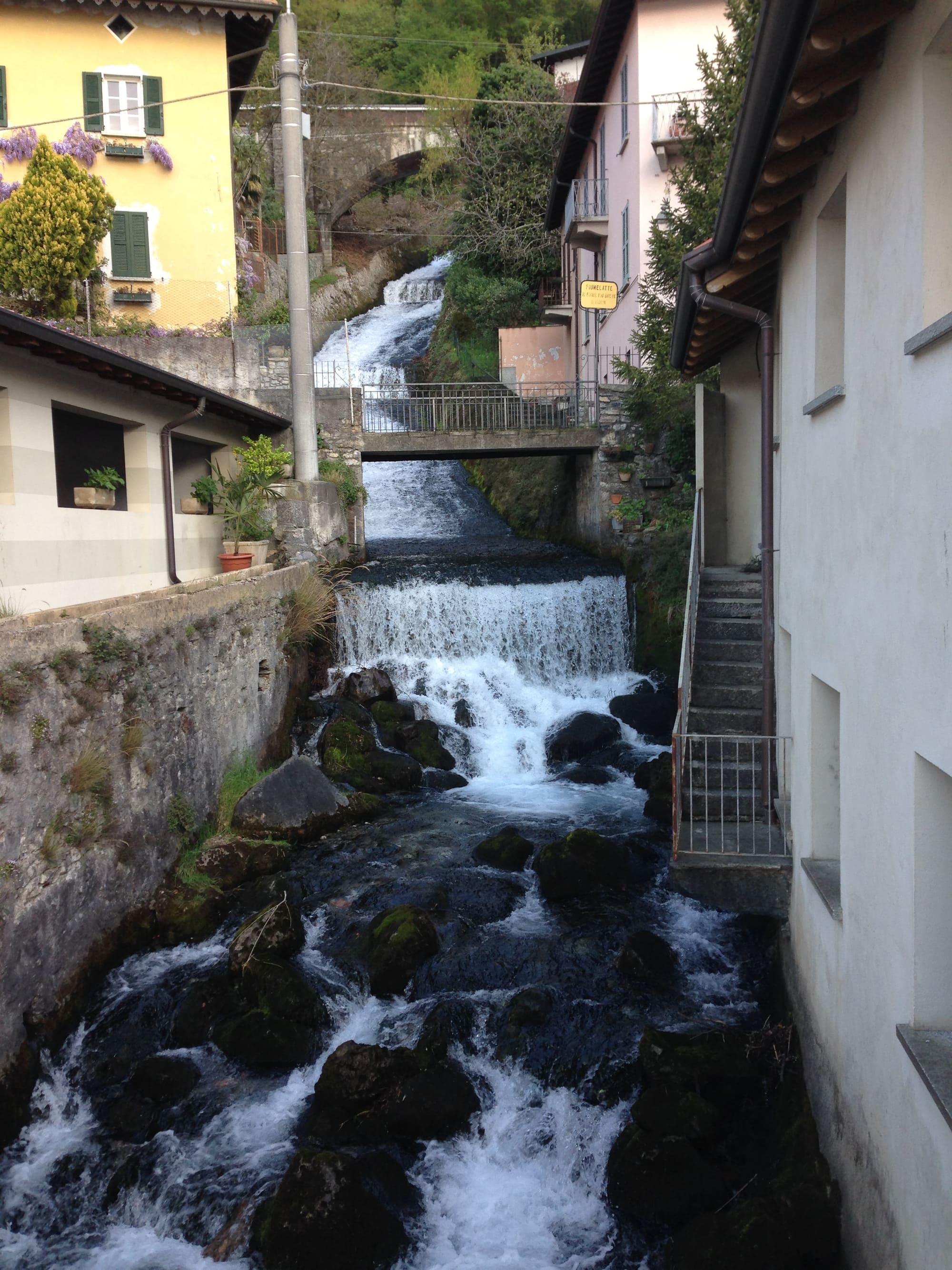
Then the list comes down to the lake. Opposite the castle of Bellagio, Leonardo writes, “is the Fiumelaccio, which falls from a height of more than 100 braccia from the vein where it springs, sheer onto the lake, with inestimable din and roar”: this is the Fiumelatte. The note adds that the spring flows only in August and September. In fact the Fiumelatte usually runs from March to October: it is the outlet of a karst system that begins in the Moncodeno, on the north side of the Grignone, as a dye poured into the mountain's caves showed in 1992. On the verso of the sheet with the list, the Pliniana returns in a single line: “Eight miles above Como is the Priniana, which rises and falls every 6 hours; its rising gives water for 2 mills with some to spare, its falling makes the springs run dry.” Two miles further up, the note continues, is Nesso, where a river falls with great violence into a vast cleft in the mountain: the gorge of Nesso.
The mountain of Mandello
The largest bare rocks in these parts, the list goes on, are the mountains of Mandello, near those of Lecco, those of Gravedona towards Bellinzona and those of the Chiavenna valley; but the largest of all is that of Mandello, which “has at its base a hole towards the lake, which goes down 200 steps, and there at all times there is ice and wind”. The hole is usually identified with the ice cave of Moncodeno, on the Grignone, in the municipality of Esino Lario: a cave that keeps its ice even in high summer. Leonardo is said to have visited it, but the note says neither where the hole is nor whether he went down into it. A few lines later comes the Valsassina: between Vimogno and Introbbio, on the right as you come in by the road from Lecco, the Troggia falls from a very high rock and, as it falls, goes underground, and there the river ends. Three miles further on are the buildings of the copper and silver mines near Pra' Santo Pietro, now part of Cortenova, and then iron mines and curious things. The list closes with the Grigna.
The Grigna is the highest mountain there is in these parts, and it is bare.
Leonardo da Vinci, Codex Atlanticus, folio 214 verso
The lake of Lecco and the Adda
Other sheets look south. On an undated one, number 740, appear the lakes of Annone, Pusiano, Sala and Segrino, the lake of Lecco, the Adda and Trezzo. Leonardo notes there that the surface of Lake Annone lies twenty-two braccia higher than that of the lake of Lecco, and Lake Pusiano's a further twenty braccia higher. Folio 388, of 1508, shows the Adda and Brivio. Ludovico il Moro commissioned Leonardo to study the river between Paderno and Trezzo to make it navigable, and many of his drawings concern the link between the lake and Milan, with a dam that would have raised the water at the Tre Corni to the level of the lake of Brivio. Beside a sketch for a canal from Brivio is a note in his hand: “Lagho di Lecho ringorgato alli 3 corni in Adda”, the lake of Lecco backed up as far as the Tre Corni. Works on that scale were never even attempted.
What the codices do not say
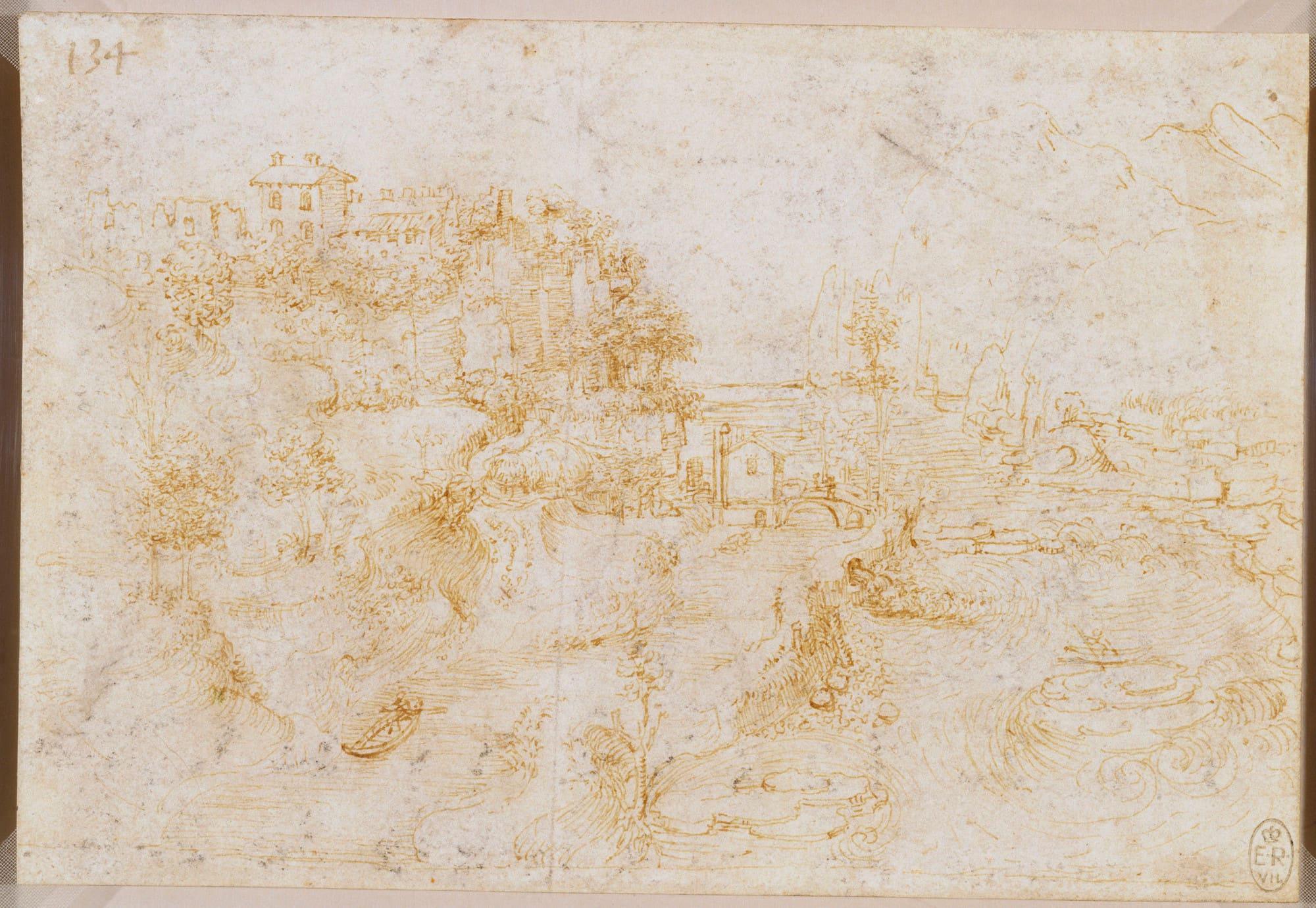
Much else has grown up around these lines. Some see the lake and the Grigne in the backgrounds of the Mona Lisa and the Virgin of the Rocks, and the bell tower of a church above Olcio in the windows of the Last Supper, and there are stories of long stays by Leonardo at Bellagio and Lierna. These are interpretations of painted landscapes and reconstructions of journeys: the notes contain no trace of them. There is also a Sentiero di Leonardo, a route of some two hundred and forty kilometres through places linked to his life and research. It starts in Milan, reaches Lecco along the Martesana and the Adda, follows the eastern shore of the lake on the Sentiero del Viandante and ends at San Bernardino, in Switzerland. What remains certain are the notes of a man in Milan who wrote down where it always snows, where there is ice in summer, how much a spring rises and in which month it is best to set out.
Historical events linked to this story are collected in the Lake timeline.