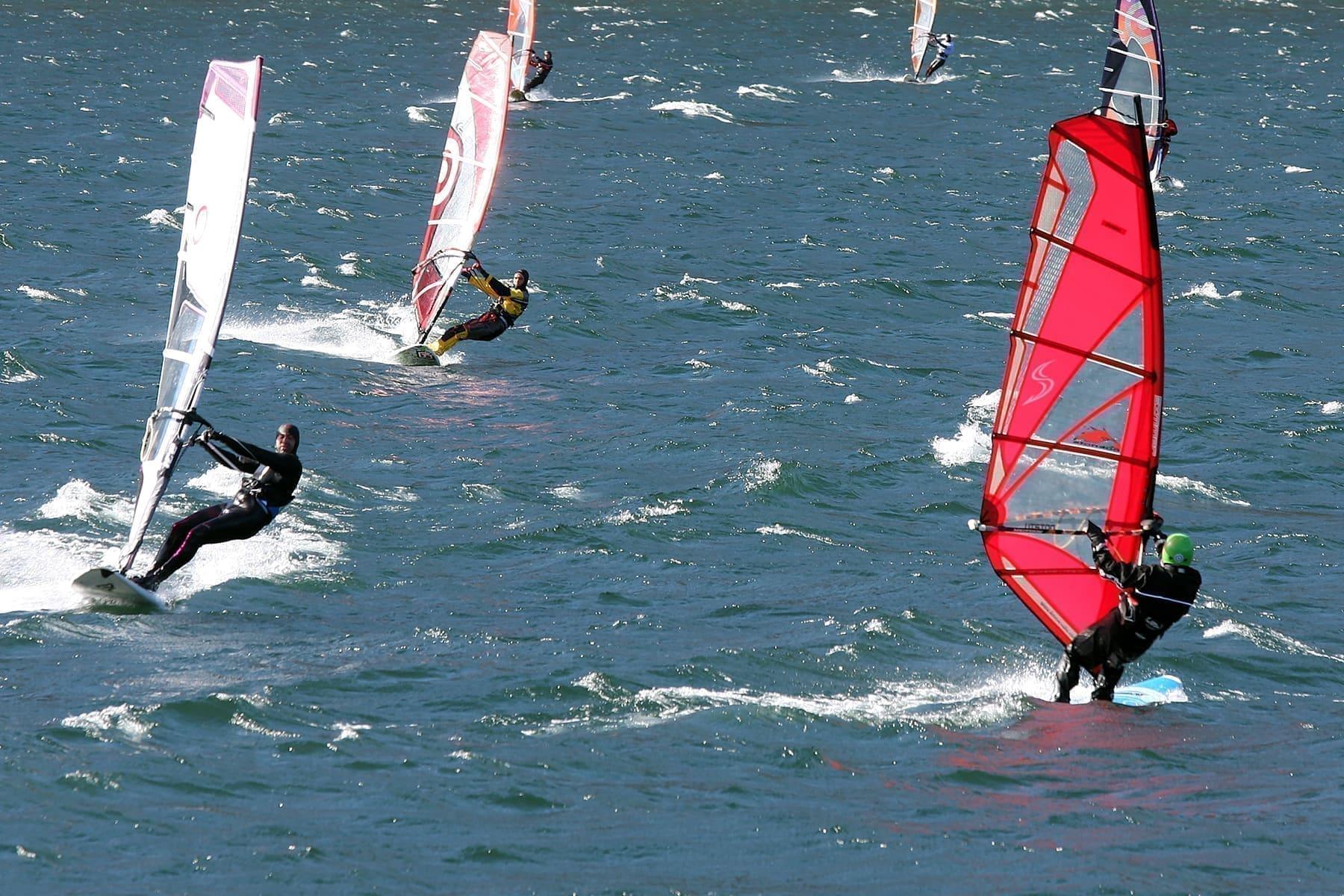
Breva and Tivano are local breezes on Lake Como, linked to the daily heating and cooling of the surrounding terrain.
Their alternating pattern is most apparent in settled weather; weather fronts and thunderstorms can disrupt it and bring other winds.
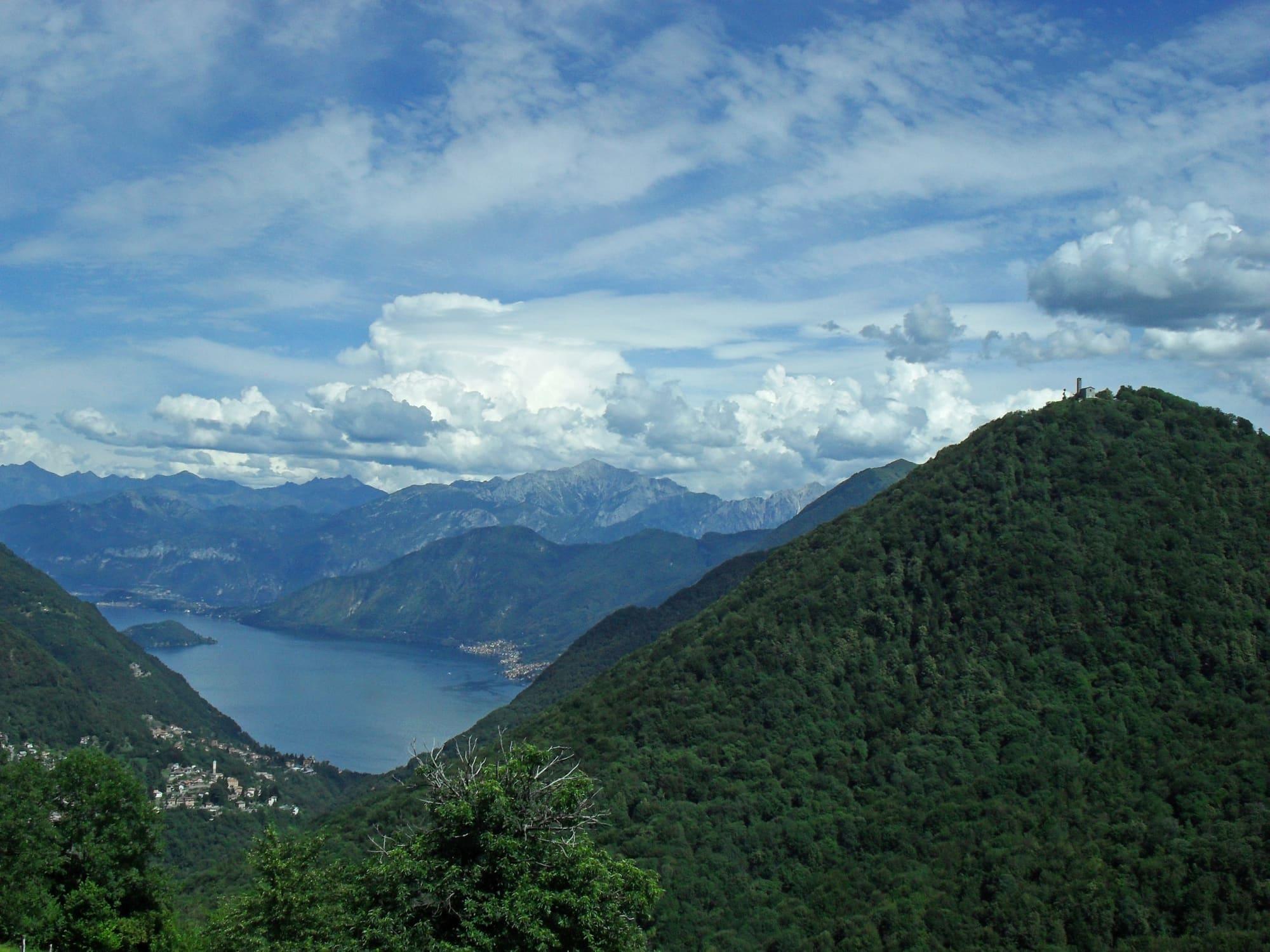
The lake is forty-six kilometres long, between the Po plain to the south and the Alps to the north. Differences in the heating of slopes, valleys and plains favour local breezes. In settled weather the Tivano blows from the north in the early hours and the Breva blows up from the south during the day. Larger-scale air currents can alter this cycle.
The Breva can raise waves, particularly on the upper lake. Its pattern changes with the weather.
The Tivano, from night to morning
It comes down from the north in the hours before dawn and usually dies out by mid-morning. It is generally weaker than the Breva, but conditions can change along the shores. It takes its name from the Pian del Tivano, the karst plateau of the Triangolo Lariano from which it seems to come, though the air it carries comes from further north.
In settled weather the Tivano is typical of the early hours, the Breva of the middle of the day and afternoon.
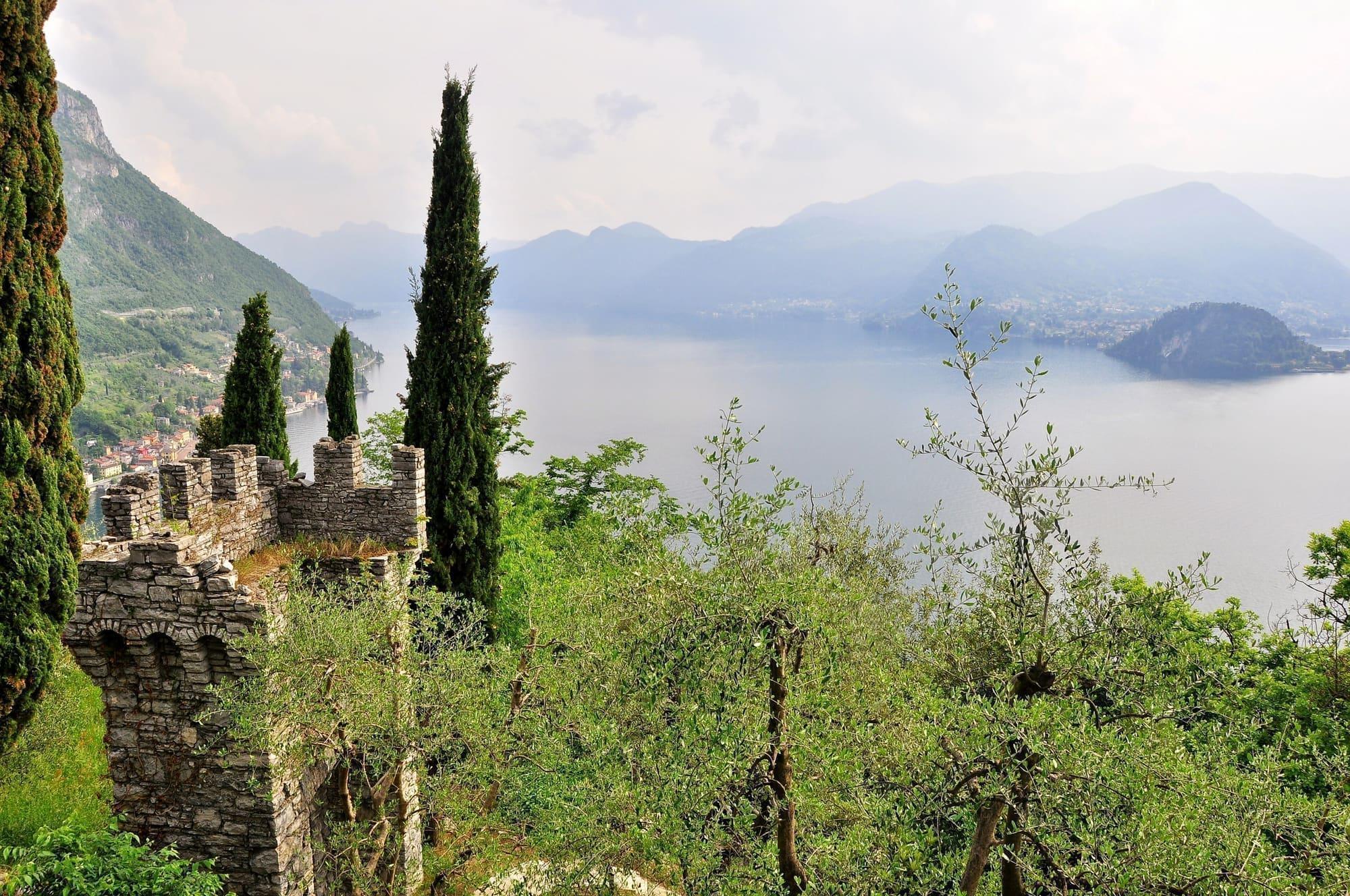
The shores are reflected in the lake when the water's surface is calm.
The Breva, after noon
The Breva blows from the south and is typical of the middle of the day and afternoon in settled weather. It can strengthen on the upper lake and produce substantial waves. Its strength and duration vary with the season and weather conditions.
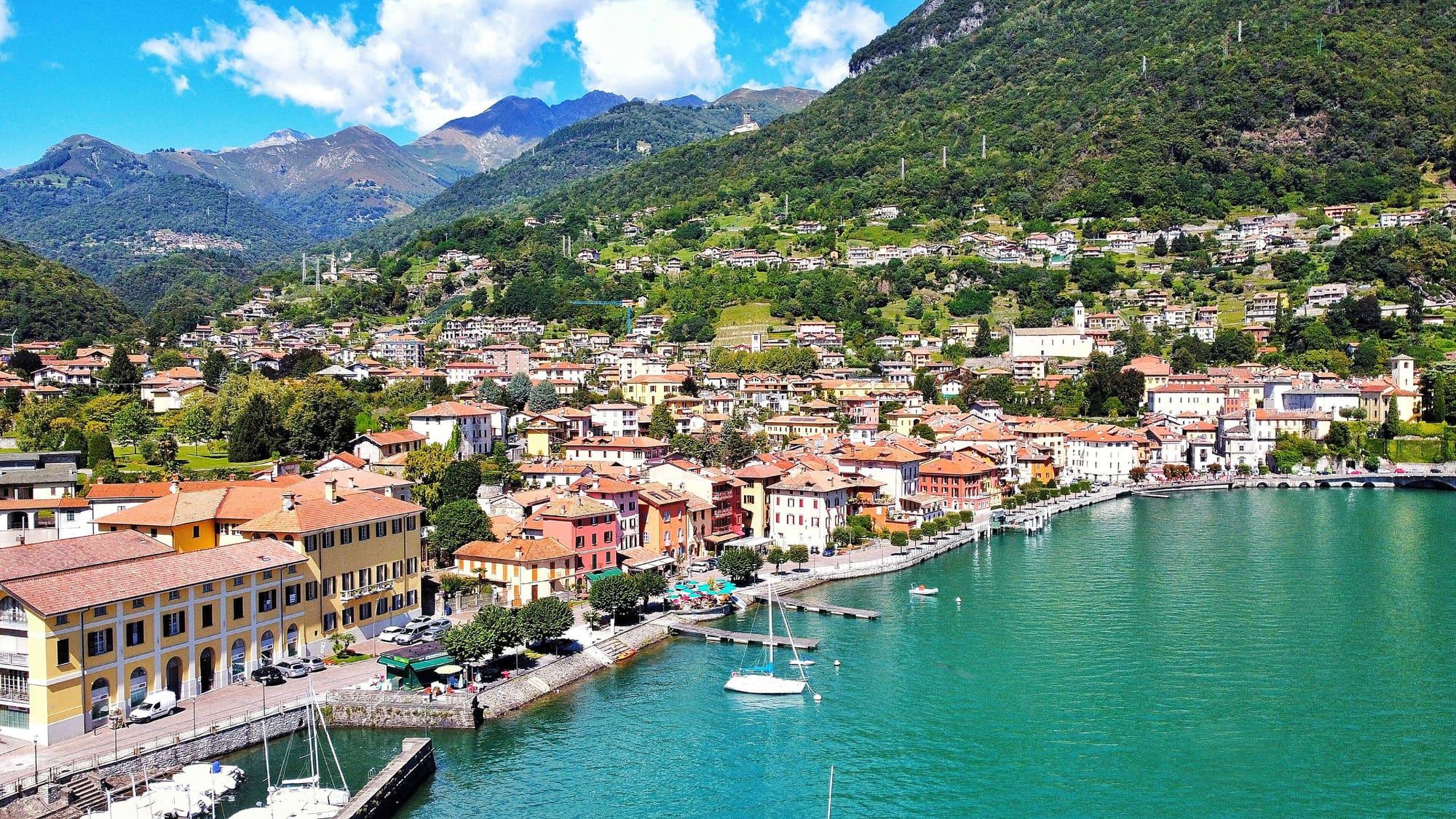
The shape of the shores and mountains channels the wind. On the upper lake, between Domaso and Colico, the Breva can be stronger than in the southern basins. Sailing and windsurfing make use of these conditions, which should be assessed locally before setting out.
Sailing and windsurfing on the upper lake
Domaso, Gera Lario, Sorico and Colico are places for sailing and windsurfing. The breezes and shoreline conditions support these activities, which are also practised elsewhere on the lake. Plans depend on the forecast, conditions on the spot and participants' experience.
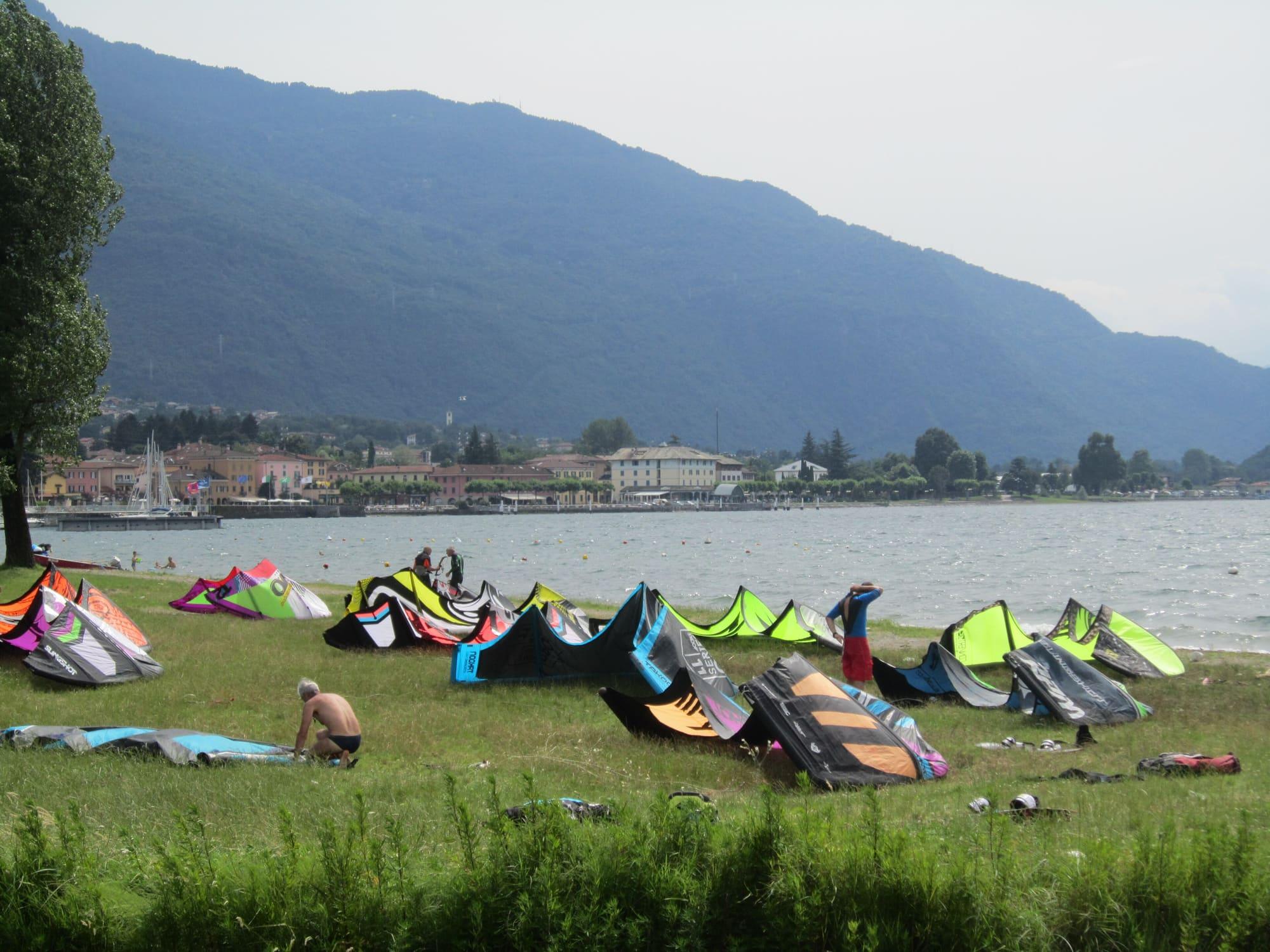
In the Como basin, boats share the water with scheduled services. Shores and headlands can affect the wind over short distances. Assess the route and water traffic before setting out.
What it changes if you do not sail
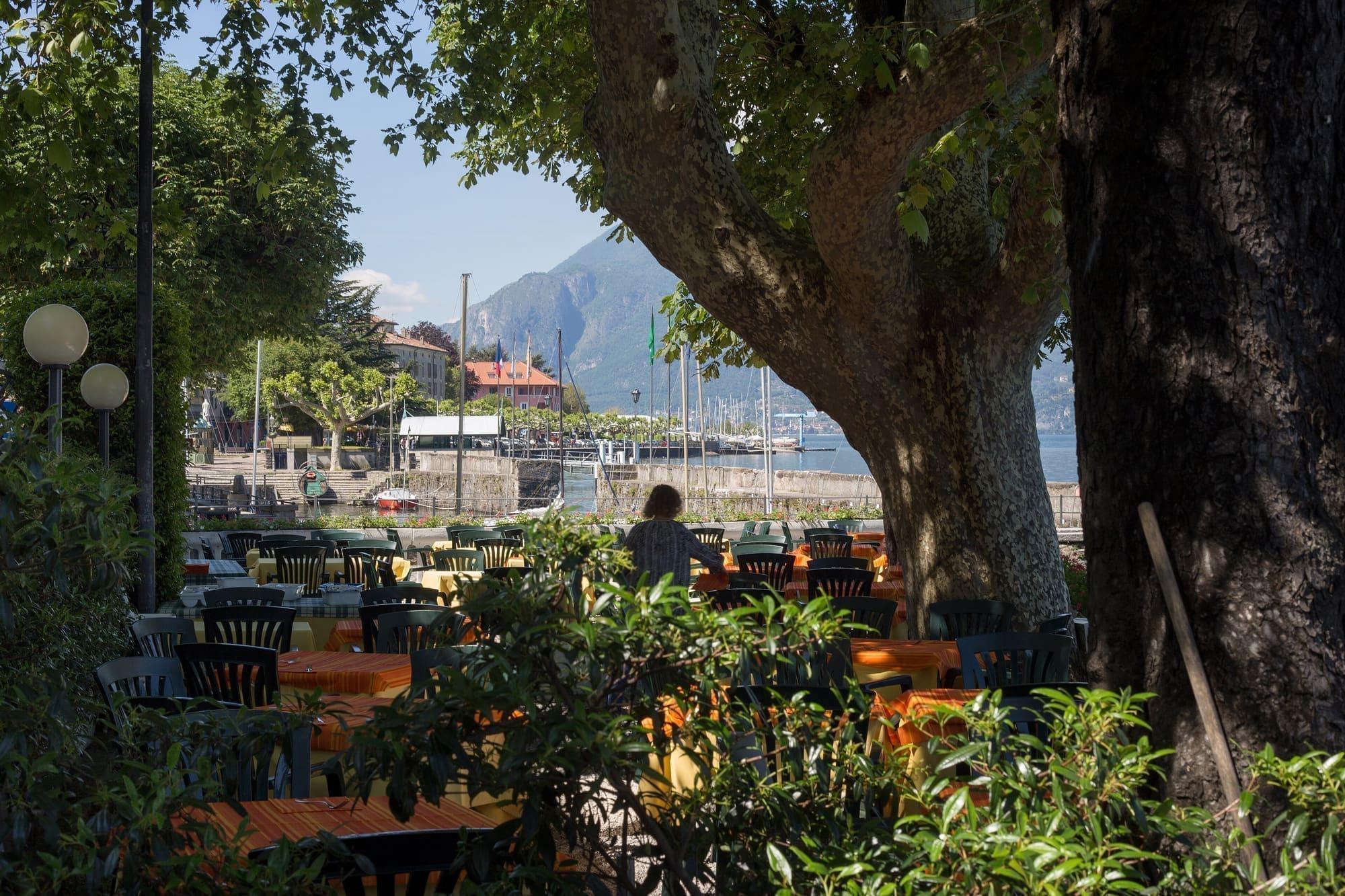
Wind and waves can change during the day: morning does not guarantee calm water for swimming. Conditions on exposed terraces depend on wind direction and location. Photographing reflections requires a sufficiently calm surface, whatever the time of day.
The open deck of ferries on the central lake can be windy even in summer. Check service notices before the crossing and follow the crew's instructions.
The local winds
Besides the Tivano and the Breva, some side valleys have winds of their own, with names: the Menaggino comes down the Val Menaggio, the Bellanasco out of the Valsassina at Bellano. They are local winds, lasting a few hours over a few kilometres, noticed mostly when they interrupt the main breezes: a patch of rippled water on a calm afternoon is often a sign of a valley blowing.
During thunderstorms local winds can bring strong gusts and rapid changes in lake conditions.
The Breva and Tivano cycle is more apparent in settled weather. Forecasts and local observations help assess conditions for each outing.