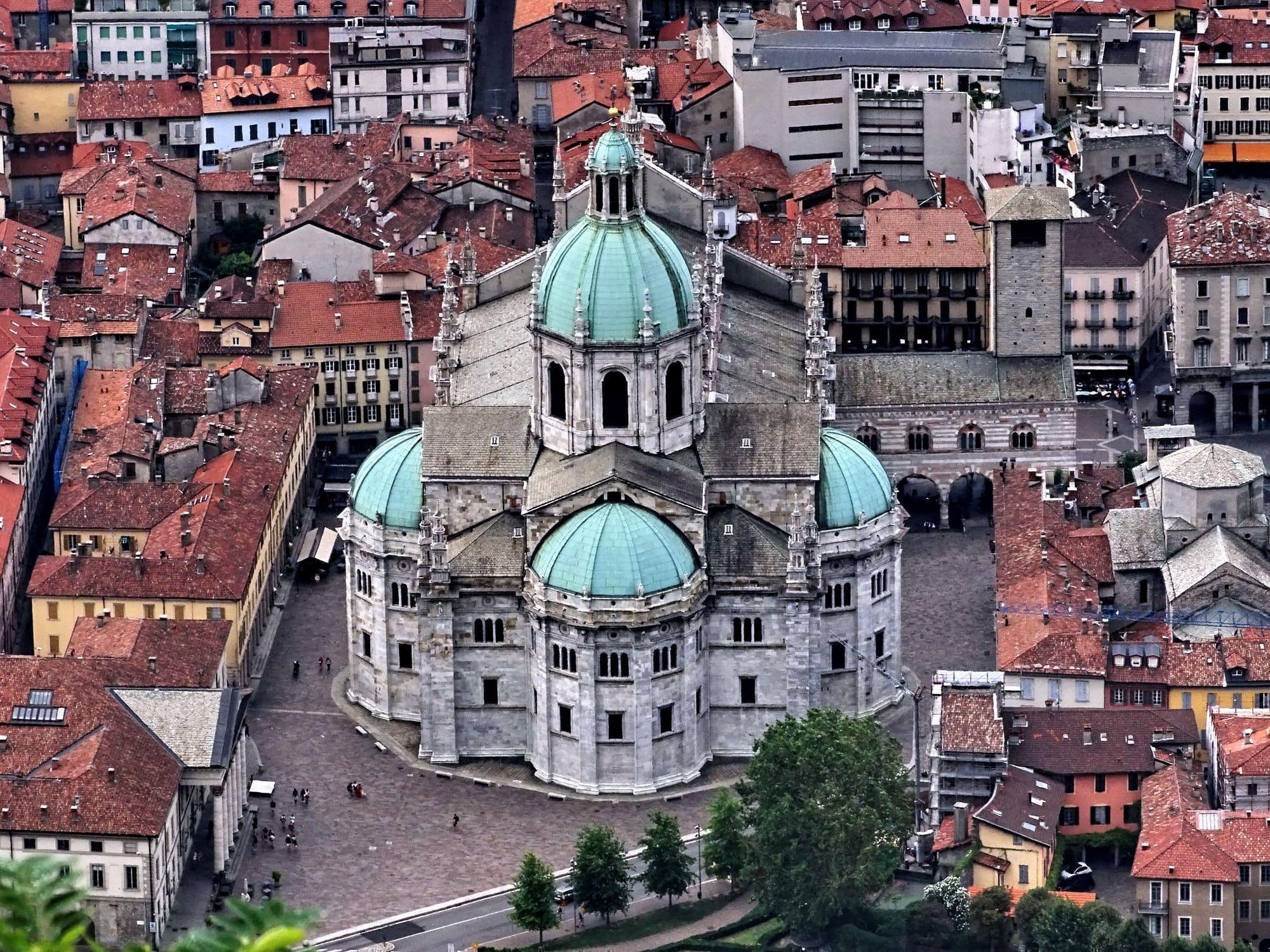
First Basin
Como
The city of silk and rationalist architecture, with the lake reaching right into the centre.
Practical guide
Lugano, Bellinzona, Bergamo, Milan and the Bernina: day trips from the lake.
The short answer
A great deal, and almost all of it by train: Lugano in forty minutes from Como, Bergamo's upper town in forty from Lecco, Milan in under an hour from either, and from Varenna the Valtellina and the little red Bernina train up to St. Moritz. One rule: leave early, with the evening's last boat already in mind.
In short
Anyone staying five to seven days on the lake can also take a trip beyond it: Switzerland is close by train, Milan forty minutes away, Bergamo behind the mountain, the Valtellina where the lake ends.
Some trips fit in a day, each from its most convenient starting point and by the most convenient means of transport; others are better kept for another journey.
From Como San Giovanni the Swiss regional trains (TILO) cross the border at Chiasso and reach Lugano in thirty-five to forty-five minutes, at regular intervals all day. Carry a passport or an ID card valid for travel: checks at Chiasso are occasional but real, and without one you are sent back.
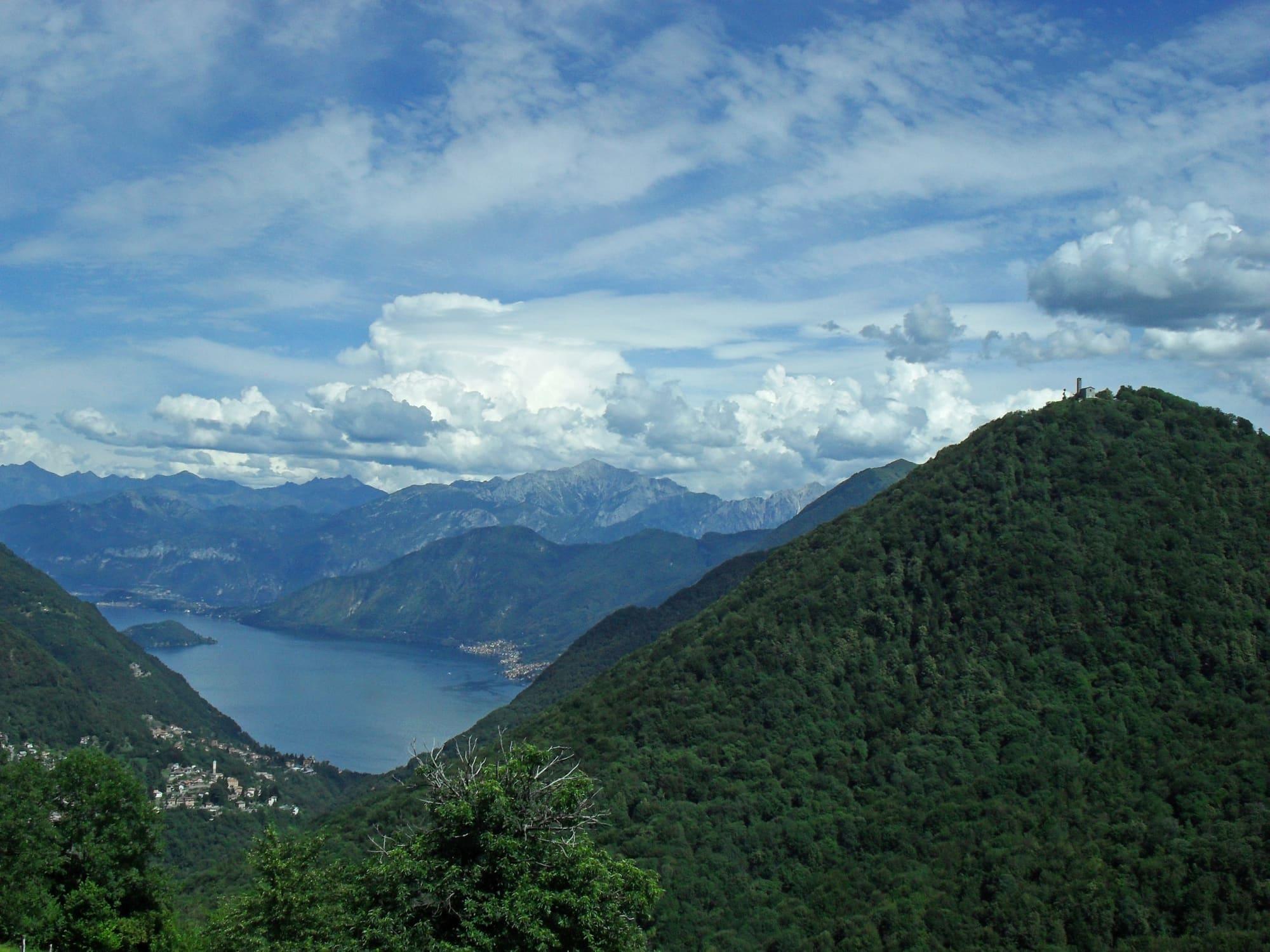
In town: the lakefront and Parco Ciani, the LAC for art, the Monte Brè funicular to see Lake Lugano from above and understand how different it is from Lario — narrower, more enclosed, greener. You pay in francs. Anyone sleeping in Menaggio can also go by bus through Porlezza and the Italian shore of the Ceresio: about an hour, with few runs.
On the same line as Lugano, twenty minutes or so further on, Bellinzona has three medieval castles — Castelgrande, Montebello, Sasso Corbaro — which UNESCO listed together with the walls in 2000. They can be visited on foot in half a day, climbing from one to the next, and Castelgrande has a lift cut into the rock that starts from the main square.
On Saturday mornings there is a market in the centre. Combined with Lugano it is a full day but a feasible one; on its own, unhurried, it is the right trip for anyone who has already seen Lugano.
From Lecco an hourly regional train reaches Bergamo in about forty minutes. From the station, ten minutes on foot or the bus to the funicular, and up into the upper town: Piazza Vecchia, the Colleoni chapel, Santa Maria Maggiore, and the Venetian walls that have been UNESCO World Heritage since 2017. It is a whole city on a hill, and fills a day on its own.
From the centre of the lake it is still best to go through Lecco: anyone sleeping in Varenna takes the Tirano-line train to Lecco and changes there. The evening return is easy until late, but check the last boat if you sleep on the Bellagio shore.
Como San Giovanni to Milano Centrale is under an hour by regional train; Como Nord Lago to Milano Cadorna, on the Nord line, about an hour; Lecco to Milano Centrale, between forty minutes and an hour. It is the trip to keep for the rainy day, which on the lake comes sooner or later: the Duomo and its terraces, Brera, the castle, the Navigli in the evening.
Leonardo's Last Supper is booked weeks ahead, never on the day; if there is no slot, the Ambrosiana or the Museo del Novecento on the cathedral square will fill the morning. Come back on a train before the evening rush, which in Milan begins at five.
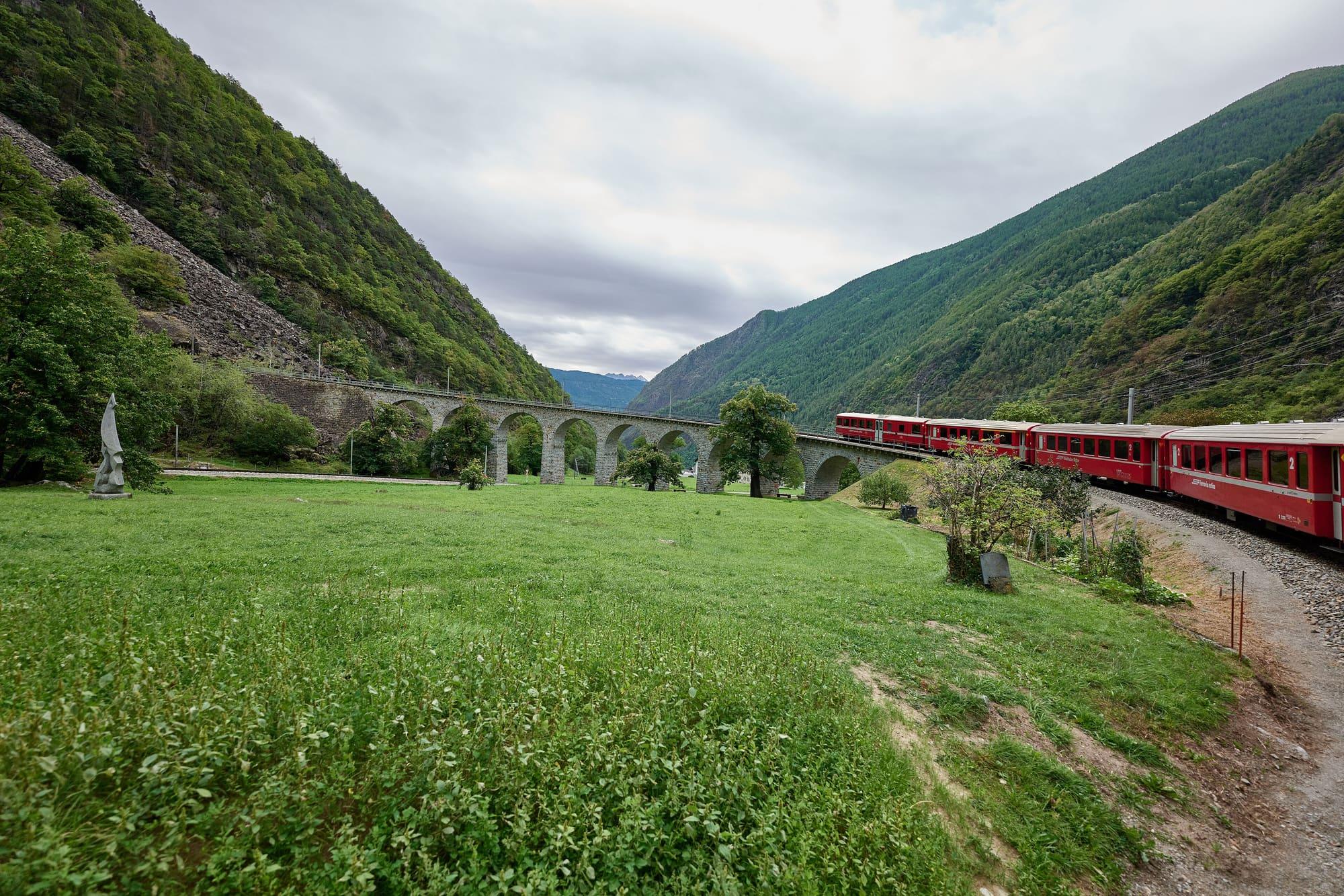
From Varenna-Esino-Perledo the train on the Milan–Lecco–Sondrio–Tirano line runs up the whole upper lake and the valley: nearly an hour and a half to Tirano, with the Valtellina's terraced vineyards at the window. At Tirano everything changes: the Rhaetian Railway's Bernina line begins, a UNESCO World Heritage site since 2008 together with the Albula line, climbing to St. Moritz in two and a half hours over the spiral viaduct at Brusio and the pass at 2,253 metres, without a rack.
The red regional trains run the same route as the Bernina Express and need no reservation; the panoramic one does. As a day from Varenna it means leaving around eight and returning around eight in the evening, with a couple of hours in St. Moritz: a long day. Anyone who wants less time on the train stops at Tirano — the basilica of the Madonna — or gets off at Morbegno for the cheeses and the wine.
Switzerland is in the Schengen area: EU citizens need only an identity card valid for travel; others travel with a passport and, where their nationality requires one, a Schengen visa. Checks at Chiasso are occasional but real.
Not for Lugano, Bergamo or Milan, which the train reaches. Only for the lower Valtellina, if you want to stop among the vineyards — and never for the Bernina, which is a train by definition.
Yes, from Varenna: nearly eight hours on the train there and back, with two hours in St. Moritz. From the Como branch it is too much; you leave from Colico or Varenna.
The city of silk and rationalist architecture, with the lake reaching right into the centre.
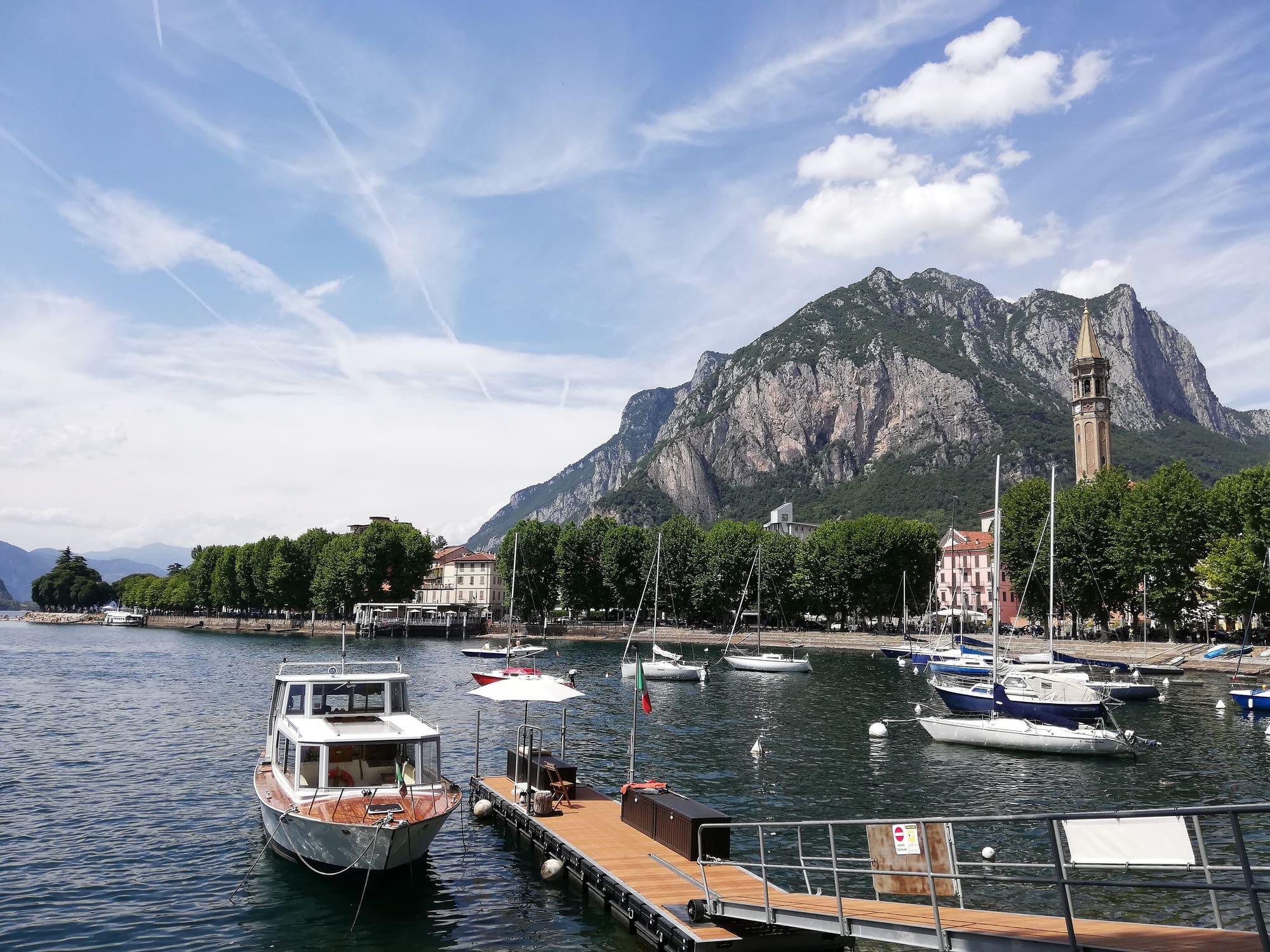
Manzoni's city, with the Resegone closing it off behind.
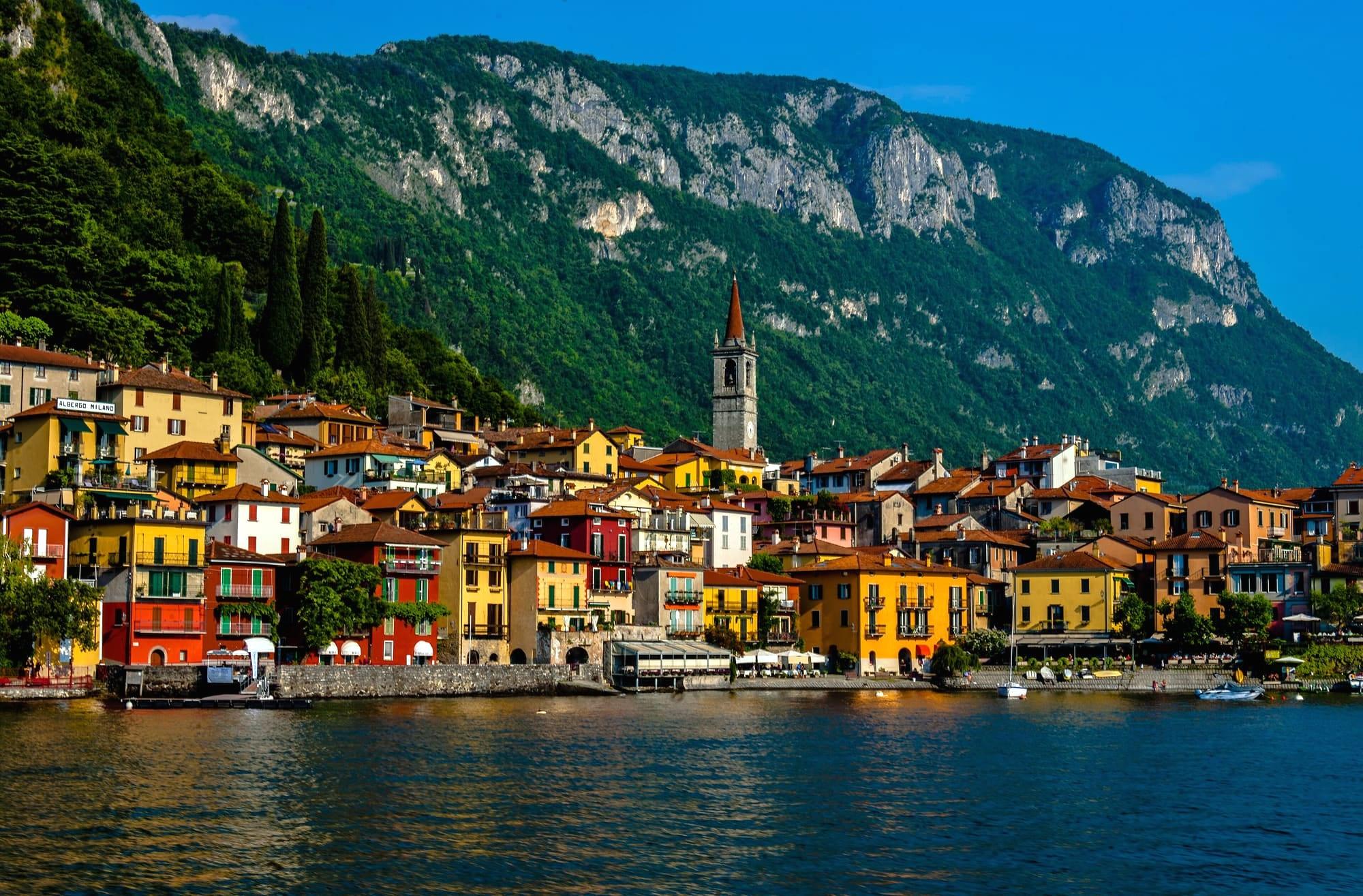
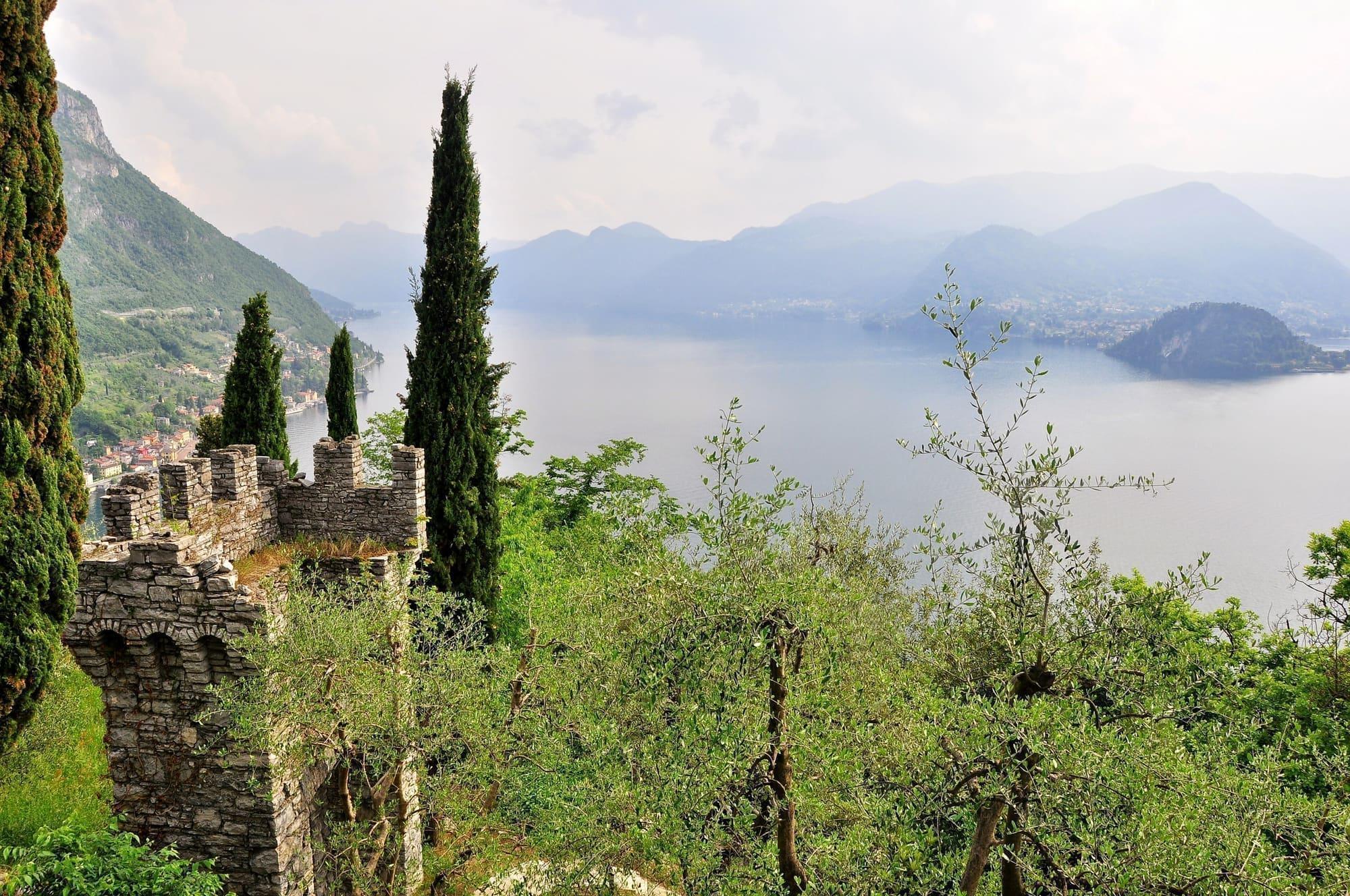
Ochre houses on the water, two botanical gardens on the shore and Vezio castle above the village.
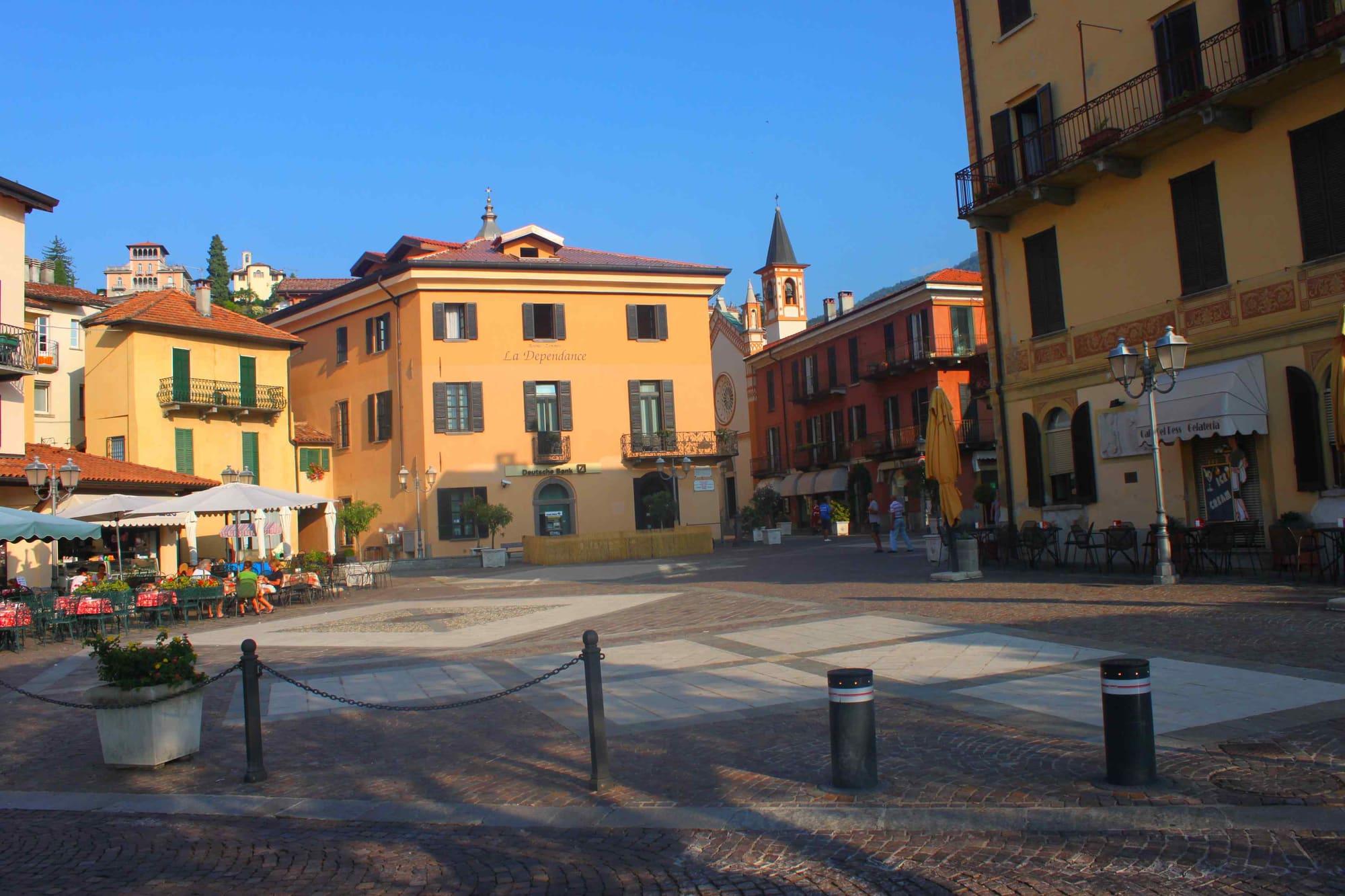
In the middle of the lake, between the ferry, the Regina road and the bus to Lugano.