 Three days
 without a car
Three days by train, ferry and on foot, with no parking to hunt for.
Public transport
Practical guide
The rules for anyone at the helm on the lake: bands from the shore, speeds in knots, right of way.
The short answer
A boating licence is required above 30 kW (40.8 metric horsepower), and also at or below that power if the engine exceeds the displacement limit for its type. To operate a motorboat up to ten metres long without a licence, you must be at least sixteen. Jet skis always require a licence.
In short
To operate a boat on Lake Como you need to know the requirements for the skipper and the navigation rules.
These set distances from the shore, speeds, right of way and safety equipment. Before setting out, check the vessel's specifications, conditions on the lake and navigation notices.
A boating licence is required above 30 kW (40.8 metric horsepower), and also at or below that power if the engine exceeds the displacement limit for its type.
The minimum age, on the other hand, depends on the hull: sixteen for motorboats up to ten metres; eighteen for vessels between ten and twenty-four metres; fourteen for sailing craft with more than four square metres of sail. A hire firm may ask for more: that is their condition, not the law.
Jet skis sit outside this arithmetic. They require a licence at any power, may run only from nine to one and from three to seven, may not come within a hundred and fifty metres of the shore except to leave and to land — perpendicular, under five knots — and are banned along the scheduled boat routes. The mayors of a continuous stretch of shore may ban them outright.
The boat handed to you must carry a legible plate with its register number, the name of the firm and the maximum number of people it may carry; whoever hands it over records your identity and the time, briefs you on safety, and tells you that if the weather turns you come straight back. In strong wind, waves or a thunderstorm hiring out is forbidden, and the hire firm must refuse.
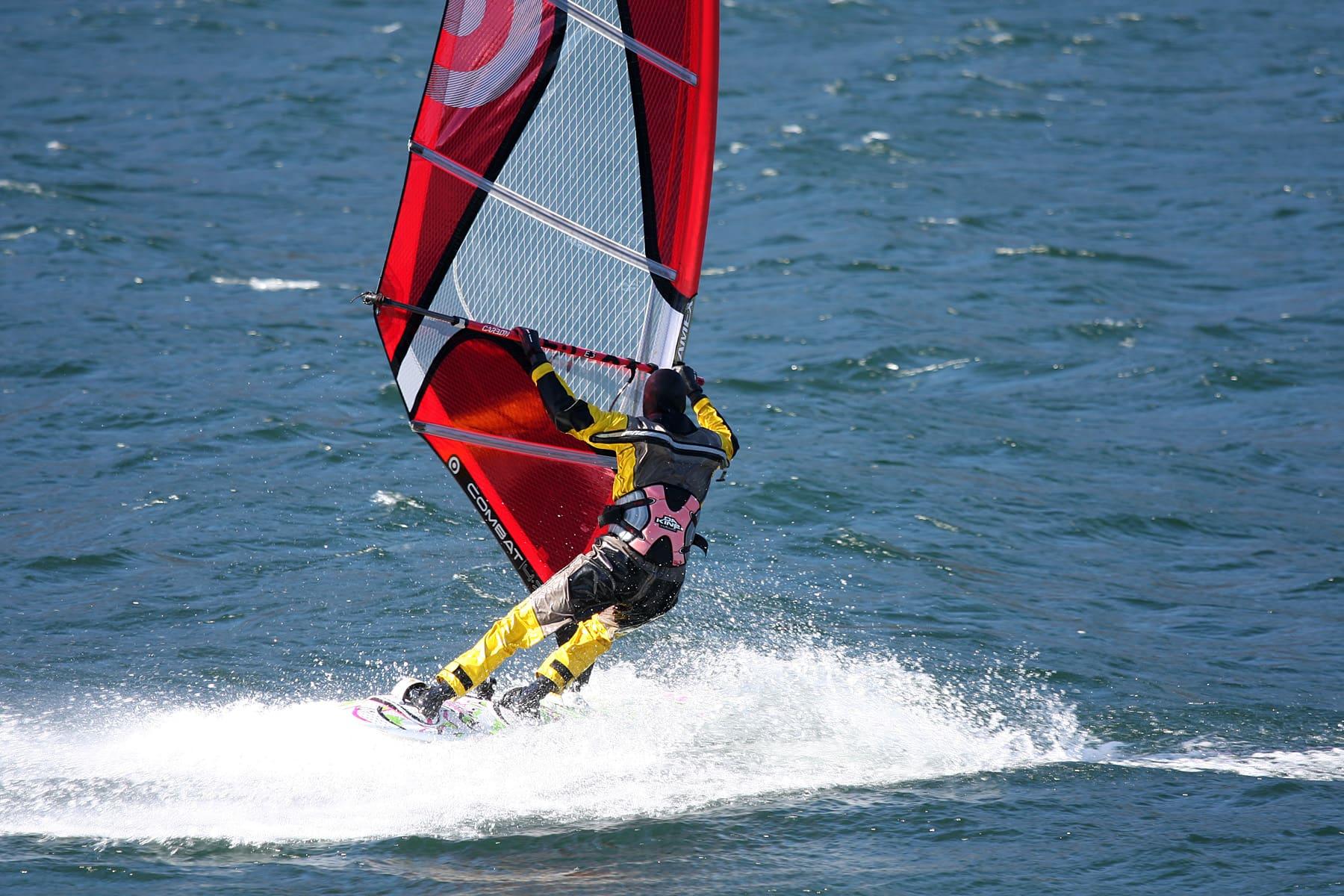
The regulation divides the water into three bands measured from the waterline. Within fifty metres you may go by oar, by sail, by pedalo, on a board or with an electric motor up to three horsepower, always under five knots: a boat with a combustion engine may not cruise there; it may only leave, land and cross, and must do so perpendicular to the shore. Between fifty and a hundred and fifty metres the limit is ten knots. Beyond a hundred and fifty, twenty-seven.
At night the numbers change: seven knots for craft under seven metres showing only the all-round white light, ten for everything else. There is also a noise limit — seventy-three decibels measured twenty-five metres off the beam — and it is the reason racing hulls and open-exhaust boats simply cannot run on Lario.
The smaller lakes of the same basin have their own, tighter rules: at Annone, Pusiano, Alserio, Garlate, Olginate, Segrino, Montorfano and Novate Mezzola engines are banned within fifty metres, the limit is ten knots up to a hundred metres and fifteen beyond, and the maximum power allowed is twenty-five horsepower.
On the lake everyone gives way, in this order, to rescue and police craft, to the scheduled public service (boats, hydrofoils, ferries), to professional fishermen, and to sailing boats actually under sail.
You keep fifty metres from the scheduled vessels on every side, and you may not obstruct their course or hinder their approach and berthing. The regulation obliges them to enter and leave harbours at minimum revolutions and on a displacement hull, so by the time they find you in front they are already going slowly and have no margin left.
Among themselves, the scheduled vessels follow a rule worth knowing: the one entering the harbour gives way to the one leaving, and waits offshore if it must. A boat sitting still outside the harbour mouth is not idling by chance, and that is not the moment to slip through.
A ferry in its manoeuvre has no room to avoid you: the room is yours to leave.
Two stretches of Lario may be crossed only in gear, that is at tick-over, and water-skiing, jet skis and similar sports are banned there: the Isola Comacina, between the island's point and the piers of Sala Comacina, and the Laghetto di Piona, inside the line joining the two points of its entrance.
Navigation is forbidden in every zone marked out for bathing and in the reed beds. Anyone swimming beyond fifty metres from the shore must carry a marker float, but do not count on it: on the way in, watch the water ahead of the bow, and if somebody is there, switch the engine off and finish on the oars.
Piers are not car parks. Those for embarking and landing may be used only for as long as it takes to put people ashore and aboard; those for temporary mooring hold you for two hours at most and want your time of arrival displayed legibly, like a parking disc. Mooring alongside — the boat parallel to the pier — is forbidden; in a bathing zone you stop a hundred metres off the beach; and every buoy is held under concession: there are no free ones.
The rules do not say at what hour the Breva or the Tivano gets up, but they are clear on other things: in adverse weather nobody may hire a boat out, if it turns you come straight back, the base flies a red flag, and small craft — pedalos, canoes, kayaks, boards — do not go out when dangerous weather is present or visibly coming. The main hazards are currents and winds with a running swell, a bed that drops away at once, and cold water.
The Autorità di Bacino del Lario e dei Laghi Minori publishes a nautical chart of Lario in nine sheets, with every landing, the emergency landings, and a table of expected winds by season and by hour of the day; and, when needed, it publishes notices calling for cautious navigation on individual stretches of shore. They are two pages to look at before setting out, not after.
On board you need the equipment prescribed for the kind of navigation: on inland waters a category 100 life jacket for every person aboard and a ring lifebuoy with its line. Anyone driving a jet ski, a sailboard, a dinghy or a kiteboard — and anyone riding along — wears the life jacket at all times, at any distance from the shore. The alcohol limit is the one you know from the car; the penalties are heavy, they suspend the licence of anyone who holds one, and refusing the test is punished as the worst case.
A boating licence is required above 30 kW (40.8 metric horsepower), and also at or below that power if the engine exceeds the displacement limit for its type. To operate a motorboat up to ten metres long without a licence, you must be at least sixteen. Jet skis always require a licence.
Sixteen for craft up to ten metres, eighteen for vessels between ten and twenty-four, fourteen for sailing craft with more than four square metres of sail. Many hire firms ask for more: that is a commercial condition of theirs, and they are entitled to set it.
No. Public embarking and landing piers serve only to put people ashore and aboard, for the time strictly needed, and stopping there without reason is forbidden, as are fishing, diving and sunbathing from them. For stopping, there are the temporary mooring piers: two hours at most, with your time of arrival displayed.
The limit is the same as for a car, and the law does not distinguish between a licensed skipper and someone driving without one because the boat is small: the limit applies to whoever is in command. The penalties rise with the reading, and refusing the test is punished as the worst case.
Within fifty metres of the shore you swim freely; beyond that you need a clearly visible marker float, or a support boat a few metres away with someone aboard who can swim. Bathing is always forbidden near the scheduled-service piers and in the water where the boats make their approach and departure. In a bathing zone the boat stops a hundred metres off the beach.
In the regional ordinance governing navigation on Lombardy's inland waters, dating from 1997 and amended in 2009, and in the ordinances of the Autorità di Bacino del Lario e dei Laghi Minori, which also runs the public piers and publishes the regulation on how to use them. Of all of it, only the ordinance on bathing and small craft has an official English version.