 Two days
 in the centre of the lake
Three shores, four gardens, and never more than twenty minutes of ferry.
Public transport
Practical guide
What kind of visit each villa offers, how long it takes and which ones pair up in a day.
The short answer
Two in a day, not three, and chosen by kind: Villa Carlotta and Villa Monastero put a house and a garden together, the Balbianello is a loggia on a promontory and always has to be booked, Melzi and Cipressi are gardens by the water that you simply walk into. Which pair makes sense depends mainly on the ferry timetable.
In short
On this lake the word “villa” covers quite different things: a museum with a botanical garden around it, a FAI promontory you can only enter by booking, a private garden with a ticket desk at the gate, a hotel that opens its terraces. The choice depends on the kind of visit you want and how much time you have between two ferries.
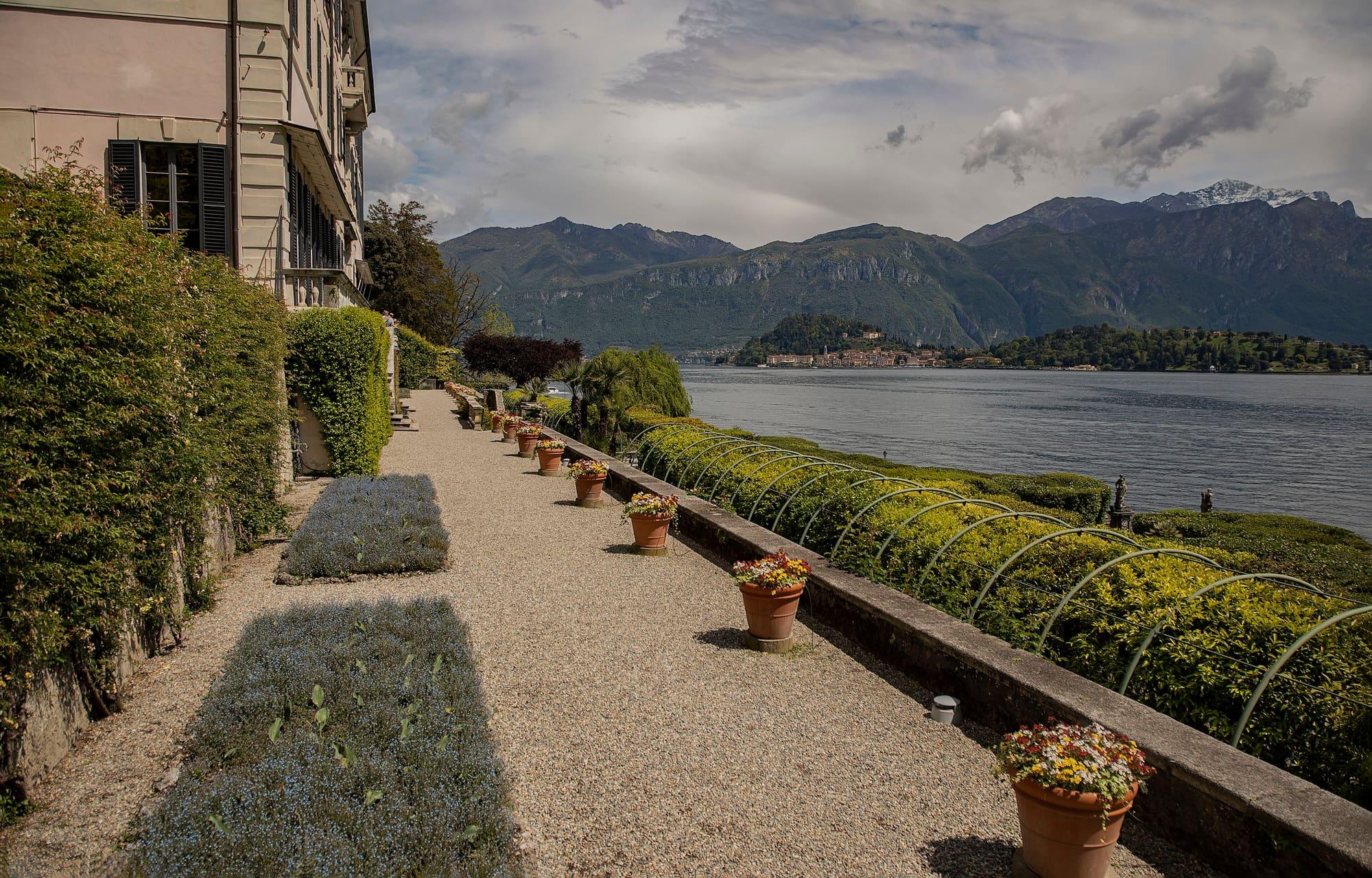
The villas fall into three kinds. House and garden together: Villa Carlotta in Tremezzina, with its museum rooms and the terraces around them, and Villa Monastero in Varenna, the furnished rooms of the house museum and nearly two kilometres of botanical garden along the shore. Garden only: the Giardini di Villa Melzi in Bellagio, where the villa is private, and the garden of Villa Cipressi, next door to Villa Monastero, where the villa is a hotel. A case of its own: the Balbianello, where you walk the garden yourself and the house is guided only.
Villa Olmo, in Como, is a municipal palace with a public park by the lake. Villa Erba, in Cernobbio, is an exhibition and congress centre; the “Le stanze di Luchino Visconti” exhibition explores the director's connection with the house.
At the Balbianello you walk the garden on your own; the house is guided only.
It is the one you cannot improvise. Booking is compulsory for everybody; the garden, the terraces and the Loggia Durini are walked on your own, while the house is guided only, in groups of sixteen people at most, with departures spaced a quarter of an hour apart when the party is larger. The guided visit lasts about fifty minutes.
You reach it on foot from Lenno: one kilometre uphill, partly on gravel, twenty-five minutes; or by the longer path, two and a half kilometres and three quarters of an hour, for which you need proper shoes. The alternative is the taxi boat from the Lido di Lenno, paid, by reservation and subject to availability: it is run by a private operator, not by FAI.
Two warnings worth knowing first: the route is not suitable for prams or for anyone who has difficulty walking — baby carriers are lent and the pram is left at the ticket office — and the villa is only partly accessible, six levels with a lift serving three, so wheelchair users are asked to get in touch beforehand.
Villa Monastero and Villa Cipressi sit on the same stretch of shore and can be visited one after the other. At Monastero individuals and families walk in without booking, groups only by reservation, and there is a combined ticket with the garden of Villa Cipressi, sold on the days Cipressi is open.
From the Varenna pier it is about fifteen minutes on foot through the village. There is no parking at the villa: the paid multi-storey is in front of Villa Monastero. Anyone arriving by boat can ask to use the small dock, which is free, but the boat does not stay moored for the whole visit.
At Villa Monastero part of the botanical garden is not accessible — a slope that has to be walked back up, steps in the second stretch, gravel near the house museum — and an electric shuttle, which has to be asked for at the desk or by email beforehand, takes people with limited mobility to the house museum and the cafeteria, wheelchairs included. Last entry is half an hour before closing. The garden of Villa Cipressi closes on certain days of the year, summer included: the dates are published by the hotel.
At the Giardini di Villa Melzi the ticket is bought at the desk on the day and there is no need to book: it covers the garden, the chapel and the museum. The villa itself is private and cannot be visited.
The house rules are few and they are written down: do not walk on the lawns, no picnics — a packed lunch only on the benches or in the area under the museum — there are no refreshments inside, dogs come in on a lead and may also enter the museum and the chapel, drones may not. Admission is free for disabled visitors who are not self-sufficient and for one companion.
The park of Villa Serbelloni, on the promontory, is the other visit people look for in Bellagio. The estate belongs to the Rockefeller Foundation, whose centre is private and by invitation; how and when the park can be visited is published by the Bellagio tourist portal and changes from season to season: check it before walking up.
At the Giardini di Villa Melzi the ticket covers the garden, the chapel and the museum; the villa is private.
Two, and almost never three. Villa Carlotta takes an hour and a half to three hours, the Balbianello an hour and a half to two and a half counting the walk, Villa Monastero one to two hours, the Giardini di Melzi three quarters of an hour to an hour and a half, the garden of Cipressi half an hour or a little more. To these add the crossing, which in the centre-lake triangle is a quarter of an hour but you have to wait for it.
The pairs that work: Carlotta and the Balbianello on the same day, because both are in Tremezzina: the Greenway takes you from Villa Carlotta to Lenno in half an hour, and from there it is the twenty-five-minute climb; Monastero and Cipressi, which are next door to each other; Melzi on its own in Bellagio, with the rest of the day in the village. Carlotta in the morning and Melzi in the afternoon can be done, with a ferry in between and the last sailing already checked.
They are not the same thing: the Balbianello is a loggia and a garden on a promontory, Villa Carlotta is a collection inside a garden, Melzi is a walk at the water's edge. If the photograph you have in mind is the loggia between two cypresses, it is the Balbianello, and it is also the only one you cannot visit on the spur of the moment.
At the Balbianello always, for everybody. At Villa Carlotta, Villa Monastero and the Giardini di Melzi individuals and families walk in without booking; groups book separately: at Villa Carlotta a group starts at twenty people, at Villa Monastero the booking goes through whoever handles group visits.
Yes, with different rules in each place. At Villa Carlotta in the garden, on a lead. At the Giardini di Melzi on a lead and with waste bags, and they may enter the museum and the chapel too. At Villa Monastero in the garden only, on a lead. At the Balbianello in the garden only, and certified assistance dogs indoors as well, always on a lead.
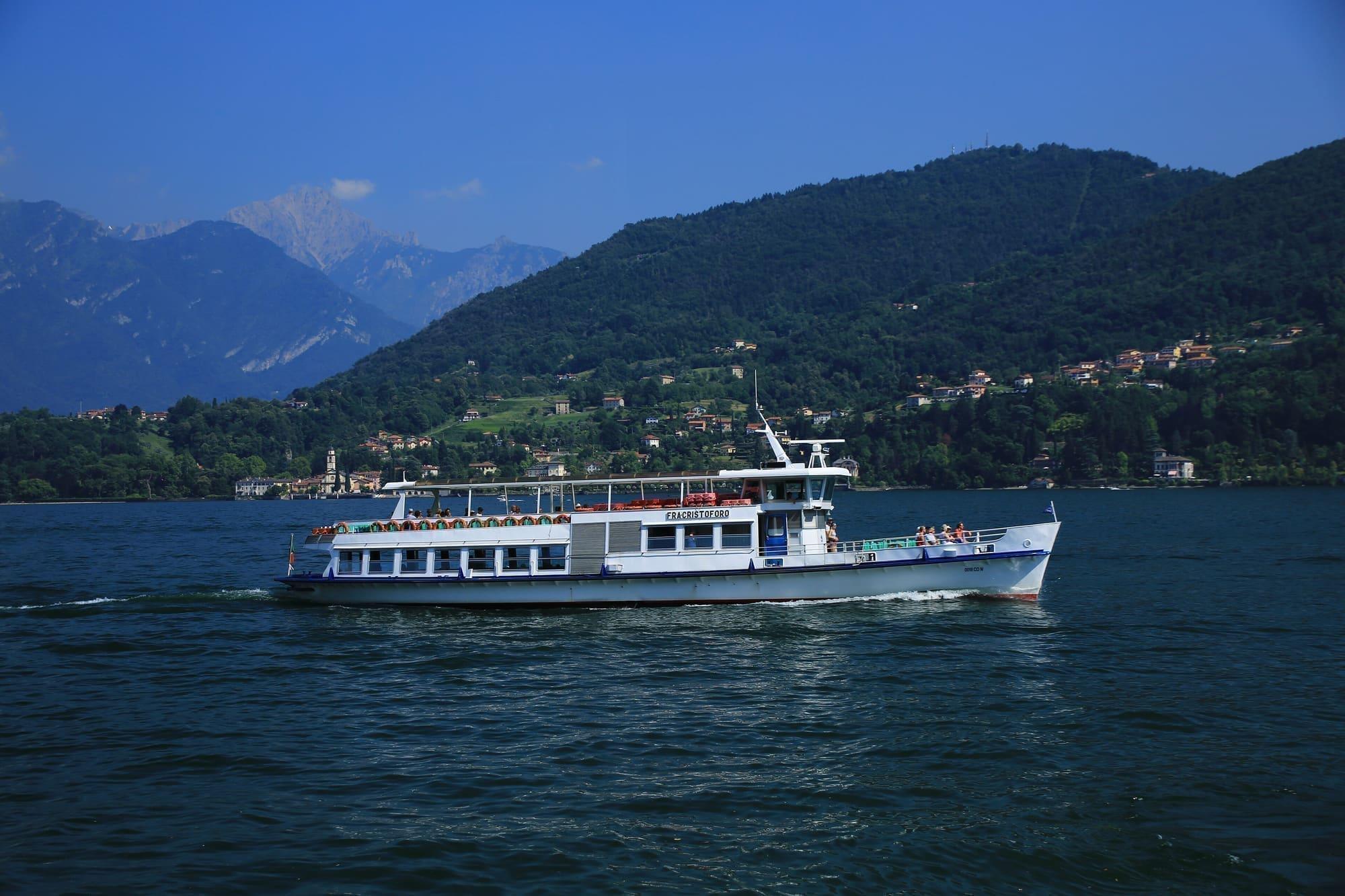
Villa Carlotta has its own boat stop, Tremezzo – Villa Carlotta, and the western-shore bus line stops at the entrance. Villa Monastero has a small dock, free but on request. The Balbianello is reached by taxi boat from the Lido di Lenno, paid and by reservation, or on foot.
The park in front of the villa is public and pedestrian: bicycles must be pushed, and the lawns facing the lake must not be walked on. The property has belonged to the city of Como since 1925. The palace hosts exhibitions; check access conditions before visiting.
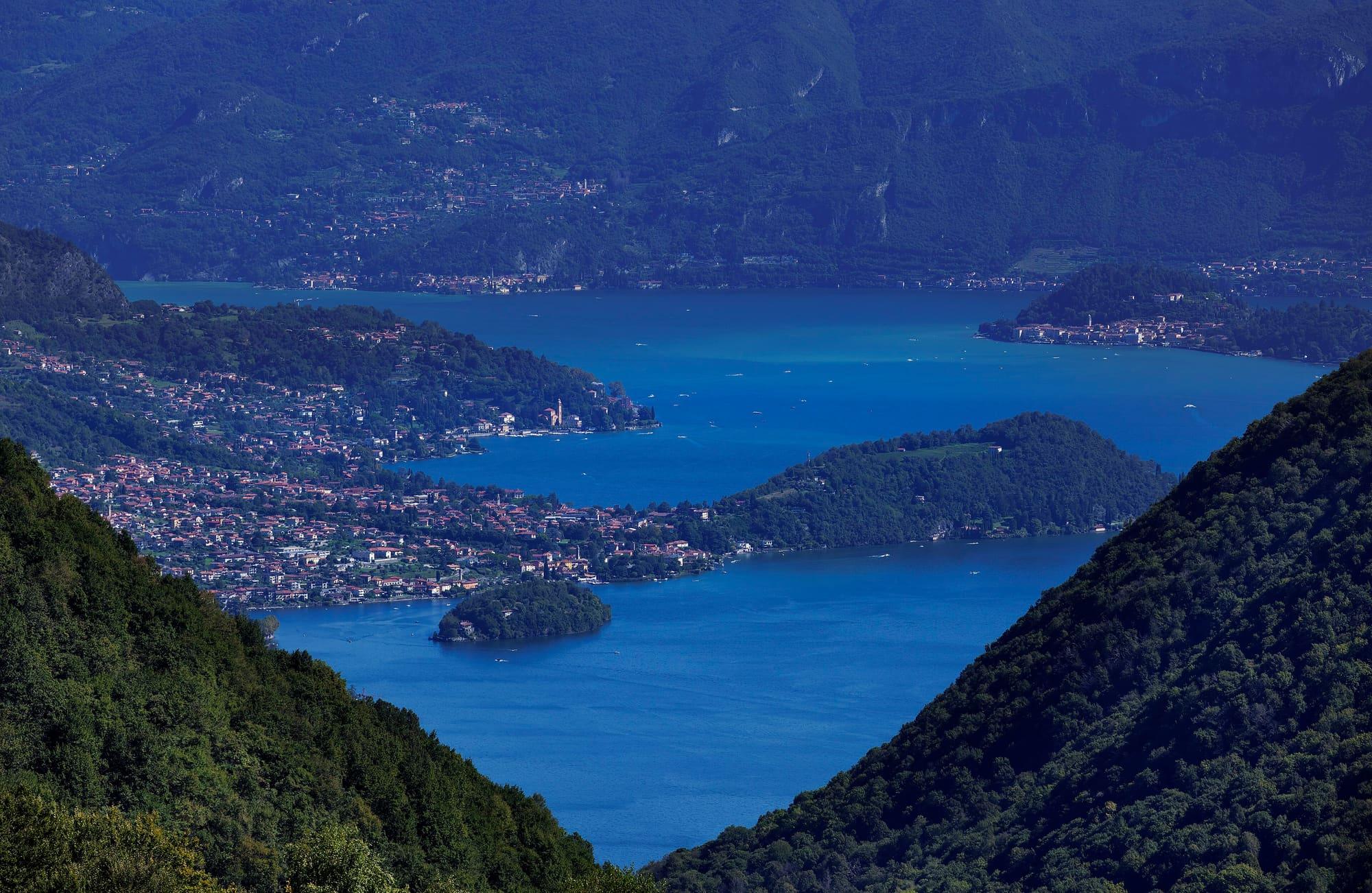
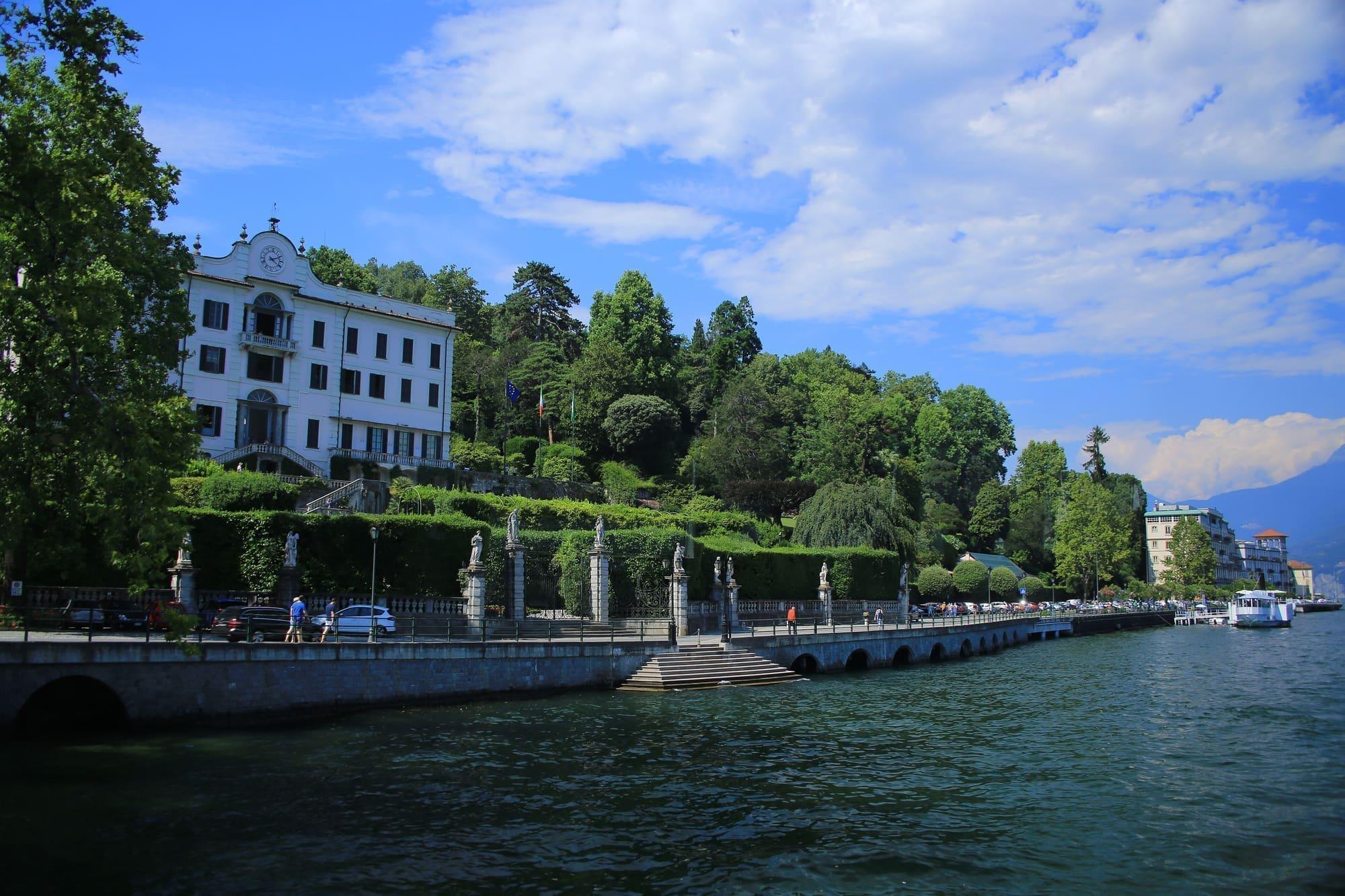
Four villages in a row on the lake's western shore, facing Bellagio.
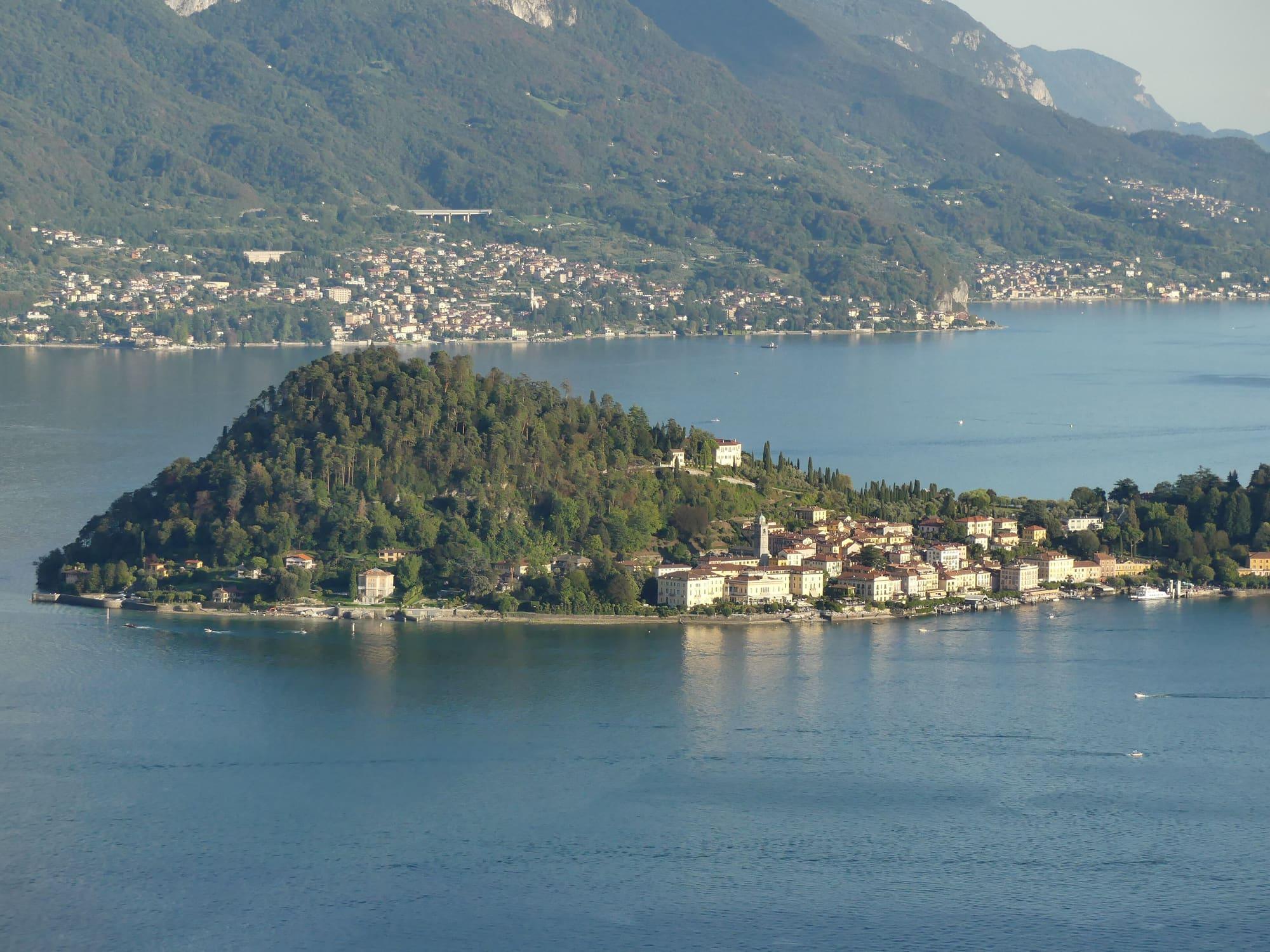
On the point that splits the lake in two, with staircases instead of streets.
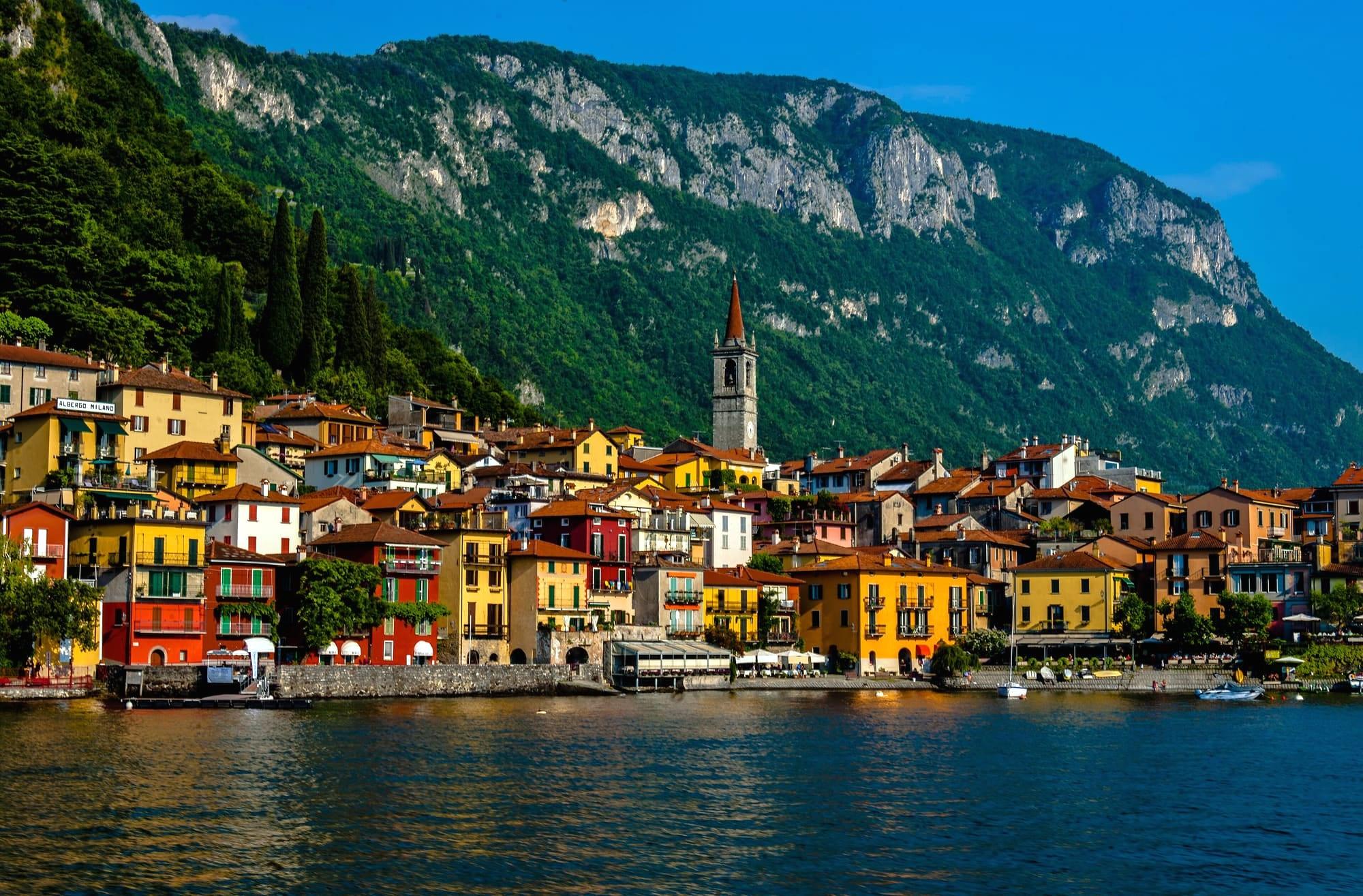
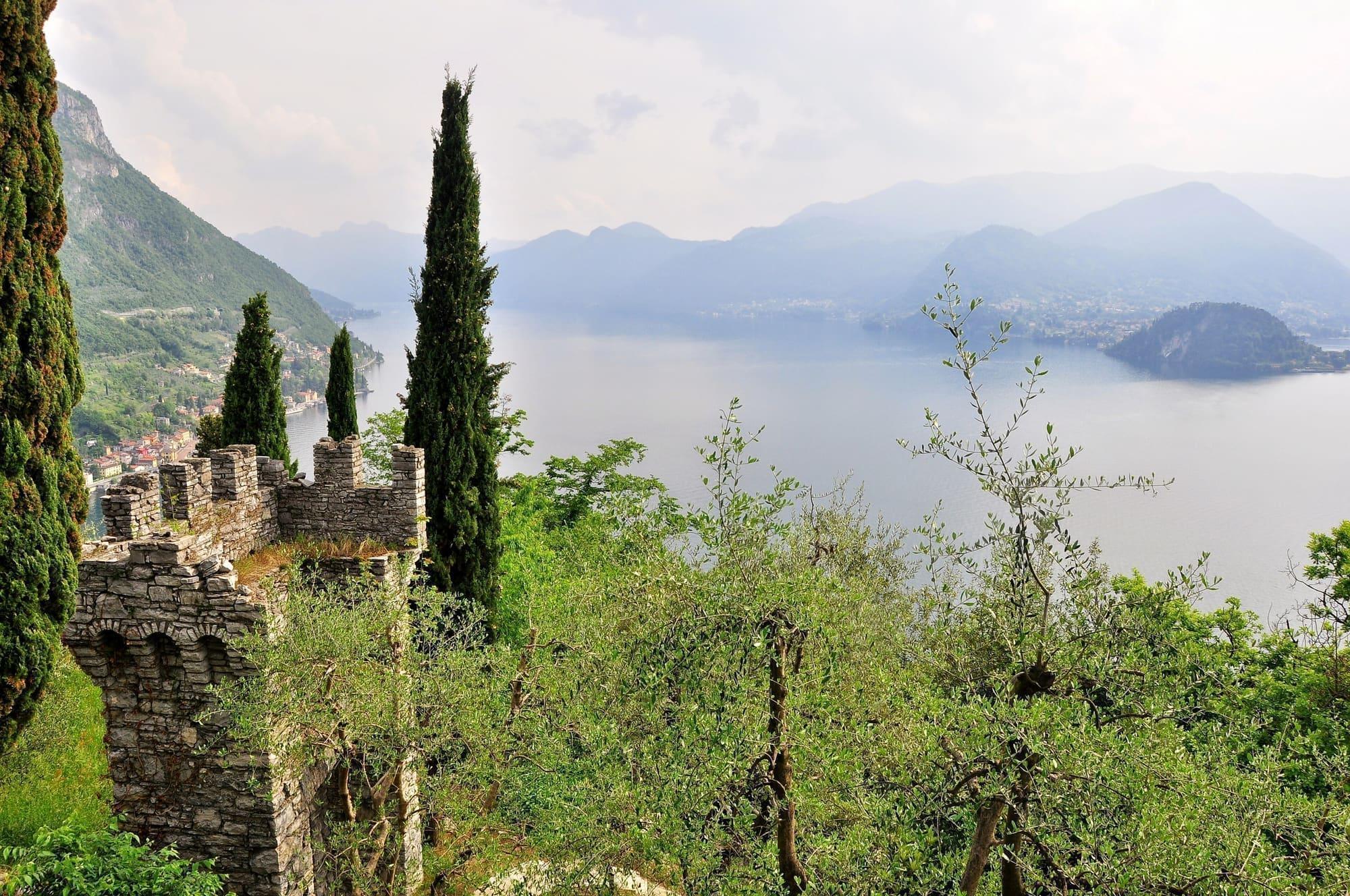
Ochre houses on the water, two botanical gardens on the shore and Vezio castle above the village.
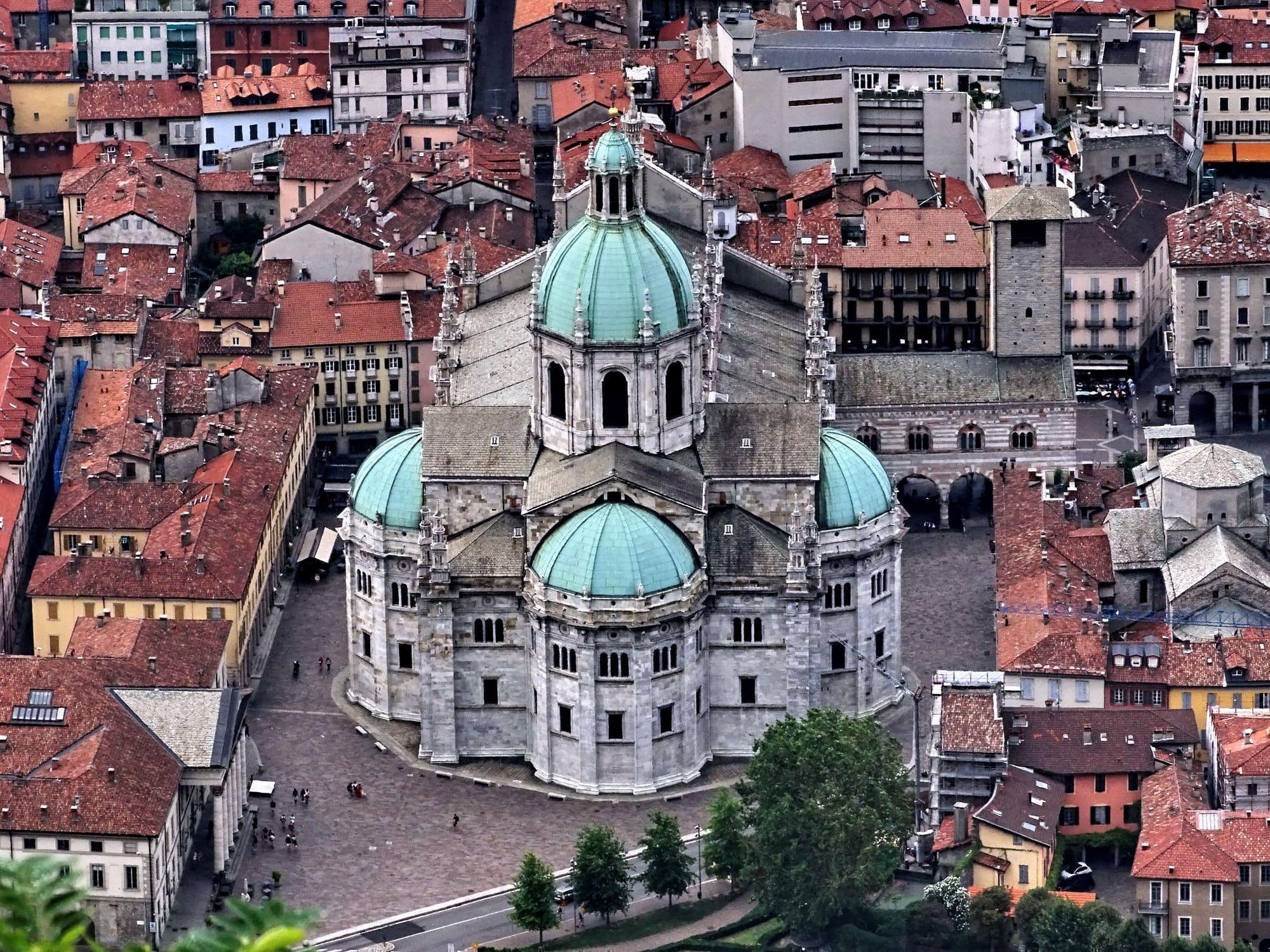
The city of silk and rationalist architecture, with the lake reaching right into the centre.