Stories from the lake
Lake timeline
Two thousand years of the lake in order of date: from the Roman road along the western shore to the first steamboat, from the fall of the Isola Comacina to the Olginate dam. Each date leads to the story that tells it and to the place where it happened.
- Dates
- 82
- Stories
- 27
- Periods
- 6
Only the dates from the story ‘When the lake comes into town'All dates
6dates
Middle Ages
6th century to 1449 · 2 dates
1336–1338
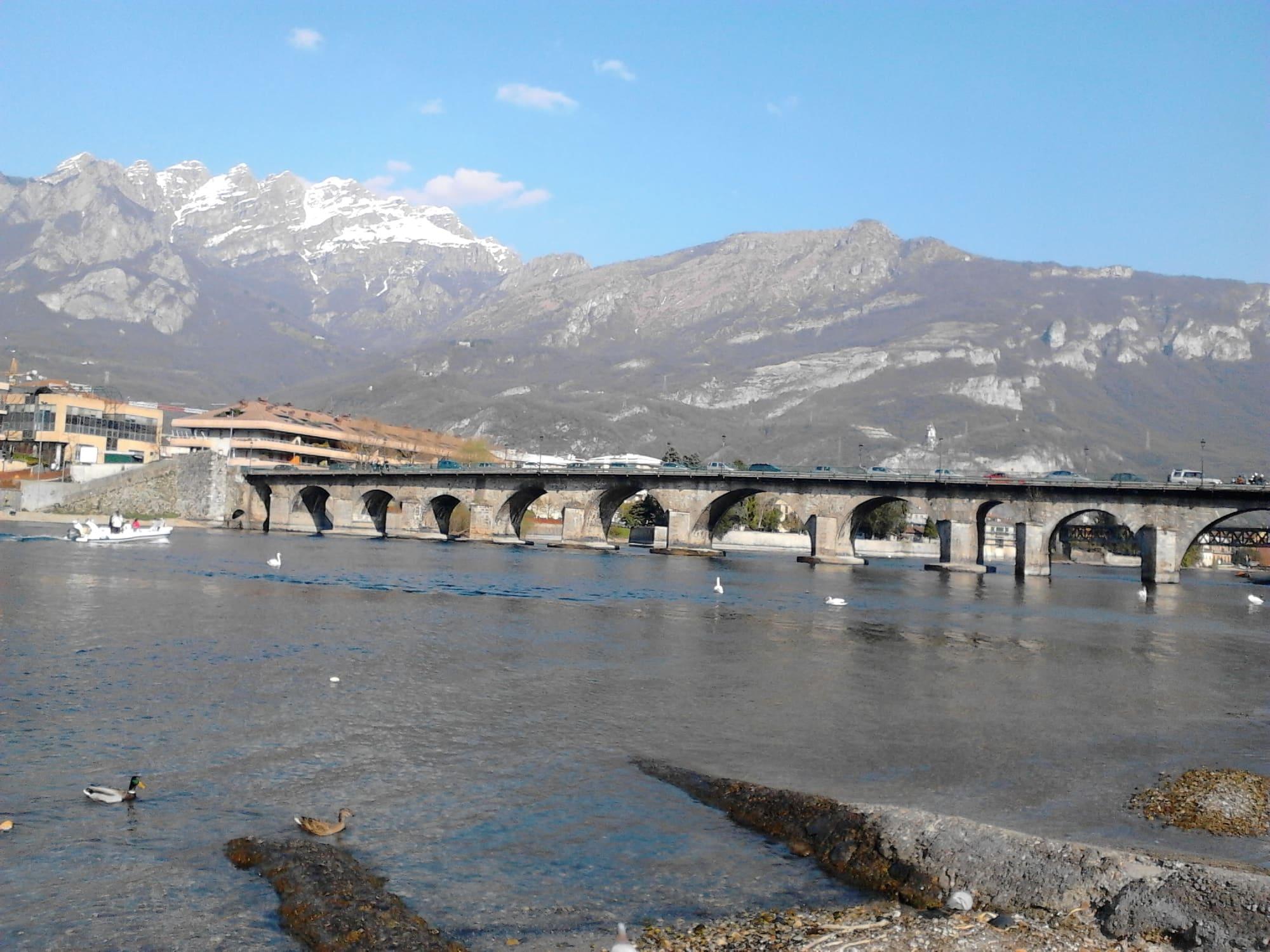
Azzone Visconti's bridge at Lecco
Azzone Visconti, lord of Milan, has the bridge built over the Adda where the river leaves the lake. It has eight arches; the people of Como, convinced that its narrowing floods their town, obtain three more between 1354 and 1440.
Place: Ponte Azzone ViscontiStory: When the lake comes into town
The first recorded flood in Como
The lake comes into the town: it is the first flood on record, in a ducal letter of 20 September. After it the bridge at Lecco is given a tenth arch, in 1434, to let more water out of the lake.
Renaissance and foreign rule
1450–1699 · 1 date
The lake enters Como Cathedral
During the flood the water reaches the steps of the high altar inside the cathedral. Two plaques, in Via Volta and Via Diaz, record it; in 1703 the lake reaches the cathedral again, as far as the organ piers.
Nineteenth century
1800–1899 · 1 date
The highest level on record
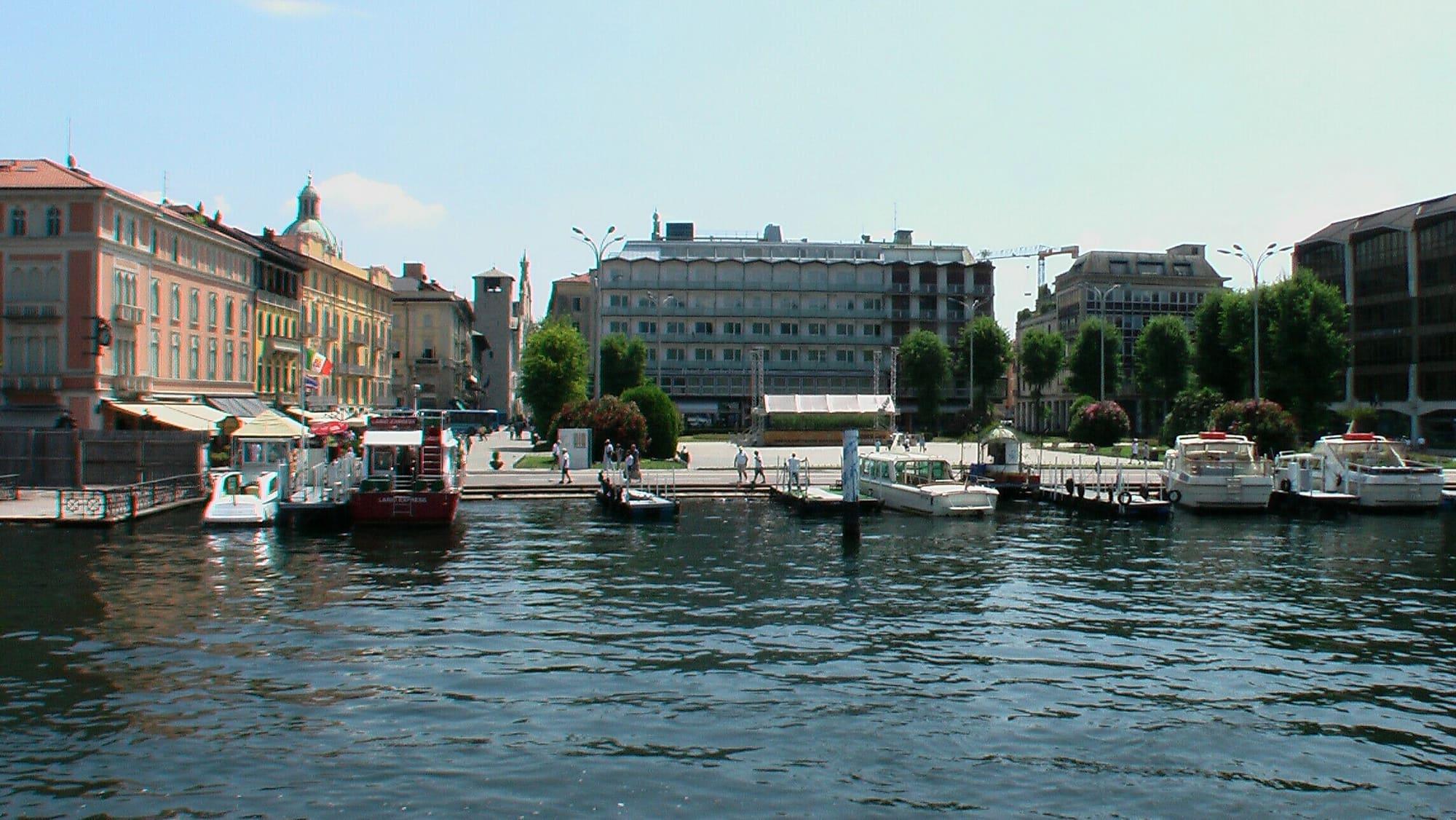
The lake rises to 3.97 metres above the zero of the Malgrate gauge, the highest level ever recorded, and about a third of Como ends up under water, including the whole area around the walls.
Twentieth century
1900–1999 · 2 dates
The Olginate dam regulates the lake
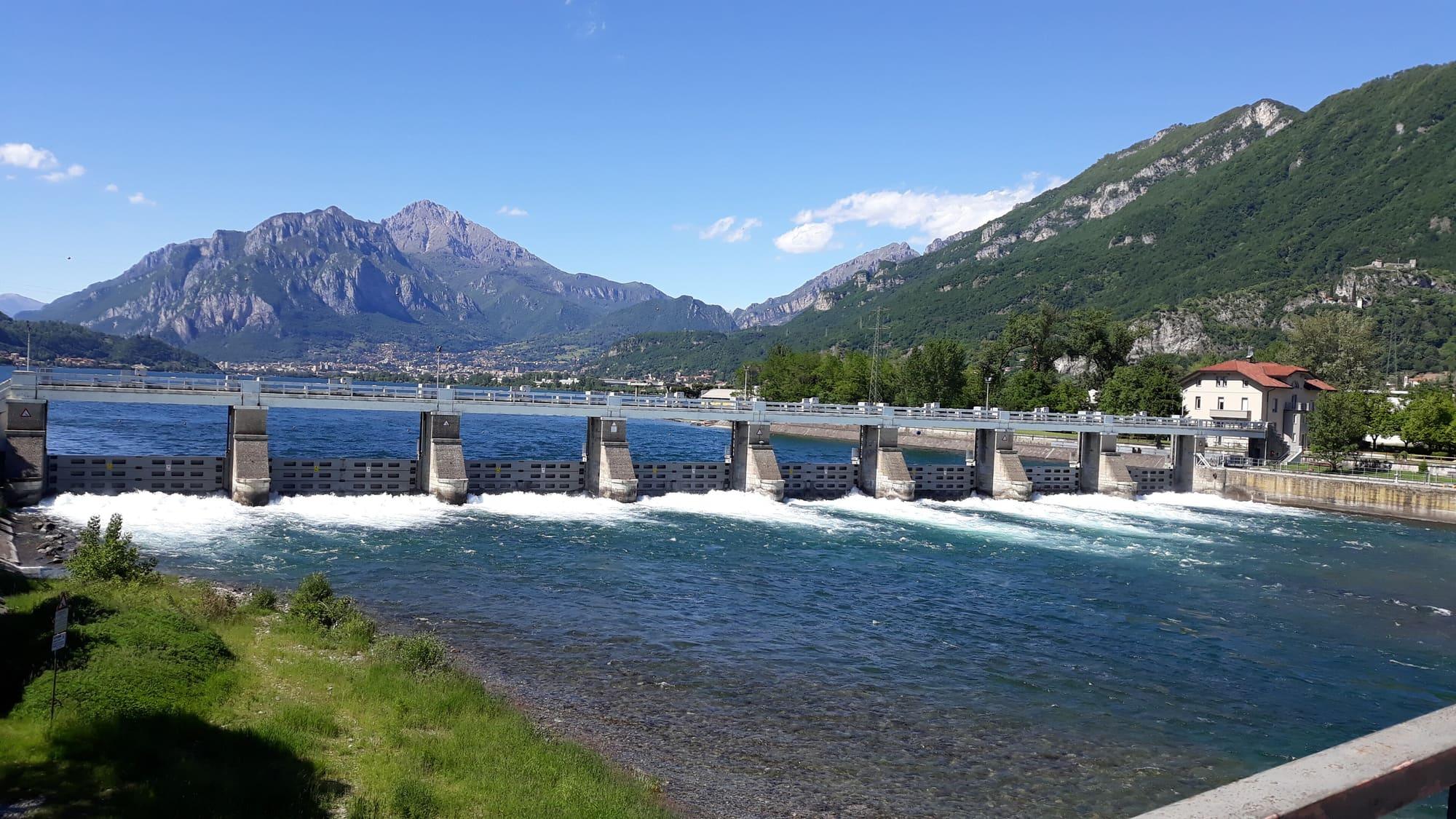
Downstream of Lecco, between the lakes of Garlate and Olginate, the Consorzio dell'Adda's dam goes into operation, with eight fourteen-metre openings. It holds back water during floods and releases it in dry spells, and it reduces the number of times Piazza Cavour in Como ends up under water.
The flood of the year of the Valtellina disaster
The lake reaches 2.64 metres above the Malgrate zero, the highest level since it has been regulated, reached again on 15 October 1993. With the dam Piazza Cavour stays flooded for 30 days; without it, it would have been 85.