14May 2027
Centro Lago
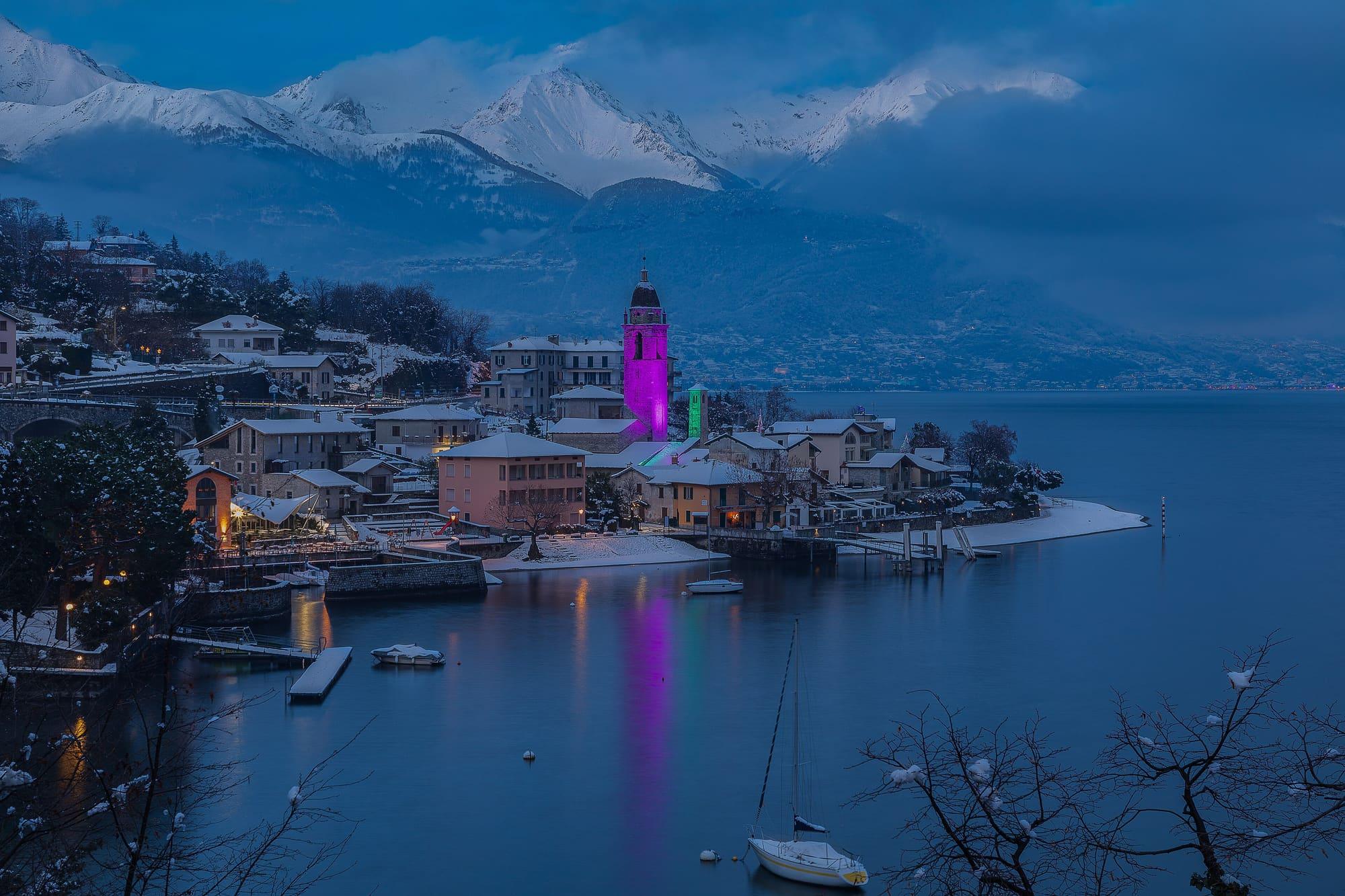
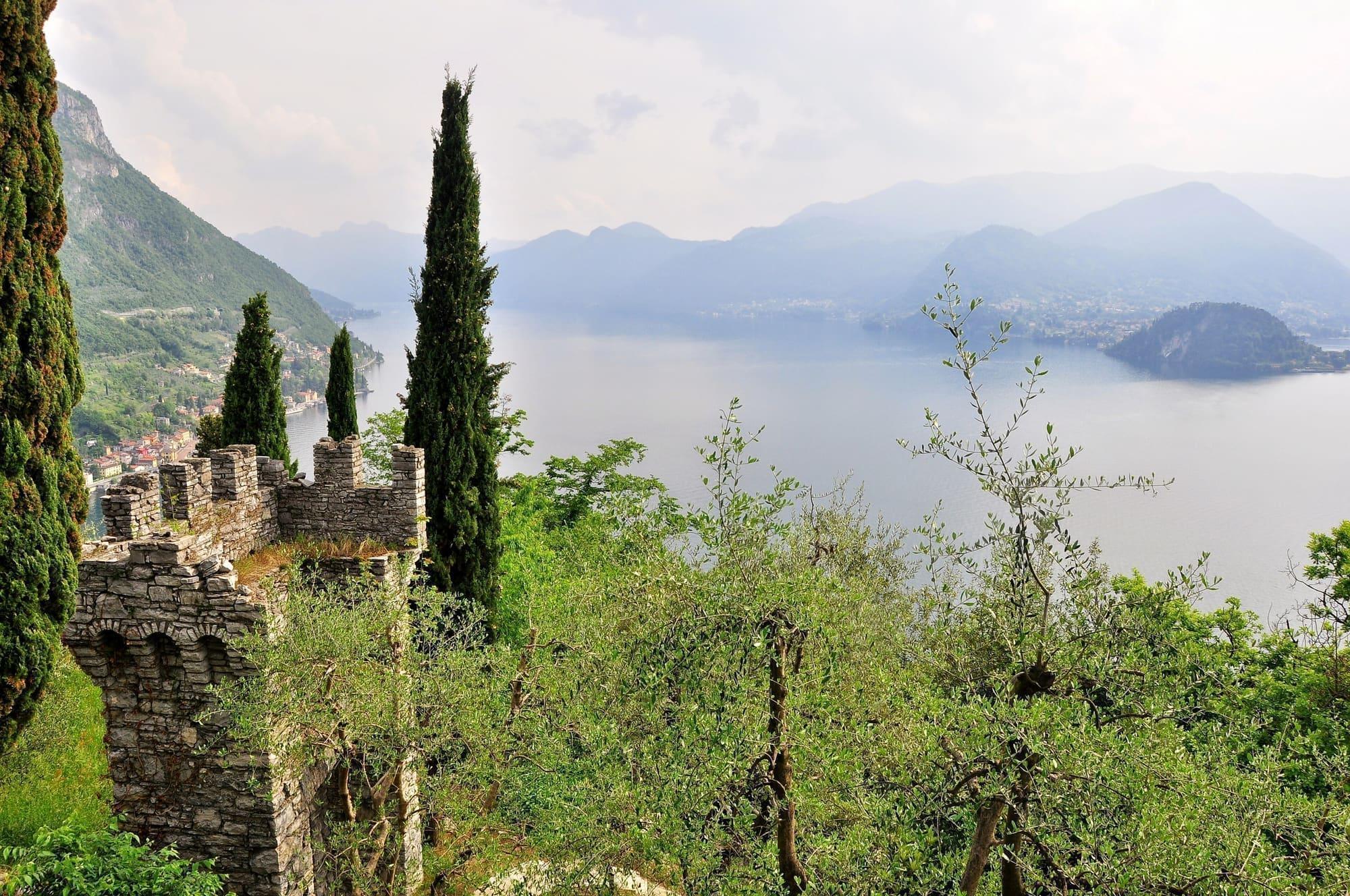
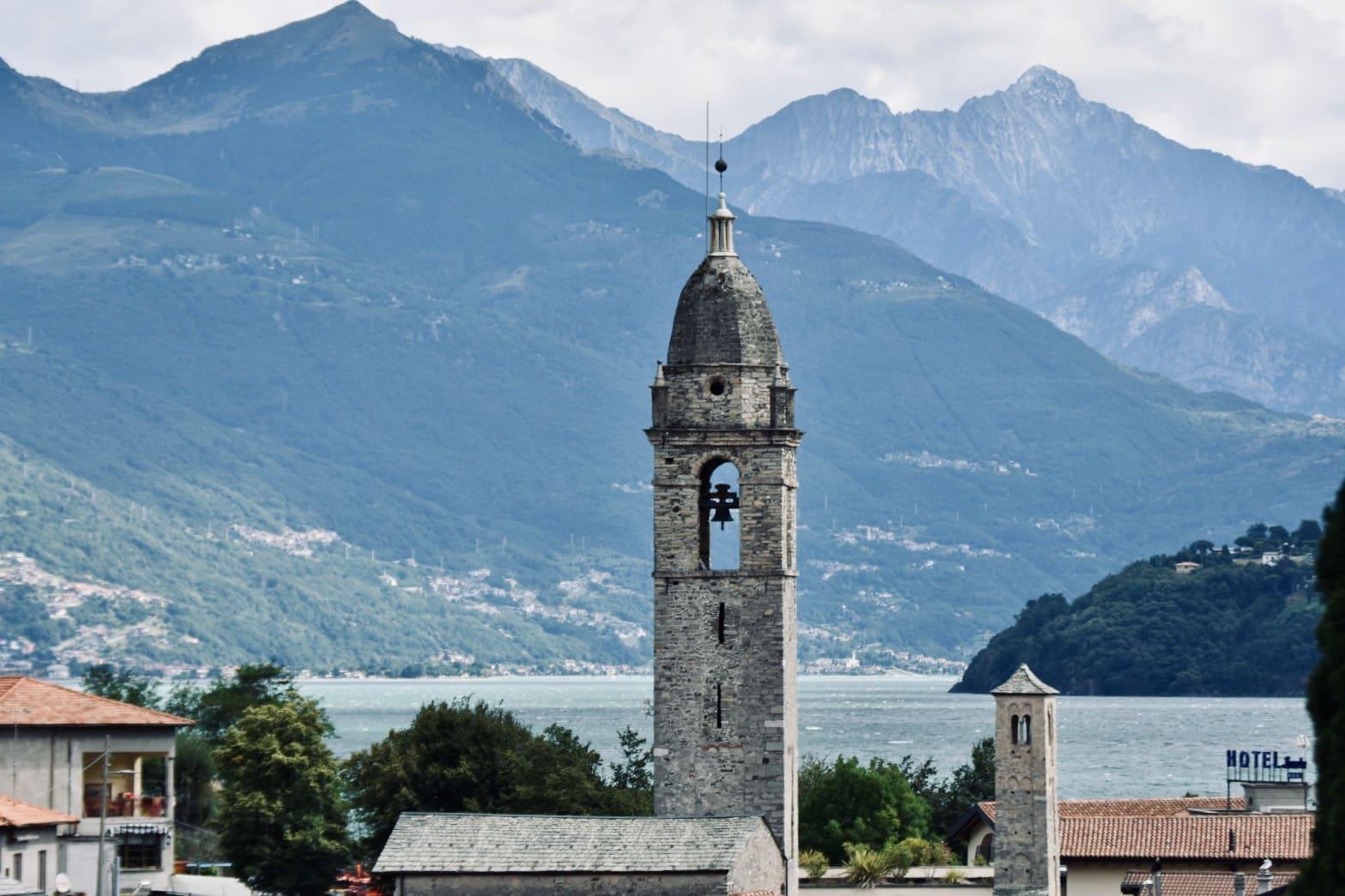
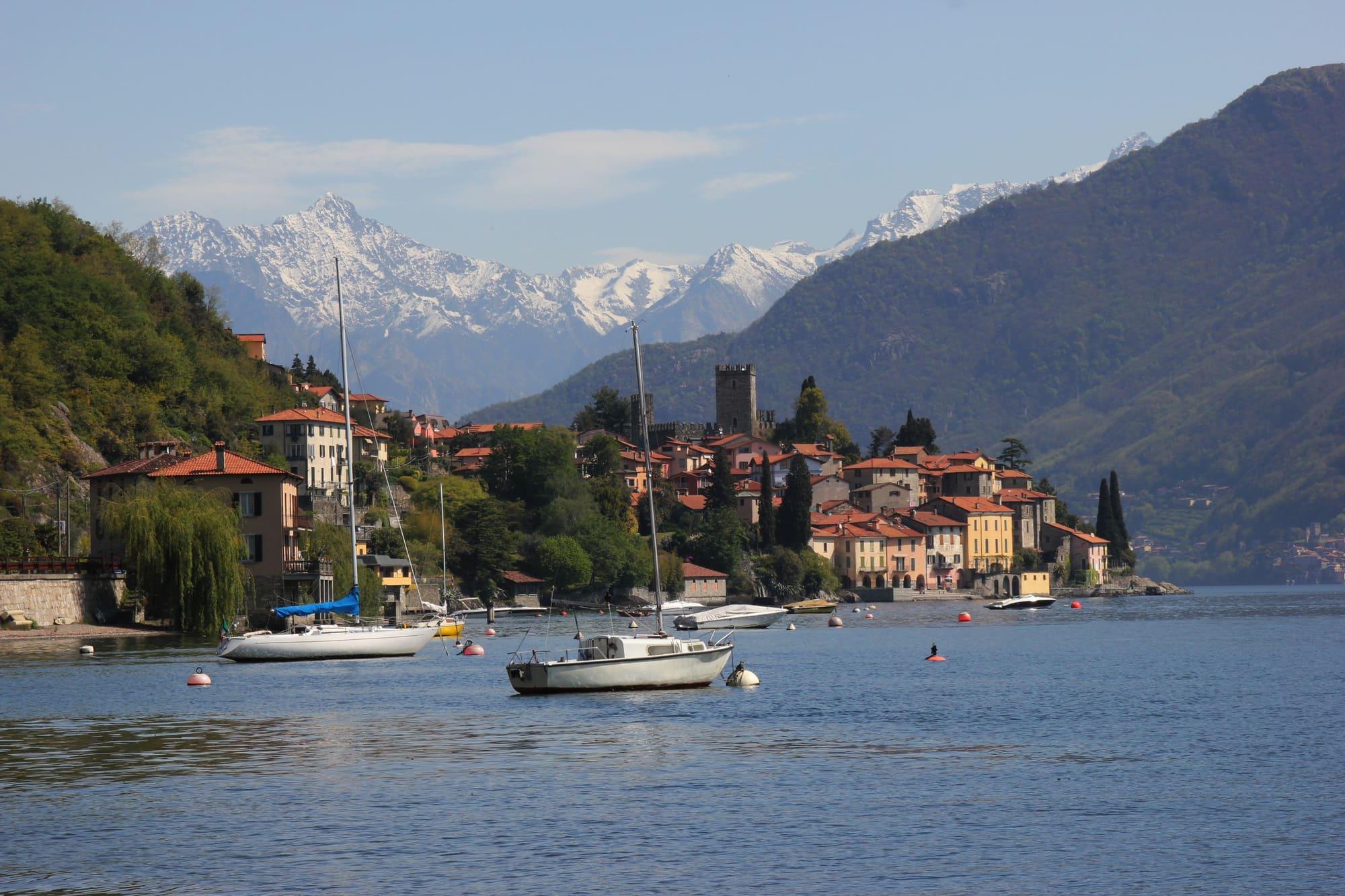
Sixteen hamlets from the lake up the mountainside, on the western shore of the upper lake: on the shore San Vito, with a slightly leaning little Romanesque tower beside the tall domed one, on the Vignola plateau the parish church and the town hall, and higher up the stone huts.
Cremia is a comune of the upper lake, on the western shore, and its territory takes in most of the eastern slope of Monte Bregagno: sixteen hamlets, from the shore at Prato and San Vito up to the mountain pastures.
It is a village of ancient origins, made up of small hamlets linked by old mule tracks. The feudal castle of the De Castro Cremiae, now gone, probably stood on the Vignola plateau, in sight of the castle of Dervio on the far shore. At the end of the fifteenth century Ludovico il Moro gave the village to Lucrezia Crivelli, in 1545 it was granted as a fief to the Medeghino, and in 1580 it joined Cardinal Tolomeo Gallio's fief of the Tre Pievi. The name, recorded from the thirteenth century, is of uncertain origin: perhaps a stream once called Cremia, perhaps the Latin “cremium”, the fine dry kindling for lighting a fire.
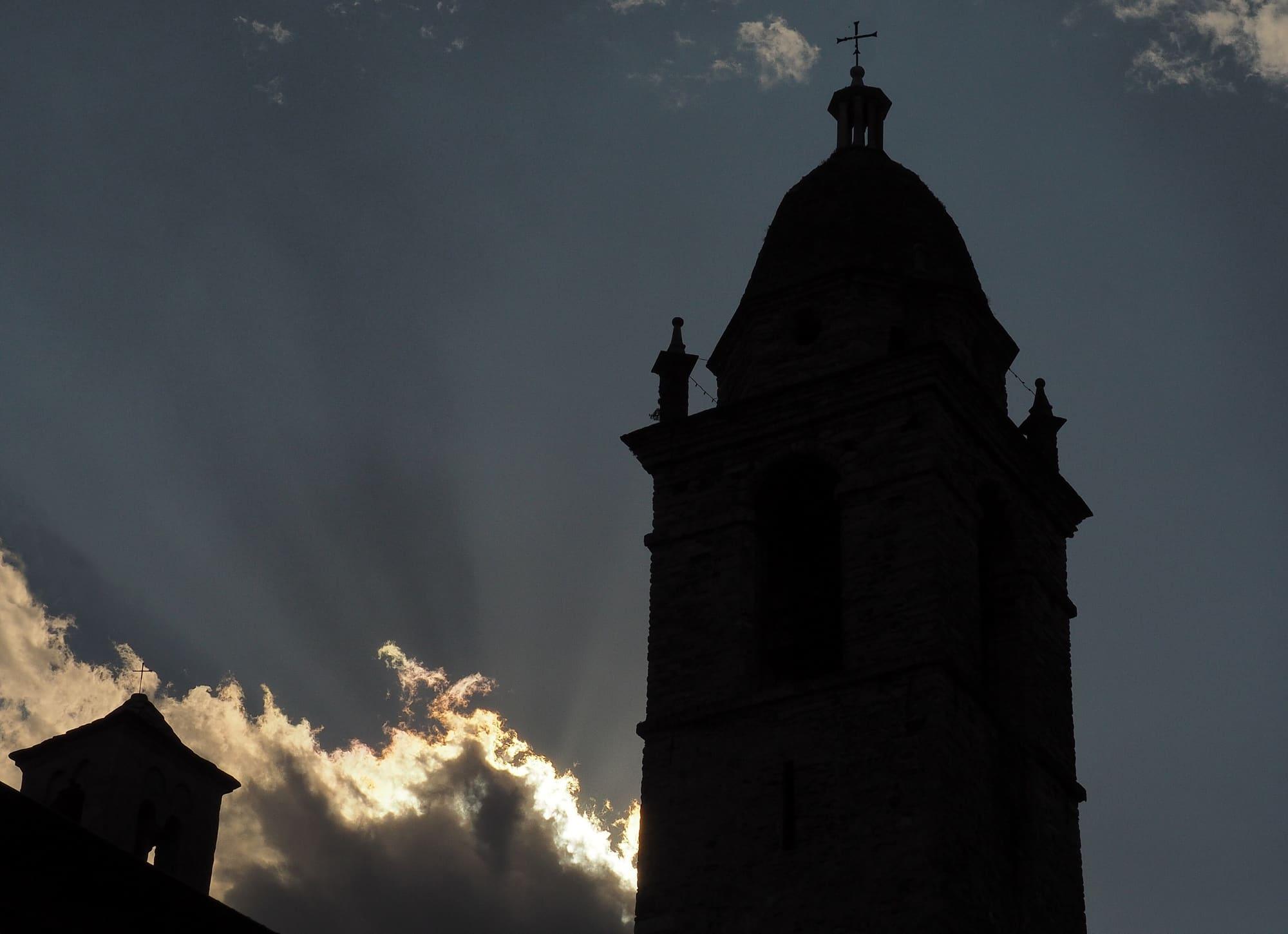
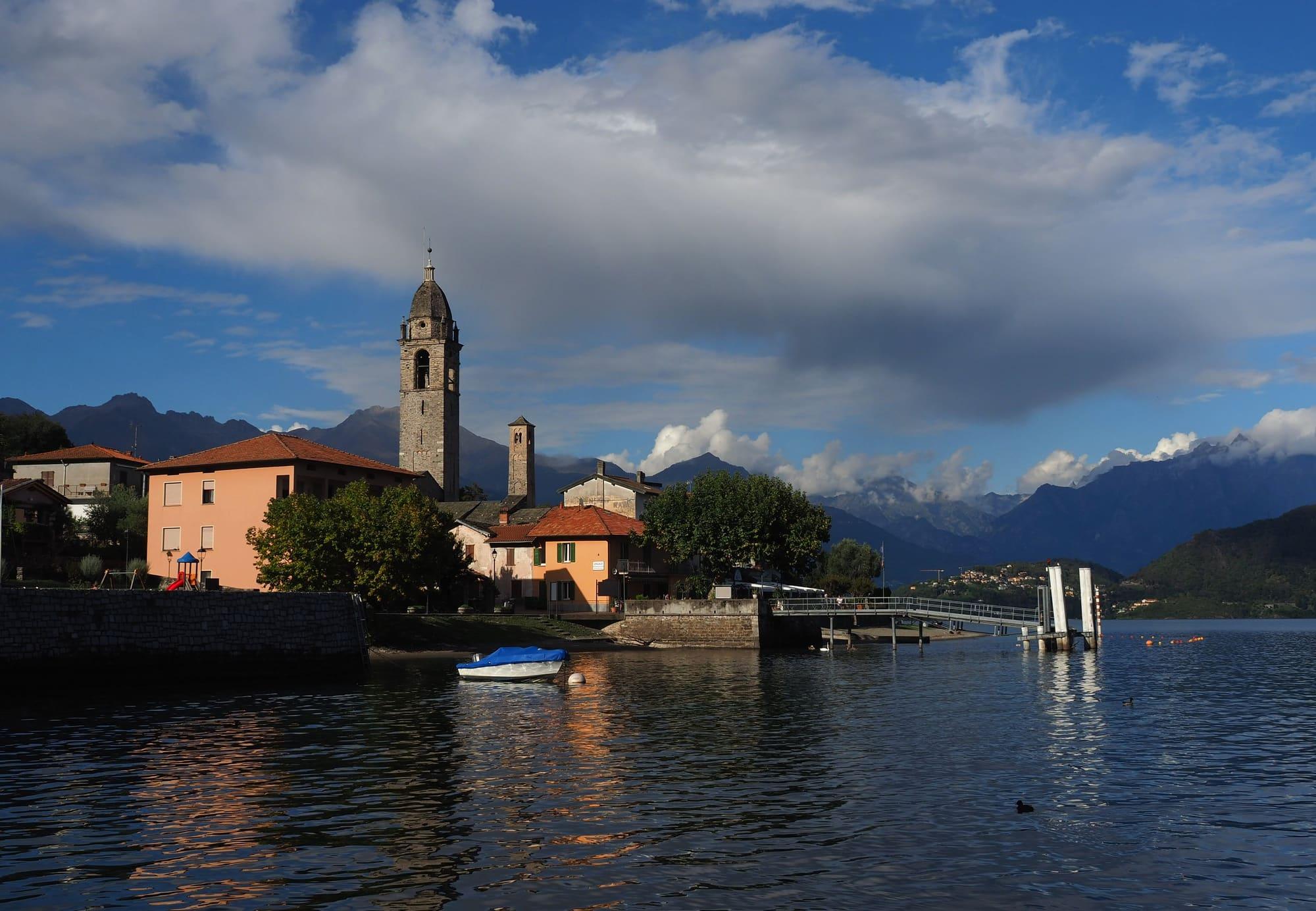
On the lakeshore lies the hamlet of San Vito, with the chimney of a nineteenth-century silk mill and the church of Santi Vito e Modesto, the parish church until 1551 and one of the oldest on the western shore: along its side, fragments of Roman-era pots and tools have come to light, perhaps from a burial ground. Born Romanesque and reworked in the fifteenth century, it keeps from that first age a slightly leaning little bell tower of the eleventh century, with twin windows and small arches, and a wall with hanging arches and pilasters; between the sixteenth and seventeenth centuries a second, taller bell tower with a dome was built beside it.
Inside, stout pillars carry the pointed arches of the nave, and the cross vaults have fifteenth-century ribs; of the lower side aisles, the left one is walled up for almost its whole length. In the chancel, closed by a wrought-iron screen, a Madonna enthroned between Saints Sebastian and Roch was frescoed and signed in 1499 by Battista da Musso. At the altar to the left of the chancel is an altarpiece of 1540 by Pietro Martire della Torre: a wooden crucifix against a painted background with the Virgin, Saint John and Mary Magdalene. At the altar of the right aisle is a Madonna and Child on panel, of the late fifteenth or early sixteenth century, which tradition attributes to Bergognone. Both altars belonged to societies of emigrants from Cremia: the society of Genoa had the 1540 altarpiece made, and a plaque of 1568 records that the Madonna's altar belonged to the society of Florence.
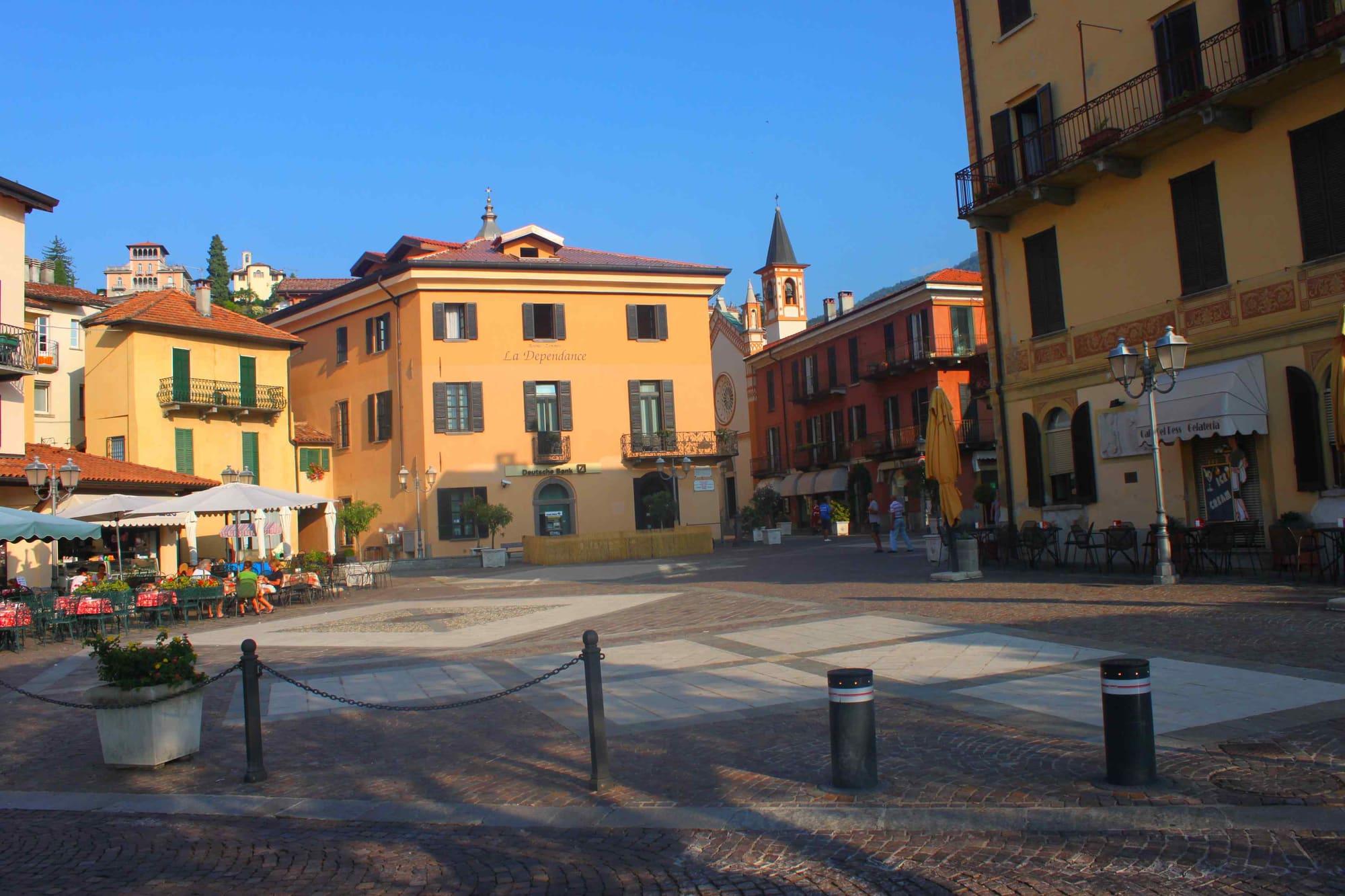
On the Vignola plateau, where the castle perhaps stood, Piazza della Gloria holds together the town hall and the church of San Michele, the parish church since 1551, born of a convent of Umiliate nuns that no longer exists. Inside are the high altarpiece, which tradition gives to Veronese, the fifteenth-century polyptych attributed to Bergognone, brought from San Vito, and a canvas attributed to the Campi brothers. The hamlets are linked by mule tracks, and a path along the hillside, once the main way through, crosses the whole comune from Vezzedo to Motto.
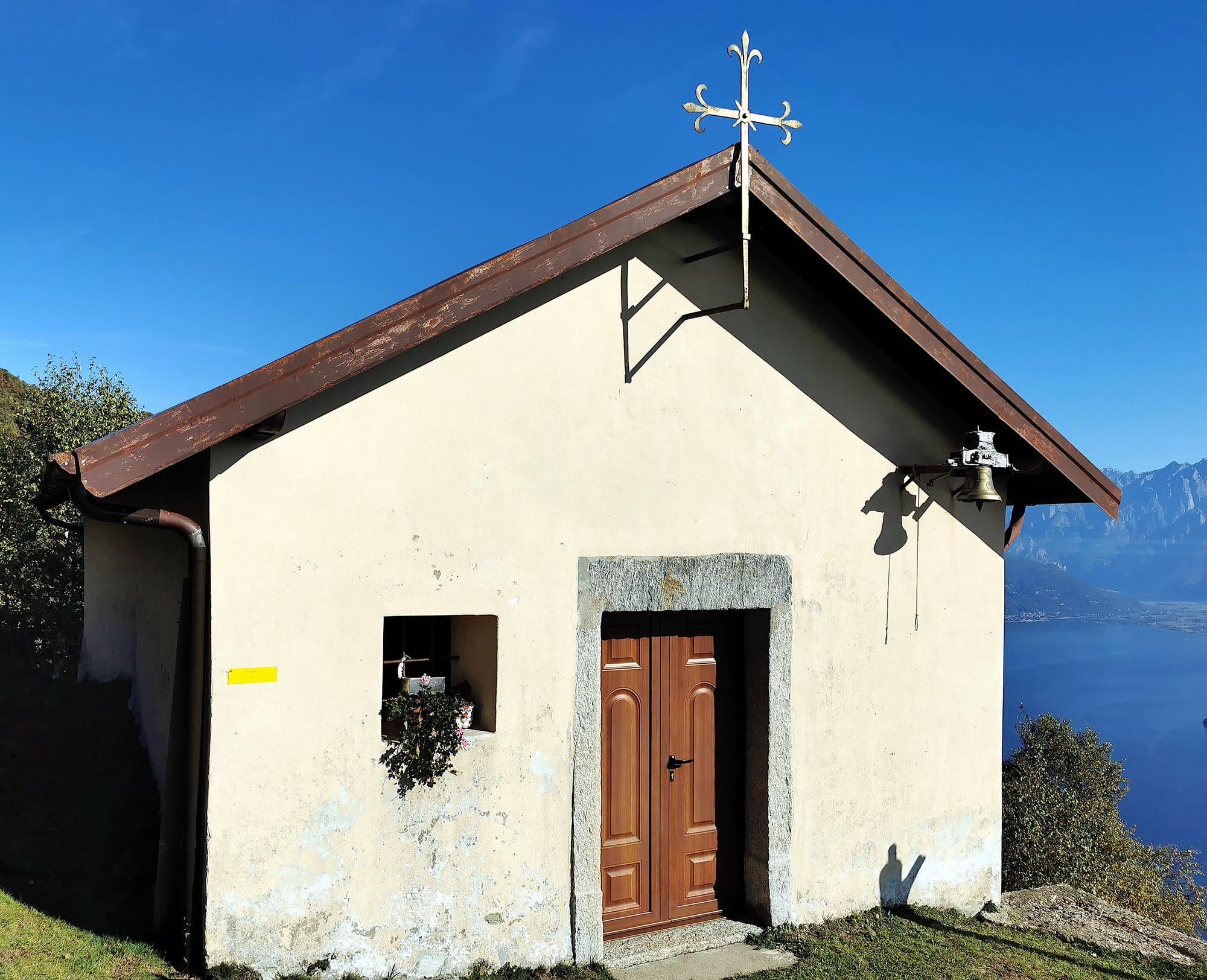
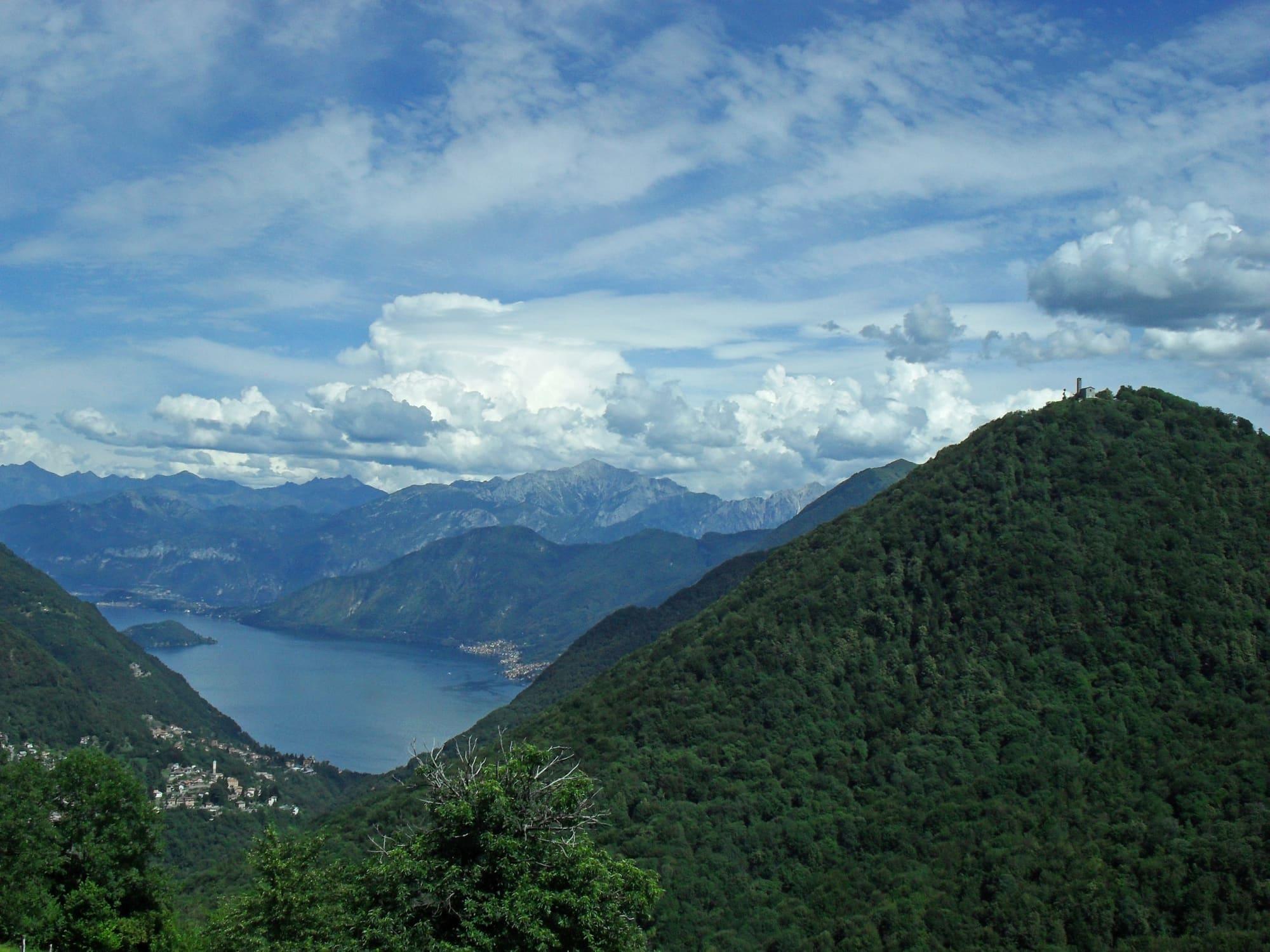
Higher up, in the woods of the Bregagno, are the monti of Cremia, clusters of stone huts on meadows such as the Monti di Bracco; at 1115 metres, on a spur of the mountain and a step from the Via dei Monti Lariani, stands the little church of San Domenico, looking out over the lake. Prehistoric rock carvings have been found in the woods between the hamlet of Vezzedo and the next comune, and the oldest traces of a community date from the late Bronze Age.
In the Middle Ages Cremia belonged to the pieve of Dongo, and it stayed in it until the end of the eighteenth century. Under Como's statutes of 1335 the comune had to maintain a stretch of the road to Mezzola, one hundred and thirty braccia long.
In 1751 Cremia had 450 inhabitants in fourteen clusters of houses, from San Vito on the shore up to Cadreglio and Samaino. Its feudal lord was still a Gallio, Duke Carlo Tolomeo Gallio d'Alvito. Each year the council elected two syndics, two deputies and a chancellor; the consul, also elected every year, swore his oath before the feudal lord's podestà.
In 1807 a decree of Napoleon's Kingdom of Italy merged Cremia into Pianello; with the Restoration, in 1816, the comune was re-established. In 1978 the polyptych attributed to Bergognone was stolen from San Michele: it was found soon afterwards in a farmhouse at Alzate Brianza, restored and brought back to the church in 1979.
In the nineteenth and twentieth centuries Cremia spun silk and wool, in the mills at San Vito, Cantone and Prato. In 1949 the council proposed as the village's arms a silver spindle on a red field, for the many wool and silk mills that gave the people work. At Cantone, on the Quaradella stream, a small hydroelectric plant has been running since 1901.
As early as the sixteenth century many people from Cremia worked far from home, above all in Genoa and Florence. The emigrants joined together in societies that paid for altars and works of art in the village churches: in 1533 those in Genoa gave the basin of San Michele's font. Battista Pizzetti, a merchant from Cremia who lived in Vicenza, gave the altarpiece of the same church's high altar.
Motto, at the end of the comune towards Pianello, is a small cluster of stone houses gathered on a knoll. At the edge of the hamlet, in a commanding position, stands a four-sided stone tower house, perhaps of the fifteenth century, which may be what remains of a twelfth-century castle; it is a private home. Higher up, at Samaino, the oratory of San Giovanni Battista was built shortly before 1637 at the wish of the abbot Giovanni Pizzetta, for the people of the upper village; in 1973 it was sold to private owners.
The patronal feast is San Michele, on 29 September, with the fair in Piazza della Gloria. Up on the mountain, on the first Sunday of August, the feast of San Domenico is held at the little church dedicated to him.
Upper Lake
Ten kilometres along the flank of Monte Bregagno, on the Sentiero del Giubileo: from Sant'Eufemia on the Sasso di Musso, through the hamlets of Musso, Pianello and Cremia, to the village of Rezzonico and its castle.
3 h 30 – 4 h 30Open access
Centro Lago
Three almost level kilometres on the western shore, pushchairs included: Musso's little harbour, Pianello's port and the Museo della Barca Lariana, the beaches, the Legnone opposite and the church of San Vito on the water at Cremia.
50 min – 1 h 40Open access
How long it takes
Typical door-to-door times by public transport, changes included. From Milan, counted from Centrale station.
Updated 22 October 2026
By bus on ASF Autolinee's C110, the western-shore line Como–Menaggio–Colico, which stops on the main road at Cremia Frazione Prato and Cremia Bivio per il Paese, about ten minutes after Menaggio. Scheduled boats do not call at Cremia. The Pianello del Lario pier is further north; check the stops served and sailings in the Navigazione Laghi timetables. By car, the Statale 340 Regina runs along the lake through Prato and San Vito; from it, roads and mule tracks climb to the higher hamlets.
On the shore of the hamlet of San Vito there is a beach with an official bathing point, S. Vito: like every place people swim it is sampled by law, and the class of its water is assigned at the end of each season from the official sampling.
The mountains around the village hide the sun before astronomical sunset: sunrise and sunset are worked out on the village's own horizon.
Today, 1 November, estimated sunlight at the reference point: first at 08:16 and last at 15:05, giving 6 h 50 of direct sun, out of 10 h 06 of daylight.
Today the sun leaves between 14:53 and 15:10, depending on the street.
Watch the shadow reach Cremia today
See from Cremia where the sun goes, in 3D
The sun at an exact spot in Cremia: your hotel, a beach, a street
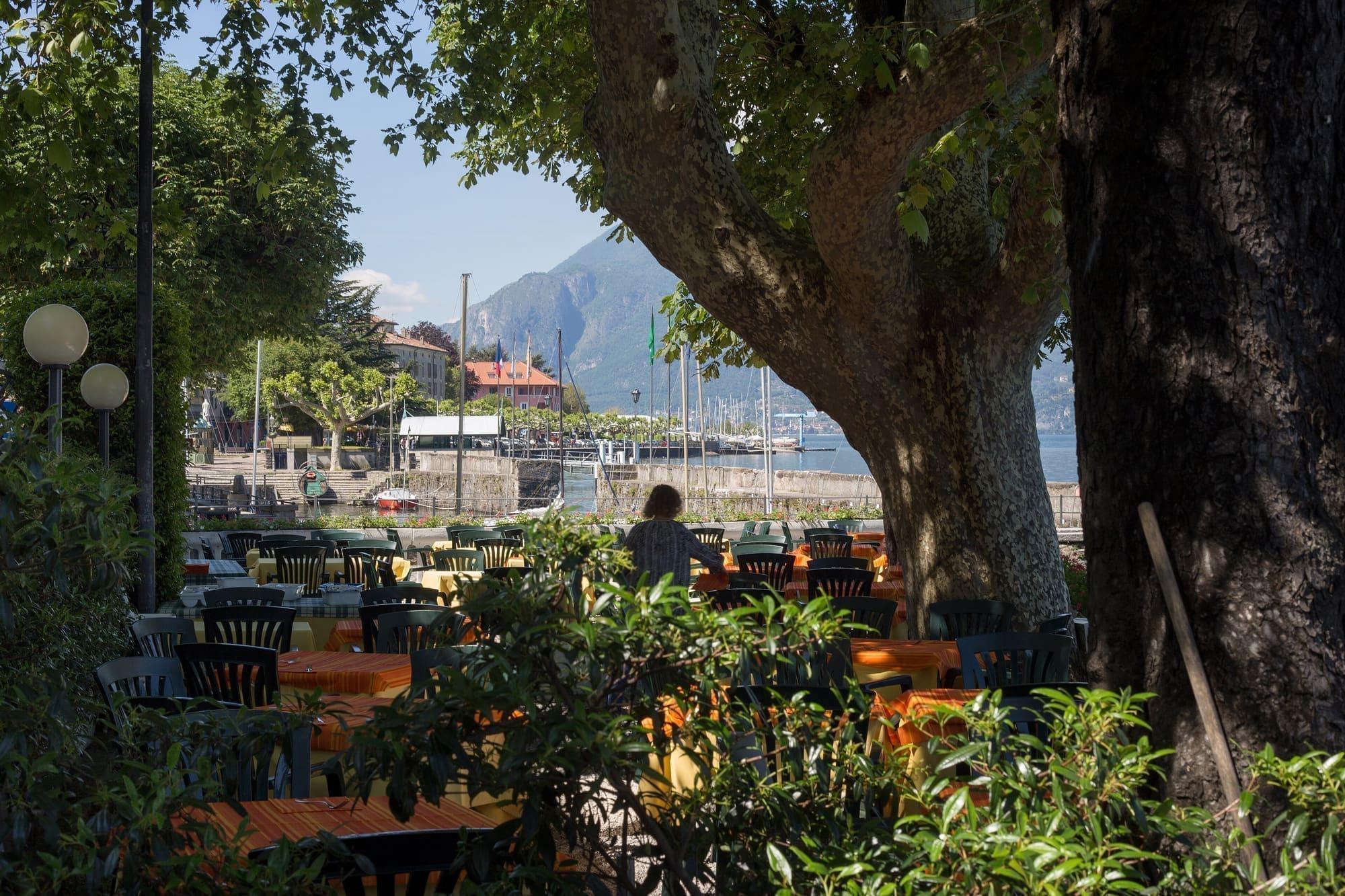
Places near the shore with outdoor seating, with today's estimated first and last sun at the marked point. Those with the latest sun come first. Clouds and shade from buildings, trees or awnings can change the light on the tables; check opening hours with the venue.
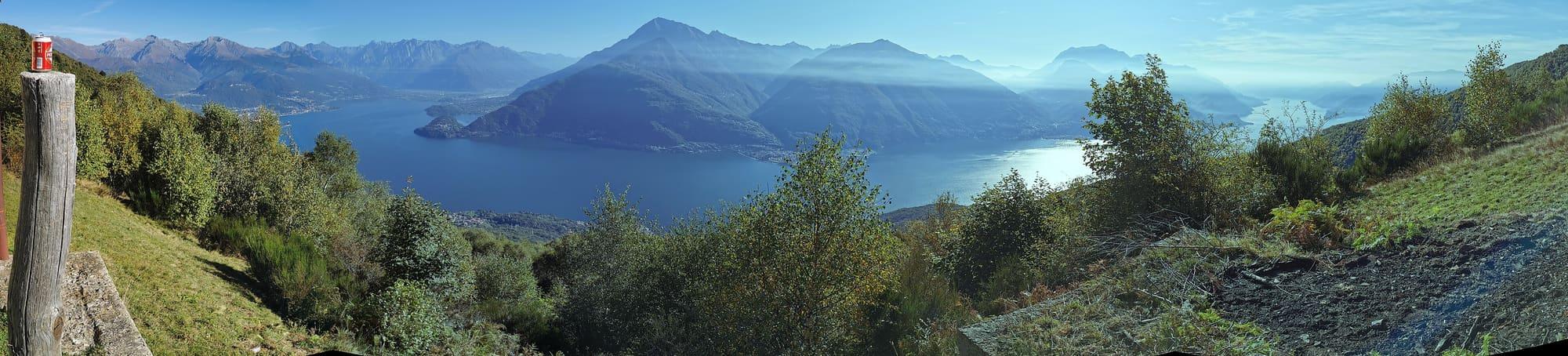
The highest summit in view from here is Piz Badile, 3309 m, 34 kilometres away.
The ochre line follows today's sun path and marks the estimated times of its first and last appearance above the mountains. Drag the panorama to see all of it.
Official bathing sites nearby, with their water quality classifications.
On the shore, the almost level lakeside walk from Musso ends at the church of San Vito. Along the hillside the hamlets are linked by mule tracks, and a walk on the flank of the Bregagno passes through Cantone, Vignola, Semurano, Cheis and Vezzedo. Higher up, at 1115 metres and a step from the Via dei Monti Lariani, is the little church of San Domenico.
What is around, and how far.
© OpenStreetMap contributors · ODbL
Typical door-to-door times.
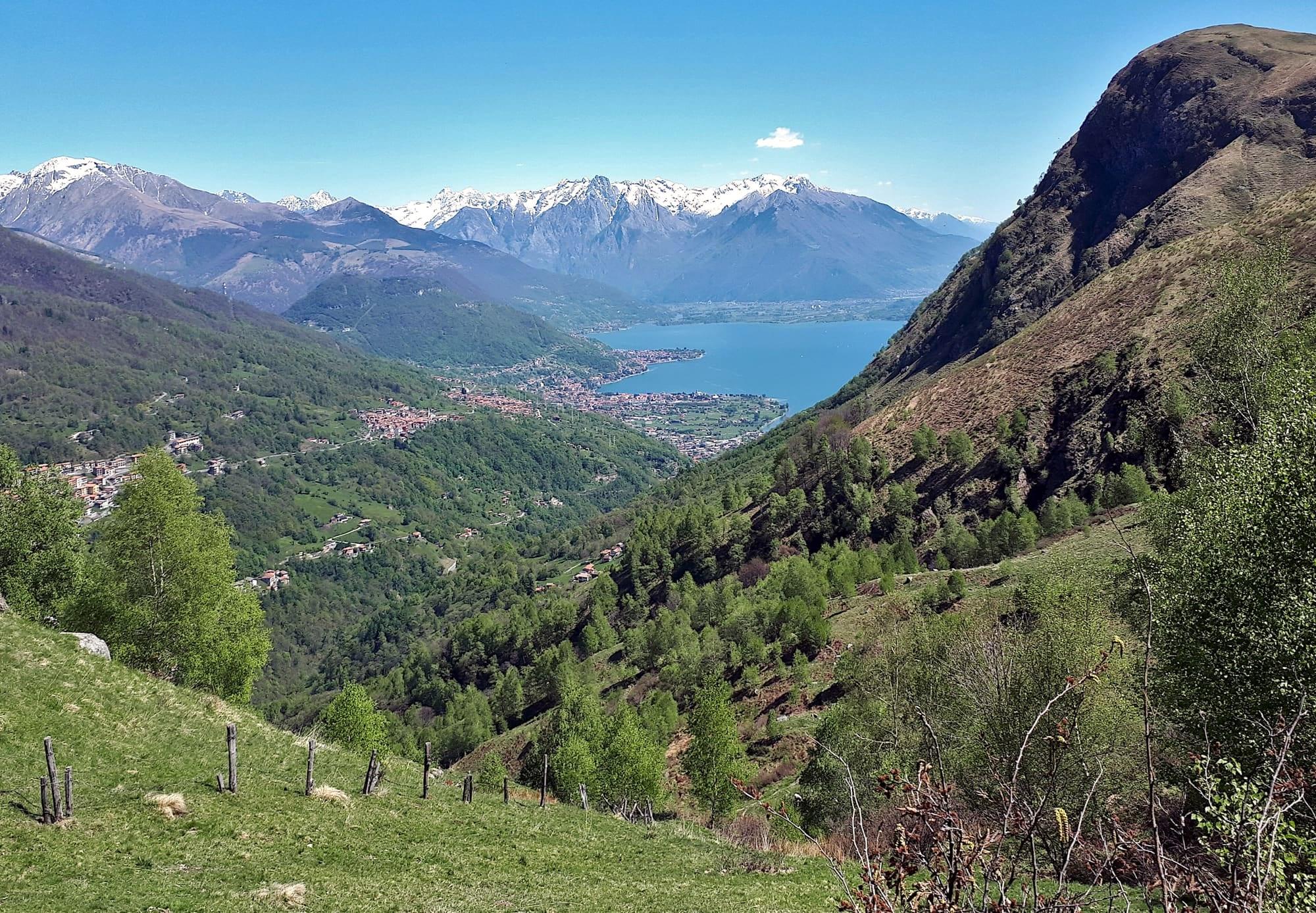
A village on the western shore of the upper lake, below the Sasso di Musso, the marble quarry whose stone faces Como cathedral.
5 min
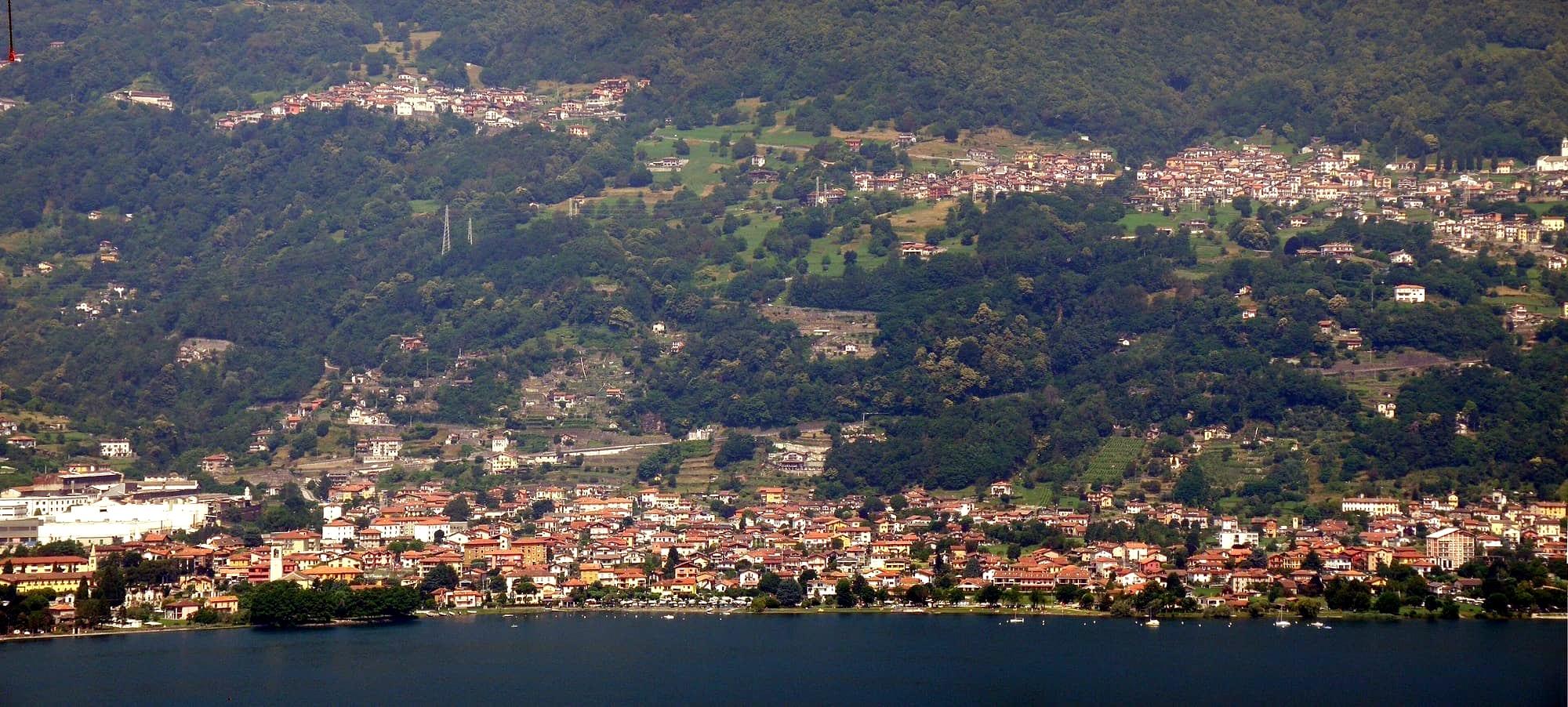
A wide lakefront, the old ironworks and the Museum of the End of the War.
10 min
In the middle of the lake, between the ferry, the Regina road and the bus to Lugano.
11 min