 Two days
 on the upper lake
Space, wind, Romanesque churches and a plain to cycle across: two days on the upper lake.
Mixed
Practical guide
Boat, ferry, train and cable cars: where a bike can board, on what terms, and where to ride away from cars.
The short answer
Yes, with different rules for each kind of transport. On the boat a bike boards if the vessel and the traffic allow it, and the timetable marks, sailing by sailing, where it is recommended and where it is not carried; never on the fast services, and on the car ferry on a vehicle ticket. On the Trenord trains marked in the timetable it travels free, if the journey stays within Lombardy; ASF buses take only folding bikes; the Brunate funicular and the Pigra cable car have a ticket for bicycles. To ride away from cars there are the upper lake's cycle paths, the Val Menaggio and the Pian di Spagna.
In short
Anyone arriving with a bike asks two questions: where can it be taken aboard, and where can I ride without being in the thick of the traffic.
Boats, trains, buses, the funicular and the cable cars each have their own rules, and the cycle routes away from traffic run from the upper lake to the Lecco branch.
Bicycles do not board the fast services. On the ordinary boats, boarding depends on the type of vessel and the traffic of the moment.
In the boat timetable every sailing carries a symbol: recommended for bicycles, boarding limited and subject to traffic, or no bicycles carried. For operational reasons a vessel may be replaced by another, and the conditions of carriage may then change. The fare for a bike on the boat is given at the ticket office.
The car ferry between Cadenabbia, Bellagio, Menaggio and Varenna has separate fares for vehicles, the bicycle and the tandem among them: one ticket for the bike alone, when the rider already has their own, and one that includes the rider; for frequent crossings, a ten-trip carnet and a monthly pass. In the ferry timetable too the sailings carry the bicycle symbols. A ticket bought on board, when the ticket office ashore is open, carries a surcharge for each passenger and each vehicle.
On Trenord a bicycle is allowed only on the trains marked in the official timetable. On every train, though, these travel free: bikes packed or zipped into their bag, folding bikes folded, scooters and other micromobility devices, electric ones included, if they do not exceed eighty centimetres by a hundred and twenty by forty-five — switched off, folded and stowed under a seat or between two seats.
The bike goes in the vestibules or the dedicated spaces, without chains or locks; on trains with no bicycle carriage, at most five per carriage, one per passenger and no longer than two metres. When a train is very crowded, because of delays, cancellations or events, staff may limit bikes even if the timetable allows them. You load and unload it yourself. Groups with at least three bikes can book, but only for Saturdays and Sundays.
Carrying a bike is free on journeys that start and end within the Lombardy rail fare area, and the lake's trains, from Milan to Como, Lecco, Varenna and Colico, all stay in Lombardy. Beyond the region a bike supplement is needed; for Switzerland Trenord's cross-border conditions apply, and on other companies' trains their own. Bikes do not go on the replacement buses shown in the timetable, and are not guaranteed a place on those laid on after a breakdown. Anyone travelling to or from Malpensa with a boarding pass may take a bike even on trains the timetable does not mark.
On ASF buses, the C lines that serve the Como shore, the travel rules allow folding bicycles and scooters: folded, one per passenger and two per bus, placed in the space reserved for disabled passengers. A bike may not board if the bus is crowded or if a disabled passenger or pushchairs are on board, and whoever brings it is liable for any damage. Other bikes are not allowed: anyone planning to ride out and come back by bus should bear that in mind.
The Como–Brunate funicular and the Argegno–Pigra cable car belong to ATM, and on both a bike pays the ticket for bicycles, pets, pushchairs and parcels. At Brunate there is also a single ticket that includes the bike; at Pigra a ten-trip ticket with the supplement.
Above Lecco, the Piani d'Erna cable car takes bicycles for a supplement.
The Greenway del Lago di Como, between Colonno and Griante, is a walking route, and cycling it is not advisable: there are uphill stretches, narrow cobbled lanes and steps.
In Como the park of Villa Olmo and the botanical garden are a pedestrian area: a bicycle is allowed only if pushed by hand, along the signposted route across the parterre.
From Menaggio you can ride along the shore to Sorico: twenty-five kilometres one way, three hundred metres of climbing in all, technically easy. The route alternates safe stretches, on disused sections of the old state road 340 and on the lakeside cycle paths, with stretches on the state road itself, in the traffic. For families two sections are the most suitable: Dongo to Gravedona and Domaso to Sorico. From San Vito in Cremia to Musso a lakeside path runs protected from traffic, but shared with people on foot and not very wide.
Sorico to Domaso, by way of Gera Lario, is eight flat kilometres, suitable for families with children too; Domaso to Dongo, along the Gravedona waterfront, five kilometres, flat as well. E-bikes can be charged at two points, at the port of Gera Lario and at San Vito in Cremia.
At the northern tip there is the Pian di Spagna loop: twenty-three flat kilometres starting and ending at the Colico pier, about three hours, easy and rideable all year, along the Adda embankment and into the reserve as far as the Cascina della Poncetta and the Ponte del Passo, with a few short stretches on the main roads and the road 36 bridge over the Adda to be crossed on the pavement.
From there the routes continue into the valleys: the Valchiavenna cycle path, thirty-seven kilometres between Gera Lario and Villa di Chiavenna, mostly on a cycle and pedestrian path along the river Mera, and the Sentiero Valtellina, the path that follows the Adda from Colico to Bormio for a hundred and fourteen kilometres.
Another route partly follows the line of the railway that linked Lake Como with Lake Lugano from 1884 to 1939: thirteen and a half kilometres from the Menaggio pier to the Porlezza waterfront, almost all of it on tarmac, with two hundred and fifty metres of climbing in all and the highest point at Cardano, 377 metres. It is rated easy, but the start is not: it climbs straight up the steep road along the side of Monte Crocetta, where the train overcame the gradient with a reversing manoeuvre.
Then the path enters the valley through a ninety-metre tunnel, crosses the plain below Monte Crocione and skirts Lago di Piano inside the nature reserve, past the Casa della Riserva. A few short stretches are on roads open to traffic, and at the end a few steps lead down to the Porlezza waterfront. The way back is the same road: ASF buses carry only folding bikes.
The Anello dei Laghi starts from Lecco: about twenty flat kilometres, starting and ending in town, that follow the Adda to Pescarenico, circle the lakes of Garlate and Olginate by way of the Lavello monastery and come back over the Azzone Visconti bridge and along the waterfront. It is easy, suitable for the whole family and rideable in any season.
Above the lake, the Valsassina cycle path runs from Barzio to Taceno along the Pioverna stream: 13.4 kilometres, all paved, almost entirely flat or gently sloping.
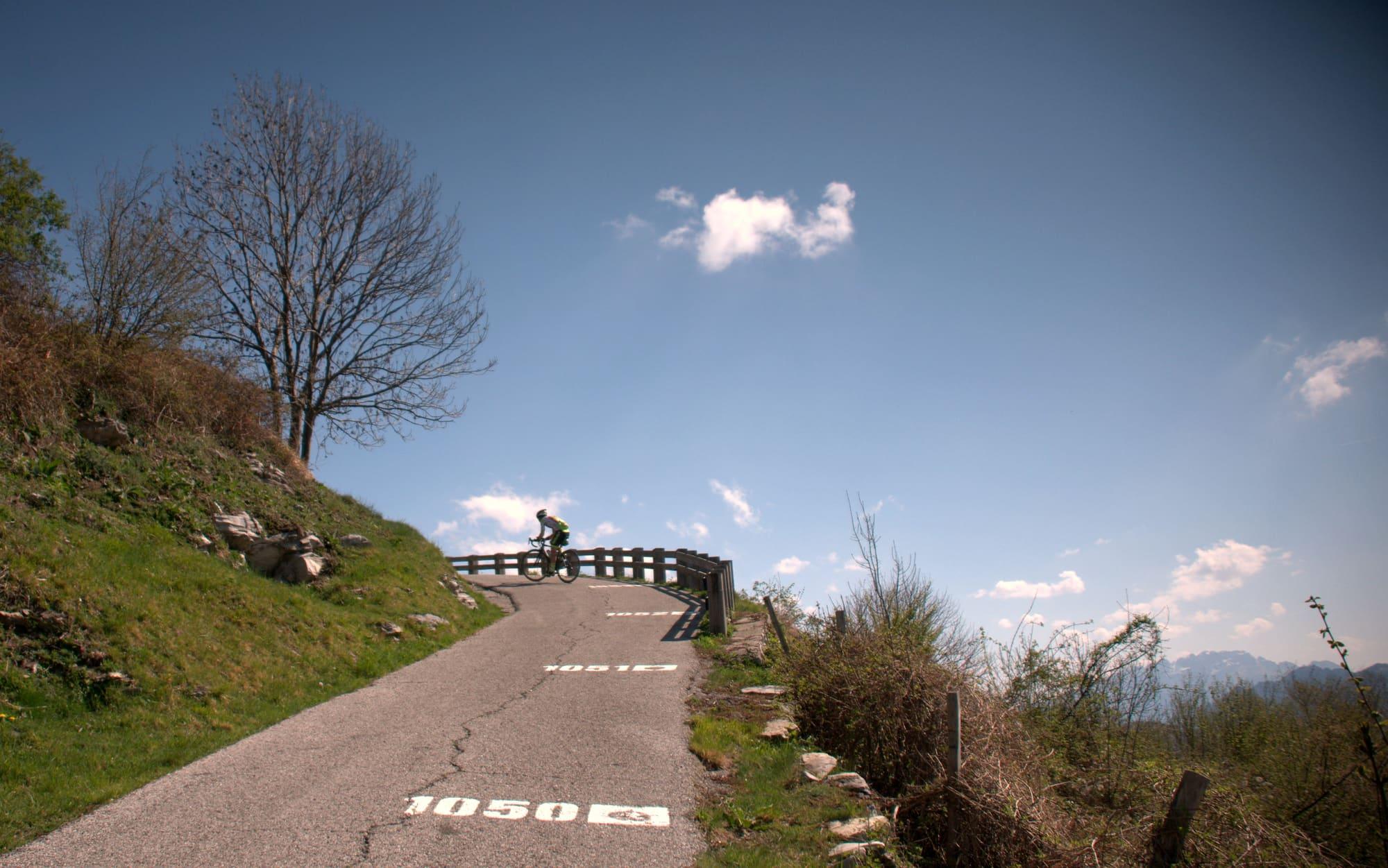
From Bellagio the road climbs to the Ghisallo pass, at 754 metres: from the junction as you leave the village it is a little under five hundred metres of climbing, 5.5 per cent on average with stretches of 14. At the top stands the sanctuary of the Madonna del Ghisallo, whom Pius XII proclaimed patron of cyclists in 1949, with champions' bicycles hanging inside; beside it, the Museo del Ciclismo.
The Menaggio tourist office publishes twelve road-bike loops starting from the village. Two cross the lake on the ferry from Cadenabbia to Bellagio and enter the Lariano Triangle: the Ghisallo loop, eighty-five kilometres and 1,300 metres of climbing, with the cycling museum along the way, and the one through Sormano and the Pian del Tivano, sixty-five kilometres and 1,200 metres, with a detour for climbers: the Muro di Sormano, 1,700 metres with ramps of more than 25 per cent, a lane closed to motor traffic. The longest of the twelve is the round of the lake, 158 kilometres.
The price for a bike on the boat is given at the ticket office. On the car ferry, between Bellagio, Varenna, Menaggio and Cadenabbia, a bike travels on a vehicle ticket, either on its own or with the rider included. It does not board the fast services.
On Trenord trains, no, if the journey starts and ends in Lombardy, and the lake's trains all stay in the region. It has to be a train the timetable marks for bicycles, though. Journeys leaving the region need the bike supplement.
On ASF buses only folding bikes are allowed: folded, one per passenger and two per bus, in the space reserved for disabled passengers, and not when the bus is crowded or a disabled passenger or pushchairs are on board.
It is not advisable: there are uphill stretches, narrow cobbled lanes and steps. It is a route to walk.
For families there are the lakeside paths from Dongo to Gravedona and from Domaso to Sorico, and the flat Pian di Spagna loop from Colico. On the Lecco branch there is the Anello dei Laghi, suitable for the whole family.
On the upper lake there are two charging points for e-bikes: at the port of Gera Lario, in Via al Pontile, and at San Vito in Cremia. On the train, folding bikes, folded, and scooters, electric ones included, travel free on every train if they do not exceed eighty by a hundred and twenty by forty-five centimetres, switched off and folded.
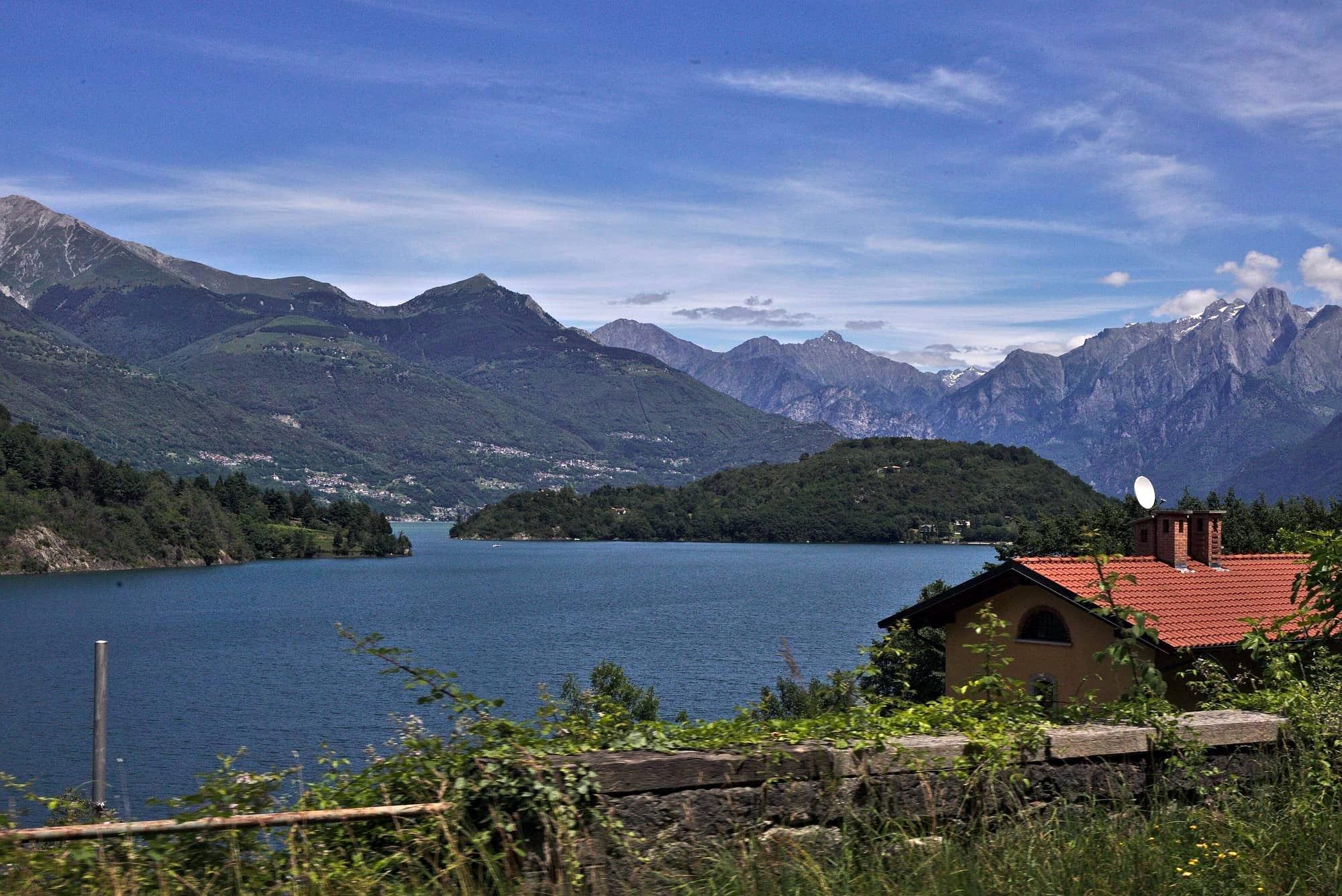
A railway junction between Lake Como, the Valtellina and the Valchiavenna.
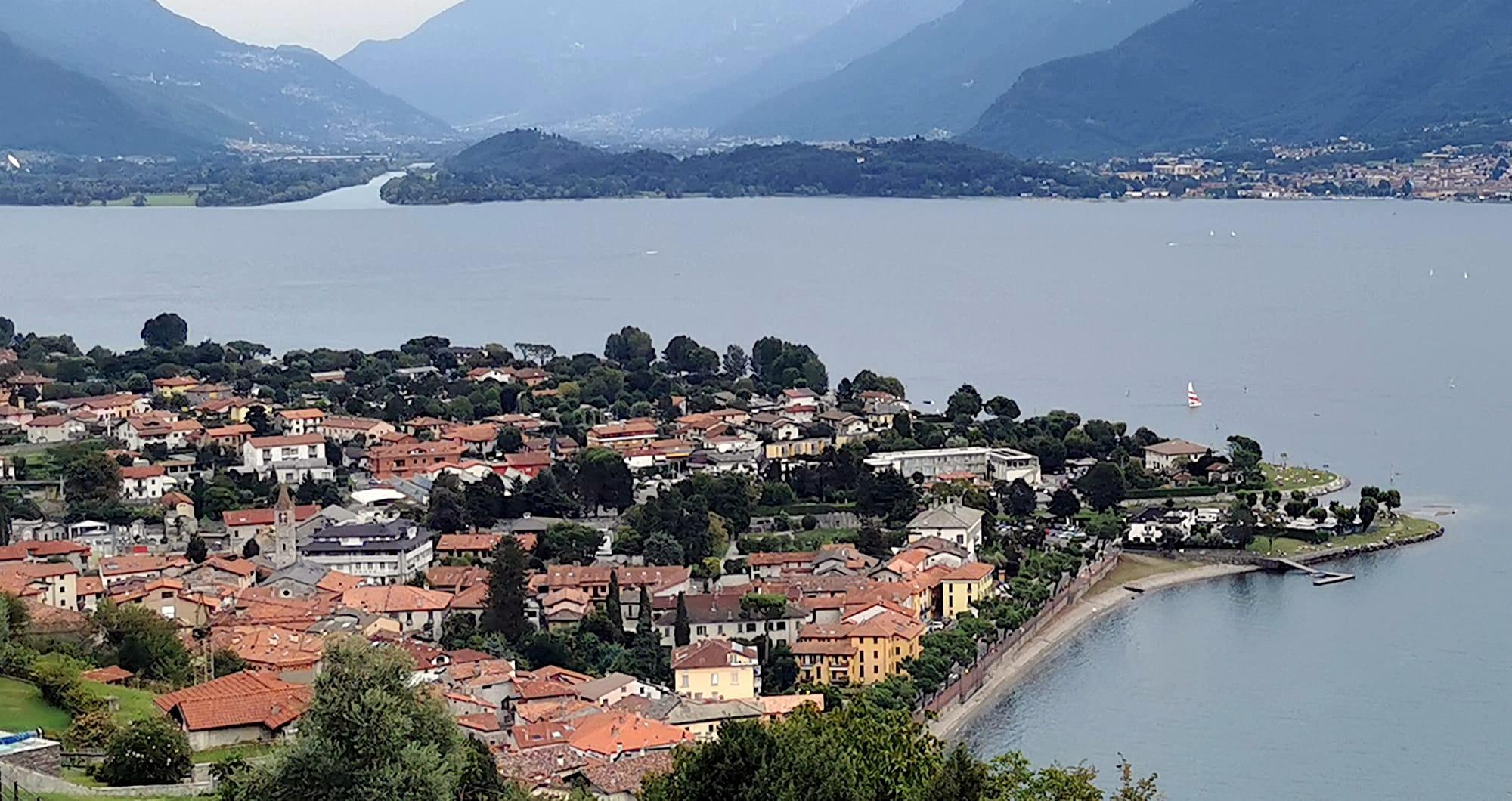
An upper-lake village with a long beach and areas for sailing, windsurfing and kitesurfing.
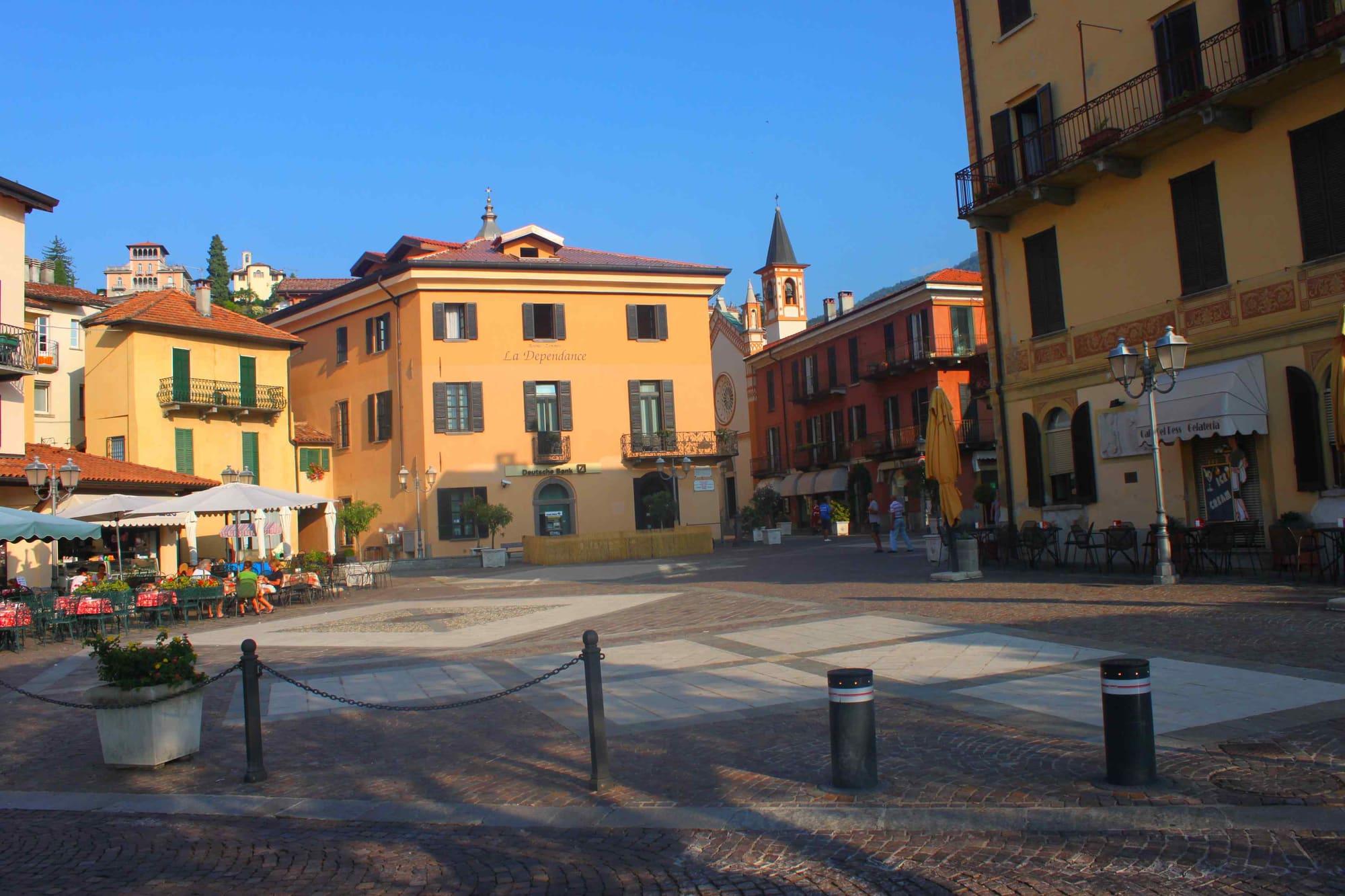
In the middle of the lake, between the ferry, the Regina road and the bus to Lugano.
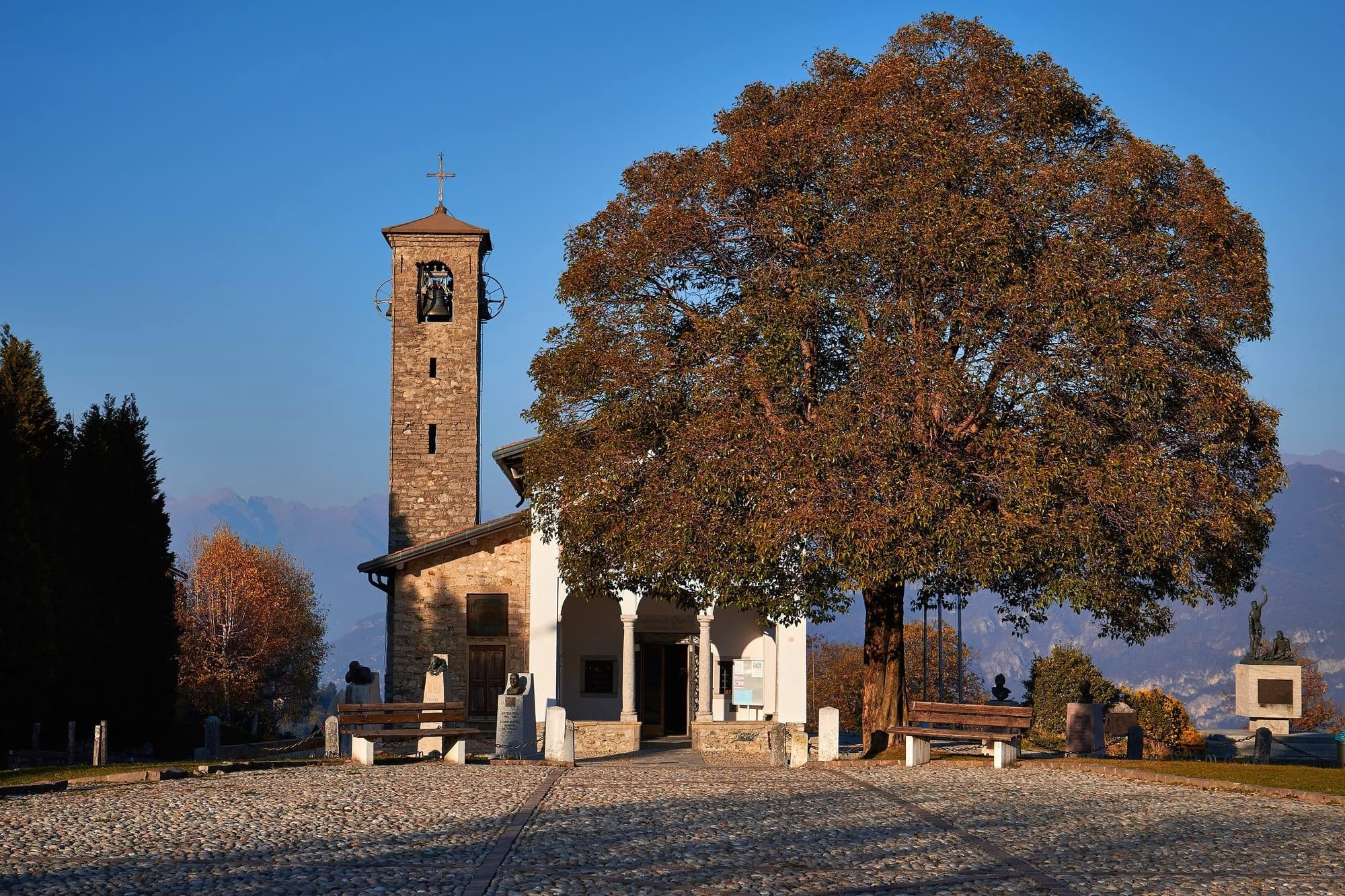
The Ghisallo village: the chapel and the bicycle museum are here.
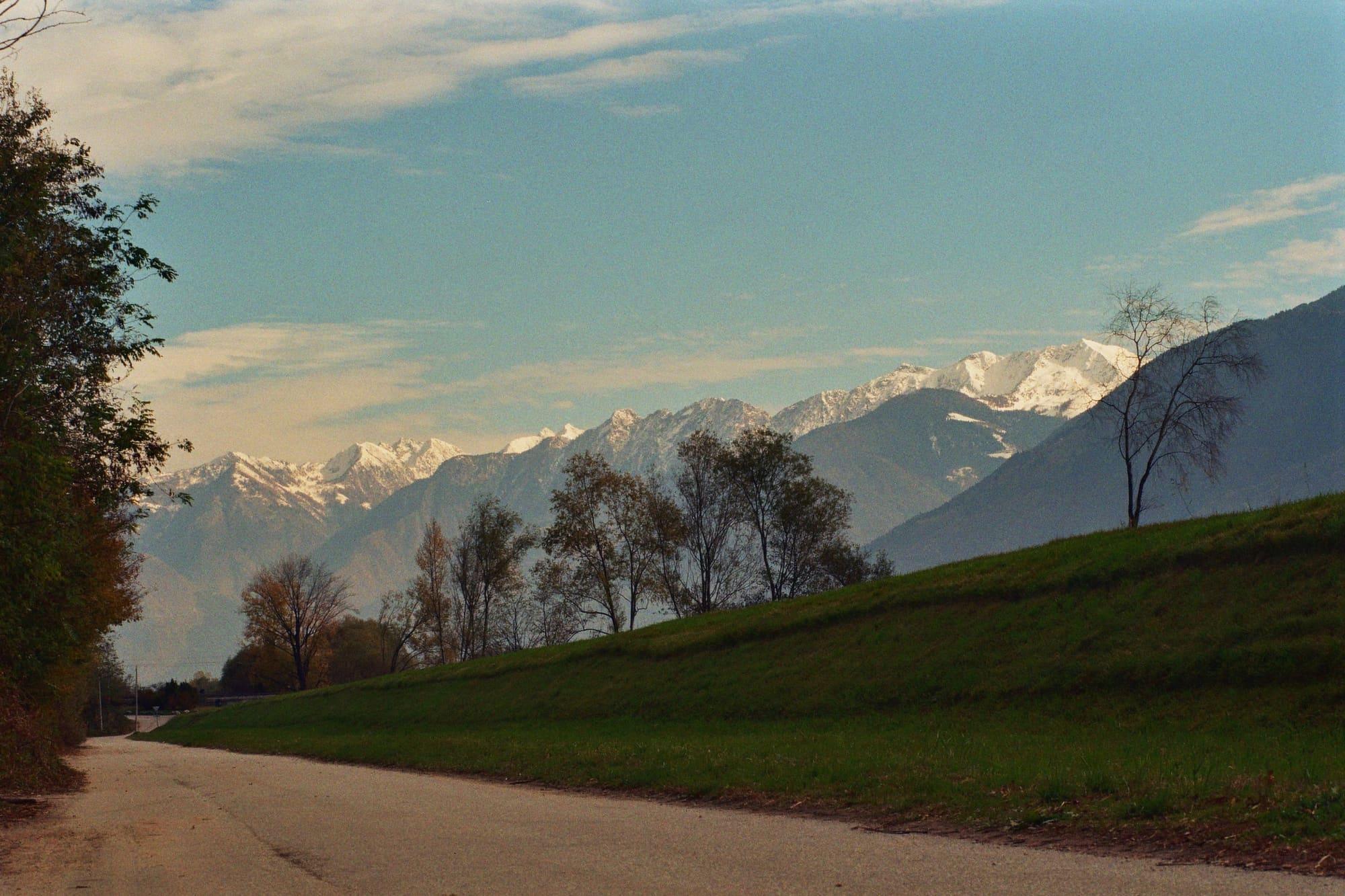
Upper Lake
Almost level cycle and foot paths between the Pian di Spagna, Lake Mezzola and the Valtellina, with the train to bring you back.
3 h – 7 h27.5 km · +71 m
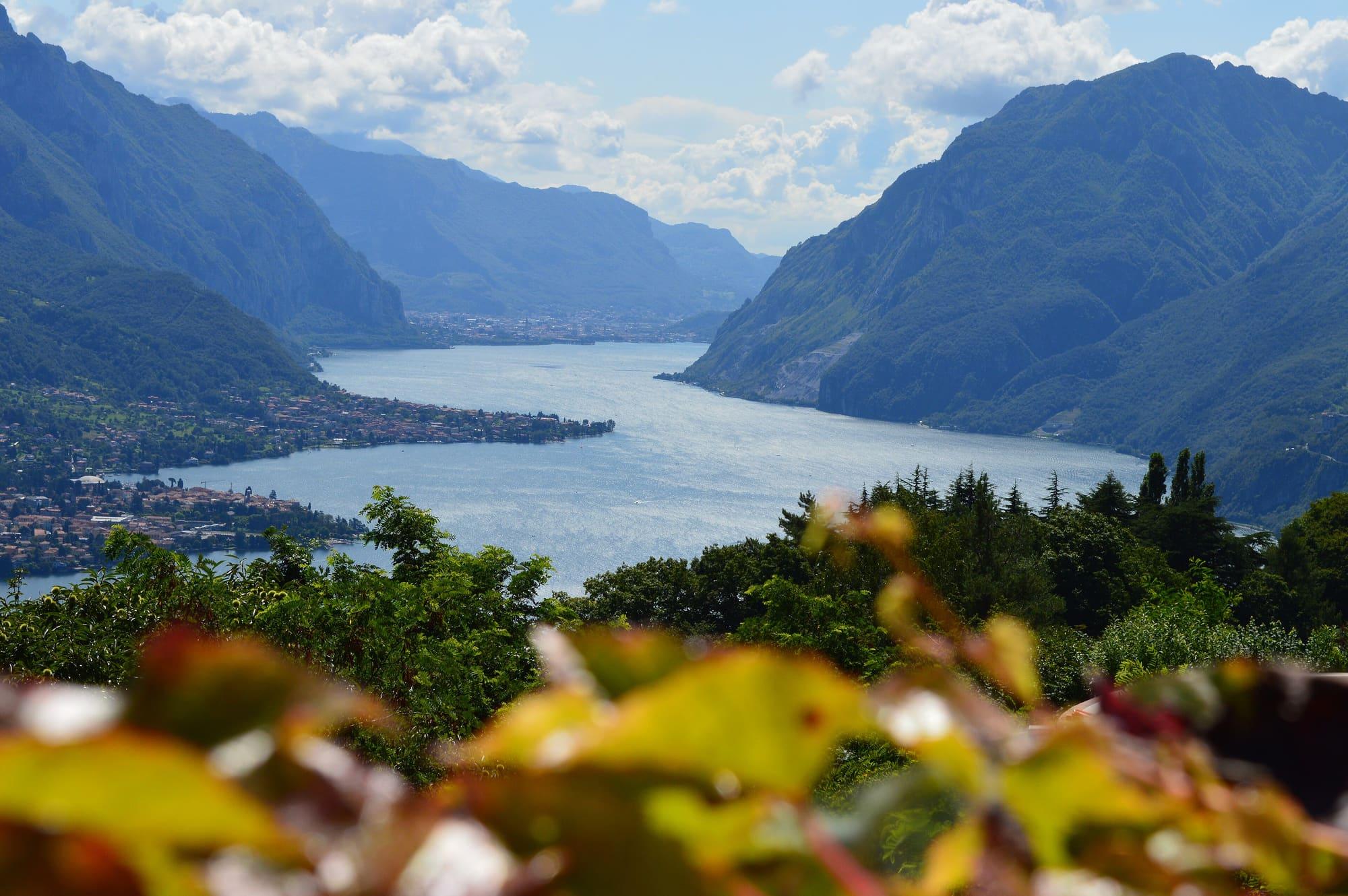
The Triangle
Ten kilometres from Bellagio up to the cyclists' chapel.
2 h – 5 h12.7 km · +664 m
Upper Lake
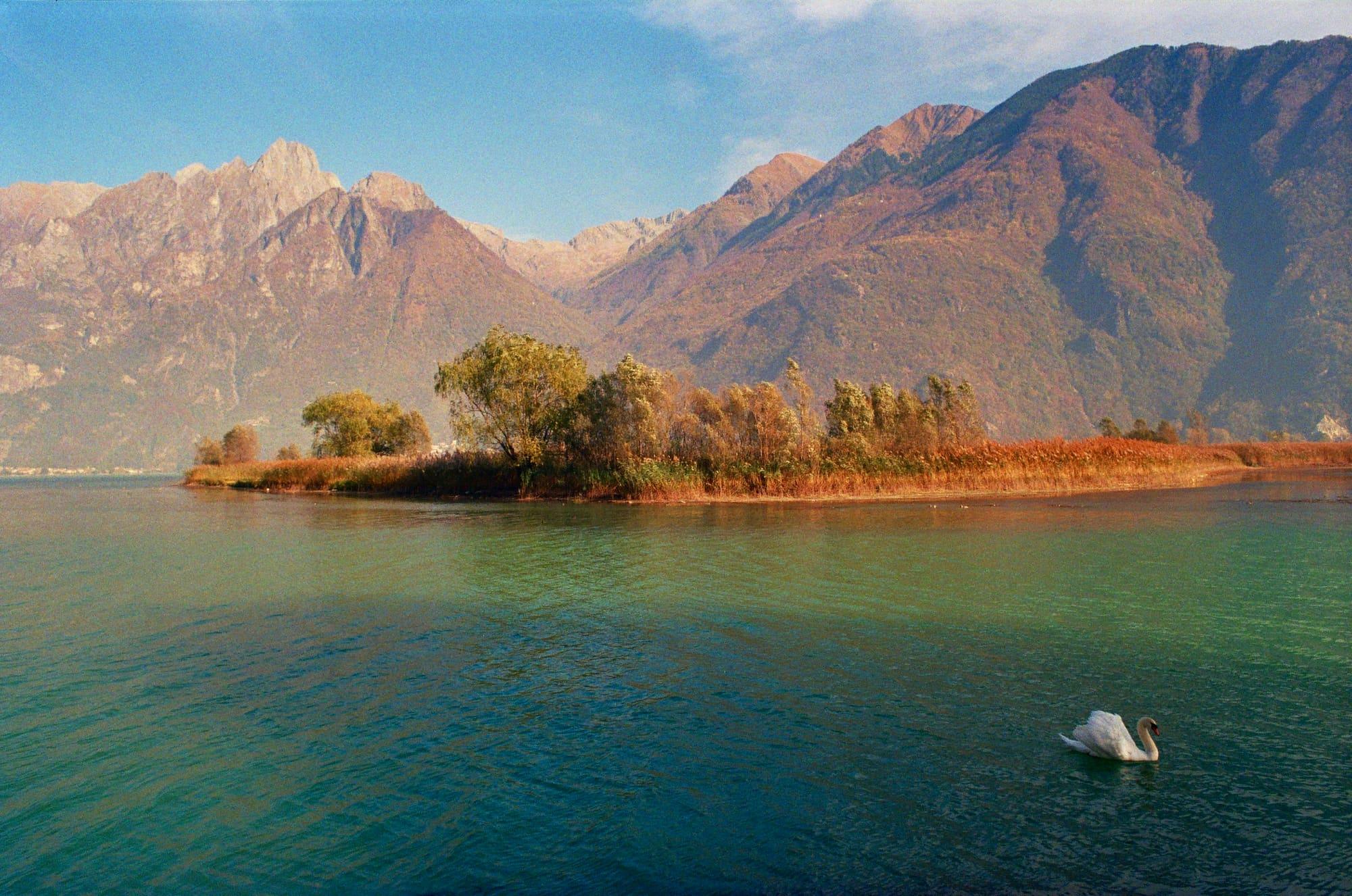
Ducks in winter and migrants in spring and autumn, in the reserve where the Adda flows into the lake.
2 h – 4 hCar neededOpen access
Centro Lago
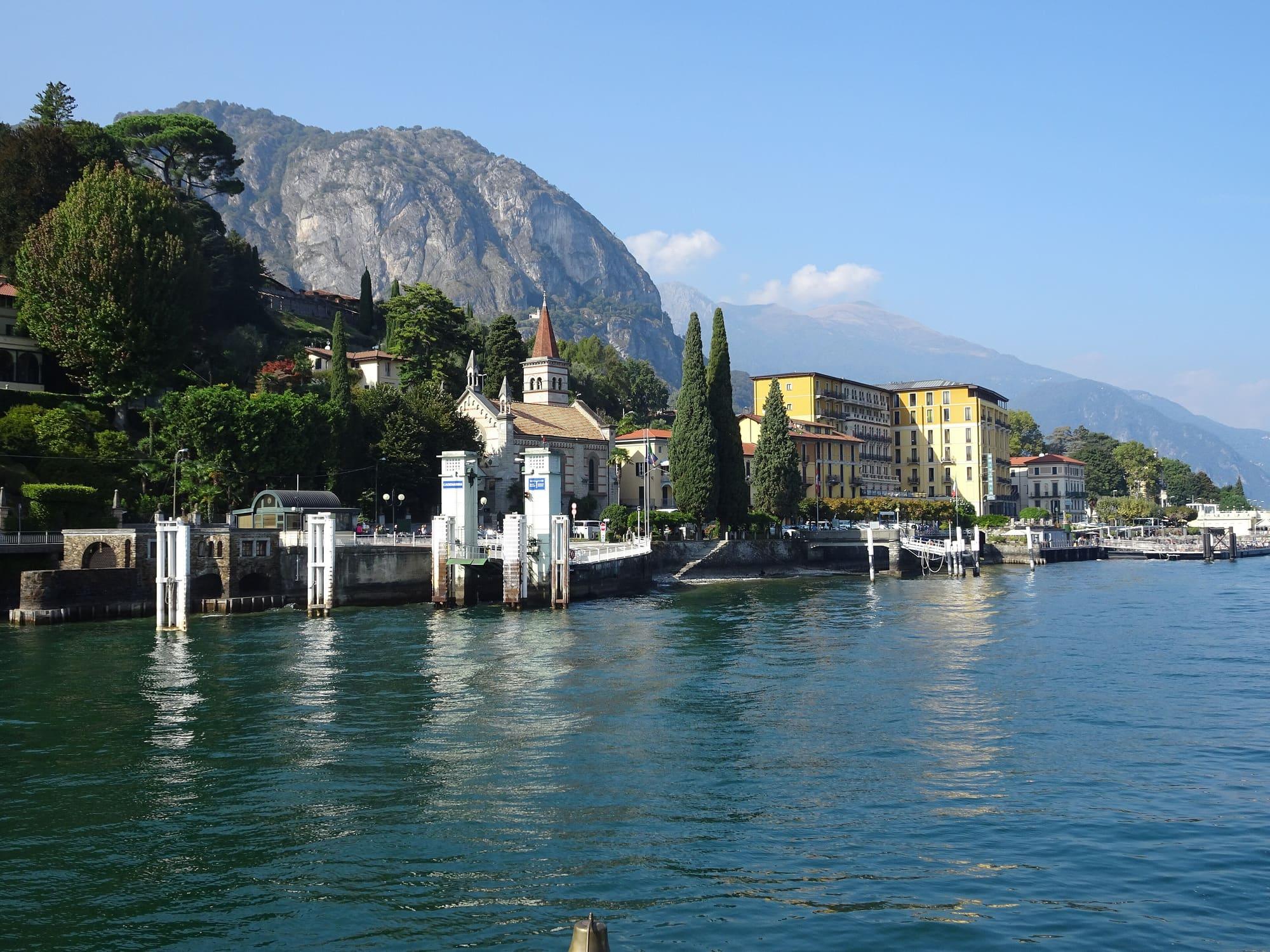
About eleven kilometres from Colonno to Griante, through villages, along mule tracks and beside the lake.
3 h – 5 h11.3 km · +214 mOpen access