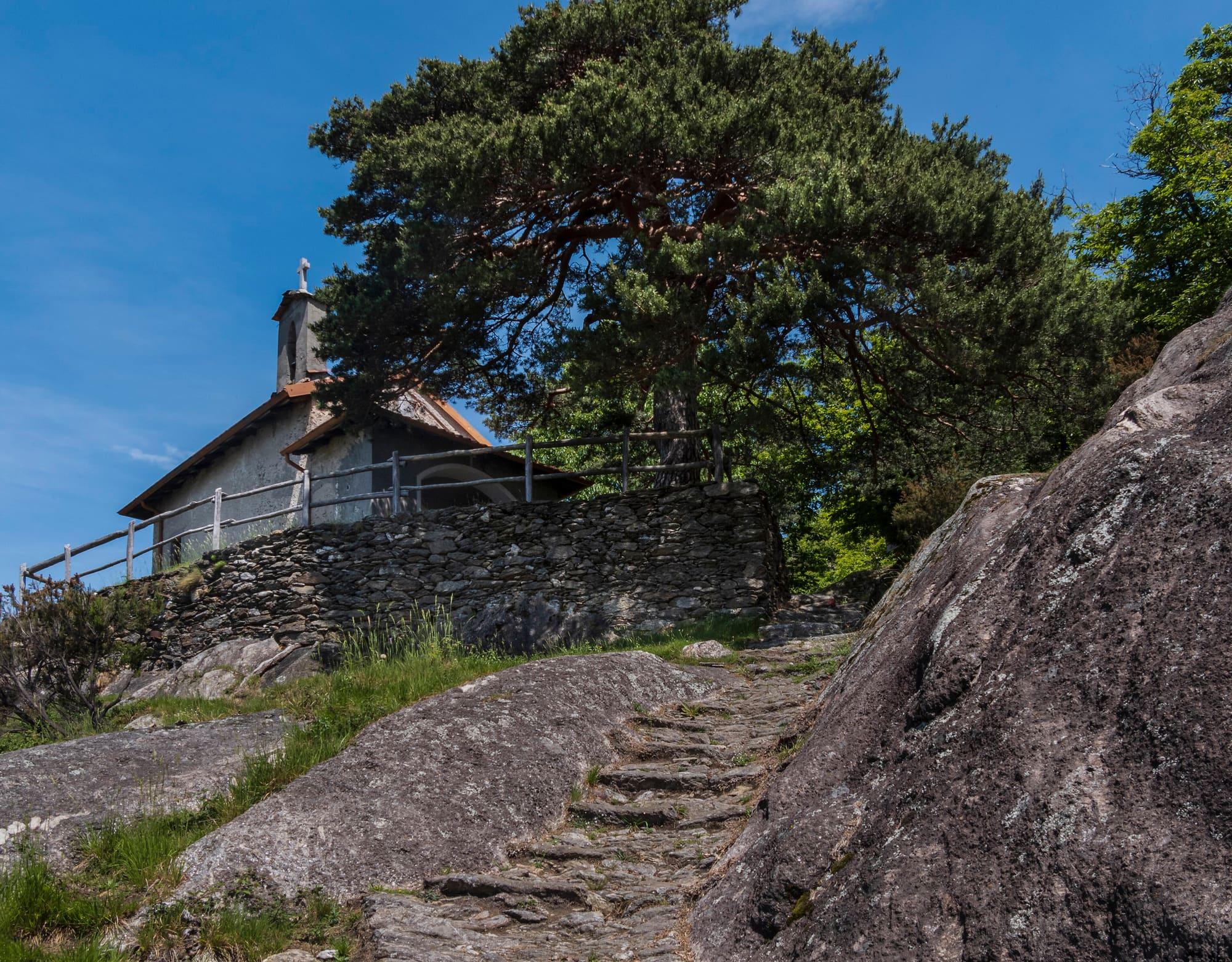
Church of San Giorgio in Mandonico, Dorio
Dorio's old white parish church, on a meadow in the village's highest hamlet: on the left wall, six panels frescoed in 1492, with Saint George killing the dragon before a lake and its castles.
10–30 min
Lecco Branch
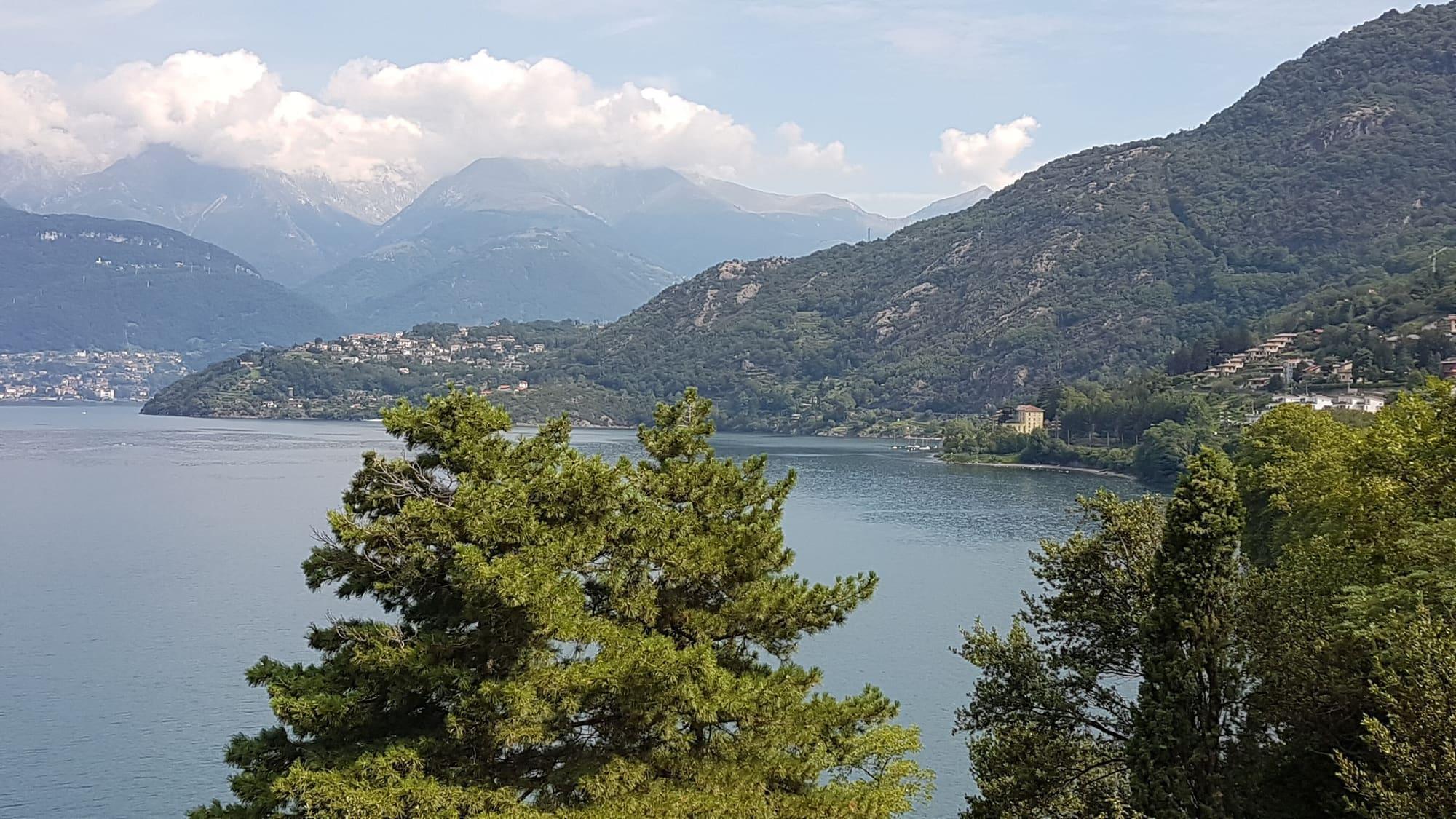
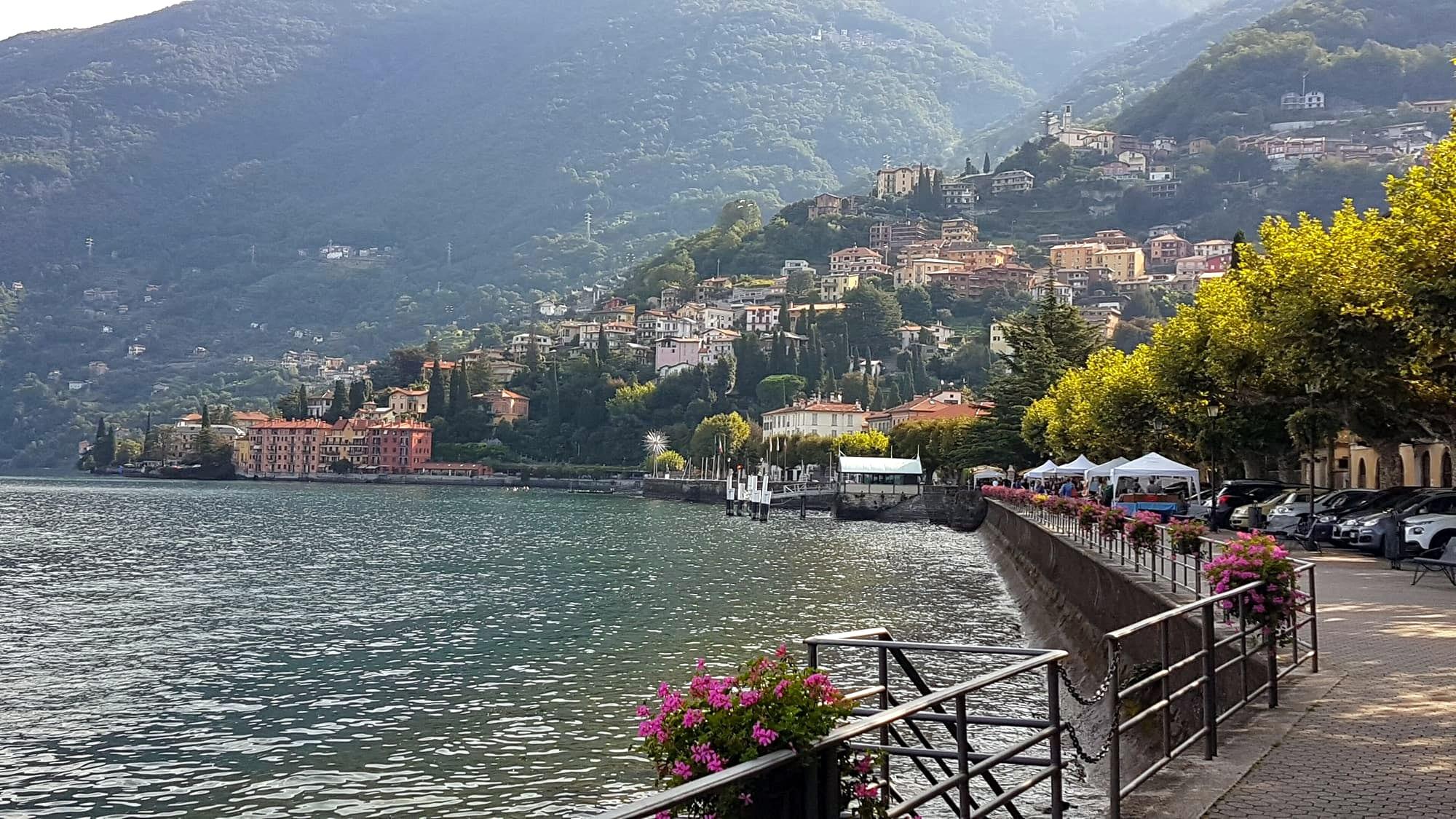
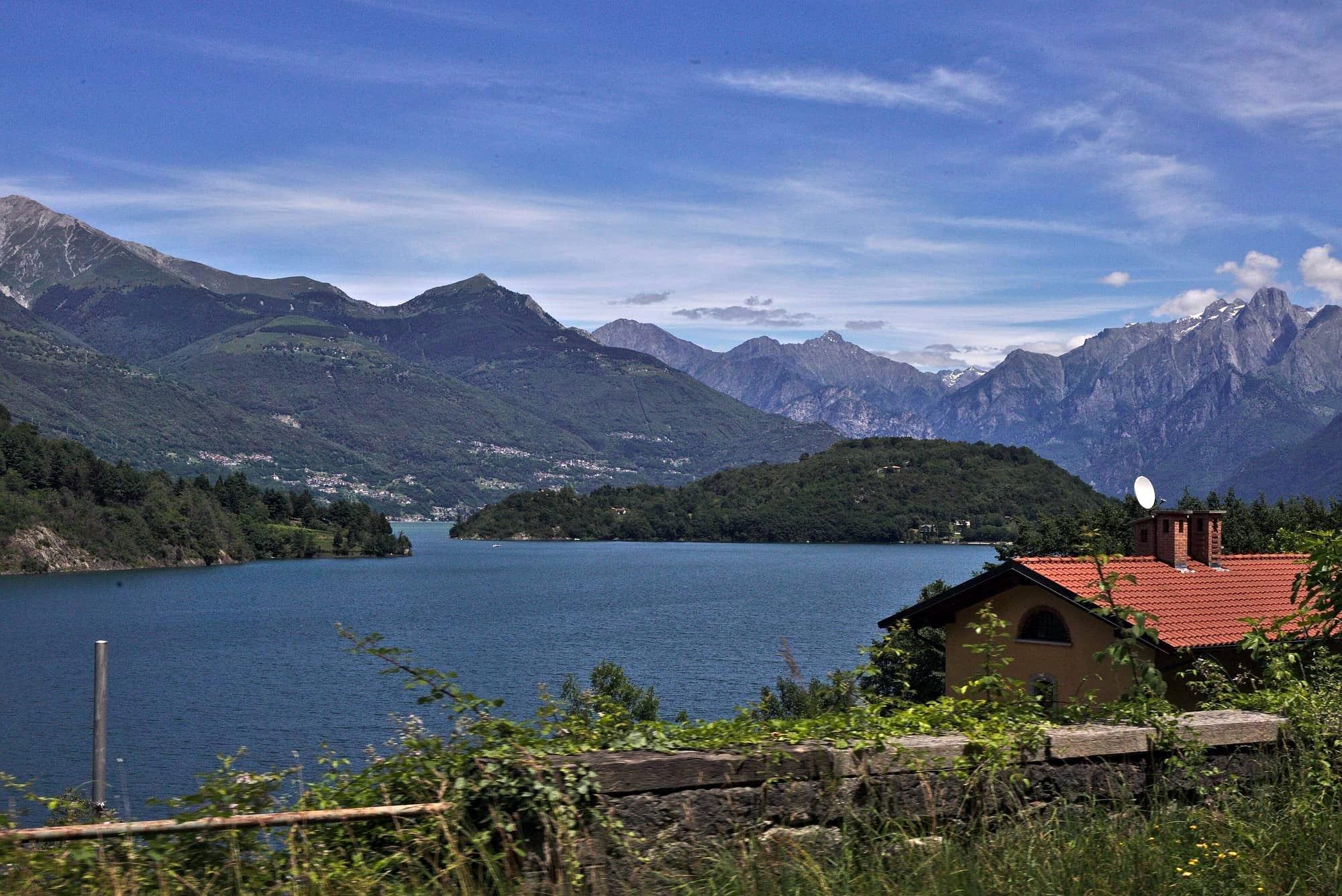
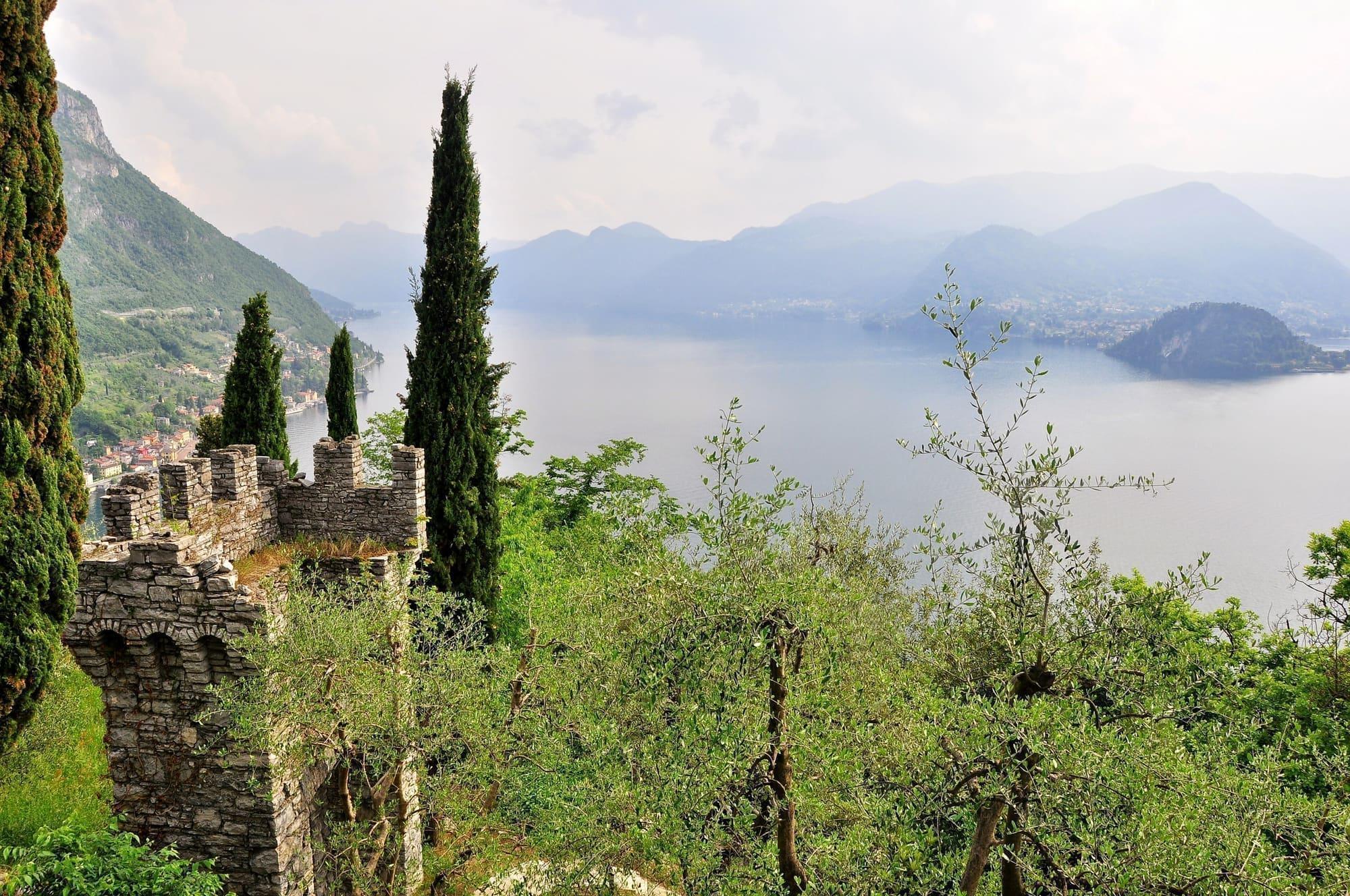
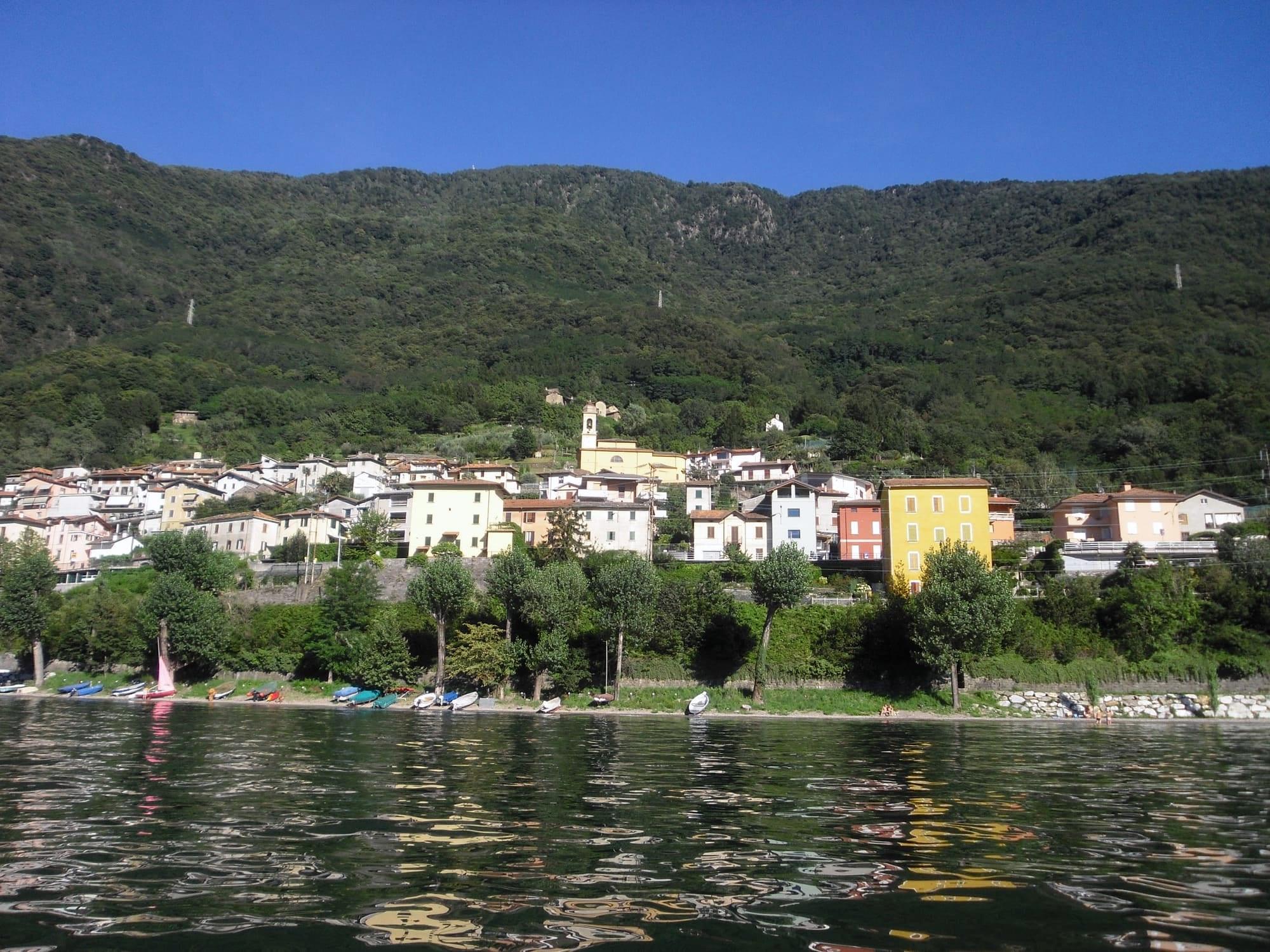
Houses clinging to the terraced slopes of the eastern shore, between Corenno and Colico: olives, vines and bay laurel, a beach a kilometre long, and up above Mandonico, the old hamlet with the church of San Giorgio frescoed in 1492.
Dorio is a small comune on the eastern side of the upper lake, its houses clinging to the terraced slopes that run down to the water, where olives, vines and bay laurel have been grown for centuries.
It is made up of small localities, the “lööch” of the dialect, and cut by six valleys: from north to south the Valle degli Asini, the Valle di Dorio, the Valle dei Mulini and the smaller Torchiedo, Marcello and Maronasso. Its history starts early, in the great cup-marked rocks at Comballo and in a Bronze Age axe, the palstave found at Garavina at the end of the nineteenth century while the railway tunnels were being dug, and now kept in Como. Tradition has it that the Greek settlers Julius Caesar brought to Como founded Dorio, Corenno, Dervio and Piona, whose names are said to echo Dorion in Messenia, Corinth, Delphi and Paeonia; no archaeological evidence confirms it.
In Roman times the Via Spluga, the road from Milan over the Alps by the Splügen Pass, ran through Dorio. Dorio appears in the records in 1040, when it depended on Bellano together with Corenno and Dervio. In those years the ships of the Tre Pievi took the village by surprise, then Corenno and, after a long siege, Dervio. In 1449 troops from Como sacked Bellano, Dervio, Corenno and Dorio.
In the fifteenth century Dorio became independent of Dervio, and in 1480 the Riviera, Dorio included, was given as a fief to Pietro Dal Verme. On 26 May 1506 the Curia of Milan made the village a parish: the paths to Dervio were so difficult, above all in the long winter rains, that many newborns died unbaptised. Dervio's clergy nevertheless kept their right to a tithe on grapes and grain until the twentieth century. From 1533 to 1788 the fief belonged to the Sfondrati.
In the Middle Ages the village stood higher up, at Mandonico, a cluster perched between the Valle di Dorio and the Valle dei Mulini, built to escape invasions and raids. There, on a grassy clearing, is the old parish church of San Giorgio, built in the fourteenth century and remade several times, with the frescoes of 1492 telling the saint's deeds. Little by little families moved down to the locality of Solmogno, closer to the lake, which took the name of Dorio between 1640 and 1670. Earlier, in 1629, the Landsknechts had brought the plague, and the population had fallen from about three hundred to eighty-four.
The bond with Mandonico stayed strong: the new parish church, built in 1676 in the centre of the village and dedicated to the Blessed Virgin, was in 1787, when the old church became unsafe, dedicated to Saint George as well. Higher up, at 484 metres, the frescoed oratory of San Rocco recalls the vow of the villagers who survived the cholera of 1856.
On the shore a beach, wild in places, runs for a kilometre from the Corenno boundary to the Rivetta locality to the north. It can be walked end to end, and when the Breva blows, sailors, windsurfers and kitesurfers come. Between 1840 and 1842 a large silk-throwing mill with its reeling mill was built in the village. Dorio also has a station on the Lecco–Colico railway.
Paths and old mule tracks link the hamlets, and the Sentiero del Viandante, the mid-slope route between Abbadia Lariana and Colico, passes here among chestnut woods. In 1755 Dorio gained the localities of Sparesée, Perdonasco and Rainelda at the end of a dispute with Colico that lasted more than two centuries; it was twice joined to Dervio, from 1809 to 1816 and from 1927 to 1950.
In the sixteenth and seventeenth centuries Paolo Giovio and Sigismondo Boldoni described Dorio as a village rich in vineyards. At the end of the nineteenth century its land, almost all woods, chestnut groves and pastures, yielded chestnuts, timber, hay, wine, maize, silk cocoons and dairy produce, but not enough for the village. Many villagers went to work in the nearby villages or emigrated to Switzerland as masons.
The silk-throwing mill built by the Bettega brothers, with its reeling mill, employed many women workers from Dorio and the villages around, and the village also had a boatyard and a grain mill. In 1894 Dorio's station opened, on the new stretch of railway between Bellano and Colico.
In the centre of the village the parish church of San Giorgio was enlarged in 1712, then pulled down and rebuilt in 1859; an inscription on the façade records the restoration of 1974.
On 23 April the village celebrates its patron saint, George, to whom both the parish church and the old church at Mandonico are dedicated. Every 16 August the villagers climb to San Rocco to renew the vow of 1856. From 8 December to 6 January Dorio joins Dervio, Valvarrone and Sueglio in “Un presepi per ogni purtun”, the trail of nativity scenes set up in the villages' streets.
How long it takes
Typical door-to-door times by public transport, changes included. From Milan, counted from Centrale station.
Updated 22 October 2026
The mountains around the village hide the sun before astronomical sunset: sunrise and sunset are worked out on the village's own horizon.
Today, 1 November, estimated sunlight at the reference point: first at 10:38 and last at 16:14, giving 5 h 37 of direct sun, out of 10 h 06 of daylight.
Today the sun arrives between 10:35 and 10:55, depending on the street.
Watch the shadow reach Dorio today
See from Dorio where the sun goes, in 3D
The sun at an exact spot in Dorio: your hotel, a beach, a street
By train: Dorio has a station on the Lecco–Colico line, and the train takes three minutes from Dervio and about twelve from Colico; the day's times are Trenord's. By car, take the provincial road 72 along the eastern shore. No scheduled boat calls at Dorio: the nearest piers are Dervio and Piona.
The beach runs for a kilometre from the Corenno boundary to the Rivetta, and on Dorio's shore there are two official bathing points, Riva del Cantone and Rivetta: like every place people swim they are sampled by law, and the class of their water is assigned at the end of each season from the official sampling.
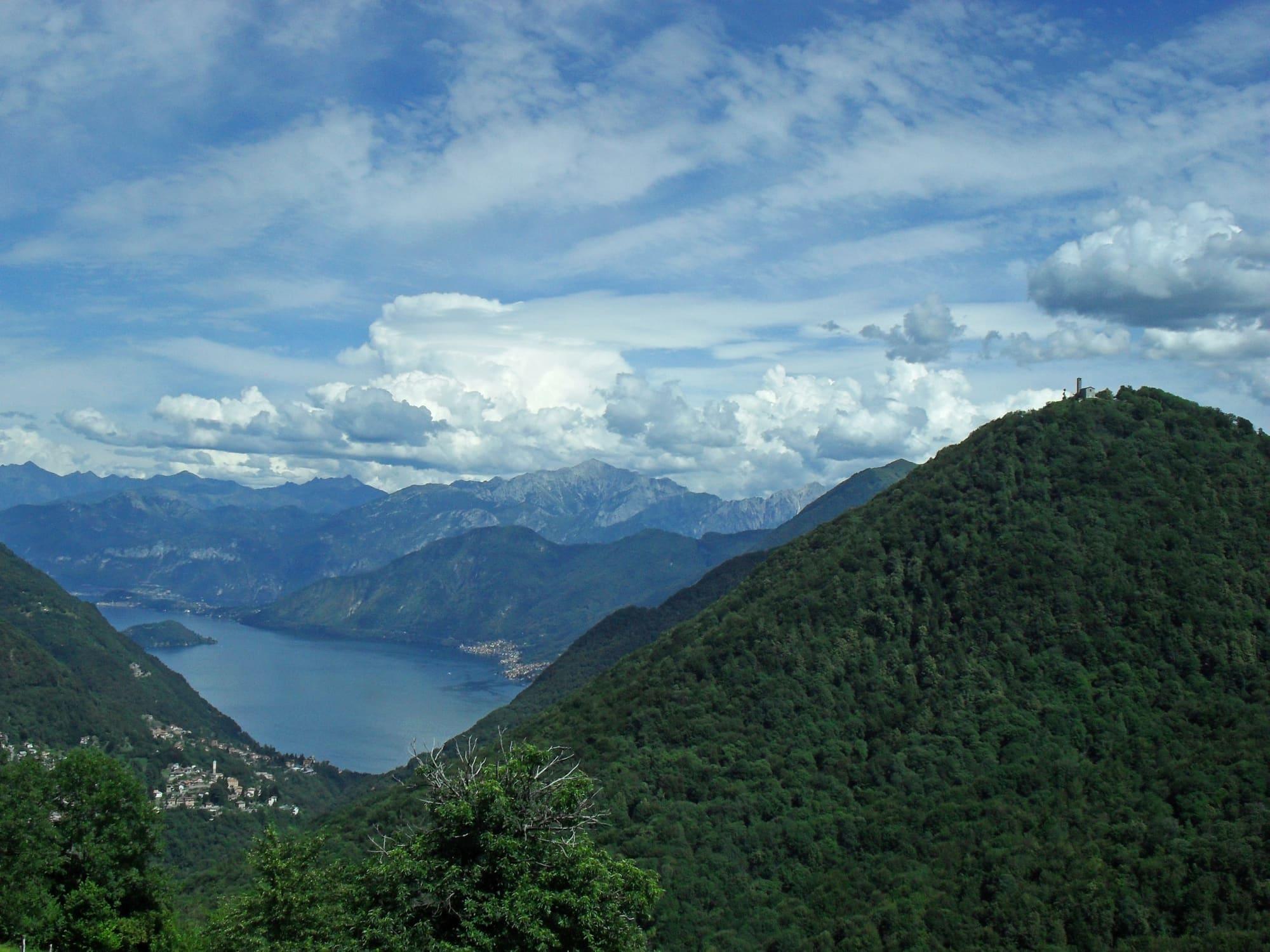
The highest summit in view from here is Pizzo Paglia, 2593 m, 16 kilometres away.
The ochre line follows today's sun path and marks the estimated times of its first and last appearance above the mountains. Drag the panorama to see all of it.
Official bathing sites nearby, with their water quality classifications.
Because of a tradition: in 59 BC Julius Caesar settled Greek colonists at Como, and according to this tradition Dorio, Corenno, Dervio and Piona were founded then, named after Dorion in Messenia, Corinth, Delphi and Paeonia. But there is no archaeological evidence, and no one knows whether there really was a settlement at that time; surer are the older traces, the cup-marked rocks at Comballo and the Bronze Age axe found at Garavina.
What is around, and how far.
© OpenStreetMap contributors · ODbL
Typical door-to-door times.