16Aug 2027
First Basin
Pognana Lario
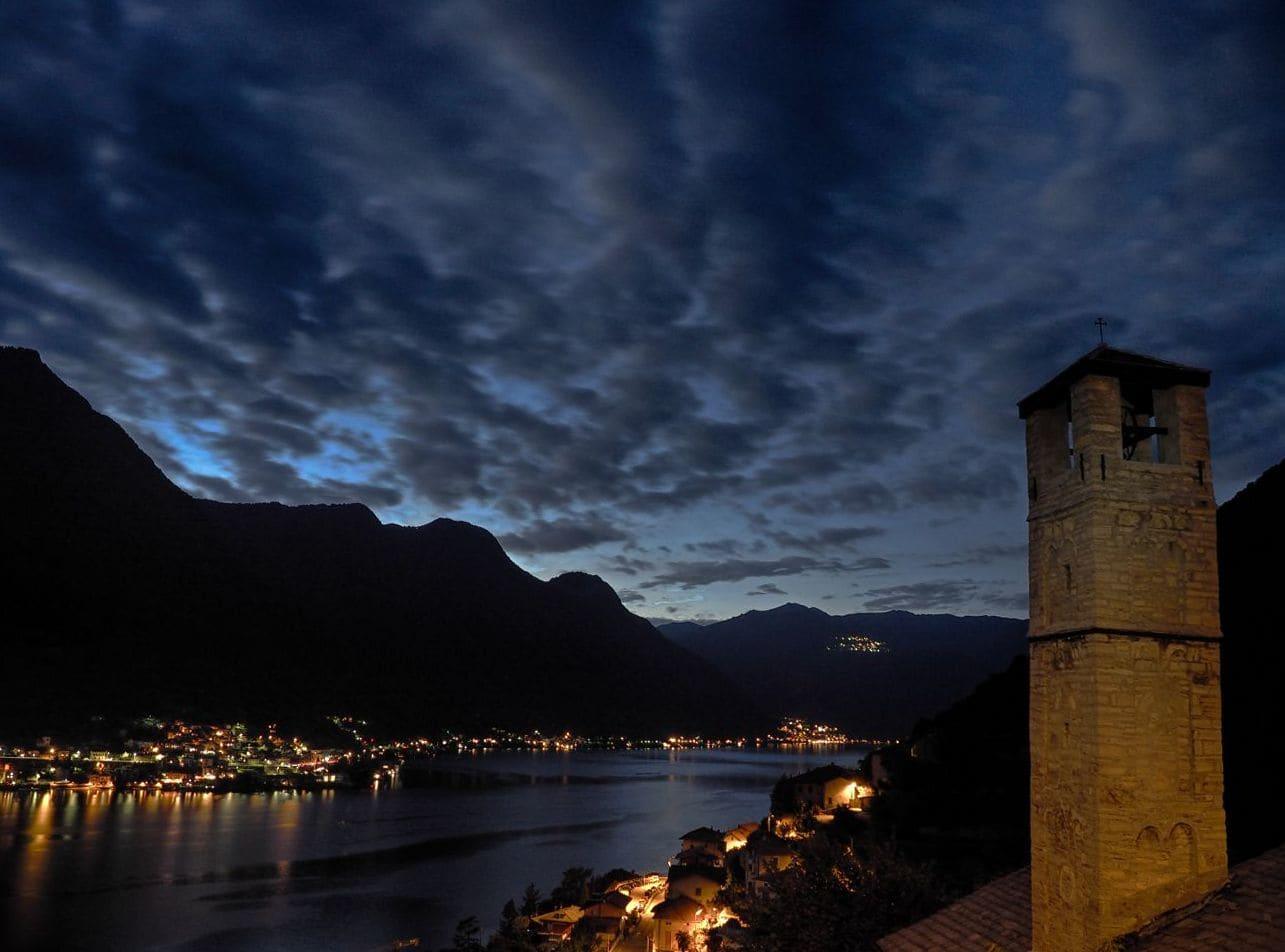
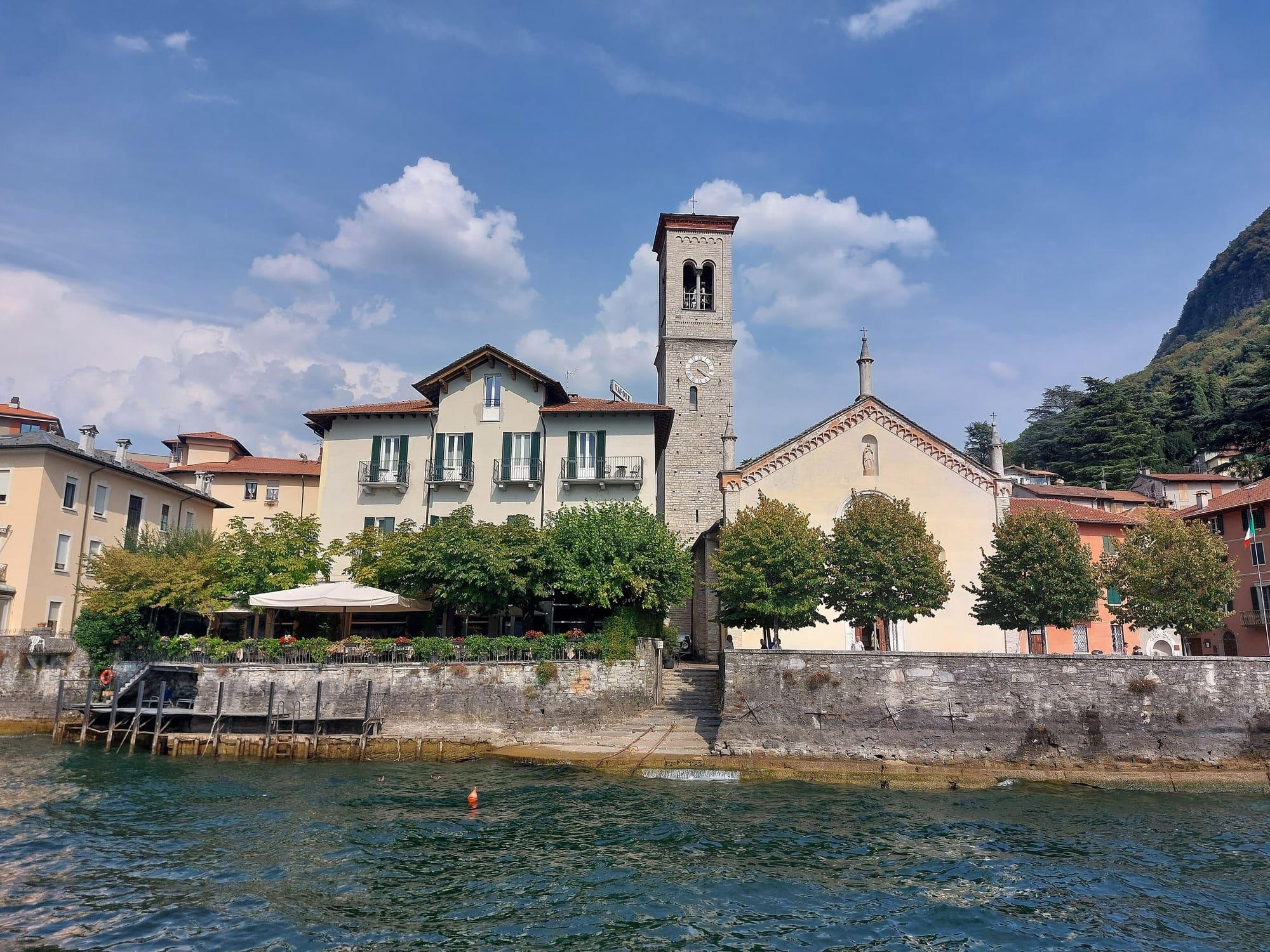
Stone houses between the shore and the slopes of Monte Preaola, once a fortified village: the parish church of the Trinity, at Rovasco a church grown from a Lombard oratory, and at Canzaga San Rocco, the old frescoed parish church, above the lake.
- Ideal for
- Frescoed medieval churches among stone houses, the Strada Regia, the lake from Canzaga
- Time needed
- A couple of hours between Pognana, Rovasco and Canzaga
- Best season
- Spring to autumn
- What to see
- The vault frescoes of San Rocco at Canzaga
- Best reached by
- C130 bus from Como in about half an hour; some boats on the Como–Colico line
- LauraPiatti · CC BY-SA 4.0
- Ottantafame · CC BY-SA 4.0
The place
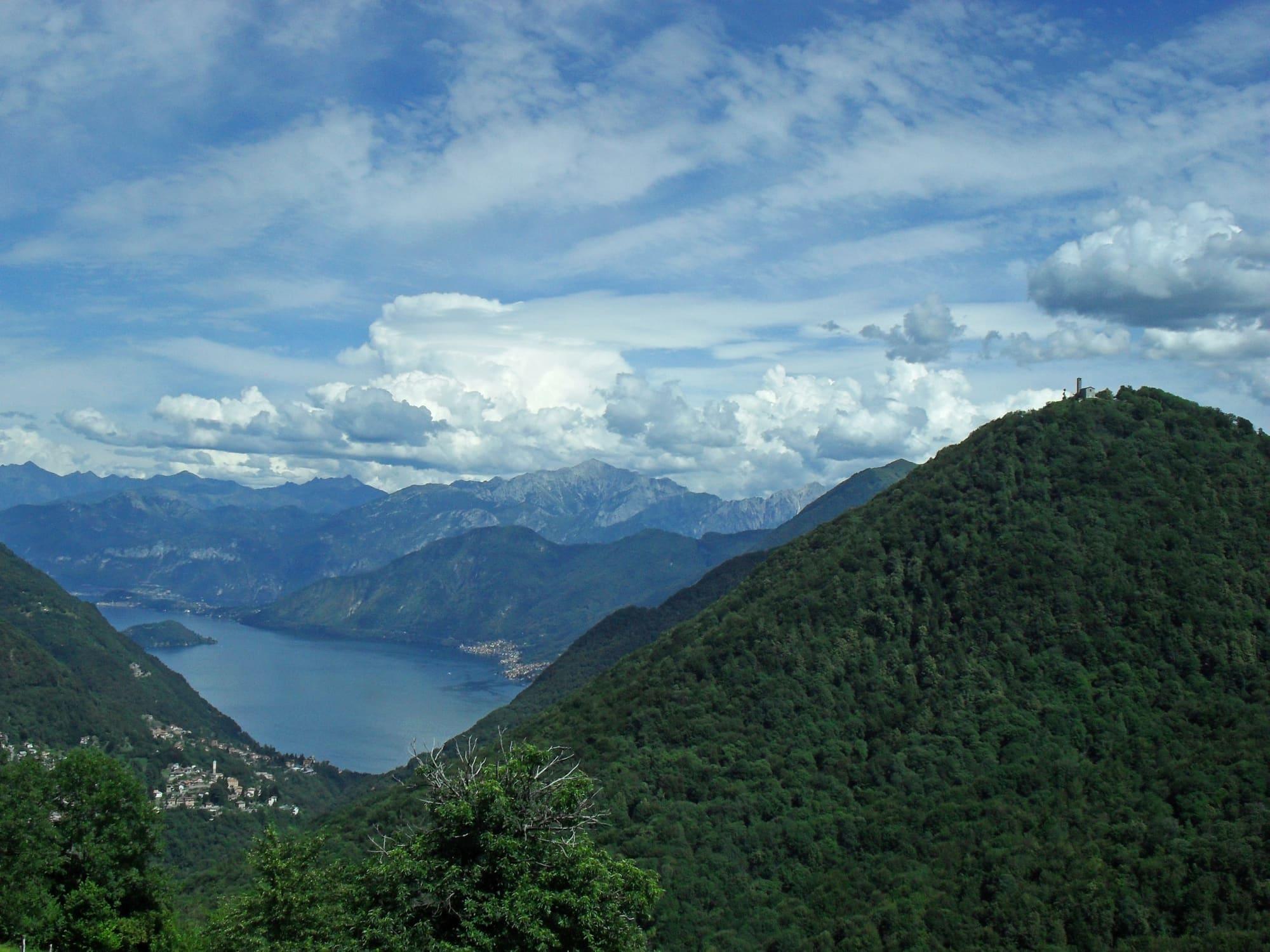
Pognana Lario stretches from the lakeshore up to the 1417 metres of Monte Preaola, and is cut in half by the Rovasco ravine; the name is thought to come from a Latin personal name, Apponius.
Roman graves found at Rovasco show the place was already lived in then, and in the Middle Ages Pognana was a fortified village, standing in the locality now called Castello, below the Canzaga square: in the lower part of the village stretches of the fortifications remain, among them an underpass with its buttresses. It was a fief of Lucrezia Crivelli from 1497, then of the Visconti and, from 1647 to 1787, of the Casnedi; in the early sixteenth century it already formed a single comune with Quarzano. The coat of arms, of 1978, carries a sun for the climate, a cockerel for the chicken farms and, at the bottom, the lake.
Pognana Lario stretches from the lakeshore up to the 1417 metres of Monte Preaola, and is cut in half by the Rovasco ravine; the name is thought to come from a Latin personal name, Apponius.
Read on
Roman graves found at Rovasco show the place was already lived in then, and in the Middle Ages Pognana was a fortified village, standing in the locality now called Castello, below the Canzaga square: in the lower part of the village stretches of the fortifications remain, among them an underpass with its buttresses. It was a fief of Lucrezia Crivelli from 1497, then of the Visconti and, from 1647 to 1787, of the Casnedi; in the early sixteenth century it already formed a single comune with Quarzano. The coat of arms, of 1978, carries a sun for the climate, a cockerel for the chicken farms and, at the bottom, the lake.
The Trinity, Rovasco and Canzaga
Among the houses of Moltrasio stone at Pognana stands the eighteenth-century parish church of the Holy Trinity. Nearby is the so-called Castello, an eighteenth-century house that served as a wartime refuge, town hall, inn and school before becoming a home. At Rovasco, between the old main road and the slopes of the Preaola, stands the church of San Miro, of the twelfth or thirteenth century: it grew from a small Lombard oratory and was enlarged in the fifteenth century. Its left flank carries proto-Romanesque frescoes of a friar saint and a Saint Christopher between two angels; inside are a Romanesque arch and an altarpiece attributed to Carlo Innocenzo Carloni.
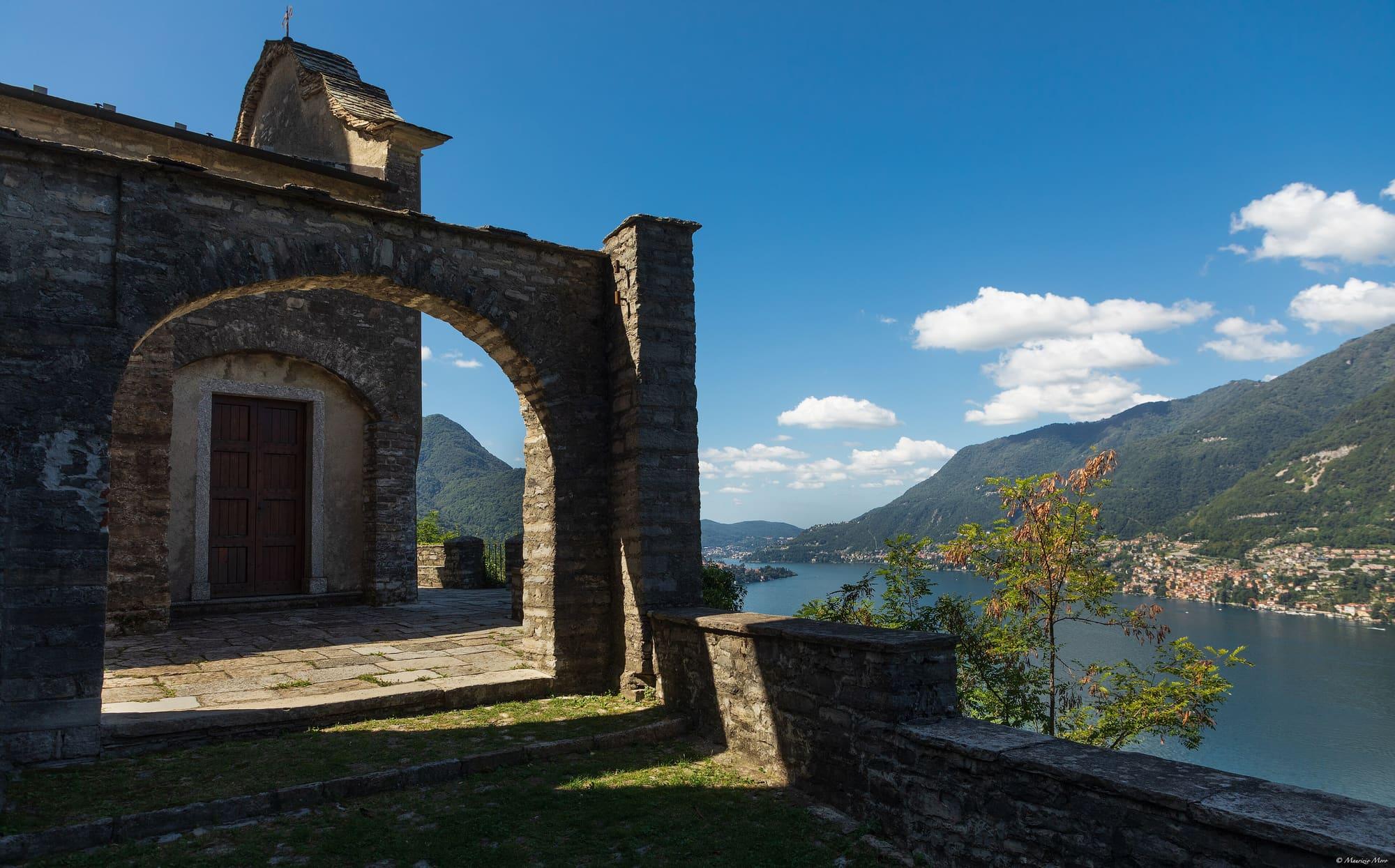
Canzaga, towards Faggeto, has houses of the seventeenth and eighteenth centuries and is linked to the centre of Pognana by a path lined with the chapels of the Way of the Cross. Here stands the church of San Rocco, once Pognana's parish church. It dates from the twelfth or thirteenth century and was first dedicated to the Trinity. Its vault is covered by a cycle of frescoes from the late fifteenth and early sixteenth centuries by the Torno painter Bartolomeo de Benzi: God, the symbols of the Evangelists, the four Doctors of the Church and eight prophets. The frescoes were restored in 1987. The church square looks out over the lake.
History
In 1335 Quarzano, now a hamlet on the border with Nesso, was still a comune of its own. Under the Duchy of Milan Pognana belonged to the pieve of Nesso, and in 1467 the church at Canzaga, today San Rocco, became the village's parish church.
The Casnedi fief ended in 1787, when the last male heir of the family died and the fief returned to the Royal Chamber of the Duchy of Milan. In 1807 a decree of Napoleon joined Lemna and Palanzo to Pognana, and the population rose from about four hundred to almost a thousand; with the Restoration the two villages became comuni of their own again.
The Holy Trinity and the Rebay family
Günzburg, in Bavaria, was one of the places where emigrants from Pognana went. There the Rebay family set up a trading business, and part of its earnings went into building and decorating the new church of the Holy Trinity. Work began around 1732 and ended in 1744. In 1747 the church became the parish church, and the old church at Canzaga was dedicated to San Rocco.
Inside are seventeenth-century liturgical furnishings and a canvas of Saint Joseph and the Child, painted in 1766 by the German painter Januarius Zick. The altarpiece of the Holy Trinity is by the Ticino painter Giovanni Battista Innocenzo Colomba, who painted it between 1784 and 1796, probably for the Rebay family. The façade was restored in 1983.
Quarzano, the sculptures and the Buco di Premen
On the border with Nesso, at Quarzano, the Cappella di Nera is dedicated to the Madonna of the Rosary and keeps a painting of the Madonna and Child among angels, with two Franciscan saints at her feet. Around the village, above all at Pognana and Rovasco, stand the sculptures in Pietra Dorata made in 1986 for an international competition.
Higher up, on the mule track to the Colma della Guardia, the “Buco di Premen” is a cleft in the rock that opens through to the Valassina. On the shore the boat calls at the Pognana pier, and the Strada Regia, the old mule track between Brunate and Bellagio, passes this way too.
The feast of San Rocco and the path to Palanzo
On 16 August Pognana celebrates its patron saint, San Rocco. Since 1974 the feast has come with a gnocchi festival: in the square by the church at Canzaga, Pro Loco volunteers make gnocchi by hand and serve them at lunch and dinner.
The footpath to Palanzo, a hamlet of Faggeto Lario, starts from the San Rocco square. Palanzo has the church of Sant'Ambrogio, the remains of its castle and the wine press of 1572; outside the village, a quarter of an hour's walk away, the church of the Madonna del Soldo looks out over the lake.
Events
See allThings to see
Events
Before you go
How long it takes
- from Milan1 h 35Train, then bus
- from Como24 minBus · by car 25 min
- from Lecco1 h 30Bus · by car 1 h 10
Typical door-to-door times by public transport, changes included. From Milan, counted from Centrale station.
- Population
- 657
- Elevation
- 307 m
Updated 22 October 2026
The mountains around the village hide the sun before astronomical sunset: sunrise and sunset are worked out on the village's own horizon.
Today, 1 November, estimated sunlight at the reference point: first at 10:06 and last at 16:49, giving 6 h 44 of direct sun, out of 10 h 07 of daylight.
Today the sun arrives between 09:56 and 12:08, depending on the street.
JuneDecembertoday
Watch the shadow reach Pognana Lario today
See from Pognana Lario where the sun goes, in 3D
The sun at an exact spot in Pognana Lario: your hotel, a beach, a street
How do I get to Pognana Lario?
By bus on ASF Autolinee's C130, Como–Nesso–Bellagio, which stops in the village at the Urea hamlet, the pier, Via Statale 21, Rovasco, Quarzano and Val Medée, about half an hour after San Giovanni station. Some boats on the Como–Colico line call at the Pognana pier. By car, take the provincial road 583, the Lariana.
Where does the name Pognana come from?
From a Latin personal name, Apponius, with the suffix -anus; “Lario” is the learned name of Lake Como. The village was already lived in during Roman times, as the graves found at Rovasco show, and on the map of the Duchy of Milan in the Gallery of Maps of the Vatican Palaces it appears as “Pognano”.
The highest summit in view from here is Monte di Lenno, 1588 m, 14 kilometres away.
- Monte Pol, 1145 m, 2 km
- Monte di Careno, 1226 m, 2 km
- Monte Boletto, 1238 m, 5 km
- Monte Astele, 1183 m, 5 km
- Pizzo Tre Termini, 1144 m, 5 km
- Croce d'Ardona, 1002 m, 5 km
- Ceppo di Ghidella, 535 m, 4 km
- Sasso di Cavallasca, 614 m, 11 km
- Maiocca, 440 m, 12 km
- Punta Forcoletta, 1228 m, 3 km
- Monte Colmegnone, 1378 m, 4 km
- Monte Comana, 1210 m, 6 km
- Monte Gringo, 1079 m, 6 km
- Monte Pasquella, 1331 m, 10 km
- Monte Costone, 1441 m, 12 km
- Monte di Lenno, 1588 m, 14 km
The ochre line follows today's sun path and marks the estimated times of its first and last appearance above the mountains. Drag the panorama to see all of it.
How it is drawn
Paler ridges are farther away; heights are stretched two and a half times. Houses are not drawn, nor are trees within half a kilometre. Terrain © Regione Lombardia (CC BY 4.0); summits © OpenStreetMap contributors.
Where can you walk at Pognana Lario?
On the Strada Regia, the old paved mule track that climbs the eastern shore from Brunate to Bellagio and passes Pognana too. From the centre a path lined with the chapels of the Way of the Cross leads to Canzaga and San Rocco, and higher up the mule track to the Colma della Guardia goes through the Buco di Premen.
On the map
What is around, and how far.
© OpenStreetMap contributors · ODbL
Nearby
Typical door-to-door times.
Faggeto Lario
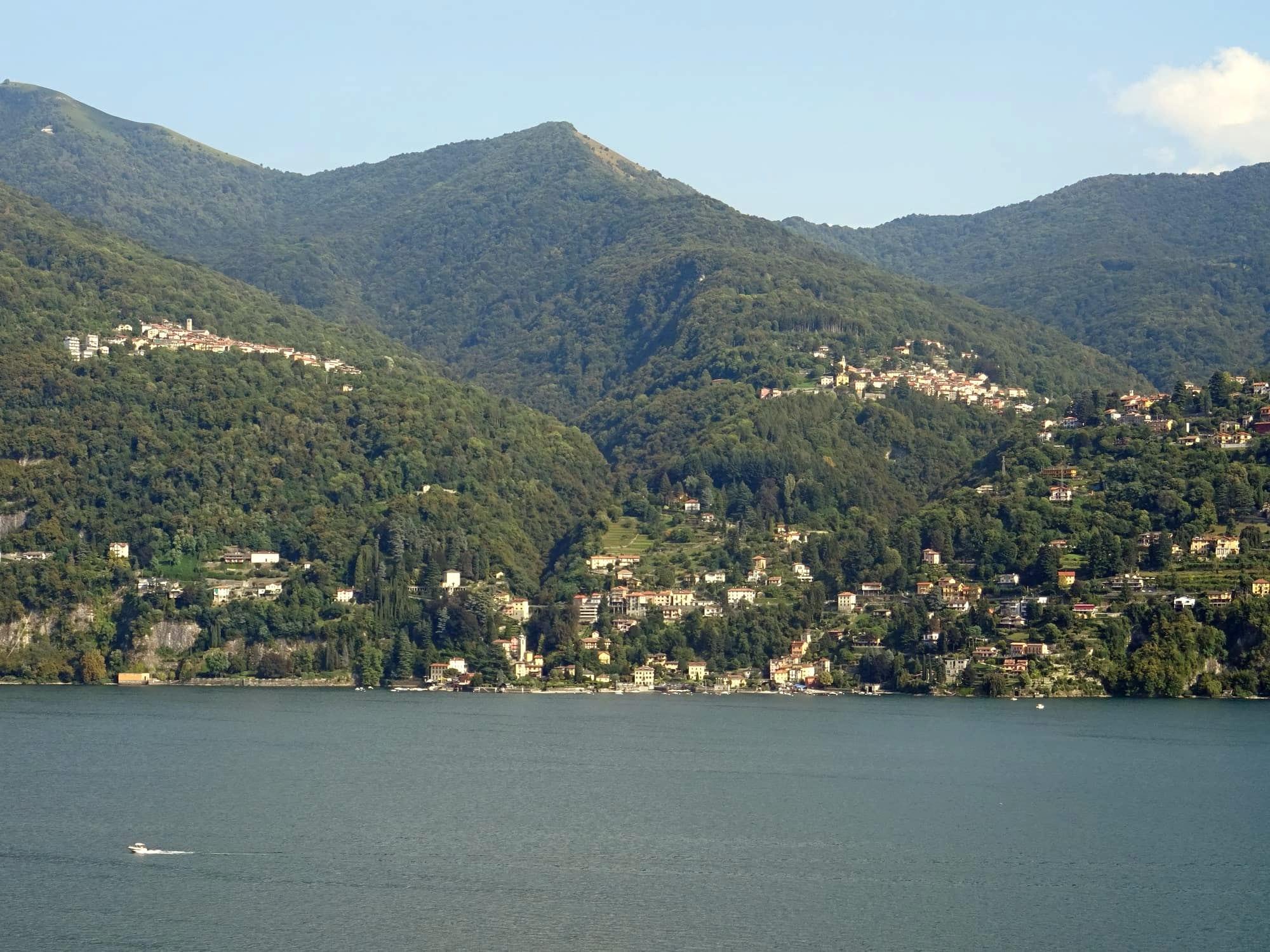
A shore on the lake and three villages halfway up the slope, Molina, Lemna and Palanzo, linked by the Strada Regia: churches from Romanesque to the seventeenth century, the gorge, and above it all Monte Palanzone.
2 min
Nesso
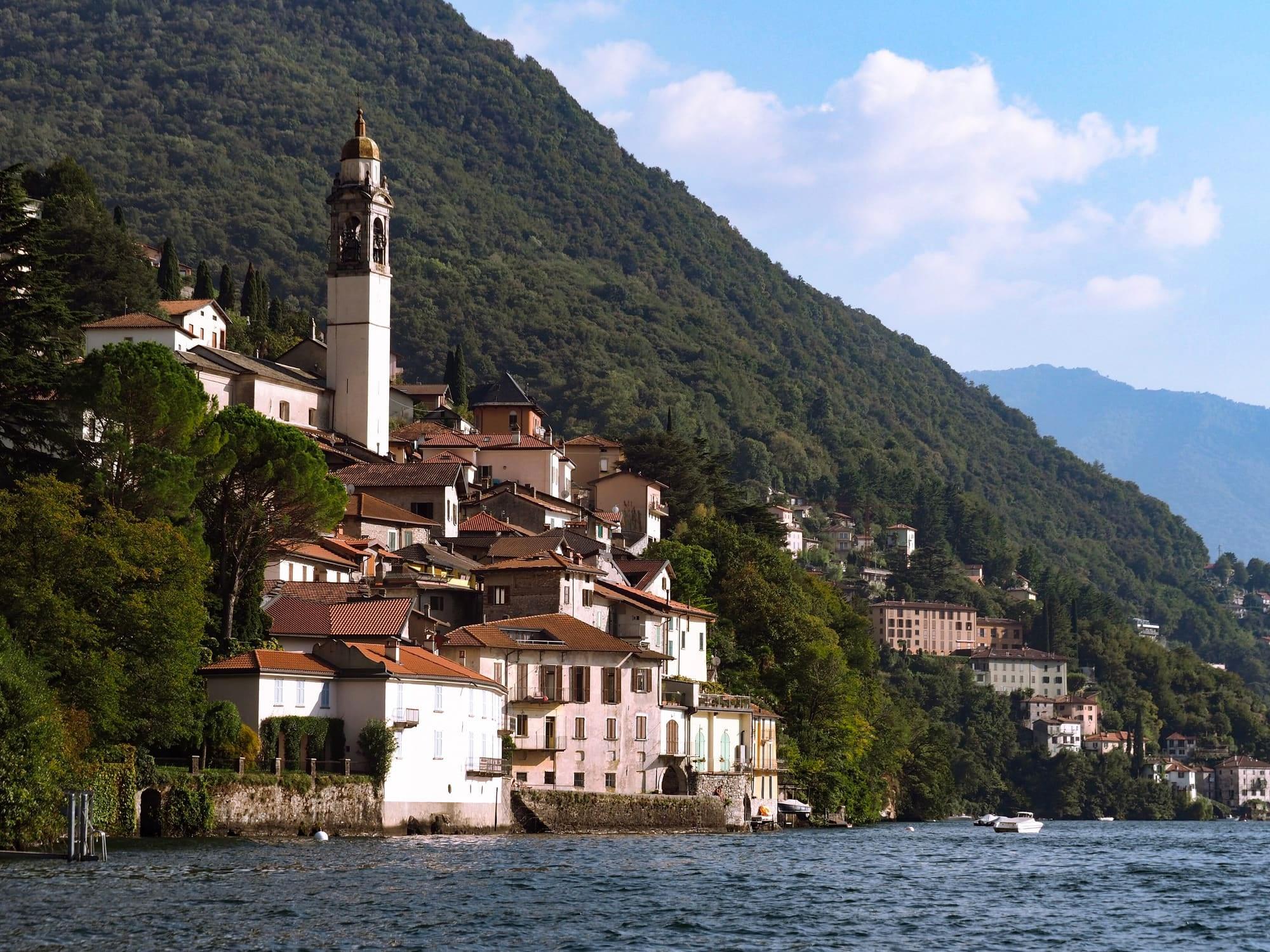
A village split in two by a waterfall, with a stone bridge where the water meets the lake.
20 min
Torno
Two small harbours, the church of San Giovanni with its Romanesque bell tower, and Villa Pliniana just outside the village.
8 min
Sources and credits
- Maps, parking, services and distances: © OpenStreetMap contributors (ODbL).
- Freely licensed photographs: authors and licences under Photograph credits.
Sources and credits
- Maps, parking, services and distances: © OpenStreetMap contributors (ODbL).
- Freely licensed photographs: authors and licences under Photograph credits.