Stories from the lake
Lake timeline
Two thousand years of the lake in order of date: from the Roman road along the western shore to the first steamboat, from the fall of the Isola Comacina to the Olginate dam. Each date leads to the story that tells it and to the place where it happened.
- Dates
- 82
- Stories
- 27
- Periods
- 6
11dates
Antiquity
To the 5th century · 1 date
AD 61 or 62
Pliny the Younger is born
The nephew of Pliny the Elder, who later adopts him, is born at Novum Comum, ancient Como. In his letters he describes the spring that rises and falls several times a day, the one at the Pliniana, and two villas of his on the shore of the Lario, which he calls Tragedy and Comedy.
Middle Ages
6th century to 1449 · 2 dates
643
Rothari's Edict names the Comacine masters
Two chapters of the law of the Lombard king Rothari deal with the magister commacinus and settle who must pay for the damage if a house built by a master collapses. The name most probably means builders and stonecutters from the Como area, but its meaning is not settled.
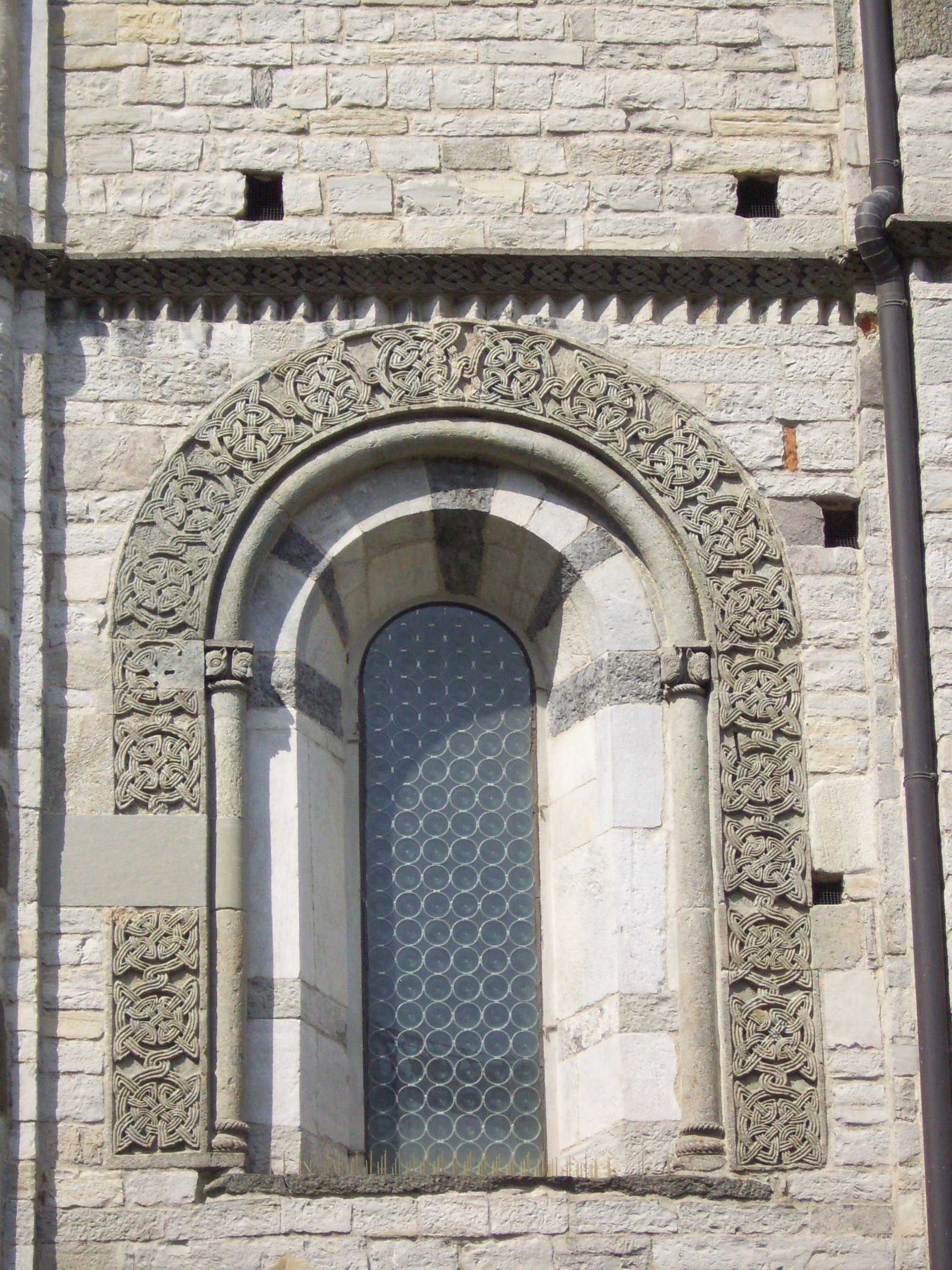
Urban II consecrates Sant'Abbondio
Outside the walls of Como, along the old Via Regina, the Benedictines have been rebuilding the church of Sant'Abbondio since 1010: a nave and four aisles and twin bell towers beside the apse. Pope Urban II, passing through Como, consecrates it.
Renaissance and foreign rule
1450–1699 · 2 dates
1457–1486
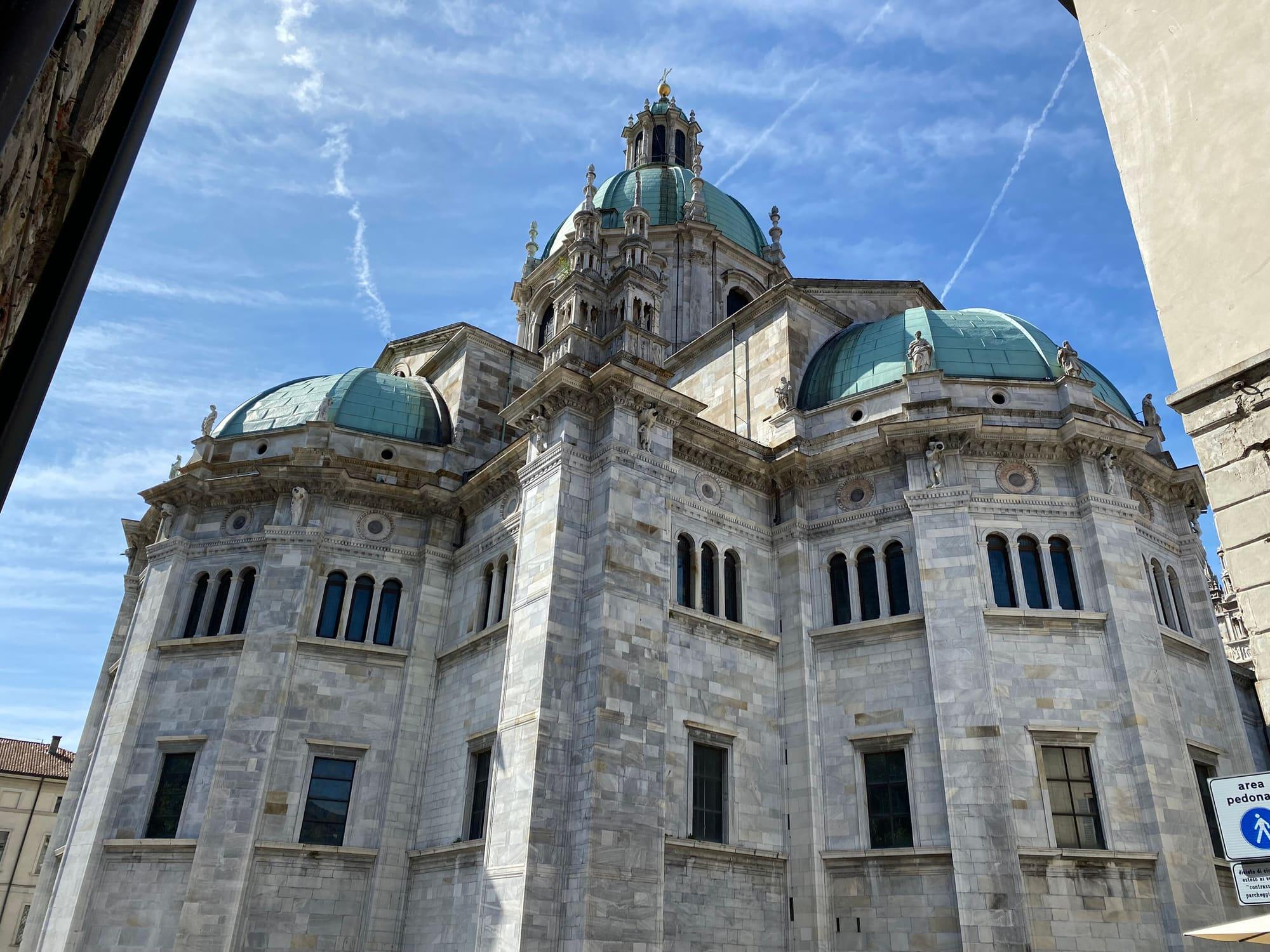
The façade of Como Cathedral
From 1452 the cathedral works use white marble from Musso, which becomes their main material. The façade, begun in 1457, is completed in 1486 with the rose window.
By 1498
The two Plinys on the cathedral façade
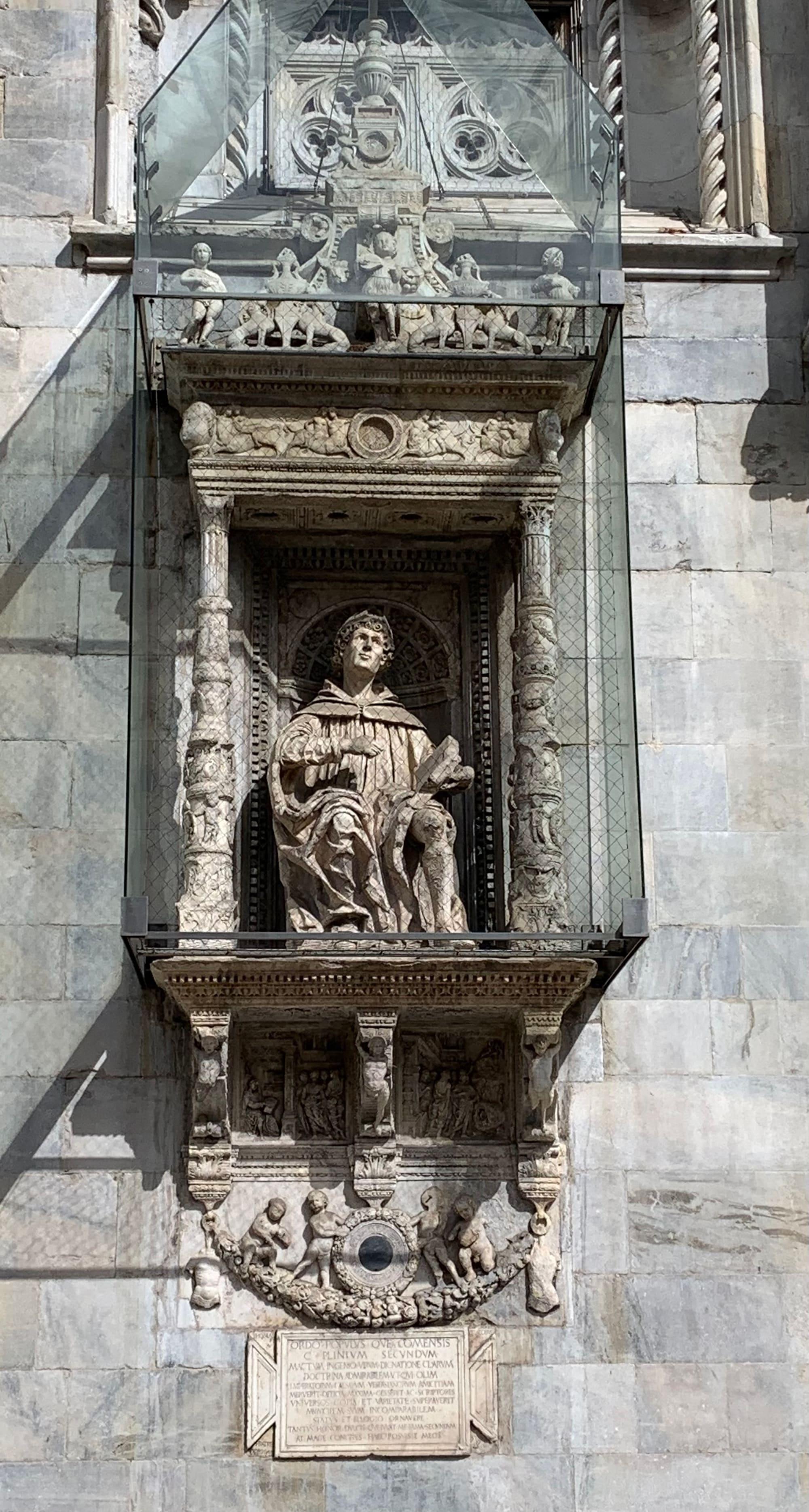
The brothers Giacomo and Tommaso Rodari complete the two aedicules on either side of the main doorway: Pliny the Elder sits on the left, Pliny the Younger on the right. In 1578, at the height of the Counter-Reformation, the statues survive an attempt to remove them.
Eighteenth century
1700–1799 · 1 date
1711–1753
The Carloni brothers remake the church at Scaria
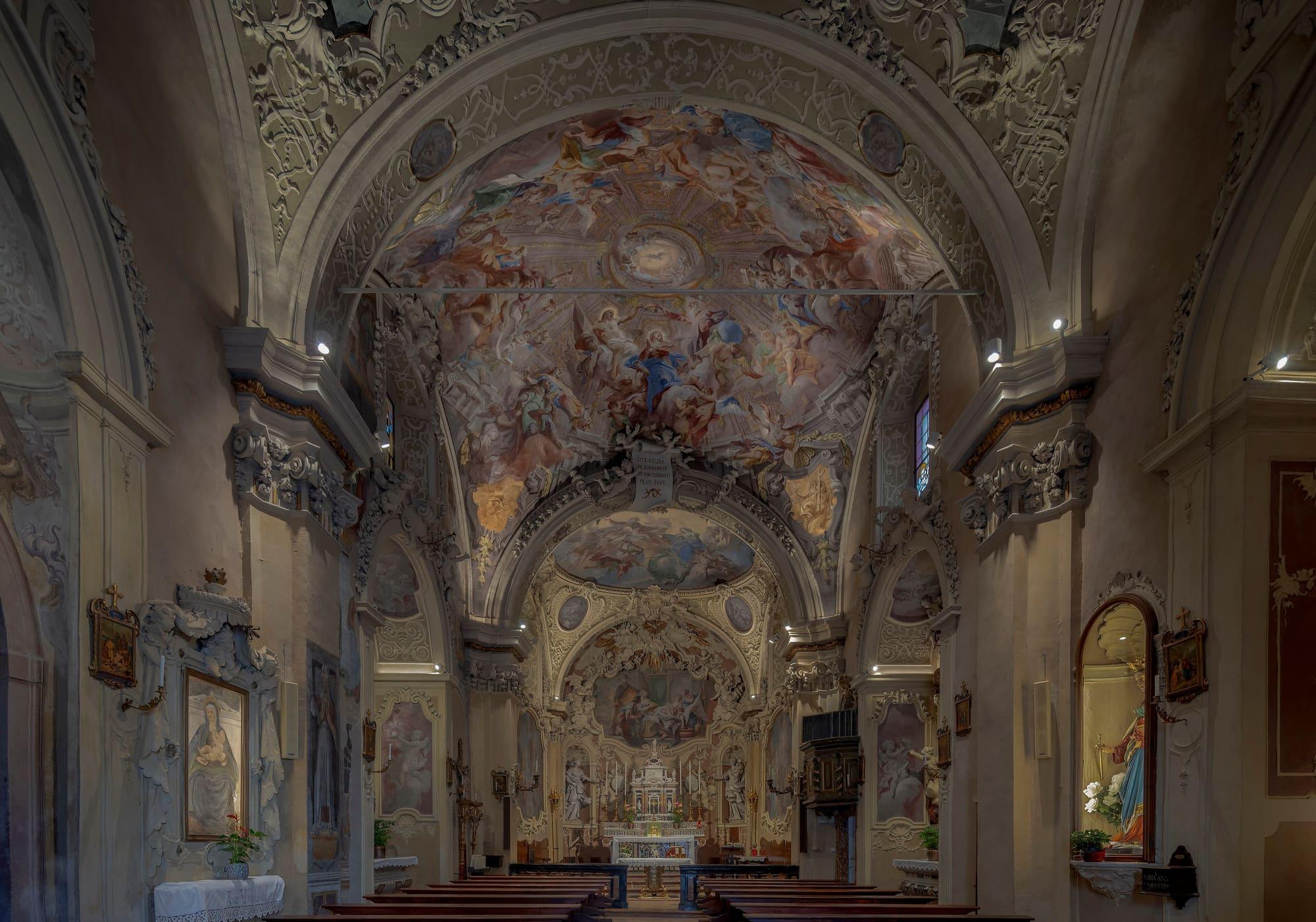
The brothers Diego and Carlo Innocenzo Carloni remake the church of Santa Maria for Scaria, their home village, with stucco and frescoes. They are among the artists of the Val d'Intelvi who work all over Europe: Carlo Innocenzo also paints in Ljubljana Cathedral and in the palaces of Vienna.
Place: Santa Maria and Museum of Sacred Art, ScariaStory: The Comacine masters
Nineteenth century
1800–1899 · 2 dates
Shelley looks for a house at the Pliniana
From Milan, Percy Bysshe Shelley writes to his friend Thomas Love Peacock that he has been to Como to look for a house. The landscape he likes best is that of Villa Pliniana, half in ruins, which he and Mary hope to obtain; the negotiations come to nothing.
Bellini at Moltrasio
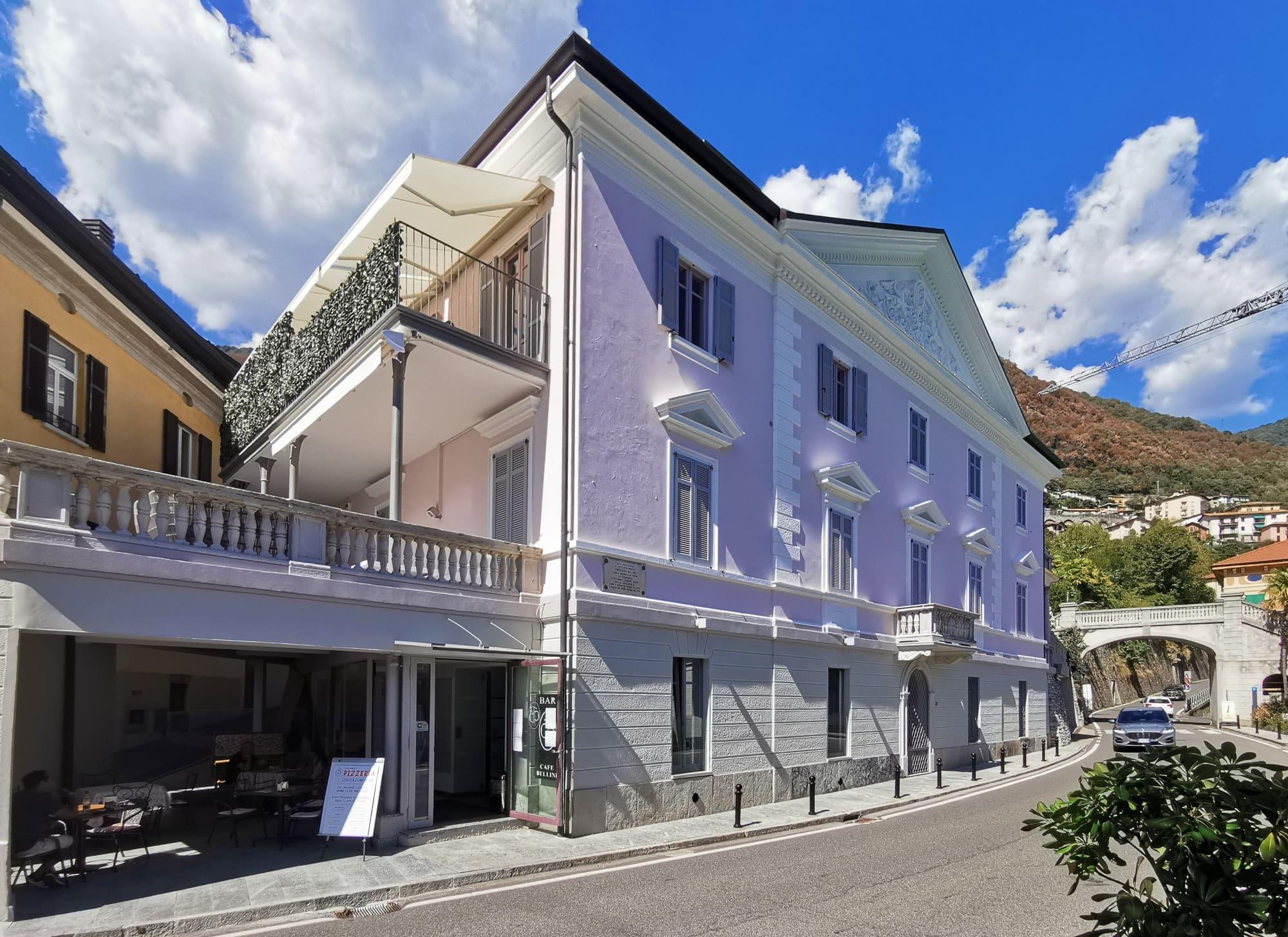
The Cantù and Turina families rent Villa Salterio at Moltrasio, where Giuditta Cantù carries on her affair with Vincenzo Bellini. These are the years in which the composer writes La straniera and La sonnambula; a plaque on the villa's façade records it.
Place: Villa Salterio Erker, MoltrasioStory: The musicians' lake
Twentieth century
1900–1999 · 3 dates
Hitchcock shoots his first film on the lake
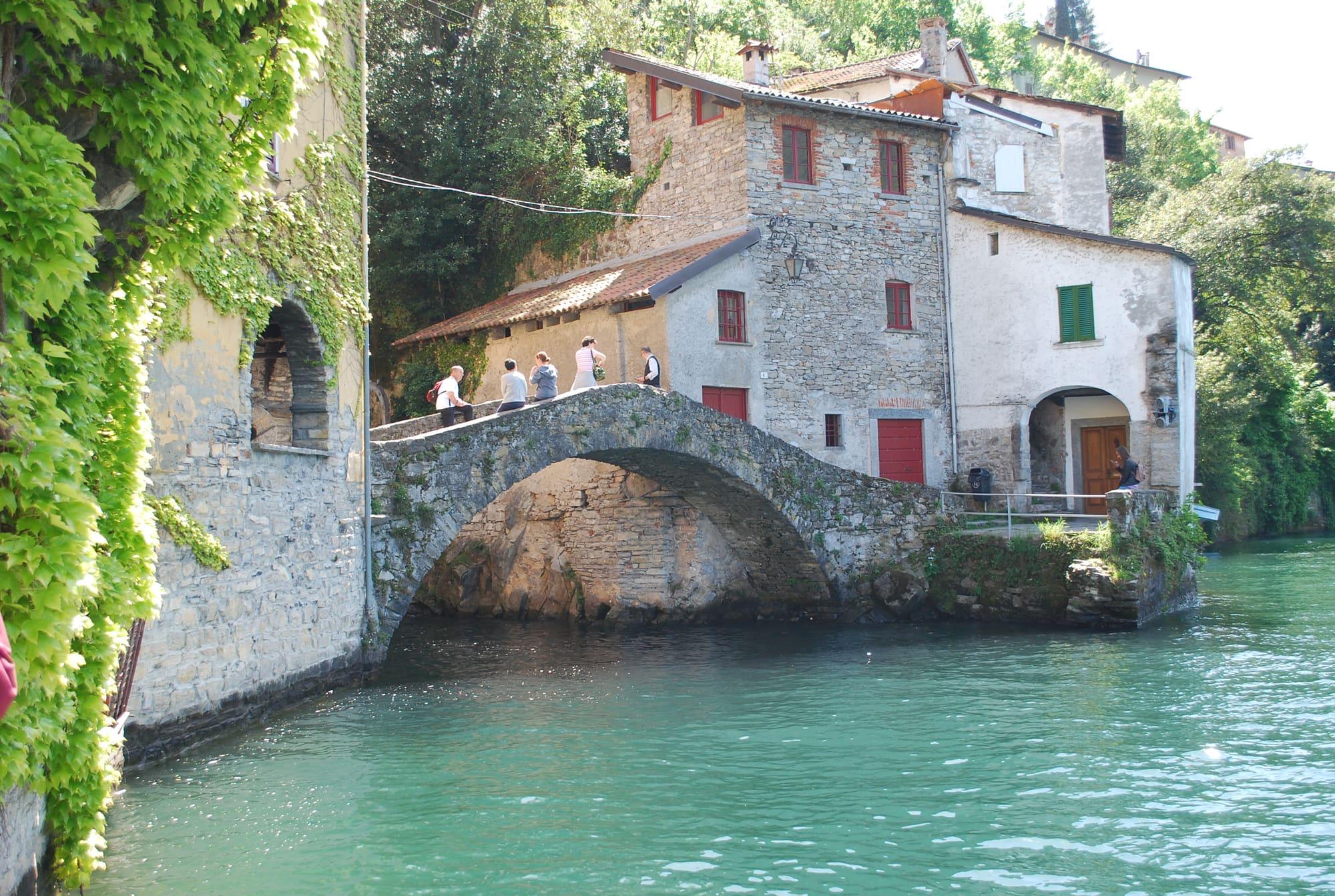
For ‘The Pleasure Garden', his debut as a director, Alfred Hitchcock sets the heroine's honeymoon on the lake. The Villa d'Este hotel, the Isola Comacina and the Civera bridge at Nesso can all be recognised.
The Novocomum, Como's first rationalist building
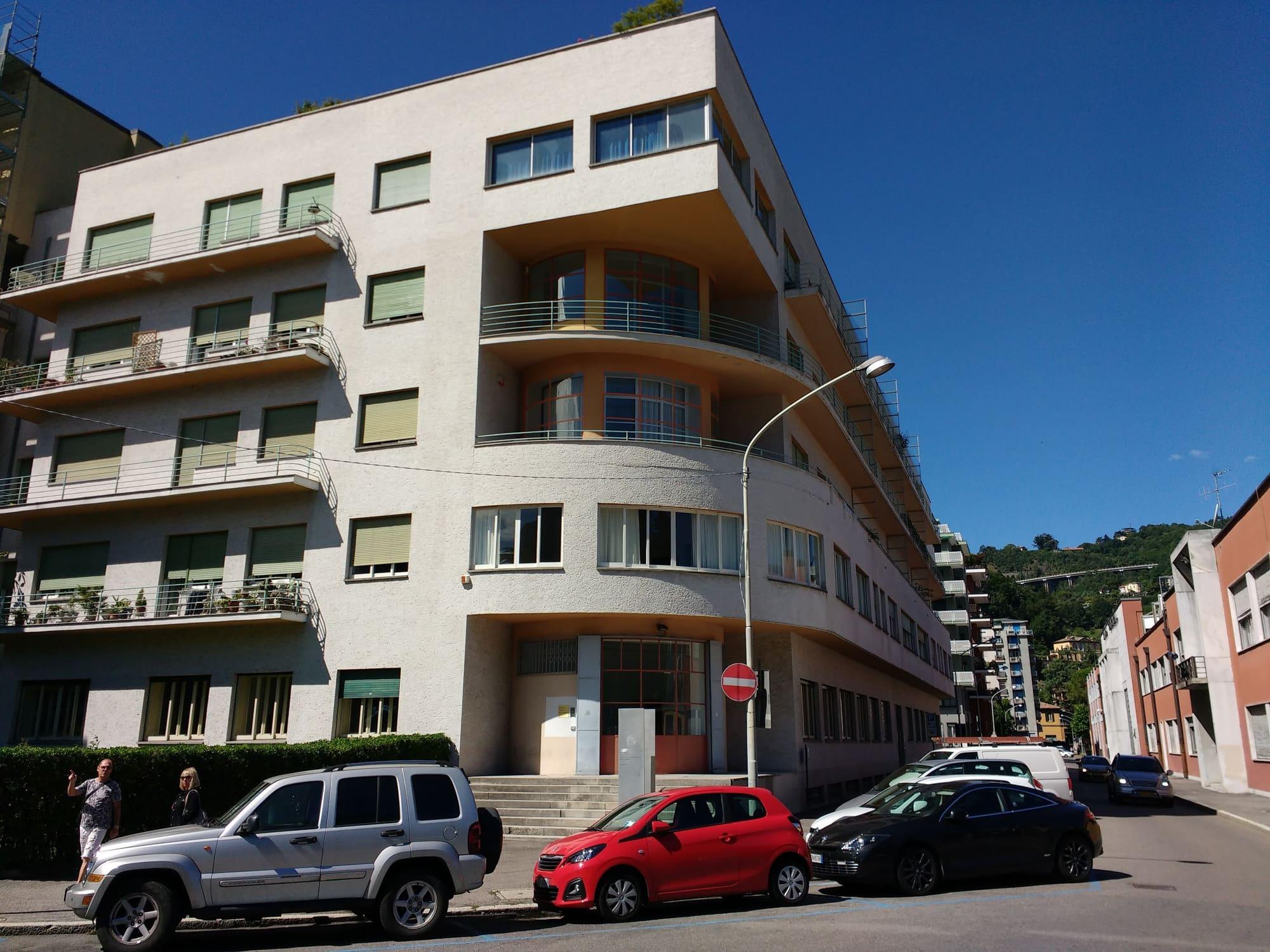
Giuseppe Terragni completes the Novocomum, an apartment building with a curved volume on the corner that the people of Como nickname ‘the Ocean Liner'. Between the wars Como becomes one of the centres of Italian rationalism.
Place: NovocomumStory: Palazzo Terragni, rationalism beside the cathedral
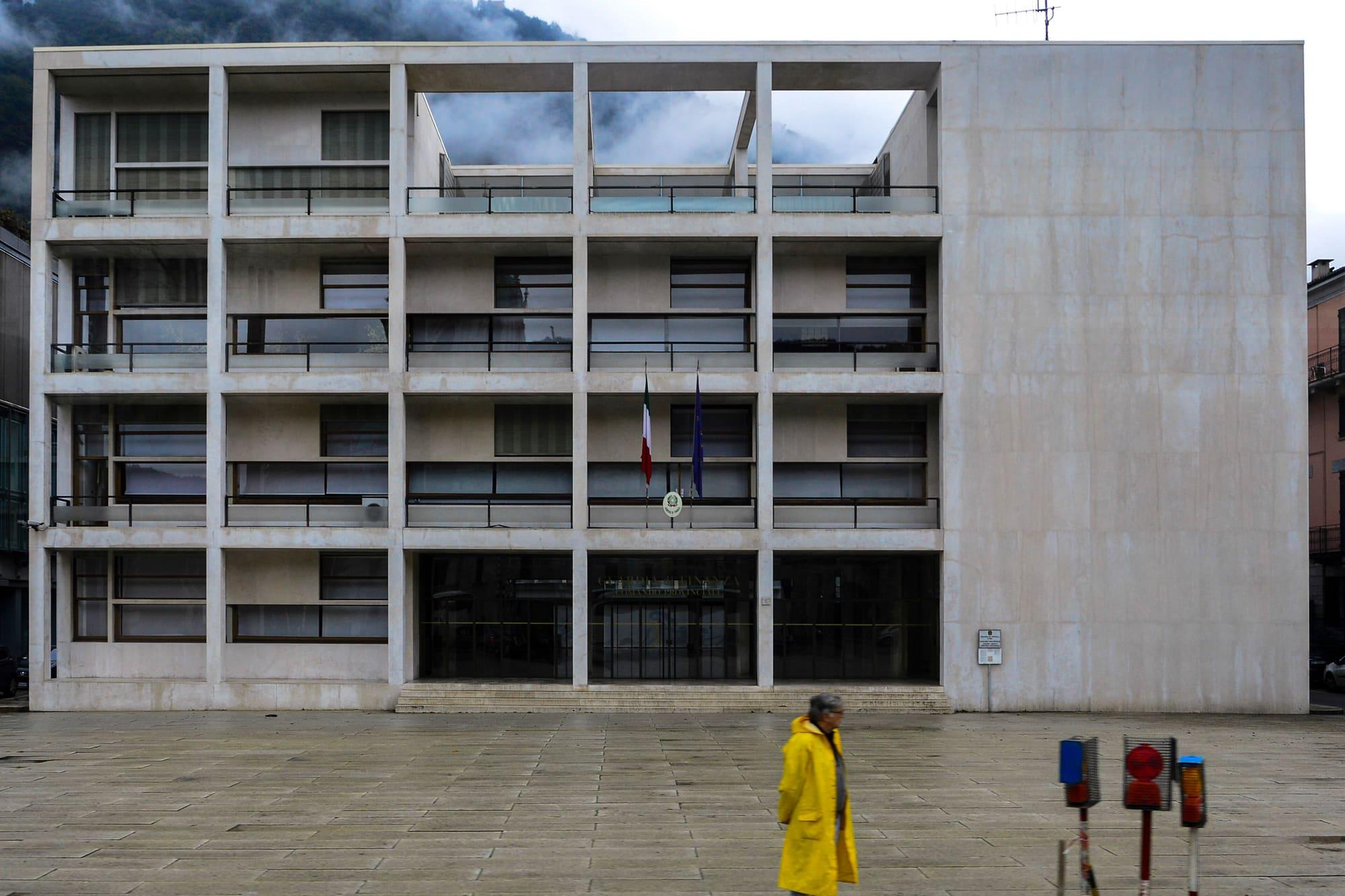
Terragni completes the Casa del Fascio
Fifty metres from the apse of the cathedral, Giuseppe Terragni completes the Como headquarters of the National Fascist Party, designed in 1932: a square of about thirty-three metres a side, faced in white marble, with no cornices or decoration. The building has since taken the name Palazzo Terragni.
Place: Palazzo Terragni (former Casa del Fascio)Story: Palazzo Terragni, rationalism beside the cathedral